A-Level Physics (9702) goes from measurement and motion all the way to quantum physics. The biggest jump from IGCSE is the algebra: you must rearrange and combine equations, not just remember them.
AS year: mechanics, waves, electricity, and the start of particle physics. A2 year: circular motion, gravitational, electric and magnetic fields, oscillations, thermodynamics and nuclear physics.
Read one topic, then do questions on it straight away. Physics does not stick from reading. When an answer is wrong, ask yourself: was it the physics or the algebra? The two need different fixes.
understand that all physical quantities consist of a numerical magnitude and a unit
make reasonable estimates of physical quantities included within the syllabus
Русский
понимать, что все физические величины состоят из численного значения и единицы измерения
делать разумные оценки физических величин, включенных в программу
Source: Cambridge International syllabus · Источник: Программа Cambridge International
A physical quantity 物理量 has two parts: a number (its magnitude 大小) and a unit 单位. The number on its own tells you nothing. You must also say what is measured and in which unit.
Example: "the length is 1.5" is not complete. "The length is 1.5 m" is a physical quantity.
Making estimates
You should be able to estimate 估算 the size of the physical quantities in this syllabus. Paper 1 usually opens with a question like this. Learn these rough values:
mass 质量 of an adult human: $\sim 70\ \text{kg}$; of a car: $\sim 1000\ \text{kg}$; of an apple: $\sim 0.1\ \text{kg}$
weight 重力 of an adult human: $\sim 700\ \text{N}$; of an apple: $\sim 1\ \text{N}$
height of an adult human: $\sim 1.7\ \text{m}$; height of a room: $\sim 3\ \text{m}$
walking speed: $\sim 1.5\ \text{m s}^{-1}$; a car on a fast road: $\sim 30\ \text{m s}^{-1}$
speed of sound in air: $\sim 340\ \text{m s}^{-1}$; speed of light in a vacuum 真空: $3.0 \times 10^{8}\ \text{m s}^{-1}$
acceleration 加速度 of free fall 自由落体: $g \approx 9.81\ \text{m s}^{-2}$
density 密度 of water: $1000\ \text{kg m}^{-3}$; of air: $\sim 1.2\ \text{kg m}^{-3}$; of steel: $\sim 8000\ \text{kg m}^{-3}$
power of a kettle: $\sim 2\ \text{kW}$; of a person climbing stairs: $\sim 300\ \text{W}$
wavelength of visible light: $\sim 5 \times 10^{-7}\ \text{m}$; diameter of an atom: $\sim 10^{-10}\ \text{m}$; of a nucleus: $\sim 10^{-15}\ \text{m}$
A good estimate has the right order of magnitude 数量级 (the right power of ten). For a human, 70 kg is a good guess; 7 kg is not.
To estimate a quantity that is not in the list, build it from ones that are. The kinetic energy of a moving car is $\tfrac{1}{2}mv^{2} \approx \tfrac{1}{2} \times 1000 \times 30^{2} \approx 5 \times 10^{5}\ \text{J}$. The pressure under a standing person is $700\ \text{N} / 0.02\ \text{m}^{2} \approx 4 \times 10^{4}\ \text{Pa}$. Always check that the power of ten looks sensible before you move on.
recall the following SI base quantities and their units: mass (kg), length (m), time (s), current (A), temperature (K)
express derived units as products or quotients of the SI base units and use the derived units for quantities listed in this syllabus as appropriate
use SI base units to check the homogeneity of physical equations
recall and use the following prefixes and their symbols to indicate decimal submultiples or multiples of both base and derived units: pico (p), nano (n), micro (\mu), milli (m), centi (c), deci (d), kilo (k), mega (M), giga (G), tera (T)
Русский
вспоминать следующие базовые величины системы СИ и их единицы: масса (кг), длина (м), время (с), сила тока (А), температура (К)
выражать производные единицы как произведения или частные базовых единиц СИ и использовать производные единицы для величин, перечисленных в этой программе, по мере необходимости
использовать базовые единицы СИ для проверки размерности физических уравнений
вспоминать и использовать следующие приставки и их символы для обозначения десятичных долей или кратных как базовых, так и производных единиц: пико (p), нано (n), микро (\mu), милли (m), санти (c), деци (d), кило (k), мега (M), гига (G), тера (T)
Source: Cambridge International syllabus · Источник: Программа Cambridge International
Base units
The SI system has seven base quantities 基本量; five of them are used in this topic. You must know these five and their units:
mass — kilogram, $\text{kg}$
length 长度 — metre, $\text{m}$
time — second, $\text{s}$
current 电流 — ampere 安培, $\text{A}$
temperature 温度 — kelvin 开尔文, $\text{K}$
Every other unit in this syllabus is built from these five.
Derived units
A derived unit 导出单位 is made by multiplying or dividing base units. You should be able to write any quantity in this syllabus in base units.
Build a derived unit from the equation that defines it:
speed 速率 = distance / time, so its unit is $\text{m s}^{-1}$
acceleration = change in velocity 速度 / time, so its unit is $\text{m s}^{-2}$
force 力 = mass × acceleration, so its unit is $\text{kg m s}^{-2}$. The newton 牛顿 is $1\ \text{N} = 1\ \text{kg m s}^{-2}$.
work 功 and energy 能量 = force × distance, so the unit is $\text{kg m}^{2}\ \text{s}^{-2}$. The joule 焦耳 is $1\ \text{J} = 1\ \text{kg m}^{2}\ \text{s}^{-2}$.
power 功率 = energy / time, so the unit is $\text{kg m}^{2}\ \text{s}^{-3}$. The watt 瓦特 is $1\ \text{W} = 1\ \text{kg m}^{2}\ \text{s}^{-3}$.
pressure 压强 and stress 应力 = force / area, so the unit is $\text{kg m}^{-1}\ \text{s}^{-2}$. The pascal 帕斯卡 is $1\ \text{Pa} = 1\ \text{kg m}^{-1}\ \text{s}^{-2}$.
When a question asks for the SI base units of a quantity, replace each named unit with its base units, then simplify. Example: the SI base units of the watt are $\text{kg m}^{2}\ \text{s}^{-3}$.
Checking that the units match
An equation is homogeneous 量纲一致 when both sides have the same base units. In plain words: the units on both sides match.
Write each side in base units and compare. Take the equation $v^{2} = u^{2} + 2as$:
left side: $(\text{m s}^{-1})^{2} = \text{m}^{2}\ \text{s}^{-2}$
right side, first term: $(\text{m s}^{-1})^{2} = \text{m}^{2}\ \text{s}^{-2}$
right side, second term: $\text{m s}^{-2} \cdot \text{m} = \text{m}^{2}\ \text{s}^{-2}$
Both sides give $\text{m}^{2}\ \text{s}^{-2}$, so the units match.
Be careful: matching units do not prove the whole equation is correct. It could still have a wrong number, or a missing factor of 2. But if the units do not match, the equation is wrong for sure.
Worked example. The drag force on a falling ball is given by $F = kv^{2}$, where $v$ is the speed. Find the SI base units of the constant $k$.
Rearrange: $k = F / v^{2}$. In base units, $F$ is $\text{kg m s}^{-2}$ and $v^{2}$ is $\text{m}^{2}\ \text{s}^{-2}$, so
$$k:\ \frac{\text{kg m s}^{-2}}{\text{m}^{2}\ \text{s}^{-2}} = \text{kg m}^{-1}.$$
A multiple-choice question often asks "which equation could be correct?". Check the base units of each option; only a homogeneous equation can be correct. A pure number (like 2, $\pi$ or $\tfrac{1}{2}$) has no unit, so it never changes the check.
Prefixes
A prefix 词头 is a letter put in front of a unit to make it bigger or smaller by powers of ten. You must know these:
The SI prefixes climb in steps of a thousand, from pico to giga
Prefix
Symbol
Factor
tera
T
$10^{12}$
giga
G
$10^{9}$
mega
M
$10^{6}$
kilo
k
$10^{3}$
deci
d
$10^{-1}$
centi
c
$10^{-2}$
milli
m
$10^{-3}$
micro
$\mu$
$10^{-6}$
nano
n
$10^{-9}$
pico
p
$10^{-12}$
To change a prefixed unit into base units, replace the prefix with its factor, then simplify. Example: change $0.25\ \text{kN mm}^{-2}$ into $\text{N m}^{-2}$:
Take special care with squared units like $\text{mm}^{2}$: you must square the factor too.
Explore · Исследовать
Base or derived? · Основная или производная?
Only seven quantities are base quantities. Everything else is built from them, and its unit can be written in base units. · Только семь величин являются основными. Все остальное построено на их основе, и его единицу можно записать через основные единицы.
understand and explain the effects of systematic errors (including zero errors) and random errors in measurements
understand the distinction between precision and accuracy
assess the uncertainty in a derived quantity by simple addition of absolute or percentage uncertainties
Русский
понимать и объяснять эффекты систематических погрешностей (включая погрешности нуля) и случайных погрешностей в измерениях
понимать различие между точностью и правильностью
оценивать неопределенность в производной величине путем простой суммы абсолютных или процентных неопределенностей
Source: Cambridge International syllabus · Источник: Программа Cambridge International
A vernier caliper measures length precisely, with a small uncertainty.
Every measurement 测量 has some uncertainty 不确定度 — we are never fully sure of the value. A good experimenter knows where the uncertainty comes from, makes a fair estimate of it, and carries it through to the final answer.
The main parts of a real micrometer screw gauge, which measures to the nearest 0.01 mmReading a micrometer: add the main scale reading to the thimble readingReading a real micrometer: read the mm and half-mm on the sleeve, then add the thimble scaleVernier calipers measure to the nearest 0.1 mm — the sliding scale gives the extra digitReading a vernier caliper: whole millimetres from the main scale, plus the tenths from the vernier line that lines up
Systematic and random errors
A systematic error 系统误差 changes every reading by the same amount, in the same direction. You cannot find it by repeating the measurement. Common causes:
a zero error 零点误差 (the scale does not read zero when the true value is zero)
a calibration 校准 error (the scale itself is wrong)
parallax 视差 (your eye is always to one side of the scale)
An ammeter with a zero error: the needle reads below zero before any current flowsParallax error: different viewing angles give different scale readings
A systematic error makes the accuracy 准确度 worse, but it does not change the precision 精密度.
A random error 随机误差 makes readings jump above and below the true value, with no pattern. Causes include how carefully you read the scale, changing conditions, and the smallest step the instrument 仪器 can show. If you repeat the measurement many times and take the mean 平均值 (the average), random errors partly cancel out.
A random error makes the precision worse. But with enough repeats, the mean can still be accurate.
On a graph the two errors look different. A systematic error moves every point by the same amount, so the line of best fit keeps its gradient but no longer passes through the origin: the intercept 截距 changes. Random errors scatter the points above and below the line; a best-fit line drawn through the middle of the scatter still gives a reliable gradient.
A systematic error shifts the whole line, so the intercept moves; random errors scatter the points about the line
Error
How to reduce it
systematic
check for a zero error and subtract it; calibrate the instrument against a known standard; read the scale from directly in front
random
repeat the reading and take the mean; use an instrument with smaller divisions; time many oscillations instead of one
Precision and accuracy
Precision is how close repeated readings are to each other. Precise readings are grouped very close together.
Accuracy is how close a reading (or the mean of several readings) is to the true value.
Precision: how narrow the distribution is around the true value T
A set of readings can be:
precise and accurate — close together and near the true value
precise but not accurate — close together, but away from the true value (a systematic error)
accurate but not precise — spread out, but the mean is near the true value
neither — spread out and away from the true value
Accuracy: whether the peak of the distribution is centred on the true value T
When a question gives a table of repeated readings, look at the spread (precision) and the mean (accuracy) separately.
Estimating the uncertainty in a reading
Before you combine uncertainties, you need a sensible uncertainty for each raw reading:
A single reading on an analogue scale: half the smallest division 分度 (a metre rule reads to $1\ \text{mm}$, so one reading is $\pm 0.5\ \text{mm}$). A length needs two readings, one at each end, so its uncertainty is $\pm 1\ \text{mm}$.
A digital meter: $\pm 1$ in the last digit shown (a stopwatch showing $2.47\ \text{s}$ is $\pm 0.01\ \text{s}$).
A hand-timed measurement: your reaction time 反应时间 matters more than the display. Allow about $\pm 0.1$ to $0.2\ \text{s}$, and time many oscillations instead of one, so the same uncertainty is shared between all of them.
Repeated readings: the uncertainty is half the range 极差的一半. Three timings of $2.42$, $2.48$ and $2.45\ \text{s}$ have a mean of $2.45\ \text{s}$ and a range of $0.06\ \text{s}$, so $t = (2.45 \pm 0.03)\ \text{s}$.
Be honest. If the edge of a shadow is hard to see, the uncertainty in its position is several millimetres, however fine the scale. Examiners do not accept "the smallest division" as the uncertainty of a difficult reading.
Uncertainty in a derived quantity
A measurement is often written as $x \pm \Delta x$. Here $\Delta x$ is the absolute uncertainty 绝对不确定度. The percentage uncertainty 百分比不确定度 is
$$\text{percentage uncertainty in } x = \frac{\Delta x}{|x|} \times 100\%.$$
A derived quantity 导出量 is one you calculate from measured values. Its uncertainty is found by simple rules:
Adding or subtracting — add the absolute uncertainties. If $y = a + b$ or $y = a - b$, then $\Delta y = \Delta a + \Delta b$.
Multiplying or dividing — add the percentage uncertainties. If $y = \dfrac{a \cdot b}{c}$, then
Powers — multiply the percentage uncertainty by the power. If $y = a^{n}$, then $\dfrac{\Delta y}{|y|} = |n| \cdot \dfrac{\Delta a}{|a|}$.
Worked example. A ball's diameter 直径 is measured as $d = (5.26 \pm 0.02)\ \text{cm}$. The volume 体积 of a sphere is $V = \tfrac{4}{3}\pi r^{3} = \tfrac{4}{3}\pi (d/2)^{3}$, so $V \propto d^{3}$ ($V$ depends on $d$ cubed).
Because $V \propto d^{3}$, the percentage uncertainty in $V$ is three times this, about $1.14\%$. The volume is $\tfrac{4}{3}\pi(2.63)^{3} \approx 76.2\ \text{cm}^{3}$. So the absolute uncertainty is $0.0114 \times 76.2 \approx 0.87\ \text{cm}^{3}$. The final answer is $V = (76.2 \pm 0.9)\ \text{cm}^{3}$.
Do two values agree? Practical questions often ask whether two calculated values of a constant support a suggested relationship. Do not just say "they are close". Work out the percentage difference 百分比差异 between them,
$$\text{percentage difference} = \frac{|k_{1} - k_{2}|}{\text{mean of } k_{1} \text{ and } k_{2}} \times 100\%,$$
and compare it with the percentage uncertainty in $k$ (or with the criterion the question gives, often 10%). If the difference is smaller, the two values agree within the uncertainty and the relationship is supported. If it is larger, they do not.
Significant figures
When you write a calculated quantity, give it the same number of significant figures 有效数字 as the least precise measurement you used — usually two or three in this syllabus. Too many significant figures makes the answer look more exact than it really is. Too few loses useful information.
Practical papers ask you to justify the number you chose. Name the raw readings: "$a$ is given to 2 significant figures because $L$ and $t$ were each measured to 2 significant figures." The phrase "because of the raw data" on its own does not earn the mark. In a table of results, judge each row from the least precise raw reading in that row; do not force every row to the same number of figures.
Uncertainties on a graph
Paper 5 asks you to carry uncertainties through a graph:
Plot each point with an error bar 误差棒 whose length shows the absolute uncertainty in that value.
Draw the line of best fit 最佳拟合直线 through the points, then the worst acceptable line 最差可接受直线: the steepest (or shallowest) straight line that still passes through every error bar.
The uncertainty in the gradient is the difference between the two gradients, $\Delta m = |m_{\text{best}} - m_{\text{worst}}|$. The uncertainty in the intercept is found the same way.
When you plot a logarithm, the absolute uncertainty in $\ln x$ is $\Delta x / x$ (and in $\lg x$ it is $0.434\,\Delta x / x$). Work it out for the largest and smallest values of $x$ separately.
The worst acceptable line still passes through every error bar; the gradient uncertainty is the difference between the two gradients
A percentage uncertainty in the gradient then flows into any quantity you calculate from it, using the rules above.
Explore · Исследовать
Systematic or random? · Систематическая или случайная?
A systematic error shifts every reading the same way and survives repetition; a random error scatters the readings and shrinks when you average. · Систематическая погрешность смещает каждое показание в одну сторону и не исчезает при повторении; случайная погрешность рассеивает показания и уменьшается при усреднении.
understand the difference between scalar and vector quantities and give examples of scalar and vector quantities included in the syllabus
add and subtract coplanar vectors
represent a vector as two perpendicular components
Русский
понимать разницу между скалярными и векторными величинами и приводить примеры скалярных и векторных величин, включенных в программу
складывать и вычитать копланарные векторы
представлять вектор двумя перпендикулярными компонентами
Source: Cambridge International syllabus · Источник: Программа Cambridge International
Resolving a force into components
A scalar 标量 has size only. A vector 矢量 has both size and direction.
Examples from the syllabus:
scalars: mass, time, temperature, energy, work, power, distance, speed, pressure, density, electric charge 电荷
vectors: displacement 位移, velocity, acceleration, force (including weight), momentum 动量
Quick test: if it makes sense to ask "in which direction?", the quantity is a vector. You cannot ask "in which direction is the temperature?", so temperature is a scalar. You can ask "in which direction is the velocity?", so velocity is a vector.
Adding and subtracting vectors
A vector is drawn as an arrow: the direction of the arrow gives the direction of the quantity, and the length of the arrow (drawn to scale) gives the magnitude.
Vectors represented as arrows drawn to scale
To add two coplanar 共面 vectors (vectors in the same flat plane), draw them tip to tail. The resultant 合矢量 goes from the tail of the first arrow to the tip of the second.
To find $\vec{X} - \vec{Y}$, add the reverse of $\vec{Y}$: $\vec{X} + (-\vec{Y})$. The reverse of $\vec{Y}$ has the same size as $\vec{Y}$ but points the opposite way.
Adding and subtracting parallel vectors
If the two vectors are at right angles (90°), the size of the resultant is
$$|\vec{R}| = \sqrt{X^{2} + Y^{2}},$$
and its direction comes from $\tan\theta = Y / X$.
Worked example. A swimmer heads north at $1.2\ \text{m s}^{-1}$ across a river that flows east at $0.5\ \text{m s}^{-1}$. Find the size and direction of the resultant velocity.
at an angle $\tan\theta = 0.5/1.2$, giving $\theta \approx 23°$ east of north.
Two perpendicular vectors add to a resultant of size $\sqrt{X^2+Y^2}$ at angle $\theta$
If two vectors have the same size $F$ with an angle $2\alpha$ between them, the resultant has size $2F\cos\alpha$ and lies along the line that cuts the angle in half.
Worked example. Two forces of $6.0\ \text{N}$ act on an object with $60°$ between them. Find the resultant.
Here $2\alpha = 60°$, so $\alpha = 30°$ and $R = 2 \times 6.0 \times \cos 30° = 10.4\ \text{N}$, along the line halfway between the two forces. Resolving gives the same answer: each force has a component $6.0\cos 30°$ along that line, and their components at right angles to it cancel.
For two vectors at any other angle, either make a scale drawing 按比例作图 of the vector triangle and measure the resultant, or resolve both vectors into perpendicular components, add the components, and recombine with $\sqrt{X^{2} + Y^{2}}$.
Worked example. A ball moving east at $5.0\ \text{m s}^{-1}$ is hit so that it moves north at $5.0\ \text{m s}^{-1}$. Find its change in velocity.
A change in velocity is a vector subtraction: $\Delta\vec{v} = \vec{v}_{\text{final}} - \vec{v}_{\text{initial}}$. Draw $5.0\ \text{m s}^{-1}$ north, then add the reverse of the initial velocity, $5.0\ \text{m s}^{-1}$ west. The two are perpendicular, so $|\Delta\vec{v}| = \sqrt{5.0^{2} + 5.0^{2}} = 7.1\ \text{m s}^{-1}$, pointing north-west. The speed did not change, but the velocity did. That is why a force must have acted on the ball (topic 3).
Splitting a vector into perpendicular parts
Any vector can be split into two perpendicular 垂直 (at right angles) components 分量. Usually these are horizontal 水平 and vertical 竖直, or along and across a surface. For a vector $\vec{v}$ at angle $\theta$ to the horizontal:
Resolving a vector into horizontal and vertical components
Choose the directions that make the problem easiest. On a slope (an inclined plane 斜面), split the weight into one part along the slope and one part at right angles to it:
where $\theta$ is the angle of the slope to the horizontal.
On a slope the weight splits into $W\sin\theta$ down the slope and $W\cos\theta$ into the slope; the angle between $W$ and the perpendicular is the slope angle $\theta$
You split a vector into components whenever you need to know how much of it acts in one direction. For example: the part of a force that acts along a slope, or the horizontal and vertical parts of a ball's velocity after it is thrown.
Explore · Исследовать
Adding two vectors · Сложение двух векторов
resultant = a + b · равнодействующая = a + b
Vectors add tip to tail. The resultant runs from the start of the first arrow to the tip of the second, and its length is found from a scale drawing or by Pythagoras, never by adding the two magnitudes. · Векторы складываются конец к началу. Результирующий вектор идет от начала первого вектора до конца второго, а его длина определяется по масштабному чертежу или по теореме Пифагора, никогда путем сложения их модулей.
A definition question is marked against fixed wording. Learn these exactly, and give one answer only.
Term
Definition
physical quantity
a numerical magnitude together with a unit
homogeneous equation
an equation in which every term has the same base units
systematic error
an error that shifts every reading in the same direction by the same amount; not reduced by repeating
random error
an error that scatters readings above and below the true value; reduced by repeating and averaging
zero error
the reading an instrument shows when the true value is zero
precision
how close repeated readings are to each other
accuracy
how close a reading, or the mean of several readings, is to the true value
absolute uncertainty
the range within which the true value is expected to lie, in the units of the quantity
percentage uncertainty
the absolute uncertainty divided by the value, multiplied by 100%
scalar
a quantity with magnitude only
vector
a quantity with magnitude and direction
1.4
Exam tips
Give every answer a unit, and check homogeneity — both sides of an equation must have the same base units.
Distinguish random error (reduce by repeating and averaging) from systematic error (a zero or calibration error that repeats do not remove).
Combine uncertainties: add absolute uncertainties when adding/subtracting, add percentage uncertainties when multiplying/dividing (and multiply the % by any power).
Distinguish precision (small spread) from accuracy (close to the true value).
Resolve a vector into perpendicular components ($F\cos\theta$, $F\sin\theta$); add vectors tip-to-tail or by components.
Common mistakes
Substituting 5 cm as 5, or 20 g as 20. Convert the prefix first: 0.05 m, 0.020 kg.
Giving the percentage uncertainty in $T^{2}$ as the same as in $T$. Squaring doubles it; a square root halves it.
Treating the percentage uncertainty and the absolute uncertainty as the same number.
Quoting "the smallest division" as the uncertainty of a reading that was hard to take.
Offering two answers to a definition. Commit to one.
define and use distance, displacement, speed, velocity and acceleration
use graphical methods to represent distance, displacement, speed, velocity and acceleration
determine displacement from the area under a velocity–time graph
determine velocity using the gradient of a displacement–time graph
determine acceleration using the gradient of a velocity–time graph
derive, from the definitions of velocity and acceleration, equations that represent uniformly accelerated motion in a straight line
solve problems using equations that represent uniformly accelerated motion in a straight line, including the motion of bodies falling in a uniform gravitational field without air resistance
describe an experiment to determine the acceleration of free fall using a falling object
describe and explain motion due to a uniform velocity in one direction and a uniform acceleration in a perpendicular direction
Русский
определять и использовать понятия путь, перемещение, скорость, вектор скорости и ускорение
использовать графические методы для представления пути, перемещения, скорости, вектора скорости и ускорения
определять перемещение по площади под графиком зависимости скорости от времени
определять скорость по наклону графика зависимости перемещения от времени
определять ускорение по наклону графика зависимости скорости от времени
выводить из определений скорости и ускорения уравнения, описывающие равноускоренное движение по прямой
решать задачи с использованием уравнений, описывающих равноускоренное движение по прямой, включая движение тел, падающих в однородном гравитационном поле без сопротивления воздуха
описывать эксперимент по определению ускорения свободного падения с использованием падающего тела
описывать и объяснять движение, обусловленное равномерным движением в одном направлении и равноускоренным движением в перпендикулярном направлении
Source: Cambridge International syllabus · Источник: Программа Cambridge International
Dropped vs thrown: falling togetherA speedometer shows speed: the distance travelled per unit time.
These five quantities come up in almost every kinematics 运动学 question. Learn the exact words — the examiner gives marks for precise wording.
distance 距离 — the total length of the path travelled. A scalar 标量.
displacement 位移 — the straight-line distance from the start to the end, with a direction. A vector 矢量.
speed 速率 — the rate of change of distance with time. A scalar.
velocity 速度 — the rate of change of displacement with time. A vector.
acceleration 加速度 — the rate of change of velocity with time. A vector.
The unit of speed and velocity is $\text{m s}^{-1}$; the unit of acceleration is $\text{m s}^{-2}$.
Two more phrases the examiner uses: uniform acceleration 匀加速 means constant acceleration (a straight line on a velocity–time graph), and the acceleration of free fall 自由落体加速度$g$ is the acceleration of an object falling freely in a uniform gravitational field 匀强重力场 when air resistance is negligible 可忽略的 (small enough to ignore).
A common mistake: deceleration 减速度 just means acceleration in the opposite direction to the velocity. It is not a separate quantity.
Speeds are sometimes given in $\text{km h}^{-1}$. Convert before you calculate: $85\ \text{km h}^{-1} = 85 \times 1000 / 3600 = 23.6\ \text{m s}^{-1}$.
A speed camera measures average speed over a known distance — displacement over time, made into a fine
Explore · Исследовать
The velocity–time graph · График зависимости скорости от времени
v = u + at
On a speed–time graph the gradient is the acceleration and the area underneath is the distance travelled. · На графике зависимости скорости от времени наклон (градиент) равен ускорению, а площадь под ним — пройденному пути.
Many marks come from reading or drawing motion graphs, the graphical methods 图像法 the syllabus names. Two graphs matter.
Displacement–time graph
The gradient 斜率 (steepness) of a displacement–time graph at a point gives the velocity at that moment.
flat line → the object is at rest.
straight sloping line → constant velocity (gradient = velocity).
curved line → changing velocity. Draw a tangent 切线 at the point and find its gradient.
Displacement–time graph of a car on a test track
Velocity–time graph
The gradient of a velocity–time graph gives the acceleration at that moment.
The area between the line and the time axis gives the displacement in that time.
flat line → constant velocity (zero acceleration).
straight sloping line → uniform acceleration (constant acceleration).
curved line → changing acceleration.
area above the time axis is positive displacement; area below is negative (the object moved backwards).
Velocity–time graph — gradient gives acceleration, area gives displacementAcceleration–time graph derived from the same motion
To find the displacement, split the area into triangles and rectangles, or count grid squares. Area of a triangle is $\tfrac{1}{2} \times \text{base} \times \text{height}$; area of a rectangle is $\text{base} \times \text{height}$.
Worked example. The graph shows the velocity of a lift. Find the acceleration in each stage and the total distance travelled.
Velocity–time graph of a lift: gradient gives each acceleration, the shaded area gives the distance
Stage B: the line is flat, so the acceleration is zero.
Stage C: gradient $= \dfrac{0 - 3.0}{2.0} = -1.5\ \text{m s}^{-2}$ (a deceleration of $1.5\ \text{m s}^{-2}$).
Distance: triangle A $= \tfrac{1}{2} \times 4.0 \times 3.0 = 6.0\ \text{m}$, rectangle B $= 6.0 \times 3.0 = 18\ \text{m}$, triangle C $= \tfrac{1}{2} \times 2.0 \times 3.0 = 3.0\ \text{m}$; total $27\ \text{m}$.
When the graph is a curve, the area is still the displacement: count the squares under the curve (half a square or more counts as one) and multiply by the value of one square.
Explore · Исследовать
Reading a velocity–time graph · Чтение графика зависимости скорости от времени
Change the start velocity u and the acceleration a. The gradient of the line is the acceleration; the area under it is the displacement. · Измените начальную скорость u и ускорение a. Наклон линии равен ускорению; площадь под ней равна перемещению.
For motion in a straight line with uniform acceleration, we use five symbols: starting velocity $u$, final velocity $v$, acceleration $a$, displacement $s$, and time $t$. Four equations link them:
$$v = u + at$$
$$s = ut + \tfrac{1}{2} a t^{2}$$
$$s = \tfrac{1}{2}(u + v)t$$
$$v^{2} = u^{2} + 2as$$
Each equation uses four of the five symbols. To pick the right one: write down what you know and what you want, then choose the equation with exactly those four.
Worked example. A car accelerates uniformly from $8\ \text{m s}^{-1}$ to $20\ \text{m s}^{-1}$ over a distance of $56\ \text{m}$. Find its acceleration.
We know $u$, $v$ and $s$ and want $a$, so use $v^{2} = u^{2} + 2as$:
You should be able to get these from the definitions of velocity and acceleration. Think of the velocity–time graph of the motion: a straight line from $u$ at $t = 0$ to $v$ at time $t$.
$v = u + at$: acceleration is the gradient, $a = (v - u)/t$, so $v = u + at$.
$s = \tfrac{1}{2}(u + v) t$: displacement is the area under the line, a trapezium 梯形 with parallel sides $u$ and $v$ and width $t$, so $s = \tfrac{1}{2}(u + v)t$.
$s = ut + \tfrac{1}{2}at^{2}$: put $v = u + at$ into the area: $s = \tfrac{1}{2}(u + u + at)t = ut + \tfrac{1}{2}at^{2}$.
$v^{2} = u^{2} + 2as$: from the first equation $t = (v - u)/a$; put this into $s = \tfrac{1}{2}(u + v)t$ to get $2as = (v + u)(v - u) = v^{2} - u^{2}$.
A "derive" question wants exactly these steps, each starting from a definition or an equation already established, with no numbers.
Displacement–time graph for uniform acceleration — the slope at any point equals the instantaneous velocity
If a question asks "which equation can be found using only the gradient of a velocity–time graph?", the answer is $v = u + at$ (the gradient is the acceleration).
"Show that" questions. When the question gives the answer ("show that the height is 3.2 km"), the marks are for the method. State the equation, substitute every value with its unit, and give the result to one more significant figure than the value quoted ($3.24\ \text{km}$, which rounds to $3.2\ \text{km}$). Reaching the quoted value proves nothing on its own.
Choosing a positive direction
Pick a positive direction at the start and keep it. Anything pointing the other way gets a minus sign. For a ball thrown straight up, if "up" is positive: $u$ is positive, $a = -g$ (gravity 重力 pulls down), and at the highest point the displacement is positive but the velocity is zero.
When air resistance 空气阻力 can be ignored, an object in free fall 自由落体 has a constant acceleration $g \approx 9.81\ \text{m s}^{-2}$ downwards. This is the same for every mass.
For a ball dropped from rest and falling a distance $h$:
The equations above assume the only force is the weight. With air resistance, the resultant force on a falling object is smaller than its weight, so the acceleration is less than $g$; and because air resistance grows with speed, the acceleration keeps decreasing as the object speeds up. On a velocity–time graph the line curves, its gradient falling towards zero as the object approaches terminal velocity 收尾速度 (topic 3). For a projectile, air resistance shortens the range and lowers the maximum height, and the path is no longer a symmetrical parabola 抛物线: the object comes down more steeply than it went up. A "state and explain" question wants the force first, then its effect on the acceleration, then the effect on the motion.
Experiment to find $g$
A common method: drop an object from rest, then measure the distance $h$ it falls and the time $t$ it takes. Then
$$g = \frac{2h}{t^{2}}.$$
Repeat for several heights and plot $h$ against $t^{2}$. The gradient of the best straight line is $g/2$, so $g$ is twice the gradient. Repeating reduces random error 随机误差. An electronic timer — using light gates 光电门, or a switch the ball hits — removes reaction-time 反应时间 error.
Experimental set-up for measuring the acceleration due to free fall
Water jets from a sprinkler trace parabola paths — a real example of projectile motion
When an object moves at constant velocity in one direction (say horizontal 水平) and speeds up in a direction at right angles to it (say vertical 竖直, under gravity), the two motions do not affect each other. Treat each direction on its own, with its own SUVAT equation.
Horizontal throw
An object thrown horizontally with speed $u_{\text{H}}$ from height $h$, with air resistance ignored:
horizontal: constant velocity $u_{\text{H}}$. After time $t$, the horizontal distance is $x = u_{\text{H}} t$.
vertical: starts from rest and speeds up downwards at $g$. After time $t$, it has fallen $y = \tfrac{1}{2} g t^{2}$ and has vertical velocity $v_{\text{V}} = g t$.
The time to reach the ground depends only on the height $h$, not on $u_{\text{H}}$. Solve $h = \tfrac{1}{2} g t^{2}$ for $t$; then the horizontal range 射程 is $u_{\text{H}} t$.
Worked example. A ball is thrown horizontally at $15\ \text{m s}^{-1}$ from the top of a cliff $20\ \text{m}$ high. Find the time it takes to land and how far from the base it lands (take $g = 9.81\ \text{m s}^{-2}$).
Vertical motion gives the time: from $h = \tfrac{1}{2}g t^{2}$,
Horizontal motion then gives the range: $x = u_{\text{H}} t = 15 \times 2.0 \approx 30\ \text{m}.$
The horizontal-velocity graph is a flat line at $u_{\text{H}}$. The vertical-velocity graph is a straight line from the origin with gradient $g$.
Comparing two objects. If object A is dropped and object B is thrown horizontally from the same height at the same moment, both reach the ground at the same time: their vertical motions are identical. If instead B is thrown with an upward component, it takes longer, because it must first rise and come back to the start height before it falls the same distance. Its speed on landing is still found from energy: the kinetic energy gained equals the potential energy lost, whatever the direction of the throw, so a ball launched at any angle with the same speed from the same height lands at the same speed (topic 5).
Projectile at an angle
A projectile 抛体 thrown at speed $u$ at angle $\theta$ above the horizontal:
Projectile launched at angle $\theta$ — horizontal and vertical motions are independent
horizontal component 分量 of the starting velocity: $u_{\text{H}} = u \cos\theta$ (stays constant during the flight).
vertical component of the starting velocity: $u_{\text{V}} = u \sin\theta$ (gets smaller, becomes zero at the top, then grows downwards).
At the highest point, $v_{\text{V}} = 0$, but $v_{\text{H}}$ is still $u\cos\theta$. The time to the top is $t_{\text{up}} = u\sin\theta / g$; the total flight time (back to the start height) is $2t_{\text{up}}$.
Sketching the velocity graphs. Examiners often ask you to sketch $v_{\text{H}}$ and $v_{\text{V}}$ against time on the same axes, taking upwards as positive. The horizontal component is a flat line at $u\cos\theta$ for the whole flight. The vertical component is a straight line of gradient $-g$: it starts at $+u\sin\theta$, crosses zero at the top of the flight, and reaches $-u\sin\theta$ on landing at the start height. Label each line, mark the times where the lines start and stop, and make the crossing sit exactly at $t_{\text{up}}$.
Velocity–time sketches for a projectile: the horizontal component stays constant; the vertical component falls in a straight line through zero at the top
Worked example. A ball leaves the ground at $18\ \text{m s}^{-1}$ at $60°$ to the horizontal. Show that it reaches its maximum height at $t = 1.6\ \text{s}$.
$u_{\text{V}} = 18 \sin 60° = 15.6\ \text{m s}^{-1}$. At the top $v_{\text{V}} = 0$, so from $v = u + at$ with $a = -9.81\ \text{m s}^{-2}$: $t = 15.6 / 9.81 = 1.59\ \text{s} \approx 1.6\ \text{s}$.
Range $R$ of a projectile launched from and landing on level ground
Bouncing ball
When a ball bounces, its velocity–time graph is a set of straight sloping lines (constant $g$) with a sudden jump at each bounce (the velocity flips direction, and gets smaller if some energy 能量 is lost). Add up the times and the distances across the bounces.
A bouncing ball: every sloping line has gradient $g$; the velocity flips sign and shrinks at each bounce
Read such a graph carefully: the gradient of every sloping line is the same $g$; the ball is at its highest point wherever the line crosses the time axis; and the height of each bounce comes from the area of the triangle above (or below) the axis for that flight.
Explore · Исследовать
Launch a projectile · Запуск снаряда
Fire the ball, then change the angle and speed. The horizontal motion is steady while gravity pulls it down — together they trace a parabola. Find the angle for the longest range, and try the Moon. · Выпустите мяч, затем измените угол и скорость. Горизонтальное движение равномерное, а гравитация тянет его вниз — вместе они образуют параболу. Найдите угол для максимальной дальности полёта и попробуйте на Луне.
When two objects move along the same line in different ways, write a displacement equation for each. Use the same start time and the same positive direction. Then set the two displacements equal (or set their difference to a given gap).
For a goods train at constant velocity $u_{\text{G}}$ and an express train starting from rest with acceleration $a$, both passing the same point at $t = 0$:
$$s_{\text{G}} = u_{\text{G}} t, \qquad s_{\text{E}} = \tfrac{1}{2} a t^{2}.$$
They are level again when $s_{\text{G}} = s_{\text{E}}$, giving $t = 2 u_{\text{G}} / a$.
Meet where the displacement–time graphs cross (same s at same t)
2.1
Tips for solving problems
Draw a diagram and mark the positive direction.
List the SUVAT symbols with their known and unknown values, including signs.
Choose the SUVAT equation with exactly the four symbols you have, plus the one you want.
For projectile motion, split into horizontal and vertical SUVAT problems, linked only by the time $t$.
Always check the units of your answer, and that its size is sensible.
2.1
Definitions the examiner accepts
A definition question is marked against fixed wording. Learn these exactly, and give one answer only.
Term
Definition
distance
the total length of the path travelled (a scalar)
displacement
the distance moved in a stated direction, from start to finish (a vector)
speed
the rate of change of distance with time
velocity
the rate of change of displacement with time
acceleration
the rate of change of velocity with time
uniform acceleration
acceleration that is constant in magnitude and direction
acceleration of free fall
the acceleration of an object falling freely under gravity alone, with air resistance negligible
2.1
Exam tips
Use the SUVAT equations only for constant acceleration; list $s, u, v, a, t$ and pick the equation missing your unknown.
Choose one direction as positive and keep signs consistent (usually $g = -9.81\ \text{m s}^{-2}$).
On a velocity-time graph, gradient $=$ acceleration and area $=$ displacement.
For projectiles, treat horizontal (constant velocity) and vertical ($a = g$) motion separately, linked by the same time.
Common mistakes
Saying the heavier ball hits the ground first, or faster, when air resistance is ignored. Both fall with the same acceleration and land at the same speed.
Taking the gradient of a $v$–$t$ graph when the question wants the area, or the area when it wants the gradient. Gradient is acceleration; area is displacement.
Drawing a curve on a $v$–$t$ graph for a body under constant acceleration. Constant acceleration is a straight line; only the sign of $v$ changes at a bounce.
Using $g = +9.81$ for a ball thrown upwards with "up" as positive. Once up is positive, $a = -9.81\ \text{m s}^{-2}$ for the whole flight, on the way down too.
Using a SUVAT equation when the acceleration is changing (air resistance, a curved graph). Then only the graph methods work.
understand that mass is the property of an object that resists change in motion
recall $F = ma$ and solve problems using it, understanding that acceleration and resultant force are always in the same direction
define and use linear momentum as the product of mass and velocity
define and use force as rate of change of momentum
state and apply each of Newton’s laws of motion
describe and use the concept of weight as the effect of a gravitational field on a mass and recall that the weight of an object is equal to the product of its mass and the acceleration of free fall
Русский
понимать, что масса — это свойство тела, противодействующее изменению его движения
вспоминать $F = ma$ и решать задачи с её использованием, понимая, что ускорение и равнодействующая сила всегда направлены в одну сторону
определять и использовать линейный импульс как произведение массы на скорость
определять и использовать силу как скорость изменения импульса
формулировать и применять каждый из законов Ньютона механики
описывать и использовать понятие веса как действия гравитационного поля на массу и помнить, что вес тела равен произведению его массы на ускорение свободного падения
Source: Cambridge International syllabus · Источник: Программа Cambridge International
Mass
Mass 质量 tells you how hard it is to change an object's motion. The larger the mass, the larger the force 力 needed to give it a certain acceleration 加速度. Mass is measured in kilograms ($\text{kg}$) and is a scalar 标量.
Momentum
Linear momentum 动量 is the product of mass and velocity:
$$p = mv.$$
Momentum is a vector 矢量 — it points the same way as the velocity 速度. Its unit is $\text{kg m s}^{-1}$, which is the same as $\text{N s}$.
Force as the rate of change of momentum
Newton's second law, in its general form: the resultant force 合力 on an object equals the rate of change of its momentum.
Impulse is the area under a force-time graph, equal to the change in momentum
$$F = \frac{\Delta p}{\Delta t}.$$
When the mass is constant this becomes $F = ma$, because $\Delta p = m\,\Delta v$ and $\Delta v / \Delta t = a$. Cambridge questions often want you to use $F = \Delta p / \Delta t$ directly for a collision 碰撞 or an impulse 冲量: the average force equals the change in momentum divided by the contact time.
A ball hits a wall with momentum $p_{1}$ and bounces back with momentum $p_{2}$ in the opposite direction. The change in momentum is $\Delta p = p_{2} - p_{1}$ (give each direction the correct sign). The average force is $\Delta p / \Delta t$, where $\Delta t$ is the contact time.
Worked example. A $0.20\ \text{kg}$ ball hits a wall at $8.0\ \text{m s}^{-1}$ and bounces straight back at $6.0\ \text{m s}^{-1}$. The contact lasts $0.050\ \text{s}$. Find the average force on the ball.
Take the rebound direction as positive, so $u = -8.0\ \text{m s}^{-1}$ and $v = +6.0\ \text{m s}^{-1}$:
$$\Delta p = m(v - u) = 0.20 \times \big(6.0 - (-8.0)\big) = 2.8\ \text{kg m s}^{-1},$$
This comes from $E_{\text{k}} = \tfrac{1}{2} m v^{2} = p^{2} / (2m)$.
Momentum–time graphs
Because $F = \Delta p / \Delta t$, the gradient of a momentum–time graph is the resultant force, just as the gradient of a velocity–time graph is the acceleration. A straight line means a constant resultant force; a horizontal line means zero resultant force; a line sloping down means a force acting against the motion.
The gradient of a momentum–time graph is the resultant force: 500 N while accelerating, zero while the momentum is constant, negative while braking
Worked example. The graph shows the momentum of a motorcycle. Find the resultant force on it during the first $10\ \text{s}$.
Gradient $= \Delta p / \Delta t = 5000 / 10 = 500\ \text{N}$. Between $10\ \text{s}$ and $16\ \text{s}$ the momentum is constant, so the resultant force is zero: the driving force just balances the resistive forces. From $16\ \text{s}$ to $20\ \text{s}$ the momentum falls by $2000\ \text{kg m s}^{-1}$, so the resultant force is $-500\ \text{N}$, acting backwards.
If a question tells you the speed is changing while the resultant force stays constant, that force cannot be air resistance: drag depends on speed, so it would change as the speed changes, and drag always acts against the motion.
Explore · Исследовать
Free-body diagram (F = ma) · Схема сил действия (F = ma)
The resultant of the forces, divided by the mass, gives the acceleration. · Равнодействующая всех сил, делённая на массу, даёт ускорение.
Explore · Исследовать
Newton's second law · Второй закон Ньютона
F = ma (resultant) · F = ma (равнодействующая)
The resultant force sets the acceleration; balanced forces ⇒ none. · Равнодействующая сила определяет ускорение; скомпенсированные силы ⇒ отсутствие ускорения.
A rocket pushes gas down; by Newton's third law the gas pushes the rocket up.
First law
An object stays at rest, or keeps moving at constant velocity in a straight line, unless a resultant external force 外力 acts on it. In short: zero resultant force means zero acceleration.
Second law
The resultant force on an object equals its rate of change of momentum, and acts in the same direction as that change. In SI units,
$$F = \frac{\Delta p}{\Delta t} = ma \quad\text{(for constant mass)}.$$
Acceleration and resultant force always point the same way.
Free-body diagram showing all forces on a block being pulled at an angleWeight and normal contact force on a book resting on a table
Third law
When body A pushes on body B, body B pushes back on body A with an equal and opposite force. The two forces:
act on different objects,
are of the same type (both gravitational, both contact, both electrostatic 静电, and so on),
have the same size and opposite direction.
A common trap: the weight 重力 of a block on a table and the normal contact force 支持力 from the table are not a third-law pair (they act on the same object and are different types). The third-law partner of the block's weight is the pull the block makes on the Earth. The third-law partner of the table's contact force is the push the block makes on the table.
To name a third-law partner, swap the two bodies in the sentence. "The back wheel of a bicycle pushes backwards on the road" pairs with "the road pushes forwards on the back wheel", and that forward push is what drives the bicycle. "The Earth pulls the Moon" pairs with "the Moon pulls the Earth", with the same size of force.
For a rocket: the thrust 推力 on the rocket and the force on the gases are a third-law pair (the engine pushes the gas down, the gas pushes the engine up). Weight and air resistance are not part of this pair.
Newton's third-law pair: R on the book (up) and R′ on the table (down)
Weight is the force on an object from a gravitational field 重力场. Near the Earth's surface,
$$W = mg,$$
where $g \approx 9.81\ \text{m s}^{-2}$ is the acceleration of free fall. Weight is a vector that points towards the centre of the Earth. Do not mix it up with mass: mass is the same everywhere, but weight changes with place.
On the Moon $g$ is about $1.6\ \text{m s}^{-2}$, so an astronaut's mass is unchanged but their weight is about one sixth of its value on Earth. When a multiple-choice question asks which statement describes weight, the answer is the one that says "the force on the object due to a gravitational field", not "mass times acceleration" and not "the resultant force".
Non-uniform motion: friction, drag and terminal velocity
Syllabus · Программа
English
show a qualitative understanding of frictional forces and viscous/drag forces including air resistance (no treatment of the coefficients of friction and viscosity is required, and a simple model of drag force increasing as speed increases is sufficient)
describe and explain qualitatively the motion of objects in a uniform gravitational field with air resistance
understand that objects moving against a resistive force may reach a terminal (constant) velocity
Русский
проявлять качественное понимание сил трения и вязких/сопротивления сил, включая сопротивление воздуха (обработка коэффициентов трения и вязкости не требуется, достаточно простой модели силы сопротивления, растущей с увеличением скорости)
качественно описывать и объяснять движение тел в однородном гравитационном поле с учётом сопротивления воздуха
понимать, что тела, движущиеся против сопротивительной силы, могут достичь предельной (постоянной) скорости
Source: Cambridge International syllabus · Источник: Программа Cambridge International
Friction and drag forces
A friction 摩擦力 force between two solid surfaces acts along the surface and opposes the sliding. A viscous 黏性 or drag 阻力 force is the resistive force from a fluid 流体 (a liquid or gas) on an object moving through it; air resistance is the case for air. You do not need to use any coefficient 系数 of friction or viscosity.
A simple model: the drag gets bigger as the speed gets bigger. At zero speed, the drag is zero. Drag also grows with the cross-sectional area 横截面积 of the object and with the density of the fluid; a parachute works by making the area, and so the drag, much larger. These frictional forces and drag forces are all resistive forces: they act against the direction of motion and transfer kinetic energy to thermal energy.
Free-body diagram of a book being pulled on a table
An object falling through air
For an object dropped from rest and falling through air:
At first, only weight acts, so the object speeds up downwards at $g$.
As the speed grows, the upward drag grows. The resultant force gets smaller, so the acceleration gets smaller.
In the end, the drag equals the weight. The resultant force is zero, the acceleration is zero, and the speed stays constant — the terminal velocity 收尾速度.
On a velocity–time graph, the line starts straight with gradient $g$, then bends and flattens at the terminal velocity. This shape (fast start, then slowing acceleration, then constant speed) is how "falling with air resistance" differs from "free fall in a vacuum" in a uniform gravitational field 匀强重力场. On an acceleration–time graph the acceleration starts at $g$ and decreases, curving down to zero.
Two spheres of the same size but different density have different terminal velocities: the denser sphere has the larger weight, so it needs a larger drag to balance it, and drag only reaches that value at a higher speed. That is also why a parachute changes everything: when it opens, the drag suddenly exceeds the weight, the resultant force is upwards, and the skydiver decelerates (the acceleration is upwards while the velocity is still downwards) until the drag has fallen back to equal the weight at a new, much lower terminal velocity.
A skydiver's velocity–time graph: the acceleration falls from $g$ to zero at the first terminal velocity; opening the parachute makes the drag exceed the weight, so the velocity falls to a new, lower terminal velocityVelocity–time graph for an object falling through airForces on a falling object in a fluid
Falling through a liquid: three forces
A ball falling through a liquid has three forces on it: its weight downwards, the upthrust 浮力 upwards, and the viscous drag upwards. The upthrust comes from hydrostatic pressure 流体静压强: the pressure in a liquid increases with depth, so the liquid pushes harder on the bottom of the ball than on the top, and the resultant of these pushes is upwards. Its size is the weight of the liquid the ball displaces, $U = \rho_{\text{liquid}} V g$ (topic 4). The drag grows with speed. When weight $=$ upthrust $+$ drag, the resultant force is zero and the ball falls at its terminal speed. A "draw labelled arrows" question wants exactly these three, with the upthrust and drag both up and the weight down.
Worked example. A steel ball of radius $2.0\ \text{mm}$ and weight $2.56 \times 10^{-3}\ \text{N}$ falls through oil of density $850\ \text{kg m}^{-3}$. The viscous drag on it is $F = 6\pi \eta r v$, where $\eta$ is the viscosity 黏度 of the oil and $v$ the speed. (a) Find the SI base units of $\eta$. (b) Show that the upthrust on the ball is $2.8 \times 10^{-4}\ \text{N}$. (c) Taking $\eta = 0.20$ in SI units, find the terminal speed.
(a) $\eta = F / (6\pi r v)$, so its units are $\text{N} / (\text{m} \cdot \text{m s}^{-1}) = \text{kg m s}^{-2} / (\text{m}^{2}\ \text{s}^{-1}) = \text{kg m}^{-1}\ \text{s}^{-1}$.
(c) At the terminal speed, drag $= W - U = 2.56 \times 10^{-3} - 2.8 \times 10^{-4} = 2.28 \times 10^{-3}\ \text{N}$. So $v = F / (6\pi \eta r) = 2.28 \times 10^{-3} / (6\pi \times 0.20 \times 2.0 \times 10^{-3}) = 0.30\ \text{m s}^{-1}$.
Why the spread-eagle pose? Spreading out gives the largest area, so the most drag. The bigger the drag, the sooner drag balances weight — and the lower the steady terminal velocity they fall at
Energy during a terminal-velocity fall
At terminal velocity, a parachutist 跳伞者 has constant kinetic energy. But the gravitational potential energy 重力势能 keeps falling as they go down. Where does it go? Almost all of it turns into thermal energy 热能 of the air around them. It does not become kinetic energy of the parachutist — that stays constant.
Cyclist or car at constant speed
A vehicle at constant speed on a flat road has zero resultant force. The forward driving force 驱动力 is equal and opposite to the total resistive force (friction, air resistance, and rolling resistance). At higher speed the drag is larger, so the driving force must be larger too — and so the power 功率 must be larger.
On a slope the weight has a component along the road. Going up at constant speed, the driving force must balance the resistive force and the part of the weight that pulls down the slope, $W\sin\theta$; going down, that same component helps the motion.
A car climbing a slope at constant speed: along the slope the driving force balances the resistive force plus the weight's component $W\sin\theta$
Worked example. A car of mass $1500\ \text{kg}$ climbs a road inclined at $12°$ to the horizontal at a constant $30\ \text{m s}^{-1}$. The total resistive force is $1600\ \text{N}$. Find the driving force and the useful output power of the engine.
Constant speed means zero resultant force along the slope: $D = 1600 + 1500 \times 9.81 \times \sin 12° = 1600 + 3060 = 4660\ \text{N} \approx 4700\ \text{N}$. Power is force times velocity (topic 5): $P = Dv = 4660 \times 30 = 1.4 \times 10^{5}\ \text{W}$.
Explore · Исследовать
Stopping a car · Остановка автомобиля
Friction is what brakes a car. Set a speed and brake — the car keeps moving while the driver reacts, then friction slows it. Double the speed and watch the braking distance quadruple. · Торможение автомобиля обеспечивается трением. Установите скорость и затормозите — автомобиль продолжает двигаться во время реакции водителя, затем трение замедляет его. Если увеличить скорость вдвое, тормозной путь увеличится в четыре раза.
Jump and watch the air-resistance arrow grow until it balances the weight — then the speed is constant. Open the parachute and the much bigger drag drops the diver to a slow, safe terminal velocity. · Прыжок и наблюдение за тем, как стрелка сопротивления воздуха растет, пока не уравновесит вес — тогда скорость становится постоянной. Открытие парашюта создает значительно большее сопротивление, снижая скорость до безопасной установившейся.
apply the principle of conservation of momentum to solve simple problems, including elastic and inelastic interactions between objects in both one and two dimensions (knowledge of the concept of coefficient of restitution is not required)
recall that, for an elastic collision, total kinetic energy is conserved and the relative speed of approach is equal to the relative speed of separation
understand that, while momentum of a system is always conserved in interactions between objects, some change in kinetic energy may take place
Русский
формулировать принцип сохранения импульса
применять принцип сохранения импульса для решения простых задач, включая упругие и неупругие взаимодействия тел в одном и двух измерениях (знание понятия коэффициента восстановления не требуется)
помнить, что при упругом столкновении сохраняется полный кинетическая энергия, а относительная скорость сближения равна относительной скорости разделения
понимать, что хотя импульс системы всегда сохраняется при взаимодействиях тел, может происходить изменение кинетической энергии
Source: Cambridge International syllabus · Источник: Программа Cambridge International
Conservation of momentum in a collisionIn a crash, a large force acts over a very short time to change momentum.
The principle
For a system with no resultant external force, the total momentum stays constant. This is conservation of momentum 动量守恒. Stated for the two marks the examiner gives: the total momentum of a system of objects remains constant provided no resultant external force acts on the system. Both halves are needed: "total momentum is constant" alone scores one.
It always holds when there is no outside resultant force — in collisions, explosions 爆炸, and recoil 反冲. In two dimensions, momentum is conserved along each direction on its own.
Worked example. A $2.0\ \text{kg}$ trolley and a $3.0\ \text{kg}$ trolley are held together against a compressed spring, then released from rest. The $2.0\ \text{kg}$ trolley flies off at $6.0\ \text{m s}^{-1}$. Find the speed of the other trolley.
The total momentum stays zero (it started at rest), so
Newton's third law in an isolated two-particle system: equal and opposite forces
Elastic and inelastic collisions
In every collision, momentum is conserved (if there is no outside resultant force).
An elastic collision 弹性碰撞 is one where the total kinetic energy is also conserved. A quick test: in an elastic collision, the relative speed 相对速率 of approach equals the relative speed of separation.
In an inelastic collision 非弹性碰撞, momentum is conserved but kinetic energy goes down — some becomes thermal, sound, or deformation 形变 energy. If the two objects stick together, the collision is perfectly inelastic.
Solving collision problems (one dimension)
Head-on collision: velocities before and after
For two objects with masses $m_{1}, m_{2}$ and starting velocities $u_{1}, u_{2}$ that hit head-on 正面, write
Use signed velocities (positive in one chosen direction). If the collision is elastic, add the relative-speed equation
$$u_{1} - u_{2} = -(v_{1} - v_{2}),$$
or, the same thing, $\tfrac{1}{2} m_{1} u_{1}^{2} + \tfrac{1}{2} m_{2} u_{2}^{2} = \tfrac{1}{2} m_{1} v_{1}^{2} + \tfrac{1}{2} m_{2} v_{2}^{2}$. That gives two equations for two unknowns.
Worked example. A $1500\ \text{kg}$ car moving at $12\ \text{m s}^{-1}$ runs into a stationary $1000\ \text{kg}$ car and they lock together. Find their common velocity just after the collision.
Momentum is conserved (the cars stick, so $v_{1} = v_{2} = v$):
Questions often go on to ask what fraction of the kinetic energy is transferred to other forms. Before: $E_{\text{k}} = \tfrac{1}{2} \times 1500 \times 12^{2} = 1.08 \times 10^{5}\ \text{J}$. After: $\tfrac{1}{2} \times 2500 \times 7.2^{2} = 6.48 \times 10^{4}\ \text{J}$. So $4.3 \times 10^{4}\ \text{J}$, which is $40\%$ of the original kinetic energy, becomes thermal energy, sound and deformation of the cars. Momentum is conserved; kinetic energy is not.
Worked example. A stationary nucleus of mass $222\,u$ decays by emitting an alpha particle α粒子 of mass $4\,u$ at $1.6 \times 10^{7}\ \text{m s}^{-1}$. Find the speed of the remaining nucleus.
Before the decay the total momentum is zero, so afterwards the two momenta are equal and opposite: $218\,u \times v = 4\,u \times 1.6 \times 10^{7}$, giving $v = 2.9 \times 10^{5}\ \text{m s}^{-1}$ in the opposite direction to the alpha particle. The unit $u$ cancels, so its value is never needed. In a decay the momentum, the charge (proton number), the nucleon number and the total mass–energy are all conserved (topic 11).
A useful result for a head-on elastic collision of mass $m$ with a stationary 静止 mass $M$:
If the objects move in two dimensions, split the velocities into perpendicular 垂直components 分量 and apply conservation of momentum along each direction on its own. For a collision where the objects hit at an angle, choose one axis along the first object's motion and one across it. The total momentum is conserved along each axis.
Worked example. On a frictionless surface, ball A has momentum $4.0\ \text{N s}$ due east and ball B has momentum $3.0\ \text{N s}$ due north. They collide and stick together. Find the momentum of the combined object.
Momentum is conserved along each axis: $4.0\ \text{N s}$ east and $3.0\ \text{N s}$ north after the collision, exactly as before. The total momentum is the vector sum, $\sqrt{4.0^{2} + 3.0^{2}} = 5.0\ \text{N s}$ at $\tan^{-1}(3.0 / 4.0) = 37°$ north of east; the combined object moves that way at $5.0\ \text{N s}$ divided by the total mass. A multiple-choice diagram of two momentum arrows is asking exactly this: add the arrows tip to tail.
A glancing collision resolved along two perpendicular axes
Rocket / pushing out mass
A rocket pushes out gas at velocity $u$ (relative to itself) at a mass-flow rate 质量流率$\dot m$ (kg per second). It feels a thrust
$$F = \dot m \cdot u,$$
which comes from $F = \Delta p / \Delta t$. The momentum given to the gas each second equals the thrust on the rocket (Newton's third law: the rocket pushes the gas one way, the gas pushes the rocket the other way). An engine ejecting $90\ \text{kg}$ of gas per second at $190\ \text{m s}^{-1}$ produces a thrust of $90 \times 190 = 1.7 \times 10^{4}\ \text{N}$.
Worked example. A rocket of weight $W$ leaves the ground with an initial acceleration $a$. What thrust does its engine produce?
Take upwards as positive. The resultant force is thrust minus weight, so $T - W = ma$. With $m = W / g$, $T = W + Wa / g = W(1 + a / g)$. A rocket of weight $2.0 \times 10^{6}\ \text{N}$ accelerating at $4.0\ \text{m s}^{-2}$ needs a thrust of $2.0 \times 10^{6} \times (1 + 4.0 / 9.81) = 2.8 \times 10^{6}\ \text{N}$. The thrust must exceed the weight before the rocket moves at all.
Explore · Исследовать
A collision · Столкновение
Set the masses and speeds, then collide them. Total momentum is conserved — the total before equals the total after. · Установите массы и скорости, затем столкните их. Суммарный импульс сохраняется — сумма до столкновения равна сумме после.
Turning effects of forces · Вращающие действия сил
Syllabus · Программа
English
understand that the weight of an object may be taken as acting at a single point known as its centre of gravity
define and apply the moment of a force
understand that a couple is a pair of forces that acts to produce rotation only
define and apply the torque of a couple
Русский
понимать, что вес тела можно считать действующим в одной точке, называемой его центром тяжести
определять и применять момент силы
понимать, что пара сил — это пара сил, действующих так, чтобы вызывать только вращение
определять и применять момент пары сил
Source: Cambridge International syllabus · Источник: Программа Cambridge International
English
The principle of moments
Centre of gravity
The weight 重力 of a large object can be treated as acting at one single point, called the centre of gravity 重心 (the same as the centre of mass 质心 in a uniform gravitational field). For a uniform, regular shape — a rectangle, a sphere, a uniform rod — the centre of gravity is at the middle.
When you draw a free-body diagram 受力图, always put the weight arrow at the centre of gravity.
For an irregular shape, find the centre of gravity by experiment. Hang the object freely from a pin: in equilibrium it settles with its centre of gravity vertically below the pin, because only then does the weight have no moment about the pin. A plumb line 铅垂线 hung from the same pin marks that vertical. Hang the object from a second point and draw the second line; the centre of gravity is where the two lines cross. The same fact answers the exam's "explain why the sheet hangs like this": its centre of gravity is directly below the support, so the weight's line of action passes through the pivot and there is no resultant torque.
For a non-uniform 非均匀 bar, the centre of gravity is not at the middle. Find it by balancing the bar on a pivot, or by taking moments: if the bar's weight $W$ balances a known weight, the distance of its centre of gravity from the pivot is the one moment that makes the two sides equal.
Moment of a force
The moment 力矩 of a force about a point is
$$M = F \cdot d,$$
where $F$ is the size of the force 力 and $d$ is the perpendicular distance 垂直距离 from the point to the line of action 作用线 of the force. Unit: $\text{N m}$.
If the force acts at angle $\theta$ to a lever arm 力臂 of length $r$ from the pivot 支点, then $d = r\sin\theta$, so $M = F r\sin\theta$. Only the part of the force perpendicular 垂直 to the lever arm makes it turn.
Worked example. A force of $50\ \text{N}$ is applied to the end of a spanner $0.40\ \text{m}$ long, at $30°$ to the spanner. Find the moment of the force about the nut.
A moment is either clockwise 顺时针 or anticlockwise 逆时针 about the chosen point.
Couple and torque
A couple 力偶 is a pair of forces that are:
equal in size,
opposite in direction,
with their lines of action a perpendicular distance apart.
A couple makes the body turn only — its resultant force is zero, so it gives no straight-line acceleration.
The torque 力偶矩 of a couple is the turning effect it makes:
$$\tau = F \cdot d,$$
where $F$ is the size of one force and $d$ is the perpendicular distance between the two lines of action. Unit: $\text{N m}$. The torque is the same about any point — a special property of couples.
A common multiple-choice trap: two equal forces in the same direction are not a couple (they have a resultant force and cause translation 平动). A couple needs equal size and opposite direction.
Watch the distance in the formula. For a couple of two forces $F$ each acting a distance $d$ from a central pivot, on opposite sides, the perpendicular distance between the two lines of action is $2d$, so the torque is $F \times 2d = 2Fd$. Taking moments about the pivot gives the same answer, $Fd + Fd$. The two-mark definition wants both parts: the product of one of the forces and the perpendicular distance between the lines of action of the forces.
Русский
Правило моментов
Центр тяжести
Вес большого объекта можно считать действующим в одной точке, называемой центром тяжести (совпадающей с центром масс в однородном гравитационном поле). Для однородных правильных фигур — прямоугольника, сферы, стержня — центр тяжести находится посередине.
При построении диаграммы свободного тела всегда помещайте стрелку веса в центре тяжести.
Для фигуры неправильной формы центр тяжести находят экспериментально. Подвесьте фигуру свободно на игле: в состоянии равновесия она установится так, что ее центр тяжести будет находиться строго вертикально под точкой подвеса, поскольку только в этом случае вес не создает момента относительно точки подвеса. Нить с грузиком (грузовая нить), опущенная из той же точки, отмечает эту вертикаль. Подвесьте фигуру во второй точке и проведите вторую линию; центр тяжести находится в месте пересечения этих линий. Тот же принцип отвечает на вопрос экзаменатора «объясните, почему лист висит именно так»: его центр тяжести расположен точно под точкой опоры, поэтому линия действия веса проходит через точку вращения, и результирующий момент равен нулю.
Нахождение центра тяжести: при свободном подвешивании тело устанавливается так, что его центр тяжести находится вертикально под точкой подвеса, поэтому две грузовые нити от двух точек подвеса пересекаются в этой точке
Для неоднородного стержня центр тяжести не совпадает с серединой. Его можно найти, уравновесив стержень на支点 (pivot), или используя правило моментов: если вес стержня $W$ уравновешивает известный вес, то расстояние от центра тяжести стержня до支点 является тем плечом, которое делает моменты двух сторон равными.
Момент силы
Момент силы относительно точки определяется как
$$M = F \cdot d,$$
где $F$ — величина силы, а $d$ — перпендикулярное расстояние от точки до линии действия силы. Единица измерения: $\text{N m}$.
Если сила действует под углом $\theta$ к рычагу длиной $r$ от точки вращения, то $d = r\sin\theta$, следовательно $M = F r\sin\theta$. Вращение вызывает только составляющая силы, перпендикулярная рычагу.
Разбор примера. Сила $50\ \text{N}$ приложена к концу гаечного ключа длиной $0.40\ \text{m}$ под углом $30°$ к нему. Найдите момент силы относительно гайки.
Момент зависит от перпендикулярного расстояния $d$ от точки опоры до линии действия силы
Момент может быть либо по часовой стрелке, либо против часовой стрелки относительно выбранной точки.
Пара сил и крутящий момент
Пара сил — это пара сил, которые:
равны по модулю,
противоположны по направлению,
их линии действия находятся на перпендикулярном расстоянии друг от друга.
Пара сил вызывает только вращение тела — её равнодействующая сила равна нулю, поэтому она не создает поступательного ускорения.
Крутящий момент пары сил — это вращающее действие, которое она оказывает:
$$\tau = F \cdot d,$$
где $F$ — величина одной из сил, а $d$ — перпендикулярное расстояние между линиями действия двух сил. Единица измерения: $\text{N m}$. Крутящий момент одинаков относительно любой точки — это особое свойство пар сил.
Пара сил: две равные и противоположные силы на расстоянии, создающие момент
Распространённая ловушка в тестах с вариантами ответов: две силы одинаковой величины, направленные в одно направление, не образуют пару сил (они имеют равнодействующую силу и вызывают поступательное движение). Пара сил требует равенства по величине и противоположности по направлению.
Следите за расстоянием в формуле. Для пары двух сил $F$ каждая, приложенных на расстоянии $d$ от центральной оси с противоположных сторон, перпендикулярное расстояние между линиями их действия равно $2d$, поэтому момент равен $F \times 2d = 2Fd$. Вычисление моментов относительно оси дает тот же результат, $Fd + Fd$. Определение на два балла требует обеих частей: произведения одной из сил на перпендикулярное расстояние между линиями их действия.
Explore · Исследовать
Balance the see-saw · Уравновесь качели
Put a weight on each side and slide it in or out. A small weight far from the pivot can balance a big weight close in — the beam is level when force × distance matches on both sides. · Положите груз на каждую сторону и передвиньте его внутрь или наружу. Небольшой груз, расположенный далеко от точки опоры, может уравновесить большой груз, расположенный близко — балка выровняется, когда произведение силы на расстояние совпадает с обеих сторон.
understand that, when there is no resultant force and no resultant torque, a system is in equilibrium
use a vector triangle to represent coplanar forces in equilibrium
Русский
формулировать и применять принцип моментов
понимать, что когда нет равнодействующей силы и нет равнодействующего момента, система находится в равновесии
использовать векторный треугольник для изображения сопряжённых сил в равновесии
Source: Cambridge International syllabus · Источник: Программа Cambridge International
English
Conditions for equilibrium
A body is in equilibrium 平衡 when:
the resultant force 合力 is zero (no straight-line acceleration), AND
the resultant moment about any point is zero (no angular acceleration 角加速度).
Both must hold. A body with no resultant force can still be turning; a body with no resultant moment can still be moving in a straight line.
The classic multiple-choice case: four forces, two equal pairs pointing in opposite directions but not along the same lines. The resultant force is zero, so the centre of mass does not accelerate, but the pairs form couples with a resultant torque, so the object spins faster and faster while its centre of mass moves at constant velocity. Only when both conditions hold is the body in equilibrium.
Principle of moments
For a body that is not turning, the total clockwise moment about any point equals the total anticlockwise moment about the same point. This is the principle of moments 力矩原理.
To solve a balance problem:
Choose a pivot — usually where an unknown force acts, so that force drops out (its distance is zero).
List every force and its perpendicular distance from the pivot.
Set $\sum M_{\text{clockwise}} = \sum M_{\text{anticlockwise}}$.
Use $\sum F = 0$ if you need a second equation.
A ruler balanced on a pivot with masses on each side is solved this way. For a heavy uniform rod, remember to include its weight acting at its centre of gravity. Stated for the marks: for a body in equilibrium, the sum of the clockwise moments about any point equals the sum of the anticlockwise moments about that same point.
Worked example. A uniform beam of length $4.0\ \text{m}$ is pivoted at its centre. A $40\ \text{N}$ weight hangs $1.5\ \text{m}$ from the pivot on one side. How far from the pivot, on the other side, must a $30\ \text{N}$ weight hang to balance the beam?
The beam's own weight acts at the centre (the pivot), so it has no moment. Setting clockwise $=$ anticlockwise moments:
$$40 \times 1.5 = 30 \times d \quad\Rightarrow\quad d = \frac{60}{30} = 2.0\ \text{m}.$$
Worked example. A uniform rod of length $L$ and weight $W = 28\ \text{N}$ is hinged to a wall at one end and held horizontal by a wire from its other end. The wire makes $40°$ with the rod. Find the tension $T$ in the wire.
Take moments about the hinge, so the unknown hinge force drops out. The weight acts at the centre, a distance $L/2$ from the hinge: its moment is $W \times L/2$, clockwise. The tension acts at the end, but not at right angles to the rod, so its moment is $T\sin 40° \times L$, anticlockwise (only the component of $T$ perpendicular to the rod turns it). Equate them:
$$T \sin 40° \times L = W \times \frac{L}{2} \quad\Rightarrow\quad T = \frac{28}{2 \sin 40°} = 22\ \text{N}.$$
The length $L$ cancels, which is why the question need not give it. If a load hangs from the rod as well, add its moment on the clockwise side. This is the shape of almost every moments question: choose the pivot where the unknown force acts, use the perpendicular component of any angled force, and let unknown lengths cancel.
Worked example. A uniform beam of weight $200\ \text{N}$ and length $9.0\ \text{m}$ rests on two supports, X at $1.0\ \text{m}$ from the left end and Y at $6.5\ \text{m}$. A person of weight $700\ \text{N}$ stands $1.7\ \text{m}$ from Y, beyond it. Find the force from each support.
Two unknown forces, $R_{\text{X}}$ and $R_{\text{Y}}$, so take moments about X to remove $R_{\text{X}}$. The beam's weight acts at its centre, $3.5\ \text{m}$ from X; Y is $5.5\ \text{m}$ from X; the person is $7.2\ \text{m}$ from X:
Then the resultant force is zero: $R_{\text{X}} + R_{\text{Y}} = 200 + 700$, so $R_{\text{X}} = 900 - 1040 = -140\ \text{N}$. A negative answer means the beam would lift off X: with the person that far past Y, X must hold the beam down, not up. Questions often ask where a person can stand before the beam tips; that is the position at which $R_{\text{X}}$ becomes zero.
Vector triangle
Three forces in the same plane that are in equilibrium can be drawn as a closed vector triangle 矢量三角形 — drawn tip-to-tail, the three arrows come back to the start. This is a drawing method instead of splitting into components 分量.
Use the sine rule 正弦定理 or the cosine rule 余弦定理 on the triangle to find unknown sizes or directions, or draw the triangle to scale on graph paper.
You can also split each force into horizontal 水平 and vertical 竖直 components and set $\sum F_{x} = 0$ and $\sum F_{y} = 0$.
To draw the triangle for the marks: draw the weight first (vertical, to scale), then add the other two forces tip to tail in their real directions, so the third arrow closes the triangle; label every side with its force and mark the angles. For a block resting on a slope the three forces are the weight (vertical), the normal contact force (perpendicular to the slope) and friction (along the slope), so the triangle is right-angled with the weight as the hypotenuse. For a picture hanging from a string over a pin, the two equal tensions make an isosceles triangle with the weight. The test of any answer is that the triangle closes; if it does not, the object is not in equilibrium.
Worked example. A pulley of negligible weight is held by a spring. A single cable passes under the pulley, and each side of the cable makes $30°$ with the vertical. The tension in the cable is $T = 60\ \text{N}$. Find the force from the spring and the extension of the spring, given its spring constant is $2000\ \text{N m}^{-1}$.
Because it is one continuous cable, the tension is the same on both sides. The two tensions pull down and outwards; their horizontal components cancel and their vertical components add, so the spring must pull up with $F = 2T\cos 30° = 2 \times 60 \times 0.866 = 104\ \text{N}$. From Hooke's law (topic 6), $x = F / k = 104 / 2000 = 0.052\ \text{m}$. If the angle to the vertical grows, $\cos\theta$ falls, so the spring force and extension fall: the cable is pulling more sideways and less upwards.
Русский
Условия равновесия
Тело находится в равновесии, когда:
Равнодействующая сила равна нулю (нет прямолинейного ускорения), И
равнодействующий момент относительно любой точки равен нулю (нет углового ускорения).
Оба условия должны выполняться одновременно. Тело без равнодействующей силы может всё ещё вращаться; тело без равнодействующего момента может всё ещё двигаться по прямой.
Классический случай теста с вариантами ответов: четыре силы, две равные пары, направленные в противоположные стороны, но не вдоль одних и тех же линий. Равнодействующая сила равна нулю, поэтому центр масс не ускоряется, но пары образуют моменты с равнодействующим моментом, поэтому объект вращается всё быстрее, пока его центр масс движется с постоянной скоростью. Только при выполнении обоих условий тело находится в равновесии.
Принцип моментов
Для тела, которое не вращается, суммарный момент по часовой стрелке относительно любой точки равен суммарному моменту против часовой стрелки относительно той же точки. Это называется принципом моментов.
Чтобы решить задачу на балансировку:
Выберите точку опоры — обычно там, где действует неизвестная сила, чтобы эта сила исчезла из уравнения (её плечо равно нулю).
Перечислите все силы и их перпендикулярные расстояния до точки опоры.
Используйте $\sum F = 0$, если вам нужно второе уравнение.
Линейка, сбалансированная на опоре с грузами по обе стороны, решается этим методом. Для тяжёлого однородного стержня не забудьте учесть его вес, действующий в центре тяжести. Для получения баллов: для тела в равновесии сумма моментов по часовой стрелке относительно любой точки равна сумме моментов против часовой стрелки относительно той же точки.
Разобранное решение. Равномерная балка длиной $4.0\ \text{m}$ опирается на ось в своей середине. Вес $40\ \text{N}$ висит на расстоянии $1.5\ \text{m}$ от оси с одной стороны. На каком расстоянии от оси с другой стороны должен висеть вес $30\ \text{N}$, чтобы уравновесить балку?
Вес самой балки действует в центре (на оси), поэтому его момент равен нулю. Приравниваем моменты по часовой стрелке $=$ моментам против часовой стрелки:
$$40 \times 1.5 = 30 \times d \quad\Rightarrow\quad d = \frac{60}{30} = 2.0\ \text{m}.$$
Грузы на линейке, balanceed на шарнире — используется для проверки принципа моментовБашенный кран — задача на моменты: момент противовеса относительно мачты балансирует момент груза
Разбор примера. Однородный стержень длиной $L$ и весом $W = 28\ \text{N}$ шарнирно прикреплён к стене одним концом и удерживается горизонтально тросом, прикрепленным к другому концу. Трос образует угол $40°$ со стержнем. Найдите натяжение $T$ в тросе.
Шарнирный стержень, удерживаемый тросом: вычисление моментов относительно шарнира исключает неизвестную силу в шарнире
Вычисляем моменты относительно шарнира, так как неизвестная сила в шарнире исчезает. Вес действует в центре, на расстоянии $L/2$ от шарнира: его момент равен $W \times L/2$, по часовой стрелке. Натяжение действует на конце, но не под прямым углом к стержню, поэтому его момент равен $T\sin 40° \times L$, против часовой стрелки (только составляющая $T$, перпендикулярная стержню, вращает его). Приравниваем их:
$$T \sin 40° \times L = W \times \frac{L}{2} \quad\Rightarrow\quad T = \frac{28}{2 \sin 40°} = 22\ \text{N}.$$
Длина $L$ сокращается, поэтому вопрос не обязан её указывать. Если к стержню также подвешен груз, добавьте его момент в сторону по часовой стрелке. Это схема почти каждой задачи на моменты: выберите точку опоры, где действует неизвестная сила, используйте перпендикулярную составляющую любой наклонной силы и позвольте неизвестным длинам сократиться.
Разбор примера. Однородная балка весом $200\ \text{N}$ и длиной $9.0\ \text{m}$ rests на двух опорах X на расстоянии $1.0\ \text{m}$ от левого конца и Y на расстоянии $6.5\ \text{m}$. Человек весом $700\ \text{N}$ стоит на расстоянии $1.7\ \text{m}$ от Y, за ним. Найдите реакцию каждой опоры.
Балка на двух опорах: моменты относительно одной опоры дают реакцию другой опоры; сумма сил затем дает первую
Две неизвестные силы, $R_{\text{X}}$ и $R_{\text{Y}}$, поэтому берём моменты относительно X, чтобы исключить $R_{\text{X}}$. Вес балки действует в её центре, на расстоянии $3.5\ \text{m}$ от X; Y находится на расстоянии $5.5\ \text{m}$ от X; человек находится на расстоянии $7.2\ \text{m}$ от X:
Затем равнодействующая сила равна нулю: $R_{\text{X}} + R_{\text{Y}} = 200 + 700$, следовательно, $R_{\text{X}} = 900 - 1040 = -140\ \text{N}$. Отрицательный ответ означает, что балка могла бы оторваться от X: с человеком, стоящим так далеко за Y, опора X должна удерживать балку снизу, а не толкать вверх. В вопросах часто спрашивают, где может стоять человек, прежде чем балка перевернётся; это положение, при котором $R_{\text{X}}$ становится равным нулю.
Треугольник векторов
Три силы, действующие в одной плоскости и находящиеся в равновесии, можно изобразить как замкнутый векторный треугольник — если нарисовать три стрелки последовательно (от конца к началу), они вернутся в исходную точку. Это метод построения вместо разложения на составляющие.
Три силы в равновесии образуют замкнутый векторный треугольник
Используйте закон синусов или закон косинусов для треугольника, чтобы найти неизвестные величины или направления, либо постройте треугольник в масштабе на миллиметровой бумаге.
Вы также можете разложить каждую силу на горизонтальные и вертикальные составляющие и приравнять $\sum F_{x} = 0$ и $\sum F_{y} = 0$.
Чтобы построить треугольник для получения баллов: сначала нарисуйте вес (вертикально, в масштабе), затем добавьте две другие силы последовательно (от конца к началу) в их реальных направлениях, так что третья стрелка замыкает треугольник; подпишите каждую сторону соответствующей силой и отметьте углы. Для блока, покоящегося на наклонной плоскости, три силы — это вес (вертикально), нормальная сила реакции опоры (перпендикулярно наклонной плоскости) и трение (вдоль наклонной плоскости), поэтому треугольник прямоугольный с весом в качестве гипотенузы. Для картины, подвешенной на веревке через штырь, два равных натяжения образуют равнобедренный треугольник с весом. Проверкой любого ответа является то, что треугольник замыкается; если он не замыкается, объект не находится в равновесии.
Разобранное решение. Блок пренебрежимо малой массы удерживается пружиной. Один трос проходит под блоком, каждая сторона троса образует угол $30°$ с вертикалью. Натяжение в тросе равно $T = 60\ \text{N}$. Найдите силу, действующую со стороны пружины, и удлинение пружины, если её жесткость составляет $2000\ \text{N m}^{-1}$.
Шкив, удерживаемый пружиной: два натяжения в одном тросе равны, а сила пружины уравновешивает их вертикальные составляющие
Поскольку это непрерывный трос, натяжение одинаково с обеих сторон. Два натяжения тянут вниз и наружу; их горизонтальные составляющие компенсируют друг друга, а вертикальные складываются, поэтому пружина должна тянуть вверх с силой $F = 2T\cos 30° = 2 \times 60 \times 0.866 = 104\ \text{N}$. Из закона Гука (тема 6) следует $x = F / k = 104 / 2000 = 0.052\ \text{m}$. Если угол с вертикалью увеличивается, $\cos\theta$ уменьшается, значит, сила пружины и её удлинение уменьшаются: трос тянет больше в сторону и меньше вверх.
Explore · Исследовать
Forces in equilibrium · Условие равновесия сил
When forces are balanced the resultant is zero — the vectors form a closed loop. Drag the arrows to keep them cancelling. · Когда силы скомпенсированы, результирующая равна нулю — векторы образуют замкнутый контур. Перетащите стрелки так, чтобы они взаимно уничтожались.
derive, from the definitions of pressure and density, the equation for hydrostatic pressure$\Delta p = \rho g \Delta h$
use the equation $\Delta p = \rho g \Delta h$
understand that the upthrust acting on an object in a fluid is due to a difference in hydrostatic pressure
calculate the upthrust acting on an object in a fluid using the equation $F = \rho g V$ (Archimedes' principle)
Русский
определять и использовать плотность
определять и использовать давление
выводить, исходя из определений давления и плотности, уравнение для гидростатического давления$\Delta p = \rho g \Delta h$
использовать уравнение $\Delta p = \rho g \Delta h$
понимать, что выталкивающая сила, действующая на тело в жидкости, вызвана разницей гидростатических давлений
вычислять выталкивающую силу, действующую на тело в жидкости, используя уравнение $F = \rho g V$ (принцип Архимеда)
Source: Cambridge International syllabus · Источник: Программа Cambridge International
English
Density 密度 is the mass per unit volume:
$$\rho = \frac{m}{V}.$$
Unit: $\text{kg m}^{-3}$ (or $\text{g cm}^{-3}$; $1\ \text{g cm}^{-3} = 1000\ \text{kg m}^{-3}$). Density is a scalar 标量.
Some useful densities to know:
water: $1000\ \text{kg m}^{-3}$
air at room conditions: $\sim 1.2\ \text{kg m}^{-3}$
iron / steel: $\sim 7800\ \text{kg m}^{-3}$
Measuring density is a practical question in disguise. For a cuboid, measure the mass on a balance and the three side lengths with a rule or calipers, then $\rho = m / (xyz)$. Because density is a product and quotient, the percentage uncertainty in $\rho$ is the sum of the percentage uncertainties in $m$, $x$, $y$ and $z$ (topic 1). A zero error on the balance, or a rule whose end is worn, is a systematic error; repeating the readings does not remove it, but subtracting the zero reading does.
Worked example. A block has mass $(120 \pm 1)\ \text{g}$ and sides $(4.0 \pm 0.1)\ \text{cm}$, $(3.0 \pm 0.1)\ \text{cm}$ and $(2.0 \pm 0.1)\ \text{cm}$. Find its density and the percentage uncertainty.
$\rho = 120 / (4.0 \times 3.0 \times 2.0) = 5.0\ \text{g cm}^{-3} = 5000\ \text{kg m}^{-3}$. The percentage uncertainties are $0.8\%$, $2.5\%$, $3.3\%$ and $5.0\%$, so the density is uncertain by $12\%$, about $\pm 600\ \text{kg m}^{-3}$. The shortest side contributes most, which is why a question asks which measurement to improve first.
Русский
Айсберг плавает,大部分 его объема скрыт под водой: лед немного менее плотный, чем вода.
Плотность — это масса на единицу объема:
$$\rho = \frac{m}{V}.$$
Единица измерения: $\text{kg m}^{-3}$ (или $\text{g cm}^{-3}$; $1\ \text{g cm}^{-3} = 1000\ \text{kg m}^{-3}$). Плотность является скалярной величиной.
Некоторые полезные значения плотности, которые нужно знать:
вода: $1000\ \text{kg m}^{-3}$
воздух при комнатных условиях: $\sim 1.2\ \text{kg m}^{-3}$
железо / сталь: $\sim 7800\ \text{kg m}^{-3}$
Измерение плотности — это практический вопрос в disguise. Для параллелепипеда измерьте массу на весах и длины трёх сторон с помощью линейки или штангенциркуля, затем вычислите $\rho = m / (xyz)$. Поскольку плотность является произведением и частным, процентная неопределённость в $\rho$ равна сумме процентных неопределённостей в $m$, $x$, $y$ и $z$ (тема 1). Нулевая ошибка весов или изношенный конец линейки являются систематической ошибкой; повторение измерений не устраняет её, но вычитание нулевого показания делает это возможным.
Разобранное решение. Блок имеет массу $(120 \pm 1)\ \text{g}$ и стороны $(4.0 \pm 0.1)\ \text{cm}$, $(3.0 \pm 0.1)\ \text{cm}$ и $(2.0 \pm 0.1)\ \text{cm}$. Найдите его плотность и процентную неопределённость.
$\rho = 120 / (4.0 \times 3.0 \times 2.0) = 5.0\ \text{g cm}^{-3} = 5000\ \text{kg m}^{-3}$. Процентные неопределённости составляют $0.8\%$, $2.5\%$, $3.3\%$ и $5.0\%$, поэтому плотность имеет неопределённость в размере $12\%$, примерно $\pm 600\ \text{kg m}^{-3}$. Короткая сторона вносит наибольший вклад, именно поэтому в вопросе спрашивается, какое измерение следует улучшить в первую очередь.
Pressure 压强 is the force per unit area, where the force acts at right angles to the surface:
$$p = \frac{F}{A}.$$
Unit: $\text{Pa} = \text{N m}^{-2}$. Pressure is a scalar.
The force is the one pressing at right angles to the surface, and the area is the area of contact. A tree trunk of weight $9.0\ \text{kN}$ standing on a post of diameter $0.28\ \text{m}$ presses with $p = F / A = 9000 / (\pi \times 0.14^{2}) = 1.5 \times 10^{5}\ \text{Pa}$; the same weight on a wider post gives a smaller pressure. Convert diameters to radii, and centimetres to metres, before squaring.
Hydrostatic pressure
Take a column of fluid 流体 with density $\rho$, cross-sectional area 横截面积$A$ and height $\Delta h$. Its weight is
$$W = m g = (\rho \cdot A \cdot \Delta h) \cdot g.$$
This weight presses down on the area $A$ at the bottom, so the extra pressure at the bottom compared with the top is
$$\Delta p = \frac{W}{A} = \rho g \Delta h.$$
This is the hydrostatic pressure 流体静压强 equation. It depends only on the density of the fluid and the depth 深度 — the shape of the container does not matter.
Worked example. Find the extra pressure due to the water at the bottom of a swimming pool $2.5\ \text{m}$ deep. (Water density $1000\ \text{kg m}^{-3}$, $g = 9.81\ \text{m s}^{-2}$.)
$$\Delta p = \rho g \Delta h = 1000 \times 9.81 \times 2.5 \approx 2.5 \times 10^{4}\ \text{Pa}.$$
For a submarine at depth $h$ below the surface, the pressure from the water is $\rho_{\text{seawater}}\, g\, h$. For the total pressure, add the atmospheric pressure 大气压强 at the surface (about $1.0 \times 10^{5}\ \text{Pa}$).
Upthrust and Archimedes' principle
When an object is submerged 浸没 in a fluid, the pressure at the bottom of the object is greater than the pressure at the top (by $\rho g \Delta h$, where $\Delta h$ is the object's height). This difference gives a net upward force called the upthrust 浮力.
For an object of volume $V$ (the volume of fluid displaced 排开), the upthrust is
This is Archimedes' principle 阿基米德原理: the upthrust on a body in a fluid equals the weight of the fluid it pushes aside.
Worked example. A metal block of volume $2.0 \times 10^{-3}\ \text{m}^{3}$ is fully submerged in water. Find the upthrust on it. (Water density $1000\ \text{kg m}^{-3}$, $g = 9.81\ \text{m s}^{-2}$.)
For a fully submerged object, $V$ is its full volume. For a floating 漂浮 object, $V$ is only the volume below the surface — the object floats when the upthrust on the part below the surface equals its weight.
Whether an object floats at all depends on densities: for a fully submerged object the ratio of upthrust to weight is $\rho_{\text{fluid}} V g / \rho_{\text{object}} V g = \rho_{\text{fluid}} / \rho_{\text{object}}$, so it floats if it is less dense than the fluid and sinks if it is denser. Halving the object's density doubles that ratio; changing its volume or the depth changes nothing.
Worked example. A cylinder of mass $11\ \text{kg}$ and diameter $0.78\ \text{m}$ floats upright in water of density $990\ \text{kg m}^{-3}$. Find the depth $y$ of its base below the surface.
Floating means upthrust $=$ weight. The submerged volume is the base area times the depth, $A y$, with $A = \pi \times 0.39^{2} = 0.478\ \text{m}^{2}$:
$$\rho g A y = m g \quad\Rightarrow\quad y = \frac{m}{\rho A} = \frac{11}{990 \times 0.478} = 0.023\ \text{m}.$$
Each extra newton of load on the cylinder needs an extra $1 / (\rho g A)$ of depth, so the depth rises in a straight line with the added weight, wherever on the cylinder it is placed.
Force balance with upthrust
A block held under water by a string tied to the bottom of the container is in equilibrium under three vertical forces: weight (down), tension 张力 (down), upthrust (up). Set $F_{\text{upthrust}} = W + T$ to find the tension.
A submerged block hanging from a newton meter 弹簧测力计 reads less than its weight in air, because of the upthrust: reading $= W - F_{\text{upthrust}}$.
Worked example. A cylinder of weight $25.0\ \text{N}$ hangs from a newton meter fully submerged in water, and the meter reads $10.0\ \text{N}$. Find the volume of the cylinder.
The upthrust is the missing $15.0\ \text{N}$, and upthrust $= \rho g V$, so $V = 15.0 / (1000 \times 9.81) = 1.53 \times 10^{-3}\ \text{m}^{3}$. The same method finds the density of the cylinder: $25.0 / (9.81 \times 1.53 \times 10^{-3}) = 1670\ \text{kg m}^{-3}$.
The upthrust depends on the fluid density and the displaced volume, not on the object's material or depth (for an incompressible 不可压缩 fluid). On a planet with smaller $g$, the upthrust is smaller in the same ratio as the weight, so a floating object still floats with the same fraction below the surface.
Русский
Давление — это сила на единицу площади, где сила действует перпендикулярно поверхности:
$$p = \frac{F}{A}.$$
Единица измерения: $\text{Pa} = \text{N m}^{-2}$. Давление является скалярной величиной.
Сила — это сила, действующая перпендикулярно поверхности, а площадь — это площадь контакта. Ствол дерева весом $9.0\ \text{kN}$, стоящий на столбе диаметром $0.28\ \text{m}$, давит с давлением $p = F / A = 9000 / (\pi \times 0.14^{2}) = 1.5 \times 10^{5}\ \text{Pa}$; тот же вес на более широком столбе создает меньшее давление. Перед возведением в квадрат переведите диаметры в радиусы, а сантиметры в метры.
Точный анероидный барометр измеряет атмосферное давление
Гидростатическое давление
Рассмотрим столб жидкости с плотностью $\rho$, площадью поперечного сечения$A$ и высотой $\Delta h$. Его вес равен
$$W = m g = (\rho \cdot A \cdot \Delta h) \cdot g.$$
Этот вес давит вниз на площадь $A$ внизу, поэтому дополнительное давление внизу по сравнению с верхом равно
$$\Delta p = \frac{W}{A} = \rho g \Delta h.$$
Это уравнение гидростатического давления. Оно зависит только от плотности жидкости и глубины — форма сосуда не имеет значения.
Разобранное решение. Найдите дополнительное давление, создаваемое водой на дне бассейна глубиной $2.5\ \text{m}$. (Плотность воды $1000\ \text{kg m}^{-3}$, $g = 9.81\ \text{m s}^{-2}$.)
$$\Delta p = \rho g \Delta h = 1000 \times 9.81 \times 2.5 \approx 2.5 \times 10^{4}\ \text{Pa}.$$
Столб жидкости площадью $A$: его вес создает избыточное давление на глубине ниже
Для подводной лодки на глубине $h$ ниже поверхности давление со стороны воды равно $\rho_{\text{seawater}}\, g\, h$. Для полного давления прибавьте атмосферное давление у поверхности (около $1.0 \times 10^{5}\ \text{Pa}$).
Выталкивающая сила и принцип Архимеда
Когда объект погружен в жидкость, давление у его нижней части больше, чем давление у верхней части (на величину $\rho g \Delta h$, где $\Delta h$ — высота объекта). Эта разница создает результирующую силу, направленную вверх, называемую выталкивающей силой.
Выталкивающая сила возникает потому, что давление на нижней поверхности объекта больше, чем на верхней
Для объекта объемом $V$ (объем вытесненной жидкости) выталкивающая сила равна
Это закон Архимеда: выталкивающая сила, действующая на тело в жидкости, равна весу вытесненной этой жидкостью.
Разбор примера. Металлический блок объемом $2.0 \times 10^{-3}\ \text{m}^{3}$ полностью погружен в воду. Найдите выталкивающую силу, действующую на него. (Плотность воды $1000\ \text{kg m}^{-3}$, $g = 9.81\ \text{m s}^{-2}$.)
Для полностью погруженного объекта $V$ равен его полному объему. Для плавающего объекта $V$ — это лишь объем под поверхностью — объект плавает, когда выталкивающая сила, действующая на погруженную часть, равна его весу.
Зависит ли объект от плавания, определяется плотностями: для полностью погруженного объекта отношение выталкивающей силы к весу равно $\rho_{\text{fluid}} V g / \rho_{\text{object}} V g = \rho_{\text{fluid}} / \rho_{\text{object}}$, поэтому он плавает, если его плотность меньше плотности жидкости, и тонет, если она выше. Уменьшение плотности объекта вдвое удваивает это отношение; изменение объема или глубины ничего не меняет.
Разобранный пример. Цилиндр массой $11\ \text{kg}$ и диаметром $0.78\ \text{m}$ плавает вертикально в воде плотностью $990\ \text{kg m}^{-3}$. Найдите глубину $y$ погружения его основания под поверхность.
Плавание означает, что выталкивающая сила $=$ весу. Погруженный объем равен площади основания, умноженной на глубину, $A y$, при $A = \pi \times 0.39^{2} = 0.478\ \text{m}^{2}$:
$$\rho g A y = m g \quad\Rightarrow\quad y = \frac{m}{\rho A} = \frac{11}{990 \times 0.478} = 0.023\ \text{m}.$$
Каждый дополнительный ньютон нагрузки на цилиндре требует дополнительного $1 / (\rho g A)$ глубины, поэтому глубина возрастает линейно с добавленным весом, независимо от того, где именно на цилиндре расположена нагрузка.
Плавающий объект погружается до тех пор, пока выталкивающая сила на погруженную часть не станет равной его весу
Баланс сил с учетом выталкивающей силы
Блок, удерживаемый под водой нитью, привязанной ко дну сосуда, находится в равновесии под действием трех вертикальных сил: веса (вниз), натяжения (вниз) и выталкивающей силы (вверх). Приравняйте $F_{\text{upthrust}} = W + T$, чтобы найти натяжение.
Погруженный блок, подвешенный к динамометру, показывает значение меньше, чем его вес в воздухе, из-за выталкивающей силы: показание $= W - F_{\text{upthrust}}$.
Разбор примера. Цилиндр весом $25.0\ \text{N}$ подвешен к динамометру и полностью погружен в воду; динамометр показывает $10.0\ \text{N}$. Найдите объем цилиндра.
Выталкивающая сила — это недостающий $15.0\ \text{N}$, а выталкивающая сила равна $= \rho g V$, следовательно, $V = 15.0 / (1000 \times 9.81) = 1.53 \times 10^{-3}\ \text{m}^{3}$. Тот же метод позволяет найти плотность цилиндра: $25.0 / (9.81 \times 1.53 \times 10^{-3}) = 1670\ \text{kg m}^{-3}$.
Выталкивающая сила зависит от плотности жидкости и вытесненного объема, но не от материала объекта или глубины (для несжимаемой жидкости). На планете с меньшим $g$ выталкивающая сила будет меньше в той же пропорции, что и вес, поэтому плавающий объект все равно останется на плаву с той же долей объема под поверхностью.
Explore · Исследовать
Pressure with depth · Давление с глубиной
p = ρg·h
Pressure is proportional to depth — the gradient is ρg. · Давление пропорционально глубине — градиент составляет ρg.
Definitions the examiner accepts · Определения, принимаемые экзаменатором
English
A definition question is marked against fixed wording. Learn these exactly, and give one answer only.
Term
Definition
centre of gravity
the point at which the whole weight of an object may be considered to act
moment of a force
the product of the force and the perpendicular distance from the point to the line of action of the force
couple
a pair of equal and opposite forces whose lines of action do not coincide, which produces rotation only
torque of a couple
the product of one of the forces and the perpendicular distance between the lines of action of the forces
principle of moments
for a body in equilibrium, the sum of the clockwise moments about any point equals the sum of the anticlockwise moments about that point
equilibrium
the state of a body on which the resultant force and the resultant torque are both zero
density
mass per unit volume
pressure
force per unit area, where the force acts at right angles to the surface
upthrust
the upward force on a body in a fluid caused by the pressure being greater on its lower surface than on its upper surface
Archimedes' principle
the upthrust on a body in a fluid is equal to the weight of the fluid displaced by the body
Русский
Вопросы на определение оцениваются по фиксированной формулировке. Выучите их точно и дайте только один ответ.
Термин
Определение
центр тяжести
точка, в которой можно считать сосредоточенным весь вес объекта
момент силы
произведение силы на перпендикулярное расстояние от точки до линии действия силы
пара сил
пара равных по модулю и противоположных по направлению сил, линии действия которых не совпадают, вызывающая только вращение
момент пары сил
произведение одной из сил на перпендикулярное расстояние между линиями действия этих сил
принцип моментов
для тела в равновесии сумма часовых моментов относительно любой точки равна сумме против часowych моментов относительно этой точки
равновесие
состояние тела, при котором равнодействующая всех сил и равнодействующий момент равны нулю
плотность
масса на единицу объема
давление
сила, приходящаяся на единицу площади, действующая перпендикулярно поверхности
выталкивающая сила
восходящая сила, действующая на тело в жидкости вследствие того, что давление на его нижней поверхности больше, чем на верхней
закон Архимеда
выталкивающая сила, действующая на тело в жидкости, равна весу жидкости, вытесненной этим телом
4.3
Exam tips · Советы для экзамена
English
Take moments about a chosen pivot; for equilibrium, total clockwise $=$ total anticlockwise moments and the resultant force is zero.
A body in equilibrium under three forces gives a closed triangle of forces.
Fluid pressure $= \rho g h$; upthrust $=$ weight of fluid displaced (Archimedes).
Distinguish mass, weight and density, and give the base unit each time.
Common mistakes
Resolving with $\cos\theta$ where the geometry needs $\sin\theta$. Draw the triangle and check which side the angle is next to before choosing.
Substituting the weight of the object where the question is about the upthrust on it. Upthrust is the weight of the fluid displaced, $\rho_{\text{fluid}} V g$.
Leaving out the weight of a uniform beam. It acts at the centre, and it has a moment about any pivot that is not at the centre.
Using the distance along the rod for an angled force. The moment needs the perpendicular distance, or the perpendicular component of the force.
Taking the torque of a couple as $Fd$ with $d$ measured from the pivot. The distance is between the two lines of action, so a symmetric couple gives $2Fd$.
Русский
Составляйте уравнение моментов относительно выбранной опоры; для равновесия суммарный момент по часовой стрелке $=$ суммарному моменту против часовой стрелки и равнодействующая сила равна нулю.
Тело, находящееся в равновесии под действием трех сил, образует замкнутый треугольник сил.
Давление жидкости $= \rho g h$; выталкивающая сила $=$ весу вытесненной жидкости (Архимед).
Различайте массу, вес и плотность, указывая базовую единицу измерения для каждой величины.
Распространенные ошибки
Раскладывайте силы $\cos\theta$ там, где геометрия требует использования $\sin\theta$. Нарисуйте треугольник и проверьте, к какой стороне прилегает угол, прежде чем выбрать нужную сторону.
Подставляйте вес объекта вместо выталкивающей силы, когда вопрос касается выталкивающей силы. Выталкивающая сила — это вес вытесненной жидкости, $\rho_{\text{fluid}} V g$.
Забывать о весе однородного стержня. Он действует в центре, и имеет момент относительно любой опоры, которая не совпадает с центром.
Использовать расстояние вдоль стержня для наклонной силы. Момент требует перпендикулярного расстояния или перпендикулярной составляющей силы.
Принимать момент пары сил как $Fd$, где $d$ измеряется от опоры. Расстояние находится между двумя линиями действия, поэтому симметричная пара дает $2Fd$.
5
Work, energy and power · Работа, энергия и мощность
Work, energy and power · Работа, энергия и мощность
Syllabus · Программа
English
understand the concept of work, and recall and use $\text{work done} = \text{force} \times \text{displacement in the direction of the force}$
recall and apply the principle of conservation of energy
recall and understand that the efficiency of a system is the ratio of useful energy output from the system to the total energy input
use the concept of efficiency to solve problems
define power as work done per unit time
solve problems using $P = W/t$
derive $P = Fv$ and use it to solve problems
Русский
понимать понятие работы и вспоминать и использовать $\text{work done} = \text{force} \times \text{displacement in the direction of the force}$
вспоминать и применять принцип сохранения энергии
вспоминать и понимать, что КПД системы — это отношение полезной выходной энергии системы к общей входной энергии
использовать понятие КПД для решения задач
определять мощность как работу, совершённую в единицу времени
решать задачи, используя $P = W/t$
выводить $P = Fv$ и использовать его для решения задач
Source: Cambridge International syllabus · Источник: Программа Cambridge International
English
Work done by a force
Work 功 is done when a force moves its point of contact along the line of the force. For the one-mark definition write: work done is the product of the force and the distance moved in the direction of the force. The work done by a constant force $F$ that causes a displacement 位移$s$ is
$$W = F \cdot s \cdot \cos\theta,$$
where $\theta$ is the angle between the force and the displacement. Only the component 分量 of the force along the displacement does work.
Worked example. A child pulls a sledge $5.0\ \text{m}$ across the snow with a rope, using a force of $20\ \text{N}$ at $60°$ to the ground. Find the work done by the rope.
Unit: $\text{J} = \text{N m}$. Work is a scalar 标量.
Special cases:
force in the same direction as the motion ($\theta = 0$): $W = Fs$, positive work, energy 能量 given to the object.
force at right angles to the motion ($\theta = 90°$): $W = 0$. The normal contact force 支持力 on a car on a flat road does no work.
force opposite to the motion ($\theta = 180°$): $W = -Fs$, negative work, energy taken from the object (for example friction 摩擦力).
For an object moving up a slope at angle $\alpha$ to the horizontal 水平, the work done against gravity in rising a height $h$ is $mgh$, while the work done by a horizontal push over the slope length $L$ uses $\cos\alpha$.
Two multiple-choice tests of the definition: no work is done on an object that slides at constant velocity along a frictionless surface (no force along the motion), or on one that is simply held still (no distance moved); work is done when a force lifts it. And when a box is pushed at constant velocity across a rough floor, the work done by the push is $F \times d$ for the whole distance, however the path is split into stages.
Worked example. A block of mass $4.9\ \text{kg}$ is pushed at constant velocity up a rough slope of length $8.0\ \text{m}$ that rises $1.5\ \text{m}$, by a force of $12\ \text{N}$ acting along the slope. Find the work done against friction.
Constant velocity means no change in kinetic energy, so the work done by the push is shared between the gain in gravitational potential energy and the work done against friction. Work by the push: $12 \times 8.0 = 96\ \text{J}$. Gain in GPE, using the vertical rise: $4.9 \times 9.81 \times 1.5 = 72\ \text{J}$. So the work done against friction is $96 - 72 = 24\ \text{J}$, and the friction force is $24 / 8.0 = 3.0\ \text{N}$. Using the slope length in $mgh$ is the commonest error on this question.
Conservation of energy
Energy is never made or destroyed — it only changes from one form to another, or moves from one object to another. In a closed system 封闭系统, the total energy stays constant. This is conservation of energy 能量守恒, stated for the marks as: energy cannot be created or destroyed; it can only be transferred from one form to another (so the total energy of a closed system is constant).
When you write an energy equation, list every form the energy starts as and ends as. Common forms in this syllabus: kinetic, gravitational potential, elastic potential energy 弹性势能, electrical 电能, thermal, sound, chemical energy 化学能.
A ball rolling down a frictionless 无摩擦ramp 斜坡 turns gravitational potential energy 重力势能 into kinetic energy 动能: $mgh = \tfrac{1}{2} m v^{2}$, so $v = \sqrt{2gh}$. With friction, some of this energy becomes thermal energy 热能 of the ramp and the air.
Worked example. A ball is released from rest at the top of a smooth ramp $1.2\ \text{m}$ high. Find its speed at the bottom (take $g = 9.81\ \text{m s}^{-2}$).
All the gravitational potential energy becomes kinetic energy, so $v = \sqrt{2gh}$ (the mass cancels):
The same idea reads a graph. For a ball falling from height $H$ with air resistance negligible, the GPE falls in a straight line with height ($mgh$), the KE rises in a straight line ($mg(H - h)$), and the two add to the constant $mgH$ at every height.
The energy chain can pass through a spring. A block that hits a spring with kinetic energy $110\ \text{J}$ while sliding a little downhill, so that its GPE falls by a further $20\ \text{J}$ before the spring stops it, stores $110 + 20 = 130\ \text{J}$ of elastic potential energy at the greatest compression, if nothing is lost to friction. The spring's force–compression graph then gives the compression: the energy stored is the area under the line, $\tfrac{1}{2} F_{0} x_{0}$ for a spring that obeys Hooke's law (topic 6), so a maximum force of $2600\ \text{N}$ means $x_{0} = 2 \times 130 / 2600 = 0.10\ \text{m}$. At that instant the resultant force on the block is the spring force minus the component of the weight down the slope, and its acceleration follows from $F = ma$ (topic 3).
Efficiency
The efficiency 效率 of a system is
$$\text{efficiency} = \frac{\text{useful energy output}}{\text{total energy input}} \times 100\%.$$
The same idea with power:
$$\text{efficiency} = \frac{\text{useful power output}}{\text{total power input}} \times 100\%.$$
Efficiency is always less than 100% in a real system, because some input energy becomes "useless" forms — usually thermal energy. If a total energy $E$ is supplied and an amount $Q$ is wasted, the useful output is $E - Q$ and the efficiency is $(E - Q) / E$; a motor rated at $1.7\ \text{kW}$ input with efficiency $53\%$ delivers $0.53 \times 1.7 = 0.90\ \text{kW}$ of useful output.
For an electric motor lifting a load with efficiency $\eta$ at voltage 电压$V$ and current 电流$I$, the useful output power is $\eta V I$. From this you can find a force, a lifting speed, or a tension 张力.
Worked example. An electric motor lifts a $50\ \text{kg}$ load at a steady $0.40\ \text{m s}^{-1}$ while drawing $250\ \text{W}$ of electrical power. Find its efficiency (take $g = 9.81\ \text{m s}^{-2}$).
The useful output power is $P = mgv = 50 \times 9.81 \times 0.40 = 196\ \text{W}$, so
Worked example. A motor raises a block with a force of $240\ \text{N}$ through a vertical distance of $12\ \text{m}$ in $60\ \text{s}$. The input power to the motor is $900\ \text{W}$. Find the useful output power and the efficiency.
Work done on the block: $W = Fd = 240 \times 12 = 2880\ \text{J}$. Useful output power: $P = W / t = 2880 / 60 = 48\ \text{W}$. Efficiency: $48 / 900 \times 100\% = 5.3\%$. Most of the input goes into thermal energy in the motor and its cable. Turned round, a lift motor of useful output $20\ \text{kW}$ raising $1500\ \text{kg}$ through $20\ \text{m}$ takes $t = mgh / P = 1500 \times 9.81 \times 20 / 20\,000 = 15\ \text{s}$.
Русский
Ветряные турбины преобразуют кинетическую энергию ветра в электрическую энергию.
Работа, совершаемая силой
Работа совершается, когда сила перемещает точку своего приложения вдоль линии действия силы. Для определения на один балл запишите: совершённая работа равна произведению силы и перемещения в направлении этой силы. Работа постоянной силы $F$, вызывающей перемещение$s$, равна
$$W = F \cdot s \cdot \cos\theta,$$
где $\theta$ — угол между силой и перемещением. Работу совершает только составляющая силы, направленная вдоль перемещения.
Работу совершает только составляющая силы вдоль перемещения ($F\cos\theta$)
Пример решения задачи. Ребенок тянет сани $5.0\ \text{m}$ по снегу верёвкой, прикладывая силу $20\ \text{N}$ под углом $60°$ к земле. Найдите работу, совершаемую верёвкой.
Единица измерения: $\text{J} = \text{N m}$. Работа является скалярной величиной.
Частные случаи:
сила направлена в том же направлении, что и движение ($\theta = 0$): $W = Fs$, положительная работа, энергия передаётся в тело.
сила направлена под прямым углом к движению ($\theta = 90°$): $W = 0$. Сила нормальной реакции опоры, действующая на автомобиль по прямой дороге, не совершает работы.
сила направлена противоположно движению ($\theta = 180°$): $W = -Fs$, отрицательная работа, энергия отбирается от тела (например, трение).
Положительная работа ($W = +Fs$): сила направлена вдоль движения (сверху). Отрицательная работа ($W = -Fs$): сила направлена противоположно движению, например трение (снизу)
Для тела, движущегося вверх по склону под углом $\alpha$ к горизонту, работа против силы тяжести при подъёме на высоту $h$ равна $mgh$, а работа горизонтальной толкательной силы на длине склона $L$ использует $\cos\alpha$.
Два теста с множественным выбором определения: работа не совершается над телом, скользящим с постоянной скоростью по гладкой поверхности (нет силы вдоль движения), или над телом, просто удерживаемым неподвижным (нет перемещения); работа совершается, когда сила поднимает его. А когда ящик толкают с постоянной скоростью по шероховатому полу, работа толкательной силы за всё расстояние равна $F \times d$, независимо от того, как разбит путь на этапы.
Пример решения задачи. Брус массой $4.9\ \text{kg}$ толкают с постоянной скоростью вверх по шероховатому склону длиной $8.0\ \text{m}$, который поднимается на высоту $1.5\ \text{m}$, прикладывая силу $12\ \text{N}$ вдоль склона. Найдите работу против трения.
Ящик толкают вверх по шероховатому склону с постоянной скоростью: работа толкательной силы оплачивает прирост потенциальной энергии гравитации, для которого нужна только вертикальная высота $h$, и работу против трения на всей длине $L$
Постоянная скорость означает отсутствие изменения кинетической энергии, поэтому работа толкательной силы распределяется между приростом гравитационной потенциальной энергии и работой против трения. Работа толкательной силы: $12 \times 8.0 = 96\ \text{J}$. Прирост ПЭГ, используя вертикальный подъём: $4.9 \times 9.81 \times 1.5 = 72\ \text{J}$. Следовательно, работа против трения равна $96 - 72 = 24\ \text{J}$, а сила трения равна $24 / 8.0 = 3.0\ \text{N}$. Использование длины склона в $mgh$ — наиболее частая ошибка в этом задании.
Закон сохранения энергии
Энергия никогда не создаётся и не уничтожается — она лишь переходит из одной формы в другую или перемещается от одного тела к другому. В замкнутой системе полная энергия остаётся постоянной. Это закон сохранения энергии, формулируемый для экзаменационных баллов так: энергия не может быть создана или уничтожена; она может только переходить из одной формы в другую (поэтому полная энергия замкнутой системы постоянна).
При записи уравнения энергии перечислите все формы, которые энергия принимает в начале и в конце. Распространённые формы в данной программе: кинетическая, гравитационная потенциальная, упругая потенциальная энергия, электрическая, тепловая, звуковая, химическая энергия.
Мяч, катящийся вниз по гладкойнаклонной плоскости, преобразует гравитационную потенциальную энергию в кинетическую: $mgh = \tfrac{1}{2} m v^{2}$, следовательно $v = \sqrt{2gh}$. При наличии трения часть этой энергии превращается в тепловую энергию наклонной плоскости и воздуха.
На гладкой наклонной плоскости ПЭГ переходит в КЭ, пока полная энергия остаётся постоянной
Разобранный пример. Шар отпущен без начальной скорости с вершины гладкого ската высотой $1.2\ \text{m}$. Найдите его скорость у основания (примите $g = 9.81\ \text{m s}^{-2}$).
Вся гравитационная потенциальная энергия переходит в кинетическую, поэтому $v = \sqrt{2gh}$ (масса сокращается):
Та же идея читается по графику. Для мяча, падающего с высоты $H$ при пренебрежимо малом сопротивлении воздуха, ПЭГ убывает линейно с высотой ($mgh$), КЭ возрастает линейно ($mg(H - h)$), и они в сумме дают константу $mgH$ на любой высоте.
Падающий мяч: ПЭГ и КЭ изменяются линейно с высотой, а их сумма постоянна
Цепочка передачи энергии может проходить через пружину. Блок, ударяющий о пружину с кинетической энергией $110\ \text{J}$ при скольжении немного вниз по склону, так что его потенциальная энергия в гравитационном поле уменьшается ещё на $20\ \text{J}$ до того, как пружина остановит его, накапливает $110 + 20 = 130\ \text{J}$ упругой потенциальной энергии в момент максимальной деформации, если нет потерь на трение. График зависимости силы пружины от её деформации затем позволяет определить величину деформации: накопленная энергия равна площади под линией, $\tfrac{1}{2} F_{0} x_{0}$ для пружины, подчиняющейся закону Гука (тема 6), поэтому максимальная сила $2600\ \text{N}$ означает $x_{0} = 2 \times 130 / 2600 = 0.10\ \text{m}$. В этот момент равнодействующая сила, действующая на блок, равна силе пружины минус составляющая силы тяжести вдоль склона, а ускорение определяется из $F = ma$ (тема 3).
Накопленная в пружине энергия равна площади под её графиком зависимости силы от деформации: $\tfrac{1}{2} F_{0} x_{0}$, что равно $\tfrac{1}{2} k x_{0}^{2}$
КПД
КПД системы равен
$$\text{efficiency} = \frac{\text{useful energy output}}{\text{total energy input}} \times 100\%.$$
Та же идея с мощностью:
$$\text{efficiency} = \frac{\text{useful power output}}{\text{total power input}} \times 100\%.$$
В реальной системе КПД всегда меньше 100%, потому что часть входной энергии превращается в «бесполезные» формы — обычно в тепловую энергию. Если подведено суммарное количество энергии $E$, а потеряно количество $Q$, то полезный выход составляет $E - Q$, а КПД равен $(E - Q) / E$; двигатель с входной мощностью $1.7\ \text{kW}$ и КПД $53\%$ выдает полезную мощность $0.53 \times 1.7 = 0.90\ \text{kW}$.
КПД: только часть входной энергии выходит как полезный выход; остальное теряется, обычно в виде тепла
Для электрического двигателя, поднимающего груз с КПД $\eta$ при напряжении$V$ и силе тока$I$, полезная выходная мощность равна $\eta V I$. Из этого можно найти силу, скорость подъема или натяжение.
Разбор примера. Электрический двигатель поднимает груз массой $50\ \text{kg}$ с постоянной скоростью $0.40\ \text{m s}^{-1}$, потребляя электрическую мощность $250\ \text{W}$. Найдите его КПД (примите $g = 9.81\ \text{m s}^{-2}$).
Полезная выходная мощность равна $P = mgv = 50 \times 9.81 \times 0.40 = 196\ \text{W}$, поэтому
Разбор примера. Двигатель поднимает блок силой $240\ \text{N}$ на вертикальную высоту $12\ \text{m}$ за время $60\ \text{s}$. Входная мощность двигателя составляет $900\ \text{W}$. Найдите полезную выходную мощность и КПД.
Совершенная работа над блоком: $W = Fd = 240 \times 12 = 2880\ \text{J}$. Полезная выходная мощность: $P = W / t = 2880 / 60 = 48\ \text{W}$. КПД: $48 / 900 \times 100\% = 5.3\%$. Большая часть входной энергии преобразуется в тепловую энергию в двигателе и его кабеле. В обратном направлении: подъемник с полезной выходной мощностью $20\ \text{kW}$, поднимающий груз $1500\ \text{kg}$ на высоту $20\ \text{m}$, потребляет $t = mgh / P = 1500 \times 9.81 \times 20 / 20\,000 = 15\ \text{s}$.
Explore · Исследовать
Energy flow & efficiency · Энергопоток и КПД
The input energy divides into useful work and wasted energy; efficiency = useful ÷ input, and useful + wasted always equals the input. · Входная энергия делится на полезную работу и потраченную энергию; КПД = полезная ÷ входная, а полезная + потраченная всегда равны входной.
Explore · Исследовать
Work, energy & power · Работа, энергия и мощность
PE + KE = constant · PE + KE = константа
Work transfers energy; as it falls, PE becomes KE with the total fixed. · Работа переносит энергию; при падении потенциальная энергия (PE) превращается в кинетическую (KE), общая остается неизменной.
Power 功率 is the rate of doing work, or the rate of transferring energy:
$$P = \frac{W}{t} = \frac{\Delta E}{\Delta t}.$$
Unit: $\text{W} = \text{J s}^{-1}$. Power is a scalar.
Power, force and velocity
For an object moving at velocity 速度$v$ with a force $F$ along the direction of motion, in a short time $\Delta t$ the displacement is $v\,\Delta t$ and the work done is $F v\,\Delta t$. Dividing by $\Delta t$:
$$P = F v.$$
This is one of the most useful results in mechanics. A "derive $P = Fv$" answer needs exactly those three lines: $P = W / t$, $W = Fs$ for a force along the motion, and $s / t = v$; then use it to solve problems in which a vehicle or a load moves at constant speed.
Worked example. A car travels at a steady $25\ \text{m s}^{-1}$ against a total resistive force of $600\ \text{N}$. Find the output power of its engine.
At constant speed the driving force equals the resistive force, so
For a car at constant velocity $v$ on a flat road, the engine power must balance the total resistive force: $P = F_{\text{resist}} \cdot v$. If the drag 阻力 grows with $v^{2}$, doubling the speed roughly quadruples the power needed.
For lifting a weight 重力$mg$ straight up at constant speed $v$, the useful output power is $P = mg \cdot v$.
For an aircraft hovering at a fixed height, the lift force equals the weight, and a large power is needed because air must be pushed downwards all the time.
A crane raising $600\ \text{kg}$ at a steady $12\ \text{m}$ per minute lifts at $v = 0.20\ \text{m s}^{-1}$, so its useful output power is $mgv = 600 \times 9.81 \times 0.20 = 1.2\ \text{kW}$. Convert the speed to $\text{m s}^{-1}$ first.
A sailboat pushed by a constant wind force at constant velocity must also feel an equal resistive force from the water: constant velocity means zero resultant force, so the wind's power $Fv$ is all going into work against the water.
Русский
Мощность — это скорость совершения работы или скорость передачи энергии:
Одна и та же работа, выполненная за меньшее время, означает большую мощность
$$P = \frac{W}{t} = \frac{\Delta E}{\Delta t}.$$
Единица измерения: $\text{W} = \text{J s}^{-1}$. Мощность является скалярной величиной.
Мощность, сила и скорость
Для тела, движущегося со скоростью$v$ под действием силы $F$ вдоль направления движения, за короткий промежуток времени $\Delta t$ перемещение составит $v\,\Delta t$, а совершенная работа будет равна $F v\,\Delta t$. Разделив на $\Delta t$:
$$P = F v.$$
Это один из самых полезных результатов в механике. Ответ типа «выведите $P = Fv$» требует именно этих трех строк: $P = W / t$, $W = Fs$ для силы, направленной вдоль движения, и $s / t = v$; затем используйте его для решения задач, в которых транспортное средство или груз движется с постоянной скоростью.
Разбор примера. Автомобиль движется с постоянной скоростью $25\ \text{m s}^{-1}$ против общей силы сопротивления $600\ \text{N}$. Найдите выходную мощность его двигателя.
При постоянной скорости движущая сила равна силе сопротивления, поэтому
Для автомобиля, движущегося с постоянной скоростью $v$ по горизонтальной дороге, мощность двигателя должна уравновешивать полную силу сопротивления: $P = F_{\text{resist}} \cdot v$. Если сопротивление воздуха растет пропорционально квадрату скорости $v^{2}$, удвоение скорости примерно четверекратно увеличивает необходимую мощность.
При подъеме груза весом $mg$ прямо вверх с постоянной скоростью $v$ полезная выходная мощность равна $P = mg \cdot v$.
Для самолета, зависшего на фиксированной высоте, подъемная сила равна весу, и требуется большая мощность, так как воздух должен постоянно толкаться вниз.
Кран, поднимающий груз $600\ \text{kg}$ со скоростью $12\ \text{m}$ в минуту, поднимает его со скоростью $v = 0.20\ \text{m s}^{-1}$, поэтому его полезная выходная мощность равна $mgv = 600 \times 9.81 \times 0.20 = 1.2\ \text{kW}$. Сначала переведите скорость в $\text{m s}^{-1}$.
Парусная лодка, движущаяся под действием постоянной силы ветра с постоянной скоростью, также испытывает равную силу сопротивления со стороны воды: постоянная скорость означает нулевую равнодействующую силу, поэтому мощность ветра $Fv$ полностью идет на совершение работы против сопротивления воды.
*Гидроэлектростанция рассчитывается в мегаваттах: энергия запасов воды, деленная на время, необходимое для ее выпуска
5.2
Gravitational potential energy · Гравитационная потенциальная энергия
Syllabus · Программа
English
derive, using $W = Fs$, the formula $\Delta E_{\text{P}} = mg\Delta h$ for gravitational potential energy changes in a uniform gravitational field
recall and use the formula $\Delta E_{\text{P}} = mg\Delta h$ for gravitational potential energy changes in a uniform gravitational field
derive, using the equations of motion, the formula for kinetic energy$E_{\text{K}} = \frac{1}{2}mv^2$
recall and use $E_{\text{K}} = \frac{1}{2}mv^2$
Русский
выводить, используя $W = Fs$, формулу $\Delta E_{\text{P}} = mg\Delta h$ для изменений гравитационной потенциальной энергии в однородном гравитационном поле
вспоминать и использовать формулу $\Delta E_{\text{P}} = mg\Delta h$ для изменений гравитационной потенциальной энергии в однородном гравитационном поле
выводить, используя уравнения движения, формулу для кинетической энергии$E_{\text{K}} = \frac{1}{2}mv^2$
знать наизусть и использовать $E_{\text{K}} = \frac{1}{2}mv^2$
Source: Cambridge International syllabus · Источник: Программа Cambridge International
English
Energy exchange in a pendulum
In a uniform gravitational field (close to a planet's surface), the change in gravitational potential energy of mass 质量$m$ rising or falling through a height $\Delta h$ is
$$\Delta E_{\text{P}} = m g \Delta h.$$
Where it comes from
The work done against gravity to raise a mass $m$ slowly (no change in kinetic energy) through height $\Delta h$ equals the gravitational potential energy gained:
the gravitational force on the mass is $mg$ downwards,
the force needed to lift it slowly is $mg$ upwards,
the work done by this force is $W = F \cdot s = mg \cdot \Delta h$,
this work becomes $\Delta E_{\text{P}}$.
So $\Delta E_{\text{P}} = mg \Delta h$. To use it you need $m$ and $\Delta h$ (and $g$). You do not need speed or time. The two-mark derivation wants the same four lines, with the condition stated: the block is raised at constant speed, so the lifting force equals the weight $mg$, and the work done by that force over the vertical distance $\Delta h$ is $mg\Delta h$, which is the gain in gravitational potential energy. A $100\ \text{g}$ object falling $10\ \text{m}$ loses $0.100 \times 9.81 \times 10 = 9.8\ \text{J}$, about $10\ \text{J}$; the mass must be in kilograms.
Русский
*Обмен энергией в маятнике
В однородном гравитационном поле (вблизи поверхности планеты) изменение гравитационной потенциальной энергии массы$m$, поднимающейся или опускающейся на высоту $\Delta h$, равно
$$\Delta E_{\text{P}} = m g \Delta h.$$
Откуда она берется
Работа, совершенная против силы тяжести для медленного подъема массы $m$ (без изменения кинетической энергии) на высоту $\Delta h$, равна приобретенной гравитационной потенциальной энергии:
Гравитационная сила, действующая на массу, равна $mg$, направлена вниз;
необходимая для медленного подъема сила равна $mg$, направлена вверх,
работа, совершенная этой силой, равна $W = F \cdot s = mg \cdot \Delta h$,
эта работа становится $\Delta E_{\text{P}}$.
Так $\Delta E_{\text{P}} = mg \Delta h$. Чтобы использовать его, вам нужны $m$ и $\Delta h$ (и $g$). Скорость или время не требуются. Вывод на два балла требует тех же четырех строк, с указанием условия: блок поднимается с постоянной скоростью, поэтому подъемная сила равна весу $mg$, а работа этой силы на вертикальном расстоянии $\Delta h$ составляет $mg\Delta h$, что равно приросту гравитационной потенциальной энергии. Тело массой $100\ \text{g}$, падающее на высоту $10\ \text{m}$, теряет энергию $0.100 \times 9.81 \times 10 = 9.8\ \text{J}$, примерно равную $10\ \text{J}$; масса должна быть выражена в килограммах.
Гравитационная ПЭ зависит только от набранной высоты, а не от пройденного путиПоезд американских горок тянется на подъем: работа против силы тяжести запасается в виде гравитационной потенциальной энергии
5.2
Kinetic energy · Кинетическая энергия
English
The kinetic energy of an object of mass $m$ moving at speed $v$ is
$$E_{\text{K}} = \tfrac{1}{2} m v^{2}.$$
Where it comes from
Apply a resultant force $F$ to a mass $m$ that starts at rest. It speeds up evenly from $0$ to $v$ over a displacement $s$. From $v^{2} = u^{2} + 2as$ with $u = 0$,
$$s = \frac{v^{2}}{2a}.$$
The work done on the mass is
$$W = F \cdot s = m a \cdot \frac{v^{2}}{2a} = \tfrac{1}{2} m v^{2}.$$
All this work becomes kinetic energy, so $E_{\text{K}} = \tfrac{1}{2} m v^{2}$. In the exam, state the assumptions as you go: the object starts from rest, the force is constant, so the acceleration is uniform, and $F = ma$ is Newton's second law.
Because $E_{\text{K}} \propto v^{2}$, quadrupling the speed multiplies the kinetic energy by sixteen: an object with $1500\ \text{J}$ at $10\ \text{m s}^{-1}$ has $24\,000\ \text{J}$ at $40\ \text{m s}^{-1}$. The same square is why a stopping force is found from energy: a ball of mass $1.2\ \text{kg}$ moving at $3.0\ \text{m s}^{-1}$ that is stopped by a cushion over $0.020\ \text{m}$ loses $\tfrac{1}{2} \times 1.2 \times 3.0^{2} = 5.4\ \text{J}$, so the average force on it is $5.4 / 0.020 = 270\ \text{N}$: the work done by the cushion equals the kinetic energy lost.
Kinetic energy and momentum
Combining $p = mv$ and $E_{\text{K}} = \tfrac{1}{2} m v^{2}$:
$$E_{\text{K}} = \frac{p^{2}}{2m}.$$
This is handy when the momentum 动量 is given but not the velocity. For a momentum change from $p_{1}$ to $p_{2}$ at constant mass, the change in kinetic energy is $(p_{2}^{2} - p_{1}^{2}) / (2m)$.
Русский
Кинетическая энергия тела массой $m$, движущегося со скоростью $v$, равна
$$E_{\text{K}} = \tfrac{1}{2} m v^{2}.$$
Откуда она берется
Приложите равнодействующую силу $F$ к массе $m$, которая начинает движение из состояния покоя. Она разгоняется равномерно от $0$ до $v$ на перемещении $s$. Из формулы $v^{2} = u^{2} + 2as$ с учетом $u = 0$,
$$s = \frac{v^{2}}{2a}.$$
Работа, совершенная над массой, равна
$$W = F \cdot s = m a \cdot \frac{v^{2}}{2a} = \tfrac{1}{2} m v^{2}.$$
Вся эта работа превращается в кинетическую энергию, поэтому $E_{\text{K}} = \tfrac{1}{2} m v^{2}$. На экзамене указывайте допущения по ходу дела: тело начинает движение из состояния покоя, сила постоянна, следовательно, ускорение равномерное, а $F = ma$ — это второй закон Ньютона.
Поскольку $E_{\text{K}} \propto v^{2}$, увеличение скорости в четыре раза умножает кинетическую энергию на шестнадцать: тело с кинетической энергией $1500\ \text{J}$ при скорости $10\ \text{m s}^{-1}$ будет иметь энергию $24\,000\ \text{J}$ при скорости $40\ \text{m s}^{-1}$. То же квадратичное соотношение используется для нахождения тормозной силы через энергию: мяч массой $1.2\ \text{kg}$, движущийся со скоростью $3.0\ \text{m s}^{-1}$, останавливается подушкой безопасности за расстояние $0.020\ \text{m}$, теряя энергию $\tfrac{1}{2} \times 1.2 \times 3.0^{2} = 5.4\ \text{J}$, поэтому средняя сила, действующая на него, составляет $5.4 / 0.020 = 270\ \text{N}$: работа подушки равна потерянной кинетической энергии.
Кинетическая энергия и импульс
Объединив формулы $p = mv$ и $E_{\text{K}} = \tfrac{1}{2} m v^{2}$:
$$E_{\text{K}} = \frac{p^{2}}{2m}.$$
Это удобно, когда дан импульс, но не скорость. При изменении импульса от $p_{1}$ до $p_{2}$ при постоянной массе изменение кинетической энергии равно $(p_{2}^{2} - p_{1}^{2}) / (2m)$.
Прыгун с шестом: кинетическая энергия разгона запасается в согнутом шесте, затем преобразуется в высоту
Explore · Исследовать
Kinetic & potential energy · Кинетическая и потенциальная энергия
PE + KE = constant · PE + KE = константа
Potential energy turns into kinetic energy — the total never changes. · Потенциальная энергия превращается в кинетическую — общая величина никогда не меняется.
5.2
Using energy methods · Применение методов сохранения энергии
English
A useful plan for problems that mix forces and energy:
Find the start and end states. Write the kinetic and potential energies in each.
List any work done by outside forces (friction, a push). Friction usually takes energy out; a push can add it.
Conservation of energy: $E_{\text{start}} + W_{\text{in}} = E_{\text{end}} + W_{\text{lost as heat etc.}}$.
Examples:
A box pushed at constant velocity up a ramp of length $L$ rising by $h$: $E_{\text{K}}$ does not change, so the work done by the push goes into $\Delta E_{\text{P}}$ plus the work done against friction.
A block sliding into a spring 弹簧 with kinetic energy $E_{\text{K}}$ on a frictionless surface: at greatest compression 压缩$x$, all the kinetic energy has become elastic potential energy $\tfrac{1}{2} k x^{2}$ (where $k$ is the spring constant 劲度系数).
A ball dropped from height $h_{1}$ that bounces to height $h_{2}$: the ratio $h_{2}/h_{1}$ is the fraction of mechanical energy kept, $h_{2}/h_{1} = (v_{\text{up}}/v_{\text{down}})^{2}$.
A projectile 抛体 thrown to the same height at different angles: the final speed is the same (only the height matters); use components to get its direction.
A bungee jumper 蹦极者: from the platform to the point where the cord goes taut, GPE becomes KE; from there the cord stretches and takes energy as elastic potential energy, so the KE reaches its maximum where the cord's pull first equals the weight, then falls to zero at the lowest point, where GPE lost $=$ elastic PE stored (plus any thermal energy).
Русский
Полезный план решения задач, сочетающих силы и энергию:
Определите начальное и конечное состояния. Запишите кинетические и потенциальные энергии для каждого из них.
Перечислите работу внешних сил (трение, толчок). Трение обычно выводит энергию из системы; толчок может ее добавить.
Закон сохранения энергии: $E_{\text{start}} + W_{\text{in}} = E_{\text{end}} + W_{\text{lost as heat etc.}}$.
Примеры:
Ящик, толкаемый с постоянной скоростью вверх по рампе длиной $L$, поднимающейся на высоту $h$: кинетическая энергия $E_{\text{K}}$ не изменяется, поэтому работа толчка идет на увеличение гравитационной потенциальной энергии $\Delta E_{\text{P}}$ плюс работа против трения.
Блок скользит в пружину с кинетической энергией $E_{\text{K}}$ по гладкой поверхности: в момент максимальной компрессии$x$ вся кинетическая энергия переходит в упругую потенциальную энергию $\tfrac{1}{2} k x^{2}$ (где $k$ — жесткость пружины).
Мяч, брошенный с высоты $h_{1}$ и отскочивший до высоты $h_{2}$: отношение $h_{2}/h_{1}$ является долей сохраненной механической энергии $h_{2}/h_{1} = (v_{\text{up}}/v_{\text{down}})^{2}$.
Снаряд, брошенный на одну и ту же высоту под разными углами: конечная скорость одинакова (важна только высота); используйте компоненты для определения направления.
Банджи-джампер: от платформы до точки, где веревка натягивается, ГПЭ переходит в КЭ; оттуда веревка растягивается и поглощает энергию в виде упругой потенциальной энергии, поэтому КЭ достигает максимума там, где натяжение веревки впервые уравновешивает вес, затем падает до нуля в нижней точке, где потерянная ГПЭ равна накопленной упругой ПЭ $=$ (плюс любая тепловая энергия).
Кинетическая энергия блока превращается в упругую потенциальную энергию при сжатии пружины
Explore · Исследовать
Conservation of energy · Закон сохранения энергии
Drop the mass and watch GPE turn into KE. With no friction the total energy stays the same — that's the energy method. · Отпустите массу и наблюдайте превращение потенциальной энергии GPE в кинетическую KE. При отсутствии трения полная энергия остается неизменной — это метод сохранения энергии.
5.2
Definitions the examiner accepts · Определения, принимаемые экзаменатором
English
A definition question is marked against fixed wording. Learn these exactly, and give one answer only.
Term
Definition
work done by a force
the product of the force and the distance moved in the direction of the force
principle of conservation of energy
energy cannot be created or destroyed, only transferred from one form to another, so the total energy of a closed system is constant
efficiency
the ratio of useful energy (or power) output from a system to the total energy (or power) input, usually as a percentage
power
the work done per unit time, or the rate at which energy is transferred
gravitational potential energy
the energy an object has because of its position in a gravitational field
kinetic energy
the energy an object has because of its motion
elastic potential energy
the energy stored in an object that has been stretched or compressed
Русский
Вопросы на определение оцениваются по фиксированной формулировке. Выучите их точно и дайте только один ответ.
Термин
Определение
работа силы
произведение силы и перемещения в направлении действия силы
закон сохранения энергии
энергия не создается и не уничтожается, а лишь перераспределяется между формами, поэтому полная энергия замкнутой системы остается постоянной
КПД
отношение полезной выходной энергии (или мощности) системы к полной входной энергии (или мощности), обычно в процентах
мощность
работа, совершенная за единицу времени, или скорость передачи энергии
гравитационная потенциальная энергия
энергия, которой обладает тело благодаря своему положению в гравитационном поле
кинетическая энергия
энергия, которой обладает тело благодаря движению
упругая потенциальная энергия
энергия, запасенная в теле, которое было растянуто или сжато
5.2
Exam tips · Советы для экзамена
English
Work $=$ force $\times$ distance moved in the direction of the force — use $Fs\cos\theta$ when they are at an angle.
Use conservation of energy: loss in GPE $=$ gain in KE ($+$ work done against resistance).
Power $=$ work $/$ time $= Fv$; efficiency $=$ useful output $\div$ total input.
GPE uses the vertical height gained, not the distance along a slope.
Common mistakes
Giving the change in height as the answer to a change-in-energy question. Finish the calculation: $\Delta E_{\text{P}} = mg\Delta h$.
Using the distance along a slope as the height in $mg\Delta h$, or using mass where weight is needed. Use the vertical height gained, and check whether the quantity wanted is $m$ in kg or $W$ in N.
Putting the resistive force into $P = Fv$ for a car that is accelerating. $F$ is the driving force; only at constant speed does it equal the resistive force.
Efficiency above 100%, or efficiency as output divided by wasted. It is useful output divided by total input, and the total input is always the larger number.
Reading a force–extension graph's gradient when the question wants the energy. Energy stored is the area under the line, not its slope.
Русский
Работа $=$ сила $\times$ перемещение в направлении силы — используйте $Fs\cos\theta$, если они находятся под углом.
Используйте закон сохранения энергии: убыль ГПЭ $=$ прирост КЭ ($+$ работа против сопротивления).
Мощность $=$ работа $/$ время $= Fv$; КПД $=$ полезный выход $\div$ полный вход.
Для ГПЭ используется вертикальная высота набора, а не расстояние вдоль склона.
Распространенные ошибки
Указание изменения высоты в ответ на вопрос об изменении энергии. Завершите расчет: $\Delta E_{\text{P}} = mg\Delta h$.
Использование расстояния вдоль наклонной плоскости вместо высоты в $mg\Delta h$ или использование массы там, где требуется вес. Используйте вертикальную высоту подъема и проверьте, требуется ли величина в $m$ кг или в $W$ Н.
Включение силы сопротивления в $P = Fv$ для автомобиля, разгоняющегося с ускорением. $F$ — это движущая сила; она равна силе сопротивления только при постоянной скорости.
КПД выше 100% или расчет КПД как отношение выходной мощности к потерям. Правильный КПД — это полезная мощность, деленная на полную входную мощность, причем полная входная мощность всегда является большим числом.
Определение градиента графика зависимости силы от удлинения, когда в вопросе требуется энергия. Запасенная энергия равна площади под линией, а не ее наклону.
Forces that cause deformation · Силы, вызывающие деформацию
Syllabus · Программа
English
understand that deformation is caused by tensile or compressive forces (forces and deformations will be assumed to be in one dimension only)
understand and use the terms load, extension, compression and limit of proportionality
recall and use Hooke's law
recall and use the formula for the spring constant$k = F/x$
define and use the terms stress, strain and the Young modulus
describe an experiment to determine the Young modulus of a metal in the form of a wire
Русский
понимать, что деформация вызывается растягивающими или сжимающими силами (силы и деформации будут рассматриваться только в одном измерении)
понимать и использовать термины нагрузка, удлинение, сжатие и предел пропорциональности
вспоминать и использовать закон Гука
вспоминать и использовать формулу для жесткости пружины$k = F/x$
определять и использовать термины напряжение, деформация и модуль Юнга
описать эксперимент для определения модуля Юнга металла в виде проволоки
Source: Cambridge International syllabus · Источник: Программа Cambridge International
English
Hooke's law & the elastic limit
When a force acts on a solid along its length, the object changes shape (deformation 形变). Two cases (treated as one-dimensional here):
a tensile 拉伸 force stretches the object — it makes an extension 伸长量$x$,
a compressive force squeezes the object — it makes a compression 压缩, treated as a negative extension.
The applied force is the load 负载. The change from the natural length is the extension (or compression).
Both are measured from the natural, unstretched length, never from the loaded length: on a diagram of a spring under a box, the distance the spring has shortened is its compression. A spring's own mass is usually said to be negligible 可忽略的, so the only forces on it are the load and the tension it provides.
Русский
Закон Гука и предел пропорциональности
Когда сила действует на твердое тело вдоль его оси, объект меняет свою форму (деформация). Два случая (рассматриваются здесь как одномерные):
растягивающая сила растягивает объект — она вызывает удлинение$x$,
сжимающая сила сжимает объект — она вызывает сжатие, которое рассматривается как отрицательное удлинение.
Приложенная сила называется нагрузкой. Изменение по сравнению с естественной длиной есть удлинение (или сжатие).
Оба значения измеряются от естественной ненагруженной длины, никогда не от нагруженной длины: на диаграмме пружины под коробкой расстояние, на которое пружина сократилась, равно ее сжатию. Собственная масса пружины обычно считается незначительной, поэтому единственными силами, действующими на нее, являются нагрузка и обеспечиваемое ею натяжение.
Explore · Исследовать
Hooke's law spring · пружина, подчиняющаяся закону Гука
Hang a load on the real spring: up to the elastic limit the extension is proportional to the force; beyond it the spring is stretched for good. · Подвесьте груз к реальной пружине: до предела упругости удлинение пропорционально силе; за ним пружина остается растянутой навсегда.
Hooke's law and the spring constant · Закон Гука и жесткость пружины
English
For many materials at small extensions, the extension is proportional to the load — this is Hooke's law 胡克定律. The constant that links them is the spring constant 劲度系数$k$:
$$F = kx \qquad\Longleftrightarrow\qquad k = \frac{F}{x}.$$
Unit of $k$: $\text{N m}^{-1}$.
Worked example. A spring stretches by $4.0\ \text{cm}$ when a $2.0\ \text{N}$ load is hung from it. Find its spring constant.
Converting the extension to metres ($4.0\ \text{cm} = 0.040\ \text{m}$):
For the one-mark "state Hooke's law", write it in words: the extension is directly proportional to the applied force (load), provided the limit of proportionality is not exceeded. The spring constant is the force per unit extension; the multiple-choice distractors are "extension per unit force" (that is $1/k$) and $\tfrac{1}{2}Fx$ (the energy stored).
Reading a graph:
A force–extension ($F$ against $x$) graph has gradient $k$ in the Hooke's-law region.
An extension–force ($x$ against $F$) graph has gradient $1/k$ in the Hooke's-law region.
A common trap: if a graph plots length$L$ against force, you can still find the spring constant from the gradient (since $L = L_{0} + F/k$, the gradient is $1/k$ — read it off carefully).
Worked example. A spring has length $90\ \text{mm}$ under a force of $0.80\ \text{N}$ and $115\ \text{mm}$ under $1.30\ \text{N}$. Find the spring constant and the unstretched length.
The extra force $0.50\ \text{N}$ produces the extra extension $25\ \text{mm} = 0.025\ \text{m}$, so $k = 0.50 / 0.025 = 20\ \text{N m}^{-1}$. At $0.80\ \text{N}$ the extension is $x = F/k = 0.80 / 20 = 0.040\ \text{m}$, so the unstretched length is $90 - 40 = 50\ \text{mm}$. On a graph of length against force the intercept on the length axis is $L_{0}$, the gradient is $1/k$, and the work done in stretching the spring is the triangle between the line and the level $L = L_{0}$, not the whole area down to the force axis: the rectangle below $L_{0}$ is the unstretched length multiplied by the force, which means nothing.
Limit of proportionality
Hooke's law only holds up to the limit of proportionality 比例极限. Past this point the $F$ against $x$ line curves and is no longer straight. The material may still be elastic 弹性 (it returns to its first length when you remove the load) a little further, then it becomes plastic 塑性.
Springs in series and parallel
You may need to combine spring constants:
Series 串联 (one spring hangs from another): the same load passes through both, the total extension is the sum, so $\dfrac{1}{k_{\text{total}}} = \dfrac{1}{k_{1}} + \dfrac{1}{k_{2}}$.
Parallel 并联 (two springs side by side holding the same load): each takes half the load (if they are identical), the extensions are equal, so $k_{\text{total}} = k_{1} + k_{2}$.
Worked example. Springs of spring constant $6.0\ \text{N cm}^{-1}$ and $4.0\ \text{N cm}^{-1}$ are joined end to end and a load of $80\ \text{N}$ hangs from them. Find the total extension.
Each spring carries the full $80\ \text{N}$, so the extensions are $80/6.0 = 13.3\ \text{cm}$ and $80/4.0 = 20\ \text{cm}$: a total of $33\ \text{cm}$ (the same as $k = 2.4\ \text{N cm}^{-1}$ from $1/k = 1/6.0 + 1/4.0$). Three identical springs give the largest combined constant when all three are in parallel ($3k$) and the smallest when all are in series ($k/3$). When a load is shared by two identical springs in parallel, each carries half the force and so stores a quarter of the energy of one spring holding the whole load; the pair together stores half as much as the single spring did. A spring constant in $\text{N cm}^{-1}$ is $100$ times smaller than the same constant in $\text{N m}^{-1}$; give the unit the question asks for.
Русский
Пружина подчиняется закону Гука: удлинение прямо пропорционально приложенной силе.
Для многих материалов при малых удлинениях удлинение прямо пропорционально нагрузке — это закон Гука. Константа, связывающая их, называется жесткостью пружины$k$:
$$F = kx \qquad\Longleftrightarrow\qquad k = \frac{F}{x}.$$
Единица измерения $k$: $\text{N m}^{-1}$.
Разобранный пример. Пружина растягивается на $4.0\ \text{cm}$ при подвешенной нагрузке в $2.0\ \text{N}$. Найдите жесткость пружины.
Перевод удлинения в метры ($4.0\ \text{cm} = 0.040\ \text{m}$):
Для вопроса на один балл «формулируйте закон Гука» запишите его словами: удлинение прямо пропорционально приложенной силе (нагрузке), пока не превышен предел пропорциональности. Жесткость пружины — это сила на единицу удлинения; отвлекающие варианты ответов — «удлинение на единицу силы» (это $1/k$) и $\tfrac{1}{2}Fx$ (запасенная энергия).
График зависимости нагрузки от удлинения: прямая линия до предела пропорциональности $P$, затем изгиб
Чтение графика:
График зависимости силы от удлинения ($F$ против $x$) имеет градиент $k$ в области действия закона Гука.
График зависимости удлинения от силы ($x$ против $F$) имеет градиент $1/k$ в области действия закона Гука.
Распространенная ловушка: если график строится для длины$L$ против силы, вы все равно можете найти жесткость пружины по градиенту (поскольку $L = L_{0} + F/k$, градиент равен $1/k$ — прочитайте его внимательно).
Разобранный пример. Пружина имеет длину $90\ \text{mm}$ под действием силы $0.80\ \text{N}$ и $115\ \text{mm}$ под действием $1.30\ \text{N}$. Найдите жесткость пружины и ненагруженную длину.
Дополнительная сила $0.50\ \text{N}$ вызывает дополнительное удлинение $25\ \text{mm} = 0.025\ \text{m}$, следовательно $k = 0.50 / 0.025 = 20\ \text{N m}^{-1}$. При нагрузке $0.80\ \text{N}$ удлинение составляет $x = F/k = 0.80 / 20 = 0.040\ \text{m}$, поэтому ненагруженная длина равна $90 - 40 = 50\ \text{mm}$. На графике зависимости длины от силы пересечение с осью длины равно $L_{0}$, градиент равен $1/k$, а совершенная работа по растяжению пружины — это треугольник между линией и уровнем $L = L_{0}$, а не вся площадь до оси силы: прямоугольник ниже $L_{0}$ представляет собой произведение ненагруженной длины на силу, что не имеет физического смысла.
Длина против силы: отрезок на оси ординат равен $L_{0}$, наклон градиента составляет $1/k$, и только треугольник выше линии $L_{0}$ представляет собой совершенную работу
Предел пропорциональности
Закон Гука выполняется только до предела пропорциональности. За этой точкой линия графика зависимости $F$ от $x$ изгибается и перестает быть прямой. Материал может оставаться упругим (возвращаться к своей начальной длине после снятия нагрузки) еще немного, а затем стать пластичным.
Пружины последовательно и параллельно
Возможно, потребуется объединить жесткости пружин:
последовательное соединение (одна пружина висит на другой): одна и та же нагрузка проходит через обе, общее удлинение равно сумме, поэтому $\dfrac{1}{k_{\text{total}}} = \dfrac{1}{k_{1}} + \dfrac{1}{k_{2}}$.
параллельное соединение (две пружины рядом держат одну нагрузку): каждая принимает половину нагрузки (если они идентичны), удлинения равны, поэтому $k_{\text{total}} = k_{1} + k_{2}$.
Объединение жесткостей пружин: последовательное соединение дает более мягкую пружину, параллельное — более жесткую
Разобранный пример. Пружины с жесткостью $6.0\ \text{N cm}^{-1}$ и $4.0\ \text{N cm}^{-1}$ соединены конец к концу, и подвешена нагрузка в $80\ \text{N}$. Найдите общее удлинение.
Каждая пружина несёт полную $80\ \text{N}$, поэтому удлинения равны $80/6.0 = 13.3\ \text{cm}$ и $80/4.0 = 20\ \text{cm}$: всего $33\ \text{cm}$ (то же самое, что и $k = 2.4\ \text{N cm}^{-1}$ из $1/k = 1/6.0 + 1/4.0$). Три одинаковые пружины дают наибольшую суммарную жёсткость при параллельном соединении ($3k$) и наименьшую при последовательном ($k/3$). Когда нагрузка разделяется между двумя параллельными пружинами, каждая воспринимает половину силы и запасает четверть энергии одной пружины, выдерживающей всю нагрузку; пара вместе запасает вдвое меньше энергии, чем одна пружина. Жёсткость пружины в $\text{N cm}^{-1}$ в $100$ раз меньше, чем та же жёсткость в $\text{N m}^{-1}$; укажите единицу измерения, которую требует вопрос.
Explore · Исследовать
Hooke's law · Закон Гука
F = k·x
Force is proportional to extension — the gradient is the spring constant k. · Сила пропорциональна удлинению — градиент является жесткостью пружины k.
Explore · Исследовать
Hooke's law · Закон Гука
F = kx
Up to the limit, extension is proportional to force — the gradient is the spring constant k. · В пределах пропорциональности удлинение прямо пропорционально силе — наклон графика равен жёсткости k.
Explore · Исследовать
Hooke's law: F = kx · Закон Гука: F = kx
F = ax
Drag the spring constant. Force is proportional to extension — a straight line through the origin whose gradient is the spring constant. · Перетащите коэффициент жесткости. Сила пропорциональна удлинению — прямая линия через начало координат, наклон которой равен коэффициенту жесткости.
limit of proportionality/ˈlɪmɪt ɒv prəˌpɔːʃəˈnælɪti/
предела пропорциональности
6.1
Stress, strain and the Young modulus · Напряжение, деформация и модуль Юнга
English
For a wire of uniform cross-section under a tensile load:
Stress 应力$\sigma = \dfrac{F}{A}$, where $F$ is the load and $A$ is the cross-sectional area 横截面积. Unit: $\text{Pa}$.
Strain 应变$\varepsilon = \dfrac{x}{L_{0}}$, where $x$ is the extension and $L_{0}$ is the original length. Strain has no unit (it is a ratio of lengths).
For the one-mark definitions: stress is the force per unit cross-sectional area (the force acting normally to the area); strain is the extension per unit original length. The unit of stress, $\text{Pa} = \text{N m}^{-2}$, is $\text{kg m}^{-1}\ \text{s}^{-2}$ in base units. The area of a round wire comes from its diameter $d$: $A = \pi d^{2}/4 = \pi r^{2}$, and using $d$ in place of $r$ makes the area four times too big. Convert $\text{mm}^{2}$ to $\text{m}^{2}$ with $10^{-6}$.
Worked example. A tensile force of $18\ \text{N}$ acts on a wire of cross-sectional area $3.2\ \text{mm}^{2}$. Find the stress.
$\sigma = F/A = 18 / (3.2 \times 10^{-6}) = 5.6 \times 10^{6}\ \text{Pa}$. The same force acts along the whole wire, so a bolt whose diameter is $2d$ at one end and $d$ at the other has four times the stress at the narrow end ($\sigma \propto 1/d^{2}$), and a wire of three times the radius carries one ninth of the stress.
The Young modulus 杨氏模量 is the ratio of stress to strain in the Hooke's-law region:
Unit: $\text{Pa}$ (about $10^{11}$ for metals; e.g. steel $\approx 2.0 \times 10^{11}$ Pa).
Worked example. A steel wire of length $2.0\ \text{m}$ and cross-sectional area $1.5 \times 10^{-7}\ \text{m}^{2}$ stretches by $1.0\ \text{mm}$ under a load of $15\ \text{N}$. Find the Young modulus.
The Young modulus is a property of the material — it does not depend on the wire's shape or size. The spring constant $k$ depends on both the material and the size: $k = EA/L_{0}$.
For the one-mark definition: the Young modulus is the ratio of stress to strain (for a material deformed within its limit of proportionality). Because it belongs to the material, a thicker wire of the same metal has the same Young modulus: it stretches less under the same load because its area is larger, not because the metal is stiffer. A "show that $k = EA/L_{0}$" question wants two lines: $k = F/x$ and $E = FL_{0}/(Ax)$, so $E = kL_{0}/A$. Two things follow: a wire's spring constant stays constant while Hooke's law holds, whatever the force, and a wire of the same metal with twice the diameter has four times the spring constant.
Worked example. A copper wire of length $1.7\ \text{m}$ and diameter $0.64\ \text{mm}$ has Young modulus $1.2 \times 10^{11}\ \text{Pa}$. Find its spring constant.
On a stress–strain graph the gradient of the straight part is $E$, so of two materials drawn on the same axes the steeper line is the stiffer material, and a wire with double the Young modulus is drawn as a line through the origin with twice the gradient. On a force–extension graph the gradient is $EA/L_{0}$ and the Young modulus is the gradient multiplied by $L_{0}/A$; only a stress–strain graph has a gradient equal to $E$ itself.
Experiment to find the Young modulus of a metal wire
A standard setup:
Clamp one end of a long, thin wire to a fixed support. Pass the wire over a pulley 滑轮 at the edge of the bench so it hangs straight down.
Measure the original length $L_{0}$ between the clamp and a marker near the pulley, using a metre rule.
Measure the diameter 直径$d$ of the wire at several places with a micrometer 螺旋测微器 and take the average. Work out $A = \pi d^{2}/4$.
Hang weights one at a time. Record the load $F$ and the extension $x$ (how far the marker moves against a fixed scale).
Plot $F$ against $x$. In the straight region the gradient is $EA/L_{0}$, so $E = \text{gradient} \times L_{0}/A$.
Why a long, thin wire? To make the extension big enough to measure well. Why repeat readings and measure $d$ at several places? To reduce random error 随机误差 and check the wire is uniform.
A "describe an experiment" answer earns its marks for the quantities measured and how ($L_{0}$ with a metre rule; $d$ with a micrometer at several points; the load from the masses or a newton meter; the extension from a marker read against a fixed scale, or a vernier scale), the graph ($F$ against $x$, gradient $EA/L_{0}$, or stress against strain, gradient $E$) and the precautions: safety goggles in case the wire snaps, a small load first to straighten kinks, and readings taken on unloading as well as loading to check the wire stayed elastic.
Русский
Для проволоки с постоянным поперечным сечением под нагрузкой на растяжение:
Напряжение$\sigma = \dfrac{F}{A}$, где $F$ — это нагрузка, а $A$ — площадь поперечного сечения. Единица: $\text{Pa}$.
Деформация$\varepsilon = \dfrac{x}{L_{0}}$, где $x$ — это удлинение, а $L_{0}$ — исходная длина. Деформация безразмерна (это отношение длин).
Для определений на один балл: напряжение — это сила на единицу площади поперечного сечения (сила, действующая нормально к поверхности); деформация — это удлинение на единицу исходной длины. Единица напряжения, $\text{Pa} = \text{N m}^{-2}$, выражается через базовые единицы как $\text{kg m}^{-1}\ \text{s}^{-2}$. Площадь круглой проволоки определяется её диаметром $d$: $A = \pi d^{2}/4 = \pi r^{2}$, и использование $d$ вместо $r$ приводит к тому, что площадь получается в четыре раза больше. Преобразуйте $\text{mm}^{2}$ в $\text{m}^{2}$, используя $10^{-6}$.
Разобранный пример. Растягивающая сила $18\ \text{N}$ действует на проволоку площадью поперечного сечения $3.2\ \text{mm}^{2}$. Найдите напряжение.
$\sigma = F/A = 18 / (3.2 \times 10^{-6}) = 5.6 \times 10^{6}\ \text{Pa}$. Одна и та же сила действует вдоль всей проволоки, поэтому болт с диаметром $2d$ на одном конце и $d$ на другом имеет напряжение на узком конце в четыре раза выше ($\sigma \propto 1/d^{2}$), а проволока с радиусом в три раза больше выдерживает напряжение в девять раз меньше.
Напряжение — это нагрузка на площадь поперечного сечения; деформация — это удлинение на исходную длину
Модуль Юнга — это отношение напряжения к деформации в области закона Гука:
График зависимости напряжения от деформации, прямая линия до предела пропорциональности $P$
Модуль Юнга является свойством материала — он не зависит от формы или размеров проволоки. Жёсткость пружины $k$ зависит и от материала, и от размеров: $k = EA/L_{0}$.
Для определения на один балл: модуль Юнга — это отношение напряжения к деформации (для материала, деформированного в пределах предела пропорциональности). Поскольку он принадлежит материалу, более толстая проволока из того же металла имеет такой же модуль Юнга: она растягивается меньше под той же нагрузкой не потому, что металл жестче, а потому, что её площадь поперечного сечения больше. Вопрос «докажите, что $k = EA/L_{0}$» требует двух строк: $k = F/x$ и $E = FL_{0}/(Ax)$, следовательно, $E = kL_{0}/A$. Из этого следуют два вывода: жёсткость проволоки остаётся постоянной, пока выполняется закон Гука, независимо от силы, и проволока из того же металла с диаметром в два раза больше имеет жёсткость в четыре раза больше.
Разбор примера. Медная проволока длиной $1.7\ \text{m}$ и диаметром $0.64\ \text{mm}$ имеет модуль Юнга $1.2 \times 10^{11}\ \text{Pa}$. Найдите её жёсткость.
На графике зависимости напряжения от деформации наклон прямой части равен $E$, поэтому среди двух материалов, изображённых на одних осях, более крутая линия соответствует более жёсткому материалу, а проволока с модулем Юнга в два раза больше изображается линией, проходящей через начало координат, с наклоном в два раза большим. На графике зависимости силы от удлинения наклон равен $EA/L_{0}$, а модуль Юнга равен наклону, умноженному на $L_{0}/A$; только на графике зависимости напряжения от деформации наклон сам по себе равен $E$.
Два металла на одном графике зависимости напряжения от деформации: более крутая линия имеет больший модуль Юнга
Эксперимент по определению модуля Юнга металлической проволоки
Стандартная установка:
Зажмите один конец длинной тонкой проволоки в неподвижном держателе. Пропустите проволоку над шкивом (блоком) на краю стола, чтобы она висела вертикально вниз.
Измерьте исходную длину $L_{0}$ между зажимом и меткой рядом со шкивом с помощью линейки.
Измерьте диаметр$d$ проволоки в нескольких местах с помощью микрометра и найдите среднее значение. Вычислите $A = \pi d^{2}/4$.
Подвешивайте грузы по одному. Записывайте нагрузку $F$ и удлинение $x$ (насколько перемещается метка относительно фиксированной шкалы).
Постройте график зависимости $F$ от $x$. В прямой области наклон равен $EA/L_{0}$, следовательно, $E = \text{gradient} \times L_{0}/A$.
Почему длинная, тонкая проволока? Чтобы удлинение было достаточным для точного измерения. Почему нужно повторять измерения и измерять $d$ в нескольких местах? Для уменьшения случайной ошибки и проверки однородности проволоки.
Ответ на вопрос «опишите эксперимент» получает баллы за измеряемые величины и их измерение ($L_{0}$ с помощью линейки; $d$ с помощью микрометра в нескольких точках; нагрузка от грузов или динамометра; удлинение по маркеру, считываемому по фиксированной шкале, или нониусу), график ($F$ в зависимости от $x$, градиент $EA/L_{0}$, или напряжение в зависимости от деформации, градиент $E$) и меры предосторожности: защитные очки на случай обрыва проволоки, сначала небольшая нагрузка для выпрямления изгибов, а также снимок показаний при разгрузке вместе с нагрузкой для проверки того, что проволока оставалась в упругой области.
Elastic and plastic behaviour · Упругое и пластическое поведение
Syllabus · Программа
English
understand and use the terms elastic deformation, plastic deformation and elastic limit
understand that the area under the force–extension graph represents the work done
determine the elastic potential energy of a material deformed within its limit of proportionality from the area under the force–extension graph
recall and use $E_p = \frac{1}{2}Fx = \frac{1}{2}kx^2$ for a material deformed within its limit of proportionality
Русский
понимать и использовать термины упругая деформация, пластическая деформация и упругий предел
понимать, что площадь под графиком зависимости силы от удлинения представляет собой совершённую работу
определять потенциальную энергию упругой деформации материала, деформированного в пределах своего предела пропорциональности, из площади под графиком зависимости силы от удлинения
вспоминать и использовать $E_p = \frac{1}{2}Fx = \frac{1}{2}kx^2$ для материала, деформированного в пределах предела пропорциональности
Source: Cambridge International syllabus · Источник: Программа Cambridge International
English
As the load grows:
Elastic and straight (Hooke obeyed) — up to the limit of proportionality. Removing the load returns the object to its first length.
Elastic but curved — between the limit of proportionality and the elastic limit 弹性极限. The extension is no longer straight in the load, but on unloading the object still returns to its first length.
Plastic — past the elastic limit. On unloading, the object does not return to its first length; a permanent extension stays.
Hooke's law only holds in the straight, elastic region.
In words: elastic deformation means the object returns to its original length (or shape) when the load is removed; plastic deformation means it does not, and a permanent extension remains; the elastic limit is the maximum load (or extension) for which the deformation is still elastic; the limit of proportionality is the point beyond which the extension is no longer proportional to the load. On a graph the limit of proportionality is where the line stops being straight. The elastic limit lies a little beyond it and cannot be read from a loading line alone. So in a "which statement must be correct" item, the end of the straight part is the limit of proportionality, but whether a later point is the elastic limit or the breaking point cannot be told from the shape of the loading line.
On a force–extension graph for a material taken into the plastic region and then unloaded, the loading line and the unloading line are different. The unloading line is parallel to the first Hooke line but shifted to the right (the permanent extension left when the load reaches zero). The area between the loading and unloading lines is the energy turned into thermal energy 热能 in the material.
A rubber band 橡皮筋 also has different loading and unloading curves, but it returns to its original length: its deformation is elastic. The area between the two curves is again energy dissipated as thermal energy (elastic hysteresis 弹性滞后), and the energy recovered on unloading is the area under the lower curve. The two-mark "explain why the work done in stretching the wire is not equal to the energy recovered when the force is removed" answer says that the wire was taken past its elastic limit, so part of the deformation is plastic and a permanent extension remains, and that part of the work done became thermal energy in the wire.
Русский
По мере увеличения нагрузки:
Упругое и прямое (выполняется закон Гука) — до предела пропорциональности. При снятии нагрузки тело возвращается к своей первоначальной длине.
Упругое, но кривое — между пределом пропорциональности и упругим пределом. Удлинение больше не прямо зависит от нагрузки, но при разгрузке тело все равно возвращается к своей первоначальной длине.
Пластическое — после упругого предела. При разгрузке тело не возвращается к первоначальной длине; остается постоянное остаточное удлинение.
Закон Гука выполняется только в прямой упругой области.
Словесно: упругая деформация означает, что тело возвращается к исходной длине (или форме) при снятии нагрузки; пластическая деформация означает, что оно не возвращается, и остается постоянное остаточное удлинение; упругий предел — это максимальная нагрузка (или удлинение), при которой деформация еще является упругой; предел пропорциональности — точка, за пределами которой удлинение больше не пропорционально нагрузке. На графике предел пропорциональности — это место, где линия перестает быть прямой. Упругий предел находится немного дальше него и его нельзя определить только по линии нагружения. Поэтому в задании «какое утверждение обязательно верно» конец прямой части является пределом пропорциональности, но то, является ли более поздняя точка упругим пределом или точкой разрушения, по форме линии нагружения определить нельзя.
*Сила–удлинение за пределами упругого предела: отмечены $P$ и $E$, после разгрузки осталось остаточное удлинение $B$
*Современный универсальный (разрывной) испытательный станок растягивает образец и записывает силу и удлинение
На графике зависимости силы от удлинения для материала, загруженного в пластическую область и затем разгруженного, линии нагружения и разгрузки различны. Линия разгрузки параллельна первой линии Гука, но смещена вправо (остаточное удлинение, оставшееся при снижении нагрузки до нуля). Площадь между линиями нагружения и разгрузки — это энергия, превратившаяся в тепловую энергию в материале.
У резиновой ленты также разные кривые нагружения и разгрузки, но она возвращается к исходной длине: ее деформация упругая. Площадь между двумя кривыми снова представляет собой рассеянную в виде тепловой энергии (упругий гистерезис), а восстановленная энергия при разгрузке равна площади под нижней кривой. Ответ на двухбалльный вопрос «объясните, почему работа по растяжению проволоки не равна энергии, восстанавливаемой при снятии силы», заключается в том, что проволока была растянута за пределы упругого предела, поэтому часть деформации является пластической и остается постоянное остаточное удлинение, и что часть совершенной работы перешла в тепловую энергию в проволоке.
*Резиновая лента возвращается к исходной длине, но площадь между нагружением и разгрузкой — это потерянная в виде тепловой энергии энергия
Energy stored in a stretched material · Энергия, запасенная в растянутом материале
English
The work done in stretching a material from $0$ to extension $x$, as the load grows from $0$ to $F$, is the area under the force–extension graph.
Why the area: work done is force multiplied by the distance moved, but here the force grows as the material stretches, so the work is the sum of $F\,\Delta x$ over many small extensions, which is the area under the line. Within the limit of proportionality the force rises uniformly from $0$ to $F$, so the average force is $\tfrac{1}{2}F$ and the work is $\tfrac{1}{2}Fx$. On a force–extension graph the gradient is the spring constant.
Hooke's-law material
When Hooke's law holds, the $F$ against $x$ graph is a straight line through the origin. The area under it from $0$ to $x$ is a triangle:
$$E_{\text{P}} = \tfrac{1}{2} F x = \tfrac{1}{2} k x^{2}.$$
This is the elastic potential energy 弹性势能 stored in a spring or wire stretched within its limit of proportionality. An equal form:
$$E_{\text{P}} = \frac{F^{2}}{2k}.$$
Worked example. A spring of spring constant $50\ \text{N m}^{-1}$ is stretched by $0.20\ \text{m}$, within its limit of proportionality. Find the elastic potential energy stored.
Worked example. A wire of spring constant $2.0 \times 10^{4}\ \text{N m}^{-1}$ is already extended by $2.0\ \text{mm}$. Find the work done to increase its extension to $3.0\ \text{mm}$.
The stored energy rises from $\tfrac{1}{2} k x_{1}^{2}$ to $\tfrac{1}{2} k x_{2}^{2}$: $W = \tfrac{1}{2} \times 2.0 \times 10^{4} \times \left[(3.0 \times 10^{-3})^{2} - (2.0 \times 10^{-3})^{2}\right] = 0.050\ \text{J}$. This is the trapezium under the line between the two extensions, not $\tfrac{1}{2} k (x_{2} - x_{1})^{2}$. Because $E_{\text{P}} \propto x^{2}$ at fixed $k$, doubling the extension of a wire stores four times the energy ($0.65\ \text{J}$ becomes $2.6\ \text{J}$), and a stored energy gives the extension as $x = \sqrt{2E_{\text{P}}/k}$: a spring of $k = 400\ \text{N m}^{-1}$ storing $0.32\ \text{J}$ is compressed by $\sqrt{2 \times 0.32 / 400} = 0.040\ \text{m}$. For two wires joined end to end the tension is the same in both, so the total energy stored is $\tfrac{1}{2}F x_{1} + \tfrac{1}{2}F x_{2}$ with each wire's own extension.
Non-Hooke material
For a graph that is not a straight line (a stretched rubber band, or a spring past its limit of proportionality), find the area by counting grid squares or by using trapezia 梯形. The same idea holds: the area under the force–extension graph is the work done on the material. To estimate the work done up to the breaking point, count the squares under the whole curve (part squares as halves) and multiply by the energy one square represents, the force step multiplied by the extension step; saying that the area was found by counting squares is the "explain your reasoning" mark.
Comparing stored energy
A common multiple-choice case: two materials are stretched by the same force, or by the same extension. Using $E_{\text{P}} = \tfrac{1}{2} F x$:
same $F$, smaller $k$ (less stiff) → larger $x$ → more energy stored.
same $x$, larger $k$ (stiffer) → larger $F$ → more energy stored.
A sketch of $E_{\text{P}}$ against extension or compression is a curve through the origin that gets steeper ($E_{\text{P}} \propto x^{2}$), not a straight line. Of two wires of the same length and area under the same load, the one with the smaller Young modulus extends more and so stores more energy.
When a stretched spring is released onto a mass, the elastic potential energy becomes kinetic energy 动能 (and gravitational potential energy if the mass rises). Set $\tfrac{1}{2} k x^{2}$ equal to $\tfrac{1}{2} m v^{2}$ (plus any $mgh$) to find the speed or height.
Русский
Совершенная работа по растяжению материала от $0$ до удлинения $x$, когда нагрузка растет от $0$ до $F$, равна площади под графиком зависимости силы от удлинения.
*Совершенная работа по растяжению материала равна площади под графиком зависимости силы от удлинения
Почему площадь: совершенная работа равна силе, умноженной на пройденное расстояние, но здесь сила растет по мере растяжения материала, поэтому работа представляет собой сумму ⟨$F\,\Delta x$⟩ по многим малым удлинениям, что соответствует площади под линией. В пределах пропорциональности сила равномерно возрастает от $0$ до $F$, поэтому средняя сила равна $\tfrac{1}{2}F$, а работа составляет $\tfrac{1}{2}Fx$. На графике зависимости силы от удлинения градиент равен жесткости пружины.
Материал, подчиняющийся закону Гука
Когда выполняется закон Гука, график зависимости $F$ от $x$ представляет собой прямую линию, проходящую через начало координат. Площадь под ним от $0$ до $x$ — это треугольник:
$$E_{\text{P}} = \tfrac{1}{2} F x = \tfrac{1}{2} k x^{2}.$$
Это упругая потенциальная энергия, запасенная в пружине или проволоке, растянутой в пределах своего предела пропорциональности. Равнозначная форма:
$$E_{\text{P}} = \frac{F^{2}}{2k}.$$
Разобранный пример. Пружина с жесткостью $50\ \text{N m}^{-1}$ растянута на $0.20\ \text{m}$ в пределах своего предела пропорциональности. Найдите запасенную упругую потенциальную энергию.
Разобранное решение. Провод с жесткостью $2.0 \times 10^{4}\ \text{N m}^{-1}$ уже растянут на $2.0\ \text{mm}$. Найдите работу, необходимую для увеличения его удлинения до $3.0\ \text{mm}$.
Запасенная энергия возрастает от $\tfrac{1}{2} k x_{1}^{2}$ до $\tfrac{1}{2} k x_{2}^{2}$: $W = \tfrac{1}{2} \times 2.0 \times 10^{4} \times \left[(3.0 \times 10^{-3})^{2} - (2.0 \times 10^{-3})^{2}\right] = 0.050\ \text{J}$. Это площадь трапеции под прямой между двумя значениями удлинения, а не $\tfrac{1}{2} k (x_{2} - x_{1})^{2}$. Поскольку $E_{\text{P}} \propto x^{2}$ при фиксированном $k$, удвоение удлинения провода приводит к запасу энергии в четыре раза больше ($0.65\ \text{J}$ становится $2.6\ \text{J}$), а запасенная энергия дает удлинение как $x = \sqrt{2E_{\text{P}}/k}$: пружина жесткостью $k = 400\ \text{N m}^{-1}$, запасающая энергию $0.32\ \text{J}$, сжимается на $\sqrt{2 \times 0.32 / 400} = 0.040\ \text{m}$. Для двух проводов, соединенных последовательно, натяжение одинаково в обоих, поэтому общая запасенная энергия равна $\tfrac{1}{2}F x_{1} + \tfrac{1}{2}F x_{2}$ с учетом собственного удлинения каждого провода.
Негауксов материал
Для графика, который не является прямой линией (растянутая резинка или пружина за пределами пропорциональности), найдите площадь, подсчитывая клетки сетки или используя трапеции. Та же идея верна: площадь под графиком зависимости силы от удлинения равна работе, совершенной над материалом. Чтобы оценить работу до точки разрыва, подсчитайте квадраты под всей кривой (частичные квадраты считайте за половины) и умножьте на энергию, которую представляет один квадрат (шаг силы, умноженный на шаг удлинения); упоминание того, что площадь была найдена путем подсчета клеток, дает балл «объясните рассуждения».
Сравнение запасенной энергии
Распространенный тип вопроса с вариантами ответов: два материала растягиваются одной и той же силой или одним и тем же удлинением. Используя $E_{\text{P}} = \tfrac{1}{2} F x$:
та же $F$, меньшее $k$ (менее жесткий) → большее $x$ → больше запасенной энергии.
та же $x$, большее $k$ (более жесткий) → большее $F$ → больше запасенной энергии.
Эскиз графика зависимости $E_{\text{P}}$ от удлинения или сжатия представляет собой кривую, проходящую через начало координат и становящуюся круче ($E_{\text{P}} \propto x^{2}$), а не прямую линию. Из двух проводов одинаковой длины и площади поперечного сечения под одной нагрузкой тот, у которого меньше модуля Юнга, растягивается сильнее и запасает больше энергии.
Когда растянутая пружина отпускается на груз, упругая потенциальная энергия превращается в кинетическую энергию (и потенциальную энергию гравитации, если груз поднимается). Приравняйте $\tfrac{1}{2} k x^{2}$ к $\tfrac{1}{2} m v^{2}$ (плюс любую $mgh$), чтобы найти скорость или высоту.
6.2
Definitions the examiner accepts · Определения, принимаемые экзаменатором
English
A definition question is marked against fixed wording. Learn these exactly, and give one answer only.
Term
Definition
Hooke's law
the extension is directly proportional to the applied force, provided the limit of proportionality is not exceeded
spring constant
the force per unit extension
limit of proportionality
the point beyond which the extension is no longer proportional to the applied force
elastic limit
the maximum force (or extension) for which the material returns to its original length when the force is removed
elastic deformation
the material returns to its original length (shape) when the force is removed
plastic deformation
the material does not return to its original length when the force is removed; a permanent extension remains
stress
the force per unit cross-sectional area
strain
the extension per unit original length
Young modulus
the ratio of stress to strain (within the limit of proportionality)
elastic potential energy
the energy stored in an object because it has been stretched or compressed
Русский
Вопросы на определение оцениваются по фиксированной формулировке. Выучите их точно и дайте только один ответ.
Термин
Определение
Закон Гука
удлинение прямо пропорционально приложенной силе, при условии, что предел пропорциональности не превышен
жесткость пружины
сила на единицу удлинения
предел пропорциональности
точка, за которой удлинение перестает быть пропорциональным приложенной силе
предел упругости
максимальная сила (или удлинение), при которой материал возвращается к исходной длине после снятия нагрузки
упругая деформация
материал возвращается к исходной длине (форме) после снятия нагрузки
пластическая деформация
материал не возвращается к исходной длине после снятия нагрузки; остается постоянное удлинение
напряжение
сила на единицу площади поперечного сечения
относительное удлинение
удлинение на единицу исходной длины
модуль Юнга
отношение напряжения к относительному удлинению (в пределах пропорциональности)
упругая потенциальная энергия
энергия, запасенная в объекте из-за его растяжения или сжатия
6.2
Exam tips · Советы для экзамена
English
Hooke's law ($F = kx$) holds only up to the limit of proportionality.
Stress $= F/A$, strain $= x/L$, Young modulus $=$ stress$/$strain (gradient of the straight part of the stress-strain graph) — watch the units (Pa).
Energy stored $=$area under the force-extension graph$= \frac{1}{2}Fx$ in the elastic region.
Distinguish elastic (returns to shape) from plastic (permanent) deformation.
Common mistakes
Using the diameter as the radius in $A = \pi r^{2}$, or leaving an area in $\text{mm}^{2}$. Halve the diameter first; $1\ \text{mm}^{2} = 10^{-6}\ \text{m}^{2}$.
Reading the work done off a length–force graph as the whole area down to the axis. Only the triangle above $L_{0}$ is work.
Treating stored energy as proportional to extension. It goes as $x^{2}$: double the extension, four times the energy; and the work done between two extensions is the difference of two $\tfrac{1}{2}kx^{2}$ values.
Stating Hooke's law without its condition. "Provided the limit of proportionality is not exceeded" is part of the law.
Swapping the limit of proportionality (the end of the straight line) and the elastic limit (the end of elastic behaviour, a little beyond it).
Saying a thicker wire has a larger Young modulus. The modulus is the material's; the thicker wire has a larger spring constant.
Русский
Закон Гука ($F = kx$) выполняется только до предела пропорциональности.
Напряжение $= F/A$, деформация $= x/L$, модуль Юнга $=$ напряжение$/$деформация (наклон прямой участка графика зависимости напряжения от деформации) — следите за единицами измерения (Па).
Энергия, запасённая $=$площадь под графиком зависимости силы от удлинения$= \frac{1}{2}Fx$ в упругой области.
Различайте упругую (возвращение формы) и пластическую (постоянную) деформацию.
Распространенные ошибки
Использование диаметра вместо радиуса в формуле $A = \pi r^{2}$, или пропуск площади в формуле $\text{mm}^{2}$. Сначала разделите диаметр пополам; затем используйте $1\ \text{mm}^{2} = 10^{-6}\ \text{m}^{2}$.
Снятие показаний работы с графика зависимости длины от силы как полной площади до оси. Только треугольник выше уровня $L_{0}$ соответствует работе.
Представление запасённой энергии как пропорциональной удлинению. Она ведёт себя как $x^{2}$: при удвоении удлинения энергия увеличивается в четыре раза; а совершённая работа между двумя значениями удлинения равна разности двух значений $\tfrac{1}{2}kx^{2}$.
Утверждение закона Гука без условия. «При условии, что предел пропорциональности не превышен» является частью закона.
Перепутывание предела пропорциональности (конец прямой линии) и предела упругости (конец упругого поведения, немного дальше него).
Утверждение, что более толстый провод имеет больший модуль Юнга. Модуль — свойство материала; более толстый провод имеет большую жесткость пружины.
describe what is meant by wave motion as illustrated by vibration in ropes, springs and ripple tanks
understand and use the terms displacement, amplitude, phase difference, period, frequency, wavelength and speed
understand the use of the time-base and $y$-gain of a cathode-ray oscilloscope (CRO) to determine frequency and amplitude
derive, using the definitions of speed, frequency and wavelength, the wave equation$v = f\lambda$
recall and use $v = f\lambda$
understand that energy is transferred by a progressive wave
recall and use $\text{intensity} = \text{power}/\text{area}$ and $\text{intensity} \propto (\text{amplitude})^2$ for a progressive wave
Русский
описывать, что понимается под волновым движением на примере колебаний в веревках, пружинах и волновых ваннах
понимать и использовать термины смещение, амплитуда, разность фаз, период, частота, длина волны и скорость
понимать применение временной базы и $y$-усиления катодно-лучевого осциллографа (КЛО) для определения частоты и амплитуды
выводить, используя определения скорости, частоты и длины волны, волновое уравнение$v = f\lambda$
вспоминать и использовать $v = f\lambda$
понимать, что энергия переносится бегущей волной
вспоминать и использовать $\text{intensity} = \text{power}/\text{area}$ и $\text{intensity} \propto (\text{amplitude})^2$ для бегущей волны
Source: Cambridge International syllabus · Источник: Программа Cambridge International
English
A wave 波 carries energy 能量 from one place to another without moving matter overall. The particles of the medium 介质oscillate 振动 about fixed rest positions; only the disturbance (and its energy) propagates 传播. Examples: a transverse wave 横波 on a rope, a longitudinal wave 纵波 on a slinky spring, ripples on water, and sound in air. A wave that travels and carries energy is a progressive wave 行波.
Wave motion 波动 is a series of oscillations of the particles of a medium, each passing the disturbance on to the next: shake one end of a rope, push one end of a spring, or touch the surface of the water in a ripple tank 水波槽, and the oscillation travels away from where it started. For the one-mark definition, a progressive wave transfers energy from one place to another without transferring matter; the particles only oscillate about their rest positions.
Key terms
displacement 位移$y$ — how far a particle has moved from its rest position at a moment. A vector 矢量.
amplitude 振幅$A$ — the largest displacement from the rest position.
wavelength 波长$\lambda$ — the shortest distance along the wave between two points that move in phase 同相 (for example, two next-door crests 波峰).
period 周期$T$ — the time for one full oscillation of a particle.
frequency 频率$f$ — the number of full oscillations per second; $f = 1/T$. Unit: hertz 赫兹, $\text{Hz}$.
speed 速率$v$ — how fast a crest travels along the medium.
phase difference 相位差 — the fraction of a cycle by which one oscillation leads or lags another. Given in radians 弧度 (a full cycle is $2\pi$) or degrees (a full cycle is $360°$).
Two points one wavelength apart are in phase (phase difference 0 or $2\pi$). Two points half a wavelength apart are exactly out of phase (phase difference $\pi$).
To find the phase difference between two points from a displacement–distance graph, divide their separation by the wavelength and multiply by $360°$ (or $2\pi$): two points $0.50\ \text{m}$ apart on a wave of wavelength $2.0\ \text{m}$ ($v = 600\ \text{m s}^{-1}$, $f = 300\ \text{Hz}$) differ in phase by $0.25 \times 360° = 90°$. Only the fraction of a cycle matters, so $450°$ is the same as $90°$. From two displacement–time graphs, read the time shift between the peaks as a fraction of the period. Which way is a point moving at the instant a graph shows? The whole profile moves along, so each point takes up the displacement that its neighbour on the side the wave comes from has now; a point at a crest or a trough is momentarily at rest.
Worked example. Points R and T on a string are $0.62\ \text{cm}$ apart and a quarter of a cycle out of phase. The wave speed is $0.27\ \text{m s}^{-1}$. Find the frequency.
A quarter of a cycle is a quarter of a wavelength, so $\lambda = 4 \times 0.62 = 2.5\ \text{cm}$ and $f = v / \lambda = 0.27 / 0.025 = 11\ \text{Hz}$.
The wave equation
In one period $T$, the wave moves forward by one wavelength $\lambda$. So speed $= \text{distance} / \text{time} = \lambda / T = \lambda f$:
$$v = f \lambda.$$
This comes straight from the definitions of speed, frequency and wavelength, and works for every progressive wave. For the two-mark derivation write both steps: in one period $T$ the wave travels one wavelength $\lambda$, so $v = \lambda / T$; and $f = 1/T$, so $v = f\lambda$. Because $v$ is fixed by the medium, a higher frequency means a shorter wavelength. A period question is the same equation the other way round: light of wavelength $460\ \text{nm}$ has $f = c / \lambda = 6.5 \times 10^{14}\ \text{Hz}$ and $T = 1/f = 1.5 \times 10^{-15}\ \text{s}$.
Reading a CRO trace
A cathode-ray oscilloscope 示波器 (CRO) draws a voltage signal — for sound, the output of a microphone — against time. Two controls matter:
time-base 时基 (seconds per division across): turns horizontal distance on the screen into time. Read the period $T$ as the distance between two next-door peaks, then $f = 1/T$.
y-gain 垂直增益 (volts per division up): turns vertical distance into voltage. The amplitude in volts is the peak height from the centre line.
If the time-base is $5\ \text{ms}/\text{div}$ and one full cycle takes $4$ divisions, then $T = 4 \times 5\ \text{ms} = 20\ \text{ms}$ and $f = 50\ \text{Hz}$.
The time-base is the time represented by one division (or one centimetre) across the screen, in $\text{s}\ \text{div}^{-1}$. To set it for a given signal, work backwards: a $2000\ \text{Hz}$ sound has $T = 0.50\ \text{ms}$, so for one cycle to span $2.5\ \text{cm}$ the time-base must be $0.50 / 2.5 = 0.20\ \text{ms cm}^{-1}$. For the amplitude, multiply the peak height in divisions by the y-gain: $2.0$ divisions at $3.5\ \text{mV cm}^{-1}$ is $7.0\ \text{mV}$. When the intensity of the sound is reduced to a quarter at the same frequency, the trace keeps its period and its peaks halve in height, because $I \propto A^{2}$.
Intensity of a wave
A wave carries energy. The intensity 强度 at a point is the power 功率 passing through unit area at right angles to the direction of travel:
$$I = \frac{P}{A}.$$
Unit: $\text{W m}^{-2}$.
Intensity is proportional to the square of the amplitude:
$$I \propto A^{2}.$$
For a point source 点源 sending out energy equally in all directions, the wavefronts 波前 are spheres; the surface area at distance $r$ is $4\pi r^{2}$, so
$$I = \frac{P}{4\pi r^{2}}, \qquad I \propto \frac{1}{r^{2}}.$$
Doubling the distance cuts the intensity to a quarter, which means the amplitude is halved (since $I \propto A^{2}$).
Worked example. A lamp emits $60\ \text{W}$ of light equally in all directions. Find the intensity of the light $2.0\ \text{m}$ away.
Worked example. Light of power $750\ \text{W}$ falls at right angles on a square solar panel of side $1.2\ \text{m}$. Find the intensity.
$I = P/A = 750 / 1.2^{2} = 520\ \text{W m}^{-2}$. A smaller panel in the same light receives the same intensity but less power, in proportion to its area. The other way round, a magnifying glass of radius $r$ collects a power $I \times \pi r^{2}$ and concentrates it on a small spot.
Two rules the multiple-choice questions turn on. Because $I \propto A^{2}$, the ratio of two intensities is the square of the ratio of the amplitudes: waves of amplitude $3.0\ \text{cm}$ and $2.0\ \text{cm}$ have intensities in the ratio $2.25$, and when an amplitude falls to a half the intensity falls to a quarter. For a point source, $I \propto 1/r^{2}$ means $A \propto 1/r$, so a sketch of $A/A_{0}$ against $d/x_{0}$ is a curve falling as $1/d$, not a straight line. The one-line statement the scheme wants: intensity is proportional to the amplitude squared.
Русский
Рябь, распространяющаяся по воде, является бегущей волной, которая переносит энергию наружу.Две волны одной частоты, сдвинутые по фазе
Волна переносит энергию из одного места в другое без перемещения вещества в целом. Частицы средыколеблются около неподвижных положений равновесия; только возмущение (и его энергия) распространяется. Примеры: поперечная волна на веревке, продольная волна на пружине-«пружинике», рябь на воде и звук в воздухе. Волна, которая движется и переносит энергию, называется бегущей волной.
Волновое движение — это серия колебаний частиц среды, каждая из которых передает возмущение следующей: встряхните один конец веревки, толкните один конец пружины или коснитесь поверхности воды в волновом резервуаре, и колебание распространяется от места начала. Для определения на один балл: бегущая волна переносит энергию из одного места в другое без переноса вещества; частицы лишь колеблются вокруг своих положений равновесия.
Ключевые термины
смещение$y$ — насколько далеко частица сместилась от своего положения равновесия в данный момент. Векторная величина.
amplitude$A$ — максимальное смещение от положения равновесия.
wavelength$\lambda$ — кратчайшее расстояние вдоль волны между двумя точками, колеблющимися в фазе (например, два соседних гребня).
period$T$ — время одного полного колебания частицы.
frequency$f$ — число полных колебаний в секунду; $f = 1/T$. Единица: герц, $\text{Hz}$.
speed$v$ — скорость распространения гребня по среде.
phase difference — доля цикла, на которую одно колебание опережает или отстает от другого. Выражается в радианах (полный цикл равен $2\pi$) или градусах (полный цикл равен $360°$).
Две точки, разделенные длиной волны, находятся в фазе (разность фаз 0 или $2\pi$). Две точки, разделенные половиной длины волны, колеблются строго в противофазе (разность фаз $\pi$).
Чтобы найти разность фаз между двумя точками по графику зависимости смещения от расстояния, разделите их расстояние на длину волны и умножьте на $360°$ (или $2\pi$): две точки $0.50\ \text{m}$ друг от друга на волне длиной $2.0\ \text{m}$ ($v = 600\ \text{m s}^{-1}$, $f = 300\ \text{Hz}$) имеют разность фаз $0.25 \times 360° = 90°$. Важна только доля цикла, поэтому $450°$ равно $90°$. По двум графикам зависимости смещения от времени определите временной сдвиг между пиками как долю периода. В какую сторону движется точка в момент, когда график показывает её положение? Весь профиль перемещается, поэтому каждая точка принимает смещение, которое теперь имеет её сосед со стороны, откуда приходит волна; точка в гребне или впадине на мгновение останавливается.
Направление движения каждой точки: к тому смещению, которое сейчас имеет сосед со стороны приходящей волны; гребень или впадина на мгновение неподвижны
Пример решения. Точки R и T на струне расположены на расстоянии $0.62\ \text{cm}$ друг от друга и колеблются в противофазе на четверть цикла. Скорость волны составляет $0.27\ \text{m s}^{-1}$. Найдите частоту.
Четверть цикла соответствует четверти длины волны, следовательно, $\lambda = 4 \times 0.62 = 2.5\ \text{cm}$ и $f = v / \lambda = 0.27 / 0.025 = 11\ \text{Hz}$.
Волновое уравнение
За один период $T$ волна смещается вперед на одну длину волны $\lambda$. Следовательно, скорость $= \text{distance} / \text{time} = \lambda / T = \lambda f$:
$$v = f \lambda.$$
Это следует непосредственно из определений скорости, частоты и длины волны и справедливо для любой бегущей волны. Для вывода на два балла запишите оба шага: за один период $T$ волна проходит одну длину волны $\lambda$, значит $v = \lambda / T$; а также $f = 1/T$, следовательно $v = f\lambda$. Поскольку $v$ определяется средой, более высокая частота означает меньшую длину волны. Вопрос о периоде решается тем же уравнением в обратном порядке: свет с длиной волны $460\ \text{nm}$ имеет $f = c / \lambda = 6.5 \times 10^{14}\ \text{Hz}$ и $T = 1/f = 1.5 \times 10^{-15}\ \text{s}$.
Снятие показаний с осциллографа (CRO)
Катодно-лучевой осциллограф (CRO) строит сигнал напряжения — например, выходной сигнал микрофона для звука — по оси времени. Важны два регулятора:
time-base (секунды на деление по горизонтали): преобразует горизонтальное расстояние на экране во время. Определите период $T$ как расстояние между двумя соседними пиками, затем вычислите $f = 1/T$.
y-gain (вольты на деление по вертикали): преобразует вертикальное расстояние в напряжение. Амплитуда в вольтах равна высоте пика относительно центральной линии.
Если time-base установлен на $5\ \text{ms}/\text{div}$, а один полный цикл занимает $4$ делений, то период составляет $T = 4 \times 5\ \text{ms} = 20\ \text{ms}$, а частота — $f = 50\ \text{Hz}$.
Временная база — это время, приходящееся на одно деление (или один сантиметр) по экрану, в $\text{s}\ \text{div}^{-1}$. Чтобы настроить её для данного сигнала, действуйте в обратном порядке: звук частотой $2000\ \text{Hz}$ имеет период $T = 0.50\ \text{ms}$, поэтому чтобы один цикл занял $2.5\ \text{cm}$, временная база должна быть $0.50 / 2.5 = 0.20\ \text{ms cm}^{-1}$. Для амплитуды умножьте высоту пика в делениях на усиление по оси Y: $2.0$ делений при усилении $3.5\ \text{mV cm}^{-1}$ дают значение $7.0\ \text{mV}$. Когда интенсивность звука уменьшается до четверти при той же частоте, след сохраняет свой период, а пики становятся вдвое ниже, потому что $I \propto A^{2}$.
Определение периода T по следу осциллографа с использованием сетки и time-baseНастоящий осциллограф: сетка позволяет снять показания периода и амплитуды
Интенсивность волны
Волна переносит энергию. Интенсивность в точке — это мощность, проходящая через единичную площадь, перпендикулярную направлению распространения:
$$I = \frac{P}{A}.$$
Единица измерения: $\text{W m}^{-2}$.
Интенсивность пропорциональна квадрату амплитуды:
$$I \propto A^{2}.$$
Для точечного источника, равномерно излучающего энергию во все стороны, волновые фронты представляют собой сферы; площадь поверхности на расстоянии $r$ равна $4\pi r^{2}$, поэтому
$$I = \frac{P}{4\pi r^{2}}, \qquad I \propto \frac{1}{r^{2}}.$$
Удвоение расстояния уменьшает интенсивность в четыре раза, что означает уменьшение амплитуды вдвое (поскольку $I \propto A^{2}$).
Пример решения. Лампа излучает $60\ \text{W}$ света равномерно во все стороны. Найдите интенсивность света на расстоянии $2.0\ \text{m}$.
Пример решения. Свет мощностью $750\ \text{W}$ падает перпендикулярно на квадратную солнечную панель со стороной $1.2\ \text{m}$. Найдите интенсивность.
$I = P/A = 750 / 1.2^{2} = 520\ \text{W m}^{-2}$. Меньшая панель того же цвета получает ту же интенсивность, но меньшую мощность, пропорционально своей площади. И наоборот: лупа радиусом $r$ собирает мощность $I \times \pi r^{2}$ и концентрирует её на маленьком пятне.
Два правила, на которых строятся вопросы с множественным выбором. Поскольку $I \propto A^{2}$, отношение двух интенсивностей равно квадрату отношения амплитуд: волны с амплитудами $3.0\ \text{cm}$ и $2.0\ \text{cm}$ имеют интенсивности в отношении $2.25$, а при уменьшении амплитуды вдвое интенсивность уменьшается вчетверо. Для точечного источника $I \propto 1/r^{2}$ означает $A \propto 1/r$, поэтому график зависимости $A/A_{0}$ от $d/x_{0}$ представляет собой кривую, убывающую как $1/d$, а не прямую линию. Утверждение в одну строку, которое ожидает схема: интенсивность пропорциональна квадрату амплитуды.
Explore · Исследовать
Progressive waves · Бегущие волны
y = a sin(bx + c)
A wave: a is amplitude, b sets the wavelength, c the phase. · На волне: a — амплитуда, b определяет длину волны, c — фаза.
Transverse and longitudinal waves · Поперечные и продольные волны
Syllabus · Программа
English
compare transverse and longitudinal waves
analyse and interpret graphical representations of transverse and longitudinal waves
Русский
сравнивать поперечные и продольные волны
анализировать и интерпретировать графические представления поперечных и продольных волн
Source: Cambridge International syllabus · Источник: Программа Cambridge International
English
Transverse vs longitudinal waves
Transverse waves
The particles oscillate perpendicular 垂直 to the direction the energy travels. A wave on a rope, all electromagnetic waves, and S-waves in the Earth are transverse.
Longitudinal waves
The particles oscillate parallel to the direction the energy travels. Sound in any medium, P-waves in the Earth, and the squashes on a slinky are longitudinal. The wave is made of compressions 压缩 (higher pressure, particles close together) and rarefactions 稀疏 (lower pressure, particles spread out).
Graphs of waves
A graph of particle displacement against position at one moment looks like a sine curve 正弦曲线 for both kinds of wave. The difference: for a transverse wave the displacement axis is the real sideways displacement; for a longitudinal wave it is the small back-and-forth displacement along the direction of travel (positive one way, negative the other).
For a longitudinal wave take displacement to the right as positive. Where the graph crosses zero going from positive to negative, the particles on either side have moved towards that point, so it is a compression; where it crosses from negative to positive they have moved apart, a rarefaction. Two neighbouring compressions are one wavelength apart, and a compression and the next rarefaction are half a wavelength apart. The direction of motion of a particle follows the same rule as for a transverse wave: it moves towards the displacement of its neighbour on the side the wave comes from.
A graph of particle displacement against time at one point in space is also a sine curve for both kinds. Read the period $T$ from this graph.
The two-mark comparison, with reference to the direction of energy transfer: in a transverse wave the oscillations are perpendicular to the direction of energy transfer; in a longitudinal wave they are parallel to it. Both kinds transfer energy without transferring matter, both can be reflected, refracted and diffracted, and both can form stationary waves (topic 8). Only transverse waves can be polarised, and only electromagnetic waves, which are all transverse, can travel through a vacuum; sound needs a medium. Reading the two graphs together: the displacement–distance graph gives $\lambda$, the displacement–time graph gives $T$, and $v = \lambda / T$.
Русский
Поперечные против продольных волн
Поперечные волны
Частицы колеблются перпендикулярно направлению распространения энергии. Волна на веревке, все электромагнитные волны и S-волны в Земле являются поперечными.
Поперечная волна на верёвке
Продольные волны
Частицы колеблются параллельно направлению распространения энергии. Звук в любой среде, P-волны в Земле и сжатия пружины «пружинки» являются продольными. Волна состоит из сжатий (более высокое давление, частицы расположены близко друг к другу) и разрежений (более низкое давление, частицы расположены дальше друг от друга).
Продольная волна на пружине «Сlinky» *
Графики волн
График смещения частиц в зависимости от положения в один момент времени выглядит как синусоида для обоих типов волн. Различие заключается в том, что для поперечной волны ось смещения — это реальное боковое смещение, а для продольной волны — это небольшое возвратно-поступательное смещение вдоль направления движения (положительное в одном направлении, отрицательное в другом).
Для продольной волны примите смещение вправо за положительное. В местах, где график пересекает ноль, переходя от положительных значений к отрицательным, частицы по обе стороны от этой точки сместились к ней, поэтому это сжатие; там, где он пересекает ноль, переходя от отрицательных к положительным значениям, они удалились друг от друга, что является разрежением. Два соседних сжатия находятся на расстоянии одной длины волны, а сжатие и следующее за ним разрежение — на расстоянии половины длины волны. Направление движения частицы следует тому же правилу, что и для поперечной волны: она движется в сторону смещения своего соседа со стороны, откуда приходит волна.
Та же самая продольная волна как частицы и как график: сжатие там, где смещение меняется с положительного на отрицательное, разрежение там, где оно меняется с отрицательного на положительноеГрафик смещения–расстояния показывает амплитуду и длину волны волны
График смещения частиц в зависимости от времени в одной точке пространства также является синусоидой для обоих типов. Прочитайте период $T$ с этого графика.
График смещения–времени показывает амплитуду и период волны
Сравнение на два балла с учетом направления переноса энергии: в поперечной волне колебания происходят перпендикулярно направлению переноса энергии; в продольной волне они параллельны ему. Оба типа передают энергию без переноса материи, оба могут отражаться, преломляться и дифрагрировать, и оба могут образовывать стоячие волны (тема 8). Только поперечные волны могут поляризоваться, и только электромагнитные волны, которые являются поперечными, могут распространяться в вакууме; звук требует среды. Чтение двух графиков вместе: график смещения–расстояния дает $\lambda$, график смещения–времени дает $T$ и $v = \lambda / T$.
Explore · Исследовать
Transverse waves · Поперечные волны
y = a sin(bx + c)
Change the amplitude and wavelength of the wave. · Измените амплитуду и длину волны.
understand that when a source of sound waves moves relative to a stationary observer, the observed frequency is different from the source frequency (understanding of the Doppler effect for a stationary source and a moving observer is not required)
use the expression $f_{\text{o}} = f_{\text{s}} v / (v \pm v_{\text{s}})$ for the observed frequency when a source of sound waves moves relative to a stationary observer
Русский
понимать, что когда источник звуковых волн движется относительно неподвижного наблюдателя, наблюдаемая частота отличается от частоты источника (понимание эффекта Доплера для неподвижного источника и движущегося наблюдателя не требуется)
использовать выражение $f_{\text{o}} = f_{\text{s}} v / (v \pm v_{\text{s}})$ для наблюдаемой частоты, когда источник звуковых волн движется относительно неподвижного наблюдателя
Source: Cambridge International syllabus · Источник: Программа Cambridge International
English
When the source 波源 of a sound moves relative to a stationary 静止observer 观察者, the heard frequency is different from the source frequency. This is the Doppler effect 多普勒效应.
source moving towards the observer: the wavefronts in front are squashed, so the wavelength is shorter and the heard frequency is higher.
source moving away from the observer: the wavefronts behind are spread out, so the wavelength is longer and the heard frequency is lower.
The formula (source moving at speed $v_{\text{s}}$ along the line to the observer; wave speed $v$, source frequency $f_{\text{s}}$, heard frequency $f_{\text{o}}$):
minus sign on the bottom when the source moves towards the observer ($f_{\text{o}} > f_{\text{s}}$),
plus sign when the source moves away ($f_{\text{o}} < f_{\text{s}}$).
You only need the case of a stationary observer.
Worked example. A car horn at $f_{\text{s}} = 800\ \text{Hz}$ moves at $30\ \text{m s}^{-1}$ towards a still listener. Speed of sound $v = 340\ \text{m s}^{-1}$:
Moving away at the same speed, the listener hears $340 \times 800 / (340 + 30) = 735\ \text{Hz}$: the frequency is constant while the car approaches, drops as it passes, and is constant again, lower, as it recedes. A sketch of observed frequency against time for a source passing at constant speed is two level lines joined by a fall. Working backwards, a source of $1200\ \text{Hz}$ heard as $960\ \text{Hz}$ is moving away ($f_{\text{o}} < f_{\text{s}}$): $960 = 1200 \times 340 / (340 + v_{\text{s}})$ gives $v_{\text{s}} = 85\ \text{m s}^{-1}$. A buzzer swung in a horizontal circle at $25\ \text{m s}^{-1}$ while emitting $846\ \text{Hz}$ is heard between $846 \times 330 / 355 = 786\ \text{Hz}$ (moving directly away) and $846 \times 330 / 305 = 915\ \text{Hz}$ (moving directly towards), once each per revolution. If the period of a CRO trace of the sound rises continuously, the observed frequency is falling: the source is moving away with increasing speed. The Doppler effect happens for all waves, light included (topic 25); only the sound formula is examined here.
Русский
Когда источник звука движется относительно неподвижногонаблюдателя, воспринимаемая частота отличается от частоты источника. Это называется эффектом Доплера.
источник движется навстречу наблюдателю: фронты волны спереди сжимаются, поэтому длина волны короче, а воспринимаемая частота выше.
источник удаляется от наблюдателя: фронты волны позади растягиваются, поэтому длина волны больше, а воспринимаемая частота ниже.
Движущийся источник сжимает волновые фронты перед собой, повышая наблюдаемую частоту
Формула (источник движется со скоростью $v_{\text{s}}$ вдоль линии к наблюдателю; скорость волны $v$, частота источника $f_{\text{s}}$, воспринимаемая частота $f_{\text{o}}$):
минус в знаменателе, когда источник движется навстречу наблюдателю ($f_{\text{o}} > f_{\text{s}}$),
плюс, когда источник движется удаляясь ($f_{\text{o}} < f_{\text{s}}$).
Вам нужен только случай неподвижного наблюдателя.
Пример решения. Звуковой сигнал автомобиля $f_{\text{s}} = 800\ \text{Hz}$ движется со скоростью $30\ \text{m s}^{-1}$ навстречу неподвижному слушателю. Скорость звука $v = 340\ \text{m s}^{-1}$:
При удалении с той же скоростью слушатель слышит $340 \times 800 / (340 + 30) = 735\ \text{Hz}$: частота остается постоянной при приближении, уменьшается в момент обгона и снова становится постоянной, но ниже, при удалении. График наблюдаемой частоты от времени для источника, проходящего с постоянной скоростью, представляет собой две горизонтальные линии, соединенные спадом. Решая задачу в обратном порядке, источник со звуком $1200\ \text{Hz}$, воспринимаемым как $960\ \text{Hz}$, удаляется ($f_{\text{o}} < f_{\text{s}}$): $960 = 1200 \times 340 / (340 + v_{\text{s}})$ дает $v_{\text{s}} = 85\ \text{m s}^{-1}$. Зуммер, вращаемый по горизонтальной окружности со скоростью $25\ \text{m s}^{-1}$, излучает звук $846\ \text{Hz}$; он слышен между частотами $846 \times 330 / 355 = 786\ \text{Hz}$ (при прямом удалении) и $846 \times 330 / 305 = 915\ \text{Hz}$ (при прямом приближении), по одному разу за оборот. Если период осциллограммы звука непрерывно увеличивается, наблюдаемая частота падает: источник удаляется с нарастающей скоростью. Эффект Доплера проявляется во всех волнах, включая свет (тема 25); здесь рассматривается только формула для звука.
Explore · Исследовать
Doppler effect · Эффект Доплера
Send the source moving and watch the wavefronts bunch up ahead (higher pitch) and stretch out behind — the siren effect, controlled by the source's speed. · Запустите движение источника и наблюдайте, как волновые фронты сгущаются впереди (более высокий тон) и растягиваются позади — эффект сирены, управляемый скоростью источника.
state that all electromagnetic waves are transverse waves that travel with the same speed $c$ in free space
recall the approximate range of wavelengths in free space of the principal regions of the electromagnetic spectrum from radio waves to $\gamma$-rays
recall that wavelengths in the range 400–700 nm in free space are visible to the human eye
Русский
утверждать, что все электромагнитные волны являются поперечными волнами, которые распространяются с одинаковой скоростью $c$ в вакууме
вспоминать приблизительный диапазон длин волн в вакууме основных областей электромагнитного спектра от радиоволн до $\gamma$-лучей
вспоминать, что длины волн в диапазоне 400–700 нм в вакууме видимы человеческим глазом
Source: Cambridge International syllabus · Источник: Программа Cambridge International
English
All electromagnetic waves 电磁波 (EM waves) are transverse and travel in a vacuum 真空 at the same speed:
$$c = 3.00 \times 10^{8}\ \text{m s}^{-1}.$$
The electromagnetic spectrum 电磁波谱 includes radio waves, microwaves 微波, infrared 红外线, visible light, ultraviolet 紫外线, X-rays X射线 and $\gamma$-rays γ射线.
Approximate wavelength ranges in free space (learn the orders of magnitude):
radio waves: $> 10^{-1}\ \text{m}$ (up to many km).
microwaves: $10^{-3}\ \text{m}$ to $10^{-1}\ \text{m}$.
infrared: $\sim 7 \times 10^{-7}\ \text{m}$ to $10^{-3}\ \text{m}$.
visible light: $400\ \text{nm}$ (violet) to $700\ \text{nm}$ (red), i.e. $4 \times 10^{-7}\ \text{m}$ to $7 \times 10^{-7}\ \text{m}$.
ultraviolet: $\sim 10^{-8}\ \text{m}$ to $4 \times 10^{-7}\ \text{m}$.
X-rays: $\sim 10^{-11}\ \text{m}$ to $10^{-8}\ \text{m}$.
$\gamma$-rays: $< 10^{-11}\ \text{m}$.
The boundaries between regions are not sharp. Use $c = f\lambda$ to change between wavelength and frequency. Only light with wavelengths $400$–$700\ \text{nm}$ can be seen.
To identify a region, convert to a wavelength with $\lambda = c / f$ and compare with the ranges: $2.1\ \text{cm}$ is a microwave; $138\ \text{pm} = 1.4 \times 10^{-10}\ \text{m}$ is an X-ray; $30\ \text{THz}$ gives $\lambda = 1.0 \times 10^{-5}\ \text{m}$, infrared; $3.0 \times 10^{16}\ \text{Hz}$ gives $1.0 \times 10^{-8}\ \text{m}$, ultraviolet. Visible light spans frequencies of about $4.3 \times 10^{14}$ to $7.5 \times 10^{14}\ \text{Hz}$, so a wave of $5.0 \times 10^{14}\ \text{Hz}$ can be seen and one of wavelength $5.0 \times 10^{-6}\ \text{m}$ (infrared) cannot. Red light has a longer wavelength and a lower frequency than green. A list "in order of increasing wavelength" runs $\gamma$-rays, X-rays, ultraviolet, visible, infrared, microwaves, radio waves. A pulse of light reflected from a wall $150\ \text{m}$ away returns after $2 \times 150 / (3.00 \times 10^{8}) = 1.0\ \mu\text{s}$.
Русский
Все электромагнитные волны (ЭМ-волны) являются поперечными и распространяются в вакууме с одинаковой скоростью:
$$c = 3.00 \times 10^{8}\ \text{m s}^{-1}.$$
Электромагнитный спектр включает радиоволны, микроволны, инфракрасное излучение, видимый свет, ультрафиолет, рентгеновское излучение X и $\gamma$-лучи γ.
Электромагнитный спектр
Примерные диапазоны длин волн в свободном пространстве (запомните порядки величин):
радиоволны: $> 10^{-1}\ \text{m}$ (до нескольких км).
микроволны: $10^{-3}\ \text{m}$ до $10^{-1}\ \text{m}$.
инфракрасное: $\sim 7 \times 10^{-7}\ \text{m}$ до $10^{-3}\ \text{m}$.
видимый свет: $400\ \text{nm}$ (фиолетовый) до $700\ \text{nm}$ (красный), т.е. $4 \times 10^{-7}\ \text{m}$ до $7 \times 10^{-7}\ \text{m}$.
ультрафиолет: $\sim 10^{-8}\ \text{m}$ до $4 \times 10^{-7}\ \text{m}$.
рентгеновское: $\sim 10^{-11}\ \text{m}$ до $10^{-8}\ \text{m}$.
$\gamma$-лучи: $< 10^{-11}\ \text{m}$.
Границы между областями нечеткие. Используйте $c = f\lambda$ для перехода от длины волны к частоте. Видим только свет с длинами волн $400$–$700\ \text{nm}$.
Чтобы определить область, переведите значение в длину волны с помощью $\lambda = c / f$ и сравните с диапазонами: $2.1\ \text{cm}$ — это микроволна; $138\ \text{pm} = 1.4 \times 10^{-10}\ \text{m}$ — рентгеновское излучение; $30\ \text{THz}$ дает $\lambda = 1.0 \times 10^{-5}\ \text{m}$, инфракрасное; $3.0 \times 10^{16}\ \text{Hz}$ дает $1.0 \times 10^{-8}\ \text{m}$, ультрафиолет. Диапазон видимого света составляет примерно от $4.3 \times 10^{14}$ до $7.5 \times 10^{14}\ \text{Hz}$, поэтому волну с частотой $5.0 \times 10^{14}\ \text{Hz}$ можно увидеть, а волну с длиной $5.0 \times 10^{-6}\ \text{m}$ (инфракрасная) — нет. Красный свет имеет большую длину волны и меньшую частоту, чем зеленый. Список «по возрастанию длины волны» выглядит так: $\gamma$-лучи, рентгеновские лучи, ультрафиолет, видимый свет, инфракрасное, микроволны, радиоволны. Световой импульс, отраженный от стены на расстоянии $150\ \text{m}$, возвращается через время $2 \times 150 / (3.00 \times 10^{8}) = 1.0\ \mu\text{s}$.
Explore · Исследовать
Slide across the spectrum · Проведите курсор по спектру
Radio waves, visible light and gamma rays are all the same wave — only the wavelength changes, and with it the frequency, photon energy and everyday use. · Радиоволны, видимый свет и гамма-излучение — это одна и та же волна; меняется только длина волны, а вместе с ней — частота, энергия фотонов и бытовое применение.
7.5
Polarisation · Поляризация
Syllabus · Программа
English
understand that polarisation is a phenomenon associated with transverse waves
recall and use Malus’s law ($I = I_0 \cos^2\theta$) to calculate the intensity of a plane-polarised electromagnetic wave after transmission through a polarising filter or a series of polarising filters (calculation of the effect of a polarising filter on the intensity of an unpolarised wave is not required)
Русский
понимать, что поляризация — это явление, связанное с поперечными волнами
вспоминать и использовать закон Малюса ($I = I_0 \cos^2\theta$) для расчета интенсивностиплоскополяризованной электромагнитной волны после прохождения через поляризующий фильтр или серию поляризующих фильтров (расчет влияния поляризующего фильтра на интенсивность неполяризованной волны не требуется)
Source: Cambridge International syllabus · Источник: Программа Cambridge International
English
Polarisation 偏振 means making a transverse wave oscillate in one plane only.
Only transverse waves can be polarised — the oscillation is perpendicular to the direction of travel, so different perpendicular planes are real choices.
Longitudinal waves (sound) cannot be polarised — the oscillation is along the direction of travel, so there is no other plane.
So polarisation is a test: if a wave can be polarised, it must be transverse.
Malus's law
Plane-polarised 平面偏振 light of intensity $I_{0}$ passes through a polarising filter 偏振片 whose transmission axis 透光轴 is at angle $\theta$ to the plane of polarisation. The transmitted intensity is given by Malus's law 马吕斯定律:
$$I = I_{0} \cos^{2}\theta.$$
$\theta = 0°$: filter lined up with the polarisation, $I = I_{0}$, all passes through.
$\theta = 90°$: filter at right angles, $I = 0$, all blocked.
Worked example. Plane-polarised light of intensity $12\ \text{W m}^{-2}$ meets a polarising filter whose axis is at $30°$ to the plane of polarisation. Find the transmitted intensity.
For two filters in a row, use Malus's law twice with the angle between each pair. Be careful with the angle each time — after the first filter the polarisation is along that filter's axis, and the second filter's angle is measured from there.
(You do not need to work out the effect of a polarising filter on an unpolarised wave.)
When a filter is rotated through $360°$ in front of plane-polarised light, the transmitted intensity varies as $\cos^{2}\theta$: it is a maximum when the transmission axis is parallel to the plane of polarisation ($0°$ and $180°$), zero when perpendicular ($90°$ and $270°$), and never negative. Because $I \propto A^{2}$, the transmitted amplitude is $A_{0}\cos\theta$: at $45°$ the intensity halves and the amplitude falls to $0.71$ of its value. For two filters, the first sets the plane of polarisation along its own axis, so the second filter's angle is measured from that: vertically polarised light through filters at $50°$ and then $80°$ to the vertical keeps $\cos^{2} 50° \times \cos^{2} 30° = 0.31$ of its intensity. The one-mark definitions: polarisation is the oscillation of a transverse wave in a single plane, which contains the direction of travel; sound cannot be polarised because its oscillations are along the direction of travel, so there is no plane to select.
Русский
Поляризация означает заставление поперечной волны колебаться только в одной плоскости.
Только поперечные волны могут быть поляризованы — колебания перпендикулярны направлению распространения, поэтому существуют различные перпендикулярные плоскости.
Длинные (продольные) волны (звук) не могут быть поляризованы — колебания происходят вдоль направления распространения, поэтому другой плоскости нет.
Таким образом, поляризация является тестом: если волну можно поляризовать, она обязательно поперечная.
Неполяризованные волны колеблются во многих плоскостях; поляризованная волна колеблется в одной плоскостиПрозрачная пластиковая линейка, помещенная между двумя скрещенными поляризационными фильтрами. Свет попадает в ваш глаз только потому, что напряженное пластиком вращает свою плоскость поляризации — цвета отображают места, где пластик сжат сильнее всего. При обычном свете она выглядела бы просто прозрачной.
Закон Малюса
Плоскополяризованный свет интенсивностью $I_{0}$ проходит через поляризующий фильтр, чья ось пропускания составляет угол $\theta$ с плоскостью поляризации. Интенсивность прошедшего света определяется законом Малюса:
$$I = I_{0} \cos^{2}\theta.$$
$\theta = 0°$: фильтр совмещен с поляризацией, $I = I_{0}$, всё проходит.
$\theta = 90°$: фильтр под прямым углом, $I = 0$, всё блокируется.
Пример решения. Плоскополяризованный свет интенсивности $12\ \text{W m}^{-2}$ встречает поляризующий фильтр, ось которого составляет угол $30°$ с плоскостью поляризации. Найдите интенсивность прошедшего света.
Перекрещённые фильтры (a) блокируют свет; параллельные фильтры (b) пропускают его
Для двух фильтров подряд примените закон Малюса дважды, учитывая угол между каждой парой. Будьте осторожны с углом каждый раз — после первого фильтра поляризация ориентирована вдоль его оси, а угол второго фильтра отсчитывается от этого направления.
(Вам не нужно вычислять влияние поляризующего фильтра на неполяризованную волну.)
Когда фильтр поворачивают на $360°$ перед плоско-поляризованным светом, пропускная способность изменяется согласно $\cos^{2}\theta$: она максимальна, когда ось пропускания параллельна плоскости поляризации ($0°$ и $180°$), равна нулю при перпендикулярности ($90°$ и $270°$) и никогда не бывает отрицательной. Поскольку $I \propto A^{2}$, пропускная амплитуда составляет $A_{0}\cos\theta$: при угле $45°$ интенсивность уменьшается вдвое, а амплитуда падает до $0.71$ своего исходного значения. Для двух фильтров первый устанавливает плоскость поляризации вдоль своей оси, поэтому угол второго фильтра отсчитывается от неё: вертикально поляризованный свет проходит через фильтры под углами $50°$ и затем $80°$ к вертикали, сохраняя $\cos^{2} 50° \times \cos^{2} 30° = 0.31$ своей интенсивности. Определения на один балл: поляризация — это колебание поперечной волны в одной плоскости, содержащей направление распространения; звук нельзя поляризовать, так как его колебания происходят вдоль направления распространения, поэтому нет плоскости для выбора.
Explore · Исследовать
Polarisation intensity lab · Лабораторная работа по интенсивности поляризации
intensity changes with polariser angle · интенсивность меняется в зависимости от угла поляризатора
Rotate a polariser and see why only transverse waves can be polarised. · Поверните поляризатор и убедитесь, почему поляризоваться могут только поперечные волны.
7.5
Definitions the examiner accepts · Определения, принимаемые экзаменатором
English
A definition question is marked against fixed wording. Learn these exactly, and give one answer only.
Term
Definition
progressive wave
a wave that transfers energy from one place to another without transferring matter
transverse wave
a wave whose oscillations are perpendicular to the direction of energy transfer
longitudinal wave
a wave whose oscillations are parallel to the direction of energy transfer
displacement
the distance of a particle from its equilibrium (rest) position, in a stated direction
amplitude
the maximum displacement of a particle from its equilibrium position
wavelength
the minimum distance between two points on the wave that are in phase (for example, adjacent crests)
period
the time for one complete oscillation of a particle (or for the wave to travel one wavelength)
frequency
the number of oscillations per unit time (or the number of wavefronts passing a point per unit time)
phase difference
the fraction of a cycle, as an angle, by which one oscillation leads or lags another
intensity
the power per unit area, at right angles to the direction of travel
Doppler effect
the change in the observed frequency of a wave when the source moves relative to the observer
polarisation
the oscillations of a transverse wave are in one plane only, containing the direction of travel
time-base
the time represented by one division across the screen of a CRO
Русский
Вопросы на определение оцениваются по фиксированной формулировке. Выучите их точно и дайте только один ответ.
Термин
Определение
бегущая волна
волна, которая переносит энергию из одного места в другое без переноса вещества
поперечная волна
волна, чьи колебания перпендикулярны направлению переноса энергии
продольная волна
волна, чьи колебания параллельны направлению переноса энергии
смещение
расстояние частицы от её положения равновесия (покоя) в указанном направлении
амплитуда
максимальное смещение частицы от положения равновесия
длина волны
минимальное расстояние между двумя точками на волне, находящимися в одинаковой фазе (например, соседними гребнями)
период
время одного полного колебания частицы (или времени, за которое волна проходит одну длину волны)
частота
число колебаний в единицу времени (или число волновых фронтов, проходящих через точку в единицу времени)
разность фаз
доля цикла, выраженная в виде угла, на которую одно колебание опережает или отстает от другого
интенсивность
мощность на единицу площади, перпендикулярной направлению распространения
эффект Доплера
изменение наблюдаемой частоты волны при движении источника относительно наблюдателя
поляризация
колебания поперечной волны происходят только в одной плоскости, содержащей направление распространения
временная база
время, соответствующее одному делению по горизонтали экрана осциллографа (CRO)
7.5
Exam tips · Советы для экзамена
English
Define terms precisely (displacement, amplitude, wavelength, period, frequency) and use $v = f\lambda$.
Distinguish transverse (vibration perpendicular to travel) from longitudinal (parallel); only transverse waves can be polarised.
For the Doppler effect, the observed frequency rises as the source approaches and falls as it recedes.
Learn the electromagnetic spectrum order; all its waves travel at $c$ in a vacuum.
Common mistakes
A phase difference bigger than one cycle, or degrees where radians were asked. Only the fraction of a cycle matters: $450°$ is $90°$, and $90°$ is $\pi/2$.
Reading the wavelength from a displacement–time graph. That graph gives the period; the wavelength comes from the displacement–distance graph.
Doubling the amplitude and "doubling" the intensity. Intensity goes as the amplitude squared: four times.
Choosing the Doppler sign by feel. Towards means minus on the bottom (frequency up); away means plus (frequency down). Check that the answer lies on the right side of $f_{\text{s}}$.
Using the first filter's angle for the second. After a filter the light is polarised along that filter's axis, and the next angle is measured from there.
Saying that sound can be polarised. Only transverse waves can.
Русский
Определяйте термины точно (смещение, амплитуда, длина волны, период, частота) и используйте $v = f\lambda$.
Различайте поперечные (колебания перпендикулярны движению) и продольные (параллельны); поляризовать можно только поперечные волны.
При эффекте Доплера наблюдаемая частота возрастает, когда источник приближается, и снижается, когда он удаляется.
Выучите порядок электромагнитного спектра; все его волны распространяются со скоростью $c$ в вакууме.
Распространенные ошибки
Разность фаз больше одного цикла или градусы вместо радиан. Важна только доля цикла: $450°$ равно $90°$, а $90°$ равно $\pi/2$.
Определение длины волны по графику зависимости смещения от времени. Этот график дает период; длина волны определяется по графику зависимости смещения от расстояния.
Удвоение амплитуды и «удвоение» интенсивности. Интенсивность пропорциональна квадрату амплитуды: увеличивается в четыре раза.
Выбор знака для эффекта Доплера интуитивно. Сближение означает минус в знаменателе (частота растет); удаление означает плюс (частота падает). Проверьте, что ответ находится с правой стороны от $f_{\text{s}}$.
Использование угла первого фильтра для второго. После прохождения через фильтр свет поляризуется вдоль оси этого фильтра, и следующий угол отсчитывается от него.
Утверждение о том, что звук можно поляризовать. Поляризовать можно только поперечные волны.
Principle of superposition · Принцип суперпозиции
Syllabus · Программа
English
explain and use the principle of superposition
show an understanding of experiments that demonstrate stationary waves using microwaves, stretched strings and air columns (it will be assumed that end corrections are negligible; knowledge of the concept of end corrections is not required)
explain the formation of a stationary wave using a graphical method, and identify nodes and antinodes
understand how wavelength may be determined from the positions of nodes or antinodes of a stationary wave
Русский
объяснять и использовать принцип суперпозиции
демонстрировать понимание экспериментов, иллюстрирующих стоячие волны с использованием микроволн, натянутых струн и воздушных столбов (предполагается, что поправками на конец можно пренебречь; знание концепции поправок на конец не требуется)
объяснять образование стоячей волны графическим методом и определять узлы и пучности
понимать, как может быть определена длина волны по положениям узлов или пучностей стоячей волны
Source: Cambridge International syllabus · Источник: Программа Cambridge International
English
Two waves make a standing wave
When two or more waves 波 overlap at a point, the displacement 位移 there is the vector sum 矢量和 of the displacements each wave would make on its own. This is the principle of superposition 叠加.
The waves pass through each other and come out unchanged. Superposition is the base of everything in this topic.
For the two-mark statement: when two or more waves meet at a point, the resultant displacement is the sum of the displacements of the individual waves. It is the displacements that add, not the amplitudes or the intensities, and the principle applies whenever waves of the same type overlap; the waves do not have to be coherent or of equal amplitude.
If two waves of amplitude 振幅$A_{1}$ and $A_{2}$ meet:
in phase 同相 (crest 波峰 meets crest): the amplitude is $A_{1} + A_{2}$ (constructive interference 相长干涉).
exactly out of phase (crest meets trough 波谷, phase difference 相位差$\pi$): the amplitude is $|A_{1} - A_{2}|$ (destructive interference 相消干涉).
any other phase difference $\phi$: the amplitude is somewhere between these two.
For intensity 强度, $I \propto A^{2}$. Two equal waves meeting in phase give intensity $(2A)^{2} = 4A^{2}$ — four times the intensity of one wave alone.
Because $I \propto A^{2}$, work in amplitudes first. Two waves of intensities $I$ and $4I$ have amplitudes $A$ and $2A$: superposing in phase gives amplitude $3A$ and intensity $9I$, in antiphase amplitude $A$ and intensity $I$. So two coherent waves of different intensities never cancel completely: the minima have intensity $(A_{2} - A_{1})^{2}$, not zero. A wave of amplitude $2A$ meeting one of amplitude $A/2$ travelling the opposite way gives a resultant that varies between $2.5A$ and $1.5A$, a stationary pattern with no true nodes. Doubling the amplitude of one of two equal waves that meet in phase takes the resultant from $2A$ to $3A$, so the intensity rises from $4A^{2}$ to $9A^{2}$: $2.25$ times.
Русский
Две волны образуют стоячую волну
Когда две или более волн накладываются в точке, смещение в этой точке представляет собой векторную сумму смещений, которые каждая волна вызвала бы независимо. Это называется принципом суперпозиции.
Волны проходят друг сквозь друга и выходят неизменными. Суперпозиция является основой всего в этой теме.
Для утверждения на два балла: когда две или более волн встречаются в точке, результирующее смещение равно сумме смещений отдельных волн. Складываются именно смещения, а не амплитуды или интенсивности, и принцип применяется whenever волны одного типа накладываются; волны не обязательно должны быть когерентными или иметь одинаковую амплитуду.
Если две волны с амплитудой$A_{1}$ и $A_{2}$ встречаются:
в фазе (гребень встречается с гребнем): амплитуда равна $A_{1} + A_{2}$ (конструктивная интерференция).
точно вне фазы (гребень встречается с впадиной, разность фаз$\pi$): амплитуда равна $|A_{1} - A_{2}|$ (деструктивная интерференция).
любая другая разность фаз $\phi$: амплитуда находится где-то между этими двумя значениями.
Две волны, приходящие в фазе, складываются, давая удвоенную амплитуду (конструктивная)Две волны, приходящие ровно вне фазы, гасят друг друга до нуля (деструктивная)
Для интенсивности: $I \propto A^{2}$. Две равные волны, встречающиеся в фазе, дают интенсивность $(2A)^{2} = 4A^{2}$ — в четыре раза больше интенсивности одной отдельной волны.
Поскольку $I \propto A^{2}$, сначала работаем с амплитудами. Две волны интенсивностями $I$ и $4I$ имеют амплитуды $A$ и $2A$: при наложении в фазе амплитуда равна $3A$, а интенсивность — $9I$; при наложении в противофазе амплитуда равна $A$, а интенсивность — $I$. Следовательно, две когерентные волны разной интенсивности никогда не гасят друг друга полностью: минимумы имеют интенсивность $(A_{2} - A_{1})^{2}$, а не ноль. Волна с амплитудой $2A$, встречаясь с волной с амплитудой $A/2$, движущейся в противоположном направлении, образует результирующую волну, колеблющуюся между значениями $2.5A$ и $1.5A$, создавая стоячую картину без истинных узлов. Удвоение амплитуды одной из двух одинаковых волн, наложенных в фазе, меняет результирующую с $2A$ до $3A$, поэтому интенсивность возрастает с $4A^{2}$ до $9A^{2}$: в $2.25$ раз.
Explore · Исследовать
Adding two waves · Сложение двух волн
Two waves overlap and add. Line them up for constructive interference, or oppose them for destructive — change the phase to see both. · Две волны накладываются и складываются. Выровняйте их для конструктивной интерференции или противопоставьте для деструктивной — измените фазу, чтобы увидеть оба эффекта.
When two identical progressive waves 行波 travel in opposite directions and overlap, they make a stationary wave 驻波. Examples: a wave on a string reflected 反射 from a fixed end overlapping the incoming wave; sound in an air column reflected from a closed end; microwaves between an emitter and a metal sheet.
Explain how the stationary wave is formed (three or four marks, asked for a string, an air column and microwaves alike): the wave from the source travels to the far end (the wall, the closed end, the metal plate) and is reflected; the incident and reflected waves have the same frequency, wavelength and speed and travel in opposite directions; they superpose where they overlap; at the points where they always meet in phase the displacements add to give the maximum amplitude, an antinode, and at the points where they always meet in antiphase they cancel, a node. For "state the conditions": two waves of the same type, with the same frequency (and wavelength) and speed, travelling in opposite directions along the same line; equal amplitudes are needed only for the nodes to have zero amplitude. The metal plate in the microwave experiment is there to reflect the waves back along their own path.
Nodes and antinodes
In a stationary wave:
node 波节 — a point that is always at zero displacement (the two waves always cancel). The distance between next-door nodes is $\lambda/2$.
antinode 波腹 — a point of largest amplitude (the two waves always add). The distance between next-door antinodes is $\lambda/2$.
a node and the next antinode are $\lambda/4$ apart.
Particles between two nodes oscillate in phase with each other, but with different amplitudes (largest at the antinode, zero at the nodes). Particles on opposite sides of a node oscillate in antiphase 反相 (phase difference $\pi$).
So the phase difference between two points on the same loop (between adjacent nodes) is $0°$; between points on neighbouring loops it is $180°$; and between points on loops separated by one whole loop it is $0°$ again. Every point reaches its maximum displacement at the same instant and passes through zero at the same instant. A sketch of the string a quarter of a cycle after the instant of maximum displacement is a straight line along the rest position; half a cycle later it is the mirror image of the first sketch. In one period a particle at an antinode travels four amplitudes, so a particle that moves $72\ \text{mm}$ in one and a half periods has an amplitude of $12\ \text{mm}$.
Worked example. A string of length $0.80\ \text{m}$ is fixed at both ends and vibrates in its fundamental mode, where the wave speed is $240\ \text{m s}^{-1}$. Find the fundamental frequency.
One loop fits the string, so $\lambda = 2L = 1.60\ \text{m}$. Then
How a stationary wave differs from a progressive wave: it does not carry energy 能量 along its length, the pattern does not move along, and the nodes stay fixed; a progressive wave has the same amplitude everywhere and carries energy. The three differences the scheme lists: a progressive wave transfers energy and a stationary wave does not; in a progressive wave every point has the same amplitude, in a stationary wave the amplitude varies from zero at a node to a maximum at an antinode; in a progressive wave neighbouring points differ in phase, in a stationary wave all the points between two nodes are in phase.
Measuring wavelength from node spacing
Drive a string with a vibrator at frequency $f$ until a stationary pattern appears. Measure the distance between two well-separated nodes and divide by the number of half-wavelengths 波长 between them. Then $\lambda$ is known, and $v = f\lambda$ gives the wave speed.
For a tube closed at one end and open at the other (a resonance tube 共鸣管), the closed end is a displacement node and the open end is a displacement antinode. The fundamental 基频 has $L = \lambda/4$; the next resonance is at $L = 3\lambda/4$; and so on. For a tube open at both ends, both ends are antinodes; the fundamental is at $L = \lambda/2$.
The general rule: a closed end is a node and an open end an antinode, and a string fixed at both ends has a node at each end. So a closed pipe fits an odd number of quarter-wavelengths ($L = \lambda/4, 3\lambda/4, 5\lambda/4, \ldots$), while an open pipe and a fixed string fit whole half-wavelengths ($L = \lambda/2, \lambda, 3\lambda/2, \ldots$); a pipe open at both ends with $n$ nodes has $n + 1$ antinodes. Frequencies follow from $f = v/\lambda$: a closed pipe whose lowest note is $820\ \text{Hz}$ has $\lambda = 4L$, and a corridor $13.2\ \text{m}$ long with a reflecting door at each end resonates lowest at $f = v/2L = 330/26.4 = 12.5\ \text{Hz}$.
Worked example. A loudspeaker at the open end of a tube $0.51\ \text{m}$ long, closed at the other end, sets up a stationary wave with two nodes and two antinodes. Find the wavelength and, with $v = 340\ \text{m s}^{-1}$, the frequency.
Two nodes and two antinodes is the second mode of a closed pipe, $L = 3\lambda/4$, so $\lambda = 4 \times 0.51 / 3 = 0.68\ \text{m}$ and $f = 340 / 0.68 = 500\ \text{Hz}$. The longest wavelength that can resonate in this tube is $4L = 2.0\ \text{m}$.
The experiments the syllabus names all measure $\lambda$ from node or antinode spacing. In the resonance tube, a tube is raised out of water while a loudspeaker or tuning fork sounds at its open end; the sound is suddenly loud at the first resonance, when the air column is $\lambda/4$ long, and again at $3\lambda/4$, so the tube moves $\lambda/2$ between the two (a student needs no equipment to detect the resonance: the note becomes loud). In a dust tube, fine powder settles into heaps at the displacement nodes, $\lambda/2$ apart. With microwaves, a receiver moved along the line between the transmitter and a metal reflecting plate reads a minimum every $\lambda/2$: a receiver that starts at a minimum and passes six more minima in $1.05\ \text{m}$ has crossed $3\lambda$, so $\lambda = 0.35\ \text{m}$ and, with $v = 340\ \text{m s}^{-1}$ for the equivalent sound experiment, $f = 970\ \text{Hz}$. A stationary wave in a microwave oven melts chocolate at the antinodes, $\lambda/2$ apart, so the spot spacing and the oven's frequency ($2.45\ \text{GHz}$) give the speed of light from $c = f\lambda$.
Русский
Когда две одинаковые бегущие волны распространяются в противоположных направлениях и перекрываются, они образуют стоячую волну. Примеры: волна на струне, отражённая от закреплённого конца, перекрывающаяся с Serif wave; звук в воздушном столбе, отражённый от закрытого конца; микроволны между излучателем и металлическим листом.
Объясните, как образуется стоячая волна (три или четыре балла, спрашивается для струны, воздушного столба и микроволн аналогично): волна от источника движется к дальнему концу (стена, закрытый конец, металлическая пластина) и отражается; падающая и отражённая волны имеют одинаковую частоту, длину волны и скорость и распространяются в противоположных направлениях; они суперпозиционируются там, где перекрываются; в точках, где они всегда встречаются в фазе, смещения складываются, давая максимальную амплитуду — пучность (антинод), а в точках, где они всегда встречаются в противофазе, они гасят друг друга, образуя узел. Для «перечисления условий»: две волны одного типа, с одинаковой частотой (и длиной волны) и скоростью, распространяющиеся в противоположных направлениях вдоль одной прямой; одинаковые амплитуды нужны только для того, чтобы узлы имели нулевую амплитуду. Металлическая пластина в опыте с микроволнами служит для отражения волн обратно по тому же пути.
Стоячая волна образуется там, где перекрываются две встречные волны (N обозначает узел, A — пучность)
Узлы и пучности
В стоячей волне:
узел — точка, которая всегда находится в положении равновесия (нулевое смещение) (две волны всегда гасят друг друга). Расстояние между соседними узлами равно $\lambda/2$.
пучность — точка максимальной амплитуды (две волны всегда складываются). Расстояние между соседними пучностями равно $\lambda/2$.
узел и следующая за ним пучность находятся на расстоянии $\lambda/4$ друг от друга.
Частицы между двумя узлами колеблются в фазе друг с другом, но с разной амплитудой (максимальная у пучности, нулевая у узлов). Частицы по разные стороны от узла колеблются в противофазе (разность фаз $\pi$).
Таким образом, разность фаз между двумя точками на одном петле (между соседними узлами) составляет $0°$; между точками на соседних петлях — $180°$; а между точками на петлях, разделённых одной целой петлёй, снова $0°$. Каждая точка достигает своего максимального смещения одновременно и проходит через ноль одновременно. Эскиз струны через четверть цикла после момента максимального смещения представляет собой прямую линию вдоль положения равновесия; через полцикла он является зеркальным отражением первого эскиза. За один период частица на пучности проходит расстояние, равное четырём амплитудам, поэтому частица, которая движется на расстояние $72\ \text{mm}$ за полтора периода, имеет амплитуду $12\ \text{mm}$.
Основной режим на натянутой струне — одна петля, где L равно половине длины волны
Разобранный пример. Струна длиной $0.80\ \text{m}$ закреплена с обоих концов и вибрирует в основном режиме, при котором скорость волны равна $240\ \text{m s}^{-1}$. Найдите основную частоту.
Одна петля помещается на струне, поэтому $\lambda = 2L = 1.60\ \text{m}$. Затем
Как стоячая волна отличается от бегущей: она не переносит энергию вдоль своей длины, картина не движется вдоль, а узлы остаются неподвижными; бегущая волна имеет одинаковую амплитуду везде и переносит энергию. Три различия, перечисленные в программе: бегущая волна переносит энергию, а стоячая нет; в бегущей волне каждая точка имеет одинаковую амплитуду, в стоячей волне амплитуда изменяется от нуля в узле до максимума в пучности; в бегущей волне соседние точки отличаются по фазе, в стоячей волне все точки между двумя узлами находятся в фазе.
Измерение длины волны по расстоянию между узлами
Заставьте струну колебаться с помощью вибратора на частоте $f$, пока не появится стоячая картина. Измерьте расстояние между двумя хорошо отделёнными узлами и разделите на количество половин длины волны между ними. Тогда $\lambda$ известно, и $v = f\lambda$ даёт скорость волны.
Для трубы, закрытой с одного конца и открытой с другого (резонаторная труба), закрытый конец является узлом смещения, а открытый конец — пучностью смещения. Основная гармония имеет $L = \lambda/4$; следующий резонанс наблюдается при $L = 3\lambda/4$; и так далее. Для трубы, открытой с обоих концов, оба конца являются пучностями; основная гармония соответствует $L = \lambda/2$.
Общее правило: закрытый конец — узел, открытый — пучность, а струна, закрепленная с обоих концов, имеет узел на каждом конце. Следовательно, закрытая труба вмещает нечетное число четвертей длины волны ($L = \lambda/4, 3\lambda/4, 5\lambda/4, \ldots$), тогда как открытая труба и закрепленная струна вмещают целые половины длины волны ($L = \lambda/2, \lambda, 3\lambda/2, \ldots$); труба, открытая с обоих концов, с $n$ узлами имеет $n + 1$ пучности. Частоты выводятся из $f = v/\lambda$: у закрытой трубы, чья низшая нота $820\ \text{Hz}$, частота составляет $\lambda = 4L$, а коридор длиной $13.2\ \text{m}$ с отражающими дверями на обоих концах резонирует с минимальной частотой $f = v/2L = 330/26.4 = 12.5\ \text{Hz}$.
Моды воздушного столба: закрытый конец — это узел, открытый конец — пучность
Разобранный пример. Динамик на открытом конце трубы $0.51\ \text{m}$ длиной, закрытой с другого конца, создаёт стоячую волну с двумя узлами и двумя пучностями. Найдите длину волны и, зная $v = 340\ \text{m s}^{-1}$, частоту.
Два узла и две пучности — это вторая мода трубы с закрытым концом, $L = 3\lambda/4$, поэтому $\lambda = 4 \times 0.51 / 3 = 0.68\ \text{m}$ и $f = 340 / 0.68 = 500\ \text{Hz}$. Самая длинная длина волны, способная резонировать в этой трубе, равна $4L = 2.0\ \text{m}$.
Все опыты, указанные в программе, измеряют $\lambda$ по расстоянию между узлами или пучностями. В резонаторной трубке трубку поднимают над водой, пока динамик или камертон издают звук на её открытом конце; звук резко усиливается при первом резонансе, когда длина воздушного столба составляет $\lambda/4$, и снова при $3\lambda/4$, так что трубка перемещается на $\lambda/2$ между этими точками (студенту не нужно оборудование для обнаружения резонанса: нота становится громкой). В пылевой трубке мелкий порошок оседает в кучки в узлах смещения, расположенных через $\lambda/2$ друг от друга. С помощью микроволн приёмник, движущийся вдоль линии между передатчиком и металлической отражающей пластиной, регистрирует минимум каждые $\lambda/2$: приёмник, начинающий движение с минимума и проходящий шесть дополнительных минимумов за время $1.05\ \text{m}$, пересекает $3\lambda$, следовательно, $\lambda = 0.35\ \text{m}$ и, используя $v = 340\ \text{m s}^{-1}$ для эквивалентного опыта со звуком, получаем $f = 970\ \text{Hz}$. Стоячая волна в микроволновой печи плавит шоколад в пучностях, расположенных через $\lambda/2$ друг от друга, поэтому расстояние между пятнами и частота печи ($2.45\ \text{GHz}$) позволяют вычислить скорость света из выражения $c = f\lambda$.
Основная мода в трубе с закрытым концом — узел на закрытом конце, пучность на открытом конце
Explore · Исследовать
Standing waves & harmonics · Стоячие волны и гармоники
A string fixed at both ends only resonates at its harmonics. Drag n to see the nodes, antinodes and how the wavelength changes. · Струна, закрепленная с обоих концов, резонирует только на гармониках. Перетащите n, чтобы увидеть узлы, пучности и изменение длины волны.
Explore · Исследовать
Stationary waves · Стоячие волны
y = y₁ + y₂
Two waves superpose: where they reinforce you get antinodes, where they cancel, nodes. · Две волны 叠加 (叠加): там, где они усиливают друг друга, образуются пучности, где гасят — узлы.
show an understanding of experiments that demonstrate diffraction including the qualitative effect of the gap width relative to the wavelength of the wave; for example diffraction of water waves in a ripple tank
Русский
объяснять значение термина дифракция
демонстрировать понимание экспериментов, иллюстрирующих дифракцию, включая качественное влияние ширины щели относительно длины волны; например, дифракция водных волн в волновой ванне
Source: Cambridge International syllabus · Источник: Программа Cambridge International
English
Diffraction 衍射 is the spreading of a wave after it passes through a gap or around an obstacle 障碍物. All waves diffract — water, sound, light, microwaves.
For the two-mark "state what is meant by diffraction": the spreading of a wave as it passes through a gap (an aperture) or around the edge of an obstacle, into the region behind it. Diffraction changes the direction the wave travels in, but not its speed, frequency or wavelength.
The amount of spreading depends on the ratio of wavelength to gap width:
gap much wider than $\lambda$: very little spreading; the wave goes nearly straight through.
gap about the size of$\lambda$: a lot of spreading; the wave fans out.
gap smaller than$\lambda$: very strong spreading; the gap acts almost like a point source.
Show this with water waves in a ripple tank 水波槽: straight waves meet a barrier with a gap, and the waves curve more as the gap is made narrower. The same idea is why you can hear someone around a corner (speech has $\lambda$ near 1 m, close to the gap size) but cannot see them (visible light has $\lambda \sim 500\ \text{nm}$, far smaller than the gap).
For the strongest spreading the gap should be about one wavelength wide. So to increase the diffraction of a given wave, make the gap narrower; for a given gap, use a longer wavelength, which means a lower frequency. Radio waves of wavelength $1.5\ \text{km}$ diffract around a mountain and reach an aerial behind it; microwaves of $1.5\ \text{cm}$ do not. Sound of $0.44\ \text{kHz}$ in air has $\lambda = 330 / 440 = 0.75\ \text{m}$, so features of about $0.75\ \text{m}$ diffract it most, and of the sounds passing through a doorway $0.80\ \text{m}$ wide the low frequencies spread out most. Making the gap many wavelengths wide, or raising the frequency, reduces the spreading.
Русский
Дифракция — это распространение волны после прохождения через щель или вокруг препятствия. Все волны дифрагируют — вода, звук, свет, микроволны.
Для вопроса на два балла «объясните, что понимается под дифракцией»: распространение волны при прохождении через щель (апертуру) или вокруг края препятствия в область позади него. Дифракция изменяет направление распространения волны, но не её скорость, частоту или длину волны.
Степень распространения зависит от отношения длины волны к ширине щели:
щель намного шире, чем $\lambda$: очень слабое распространение; волна проходит почти прямо.
щель примерно размером с$\lambda$: сильное распространение; волна расходится веером.
щель меньше, чем $\lambda$: очень сильное распространение; щель ведёт себя почти как точечный источник.
Продемонстрируйте это на волнах в воде в волновом бассейне: прямые волны сталкиваются с барьером со щелью, и волны изгибаются сильнее по мере того, как щель становится уже. Та же причина объясняет, почему мы слышим кого-то за поворотом (речь имеет $\lambda$ около 1 м, близко к размеру щели), но не видим их (видимый свет имеет $\lambda \sim 500\ \text{nm}$, намного меньше размера щели).
Для максимального распространения ширина щели должна составлять примерно одну длину волны. Таким образом, чтобы увеличить дифракцию данной волны, сделайте щель уже; для данной щели используйте более длинную волну, что означает более низкую частоту. Радиоволны длиной $1.5\ \text{km}$ дифрагируют вокруг горы и достигают антенны за ней; микроволны длиной $1.5\ \text{cm}$ — нет. Звук частотой $0.44\ \text{kHz}$ в воздухе имеет длину волны $\lambda = 330 / 440 = 0.75\ \text{m}$, поэтому объекты размером около $0.75\ \text{m}$ дифрагируют его наиболее эффективно, а среди звуков, проходящих через дверной проём шириной $0.80\ \text{m}$, наиболее сильно расходятся низкие частоты. Увеличение ширины щели до многих длин волн или повышение частоты уменьшают дифракцию.
Дифракция в волновом резервуаре — широкая щель (a) мало рассеивает волны, узкая щель (b) значительно больше
Explore · Исследовать
Waves adding and cancelling · Сложение и взаимное гашение волн
Two overlapping waves add where they are in phase and cancel where out of phase — change the phase to see the result. This is what makes diffraction patterns. · Две накладывающиеся волны складываются там, где они в фазе, и гасят друг друга там, где не в фазе — измените фазу, чтобы увидеть результат. Именно так образуются дифракционные картины.
show an understanding of experiments that demonstrate two-source interference using water waves in a ripple tank, sound, light and microwaves
understand the conditions required if two-source interference fringes are to be observed
recall and use $\lambda = ax / D$ for double-slit interference using light
Русский
понимать термины интерференция и когерентность
демонстрировать понимание экспериментов, иллюстрирующих двухисточниковую интерференцию с использованием водных волн в волновой ванне, звука, света и микроволн
понимать условия, необходимые для наблюдения интерференционных полос двухисточниковой интерференции
вспоминать и использовать $\lambda = ax / D$ для двойной щелевой интерференции с использованием света
Source: Cambridge International syllabus · Источник: Программа Cambridge International
English
Two-slit interference
Interference 干涉 is the superposition of two coherent 相干 waves to give a steady pattern of high-amplitude regions (constructive) and low-amplitude regions (destructive).
Coherence
Two sources are coherent when they emit waves with a constant phase difference (which also needs the same frequency). Two separate lamps are not coherent — their phase changes randomly, so any pattern flickers too fast to see and you get only an average.
The one-mark definition: coherent waves have a constant phase difference, which requires the same frequency. They need not be in phase with each other: two coherent sources emitting $180°$ apart give a pattern whose central line is a minimum. Two separate lasers, or a lamp and a laser, are not coherent even when their frequencies happen to match, so no steady pattern forms.
To make coherent light from one source, pass it through two slits 狭缝 in a double-slit 双缝 setup. Both slits are lit by the same wavefront, so the two beams keep a fixed phase relationship.
Conditions for a clear pattern
To see two-source fringes you need:
two coherent sources (constant phase difference).
roughly equal amplitudes (or the dark regions are not very dark).
the waves overlap where you look.
for light (a transverse wave), the same plane of polarisation 偏振.
In practice, for light: a single slit (or a laser) makes the two slits coherent; the slits are narrow, so each diffracts the light into the region where the two beams overlap; and the slits are close together with the screen far away, so that the fringes are wide enough to see.
Path difference
For two coherent sources, what happens at a point depends on the path difference 路程差$\Delta x$ between the two waves arriving there:
destructive: $\Delta x = (n + \tfrac{1}{2})\lambda$.
The path difference fixes the phase difference: one wavelength of path is $360°$. Waves that have travelled $100\ \text{cm}$ and $80\ \text{cm}$ from two in-phase sources of wavelength $8.0\ \text{cm}$ arrive with a path difference of $2.5\lambda$, a phase difference of $180°$, and cancel; microwaves of wavelength $4\ \text{cm}$ whose paths differ by $6\ \text{cm}$ ($1.5\lambda$) give a minimum, of zero intensity only if the two amplitudes are equal. Lowering both source frequencies equally lengthens the wavelength, so the same path difference is a smaller number of wavelengths and the point is no longer a minimum.
Double-slit (Young's) experiment
For two slits a distance $a$ apart, with a screen a distance $D$ away (assume $D \gg a$), light of wavelength $\lambda$ makes fringes on the screen.
The fringe spacing 条纹间距$x$ (one fringe 条纹 to the next) is
$$\lambda = \frac{a x}{D}, \qquad x = \frac{\lambda D}{a}.$$
Bright fringes (maximum 极大) are where the path difference is a whole number of $\lambda$; dark fringes (minimum 极小) where it is $(n + \tfrac{1}{2})\lambda$. The fringes are equally spaced.
To make the fringe spacing smaller: increase $a$ (slits further apart), reduce $D$ (screen closer), or use a shorter $\lambda$ (bluer light).
Explain how the pattern of bright and dark fringes is formed (three marks): the light diffracts at each slit; the two diffracted beams overlap and superpose; where the path difference from the two slits is a whole number of wavelengths the waves arrive in phase and interfere constructively, giving a bright fringe, and where it is an odd number of half-wavelengths they arrive in antiphase and interfere destructively, giving a dark fringe. A brighter source makes the bright fringes brighter but does not change their spacing; changing to blue light makes the spacing smaller, so to keep the same spacing the slits must be moved closer together; making each slit narrower increases the diffraction, so fringes appear across a wider region, with the spacing unchanged.
Worked example. In a double-slit experiment the slits are $0.50\ \text{mm}$ apart and lit by light of wavelength $600\ \text{nm}$. The screen is $2.0\ \text{m}$ away. Find the fringe spacing.
Worked example. Red light of wavelength $680\ \text{nm}$ falls on slits $0.16\ \text{mm}$ apart. The distance between the centres of the first and ninth dark fringes is $3.2\ \text{cm}$. Find the distance $D$ to the screen.
Eight fringe spacings make $3.2\ \text{cm}$, so $x = 4.0\ \text{mm}$ and $D = ax / \lambda = (0.16 \times 10^{-3})(4.0 \times 10^{-3}) / (680 \times 10^{-9}) = 0.94\ \text{m}$. On a screen $5.0\ \text{cm}$ wide centred on the pattern, with $x = 2.4\ \text{mm}$, ten bright fringes fit on each side of the central one: $21$ in all. A graph of $x$ against $a$ is a curve falling as $1/a$; a graph of $x$ against $\lambda$ (or against $D$) is a straight line through the origin with gradient $D/a$ (or $\lambda/a$), from which $a$ can be found.
Русский
Интерференция на двух щеляхИзменяющиеся цвета на мыльном пузыре обусловлены интерференцией света.
Интерференция — это суперпозиция двух когерентных волн, дающих устойчивый рисунок областей с большой амплитудой (конструктивная) и малой амплитудой (деструктивная).
Два когерентных источника дают линии максимального смещения там, где гребни встречаются с гребнямиТот же эффект в реальном волновом бассейне — два когерентных источника дают устойчивый интерференционный рисунок
Когерентность
Два источника называются когерентными, если они излучают волны с постоянной разностью фаз (что также требует одинаковой частоты). Два отдельных лампы не являются когерентными — их фаза меняется случайно, поэтому любой рисунок мерцает слишком быстро, чтобы его увидеть, и вы наблюдаете только усреднённое значение.
Определение на один балл: когерентные волны имеют постоянную разность фаз, что требует одинаковой частоты. Они не обязательно должны быть в одной фазе друг с другом: два когерентных источника, излучающих со сдвигом $180°$, дают картину, у которой центральная линия является минимумом. Два отдельных лазера или лампа и лазер не являются когерентными даже тогда, когда их частоты случайно совпадают, поэтому устойчивая картина не формируется.
Чтобы получить когерентный свет от одного источника, пропустите его через две щели в установке для двойной щели. Обе щели освещаются одним волновым фронтом, поэтому два луча сохраняют фиксированную фазовую связь.
Условия получения четкой картины
Для наблюдения полос двухисточниковой интерференции необходимо:
два когерентных источника (постоянная разность фаз).
примерно равные амплитуды (иначе темные области не будут достаточно темными).
волны перекрываются в точке наблюдения.
для света (поперечной волны) — одна и та же плоскость поляризации.
На практике для света: одна щель (или лазер) делает две щели когерентными; щели узкие, поэтому каждая дифрагирует свет в область, где перекрываются два луча; и щели расположены близко друг к другу, а экран находится далеко, чтобы полосы были достаточно широкими для наблюдения.
Разность хода
Для двух когерентных источников то, что происходит в данной точке, зависит от разности хода$\Delta x$ между двумя волнами, приходящими туда:
конструктивная интерференция: $\Delta x = n\lambda$ (для целых чисел $n = 0, 1, 2, \ldots$).
деструктивная интерференция: $\Delta x = (n + \tfrac{1}{2})\lambda$.
Разность хода определяет разность фаз: один wavelength разности хода равен $360°$. Волны, прошедшие пути $100\ \text{cm}$ и $80\ \text{cm}$ от двух когерентных источников длины волны $8.0\ \text{cm}$, приходят с разностью хода $2.5\lambda$, разностью фаз $180°$ и гасят друг друга; микроволны длины волны $4\ \text{cm}$, разность хода которых составляет $6\ \text{cm}$ ($1.5\lambda$), дают минимум интенсивности, равный нулю только если амплитуды равны. Снижение частоты обоих источников одинаково увеличивает длину волны, поэтому та же самая разность хода соответствует меньшему числу длин волн, и точка перестает быть минимумом.
То, что происходит в точке Z, зависит от разности хода XZ − YZ, измеренной в длинах волн
Опыт с двойной щелью (опыт Юнга)
Для двух щелей, расположенных на расстоянии $a$ друг от друга, с экраном на расстоянии $D$ (предположим $D \gg a$), свет длины волны $\lambda$ образует полосы на экране.
Опыт Юнга с двойной щелью — одиночная щель делает две щели когерентными источниками
Расстояние между полосами$x$ (расстояние от одной полосы до следующей) равно
$$\lambda = \frac{a x}{D}, \qquad x = \frac{\lambda D}{a}.$$
Светлые полосы (максимум) образуются там, где разность хода равна целому числу $\lambda$; темные полосы (минимум) — там, где она равна $(n + \tfrac{1}{2})\lambda$. Полосы расположены равномерно.
Чтобы уменьшить расстояние между полосами: увеличьте $a$ (щели дальше друг от друга), уменьшите $D$ (экран ближе) или используйте более короткую $\lambda$ (более синий свет).
Объясните, как образуется картина из светлых и темных полос (три балла): свет дифрагирует на каждой щели; два дифрагированных луча перекрываются и накладываются; там, где разность хода от двух щелей равна целому числу длин волн, волны приходят в фазе и интерферируют конструктивно, давая светлую полосу, а там, где она равна нечетному числу полуволн, они приходят в противофазе и интерферируют деструктивно, давая темную полосу. Более яркий источник делает светлые полосы ярче, но не меняет расстояния между ними; переход к синему свету уменьшает расстояние между полосами, поэтому для сохранения того же расстояния щели нужно сблизить; уменьшение ширины каждой щели увеличивает дифракцию, поэтому полосы появляются на более широкой области, но расстояние между ними остается неизменным.
Решенный пример. В опыте с двойной щелью щели расположены на расстоянии $0.50\ \text{mm}$ друг от друга и освещены светом длины волны $600\ \text{nm}$. Экран находится на расстоянии $2.0\ \text{m}$. Найдите расстояние между полосами.
Решенный пример. Красный свет длины волны $680\ \text{nm}$ падает на щели, расположенные на расстоянии $0.16\ \text{mm}$ друг от друга. Расстояние между центрами первой и девятой темных полос равно $3.2\ \text{cm}$. Найдите расстояние $D$ до экрана.
Восемь шагов полос составляют $3.2\ \text{cm}$, поэтому $x = 4.0\ \text{mm}$ и $D = ax / \lambda = (0.16 \times 10^{-3})(4.0 \times 10^{-3}) / (680 \times 10^{-9}) = 0.94\ \text{m}$. На экране шириной $5.0\ \text{cm}$, центрированном относительно картины, с параметром $x = 2.4\ \text{mm}$, по десять светлых полос помещается по обе стороны от центральной: всего $21$. График зависимости $x$ от $a$ представляет собой кривую, убывающую при возрастании $1/a$; график зависимости $x$ от $\lambda$ (или от $D$) представляет собой прямую линию, проходящую через начало координат, с наклоном $D/a$ (или $\lambda/a$), из которого можно найти $a$.
Explore · Исследовать
Interference · Интерференция
y = y₁ + y₂
In phase → constructive (bright/loud); antiphase → destructive (dark/quiet). · В фазе → конструктивная (яркая/громкая); в противофазе → деструктивная (темная/тихая).
describe the use of a diffraction grating to determine the wavelength of light (the structure and use of the spectrometer are not included)
Русский
вспоминать и использовать $d \sin \theta = n\lambda$
описывать использование дифракционной решетки для определения длины волны света (структура и использование спектрометра не включены)
Source: Cambridge International syllabus · Источник: Программа Cambridge International
English
A diffraction grating 衍射光栅 has many equally spaced slits — often hundreds or thousands per millimetre. Each slit is a coherent source. A maximum is seen at angle $\theta$ from the normal 法线 to the grating when
$$d \sin\theta = n \lambda,$$
where $d$ is the slit spacing 缝间距 (centre to centre), $n = 0, \pm 1, \pm 2, \ldots$ is the order 级次, and $\lambda$ is the wavelength.
Worked example. A diffraction grating has $500$ lines per mm. Light of wavelength $600\ \text{nm}$ is shone normally on it. Find the angle of the first-order ($n = 1$) maximum.
The slit spacing is $d = \dfrac{1}{500}\ \text{mm} = 2.0 \times 10^{-6}\ \text{m}$, so
Compared with the double slit, a grating gives much sharper maxima, because more slits add together — every other direction is cancelled by many slits.
To describe the diffraction at the grating: the light spreads out (diffracts) at every slit, and the waves from all the slits superpose; in the directions where the path difference between neighbouring slits is a whole number of wavelengths they are all in phase, so sharp maxima form there and almost nothing in between. A graph of intensity against angle is a set of narrow peaks at $\theta = 0$ and at $\pm\theta_{1}, \pm\theta_{2}, \ldots$, where $\sin\theta_{n} = n\lambda/d$: equally spaced in $\sin\theta$, so slightly further apart in $\theta$ at the higher orders.
Worked example. Light of wavelength $680\ \text{nm}$ is incident normally on a grating with $450$ lines per mm. Find the angle between the two second-order maxima.
$d = 1/450\ \text{mm} = 2.22 \times 10^{-6}\ \text{m}$, so $\sin\theta_{2} = 2 \times 680 \times 10^{-9} / (2.22 \times 10^{-6}) = 0.612$ and $\theta_{2} = 37.7°$; the two second-order beams are $2\theta_{2} = 75°$ apart.
Slit spacing from "lines per mm"
If a grating has $N$ lines per millimetre, then $d = 1/N$ millimetres $= 10^{-3}/N$ metres. For $450$ lines per mm, $d = 1/450\ \text{mm} \approx 2.22\ \mu\text{m}$.
Highest order
For a given grating and wavelength, $\sin\theta = n\lambda/d$ cannot be more than $1$, so the highest order seen is
If $d/\lambda = 3.27$, orders up to $n = 3$ exist; $n = 4$ would need $\sin\theta > 1$ and is not seen.
So the total number of maxima on a wide screen is $2n_{\text{max}} + 1$: for $700\ \text{nm}$ light and $400$ lines per mm, $d/\lambda = 3.57$, so $n_{\text{max}} = 3$ and seven beams are seen. A shorter wavelength gives more orders at smaller angles. With white light every order except the zero order is a spectrum, violet nearest the centre and red furthest out, because $\theta$ grows with $\lambda$; the zero order stays white. Two wavelengths give a maximum at the same angle when $n_{1}\lambda_{1} = n_{2}\lambda_{2}$: the third order of $400\ \text{nm}$ coincides with the second order of $600\ \text{nm}$.
Finding $\lambda$ with a grating
Shine parallel light of unknown wavelength straight at the grating. Measure the angle $\theta_{1}$ of the first-order maximum from the centre. Then $\lambda = d \sin\theta_{1}$. Repeating for higher orders and averaging reduces error.
Measure the angle between the first-order maxima on the two sides and halve it, which cancels any error in setting the zero; higher orders give larger angles and so a smaller percentage uncertainty; and plotting $\sin\theta$ against $n$ for several orders gives a straight line through the origin of gradient $\lambda/d$, so $\lambda = Gd$ (or, for a known wavelength, $d = \lambda/G$). Two things must be right: $\theta$ is measured from the normal to the grating, not from its surface, and $d$ is the distance between adjacent lines, so $400$ lines per mm means $d = 2.5\ \mu\text{m}$, never $400$.
Русский
Дифракционная решетка имеет множество равномерно расположенных щелей — часто сотни или тысячи на миллиметр. Каждая щель является когерентным источником. Максимум наблюдается под углом $\theta$ к нормали решетки, когда
$$d \sin\theta = n \lambda,$$
где $d$ — это межщелевое расстояние (от центра до центра), $n = 0, \pm 1, \pm 2, \ldots$ — порядок, а $\lambda$ — длина волны.
Решенный пример. Дифракционная решетка содержит $500$ линий на мм. Свет длины волны $600\ \text{nm}$ падает на нее нормально. Найдите угол первого порядка ($n = 1$) максимума.
Межщелевое расстояние равно $d = \dfrac{1}{500}\ \text{mm} = 2.0 \times 10^{-6}\ \text{m}$, следовательно
По сравнению с двойной щелью решетка дает гораздо более острые максимумы, потому что складывается больше щелей — каждое другое направление гасится множеством щелей.
Чтобы описать дифракцию на дифракционной решётке: свет распространяется (дифрагирует) через каждую щель, и волны от всех щелей складываются; в направлениях, где разность хода между соседними щелями составляет целое число длин волн, они находятся в фазе, поэтому там образуются острые максимумы, а между ними — почти ничего. График зависимости интенсивности от угла представляет собой набор узких пиков при $\theta = 0$ и при $\pm\theta_{1}, \pm\theta_{2}, \ldots$, где $\sin\theta_{n} = n\lambda/d$: равномерно распределены по $\sin\theta$, поэтому слегка дальше друг от друга в $\theta$ при высоких порядках.
Интенсивность против угла для решётки: острые максимумы там, где $d\sin\theta = n\lambda$
Разобранный пример. Свет с длиной волны $680\ \text{nm}$ падает нормально на решётку с $450$ линиями на мм. Найдите угол между двумя максимумами второго порядка.
$d = 1/450\ \text{mm} = 2.22 \times 10^{-6}\ \text{m}$, следовательно $\sin\theta_{2} = 2 \times 680 \times 10^{-9} / (2.22 \times 10^{-6}) = 0.612$ и $\theta_{2} = 37.7°$; два луча второго порядка расположены на расстоянии $2\theta_{2} = 75°$ друг от друга.
Дифракционная решетка расщепляет монохроматический свет на четкие максимумы на экране
Расстояние между щелями из «линий на мм»
Если решётка имеет $N$ линий на миллиметр, то $d = 1/N$ миллиметра $= 10^{-3}/N$ метров. Для $450$ линий на мм, $d = 1/450\ \text{mm} \approx 2.22\ \mu\text{m}$.
Наивысший порядок
Для данной решётки и длины волны $\sin\theta = n\lambda/d$ не может быть больше $1$, поэтому наивысший наблюдаемый порядок равен
Если $d/\lambda = 3.27$, существуют порядки до $n = 3$; $n = 4$ потребовал бы $\sin\theta > 1$ и не наблюдается.
Таким образом, общее количество максимумов на широком экране равно $2n_{\text{max}} + 1$: для $700\ \text{nm}$ света и $400$ линий на мм, $d/\lambda = 3.57$, значит $n_{\text{max}} = 3$ и видно семь пучков. Более короткая длина волны даёт больше порядков при меньших углах. При белом свете каждый порядок, кроме нулевого, является спектром, фиолетовый ближе к центру, а красный дальше всего, потому что $\theta$ растёт вместе с $\lambda$; нулевой порядок остаётся белым. Два длины волны дают максимум под одним и тем же углом, когда $n_{1}\lambda_{1} = n_{2}\lambda_{2}$: третий порядок $400\ \text{nm}$ совпадает со вторым порядком $600\ \text{nm}$.
Определение $\lambda$ с помощью решётки
Направьте параллельный свет неизвестной длины волны прямо на решётку. Измерьте угол $\theta_{1}$ первого порядка максимума от центра. Тогда $\lambda = d \sin\theta_{1}$. Повторение измерений для высших порядков и усреднение уменьшают ошибку.
Измерьте угол между первыми максимумами на двух сторонах и разделите его пополам, что устранит любую ошибку в установке нуля; высшие порядки дают большие углы, а значит меньшую процентную неопределённость; а построение графика $\sin\theta$ против $n$ для нескольких порядков даст прямую линию через начало координат с наклоном $\lambda/d$, следовательно $\lambda = Gd$ (или, при известной длине волны, $d = \lambda/G$). Две вещи должны быть верны: $\theta$ измеряется от нормали к решётке, а не от её поверхности, и $d$ — это расстояние между соседними линиями, поэтому $400$ линий на мм означает $d = 2.5\ \mu\text{m}$, никогда не $400$.
Explore · Исследовать
Why the grating gives sharp maxima · Почему решетка дает четкие максимумы
Two waves add when in phase and cancel when out of phase — change the phase and watch the resultant. A grating's many slits make the bright fringes razor-sharp. · Две волны складываются, когда находятся в фазе, и гасят друг друга, когда в противофазе — измените фазу и наблюдайте результирующую волну. Множество щелей решетки делает яркие полосы очень тонкими.
Definitions the examiner accepts · Определения, принимаемые экзаменатором
English
A definition question is marked against fixed wording. Learn these exactly, and give one answer only.
Term
Definition
principle of superposition
when two or more waves meet at a point, the resultant displacement is the sum of the displacements of the individual waves
stationary wave
the pattern formed when two progressive waves of the same frequency and speed travel in opposite directions and superpose, with nodes and antinodes that do not move
node
a point on a stationary wave where the displacement is always zero
antinode
a point on a stationary wave where the amplitude is a maximum
diffraction
the spreading of a wave as it passes through a gap or around the edge of an obstacle
interference
the superposition of waves from coherent sources, giving a steady pattern of maxima and minima
coherence
waves that have a constant phase difference (and so the same frequency)
path difference
the difference between the distances travelled by two waves from their sources to a point
fringe spacing
the distance between the centres of two adjacent bright (or dark) fringes
order of a maximum
the whole number $n$ in $d\sin\theta = n\lambda$, the number of wavelengths of path difference between adjacent slits
Русский
Вопросы на определение оцениваются по фиксированной формулировке. Выучите их точно и дайте только один ответ.
Термин
Определение
принцип суперпозиции
когда две или более волн встречаются в точке, результирующее смещение равно сумме смещений отдельных волн
стоячая волна
картина, возникающая при наложении двух бегущих волн одинаковой частоты и скорости, движущихся навстречу друг другу, с узлами и пучностями, которые не перемещаются
узел
точка на стоячей волне, где смещение всегда равно нулю
пучность
точка на стоячей волне, где амплитуда максимальна
дифракция
распространение (расширение) волны при прохождении через щель или огибании края препятствия
интерференция
наложение волн от когерентных источников, дающее устойчивую картину максимумов и минимумов
когерентность
волны, имеющие постоянную разность фаз (и, следовательно, одинаковую частоту)
разность хода
разница между расстояниями, пройденными двумя волнами от их источников до точки
расстояние между полосами
расстояние между центрами двух соседних светлых (или тёмных) полос
порядок максимума
целое число $n$ в выражении ($d\sin\theta = n\lambda$), количество длин волн разности хода между соседними щелями
8.4
Exam tips · Советы для экзамена
English
Two-source interference: constructive when path difference $= n\lambda$, destructive when $= (n + \tfrac{1}{2})\lambda$; the sources must be coherent.
On a stationary wave mark nodes and antinodes; adjacent nodes are $\lambda/2$ apart; it stores energy but does not transfer it.
A stationary wave needs two waves of the same frequency travelling in opposite directions.
Common mistakes
Adding amplitudes or intensities in the principle of superposition. Displacements add; the intensity then follows from the resultant amplitude squared.
"Adjacent nodes are one wavelength apart." Half a wavelength; a node to the next antinode is a quarter.
Using $d =$ lines per millimetre in $d\sin\theta = n\lambda$. Invert: $d = 10^{-3}/N$ metres.
Measuring $\theta$ from the grating surface, or forgetting that the angle between the two first-order beams is $2\theta_{1}$.
Writing "in phase" for coherent. Coherent means a constant phase difference; the sources may be permanently out of step.
Saying the fringe spacing changes when the source is made brighter, or that narrower slits change the spacing. Brightness and slit width change the contrast and the number of visible fringes, not $x = \lambda D/a$.
Русский
Интерференция двух источников: конструктивная, когда разность хода $= n\lambda$, деструктивная, когда $= (n + \tfrac{1}{2})\lambda$; источники должны быть когерентными.
На стоячей волне отметьте узлы и пучности; соседние узлы находятся на расстоянии $\lambda/2$ друг от друга; она хранит энергию, но не переносит её.
Стоячая волна требует двух волн с одинаковой частотой, движущихся в противоположных направлениях.
Распространенные ошибки
Сложение амплитуд или интенсивностей в принципе суперпозиции. Смещения складываются; интенсивность затем определяется квадратом результирующей амплитуды.
«Соседние узлы находятся на расстоянии одной длины волны». Половина длины волны; от узла до следующей пучности — четверть.
Использование $d =$ линий на миллиметр в $d\sin\theta = n\lambda$. Инверсия: $d = 10^{-3}/N$ метров.
Измерение $\theta$ от поверхности решётки или забвение того, что угол между двумя первыми пучками второго порядка равен $2\theta_{1}$.
Написание «в фазе» вместо когерентности. Когерентность означает постоянную разность фаз; источники могут быть постоянно рассинхронизированы.
Утверждение, что расстояние между полосами меняется при увеличении яркости источника, или что более узкие щели изменяют расстояние. Яркость и ширина щели меняют контраст и количество видимых полос, но не $x = \lambda D/a$.
understand that an electric current is a flow of charge carriers
understand that the charge on charge carriers is quantised
recall and use $Q = It$
use, for a current-carrying conductor, the expression $I = Anvq$, where $n$ is the number density of charge carriers
Русский
понимать, что электрический ток — это поток носителей заряда
понимать, что заряд носителей заряда является квантованным
вспоминать и использовать $Q = It$
использовать для проводника с током выражение $I = Anvq$, где $n$ — концентрация носителей заряда
Source: Cambridge International syllabus · Источник: Программа Cambridge International
An electric current 电流 is a flow of charge carriers 载流子. In a metal the carriers are negative conduction electrons 电子; in an electrolyte 电解质 they are positive and negative ions 离子; in a semiconductor 半导体 they may be electrons or "holes" 空穴. The conventional current 常规电流 direction is the way positive charge would flow — opposite to the real flow of electrons in a wire.
Charge
Charge is quantised 量子化: the smallest free unit of charge is the elementary charge 基本电荷
$$e = 1.60 \times 10^{-19}\ \text{C}.$$
Every free charge in this syllabus is a whole-number multiple of $e$. The unit of charge is the coulomb 库仑, $\text{C}$.
So a particle can carry $4.8 \times 10^{-19}\ \text{C}$ (three electrons' worth) or $-2.4 \times 10^{-18}\ \text{C}$ (fifteen), but never $1.1 \times 10^{-19}\ \text{C}$ or $6.4 \times 10^{-20}\ \text{C}$; a set of measurements that gives a charge carrier $2.5 \times 10^{-19}\ \text{C}$ cannot be right, because that is not a multiple of $e$. For the one-mark definitions: an electric current is a flow of charge carriers; the coulomb is the charge that passes a point in one second when the current is one ampere (an ampere multiplied by a second); a charge carrier can be an electron, a proton, an ion or an $\alpha$-particle, but never a neutron.
Current as the rate of flow of charge
If charge $Q$ passes a point in time $t$, the current is
$$I = \frac{Q}{t}, \qquad Q = It.$$
Unit of current: ampere, $\text{A}$ ($= \text{C s}^{-1}$). For a changing current, the charge that has flowed in a time is the area under an $I$–$t$ graph.
Worked example. A current of $0.50\ \text{A}$ flows for $2.0$ minutes. Find the charge that passes, and how many electrons this represents. ($e = 1.60 \times 10^{-19}\ \text{C}$.)
The same two lines answer "how many electrons pass in $10$ hours at $4.0\ \text{mA}$" (convert the time to seconds: $N = It/e = 4.0 \times 10^{-3} \times 36\,000 / (1.60 \times 10^{-19}) = 9.0 \times 10^{20}$) and, the other way round, "the average current when $6.0 \times 10^{23}$ electrons pass in $24$ hours" ($I = Ne/t = 1.1\ \text{A}$). A beam of $\alpha$-particles carries a current too: each carries $2e$, so a beam current of $6.9 \times 10^{-9}\ \text{A}$ is $6.9 \times 10^{-9} / (2 \times 1.60 \times 10^{-19}) = 2.2 \times 10^{10}$ particles per second. A lightning strike that transfers $1 \times 10^{20}$ electrons in $30\ \mu\text{s}$ is a current of $Ne/t = 5.3 \times 10^{5}\ \text{A}$.
Drift velocity equation
For a uniform conductor of cross-section area $A$, with $n$ charge carriers per unit volume (the number density 数密度), each carrying charge $q$, moving with average drift velocity 漂移速度$v$:
$$I = A n v q.$$
Charge carriers drifting inside a conductor: positive carriers drift with $I$, electrons against it
Worked example. A copper wire of cross-sectional area $1.0 \times 10^{-6}\ \text{m}^{2}$ carries a current of $5.0\ \text{A}$. Copper has $n = 8.5 \times 10^{28}$ free electrons per $\text{m}^{3}$. Find the drift velocity. ($e = 1.60 \times 10^{-19}\ \text{C}$.)
The electrons drift very slowly — less than a millimetre per second.
Two "show that" steps that often precede this calculation. The number density of a metal with one free electron per atom is $n = \dfrac{\text{density} \times N_{\text{A}}}{\text{molar mass}}$: for copper, $8.9 \times 10^{3} \times 6.02 \times 10^{23} / 0.0635 = 8.5 \times 10^{28}\ \text{m}^{-3}$. And the time for an electron to drift the length of a wire is $t = L / v$: at $3.7 \times 10^{-4}\ \text{m s}^{-1}$ a $2.0\ \text{m}$ wire takes $5\,400\ \text{s}$, an hour and a half, even though the current is established almost instantly. Between them, the equation $I = Anvq$ is used as a ratio far more often than as a calculation:
two wires in series carry the same current; if wire Y has twice the diameter of X (four times the area) and the same metal, its electrons drift at a quarter of the speed. Two wires of the same length and diameter but different metals have drift speeds in the inverse ratio of their number densities.
a wire that narrows (a wedge, a tapered rod, a cable of thick and thin strands) carries the same current at every cross-section, so the drift speed rises where the area falls: $v \propto 1/A \propto 1/r^{2}$. A sketch of $v$ against distance along a tapering wire is a curve that rises more and more steeply towards the narrow end, not a straight line.
the p.d. across a uniform wire is proportional to its length at fixed current, because $V = IR = I\rho L / A$ with $I$, $\rho$ and $A$ constant.
The same current everywhere, so the electrons drift faster where the wire is thinner
Use this to compare currents:
a thinner wire (smaller $A$) at the same $I$ needs a faster drift $v$.
a semiconductor has far fewer free carriers than a metal (smaller $n$), so for the same $I$ the drift velocity is much larger.
in series 串联 components, $I$ is the same everywhere, so if $A$ stays the same but the material changes, $nv$ changes the other way.
Explore · Исследовать
Current, voltage and resistance · Ток, напряжение и сопротивление
Current is the rate of flow of charge. Raise the voltage and current rises; raise the resistance and it falls — I = V / R. · Ток — это скорость потока заряда. Увеличьте напряжение — ток возрастет; увеличьте сопротивление — он уменьшится: I = V / R.
define the potential difference across a component as the energy transferred per unit charge
recall and use $V = W/Q$
recall and use $P = VI$, $P = I^2R$ and $P = V^2/R$
Русский
определять разность потенциалов на элементе цепи как энергию, передаваемую на единицу заряда
вспоминать и использовать $V = W/Q$
вспоминать и использовать $P = VI$, $P = I^2R$ и $P = V^2/R$
Source: Cambridge International syllabus · Источник: Программа Cambridge International
The potential difference 电势差 (p.d.) across a component is the energy 能量 transferred per unit charge as that charge passes through it:
$$V = \frac{W}{Q}.$$
Unit: volt 伏特, $\text{V}$ ($= \text{J C}^{-1}$).
If $1\ \text{J}$ of electrical energy changes into other forms (thermal, light, kinetic, …) when $1\ \text{C}$ of charge passes through a component, the p.d. across it is $1\ \text{V}$.
The electromotive force 电动势 (e.m.f.) of a source is the energy given per unit charge by the source. The formula is the same as for p.d.; the difference is direction: e.m.f. is energy given to the charge by the change; p.d. is energy given up by the charge to the component.
The definitions the examiner accepts: the potential difference across a component is the energy transferred (from electrical to other forms) per unit charge passing through it; the e.m.f. of a source is the energy transferred from other forms (chemical, in a cell) to electrical energy per unit charge in driving the charge round a complete circuit; one volt is one joule per coulomb. A battery "marked $9.0\ \text{V}$" therefore gives each coulomb $9.0\ \text{J}$ of electrical energy for the whole circuit, and the product of charge and p.d. is the energy transferred.
High-voltage power lines carry electrical energy across the country.
Combining $V = W/Q$ and $I = Q/t$:
$$P = \frac{W}{t} = V I.$$
Using Ohm's law $V = IR$:
$$P = V I = I^{2} R = \frac{V^{2}}{R}.$$
Pick the form with the quantities you know. Examples:
two heaters of equal resistance — the one with the larger current gives more power 功率 ($P = I^{2}R$).
two resistors in parallel 并联 across the same voltage 电压 — the one with smaller $R$ gives more power ($P = V^{2}/R$).
a kettle marked "$2.4\ \text{kW}, 240\ \text{V}$" draws $I = P/V = 10\ \text{A}$ and has resistance $R = V^{2}/P = 24\ \Omega$.
Energy transferred in time $t$ is $E = P t$.
Worked example. Two lamps, P rated $250\ \text{V}$, $50\ \text{W}$ and Q rated $250\ \text{V}$, $200\ \text{W}$, are connected in series to a $250\ \text{V}$ supply. Which is brighter?
Their resistances at the rated p.d. are $R = V^{2}/P$: $1250\ \Omega$ for P and $313\ \Omega$ for Q. In series they carry the same current, so $P = I^{2}R$ makes the larger resistance, lamp P, dissipate more power: the "weaker" lamp is the brighter one. In parallel the p.d. is the same across both and $P = V^{2}/R$ favours the smaller resistance: Q. "State and explain which resistor dissipates more power" is answered by naming the quantity the two share (current in series, p.d. in parallel) and the form of the power equation that uses it.
Worked example. A supply delivers $2.4\ \text{kW}$ at $240\ \text{V}$ to a kettle through two cables of resistance $0.10\ \Omega$ each. Find the power lost in the cables.
The current is $I = P/V = 10\ \text{A}$, so the cables dissipate $I^{2}R = 10^{2} \times 0.20 = 20\ \text{W}$, and the kettle receives $2380\ \text{W}$. The efficiency of a circuit that exists to power one component is that component's power divided by the total power from the supply: with $6.0\ \text{V}$ across a $0.86\ \Omega$ series resistor and $4.5\ \text{V}$ across the component at the same current, the efficiency is $4.5 / (6.0 + 4.5) = 43\%$. A thermistor across a fixed p.d. dissipates $P = V^{2}/R$, so as its temperature rises and $R$ falls, the power rises. A kettle draws about $10\ \text{A}$ from a $250\ \text{V}$ supply; a mobile phone charger a fraction of an ampere.
Explore · Исследовать
Electrical power · Электрическая мощность
P = VI
At a fixed voltage, power is proportional to the current it drives. · При постоянном напряжении мощность пропорциональна протекающему току.
sketch the $I\text{--}V$ characteristics of a metallic conductor at constant temperature, a semiconductor diode and a filament lamp
explain that the resistance of a filament lamp increases as current increases because its temperature increases
state Ohm's law
recall and use $R = \rho L/A$
understand that the resistance of a light-dependent resistor (LDR) decreases as the light intensity increases
understand that the resistance of a thermistor decreases as the temperature increases (it will be assumed that thermistors have a negative temperature coefficient)
Source: Cambridge International syllabus · Источник: Программа Cambridge International
The resistance 电阻$R$ of a component is
$$R = \frac{V}{I}.$$
Unit: ohm 欧姆, $\Omega$ ($= \text{V A}^{-1}$). Resistance depends on the conditions (such as temperature) when it is measured.
Real fixed resistors — the coloured bands code the resistance in ohms
Ohm's law
A conductor obeys Ohm's law 欧姆定律 when the current through it is proportional to the p.d. across it, as long as the conditions (especially temperature) stay constant. For such a conductor $R$ is constant and the $I$–$V$ graph is a straight line through the origin.
Ohm's law is an experimental result, not a definition. The definition $R = V/I$ works for any component; only ohmic ones have constant $R$.
For the marks: resistance is the ratio of the potential difference across a component to the current in it; the ohm is the resistance of a component in which a p.d. of one volt produces a current of one ampere (a volt per ampere); Ohm's law states that the current in a metallic conductor is directly proportional to the potential difference across it, provided that its temperature (and other physical conditions) remains constant. Of several $I$–$V$ graphs, only a straight line through the origin obeys Ohm's law; a straight line that misses the origin, or any curve, does not.
$I$–$V$ characteristics
You should be able to sketch these:
metal wire at constant temperature — a straight line through the origin (constant $R$). Reversing the p.d. drives the current the other way, giving a straight line in both directions.
filament lamp 灯丝灯泡 — through the origin, steep at first, then flatter as $V$ (and $I$) grow. Reason: more current heats the filament, so its resistance rises and the gradient $1/R$ falls.
semiconductor diode 二极管 — almost no current for negative $V$ or small positive $V$. Above a "switch-on" voltage (about $0.7\ \text{V}$ for silicon), the current rises sharply.
Explain the shape of the filament lamp's line (three marks): as the current increases the filament's temperature rises; the lattice ions vibrate with larger amplitude, so the free electrons collide with them more often; each collision takes energy from the electrons, so the resistance increases; on the graph the ratio $V/I$ grows and the gradient falls. Run backwards for "the current decreases": the temperature falls, so the resistance falls. Two things to read off any characteristic. The resistance at a point is $V/I$ for that point, never the gradient of a curve, so a diode's resistance is very large (infinite, in practice) up to the switch-on p.d. and then falls steeply as $V$ rises further, and of four components at the same p.d. the one with the smallest current has the greatest resistance. And when a lamp (or a diode) is in series with a resistor, the two carry the same current and their p.d.s add: read the current from the component's curve at its own p.d., then use $V = IR$ for the resistor, and the supply p.d. is the sum.
$I$–$V$ characteristic of an ohmic conductor (metal wire at constant temperature)$I$–$V$ characteristic of a filament lamp$I$–$V$ characteristic of a semiconductor diode
Resistivity
For a uniform conductor of length $L$ and cross-section area $A$,
$$R = \frac{\rho L}{A}.$$
$\rho$ is the resistivity 电阻率, a property of the material, with unit $\Omega\ \text{m}$. Doubling the length doubles $R$; doubling the area halves it; halving the diameter quarters the area and so makes $R$ four times bigger.
Worked example. A copper wire of length $2.0\ \text{m}$ and cross-sectional area $1.7 \times 10^{-7}\ \text{m}^{2}$ has resistivity $1.7 \times 10^{-8}\ \Omega\ \text{m}$. Find its resistance.
Typical values: copper at room temperature $\rho \sim 1.7 \times 10^{-8}\ \Omega\ \text{m}$; an insulator 绝缘体$\rho \sim 10^{15}\ \Omega\ \text{m}$ or more.
A longer conductor has more resistance — doubling $L$ doubles $R$A wider conductor has less resistance — doubling $A$ halves $R$
The resistivity of a metal rises with temperature (more lattice vibration 晶格振动scatters 散射 the electrons), which is why the filament lamp's $I$–$V$ line curves.
Most resistivity questions are ratios. Stretching a wire keeps its volume ($A \times L$) constant, so if the length becomes $k$ times longer the area becomes $k$ times smaller and $R = \rho L / A$ becomes $k^{2}$ times larger: a wire three times as long (same mass, same metal) has nine times the resistance, and a wire whose diameter falls to $0.940$ of its value has its area multiplied by $0.884$, its length divided by $0.884$, and its resistance multiplied by $1/0.884^{2} = 1.28$.
Stretched at constant volume: twice the length, half the area, four times the resistance
Worked example. A copper lightning rod of resistance $9.6\ \Omega$ and length $20\ \text{m}$ has resistivity $1.7 \times 10^{-8}\ \Omega\ \text{m}$. Find its radius.
$A = \rho L / R = 1.7 \times 10^{-8} \times 20 / 9.6 = 3.5 \times 10^{-8}\ \text{m}^{2}$, and $r = \sqrt{A / \pi} = 1.1 \times 10^{-4}\ \text{m}$. Doubling the radius (same length) quarters the resistance. The other standard ratios: strands in parallel — seven identical strands share the current, so the cable's resistance is one seventh of one strand's; two wires of the same resistance where one metal has twice the resistivity need the second wire to have twice the area (a diameter $\sqrt{2}$ times larger) for the same length; a wire's resistance per unit length, $0.92\ \Omega\ \text{m}^{-1}$, multiplied by its area, $5.3 \times 10^{-7}\ \text{m}^{2}$, is its resistivity, $4.9 \times 10^{-7}\ \Omega\ \text{m}$; and a cylinder of conducting putty $60\ \text{mm}$ long and $20\ \text{mm}$ across, or a cube of side $a$ ($R = \rho a / a^{2} = \rho / a$), uses the same $R = \rho L / A$ with the shape's own length and end area. When the wire is held under tension, $R_{0} = \rho L / A$ still gives its resistance, and a stretch that lengthens it and thins it raises $R$ for both reasons. Because $\rho = RA/L = R\pi d^{2}/(4L)$, the percentage uncertainty in a measured resistivity is the sum of the percentage uncertainties in $R$ and $L$ plus twice that in $d$.
Explore · Исследовать
What resistance depends on: R = ρL/A · От чего зависит сопротивление: R = ρL/A
A longer wire has more resistance; a thicker one (bigger area) has less. Change the length, area and metal. · Более длинный проводник имеет большее сопротивление; более толстый (большая площадь) — меньшее. Измените длину, площадь и материал.
Ohm's law: voltage is proportional to current — the gradient is the resistance R. · Закон Ома: напряжение пропорционально току — градиент равен сопротивлению R.
Explore · Исследовать
Ohm's law: V = IR · Закон Ома: V = IR
V = aI
Drag the resistance. For an ohmic conductor voltage is proportional to current — a straight line whose gradient is the resistance. · Перетащите сопротивление. Для омического проводника напряжение пропорционально силе тока — прямая линия, наклон которой равен сопротивлению.
A light-dependent resistor 光敏电阻 (LDR) is a semiconductor whose resistance falls as the light intensity rises. In bright light $R$ may be a few hundred $\Omega$; in the dark it can be in the megaohms. LDRs are used in light-sensing circuits (street lamps, camera light meters). Here the light intensity 光强 controls the resistance.
Resistance of an LDR decreases as light intensity increases
In this syllabus a thermistor 热敏电阻 has a negative temperature coefficient 负温度系数: its resistance falls as its temperature rises. This is useful for sensing temperature — put it in a potential divider 分压器 and the output voltage changes with temperature.
Resistance of a thermistor falls as temperature rises
This is the opposite of a metal: in a semiconductor, more thermal energy frees more charge carriers, and this matters more than the extra scattering.
A sketch of a thermistor's resistance against temperature starts at $R_{0}$ at $0\ °\text{C}$ and falls along a curve that flattens: the fall is not linear, which is the disadvantage of a thermistor as a thermometer (its scale is not uniform, so it needs calibrating). When the light on an LDR is increased, or a thermistor is warmed, its resistance falls, the current in its circuit rises, and the p.d. across it (in series with a fixed resistor) falls while the p.d. across the resistor rises; a fixed resistor and a metal wire at constant temperature keep their resistance, and a filament lamp's rises with current.
negative temperature coefficient/ˈneɡətɪv ˈtemprɪtʃə ˌkəʊɪˈfɪʃənt/
отрицательный температурный коэффициент
potential divider/pəˈtenʃl dɪˈvaɪdə/
делитель напряжения
9.3
Definitions the examiner accepts
A definition question is marked against fixed wording. Learn these exactly, and give one answer only.
Term
Definition
electric current
a flow of charge carriers
coulomb
the charge passing a point in one second when the current is one ampere
potential difference
the energy transferred from electrical to other forms per unit charge passing through a component
electromotive force (e.m.f.)
the energy transferred from other forms to electrical energy per unit charge, by a source driving charge round a complete circuit
volt
one joule per coulomb
resistance
the ratio of the potential difference across a component to the current in it
ohm
the resistance of a component in which a potential difference of one volt produces a current of one ampere
Ohm's law
the current in a metallic conductor is directly proportional to the potential difference across it, provided its temperature remains constant
resistivity
the constant $\rho$ in $R = \rho L / A$, a property of the material with unit $\Omega\ \text{m}$
number density
the number of charge carriers per unit volume of the conductor
9.3
Exam tips
Use $I = Q/t$, $V = W/Q$ (energy per unit charge) and $P = VI = I^2 R = V^2/R$.
Ohm's law ($V = IR$) applies only to an ohmic conductor at constant temperature — a filament lamp is non-ohmic.
Sketch and interpret the $I$-$V$ characteristics of a resistor, filament lamp and diode.
An LDR's resistance falls with light; a thermistor's falls as temperature rises.
Common mistakes
Taking the resistance from the gradient of a curved $I$–$V$ graph. Resistance is $V/I$ at the point; only for a straight line through the origin is it the reciprocal of the gradient.
Leaving a time in minutes or hours in $Q = It$. Convert to seconds first.
Saying the filament lamp's resistance rises "because of the voltage". The chain is current, temperature, ion vibration, more collisions, more resistance.
Forgetting that a stretched wire changes in two ways. At constant volume the area falls as the length rises, so $R \propto L^{2}$.
Using the diameter as the radius in $A = \pi r^{2}$, or leaving $\text{mm}^{2}$ unconverted.
Comparing powers with the wrong form. Series components share the current, so use $I^{2}R$; parallel components share the p.d., so use $V^{2}/R$.
recall and use the circuit symbols shown in section 6 of this syllabus
draw and interpret circuit diagrams containing the circuit symbols shown in section 6 of this syllabus
define and use the electromotive force (e.m.f.) of a source as energy transferred per unit charge in driving charge around a complete circuit
distinguish between e.m.f. and potential difference (p.d.) in terms of energy considerations
understand the effects of the internal resistance of a source of e.m.f. on the terminal potential difference
Русский
вспоминать и использовать условные обозначения элементов схем, показанные в разделе 6 данной программы
чертить и интерпретировать электрические схемы, содержащие условные обозначения элементов схем, показанные в разделе 6 данной программы
определять и использовать электроподвижную силу (ЭДС) источника как энергию, передаваемую на единицу заряда при перемещении заряда по замкнутому контуру
различать ЭДС и напряжение (падение напряжения) с точки зрения энергетических соображений
понимать влияние внутреннего сопротивления источника ЭДС на напряжение на зажимах
Source: Cambridge International syllabus · Источник: Программа Cambridge International
e.m.f. and p.d.
The electromotive force 电动势 (e.m.f.) $\varepsilon$ of a source is the energy 能量 given to each unit of charge by the source as it drives the charge around a full circuit. Unit: volt.
The potential difference 电势差 (p.d.) across a component is the energy changed from electrical to other forms by each unit of charge as it passes through that component.
Both are in volts; they differ in energy direction:
e.m.f. — energy put into the circuit by the source (chemical → electrical in a battery, mechanical → electrical in a generator).
p.d. — energy taken out of the electrical form (electrical → thermal in a resistor, → light in a lamp, → kinetic in a motor).
The examiner's wording is fixed. e.m.f. is "the energy transferred per unit charge by the source in driving charge round a complete circuit"; p.d. is "the energy transferred per unit charge from electrical to other forms". Both are energy per charge, so the volt is a joule per coulomb ($1\ \text{V} = 1\ \text{J C}^{-1}$). Statements that are always true of a source: the e.m.f. is the terminal p.d. when no current flows; the total energy it gives to a charge $Q$ is $\varepsilon Q$. The name is a trap: an electromotive "force" is not a force and is not measured in newtons.
Worked example. A cell of e.m.f. $\varepsilon$ and internal resistance $r$ drives a charge $Q$ round a circuit whose terminal p.d. is $V$. Compare the energy transferred by the cell with the energy dissipated outside it.
The cell transfers $\varepsilon Q$ in total; the external circuit receives $VQ$. Since $V = \varepsilon - Ir < \varepsilon$ whenever a current flows, $VQ < \varepsilon Q$ — the difference $(\varepsilon - V)Q = IrQ$ is the energy turned to heat inside the cell.
In the lab you often build a circuit on a breadboard 面包板 (a board with rows of holes that connect components without soldering) and measure currents and p.d.s with a multimeter 万用表.
The bare board: the two long rails carry power, and each short row of holes is joined underneathA real circuit on a breadboard, being measured with a multimeter
Internal resistance
A real source has some internal resistance 内阻$r$ — usually the resistance of the electrolyte 电解质 in a cell 电池, or the wire windings in a generator. When current $I$ flows, an internal p.d. of $Ir$ is "lost" inside the source, so the terminal p.d. 端电压 across the outside circuit is
$$V_{\text{terminal}} = \varepsilon - I r.$$
So:
no current (open circuit 开路, $I = 0$): the terminal p.d. equals the e.m.f.
larger current: the terminal p.d. falls.
short circuit 短路 ($R_{\text{external}} \to 0$): $I = \varepsilon / r$, a large current, with all the energy turned to heat inside the source.
To measure $r$, change the outside resistance and plot $V_{\text{terminal}}$ against $I$: the line has $y$-intercept $\varepsilon$ and gradient $-r$.
Worked example. A cell of e.m.f. $1.5\ \text{V}$ and internal resistance $0.50\ \Omega$ is connected to a $2.5\ \Omega$ resistor. Find the current and the terminal p.d.
The e.m.f. drives the current through both resistances: $I = \dfrac{\varepsilon}{R + r} = \dfrac{1.5}{2.5 + 0.50} = 0.50\ \text{A}$. Then
Circuit for measuring the e.m.f. and internal resistance of a cellTerminal p.d. against current — the intercept is the e.m.f. and the gradient is minus the internal resistance
The power 功率 given to the outside load is $P_{\text{ext}} = (\varepsilon - Ir) I$; the power lost inside is $P_{\text{int}} = I^{2} r$; the total power from the source is $\varepsilon I$.
The efficiency 效率 of the source is $\dfrac{P_{\text{ext}}}{\varepsilon I} = \dfrac{VI}{\varepsilon I} = \dfrac{V}{\varepsilon} = \dfrac{R}{R + r}$: a large load resistance wastes little energy inside the source.
Worked example. A cell of e.m.f. $2.0\ \text{V}$ and internal resistance $0.40\ \Omega$ drives a current of $1.5\ \text{A}$ through a wire. Show that the terminal p.d. is $1.4\ \text{V}$ and find the percentage efficiency with which the cell supplies power to the wire.
$V = \varepsilon - Ir = 2.0 - 1.5 \times 0.40 = 2.0 - 0.60 = 1.40\ \text{V}$. Power to the wire $= VI = 1.4 \times 1.5 = 2.1\ \text{W}$; total power from the cell $= \varepsilon I = 2.0 \times 1.5 = 3.0\ \text{W}$. Efficiency $= 2.1 / 3.0 = 0.70$, i.e. $70\%$. In a "show that" question, write every step and the unrounded value ($1.40\ \text{V}$) before the value you were given.
When the outside circuit changes, argue through the current. Closing a switch that adds a second resistor in parallel lowers the total external resistance, so the current in the cell rises, the internal "lost volts" $Ir$ rise, and the terminal p.d. $\varepsilon - Ir$ falls; the p.d. across the original resistor (which is the terminal p.d.) therefore falls, and so does its current, even though the cell's current rose. This chain — resistance → current in the cell → $Ir$ → terminal p.d. — is the model answer for almost every "state and explain the effect" question in this topic.
Closing S adds a parallel branch: the current in the cell rises, so Ir rises and the terminal p.d. read by the voltmeter falls
Cells joined together. In series, e.m.f.s add and internal resistances add: three cells of e.m.f. $\varepsilon$ and internal resistance $r$ give $3\varepsilon$ and $3r$. A cell connected the wrong way round subtracts its e.m.f. (ten $1.5\ \text{V}$ cells with one reversed give $8 \times 1.5 = 12\ \text{V}$). Identical cells in parallel give the same e.m.f. $\varepsilon$ with a smaller internal resistance $r/N$, so they can supply a larger current.
Circuit symbols
You must recognise and draw the standard symbols in the syllabus: cell, battery, switch, resistor, variable resistor, ammeter 电流表, voltmeter 电压表, lamp, diode (and LED 发光二极管), capacitor 电容器, inductor, thermistor, light-dependent resistor, fuse 保险丝, earth, junction. An ideal ammeter has zero resistance 电阻 and goes in series 串联. An ideal voltmeter has infinite resistance and goes in parallel 并联.
The standard circuit symbols you need to recognise and draw
Drawing a circuit diagram. Marks are lost for symbols, not physics. Use ruler-straight lines and the standard symbols; an ammeter goes in series with the component whose current it measures and a voltmeter in parallel with (across) the component whose p.d. it measures; a cell with internal resistance is drawn as an ideal cell in series with a resistor $r$; and a variable resistor may be used in two ways, shown below. A "complete the circuit diagram" question usually wants exactly this measuring arrangement: source, ammeter and variable resistor in one series loop, voltmeter across the component under test.
A digital multimeter across a resistor bank: the voltmeter goes in parallel, the ammeter in seriesA variable resistor as a rheostat (two connections, sets the current) and as a potential divider (three connections, sets a p.d. from 0 to E)
Explore · Исследовать
Internal resistance · Внутреннее сопротивление
V = ε − I·r
Terminal p.d. falls with current: it starts at the e.m.f. ε and drops by I·r. · Конечное напряжение падает с ростом тока: оно начинается с ЭДС ε и снижается на I·r.
recall Kirchhoff's first law and understand that it is a consequence of conservation of charge
recall Kirchhoff's second law and understand that it is a consequence of conservation of energy
derive, using Kirchhoff's laws, a formula for the combined resistance of two or more resistors in series
use the formula for the combined resistance of two or more resistors in series
derive, using Kirchhoff's laws, a formula for the combined resistance of two or more resistors in parallel
use the formula for the combined resistance of two or more resistors in parallel
use Kirchhoff's laws to solve simple circuit problems
Русский
вспоминать первый закон Кирхгофа и понимать, что он является следствием сохранения электрического заряда
вспоминать второй закон Кирхгофа и понимать, что он является следствием сохранения энергии
выводить, используя законы Кирхгофа, формулу для общего сопротивления двух или более резисторов, соединенных последовательно
использовать формулу для общего сопротивления двух или более резисторов, соединенных последовательно
выводить, используя законы Кирхгофа, формулу для общего сопротивления двух или более резисторов, соединенных параллельно
использовать формулу для общего сопротивления двух или более резисторов, соединенных параллельно
использовать законы Кирхгофа для решения простых задач о схемах
Source: Cambridge International syllabus · Источник: Программа Cambridge International
First law (junction rule)
At any junction 节点, the total current flowing in equals the total current flowing out. This follows from conservation of charge 电荷守恒 — charge cannot build up at a point in a steady circuit, so charge in per second equals charge out per second.
For a junction with three wires: $I_{1} = I_{2} + I_{3}$ if currents 2 and 3 flow out and current 1 flows in.
Current divides at a junction in a parallel circuit (3 A in equals 2 A plus 1 A)
Two ways the examiner asks it: "state the law" (one mark: the sum of the currents into a junction equals the sum of the currents out of it) and "state the conservation law behind it" (charge). Do not answer "energy" for the first law or "charge" for the second — the pairing is tested in almost every Paper 1.
Second law (loop rule)
Around any closed loop 回路, the total e.m.f. equals the total p.d. across the components in that loop. This follows from conservation of energy 能量守恒: as a unit of charge goes once round a loop, the energy it gains from sources equals the energy it gives up to components.
Pick a direction round the loop. Take an e.m.f. as positive when the loop direction goes from − to + of the source, and a p.d. as positive when the loop direction is the conventional current direction through the resistor.
In symbols, round any closed loop $\sum \varepsilon = \sum IR$. A source you pass from $+$ to $-$ counts as a negative e.m.f. (it is being charged, or opposes the other source), and a resistor you pass against its current counts as a negative p.d.
Worked example. Two batteries are in one loop with their e.m.f.s opposed: $12.0\ \text{V}$ with internal resistance $1.0\ \Omega$, and $8.0\ \text{V}$ with internal resistance $0.50\ \Omega$. Find the current.
Going round the loop, the net e.m.f. is $12.0 - 8.0 = 4.0\ \text{V}$ and the total resistance is $1.0 + 0.50 = 1.5\ \Omega$ (the internal resistances are in series), so $I = 4.0 / 1.5 = 2.7\ \text{A}$. The current flows in the direction driven by the larger e.m.f.
Combining resistors
Resistors in series.Derivation using Kirchhoff's laws: there is no junction between the resistors, so by the first law the same current $I$ passes through each. By the second law the e.m.f. round the loop equals the sum of the p.d.s:
$$\varepsilon = I R_{1} + I R_{2} + \ldots = I (R_{1} + R_{2} + \ldots),$$
so $R_{\text{series}} = R_{1} + R_{2} + \ldots$.
Two resistors in series and their single equivalent resistor
Resistors in parallel.Derivation: by the second law, each resistor forms its own loop with the source, so each has the same p.d. $V$ across it. By the first law the current entering the junction equals the sum of the branch currents:
so $\dfrac{1}{R_{\text{parallel}}} = \dfrac{1}{R_{1}} + \dfrac{1}{R_{2}} + \ldots$.
Two resistors in parallel and their single equivalent resistor
Two equal resistors $R$ in parallel give $R/2$; $N$ equal ones give $R/N$. A parallel combination is always smaller than any of its resistors; a series combination is always larger.
Worked example. A $4.0\ \Omega$ resistor and a $12\ \Omega$ resistor are connected in parallel. Find their combined resistance.
Reduce a mixed network one step at a time: replace each series chain by its sum and each parallel pair by $\dfrac{R_{1}R_{2}}{R_{1} + R_{2}}$ (the "product over sum" form, valid for two resistors only), redraw, and repeat until one resistor is left. Two rules decide which resistor dissipates the most power without any arithmetic: components carrying the same current dissipate more in the larger resistance ($P = I^{2}R$); components with the same p.d. dissipate more in the smaller resistance ($P = V^{2}/R$). In a series–parallel mix the single resistor that carries the whole current usually dissipates the most, because a parallel branch carries only a share of it.
Worked example. Three resistors, each of resistance $R$, are connected with two in series and that pair in parallel with the third. The total resistance between the ends is $8.0\ \Omega$. Find $R$.
The series pair is $2R$; in parallel with $R$: $R_{\text{T}} = \dfrac{2R \times R}{2R + R} = \dfrac{2R}{3}$. So $\dfrac{2R}{3} = 8.0$, giving $R = 12\ \Omega$. Check: the single resistor $R$ carries twice the current of the pair (same p.d., half the resistance), so it dissipates the most power.
Solving a circuit
Label every current with a symbol and a chosen direction.
Use Kirchhoff's first law 基尔霍夫第一定律 at each junction to link the currents.
Use Kirchhoff's second law 基尔霍夫第二定律 around each loop to get equations in the p.d.s.
Use $V = IR$ for each resistor.
Solve the equations together.
For symmetric resistor networks, use the symmetry to spot branches with equal currents — the branch with the most current gives the most power ($P = I^{2}R$).
The standard two-loop circuit: one junction equation and two loop equations fix all three currents
Worked example. In the circuit above $\varepsilon = 12\ \text{V}$ (negligible internal resistance), $R_{1} = 2.0\ \Omega$, $R_{2} = 6.0\ \Omega$ and $R_{3} = 3.0\ \Omega$. Find the three currents.
Reduction check.$6.0\ \Omega$ and $3.0\ \Omega$ in parallel give $2.0\ \Omega$; with $R_{1}$ the total is $4.0\ \Omega$, so $I_{1} = 12 / 4.0 = 3.0\ \text{A}$ and the p.d. across the parallel pair is $3.0 \times 2.0 = 6.0\ \text{V}$, giving $I_{2} = 6.0/6.0 = 1.0\ \text{A}$ and $I_{3} = 6.0/3.0 = 2.0\ \text{A}$. Both methods must agree; a negative answer for a current simply means you guessed its direction the wrong way.
Explore · Исследовать
Series & parallel circuits · Цепи последовательного и параллельного соединения
Switch between series and parallel and add bulbs. In series they share the voltage and one break kills them all; in parallel each gets the full voltage and a break only loses its branch. · Переключайтесь между последовательным и параллельным соединением, добавляйте лампочки. При последовательном соединении они делят напряжение, и один обрыв гасит все; при параллельном каждая получает полное напряжение, а обрыв отключает только свою ветвь.
understand the principle of a potential divider circuit
recall and use the principle of the potentiometer as a means of comparing potential differences
understand the use of a galvanometer in null methods
explain the use of thermistors and light-dependent resistors in potential dividers to provide a potential difference that is dependent on temperature and light intensity
Русский
понять принцип делителя напряжения
вспомнить и использовать принцип потенциометра как средства сравнения разностей потенциалов
понимать использование гальванометра в нулевых методах
объяснять применение термисторов и фоторезисторов в делителях напряжения для получения разности потенциалов, зависящей от температуры и освещённости
Source: Cambridge International syllabus · Источник: Программа Cambridge International
A potential divider 分压器 is two (or more) resistors in series across a source. The p.d. across each resistor is in direct proportion to its resistance:
The output (tapped between $R_{1}$ and $R_{2}$) can be set to any voltage 电压 between $0$ and $V_{\text{in}}$ by choosing the resistances. A potentiometer 电位差计 used with all three of its connections (a slider on a uniform-resistance track) gives a smoothly variable divider; the same component with only two connections is a rheostat 变阻器, which just changes the current.
Worked example. A $6.0\ \text{V}$ supply is connected across a $2.0\ \text{k}\Omega$ resistor in series with a $4.0\ \text{k}\Omega$ resistor. Find the output voltage tapped across the $4.0\ \text{k}\Omega$ resistor.
The same answer comes from the current-first route the mark scheme often lays out: $I = V_{\text{in}} / (R_{1} + R_{2}) = 6.0 / 6000 = 1.0\ \text{mA}$, then $V_{2} = I R_{2} = 1.0 \times 10^{-3} \times 4000 = 4.0\ \text{V}$. Two consequences worth remembering: the larger resistance takes the larger share of the p.d.; and the ratio formula holds only while no current is drawn from the output — a load (or a low-resistance voltmeter) in parallel with $R_{2}$ lowers the effective resistance of $R_{2}$ and so lowers $V_{2}$.
A potential divider — the p.d. splits between R1 and R2 in proportion to their resistances
Sensor circuits
Replace one fixed resistor with a sensor 传感器 whose resistance changes with a physical quantity:
thermistor 热敏电阻 (NTC): $R$ falls as temperature rises. In a divider, the output voltage changes with temperature in a fixed direction.
light-dependent resistor 光敏电阻 (LDR): $R$ falls as light intensity 光强 rises, giving a brightness-dependent output.
Connect the output to a transistor 晶体管 base or a comparator 比较器 to switch a load on or off when the temperature or light passes a threshold 阈值.
A thermistor in a potential divider gives an output voltage that changes with temperature
Which way does the output go? The output can be taken across the sensor or across the fixed resistor, and the two choices respond in opposite directions. Argue through the current, in this order, and you have the full three-mark answer:
the light gets brighter (or the temperature rises), so the resistance of the LDR (or thermistor) falls;
the total resistance of the series circuit falls, so the current rises ($I = \varepsilon / R_{\text{total}}$);
the p.d. across the fixed resistor$= IR$rises, so the p.d. across the sensor$= \varepsilon - IR$falls.
So an output across the fixed resistor rises with light or temperature; an output across the sensor falls. If the source has internal resistance, add one more link: the larger current also increases $Ir$, so the terminal p.d. falls slightly.
Where you take the output decides the direction of the change: across the fixed resistor it rises with light, across the LDR it falls
Worked example. A battery of e.m.f. $9.0\ \text{V}$ and negligible internal resistance is connected in series with an LDR and a $1200\ \Omega$ resistor. In the light the LDR has a resistance of $1800\ \Omega$. Calculate the p.d. across the LDR, and state and explain what happens to it when the light intensity decreases.
$V_{\text{LDR}} = 9.0 \times \dfrac{1800}{1800 + 1200} = 5.4\ \text{V}$. Less light → the resistance of the LDR increases → the total resistance increases and the current decreases → the p.d. across the $1200\ \Omega$ resistor ($IR$) decreases → the p.d. across the LDR ($9.0 - IR$) increases.
Worked example. A thermistor in series with a $5800\ \Omega$ resistor across a $6.0\ \text{V}$ supply gives a p.d. of $2.9\ \text{V}$ across the resistor. Find the resistance of the thermistor.
Current $= 2.9 / 5800 = 5.0 \times 10^{-4}\ \text{A}$. The thermistor takes the remaining $6.0 - 2.9 = 3.1\ \text{V}$, so $R = 3.1 / (5.0 \times 10^{-4}) = 6200\ \Omega$ (or, by ratio, $R = 5800 \times 3.1/2.9$).
Potentiometer and the null method
A potentiometer is a uniform resistance wire of length $L_{0}$ with a sliding contact (jockey 滑动触头). The resistance per unit length is uniform, so the p.d. from one end to the jockey is proportional to the length:
To compare two e.m.f.s (an unknown cell against a standard cell), connect each in turn with the jockey through a galvanometer 检流计. Slide the jockey until the galvanometer reads zero (a null — no current flows through the cell being measured, because the potentiometer's voltage there exactly opposes the cell's e.m.f.). The balance length 平衡长度 — the wire length from the end to the jockey at balance — is proportional to the e.m.f. being measured, so the two lengths are in the ratio of the e.m.f.s:
This is a null method 零点法: you find the balance (zero current) instead of measuring a current's value. Its advantage is that at balance the unknown cell gives no current, so its internal resistance does not affect the result.
A potentiometer comparing two cell e.m.f.s by the null method
Why the null method is better than a voltmeter. At balance no current is drawn from the cell being measured, so there is no $Ir$ drop inside it: the balance point measures the e.m.f., not the terminal p.d. A voltmeter always draws some current, so it reads slightly less than the e.m.f.
Reading the balance point. The p.d. per unit length of the wire is fixed by the driver cell 驱动电池 and the resistance of the wire. Anything that makes the p.d. being balanced larger moves the balance point further along the wire; anything that makes the p.d. per unit length larger (a driver cell of larger e.m.f., or a wire that takes a larger share of the driver's p.d.) makes the balance length shorter. Replacing the wire by one of the same length but greater diameter lowers its resistance ($R = \rho L / A$): if the driver cell has negligible internal resistance and nothing else is in series, the p.d. across the wire is still the full e.m.f. and the balance length does not move; if the driver has internal resistance or a series resistor, the wire's share of the e.m.f. falls, the p.d. per metre falls, and the balance length grows. Say which case you are in.
Worked example. A potentiometer wire XY of length $2.0\ \text{m}$ carries a p.d. of $1.50\ \text{V}$. A cell of e.m.f. $E$ is balanced when the jockey is $1.6\ \text{m}$ from X. Find $E$, and state what happens to the balance length if the driver cell is replaced by one of larger e.m.f.
$E = 1.50 \times \dfrac{1.6}{2.0} = 1.2\ \text{V}$. A larger driver e.m.f. gives a larger p.d. per metre, so the same $1.2\ \text{V}$ is reached at a shorter length: the jockey must move towards X.
Explore · Исследовать
Sharing voltage in series · Разделение напряжения при последовательном соединении
In a series loop the same current flows everywhere and the cell's voltage splits across the components — that split is how a potential divider works. · В последовательной цепи по всей длине течёт одинаковый ток, а напряжение элемента распределяется между компонентами — именно это распределение используется в делителе напряжения.
A definition question is marked against fixed wording. Learn these exactly, and give one answer only.
Term
Definition
electromotive force (e.m.f.)
the energy transferred per unit charge by a source in driving charge round a complete circuit
potential difference (p.d.)
the energy transferred per unit charge from electrical energy to other forms of energy
internal resistance
the resistance to current inside a source of e.m.f., which causes a p.d. $Ir$ across the source when a current flows
terminal p.d.
the p.d. across the terminals of a source, equal to e.m.f. $- Ir$
Kirchhoff's first law
the sum of the currents into a junction is equal to the sum of the currents out of the junction (conservation of charge)
Kirchhoff's second law
the sum of the e.m.f.s round a closed loop is equal to the sum of the p.d.s round the loop (conservation of energy)
potential divider
two or more resistors in series across a supply, giving a p.d. across one of them that is a fraction of the supply p.d.
potentiometer
a uniform resistance wire with a sliding contact, used to compare p.d.s by finding the length at which a galvanometer reads zero
null method
a measurement made by adjusting a circuit until a meter reads zero, so no current is drawn from the component being measured
balance length
the length of potentiometer wire between one end and the sliding contact when the galvanometer reads zero
10.3
Exam tips
Apply Kirchhoff's laws: current into a junction $=$ current out (charge conserved); $\sum \text{e.m.f.} = \sum \text{p.d.}$ round a loop (energy conserved). Name the law you are using when a question says "use Kirchhoff's laws".
Combine resistors: series $R = R_1 + R_2$; parallel $1/R = 1/R_1 + 1/R_2$. A parallel combination is always smaller than its smallest resistor.
A potential divider splits voltage in the ratio of the resistances; the larger resistance takes the larger p.d.
Include internal resistance: $\text{e.m.f.} = I(R + r)$ — the "lost volts" are $Ir$. When a circuit changes, argue resistance → current in the cell → $Ir$ → terminal p.d.
"Negligible internal resistance" means the terminal p.d. is the e.m.f., whatever the current. Look for the phrase before you start.
Read a $V$–$I$ graph of a source as $V = \varepsilon - Ir$: intercept $\varepsilon$, gradient $-r$, and the current at $V = 0$ is the maximum (short-circuit) current $\varepsilon / r$.
In Paper 5, rearrange the circuit relation into $y = mx + c$ before plotting: a cell of e.m.f. $\varepsilon$ and internal resistance $r$ feeding $n$ equal resistors $R$ in parallel obeys $\varepsilon = I\left(\dfrac{R}{n} + r\right)$, so $\dfrac{1}{I} = \dfrac{R}{\varepsilon} \cdot \dfrac{1}{n} + \dfrac{r}{\varepsilon}$ — a graph of $1/I$ against $1/n$ has gradient $R/\varepsilon$ and intercept $r/\varepsilon$.
Common mistakes
Writing $V = IR$ with the e.m.f. and the external resistance only, forgetting $r$. Use $\varepsilon = I(R + r)$.
Saying e.m.f. is "the force that pushes the charge". It is energy per unit charge; the volt is a joule per coulomb.
Pairing the laws with the wrong conservation law. First law — charge; second law — energy.
Using "product over sum" for three parallel resistors. It works for two only; otherwise add the reciprocals.
Explaining a sensor circuit by "the resistance changes so the voltage changes". The marks are for the chain: resistance → total resistance → current → $IR$ across the fixed resistor → the rest across the sensor.
Claiming a potentiometer at balance "draws no current from the driver cell". It draws none from the cell being measured; the driver cell always supplies the wire current.
Rounding a "show that" value before the last line — write $1.40\ \text{V}$, then say it is $1.4\ \text{V}$.
infer from the results of the $\alpha$-particle scattering experiment the existence and small size of the nucleus
describe a simple model for the nuclear atom to include protons, neutrons and orbital electrons
distinguish between nucleon number and proton number
understand that isotopes are forms of the same element with different numbers of neutrons in their nuclei
understand and use the notation $_Z^A\text{X}$ for the representation of nuclides
understand that nucleon number and charge are conserved in nuclear processes
describe the composition, mass and charge of $\alpha$-, $\beta$- and $\gamma$-radiations (both $\beta^-$ (electrons) and $\beta^+$ (positrons) are included)
understand that an antiparticle has the same mass but opposite charge to the corresponding particle, and that a positron is the antiparticle of an electron
state that (electron) antineutrinos are produced during $\beta^-$ decay and (electron) neutrinos are produced during $\beta^+$ decay
understand that $\alpha$-particles have discrete energies but that $\beta$-particles have a continuous range of energies because (anti)neutrinos are emitted in $\beta$-decay
represent $\alpha$- and $\beta$-decay by a radioactive decay equation of the form $^{238}_{92}\text{U} \rightarrow ^{234}_{90}\text{Th} + ^4_2\alpha$
use the unified atomic mass unit (u) as a unit of mass
Русский
делать вывод о существовании и малых размерах ядра на основе результатов эксперимента по рассеянию $\alpha$-частиц
описывать простую модель атомного ядра, включающую протоны, нейтроны и орбитальные электроны
различать нуклонное число и протонное число
понимать, что изотопы — это формы одного элемента с различным числом нейтронов в ядрах
понимать и использовать обозначение $_Z^A\text{X}$ для представления нуклидов
понимать, что нуклонное число и заряд сохраняются в ядерных процессах
описывать состав, массу и заряд излучения $\alpha$-, $\beta$- и $\gamma$- (как $\beta^-$ (электроны), так и $\beta^+$ (позитроны) включены)
понимать, что античастица имеет ту же массу, но противоположный заряд соответствующей частице, а позитрон является античастицей электрона
указывать, что (электронные) антинейтрино образуются при $\beta^-$-распаде, а (электронные) нейтрино — при $\beta^+$-распаде
понимать, что частицы $\alpha$ имеют дискретные энергии, тогда как частицы $\beta$ имеют непрерывный диапазон энергий, поскольку (анти)нейтрино испускаются при $\beta$-распаде
изображать $\alpha$- и $\beta$-распад с помощью уравнения радиоактивного распада вида $^{238}_{92}\text{U} \rightarrow ^{234}_{90}\text{Th} + ^4_2\alpha$
использовать единицу атомной массы (u) как единицу массы
Source: Cambridge International syllabus · Источник: Программа Cambridge International
Geiger–Marsden α-particle scattering
Alpha particles α粒子 fired at a thin gold foil were seen to:
mostly pass straight through, with very little deflection 偏转,
sometimes deflect through small angles,
rarely (about $1$ in $8000$) deflect through angles greater than $90°$.
From this Rutherford worked out:
the atom is mostly empty space (most α-particles pass straight through),
there is a tiny, dense, positively charged nucleus 原子核 at the centre (the rare large deflections need a concentrated charge to push the α away),
almost all of the atom's mass is in this nucleus.
Order of magnitude: atom diameter $\sim 10^{-10}\ \text{m}$, nucleus diameter $\sim 10^{-15}\ \text{m}$ — the nucleus is about $10^{5}$ times smaller than the atom.
The three results and what each proves — the mark scheme pairs them exactly like this:
Observation
Conclusion
the vast majority pass straight through with little or no deflection
most of the atom is empty space
a small number are deflected through small angles
there is a concentrated positive charge (the nucleus) that repels the positive α-particles
a very small minority (about 1 in 8000) are deflected through more than 90°, some straight back
the nucleus is very small compared with the atom, and contains almost all of the atom's mass
Three details of the experiment are also asked: the foil is thin so that each α-particle meets at most one nucleus (and is not absorbed); the chamber is a vacuum so the α-particles are not stopped or scattered by air; gold is used because it can be beaten into a very thin sheet and has a heavy, highly charged nucleus.
Worked example. Explain why a very small minority of the α-particles are scattered through angles greater than 90°.
Only an α-particle that approaches a nucleus almost head-on is turned back. The nucleus and the α-particle are both positive, so the electrostatic 静电 repulsion is very large at small separation, and the nucleus is much more massive than the α-particle, so it is the α-particle that is turned round. Because the nucleus is tiny, very few α-particles get that close — hence the small minority. As the α-particle approaches, its kinetic energy is converted to electric potential energy; at the point of closest approach it is momentarily at rest and all of its kinetic energy has become potential energy.
The deflection depends on how close the path passes to the nucleus: the smaller the distance, the larger the angle, and the paths are symmetrical about the line through the nucleus.
The $\alpha$-scattering experiment — $\alpha$-particles strike a thin gold foil in a vacuumMost $\alpha$-particles pass nearly straight through; a few are deflected sharply by the tiny nucleus
Simple nuclear model
An atom has:
a central nucleus of protons 质子 (positive, charge $+e$) and neutrons 中子 (no charge),
electrons 电子 (charge $-e$) around the nucleus.
The proton and neutron have almost the same mass ($\approx 1\ \text{u}$); the electron is about $\tfrac{1}{1836}$ of the proton's mass.
Simple models of a helium atom and a lithium atom (not to scale)
Worked example. Describe the structure of an atom of uranium-238, $^{238}_{92}\text{U}$.
A nucleus containing 92 protons and $238 - 92 = 146$ neutrons, with 92 electrons in orbit around it. "Orbital electrons" is the syllabus phrase — the electrons are outside the nucleus, and the neutral atom has as many electrons as protons.
Notation and key numbers
For a nuclide 核素 written $^{A}_{Z}\text{X}$:
Nuclide notation: nucleon number on top, proton number below
proton number 质子数$Z$ (also the atomic number): the number of protons. It fixes the element.
nucleon number 核子数$A$ (also the mass number): the total number of nucleons 核子 (protons + neutrons).
number of neutrons $N = A - Z$.
A neutral atom has the same number of electrons as protons.
Isotopes
Isotopes 同位素 are atoms of the same element (same $Z$) with different numbers of neutrons (different $A$). They behave the same chemically but differently in the nucleus. Example: $^{12}_{6}\text{C}$ and $^{14}_{6}\text{C}$ are isotopes of carbon.
The examiner's wording: isotopes are nuclei (or atoms) with the same number of protons but different numbers of neutrons — equivalently the same proton number $Z$ and different nucleon numbers $A$. Hydrogen has three:
The three isotopes of hydrogen: the same one proton, different numbers of neutrons
Worked example. Tritium, $^{3}_{1}\text{H}$, is an isotope of hydrogen. State the numbers of protons, neutrons and electrons in a neutral tritium atom, and give the quark composition of its nucleus.
$Z = 1$ proton; $A - Z = 3 - 1 = 2$ neutrons; 1 electron (neutral, so electrons $=$ protons). The nucleus is one proton (uud) and two neutrons (udd, udd): 4 up quarks and 5 down quarks. Charge check: $4 \times \tfrac{2}{3} - 5 \times \tfrac{1}{3} = +1$, the proton number. A "labelled diagram" of the atom is the nucleus (1 p, 2 n) with one electron orbiting outside it.
Conservation laws in nuclear processes
In any nuclear process:
nucleon number $A$ is conserved (total $A$ before $=$ total $A$ after),
charge is conserved (this is conservation of charge 电荷守恒).
These two rules let you balance decay and reaction equations.
Unified atomic mass unit
The unified atomic mass unit 统一原子质量单位, symbol $\text{u}$, is set so that an atom of $^{12}_{6}\text{C}$ has mass exactly $12\ \text{u}$. Numerically,
A proton has mass $\approx 1.007\ \text{u}$; a neutron $\approx 1.009\ \text{u}$; an electron $\approx 5.5 \times 10^{-4}\ \text{u}$.
Worked example. A nucleus X has 14 nucleons and $p$ protons. Its charge-to-mass ratio is $4.1 \times 10^{7}\ \text{C kg}^{-1}$. Find $p$ and identify X.
Charge $= pe$; mass $\approx 14\ \text{u}$. So $\dfrac{pe}{14\text{u}} = 4.1 \times 10^{7}$, giving $p = \dfrac{4.1 \times 10^{7} \times 14 \times 1.66 \times 10^{-27}}{1.60 \times 10^{-19}} = 5.96 \approx 6$. Six protons and 14 nucleons: X is carbon-14, $^{14}_{6}\text{C}$. Keep every figure until the end, then round to the nearest whole number of protons.
Explore · Исследовать
Nuclear atom evidence lab · Лабораторная работа: доказательства ядерной модели атома
Connect observations to the nuclear model of the atom. · Сопоставьте наблюдения с ядерной моделью атома.
Explore · Исследовать
Radioactive decay · Радиоактивный распад
A = A₀·bᵗ
Activity decays exponentially — set the base b below 1. · Активность убывает экспоненциально — установите основание b меньше 1.
unified atomic mass unit/ˈjuːnɪfaɪd əˈtɒmɪk mæs ˈjuːnɪt/
единица атомной массы
11.1
Radioactive emissions
An unstable nucleus rearranges itself and gives out one of three kinds of radiation 辐射. This is radioactive 放射性 decay. Each kind has its own properties.
α-radiation
Made of: a helium-4 nucleus, $^{4}_{2}\alpha$ (two protons + two neutrons).
Mass: $\approx 4\ \text{u}$.
Charge: $+2e$.
Range in air: a few cm. Stopped by a sheet of paper.
Ionising power: strong — it is good at ionising 电离.
Energy spectrum: discrete 分立 (one decay gives α-particles at one or a few sharp energies).
A cloud chamber 云室 makes the tracks visible: each α-particle leaves a short, straight, thick trail of tiny droplets as it ionises the air. The short equal lengths show the α-particles all carry about the same energy.
Alpha-particle tracks in a cloud chamber, fanning out from an americium-241 source
β-radiation
Two types of beta particle β粒子:
$\beta^{-}$: a fast electron, given out when a neutron turns into a proton.
$\beta^{+}$: a positron 正电子 (the electron's antiparticle), given out when a proton in a proton-rich nucleus turns into a neutron.
Properties (both types):
Mass: $\approx 1/1836\ \text{u}$ (much less than α).
Charge: $-e$ for $\beta^{-}$, $+e$ for $\beta^{+}$.
Range in air: about $1\ \text{m}$. Stopped by a few mm of aluminium.
Energy spectrum: continuous 连续 up to a maximum (see below).
γ-radiation
Made of: a high-energy photon 光子 — part of the electromagnetic spectrum 电磁波谱.
Mass: zero (rest mass).
Charge: zero.
Range in air: large (follows the inverse-square law). Strongly attenuated 衰减 by several cm of lead or about a metre of concrete.
Ionising power: weakest.
Energy spectrum: discrete (a gamma ray γ射线 is given out as the nucleus drops between two nuclear energy levels).
A nucleus often gives out a γ-photon as a "tidy-up" step after an α or β decay leaves the daughter nucleus 子核 in an excited state 激发态.
Penetrating power: $\alpha$ is stopped by paper, $\beta$ by aluminium, $\gamma$ only attenuated by lead
Mass and charge, side by side — a table question asks for exactly these, in units of $\text{u}$ and $e$:
Worked example. Compare an α-particle with a $\beta^{+}$ particle in terms of their masses and charges (3 marks).
Both are positively charged, but the α-particle's charge ($+2e$) is twice that of the $\beta^{+}$ ($+e$). The α-particle's mass ($4\ \text{u}$) is about $7300$ times the mass of the $\beta^{+}$ ($5.5 \times 10^{-4}\ \text{u}$). Give a ratio, not just "heavier": twice the charge and about 7000 times the mass are the marking points.
Because they carry charge, α- and β-particles are deflected by electric and magnetic fields — in opposite directions for opposite signs, the light β far more than the heavy α — while γ-rays, being uncharged, pass straight through.
Antiparticles, neutrinos and antineutrinos
Every particle has an antiparticle 反粒子 with the same mass but opposite charge. The positron is the antiparticle of the electron.
In β-decay, a third particle is always given out as well:
$\beta^{-}$ decay: an antineutrino 反中微子$\bar{\nu}_{\text{e}}$.
$\beta^{+}$ decay: a neutrino 中微子$\nu_{\text{e}}$.
Neutrinos and antineutrinos have zero charge, very small mass, and barely interact — they are very hard to detect, but they must be there to balance energy, momentum 动量 and other conserved quantities in β-decay.
Why β has a continuous spectrum (and α does not)
In α-decay the energy 能量 released is shared between just two particles (the daughter nucleus and the α). Conservation of momentum and energy then fixes the α's energy to one value (discrete).
In β-decay the energy is shared between three particles (the daughter nucleus, the β, and the (anti)neutrino). The β can take any share from zero up to a maximum, so its energy spectrum is continuous.
α-particles from one decay have fixed (discrete) energies; β-particles share the energy with an (anti)neutrino, so their spectrum is continuous up to a maximum
Worked example. The energy spectrum of the $\beta^{-}$ particles from a source is continuous, from zero up to a maximum. Explain why (3 marks).
Each decay releases a fixed amount of energy. That energy is shared between the $\beta^{-}$ particle, the antineutrino and the recoiling daughter nucleus. The antineutrino can take any share, so the $\beta^{-}$ particle is left with any energy from zero up to the maximum — the maximum being when the antineutrino carries away almost none. (For an α-particle there are only two bodies, so momentum conservation fixes the share and the energy is discrete.)
Worked example. Uranium-238, $^{238}_{92}\text{U}$, decays by α-emission; carbon-14, $^{14}_{6}\text{C}$, decays by $\beta^{-}$-emission. Find each daughter nuclide.
α-decay lowers $A$ by 4 and $Z$ by 2; $\beta^{-}$-decay leaves $A$ unchanged and raises $Z$ by 1:
Determine quantitatively the changes. α-emission: $A$ decreases by 4, $Z$ decreases by 2. $\beta^{-}$-emission: $A$ unchanged, $Z$ increases by 1. $\beta^{+}$-emission: $A$ unchanged, $Z$ decreases by 1. γ-emission: no change in either. A decay chain that ends at a known nuclide is solved from these: the number of α-decays is $(A_{\text{start}} - A_{\text{end}})/4$, and then the number of $\beta^{-}$-decays makes $Z$ come out right.
Worked example. Thorium-230, $^{230}_{90}\text{Th}$, decays in stages, by α- and $\beta^{-}$-emission, to lead-206, $^{206}_{82}\text{Pb}$. Find the number of each kind of decay.
α-decays: $(230 - 206)/4 = 6$. Six α-decays alone would lower $Z$ by 12, to 78; the final $Z$ is 82, so there are $82 - 78 = 4$$\beta^{-}$-decays.
A nucleus at rest recoils. When a stationary nucleus emits an α-particle, momentum is conserved: the daughter nucleus and the α-particle move off in opposite directions with momenta of equal magnitude. Since $p = mv$, the lighter α-particle moves much faster, and since $E_{\text{k}} = p^{2}/2m$ it also takes most of the kinetic energy — the shares are in inverse proportion to the masses.
A nucleus at rest decays: the daughter recoils with momentum equal and opposite to the α-particle's
Worked example. A stationary nucleus P of mass $243\ \text{u}$ emits an α-particle of mass $4\ \text{u}$ at $1.5 \times 10^{7}\ \text{m s}^{-1}$. Find the speed of the daughter nucleus Q and the ratio of the kinetic energy of the α-particle to that of Q.
Q has mass $243 - 4 = 239\ \text{u}$. Momentum: $239 v_{\text{Q}} = 4 \times 1.5 \times 10^{7}$, so $v_{\text{Q}} = 2.5 \times 10^{5}\ \text{m s}^{-1}$, in the opposite direction to the α-particle. Kinetic energies: $\dfrac{E_{\alpha}}{E_{\text{Q}}} = \dfrac{p^{2}/2m_{\alpha}}{p^{2}/2m_{\text{Q}}} = \dfrac{m_{\text{Q}}}{m_{\alpha}} = \dfrac{239}{4} \approx 60$. The α-particle takes about 98% of the energy released.
understand that a quark is a fundamental particle and that there are six flavours (types) of quark: up, down, strange, charm, top and bottom
recall and use the charge of each flavour of quark and understand that its respective antiquark has the opposite charge (no knowledge of any other properties of quarks is required)
recall that protons and neutrons are not fundamental particles and describe protons and neutrons in terms of their quark composition
understand that a hadron may be either a baryon (consisting of three quarks) or a meson (consisting of one quark and one antiquark)
describe the changes to quark composition that take place during $\beta^-$ and $\beta^+$ decay
recall that electrons and neutrinos are fundamental particles called leptons
Русский
понимать, что кварк является фундаментальной частицей и существует шесть видов (сорт) кварков: верхний, нижний, странный, charm, top и bottom
вспоминать и использовать заряд каждого вида кварка и понимать, что соответствующий ему антикварк имеет противоположный заряд (знание других свойств кварков не требуется)
вспоминать, что протоны и нейтроны не являются фундаментальными частицами, и описывать протоны и нейтроны через их кварковый состав
понимать, что адрон может быть либо барионом (состоящим из трёх кварков), либо мезоном (состоящим из одного кварка и одного антикварка)
описывать изменения в кварковом составе, происходящие при $\beta^-$ и $\beta^+$-распаде
вспоминать, что электроны и нейтрино — это фундаментальные частицы, называемые лептонами
Source: Cambridge International syllabus · Источник: Программа Cambridge International
A bubble chamber reveals the curved tracks of charged particles.Where the particles come from: a linear accelerator uses electric fields to drive charged particles fast enough to probe the nucleus
Some particles are fundamental particles 基本粒子 (point-like, with no smaller parts as far as we know); others are built from fundamental ones.
The one-mark definition: a fundamental particle is one that cannot be broken down into smaller particles (it has no internal structure). Electrons, neutrinos and quarks are fundamental; protons and neutrons are not.
Quarks
A quark 夸克 is a fundamental particle. There are six flavours 味:
up (u), charge $+\tfrac{2}{3}e$,
down (d), charge $-\tfrac{1}{3}e$,
charm (c), charge $+\tfrac{2}{3}e$,
strange (s), charge $-\tfrac{1}{3}e$,
top (t), charge $+\tfrac{2}{3}e$,
bottom (b), charge $-\tfrac{1}{3}e$.
Each quark has an antiquark 反夸克 with the same size of charge but the opposite sign: $\bar{u}$ (charge $-\tfrac{2}{3}e$), $\bar{d}$ (charge $+\tfrac{1}{3}e$). No other quark property is tested.
The six quarks: up/charm/top carry $+\tfrac23 e$, down/strange/bottom carry $-\tfrac13 e$
Written as the table a question asks you to complete:
Worked example. By reference to quark composition, show that the charge of a proton is $+1.6 \times 10^{-19}\ \text{C}$.
A proton is uud: charge $= \tfrac{2}{3}e + \tfrac{2}{3}e - \tfrac{1}{3}e = +e = +1.6 \times 10^{-19}\ \text{C}$. Write the three fractions and their sum — the mark is for the arithmetic, not the answer.
Hadrons: baryons and mesons
Particles built from quarks are hadrons 强子. Two types:
baryons 重子 — three quarks. Examples: proton (u u d), neutron (u d d). Charge check: $\tfrac{2}{3} + \tfrac{2}{3} - \tfrac{1}{3} = +1$ for the proton; $\tfrac{2}{3} - \tfrac{1}{3} - \tfrac{1}{3} = 0$ for the neutron.
mesons 介子 — one quark and one antiquark (for example $\pi^{+}$ is u$\bar{\text{d}}$).
Protons and neutrons are not fundamental — they are baryons made of quarks.
"Compare baryons and mesons in terms of their constituent particles" (2 marks): both are hadrons made of quarks; a baryon is three quarks (or three antiquarks, for an antibaryon), a meson is one quark and one antiquark. Any charge you are given must come out of the quark charges:
Worked example. (a) A meson has charge $-1e$. Give a possible quark composition. (b) A meson Q has charge 0. Give a possible composition. (c) A baryon is made of three quarks of different flavours, u, d and s. Find its charge. (d) Give the quark composition of an antineutron and its charge.
(a) d$\bar{\text{u}}$: $-\tfrac{1}{3} - \tfrac{2}{3} = -1$ (s$\bar{\text{u}}$ also works). (b) u$\bar{\text{u}}$: $+\tfrac{2}{3} - \tfrac{2}{3} = 0$ (or d$\bar{\text{d}}$). (c) uds: $\tfrac{2}{3} - \tfrac{1}{3} - \tfrac{1}{3} = 0$. (d) The antineutron is the antiparticle of udd, so it is $\bar{\text{u}}\bar{\text{d}}\bar{\text{d}}$: $-\tfrac{2}{3} + \tfrac{1}{3} + \tfrac{1}{3} = 0$ — the same mass and charge as the neutron, since both have charge zero.
Quark changes in β-decay
In $\beta^{-}$ decay a neutron turns into a proton; in quark terms, one down quark turns into an up quark:
Beta-minus decay: one down quark becomes an up quark, turning a neutron into a proton
"Describe $\beta^{+}$ decay in terms of the fundamental particles involved" (2 marks): an up quark in a proton changes into a down quark, so the proton becomes a neutron, and a positron and an electron neutrino are emitted — $\text{u} \to \text{d} + \beta^{+} + \nu_{\text{e}}$. For $\beta^{-}$ decay swap the roles: a down quark becomes an up quark, emitting an electron and an electron antineutrino. Name the (anti)neutrino: it is the "other lepton" the question asks for, and it is what makes the β energy continuous.
Leptons
Leptons 轻子 are fundamental particles that are not made of quarks. The leptons you need are the electron and the electron neutrino, with their antiparticles the positron and the electron antineutrino. (Heavier leptons — the muon and tau — exist but are not tested.) Asked for "two different leptons", give electron and neutrino.
Classifying particles
To answer "which are fundamental?": quarks and leptons (electrons, positrons, neutrinos, antineutrinos) are fundamental; protons, neutrons, baryons, mesons and hadrons are not — they are built from quarks.
Fundamental particles (quarks, leptons) versus hadrons (baryons, mesons)
Worked example. In the list — antineutrino, $\beta^{+}$ particle, neutron, positron, proton — underline the hadrons.
Neutron and proton (three quarks each). The antineutrino and the positron are leptons; the $\beta^{+}$ particle is a positron. The same list asked as "which are not fundamental?" has the same answer: neutron and proton.
Antimatter. Every particle has an antiparticle of the same mass and opposite charge; a positron and an electron are alike in mass (and in the size of their charge) and differ in the sign of their charge. An antihydrogen atom is an antiproton (charge $-e$, made of $\bar{\text{u}}\bar{\text{u}}\bar{\text{d}}$) with a positron in orbit.
Explore · Исследовать
Fundamental particle lab · Лаборатория фундаментальных частиц
Sort particles by the family or interaction that defines them. · Распределите частицы по семейству или взаимодействию, которое их определяет.
A definition question is marked against fixed wording. Learn these exactly, and give one answer only.
Term
Definition
proton number $Z$
the number of protons in a nucleus
nucleon number $A$
the total number of protons and neutrons in a nucleus
isotopes
nuclei of the same element (same number of protons) with different numbers of neutrons
nuclide
a nucleus with a particular number of protons and a particular number of neutrons
unified atomic mass unit
one twelfth of the mass of an atom of carbon-12
antiparticle
a particle with the same mass as the corresponding particle but the opposite charge
fundamental particle
a particle that cannot be broken down into smaller particles
hadron
a particle made of quarks: a baryon (three quarks) or a meson (a quark and an antiquark)
lepton
a fundamental particle that is not made of quarks, such as the electron or the neutrino
α-particle
a helium-4 nucleus: two protons and two neutrons, charge $+2e$, mass $4\ \text{u}$
$\beta^{-}$ / $\beta^{+}$ particle
an electron / a positron emitted from a nucleus when a neutron becomes a proton / a proton becomes a neutron
11.2
Exam tips
Describe the nuclear atom (a small, dense, positive nucleus) using the alpha-scattering evidence — pair each observation with its conclusion.
Compare $\alpha$, $\beta$ and $\gamma$ by charge, mass, ionising power and penetration; when asked to compare two particles, give the ratio ("twice the charge", "about 7000 times the mass").
Use quark composition (proton $uud$, neutron $udd$) and check that charge and nucleon number balance in every equation you write.
In $\beta^-$ decay a neutron becomes a proton, an electron and an antineutrino; in $\beta^{+}$ decay a proton becomes a neutron, a positron and a neutrino. Name the (anti)neutrino every time.
A nucleus at rest that decays gives its two products equal and opposite momentum, so the lighter one is faster and carries most of the kinetic energy.
For a decay chain, count the α-decays from the change in $A$ first, then fix $Z$ with $\beta$-decays.
Common mistakes
Concluding "the nucleus is positive" from the straight-through result. That result shows empty space; the large-angle deflections show the concentrated positive charge.
Defining isotopes by "different mass" only. The mark needs same number of protons, different number of neutrons.
Writing $^{0}_{-1}\beta$ for $\beta^{+}$ decay. A positron is $^{0}_{+1}\beta$, and $Z$ goes down by one.
Forgetting the (anti)neutrino in a β-decay equation, or putting a neutrino with $\beta^{-}$. $\beta^{-}$ goes with the antineutrino, $\beta^{+}$ with the neutrino.
Saying protons or neutrons are fundamental. Only quarks and leptons are.
Giving a meson as "two quarks". It is a quark and an antiquark.
Treating an antiquark's charge as the same sign as the quark's. $\bar{\text{u}}$ is $-\tfrac{2}{3}e$, $\bar{\text{d}}$ is $+\tfrac{1}{3}e$.
define the radian and express angular displacement in radians
understand and use the concept of angular speed
recall and use $\omega = 2\pi / T$ and $v = r\omega$
Русский
определить радиан и выражать угловое смещение в радианах
понимать и использовать понятие угловой скорости
вспоминать и использовать $\omega = 2\pi / T$ и $v = r\omega$
Source: Cambridge International syllabus · Источник: Программа Cambridge International
Uniform circular motion: velocity & acceleration
The radian 弧度 is the angle made at the centre of a circle by an arc 弧 whose length equals the radius. For an arc of length $s$ on a circle of radius $r$, the angle in radians is
$$\theta = \frac{s}{r}.$$
Radians have no unit (a ratio of lengths). A full circle has $s = 2\pi r$, so $\theta = 2\pi\ \text{rad}$. A half-circle is $\pi\ \text{rad}$; a quarter is $\pi/2\ \text{rad}$.
One radian is the angle whose arc length equals the radius
To convert: $1\ \text{rad} = 180°/\pi \approx 57.3°$. Set your calculator to radians for this topic; "degree" mode will give wrong answers.
The one-mark definition.The radian is the angle subtended at the centre of a circle by an arc equal in length to the radius of the circle. Give it in words — $\theta = s/r$ on its own is not a definition — and keep $s = r\theta$ ready for turning a distance along the arc into an angle, or back.
A spinning fairground ride: every rider turns through the same angle each second.
An object moves in a circle of radius $r$ at constant speed $v$. Define:
angular displacement 角位移$\theta$ — the angle (in radians) turned through by the radius from a chosen start line.
angular speed 角速度$\omega$ — the rate of change of angular displacement.
For uniform motion $\omega$ is constant and
$$\omega = \frac{\theta}{t}.$$
Unit: $\text{rad s}^{-1}$.
What stays constant and what varies. In uniform circular motion the speed, the angular speed, the period and the magnitude of the acceleration are constant; the velocity, the displacement from the centre and the acceleration all change continuously, because their direction changes. Asked to "state two quantities that vary", give two of velocity, acceleration, displacement and momentum — and say it is the direction that varies.
Period and frequency
If the object goes once round ($2\pi\ \text{rad}$, one revolution 圈) in time $T$ (the period 周期), then
$$\omega = \frac{2\pi}{T} = 2\pi f,$$
where $f = 1/T$ is the frequency 频率 of turning (Hz).
Linear and angular speed
In one period $T$ the object travels a distance $2\pi r$ (the circumference 周长) at constant speed, so
$$v = \frac{2\pi r}{T} = r \omega.$$
This links the linear (tangential 切向) speed $v$ with the angular speed $\omega$. At a larger radius (for the same angular speed) the linear speed is larger — a child on the edge of a merry-go-round moves faster than one near the centre, even though both go round once in the same time.
Same angular speed, but the rider at the larger radius has the larger linear speed ($v = r\omega$)
Worked example. A fairground ride of radius $4.0\ \text{m}$ completes one turn every $8.0\ \text{s}$. Find its angular speed and the linear speed of a rider on the edge.
Worked example. The minute hand of a clock turns once every hour. A piece of modelling clay on the hand moves a total distance of $0.44\ \text{m}$ in $1400\ \text{s}$. Find the angular speed of the hand, the angle the clay turns through in that time, and its distance from the centre of the clock.
$\omega = 2\pi/T = 2\pi/3600 = 1.75 \times 10^{-3}\ \text{rad s}^{-1}$. Angular displacement $\theta = \omega t = 1.75 \times 10^{-3} \times 1400 = 2.44\ \text{rad}$. Distance along the arc $s = r\theta$, so $r = s/\theta = 0.44/2.44 = 0.18\ \text{m}$. Check: $v = s/t = 3.1 \times 10^{-4}\ \text{m s}^{-1}$ and $r\omega = 0.18 \times 1.75 \times 10^{-3} = 3.1 \times 10^{-4}\ \text{m s}^{-1}$ — the same. A common trap in these questions is a radius measured from the rim: a lump $1.2\ \text{cm}$ in from the edge of a $9.3\ \text{cm}$ disc moves in a circle of radius $8.1\ \text{cm}$.
Two cogs joined by a chain share the chain's speed, not its angular speed: $v = r_{1}\omega_{1} = r_{2}\omega_{2}$
Worked example. A bicycle chain passes round a pedal cog of radius $0.095\ \text{m}$ and a rear-wheel cog of radius $0.038\ \text{m}$. The pedals turn at $1.2$ revolutions per second. Find the speed of the chain and the angular speed of the rear cog. The chain is then moved to a smaller rear cog while the bicycle's speed stays the same; explain, without calculation, what happens to the angular speed of the pedals.
Pedal angular speed $\omega_{1} = 2\pi \times 1.2 = 7.5\ \text{rad s}^{-1}$. Every link of the chain moves at the speed of the rim of the pedal cog: $v = r_{1}\omega_{1} = 0.095 \times 7.5 = 0.72\ \text{m s}^{-1}$. The rear cog's rim moves at the same speed, so $\omega_{2} = v/r_{2} = 0.72/0.038 = 19\ \text{rad s}^{-1}$. With the bicycle's speed unchanged, the rear wheel keeps the same angular speed; the smaller cog's rim therefore moves more slowly ($v = r\omega$ with a smaller $r$), so the chain moves more slowly, and the pedal cog, driven by the same chain, turns at a lower angular speed.
As the radius turns through $\Delta\theta$ the object moves an arc $\Delta s$ at speed $v$
Explore · Исследовать
Angular speed · Угловая скорость
s = rθ
Angular speed turns angle per time; arc length s = rθ. · Угловая скорость измеряет угол за единицу времени; длина дуги s = rθ.
understand that a force of constant magnitude that is always perpendicular to the direction of motion causes centripetal acceleration
understand that centripetal acceleration causes circular motion with a constant angular speed
recall and use $a = r\omega^2$ and $a = v^2 / r$
recall and use $F = mr\omega^2$ and $F = mv^2 / r$
Русский
понимать, что сила постоянной величины, всегда перпендикулярная направлению движения, вызывает центростремительное ускорение
понимать, что центростремительное ускорение обеспечивает круговое движение с постоянной угловой скоростью
вспоминать и использовать $a = r\omega^2$ и $a = v^2 / r$
вспоминать и использовать $F = mr\omega^2$ и $F = mv^2 / r$
Source: Cambridge International syllabus · Источник: Программа Cambridge International
An object moving in a circle at constant speed still has a changing velocity 速度 — its direction keeps changing, even though its size stays the same. A changing velocity needs an acceleration 加速度. This acceleration points towards the centre and is the centripetal acceleration 向心加速度.
The two-mark description.In uniform circular motion the speed is constant but the velocity is continuously changing, because its direction changes; the acceleration is constant in magnitude and is always directed towards the centre of the circle, perpendicular to the velocity. "State what is meant by centripetal acceleration": the acceleration of an object moving along a circular path, directed towards the centre of the circle.
Size
$$a = \frac{v^{2}}{r} = r\omega^{2}.$$
The two forms are equal because $v = r\omega$. Pick the one with the quantities you have.
The centripetal acceleration is perpendicular 垂直 to the velocity at every instant — never along the direction of motion. (If part of it were along the motion, the speed would change.) Unit: $\text{m s}^{-2}$.
The velocity points along the tangent; the force and acceleration point to the centre
Why the speed does not change. The centripetal force is perpendicular to the displacement at every instant, so it does no work on the object; its kinetic energy, and so its speed, stays constant. Only the direction of the velocity changes — which is exactly what an acceleration perpendicular to the velocity does.
A point on the rotating Earth moves in a circle about the axis, of radius $R\cos\lambda$, not about the Earth's centre
Worked example. The Earth is a sphere of radius $6.37 \times 10^{6}\ \text{m}$ rotating once in $24$ hours. Cambridge is at latitude 纬度$52.2°$ north. Find the radius of the circle in which Cambridge moves, its speed, and its centripetal acceleration. A student of mass $58.6\ \text{kg}$ stands on bathroom scales there; state and explain the effect of the rotation on the reading.
The circle is about the axis, so $r = R\cos\lambda = 6.37 \times 10^{6} \times \cos 52.2° = 3.90 \times 10^{6}\ \text{m}$. $\omega = 2\pi/(24 \times 3600) = 7.27 \times 10^{-5}\ \text{rad s}^{-1}$, so $v = r\omega = 284\ \text{m s}^{-1}$ and $a = r\omega^{2} = 3.90 \times 10^{6} \times (7.27 \times 10^{-5})^{2} = 2.1 \times 10^{-2}\ \text{m s}^{-2}$. The student needs a resultant force $ma = 1.2\ \text{N}$ towards the axis, which can only come from the weight exceeding the upward contact force; so the scales read less than the weight $mg = 575\ \text{N}$ — by about one newton (the acceleration has a component $a\cos\lambda = 0.013\ \text{m s}^{-2}$ along the vertical, i.e. $0.7\ \text{N}$ of the $1.2\ \text{N}$). Small, but the sign and the reason are the marks.
A Ferris wheel: a centripetal force toward the centre keeps each car moving in a circle.
By Newton's second law, the resultant force 力 on a body in circular motion at constant speed is
$$F = m a = \frac{m v^{2}}{r} = m r \omega^{2}.$$
This is the centripetal force 向心力. It always points towards the centre — perpendicular to the velocity.
The centripetal force is not a new kind of force — it is the net result of the real forces acting (tension, gravity, friction, electric attraction, normal contact force, …). In a problem, work out which real force(s) provide it.
Worked example. A $0.20\ \text{kg}$ ball on a string is whirled in a horizontal circle of radius $0.50\ \text{m}$ at $3.0\ \text{m s}^{-1}$. Find the centripetal force (the tension in the string).
Ball on a string in a horizontal circle: the tension 张力 in the string.
Car turning a flat corner: the friction 摩擦力 between tyres and road ($F = m v^{2}/r$). If the car goes too fast, friction is not enough and it skids outwards.
Banked corner 倾斜 (no friction): the horizontal part of the normal contact force 支持力; $\tan\theta = v^{2}/(rg)$ for the angle that needs no friction.
A planet or satellite 卫星 in orbit 轨道: the gravitational attraction 引力, $G M m / r^{2} = m v^{2}/r$.
Electron 电子 in a circular orbit (Bohr-style model): the electrostatic 静电 attraction between the electron and the positive nucleus 原子核:
where $k = 1/(4\pi\varepsilon_{0})$ and $Z$ is the nuclear charge. Solve for $v$ to get the orbital speed; then $T = 2\pi r/v$.
On a banked track the horizontal part of the road's force provides the centripetal force
The tilted force: conical pendulum, cone and swing-ride
A ball on a string swung in a horizontal circle (a conical pendulum 圆锥摆), a ball rolling round the inside of a smooth cone, a chair on a fairground swing-ride and a car on a banked track are all the same problem: one force (the tension or the normal contact force) is tilted at an angle $\theta$ to the vertical. Resolve it. Its vertical component balances the weight; its horizontal component is the whole centripetal force:
Never add a separate "centripetal force" to the diagram: the two real forces are the weight and the tilted force, and their resultant is horizontal, towards the centre.
Worked example. A steel ball moves in a horizontal circle of radius $0.12\ \text{m}$ on the smooth inside surface of a cone whose surface makes $52°$ with the horizontal. Name the two forces on the ball, state the direction of their resultant, and find the speed of the ball and the period of its motion.
The forces are the weight (vertically down) and the normal contact force from the cone's surface (perpendicular to the surface, so at $52°$ to the vertical); their resultant is horizontal, towards the centre of the circle. Vertically $N\cos 52° = mg$; horizontally $N\sin 52° = mv^{2}/r$. Dividing: $v^{2} = rg\tan 52° = 0.12 \times 9.81 \times 1.28 = 1.51$, so $v = 1.2\ \text{m s}^{-1}$, and $T = 2\pi r/v = 2\pi \times 0.12/1.23 = 0.61\ \text{s}$. The mass cancels — the speed does not depend on it.
Worked example. A sphere of mass $0.29\ \text{kg}$ hangs from a spring of spring constant $40\ \text{N m}^{-1}$ and unstretched length $6.0\ \text{cm}$. It is set moving in a horizontal circle so that the spring makes $30°$ with the vertical. Find the tension, the radius of the circle and the speed.
Vertically $T\cos 30° = mg$, so $T = 0.29 \times 9.81/0.866 = 3.3\ \text{N}$. The extension is $x = T/k = 3.28/40 = 0.082\ \text{m}$, so the spring's length is $0.060 + 0.082 = 0.142\ \text{m}$ and $r = 0.142\sin 30° = 0.071\ \text{m}$. Horizontally $T\sin 30° = mv^{2}/r$: $v^{2} = 3.28 \times 0.5 \times 0.071/0.29 = 0.40$, $v = 0.63\ \text{m s}^{-1}$. Hooke's law supplies the length; the circle supplies the rest.
Vertical circles
When the circle is upright, the speed is not constant (gravity does work) — but at each instant the net force towards the centre still equals $m v^{2}/r$:
at the bottom of a loop: tension up, weight 重力 down, so $T - mg = m v^{2}/r$ — the tension is largest here.
at the top of a loop: tension and weight both point down (towards the centre), so $T + mg = m v^{2}/r$ — the tension is smallest. For the slowest speed at the top with the string just tight, set $T = 0$: $mg = m v_{\text{min}}^{2}/r$, giving $v_{\text{min}} = \sqrt{gr}$.
Forces on a person at the top and bottom of a vertical circle
Worked example. A car goes round a vertical loop of radius $2.0\ \text{m}$. Find the minimum speed at the top for the car to keep contact with the track (take $g = 9.81\ \text{m s}^{-2}$).
At the slowest speed the track force is zero, so gravity alone provides the centripetal force: $mg = m v_{\text{min}}^{2}/r$, giving $v_{\text{min}} = \sqrt{gr}$:
The constant-speed result ($v = r\omega$, $\omega$ constant) holds for horizontal circles, or where the force only bends the path (orbits in gravity, charges in a magnetic field 磁场).
Circles in fields
Worked example. A helium atom is modelled as a nucleus of charge $+2e$ with two electrons in the same circular orbit of radius $170\ \text{pm}$, always on opposite sides of the nucleus. Find the resultant electric force on one electron and its speed.
Each electron is attracted by the nucleus, distance $r$ away, and repelled by the other electron, distance $2r$ away, along the same line: $F = \dfrac{1}{4\pi\varepsilon_{0}}\left(\dfrac{2e^{2}}{r^{2}} - \dfrac{e^{2}}{(2r)^{2}}\right) = \dfrac{e^{2}}{4\pi\varepsilon_{0}r^{2}} \times 1.75 = \dfrac{2.31 \times 10^{-28}}{(1.7 \times 10^{-10})^{2}} \times 1.75 = 1.4 \times 10^{-8}\ \text{N}$. This is the centripetal force: $v = \sqrt{Fr/m} = \sqrt{1.40 \times 10^{-8} \times 1.7 \times 10^{-10}/(9.11 \times 10^{-31})} = 1.6 \times 10^{6}\ \text{m s}^{-1}$.
Worked example. A proton (mass $1.67 \times 10^{-27}\ \text{kg}$) moving at $2.0 \times 10^{6}\ \text{m s}^{-1}$ enters a uniform magnetic field of flux density $0.50\ \text{T}$ at right angles to the field. Find the radius of its path and the time for one revolution.
The magnetic force $Bqv$ is always perpendicular to the velocity, so it is a centripetal force and the speed is constant: $Bqv = mv^{2}/r$ gives $r = \dfrac{mv}{Bq} = \dfrac{1.67 \times 10^{-27} \times 2.0 \times 10^{6}}{0.50 \times 1.60 \times 10^{-19}} = 4.2 \times 10^{-2}\ \text{m}$, and $T = \dfrac{2\pi r}{v} = \dfrac{2\pi m}{Bq} = 1.3 \times 10^{-7}\ \text{s}$ — independent of the speed, which is why a faster proton makes a larger circle in the same time. For a satellite the gravitational force plays the same part: $\dfrac{GMm}{r^{2}} = mr\omega^{2}$, and the orbital speed and period follow from $r$ alone.
Explore · Исследовать
Centripetal force and speed · Центростремительная сила и скорость
F = mv²/r
For circular motion the force needed grows with the square of the speed — double v, four times the force. · Для движения по окружности необходимая сила растёт пропорционально квадрату скорости — удвоение v приводит к увеличению силы в четыре раза.
Find the radius$r$ and choose $v$ or $\omega$. Use $v = r\omega$ to switch between them.
Find the centripetal acceleration with $a = v^{2}/r$ or $r\omega^{2}$.
List the real forces and write Newton's second law in the radial 径向 direction (towards the centre is positive). Set the net inward force equal to $m v^{2}/r$.
For period or frequency: use $\omega = 2\pi/T$, or $T = 2\pi r / v$.
Check the directions: centripetal force and acceleration point to the centre; the velocity is along the tangent.
A definition question is marked against fixed wording. Learn these exactly, and give one answer only.
Term
Definition
radian
the angle subtended at the centre of a circle by an arc equal in length to the radius
angular displacement
the angle, in radians, through which the radius has turned from its starting position
angular speed
the angle swept out by the radius per unit time (the rate of change of angular displacement)
period
the time taken for one complete revolution
uniform circular motion
motion in a circle at constant speed, with a velocity that changes continuously in direction and an acceleration of constant magnitude directed towards the centre
centripetal acceleration
the acceleration of an object moving in a circular path, directed towards the centre of the circle and perpendicular to the velocity
centripetal force
the resultant force on an object in circular motion, directed towards the centre, of magnitude $mv^{2}/r$
12.2
Exam tips
Work in radians; angular speed $\omega = 2\pi/T = v/r$, and arc length $s = r\theta$ turns a distance along the circle into an angle.
Centripetal acceleration $a = v^2/r = \omega^2 r$; the net force acts towards the centre — it is provided by tension/gravity/friction/a contact force, not an extra force.
Always state what provides the centripetal force in the situation given, and for a tilted force resolve it: vertical component $= mg$, horizontal component $= mv^{2}/r$.
Read the radius carefully: a point measured from the rim moves in a smaller circle; a point on the rotating Earth moves in a circle about the axis, radius $R\cos\lambda$.
Two cogs on one chain share the chain's speed; two points on one rigid wheel share its angular speed.
Common mistakes
Defining the radian as "$180/\pi$ degrees" or as $\theta = s/r$. The mark needs the arc equal in length to the radius.
Saying the velocity is constant in uniform circular motion. The speed is constant; the velocity changes direction, which is why there is an acceleration.
Drawing a "centripetal force" arrow as an extra force alongside the tension or contact force. It is their resultant, not a third force.
Using degrees in $\omega t$ or $v = r\omega$. Every formula in this topic assumes radians.
Forgetting that the force does no work: a force perpendicular to the motion changes direction, not speed, so kinetic energy is constant.
Taking $r$ as the Earth's radius for a point at latitude $\lambda$. The circle is about the axis, so $r = R\cos\lambda$.
understand that a gravitational field is an example of a field of force and define gravitational field as force per unit mass
represent a gravitational field by means of field lines
Русский
понимать, что гравитационное поле является примером поля силы, и определять гравитационное поле как силу, приходящуюся на единицу массы
изображать гравитационное поле с помощью силовых линий
Source: Cambridge International syllabus · Источник: Программа Cambridge International
Definition
A gravitational field 重力场 is a region where a mass 质量 feels a force 力 from other masses. The gravitational field strength 重力场强度$g$ at a point is the gravitational force per unit mass on a small test mass 检验质量 placed there:
$$g = \frac{F}{m}.$$
Unit: $\text{N kg}^{-1}$ (the same as $\text{m s}^{-2}$ — the acceleration of free fall in the field). $g$ is a vector 矢量, pointing the way the force acts — towards the source mass.
The examiner's wording. A gravitational field is a region of space in which a mass experiences a force. Gravitational field strength at a point is the gravitational force per unit mass acting on a small test mass placed at the point. The direction of a field line at a point is the direction of the force on a (small test) mass placed there. All three are one-mark definitions; "force per unit mass" is the phrase that scores, "the force on 1 kg" is not.
Field lines
A gravitational field is drawn with field lines 场线 that point the way the force acts on a test mass:
around a point mass 质点 or a uniform sphere (treated as a point mass from outside), the field lines are radial 径向, pointing inwards.
near the Earth's surface over a small area, the field lines are nearly parallel and equally spaced, pointing straight down — a uniform field 匀强场.
Closer lines mean a stronger field.
Field-line spacing shows the field strength — closer lines mean a stronger field
Why $g$ is constant near the surface, in terms of field lines (a two-mark explanation): over a region whose size is small compared with the Earth's radius, the radial field lines are almost parallel and their spacing hardly changes with height, so the field strength — which the spacing represents — is almost the same at the top of the region as at the bottom. Over the whole planet the lines spread out with distance and the field falls.
Worked example. A point P represents a point mass. Draw lines to represent the gravitational field around P, and state what the direction of a line shows.
Straight radial lines, evenly spaced around P, with arrows pointing inwards towards P. The direction of a line is the direction of the force on a small test mass placed there — always towards the mass that produces the field, because gravity only attracts.
Explore · Исследовать
A radial field · Радиальное поле
Change the mass. The field lines point inward and get denser close in, where the field is stronger — a radial field around a point mass. · Измените массу. Линии поля направлены внутрь и становятся плотнее ближе к центру, где поле сильнее — радиальное поле вокруг точечной массы.
gravitational field strength/ˌɡrævɪˈteɪʃənl fiːld streŋθ/
гравитационная напряжённость
test mass/test mæs/
пробная масса
vector/ˈvektə/
векторное
field line/fiːld laɪn/
силовая линия
point mass/pɔɪnt mæs/
материальная точка
radial/ˈreɪdɪəl/
радиальное
uniform field/ˈjuːnɪfɔːm fiːld/
однородное поле
13.2 13.3
Newton's law of gravitation
Syllabus · Программа
English
understand that, for a point outside a uniform sphere, the mass of the sphere may be considered to be a point mass at its centre
recall and use Newton's law of gravitation$F = Gm_1m_2 / r^2$ for the force between two point masses
analyse circular orbits in gravitational fields by relating the gravitational force to the centripetal acceleration it causes
understand that a satellite in a geostationary orbit remains at the same point above the Earth's surface, with an orbital period of 24 hours, orbiting from west to east, directly above the Equator
Русский
понимать, что для точки вне однородного шара его массу можно считать сосредоточенной в виде точечной массы в центре шара
вспоминать и использовать закон всемирного тяготения Ньютона$F = Gm_1m_2 / r^2$ для силы между двумя точечными массами
анализировать круговые орбиты в гравитационных полях, связывая гравитационную силу с вызываемым ею центростремительным ускорением
понимать, что спутник на геостационарной орбите остается над одной и той же точкой поверхности Земли, с орбитальным периодом 24 часа, двигаясь с запада на восток прямо над Экватором
English
derive, from Newton's law of gravitation and the definition of gravitational field, the equation $g = GM/r^2$ for the gravitational field strength due to a point mass
recall and use $g = GM/r^2$
understand why $g$ is approximately constant for small changes in height near the Earth's surface
Русский
выводить из закона всемирного тяготения и определения гравитационного поля уравнение $g = GM/r^2$ для гравитационной напряженности точечной массы
вспоминать и использовать $g = GM/r^2$
понимать, почему $g$ приблизительно постоянна при малых изменениях высоты у поверхности Земли
Source: Cambridge International syllabus · Источник: Программа Cambridge International
For two point masses $m_{1}, m_{2}$ a distance $r$ apart, the force on each is
Two masses attract along the line joining them
$$F = \frac{G m_{1} m_{2}}{r^{2}},$$
pulling them together along the line joining them. This is Newton's law of gravitation 万有引力定律. The constant $G = 6.67 \times 10^{-11}\ \text{N m}^{2}\ \text{kg}^{-2}$ is the universal gravitational constant 万有引力常量.
In words, as the mark scheme wants it:the gravitational force between two point masses is proportional to the product of their masses and inversely proportional to the square of their separation — both proportionalities, and "point masses". Asked to "state the equation and the meaning of any other symbols", give $F = Gm_{1}m_{2}/r^{2}$ with $G$ the gravitational constant and $r$ the distance between the centres.
Worked example. Two isolated uniform spheres, each of mass $1.0 \times 10^{3}\ \text{kg}$, have their centres $2.0\ \text{m}$ apart. Find the gravitational force between them and comment on its size.
$F = \dfrac{6.67 \times 10^{-11} \times 1.0 \times 10^{3} \times 1.0 \times 10^{3}}{2.0^{2}} = 1.7 \times 10^{-5}\ \text{N}$. This is about $10^{-9}$ of each sphere's weight ($9.8 \times 10^{3}\ \text{N}$): gravity between everyday objects is negligible, and only a planet-sized mass produces a noticeable field. "Isolated" in a question means that no other masses need be considered.
Spheres treated as point masses
For a uniform sphere (such as a planet or star), the field at any point outside is the same as that of a point mass equal to the total mass at the centre. So from above the surface, you can treat the Earth as a point mass at its centre. (Points inside a sphere are different, and are not in the syllabus.)
Outside a uniform sphere the field is radial, exactly like a point mass at the centre
Between two masses the fields subtract and the potentials add. Field strength is a vector: on the line joining two spheres the two fields point in opposite directions, so there is a point where they cancel and the resultant field is zero. Potential is a scalar: the two potentials simply add, and both are negative, so the potential is least negative (a maximum) at the point where the field is zero.
Along the line between two equal masses the field strength passes through zero at the midpoint, where the potential has its maximum
Worked example. Two identical isolated uniform spheres X and Y, each of mass $M$ and radius $R$, have their centres a distance $L$ apart. Point P lies on the line joining the centres. State where on the line the resultant field strength is zero, and find the gravitational potential there.
By symmetry the fields of X and Y are equal and opposite at the midpoint, $L/2$ from each centre, so the resultant field is zero there. The potential at P is the sum $\phi = -\dfrac{GM}{L/2} - \dfrac{GM}{L/2} = -\dfrac{4GM}{L}$. A mass released at P would stay there; a mass released anywhere else on the line falls towards the nearer sphere.
Field strength from a point mass
Put the gravitational force on a test mass $m$ at distance $r$ from a point mass $M$ into $g = F/m$:
$$F = \frac{G M m}{r^{2}}, \qquad g = \frac{G M}{r^{2}}.$$
So $g$ falls off as $1/r^{2}$ as you move away from the source.
The two-mark derivation. The force on a test mass $m$ at distance $r$ from a point mass $M$ is $F = GMm/r^{2}$ (Newton's law). Field strength is force per unit mass, $g = F/m$, so $g = GM/r^{2}$. Write both lines: the law and the definition are the two marks. Because $g \propto 1/r^{2}$, halving the distance makes the field four times stronger: at distance $x/2$ the field is $4g$, in the same direction, towards $M$.
Field strength falls off as $1/r^2$ with distance from a point mass
Worked example. Find the gravitational field strength at the Earth's surface. (Earth's mass $M = 6.0 \times 10^{24}\ \text{kg}$, radius $R = 6.4 \times 10^{6}\ \text{m}$, $G = 6.67 \times 10^{-11}\ \text{N m}^{2}\ \text{kg}^{-2}$.)
Why $g$ is nearly constant near the Earth's surface
The Earth's radius is $R \approx 6.4 \times 10^{6}\ \text{m}$. Rising to height $h$ changes the distance from the centre from $R$ to $R + h$. For $h \ll R$ (any building or mountain), $(R + h)/R \approx 1$, so $g$ barely changes — going from $5\ \text{m}$ to $10\ \text{m}$ high changes $r$ by about one part in a million. In the laboratory, $g$ is effectively constant.
Explore · Исследовать
Newton's law of gravitation · Закон всемирного тяготения Ньютона
F ∝ Mm / r²
Gravity pulls inward and weakens with the square of the distance. · Гравитация тянет внутрь и ослабевает пропорционально квадрату расстояния.
The International Space Station orbits Earth, held in its path by gravity.Gravity provides the centripetal force that keeps a planet in a circular orbitSaturn, its rings (countless small orbiting pieces) and its moons are all held in orbit by gravity
For a satellite 卫星 of mass $m$ in a circular orbit 轨道 of radius $r$ around a body of mass $M$, gravity provides the centripetal force 向心力:
$$\frac{G M m}{r^{2}} = \frac{m v^{2}}{r}.$$
Cancel $m$ (the orbital speed does not depend on the satellite's mass):
$$v = \sqrt{\frac{G M}{r}}.$$
Worked example. A satellite orbits the Earth in a circular orbit of radius $r = 7.0 \times 10^{6}\ \text{m}$. Find its orbital speed. (For the Earth, $GM = 4.0 \times 10^{14}\ \text{m}^{3}\ \text{s}^{-2}$.)
This is Kepler's third law 开普勒第三定律 for circular orbits: $T^{2} \propto r^{3}$. A plot of $T^{2}$ against $r^{3}$ is a straight line through the origin with gradient $4\pi^{2}/(GM)$, so orbital data gives the central mass.
Kepler's third law: $T^2 \propto r^3$, a straight line through the origin
The two-mark derivation, as the exam sets it. For a satellite of mass $m$ in a circular orbit of radius $R$ and period $T$ around a planet of mass $M$: the gravitational force provides the centripetal force, $\dfrac{GMm}{R^{2}} = mR\omega^{2}$, and $\omega = 2\pi/T$; so $\dfrac{GM}{R^{2}} = \dfrac{4\pi^{2}R}{T^{2}}$, giving $T^{2} = \dfrac{4\pi^{2}R^{3}}{GM}$. For an orbit at height $h$ above a planet of radius $R_{\text{p}}$ the orbital radius is $R_{\text{p}} + h$, so $T^{2} = 4\pi^{2}(R_{\text{p}} + h)^{3}/GM$: a graph of $T^{2}$ against $(R_{\text{p}} + h)^{3}$ is a straight line through the origin whose gradient gives $M$.
Worked example. Satellite X, of mass $M_{\text{s}}$, orbits a planet at a distance $4R$ from its centre; satellite Y, of mass $2M_{\text{s}}$, orbits at $3R$. Compare their speeds, periods and kinetic energies.
From $v = \sqrt{GM/r}$, $\dfrac{v_{\text{Y}}}{v_{\text{X}}} = \sqrt{\dfrac{4R}{3R}} = 1.15$: Y moves faster, and the satellite masses do not enter. From $T \propto r^{3/2}$, $\dfrac{T_{\text{Y}}}{T_{\text{X}}} = \left(\dfrac{3}{4}\right)^{3/2} = 0.65$. Kinetic energy $= \tfrac{1}{2}mv^{2} = \dfrac{GMm}{2r}$, so $\dfrac{E_{\text{Y}}}{E_{\text{X}}} = \dfrac{2M_{\text{s}}/3R}{M_{\text{s}}/4R} = \dfrac{8}{3}$. In ratio questions cancel $G$, $M$ and the satellite mass first; only the radii and masses that differ survive.
Binary stars. Two stars of masses $M_{\text{A}}$ and $M_{\text{B}}$ a distance $d$ apart orbit their common centre of mass 质心, always on opposite sides of it, with the same period. The centre of mass divides $d$ in the inverse ratio of the masses, $M_{\text{A}}r_{\text{A}} = M_{\text{B}}r_{\text{B}}$ with $r_{\text{A}} + r_{\text{B}} = d$, and the same gravitational force $GM_{\text{A}}M_{\text{B}}/d^{2}$ is the centripetal force on each star.
A binary star: both stars circle the centre of mass with the same period, the heavier one on the smaller circle
Worked example. A binary star consists of star A, mass $4.0 \times 10^{30}\ \text{kg}$, and star B, mass $2.0 \times 10^{30}\ \text{kg}$, with centres $3.3 \times 10^{11}\ \text{m}$ apart. Find the distance of A from the centre of mass and the period of the orbit.
$M_{\text{A}}r_{\text{A}} = M_{\text{B}}r_{\text{B}}$ with $r_{\text{A}} + r_{\text{B}} = 3.3 \times 10^{11}$ gives $r_{\text{A}} = \dfrac{2.0}{6.0} \times 3.3 \times 10^{11} = 1.1 \times 10^{11}\ \text{m}$ (and $r_{\text{B}} = 2.2 \times 10^{11}\ \text{m}$). For star A: $\dfrac{GM_{\text{A}}M_{\text{B}}}{d^{2}} = M_{\text{A}}r_{\text{A}}\omega^{2}$, so $\omega^{2} = \dfrac{GM_{\text{B}}}{d^{2}r_{\text{A}}} = \dfrac{6.67 \times 10^{-11} \times 2.0 \times 10^{30}}{(3.3 \times 10^{11})^{2} \times 1.1 \times 10^{11}} = 1.1 \times 10^{-14}\ \text{s}^{-2}$, $\omega = 1.06 \times 10^{-7}\ \text{rad s}^{-1}$ and $T = 2\pi/\omega = 6.0 \times 10^{7}\ \text{s}$, about $1.9$ years. Using $d$ in the force but $r_{\text{A}}$ in the centripetal term is the whole point of the question.
Geostationary orbit
A geostationary 地球同步 satellite:
stays directly above the same point on the Earth (so a fixed dish always points at it),
has a period of 24 hours (the same as the Earth's rotation),
orbits west to east (the same way the Earth turns),
must be directly above the equator 赤道.
It must have the same angular speed 角速度 as the Earth, in the same direction, in the equatorial plane (or it would drift north–south during the day). From $T = 24\ \text{h}$ and $T^{2} = 4\pi^{2} r^{3}/(GM)$, the radius is $r \approx 4.2 \times 10^{7}\ \text{m}$ (about $3.6 \times 10^{7}\ \text{m}$ above the surface).
Worked example. Calculate the radius of a geostationary orbit around the Earth ($M = 5.98 \times 10^{24}\ \text{kg}$), and explain why a satellite with the same orbital radius and period may still not be geostationary.
$T = 24 \times 3600 = 8.64 \times 10^{4}\ \text{s}$; $r^{3} = \dfrac{GMT^{2}}{4\pi^{2}} = \dfrac{6.67 \times 10^{-11} \times 5.98 \times 10^{24} \times (8.64 \times 10^{4})^{2}}{4\pi^{2}} = 7.5 \times 10^{22}\ \text{m}^{3}$, so $r = 4.2 \times 10^{7}\ \text{m}$ — a height of about $3.6 \times 10^{7}\ \text{m}$ above the surface. A satellite with this period is geostationary only if its orbit is in the plane of the equator and it travels from west to east; with the same period in a tilted orbit (over the poles, say) it returns to the same point each day but is not always above it. Mars turns once in about $25$ hours, so a satellite that stays above one point on Mars has a $25$-hour period and the same two other features.
define gravitational potential at a point as the work done per unit mass in bringing a small test mass from infinity to the point
use $\phi = -GM/r$ for the gravitational potential in the field due to a point mass
understand how the concept of gravitational potential leads to the gravitational potential energy of two point masses and use $E_P = -GMm/r$
Русский
определять гравитационный потенциал в точке как работу, совершаемую на единицу массы при перемещении небольшой пробной массы из бесконечности в эту точку
использовать $\phi = -GM/r$ для гравитационного потенциала в поле точечной массы
понимать, как концепция гравитационного потенциала приводит к гравитационному потенциальному energy двух точечных масс, и использовать $E_P = -GMm/r$
Source: Cambridge International syllabus · Источник: Программа Cambridge International
Gravitational potential 引力势$\phi$ at a point is the work done per unit mass in bringing a small test mass from infinity 无穷远 to that point:
$$\phi = \frac{W}{m}.$$
Unit: $\text{J kg}^{-1}$.
The potential is taken as zero at infinity. As the test mass falls in towards the source, gravity does the work for you, so $\phi$ is negative everywhere except at infinity. For a point mass $M$ at distance $r$:
$$\phi = -\frac{G M}{r}.$$
$\phi$ is a scalar 标量. For several masses, add the potentials.
The gravitational potential well: $\phi = -GM/r$ is negative, rising to zero at infinity
The two-mark definition, and why it is negative.Gravitational potential at a point is the work done per unit mass in bringing a small test mass from infinity to the point. Potential is defined as zero at infinity; gravity is attractive, so as the test mass comes in from infinity the field does work on it and the mass gives out energy — the work that an external agent must do is negative. Hence the potential at every finite distance is below zero. (Electric potential near a positive charge is positive for the opposite reason: that field repels, so work must be done to bring a positive test charge in.)
Similarities and differences with electric potential. Both are defined as work done per unit mass or per unit positive charge from infinity, both are scalars, both vary as $1/r$ from a point source and both are zero at infinity. The difference: gravitational potential is always negative, because gravity only attracts, whereas electric potential can be positive or negative depending on the sign of the charge.
Reading a potential graph. Two graphs appear in questions. On $\phi$ against $r$ the curve is $-GM/r$: the surface value $\phi_{\text{s}} = -GM/R$ gives the mass of the planet, and the gradient at any point gives the field strength there, since $g = -\dfrac{\Delta\phi}{\Delta r}$ — field strength is the negative of the potential gradient (this is the "relationship between potential and field strength" a question may ask for). On $\phi$ against $1/r$ the graph is a straight line through the origin with gradient $-GM$, which is the neater way to extract $M$.
Worked example. The Moon is an isolated uniform sphere of mass $7.3 \times 10^{22}\ \text{kg}$ and radius $1.7 \times 10^{6}\ \text{m}$. Calculate the gravitational potential at its surface, and the minimum speed with which a particle must leave the surface to escape.
$\phi = -\dfrac{GM}{R} = -\dfrac{6.67 \times 10^{-11} \times 7.3 \times 10^{22}}{1.7 \times 10^{6}} = -2.9 \times 10^{6}\ \text{J kg}^{-1}$. To escape, the particle's kinetic energy per unit mass must equal the depth of the potential well: $\tfrac{1}{2}v^{2} = 2.9 \times 10^{6}$, so $v = \sqrt{2 \times 2.9 \times 10^{6}} = 2.4 \times 10^{3}\ \text{m s}^{-1}$. The minus sign carries the meaning: energy of $2.9\ \text{MJ}$ per kilogram must be supplied to lift the particle out.
Gravitational potential energy of two point masses
If a test mass $m$ sits where the potential is $\phi$, the gravitational potential energy 重力势能 of the pair is
$$E_{\text{P}} = m \phi = -\frac{G M m}{r}.$$
Like the potential, $E_{\text{P}}$ is negative and reaches zero only at infinite separation. Closer masses have more negative potential energy (more tightly bound).
Link with $\Delta E_{\text{P}} = mg\Delta h$
For small height changes near the surface, $r$ barely changes, so $\Delta E_{\text{P}} \approx mg\Delta h$. For large changes (a satellite moving to a higher orbit) use $-GMm/r$ at each radius and take the difference:
which is positive (energy must be supplied to raise the satellite).
Worked example. A satellite of mass $1200\ \text{kg}$ is moved from a circular orbit of radius $7.0 \times 10^{6}\ \text{m}$ to one of radius $8.0 \times 10^{6}\ \text{m}$ around the Earth ($GM = 4.0 \times 10^{14}\ \text{m}^{3}\ \text{s}^{-2}$). Find the changes in its gravitational potential energy, its kinetic energy and its total energy.
$\Delta E_{\text{P}} = GMm\left(\dfrac{1}{r_{1}} - \dfrac{1}{r_{2}}\right) = 4.0 \times 10^{14} \times 1200 \times \left(\dfrac{1}{7.0 \times 10^{6}} - \dfrac{1}{8.0 \times 10^{6}}\right) = +8.6 \times 10^{9}\ \text{J}$. In a circular orbit $E_{\text{K}} = \tfrac{1}{2}mv^{2} = \dfrac{GMm}{2r}$, so $\Delta E_{\text{K}} = \dfrac{GMm}{2}\left(\dfrac{1}{r_{2}} - \dfrac{1}{r_{1}}\right) = -4.3 \times 10^{9}\ \text{J}$: the higher satellite moves more slowly. The total energy $E_{\text{K}} + E_{\text{P}} = -\dfrac{GMm}{2r}$ rises by $+4.3 \times 10^{9}\ \text{J}$, which is the energy the rocket motor must supply. A satellite's total energy is negative — it is bound — and it becomes less negative as the orbit widens.
Escape velocity (from conservation of energy)
To escape from radius $r$ to infinity, an object's kinetic energy 动能 must equal the size of its gravitational potential energy:
$$\tfrac{1}{2} m v_{\text{esc}}^{2} = \frac{G M m}{r}, \qquad v_{\text{esc}} = \sqrt{\frac{2 G M}{r}}.$$
At the Earth's surface, the escape velocity 逃逸速度 is $\approx 11\ \text{km s}^{-1}$. It does not depend on the object's mass.
Worked example. Find the escape velocity from the Earth's surface. (For the Earth, $GM = 4.0 \times 10^{14}\ \text{m}^{3}\ \text{s}^{-2}$, $R = 6.4 \times 10^{6}\ \text{m}$.)
Worked example. A particle is projected vertically upwards from the surface of an isolated planet of radius $R$, where the gravitational potential is $\phi_{\text{s}}$. Show that it just reaches a distance $r$ from the centre if its launch speed $v$ satisfies $\tfrac{1}{2}v^{2} = -\phi_{\text{s}}\left(1 - \dfrac{R}{r}\right)$, and deduce the escape speed.
Potential varies as $1/r$, so at distance $r$ it is $\phi_{\text{s}}R/r$. When the particle stops, its kinetic energy per unit mass has all become potential energy per unit mass: $\tfrac{1}{2}v^{2} = \phi(r) - \phi_{\text{s}} = \phi_{\text{s}}\dfrac{R}{r} - \phi_{\text{s}} = -\phi_{\text{s}}\left(1 - \dfrac{R}{r}\right)$, which is positive because $\phi_{\text{s}}$ is negative. Letting $r \to \infty$ gives $\tfrac{1}{2}v_{\text{esc}}^{2} = -\phi_{\text{s}} = GM/R$ — the escape-speed result again, now read straight off the potential.
A definition question is marked against fixed wording. Learn these exactly, and give one answer only.
Term
Definition
gravitational field
a region of space in which a mass experiences a force
gravitational field strength
the gravitational force per unit mass acting on a small test mass placed at the point
field line (direction)
the direction of the force on a small test mass placed at that point
Newton's law of gravitation
the gravitational force between two point masses is proportional to the product of their masses and inversely proportional to the square of their separation
gravitational potential
the work done per unit mass in bringing a small test mass from infinity to the point
gravitational potential energy (two point masses)
the work done in bringing the two masses from infinity to their separation, $E_{\text{P}} = -GMm/r$
geostationary orbit
an orbit with a period of 24 hours, from west to east, directly above the equator, so the satellite stays above the same point on the surface
escape speed
the minimum speed at which an object must leave the surface to reach infinity with zero kinetic energy
centre of mass (binary star)
the point about which both stars orbit, dividing their separation in the inverse ratio of their masses
13.4
Exam tips
Newton's law of gravitation $F = GMm/r^2$ (inverse-square); field strength $g = GM/r^2$ — and quote the derivation as two lines, the law and the definition of $g$.
Distinguish gravitational potential ($\phi = -GM/r$, always negative, zero at infinity) from field strength; $g$ is the negative gradient of the $\phi$–$r$ graph.
For an orbit set gravity $=$ centripetal force to get $T^2 \propto r^3$; a geostationary orbit has $T = 24\ \text{h}$ plus two more features: above the equator, west to east.
Use the orbital radius (centre to centre, $R_{\text{p}} + h$), never the height, and for a binary star the separation $d$ in the force but the orbit radius $r_{\text{A}}$ in the centripetal term.
Energy changes come from $-GMm/r$ at each radius; for a circular orbit $E_{\text{K}} = GMm/2r$ and the total energy is $-GMm/2r$.
Common mistakes
Defining potential as "force per unit mass" or field strength as "work done per unit mass". Swap them and both marks go.
Saying the potential is negative "because gravity attracts" and stopping there. The mark needs the work argument: zero at infinity, and the field does the work as the mass comes in.
Using the height above the surface as $r$ in $GM/r^{2}$ or $T^{2} \propto r^{3}$. Add the planet's radius first.
Writing Kepler's law as $T \propto r$ or $T^{2} \propto r^{2}$. It is $T^{2} \propto r^{3}$: a straight line only on $T^{2}$ against $r^{3}$.
Making "geostationary" mean only "24-hour period". Without the equatorial plane and the west-to-east direction it is not geostationary.
Forgetting that a satellite's kinetic energy falls when it is raised to a higher orbit, even though energy had to be supplied.
understand that (thermal) energy is transferred from a region of higher temperature to a region of lower temperature
understand that regions of equal temperature are in thermal equilibrium
Русский
понимать, что (тепловая) энергия передается из области с более высокой температурой в область с более низкой температурой
понимать, что области с одинаковой температурой находятся в тепловом равновесии
Source: Cambridge International syllabus · Источник: Программа Cambridge International
English
Heat 热量 (thermal energy) flows from a higher temperature to a lower temperature. When two bodies touch, energy moves until their temperatures are equal — they reach thermal equilibrium 热平衡. At equilibrium there is no net flow of energy.
Two regions at the same temperature 温度 are in thermal equilibrium with each other — no net energy flows, even though particles still exchange energy.
Temperature decides the direction of heat flow. It is not a measure of how much thermal energy 热能 a body holds. A small cup of boiling water (100 °C) holds far less energy than a swimming pool at 25 °C, but a piece of metal put in the cup gains energy while one put in the pool loses it.
The examiner's wording.Two objects are in thermal equilibrium when there is no net transfer of thermal energy between them; that happens when they are at the same temperature. Asked for "the reason why two objects at the same temperature are in thermal equilibrium", the one mark is: there is no net flow of thermal energy between them — energy still passes both ways, but equally. Thermal energy is the energy transferred because of a temperature difference; temperature is what decides the direction.
Worked example. Two metal cuboids P and Q are in thermal contact and in thermal equilibrium. State what this means, and describe what happens when a hotter cuboid is placed against them.
No net thermal energy passes between P and Q, because they are at the same temperature. A hotter cuboid transfers thermal energy to them (from higher to lower temperature) until all three reach one common temperature; then, and only then, is the whole group in thermal equilibrium.
Русский
Тепло (тепловая энергия) перетекает от тела с более высокой температурой к телу с более низкой температурой. Когда два тела соприкасаются, энергия передается до выравнивания их температур — они приходят в состояние теплового равновесия. В состоянии равновесия нет суммарного потока энергии.
Два тела с одинаковой температурой находятся в тепловом равновесии друг с другом — нет суммарного потока энергии, хотя частицы всё ещё обмениваются энергией.
Температура определяет направление теплового потока. Она не является мерой количества тепловой энергии, которой обладает тело. Небольшая чашка кипящей воды (100 °C) содержит гораздо меньше энергии, чем бассейн при 25 °C, но кусок металла, помещённый в чашку, получает энергию, а тот же металл, помещённый в бассейн, её теряет.
Тепло перетекает от горячего к холодному до достижения одинаковой температуры — теплового равновесия
Формулировка экзаменатора.Два тела находятся в тепловом равновесии, если между ними отсутствует суммарный перенос тепловой энергии; это происходит, когда они имеют одинаковую температуру. Если спрашивается «причина, по которой два тела при одинаковой температуре находятся в тепловом равновесии», ответ на один балл: между ними нет суммарного потока тепловой энергии — энергия передаётся в обоих направлениях, но в равных количествах. Тепловая энергия — это энергия, передаваемая вследствие разности температур; температура же определяет направление этого процесса.
Разобранный пример. Два металлических бруска P и Q находятся в тепловом контакте и в тепловом равновесии. Объясните, что это означает, и опишите, что произойдёт, если к ним приложить более горячий брусок.
Суммарная тепловая энергия между P и Q не передаётся, так как они находятся при одинаковой температуре. Более горячий брусок передаёт им тепловую энергию (от более высокой к более низкой температуре), пока все три тела не достигнут единой температуры; только тогда вся система оказывается в тепловом равновесии.
Watch energy transfer until two objects reach the same temperature. · Наблюдайте за передачей энергии до тех пор, пока два объекта не достигнут одинаковой температуры.
understand that a physical property that varies with temperature may be used for the measurement of temperature and state examples of such properties, including the density of a liquid, volume of a gas at constant pressure, resistance of a metal, e.m.f. of a thermocouple
understand that the scale of thermodynamic temperature does not depend on the property of any particular substance
convert temperatures between kelvin and degrees Celsius and recall that $T/\text{K} = \theta/\text{ }^{\circ}\text{C} + 273.15$
understand that the lowest possible temperature is zero kelvin on the thermodynamic temperature scale and that this is known as absolute zero
Русский
понимать, что физическая величина, изменяющаяся с температурой, может использоваться для измерения температуры, и приводить примеры таких величин, включая плотность жидкости, объем газа при постоянном давлении, сопротивление металла, ЭДС термопары
понимать, что шкала термодинамической температуры не зависит от свойства какого-либо конкретного вещества
переводить температуры между кельвинами и градусами Цельсия и помнить, что $T/\text{K} = \theta/\text{ }^{\circ}\text{C} + 273.15$
понимать, что наименьшая возможная температура — ноль кельвинов на шкале термодинамической температуры, и что она известна как абсолютный ноль
Source: Cambridge International syllabus · Источник: Программа Cambridge International
English
Any physical property that changes in a repeatable way with temperature can make a thermometer 温度计. Examples:
volume of a liquid — a liquid-in-glass thermometer (mercury or alcohol). As the temperature rises, the liquid expands and rises up a narrow capillary 毛细管.
volume of a gas at constant pressure — a gas thermometer. The gas volume rises in step with the absolute temperature.
resistance of a metal — a resistance thermometer. A metal's resistance 电阻 rises nearly in step with temperature over a wide range.
e.m.f. of a thermocouple — a thermocouple 热电偶 is two different metals joined at two points; the electromotive force 电动势 it makes depends on the temperature difference between the joins.
Different thermometers can read slightly differently if the property does not change in a straight line; they agree only at the calibration 校准 points.
Fixed points and calibration. A thermometer is calibrated at two fixed points 固定点 that are easy to reproduce — the ice point ($0\ ^{\circ}\text{C}$, pure melting ice) and the steam point ($100\ ^{\circ}\text{C}$, steam above boiling water at standard pressure). The value of the property is measured at each, and the scale between them is drawn assuming the property changes linearly with temperature. That assumption is the weakness: mercury's expansion, a metal's resistance and a thermocouple's e.m.f. all vary slightly differently between the fixed points, so two thermometers that agree at $0$ and $100\ ^{\circ}\text{C}$ can disagree at $50\ ^{\circ}\text{C}$.
Why a liquid-in-glass thermometer does not measure thermodynamic temperature (the one-mark reason): its reading depends on the property of a particular substance — the expansion of mercury or alcohol — and on the assumption that this expansion is linear between the fixed points. The thermodynamic scale depends on no substance at all.
Why water is a poor thermometric liquid. Its density does not change steadily with temperature: it is greatest at $4\ ^{\circ}\text{C}$, so between $0$ and $8\ ^{\circ}\text{C}$ two different temperatures give the same density and the reading is ambiguous, and the change per degree is small, so the thermometer is insensitive. Mercury's density falls steadily and almost linearly over the whole range, which is why it was chosen.
Worked example. A platinum resistance thermometer is a coil of platinum wire in a glass tube, connected to a circuit that measures its resistance. Explain how it measures temperature, and give one disadvantage compared with a thermocouple.
The resistance of the platinum increases with temperature in a known, almost linear way; the resistance is measured at the ice point and the steam point, and any other temperature is read from where the measured resistance falls on the linear scale between them (or from a calibration graph). Disadvantage: the coil, tube and the fluid around them have a large thermal capacity, so the thermometer responds slowly and cannot follow a rapidly changing temperature; it is also bulky and needs a circuit to read it. (Its advantages: accurate, stable and usable over a very wide range.)
Worked example. In a constant-volume gas thermometer the pressure of the gas is $1.05 \times 10^{5}\ \text{Pa}$ when the bulb is in melting ice and $1.19 \times 10^{5}\ \text{Pa}$ when it is in a warm room. Find the thermodynamic temperature of the room, and explain why this thermometer, unlike a liquid-in-glass one, gives thermodynamic temperature directly.
For a fixed mass of gas at constant volume the pressure is proportional to the thermodynamic temperature, so $\dfrac{T}{273.15} = \dfrac{1.19 \times 10^{5}}{1.05 \times 10^{5}}$, giving $T = 310\ \text{K}$ ($36\ ^{\circ}\text{C}$). The pressure of a (nearly) ideal gas depends only on its temperature, not on which gas it is, so the reading does not rely on the property of a particular substance — the defining feature of the thermodynamic scale.
Русский
Термометр измеряет температуру по определённой шкале.
Любое физическое свойство, которое изменяется воспроизводимым образом при изменении температуры, может служить основой для термометра. Примеры:
объём жидкости — жидкостный термометр (ртуть или спирт). При повышении температуры жидкость расширяется и поднимается вверх по узкой капилляре.
объём газа при постоянном давлении — газовый термометр. Объём газа возрастает пропорционально абсолютной температуре.
электрическое сопротивление металла — термометр сопротивления. Сопротивление металла растёт почти пропорционально температуре в широком диапазоне.
ЭДС термопары — термопара состоит из двух разных металлов, соединённых в двух точках; создаваемый ими электромотивная сила зависит от разности температур в местах соединения.
Разные термометры могут показывать слегка отличающиеся значения, если измеряемое свойство изменяется нелинейно; они совпадают только в калибровочных точках.
Фиксированные точки и калибровка. Термометр калибруется по двум фиксированным точкам, которые легко воспроизвести — точке таяния льда ($0\ ^{\circ}\text{C}$, чистый расплавленный лёд) и точке кипения ($100\ ^{\circ}\text{C}$, пар над кипящей водой при нормальном давлении). Значение свойства измеряют в каждой из них, а шкалу между ними строят, предполагая, что свойство изменяется линейно с температурой. Это предположение является слабым местом: расширение ртути, сопротивление металла и ЭДС термопары изменяются несколько по-разному между фиксированными точками, поэтому два термометра, совпадающие в $0$ и $100\ ^{\circ}\text{C}$, могут расходиться в $50\ ^{\circ}\text{C}$.
Откалиброванный по двум фиксированным точкам и предполагающий линейность между ними, термометр показывает температуру, зависящую от того, как именно его собственное свойство изменяется на самом деле
Почему жидкостный термометр не измеряет термодинамическую температуру (причина на один балл): его показания зависят от свойства конкретного вещества — расширения ртути или спирта — и от предположения, что это расширение линейно между фиксированными точками. Термодинамическая шкала вообще не зависит ни от какого вещества.
Почему вода — плохая термометрическая жидкость. Её плотность не изменяется равномерно с температурой: она максимальна при $4\ ^{\circ}\text{C}$, поэтому между $0$ и $8\ ^{\circ}\text{C}$ две разные температуры дают одну и ту же плотность, и показания неоднозначны, кроме того, изменение на градус невелико, поэтому термометр малочувствителен. Плотность ртути падает равномерно и почти линейно во всём диапазоне, что и определило её выбор.
Разобранный пример. Термометр сопротивления из платины представляет собой катушку из платиновой проволоки в стеклянной трубке, подключённую к цепи, измеряющей её сопротивление. Объясните, как он измеряет температуру, и назовите один недостаток по сравнению с термопарой.
Сопротивление платины увеличивается с ростом температуры известным, почти линейным образом; сопротивление измеряют в точке таяния льда и точке кипения, а любую другую температуру определяют по положению измеренного сопротивления на линейной шкале между ними (или по графику калибровки). Недостаток: катушка, трубка и окружающая их среда обладают большой теплоёмкостью, поэтому термометр реагирует медленно и не успевает за быстро меняющейся температурой; он также громоздок и требует цепи для снятия показаний. (Его преимущества: высокая точность, стабильность и работа в очень широком диапазоне.)
Газовый термометр постоянного объёма — давление газа определяется по разнице высот h
Разобранный пример. В термометре постоянного объема давление газа равно $1.05 \times 10^{5}\ \text{Pa}$, когда колба погружена в таящий лед, и $1.19 \times 10^{5}\ \text{Pa}$, когда она находится в теплой комнате. Найдите термодинамическую температуру комнаты и объясните, почему этот термометр, в отличие от жидкостного, дает значение термодинамической температуры непосредственно.
Для фиксированной массы газа при постоянном объеме давление пропорционально термодинамической температуре, поэтому $\dfrac{T}{273.15} = \dfrac{1.19 \times 10^{5}}{1.05 \times 10^{5}}$, откуда $T = 310\ \text{K}$ ($36\ ^{\circ}\text{C}$). Давление (почти) идеального газа зависит только от его температуры, а не от природы самого газа, поэтому показание не опирается на свойства конкретного вещества — это определяющая черта термодинамической шкалы.
Thermodynamic temperature scale · Термодинамическая шкала температур
English
The thermodynamic temperature 热力学温度 (or absolute temperature 绝对温度) scale does not depend on any one substance — only on the laws of thermodynamics. Its unit is the kelvin 开尔文 (K).
Absolute zero
The lowest possible temperature is zero kelvin ($0\ \text{K}$), called absolute zero 绝对零度. There a system has its least possible internal energy 内能 — particles have no random motion to speak of. Nothing can be cooled below this.
As the exam asks it. "State the magnitude and unit of absolute zero on the thermodynamic scale": $0\ \text{K}$ (the unit is the kelvin). "State the temperature of absolute zero on the Celsius scale": $-273.15\ ^{\circ}\text{C}$ (accept $-273\ ^{\circ}\text{C}$). "What is absolute zero?": the temperature at which a system has its minimum internal energy — the particles have the least kinetic and potential energy they can have — and below which it is impossible to go. The thermodynamic scale is fixed by absolute zero and by the triple point 三相点 of water, defined as $273.16\ \text{K}$; it does not depend on the property of any particular substance.
Celsius scale
The Celsius 摄氏度 scale $\theta$ is shifted from the thermodynamic scale by a fixed amount:
So $0\ ^{\circ}\text{C} = 273.15\ \text{K}$ and $100\ ^{\circ}\text{C} = 373.15\ \text{K}$. A kelvin and a degree Celsius are the same size, so a temperature difference of $1\ \text{K}$ equals $1\ ^{\circ}\text{C}$ — but the absolute values differ by $273.15$.
In gas-law calculations you must always use absolute temperatures in kelvin. Using °C gives wrong answers.
Русский
Шкала термодинамической (или абсолютной) температуры не зависит от какого-либо одного вещества — она основана исключительно на законах термодинамики. Её единицей является кельвин (К).
Абсолютный ноль
Наименьшая возможная температура — ноль кельвинов ($0\ \text{K}$), называемый абсолютным нулем. При этом система обладает минимально возможным внутренней энергией — частицы практически лишены хаотического движения. Охладить что-либо ниже этой точки невозможно.
Как требует экзамен. «Укажите величину и единицу абсолютного нуля по термодинамической шкале»: $0\ \text{K}$ (единица — кельвин). «Укажите температуру абсолютного нуля по шкале Цельсия»: $-273.15\ ^{\circ}\text{C}$ (принимается также $-273\ ^{\circ}\text{C}$). «Что такое абсолютный ноль?»: температура, при которой система имеет минимальную внутреннюю энергию — частицы обладают наименьшей кинетической и потенциальной энергией, которые они могут иметь, — ниже которой перейти невозможно. Термодинамическая шкала зафиксирована абсолютным нулем и тройной точкой воды, определенной как $273.16\ \text{K}$; она не зависит от свойств какого-либо конкретного вещества.
Экстраполяция линии зависимости давления от температуры до нулевого давления дает абсолютный ноль, приблизительно −273 °C
Шкала Цельсия
Шкала Цельсия$\theta$ смещена относительно термодинамической шкалы на фиксированную величину:
Таким образом, $0\ ^{\circ}\text{C} = 273.15\ \text{K}$ и $100\ ^{\circ}\text{C} = 373.15\ \text{K}$. Один кельвин и один градус Цельсия имеют одинаковый размер, поэтому разность температур в $1\ \text{K}$ равна $1\ ^{\circ}\text{C}$ — однако абсолютные значения отличаются на $273.15$.
В расчетах по газовым законам необходимо всегда использовать абсолютные температуры в кельвинах. Использование °C приведет к неверным ответам.
specific latent heat of fusion/spəˈsɪfɪk ˈleɪtənt hiːt ɒv ˈfjuːʒn/
удельная теплота плавления
specific latent heat of vaporisation/spəˈsɪfɪk ˈleɪtənt hiːt ɒv ˌveɪpəraɪˈzeɪʃn/
удельная теплота парообразования
atmospheric pressure/ˌætməsˈferɪk ˈpreʃə/
атмосферное давление
phase change/feɪz tʃeɪndʒ/
фазовый переход
intermolecular/ˌɪntəməˈlekjʊlə/
межмолекулярная
14.3
Specific heat capacity · Удельная теплоёмкость
Syllabus · Программа
English
define and use specific heat capacity
define and use specific latent heat and distinguish between specific latent heat of fusion and specific latent heat of vaporisation
Русский
определять и использовать удельную теплоёмкость
определять и использовать удельную теплоту фазового перехода и различать удельную теплоту плавления и удельную теплоту парообразования
Source: Cambridge International syllabus · Источник: Программа Cambridge International
English
The specific heat capacity 比热容$c$ of a substance is the energy 能量 needed to raise the temperature of unit mass by one kelvin:
$$c = \frac{Q}{m \Delta T} \qquad\Longleftrightarrow\qquad Q = m c \Delta T.$$
Unit: $\text{J kg}^{-1}\ \text{K}^{-1}$.
The two-mark definition:specific heat capacity is the energy required per unit mass of the substance to raise its temperature by one kelvin (or by one degree). Both "per unit mass" and "per unit temperature rise" are needed; "the energy to heat 1 kg by 1 K" scores, "the energy to heat the substance" does not.
Examples:
water: $c \approx 4200\ \text{J kg}^{-1}\ \text{K}^{-1}$ (high — why water is a good coolant and why oceans steady the climate).
To find an unknown $c$ by experiment: supply known energy $Q$ electrically ($Q = VIt$, from the power 功率), then measure the temperature rise $\Delta T$ of a known mass 质量$m$. Then $c = Q/(m\Delta T)$. Reduce heat loss with insulation 隔热 and use a rise of about 10 K (big enough to measure well, small enough to limit losses).
Worked example. How much energy is needed to heat $0.50\ \text{kg}$ of water from $20\ ^{\circ}\text{C}$ to $100\ ^{\circ}\text{C}$? (Specific heat capacity of water $c = 4200\ \text{J kg}^{-1}\ \text{K}^{-1}$.)
A temperature difference is the same in K and °C, so $\Delta T = 80$:
When two bodies reach thermal equilibrium with no heat lost to the surroundings, the energy gained by the colder one equals the energy lost by the hotter one:
Worked example.$0.20\ \text{kg}$ of water at $80\ ^{\circ}\text{C}$ is mixed with $0.30\ \text{kg}$ of water at $20\ ^{\circ}\text{C}$, with no heat lost. Find the final temperature.
The heat lost by the hot water equals the heat gained by the cold water (the $c$ of water cancels):
Worked example. A beaker of mass $42\ \text{g}$ and specific heat capacity $840\ \text{J kg}^{-1}\ \text{K}^{-1}$ contains $120\ \text{g}$ of a liquid. A heater supplies energy at $810\ \text{W}$ and the temperature of the beaker and liquid rises from $19\ ^{\circ}\text{C}$ to $47\ ^{\circ}\text{C}$ in $15\ \text{s}$. Find the specific heat capacity of the liquid. The experiment is then repeated with water in place of the liquid; state and explain how the temperature rise differs.
Energy supplied $Q = Pt = 810 \times 15 = 1.22 \times 10^{4}\ \text{J}$, $\Delta T = 28\ \text{K}$. It heats both the beaker and the liquid: $Q = m_{\text{b}}c_{\text{b}}\Delta T + m_{\text{l}}c_{\text{l}}\Delta T$, so $1.215 \times 10^{4} = 0.042 \times 840 \times 28 + 0.120 \times c_{\text{l}} \times 28$, i.e. $1.215 \times 10^{4} = 988 + 3.36c_{\text{l}}$, giving $c_{\text{l}} = 3.3 \times 10^{3}\ \text{J kg}^{-1}\ \text{K}^{-1}$. Forgetting the beaker is the usual lost mark. With water ($c = 4200$, higher) the same energy in the same time produces a smaller temperature rise, since $\Delta T = Q/(mc)$ and $mc$ is larger. If energy is lost to the surroundings the true $Q$ absorbed is less than $Pt$, so a value of $c$ found this way is an overestimate.
Worked example. Two metal blocks X and Y are placed in contact and insulated from the surroundings. X (mass $0.50\ \text{kg}$, initially $80\ ^{\circ}\text{C}$, $c = 390\ \text{J kg}^{-1}\ \text{K}^{-1}$) and Y (mass $0.50\ \text{kg}$, initially $20\ ^{\circ}\text{C}$, $c = 900\ \text{J kg}^{-1}\ \text{K}^{-1}$) reach a common final temperature. Explain, in terms of energy, why the final temperature is nearer to Y's starting temperature, and find it.
Thermal energy flows from X (hotter) to Y until they are in thermal equilibrium; the energy lost by X equals the energy gained by Y. Because Y has the larger specific heat capacity, a given amount of energy changes its temperature less than it changes X's, so Y warms by fewer degrees than X cools and the final temperature lies nearer to $20\ ^{\circ}\text{C}$. Numerically: $0.50 \times 390 \times (80 - T) = 0.50 \times 900 \times (T - 20)$, so $390(80 - T) = 900(T - 20)$, $31200 + 18000 = 1290T$, $T = 38\ ^{\circ}\text{C}$.
Worked example. An aluminium block has volume $3.612 \times 10^{-3}\ \text{m}^{3}$ and density $2.70 \times 10^{3}\ \text{kg m}^{-3}$. Find the energy needed to raise its temperature by $40\ \text{K}$ ($c = 900\ \text{J kg}^{-1}\ \text{K}^{-1}$).
Mass $= \rho V = 2.70 \times 10^{3} \times 3.612 \times 10^{-3} = 9.75\ \text{kg}$, so $Q = mc\Delta T = 9.75 \times 900 \times 40 = 3.5 \times 10^{5}\ \text{J}$. A mass hidden behind a density and a volume is a common first step.
Русский
Удельная теплоёмкость$c$ вещества — это энергия, необходимая для повышения температуры единичной массы на один кельвин:
$$c = \frac{Q}{m \Delta T} \qquad\Longleftrightarrow\qquad Q = m c \Delta T.$$
Единица измерения: $\text{J kg}^{-1}\ \text{K}^{-1}$.
Определение на два балла:удельная теплоёмкость — это энергия, требуемая на единичную массу вещества для повышения его температуры на один кельвин (или на один градус). Необходимы оба условия: «на единичную массу» и «на единицу подъема температуры». Формулировка «энергия для нагрева 1 кг на 1 К» засчитывается, а «энергия для нагрева вещества» — нет.
Примеры:
вода: $c \approx 4200\ \text{J kg}^{-1}\ \text{K}^{-1}$ (высокая — почему вода хорошее охлаждающее средство и почему океаны стабилизируют климат).
Удельная теплоёмкость воды значительно выше, чем у обычных твердых тел — почему она так хорошо подходит для охлаждения
Чтобы найти неизвестную $c$ экспериментально: подайте известную энергию $Q$ электрически ($Q = VIt$, из мощности), затем измерьте повышение температуры $\Delta T$ известной массы$m$. Затем $c = Q/(m\Delta T)$. Сократите тепловые потери с помощью изоляции и используйте повышение примерно на 10 К (достаточно большое для точного измерения, но достаточно маленькое, чтобы ограничить потери).
Разобранный пример. Сколько энергии нужно для нагрева $0.50\ \text{kg}$ воды от $20\ ^{\circ}\text{C}$ до $100\ ^{\circ}\text{C}$? (Удельная теплоёмкость воды $c = 4200\ \text{J kg}^{-1}\ \text{K}^{-1}$.)
Разность температур одинакова в К и °C, поэтому $\Delta T = 80$:
Когда два тела достигают теплового равновесия без потерь тепла в окружающую среду, энергия, полученная более холодным телом, равна энергии, потерянной более горячим телом:
Разобранный пример.$0.20\ \text{kg}$ воды при $80\ ^{\circ}\text{C}$ смешивают с $0.30\ \text{kg}$ воды при $20\ ^{\circ}\text{C}$ без потерь тепла. Найдите конечную температуру.
Тепло, отданное горячей водой, равно теплу, полученному холодной водой ($c$ воды сокращается):
Разобранный пример. Колба массой $42\ \text{g}$ и удельной теплоёмкостью $840\ \text{J kg}^{-1}\ \text{K}^{-1}$ содержит $120\ \text{g}$ жидкости. Нагреватель подает энергию со скоростью $810\ \text{W}$, температура колбы и жидкости повышается от $19\ ^{\circ}\text{C}$ до $47\ ^{\circ}\text{C}$ за время $15\ \text{s}$. Найдите удельную теплоёмкость жидкости. Затем опыт повторяют, заменив жидкость водой; укажите и объясните, как изменится повышение температуры.
Подведенная энергия $Q = Pt = 810 \times 15 = 1.22 \times 10^{4}\ \text{J}$, $\Delta T = 28\ \text{K}$. Она нагревает и колбу, и жидкость: $Q = m_{\text{b}}c_{\text{b}}\Delta T + m_{\text{l}}c_{\text{l}}\Delta T$, следовательно $1.215 \times 10^{4} = 0.042 \times 840 \times 28 + 0.120 \times c_{\text{l}} \times 28$, то есть $1.215 \times 10^{4} = 988 + 3.36c_{\text{l}}$, откуда $c_{\text{l}} = 3.3 \times 10^{3}\ \text{J kg}^{-1}\ \text{K}^{-1}$. Забыв о колбе — типичная потеря балла. С водой ($c = 4200$, выше) та же энергия за то же время вызывает меньшее повышение температуры, поскольку $\Delta T = Q/(mc)$, а $mc$ больше. Если часть энергии теряется в окружающую среду, истинная $Q$, поглощенная системой, меньше, чем $Pt$, поэтому полученное таким способом значение $c$ является завышенным.
Разобранный пример. Два металлических блока X и Y соприкасаются и изолированы от окружающей среды. X (масса $0.50\ \text{kg}$, начальная температура $80\ ^{\circ}\text{C}$, удельная теплоёмкость $c = 390\ \text{J kg}^{-1}\ \text{K}^{-1}$) и Y (масса $0.50\ \text{kg}$, начальная температура $20\ ^{\circ}\text{C}$, удельная теплоёмкость $c = 900\ \text{J kg}^{-1}\ \text{K}^{-1}$) достигают общей конечной температуры. Объясните с точки зрения энергии, почему конечная температура ближе к начальной температуре Y, и найдите её.
Тепловая энергия передаётся от X (более горячего) к Y до достижения теплового равновесия; энергия, потерянная X, равна энергии, полученной Y. Поскольку у Y бо́льшая удельная теплоёмкость, то при одном и том же количестве теплоты его температура изменяется меньше, чем температура X, поэтому Y нагревается на меньшее количество градусов, чем X охлаждается, и конечная температура находится ближе к $20\ ^{\circ}\text{C}$. Численно: $0.50 \times 390 \times (80 - T) = 0.50 \times 900 \times (T - 20)$, следовательно, $390(80 - T) = 900(T - 20)$, $31200 + 18000 = 1290T$, $T = 38\ ^{\circ}\text{C}$.
Разобранный пример. Алюминиевый блок имеет объём $3.612 \times 10^{-3}\ \text{m}^{3}$ и плотность $2.70 \times 10^{3}\ \text{kg m}^{-3}$. Найдите энергию, необходимую для повышения его температуры на $40\ \text{K}$ ($c = 900\ \text{J kg}^{-1}\ \text{K}^{-1}$).
Масса $= \rho V = 2.70 \times 10^{3} \times 3.612 \times 10^{-3} = 9.75\ \text{kg}$, значит $Q = mc\Delta T = 9.75 \times 900 \times 40 = 3.5 \times 10^{5}\ \text{J}$. Скрытая за плотностью и объёмом масса — это первый шаг в решении подобных задач.
Explore · Исследовать
Energy to heat it: E = mcΔT · Энергия для нагрева: E = mcΔT
Pick a material, set the mass and the temperature rise, and read the energy. Water needs far more energy than the metals. · Выберите материал, задайте массу и повышение температуры и прочитайте значение энергии. Вода требует гораздо больше энергии, чем металлы.
Explore · Исследовать
Specific heat capacity · Удельная теплоемкость
Q = mcΔT
The heat needed is proportional to the temperature rise — the gradient depends on mass and the material's specific heat capacity. · Необходимое тепло пропорционально повышению температуры — наклон графика зависит от массы и удельной теплоемкости материала.
14.3
Specific latent heat · Удельная скрытая теплота
English
When a substance changes state (solid ↔ liquid, or liquid ↔ gas) at constant temperature, energy must be supplied (or removed) with no temperature change. This energy is the latent heat 潜热.
The specific latent heat 比潜热$L$ is the energy to change the state of unit mass at constant temperature:
$$L = \frac{Q}{m} \qquad\Longleftrightarrow\qquad Q = m L.$$
Unit: $\text{J kg}^{-1}$.
The two-mark definition:specific latent heat is the energy required per unit mass to change the state of a substance without a change of temperature. "Without a change in temperature" (or "at constant temperature") is the second mark and the one most often missed. Add "from solid to liquid" for fusion or "from liquid to gas" for vaporisation when a particular one is asked for.
Two kinds:
specific latent heat of fusion 熔化$L_{\text{f}}$ — for melting or freezing (solid ↔ liquid).
specific latent heat of vaporisation 汽化$L_{\text{v}}$ — for boiling or condensing (liquid ↔ gas).
For water at atmospheric pressure: $L_{\text{f}} \approx 3.34 \times 10^{5}\ \text{J kg}^{-1}$ (at $0\ ^{\circ}\text{C}$); $L_{\text{v}} \approx 2.26 \times 10^{6}\ \text{J kg}^{-1}$ (at $100\ ^{\circ}\text{C}$). So $L_{\text{v}}$ is about 7 times $L_{\text{f}}$.
Worked example. A $2.0\ \text{kW}$ heater boils water already at $100\ ^{\circ}\text{C}$. How long does it take to turn $0.10\ \text{kg}$ of this water into steam? ($L_{\text{v}} = 2.26 \times 10^{6}\ \text{J kg}^{-1}$, no heat lost.)
The energy needed is $Q = mL_{\text{v}} = 0.10 \times 2.26 \times 10^{6} = 2.26 \times 10^{5}\ \text{J}$. From $Q = Pt$,
Worked example. Water in a kettle stays at $100\ ^{\circ}\text{C}$ while it boils, even though the element keeps heating it. Explain this with reference to molecular energies (3 marks).
Temperature is a measure of the mean kinetic energy of the molecules. During boiling the energy supplied is used to separate the molecules — to do work against the attractive forces between them and against the atmosphere as the vapour expands — so it increases the potential energy of the molecules, not their kinetic energy. With the mean kinetic energy unchanged, the temperature stays constant until all the water has become steam.
Why $L_{\text{v}} > L_{\text{f}}$
Two reasons, both from the particle picture of matter:
Bonds: in melting, only some of the intermolecular 分子间 bonds break; the particles stay close as a liquid. In boiling, all the bonds must break so the particles can separate. Breaking all of them needs more energy.
Work against the atmosphere: when a liquid turns to gas it expands hugely (vapour has about $10^{3}$ times the liquid's volume 体积), so it does work pushing back the surrounding atmospheric pressure 大气压强. That work comes from the energy supplied.
Write both reasons and name the energies: the marks are for bonds broken (potential energy increased) — some in melting, all in boiling, and work done against the atmosphere in the large expansion. "Boiling needs more energy" restates the question.
Worked example. A dish holds $7.2 \times 10^{-5}\ \text{m}^{3}$ of a liquid of density $710\ \text{kg m}^{-3}$ and specific latent heat of vaporisation $3.6 \times 10^{5}\ \text{J kg}^{-1}$. It evaporates completely. Find the energy absorbed, and suggest, with a reason, whether the substance's specific latent heat of fusion is likely to be smaller or larger than this.
Mass $= \rho V = 710 \times 7.2 \times 10^{-5} = 5.1 \times 10^{-2}\ \text{kg}$, so the energy absorbed is $Q = mL_{\text{v}} = 5.1 \times 10^{-2} \times 3.6 \times 10^{5} = 1.8 \times 10^{4}\ \text{J}$. Its $L_{\text{f}}$ is likely to be smaller: melting breaks only some of the intermolecular bonds and the volume barely changes, whereas vaporising breaks them all and does work against the atmosphere — for water $L_{\text{f}}$ is about a seventh of $L_{\text{v}}$.
Multi-step problems
If a problem mixes temperature change and a phase change 相变 (e.g. ice at $-5\ ^{\circ}\text{C}$ warming to water at $30\ ^{\circ}\text{C}$):
heat the solid from $-5\ ^{\circ}\text{C}$ to $0\ ^{\circ}\text{C}$: $Q_{1} = m c_{\text{ice}} \times 5$.
melt at $0\ ^{\circ}\text{C}$: $Q_{2} = m L_{\text{f}}$.
heat the water from $0\ ^{\circ}\text{C}$ to $30\ ^{\circ}\text{C}$: $Q_{3} = m c_{\text{water}} \times 30$.
Total: $Q_{1} + Q_{2} + Q_{3}$. A phase change is at constant temperature, so use $mL$ there, not $mc\Delta T$.
When a question gives heater power $P$ and asks for the time, use $Q = Pt$ (assuming no heat loss). Insulating (lagging) the container and using a small mass are common ways to improve the experiment.
Worked example. An ice cube of mass $37.0\ \text{g}$ at $0.0\ ^{\circ}\text{C}$ is dropped into $208\ \text{g}$ of water at $26.4\ ^{\circ}\text{C}$ in an insulated beaker. Find the final temperature when all the ice has melted. ($c_{\text{water}} = 4.20\ \text{kJ kg}^{-1}\ \text{K}^{-1}$, $L_{\text{f}} = 334\ \text{kJ kg}^{-1}$.)
The ice gains energy twice — to melt, then to warm from $0$ to $T$ — and the water loses energy cooling from $26.4$ to $T$. Working in grams and kilojoules: $37.0 \times 0.334 + 37.0 \times 4.20 \times 10^{-3}\,T = 208 \times 4.20 \times 10^{-3}\,(26.4 - T)$, i.e. $12.4 + 0.155T = 23.1 - 0.874T$, so $1.03T = 10.7$ and $T = 10\ ^{\circ}\text{C}$. Three energy terms, one equation; the commonest error is to forget that the melted ice must also be warmed.
Русский
При изменении агрегатного состояния вещества (твердое ↔ жидкое или жидкое ↔ газообразное) при постоянной температуре необходимо подводить (или отводить) энергию без изменения температуры. Эта энергия называется скрытой теплотой.
Удельная скрытая теплота$L$ — это энергия, необходимая для изменения агрегатного состояния единичной массы при постоянной температуре:
$$L = \frac{Q}{m} \qquad\Longleftrightarrow\qquad Q = m L.$$
Единица измерения: $\text{J kg}^{-1}$.
Определение на два балла:удельная скрытая теплота — это энергия, необходимая на единицу массы для изменения агрегатного состояния вещества без изменения температуры. Фраза «без изменения температуры» (или «при постоянной температуре») — это второй балл, который чаще всего забывают указать. Если требуется конкретный процесс, добавьте «от твердого к жидкому» для плавления или «от жидкого к газообразному» для испарения.
Два вида:
удельная скрытая теплота плавления$L_{\text{f}}$ — для плавления или затвердевания (твердое ↔ жидкое).
удельная скрытая теплота парообразования$L_{\text{v}}$ — для кипения или конденсации (жидкое ↔ газообразное).
Для воды при атмосферном давлении: $L_{\text{f}} \approx 3.34 \times 10^{5}\ \text{J kg}^{-1}$ (при $0\ ^{\circ}\text{C}$); $L_{\text{v}} \approx 2.26 \times 10^{6}\ \text{J kg}^{-1}$ (при $100\ ^{\circ}\text{C}$). Следовательно, $L_{\text{v}}$ примерно в 7 раз больше $L_{\text{f}}$.
Кривая нагрева: наклонные участки отвечают за нагрев вещества ($mc\Delta T$); горизонтальные плато соответствуют фазовым переходам ($mL$)
Разобранный пример. Нагреватель мощностью $2.0\ \text{kW}$ кипятит воду, которая уже имеет температуру $100\ ^{\circ}\text{C}$. Сколько времени потребуется, чтобы превратить $0.10\ \text{kg}$ этой воды в пар? ($L_{\text{v}} = 2.26 \times 10^{6}\ \text{J kg}^{-1}$, потери тепла отсутствуют.)
Необходимая энергия составляет $Q = mL_{\text{v}} = 0.10 \times 2.26 \times 10^{6} = 2.26 \times 10^{5}\ \text{J}$. Из формулы $Q = Pt$,
Разобранный пример. Вода в чайнике остается при температуре $100\ ^{\circ}\text{C}$ во время кипения, хотя нагревательный элемент продолжает ее нагревать. Объясните это явление, опираясь на молекулярную кинетическую теорию (3 балла).
Температура является мерой среднего кинетического энергии молекул. Во время кипения подводимая энергия расходуется на разрыв связей между молекулами — совершение работы против сил межмолекулярного притяжения и против атмосферы при расширении пара, — поэтому увеличивается потенциальная энергия молекул, а не их кинетическая энергия. Поскольку среднее кинетическое энергия не меняется, температура остается постоянной, пока вся вода не превратится в пар.
Почему $L_{\text{v}} > L_{\text{f}}$
Две причины, обе следуют из частицовой модели материи:
Связи: при плавлении рвутся лишь некоторые межмолекулярные связи; частицы остаются близко друг к другу в виде жидкости. При кипении должны разорваться все связи, чтобы частицы могли удалиться друг от друга. Разрыв всех связей требует большей энергии.
Работа против атмосферы: при превращении жидкости в газ она резко расширяется (пар занимает объем примерно в $10^{3}$ раз больший, чем жидкость), поэтому совершается работа по вытеснению окружающей атмосферного давления. Эта работа совершается за счет подводимой энергии.
Запишите обе причины и назовите виды энергии: баллы начисляются за разрыв связей (увеличение потенциальной энергии — частично при плавлении, полностью при кипении) и совершенную работу против атмосферы при значительном расширении. Фраза «Кипение требует больше энергии» — это просто повторение вопроса.
Разобранный пример. В чашке находится $7.2 \times 10^{-5}\ \text{m}^{3}$ жидкости плотностью $710\ \text{kg m}^{-3}$ и удельной скрытой теплотой парообразования $3.6 \times 10^{5}\ \text{J kg}^{-1}$. Она полностью испарилась. Найдите поглощенную энергию и предложите, вероятно ли, что удельная скрытая теплота плавления этого вещества будет меньше или больше данной величины.
Масса $= \rho V = 710 \times 7.2 \times 10^{-5} = 5.1 \times 10^{-2}\ \text{kg}$, поэтому поглощённая энергия составляет $Q = mL_{\text{v}} = 5.1 \times 10^{-2} \times 3.6 \times 10^{5} = 1.8 \times 10^{4}\ \text{J}$. Её $L_{\text{f}}$, вероятно, меньше: плавление разрывает лишь часть межмолекулярных связей, а объём практически не меняется, тогда как испарение разрывает все связи и совершает работу против атмосферы — для воды $L_{\text{f}}$ составляет примерно одну седьмую от $L_{\text{v}}$.
Задачи в несколько шагов
Если задача сочетает изменение температуры и фазовый переход (например, лед при $-5\ ^{\circ}\text{C}$ нагревается до воды при $30\ ^{\circ}\text{C}$):
нагрейте твердое тело от $-5\ ^{\circ}\text{C}$ до $0\ ^{\circ}\text{C}$: $Q_{1} = m c_{\text{ice}} \times 5$.
расплавьте при $0\ ^{\circ}\text{C}$: $Q_{2} = m L_{\text{f}}$.
нагрейте воду от $0\ ^{\circ}\text{C}$ до $30\ ^{\circ}\text{C}$: $Q_{3} = m c_{\text{water}} \times 30$.
Всего: $Q_{1} + Q_{2} + Q_{3}$. Фазовый переход происходит при постоянной температуре, поэтому здесь используйте $mL$, а не $mc\Delta T$.
Разбейте смешанную задачу на этапы — нагрев, изменение состояния, нагрев — затем сложите энергии
Когда в задаче дана мощность нагревателя $P$ и спрашивается о времени, используйте $Q = Pt$ (при отсутствии потерь тепла). Изоляция (утепление) сосуда и использование малого объема вещества — распространенные способы улучшения точности эксперимента.
Разобранный пример. Кубик льда массой $37.0\ \text{g}$ при $0.0\ ^{\circ}\text{C}$ помещают в $208\ \text{g}$ воды при $26.4\ ^{\circ}\text{C}$ в термососуд. Найдите конечную температуру после полного таяния льда. ($c_{\text{water}} = 4.20\ \text{kJ kg}^{-1}\ \text{K}^{-1}$, $L_{\text{f}} = 334\ \text{kJ kg}^{-1}$.)
Лед получает энергию дважды — для плавления, а затем для нагревания от $0$ до $T$ — а вода теряет энергию при охлаждении от $26.4$ до $T$. Работая в граммах и килоджоулях: $37.0 \times 0.334 + 37.0 \times 4.20 \times 10^{-3}\,T = 208 \times 4.20 \times 10^{-3}\,(26.4 - T)$, т. е. $12.4 + 0.155T = 23.1 - 0.874T$, следовательно $1.03T = 10.7$ и $T = 10\ ^{\circ}\text{C}$. Три члена уравнения энергии, одно равенство; наиболее частая ошибка — забыть, что расплавленный лед также должен нагреться.
Definitions the examiner accepts · Определения, принимаемые экзаменатором
English
A definition question is marked against fixed wording. Learn these exactly, and give one answer only.
Term
Definition
thermal equilibrium
the state of two objects between which there is no net transfer of thermal energy; they are at the same temperature
thermal energy
energy transferred from one object to another because of a temperature difference
thermodynamic temperature scale
a temperature scale that does not depend on the property of any particular substance, fixed by absolute zero and the triple point of water
absolute zero
the lowest possible temperature, $0\ \text{K}$ ($-273.15\ ^{\circ}\text{C}$), at which a system has its minimum internal energy
kelvin and Celsius
$T/\text{K} = \theta/^{\circ}\text{C} + 273.15$; a temperature difference is the same number in both
specific heat capacity
the energy required per unit mass of a substance to raise its temperature by one kelvin
specific latent heat
the energy required per unit mass to change the state of a substance without a change of temperature
specific latent heat of fusion
the specific latent heat for the change from solid to liquid
specific latent heat of vaporisation
the specific latent heat for the change from liquid to gas
Русский
Вопросы на определение оцениваются по фиксированной формулировке. Выучите их точно и дайте только один ответ.
Термин
Определение
тепловое равновесие
состояние двух тел, между которыми нет суммарного теплообмена; они находятся при одинаковой температуре
тепловая энергия
энергия, передаваемая от одного тела к другому вследствие разности температур
шкала термодинамической температуры
шкала температур, не зависящая от свойств какого-либо конкретного вещества, зафиксированная абсолютным нулем и тройной точкой воды
абсолютный ноль
наименее возможная температура, $0\ \text{K}$ ($-273.15\ ^{\circ}\text{C}$), при которой система обладает минимальной внутренней энергией
кельвин и Цельсий
$T/\text{K} = \theta/^{\circ}\text{C} + 273.15$; разность температур выражается одинаковым числом в обеих шкалах
удельная теплоемкость
энергия, необходимая для нагревания единицы массы вещества на один кельвин
удельная скрытая теплота
энергия, необходимая для изменения агрегатного состояния единицы массы вещества без изменения температуры
удельная теплота плавления
удельная скрытая теплота перехода из твердого состояния в жидкое
удельная теплота парообразования
удельная скрытая теплота перехода из жидкого состояния в газообразное
14.3
Exam tips · Советы для экзамена
English
Thermal equilibrium means no net flow of thermal energy (equal temperature); the thermodynamic scale does not depend on any particular substance and is fixed by absolute zero and the triple point.
Convert temperatures with $T/\text{K} = \theta/^\circ\text{C} + 273.15$ and use kelvin in energy and gas equations; a temperature difference is the same in K and °C.
Use $Q = mc\Delta T$ for heating and $Q = mL$ for a change of state (no temperature change) — never mix the two, and in a mixing problem write one equation: energy lost $=$ energy gained, with every term.
A container heated with the liquid takes its share of the energy: include $m_{\text{beaker}}c_{\text{beaker}}\Delta T$.
For a "why" about latent heat, name the energies: potential energy of the molecules rises (bonds broken, work against the atmosphere), kinetic energy and hence temperature do not.
Common mistakes
Defining specific heat capacity without "per unit mass" or without "per kelvin". Both are needed; the unit $\text{J kg}^{-1}\ \text{K}^{-1}$ is the reminder.
Leaving "at constant temperature" out of the latent-heat definition. That phrase is what distinguishes latent heat from heating.
Using $mc\Delta T$ across a change of state, or $mL$ for a temperature rise.
Forgetting the beaker, the calorimeter or the melted ice's own warming in an energy equation.
Saying the thermodynamic scale "uses kelvin" as its defining feature. The feature is that it depends on no particular substance.
Adding $273.15$ to a temperature difference. Differences are the same in both scales.
Русский
Тепловое равновесие означает отсутствие суммарного потока тепловой энергии (равные температуры); термодинамическая шкала не зависит от какого-либо конкретного вещества и фиксируется абсолютным нулем и тройной точкой.
Переводите температуры по формуле $T/\text{K} = \theta/^\circ\text{C} + 273.15$ и используйте кельвины в уравнениях энергии и газовых законах; разность температур одинакова в К и °C.
Используйте $Q = mc\Delta T$ для нагревания и $Q = mL$ для фазового перехода (без изменения температуры) — никогда не смешивайте их, а в задаче о смешивании составляйте одно уравнение: потерянная энергия $=$ полученная энергия, включая каждый член.
Контейнер с нагретой жидкостью поглощает часть энергии: включите $m_{\text{beaker}}c_{\text{beaker}}\Delta T$.
Для объяснения «почему» существует скрытая теплота назовите виды энергии: потенциальная энергия молекул возрастает (разрываются связи, работа против атмосферы), кинетическая энергия и, следовательно, температура не изменяются.
Распространенные ошибки
Определение удельной теплоемкости без фразы «на единицу массы» или «на кельвин». Необходимы оба условия; размерность $\text{J kg}^{-1}\ \text{K}^{-1}$ служит напоминанием.
Пропуск фразы «при постоянной температуре» в определении скрытой теплоты. Именно эта фраза отличает скрытую теплоту от простого нагревания.
Применение формулы $mc\Delta T$ во время фазового перехода или формулы $mL$ для повышения температуры.
Забывание термососуда, калориметра или собственного нагревания расплавленного льда в уравнении баланса энергии.
Утверждение, что определяющей чертой термодинамической шкалы является использование «кельвинов». Определяющей чертой является независимость от какого-либо конкретного вещества.
Добавление константы $273.15$ к разности температур. Разности одинаковы в обеих шкалах.
understand that amount of substance is an SI base quantity with the base unit mol
use molar quantities where one mole of any substance is the amount containing a number of particles of that substance equal to the Avogadro constant$N_{\text{A}}$
Русский
понимать, что количество вещества является базовой величиной СИ с базовой единицей моль
использовать молярные количества, где один моль любого вещества — это количество, содержащее число частиц этого вещества, равное постоянной Авогадро$N_{\text{A}}$
Source: Cambridge International syllabus · Источник: Программа Cambridge International
English
Amount of substance 物质的量 is an SI base quantity. Its unit is the mole 摩尔 (mol) — one of the seven SI base units, with the kilogram, metre, second, ampere and kelvin 开尔文 from Topic 1.
One mole of any substance has a number of particles equal to the Avogadro constant 阿伏伽德罗常量:
A "particle" means whatever you are counting — atoms 原子 for a monatomic 单原子 element like helium, molecules 分子 for $\text{O}_{2}$ or $\text{H}_{2}\text{O}$. Always say what you are counting.
For $n$ moles, the number of particles is $N = n N_{\text{A}}$.
The molar mass 摩尔质量$M_{\text{m}}$ is the mass of one mole ($\text{kg mol}^{-1}$ or $\text{g mol}^{-1}$). Mass of $n$ moles is $M = n M_{\text{m}}$. Mass of one particle is $m_{0} = M_{\text{m}} / N_{\text{A}}$.
The examiner's wording.The Avogadro constant is the number of atoms (or molecules) in one mole of a substance — one mark; adding "in $0.012\ \text{kg}$ of carbon-12" is accepted but not needed. Asked for "the relationship between $N_{\text{A}}$, $R$ and $k$", write $k = R/N_{\text{A}}$ (or $R = N_{\text{A}}k$).
Worked example. Oxygen has a molar mass of $32\ \text{g mol}^{-1}$. Find the mass of one oxygen molecule, and the number of molecules in $8.0\ \text{g}$ of oxygen.
$m_{0} = \dfrac{M_{\text{m}}}{N_{\text{A}}} = \dfrac{0.032}{6.02 \times 10^{23}} = 5.3 \times 10^{-26}\ \text{kg}$. $8.0\ \text{g}$ is $n = 8.0/32 = 0.25\ \text{mol}$, so $N = nN_{\text{A}} = 1.5 \times 10^{23}$ molecules. Keep molar masses in $\text{kg mol}^{-1}$ when the answer is in kilograms — the factor of $1000$ is the usual slip.
Русский
Количество вещества — базовая величина СИ. Единицей измерения является моль (mol) — одна из семи базовых единиц СИ, наряду с килограммом, метром, секундой, ампером и кельвином из Темы 1.
Один моль содержит число частиц, равное числу Авогадро
Один моль любого вещества содержит число частиц, равное постоянной Авогадро:
Под «частицей» понимается то, что вы считаете: атомы для одноатомного элемента, такого как гелий, молекулы для $\text{O}_{2}$ или $\text{H}_{2}\text{O}$. Всегда указывайте, что именно вы считаете.
Для $n$ молей число частиц равно $N = n N_{\text{A}}$.
Молярная масса$M_{\text{m}}$ — это масса одного моля ($\text{kg mol}^{-1}$ или $\text{g mol}^{-1}$). Масса $n$ молей составляет $M = n M_{\text{m}}$. Масса одной частицы равна $m_{0} = M_{\text{m}} / N_{\text{A}}$.
Формулировка экзаменатора.«Постоянная Авогадро — это число атомов (или молекул) в одном моле вещества» — один балл; добавление «в $0.012\ \text{kg}$ углерода-12» принимается, но не требуется. Если просят указать «зависимость между $N_{\text{A}}$, $R$ и $k$», запишите $k = R/N_{\text{A}}$ (или $R = N_{\text{A}}k$).
Разобранный пример. Молярная масса кислорода составляет $32\ \text{g mol}^{-1}$. Найдите массу одной молекулы кислорода и число молекул в $8.0\ \text{g}$ кислорода.
$m_{0} = \dfrac{M_{\text{m}}}{N_{\text{A}}} = \dfrac{0.032}{6.02 \times 10^{23}} = 5.3 \times 10^{-26}\ \text{kg}$. $8.0\ \text{g}$ составляет $n = 8.0/32 = 0.25\ \text{mol}$, значит $N = nN_{\text{A}} = 1.5 \times 10^{23}$ молекул. Сохраняйте молярные массы в $\text{kg mol}^{-1}$, если ответ требуется в килограммах — коэффициент $1000$ является типичной ошибкой.
Explore · Исследовать
Mole particle count lab · Лабораторная работа по подсчету частиц моля
particles = n x Avogadro constant · частицы = n × постоянная Авогадро
Change amount of substance and see particle number scale directly. · Измените количество вещества и увидите, как число частиц масштабируется напрямую.
Equation of state of an ideal gas · Уравнение состояния идеального газа
Syllabus · Программа
English
understand that a gas obeying $pV \propto T$, where $T$ is the thermodynamic temperature, is known as an ideal gas
recall and use the equation of state for an ideal gas expressed as $pV = nRT$, where $n =$ amount of substance (number of moles) and as $pV = NkT$, where $N =$ number of molecules
recall that the Boltzmann constant$k$ is given by $k = R/N_{\text{A}}$
Русский
понимать, что газ, подчиняющийся $pV \propto T$, где $T$ — термодинамическая температура, называется идеальным газом
вспоминать и использовать уравнение состояния идеального газа в виде $pV = nRT$, где $n =$ — количество вещества (число молей), а также в виде $pV = NkT$, где $N =$ — число молекул
вспоминать, что постоянная Больцмана$k$ определяется как $k = R/N_{\text{A}}$
Source: Cambridge International syllabus · Источник: Программа Cambridge International
English
An ideal gas 理想气体 obeys $pV \propto T$ exactly, where $T$ is the thermodynamic temperature 热力学温度.
The equation of state 状态方程 can be written two equal ways:
$$p V = n R T \qquad\text{or}\qquad p V = N k T.$$
Here:
$p$ — pressure 压强 (Pa).
$V$ — volume 体积 (m³).
$T$ — thermodynamic temperature in kelvin (never °C).
Since $N = n N_{\text{A}}$, we get $k = R/N_{\text{A}}$: $k$ is the gas constant per molecule, as $R$ is per mole.
The two-mark definition.An ideal gas is one that obeys $pV = nRT$ (or $pV \propto T$, with $T$ the thermodynamic temperature) at all values of pressure, volume and temperature. Both marks need the equation (or the proportionality with $T$ named as thermodynamic) and "at all values" or "for all $p$, $V$ and $T$". Asked to "state the meaning of each symbol in $pV = NkT$": $p$ is the pressure, $V$ the volume, $N$ the number of molecules, $k$ the Boltzmann constant and $T$ the thermodynamic temperature — a real gas is nearly ideal at low pressure and high temperature, where its molecules are far apart.
Using the equation of state
List the variables you have, find the unknown, and choose the form that matches your "amount" (moles → $nRT$; molecules → $NkT$). Always use SI units: Pa, m³, K.
Worked example. A cylinder of volume $0.020\ \text{m}^{3}$ holds gas at $27\ ^{\circ}\text{C}$ and a pressure of $2.0 \times 10^{5}\ \text{Pa}$. How many moles of gas are there? ($R = 8.31\ \text{J mol}^{-1}\ \text{K}^{-1}$.)
Convert to kelvin: $T = 27 + 273 = 300\ \text{K}$. Then from $pV = nRT$,
Worked example. A fixed mass of gas at $300\ \text{K}$ occupies $0.50\ \text{m}^{3}$. It is heated to $450\ \text{K}$ at constant pressure. Find the new volume.
Worked example. A sealed vessel of volume $0.0500\ \text{m}^{3}$ contains $0.0424\ \text{kg}$ of an ideal gas at $227\ ^{\circ}\text{C}$ and $1.37 \times 10^{5}\ \text{Pa}$. Find the amount of gas, the mass of one molecule, and the mean-square speed of its molecules.
$T = 227 + 273 = 500\ \text{K}$. $n = \dfrac{pV}{RT} = \dfrac{1.37 \times 10^{5} \times 0.0500}{8.31 \times 500} = 1.65\ \text{mol}$. The molar mass is $0.0424/1.65 = 0.0257\ \text{kg mol}^{-1}$, so one molecule has mass $0.0257/(6.02 \times 10^{23}) = 4.3 \times 10^{-26}\ \text{kg}$. From $\tfrac{1}{2}m\langle c^{2}\rangle = \tfrac{3}{2}kT$, $\langle c^{2}\rangle = \dfrac{3kT}{m} = \dfrac{3 \times 1.38 \times 10^{-23} \times 500}{4.27 \times 10^{-26}} = 4.8 \times 10^{5}\ \text{m}^{2}\ \text{s}^{-2}$ (an r.m.s. speed of about $700\ \text{m s}^{-1}$).
Worked example. Cylinder X (volume $0.0260\ \text{m}^{3}$, $0.740\ \text{mol}$) and cylinder Y (volume $0.0180\ \text{m}^{3}$, $0.320\ \text{mol}$) contain ideal gas and are in thermal equilibrium with each other at $290\ \text{K}$. Find the pressure in each, and explain what happens to the number of molecules in each cylinder if a tap joining them is opened.
$p_{\text{X}} = \dfrac{nRT}{V} = \dfrac{0.740 \times 8.31 \times 290}{0.0260} = 6.86 \times 10^{4}\ \text{Pa}$ and $p_{\text{Y}} = \dfrac{0.320 \times 8.31 \times 290}{0.0180} = 4.28 \times 10^{4}\ \text{Pa}$. Gas flows from the higher pressure (X) to the lower (Y) until the pressures are equal; the temperature is unchanged, so the final pressure is $p = \dfrac{(n_{\text{X}} + n_{\text{Y}})RT}{V_{\text{X}} + V_{\text{Y}}} = 5.8 \times 10^{4}\ \text{Pa}$, and X ends with $n_{\text{X}} = pV_{\text{X}}/RT = 0.63\ \text{mol}$ — it loses about $0.11\ \text{mol}$ to Y.
Worked example. A fixed amount of ideal gas at temperature $T$ is in state X, with pressure $2p$ and volume $V$. It is cooled at constant volume to state Y, where its pressure is $p$; then heated at constant pressure to state Z, where its volume is $2V$; then returned to X. Find the temperatures at Y and Z, and describe how the internal energy changes round the cycle.
X to Y is at constant volume, so $p/T$ is constant: halving the pressure halves the temperature, $T_{\text{Y}} = T/2$. Y to Z is at constant pressure, so $V/T$ is constant: doubling the volume doubles the temperature, $T_{\text{Z}} = T$. The internal energy of an ideal gas depends only on temperature, so it falls from X to Y (by $\tfrac{3}{2}nR \cdot T/2$), rises by the same amount from Y to Z, and is unchanged from Z back to X. Read each leg off the diagram before writing an equation: vertical means constant $V$, horizontal means constant $p$.
Special cases:
constant temperature (Boyle's law 玻意耳定律): $p_{1} V_{1} = p_{2} V_{2}$.
constant pressure (Charles's law 查理定律): $V / T = \text{constant}$.
constant volume (pressure law 气体压强定律): $p / T = \text{constant}$.
A common mistake is using °C instead of K — $pV \propto T$ only holds with $T$ in kelvin.
Русский
Сжатые газовые баллоны хранят фиксированную массу газа под высоким давлением.
Идеальный газ точно подчиняется закону $pV \propto T$, где $T$ — это термодинамическая температура.
Уравнение состояния можно записать двумя эквивалентными способами:
$$p V = n R T \qquad\text{or}\qquad p V = N k T.$$
Здесь:
$p$ — давление (Па).
$V$ — объем (м³).
$T$ — термодинамическая температура в кельвинах (никогда в градусах Цельсия).
Поскольку $N = n N_{\text{A}}$, мы получаем $k = R/N_{\text{A}}$: $k$ — газовая постоянная на одну молекулу, так же как $R$ является универсальной газовой постоянной на моль.
Определение на два балла.Идеальный газ — это газ, который подчиняется закону $pV = nRT$ (или $pV \propto T$, где $T$ — термодинамическая температура) при любых значениях давления, объёма и температуры. Оба балла требуют наличия уравнения (или пропорциональности с $T$, названным термодинамической температурой) и фразы «при любых значениях» или «для всех $p$, $V$ и $T$». Если просят «указать значение каждого символа в $pV = NkT$»:** $p$** — это давление, $V$ — объём, $N$ — количество молекул, $k$ — постоянная Больцмана, а $T$ — термодинамическая температура; реальный газ ведёт себя почти как идеальный при низком давлении и высокой температуре, когда его молекулы находятся далеко друг от друга.
Использование уравнения состояния
Выпишите известные переменные, определите неизвестную и выберите форму, соответствующую вашему «количеству вещества» (моли → $nRT$; молекулы → $NkT$). Всегда используйте единицы СИ: Па, м³, К.
Разобранный пример. Цилиндр объёмом $0.020\ \text{m}^{3}$ содержит газ при $27\ ^{\circ}\text{C}$ и давлении $2.0 \times 10^{5}\ \text{Pa}$. Сколько молей газа находится в цилиндре? ($R = 8.31\ \text{J mol}^{-1}\ \text{K}^{-1}$.)
Переведите в кельвины: $T = 27 + 273 = 300\ \text{K}$. Затем из $pV = nRT$,
Разобранный пример. Фиксированная масса газа при $300\ \text{K}$ занимает объём $0.50\ \text{m}^{3}$. Её нагревают до $450\ \text{K}$ при постоянном давлении. Найдите новый объём.
При постоянном давлении $V/T$ остаётся неизменным, поэтому
Разобранный пример. Запечатанный сосуд объёмом $0.0500\ \text{m}^{3}$ содержит $0.0424\ \text{kg}$ идеального газа при $227\ ^{\circ}\text{C}$ и $1.37 \times 10^{5}\ \text{Pa}$. Найдите количество вещества газа, массу одной молекулы и среднюю квадратичную скорость её молекул.
$T = 227 + 273 = 500\ \text{K}$. $n = \dfrac{pV}{RT} = \dfrac{1.37 \times 10^{5} \times 0.0500}{8.31 \times 500} = 1.65\ \text{mol}$. Молярная масса составляет $0.0424/1.65 = 0.0257\ \text{kg mol}^{-1}$, следовательно, масса одной молекулы равна $0.0257/(6.02 \times 10^{23}) = 4.3 \times 10^{-26}\ \text{kg}$. Из $\tfrac{1}{2}m\langle c^{2}\rangle = \tfrac{3}{2}kT$ следует, что $\langle c^{2}\rangle = \dfrac{3kT}{m} = \dfrac{3 \times 1.38 \times 10^{-23} \times 500}{4.27 \times 10^{-26}} = 4.8 \times 10^{5}\ \text{m}^{2}\ \text{s}^{-2}$ (среднеквадратичная скорость примерно $700\ \text{m s}^{-1}$).
Разобранный пример. Цилиндр X (объём $0.0260\ \text{m}^{3}$, $0.740\ \text{mol}$) и цилиндр Y (объём $0.0180\ \text{m}^{3}$, $0.320\ \text{mol}$) содержат идеальный газ и находятся в тепловом равновесии друг с другом при температуре $290\ \text{K}$. Найдите давление в каждом цилиндре и объясните, что произойдёт с числом молекул в каждом цилиндре, если открыть кран, соединяющий их.
$p_{\text{X}} = \dfrac{nRT}{V} = \dfrac{0.740 \times 8.31 \times 290}{0.0260} = 6.86 \times 10^{4}\ \text{Pa}$ и $p_{\text{Y}} = \dfrac{0.320 \times 8.31 \times 290}{0.0180} = 4.28 \times 10^{4}\ \text{Pa}$. Газ течёт от более высокого давления (X) к более низкому (Y), пока давления не сравняются; температура остаётся неизменной, поэтому конечное давление равно $p = \dfrac{(n_{\text{X}} + n_{\text{Y}})RT}{V_{\text{X}} + V_{\text{Y}}} = 5.8 \times 10^{4}\ \text{Pa}$, а в цилиндре X остаётся $n_{\text{X}} = pV_{\text{X}}/RT = 0.63\ \text{mol}$ — он теряет около $0.11\ \text{mol}$ молекул в цилиндр Y.
Цикл на диаграмме $p$–$V$: вертикальная линия соответствует постоянному объёму, горизонтальная — постоянному давлению, а $pV/T$ одинакова для каждого состояния
Разобранный пример. Фиксированное количество идеального газа при температуре $T$ находится в состоянии X с давлением $2p$ и объёмом $V$. Его охлаждают при постоянном объёме до состояния Y, где его давление равно $p$; затем нагревают при постоянном давлении до состояния Z, где его объём составляет $2V$; после чего возвращают в исходное состояние X. Найдите температуры в состояниях Y и Z и опишите, как изменяется внутренняя энергия по ходу цикла.
От X к Y процесс идёт при постоянном объёме, значит $p/T$ остаётся неизменным: уменьшение давления вдвое означает уменьшение температуры вдвое, $T_{\text{Y}} = T/2$. От Y к Z процесс идёт при постоянном давлении, значит $V/T$ остаётся неизменным: увеличение объёма вдвое означает увеличение температуры вдвое, $T_{\text{Z}} = T$. Внутренняя энергия идеального газа зависит только от температуры, поэтому она уменьшается от X до Y (на величину $\tfrac{3}{2}nR \cdot T/2$), увеличивается на ту же величину от Y до Z и остаётся неизменной от Z обратно до X. Считывайте каждый участок графика перед составлением уравнения: вертикальный участок означает постоянный $V$, горизонтальный — постоянный $p$.
Частные случаи:
постоянная температура (закон Бойля-Мариотта): $p_{1} V_{1} = p_{2} V_{2}$.
постоянное давление (закон Шарля): $V / T = \text{constant}$.
постоянный объём (закон Гей-Люссака / закон Шарля для изохорного процесса): $p / T = \text{constant}$.
Распространённая ошибка — использование °C вместо K: $pV \propto T$ справедливо только при $T$, выраженных в кельвинах.
Закон Бойля-Мариотта: при постоянной температуре $pV$ остаётся неизменным, поэтому график зависимости $p$–$V$ представляет собой гиперболуПри постоянном давлении объём газа возрастает линейно с температурой, достигая нуля при абсолютном нуле (закон Шарля)
Explore · Исследовать
The ideal gas (Boyle) · Идеальный газ (Бойля)
p = k / V
At constant temperature p ∝ 1/V — squeeze the volume and pressure rises. · При постоянной температуре p ∝ 1/V — уменьшите объем, и давление возрастет.
Kinetic theory of gases · Кинетическая теория газов
Syllabus · Программа
English
state the basic assumptions of the kinetic theory of gases
explain how molecular movement causes the pressure exerted by a gas and derive and use the relationship $pV = \frac{1}{3}Nm\langle c^2 \rangle$, where $\langle c^2 \rangle$ is the mean-square speed (a simple model considering one-dimensional collisions and then extending to three dimensions using $\frac{1}{3}\langle c^2 \rangle = \langle c_x^2 \rangle$ is sufficient)
understand that the root-mean-square speed$c_{\text{r.m.s.}}$ is given by $\sqrt{\langle c^2 \rangle}$
compare $pV = \frac{1}{3}Nm\langle c^2 \rangle$ with $pV = NkT$ to deduce that the average translational kinetic energy of a molecule is $\frac{3}{2}kT$, and recall and use this expression
Русский
излагать основные положения кинетической теории газов
объяснять, как движение молекул вызывает давление, оказываемое газом, выводить и использовать соотношение $pV = \frac{1}{3}Nm\langle c^2 \rangle$, где $\langle c^2 \rangle$ — среднеквадратичная скорость (достаточно простой модели, рассматривающей одномерные столкновения, а затем расширяющей её до трёх измерений с использованием $\frac{1}{3}\langle c^2 \rangle = \langle c_x^2 \rangle$)
понимать, что среднеквадратичная скорость$c_{\text{r.m.s.}}$ определяется формулой $\sqrt{\langle c^2 \rangle}$
сравнивать $pV = \frac{1}{3}Nm\langle c^2 \rangle$ с $pV = NkT$, чтобы сделать вывод, что средняя трансляционная кинетическая энергия молекулы составляет $\frac{3}{2}kT$, и вспоминать и использовать это выражение
Source: Cambridge International syllabus · Источник: Программа Cambridge International
English
Kinetic theory: gas pressure
The kinetic theory 分子动理论 explains a gas's large-scale behaviour from the random motion 无规则运动 of its molecules.
Assumptions
For an ideal gas:
a large number of identical molecules in continuous random motion.
the molecules' own volume is too small to matter compared with the container.
the time of each collision is too short to matter compared with the time between collisions.
intermolecular 分子间 forces are ignored except during collisions (molecules go in straight lines between them).
collisions (with the walls and with each other) are elastic — an elastic collision 弹性碰撞 loses no kinetic energy, so the gas does not cool down by itself.
Newton's laws apply.
These assumptions become poor at very high pressure (molecular volume matters) or very low temperature (intermolecular forces matter).
As the exam asks it. "State two (or three) basic assumptions of the kinetic theory": choose from the molecules are in continuous random motion; the volume of the molecules is negligible compared with the volume of the gas; there are no forces between the molecules except during collisions; the collisions are perfectly elastic; the time of a collision is negligible compared with the time between collisions. "State what is meant by an elastic collision": one in which the total kinetic energy is conserved (as well as momentum). "Use the assumptions to suggest why the gas at the surface of a star, at very high pressure, is not ideal": the molecules are so close together that their own volume is not negligible compared with the gas volume, and intermolecular forces act between them — the two assumptions that fail when a gas is compressed.
Worked example. A balloon contains $0.40\ \text{mol}$ of hydrogen ($m = 3.34 \times 10^{-27}\ \text{kg}$ per molecule) in $9.8 \times 10^{-3}\ \text{m}^{3}$. Estimate the average separation of the molecules, the gravitational force between neighbouring molecules, and comment on the kinetic-theory assumption this tests.
$N = 0.40 \times 6.02 \times 10^{23} = 2.4 \times 10^{23}$ molecules, so each occupies $V/N = 4.1 \times 10^{-26}\ \text{m}^{3}$ and the average separation is $d = (V/N)^{1/3} = 3.4 \times 10^{-9}\ \text{m}$. The gravitational force between two molecules is $F = \dfrac{Gm^{2}}{d^{2}} = \dfrac{6.67 \times 10^{-11} \times (3.34 \times 10^{-27})^{2}}{(3.4 \times 10^{-9})^{2}} = 6 \times 10^{-47}\ \text{N}$ — some $10^{20}$ times smaller than a molecule's own weight ($mg = 3.3 \times 10^{-26}\ \text{N}$). Forces between molecules really are negligible except during collisions, as the theory assumes.
Pressure of a gas — outline of the derivation
Take a cubic box of side $L$ with $N$ molecules, each of mass $m$. Look at one molecule moving along the $x$-axis with velocity $u_{1}$.
one collision with the right wall: velocity reverses to $-u_{1}$, change in momentum 动量$\Delta p_{x} = -2 m u_{1}$. By Newton's third law the wall gets an impulse 冲量 of $+2 m u_{1}$.
time between hits on that wall: travel $2L$ there and back, so $\Delta t = 2L/u_{1}$.
average force from this molecule: $F_{1} = \Delta p / \Delta t = m u_{1}^{2} / L$.
add over all molecules: $F = (Nm/L)\langle u_{x}^{2} \rangle$, where $\langle u_{x}^{2} \rangle$ is the mean square 均方 of the $x$-velocity.
pressure: $p = F/L^{2} = N m \langle u_{x}^{2} \rangle / V$.
In 3-D, by symmetry $\langle u_{x}^{2} \rangle = \tfrac{1}{3} \langle c^{2} \rangle$, where $\langle c^{2} \rangle$ is the mean-square speed 均方速率. So
$$p V = \tfrac{1}{3} N m \langle c^{2} \rangle.$$
"Explain how molecular movement causes the pressure exerted by a gas" (3 marks). The molecules move randomly and collide with the walls of the container; at each collision a molecule's momentum changes (it rebounds), so by Newton's second law the wall exerts a force on it, and by the third law it exerts an equal force on the wall; the very many collisions each second produce a steady total force on the wall, and the pressure is that force per unit area. The syllabus phrase "a simple model considering one-dimensional collisions" means the derivation above: it is sufficient to follow one molecule bouncing between two opposite faces and then average.
The density form. Since $Nm$ is the total mass of the gas and $Nm/V$ is its density $\rho$, the same result reads $p = \tfrac{1}{3}\rho\langle c^{2}\rangle$ — the version to use when a question gives a density instead of $N$ and $m$.
Worked example. An ideal gas at a pressure of $1.6 \times 10^{5}\ \text{Pa}$ has a density of $1.9\ \text{kg m}^{-3}$. Show that the r.m.s. speed of its molecules is about $500\ \text{m s}^{-1}$.
$\langle c^{2}\rangle = \dfrac{3p}{\rho} = \dfrac{3 \times 1.6 \times 10^{5}}{1.9} = 2.53 \times 10^{5}\ \text{m}^{2}\ \text{s}^{-2}$, so $c_{\text{r.m.s.}} = \sqrt{2.53 \times 10^{5}} = 503\ \text{m s}^{-1} \approx 500\ \text{m s}^{-1}$. In a "show that", keep an extra figure ($503$) before comparing with the value given.
Root-mean-square speed
The square root of $\langle c^{2} \rangle$ is the root-mean-square 均方根 (r.m.s.) speed:
It is a useful single measure of how fast the molecules move, slightly larger than the mean speed (squaring weights fast molecules more).
Русский
Кинетическая теория: давление газаСнайпер дышит сжатым газом; его давление, объём и температура взаимосвязаны.
Кинетическая теория объясняет макроскопическое поведение газа через хаотическое движение его молекул.
Допущения
Для идеального газа:
большое количество идентичных молекул в непрерывном хаотическом движении.
собственный объём молекул настолько мал, что им можно пренебречь по сравнению с объёмом сосуда.
время каждого столкновения настолько мало, что им можно пренебречь по сравнению со временем между столкновениями.
межмолекулярными силами пренебрегают, за исключением моментов столкновений (молекулы движутся прямолинейно между ними).
столкновения (со стенками и друг с другом) являются упругими — упругое столкновение не приводит к потере кинетической энергии, поэтому газ не остывает сам по себе.
применимы законы Ньютона.
Ключевые допущения кинетической теории идеального газа
Эти допущения становятся неверными при очень высоком давлении (важно собственный объем молекул) или очень низкой температуре (важны межмолекулярные силы).
В формулировке экзаменационного вопроса. «Назовите два (или три) основных допущения кинетической теории»: выберите из молекулы находятся в непрерывном хаотическом движении; объем молекул пренебрежимо мал по сравнению с объемом газа; между молекулами отсутствуют силы, кроме как во время столкновений; столкновения являются абсолютно упругими; время столкновения пренебрежимо мало по сравнению со временем между столкновениями. «Объясните, что понимается под упругим столкновением»: столкновение, при котором сохраняется полная кинетическая энергия (наряду с импульсом). «Используйте допущения, чтобы объяснить, почему газ на поверхности звезды при очень высоком давлении не является идеальным»: молекулы расположены так близко, что их собственный объем не пренебрежим по сравнению с объемом газа, и между ними действуют межмолекулярные силы — это два допущения, которые нарушаются при сжатии газа.
Разбор примера. В шарике находится $0.40\ \text{mol}$ водорода ($m = 3.34 \times 10^{-27}\ \text{kg}$ на молекулу) в объеме $9.8 \times 10^{-3}\ \text{m}^{3}$. Оцените среднее расстояние между молекулами, гравитационную силу между соседними молекулами и прокомментируйте, какое допущение кинетической теории проверяется этим расчетом.
$N = 0.40 \times 6.02 \times 10^{23} = 2.4 \times 10^{23}$ молекул, каждая занимает объем $V/N = 4.1 \times 10^{-26}\ \text{m}^{3}$, а среднее расстояние равно $d = (V/N)^{1/3} = 3.4 \times 10^{-9}\ \text{m}$. Гравитационная сила между двумя молекулами составляет $F = \dfrac{Gm^{2}}{d^{2}} = \dfrac{6.67 \times 10^{-11} \times (3.34 \times 10^{-27})^{2}}{(3.4 \times 10^{-9})^{2}} = 6 \times 10^{-47}\ \text{N}$ — примерно в $10^{20}$ раз меньше собственного веса молекулы ($mg = 3.3 \times 10^{-26}\ \text{N}$). Межмолекулярные силы действительно пренебрежимо малы, за исключением периодов столкновений, как предполагает теория.
Давление газа — outline of the derivation
Рассмотрим кубический сосуд со стороной $L$, содержащий $N$ молекул, каждая массой $m$. Рассмотрим одну молекулу, движущуюся вдоль оси $x$ со скоростью $u_{1}$.
Вывод давления рассматривает компоненту скорости $u_x$ одной молекулы, направленную перпендикулярно грани куба газа
одно столкновение с правой стенкой: скорость меняется на $-u_{1}$, изменение импульса равно $\Delta p_{x} = -2 m u_{1}$. Согласно третьему закону Ньютона, стенка получает импульс силы равный $+2 m u_{1}$.
время между ударами о эту стенку: пролетает расстояние $2L$ туда и обратно, поэтому $\Delta t = 2L/u_{1}$.
средняя сила от этой молекулы: $F_{1} = \Delta p / \Delta t = m u_{1}^{2} / L$.
суммирование по всем молекулам: $F = (Nm/L)\langle u_{x}^{2} \rangle$, где $\langle u_{x}^{2} \rangle$ — это средний квадрат компоненты скорости $x$.
давление: $p = F/L^{2} = N m \langle u_{x}^{2} \rangle / V$.
В 3-мерном пространстве, в силу симметрии, $\langle u_{x}^{2} \rangle = \tfrac{1}{3} \langle c^{2} \rangle$, где $\langle c^{2} \rangle$ — это среднеквадратичная скорость. Следовательно,
$$p V = \tfrac{1}{3} N m \langle c^{2} \rangle.$$
"Объясните, как движение молекул вызывает давление, оказываемое газом" (3 балла). Молекулы движутся хаотично и сталкиваются со стенками сосуда; при каждом столкновении импульс молекулы изменяется (она отскакивает), поэтому согласно второму закону Ньютона стенка действует на нее с силой, а согласно третьему закону она действует на стенку с такой же по величине силой; огромное количество столкновений в секунду создает постоянную суммарную силу на стенке, а давление — это эта сила, деленная на площадь. Фраза программы "простая модель, рассматривающая одномерные столкновения" означает приведенный выше вывод: достаточно проследить за одной молекулой, отскакивающей между двумя противоположными гранями, а затем усреднить результат.
Форма через плотность. Поскольку $Nm$ — это общая масса газа, а $Nm/V$ — его плотность $\rho$, тот же результат записывается как $p = \tfrac{1}{3}\rho\langle c^{2}\rangle$ — вариант, который следует использовать, когда в задаче дана плотность вместо $N$ и $m$.
Разбор примера. Идеальный газ при давлении $1.6 \times 10^{5}\ \text{Pa}$ имеет плотность $1.9\ \text{kg m}^{-3}$. Докажите, что среднеквадратичная скорость его молекул составляет приблизительно $500\ \text{m s}^{-1}$.
$\langle c^{2}\rangle = \dfrac{3p}{\rho} = \dfrac{3 \times 1.6 \times 10^{5}}{1.9} = 2.53 \times 10^{5}\ \text{m}^{2}\ \text{s}^{-2}$, следовательно $c_{\text{r.m.s.}} = \sqrt{2.53 \times 10^{5}} = 503\ \text{m s}^{-1} \approx 500\ \text{m s}^{-1}$. В задачах типа «докажите» сохраните лишний значащий знак ($503$) перед сравнением с заданным значением.
Среднеквадратичная скорость
Корень из $\langle c^{2} \rangle$ — это среднеквадратичная (s.q.s.) скорость:
Это удобная единая мера того, насколько быстро движутся молекулы; она немного больше средней скорости (возведение в квадрат придает больший вес быстрым молекулам).
Среднеквадратичная скорость: возведите каждую скорость в квадрат, найдите среднее значение, затем извлеките кореньРазброс молекулярных скоростей: более высокая температура расширяет кривую и смещает ее в область более высоких скоростейДва графика, которые просят нарисовать в экзамене: $\langle c^{2}\rangle \propto T$ — прямая линия, проходящая через начало координат, поэтому $c_{\text{r.m.s.}}$ возрастает пропорционально квадрату $\sqrt{T}$
Explore · Исследовать
Boyle's law · Закон Бойля
p ∝ 1/V
At constant temperature, pressure is inversely proportional to volume — squash the gas and the pressure rises. · При постоянной температуре давление обратно пропорционально объёму — сожмите газ, и давление возрастет.
Average translational kinetic energy · Средняя поступательная кинетическая энергия
English
Compare the two expressions for $pV$:
$$p V = N k T \quad\text{and}\quad p V = \tfrac{1}{3} N m \langle c^{2} \rangle.$$
Set them equal, cancel $N$, and multiply by $\tfrac{3}{2}$:
$$\tfrac{3}{2} k T = \tfrac{1}{2} m \langle c^{2} \rangle.$$
The right side is the average translational kinetic energy 平动动能$\langle E_{\text{k}} \rangle$ of one molecule. So
$$\langle E_{\text{k}} \rangle = \tfrac{1}{2} m \langle c^{2} \rangle = \tfrac{3}{2} k T.$$
This is a key result: the average translational kinetic energy of an ideal-gas molecule depends only on the thermodynamic temperature, not on the type of gas or its pressure.
Worked example. Find the root-mean-square speed of oxygen molecules at $300\ \text{K}$. (Mass of one $\text{O}_{2}$ molecule $= 5.3 \times 10^{-26}\ \text{kg}$, $k = 1.38 \times 10^{-23}\ \text{J K}^{-1}$.)
From $\tfrac{1}{2}m\langle c^{2}\rangle = \tfrac{3}{2}kT$, the mean-square speed is $\langle c^{2}\rangle = 3kT/m$:
Worked example. The surface of the Moon reaches about $400\ \text{K}$ in sunlight. Calculate the r.m.s. speed of hydrogen molecules ($m = 3.34 \times 10^{-27}\ \text{kg}$) at this temperature, and use the Moon's escape speed of $2.4\ \text{km s}^{-1}$ to suggest why the Moon has no hydrogen atmosphere.
$c_{\text{r.m.s.}} = \sqrt{\dfrac{3kT}{m}} = \sqrt{\dfrac{3 \times 1.38 \times 10^{-23} \times 400}{3.34 \times 10^{-27}}} = 2.2 \times 10^{3}\ \text{m s}^{-1}$. This r.m.s. speed is close to the escape speed, and the speeds are spread widely about it, so a large fraction of the molecules move faster than $2.4\ \text{km s}^{-1}$ at any moment and escape; over time the hydrogen is lost.
Worked example. The gas at the surface of a star is mainly hydrogen atoms ($m = 1.67 \times 10^{-27}\ \text{kg}$) with an r.m.s. speed of $9300\ \text{m s}^{-1}$. Find the temperature of the surface.
Worked example. For a fixed sample of gas, a graph of $pV$ against $kT$ is a straight line through the origin of gradient $7.2 \times 10^{22}$. When $pV = 270\ \text{J}$ the r.m.s. speed of the molecules is $1900\ \text{m s}^{-1}$. Find the number of molecules and the mass of one molecule in u.
From $pV = NkT$ the gradient is $N = 7.2 \times 10^{22}$. From $pV = \tfrac{1}{3}Nm\langle c^{2}\rangle$: $m = \dfrac{3pV}{N\langle c^{2}\rangle} = \dfrac{3 \times 270}{7.2 \times 10^{22} \times 1900^{2}} = 3.1 \times 10^{-27}\ \text{kg} = \dfrac{3.1 \times 10^{-27}}{1.66 \times 10^{-27}} = 1.9\ \text{u}$ — hydrogen molecules, within the rounding.
Comparing gases and samples. At the same temperature every gas has the same average kinetic energy per molecule, so $\langle c^{2}\rangle \propto 1/m$: hydrogen ($M_{\text{m}} = 2$) and oxygen ($M_{\text{m}} = 32$) have $\dfrac{c_{\text{H}}}{c_{\text{O}}} = \sqrt{\dfrac{32}{2}} = 4$. Two samples at the same $T$ — X with $N$ molecules of mass $m$ in volume $V$, Y with $2N$ molecules of mass $2m$ in volume $2V$ — have the same pressure ($p = NkT/V$ and both $N$ and $V$ double), the same average kinetic energy per molecule, but Y's molecules have half the mean-square speed ($3kT/2m$) and Y has twice the internal energy (twice as many molecules).
Consequences
doubling the absolute temperature doubles the average KE of each molecule, so $\langle c^{2} \rangle$ doubles and $c_{\text{r.m.s.}}$ grows by $\sqrt{2}$.
for two gases at the same temperature, the lighter gas has a larger $\langle c^{2} \rangle$. Hydrogen molecules move faster on average than oxygen molecules in the same room.
total translational KE of $N$ molecules: $\tfrac{3}{2} N k T = \tfrac{3}{2} n R T$.
Internal energy of an ideal gas
For an ideal gas the molecules are point particles with no intermolecular potential energy and (in this simple model) no rotation or vibration. So the internal energy 内能 is just the total kinetic energy 动能:
$$U = \tfrac{3}{2} N k T = \tfrac{3}{2} n R T.$$
So the internal energy of an ideal gas is proportional to the thermodynamic temperature — doubling $T$ doubles $U$.
As the exam asks it. "Use one of the basic assumptions to explain what can be deduced about the potential energy of the molecules": there are no forces between the molecules (except in collisions), so there is no potential energy associated with their separation — the random-motion energy is entirely kinetic. "Explain why the internal energy of an ideal gas is directly proportional to thermodynamic temperature" (2 marks): the internal energy is the sum of the kinetic and potential energies of the molecules; the potential energy is zero (no intermolecular forces), and the average kinetic energy of a molecule is $\tfrac{3}{2}kT$, proportional to $T$; so the total, $U = \tfrac{3}{2}NkT$, is proportional to $T$. "Derive $\tfrac{3}{2}kT$" (2 marks): equate $pV = NkT$ with $pV = \tfrac{1}{3}Nm\langle c^{2}\rangle$, cancel $N$, and rearrange to $\tfrac{1}{2}m\langle c^{2}\rangle = \tfrac{3}{2}kT$ — show the cancelling and the factor of $\tfrac{3}{2}$.
Worked example. A sample of $0.26\ \text{m}^{3}$ of an ideal gas is at $2.0 \times 10^{5}\ \text{Pa}$ and $290\ \text{K}$. Find the number of molecules, the average translational kinetic energy of a molecule, and the internal energy of the gas.
Doubling $p$ at fixed $T$ (by squeezing the gas to half its volume) does not change $\langle E_{\text{k}} \rangle$ — that depends only on $T$. There are more wall collisions per second, but each molecule has the same average kinetic energy.
Русский
Сравните два выражения для $pV$:
$$p V = N k T \quad\text{and}\quad p V = \tfrac{1}{3} N m \langle c^{2} \rangle.$$
Приравняем их, сократим $N$ и умножим на $\tfrac{3}{2}$:
$$\tfrac{3}{2} k T = \tfrac{1}{2} m \langle c^{2} \rangle.$$
Правая часть представляет собой среднюю поступательную кинетическую энергию$\langle E_{\text{k}} \rangle$ одной молекулы. Следовательно,
$$\langle E_{\text{k}} \rangle = \tfrac{1}{2} m \langle c^{2} \rangle = \tfrac{3}{2} k T.$$
Это ключевой результат: средняя поступательная кинетическая энергия молекулы идеального газа зависит только от термодинамической температуры, а не от рода газа или его давления.
Разобранное решение. Найдите среднюю квадратичную скорость молекул кислорода при $300\ \text{K}$. (Масса одной молекулы $\text{O}_{2}$ равна $= 5.3 \times 10^{-26}\ \text{kg}$, или $k = 1.38 \times 10^{-23}\ \text{J K}^{-1}$.)
Из $\tfrac{1}{2}m\langle c^{2}\rangle = \tfrac{3}{2}kT$ следует, что средний квадрат скорости равен $\langle c^{2}\rangle = 3kT/m$:
Разобранный пример. Поверхность Луны достигает примерно $400\ \text{K}$ на солнце. Вычислите среднюю квадратичную скорость молекул водорода ($m = 3.34 \times 10^{-27}\ \text{kg}$) при этой температуре и, используя скорость убегания Луны $2.4\ \text{km s}^{-1}$, объясните, почему у Луны нет водородной атмосферы.
$c_{\text{r.m.s.}} = \sqrt{\dfrac{3kT}{m}} = \sqrt{\dfrac{3 \times 1.38 \times 10^{-23} \times 400}{3.34 \times 10^{-27}}} = 2.2 \times 10^{3}\ \text{m s}^{-1}$. Эта средняя квадратичная скорость близка к скорости убегания, а распределение скоростей широко охватывает её, поэтому в любой момент времени значительная доля молекул движется быстрее, чем $2.4\ \text{km s}^{-1}$, и покидает Луну; со временем водород теряется.
Разобранный пример. Газ на поверхности звезды состоит в основном из атомов водорода ($m = 1.67 \times 10^{-27}\ \text{kg}$) со средней квадратичной скоростью $9300\ \text{m s}^{-1}$. Найдите температуру поверхности.
Разобранное решение. Для фиксированного образца газа график зависимости $pV$ от $kT$ представляет собой прямую линию, проходящую через начало координат с угловым коэффициентом $7.2 \times 10^{22}$. При $pV = 270\ \text{J}$ средняя квадратичная скорость молекул составляет $1900\ \text{m s}^{-1}$. Найдите число молекул и массу одной молекулы в единицах u.
Из уравнения $pV = NkT$ угловой коэффициент равен $N = 7.2 \times 10^{22}$. Из данных $pV = \tfrac{1}{3}Nm\langle c^{2}\rangle$: $m = \dfrac{3pV}{N\langle c^{2}\rangle} = \dfrac{3 \times 270}{7.2 \times 10^{22} \times 1900^{2}} = 3.1 \times 10^{-27}\ \text{kg} = \dfrac{3.1 \times 10^{-27}}{1.66 \times 10^{-27}} = 1.9\ \text{u}$ — молекулы водорода, что соответствует расчетам с учетом округления.
Сравнение газов и образцов. При одинаковой температуре каждая газ имеет одинаковую среднюю кинетическую энергию на молекулу, поэтому $\langle c^{2}\rangle \propto 1/m$: водород ($M_{\text{m}} = 2$) и кислород ($M_{\text{m}} = 32$) имеют $\dfrac{c_{\text{H}}}{c_{\text{O}}} = \sqrt{\dfrac{32}{2}} = 4$. Два образца при одной и той же $T$ — X с $N$ молекулами массы $m$ в объеме $V$, Y с $2N$ молекулами массы $2m$ в объеме $2V$ — имеют одинаковое давление ($p = NkT/V$ и оба $N$ и $V$ удваиваются), одинаковую среднюю кинетическую энергию на молекулу, но квадратичная средняя скорость молекул Y в два раза меньше ($3kT/2m$), а внутренняя энергия Y вдвое больше (в два раза больше молекул).
Consequences
удвоение абсолютной температуры удваивает среднюю КЭ каждой молекулы, поэтому $\langle c^{2} \rangle$ удваивается, а $c_{\text{r.m.s.}}$ увеличивается в $\sqrt{2}$ раза.
для двух газов при одинаковой температуре более легкий газ имеет большую $\langle c^{2} \rangle$. Молекулы водорода в среднем движутся быстрее молекул кислорода в той же комнате.
суммарная поступательная КЭ$N$ молекул: $\tfrac{3}{2} N k T = \tfrac{3}{2} n R T$.
Внутренняя энергия идеального газа
Для идеального газа молекулы считаются точечными частицами без потенциальной энергии межмолекулярного взаимодействия и (в данной простой модели) без вращения или колебаний. Поэтому внутренняя энергия равна просто суммарной кинетической энергии:
$$U = \tfrac{3}{2} N k T = \tfrac{3}{2} n R T.$$
Таким образом, внутренняя энергия идеального газа пропорциональна термодинамической температуре — удвоение $T$ приводит к удвоению $U$.
Как просят на экзамене. "Используйте одно из основных предположений, чтобы объяснить, что можно вывести о потенциальной энергии молекул": между молекулами нет сил (кроме столкновений), поэтому нет потенциальной энергии, связанной с их разделением — энергия хаотического движения является исключительно кинетической. "Объясните, почему внутренняя энергия идеального газа прямо пропорциональна термодинамической температуре" (2 баллов): внутренняя энергия равна сумме кинетической и потенциальной энергий молекул; потенциальная энергия равна нулю (нет межмолекулярных сил), а средняя кинетическая энергия молекулы составляет $\tfrac{3}{2}kT$, пропорционально $T$; следовательно, полная энергия, $U = \tfrac{3}{2}NkT$, пропорциональна $T$. "Выведите $\tfrac{3}{2}kT$" (2 баллов): приравняйте $pV = NkT$ к $pV = \tfrac{1}{3}Nm\langle c^{2}\rangle$, сократите $N$ и преобразуйте выражение к виду $\tfrac{1}{2}m\langle c^{2}\rangle = \tfrac{3}{2}kT$ — покажите процесс сокращения и множитель $\tfrac{3}{2}$.
Разобранный пример. Образец $0.26\ \text{m}^{3}$ идеального газа находится при температуре $2.0 \times 10^{5}\ \text{Pa}$ и давлении $290\ \text{K}$. Найдите число молекул, среднюю поступательную кинетическую энергию одной молекулы и внутреннюю энергию газа.
Удвоение $p$ при постоянном $T$ (путем сжатия газа до половины его объема) не изменяет$\langle E_{\text{k}} \rangle$ — это зависит только от $T$. Число ударов о стенки в секунду увеличивается, но каждая молекула сохраняет ту же среднюю кинетическую энергию.
15.3
Definitions the examiner accepts · Определения, принимаемые экзаменатором
English
A definition question is marked against fixed wording. Learn these exactly, and give one answer only.
Term
Definition
mole
the amount of substance containing a number of particles equal to the Avogadro constant
Avogadro constant
the number of atoms or molecules in one mole of a substance, $6.02 \times 10^{23}\ \text{mol}^{-1}$
ideal gas
a gas that obeys $pV = nRT$ (equivalently $pV \propto T$, $T$ thermodynamic) at all values of $p$, $V$ and $T$
Boltzmann constant
the gas constant per molecule, $k = R/N_{\text{A}}$
elastic collision
a collision in which the total kinetic energy is conserved
mean-square speed
the mean of the squares of the speeds of the molecules, $\langle c^{2}\rangle$
root-mean-square speed
the square root of the mean-square speed, $c_{\text{r.m.s.}} = \sqrt{\langle c^{2}\rangle}$
average translational kinetic energy of a molecule
$\tfrac{1}{2}m\langle c^{2}\rangle = \tfrac{3}{2}kT$, depending only on thermodynamic temperature
internal energy of an ideal gas
the total kinetic energy of its molecules, $\tfrac{3}{2}NkT$, since there is no potential energy
Русский
Вопросы на определение оцениваются по фиксированной формулировке. Выучите их точно и дайте только один ответ.
Термин
Определение
моль
величина вещества, содержащая число частиц, равное постоянной Авогадро
Постоянная Авогадро
число атомов или молекул в одном моле вещества, $6.02 \times 10^{23}\ \text{mol}^{-1}$
идеальный газ
газ, подчиняющийся закону $pV = nRT$ (эквивалентно законам $pV \propto T$, $T$ термодинамики) при любых значениях $p$, $V$ и $T$
Постоянная Больцмана
газовая постоянная на одну молекулу, $k = R/N_{\text{A}}$
упругое столкновение
столкновение, при котором сохраняется полная кинетическая энергия
средний квадрат скорости
среднее значение квадратов скоростей молекул, $\langle c^{2}\rangle$
средняя квадратичная скорость
квадратный корень из среднего квадрата скорости, $c_{\text{r.m.s.}} = \sqrt{\langle c^{2}\rangle}$
средняя поступательная кинетическая энергия молекулы
$\tfrac{1}{2}m\langle c^{2}\rangle = \tfrac{3}{2}kT$, зависящая только от термодинамической температуры
внутренняя энергия идеального газа
суммарная кинетическая энергия его молекул, $\tfrac{3}{2}NkT$, поскольку отсутствует потенциальная энергия
15.3
Exam tips · Советы для экзамена
English
Use $pV = nRT$ ($n$ in mol) or $pV = NkT$ ($N$ molecules), with temperature in kelvin and volume in $\text{m}^{3}$ ($1\ \text{cm}^{3} = 10^{-6}\ \text{m}^{3}$).
Learn the kinetic-theory assumptions word for word (random motion, negligible molecular volume, no intermolecular forces except in collisions, elastic collisions, negligible collision time), and know which two fail at high pressure.
Mean translational KE $= \frac{3}{2}kT$ — it depends only on temperature; at the same $T$ a lighter molecule is faster, $\langle c^{2}\rangle \propto 1/m$.
For a "show that" about pressure, give the chain: collisions with the wall, change of momentum, force (Newton's second and third laws), force per unit area.
$p = \tfrac{1}{3}\rho\langle c^{2}\rangle$ when a density is given; $U = \tfrac{3}{2}NkT = \tfrac{3}{2}pV$ when the internal energy is asked.
Common mistakes
Using °C in $pV = nRT$ or in $\langle E_{\text{k}}\rangle = \tfrac{3}{2}kT$. Convert first; a temperature ratio only works in kelvin.
Defining an ideal gas by "obeys $pV = nRT$" alone. Add "at all values of $p$, $V$ and $T$".
Confusing $n$ (moles) with $N$ (molecules), or $R$ with $k$. $N = nN_{\text{A}}$ and $k = R/N_{\text{A}}$.
Giving "molecules move randomly" as the reason for pressure. The mark is for the change of momentum at the wall and the resulting force per unit area.
Sketching $c_{\text{r.m.s.}}$ against $T$ as a straight line. $\langle c^{2}\rangle$ is linear in $T$; $c_{\text{r.m.s.}}$ rises as $\sqrt{T}$.
Saying a molecule's kinetic energy changes when the pressure is doubled at constant temperature. Only the number of collisions per second changes.
Русский
Используйте $pV = nRT$ ($n$ моль) или $pV = NkT$ ($N$ молекул), температура в кельвинах, объем в $\text{m}^{3}$ ($1\ \text{cm}^{3} = 10^{-6}\ \text{m}^{3}$).
Заучите основные предположения кинетической теории дословно (хаотическое движение, пренебрежимо малый собственный объем молекул, отсутствие межмолекулярных сил кроме как при столкновениях, упругие столкновения, пренебрежимо малое время столкновения) и знайте, какие два из них нарушаются при высоком давлении.
Средняя поступательная кинетическая энергия $= \frac{3}{2}kT$ — она зависит только от температуры; при одной и той же $T$ более лёгкая молекула движется быстрее, $\langle c^{2}\rangle \propto 1/m$.
Для задания типа «докажите» о давлении укажите цепочку рассуждений: столкновения со стенкой, изменение импульса, сила (второй и третий законы Ньютона), сила на единицу площади.
$p = \tfrac{1}{3}\rho\langle c^{2}\rangle$ когда дана плотность; $U = \tfrac{3}{2}NkT = \tfrac{3}{2}pV$ когда спрашивается об внутренней энергии.
Распространенные ошибки
Использование °C в $pV = nRT$ или в $\langle E_{\text{k}}\rangle = \tfrac{3}{2}kT$. Сначала переведите; отношение температур имеет смысл только в кельвинах.
Определение идеального газа через фразу «подчиняется $pV = nRT$» в одиночку. Добавьте «при всех значениях $p$, $V$ и $T$».
Путаница между $n$ (моль) и $N$ (молекулы), или $R$ и $k$. $N = nN_{\text{A}}$ и $k = R/N_{\text{A}}$.
Указание «молекулы движутся хаотично» как причины давления. Балл ставится за изменение импульса при ударе о стенку и возникающую в результате силу на единицу площади.
Построение графика зависимости $c_{\text{r.m.s.}}$ от $T$ в виде прямой линии. $\langle c^{2}\rangle$ линейно зависит от $T$; $c_{\text{r.m.s.}}$ возрастает по мере роста $\sqrt{T}$.
Утверждение о том, что кинетическая энергия молекулы изменяется при удвоении давления при постоянной температуре. Изменяется лишь число столкновений в секунду.
understand that internal energy is determined by the state of the system and that it can be expressed as the sum of a random distribution of kinetic and potential energies associated with the molecules of a system
relate a rise in temperature of an object to an increase in its internal energy
Русский
понимать, что внутренняя энергия определяется состоянием системы и может быть выражена как сумма случайного распределения кинетических и потенциальных энергий, связанных с молекулами системы
связывать повышение температуры тела с увеличением его внутренней энергии
Source: Cambridge International syllabus · Источник: Программа Cambridge International
English
The internal energy 内能$U$ of a system is the sum of:
the random kinetic energies 动能 of its molecules 分子 — they fly through space (translational 平动 motion), and unless they are single atoms they also spin (rotational 转动) and shake (vibrational 振动), and
the potential energies from the forces between the molecules.
For a real solid, liquid or gas, both parts matter. In the ideal-gas 理想气体 model the intermolecular 分子间 forces are ignored, so the molecular potential energy is zero and the internal energy is purely kinetic.
The two-mark definition.The internal energy of a system is the sum of the random distribution of the kinetic and potential energies of its molecules (or atoms). Both marks need "sum of kinetic and potential energies" and "random" (or "of the molecules") — leaving out "random" describes the energy of a moving object, not its internal energy. For an ideal gas, "with reference to kinetic and potential energy": the internal energy is the total kinetic energy of the molecules only, because there are no intermolecular forces and therefore no potential energy.
Two key points:
$U$ depends only on the state of the system (its temperature 温度, pressure 压强, volume 体积, amount of substance 物质的量) — not on the path taken to get there.
$U$ is a sum over the molecules, not the kinetic energy of the whole object moving. A moving train of gas has bulk kinetic energy, but that is separate from $U$ — $U$ is the energy of the random molecular motion.
Temperature and internal energy
Raising an object's temperature raises the random kinetic energy of its molecules, and so raises its internal energy.
For an ideal gas every molecule has average translational kinetic energy $\tfrac{3}{2} k T$ (Topic 15). With zero intermolecular potential energy, the total internal energy is
$$U = \tfrac{3}{2} N k T = \tfrac{3}{2} n R T.$$
So the internal energy of an ideal gas is directly proportional to the thermodynamic temperature 热力学温度. Doubling $T$ doubles $U$. This is only exact for an ideal gas.
During a phase change 相变 (melting or boiling) of a real substance, $U$ rises because the molecular potential energy rises (bonds breaking), even though the temperature stays constant.
Describing a change in internal energy — always name both energies. A three-mark "describe and explain, with reference to molecular kinetic and potential energies" answer says what happens to each:
a gas heated at constant volume: the kinetic energy of the molecules increases, because temperature is a measure of their mean kinetic energy; the potential energy is unchanged (no work is done, the molecules' separation does not change); so the internal energy increases.
a wire stretched within its elastic limit at constant temperature: the kinetic energy of the atoms is unchanged (same temperature); the potential energy increases, because the atoms are pulled further apart against the interatomic forces; so the internal energy increases.
ice melting at $0\ ^{\circ}\text{C}$: the kinetic energy is unchanged (constant temperature); the potential energy increases as the bonds between molecules are broken and the separation grows; so the internal energy increases by the latent heat supplied.
Worked example. A fixed mass of ideal gas is heated at constant pressure. Sketch the variation of its internal energy $U$ with its volume $V$.
At constant pressure $V \propto T$ (Charles's law) and for an ideal gas $U \propto T$, so $U \propto V$: a straight line through the origin. The origin is on the line because at absolute zero both $V$ (extrapolated) and $U$ are zero.
Русский
Внутренняя энергия$U$ системы представляет собой сумму:
случайных кинетических энергий её молекул — они перемещаются в пространстве (поступательное движение), а если это не одноатомные газы, то также вращаются (вращательное) и колеблются (колебательное), и
потенциальных энергий, обусловленных силами взаимодействия между молекулами.
Для реальных твердых тел, жидкостей и газов важны обе составляющие. В модели идеального газа межмолекулярными силами пренебрегают, поэтому молекулярная потенциальная энергия равна нулю, а внутренняя энергия носит исключительно кинетический характер.
Определение на два балла.Внутренняя энергия системы — это сумма случайного распределения кинетической и потенциальной энергий её молекул (или атомов). Оба балла требуют наличия фразы «сумма кинетической и потенциальной энергий» и слова «случайный» (или «молекул»); отсутствие слова «случайный» описывает энергию движущегося тела, а не его внутреннюю энергию. Для идеального газа формулировка «с учетом кинетической и потенциальной энергий»: внутренняя энергия — это полная кинетическая энергия молекул, поскольку межмолекулярных сил нет и, следовательно, нет потенциальной энергии.
Внутренняя энергия — это случайная кинетическая энергия молекул (стрелки) плюс потенциальная энергия сил взаимодействия между ними (пружины)
Два ключевых момента:
$U$ зависит только от состояния системы (ее температуры, давления, объема, количества вещества) — а не от пути, которым это состояние было достигнуто.
$U$ представляет собой сумму по всем молекулам, а не кинетическую энергию всего объекта как целого. Движущийся поезд из газа обладает кинетической энергией макроскопического движения, но она отделена от $U$ — $U$ является энергией случайного молекулярного движения.
Температура и внутренняя энергия
Повышение температуры тела увеличивает случайную кинетическую энергию его молекул, а значит, повышает и его внутреннюю энергию.
Для идеального газа каждая молекула имеет среднюю поступательную кинетическую энергию $\tfrac{3}{2} k T$ (Тема 15). При нулевой межмолекулярной потенциальной энергии общая внутренняя энергия равна
$$U = \tfrac{3}{2} N k T = \tfrac{3}{2} n R T.$$
Таким образом, внутренняя энергия идеального газа прямо пропорциональна термодинамической температуре. Удвоение $T$ приводит к удвоению $U$. Это справедливо исключительно для идеального газа.
Во время фазового перехода (плавления или кипения) реального вещества $U$ возрастает, так как увеличивается молекулярная потенциальная энергия (разрыв связей), несмотря на то что температура остается неизменной.
Описание изменения внутренней энергии — всегда называйте обе энергии. Ответ на вопрос «опишите и объясните с учетом молекулярной кинетической и потенциальной энергий» на три балла должен пояснять, что происходит с каждой из них:
газ нагревается при постоянном объеме: кинетическая энергия молекул увеличивается, поскольку температура является мерой их средней кинетической энергии; потенциальная энергия не изменяется (работа не совершается, расстояние между молекулами не меняется); следовательно, внутренняя энергия возрастает.
проволока растягивается в пределах упругости при постоянной температуре: кинетическая энергия атомов не изменяется (та же температура); потенциальная энергия возрастает, так как атомы удаляются друг от друга против межатомных сил; следовательно, внутренняя энергия возрастает.
лед тает при $0\ ^{\circ}\text{C}$: кинетическая энергия не изменяется (постоянная температура); потенциальная энергия возрастает по мере разрыва связей между молекулами и увеличения расстояния между ними; следовательно, внутренняя энергия увеличивается на величину подведенной скрытой теплоты.
Разбор примера. Фиксированная масса идеального газа нагревается при постоянном давлении. Нарисуйте график зависимости его внутренней энергии $U$ от объема $V$.
При постоянном давлении $V \propto T$ (закон Шарля) и для идеального газа $U \propto T$, поэтому $U \propto V$: прямая линия, проходящая через начало координат. Начало координат лежит на этой линии, потому что при абсолютном нуле как $V$ (экстраполированное значение), так и $U$ равны нулю.
Explore · Исследовать
The spread of molecular energies · Разброс энергий молекул
Internal energy is the total random kinetic + potential energy of the molecules. Heat the gas and the whole speed distribution shifts to higher energy. · Внутренняя энергия — это полная случайная кинетическая плюс потенциальная энергия молекул. Нагрейте газ, и всё распределение скоростей сместится в область более высоких энергий.
Work done on or by a gas · Работа, совершенная над газом или газом
Syllabus · Программа
English
recall and use $W = p\Delta V$ for the work done when the volume of a gas changes at constant pressure and understand the difference between the work done by the gas and the work done on the gas
recall and use the first law of thermodynamics$\Delta U = q + W$ expressed in terms of the increase in internal energy, the heating of the system (energy transferred to the system by heating) and the work done on the system
Русский
вспоминать и использовать $W = p\Delta V$ для работы, совершённой при изменении объёма газа при постоянном давлении, и понимать разницу между работой, совершенной газом, и работой, совершенной над газом
вспоминать и использовать первый закон термодинамики$\Delta U = q + W$, выраженный через изменение внутренней энергии, нагревание системы (энергия, переданная системе путём нагревания) и работу, совершенную над системой
Source: Cambridge International syllabus · Источник: Программа Cambridge International
English
When a gas changes volume against an outside pressure, mechanical work is done. At constant pressure $p$ with a small volume change $\Delta V$, the size of the work is
$$W = p \Delta V.$$
Worked example. A gas at a constant pressure of $1.0 \times 10^{5}\ \text{Pa}$ expands from $2.0 \times 10^{-3}\ \text{m}^{3}$ to $5.0 \times 10^{-3}\ \text{m}^{3}$. Find the work done by the gas.
Worked example. An ideal gas of mass $0.35\ \text{kg}$ is heated at a constant pressure of $2.0 \times 10^{5}\ \text{Pa}$; its internal energy rises by $7600\ \text{J}$ and its volume increases by $1.2 \times 10^{-2}\ \text{m}^{3}$. Find the work done by the gas and the thermal energy supplied. The gas is then heated at constant volume until its internal energy rises by the same $7600\ \text{J}$; explain why less thermal energy is needed.
Work done by the gas $= p\Delta V = 2.0 \times 10^{5} \times 1.2 \times 10^{-2} = 2400\ \text{J}$, so the work done on it is $W = -2400\ \text{J}$. First law: $q = \Delta U - W = 7600 - (-2400) = 1.0 \times 10^{4}\ \text{J}$. At constant volume no work is done ($\Delta V = 0$, $W = 0$), so the whole of the thermal energy goes into internal energy: $q = \Delta U = 7600\ \text{J}$. The extra $2400\ \text{J}$ at constant pressure was the work the gas did pushing back the surroundings as it expanded.
Worked example. An aluminium block of volume $3.612 \times 10^{-3}\ \text{m}^{3}$ is heated from $0\ ^{\circ}\text{C}$ to $40\ ^{\circ}\text{C}$; its volume increases by $1.0 \times 10^{-5}\ \text{m}^{3}$ against atmospheric pressure ($1.0 \times 10^{5}\ \text{Pa}$). Compare the work it does on the atmosphere with the thermal energy it receives ($m = 9.75\ \text{kg}$, $c = 900\ \text{J kg}^{-1}\ \text{K}^{-1}$).
Work done by the block $= p\Delta V = 1.0 \times 10^{5} \times 1.0 \times 10^{-5} = 1.0\ \text{J}$; thermal energy $q = mc\Delta T = 9.75 \times 900 \times 40 = 3.5 \times 10^{5}\ \text{J}$. The work is about $3 \times 10^{-6}$ of the heating, so for a solid $\Delta U \approx q$: solids and liquids barely expand, and $p\Delta V$ only matters for a gas.
Sign convention in this syllabus
This syllabus writes the first law as $\Delta U = q + W$, where $W$ is the work done on the gas and $q$ is the energy put in by heating.
when the gas is compressed, $\Delta V$ is negative and the work done on the gas is positive — the gas gains energy.
when the gas expands, $\Delta V$ is positive and the work done on the gas is negative — the gas loses energy (it does work on the surroundings).
Watch which form a question wants:
"work done on the gas" — positive when compressing.
"work done by the gas" — the opposite sign, positive when expanding.
At constant volume ($\Delta V = 0$), no work is done.
Русский
Паровая турбина совершает работу, так как расширяющийся пар толкает лопатки вокруг своей оси.Газ, выталкивающий поршень площадью $A$ на расстояние $\Delta x$, совершает работу $W = p\,\Delta V$ над окружающей средой (перемещённый объём $\Delta V = A\,\Delta x$)
Когда газ изменяет объём против внешнего давления, совершается механическая работа. При постоянном давлении $p$ и небольшом изменении объёма $\Delta V$ величина работы равна
$$W = p \Delta V.$$
Разобранное решение. Газ при постоянном давлении $1.0 \times 10^{5}\ \text{Pa}$ расширяется от объёма $2.0 \times 10^{-3}\ \text{m}^{3}$ до объёма $5.0 \times 10^{-3}\ \text{m}^{3}$. Найдите работу, совершенную газом.
Разобранное решение. Идеальный газ массой $0.35\ \text{kg}$ нагревается при постоянном давлении $2.0 \times 10^{5}\ \text{Pa}$; его внутренняя энергия увеличивается на $7600\ \text{J}$, а объём — на $1.2 \times 10^{-2}\ \text{m}^{3}$. Найдите работу, совершенную газом, и количество подведённой тепловой энергии. Затем газ нагревается при постоянном объёме так, что его внутренняя энергия возрастает на ту же величину $7600\ \text{J}$; объясните, почему для этого требуется меньше тепловой энергии.
Работа, совершенная газом, равна $= p\Delta V = 2.0 \times 10^{5} \times 1.2 \times 10^{-2} = 2400\ \text{J}$, следовательно, работа, совершённая над ним, составляет $W = -2400\ \text{J}$. Первый закон: $q = \Delta U - W = 7600 - (-2400) = 1.0 \times 10^{4}\ \text{J}$. При постоянном объёме работа не совершается ($\Delta V = 0$, $W = 0$), поэтому вся тепловая энергия идёт на изменение внутренней энергии: $q = \Delta U = 7600\ \text{J}$. Дополнительная энергия $2400\ \text{J}$ при постоянном давлении пошла на работу газа по расширению против окружающей среды.
Разобранный пример. Алюминиевый блок объёмом $3.612 \times 10^{-3}\ \text{m}^{3}$ нагревают от $0\ ^{\circ}\text{C}$ до $40\ ^{\circ}\text{C}$; его объём увеличивается на $1.0 \times 10^{-5}\ \text{m}^{3}$ против атмосферного давления ($1.0 \times 10^{5}\ \text{Pa}$). Сравните работу, совершаемую блоком над атмосферой, с полученной им тепловой энергией ($m = 9.75\ \text{kg}$, $c = 900\ \text{J kg}^{-1}\ \text{K}^{-1}$).
Работа, совершённая блоком $= p\Delta V = 1.0 \times 10^{5} \times 1.0 \times 10^{-5} = 1.0\ \text{J}$; тепловая энергия $q = mc\Delta T = 9.75 \times 900 \times 40 = 3.5 \times 10^{5}\ \text{J}$. Эта работа составляет примерно $3 \times 10^{-6}$ часть от нагрева, поэтому для твёрдого тела $\Delta U \approx q$: твёрдые тела и жидкости почти не расширяются, и $p\Delta V$ имеет значение только для газа.
На графике зависимости давления от объёма работа при постоянном давлении равна площади под кривой: $W = p\,\Delta V$
Знаковая конвенция в данной программе
В этой программе первый закон записывается как $\Delta U = q + W$, где $W$ — это работа, совершённая над газом, а $q$ — энергия, подведённая путём нагревания.
Работа, совершённая над газом: положительна при сжатии, отрицательна при расширении
когда газ сжимается, $\Delta V$ отрицательно, а работа, совершаемая над газом, положительна — газ получает энергию.
когда газ расширяется, $\Delta V$ положителен, а работа, совершённая над газом, отрицательна — газ теряет энергию (он совершает работу над окружающей средой).
Следите, какую формулировку требует вопрос:
«работа, совершённая над газом» — положительна при сжатии.
«работа, совершённая газом» — противоположный знак, положительна при расширении.
При постоянном объёме ($\Delta V = 0$) работа не совершается.
First law of thermodynamics · Первый закон термодинамики
English
The first law of thermodynamics 热力学第一定律 says that energy is conserved when heat and work pass between a system and its surroundings:
$$\Delta U = q + W,$$
where $\Delta U$ is the rise in internal energy, $q$ is the energy added by heating (positive in, negative out), and $W$ is the work done on the gas (positive when compressed). This is conservation of energy 能量守恒 for a gas.
As the exam asks it. "State the first law of thermodynamics, identifying any symbols" (2 marks): the increase in internal energy of a system, $\Delta U$, is equal to the sum of the thermal energy transferred to the system by heating, $q$, and the work done on the system, $W$: $\Delta U = q + W$. Every symbol must be defined with its direction — "to the system" and "on the system" are what make the signs mean something. "State two ways in which the first law says the internal energy of a system may be changed": by heating (thermal energy transferred into or out of the system) and by doing work on or by the system.
Worked example. A gas absorbs $500\ \text{J}$ of heat while it expands and does $200\ \text{J}$ of work on its surroundings. Find the change in its internal energy.
The gas does work, so the work done on it is $W = -200\ \text{J}$:
$$\Delta U = q + W = 500 + (-200) = 300\ \text{J}.$$
Explaining with the first law. A three-mark "use the first law to explain" answer has three steps: say what $q$ is (and its sign), say what $W$ is (and its sign), then combine them for $\Delta U$ — and, if asked, say what the change in internal energy means for the molecules.
Why a bicycle pump gets hot when used quickly: the air is compressed, so work is done on it ($W > 0$); the compression is fast, so there is no time for thermal energy to leave ($q \approx 0$); therefore $\Delta U = W > 0$ — the internal energy, and so the temperature, of the air rises, and the pump warms up.
A spring stretched at constant temperature within its elastic limit: work is done on the spring by the stretching force ($W > 0$); there is no thermal energy transfer ($q = 0$); so the internal energy increases — stored as the elastic potential energy of the atoms, which are pulled further apart.
Water evaporating from a puddle on a hot day: thermal energy is transferred to the water from the surroundings ($q > 0$); the vapour formed occupies a far larger volume than the liquid, so the system does work on the atmosphere ($W < 0$); the internal energy still increases ($q$ is larger than the work done), and the increase is potential energy — the molecules are separated against the attractive forces between them.
Reading the equation
$\Delta U$ is fixed by the change of state (for an ideal gas, by the change in temperature). The same $\Delta U$ can come from different mixes of $q$ and $W$:
all heat, no work: $\Delta U = q$ (constant-volume heating).
all work, no heat: $\Delta U = W$ (insulated compression or expansion).
Standard processes
For an ideal gas, $\Delta U = \tfrac{3}{2} n R \Delta T$ — it depends only on $\Delta T$.
Process
What stays constant
$\Delta U$
$W$ (on gas)
$q$
Isothermal
$T$
$0$
$W$
$-W$
Constant volume
$V$
$\tfrac{3}{2}n R \Delta T$
$0$
$\Delta U$
Constant pressure
$p$
$\tfrac{3}{2}n R \Delta T$
$-p \Delta V$
$\Delta U - W$
Adiabatic
(no heat)
varies
$W$
$0$
Read each row with the first law $\Delta U = q + W$:
Isothermal 等温 (constant $T$): $\Delta T = 0$, so $\Delta U = 0$. Then $q = -W$ — any heat that goes in comes straight back out as work.
Adiabatic 绝热 (no heat flow): $q = 0$, so $\Delta U = W$. The gas warms up only because work is done on it.
Constant volume (sealed rigid container): no work is done ($\Delta V = 0$), so all the heat goes into internal energy: $q = \Delta U$.
Constant pressure (gas pushing a piston 活塞): the gas does work as it expands, so the heat you supply does two jobs — it raises the internal energy and does the expansion work.
So for the same rise in internal energy, heating at constant pressure needs more thermal energy than heating at constant volume, by exactly the work $p\Delta V$ the gas does while expanding — the constant-volume gas keeps every joule; the constant-pressure gas hands some back to the surroundings.
Worked example: two-step process
A sample of ideal gas at temperature $T$ with internal energy $U$ goes through:
compression to temperature $3T$; work $W$ is done on the gas.
Check: total $\Delta U = 2U - U = U$, taking the gas from $T$ to $2T$ ($U \to 2U$) — consistent.
Worked example: a cycle on a $p$–$V$ diagram
A fixed mass of ideal gas is taken round the cycle ABCDA: A to B at constant volume $V_{1}$ (pressure $p_{1} \to p_{2}$), B to C at constant pressure $p_{2}$ (volume $V_{1} \to V_{2}$), C to D at constant volume, D to A at constant pressure $p_{1}$. Complete a table of the signs of $q$, $W$ and $\Delta U$ for each leg, and explain the internal-energy change from B to C.
Leg
Process
$W$ (on gas)
$\Delta U$
$q$
A → B
constant volume, pressure rises
$0$ (no volume change)
$+$ (temperature rises, $pV$ larger)
$+$ ($q = \Delta U$)
B → C
constant pressure, expands
$-$ (gas does work $p_{2}(V_{2} - V_{1})$)
$+$ ($T \propto V$ at constant $p$)
$+$ (and larger than $\Delta U$)
C → D
constant volume, pressure falls
$0$
$-$
$-$ (thermal energy leaves)
D → A
constant pressure, compressed
$+$ (work done on the gas $p_{1}(V_{2} - V_{1})$)
$-$
$-$ (larger in size than $\Delta U$)
From B to C the gas expands at constant pressure, so its temperature rises ($V/T$ constant) and its internal energy increases; it does work on the surroundings ($W$ negative), so the thermal energy supplied must cover both: $q = \Delta U - W$, larger than the rise in internal energy. Round the whole cycle $\Delta U = 0$ (the gas returns to its starting state), so the net thermal energy in equals the net work done by the gas — the area enclosed by the rectangle, $(p_{2} - p_{1})(V_{2} - V_{1})$.
Heat capacity at constant volume
For constant-volume heating of an ideal gas, $q = \Delta U = \tfrac{3}{2} n R \Delta T$. So the molar heat capacity 热容 at constant volume is $\tfrac{3}{2} R$ for a monatomic 单原子 ideal gas. (You are not required to use the symbol $C_V$, but the result $q = \tfrac{3}{2} n R \Delta T$ for constant-volume heating is.)
Heating without a temperature change
If heat is supplied during a phase change at constant pressure (e.g. boiling water), the temperature stays constant but the internal energy still rises (the latent heat 潜热 separates the molecules), and the gas does expansion work. The first law still holds: $\Delta U = q + W$.
Русский
Теплоэлектростанция является тепловым двигателем: она преобразует тепло в полезную работу.
Первый закон термодинамики гласит, что энергия сохраняется при переходе тепла и работы между системой и окружающей средой:
$$\Delta U = q + W,$$
где $\Delta U$ — прирост внутренней энергии, $q$ — энергия, добавленная при нагревании (положительна при подводе, отрицательна при отводе), а $W$ — работа, совершённая над газом (положительна при сжатии). Это закон сохранения энергии для газа.
Как просят на экзамене. «Формулируйте первый закон термодинамики, определив используемые символы» (2 балла): увеличение внутренней энергии системы, $\Delta U$, равно сумме тепловой энергии, переданной системе путём нагревания, $q$, и работы, совершённой над системой, $W$: $\Delta U = q + W$. Каждый символ должен быть определён вместе с его направлением — именно фразы «к системе» и «над системой» придают знакам смысл. «Назовите два способа изменения внутренней энергии системы согласно первому закону»: путём нагревания (передача тепловой энергии в систему или из неё) и путём совершения работы над системой или системой.
Как нагревание ($q$), так и работа, совершаемая над газом ($W$), вносят энергию, увеличивая внутреннюю энергию на $\Delta U$
Разобранное решение. Газ поглощает $500\ \text{J}$ тепловой энергии, расширяясь и совершая работу $200\ \text{J}$ над окружающей средой. Найдите изменение его внутренней энергии.
Газ совершает работу, поэтому работа, совершённая над ним, равна $W = -200\ \text{J}$:
$$\Delta U = q + W = 500 + (-200) = 300\ \text{J}.$$
Объяснение с использованием первого закона. Ответ на вопрос «используйте первый закон для объяснения» на три балла включает три шага: укажите, чему равно $q$ (и его знак), укажите, чему равно $W$ (и его знак), затем объедините их для получения $\Delta U$ — и, если требуется, поясните, что изменение внутренней энергии означает для молекул.
Три классических подхода к первому началу термодинамики: укажите $q$ со знаком, $W$ со знаком, затем вычислите $\Delta U$
Почему насос для велосипеда нагревается при быстром использовании: воздух сжимается, поэтому совершается работа над ним ($W > 0$); сжатие происходит быстро, поэтому нет времени для теплообмена ($q \approx 0$); следовательно $\Delta U = W > 0$ — внутренняя энергия, а значит и температура, воздуха возрастает, и насос нагревается.
Пружина, растянутая при постоянной температуре в пределах упругости: работа совершается над пружиной силой растяжения ($W > 0$); нет теплопередачи ($q = 0$); поэтому внутренняя энергия увеличивается — она запасается как потенциальная энергия упругой деформации атомов, которые раздвигаются дальше друг от друга.
Испарение воды из лужицы в жаркий день: тепловая энергия передается воде из окружающей среды ($q > 0$); образующийся пар занимает значительно больший объем, чем жидкость, поэтому система совершает работу над атмосферой ($W < 0$); внутренняя энергия все равно увеличивается ($q$ больше совершенной работы), и это увеличение представляет собой потенциальную энергию — молекулы разделяются против сил притяжения между ними.
Чтение уравнения
$\Delta U$ определяется изменением состояния (для идеального газа — изменением температуры). То же самое $\Delta U$ может быть получено из различных комбинаций $q$ и $W$:
только тепло, без работы: $\Delta U = q$ (нагрев при постоянном объеме).
только работа, без тепла: $\Delta U = W$ (теплоизолированное сжатие или расширение).
Стандартные процессы
Для идеального газа $\Delta U = \tfrac{3}{2} n R \Delta T$ — она зависит только от $\Delta T$.
Четыре стандартных процесса, начинающихся из одного состояния
Процесс
Что остается постоянным
$\Delta U$
$W$ (над газом)
$q$
Изотермический
$T$
$0$
$W$
$-W$
При постоянном объеме
$V$
$\tfrac{3}{2}n R \Delta T$
$0$
$\Delta U$
При постоянном давлении
$p$
$\tfrac{3}{2}n R \Delta T$
$-p \Delta V$
$\Delta U - W$
Адиабатный
(нет теплообмена)
меняется
$W$
$0$
Прочитайте каждую строку, используя первый закон термодинамики $\Delta U = q + W$:
Изотермический (постоянное $T$): $\Delta T = 0$, поэтому $\Delta U = 0$. Затем $q = -W$ — любое входящее тепло сразу же выходит обратно в виде работы.
Адиабатный (нет теплообмена): $q = 0$, поэтому $\Delta U = W$. Газ нагревается только потому, что над ним совершается работа.
При постоянном объеме (герметичный жесткий сосуд): работа не совершается ($\Delta V = 0$), поэтому всё тепло идет на внутреннюю энергию: $q = \Delta U$.
При постоянном давлении (газ толкает поршень): газ совершает работу при расширении, поэтому подведенное вами тепло выполняет две задачи — повышает внутреннюю энергию и совершает работу расширения.
Таким образом, для одинакового повышения внутренней энергии нагревание при постоянном давлении требует больше тепловой энергии, чем нагревание при постоянном объеме, ровно на величину работы $p\Delta V$, которую газ совершает при расширении — газ при постоянном объеме сохраняет каждый джоуль; газ при постоянном даче部分 отдает часть энергии окружающей среде.
Разобранный пример: двухступенчатый процесс
Образец идеального газа при температуре $T$ с внутренней энергией $U$ проходит через следующие изменения:
Сжатие до температуры $3T$; над газом совершена работа $W$.
Охлаждение при постоянном объеме до температуры $2T$.
Внутренняя энергия следует за температурой: $U \to 3U$ при сжатии до $3T$, затем $3U \to 2U$ при охлаждении до $2T$
Проверка: суммарное $\Delta U = 2U - U = U$, переводящее газ из состояния $T$ в состояние $2T$ ($U \to 2U$) — согласовано.
Разобранный пример: цикл на диаграмме $p$–$V$
Цикл: для каждого участка определите $W$ по изменению объема и $\Delta U$ по изменению температуры, тогда $q$ выводится из первого закона
Фиксированная масса идеального газа проводится по циклу ABCDA: от A до B при постоянном объеме $V_{1}$ (давление $p_{1} \to p_{2}$), от B до C при постоянном давлении $p_{2}$ (объем $V_{1} \to V_{2}$), от C до D при постоянном объеме, от D до A при постоянном давлении $p_{1}$. Заполните таблицу знаков $q$, $W$ и $\Delta U$ для каждого участка и объясните изменение внутренней энергии от B до C.
Участок
Процесс
$W$ (над газом)
$\Delta U$
$q$
A → B
постоянный объем, давление растет
$0$ (нет изменения объема)
$+$ (температура растет, $pV$ увеличивается)
$+$ ($q = \Delta U$)
B → C
постоянное давление, расширение
$-$ (газ совершает работу $p_{2}(V_{2} - V_{1})$)
$+$ ($T \propto V$ при постоянном $p$)
$+$ (и больше, чем $\Delta U$)
C → D
постоянный объем, давление падает
$0$
$-$
$-$ (тепловая энергия выходит)
D → A
постоянное давление, сжатие
$+$ (работа совершается над газом $p_{1}(V_{2} - V_{1})$)
$-$
$-$ (по модулю больше, чем $\Delta U$)
От B к C газ расширяется при постоянном давлении, поэтому его температура повышается ($V/T$ постоянно), а внутренняя энергия возрастает; он совершает работу над окружающей средой ($W$ отрицательна), поэтому подведённая тепловая энергия должна покрывать оба этих расхода: $q = \Delta U - W$, она больше, чем прирост внутренней энергии. Для полного цикла $\Delta U = 0$ (газ возвращается в исходное состояние) суммарная подведённая тепловая энергия равна суммарной работе, совершенной газом — площади, ограниченной прямоугольником, $(p_{2} - p_{1})(V_{2} - V_{1})$.
Теплоёмкость при постоянном объёме
Для нагревания идеального газа при постоянном объёме $q = \Delta U = \tfrac{3}{2} n R \Delta T$. Следовательно, молярная теплоёмкость при постоянном объёме для одноатомного идеального газа составляет $\tfrac{3}{2} R$. (Использовать символ $C_V$ не обязательно, но результат $q = \tfrac{3}{2} n R \Delta T$ для нагревания при постоянном объёме обязателен.)
При постоянном объёме всё тепло повышает $U$ ($q = \Delta U$); при постоянном давлении газ также совершает работу
Нагревание без изменения температуры
Если подводится тепло во время фазового перехода при постоянном давлении (например, кипение воды), температура остаётся постоянной, но внутренняя энергия всё равно растёт (скрытая теплота разделяет молекулы), и газ совершает работу расширения. Первый закон термодинамики остаётся в силе: $\Delta U = q + W$.
Explore · Исследовать
Work done on a gas · Работа, совершённая над газом
Push the piston in and you do work on the gas (W = pΔV); the first law says that work plus the heat added equals the rise in internal energy. · Надавите на поршень, и вы совершите работу над газом (W = pΔV); первый закон гласит, что работа плюс добавленное тепло равны росту внутренней энергии.
16.2
Definitions the examiner accepts · Определения, принимаемые экзаменатором
English
A definition question is marked against fixed wording. Learn these exactly, and give one answer only.
Term
Definition
internal energy
the sum of the random distribution of the kinetic and potential energies of the molecules of a system
internal energy of an ideal gas
the total random kinetic energy of its molecules, since with no intermolecular forces there is no potential energy
first law of thermodynamics
the increase in internal energy of a system equals the thermal energy transferred to the system by heating plus the work done on the system: $\Delta U = q + W$
work done on a gas at constant pressure
$W = p\Delta V$ in size; positive when the gas is compressed, negative when it expands (the gas then does work on its surroundings)
thermal energy transfer (heating)
energy transferred to or from a system because of a temperature difference; $q$ is positive when it enters
isothermal change
a change at constant temperature, so for an ideal gas $\Delta U = 0$ and $q = -W$
adiabatic change
a change with no thermal energy transfer, $q = 0$, so $\Delta U = W$
Русский
Вопросы на определение оцениваются по фиксированной формулировке. Выучите их точно и дайте только один ответ.
Термин
Определение
внутренняя энергия
сумма случайного распределения кинетических и потенциальных энергий молекул системы
внутренняя энергия идеального газа
полная случайная кинетическая энергия его молекул, поскольку при отсутствии межмолекулярных взаимодействий нет потенциальной энергии
первый закон термодинамики
прирост внутренней энергии системы равен тепловой энергии, переданной системе нагреванием, плюс работа, совершенная над системой: $\Delta U = q + W$
работа, совершенная над газом при постоянном давлении
$W = p\Delta V$ по величине; положительна, когда газ сжимается, отрицательна, когда он расширяется (в этом случае газ совершает работу над окружающей средой)
передача тепловой энергии (нагревание)
энергия, передаваемая в систему или из неё вследствие разности температур; $q$ является положительным, когда энергия поступает в систему
изотермический процесс
изменение при постоянной температуре, поэтому для идеального газа $\Delta U = 0$ и $q = -W$
адиабатный процесс
изменение без передачи тепловой энергии, $q = 0$, следовательно $\Delta U = W$
16.2
Exam tips · Советы для экзамена
English
First law: $\Delta U = q + W$ — define every symbol with its direction: $q$ is energy transferred to the system by heating, $W$ is work done on the system.
For an ideal gas, internal energy depends only on temperature ($\Delta U \propto \Delta T$) and is kinetic energy only; for a solid or liquid the potential energy changes too.
Work done by a gas at constant pressure $= p\Delta V$; read the sign from expansion (by) or compression (on), and remember that at constant volume $W = 0$.
A "describe and explain" answer names both kinetic and potential energy and says what happens to each; an "explain using the first law" answer gives $q$, $W$ and then $\Delta U$, each with its sign.
Round a complete cycle $\Delta U = 0$, so net heating equals net work done by the gas — the area enclosed on the $p$–$V$ diagram.
Common mistakes
Defining internal energy as "the total energy of the molecules" or forgetting "random" or "potential". The mark scheme wants the sum of random kinetic and potential energies.
Using $W = p\Delta V$ with the wrong sign. When the gas expands the work done on it is negative.
Saying the internal energy of an ideal gas rises when it is compressed isothermally. At constant temperature $\Delta U = 0$: the work done on it leaves again as heat.
Treating a phase change as $\Delta U = 0$ because the temperature is constant. The potential energy rises; $\Delta U$ is the latent heat minus any expansion work.
Forgetting that a gas heated at constant pressure does work, so it needs more heating than at constant volume for the same $\Delta U$.
Applying $\Delta U = \tfrac{3}{2}nR\Delta T$ to a real gas, a liquid or a solid. It is the ideal-gas result only.
Русский
Первый закон: $\Delta U = q + W$ — определите каждый символ с учётом направления: $q$ — энергия, переданная в систему нагреванием, $W$ — работа, совершенная над системой.
Для идеального газа внутренняя энергия зависит только от температуры ($\Delta U \propto \Delta T$) и представляет собой лишь кинетическую энергию; для твёрдых тел или жидкостей также изменяется потенциальная энергия.
Работа, совершенная газом при постоянном давлении, равна $= p\Delta V$; знак определяется по расширению (совершается газом) или сжатию (совершается над газом), и помните, что при постоянном объёме $W = 0$.
Ответ типа «описать и объяснить» включает как кинетическую, так и потенциальную энергию и указывает, что происходит с каждой; ответ типа «объяснить с использованием первого закона» приводит $q$, $W$ и затем $\Delta U$, указывая знак каждого.
Для полного цикла $\Delta U = 0$, поэтому суммарный подвод тепла равен суммарной работе, совершенной газом — площади, ограниченной на диаграмме $p$–$V$.
Распространенные ошибки
Определение внутренней энергии как «полной энергии молекул» или упоминание без слова «случайной» или «потенциальной». В критериях оценивания требуется сумма случайных кинетической и потенциальной энергий.
Использование $W = p\Delta V$ с неправильным знаком. При расширении газа работа, совершенная над ним, отрицательна.
Утверждение о том, что внутренняя энергия идеального газа возрастает при его изотермическом сжатии. При постоянной температуре $\Delta U = 0$: работа, совершенная над газом, уходит обратно в виде тепла.
Рассмотрение фазового перехода как $\Delta U = 0$, поскольку температура постоянна. Потенциальная энергия возрастает; $\Delta U$ — это скрытая теплота минус любая работа расширения.
Забывание о том, что газ, нагреваемый при постоянном давлении, совершает работу, поэтому ему требуется больше тепла, чем при постоянном объёме, для достижения той же $\Delta U$.
Применение $\Delta U = \tfrac{3}{2}nR\Delta T$ к реальному газу, жидкости или твёрдому телу. Это результат только для идеального газа.
understand and use the terms displacement, amplitude, period, frequency, angular frequency and phase difference in the context of oscillations, and express the period in terms of both frequency and angular frequency
understand that simple harmonic motion occurs when acceleration is proportional to displacement from a fixed point and in the opposite direction
use $a = -\omega^2 x$ and recall and use, as a solution to this equation, $x = x_0 \sin \omega t$
use the equations $v = v_0 \cos \omega t$ and $v = \pm \omega \sqrt{x_0^2 - x^2}$
analyse and interpret graphical representations of the variations of displacement, velocity and acceleration for simple harmonic motion
Русский
понимать и использовать термины смещение, амплитуда, период, частота, угловая частота и разность фаз в контексте колебаний, а также выражать период через частоту и угловую частоту
понимать, что простое гармоническое движение возникает, когда ускорение пропорционально смещению от фиксированной точки и направлено в противоположную сторону
использовать $a = -\omega^2 x$ и вспоминать и использовать в качестве решения этого уравнения $x = x_0 \sin \omega t$
использовать уравнения $v = v_0 \cos \omega t$ и $v = \pm \omega \sqrt{x_0^2 - x^2}$
анализировать и интерпретировать графические представления зависимости смещения, скорости и ускорения для простого гармонического движения
Source: Cambridge International syllabus · Источник: Программа Cambridge International
SHM: spring, circle and graph in phaseA pendulum clock keeps time using simple harmonic motion.
A particle moves with simple harmonic motion 简谐运动 (SHM) when its acceleration 加速度 is:
proportional to its displacement from a fixed equilibrium 平衡 point, and
directed back towards that point — opposite in sign to the displacement.
The defining equation is
$$a = -\omega^{2} x,$$
where $x$ is the displacement 位移 from equilibrium and $\omega$ is a positive constant, the angular frequency 角频率. The minus sign means "directed back towards equilibrium".
The two-mark definition.Simple harmonic motion is motion in which the acceleration is proportional to the displacement from a fixed point and is always directed towards that point (in the opposite direction to the displacement). Both halves are needed. "The significance of the minus sign": the acceleration is in the opposite direction to the displacement — always towards the equilibrium position. "State what is meant by the frequency of the oscillations": the number of complete oscillations per unit time.
Many systems do this near a stable equilibrium: a mass on a spring 弹簧, a pendulum 单摆 (small swing), a floating block pushed down, the charge on a capacitor 电容器 in an LC circuit, atoms in a solid.
Acceleration always points back towards equilibrium, opposite to the displacement
Key terms
displacement$x$ — distance from equilibrium at a moment (a vector along the line of motion).
amplitude 振幅$x_{0}$ — the largest displacement from equilibrium. Always positive.
period 周期$T$ — the time for one full oscillation.
frequency 频率$f$ — the number of oscillations per second; $f = 1/T$. Unit: Hz.
phase difference 相位差 — the fraction of a cycle (in radians) by which one oscillation leads or lags another. A quarter-cycle apart is a phase difference of $\pi/2$.
So $T = 2\pi/\omega$ and $f = \omega/(2\pi)$ — given any one of $\omega$, $f$, $T$ you can find the others.
Worked example. A mass on a spring oscillates with SHM of amplitude $0.050\ \text{m}$ and frequency $2.5\ \text{Hz}$. Find its maximum acceleration.
The angular frequency is $\omega = 2\pi f = 2\pi \times 2.5 = 15.7\ \text{rad s}^{-1}$. The acceleration is largest at the extremes, where $|a| = \omega^{2}x_{0}$:
The exam's favourite four-mark derivation, and the recipe is always the same: (1) displace the object by $x$ from equilibrium; (2) find the resultant restoring force, which comes out as $F = -(\text{constant}) \times x$; (3) apply Newton's second law, $a = F/m = -(\text{constant}/m)\,x$; (4) this has the form $a = -\omega^{2}x$, so the motion is simple harmonic with $\omega^{2} = \text{constant}/m$, and $T = 2\pi/\omega$. Say in words why the force points back towards equilibrium and why it is proportional to $x$ — those are the marks, not the algebra.
Two "show that it is SHM" set-ups: find the extra force when the system is displaced by $x$, and show it is proportional to $x$ and directed back
Worked example. A mass $m$ hangs from a spring of spring constant $k$. Show that, when displaced and released, it moves with simple harmonic motion, and find the period.
At equilibrium the spring tension balances the weight. Displace the mass a distance $x$ downwards: the tension increases by $kx$ (Hooke's law), so there is a resultant force $kx$upwards, towards equilibrium. Newton's second law: $a = -\dfrac{k}{m}x$. This is $a = -\omega^{2}x$ with $\omega^{2} = k/m$, so the motion is simple harmonic and $T = 2\pi/\omega = 2\pi\sqrt{m/k}$. (A trolley held between two identical springs has both pulling it back, $F = -2kx$, so $\omega^{2} = 2k/m$.)
Worked example. A cuboidal block of cross-sectional area $A$ and mass $m$ floats in a liquid of density $\rho$ with its base a depth $h$ below the surface. It is pushed down a small distance $x$ and released. Show that it oscillates with simple harmonic motion and find the period in terms of $h$ and $g$.
When the block is pushed down by $x$ an extra volume $Ax$ is submerged, so the upthrust 浮力 increases by the weight of that extra liquid, $\rho g A x$; this extra force acts upwards, towards the equilibrium position. Hence $a = -\dfrac{\rho g A}{m}x$: proportional to $x$ and opposite in direction, so the motion is simple harmonic with $\omega^{2} = \rho g A/m$. At equilibrium the upthrust on the submerged volume $Ah$ equals the weight, $\rho g A h = mg$, so $m = \rho A h$ and $\omega^{2} = g/h$: $T = 2\pi\sqrt{h/g}$ — the same form as a pendulum of length $h$.
Worked example. A U-tube of cross-sectional area $A$ contains liquid of density $\rho$; the column in each arm has length $L$. The liquid is displaced so that one surface is $x$ above its equilibrium level and the other $x$ below. Show that the liquid oscillates with simple harmonic motion.
The two surfaces now differ in height by $2x$, so a column of liquid of height $2x$ is unbalanced: the restoring force on the liquid is the weight of that column, $2x\rho g A$, directed so as to level the surfaces. The mass being moved is the whole liquid, $2L\rho A$. So $a = -\dfrac{2x\rho g A}{2L\rho A} = -\dfrac{g}{L}x$: simple harmonic, with $\omega^{2} = g/L$ and $T = 2\pi\sqrt{L/g}$. Note that $\rho$ and $A$ cancel — the period depends on neither the liquid nor the tube.
Explore · Исследовать
Swing a pendulum · Оттяните маятник
Set it swinging, then change the start angle — the time for one swing stays the same (that is what makes it a good clock). Now make the string longer, or move to the Moon, and watch the period change. · Запустите его качаться, затем измените начальный угол — время одного swings остается прежним (именно это делает его хорошим часами). Теперь удлините нить или переместитесь на Луну и наблюдайте за изменением периода.
which is the SHM defining equation again. (If the particle instead starts at the extreme position $x = x_{0}$ at $t = 0$, use $x = x_{0} \cos(\omega t)$. Choose the one that fits the start conditions.)
Velocity in terms of displacement
A useful relation that does not use time:
$$v = \pm \omega \sqrt{x_{0}^{2} - x^{2}}.$$
at equilibrium ($x = 0$): $v = \pm \omega x_{0}$ (maximum speed). Both signs, because the particle passes through equilibrium twice each cycle.
at the extremes ($x = \pm x_{0}$): $v = 0$ (at rest for an instant).
Worked example. The same oscillation has amplitude $x_{0} = 0.050\ \text{m}$ and angular frequency $\omega = 15.7\ \text{rad s}^{-1}$. Find the speed when the displacement is $x = 0.030\ \text{m}$.
Velocity against displacement is an ellipse: $v = 0$ at the extremes and $v = \pm\omega x_{0}$ through equilibrium — read $x_{0}$ and $v_{0}$ from where it cuts the axes, then $\omega = v_{0}/x_{0}$
Reading the $v$–$x$ graph. Its width gives the amplitude ($x = \pm x_{0}$ where $v = 0$) and its height the maximum speed ($v = \pm\omega x_{0}$ at $x = 0$), so $\omega = v_{0}/x_{0}$ and the period follows. Asked to sketch $a$ against $x$ on the same axes, draw the straight line through the origin with negative gradient $-\omega^{2}$, reaching $\mp\omega^{2}x_{0}$ at $x = \pm x_{0}$.
Worked example. The velocity of an oscillating block varies with time as $v = 0.56\sin(5.1t)$, with $v$ in $\text{m s}^{-1}$ and $t$ in seconds. Find the amplitude, the period and the maximum acceleration.
Compare with $v = v_{0}\sin\omega t$: $v_{0} = 0.56\ \text{m s}^{-1}$ and $\omega = 5.1\ \text{rad s}^{-1}$. Since $v_{0} = \omega x_{0}$, the amplitude is $x_{0} = 0.56/5.1 = 0.11\ \text{m}$; $T = 2\pi/\omega = 1.2\ \text{s}$; $a_{\text{max}} = \omega^{2}x_{0} = \omega v_{0} = 5.1 \times 0.56 = 2.9\ \text{m s}^{-2}$. (Because this $v$ is a sine, the block was at an extreme at $t = 0$: its displacement is a cosine.)
SHM as the shadow of circular motion. A ball moving round a circle of radius $R$ at angular speed $\omega$, lit from the side, casts a shadow that moves back and forth with simple harmonic motion of amplitude $R$ and the same $\omega$: the shadow's displacement is $x = R\cos\omega t$ (if it starts at an extreme), its maximum speed is $R\omega$ and its maximum acceleration $R\omega^{2}$. For a circle of diameter $0.46\ \text{m}$ and $\omega = 1.9\ \text{rad s}^{-1}$ the shadow has amplitude $0.23\ \text{m}$, $v_{0} = 0.44\ \text{m s}^{-1}$ and $a_{\text{max}} = 0.83\ \text{m s}^{-2}$ — greatest in size at the two ends of its path and always directed back towards the centre.
Graphs against time
For $x = x_{0}\sin\omega t$:
$x$ vs $t$ — a sine curve, amplitude $x_{0}$, period $T = 2\pi/\omega$.
$v$ vs $t$ — a cosine curve, leading $x$ by $\pi/2$, amplitude $\omega x_{0}$.
$a$ vs $t$ — a negative sine curve, out of phase with $x$ by $\pi$ (180°), amplitude $\omega^{2} x_{0}$.
Displacement varies sinusoidally with time in simple harmonic motionVelocity leads displacement by a quarter cycle; acceleration is exactly out of phase with displacement
Graph of $a$ against $x$
A straight line through the origin with negative gradient$-\omega^{2}$. So you can read $\omega$ from the graph: gradient $= -\omega^{2}$, so $\omega = \sqrt{|\text{gradient}|}$, then $T = 2\pi / \omega$. This is a common exam pattern.
The acceleration–displacement graph is a straight line through the origin with gradient $-\omega^{2}$
Worked example. A graph of the height $h$ of an object of mass $36\ \text{kg}$ undergoing vertical simple harmonic motion shows $h$ varying between $2\ \text{m}$ and $10\ \text{m}$, with one complete oscillation every $4.0\ \text{s}$. Find the amplitude, the angular frequency, the maximum speed, the maximum acceleration and the maximum kinetic energy.
Amplitude $x_{0} = (10 - 2)/2 = 4.0\ \text{m}$ (half the peak-to-peak range; the equilibrium height is $6\ \text{m}$). $\omega = 2\pi/T = 2\pi/4.0 = 1.57\ \text{rad s}^{-1}$. $v_{\text{max}} = \omega x_{0} = 6.3\ \text{m s}^{-1}$; $a_{\text{max}} = \omega^{2}x_{0} = 9.9\ \text{m s}^{-2}$; $E_{\text{K,max}} = \tfrac{1}{2}mv_{\text{max}}^{2} = \tfrac{1}{2} \times 36 \times 6.28^{2} = 7.1 \times 10^{2}\ \text{J}$. Reading the amplitude as the full height range instead of half of it is the commonest slip here.
Worked example. A small object rests on a horizontal platform that oscillates vertically with simple harmonic motion of amplitude $6.0\ \text{mm}$. Find the highest frequency at which the object stays in contact with the platform throughout, and state where in the motion contact is first lost.
The object leaves the platform when the platform's downward acceleration exceeds $g$ — at the top of the oscillation, where the acceleration is greatest and directed downwards: the platform then falls away faster than the object can. The limit is $\omega^{2}x_{0} = g$: $\omega = \sqrt{9.81/0.0060} = 40\ \text{rad s}^{-1}$, so $f = \omega/2\pi = 6.4\ \text{Hz}$. Below this the normal contact force at the top is small but positive; above it, zero.
describe the interchange between kinetic and potential energy during simple harmonic motion
recall and use $E = \frac{1}{2}m\omega^2x_0^2$ for the total energy of a system undergoing simple harmonic motion
Русский
описывать обмен между кинетической и потенциальной энергией во время простого гармонического движения
вспоминать и использовать $E = \frac{1}{2}m\omega^2x_0^2$ для полной энергии системы, совершающей простое гармоническое движение
Source: Cambridge International syllabus · Источник: Программа Cambridge International
A simple harmonic oscillator keeps swapping energy between two forms:
kinetic energy 动能$E_{\text{K}} = \tfrac{1}{2} m v^{2}$.
potential energy$E_{\text{P}}$ (elastic for a spring, gravitational for a pendulum).
With no damping 阻尼, the total energy is constant (this is conservation of energy 能量守恒).
Maximum and minimum
at equilibrium ($x = 0$): $v$ is largest, so $E_{\text{K}}$ is largest and $E_{\text{P}}$ is smallest (zero, by choice).
at the extremes ($x = \pm x_{0}$): $v = 0$, so $E_{\text{K}} = 0$ and $E_{\text{P}}$ is largest.
Total energy
Using $v_{\text{max}} = \omega x_{0}$:
$$E_{\text{total}} = \tfrac{1}{2} m v_{\text{max}}^{2} = \tfrac{1}{2} m \omega^{2} x_{0}^{2}.$$
Two key facts: the total energy is proportional to the square of the amplitude (doubling $x_{0}$ gives four times the energy), and to $\omega^{2}$.
Energy against displacement
Using $v^{2} = \omega^{2}(x_{0}^{2} - x^{2})$:
$$E_{\text{K}} = \tfrac{1}{2} m \omega^{2} (x_{0}^{2} - x^{2}), \qquad E_{\text{P}} = \tfrac{1}{2} m \omega^{2} x^{2}.$$
So $E_{\text{K}}$ is a downward parabola (peak at $x = 0$, zero at $x = \pm x_{0}$) and $E_{\text{P}}$ is an upward parabola (zero at $x = 0$, largest at $x = \pm x_{0}$). Their sum is constant.
Kinetic and potential energy swap over a cycle while the total energy stays constant
Worked example. A $0.20\ \text{kg}$ mass oscillates with amplitude $x_{0} = 0.050\ \text{m}$ and angular frequency $\omega = 15.7\ \text{rad s}^{-1}$. Find the total energy of the oscillation.
The total energy equals the maximum kinetic energy, as the mass passes through $x = 0$ at $v_{\text{max}} = \omega x_{0}$:
This stays constant, swapping between kinetic and potential form twice each cycle.
Describing the interchange without calculation. At an extreme of the motion the oscillator is momentarily at rest: its kinetic energy is zero and its potential energy is a maximum. As it moves towards equilibrium the restoring force does work on it, so potential energy is converted to kinetic energy; at the equilibrium position the kinetic energy is a maximum and the potential energy a minimum. Beyond it the kinetic energy is converted back to potential energy until the other extreme. The total stays constant, and the exchange happens twice per oscillation, so the energy graphs against time have twice the frequency of the displacement graph.
Worked example. A pendulum bob of mass $0.81\ \text{kg}$ swings with small oscillations of amplitude $32\ \text{mm}$ and period $1.9\ \text{s}$. Find the total energy of the oscillation, and state what happens to it if the amplitude falls to $16\ \text{mm}$.
$\omega = 2\pi/1.9 = 3.31\ \text{rad s}^{-1}$; $E = \tfrac{1}{2}m\omega^{2}x_{0}^{2} = \tfrac{1}{2} \times 0.81 \times 3.31^{2} \times 0.032^{2} = 4.5 \times 10^{-3}\ \text{J}$. Halving the amplitude quarters the energy ($E \propto x_{0}^{2}$), to $1.1 \times 10^{-3}\ \text{J}$; the difference has been dissipated as thermal energy by air resistance.
Explore · Исследовать
Energy in SHM · Энергия при ШГМ
Watch energy swap between kinetic and potential as the oscillator moves — fastest (max KE) at the centre, still (max PE) at the ends. · Наблюдайте обмен энергией между кинетической и потенциальной при движении осциллятора — максимальная скорость (макс. KE) в центре, покой (макс. PE) на краях.
understand that a resistive force acting on an oscillating system causes damping
understand and use the terms light, critical and heavy damping and sketch displacement–time graphs illustrating these types of damping
understand that resonance involves a maximum amplitude of oscillations and that this occurs when an oscillating system is forced to oscillate at its natural frequency
Русский
понимать, что сопротивляющая сила, действующая на колеблющуюся систему, вызывает затухание
понимать и использовать термины лёгкое, критическое и тяжёлое затухание и строить графики зависимости смещения от времени, иллюстрирующие эти виды затухания
понимать, что резонанс включает максимальную амплитуду колебаний и происходит, когда колеблющаяся система вынуждена колебаться с своей собственной частотой
Source: Cambridge International syllabus · Источник: Программа Cambridge International
A resistive force (friction 摩擦力, drag 阻力, air resistance 空气阻力) causes damping — the amplitude shrinks over time as energy is lost as heat. Three named cases:
Light damping
The amplitude shrinks slowly over many cycles (a light damping 轻阻尼 case). The system still oscillates near its natural frequency, but each cycle is smaller than the last. A car's suspension is light-to-medium damped, so bumps die away but the ride stays smooth.
In light damping the amplitude dies away slowly over many cycles
Critical damping
The least damping that brings the system back to equilibrium without overshooting and without oscillating — a critical damping 临界阻尼 case. It returns in the shortest time. A galvanometer 检流计 or analogue voltmeter 电压表 is critically damped so the needle settles quickly.
Heavy damping
So much resistance that the system returns slowly, with no oscillation, but more slowly than the critical case — a heavy damping 过阻尼 case. A door with a strong closer is heavily damped.
On a displacement–time graph: light damping is a wave whose size dies away smoothly; critical damping returns quickly with no overshoot; heavy damping returns slowly.
Critical damping returns to equilibrium fastest without overshoot; overdamping returns more slowly
As the exam asks it.Damping is the decrease in the amplitude of an oscillation caused by a resistive force that dissipates the oscillator's energy. In light damping the system oscillates with an amplitude that decreases gradually (exponentially) with time; the period is almost unchanged. In critical damping the system returns to equilibrium in the shortest possible time without oscillating. In heavy damping it returns to equilibrium slowly, without oscillating. Sketching them: the light-damping curve is a sine wave inside a shrinking envelope; the critical and heavy curves both fall to zero without crossing the axis, the heavy one more slowly.
Worked example. A bar magnet hangs from a spring with one pole inside a coil that is connected through a switch to a resistor. The magnet is set oscillating. Explain why the oscillations die away more quickly when the switch is closed.
The moving magnet changes the magnetic flux linking the coil, so an e.m.f. is induced (Faraday's law); with the switch closed a current flows through the resistor and dissipates energy as heat. By Lenz's law the induced current opposes the motion of the magnet — an extra resistive force. That energy comes from the oscillation, so the amplitude decreases faster: the circuit adds damping. With the switch open there is an e.m.f. but no current, so no extra energy loss.
A plucked guitar string vibrates at its resonant frequencies.
A forced oscillation 受迫振动 is driven by an outside periodic force at a frequency $f_{\text{d}}$ chosen by the experimenter. The system then oscillates at this driving frequency 驱动频率$f_{\text{d}}$, not at its own natural frequency. A plot of amplitude against $f_{\text{d}}$ is a resonance curve 共振曲线 with a peak.
Resonance
Resonance 共振 happens when the driving frequency equals the system's natural frequency 固有频率$f_{0}$. At resonance the amplitude is largest and the energy transfer from the driver is most efficient.
The amplitude of a forced oscillation peaks at resonance, when the driving frequency equals the natural frequencyResonance can destroy. In 1940 the wind pushed the Tacoma Narrows Bridge close to its natural frequency; with little damping the twisting grew and grew until the deck ripped apart. Engineers now design bridges and buildings so their natural frequencies avoid such driving forces
Examples:
a swing pushed at the right rate builds up a large amplitude.
a wine glass broken by a sound at its natural ringing frequency.
a building shaken by an earthquake whose frequency matches a natural frequency — engineers design buildings so their natural frequencies avoid the main earthquake range.
The peak's shape depends on damping: lighter damping → a sharper, higher peak; heavier damping → a broader, lower peak, shifted slightly to lower frequency.
The two-mark definition.Resonance is the condition in which a system is forced to oscillate at its natural frequency, and the amplitude of the oscillation is a maximum (the transfer of energy from the driver is greatest). Both parts — driving frequency equal to natural frequency, and maximum amplitude — are needed.
Worked example. A ball on a stretched string has a natural frequency of $4.0\ \text{Hz}$. The string is driven by a vibration generator whose frequency is increased slowly from $0$ to $10\ \text{Hz}$. Sketch the variation of the amplitude of the ball with the driving frequency, and state the effect of adding damping.
The curve starts at a small, non-zero amplitude at low frequency, rises to a sharp peak at $4.0\ \text{Hz}$, and falls away towards zero at high frequency; the peak is at the natural frequency, and only there is the amplitude a maximum. More damping makes the peak lower and broader and shifts it slightly to a lower frequency; the amplitude far from resonance hardly changes.
Explore · Исследовать
Resonance · Резонанс
Drive the swing at different frequencies. Far from its natural frequency it barely moves; tune them to match and the amplitude explodes — resonance, the same effect that can shake a bridge apart. · Толкайте качели с разной частотой. Далеко от собственной частоты они почти не двигаются; настройте частоту на совпадение, и амплитуда резко возрастет — это и есть резонанс, тот же эффект, что может разрушить мост.
A definition question is marked against fixed wording. Learn these exactly, and give one answer only.
Term
Definition
simple harmonic motion
motion in which the acceleration is proportional to the displacement from a fixed point and is always directed towards that point
amplitude
the maximum displacement from the equilibrium position
period
the time for one complete oscillation
frequency
the number of complete oscillations per unit time
angular frequency
$\omega = 2\pi f = 2\pi/T$; the rate at which the phase of the oscillation changes
phase difference
the fraction of a cycle, expressed as an angle, by which one oscillation leads or lags another
damping
the reduction in amplitude of an oscillation caused by a resistive force that dissipates its energy
critical damping
the damping that returns a displaced system to equilibrium in the shortest time without oscillation
natural frequency
the frequency at which a system oscillates when displaced and left to oscillate freely
resonance
the forced oscillation of a system at its natural frequency, at which the amplitude is a maximum
17.3
Exam tips
The SHM condition is $a = -\omega^2 x$ (acceleration proportional to displacement, directed back to equilibrium); to show a motion is SHM, find the restoring force, show it is proportional to $x$ and directed back, and read off $\omega^{2}$.
Learn $x = x_0\sin\omega t$ (or cos), $v_{max} = \omega x_0$, $a_{max} = \omega^2 x_0$ and $v = \pm\omega\sqrt{x_0^2 - x^2}$; KE and PE interchange with the total energy constant, $E = \tfrac{1}{2}m\omega^{2}x_{0}^{2} \propto x_{0}^{2}$.
Velocity is zero at the extremes and maximum at the centre; acceleration is greatest at the extremes and zero at the centre.
The amplitude is half the peak-to-peak range of a displacement graph; $\omega$ comes from the period, or from the gradient of $a$–$x$, or from $v_{0}/x_{0}$.
Resonance occurs when the driving frequency equals the natural frequency; damping lowers and broadens the peak.
Common mistakes
Defining SHM as "oscillation about an equilibrium position". The mark scheme wants acceleration proportional to displacement and directed towards the fixed point.
Saying the minus sign means the acceleration is negative. It means the acceleration is opposite in direction to the displacement.
Sketching $v$ against $x$ as a straight line. It is an ellipse; $a$ against $x$ is the straight line.
Taking the amplitude as the whole range of the displacement. It is half the range.
Defining resonance as "a large amplitude". It is forced oscillation at the natural frequency, giving the maximum amplitude.
Calling critical damping "no damping", or heavy damping "the fastest return". Critical damping is the fastest return without oscillation; heavy damping is slower.
understand that an electric field is an example of a field of force and define electric field as force per unit positive charge
recall and use $F = qE$ for the force on a charge in an electric field
represent an electric field by means of field lines
Русский
понимать, что электрическое поле является примером силового поля, и определить электрическое поле как силу на единицу положительного заряда
вспоминать и использовать $F = qE$ для силы, действующей на заряд в электрическом поле
изображать электрическое поле с помощью силовых линий
Source: Cambridge International syllabus · Источник: Программа Cambridge International
English
An electric field 电场 is a region where a charge feels a force 力 from other charges. The electric field strength 电场强度$E$ at a point is the force per unit positive charge on a small positive test charge 检验电荷 placed there:
$$E = \frac{F}{q}.$$
Unit: $\text{N C}^{-1}$ (the same as $\text{V m}^{-1}$, as we will see). $E$ is a vector 矢量, pointing the way the force acts on a positive charge. The force on a charge $q$ is
$$F = qE,$$
opposite to the field if $q$ is negative.
The two-mark definition.Electric field strength at a point is the force per unit positive charge acting on a small (test) charge placed at that point. Three words carry the marks: force per unit charge (not "force on a charge"), positive (which fixes the direction), and small or test (so the charge does not disturb the field it is measuring). The multiple-choice version offers "force per unit charge acting on a small mass" and "force per unit mass" as distractors: a field is defined by a charge, never by a mass.
Worked example. A proton accelerates at $2.00\ \text{m s}^{-2}$ in an electric field, with no other force acting. Find the field strength. ($m_{\text{p}} = 1.67 \times 10^{-27}\ \text{kg}$, $e = 1.60 \times 10^{-19}\ \text{C}$.)
The same rearrangement the other way round gives the acceleration of an electron in a field of $1500\ \text{V m}^{-1}$: $a = eE/m_{\text{e}} = (1.60 \times 10^{-19})(1500)/(9.11 \times 10^{-31}) = 2.6 \times 10^{14}\ \text{m s}^{-2}$, enormous because the electron's mass is so small. Gravity ($9.81\ \text{m s}^{-2}$) is negligible beside it, which is why exam questions about electrons between plates ignore weight.
Field lines
field lines 场线 point the way the force acts on a positive test charge.
lines start on positive charges and end on negative charges (or go to infinity).
lines never cross; closer lines mean a stronger field.
every line carries an arrow; lines meet the surface of a conductor at right angles.
What a field line represents. Asked "state what is represented by an electric field line", give both halves: its direction shows the direction of the force on a positive charge placed there, and the spacing of the lines shows the strength of the field (closer lines, stronger field). A sketch is marked on exactly these points: arrows drawn, lines not crossing, even spacing where the field is uniform, and radial lines for a point charge or a sphere.
Examples: a positive point charge 点电荷 has radial lines pointing out; a negative one has lines pointing in; two opposite charges (a dipole 偶极子) have lines curving from + to −; two parallel charged plates give a uniform field 匀强场 of equally spaced parallel lines.
A charged conducting sphere
The charge on an isolated 孤立的conductor 导体 sits on its outer surface, spread evenly when the sphere is on its own. Outside the sphere the field lines are radial, evenly spaced and pointing outwards (for positive charge), exactly the pattern of a point charge at the centre. Inside a hollow (or solid) conductor the field is zero: the fields of all the surface charges cancel everywhere inside, so no field line enters. Two graphs follow, and both are exam favourites. The field strength $E$ is zero out to the radius $R$, jumps to its surface value $E_0$ and then falls as $1/r^{2}$; the potential $V$ is constant inside (a zero field means a zero potential gradient) and then falls as $1/r$.
Reading the graphs. Given an $E$–$x$ graph for a charged sphere, the radius is the distance at which $E$ jumps from zero, and the charge comes from any point on the curve: $Q = 4\pi\varepsilon_{0} r^{2} E$. Given "$E_0$ at the surface", the value at $2R$ is $E_0/4$ and at $3R$ is $E_0/9$: sketch the curve through those points, starting at $E_0$ on the surface line, never from the origin.
Русский
Молния — это гигантская искра, вызванная огромным электрическим полем.
Электрическое поле — это область, где заряд испытывает силу со стороны других зарядов. Напряжённость электрического поля$E$ в точке — это сила, действующая на единичный положительный заряд малого положительного пробного заряда, помещённого в эту точку:
$$E = \frac{F}{q}.$$
Единица измерения: $\text{N C}^{-1}$ (та же, что и $\text{V m}^{-1}$, как мы увидим). $E$ — это вектор, указывающий направление силы, действующей на положительный заряд. Сила, действующая на заряд $q$, равна
$$F = qE,$$
направленной противоположно полю, если $q$ отрицательно.
Определение на два балла.Напряжённость электрического поля в точке — это сила, действующая на единичный положительный заряд малого (пробного) заряда, помещённого в эту точку. Три слова приносят баллы: сила на единичный заряд (не «сила на заряд»), положительный (что фиксирует направление) и малый или пробный (чтобы заряд не искажал измеряемое им поле). В тестовой версии предлагаются варианты-ловушки: «сила на единичный заряд, действующая на малую массу» и «сила на единичную массу»: поле определяется через заряд, никогда через массу.
Разобранный пример. Протон ускоряется со $2.00\ \text{m s}^{-2}$ в электрическом поле, при отсутствии других сил. Найдите напряжённость поля. ($m_{\text{p}} = 1.67 \times 10^{-27}\ \text{kg}$, $e = 1.60 \times 10^{-19}\ \text{C}$.)
Та же самая перестановка в обратном порядке даёт ускорение электрона в поле $1500\ \text{V m}^{-1}$: $a = eE/m_{\text{e}} = (1.60 \times 10^{-19})(1500)/(9.11 \times 10^{-31}) = 2.6 \times 10^{14}\ \text{m s}^{-2}$, которое огромно, поскольку масса электрона так мала. Гравитация ($9.81\ \text{m s}^{-2}$) ничтожна по сравнению с ней, поэтому в экзаменационных задачах о движении электронов между пластинами весом пренебрегают.
Силовые линии
линии поля указывают направление силы, действующей на положительный пробный заряд.
линии начинаются на положительных зарядах и заканчиваются на отрицательных (или уходят в бесконечность).
линии никогда не пересекаются; чем ближе друг к другу линии, тем сильнее поле.
каждая линия несёт стрелку; линии входят в поверхность проводника под прямым углом.
Что представляет собой силовая линия. На вопрос «объясните, что представляет собой силовая линия электрического поля» нужно ответить полностью: её направление показывает направление силы, действующей на положительный заряд, помещённый в эту точку, а расстояние между линиями характеризует напряжённость поля (чем ближе линии, тем поле сильнее). На рисунках ставятся баллы именно за эти моменты: наличие стрелок, отсутствие пересечений линий, равномерное расстояние там, где поле однородное, и радиальные линии для точечного заряда или сферы.
Примеры: у положительной точечнойзаряды линии радиальны и направлены наружу; у отрицательной — направлены внутрь; у двух противоположных зарядов (диполь) линии изгибаются от + к −; две параллельные заряженные пластины создают однородное поле с равными параллельными линиями.
Рисунки линий поля для параллельных пластин, диполя, точечного заряда и заряженной сферы над заземлённой пластинойЗаряженный полый проводник: снаружи поле такое же, как от точечного заряда в центре; внутри поле равно нулю, а потенциал постоянен
Заряженная проводящая сфера
Заряд на изолированномпроводнике располагается на его внешней поверхности, распределяясь равномерно, если сфера находится одна. Снаружи сферы линии поля радиальны, равномерно расположены и направлены наружу (для положительного заряда), образуя рисунок точечного заряда в центре. Внутри полой (или сплошной) проводника поле равно нулю: поля всех поверхностных зарядов компенсируют друг друга во всей внутренней области, поэтому ни одна силовая линия не проникает внутрь. Далее идут два графика, оба являются любимыми темами экзаменов. Напряжённость поля $E$ равна нулю до радиуса $R$, скачком достигает своего значения на поверхности $E_0$, а затем убывает как $1/r^{2}$; потенциал $V$постоянен внутри (нулевое поле означает нулевой градиент потенциала), а затем убывает как $1/r$.
Чтение графиков. По графику зависимости $E$–$x$ для заряженной сферы радиус — это расстояние, на котором $E$ резко возрастает из нуля, а заряд определяется по любой точке кривой: $Q = 4\pi\varepsilon_{0} r^{2} E$. Если дано «$E_0$ на поверхности», то значение при $2R$ равно $E_0/4$, а при $3R$ равно $E_0/9$: начертите кривую через эти точки, начиная с $E_0$ на линии поверхности, не от начала координат.
Генератор Ван-де-Граафа накапливает большой статический заряд на своей металлической сфере, создавая вокруг неё сильное электрическое поле
Explore · Исследовать
Electric fields · Электрические поля
E ∝ Q / r²
A charge sets up a radial field — out for +, in for −, obeying the inverse-square law. · Заряд создает радиальное поле — направленное наружу для +, внутрь для −, подчиняющееся закону обратных квадратов.
Uniform electric fields · Однородное электрическое поле
Syllabus · Программа
English
recall and use $E = \Delta V / \Delta d$ to calculate the field strength of the uniform field between charged parallel plates
describe the effect of a uniform electric field on the motion of charged particles
Русский
вспоминать и использовать $E = \Delta V / \Delta d$ для расчёта напряжённости однородного поля между заряженными параллельными пластинами
описывать влияние однородного электрического поля на движение заряженных частиц
Source: Cambridge International syllabus · Источник: Программа Cambridge International
English
Between two parallel plates a distance $d$ apart with potential difference 电势差$V$ between them, the field is uniform (apart from edge effects) with size
$$E = \frac{V}{d}.$$
It points from the higher-potential plate to the lower one. The unit $\text{V m}^{-1}$ comes straight from this and equals $\text{N C}^{-1}$.
Worked example. Two parallel plates $5.0\ \text{mm}$ apart have a p.d. of $200\ \text{V}$ between them. Find the field strength, and the force on an electron in the gap. ($e = 1.6 \times 10^{-19}\ \text{C}$.)
Which changes the field? Two things only: $E = V/d$ rises if the p.d. is increased or the plates are moved closer. A resistor in series with the supply changes nothing: no current flows once the plates are charged, so there is no p.d. across the resistor and the plates sit at the full supply voltage. Between plates at $+800\ \text{V}$ and $+1300\ \text{V}$ the field points from the higher potential to the lower; two positive potentials change nothing about the direction rule.
A charged particle in a uniform field
A charge $q$ in a uniform field feels a constant force$F = qE$, so a constant acceleration$a = qE/m$ — just like a mass in a uniform gravitational field.
released at rest, it speeds up along the field (positive charge) or against it (negative charge), gaining kinetic energy 动能.
entering at right angles to the field, it follows a parabolic 抛物线 path — like a projectile 抛体 in gravity. This is how a cathode-ray tube 阴极射线管 used to steer its beam.
Two forces, not one. A charged oil drop "held stationary" between horizontal plates is the exam's favourite equilibrium 平衡: both an electric force and its weight act on it (the multiple-choice distractor is "electric force only"), and they are equal and opposite. For a negative drop the electric force is opposite to the field, so the top plate must be positive to hold it up.
Worked example. An oil drop of mass $2.6 \times 10^{-15}\ \text{kg}$ carries a charge of $-4.8 \times 10^{-19}\ \text{C}$ and is held stationary in a vacuum between horizontal plates $2.0\ \text{cm}$ apart. Find the p.d. between the plates, and say which plate is positive.
The drop is negative, so the force on it is against the field; for the force to be upwards the field must point down, so the top plate is positive. Notice that the charge is $3e$, three excess electrons, which is how Millikan showed that charge comes in multiples of $e$.
Worked example. Two parallel plates in a vacuum are $0.041\ \text{m}$ apart with a p.d. of $250\ \text{V}$ between them. An electron is released from rest at the negative plate. Find (a) the field strength, (b) the force on the electron and its acceleration, (c) the time it takes to reach the positive plate, (d) its kinetic energy on arrival. ($m_{\text{e}} = 9.11 \times 10^{-31}\ \text{kg}$.)
Worked example (deflection). An electron travelling horizontally at $2.0 \times 10^{7}\ \text{m s}^{-1}$ enters the field between two horizontal plates $18\ \text{mm}$ apart with a p.d. of $400\ \text{V}$. The plates are $30\ \text{mm}$ long. Find the deflection 偏转 of the electron by the time it leaves the field.
The horizontal motion is unaffected: time in the field $t = 0.030/(2.0 \times 10^{7}) = 1.5 \times 10^{-9}\ \text{s}$. Vertically, $a = eE/m_{\text{e}} = eV/(m_{\text{e}} d) = (1.60 \times 10^{-19})(400)/[(9.11 \times 10^{-31})(0.018)] = 3.9 \times 10^{15}\ \text{m s}^{-2}$, so the deflection is $y = \tfrac{1}{2} a t^{2} = \tfrac{1}{2}(3.9 \times 10^{15})(1.5 \times 10^{-9})^{2} = 4.4 \times 10^{-3}\ \text{m}$, less than the half-gap of $9\ \text{mm}$, so the electron does leave the field. Its vertical velocity on exit is $at = 5.9 \times 10^{6}\ \text{m s}^{-1}$, so it leaves at $\tan\theta = 5.9/20$, about $16°$; the path is a parabola, and after the plates (no field) it travels in a straight line in the direction it had on exit.
Русский
Между двумя параллельными пластинами на расстоянии $d$ друг от друга с разностью потенциалов$V$ между ними поле является однородным (за исключением краевых эффектов) и имеет величину
Между параллельными пластинами поле однородное, E = V/d
$$E = \frac{V}{d}.$$
Оно направлено от пластины с более высоким потенциалом к пластине с более низким. Единица измерения $\text{V m}^{-1}$ выводится непосредственно из этой формулы и равна $\text{N C}^{-1}$.
Разобранный пример. Две параллельные пластины находятся на расстоянии $5.0\ \text{mm}$ друг от друга, разность потенциалов между ними составляет $200\ \text{V}$. Найдите напряжённость поля и силу, действующую на электрон в промежутке. ($e = 1.6 \times 10^{-19}\ \text{C}$.)
Что изменяет поле? Только две вещи: напряжённость $E = V/d$ возрастает, если разность потенциалов увеличивается или пластины moved ближе. Резистор, включённый последовательно с источником питания, ничего не меняет: ток не течёт после зарядки пластин, поэтому на резисторе нет разности потенциалов, и пластины оказываются под полным напряжением источника. Между пластинами с потенциалами $+800\ \text{V}$ и $+1300\ \text{V}$ поле направлено от более высокого потенциала к более низкому; два положительных потенциала не меняют правило направления.
Заряженная частица в однородном поле
Заряд $q$ в однородном поле испытывает постоянную силу$F = qE$, следовательно, постоянное ускорение$a = qE/m$ — точно так же, как масса в однородном гравитационном поле.
выпущенная из состояния покоя, она ускоряется вдоль поля (положительный заряд) или против него (отрицательный заряд), приобретая кинетическую энергию.
входя перпендикулярно полю, она следует по параболической траектории — как проектив в гравитации. Именно так электронно-лучевая трубка ранее управляла своим лучом.
Заряд, входящий в однородное поле перпендикулярно, следует по параболической траектории, подобно проективиЗаряжённый масляный капля удерживается в покое между горизонтальными пластинами: электрическая сила уравновешивает силу тяжести, поэтому q = mgd/V
Две силы, а не одна. Заряжённый масляный капля «удерживаемый в покое» между горизонтальными пластинами — это любимый экзаменационный случай равновесия: на него действуют обе силы — электрическая сила и его вес (отвлекающий вариант в тесте с выбором ответа — «только электрическая сила»), и они равны по величине и противоположны по направлению. Для отрицательного капли электрическая сила направлена противоположно полю, поэтому верхняя пластина должна быть положительной, чтобы удерживать его.
Разобранный пример. Масляный капля массой $2.6 \times 10^{-15}\ \text{kg}$ несёт заряд $-4.8 \times 10^{-19}\ \text{C}$ и удерживается в покое в вакууме между горизонтальными пластинами $2.0\ \text{cm}$ расстоянием. Найдите разность потенциалов между пластинами и определите, какая пластина положительная.
Капля отрицательна, значит сила на ней направлена против поля; чтобы сила была направлена вверх, поле должно указывать вниз, поэтому верхняя пластина положительная. Обратите внимание, что заряд равен $3e$, то есть три избыточных электрона, именно так Милликан показал, что заряд существует кратным $e$.
Разобранный пример. Две параллельные пластины в вакууме находятся на расстоянии $0.041\ \text{m}$ друг от друга, при этом разность потенциалов между ними составляет $250\ \text{V}$. Электрон выпускают из состояния покоя у отрицательной пластины. Найдите: (a) напряжённость поля, (b) силу, действующую на электрон, и его ускорение, (c) время,所需到达正极板的时间, (d) кинетическую энергию при прибытии. ($m_{\text{e}} = 9.11 \times 10^{-31}\ \text{kg}$.)
Разобранный пример (отклонение). Электрон движется горизонтально со скоростью $2.0 \times 10^{7}\ \text{m s}^{-1}$ и входит в поле между двумя горизонтальными пластинами $18\ \text{mm}$ расстоянием, между которыми разность потенциалов составляет $400\ \text{V}$. Пластины имеют длину $30\ \text{mm}$. Найдите отклонение электрона к моменту выхода из поля.
Горизонтальное движение не изменяется: время в поле $t = 0.030/(2.0 \times 10^{7}) = 1.5 \times 10^{-9}\ \text{s}$. По вертикали, $a = eE/m_{\text{e}} = eV/(m_{\text{e}} d) = (1.60 \times 10^{-19})(400)/[(9.11 \times 10^{-31})(0.018)] = 3.9 \times 10^{15}\ \text{m s}^{-2}$, поэтому отклонение равно $y = \tfrac{1}{2} a t^{2} = \tfrac{1}{2}(3.9 \times 10^{15})(1.5 \times 10^{-9})^{2} = 4.4 \times 10^{-3}\ \text{m}$, что меньше половины промежутка между пластинами $9\ \text{mm}$, следовательно, электрон выходит из поля. Его вертикальная скорость при выходе равна $at = 5.9 \times 10^{6}\ \text{m s}^{-1}$, поэтому он покидает поле под углом $\tan\theta = 5.9/20$, приблизительно $16°$; траектория представляет собой параболу, и после пластин (где нет поля) он движется прямолинейно в том направлении, которое имел при выходе.
Explore · Исследовать
Uniform electric field lab · Лабораторная работа: равномерное электрическое поле
Follow how a charge behaves between parallel plates. · Изучите поведение заряда между параллельными пластинами.
18.3
Coulomb's law · Закон Кулона
Syllabus · Программа
English
understand that, for a point outside a spherical conductor, the charge on the sphere may be considered to be a point charge at its centre
recall and use Coulomb’s law$F = Q_1Q_2 / (4\pi\varepsilon_0 r^2)$ for the force between two point charges in free space
Русский
понимать, что для точки вне сферического проводника заряд сферы можно считать точечным зарядом, расположенным в её центре
вспоминать и использовать закон Кулона$F = Q_1Q_2 / (4\pi\varepsilon_0 r^2)$ для силы между двумя точечными зарядами в вакууме
Source: Cambridge International syllabus · Источник: Программа Cambridge International
English
For two point charges $Q_{1}$ and $Q_{2}$ a distance $r$ apart in free space, each feels a force of size
This is Coulomb's law 库仑定律. Here $\varepsilon_{0} = 8.85 \times 10^{-12}\ \text{F m}^{-1}$ is the permittivity of free space 真空电容率, and $1/(4\pi\varepsilon_{0}) \approx 9.0 \times 10^{9}\ \text{N m}^{2}\ \text{C}^{-2}$. The force is along the line joining the charges: repulsive for like charges, attractive for opposite charges.
Stating the law in words. "State Coulomb's law" wants a sentence, not a formula: the (electric) force between two point charges is directly proportional to the product of the charges and inversely proportional to the square of their separation. Both proportionalities are needed, and the charges must be point charges (or spheres treated as point charges at their centres) in a vacuum.
Worked example. Find the electrostatic force between point charges of $+2.0\ \text{nC}$ and $+3.0\ \text{nC}$ placed $4.0\ \text{cm}$ apart. ($1/(4\pi\varepsilon_{0}) = 9.0 \times 10^{9}\ \text{N m}^{2}\ \text{C}^{-2}$.)
Worked example. In a hydrogen atom the proton and the electron may be treated as point charges $120\ \text{pm}$ apart. Find the electric force between them, and compare it with their gravitational attraction. ($m_{\text{p}} = 1.67 \times 10^{-27}\ \text{kg}$, $m_{\text{e}} = 9.11 \times 10^{-31}\ \text{kg}$, $G = 6.67 \times 10^{-11}\ \text{N m}^{2}\ \text{kg}^{-2}$.)
Gravity: $F_{\text{G}} = G m_{\text{p}} m_{\text{e}}/r^{2} = (6.67 \times 10^{-11})(1.67 \times 10^{-27})(9.11 \times 10^{-31})/(1.20 \times 10^{-10})^{2} = 7.0 \times 10^{-48}\ \text{N}$, about $10^{39}$ times smaller. Inside atoms, gravity is irrelevant.
Worked example. Two identical oil droplets in a vacuum have their centres $3.8 \times 10^{-6}\ \text{m}$ apart. Each carries the same charge, and they repel with a force of $1.0 \times 10^{-15}\ \text{N}$. Find the charge on each droplet, and the number of excess electrons it carries.
that is $1.3 \times 10^{-18}/1.60 \times 10^{-19} \approx 8$ electrons. Identical objects with the same sign of charge always repel; do not write "attract" for the direction.
Worked example. A charged sphere X is fixed on an insulating stand. A second sphere Y, of mass $2.0\ \text{g}$, hangs beside it on an insulating thread and settles in equilibrium with the thread at $12°$ to the vertical, its centre $5.0\ \text{cm}$ from the centre of X on the same horizontal level. Find the electric force on Y and, if the spheres carry equal charges, the charge on each.
Three forces act on Y: its weight $mg$ (down), the tension 张力$T$ (along the thread) and the electric force $F$ (horizontal, away from X because like charges repel). Resolving, $T\cos\theta = mg$ and $T\sin\theta = F$, so
Then $F = Q^{2}/(4\pi\varepsilon_{0} r^{2})$ gives $Q = \sqrt{4\pi\varepsilon_{0} F r^{2}} = \sqrt{(4.2 \times 10^{-3})(0.050)^{2}/(8.99 \times 10^{9})} = 3.4 \times 10^{-8}\ \text{C}$. A closed vector triangle of the three forces is an equally good method; the exam accepts either, but it must show all three forces.
Worked example (helium). A helium atom may be modelled as a nucleus of charge $+2e$ with two electrons in diametrically opposite circular orbits of radius $170\ \text{pm}$. Find the resultant force 合力 on one electron, and hence its orbital speed.
Two forces act on the electron: attraction to the nucleus, at distance $r$, and repulsion from the other electron, at distance $2r$ on the far side:
towards the nucleus. This resultant is the centripetal force, $F = m_{\text{e}} v^{2}/r$, so $v = \sqrt{F r/m_{\text{e}}} = \sqrt{(1.4 \times 10^{-8})(1.70 \times 10^{-10})/(9.11 \times 10^{-31})} = 1.6 \times 10^{6}\ \text{m s}^{-1}$. The trap is to forget the second electron, or to put it at distance $r$ rather than $2r$.
Spheres treated as point charges
A spherical conductor with total charge $Q$ gives, at any point outside, the same field as a point charge $Q$ at its centre (measure $r$ from the centre). Inside a hollow charged conductor the field is zero, so the conductor is an equipotential 等势面.
Русский
Для двух точечных зарядов $Q_{1}$ и $Q_{2}$, находящихся на расстоянии $r$ в свободном пространстве, каждый испытывает силу величиной
Это закон Кулона. Здесь $\varepsilon_{0} = 8.85 \times 10^{-12}\ \text{F m}^{-1}$ — диэлектрическая проницаемость вакуума, а $1/(4\pi\varepsilon_{0}) \approx 9.0 \times 10^{9}\ \text{N m}^{2}\ \text{C}^{-2}$. Сила действует вдоль прямой, соединяющей заряды: отталкивающая для одноименных зарядов, притягивающая для разноименных.
Формулировка закона словами. Фраза «Сформулируйте закон Кулона» требует предложения, а не формулы: электрическая (кулоновская) сила между двумя точечными зарядами прямо пропорциональна произведению зарядов и обратно пропорциональна квадрату расстояния между ними. Необходимы обе пропорциональности, и заряды должны быть точечными (или шарами, рассматриваемыми как точечные заряды в их центрах), находящимися в вакууме.
Одноимённые заряды отталкиваются; разноимённые притягиваются — сила действует вдоль линии, соединяющей их
Разобранный пример. Найдите электростатическую силу между точечными зарядами $+2.0\ \text{nC}$ и $+3.0\ \text{nC}$, расположенными на расстоянии $4.0\ \text{cm}$ друг от друга. ($1/(4\pi\varepsilon_{0}) = 9.0 \times 10^{9}\ \text{N m}^{2}\ \text{C}^{-2}$.)
Разобранный пример. В атоме водорода протон и электрон можно рассматривать как точечные заряды $120\ \text{pm}$ расстоянием. Найдите электрическую силу между ними и сравните её с гравитационным притяжением. ($m_{\text{p}} = 1.67 \times 10^{-27}\ \text{kg}$, $m_{\text{e}} = 9.11 \times 10^{-31}\ \text{kg}$, $G = 6.67 \times 10^{-11}\ \text{N m}^{2}\ \text{kg}^{-2}$.)
Гравитация: $F_{\text{G}} = G m_{\text{p}} m_{\text{e}}/r^{2} = (6.67 \times 10^{-11})(1.67 \times 10^{-27})(9.11 \times 10^{-31})/(1.20 \times 10^{-10})^{2} = 7.0 \times 10^{-48}\ \text{N}$, примерно в $10^{39}$ раз меньше. Внутри атомов гравитацией можно пренебречь.
Разобранный пример. Два одинаковых масляных капель в вакууме имеют центры на расстоянии $3.8 \times 10^{-6}\ \text{m}$ друг от друга. Каждый несёт одинаковый заряд, и они отталкиваются с силой $1.0 \times 10^{-15}\ \text{N}$. Найдите заряд каждого капли и количество избыточных электронов.
что составляет $1.3 \times 10^{-18}/1.60 \times 10^{-19} \approx 8$ электронов. Одинаковые объекты с одинаковым знаком заряда всегда отталкиваются; не пишите «притягиваются» для направления.
Разобранный пример. Заряженная сфера X закреплена на диэлектрической стойке. Вторая сфера Y массой $2.0\ \text{g}$ подвешена рядом на диэлектрической нити и приходит в равновесие, при этом нить отклонена на угол $12°$ от вертикали, а её центр находится на расстоянии $5.0\ \text{cm}$ от центра X на одном горизонтальном уровне. Найдите электрическую силу, действующую на Y, и если сферы несут равные заряды, найдите заряд каждой.
Заряженная сфера, подвешенная рядом с другой заряженной сферой: три силы уравновешивают друг друга — натяжение вдоль нити, вес и горизонтальное электрическое отталкивание, поэтому tan θ = F/mg
На Y действуют три силы: его вес $mg$ (вниз), натяжение нити$T$ (вдоль нити) и электрическая сила $F$ (горизонтально, от X, так как одноименные заряды отталкиваются). Разложив силы, получаем $T\cos\theta = mg$ и $T\sin\theta = F$, следовательно,
Затем $F = Q^{2}/(4\pi\varepsilon_{0} r^{2})$ даёт $Q = \sqrt{4\pi\varepsilon_{0} F r^{2}} = \sqrt{(4.2 \times 10^{-3})(0.050)^{2}/(8.99 \times 10^{9})} = 3.4 \times 10^{-8}\ \text{C}$. Замкнутый векторный треугольник трёх сил — также подходящий метод; экзамен допускает любой из них, но необходимо показать все три силы.
Разобранный пример (гелий). Атом гелия можно моделировать как ядро с зарядом $+2e$ и двумя электронами, движущимися по диаметрально противоположным круговым орбитам радиуса $170\ \text{pm}$. Найдите результирующую силу, действующую на один электрон, и, следовательно, его орбитальную скорость.
На электрон действуют две силы: притяжение к ядру на расстоянии $r$ и отталкивание от другого электрона, находящегося на расстоянии $2r$ с противоположной стороны:
в сторону ядра. Эта равнодействующая является центростремительной силой, $F = m_{\text{e}} v^{2}/r$, поэтому $v = \sqrt{F r/m_{\text{e}}} = \sqrt{(1.4 \times 10^{-8})(1.70 \times 10^{-10})/(9.11 \times 10^{-31})} = 1.6 \times 10^{6}\ \text{m s}^{-1}$. Ошибка заключается в том, чтобы забыть об электроны или поместить его на расстоянии $r$ вместо $2r$.
Сферы как точечные заряды
Сферический проводник с общим зарядом $Q$ создает вне его (в любой точке снаружи) такое же поле, как точечный заряд $Q$, расположенный в его центре (измерение $r$ от центра). Внутри полого заряженного проводника поле равно нулю, поэтому проводник является эквипотенциалом.
Explore · Исследовать
Coulomb's law · Закон Кулона
F ∝ Qq / r²
Like charges repel, unlike attract — and the force follows 1/r². · Одноимённые заряды отталкиваются, разноимённые притягиваются — и сила следует закону 1/r².
Electric field due to a point charge · Электрическое поле точечного заряда
Syllabus · Программа
English
recall and use $E = Q / (4\pi\varepsilon_0 r^2)$ for the electric field strength due to a point charge in free space
Русский
вспоминать и использовать $E = Q / (4\pi\varepsilon_0 r^2)$ для напряжённости электрического поля, создаваемого точечным зарядом в вакууме
Source: Cambridge International syllabus · Источник: Программа Cambridge International
English
Coulomb's law gives the force between two charges. Divide it by the test charge ($E = F/q$) and you are left with the field of the source charge $Q$alone. The field at distance $r$ from a point charge $Q$ is
$$E = \frac{Q}{4\pi\varepsilon_{0} r^{2}}.$$
It points out from a positive $Q$, in towards a negative $Q$, and falls as $1/r^{2}$ — just like gravitational field 重力场 strength, except gravity is always attractive. For several charges, add the fields as a vector sum 矢量和.
Worked example. The Earth may be treated as a uniform conducting sphere of radius $6.37 \times 10^{6}\ \text{m}$ carrying a total charge of $-4.80 \times 10^{5}\ \text{C}$ spread over its surface. Find the electric field strength at the surface, and compare it with the gravitational field strength there. ($M_{\text{E}} = 5.98 \times 10^{24}\ \text{kg}$.)
directed towards the centre (the charge is negative). Gravity: $g = GM/R^{2} = 9.83\ \text{N kg}^{-1}$, so $E/g \approx 11$; in symbols $E/g = Q/(4\pi\varepsilon_{0} G M)$, which shows that the ratio depends only on the charge-to-mass ratio of the sphere. A charged sphere of mass $m$ and charge $q$ would need $qE = mg$ to float in this field: $q/m = g/E = 0.093\ \text{C kg}^{-1}$.
Worked example. Point charges of $+4.0\ \text{nC}$ and $+1.0\ \text{nC}$ are $30\ \text{cm}$ apart. Where on the line joining them is the resultant field zero?
Between the charges the two fields point in opposite directions; call the distance from the $4.0\ \text{nC}$ charge $x$. Zero resultant needs equal magnitudes:
twice as far from the larger charge. For opposite charges the fields between them point the same way and never cancel: the zero lies outside, beyond the smaller charge.
Русский
Закон Кулона дает силу между двумя зарядами. Разделив её на пробный заряд ($E = F/q$), вы получите поле источника заряда $Q$только. Поле на расстоянии $r$ от точечного заряда $Q$ равно
$$E = \frac{Q}{4\pi\varepsilon_{0} r^{2}}.$$
Оно направлено от положительного $Q$, к отрицательному $Q$ и убывает как $1/r^{2}$ — точно так же, как и гравитационное поле, за исключением того, что гравитация всегда притягивает. Для нескольких зарядов складывайте поля как векторную сумму.
Разбор примера. Землю можно рассматривать как однородную проводящую сферу радиусом $6.37 \times 10^{6}\ \text{m}$, несущую общий заряд $-4.80 \times 10^{5}\ \text{C}$, распределенный по поверхности. Найдите напряженность электрического поля на поверхности и сравните её с напряженностью гравитационного поля там же. ($M_{\text{E}} = 5.98 \times 10^{24}\ \text{kg}$.)
направленная к центру (так как заряд отрицательный). Гравитация: $g = GM/R^{2} = 9.83\ \text{N kg}^{-1}$, значит $E/g \approx 11$; в символах $E/g = Q/(4\pi\varepsilon_{0} G M)$, что показывает зависимость отношения только от удельного заряда сферы. Заряженная сфера массой $m$ и зарядом $q$ потребовала бы поля $qE = mg$ для левитации в этом поле: $q/m = g/E = 0.093\ \text{C kg}^{-1}$.
Разбор примера. Точечные заряды $+4.0\ \text{nC}$ и $+1.0\ \text{nC}$ находятся на расстоянии $30\ \text{cm}$ друг от друга. Где на линии, соединяющей их, результирующее поле равно нулю?
Между зарядами два поля направлены в противоположные стороны; обозначим расстояние от заряда $4.0\ \text{nC}$ как $x$. Нулевая равнодействующая требует равенства модулей:
в два раза дальше от большего заряда. Для разноименных зарядов поля между ними направлены в одну сторону и никогда не компенсируются: ноль находится снаружи, за меньшим зарядом.
Explore · Исследовать
Field around a point charge · Поле вокруг точечного заряда
Change the charge. Field lines point away from positive and toward negative, and crowd together where the field is strongest. · Измените заряд. Линии поля направлены от положительного и к отрицательному, и сгущаются там, где поле наиболее сильное.
18.5
Electric potential · Электрический потенциал
Syllabus · Программа
English
define electric potential at a point as the work done per unit positive charge in bringing a small test charge from infinity to the point
recall and use the fact that the electric field at a point is equal to the negative of potential gradient at that point
use $V = Q / (4\pi\varepsilon_0 r)$ for the electric potential in the field due to a point charge
understand how the concept of electric potential leads to the electric potential energy of two point charges and use $E_P = Qq / (4\pi\varepsilon_0 r)$
Русский
определять электрический потенциал в точке как работу, совершаемую на единицу положительного заряда при перемещении малого пробного заряда из бесконечности в эту точку
вспоминать и использовать тот факт, что электрическое поле в точке равно отрицательному значению градиента потенциала в этой точке
использовать $V = Q / (4\pi\varepsilon_0 r)$ для электрического потенциала в поле, создаваемом точечным зарядом
понимать, как понятие электрического потенциала приводит к электрической потенциальной энергии двух точечных зарядов, и использовать $E_P = Qq / (4\pi\varepsilon_0 r)$
Source: Cambridge International syllabus · Источник: Программа Cambridge International
English
Electric potential 电势$V$ at a point is the work done per unit positive charge in bringing a small positive test charge from infinity 无穷远 to that point:
$$V = \frac{W}{q}.$$
Unit: $\text{V}$. The potential is zero at infinity. For a positive source charge $V > 0$ everywhere outside; for a negative source charge $V < 0$.
The two-mark definition.Electric potential at a point is the work done per unit positive charge in bringing a small test charge from infinity to the point. The marks are for work done per unit (positive) charge and from infinity to the point. The potential of a positive charge is positive because work must be done on a positive test charge to push it in against the repulsion; near a negative charge the field does the work, so the potential is negative. "Explain why the potential near an isolated proton is positive" is answered in exactly those words.
Potential due to a point charge
$$V = \frac{Q}{4\pi\varepsilon_{0} r}.$$
Note the $1/r$ here (compared with $1/r^{2}$ for the field). $V$ is a scalar 标量; for several charges, add the potentials (with sign).
Worked example. Find the electric potential $4.0\ \text{cm}$ from a point charge of $+3.0\ \text{nC}$. ($1/(4\pi\varepsilon_{0}) = 9.0 \times 10^{9}\ \text{N m}^{2}\ \text{C}^{-2}$.)
Because potential is a scalar, the potential from several charges is simply their sum (each with its own sign) — no directions to resolve.
Two charged spheres on a line
The exam's favourite structured question puts two charged spheres X and Y some distance apart and draws the potential $V$ along the line joining their centres (or asks you to reason from it). Everything follows from two facts: potential is a scalar that adds with sign, and the field is the negative gradient of the graph.
Sign of the charges. If $V$ is positive along the whole line, both charges are positive; if $V$ changes sign, the charges are opposite (positive near the positive sphere).
Where the field is zero. Where the curve has a minimum (gradient zero). For like charges this lies between them, closer to the smaller charge: $Q_{\text{X}}/x^{2} = Q_{\text{Y}}/(d - x)^{2}$. For opposite charges there is no such point between them: the curve crosses zero there, but its gradient is not zero, so the field is not.
Ratio of the charges. Where $V = 0$ between opposite charges, $Q_{\text{X}}/x = Q_{\text{Y}}/(d - x)$: the distances give the ratio directly. For like charges use the minimum instead (the square root of the field condition).
Force on a charge placed at P. Read the gradient at P by drawing a tangent 切线; then $E$ is minus the gradient, and $F = qE$.
Worked example. Two isolated charged metal spheres X and Y have their centres $1.2\ \text{m}$ apart in a vacuum. The potential along the line between them is positive everywhere and has a minimum at $x = 0.50\ \text{m}$ from the centre of X. State three conclusions, and then find the force on a proton held at $x = 0.60\ \text{m}$, where the gradient of the graph is $+180\ \text{V m}^{-1}$.
Conclusions: (1) both spheres are positively charged, because the potential is positive everywhere; (2) the electric field is zero at $x = 0.50\ \text{m}$, where the gradient is zero; (3) the charge on Y is larger, because the zero-field point lies closer to X; in fact $Q_{\text{Y}}/Q_{\text{X}} = (0.70/0.50)^{2} = 2.0$. At $x = 0.60\ \text{m}$: $E = -180\ \text{V m}^{-1}$ (pointing towards X, since $V$ rises towards Y), so $F = eE = (1.60 \times 10^{-19})(180) = 2.9 \times 10^{-17}\ \text{N}$ towards X. Released, the proton accelerates towards X, its acceleration increasing as the gradient steepens; it needs an external force to hold it still.
Describing the motion. "A positively charged particle is placed at P and released. Describe and explain its motion." The examiner wants: the direction (towards lower potential, down the slope of the $V$ graph); that the force, and so the acceleration, is not constant (it follows the gradient, which changes along the line); and that the particle speeds up throughout, since the force stays in the direction of motion. If P is the zero-field point the particle stays at rest, in unstable equilibrium: a nudge either way sends it off.
Link between field and potential
The field equals the negative potential gradient 电势梯度:
$$E = -\frac{dV}{dx}.$$
Between parallel plates $V$ changes evenly with position, giving $E = V/d$ as before. The minus sign means the field points towards lower potential. For a point charge, $-\dfrac{dV}{dr} = \dfrac{Q}{4\pi\varepsilon_{0} r^{2}} = E$.
The one-line relationship. "State the relationship between electric field and electric potential": the field strength is equal to the negative of the potential gradient, $E = -\Delta V/\Delta x$. On a $V$–$x$ graph $E$ is minus the gradient of a tangent; on a $V$–$r$ graph for a point charge the gradient is steepest close to the charge, where the field is strongest, and the sign of $E$ is fixed by "the field points towards lower potential". The uniform-field version $E = V/d$ is the same statement with a constant gradient.
Equipotentials. An equipotential surface joins points of equal potential; no work is done moving a charge along it, so the field is always at right angles to it. Around a point charge the equipotentials are concentric spheres, growing further apart as $V$ falls; between parallel plates they are planes parallel to the plates. The surface of a conductor is an equipotential, which is why field lines meet it at right angles.
Electric potential energy
A charge $q$ at a point of potential $V$ has electric potential energy 电势能$E_{\text{P}} = qV$. For two point charges $Q$ and $q$ a distance $r$ apart:
like charges: $E_{\text{P}} > 0$ — stored energy that would be released if they flew apart.
opposite charges: $E_{\text{P}} < 0$ — a bound 束缚 system; energy must be supplied to separate them.
In both cases $E_{\text{P}} \to 0$ as $r \to \infty$.
Worked example. The proton and the electron in a hydrogen atom are $5.3 \times 10^{-11}\ \text{m}$ apart. Find the electric potential energy of the pair.
The negative sign is part of the answer: the charges are opposite, so energy ($4.3 \times 10^{-18}\ \text{J}$) must be supplied to pull them apart to infinity. (The electron also has kinetic energy of half that size, so the energy needed to ionise 电离 the atom is $13.6\ \text{eV}$; the "worked-example pattern" below shows why.)
Charge through a p.d. A charge $q$ moved through a potential difference $V$ changes its potential energy by $qV$, which is why an electron accelerated from rest through $250\ \text{V}$ arrives with $250\ \text{eV}$ of kinetic energy whatever the shape of the field. For an MCQ about "moving P a distance $x$ along the field lines", the work done is $qEx$, and its potential energy falls if it moves the way the force pushes it.
Worked-example pattern
An electron 电子 orbits a nucleus 原子核 of charge $+Ze$ at distance $r$. The Coulomb attraction provides the centripetal force 向心力:
The minus sign in the gravitational potential 引力势 reflects that gravity is always attractive; the electric potential takes the sign of the source charge.
Similarity and difference (a standard two-marker). Both potentials are proportional to $1/r$, both are zero at infinity, and both are scalars; but gravitational potential is always negative (the force is always attractive) whereas electric potential takes the sign of the charge and can be positive. For the fields: both obey an inverse-square law and both are drawn as radial lines around a point source, but gravitational field lines only ever point inwards (attraction), while electric field lines point outwards from a positive charge and inwards to a negative one.
Русский
Электрический потенциал$V$ в точке — это работа, совершаемая на единицу положительного заряда при перемещении малого положительного пробного заряда из бесконечности в эту точку:
$$V = \frac{W}{q}.$$
Единица: $\text{V}$. Потенциал равен нулю на бесконечности. Для положительного источника заряда $V > 0$ везде снаружи; для отрицательного источника заряда $V < 0$.
Определение на два балла.Электрический потенциал в точке — это работа, совершаемая на единицу положительного заряда при перемещении малого пробного заряда из бесконечности в точку. Баллы начисляются за работу на единицу (положительного) заряда и из бесконечности в точку. Потенциал положительного заряда положителен, потому что работу необходимо совершить над положительным пробным зарядом, чтобы толкнуть его навстречу отталкиванию; рядом с отрицательным зарядом поле совершает работу, поэтому потенциал отрицателен. «Объясните, почему потенциал вблизи изолированного протона положителен» — ответ дается именно этими словами.
Потенциал точечного заряда
$$V = \frac{Q}{4\pi\varepsilon_{0} r}.$$
Обратите внимание на $1/r$ здесь (по сравнению с $1/r^{2}$ для поля). $V$ является скаляром; для нескольких зарядов складывайте потенциалы (с учетом знака).
Поскольку потенциал является скаляром, суммарный потенциал от нескольких зарядов равен просто их сумме (каждый со своим знаком) — нет необходимости разрешать направления.
Потенциал вдоль линии между двумя заряженными сферами: одноименные заряды дают минимум (поле там равно нулю); разноименные заряды дают переход через ноль
Две заряженные сферы на прямой
Популярный структурированный вопрос экзамена помещает две заряженные сферы X и Y на некотором расстоянии друг от друга и строит график потенциала $V$ вдоль линии, соединяющей их центры (или просит рассуждать на основе этого графика). Все следует из двух фактов: потенциал — это скаляр, который складывается со знаком, а поле — это отрицательный градиент графика.
Знаки зарядов. Если $V$ положителен на всем участке, оба заряда положительны; если $V$ меняет знак, заряды разноименны (положительный вблизи положительной сферы).
Где поле равно нулю. Там, где кривая имеет минимум (нулевой градиент). Для одноименных зарядов он находится между ними, ближе к меньшему заряду: $Q_{\text{X}}/x^{2} = Q_{\text{Y}}/(d - x)^{2}$. Для разноименных зарядов такого точки между ними нет: кривая пересекает ноль там, но её градиент не равен нулю, поэтому поле не равно нулю.
Отношение зарядов. Там, где $V = 0$ между разноименными зарядами, $Q_{\text{X}}/x = Q_{\text{Y}}/(d - x)$: расстояния дают отношение напрямую. Для одноименных зарядов используйте минимум вместо этого (корень квадратный из условия поля).
Сила, действующая на заряд, помещенный в P. Прочитайте градиент в точке P, проведя касательную; тогда $E$ равно минусу градиента, и $F = qE$.
Разбор примера. Два изолированных заряженных металлических шара X и Y имеют центры, удаленные друг от друга на $1.2\ \text{m}$ в вакууме. Потенциал вдоль линии между ними положителен повсюду и имеет минимум на расстоянии $x = 0.50\ \text{m}$ от центра шара X. Укажите три вывода, а затем найдите силу, действующую на протон, удерживаемый в точке $x = 0.60\ \text{m}$, где градиент графика равен $+180\ \text{V m}^{-1}$.
Выводы: (1) обе сферы положительно заряжены, поскольку потенциал положителен повсюду; (2) электрическое поле равно нулю в точке $x = 0.50\ \text{m}$, где градиент равен нулю; (3) заряд Y больше, так как точка с нулевым полем расположена ближе к X; фактически $Q_{\text{Y}}/Q_{\text{X}} = (0.70/0.50)^{2} = 2.0$. В точке $x = 0.60\ \text{m}$: $E = -180\ \text{V m}^{-1}$ (направлено к X, поскольку $V$ возрастает в направлении Y), следовательно, $F = eE = (1.60 \times 10^{-19})(180) = 2.9 \times 10^{-17}\ \text{N}$ направлено к X. Если протон отпустить, он ускорится в сторону X, и его ускорение будет возрастать по мере того, как становится круче градиент; чтобы удержать его в покое, требуется внешняя сила.
Описание движения. «Положительно заряженная частица помещена в точку P и отпущена. Опишите и объясните её движение». Экзаменатор ожидает: направление (к меньшему потенциалу, вниз по склону графика $V$); то, что сила, а значит ускорение, не постоянны (они следуют за градиентом, который меняется вдоль линии); и что скорость частицы возрастает на всём протяжении, поскольку сила сохраняет направление движения. Если P — точка с нулевым полем, частица остаётся в покое в неустойчивом равновесии: любое небольшое смещение в любую сторону приведёт к движению.
Потенциал вблизи точечного заряда изменяется пропорционально 1/r — положителен для положительного заряда, отрицателен для отрицательного
Связь между полем и потенциалом
Поле равно отрицательному градиенту потенциала:
$$E = -\frac{dV}{dx}.$$
Между параллельными пластинами $V$ равномерно изменяется с положением, давая $E = V/d$, как и ранее. Знак минус означает, что поле направлено к меньшему потенциалу. Для точечного заряда $-\dfrac{dV}{dr} = \dfrac{Q}{4\pi\varepsilon_{0} r^{2}} = E$.
Однострочная связь. «Укажите связь между электрическим полем и электрическим потенциалом»: величина поля равна отрицательной величине градиента потенциала, $E = -\Delta V/\Delta x$. На графике $V$–$x$$E$ равно минус градиенту касательной; на графике $V$–$r$ для точечного заряда градиент наиболее крут вблизи заряда, где поле最强, а знак $E$ определяется тем, что «поле направлено к меньшему потенциалу»». Вариант для однородного поля $E = V/d$ — это та же формулировка с постоянным градиентом.
Эквипотенциальные поверхности.Эквипотенциальная поверхность соединяет точки с одинаковым потенциалом; перемещение заряда вдоль неё не требует совершения работы, поэтому поле всегда направлено под прямым углом к ней. Вокруг точечного заряда эквипотенциальные поверхности представляют собой концентрические сферы, расходящиеся всё дальше друг от друга по мере убывания $V$; между параллельными пластинами они являются плоскостями, параллельными пластинам. Поверхность проводника является эквипотенциальной, поэтому силовые линии подходят к ней под прямым углом.
В однородном поле потенциал линейно убывает с расстоянием, поэтому величина поля $V/d$ постоянна
Электрический потенциальная энергия
Заряд $q$ в точке с потенциалом $V$ обладает электрической потенциальной энергией$E_{\text{P}} = qV$. Для двух точечных зарядов $Q$ и $q$, находящихся на расстоянии $r$ друг от друга:
одноимённые заряды: $E_{\text{P}} > 0$ — запасённая энергия, которая выделится, если они разлетятся.
разноимённые заряды: $E_{\text{P}} < 0$ — связанная система; для их разъединения необходимо подвести энергию.
В обоих случаях $E_{\text{P}} \to 0$ при $r \to \infty$.
Разбор примера. Протон и электрон в атоме водорода находятся на расстоянии $5.3 \times 10^{-11}\ \text{m}$ друг от друга. Найдите электрическую потенциальную энергию этой пары.
Знак минус является частью ответа: заряды разноимённы, поэтому энергия ($4.3 \times 10^{-18}\ \text{J}$) должна быть подведена, чтобы развести их в бесконечность. (Электрон также имеет кинетическую энергию в два раза меньшую, поэтому энергия, необходимая для ионизации атома, составляет $13.6\ \text{eV}$; приведенный ниже «шаблон разбора примера» объясняет почему.)
Заряд через разность потенциалов. Заряд $q$, перемещённый на разность потенциалов $V$, изменяет свою потенциальную энергию на $qV$, поэтому электрон, разогнанный из состояния покоя на разность $250\ \text{V}$, приобретёт кинетическую энергию $250\ \text{eV}$ независимо от формы поля. Для вопроса с множественным выбором о «перемещении P на расстояние $x$ вдоль силовых линий» совершённая работа составляет $qEx$, а его потенциальная энергия уменьшается, если он движется в том направлении, куда действует сила.
Электрическая ПЭ двух зарядов: положительна для одноимённых, представляет собой отрицательную яму для разноимённых
Шаблон разбора примера
Электрон вращается вокруг ядра с зарядом $+Ze$ на расстоянии $r$. Кулоновское притяжение обеспечивает центростремительную силу:
что является отрицательным значением (связанное состояние).
Гравитационное против электрического
Обе теории поля выглядят схоже:
Величина
Гравитационное
Электрическое
Источник
масса $M$ (всегда положительна)
заряд $Q$ (может быть ±)
Величина поля
$g = GM/r^{2}$
$E = Q/(4\pi\varepsilon_{0} r^{2})$
Сила на пробный объект
$F = mg$
$F = qE$
Потенциал
$\phi = -GM/r$
$V = Q/(4\pi\varepsilon_{0} r)$
ПЭ двух тел
$-GMm/r$
$Qq/(4\pi\varepsilon_{0} r)$
Характер
всегда притягивающее
притягивающее или отталкивающее
Знак минус в гравитационном потенциале отражает то, что гравитация всегда притягивает; электрический потенциал принимает знак источника заряда.
Сходства и различия (стандартный вопрос на 2 балла). Оба потенциала пропорциональны $1/r$, оба равны нулю на бесконечности и оба являются скалярами; однако гравитационный потенциал всегда отрицателен (сила всегда притягивающая), тогда как электрический потенциал принимает знак заряда и может быть положительным. Для полей: оба подчиняются закону обратных квадратов и оба изображаются радиальными линиями вокруг точечного источника, но линии гравитационного поля всегда направлены внутрь (притяжение), а линии электрического поля расходятся от положительного заряда и сходятся к отрицательному.
Explore · Исследовать
Electric potential · Электрический потенциал
V = kQ / r
Potential ∝ 1/r around a charge — steep near it, flattening out. · Потенциал ∝ 1/r вокруг заряда — крутой рядом с ним, выравнивающийся дальше.
electric potential energy/ɪˈlektrɪk pəˈtenʃl ˈenədʒi/
электрический потенциальная энергия
bound/baʊnd/
связанную
ionise/ˈaɪənaɪz/
ионизировать
gravitational potential/ˌɡrævɪˈteɪʃənl pəˈtenʃl/
гравитационный потенциал
18.5
Definitions the examiner accepts · Определения, принимаемые экзаменатором
English
A definition question is marked against fixed wording. Learn these exactly, and give one answer only.
Term
Definition
electric field
a region in which a charge experiences an (electric) force
electric field strength
the force per unit positive charge acting on a small (test) charge placed at the point
electric field line
a line whose direction shows the direction of the force on a positive charge; the spacing of the lines shows the field strength
Coulomb's law
the force between two point charges is directly proportional to the product of the charges and inversely proportional to the square of their separation
electric potential
the work done per unit positive charge in bringing a small test charge from infinity to the point
field and potential
the electric field strength is equal to the negative of the potential gradient: $E = -\Delta V/\Delta x$
electric potential energy (of two charges)
the work done in bringing the charges from infinity to their separation; $Qq/(4\pi\varepsilon_{0} r)$
equipotential
a surface (or line) on which every point has the same potential; the field is at right angles to it
uniform field
a field with the same strength and direction at every point, shown by parallel, evenly spaced field lines
Русский
Вопросы на определение оцениваются по фиксированной формулировке. Выучите их точно и дайте только один ответ.
Термин
Определение
электрическое поле
область, в которой заряд испытывает (электрическую) силу
напряжённость электрического поля
сила, приходящаяся на единицу положительного заряда, действующая на малый (пробный) заряд, помещённый в данную точку
силовая линия электрического поля
линия, направление которой указывает направление силы, действующей на положительный заряд; расстояние между линиями характеризует напряжённость поля
закон Кулона
сила взаимодействия двух точечных зарядов прямо пропорциональна произведению зарядов и обратно пропорциональна квадрату расстояния между ними
электрический потенциал
работа, совершаемая при перемещении единичного положительного пробного заряда из бесконечности в данную точку
поле и потенциал
напряжённость электрического поля равна отрицательной величине градиента потенциала: $E = -\Delta V/\Delta x$
электрический потенциальный энергия (двух зарядов)
работа, совершаемая при перемещении зарядов из бесконечности до заданного расстояния между ними; $Qq/(4\pi\varepsilon_{0} r)$
эквипотенциальная поверхность
поверхность (или линия), каждая точка которой имеет одинаковый потенциал; поле направлено перпендикулярно к ней
однородное поле
поле с одинаковой напряжённостью и направлением в каждой точке, изображаемое параллельными равноудалёнными силовыми линиями
18.5
Exam tips · Советы для экзамена
English
Four formulae, two with $r^{2}$ and two with $r$: $F = Q_1 Q_2 / 4\pi\varepsilon_0 r^{2}$ and $E = Q/4\pi\varepsilon_0 r^{2}$ (inverse square), $V = Q/4\pi\varepsilon_0 r$ and $E_{\text{P}} = Qq/4\pi\varepsilon_0 r$. Decide which one before you write.
Distinguish a uniform field ($E = V/d$, between plates) from a radial field ($E = Q/4\pi\varepsilon_0 r^{2}$, outside a point charge or a sphere); $r$ for a sphere is measured from the centre, not the surface.
The field points from high to low potential and $E$ is minus the potential gradient: draw a tangent on a $V$–$x$ graph to find it.
Field is a vector (add components, subtract opposing ones); potential is a scalar (add with sign). Between like charges there is a zero-field point; between opposite charges a zero-potential point.
A charged particle in a uniform field: $F = qE$, $a = qE/m$, $E_{\text{k}} = qV$; along the field it is the vertical half of projectile motion, and motion at right angles to the field is unaffected.
The data sheet gives both $\varepsilon_0 = 8.85 \times 10^{-12}\ \text{F m}^{-1}$ and $1/(4\pi\varepsilon_0) = 8.99 \times 10^{9}\ \text{m F}^{-1}$; either works, do not mix them up.
Common mistakes
Defining field strength as "the force on a charge" or "force per unit mass". It is the force per unit positive charge on a small positive charge.
Forgetting to square $r$ in Coulomb's law and in the field, or squaring it in the potential ($V \propto 1/r$).
Using the diameter, or the distance from the surface of a sphere, instead of the centre-to-centre distance.
Sketching $E$ for a sphere from the origin. It is zero inside and starts at $E_0$ on the surface; $V$ is constant inside, not zero.
Field lines without arrows, crossing, or unevenly spaced in a uniform field; lines not at right angles to a conductor.
Dropping the negative sign on the potential energy of opposite charges, or taking the direction of $E$ from the sign of $V$ instead of from its gradient.
Forgetting the second electron in the helium atom, or placing it at distance $r$ rather than $2r$.
Using $E = V/d$ for a point charge, or $E = Q/4\pi\varepsilon_0 r^{2}$ between plates.
Giving an electron weight, or using the proton's mass for an electron; in electrons-between-plates questions the weight is negligible.
Leaving out the weight in an "oil drop held stationary" question, or getting the polarity of the top plate backwards.
Русский
Четыре формулы, две с $r^{2}$ и две с $r$: $F = Q_1 Q_2 / 4\pi\varepsilon_0 r^{2}$ и $E = Q/4\pi\varepsilon_0 r^{2}$ (закон обратных квадратов), $V = Q/4\pi\varepsilon_0 r$ и $E_{\text{P}} = Qq/4\pi\varepsilon_0 r$. Решите, какую использовать, прежде чем записывать.
Различайте однородное поле ($E = V/d$, между пластинами) и радиальное поле ($E = Q/4\pi\varepsilon_0 r^{2}$, вне точечного заряда или сферы); для сферы $r$ измеряется от центра, а не от поверхности.
Поле направлено от высокого потенциала к низкому, а $E$ равно минус градиенту потенциала: проведите касательную к графику $V$–$x$, чтобы найти её.
Поле — вектор (складывайте компоненты, вычитайте противоположные); потенциал — скаляр (складывайте со знаком). Между одноимёнными зарядами есть точка с нулевой напряжённостью; между разноимёнными зарядами есть точка с нулевым потенциалом.
Заряженная частица в однородном поле: $F = qE$, $a = qE/m$, $E_{\text{k}} = qV$; вдоль поля это вертикальная составляющая движения тела, брошенного горизонтально, а движение перпендикулярно полю не изменяется.
В справочном листе даны обе величины $\varepsilon_0 = 8.85 \times 10^{-12}\ \text{F m}^{-1}$ и $1/(4\pi\varepsilon_0) = 8.99 \times 10^{9}\ \text{m F}^{-1}$; подходит любая, не перепутайте их.
Распространенные ошибки
Определение напряжённости поля как «силы, действующей на заряд» или «силы на единицу массы». Это сила, приходящаяся на единицу положительного заряда, действующая на малый положительный заряд.
Забывание возведения $r$ в квадрат в законе Кулона и в формуле поля, или ошибочное возведение его в квадрат в формуле потенциала ($V \propto 1/r$).
Использование диаметра или расстояния от поверхности сферы вместо расстояния между центрами.
Построение графика $E$ для сферы от начала координат. Он равен нулю внутри и начинается со значения $E_0$ на поверхности; $V$ постоянен внутри, а не равен нулю.
Силовые линии без стрелок, пересекающиеся или неравномерно расположенные в однородном поле; линии, не перпендикулярные проводнику.
Потеря знака минус у потенциальной энергии разноимённых зарядов или определение направления $E$ по знаку $V$ вместо того, чтобы брать его из градиента.
Забывание о втором электроне в атоме гелия или placement его на расстоянии $r$ вместо $2r$.
Использование формулы $E = V/d$ для точечного заряда или $E = Q/4\pi\varepsilon_0 r^{2}$ между пластинами.
Придание электрону веса или использование массы протона для электрона; в задачах об электронах между пластинами весом можно пренебречь.
Пропускание учёта веса в задаче «неподвижно удерживаемая капля масла» или путаница в полярности верхней пластины.
define capacitance, as applied to both isolated spherical conductors and to parallel plate capacitors
recall and use $C = Q/V$
derive, using $C = Q/V$, formulae for the combined capacitance of capacitors in series and in parallel
use the capacitance formulae for capacitors in series and in parallel
Русский
определить ёмкость как для изолированных сферических проводников, так и для плоских конденсаторов
вспоминать и использовать $C = Q/V$
вывести, используя $C = Q/V$, формулы для суммарной ёмкости конденсаторов при последовательном и параллельном соединении
применять формулы ёмкости для конденсаторов при последовательном и параллельном соединении
Source: Cambridge International syllabus · Источник: Программа Cambridge International
English
A capacitor 电容器 stores charge. The simplest one is two parallel conductor 导体 plates with an insulator 绝缘体 (a dielectric 电介质, or just vacuum 真空 / air) between them. Connected to a battery, charge $+Q$ builds up on one plate and $-Q$ on the other, with a potential difference 电势差$V$ across the gap.
How the plates become charged. Connect the plates to a battery and electrons flow, through the battery, from the plate joined to the positive terminal 接线端 to the plate joined to the negative terminal. One plate is left with charge $+Q$ and the other gains $-Q$: the charges are always equal and opposite, so the capacitor as a whole stays neutral. The flow stops when the p.d. between the plates equals the e.m.f. of the battery. Nothing crosses the gap; the insulator is what keeps the charge separated.
The capacitance 电容$C$ of any capacitor (or any isolated conductor) is
$$C = \frac{Q}{V}.$$
This applies to:
an isolated sphere holding charge $Q$ at potential $V$ (zero at infinity). For radius $r$, $V = Q/(4\pi\varepsilon_{0}r)$, so $C = 4\pi\varepsilon_{0} r$.
a parallel-plate capacitor: charges $\pm Q$ on the plates, p.d. $V$ between them.
Unit: farad 法拉 (F) $= \text{C V}^{-1}$. A farad is huge, so real capacitors run from $\text{pF}$ to $\text{mF}$.
Capacitance is constant for a given capacitor (set by its size and dielectric). Doubling the charge doubles the voltage, so $C = Q/V$ stays the same.
The two-mark definitions. For a parallel-plate capacitor: the charge on one plate per unit potential difference between the plates. For an isolated sphere (or any isolated conductor): the charge on the conductor per unit potential. The examiner looks for "charge per unit p.d." (or "per unit potential") and, for the plates, that the charge is the charge on one plate and the p.d. is that between the plates. "The charge stored" is accepted; "the total charge on both plates" is not, because that total is zero.
What sets the capacitance. For parallel plates the capacitance is proportional to the plate area and inversely proportional to the separation$x$ ($C \propto 1/x$: halve the gap and the capacitance doubles), and it rises when a dielectric replaces the air. A question that states "$C$ is inversely proportional to $x$" and then moves the plates apart at constant charge is asking for $V = Q/C \propto x$: the p.d. rises in proportion. At constant p.d. (still connected to the supply) it is the charge that falls instead.
Worked example. A $100\ \mu\text{F}$ capacitor is charged to $12\ \text{V}$. Find the charge stored.
Worked example. An isolated metal sphere of radius $15\ \text{cm}$ is charged to a potential of $9.0 \times 10^{3}\ \text{V}$. Find its capacitance and its charge. It is then discharged to earth through a $120\ \text{M}\Omega$ resistor: find the time constant of the discharge.
The time constant is $RC = (1.2 \times 10^{8})(1.67 \times 10^{-11}) = 2.0 \times 10^{-3}\ \text{s}$: even through an enormous resistance the sphere loses its charge in milliseconds, because its capacitance is so small. Notice that $4\pi\varepsilon_{0} = 1/(8.99 \times 10^{9})$, so $C = r/(8.99 \times 10^{9})$ with $r$ in metres.
Combining capacitors
Capacitors in parallel share the same p.d. $V$. The total charge is the sum:
$$Q_{\text{total}} = C_{1} V + C_{2} V + \ldots, \qquad\text{so}\qquad C_{\text{parallel}} = C_{1} + C_{2} + \ldots$$
A parallel combination has larger capacitance than any one capacitor.
Capacitors in series carry the same charge$Q$. The total p.d. is the sum:
A series combination has smaller capacitance than any one capacitor.
Note: these rules are the opposite of those for resistors (resistors sum in series; capacitors sum in parallel), because $C = Q/V$ has $V$ on the bottom while $R = V/I$ has $I$ on the bottom.
Deriving the two rules
"Derive an expression for the combined capacitance" is a show that question, and the mark scheme wants the physics stated, not just the algebra.
Series. The capacitors carry the same charge$Q$: the plate joined to the positive terminal loses electrons to the far plate of the next capacitor, so every plate in the chain holds $\pm Q$. The p.d.s add: $V = V_{1} + V_{2}$. With $V_{1} = Q/C_{1}$ and $V_{2} = Q/C_{2}$, and the combination defined by $V = Q/C$, dividing through by $Q$ gives $1/C = 1/C_{1} + 1/C_{2}$.
Parallel. The capacitors have the same p.d.$V$, because each is connected directly across the supply. The charges add: $Q = Q_{1} + Q_{2} = C_{1}V + C_{2}V$, and $Q = CV$ for the combination, so $C = C_{1} + C_{2}$.
Two capacitors in series always give less than the smaller one; two equal capacitors $C$ give $C/2$ in series and $2C$ in parallel.
Worked example. A $6.0\ \mu\text{F}$ capacitor is in series with a parallel pair of $2.0\ \mu\text{F}$ and $4.0\ \mu\text{F}$. Find the total capacitance, and the charge on each capacitor when $12\ \text{V}$ is applied across the network.
Parallel pair: $2.0 + 4.0 = 6.0\ \mu\text{F}$. In series with $6.0\ \mu\text{F}$: $1/C = 1/6.0 + 1/6.0$, so $C = 3.0\ \mu\text{F}$. Total charge $Q = CV = (3.0 \times 10^{-6})(12) = 3.6 \times 10^{-5}\ \text{C}$: this is the charge on the $6.0\ \mu\text{F}$ capacitor (series, same charge), and it is shared by the parallel pair in the ratio of their capacitances (same p.d., $6.0\ \text{V}$ across each): the $2.0\ \mu\text{F}$ holds $1.2 \times 10^{-5}\ \text{C}$ and the $4.0\ \mu\text{F}$ holds $2.4 \times 10^{-5}\ \text{C}$. Check: they add to $3.6 \times 10^{-5}\ \text{C}$.
Worked example. Capacitors X and Y, each of capacitance $C$, are connected in series across a supply of voltage $V$; capacitors P and Q, each $C$, are connected in parallel across an identical supply. Compare the charge drawn from each supply and the energy stored in each arrangement.
Series: $C_{\text{s}} = C/2$, charge $Q_{\text{s}} = CV/2$, energy $\tfrac{1}{2} C_{\text{s}} V^{2} = CV^{2}/4$. Parallel: $C_{\text{p}} = 2C$, charge $2CV$, energy $CV^{2}$. The parallel arrangement draws four times the charge and stores four times the energy, because at the same supply voltage the energy is $\tfrac{1}{2} C V^{2}$ and the capacitance is four times larger. Asked which arrangement stores more energy from a given supply, the answer is always parallel.
Русский
Конденсаторы накапливают электрический заряд в цепи.
Конденсатор накапливает заряд. Самый простой вариант — две параллельные проводящие пластины с диэлектриком (изолятором, или просто вакуумом / воздухом) между ними. При подключении к источнику питания на одной пластине накапливается заряд $+Q$, а на другой — $-Q$, создавая разность потенциалов$V$ на зазоре.
Конденсатор с параллельными пластинами: равные и противоположные заряды на двух пластинах с разностью потенциалов $V$ на зазоре
Как пластины заряжаются. Подключите пластины к источнику питания, и электроны будут перетекать через источник от пластины, соединённой с положительным зажимом, к пластине, соединённой с отрицательным зажимом. На одной пластине остаётся заряд $+Q$, а другая приобретает $-Q$: заряды всегда равны по модулю и противоположны по знаку, поэтому сам конденсатор остаётся нейтральным. Ток прекращается, когда разность потенциалов между пластинами равна ЭДС источника. Ничего не проходит сквозь зазор; именно изолятор удерживает заряды разделёнными.
Ёмкость$C$ любого конденсатора (или любого изолированного проводника) определяется как
$$C = \frac{Q}{V}.$$
Это справедливо для:
изолированная сфера, несущая заряд $Q$ при потенциале $V$ (нулевом на бесконечности). Для радиуса $r$ выполняется $V = Q/(4\pi\varepsilon_{0}r)$, поэтому $C = 4\pi\varepsilon_{0} r$.
плоский конденсатор: заряд $\pm Q$ на обкладках, разность потенциалов $V$ между ними.
Единица: фарад (Ф) $= \text{C V}^{-1}$. Фарад — очень большая величина, поэтому ёмкость реальных конденсаторов варьируется от $\text{pF}$ до $\text{mF}$.
Ёмкость является постоянной для данного конденсатора (определяется его геометрией и диэлектриком). Удвоение заряда удваивает напряжение, поэтому $C = Q/V$ остаётся неизменным.
Определения на два балла. Для плоского конденсатора: заряд одной обкладки на единицу разности потенциалов между обкладками. Для изолированной сферы (или любого изолированного проводника): заряд проводника на единицу потенциала. Экзаменатор ожидает фразу «заряд на единицу p.d.» (или «на единицу потенциала»), а также для плоских конденсаторов уточнение, что речь идёт о заряде одной обкладки, а p.d. — это разность потенциалов между обкладками. Фраза «накопленный заряд» принимается; «полный заряд на обеих обкладках» — нет, так как этот полный заряд равен нулю.
Что определяет ёмкость. Для параллельных пластин ёмкость пропорциональна площади пластин и обратно пропорциональна расстоянию между ними $x$ ($C \propto 1/x$: уменьшение зазора вдвое удваивает ёмкость); она возрастает, если воздух заменяется диэлектриком. Вопрос, в котором сказано «$C$ обратно пропорционально $x$» и далее пластины раздвигают при постоянном заряде, требует найти $V = Q/C \propto x$: напряжение возрастает пропорционально. При постоянном напряжении (подключённом к источнику) вместо этого уменьшается заряд.
Разобранный пример. Изолированная металлическая сфера радиусом $15\ \text{cm}$ заряжена до потенциала $9.0 \times 10^{3}\ \text{V}$. Найдите её ёмкость и заряд. Затем она разряжается через землю через резистор сопротивлением $120\ \text{M}\Omega$: найдите постоянную времени разряда.
Постоянная времени составляет $RC = (1.2 \times 10^{8})(1.67 \times 10^{-11}) = 2.0 \times 10^{-3}\ \text{s}$: даже через огромное сопротивление сфера теряет свой заряд за миллисекунды из-за своей малой ёмкости. Обратите внимание, что $4\pi\varepsilon_{0} = 1/(8.99 \times 10^{9})$, поэтому $C = r/(8.99 \times 10^{9})$ при $r$ в метрах.
Реальные конденсаторы варьируются от больших электролитических баночек (высокая ёмкость) до крошечных плёночных и керамических типов — от пФ до мФ
Соединение конденсаторов
Конденсаторы параллельно имеют одинаковую разность потенциалов $V$. Полный заряд равен сумме:
$$Q_{\text{total}} = C_{1} V + C_{2} V + \ldots, \qquad\text{so}\qquad C_{\text{parallel}} = C_{1} + C_{2} + \ldots$$
При параллельном соединении общая ёмкость больше, чем у любого отдельного конденсатора.
Конденсаторы параллельно имеют одинаковую разность потенциалов; заряды складываются
Конденсаторы последовательно несут одинаковый заряд$Q$. Общая разность потенциалов равна сумме:
При последовательном соединении общая ёмкость меньше, чем у любого отдельного конденсатора.
Конденсаторы последовательно несут одинаковый заряд; разности потенциалов складываются
Примечание: эти правила являются противоположными правилам для резисторов (резисторы суммируются при последовательном соединении; конденсаторы суммируются при параллельном), потому что $C = Q/V$ имеет $V$ внизу, а $R = V/I$ имеет $I$ внизу.
Вывод двух правил
«Выведите выражение для суммарной ёмкости» — это вопрос типа «покажите», и схема оценивания требует формулировки физической сути, а не только алгебраических преобразований.
Последовательно. Конденсаторы несут одинаковый заряд$Q$: обкладка, соединённая с положительным полюсом, отдаёт электроны дальней обкладке следующего конденсатора, поэтому каждая обкладка в цепи содержит $\pm Q$. Разности потенциалов складываются: $V = V_{1} + V_{2}$. Учитывая $V_{1} = Q/C_{1}$ и $V_{2} = Q/C_{2}$, а также определение комбинации через $V = Q/C$, деление всего уравнения на $Q$ даёт $1/C = 1/C_{1} + 1/C_{2}$.
Параллельно. Конденсаторы имеют одно и то же напряжение$V$, поскольку каждый подключён непосредственно к источнику. Заряды складываются: $Q = Q_{1} + Q_{2} = C_{1}V + C_{2}V$, а для соединения суммарная ёмкость равна $Q = CV$, поэтому $C = C_{1} + C_{2}$.
Два конденсатора, соединённых последовательно, всегда дают результат меньше, чем меньший из них; два одинаковых конденсатора $C$ дают $C/2$ при последовательном соединении и $2C$ при параллельном.
Сеть упрощается шаг за шагом: сначала объедините параллельную пару, затем последовательную
Разобранный пример. Конденсатор ёмкостью $6.0\ \mu\text{F}$ соединён последовательно с параллельной парой конденсаторов ёмкостью $2.0\ \mu\text{F}$ и $4.0\ \mu\text{F}$. Найдите общую ёмкость и заряд на каждом конденсаторе при приложенном напряжении $12\ \text{V}$.
Параллельная пара: $2.0 + 4.0 = 6.0\ \mu\text{F}$. Последовательно с $6.0\ \mu\text{F}$: $1/C = 1/6.0 + 1/6.0$, следовательно $C = 3.0\ \mu\text{F}$. Общий заряд $Q = CV = (3.0 \times 10^{-6})(12) = 3.6 \times 10^{-5}\ \text{C}$: это заряд на конденсаторе $6.0\ \mu\text{F}$ (последовательное соединение, одинаковый заряд), и он распределяется между параллельной парой в соотношении их ёмкостей (одинаковая p.d., $6.0\ \text{V}$ на каждом): конденсатор $2.0\ \mu\text{F}$ содержит $1.2 \times 10^{-5}\ \text{C}$, а конденсатор $4.0\ \mu\text{F}$ содержит $2.4 \times 10^{-5}\ \text{C}$. Проверка: они в сумме дают $3.6 \times 10^{-5}\ \text{C}$.
Разобранный пример. Конденсаторы X и Y, каждый ёмкостью $C$, соединены последовательно к источнику напряжения $V$; конденсаторы P и Q, каждый ёмкостью $C$, соединены параллельно к такому же источнику. Сравните заряд, извлечённый из каждого источника, и энергию, накопленную в каждой схеме.
Последовательно: $C_{\text{s}} = C/2$, заряд $Q_{\text{s}} = CV/2$, энергия $\tfrac{1}{2} C_{\text{s}} V^{2} = CV^{2}/4$. Параллельно: $C_{\text{p}} = 2C$, заряд $2CV$, энергия $CV^{2}$. Параллельная схема принимает в четыре раза больше заряда и накапливает в четыре раза больше энергии, потому что при том же напряжении источника энергия $\tfrac{1}{2} C V^{2}$, а ёмкость в четыре раза больше. На вопрос о том, какая схема накапливает больше энергии от данного источника, ответ всегда — параллельная.
Explore · Исследовать
Capacitance · Ёмкость
Q = C·V
Charge stored is proportional to voltage — the gradient is the capacitance C. · Накопленный заряд пропорционален напряжению — наклон графика равен ёмкости C.
Energy stored in a capacitor · Энергия, накопленная в конденсаторе
Syllabus · Программа
English
determine the electric potential energy stored in a capacitor from the area under the potential–charge graph
recall and use $W = \frac{1}{2}QV = \frac{1}{2}CV^2$
Русский
определять электрическую потенциальную энергию, запасённую в конденсаторе, по площади под графиком зависимости потенциала от заряда
вспоминать и использовать $W = \frac{1}{2}QV = \frac{1}{2}CV^2$
Source: Cambridge International syllabus · Источник: Программа Cambridge International
English
Charging a capacitor from $0$ to $Q$ needs work, because each extra bit of charge is pushed against the p.d. already there. When the charge is $q$, the p.d. is $V(q) = q/C$, so adding a small charge $dq$ needs work $V\,dq$. The total work is
Worked example. The graph of charge $Q$ against p.d. $V$ for a capacitor is a straight line through the origin passing through $(10\ \text{V},\ 1.2 \times 10^{-3}\ \text{C})$. Find the capacitance and the energy stored at $10\ \text{V}$, and then the extra energy stored when the p.d. is raised to $12\ \text{V}$.
The gradient of $Q$ against $V$ is $C = 1.2 \times 10^{-3}/10 = 1.2 \times 10^{-4}\ \text{F} = 120\ \mu\text{F}$. Energy is the area under the line: $\tfrac{1}{2}QV = \tfrac{1}{2}(1.2 \times 10^{-3})(10) = 6.0 \times 10^{-3}\ \text{J}$. At $12\ \text{V}$: $\tfrac{1}{2}CV^{2} = \tfrac{1}{2}(1.2 \times 10^{-4})(12)^{2} = 8.6 \times 10^{-3}\ \text{J}$, so the extra energy is $2.6 \times 10^{-3}\ \text{J}$. Do not find the extra energy from the extra charge as $\tfrac{1}{2}(\Delta Q)V$: energy is not proportional to charge, so subtract the two areas.
Reading the $Q$–$V$ graph
A plot of $V$ against $Q$ is a straight line through the origin with gradient $1/C$. The energy stored is the area under the line up to a given charge $Q$, which is the triangle $\tfrac{1}{2} Q V$. The factor $\tfrac{1}{2}$ is there because the average p.d. during charging is $V/2$ (it grows from zero to $V$), not $V$.
Why charging is "half efficient"
Connect a capacitor $C$ to an ideal battery of e.m.f. $V$ through a wire. The capacitor stores $\tfrac{1}{2} C V^{2}$, but the battery supplies charge $Q = CV$ at e.m.f. $V$, giving out $QV = CV^{2}$. The other half is lost as heat in the wire — whatever the wire's resistance.
Sharing charge between capacitors
A fully charged capacitor X (capacitance $C$, p.d. $V$, charge $Q = CV$) is disconnected from its supply and connected across an uncharged capacitor Y of capacitance $3C$. Charge flows until the two p.d.s are equal. Two principles settle everything:
Charge is conserved. The total charge is still $Q$, now spread over a parallel pair of total capacitance $4C$, so the common p.d. is $V' = Q/(4C) = V/4$. X keeps $Q/4$ and Y takes $3Q/4$ (charge in the ratio of the capacitances, since the p.d. is the same).
Energy is not conserved. Before: $\tfrac{1}{2} C V^{2}$. After: $\tfrac{1}{2}(4C)(V/4)^{2} = \tfrac{1}{8} C V^{2}$. Three-quarters of the energy has gone: it is dissipated 耗散 as heat in the connecting wires (and as a spark or electromagnetic radiation) while the charge moves, however small the resistance.
Worked example. A $220\ \mu\text{F}$ capacitor charged to $9.0\ \text{V}$ is connected across an uncharged $440\ \mu\text{F}$ capacitor. Find the final p.d. and the energy lost.
$Q = CV = (220 \times 10^{-6})(9.0) = 1.98 \times 10^{-3}\ \text{C}$; total capacitance $660\ \mu\text{F}$, so $V' = 1.98 \times 10^{-3}/(660 \times 10^{-6}) = 3.0\ \text{V}$. Energy before: $\tfrac{1}{2}(220 \times 10^{-6})(9.0)^{2} = 8.9 \times 10^{-3}\ \text{J}$; after: $\tfrac{1}{2}(660 \times 10^{-6})(3.0)^{2} = 3.0 \times 10^{-3}\ \text{J}$; lost: $5.9 \times 10^{-3}\ \text{J}$, two-thirds of the original. A capacitor connected to another of capacitance $kC$ always loses the fraction $k/(k+1)$.
Русский
Зарядка конденсатора от $0$ до $Q$ требует работы, так как каждый последующий элемент заряда проталкивается против уже существующей разности потенциалов. Когда заряд равен $q$, разность потенциалов составляет $V(q) = q/C$, поэтому добавление малого заряда $dq$ требует работы $V\,dq$. Полная работа равна
Разобранный пример. График зависимости заряда $Q$ от разности потенциалов $V$ для конденсатора представляет собой прямую линию, проходящую через начало координат и точку $(10\ \text{V},\ 1.2 \times 10^{-3}\ \text{C})$. Найдите ёмкость и энергию, накопленную при $10\ \text{V}$, а затем дополнительную энергию, накопленную при повышении разности потенциалов до $12\ \text{V}$.
Наклон графика зависимости $Q$ от $V$ равен $C = 1.2 \times 10^{-3}/10 = 1.2 \times 10^{-4}\ \text{F} = 120\ \mu\text{F}$. Энергия — это площадь под линией: $\tfrac{1}{2}QV = \tfrac{1}{2}(1.2 \times 10^{-3})(10) = 6.0 \times 10^{-3}\ \text{J}$. При $12\ \text{V}$: $\tfrac{1}{2}CV^{2} = \tfrac{1}{2}(1.2 \times 10^{-4})(12)^{2} = 8.6 \times 10^{-3}\ \text{J}$, следовательно, дополнительная энергия равна $2.6 \times 10^{-3}\ \text{J}$. Не вычисляйте дополнительную энергию как произведение дополнительного заряда на напряжение ($\tfrac{1}{2}(\Delta Q)V$): энергия не пропорциональна заряду, поэтому нужно вычесть одну площадь из другой.
Чтение графика зависимости $Q$–$V$
График зависимости $V$ от $Q$ представляет собой прямую линию, проходящую через начало координат с наклоном $1/C$. Накопленная энергия равна площади под линией до заданного заряда $Q$, то есть площади треугольника $\tfrac{1}{2} Q V$. Множитель $\tfrac{1}{2}$ присутствует потому, что средняя разность потенциалов во время зарядки составляет $V/2$ (она возрастает от нуля до $V$), а не $V$.
Накопленная энергия равна площади под линией зависимости потенциала от заряда (треугольник $\tfrac{1}{2}QV$)
Почему зарядка «полупроцентная»
Подключите конденсатор $C$ к идеальному источнику ЭДС $V$ через провод. Конденсатор накапливает $\tfrac{1}{2} C V^{2}$, но источник обеспечивает заряд $Q = CV$ при ЭДС $V$, отдавая энергию $QV = CV^{2}$. Вторая половина теряется в виде тепла в проводе — каково бы ни было сопротивление провода.
Распределение заряда между конденсаторами
Подключение заряженного конденсатора к незаряженному: заряд сохраняется, разность потенциалов выравнивается, энергия теряется
Полностью заряженный конденсатор X (ёмкость $C$, разность потенциалов $V$, заряд $Q = CV$) отключают от источника и подключают параллельно незаряженному конденсатору Y ёмкостью $3C$. Заряд перетекает до выравнивания разностей потенциалов. Два принципа определяют всё:
Заряд сохраняется. Суммарный заряд остаётся равным $Q$, теперь он распределён по параллельной паре общей ёмкостью $4C$, поэтому общая разность потенциалов составляет $V' = Q/(4C) = V/4$. Конденсатор X сохраняет заряд $Q/4$, а конденсатор Y получает заряд $3Q/4$ (заряд распределяется в отношении ёмкостей, поскольку разность потенциалов одинакова).
Энергия не сохраняется. До: $\tfrac{1}{2} C V^{2}$. После: $\tfrac{1}{2}(4C)(V/4)^{2} = \tfrac{1}{8} C V^{2}$. Три четверти энергии исчезли: она рассеивается в виде тепла в соединительных проводах (а также в виде искры или электромагнитного излучения) во время движения заряда, каким бы малым ни было сопротивление.
Разобранный пример. Конденсатор $220\ \mu\text{F}$, заряженный до $9.0\ \text{V}$, подключили параллельно незаряженному конденсатору $440\ \mu\text{F}$. Найдите конечную разность потенциалов и потерю энергии.
$Q = CV = (220 \times 10^{-6})(9.0) = 1.98 \times 10^{-3}\ \text{C}$; суммарная ёмкость $660\ \mu\text{F}$, следовательно, $V' = 1.98 \times 10^{-3}/(660 \times 10^{-6}) = 3.0\ \text{V}$. Энергия до: $\tfrac{1}{2}(220 \times 10^{-6})(9.0)^{2} = 8.9 \times 10^{-3}\ \text{J}$; после: $\tfrac{1}{2}(660 \times 10^{-6})(3.0)^{2} = 3.0 \times 10^{-3}\ \text{J}$; потеряно: $5.9 \times 10^{-3}\ \text{J}$, две трети от исходного значения. Конденсатор, подключённый к другому конденсатору ёмкостью $kC$, всегда теряет долю $k/(k+1)$.
Explore · Исследовать
Energy in a capacitor · Энергия в конденсаторе
E = ½C·V²
Stored energy grows with the square of the voltage. · Запасенная энергия растет пропорционально квадрату напряжения.
Capacitor discharging through a resistor · Разрядка конденсатора через резистор
Syllabus · Программа
English
analyse graphs of the variation with time of potential difference, charge and current for a capacitor discharging through a resistor
recall and use $\tau = RC$ for the time constant for a capacitor discharging through a resistor
use equations of the form $x = x_0 e^{-(t/RC)}$ where $x$ could represent current, charge or potential difference for a capacitor discharging through a resistor
Русский
анализировать графики изменения во времени разности потенциалов, заряда и тока для конденсатора, разряжающегося через резистор
вспоминать и использовать $\tau = RC$ для постоянной времени при разряде конденсатора через резистор
применять уравнения вида $x = x_0 e^{-(t/RC)}$, где $x$ может обозначать ток, заряд или разность потенциалов для конденсатора, разряжающегося через резистор
Source: Cambridge International syllabus · Источник: Программа Cambridge International
English
A capacitor $C$ charged to $V_{0}$ is connected through a switch to a resistor 电阻器 of resistance 电阻$R$. When the switch closes at $t = 0$, the capacitor discharges.
Setting up the equation
By Kirchhoff's second law 基尔霍夫第二定律 around the loop, $V_{C} = V_{R}$. Using $V_{C} = Q/C$, $V_{R} = IR$ and $I = -dQ/dt$:
$$\frac{Q}{C} = -R \frac{dQ}{dt}.$$
This is solved by an exponential decay 指数衰减 with time constant $RC$.
Discharge equations
Charge $Q$, p.d. $V$ and current $I$ all decay exponentially with the same time constant:
$$Q = Q_{0} e^{-t / (RC)}, \qquad V = V_{0} e^{-t / (RC)}, \qquad I = I_{0} e^{-t / (RC)},$$
with $I_{0} = V_{0}/R$.
Reading the three graphs. All three curves have the same shape and the same time constant, so one measurement of $\tau$ from any of them gives $RC$. The current is largest the instant the switch closes, $I_{0} = V_{0}/R$, because the full p.d. $V_{0}$ is then across the resistor; it falls as the p.d. falls. The area under the $I$–$t$ graph is the charge that has flowed, so the total area is $Q_{0} = CV_{0}$, and the charge that flows in the first time constant is $Q_{0}(1 - e^{-1}) = 0.63\,Q_{0}$. The gradient of the $Q$–$t$ graph is $-I$: steepest at the start, flattening as the current dies away. (During charging through a resistor the current has the same decaying shape, while $V$ and $Q$ rise as $V_{0}(1 - e^{-t/RC})$, the mirror image of the discharge curve.)
Time constant
$$\tau = RC$$
is the time constant 时间常数 (in seconds: $\Omega \cdot \text{F} = \text{s}$). It is the time for a decaying quantity to fall to $1/e \approx 0.37$ (about 37%) of its starting value. After $2\tau$ it is at about 13.5%; after $5\tau$, below 1%.
Worked example. A $100\ \mu\text{F}$ capacitor charged to $12\ \text{V}$ is discharged through a $47\ \text{k}\Omega$ resistor. Find the time constant and the voltage after one time constant.
After one time constant the voltage falls to $1/e$ of its start: $V = 12 \times 0.37 \approx 4.4\ \text{V}$.
Worked example. A $470\ \mu\text{F}$ capacitor is charged to $24\ \text{V}$ and then discharged through a $5.6\ \text{k}\Omega$ resistor. Find (a) the initial charge and energy, (b) the time constant and the initial current, (c) the p.d. after $4.0\ \text{s}$, (d) the time for the p.d. to fall to $6.0\ \text{V}$.
Keep the time constant unrounded ($2.632\ \text{s}$) inside the calculation and round only the answers. The rearrangement in (d) is the one most often asked and most often botched: $\ln(V/V_{0})$ is negative, so $t$ comes out positive.
Worked example. From a discharge graph, the p.d. across a $2200\ \mu\text{F}$ capacitor falls from $6.0\ \text{V}$ to $2.2\ \text{V}$ in $4.5\ \text{s}$. Find the resistance of the resistor.
$2.2/6.0 = 0.367 \approx 1/e$, so $4.5\ \text{s}$ is one time constant: $R = \tau/C = 4.5/(2200 \times 10^{-6}) = 2.0 \times 10^{3}\ \Omega$. If the fall is not to $1/e$, use $RC = -t/\ln(V/V_{0})$; the answer is the same either way.
To find $\tau$ from a curve: read the time to fall to $1/e$ of the start. Or take logs: $\ln(V/V_{0}) = -t/(RC)$, so a plot of $\ln V$ against $t$ is a straight line with gradient $-1/(RC)$.
Using the logarithmic graph. In an experiment, plot $\ln V$ (or $\ln I$) on the $y$-axis against $t$. The points should lie on a straight line: its gradient is $-1/(RC)$, so $RC = -1/\text{gradient}$, and its intercept 截距 on the $\ln V$ axis is $\ln V_{0}$. A straight line is the test that the decay really is exponential; a curve means it is not. Take the gradient from two points far apart on the best-fit line, not from two data points, and quote $RC$ in seconds.
Reading graphs during discharge
$Q$ against $V_{C}$: since $Q = C V$ always, this is a straight line through the origin with gradient $C$. Discharge moves the point from $(V_{0}, Q_{0})$ down to $(0,0)$.
$I$ against $V_{C}$: since $I = V_{C}/R$, this is a straight line through the origin with gradient $1/R$, so you can find $R$.
Common exam questions
Given a discharge curve $V(t)$ or $Q(t)$:
read the start value $V_{0}$ or $Q_{0}$ at $t = 0$.
read the time to fall to $V_{0}/e$ → time constant $\tau = RC$.
given $R$, find $C = \tau / R$ (or the other way round).
predict a later value with the exponential formula.
A capacitor as a smoothing component
A rectifier 整流器 (Topic 21) turns an alternating voltage into a series of positive humps. A capacitor connected across the load smooths them. Near each peak 峰值 the diodes conduct and the capacitor charges to the peak voltage; as the supply voltage falls away the diodes stop conducting and the capacitor discharges through the load resistor, holding the output up until the next hump rises above it and recharges the capacitor. The output therefore falls only a little between peaks; the rise and fall that remains is the ripple 纹波.
How much it falls depends on the time constant of the discharge, $RC$, compared with the time between peaks. A larger capacitance, or a larger load resistance (a smaller load current), gives a larger $RC$, a slower decay and a smaller ripple; a heavily loaded supply (small $R$) has a larger ripple. Asked to sketch the smoothed output, draw it touching each peak, decaying slightly between them, and never falling to zero.
Русский
Конденсатор $C$, заряженный до $V_{0}$, подключают через ключ к резистору с сопротивлением$R$. При замыкании ключа в момент времени $t = 0$ конденсатор начинает разряжаться.
Конденсатор заряжается через переключатель A, затем разряжается через резистор с помощью переключателя B
Составление уравнения
Согласно второму закону Кирхгофа для контура, $V_{C} = V_{R}$. Используя $V_{C} = Q/C$, $V_{R} = IR$ и $I = -dQ/dt$:
$$\frac{Q}{C} = -R \frac{dQ}{dt}.$$
Это уравнение решается методом экспоненциального затухания с постоянной времени $RC$.
Уравнения разрядки
Заряд $Q$, разность потенциалов $V$ и ток $I$ экспоненциально убывают с той же постоянной времени:
$$Q = Q_{0} e^{-t / (RC)}, \qquad V = V_{0} e^{-t / (RC)}, \qquad I = I_{0} e^{-t / (RC)},$$
где $I_{0} = V_{0}/R$.
Ток разрядки начинается со значения $V_0/R$ и затухает с той же постоянной времени; площадь под кривой равна заряду, который протек
Чтение трёх графиков. Все три кривые имеют одинаковую форму и одинаковую временну́ю постоянную, поэтому одно измерение $\tau$ на любом из них даёт $RC$. Ток максимален в момент замыкания ключа, $I_{0} = V_{0}/R$, так как тогда на резисторе полное напряжение $V_{0}$; он убывает по мере падения напряжения. Площадь под графиком $I$–$t$ равна прошедшему заряду, поэтому общая площадь составляет $Q_{0} = CV_{0}$, а заряд, прошедший за первую временну́ю постоянную, равен $Q_{0}(1 - e^{-1}) = 0.63\,Q_{0}$. Наклон графика $Q$–$t$ равен $-I$: наибольший в начале, постепенно уменьшающийся по мере затухания тока. (При зарядке через резистор ток имеет ту же форму затухания, тогда как $V$ и $Q$ растут как $V_{0}(1 - e^{-t/RC})$, являясь зеркальным отражением кривой разряда).
Заряд экспоненциально спадает при разряде, уменьшаясь до $Q_0/e$ после одной постоянной времени $RC$
Постоянная времени
$$\tau = RC$$
является постоянной временем (в секундах: $\Omega \cdot \text{F} = \text{s}$). Это время, за которое убывающая величина падает до $1/e \approx 0.37$ (около 37%) от своего начального значения. После $2\tau$ она составляет около 13,5%; после $5\tau$ — менее 1%.
Разобранный пример. Конденсатор ёмкостью $100\ \mu\text{F}$, заряженный до $12\ \text{V}$, разряжается через резистор сопротивлением $47\ \text{k}\Omega$. Найдите постоянную времени и напряжение после одной постоянной времени.
После одной постоянной времени напряжение падает до $1/e$ от начального: $V = 12 \times 0.37 \approx 4.4\ \text{V}$.
Разобранный пример. Конденсатор ёмкостью $470\ \mu\text{F}$ заряжен до $24\ \text{V}$ и затем разряжается через резистор сопротивлением $5.6\ \text{k}\Omega$. Найдите (a) начальный заряд и энергию, (b) постоянную времени и начальный ток, (c) напряжение после $4.0\ \text{s}$, (d) время, необходимое для того, чтобы напряжение упало до $6.0\ \text{V}$.
Держите постоянную времени нераскруглённой ($2.632\ \text{s}$) внутри вычислений и округляйте только ответы. Преобразование в пункте (d) — наиболее часто задаваемое и наиболее часто неправильно решаемое: $\ln(V/V_{0})$ отрицательно, поэтому $t$ получается положительным.
Разобранный пример. По графику разряда напряжение p.d. на конденсаторе ёмкостью $2200\ \mu\text{F}$ падает с $6.0\ \text{V}$ до $2.2\ \text{V}$ за время $4.5\ \text{s}$. Найдите сопротивление резистора.
$2.2/6.0 = 0.367 \approx 1/e$, следовательно, $4.5\ \text{s}$ — это одна постоянная времени: $R = \tau/C = 4.5/(2200 \times 10^{-6}) = 2.0 \times 10^{3}\ \Omega$. Если спад не должен опускаться до $1/e$, используйте $RC = -t/\ln(V/V_{0})$; ответ одинаков в обоих случаях.
Чтобы найти $\tau$ по графику: определите время, за которое значение падает до $1/e$ от начального. Или воспользуйтесь логарифмами: $\ln(V/V_{0}) = -t/(RC)$, поэтому график зависимости $\ln V$ от $t$ представляет собой прямую линию с наклоном $-1/(RC)$.
График $\ln V$ от времени представляет собой прямую линию с наклоном $-1/(RC)$
Использование логарифмического графика. В эксперименте постройте $\ln V$ (или $\ln I$) по оси $y$ против $t$. Точки должны лежать на прямой линии: её наклон равен $-1/(RC)$, следовательно $RC = -1/\text{gradient}$, а её пересечение с осью $\ln V$ равно $\ln V_{0}$. Прямая линия является тестом того, что спад действительно экспоненциальный; кривая означает, что нет. Возьмите наклон по двум точкам далеко друг от друга на линии наилучшего соответствия, а не по двум точкам данных, и укажите $RC$ в секундах.
Чтение графиков при разряде
$Q$ против $V_{C}$: поскольку $Q = C V$ всегда, это прямая линия, проходящая через начало координат с наклоном $C$. Разряд перемещает точку от $(V_{0}, Q_{0})$ вниз до $(0,0)$.
$I$ против $V_{C}$: поскольку $I = V_{C}/R$, это прямая линия, проходящая через начало координат с наклоном $1/R$, поэтому можно найти $R$.
Типичные экзаменационные вопросы
Дана кривая разряда $V(t)$ или $Q(t)$:
прочитайте начальное значение $V_{0}$ или $Q_{0}$ при $t = 0$.
прочитайте время, за которое величина падает до $V_{0}/e$ → постоянная времени $\tau = RC$.
зная $R$, найдите $C = \tau / R$ (или наоборот).
предскажите более позднее значение с помощью формулы экспоненты.
Конденсатор как сглаживающий элемент
Конденсатор параллельно нагрузке выпрямителя заряжается на каждом пике и разряжается через нагрузку между ними, превращая горбы в почти постоянный выход с небольшими пульсациями
Выпрямитель (Тема 21) преобразует переменное напряжение в серию положительных горбов. Конденсатор, подключённый параллельно нагрузке, сглаживает их. Вблизи каждого пика диоды проводят ток, и конденсатор заряжается до напряжения пика; когда напряжение питания убывает, диоды прекращают проводить ток, и конденсатор разряжается через нагрузочный резистор, удерживая выход на уровне до тех пор, пока следующий горб не поднимется выше него и не перезарядит конденсатор. Следовательно, выход падает лишь немного между пиками; оставшееся повышение и понижение — это пульсации.
Насколько сильно он падает, зависит от постоянной времени разряда, $RC$, по сравнению со временем между пиками. Большая ёмкость или большее сопротивление нагрузки (меньший ток нагрузки) дают большую $RC$, медленный спад и меньшие пульсации; сильно нагруженный источник (малая $R$) имеет большие пульсации. При требовании набросать сглаженный выход, нарисуйте его касающимся каждого пика, слегка спадающим между ними и никогда не падающим до нуля.
The voltage rises (or decays) exponentially with time constant τ = RC. · Напряжение растёт (или убывает) экспоненциально с постоянной времени τ = RC.
Explore · Исследовать
Discharging a capacitor · Разрядка конденсатора
Q = Q₀·bᵗ
Charge decays exponentially through the resistor. · Заряд убывает экспоненциально через резистор.
работа по зарядке конденсатора, равная площади под графиком зависимости потенциала от заряда; $W = \tfrac{1}{2}QV = \tfrac{1}{2}CV^{2}$
постоянная времени
произведение $RC$; время, за которое заряд (или напряжение, или ток) уменьшается до $1/e$ от начального значения
19.3
Exam tips · Советы для экзамена
English
$C = Q/V$ defines capacitance; for an isolated sphere $C = 4\pi\varepsilon_{0} r$. Energy stored $W = \tfrac{1}{2}QV = \tfrac{1}{2}CV^{2} = Q^{2}/2C$: pick the form that uses what you know, and remember that energy is not proportional to charge.
Combine capacitors the opposite way to resistors (parallel add, series reciprocal), and reduce a network one step at a time.
Charge sharing: charge is conserved, energy is not. Find the common p.d. from the total charge and the total capacitance first, then the energies.
Discharge: $x = x_{0} e^{-t/RC}$ for $Q$, $V$ and $I$ alike; $t = -RC \ln(x/x_{0})$; $\tau = RC$ is in seconds ($\Omega \cdot \text{F} = \text{s}$) and is the time to fall to $37\%$, not to zero.
Graphs: the initial current is $V_{0}/R$; the area under $I$–$t$ is charge; the gradient of $Q$–$t$ is $-I$; $\ln V$ against $t$ is a straight line of gradient $-1/(RC)$ and intercept $\ln V_{0}$.
Convert $\mu\text{F}$ and $\text{k}\Omega$ before multiplying: $\text{k}\Omega \times \mu\text{F}$ gives milliseconds, not seconds.
Common mistakes
Defining capacitance as "the charge stored" or "the charge on both plates". It is the charge on one plate per unit p.d. between the plates.
Adding capacitors in series as if they were resistors, or forgetting to invert the reciprocal sum at the end.
After charge sharing, using the supply voltage in $\tfrac{1}{2}CV^{2}$ instead of the new common p.d., or claiming the energy is conserved.
Drawing the discharge current starting from zero. It starts at its largest value, $V_{0}/R$.
Treating $\tau$ as the time to discharge completely; after $5\tau$ about $1\%$ remains.
Dropping the minus sign in $t = -RC \ln(V/V_{0})$ and reporting a negative time.
Finding the extra energy on raising the p.d. from the extra charge alone: subtract two areas (or two $\tfrac{1}{2}CV^{2}$ values).
Sketching a smoothed output that falls to zero between peaks, or saying a larger load resistance gives a larger ripple.
Русский
$C = Q/V$ определяет ёмкость; для изолированной сферы $C = 4\pi\varepsilon_{0} r$. Накопленная энергия $W = \tfrac{1}{2}QV = \tfrac{1}{2}CV^{2} = Q^{2}/2C$: выберите формулу, используя известные вам величины, и помните, что энергия не пропорциональна заряду.
Объединяйте конденсаторы противоположно резисторам (параллельное соединение — сумма, последовательное — обратная величина суммы обратных), упрощая цепь шаг за шагом.
Распределение заряда: заряд сохраняется, энергия нет. Сначала найдите общее напряжение из общего заряда и общей ёмкости, затем вычислите энергии.
Разряд: $x = x_{0} e^{-t/RC}$ для $Q$, $V$ и $I$ одинаковы; $t = -RC \ln(x/x_{0})$; $\tau = RC$ измеряется в секундах ($\Omega \cdot \text{F} = \text{s}$) и является временем, необходимым для падения до $37\%$, а не до нуля.
Графики: начальный ток равен $V_{0}/R$; площадь под графиком $I$–$t$ равна заряду; наклон графика $Q$–$t$ равен $-I$; зависимость $\ln V$ от $t$ представляет собой прямую линию с наклоном $-1/(RC)$ и пересечением оси ординат $\ln V_{0}$.
Преобразуйте $\mu\text{F}$ и $\text{k}\Omega$ перед умножением: $\text{k}\Omega \times \mu\text{F}$ даст миллисекунды, а не секунды.
Распространенные ошибки
Определение ёмкости как «заряда, хранящегося» или «заряда на обеих обкладках». Это заряд на одной обкладке, приходящийся на единицу напряжения между обкладками.
Сложение конденсаторов последовательно так же, как резисторов, или забывание инвертировать сумму обратных величин в конце.
После распределения заряда использование напряжения источника в $\tfrac{1}{2}CV^{2}$ вместо нового общего напряжения или утверждение о сохранении энергии.
Отрисовка тока разряда, начинающегося с нуля. Он начинается с максимального значения, $V_{0}/R$.
Принятие $\tau$ за время полного разряда; после $5\tau$ остается примерно $1\%$.
Отбрасывание знака минус в $t = -RC \ln(V/V_{0})$ и указание отрицательного времени.
Нахождение дополнительной энергии при увеличении напряжения за счёт только дополнительного заряда: вычтите две площади (или два значения $\tfrac{1}{2}CV^{2}$).
Нарисованная сглаженная выходная кривая, падающая до нуля между пиками, или утверждение, что большее сопротивление нагрузки даёт больший пульсирующий ток.
understand that a magnetic field is an example of a field of force produced either by moving charges or by permanent magnets
represent a magnetic field by field lines
Русский
понимать, что магнитное поле является примером поля силы, создаваемого либо движущимися зарядами, либо постоянными магнитами
изображать магнитное поле с помощью линий магнитного поля
Source: Cambridge International syllabus · Источник: Программа Cambridge International
Iron filings trace the field lines around bar magnets.
A magnetic field 磁场 is a region where a moving charge (or a current 电流) feels a force 力. It is made by:
moving charges (usually a current in a wire), or
permanent magnets 永磁体 (where it comes from tiny atomic currents).
"State what is meant by a magnetic field."A region in which a force acts on a moving charge, a current-carrying conductor or a magnetic material. The mark scheme wants the word force and one of those three objects; "a region around a magnet" on its own scores nothing.
Field lines
field lines 场线 point from N to S outside a magnet, and S to N inside (so they form closed loops).
lines never cross; closer lines mean a stronger field.
The field of a bar magnet: lines run from N to S, strongest near the polesIron filings around a bar magnet line up along the field, showing its real shape
Patterns to know:
bar magnet 条形磁铁 — curved lines from N to S outside, strongest near the poles.
long straight wire — circles around the wire; the direction comes from the right-hand grip rule 右手定则 (thumb along the current, fingers curl the way the field points).
flat circular coil — the field through the centre is at right angles to the coil; the coil acts like a small bar magnet.
long solenoid 螺线管 — the field inside is nearly uniform along the axis, like a stretched bar magnet; outside it falls off fast.
Field around a long straight wireField of a solenoid
Drawing the wire's field. "Draw four field lines" around a straight wire is marked on three things: the lines are concentric circles centred on the wire; their spacing increases with distance (the field weakens with distance from the wire); and every line carries an arrow in the direction given by the right-hand grip rule (current into the page: clockwise; current out of the page: anticlockwise). Draw them as circles, not free-hand ovals.
A flat circular coil seen edge-on: the field loops around each side of the coil and passes through the centre at right angles to the coil's plane
For a flat circular coil the loops around the two sides of the coil reinforce through the centre, so the field there is at right angles to the plane of the coil and strongest at the centre; seen from one face the coil is a north pole (the field leaves it), from the other a south pole. A long solenoid is many such coils in a row: the field inside is uniform and parallel to the axis, and the lines emerge from one end (its N end) and return outside to the other.
An iron core 铁芯 inside a solenoid greatly increases the field, because the iron's atomic magnets line up and add to it. This is why electromagnets 电磁铁 and transformers 变压器 have iron cores.
The syllabus calls this a ferrous 含铁的 core: iron, steel or another magnetic material. Asked why a core increases the field, say that the core becomes magnetised 被磁化 by the solenoid's field and that its own field adds to the field of the current.
An MRI scanner is built around a very strong, very uniform magnetic field — a solenoid the size of a room
Explore · Исследовать
Magnetic field lab · Лабораторная работа по магнитному полю
Move between magnetic arrangements and see how field patterns change. · Перемещайтесь между различными магнитными конфигурациями и наблюдайте, как меняются картины поля.
Explore · Исследовать
Current field rule lab · Лабораторная работа по правилу тока
Connect current direction to the circular magnetic field around a wire. · Связать направление тока с круговым магнитным полем вокруг провода.
understand that a force might act on a current-carrying conductor placed in a magnetic field
recall and use the equation $F = BIL \sin \theta$, with directions as interpreted by Fleming's left-hand rule
define magnetic flux density as the force acting per unit current per unit length on a wire placed at right-angles to the magnetic field
Русский
понимать, что на проводник с током, помещённый в магнитное поле, может действовать сила
вспоминать и использовать уравнение $F = BIL \sin \theta$, а также направления сил согласно правилу левой руки Флеминга
определять магнитную индукцию как силу, действующую на единицу тока на единицу длины провода, расположенного перпендикулярно магнитному полю
Source: Cambridge International syllabus · Источник: Программа Cambridge International
A current $I$ in a wire of length $L$ in a magnetic field of flux density $B$ feels a force
$$F = B I L \sin\theta,$$
where $\theta$ is the angle between the wire and the field. The force is largest when the wire is at right angles to the field ($F = BIL$) and zero when the wire is along the field.
Worked example. A wire of length $0.20\ \text{m}$ carries a current of $3.0\ \text{A}$ at right angles to a magnetic field of flux density $0.50\ \text{T}$. Find the force on it.
Two conditions for a force. A copper wire in a magnetic field feels a force only if (1) it carries a current, and (2) the current is not parallel to the field (some part of the wire is at right angles to $B$). A wire with no current, or one lying along the field lines, feels nothing: $\sin\theta = 0$.
Worked example (the current balance). A horizontal wire of length $5.0\ \text{cm}$ lies at right angles to the field between the poles of a magnet standing on a top-pan balance. With no current the balance reads $102.30\ \text{g}$; with a current of $2.5\ \text{A}$ it reads $102.86\ \text{g}$. Find the flux density.
By Newton's third law the force on the wire is matched by an equal and opposite force on the magnet, so the balance reading changes by the magnetic force: $F = \Delta m\, g = (0.56 \times 10^{-3})(9.81) = 5.5 \times 10^{-3}\ \text{N}$. Then $B = F/(IL) = 5.5 \times 10^{-3}/(2.5 \times 0.050) = 4.4 \times 10^{-2}\ \text{T}$ ($44\ \text{mT}$). The reading rose, so the force on the magnet is downwards and the force on the wire is upwards; reversing the current would make the reading fall by the same amount.
A rectangular coil in a uniform field, seen end-on: the forces on the two sides that cross the field form a couple whose turning effect is largest when the coil's plane is parallel to the field and zero when it is perpendicular
Worked example (forces on a coil). A rectangular coil PQRS with sides PS and QR of length $8.0\ \text{cm}$ carries a current of $1.2\ \text{A}$ in a horizontal field of $0.30\ \text{T}$, with the plane of the coil parallel to the field. Describe the forces on the coil.
Sides PS and QR are at right angles to the field, so each feels $F = BIL = 0.30 \times 1.2 \times 0.080 = 2.9 \times 10^{-2}\ \text{N}$; the currents in them run in opposite directions, so by Fleming's rule the forces are equal and opposite, one up and one down. Sides PQ and SR are parallel to the field and feel no force. The two forces form a couple 力偶 that turns the coil about its axis; as the coil turns the forces stay the same size but their perpendicular separation shrinks, so the turning effect falls to zero when the plane of the coil is at right angles to the field. This is the principle of the electric motor and of the moving-coil meter.
Magnetic flux density
This equation also defines the magnetic flux density 磁通密度$B$:
$$B = \frac{F}{IL} \quad\text{(wire at right angles to the field).}$$
So $B$ is the force per unit current per unit length on a wire at right angles to the field. Unit: tesla 特斯拉, $\text{T} = \text{N A}^{-1}\ \text{m}^{-1}$.
The two-mark definitions.Magnetic flux density is the force per unit current per unit length acting on a (straight) conductor placed at right angles to the field. Both "per unit current" and "per unit length" are needed, and so is "at right angles" (or "perpendicular"): without it the definition is false, because the force also depends on the angle. The tesla is the flux density that produces a force of one newton on one metre of conductor carrying a current of one ampere at right angles to the field: $1\ \text{T} = 1\ \text{N A}^{-1}\ \text{m}^{-1}$.
Direction — Fleming's left-hand rule
Use the left hand (Fleming's left-hand rule 弗莱明左手定则): first finger = Field, second finger = Current, thumb = force (thrust). Hold the three at right angles.
Fleming's left-hand rule: thumb = force, first finger = field, second finger = current
Explore · Исследовать
Feel the force on the wire · Почувствуйте силу на проводе
A current in a magnetic field feels a force F = BIL at right angles to both — reverse the current or flip the magnet and the force jumps the other way. · Ток в магнитном поле испытывает силу F = BIL под прямым углом к обоим векторам — измените направление тока или переверните магнит, и сила направится в противоположную сторону.
determine the direction of the force on a charge moving in a magnetic field
recall and use $F = BQv \sin \theta$
understand the origin of the Hall voltage and derive and use the expression $V_{\text{H}} = BI / (ntq)$, where $t = \text{thickness}$
understand the use of a Hall probe to measure magnetic flux density
describe the motion of a charged particle moving in a uniform magnetic field perpendicular to the direction of motion of the particle
explain how electric and magnetic fields can be used in velocity selection
Русский
определять направление силы, действующей на заряд, движущийся в магнитном поле
вспоминать и использовать $F = BQv \sin \theta$
понимать происхождение Холловского напряжения и выводить и использовать выражение $V_{\text{H}} = BI / (ntq)$, где $t = \text{thickness}$
понимать применение Холловского датчика для измерения магнитной индукции
описывать движение заряженной частицы, движущейся в однородном магнитном поле перпендикулярно направлению её движения
объяснять, как электрические и магнитные поля могут использоваться для отбора скорости
Source: Cambridge International syllabus · Источник: Программа Cambridge International
A charge $Q$ moving at velocity 速度$v$ through a field feels
$$F = B Q v \sin\theta,$$
with $\theta$ the angle between $v$ and $B$. Same left-hand rule (the second finger is the motion of a positive charge — reverse it for a negative charge). The force is largest when $v$ is at right angles to $B$, and zero when $v$ is along $B$.
Two situations with no force. A charged particle in a magnetic field feels no force when it is stationary (no $v$) or when it moves parallel or antiparallel to the field ($\sin\theta = 0$). Contrast the electric field, which pushes a stationary charge just as hard: that difference is the whole point of the velocity selector below.
Circular motion in a uniform field
A charge moving at right angles to a uniform field 匀强场 feels a force at right angles to both $v$ and $B$. This force does no work (always at right angles to the motion), so the kinetic energy 动能 and speed stay constant — the particle moves in a circle. Set the magnetic force equal to the centripetal force 向心力:
$$B Q v = \frac{m v^{2}}{r}, \qquad r = \frac{m v}{B Q}.$$
Worked example. A proton (mass $1.7 \times 10^{-27}\ \text{kg}$, charge $1.6 \times 10^{-19}\ \text{C}$) moves at $2.0 \times 10^{6}\ \text{m s}^{-1}$ at right angles to a $0.50\ \text{T}$ field. Find the radius of its circular path.
So the radius depends on the momentum 动量$mv$. The period is
$$T = \frac{2\pi m}{B Q},$$
which does not depend on the speed — a faster particle goes in a bigger circle but takes the same time per turn. If $v$ also has a part along $B$, that part is unchanged, and the path is a helix 螺旋.
Circular path of a charged particle in a magnetic field
"Explain why the path is circular." The magnetic force is always at right angles to the velocity, so it changes the direction of motion but not the speed, and its magnitude $BQv$ is constant because $B$, $Q$ and $v$ are constant. A force of constant size that stays perpendicular to the velocity is exactly a centripetal force, so the path is a circle. Give all three ideas: perpendicular, constant magnitude, speed unchanged.
Worked example. Electrons moving at $1.7 \times 10^{7}\ \text{m s}^{-1}$ enter a uniform field of flux density $4.8\ \text{mT}$ at right angles to it. Find the radius of their path. The electrons are then replaced by positrons 正电子 (same mass, charge $+e$) moving at $3.4 \times 10^{7}\ \text{m s}^{-1}$ along the same initial line: describe how the path changes.
The positrons are deflected the opposite way (positive charge, so Fleming's rule with the second finger along the motion gives a force in the opposite direction), and since $r \propto v$ their radius is twice as large, $4.0\ \text{cm}$. Their period is the same ($T = 2\pi m/BQ$ has no $v$ in it): they go round a bigger circle at twice the speed.
Hall effect
A slab of conductor carrying current $I$, in a field $B$ at right angles to the current, develops a voltage across its faces — the Hall voltage 霍尔电压$V_{\text{H}}$ (the Hall effect 霍尔效应).
The moving charges feel a magnetic force $BQv_{\text{d}}$ ($v_{\text{d}}$ is the drift velocity 漂移速度), so they build up on one face, making an electric field 电场$E$ that opposes more build-up. At steady state $eE = Bev_{\text{d}}$, so $E = B v_{\text{d}}$. With $V_{\text{H}} = E w$ and $I = n e v_{\text{d}} w t$:
$$V_{\text{H}} = \frac{B I}{n t q},$$
where $q$ is the carrier charge. A Hall probe 霍尔探头 uses this to measure $B$: pass a known current through a thin semiconductor 半导体 slab and read $V_{\text{H}}$ (largest when the slab is at right angles to $B$).
The Hall effect
Deriving $V_{\text{H}} = BI/(ntq)$ (the exam asks for this in full). Take a slice of width $d$, across which the Hall voltage appears, and thickness $t$ along $B$, so the current passes through a cross-section $A = dt$. (1) At steady state the electric force on a carrier balances the magnetic force: $qE = Bqv$, so $E = Bv$. (2) The Hall field is uniform across the width, so $V_{\text{H}} = Ed = Bvd$. (3) The current is $I = nAvq = n\,dt\,vq$, so $v = I/(n\,dt\,q)$. Substituting: $V_{\text{H}} = Bd \cdot I/(n\,dt\,q) = BI/(ntq)$. Two things to notice: the voltage appears across the faces perpendicular to the magnetic force, not across the ends where the current enters; and it is larger for a semiconductor, whose number density $n$ is millions of times smaller than a metal's, which is why probes use a semiconductor slice.
Using a Hall probe. The reading is proportional to $B$ but also depends on the orientation: it is a maximum when the plane of the slice is at right angles to the field and zero when the field lies in the plane of the slice. So (1) rotate the probe until the reading is largest, and (2) calibrate 校准 it in a known field, since $V_{\text{H}} \propto B$ at fixed current.
Worked example. A Hall probe gives a maximum reading of $24\ \text{mV}$ in a uniform field of $32\ \text{mT}$. In a second field, with the probe again turned for a maximum, the reading is $15\ \text{mV}$. Find the second flux density.
$V_{\text{H}} \propto B$ (same probe, same current): $B = 32 \times 15/24 = 20\ \text{mT}$. If the probe had been left at some other angle the reading would be smaller and $B$ would be underestimated, which is why "rotate for a maximum" is part of the method.
Velocity selector
A velocity selector 速度选择器 uses crossed electric and magnetic fields to let through only one speed. With the electric force $qE$ and magnetic force $qvB$ set to oppose each other, the net force is zero only when
$$qE = qvB \quad\Rightarrow\quad v = \frac{E}{B}.$$
Particles at speed $E/B$ go straight through; faster or slower ones are deflected.
Velocity selector
Deriving and explaining the selector. The magnetic force on a positive ion moving through the crossed fields is $BQv$, at right angles to its motion; the electric field is applied so that the electric force $QE$ is in the opposite direction (the plates must be arranged so that the field points against the magnetic force). For the ion to pass straight through, $QE = BQv$, so $v = E/B$, independent of the charge and the mass. A faster ion has a larger magnetic force and bends towards the magnetic-force side; a slower one is pushed the other way by the unchanged electric force. Asked "explain how an electric field can make the particle reach Z", say which direction the electric force must have, that it must equal the magnetic force in size, and give $E = Bv$. This is velocity selection 速度选择.
Explore · Исследовать
Force on a moving charge · Сила, действующая на движущийся заряд
F = BQv
The magnetic force on a charge is proportional to its speed (for a fixed field and charge). · Магнитная сила, действующая на заряд, пропорциональна его скорости (для постоянного поля и заряда).
sketch magnetic field patterns due to the currents in a long straight wire, a flat circular coil and a long solenoid
understand that the magnetic field due to the current in a solenoid is increased by a ferrous core
explain the origin of the forces between current-carrying conductors and determine the direction of the forces
Русский
схематично изображать картины магнитных полей, создаваемых током в длинном прямом проводе, плоской круговой катушке и длинном соленоиде
понимать, что магнитное поле, создаваемое током в соленоиде, усиливается наличием ферромагнитного сердечника
объяснять происхождение сил взаимодействия между проводниками с током и определять направление этих сил
Source: Cambridge International syllabus · Источник: Программа Cambridge International
Two long parallel wires each sit in the other's magnetic field. Using Fleming's left-hand rule: parallel currents (same direction) attract; antiparallel currents (opposite directions) repel. This is the basis of the SI definition of the ampere.
Parallel currents attract: each wire sits in the other's field, and Fleming's left-hand rule gives a force towards the other wire
Explaining the force (a standard three-marker). (1) The current in P produces a magnetic field around it (circles centred on P). (2) At Q this field is at right angles to the current in Q, so Q, a current-carrying conductor in a magnetic field, feels a force $BIL$. (3) Fleming's left-hand rule gives its direction: towards P for currents in the same direction, away for opposite currents. By Newton's third law the force on P is equal and opposite, so both wires attract (or both repel) with the same force. Doubling the current in one wire doubles the force on both: the force on Q rises because $I_{\text{Q}}$ has doubled, the force on P because the field it sits in has doubled.
define magnetic flux as the product of the magnetic flux density and the cross-sectional area perpendicular to the direction of the magnetic flux density
recall and use $\Phi = BA$
understand and use the concept of magnetic flux linkage
understand and explain experiments that demonstrate: • that a changing magnetic flux can induce an e.m.f. in a circuit • that the induced e.m.f. is in such a direction as to oppose the change producing it • the factors affecting the magnitude of the induced e.m.f.
recall and use Faraday's and Lenz's laws of electromagnetic induction
Русский
определять магнитный поток как произведение магнитной индукции на площадь, перпендикулярную направлению магнитной индукции
вспоминать и использовать $\Phi = BA$
понимать и использовать понятие магнитного потока linkage (потокосцепления)
понимать и объяснять опыты, демонстрирующие: • что изменяющийся магнитный поток может индуцировать ЭДС в цепи • что индуцированная ЭДС направлена так, чтобы противодействовать изменению, её вызвавшему • факторы, влияющие на величину индуцированной ЭДС
вспоминать и использовать законы Фарадея и Ленца электромагнитной индукции
Source: Cambridge International syllabus · Источник: Программа Cambridge International
The transformer: turns ratioElectromagnetic induction
Magnetic flux
The magnetic flux 磁通量$\Phi$ through a flat area $A$ at right angles to $B$ is
$$\Phi = B A.$$
If the area's normal is at angle $\theta$ to $B$, use $\Phi = B A \cos\theta$. Unit: weber 韦伯, $\text{Wb} = \text{T m}^{2}$. For a coil 线圈 of $N$ turns, the flux linkage 磁链 is $N\Phi = N B A$.
The two-mark definitions.Magnetic flux is the product of the magnetic flux density and the area (of the circuit) perpendicular to the field.Flux linkage is the product of the flux and the number of turns of the coil, $N\Phi$, in weber-turns. Say "perpendicular" (or "normal to the field"): $\Phi = BA$ is only true for the component of the area at right angles to $B$.
Worked example. A small coil of 64 turns and cross-sectional area $0.71\ \text{cm}^{2}$ is placed inside a long solenoid, on its axis, where the flux density is $2.5\ \text{mT}$. Find the flux linkage of the coil.
The flux through the coil uses the coil's own area, not the solenoid's: $\Phi = BA = (2.5 \times 10^{-3})(0.71 \times 10^{-4}) = 1.8 \times 10^{-7}\ \text{Wb}$, so the flux linkage is $N\Phi = 64 \times 1.8 \times 10^{-7} = 1.1 \times 10^{-5}\ \text{Wb}$. When the solenoid's current changes, the e.m.f. induced in the small coil is the rate of change of this linkage.
Faraday's and Lenz's laws
When the flux linkage through a circuit changes, an electromotive force 电动势 (e.m.f.) is induced — this is electromagnetic induction 电磁感应.
Faraday's law 法拉第定律: the induced e.m.f. equals the rate of change of flux linkage:
$$|\varepsilon| = N\frac{d\Phi}{dt}.$$
Worked example. A coil of $200$ turns and area $0.010\ \text{m}^{2}$ sits with its plane at right angles to a $0.50\ \text{T}$ field. The field falls steadily to zero in $0.20\ \text{s}$. Find the average induced e.m.f.
The flux linkage changes from $N\Phi = NBA = 200 \times 0.50 \times 0.010 = 1.0\ \text{Wb}$ to zero, so
Lenz's law 楞次定律: the induced e.m.f. acts to oppose the change that makes it. This is conservation of energy 能量守恒 — if it reinforced the change, energy would come from nothing. Combined:
$$\varepsilon = -\frac{d(N\Phi)}{dt}.$$
What changes the flux?
changing $B$ (moving a magnet near a coil),
changing area$A$ (a rod sliding along rails),
changing orientation (a coil turning in a field — the a.c. generator, next topic).
The induced e.m.f. is minus the gradient of the flux-linkage graph: constant while the flux changes steadily, zero while it is constant, and larger and reversed when the flux falls faster
Reading an e.m.f. off a flux graph. The induced e.m.f. is the gradient of the flux-linkage graph (with a minus sign for Lenz). A steadily rising flux gives a constant e.m.f.; a constant flux gives zero e.m.f. however large the flux is; a faster fall gives a larger e.m.f. of the opposite sign. "Sketch the variation with time of the e.m.f." is answered by differentiating the flux graph by eye, section by section.
Worked example. The 64-turn coil above sits in a solenoid whose flux density rises uniformly from $0$ to $2.5\ \text{mT}$ in $40\ \text{ms}$ and is then held steady. Find the e.m.f. induced in the coil during the rise, and afterwards.
During the rise the flux linkage grows steadily to $1.1 \times 10^{-5}\ \text{Wb}$: $\varepsilon = \Delta(N\Phi)/\Delta t = 1.1 \times 10^{-5}/0.040 = 2.8 \times 10^{-4}\ \text{V}$ ($0.28\ \text{mV}$), constant while the rise lasts. Afterwards the flux linkage is constant, so the e.m.f. is zero, even though the coil is still in a strong field: it is the change that induces.
Worked example (flux cutting). An aircraft with a wingspan 翼展 of $60\ \text{m}$ flies horizontally at $250\ \text{m s}^{-1}$ where the vertical component of the Earth's field is $45\ \mu\text{T}$. Find the e.m.f. between the wingtips.
In time $\Delta t$ the wing sweeps out an area $L v \Delta t$, cutting flux $B L v \Delta t$, so $\varepsilon = BLv = (45 \times 10^{-6})(60)(250) = 0.68\ \text{V}$. Only the component of $B$perpendicular to the swept area counts (here the vertical one). There is a p.d. between the wingtips but no current, because there is no complete circuit; Fleming's rules give which tip is positive.
Demonstrations
moving a bar magnet into a coil deflects a galvanometer 检流计; the deflection reverses when the magnet is pulled out (Lenz's law), and is larger for faster motion (Faraday's law).
Demonstrating electromagnetic induction
a copper disc swinging into a field is quickly slowed — eddy currents 涡流 are induced that oppose the motion.
Eddy-current damping
Electromagnetic braking, explained with Lenz's law. A vehicle's aluminium disc rotates between the poles of an electromagnet. The disc cuts the field lines, so an e.m.f. is induced in it; the disc is a conductor, so eddy currents flow; by Lenz's law these currents produce forces that oppose the motion of the disc, slowing the vehicle. The kinetic energy is converted to thermal energy in the disc. The braking is stronger at high speed (a larger rate of flux cutting, so larger currents) and fades as the vehicle slows; it cannot hold a stationary vehicle, because no motion means no induced current.
A magnet oscillating in a coil. A bar magnet on a spring oscillates in and out of a coil connected to a resistor. The changing flux linkage induces an e.m.f.; with the circuit complete a current flows and, by Lenz's law, the coil's field opposes the magnet's motion, so the oscillation is damped: energy leaves the oscillation as heat in the resistor and the amplitude decays. Open the switch and the e.m.f. is still induced but no current flows, so the coil no longer damps the motion.
What makes the induced e.m.f. larger
From $\varepsilon = N\,d\Phi/dt$ with $\Phi = BA$: more turns $N$, a stronger $B$, a larger area $A$, or a faster change — each gives a larger induced e.m.f.
Finding the direction with Lenz's law. Push the N pole of a magnet towards a coil and the induced current makes the near face of the coil a north pole, to repel the approaching magnet; pull it away and the near face becomes a south pole, to attract it. In each case the person moving the magnet does work against that force, and that work is the source of the electrical energy: Lenz's law is conservation of energy in disguise. Two sentences to learn: the induced e.m.f. acts in such a direction as to produce effects that oppose the change producing it (Lenz), and the induced e.m.f. is proportional to the rate of change of flux linkage (Faraday).
Move the magnet through the coil — a current is induced only while the field is changing. Faster gives more current; flip the magnet to reverse it. · Продвиньте магнит через катушку — ток индуцируется только пока меняется поле. Быстрее движение даёт больший ток; переворачивание магнита меняет направление тока.
A definition question is marked against fixed wording. Learn these exactly, and give one answer only.
Term
Definition
magnetic field
a region in which a force acts on a moving charge, a current-carrying conductor or a magnetic material
magnetic flux density
the force per unit current per unit length on a straight conductor placed at right angles to the field
tesla
the flux density producing a force of 1 N on 1 m of conductor carrying 1 A at right angles to the field
magnetic flux
the product of the flux density and the area perpendicular to the field, $\Phi = BA$
flux linkage
the product of the flux through a coil and its number of turns, $N\Phi$
weber
one tesla metre squared
Faraday's law
the induced e.m.f. is proportional to the rate of change of flux linkage
Lenz's law
the induced e.m.f. acts in such a direction as to produce effects that oppose the change producing it
Hall voltage
the p.d. that develops across a current-carrying slice in a magnetic field, $V_{\text{H}} = BI/(ntq)$
20.5
Exam tips
Force on a current $F = BIL\sin\theta$; on a moving charge $F = BQv\sin\theta$; direction from Fleming's left-hand rule with the second finger along the conventional current (reverse it for an electron).
A charge moving at right angles to $B$ moves in a circle: $BQv = mv^{2}/r$, so $r = mv/(BQ)$ and $T = 2\pi m/(BQ)$, independent of speed. A component of $v$ along $B$ is unchanged: a helix.
Crossed fields: $v = E/B$ passes undeflected. Hall probe: $V_{\text{H}} = BI/(ntq)$, largest with the slice at right angles to $B$; semiconductor because $n$ is small.
Induction: e.m.f. $=$ rate of change of flux linkage$N\Phi$ (Faraday); its direction opposes the change (Lenz). On a flux–time graph the e.m.f. is the gradient: constant change gives a constant e.m.f., no change gives zero.
Flux cutting: $\varepsilon = BLv$ for a conductor of length $L$ moving at $v$ at right angles to $B$ (area swept per second times $B$).
Definitions carry the words "per unit current per unit length", "at right angles", "area perpendicular to the field" and "rate of change of flux linkage": each is a mark.
Common mistakes
Leaving "at right angles to the field" out of the definition of flux density, or defining the tesla without the 1 N, 1 m, 1 A.
Using the right hand for the force on a current (the left-hand rule), or pointing the second finger along the electron's motion instead of the conventional current.
Saying a stationary charge feels a magnetic force, or that a charge moving along the field lines does.
Explaining circular motion without saying the force is perpendicular to the velocity and constant in size; or claiming the magnetic force changes the speed.
Using the solenoid's area instead of the small coil's when finding its flux linkage.
Saying "a large flux induces an e.m.f.": only a changing flux linkage does. A coil at rest in a steady field has no e.m.f.
Quoting Lenz's law as "the current opposes the magnet" without "the change producing it", or Faraday's law without "rate of change" or without "flux linkage".
Drawing straight-wire field lines as evenly spaced circles or without arrows; drawing a solenoid's field lines crossing inside it.
Forgetting that doubling the current in one of two parallel wires doubles the force on both (Newton's third law).
Alternating current basics · Основы переменного тока
Syllabus · Программа
English
understand and use the terms period, frequency and peak value as applied to an alternating current or voltage
use equations of the form $x = x_0 \sin \omega t$ representing a sinusoidally alternating current or voltage
recall and use the fact that the mean power in a resistive load is half the maximum power for a sinusoidal alternating current
distinguish between root-mean-square (r.m.s.) and peak values and recall and use $I_{\text{r.m.s.}} = I_0 / \sqrt{2}$ and $V_{\text{r.m.s.}} = V_0 / \sqrt{2}$ for a sinusoidal alternating current
Русский
понимать и использовать термины период, частота и амплитуда применительно к переменному току или напряжению
использовать уравнения вида $x = x_0 \sin \omega t$, представляющие синусоидально изменяющийся ток или напряжение
вспоминать и использовать тот факт, что средняя мощность в активном сопротивлении равна половине максимальной мощности для синусоидального переменного тока
различать действующие значения (r.m.s.) и амплитудные значения, а также вспоминать и использовать $I_{\text{r.m.s.}} = I_0 / \sqrt{2}$ и $V_{\text{r.m.s.}} = V_0 / \sqrt{2}$ для синусоидального переменного тока
Source: Cambridge International syllabus · Источник: Программа Cambridge International
English
An alternating current 交流电 (a.c.) keeps reversing direction. Mains supply is sinusoidal a.c.: $I$ or $V$ follows a sine wave in time:
(For a purely resistive load the voltage 电压 and current 电流 are in phase, which is the case in this syllabus.)
Key terms
period 周期$T$ — the time for one full cycle. Unit: s.
frequency 频率$f$ — cycles per second; $f = 1/T$. Mains is often $50\ \text{Hz}$ or $60\ \text{Hz}$.
angular frequency 角频率$\omega = 2\pi f = 2\pi/T$.
peak value 峰值$I_{0}$ or $V_{0}$ — the largest value in a cycle (also called the amplitude).
peak-to-peak value 峰峰值$2 I_{0}$ — from $+I_{0}$ to $-I_{0}$. Useful when reading an oscilloscope.
The two-mark definitions.The frequency of an alternating current is the number of complete cycles per unit time (say "per second" or "per unit time", and "complete cycles" or "oscillations"). The period is the time for one complete cycle, and the peak value is the maximum value of the current or voltage during a cycle. Note that the mean value of a sinusoidal current over a cycle is zero, which is exactly why the r.m.s. value is needed to describe it.
Reading the equation. In $V = V_{0} \sin(\omega t)$ the number in front is the peak value and the number multiplying $t$ is $\omega = 2\pi f$; the angle $\omega t$ is in radians 弧度, so set the calculator to radians before evaluating. A supply written with $\cos$ instead of $\sin$ is the same wave starting at its peak rather than at zero.
Worked example. The output of a supply is $V = 320 \sin(100\pi t)$ (volts, seconds). Find the peak value, the frequency, the period and the r.m.s. value, and the first time after $t = 0$ at which $V = 160\ \text{V}$.
Peak $V_{0} = 320\ \text{V}$. $\omega = 100\pi\ \text{rad s}^{-1}$, so $f = \omega/2\pi = 50\ \text{Hz}$ and $T = 1/f = 0.020\ \text{s}$. $V_{\text{r.m.s.}} = 320/\sqrt{2} = 226\ \text{V}$. For $V = 160\ \text{V}$: $\sin(100\pi t) = 0.5$, so $100\pi t = \pi/6$ and $t = 1/600 = 1.7 \times 10^{-3}\ \text{s}$. (For $V = 18\cos(40\pi t)$ the same reading gives $V_{0} = 18\ \text{V}$, $f = 20\ \text{Hz}$, $T = 50\ \text{ms}$, and a sketch that starts at $+18\ \text{V}$.)
Reading a CRO trace
Same as for any wave (Topic 7), using a cathode-ray oscilloscope 示波器:
horizontal divisions × time-base 时基 → period $T$, so $f = 1/T$.
vertical divisions × $y$-gain → peak voltage $V_{0}$ (measure centre to peak, or peak-to-peak then halve).
Русский
Трансформаторы подстанции повышают или понижают переменное напряжение.
Переменный ток (a.c.) постоянно меняет направление. Сетевое питание является синусоидальным переменным током: $I$ или $V$ следует синусоиде во времени:
(Для чисто актив нагрузки напряжение и ток совпадают по фазе, что рассматривается в данной программе.)
Сравнение постоянного тока с синусоидальным переменным током с пиковым значением $I_0$ и периодом $T$
Ключевые термины
Период$T$ — время одного полного цикла. Единица измерения: с.
частота$f$ — число циклов в секунду; $f = 1/T$. Сетевая частота обычно составляет $50\ \text{Hz}$ или $60\ \text{Hz}$.
угловая частота$\omega = 2\pi f = 2\pi/T$.
пиковое значение$I_{0}$ или $V_{0}$ — наибольшее значение за цикл (также называемое амплитудой).
амплитуда-амплитуда (от пика до пика) $2 I_{0}$ — от $+I_{0}$ до $-I_{0}$. Полезно при снятии показаний с осциллографа.
Определения на два балла.Частота переменного тока — это число полных циклов в единицу времени (можно сказать «в секунду» или «в единицу времени», а также «полные циклы» или «колебания»). Период — это время одного полного цикла, а пиковое значение — это максимальное значение тока или напряжения за цикл. Обратите внимание, что среднее значение синусоидального тока за цикл равно нулю, именно поэтому необходимо использовать действующее значение для его описания.
Чтение уравнения. В $V = V_{0} \sin(\omega t)$ число перед знаком умножения является пиковым значением, а число, умножаемое на $t$, представляет собой $\omega = 2\pi f$; угол $\omega t$ измеряется в радианах, поэтому перед вычислением установите калькулятор в режим радианов. Питание, записанное через $\cos$ вместо $\sin$, представляет ту же волну, начинающуюся с пика, а не с нуля.
Разобранное решение. Выход питания задан как $V = 320 \sin(100\pi t)$ (вольты, секунды). Найдите пиковое значение, частоту, период и действующее значение, а также первое время после $t = 0$, когда $V = 160\ \text{V}$.
Пиковое $V_{0} = 320\ \text{V}$. $\omega = 100\pi\ \text{rad s}^{-1}$, поэтому $f = \omega/2\pi = 50\ \text{Hz}$ и $T = 1/f = 0.020\ \text{s}$. $V_{\text{r.m.s.}} = 320/\sqrt{2} = 226\ \text{V}$. Для $V = 160\ \text{V}$: $\sin(100\pi t) = 0.5$, поэтому $100\pi t = \pi/6$ и $t = 1/600 = 1.7 \times 10^{-3}\ \text{s}$. (Для $V = 18\cos(40\pi t)$ те же показания дают $V_{0} = 18\ \text{V}$, $f = 20\ \text{Hz}$, $T = 50\ \text{ms}$, и эскиз, начинающийся с $+18\ \text{V}$.)
Снятие показаний с осциллографа (CRO)
Так же, как и для любой волны (Тема 7), с использованием электронно-лучевого осциллографа:
количество горизонтальных делений × временная база → период $T$, следовательно $f = 1/T$.
Вертикальные деления × усиление $y$ → пиковое напряжение $V_{0}$ (измерить от центра до пика или от пика до пика, затем разделить пополам).
Explore · Исследовать
Alternating current · Переменный ток
I = a sin(bt)
AC is a sine wave — amplitude is the peak, b sets the frequency. · AC — это синусоида — амплитуда является пиковым значением, b определяет частоту.
21.1
Power delivered to a resistor · Мощность, выделяемая на резисторе
English
For a resistive load $R$, the instant power 功率 is $P(t) = I(t)^{2} R$. With $I = I_{0}\sin(\omega t)$:
$$P(t) = I_{0}^{2} R \sin^{2}(\omega t).$$
This is always positive, with peak $I_{0}^{2} R$ and minimum zero, oscillating at twice the frequency of $I$. The mean of $\sin^{2}(\omega t)$ over a cycle is $\tfrac{1}{2}$, so the average power is
$$\langle P \rangle = \tfrac{1}{2} I_{0}^{2} R = \tfrac{1}{2} P_{\text{peak}}.$$
Average a.c. power in a resistor is half the peak power.
"Show by calculation that the mean power is half the peak power." A supply of peak value $12\ \text{V}$ drives a $680\ \Omega$ resistor. Peak power: $P_{0} = V_{0}^{2}/R = 12^{2}/680 = 0.212\ \text{W}$, the instantaneous power at the moment the voltage is at its peak. Mean power: use the r.m.s. value, $V_{\text{r.m.s.}} = 12/\sqrt{2} = 8.49\ \text{V}$, so $\langle P \rangle = V_{\text{r.m.s.}}^{2}/R = 8.49^{2}/680 = 0.106\ \text{W}$, exactly half. The two calculations must be shown separately; writing "$\tfrac{1}{2}$ of $0.212$" scores nothing, because that is the thing being shown. The $\tfrac{1}{2}$ is $(1/\sqrt{2})^{2}$: squaring the r.m.s. factor.
Русский
Для активной нагрузки $R$ мгновенная мощность равна $P(t) = I(t)^{2} R$. При использовании $I = I_{0}\sin(\omega t)$:
Мощность в резисторе пульсирует; её среднее значение равно половине пиковой
$$P(t) = I_{0}^{2} R \sin^{2}(\omega t).$$
Это значение всегда положительно, имеет пик $I_{0}^{2} R$ и минимум ноль, колеблясь с удвоенной частотой по сравнению со $I$. Среднее значение $\sin^{2}(\omega t)$ за цикл равно $\tfrac{1}{2}$, поэтому средняя мощность равна
$$\langle P \rangle = \tfrac{1}{2} I_{0}^{2} R = \tfrac{1}{2} P_{\text{peak}}.$$
Средняя мощность переменного тока в резисторе равна половине пиковой мощности.
"Докажите расчётом, что средняя мощность равна половине пиковой." Питание с пиковым значением $12\ \text{V}$ питает резистор сопротивлением $680\ \Omega$. Пиковая мощность: $P_{0} = V_{0}^{2}/R = 12^{2}/680 = 0.212\ \text{W}$, мгновенная мощность в момент, когда напряжение достигает максимума. Средняя мощность: используйте действующее значение, $V_{\text{r.m.s.}} = 12/\sqrt{2} = 8.49\ \text{V}$, следовательно $\langle P \rangle = V_{\text{r.m.s.}}^{2}/R = 8.49^{2}/680 = 0.106\ \text{W}$, ровно половина. Оба расчёта должны быть показаны отдельно; запись «$\tfrac{1}{2}$ от $0.212$» не даёт баллов, так как это именно то, что требуется доказать. Коэффициент $\tfrac{1}{2}$ равен $(1/\sqrt{2})^{2}$: возведение коэффициента действующего значения в квадрат.
Root-mean-square (r.m.s.) values · Действующие значения (r.m.s.)
English
The r.m.s. current $I_{\text{r.m.s.}}$ is the steady direct current that would give the same average power in the same resistance 电阻$R$. From $\langle P \rangle = I_{\text{r.m.s.}}^{2} R = \tfrac{1}{2} I_{0}^{2} R$:
The $\sqrt{2}$ comes from the name root-mean-square 均方根: $I_{\text{r.m.s.}} = \sqrt{\langle I^{2} \rangle}$ and $\langle \sin^{2}\rangle = \tfrac{1}{2}$. (Only the sinusoidal case is needed.)
The two-mark definition.The r.m.s. value of an alternating current is the value of the direct (steady) current that would dissipate the same (mean) power in the same resistor. "By reference to the heating effect" means exactly this sentence: same resistor, same power (or same heating), direct current. A definition that only says "$I_{0}/\sqrt{2}$" scores nothing, because that formula is true only for a sine wave.
Worked example (non-sinusoidal). A current through a resistor is $+2.0\ \text{A}$ for the first half of each cycle and $-1.0\ \text{A}$ for the second half, a square wave 方波. Find its r.m.s. value and the mean power in a $10\ \Omega$ resistor.
Square the current: $4.0\ \text{A}^{2}$ for half the time and $1.0\ \text{A}^{2}$ for the other half, so the mean square is $(4.0 + 1.0)/2 = 2.5\ \text{A}^{2}$ and $I_{\text{r.m.s.}} = \sqrt{2.5} = 1.6\ \text{A}$. Mean power $= I_{\text{r.m.s.}}^{2} R = 2.5 \times 10 = 25\ \text{W}$. The sign of the current does not matter to the heating (it is squared away), and $I_{0}/\sqrt{2}$ would have given the wrong answer, $1.4\ \text{A}$: that shortcut is for sine waves only.
Why r.m.s. matters
Quoted a.c. values are r.m.s. values. "$230\ \text{V}$ mains" means $V_{\text{r.m.s.}} = 230\ \text{V}$, with peak $V_{0} = 230\sqrt{2} \approx 325\ \text{V}$. Components must be rated for the peak, not the r.m.s. Average power then takes the d.c. form:
$$\langle P \rangle = I_{\text{r.m.s.}}^{2} R = V_{\text{r.m.s.}}^{2} / R = V_{\text{r.m.s.}} I_{\text{r.m.s.}}.$$
Worked example. A heater of resistance $50\ \Omega$ is connected to the $230\ \text{V}$ r.m.s. mains. Find the r.m.s. current and the average power dissipated.
Worked example. A sinusoidal supply of r.m.s. value $4.2\ \text{V}$ and frequency $50\ \text{kHz}$ is connected across a $150\ \Omega$ resistor. Find the peak current, the mean power, and write down an equation for the current.
$V_{0} = 4.2\sqrt{2} = 5.9\ \text{V}$, so $I_{0} = V_{0}/R = 5.9/150 = 0.040\ \text{A}$ (or $I_{\text{r.m.s.}} = 4.2/150 = 0.028\ \text{A}$ and then $\times\sqrt{2}$). Mean power $= V_{\text{r.m.s.}}^{2}/R = 4.2^{2}/150 = 0.12\ \text{W}$. With $\omega = 2\pi f = 2\pi \times 5.0 \times 10^{4} = 3.1 \times 10^{5}\ \text{rad s}^{-1}$: $I = 0.040 \sin(3.1 \times 10^{5} t)$ (amps, seconds). Keep the two families apart: peak values go into the equation and into component ratings; r.m.s. values go into power.
Русский
Действующий ток $I_{\text{r.m.s.}}$ — это постоянный прямой ток, который выдавал бы такую же среднюю мощность на той же активной нагрузке$R$. Исходя из $\langle P \rangle = I_{\text{r.m.s.}}^{2} R = \tfrac{1}{2} I_{0}^{2} R$:
Обозначение $\sqrt{2}$ происходит от названия корень-средне-квадрат: $I_{\text{r.m.s.}} = \sqrt{\langle I^{2} \rangle}$ и $\langle \sin^{2}\rangle = \tfrac{1}{2}$. (В рамках программы достаточно рассмотреть только синусоидальный случай.)
Определение на два балла.Эффективное значение переменного тока — это значение постоянного (неизменного) тока, которое выделяло бы ту же (среднюю) мощность в том же резисторе. Фраза «с учетом нагревательного эффекта» означает именно это предложение: тот же резистор, та же мощность (или то же нагревание), постоянный ток. Определение, в котором упоминается только «$I_{0}/\sqrt{2}$», не оценивается, поскольку эта формула верна только для синусоидальной волны.
Корень из среднего квадрата, если читать дословно: возведите ток в квадрат, усредните квадраты за период, извлеките корень. Для несинусоидального тока это единственный способ; «$I_0/\sqrt{2}$» применимо только к синусоиде.
Разбор примера (несинусоидальный). Ток через резистор равен $+2.0\ \text{A}$ в первой половине каждого периода и $-1.0\ \text{A}$ во второй половине — это квадратная волна. Найдите его эффективное значение и среднюю мощность в резисторе $10\ \Omega$.
Возведите ток в квадрат: $4.0\ \text{A}^{2}$ в течение половины времени и $1.0\ \text{A}^{2}$ в другую половину, поэтому средний квадрат равен $(4.0 + 1.0)/2 = 2.5\ \text{A}^{2}$, а $I_{\text{r.m.s.}} = \sqrt{2.5} = 1.6\ \text{A}$. Средняя мощность $= I_{\text{r.m.s.}}^{2} R = 2.5 \times 10 = 25\ \text{W}$. Знак тока не имеет значения для нагрева (он возводится в квадрат), и использование $I_{0}/\sqrt{2}$ дало бы неверный ответ, $1.4\ \text{A}$: этот метод упрощения подходит только для синусоидальных волн.
Почему важны эффективные значения
Приведенные значения переменного тока являются эффективными. «Сеть $230\ \text{V}$» означает $V_{\text{r.m.s.}} = 230\ \text{V}$, с пиковым значением $V_{0} = 230\sqrt{2} \approx 325\ \text{V}$. Компоненты должны быть рассчитаны на пиковое, а не на эффективное значение. Средняя мощность тогда принимает вид постоянного тока:
$$\langle P \rangle = I_{\text{r.m.s.}}^{2} R = V_{\text{r.m.s.}}^{2} / R = V_{\text{r.m.s.}} I_{\text{r.m.s.}}.$$
Разбор примера. Нагреватель сопротивлением $50\ \Omega$ подключен к сети с эффективным напряжением $230\ \text{V}$. Найдите эффективный ток и среднюю рассеиваемую мощность.
Разбор примера. Синусоидальное напряжение с эффективным значением $4.2\ \text{V}$ и частотой $50\ \text{kHz}$ подается на резистор $150\ \Omega$. Найдите пиковый ток, среднюю мощность и запишите уравнение для тока.
$V_{0} = 4.2\sqrt{2} = 5.9\ \text{V}$, следовательно $I_{0} = V_{0}/R = 5.9/150 = 0.040\ \text{A}$ (или сначала $I_{\text{r.m.s.}} = 4.2/150 = 0.028\ \text{A}$, затем $\times\sqrt{2}$). Средняя мощность $= V_{\text{r.m.s.}}^{2}/R = 4.2^{2}/150 = 0.12\ \text{W}$. С использованием $\omega = 2\pi f = 2\pi \times 5.0 \times 10^{4} = 3.1 \times 10^{5}\ \text{rad s}^{-1}$: получаем $I = 0.040 \sin(3.1 \times 10^{5} t)$ (амперы, секунды). Не смешивайте две группы величин: пиковые значения используются в уравнении и для номиналов компонентов; эффективные значения используются для расчета мощности.
distinguish graphically between half-wave and full-wave rectification
explain the use of a single diode for the half-wave rectification of an alternating current
explain the use of four diodes (bridge rectifier) for the full-wave rectification of an alternating current
analyse the effect of a single capacitor in smoothing, including the effect of the values of capacitance and the load resistance
Русский
графически различать полуволновое и полноволновое выпрямление
объяснять использование одного диодода для полуволнового выпрямления переменного тока
объяснять использование четырёх диодов (мостовая схема) для полноволнового выпрямления переменного тока
анализировать эффект использования одного конденсатора для сглаживания, включая влияние значений ёмкости и нагрузочного сопротивления
Source: Cambridge International syllabus · Источник: Программа Cambridge International
English
Rectification 整流 turns an alternating voltage into a one-direction (d.c.-like) voltage, using diodes 二极管 (which conduct in only one direction).
"State what is meant by rectification."The conversion of an alternating current (or voltage) into a direct current (or voltage): one that flows in one direction only, however much it varies. A diode conducts only when it is forward-biased 正向偏置, that is, when its anode (the flat end of the symbol's triangle) is more positive than its cathode (the bar); otherwise it is reverse-biased and behaves like an open switch. Treat it as ideal: zero resistance one way, infinite the other.
Half-wave rectification
A single diode in series with the load passes only the positive half of each cycle; in the negative half the diode is reverse-biased 反向偏置 and no current flows. This is half-wave rectification 半波整流.
Output: positive half-waves with flat zero gaps. The mean output is $V_{0}/\pi \approx 0.32 V_{0}$. Drawback: half the input is wasted and the output is very uneven.
Completing the circuit. "Complete the diagram to produce half-wave rectification" needs one diode in series between the supply and the load, with the triangle pointing the way the output current must flow, and $V_{\text{OUT}}$ taken across the load. If a capacitor is to smooth the output it goes across the load (in parallel); a capacitor in series would block the d.c. altogether.
Full-wave rectification (bridge rectifier)
A bridge rectifier 桥式整流器 uses four diodes arranged so the current through the load always flows the same way, whichever a.c. terminal is positive — full-wave rectification 全波整流. On each half-cycle a different pair of diodes conducts, but the load always sees the same direction.
Explaining the bridge (the standard four-marker). When terminal P is positive, current leaves P, passes through the diode pointing away from P to the top of the load, flows down through the load and returns to Q through the diode pointing towards Q; the other two diodes are reverse-biased and carry nothing. When Q is positive the other pair conducts, but they are arranged so that the current still enters the load at the top: the load current is in the same direction in both half-cycles. Name the diodes in each half-cycle and say which end of the load is positive.
Completing a bridge. Given a bridge with diodes missing, remember the rule for every diode: conventional current flows through it in the direction of the triangle. Both diodes joined to the positive output terminal must point towards it; both joined to the negative output terminal must point away from it. A bridge with a diode the wrong way round either short-circuits the supply on one half-cycle or passes nothing.
Output: a continuous run of positive half-waves (no gaps), at twice the input frequency. The mean output is $2V_{0}/\pi \approx 0.64 V_{0}$ — double the half-wave value. It uses all the input and is smoother and easier to filter.
Drawing the diagrams
half-wave: a.c. source — single diode — load $R$, in series.
full-wave bridge: four diodes as the arms of a "diamond"; the a.c. input goes to one pair of opposite corners, the load $R$ across the other pair. The diode directions make the load terminals keep the same polarity for either input polarity.
"State the difference between half-wave and full-wave rectification." In half-wave rectification only one half of each input cycle appears at the output and the other half is blocked (the output is zero for half the time); in full-wave rectification both halves appear, one of them inverted, so there are no gaps and the output has twice the input frequency. A sketch should show, for half-wave, positive humps separated by flat zero sections of equal length; for full-wave, positive humps joined at the zero line.
Русский
Осциллограф показывает, как изменяется напряжение со временем.
Выпрямление преобразует переменное напряжение в однонаправленное (похожее на постоянное) напряжение с помощью диодов (которые проводят ток только в одном направлении).
«Объясните, что понимается под выпрямлением».Преобразование переменного тока (или напряжения) в постоянный ток (или напряжение): такой, который течет только в одном направлении, независимо от того, насколько сильно он меняется. Диод проводит ток только при прямом смещении, то есть когда его анод (плоский конец треугольника символа) более положителен, чем катод (полоска); в противном случае он находится в обратном смещении и ведет себя как разомкнутый ключ. Рассматривайте его как идеальный: нулевое сопротивление в одну сторону, бесконечное — в другую.
Полупериодное выпрямление
Один диод последовательно с нагрузкой пропускает только положительную half-period каждого цикла; в отрицательной half-period диод находится в обратном смещении, и ток не течет. Это полупериодное выпрямление.
Выход: положительные полуволны с плоскими промежутками нуля. Среднее выходное значение равно $V_{0}/\pi \approx 0.32 V_{0}$. Недостаток: половина входного сигнала теряется, а выход очень неравномерен.
При полупериодном выпрямлении один диод пропускает только положительные полупериодыПолупериодный выпрямитель, схему которого нужно нарисовать на экзамене: источник, диод, нагрузка последовательно, выход снимается с нагрузки; сглаживающий конденсатор, если требуется, подключается параллельно нагрузке, никогда последовательно.
Завершение схемы. Задание «Дополните схему так, чтобы получить полупериодное выпрямление» требует одного диода в последовательной цепи между источником питания и нагрузкой, причем треугольник должен указывать направление, в котором должен течь выходной ток, и снятие выхода $V_{\text{OUT}}$ осуществляется с нагрузки. Если конденсатор должен сгладить выход, он подключается параллельно нагрузке; конденсатор в последовательной цепи полностью заблокировал бы постоянный ток.
Двухполупериодное выпрямление (мостовая схема)
Мостовая схема использует четыре диода, расположенных таким образом, что ток через нагрузку всегда течет в одном и том же направлении, какой бы терминал переменного тока ни был положительным — это двухполупериодное выпрямление. В каждой half-period проводит другая пара диодов, но нагрузка всегда видит ток одного направления.
Четырехдиодный мост направляет ток нагрузки в одном и том же направлении, какой бы входной терминал переменного тока ни был положительным.
Объяснение работы моста (стандартный вопрос на четыре балла). Когда терминал P положительный, ток выходит из P, проходит через диод, направленный от P к верхней части нагрузки, течет вниз через нагрузку и возвращается к Q через диод, направленный к Q; остальные два диода находятся в обратном смещении и не проводят ток. Когда Q положительный, проводит другая пара диодов, но они расположены так, что ток все равно входит в нагрузку сверху: ток в нагрузке течет в том же направлении в обеих half-period. Назовите диоды в каждой half-period и скажите, какой конец нагрузки является положительным.
Сборка мостовой схемы. При сборке выпрямителя с диодами помните правило для каждого диода: условный ток протекает через него в направлении треугольника. Оба диода, подключенных к положительному выходному терминалу, должны быть направлены к нему; оба диода, подключенных к отрицательному выходному терминалу, должны быть направлены от него. Мостовая схема с диодом, включенным неправильно, либо создаст короткое замыкание источника питания на одной полуволне, либо не пропустит ток вообще.
Выход: непрерывная последовательность положительных полуволн (без пауз), при частоте, равной удвоенной входной частоте. Среднее значение выхода составляет $2V_{0}/\pi \approx 0.64 V_{0}$ — вдвое больше значения для однополупериодного выпрямления. Используется весь входной сигнал, форма более гладкая и легче поддается фильтрации.
При двухполупериодном выпрямлении используются обе полуволны, что дает непрерывную последовательность положительных горбов
Построение схем
однополупериодное: источник переменного тока — один диод — нагрузка $R$, соединены последовательно.
двухполупериодный мост: четыре диода образуют «ромб»; вход переменного тока подается на одну пару противоположных углов, нагрузка $R$ подключена к другой паре. Направление диодов обеспечивает сохранение полярности на выводах нагрузки независимо от полярности входа.
«Опишите различие между однополупериодным и двухполупериодным выпрямлением». При однополупериодном выпрямлении на выходе появляется только одна половина каждого входного цикла, а другая блокируется (выход равен нулю половину времени); при двухполупериодном выпрямлении появляются обе половины, одна из которых инвертирована, поэтому нет пауз, а выходная частота вдвое превышает входную. Эскиз должен показывать для однополупериодного выпрямления положительные горбы, разделенные плоскими участками нулевого напряжения одинаковой длины; для двухполупериодного — положительные горбы, соединенные на нулевой линии.
Explore · Исследовать
Rectifier and smoothing route · Маршрут выпрямителя и сглаживания
Watch alternating input become a smoother direct output. · Следите, как переменный вход превращается в более гладкий выход постоянного тока.
Smoothing with a capacitor · Сглаживание конденсатором
English
A rectifier's output is still bumpy. To smooth it, put a capacitor 电容器$C$in parallel with the load$R$.
How it works
on the rising part of each pulse, the capacitor charges up to near the peak.
on the falling part (and any gap), the diodes are reverse-biased, so the capacitor discharges through the load, keeping current flowing. The voltage falls with time constant 时间常数$RC$ (Topic 19).
at the next peak, the capacitor charges again, and the cycle repeats.
The output now sits near the peak with small dips. The size of the dips is the ripple 纹波 (this whole step is called smoothing 平滑).
Worked example. A half-wave rectifier fed from a $50\ \text{Hz}$ supply has a $470\ \mu\text{F}$ capacitor across its $1.2\ \text{k}\Omega$load 负载. Estimate the fractional fall in the output between peaks, and say how it changes with a bridge rectifier.
The peaks are $T = 1/50 = 20\ \text{ms}$ apart (half-wave: one peak per cycle). The time constant is $RC = (1.2 \times 10^{3})(470 \times 10^{-6}) = 0.56\ \text{s}$. Between peaks the capacitor discharges to $V_{0} e^{-t/RC} = V_{0} e^{-0.020/0.56} = 0.965\,V_{0}$, a fall of about $3.5\%$. With full-wave rectification the peaks are $10\ \text{ms}$ apart, so the fall is only $1.8\%$; doubling the capacitance would halve it again. Because $t \ll RC$ the fall is approximately $V_{0}\, t/(RC)$: the ripple is proportional to the time between peaks and inversely proportional to both $R$ and $C$. (A network of capacitors across the output combines by the rules of Topic 19 before it is used here.)
What reduces the ripple
larger $C$ → more stored charge → smaller dip between peaks → smaller ripple.
higher rectified frequency (full-wave is twice the input) → less time to discharge between peaks → smaller ripple.
In short, a large $RC$ compared with the time between peaks gives a smoother output.
Sketching the smoothed output. Draw the unsmoothed humps faintly first. The smoothed curve touches each peak, then falls along a gentle curve (steepest just after the peak) until the next hump rises to meet it, where it turns sharply upwards and follows the hump to the peak. It never falls to zero, and it never rises above the peak. For half-wave rectification the decay has to last through the missing half-cycle as well, so the ripple is about twice that of full-wave for the same $RC$. If the question changes $C$ or $R$, redraw on the same axes: a larger $RC$ hugs the peak line more closely; a smaller $RC$ sags further.
Purpose in summary
The smoothing capacitor reduces the ripple, giving a steadier d.c. voltage suitable for sensitive electronics.
Русский
Выход выпрямителя все еще пульсирующий. Чтобы сгладить его, подключите конденсатор$C$параллельно нагрузке$R$.
Как это работает
на возрастающей части каждого импульса конденсатор заряжается почти до пика.
на убывающей части (и во время любой паузы) диоды смещены в обратном направлении, поэтому конденсатор разряжается через нагрузку, поддерживая ток. Напряжение падает с постоянной времени$RC$ (Тема 19).
на следующем пике конденсатор снова заряжается, и цикл повторяется.
Выходное напряжение теперь находится близко к пику с небольшими просадками. Величина этих просадок называется пульсацией (этот процесс называется сглаживанием).
Конденсатор, подключенный параллельно нагрузке, сглаживает выпрямленный выход, оставляя лишь небольшую пульсациюОдин и тот же выпрямленный источник, сглаженный с разными постоянными времени: большая $RC$ (более высокая емкость или большее сопротивление нагрузки) меньше затухает между пиками, поэтому пульсация меньше
Разобранное решение. Однополупериодный выпрямитель, работающий от источника $50\ \text{Hz}$, имеет конденсатор $470\ \mu\text{F}$, подключенный параллельно его нагрузке $1.2\ \text{k}\Omega$. Оцените относительное падение выходного напряжения между пиками и укажите, как оно изменится при использовании мостовой схемы.
Пики расположены на расстоянии $T = 1/50 = 20\ \text{ms}$ друг от друга (однополупериодное: один пик за цикл). Постоянная времени составляет $RC = (1.2 \times 10^{3})(470 \times 10^{-6}) = 0.56\ \text{s}$. Между пиками конденсатор разряжается до значения $V_{0} e^{-t/RC} = V_{0} e^{-0.020/0.56} = 0.965\,V_{0}$, то есть падает примерно на величину $3.5\%$. При двухполупериодном выпрямлении пики расположены на расстоянии $10\ \text{ms}$ друг от друга, поэтому падение составляет всего $1.8\%$; удвоение емкости сократит его еще вдвое. Поскольку $t \ll RC$, падение приблизительно равно $V_{0}\, t/(RC)$: пульсация пропорциональна интервалу между пиками и обратно пропорциональна как $R$, так и $C$. (Сетевая структура конденсаторов на выходе суммируется по правилам Темы 19 перед тем, как будет использована здесь).
Что снижает пульсацию
большее $C$ → больше накопленного заряда → меньше провал между пиками → меньше пульсация.
большая $R$ → меньший ток нагрузки → медленнее разрядка → меньшая пульсация.
более высокая частота выпрямленного сигнала (двухполупериодное в два раза выше входной) → меньше времени для разрядки между пиками → меньшая пульсация.
Коротко говоря, большое $RC$ по сравнению с интервалом между пиками обеспечивает более гладкий выход.
Нанесение на график сглаженного выхода. Сначала схематично нарисуйте несглаженные полуволны. Сглаженная кривая касается каждого пика, затем плавно снижается (наиболее круто сразу после пика) до следующего полуволнового подъема, где резко меняет направление вверх и следует за полуволной до пика. Она никогда не опускается до нуля и никогда не поднимается выше уровня пика. При однополупериодном выпрямлении спад должен продолжаться через отсутствующую половину периода, поэтому пульсация примерно вдвое больше, чем при двухполупериодном выпрямлении для того же $RC$. Если в задаче изменяются $C$ или $R$, перерисуйте на тех же осях: большее $RC$ лежит ближе к линии пиков; меньшее $RC$ дает более глубокий провал.
Definitions the examiner accepts · Определения, принимаемые экзаменатором
English
A definition question is marked against fixed wording. Learn these exactly, and give one answer only.
Term
Definition
alternating current
a current that reverses its direction periodically (varies sinusoidally with time about zero)
period
the time for one complete cycle
frequency
the number of complete cycles per unit time
peak value
the maximum value of the current or voltage in a cycle
r.m.s. value
the value of the direct (steady) current that would dissipate the same power in the same resistor
rectification
the conversion of an alternating current into a direct (one-direction) current
half-wave rectification
only one half of each cycle is passed to the output; the other half is blocked
full-wave rectification
both halves of each cycle appear at the output in the same direction
smoothing
using a capacitor across the load to reduce the variation (ripple) of a rectified output
Русский
Вопросы на определение оцениваются по фиксированной формулировке. Выучите их точно и дайте только один ответ.
Термин
Определение
переменный ток
ток, периодически меняющий свое направление (изменяется синусоидально относительно нуля)
период
время одного полного цикла
частота
количество полных циклов в единицу времени
амплитудное значение
максимальное значение тока или напряжения в цикле
действующее значение
значение постоянного (стабильного) тока, которое выделяло бы ту же мощность в том же резисторе
выпрямление
преобразование переменного тока в постоянный (однонаправленный) ток
выпрямление полуволны
на выход поступает только одна половина каждого цикла; другая половина блокируется
выпрямление полной волны
обе половины каждого цикла появляются на выходе в одном и том же направлении
сглаживание
использование конденсатора параллельно нагрузке для уменьшения колебаний (пульсаций) выпрямленного сигнала
21.2
Exam tips · Советы для экзамена
English
$V = V_{0} \sin\omega t$ with $\omega = 2\pi f$ in radians per second: read $V_{0}$ and $\omega$ straight off the equation; radian mode for any time calculation.
$I_{\text{r.m.s.}} = I_{0}/\sqrt{2}$ and $V_{\text{r.m.s.}} = V_{0}/\sqrt{2}$ for a sine wave only; otherwise square, average, root. Quoted mains values are r.m.s.; components are rated for the peak.
Mean power in a resistor is $I_{\text{r.m.s.}}^{2}R = V_{\text{r.m.s.}}^{2}/R = \tfrac{1}{2} I_{0}^{2} R$, half the peak power; the mean current is zero, the mean power is not.
One diode in series gives half-wave rectification; a four-diode bridge gives full-wave, with the load current always in the same direction and the output at twice the input frequency.
Smoothing: capacitor across the load; ripple falls with a larger $C$, a larger $R$ (smaller load current) and a higher rectified frequency, because the decay between peaks is $V_{0}e^{-t/RC}$.
Sketches are marked on shape: humps that touch the peak line, a decay that never reaches zero, flat zero gaps for half-wave, none for full-wave.
Common mistakes
Using the peak value in a power calculation, or the r.m.s. value as the amplitude in $V = V_{0}\sin\omega t$.
Writing $\omega = f$ or $\omega = 2\pi/f$; it is $2\pi f = 2\pi/T$.
Defining the r.m.s. value as "the peak divided by $\sqrt{2}$", or leaving out "same power" and "same resistor".
Applying $I_{0}/\sqrt{2}$ to a square or triangular wave.
Drawing a diode backwards, or a bridge in which two diodes joined to the same output terminal point opposite ways.
Putting the smoothing capacitor in series with the load.
A smoothed output sketched falling to zero between peaks, or rising above the peak.
Saying a larger load resistance gives a larger ripple; a larger $R$ means a smaller current, a slower discharge and a smaller ripple.
Stating that full-wave rectification gives a steady d.c.; without a capacitor it is a series of humps with a large ripple.
Русский
$V = V_{0} \sin\omega t$ с $\omega = 2\pi f$ в радианах в секунду: считывайте $V_{0}$ и $\omega$ непосредственно из уравнения; режим радиан для любых вычислений времени.
$I_{\text{r.m.s.}} = I_{0}/\sqrt{2}$ и $V_{\text{r.m.s.}} = V_{0}/\sqrt{2}$ справедливы только для синусоидальной волны; в противном случае используются квадратичная, средняя или корневая величина. Указанные значения сети являются действующими (r.m.s.); компоненты рассчитаны на пиковое значение.
Средняя мощность в резисторе равна $I_{\text{r.m.s.}}^{2}R = V_{\text{r.m.s.}}^{2}/R = \tfrac{1}{2} I_{0}^{2} R$, что составляет половину пиковой мощности; среднее ток равен нулю, а средняя мощность — нет.
Один диод последовательно обеспечивает выпрямление полуволны; четырехдиодный мост обеспечивает выпрямление полной волны, при этом ток нагрузки всегда течет в одном направлении, а частота выхода в два раза выше входной.
Сглаживание: конденсатор подключен параллельно нагрузке; пульсации уменьшаются при большем $C$, большем $R$ (меньший ток нагрузки) и более высокой частоте выпрямления, так как спад между пиками происходит $V_{0}e^{-t/RC}$.
На эскизах отмечена форма: горбы касаются линии пика, спад никогда не достигает нуля, плоские нулевые промежутки характерны для выпрямления полуволны, отсутствуют для выпрямления полной волны.
Распространенные ошибки
Использование пикового значения в расчете мощности или действующего значения в качестве амплитуды в $V = V_{0}\sin\omega t$.
Запись $\omega = f$ или $\omega = 2\pi/f$; это является $2\pi f = 2\pi/T$.
Определение действующего значения как "пик, деленный на $\sqrt{2}$", или пропуск фраз "такая же мощность" и "тот же резистор".
Применение $I_{0}/\sqrt{2}$ к прямоугольной или треугольной волне.
Изображение диода задним ходом, или моста, в котором два диода, соединенных с одним выходным терминалом, направлены в противоположные стороны.
Размещение сглаживающего конденсатора последовательно с нагрузкой.
Нарисованный сглаженный сигнал падает до нуля между пиками или поднимается выше пика.
Утверждение о том, что большее сопротивление нагрузки дает большие пульсации; большее $R$ означает меньший ток, более медленный разряд и меньшие пульсации.
Утверждение, что выпрямление полной волны дает постоянный ток (d.c.); без конденсатора это серия горбов с большими пульсациями.
Photons: the particle nature of light · Фотоны: корпускулярная природа света
Syllabus · Программа
English
understand that electromagnetic radiation has a particulate nature
understand that a photon is a quantum of electromagnetic energy
recall and use $E = hf$
use the electronvolt (eV) as a unit of energy
understand that a photon has momentum and that the momentum is given by $p = E/c$
Русский
понимать, что электромагнитное излучение имеет квантовую (корпускулярную) природу
понимать, что фотон является квантом электромагнитной энергии
вспоминать и использовать $E = hf$
использовать электронвольт (эВ) как единицу энергии
понимать, что фотон обладает импульсом, который определяется формулой $p = E/c$
Source: Cambridge International syllabus · Источник: Программа Cambridge International
English
Electromagnetic radiation behaves like particles as well as like a wave. The particles of EM radiation are photons 光子 — small packets ("quanta" 量子) of EM energy that travel at the speed of light.
"State what is meant by a photon" (two marks).A photon is a quantum (a discrete packet) of energy of electromagnetic radiation. Both halves score: quantum or packet (or "discrete amount"), and of electromagnetic radiation (or "of light"). "A particle of light" alone is not enough. That radiation comes in such packets is what the syllabus calls its particulate nature 粒子性: energy is delivered in lumps of $hf$, never in smaller pieces.
Energy of a photon
A photon of frequency 频率$f$ has energy
$$E = h f,$$
where $h = 6.63 \times 10^{-34}\ \text{J s}$ is the Planck constant 普朗克常量. Using $c = f\lambda$:
$$E = \frac{h c}{\lambda}.$$
Worked example. Find the energy of a photon of green light of wavelength $500\ \text{nm}$. ($h = 6.63 \times 10^{-34}\ \text{J s}$, $c = 3.0 \times 10^{8}\ \text{m s}^{-1}$.)
It is the kinetic energy 动能 an electron 电子 gains moving through a potential difference 电势差 of 1 V. For example, a visible photon ($\lambda \approx 500\ \text{nm}$) has energy $\approx 2.5\ \text{eV}$. To go eV → J multiply by $1.60 \times 10^{-19}$; J → eV divide.
Using the electronvolt. Photon energies, work functions and energy levels are all a few eV, so the exam quotes them that way and expects you to move between units without fuss: a $2.0\ \text{eV}$ work function is $2.0 \times 1.60 \times 10^{-19} = 3.2 \times 10^{-19}\ \text{J}$; a photon of $4.0 \times 10^{-19}\ \text{J}$ is $2.5\ \text{eV}$. A useful shortcut for wavelengths: $hc = 1.99 \times 10^{-25}\ \text{J m} = 1240\ \text{eV nm}$, so a $2.0\ \text{eV}$ photon has $\lambda = 1240/2.0 = 620\ \text{nm}$ (red) and a $400\ \text{nm}$ photon carries $3.1\ \text{eV}$.
Momentum of a photon
A photon also carries momentum 动量:
$$p = \frac{E}{c} = \frac{h}{\lambda}.$$
It has zero rest mass but a non-zero momentum $E/c$. Radiation pressure (photons pushing on a surface) follows from this.
"Show that $p = h/\lambda$." Start from the two photon relations: $E = hf$ and $p = E/c$. Then $p = hf/c$, and since $c = f\lambda$, $f/c = 1/\lambda$, so $p = h/\lambda$. Give both starting equations and the wave equation; the mark is for the chain, not the result.
Worked example. A photon in free space has momentum $9.5 \times 10^{-28}\ \text{N s}$. Show that it is a photon of red light.
$\lambda = h/p = 6.63 \times 10^{-34}/9.5 \times 10^{-28} = 7.0 \times 10^{-7}\ \text{m} = 700\ \text{nm}$, which lies at the red end of the visible spectrum ($400$–$700\ \text{nm}$). The energy is $pc = 2.9 \times 10^{-19}\ \text{J} = 1.8\ \text{eV}$.
Radiation pressure 辐射压. A beam of intensity $I$ (power per unit area) falling on area $A$ delivers $IA/(hf)$ photons per second, each with momentum $h/\lambda$. Force is the rate of change of momentum. On a mirror each photon bounces back, so its momentum changes by $2p$ and the force is $F = 2IA/c$ (pressure $2I/c$); on a black surface each photon is absorbed, the change is $p$, and the pressure is $I/c$. Two things follow, and both are examined: the pressure depends on the intensity, not on the colour, because blue light of the same intensity has fewer photons per second but each carries proportionally more momentum; and even sunlight ($I \approx 1\ \text{kW m}^{-2}$) exerts only a few micropascals.
Worked example. Red light of intensity $160\ \text{W m}^{-2}$ falls normally on a plane mirror; each photon has momentum $9.5 \times 10^{-28}\ \text{N s}$. Find the number of photons hitting $1.0\ \text{m}^{2}$ of the mirror per second, and the pressure on it.
Photon energy $E = pc = (9.5 \times 10^{-28})(3.00 \times 10^{8}) = 2.85 \times 10^{-19}\ \text{J}$. Photons per second on $1.0\ \text{m}^{2}$: $160/2.85 \times 10^{-19} = 5.6 \times 10^{20}\ \text{s}^{-1}$. Each is reflected, so the force is $F = 5.6 \times 10^{20} \times 2 \times 9.5 \times 10^{-28} = 1.1 \times 10^{-6}\ \text{N}$ on $1.0\ \text{m}^{2}$: a pressure of $1.1 \times 10^{-6}\ \text{Pa}$ (check: $2I/c = 320/3.00 \times 10^{8} = 1.1 \times 10^{-6}\ \text{Pa}$). Replace the beam with blue light of the same intensity and the pressure is unchanged.
Worked example. A laser emits $2.0\ \text{mW}$ of light of wavelength $650\ \text{nm}$. Find the number of photons it emits per second, and the force on a surface that absorbs the beam completely.
$E = hc/\lambda = (6.63 \times 10^{-34})(3.00 \times 10^{8})/(650 \times 10^{-9}) = 3.06 \times 10^{-19}\ \text{J}$, so the rate is $P/E = 2.0 \times 10^{-3}/3.06 \times 10^{-19} = 6.5 \times 10^{15}\ \text{s}^{-1}$. The force is the momentum delivered per second: $F = P/c = 2.0 \times 10^{-3}/3.00 \times 10^{8} = 6.7 \times 10^{-12}\ \text{N}$ (or $6.5 \times 10^{15} \times h/\lambda$, the same thing).
Русский
Электромагнитное излучение ведет себя как частицы, а также как волна. Частицами ЭМ-излучения являются фотоны — малые порции ("кванты") ЭМ-энергии, движущиеся со скоростью света.
"Объясните, что понимается под фотоном" (два балла).Фотон — это квант (дискретная порция) энергии электромагнитного излучения. Оба балла засчитываются за: квант или порция (или "дискретная величина"), и электромагнитного излучения (или "света"). Одного выражения "частица света" недостаточно. То, что излучение состоит из таких порций, программа называет его корпускулярной природой: энергия передается порциями $hf$, никогда не меньшего размера.
Фотон — это порция энергии, E = hf
Энергия фотона
Фотон частоты$f$ обладает энергией
$$E = h f,$$
где $h = 6.63 \times 10^{-34}\ \text{J s}$ — постоянная Планка. Используя $c = f\lambda$:
$$E = \frac{h c}{\lambda}.$$
Разобранный пример. Найдите энергию фотона зеленого света с длиной волны $500\ \text{nm}$. ($h = 6.63 \times 10^{-34}\ \text{J s}$, $c = 3.0 \times 10^{8}\ \text{m s}^{-1}$.)
Фотоны с более высокой частотой (короткой длиной волны) несут большую энергию: один фото $\gamma$-луча несет значительно больше энергии, чем один радиофотон.
Электронвольт
Электронвольт (эВ) — удобная единица энергии на атомной шкале:
Это кинетическая энергия, которую получает электрон, проходя через разность потенциалов в 1 В. Например, видимый фотон ($\lambda \approx 500\ \text{nm}$) имеет энергию $\approx 2.5\ \text{eV}$. Для перевода эВ → Дж умножьте на $1.60 \times 10^{-19}$; Дж → эВ разделите.
Использование электронвольта. Энергии фотонов, работы выхода и уровни энергии составляют несколько эВ, поэтому в экзаменах они приводятся именно в этих единицах, и от вас требуется переводить между ними без лишних сложностей: работа выхода в $2.0\ \text{eV}$ соответствует $2.0 \times 1.60 \times 10^{-19} = 3.2 \times 10^{-19}\ \text{J}$; фотон с $4.0 \times 10^{-19}\ \text{J}$ имеет энергию $2.5\ \text{eV}$. Полезная формула для длин волн: $hc = 1.99 \times 10^{-25}\ \text{J m} = 1240\ \text{eV nm}$, поэтому фотон с $2.0\ \text{eV}$ имеет энергию $\lambda = 1240/2.0 = 620\ \text{nm}$ (красный свет), а фотон с $400\ \text{nm}$ несет энергию $3.1\ \text{eV}$.
Импульс фотона
Фотон также обладает импульсом:
$$p = \frac{E}{c} = \frac{h}{\lambda}.$$
Он имеет нулевую массу покоя, но ненулевой импульс $E/c$. Давление излучения (толчок фотонов на поверхность) следует из этого.
"Докажите, что $p = h/\lambda$." Начните с двух уравнений для фотона: $E = hf$ и $p = E/c$. Затем получаем $p = hf/c$, и поскольку $c = f\lambda$, то $f/c = 1/\lambda$, следовательно $p = h/\lambda$. Укажите оба исходных уравнения и волновое уравнение; балл ставится за цепочку выводов, а не за конечный результат.
Разобранный пример. Фотон в свободном пространстве имеет импульс $9.5 \times 10^{-28}\ \text{N s}$. Докажите, что это фотон красного света.
$\lambda = h/p = 6.63 \times 10^{-34}/9.5 \times 10^{-28} = 7.0 \times 10^{-7}\ \text{m} = 700\ \text{nm}$, который находится у красного конца видимого спектра ($400$–$700\ \text{nm}$). Энергия этого фотона составляет $pc = 2.9 \times 10^{-19}\ \text{J} = 1.8\ \text{eV}$.
Давление излучения: сила равна числу фотонов, прибывающих в секунду, умноженному на изменение импульса каждого; зеркало удваивает изменение, поглотитель — нет
Давление света. Луч интенсивности $I$ (мощность на единицу площади), падающий на площадь $A$, доставляет $IA/(hf)$ фотонов в секунду, каждый с импульсом $h/\lambda$. Сила — это скорость изменения импульса. На зеркале каждый фотон отражается, поэтому его импульс изменяется на $2p$, а сила равна $F = 2IA/c$ (давление $2I/c$); на чёрной поверхности каждый фотон поглощается, изменение составляет $p$, а давление равно $I/c$. Из этого следуют два вывода, и оба они рассматриваются: давление зависит от интенсивности, а не от цвета, поскольку синий свет той же интенсивности содержит меньше фотонов в секунду, но каждый из них несёт пропорционально больший импульс; и даже солнечный свет ($I \approx 1\ \text{kW m}^{-2}$) оказывает лишь несколько микропаскалей давления.
Разобранный пример. Красный свет интенсивностью $160\ \text{W m}^{-2}$ падает нормально на плоское зеркало; каждый фотон имеет импульс $9.5 \times 10^{-28}\ \text{N s}$. Найдите количество фотонов, попадающих на $1.0\ \text{m}^{2}$ зеркала в секунду, и давление на него.
Энергия фотона $E = pc = (9.5 \times 10^{-28})(3.00 \times 10^{8}) = 2.85 \times 10^{-19}\ \text{J}$. Фотонов в секунду на $1.0\ \text{m}^{2}$: $160/2.85 \times 10^{-19} = 5.6 \times 10^{20}\ \text{s}^{-1}$. Каждый отражается, поэтому сила равна $F = 5.6 \times 10^{20} \times 2 \times 9.5 \times 10^{-28} = 1.1 \times 10^{-6}\ \text{N}$ на $1.0\ \text{m}^{2}$: давление составляет $1.1 \times 10^{-6}\ \text{Pa}$ (проверка: $2I/c = 320/3.00 \times 10^{8} = 1.1 \times 10^{-6}\ \text{Pa}$). Замените луч синим светом той же интенсивности, и давление останется неизменным.
Разобранный пример. Лазер испускает $2.0\ \text{mW}$ света с длиной волны $650\ \text{nm}$. Найдите количество фотонов, которые он испускает в секунду, и силу, действующую на поверхность, полностью поглощающую этот луч.
$E = hc/\lambda = (6.63 \times 10^{-34})(3.00 \times 10^{8})/(650 \times 10^{-9}) = 3.06 \times 10^{-19}\ \text{J}$, поэтому скорость составляет $P/E = 2.0 \times 10^{-3}/3.06 \times 10^{-19} = 6.5 \times 10^{15}\ \text{s}^{-1}$. Сила — это импульс, передаваемый в секунду: $F = P/c = 2.0 \times 10^{-3}/3.00 \times 10^{8} = 6.7 \times 10^{-12}\ \text{N}$ (или $6.5 \times 10^{15} \times h/\lambda$, то же самое).
Explore · Исследовать
Energy of a photon · Энергия фотона
E = h·f
Photon energy is proportional to frequency — the gradient is Planck's constant h. · Энергия фотона пропорциональна частоте — наклон графика равен постоянной Планка h.
understand that photoelectrons may be emitted from a metal surface when it is illuminated by electromagnetic radiation
understand and use the terms threshold frequency and threshold wavelength
explain photoelectric emission in terms of photon energy and work function energy
recall and use $hf = \Phi + \frac{1}{2}m{v_{\text{max}}}^2$
explain why the maximum kinetic energy of photoelectrons is independent of intensity, whereas the photoelectric current is proportional to intensity
Русский
понимать, что фотоэлектроны могут испускаться с металлической поверхности при освещении её электромагнитным излучением
понимать и использовать термины пороговая частота и пороговая длина волны
объяснять фотоэлектрическую эмиссию через энергию фотонов и энергию работы выхода
знать наизусть и использовать $hf = \Phi + \frac{1}{2}m{v_{\text{max}}}^2$
объяснять, почему максимальная кинетическая энергия фотоэлектронов не зависит от интенсивности, в то время как фотоэлектрический ток пропорционален интенсивности
Source: Cambridge International syllabus · Источник: Программа Cambridge International
English
The photoelectric effect, photon by photon
When EM radiation of high enough frequency hits a metal, electrons are emitted. These are photoelectrons 光电子, and the effect is the photoelectric effect 光电效应.
"State what is meant by the photoelectric effect."The emission of electrons from (the surface of) a metal when electromagnetic radiation of high enough frequency is incident on it. Two marks: emission of electrons and from a metal surface illuminated by electromagnetic radiation (or "when light is shone on it"). It is the syllabus's evidence for the particulate nature of radiation, because a wave could not explain what follows.
Threshold frequency and work function
Each metal has a lowest photon frequency, the threshold frequency 极限频率$f_{0}$, below which no electrons come out, however bright the light. The work function 逸出功$\Phi$ is the least energy needed to free an electron from the surface:
$$\Phi = h f_{0}.$$
Different metals have different work functions (about $2$–$5\ \text{eV}$).
The two-mark definitions.The work function energy of a metal is the minimum energy needed to remove an electron from the surface of the metal. Both "minimum" and "from the surface" carry marks: an electron deeper in the metal needs more, which is why the equation gives a maximum kinetic energy. The threshold frequency is the minimum frequency of radiation for which photoelectrons are emitted, and the threshold wavelength 极限波长$\lambda_{0} = c/f_{0} = hc/\Phi$ is the corresponding maximum wavelength: longer wavelengths do nothing.
Worked example. Light of wavelength $400\ \text{nm}$ falls on four metals whose work functions are: caesium $2.1\ \text{eV}$, sodium $2.3\ \text{eV}$, zinc $4.3\ \text{eV}$, platinum $5.6\ \text{eV}$. Which emit photoelectrons, and with what maximum kinetic energy?
The photon energy is $hc/\lambda = 1240/400 = 3.1\ \text{eV}$. Emission needs $hf \geq \Phi$, so caesium ($3.1 - 2.1 = 1.0\ \text{eV}$) and sodium ($0.8\ \text{eV}$) emit; zinc and platinum do not, however intense the light. To make zinc emit, the wavelength must fall below $\lambda_{0} = 1240/4.3 = 290\ \text{nm}$, in the ultraviolet, which is why the electroscope demonstration needs a UV lamp on zinc.
Worked example. A polished magnesium sheet in a vacuum emits electrons only when the ultraviolet frequency is at least $8.8 \times 10^{14}\ \text{Hz}$. It is illuminated at $1.2 \times 10^{15}\ \text{Hz}$. Find the work function and the maximum speed of the photoelectrons.
$\Phi = hf_{0} = (6.63 \times 10^{-34})(8.8 \times 10^{14}) = 5.8 \times 10^{-19}\ \text{J}$ ($3.6\ \text{eV}$). Then $\tfrac{1}{2}mv_{\text{max}}^{2} = h(f - f_{0}) = (6.63 \times 10^{-34})(1.2 \times 10^{15} - 8.8 \times 10^{14}) = 2.1 \times 10^{-19}\ \text{J}$, so $v_{\text{max}} = \sqrt{2 \times 2.1 \times 10^{-19}/9.11 \times 10^{-31}} = 6.8 \times 10^{5}\ \text{m s}^{-1}$. Subtract the frequencies before multiplying by $h$; rounding $hf$ and $\Phi$ separately loses a significant figure in the small difference.
Einstein's photoelectric equation
One photon gives all its energy to one electron. If the photon energy $hf$ is more than the work function, the electron escapes with kinetic energy up to a maximum:
$$h f = \Phi + \tfrac{1}{2} m v_{\text{max}}^{2}, \qquad\text{so}\qquad \tfrac{1}{2} m v_{\text{max}}^{2} = h(f - f_{0}).$$
Worked example. A metal has a work function of $2.0\ \text{eV}$. Light made of photons of energy $3.5\ \text{eV}$ shines on it. Find the maximum kinetic energy of the photoelectrons.
So the maximum KE of photoelectrons depends linearly on frequency, not on brightness.
Reading the graph. Write the equation as $E_{\text{K,max}} = hf - \Phi$: a straight line of gradient $h$, intercept $-\Phi$ on the energy axis and $f_{0} = \Phi/h$ on the frequency axis. So a graph for two metals shows two parallel lines (same gradient $h$ for every metal), the metal with the larger work function cutting the frequency axis further to the right; the intensity of the light moves neither line. This is how the Planck constant is measured, and "sketch the line for metal Y" is marked on exactly those two features.
Measuring the maximum kinetic energy. In a photocell the photoelectrons cross a vacuum to a collector and the current is a count of electrons per second. Make the collector negative and the electrons must climb a potential hill; raise the reverse p.d. until the current just reaches zero, the stopping potential 遏止电势$V_{\text{s}}$, and then $eV_{\text{s}} = E_{\text{K,max}}$. Two results, both examined: at fixed frequency, doubling the intensity doubles the current at low reverse p.d. but leaves $V_{\text{s}}$ unchanged; raising the frequency raises $V_{\text{s}}$ but, at fixed intensity, does not raise the current.
Why the wave model fails
A wave model predicts that brightness should set the electrons' kinetic energy, and that emission should happen at any frequency given enough time. But experiments show:
no emission below the threshold frequency, however bright.
immediate emission at or above the threshold, even when dim.
maximum KE depends on frequency, not brightness.
the number of photoelectrons (the current) depends on brightness.
The photon model explains this: light arrives as photons each of energy $hf$. One photon–electron interaction either has enough energy to free the electron ($hf \geq \Phi$) or it does not.
Why max KE is fixed but current grows with brightness
A brighter beam of the same frequency has more photons per second, but each still carries $hf$. So the maximum KE of any electron is $hf - \Phi$ (set by $f$ only), while the rate of emission (the current) grows with the number of photons, i.e. with brightness. Doubling the brightness doubles the current but does not change the maximum KE.
Writing the explanation (a standard three-marker). (1) Each photon interacts with, and gives all its energy to, one electron. (2) The photon energy $hf$ depends only on the frequency, so the maximum energy an electron can leave with, $hf - \Phi$, is fixed by the frequency. (3) Increasing the intensity at the same frequency increases the number of photons per second, so more electrons are emitted per second (a larger current), but each still receives the same energy. A wave, by contrast, would spread its energy over the surface, so a brighter wave should have given faster electrons and a dim one should have needed a delay to accumulate energy; neither happens.
Русский
Фотоэффект, фотон за фотономСолнечные элементы используют фотоэффект для преобразования света в электричество.
Когда электромагнитное излучение достаточно высокой частоты попадает на металл, выбрасываются электроны. Это фотоэлектроны, а сам эффект называется фотоэффектом.
"Объясните, что понимается под фотоэффектом."Выброс электронов из (поверхности) металла при падении на него электромагнитного излучения достаточно высокой частоты. Два балла: выброс электронов и из металлической поверхности, освещённой электромагнитным излучением (или «когда на неё светят»). Это подтверждение программы обучения корпускулярной природе излучения, так как волна не могла бы объяснить следующее.
Один фотон передаёт свою энергию $hf$ одному электрону: часть освобождает его (работа выхода $\Phi$), остальное — кинетическая энергия электронаЗаряженная цинковая пластица теряет заряд — золотая пластинка опускается — когда на неё падает ультрафиолетовый свет
Пороговая частота и работа выхода
У каждого металла есть минимальная частота фотонов, пороговая частота$f_{0}$, ниже которой ни один электрон не выбивается, какой бы яркой ни была подсветка. Работа выхода$\Phi$ — это минимальная энергия, необходимая для освобождения электрона с поверхности:
$$\Phi = h f_{0}.$$
Разные металлы имеют разные работы выхода (около $2$–$5\ \text{eV}$).
Определения на два балла.Работа выхода металла — это минимальная энергия, необходимая для удаления электрона с поверхности металла. Оба слова «минимальная» и «с поверхности» дают баллы: электрону, находящемуся глубже в металле, требуется больше энергии, поэтому уравнение даёт максимальную кинетическую энергию. Пороговая частота — это минимальная частота излучения, при которой выбиваются фотоэлектроны, а пороговая длина волны$\lambda_{0} = c/f_{0} = hc/\Phi$ — это соответствующая максимальная длина волны: более длинные длины волны ничего не дают.
Разобранный пример. Свет с длиной волны $400\ \text{nm}$ падает на четыре металла с работами выхода: цезий $2.1\ \text{eV}$, натрий $2.3\ \text{eV}$, цинк $4.3\ \text{eV}$, платина $5.6\ \text{eV}$. Какие из них выбивают фотоэлектроны и с какой максимальной кинетической энергией?
Энергия фотона составляет $hc/\lambda = 1240/400 = 3.1\ \text{eV}$. Для выбивания нужна $hf \geq \Phi$, поэтому цезий ($3.1 - 2.1 = 1.0\ \text{eV}$) и натрий ($0.8\ \text{eV}$) выбивают; цинк и платина нет, какой бы интенсивной ни была подсветка. Чтобы цинк начал выбивать, длина волны должна упасть ниже $\lambda_{0} = 1240/4.3 = 290\ \text{nm}$, в ультрафиолетовый диапазон, именно поэтому для демонстрации с электроскопом нужен УФ-ламповый источник на цинке.
Разобранный пример. Полированная магниевая пластина в вакууме выбрасывает электроны только тогда, когда ультрафиолетовая частота составляет не менее $8.8 \times 10^{14}\ \text{Hz}$. Она освещается частотой $1.2 \times 10^{15}\ \text{Hz}$. Найдите работу выхода и максимальную скорость фотоэлектронов.
$\Phi = hf_{0} = (6.63 \times 10^{-34})(8.8 \times 10^{14}) = 5.8 \times 10^{-19}\ \text{J}$ ($3.6\ \text{eV}$). Затем $\tfrac{1}{2}mv_{\text{max}}^{2} = h(f - f_{0}) = (6.63 \times 10^{-34})(1.2 \times 10^{15} - 8.8 \times 10^{14}) = 2.1 \times 10^{-19}\ \text{J}$, значит $v_{\text{max}} = \sqrt{2 \times 2.1 \times 10^{-19}/9.11 \times 10^{-31}} = 6.8 \times 10^{5}\ \text{m s}^{-1}$. Вычитайте частоты до умножения на $h$; округление $hf$ и $\Phi$ отдельно приведёт к потере значащей цифры в малой разнице.
Уравнение Эйнштейна для фотоэффекта
Один фотон передаёт всю свою энергию одному электрону. Если энергия фотона $hf$ больше работы выхода, электрон вылетает с кинетической энергией до максимума:
$$h f = \Phi + \tfrac{1}{2} m v_{\text{max}}^{2}, \qquad\text{so}\qquad \tfrac{1}{2} m v_{\text{max}}^{2} = h(f - f_{0}).$$
Разобранный пример. Металл имеет работу выхода $2.0\ \text{eV}$. Свет, состоящий из фотонов энергией $3.5\ \text{eV}$, падает на него. Найдите максимальную кинетическую энергию фотоэлектронов.
Таким образом, максимальная KE фотоэлектронов зависит линейно от частоты, а не от яркости.
Максимальная кинетическая энергия фотоэлектронов линейно возрастает с частотой, достигая нуля при пороговой частоте $f_0$Два металла на одном графике: параллельные линии (наклон равен постоянной Планка для обоих), каждая из которых пересекает ось частот в своей собственной пороговой точке и ось энергии в точке, равной минус собственному потенциалу выхода
Чтение графика. Запишите уравнение как $E_{\text{K,max}} = hf - \Phi$: прямая линия с наклоном $h$, пересечением $-\Phi$ на оси энергии и $f_{0} = \Phi/h$ на оси частот. Таким образом, график для двух металлов показывает две параллельные прямые (один и тот же наклон $h$ для любого металла); металл с бо́льшим потенциалом выхода пересекает ось частот правее; интенсивность света не смещает ни одну из прямых. Именно так измеряется постоянная Планка, а задание «нарисуйте прямую для металла Y» оценивается именно по этим двум признакам.
Исследование эффекта: ток измеряет скорость испускания электронов, а обратное напряжение, которое лишь останавливает самые быстрые электроны, измеряет их максимальную кинетическую энергию
Измерение максимальной кинетической энергии. В фотоэлектрической ячейке фотоэлектроны проходят через вакуум к коллектору, поэтому ток представляет собой количество электронов в секунду. Сделайте коллектор отрицательным, и электронам придется преодолевать потенциальную яму; увеличивайте обратное напряжение до тех пор, пока ток не станет равен нулю — это задерживающее напряжение$V_{\text{s}}$, тогда $eV_{\text{s}} = E_{\text{K,max}}$. Два результата, оба проверяемые: при фиксированной частоте удвоение интенсивности удваивает ток при малом обратном напряжении, но не изменяет $V_{\text{s}}$; повышение частоты увеличивает $V_{\text{s}}$, но при фиксированной интенсивности не повышает ток.
Почему волновая модель не работает
Волновая модель предсказывает, что яркость должна определять кинетическую энергию электронов, а испускание должно происходить при любой частоте при достаточном времени воздействия. Однако эксперименты показывают:
нет испускания ниже пороговой частоты, какой бы яркой ни была подсветка.
мгновенное испускание при частотах выше или равных пороговой, даже при слабом освещении.
максимальная КЭ зависит от частоты, а не от яркости.
количество фотоэлектронов (ток) зависит от яркости.
Модель фотонов объясняет это: свет приходит порциями — фотонами, каждый из которых имеет энергию $hf$. Одно взаимодействие фотона с электроном либо обладает достаточной энергией для высвобождения электрона ($hf \geq \Phi$), либо нет.
Почему макс. КЭ ограничена, а ток растет с яркостью
Более яркий луч той же частоты содержит больше фотонов в секунду, но каждый все еще несет энергию $hf$. Поэтому максимальная КЭ любого электрона составляет $hf - \Phi$ (определяется только $f$), а скорость испускания (ток) растет вместе с числом фотонов, т. е. с яркостью. Удвоение яркости удваивает ток, но не меняет максимальную КЭ.
Написание объяснения (стандарт на три балла). (1) Каждый фотон взаимодействует с одним электроном и передает ему всю свою энергию. (2) Энергия фотона $hf$ зависит только от частоты, поэтому максимальная энергия, которую электрон может унести с собой, $hf - \Phi$, определяется исключительно частотой. (3) Увеличение интенсивности при той же частоте увеличивает число фотонов в секунду, поэтому больше электронов испускается в секунду (бо́льший ток), но каждый все равно получает ту же энергию. Волновая модель, напротив, распределяла бы энергию по поверхности, поэтому более яркая волна дала бы более быстрые электроны, а тусклая потребовала бы задержки для накопления энергии; ничего из этого не происходит.
Explore · Исследовать
The photoelectric effect · Фотоэффект
KEmax = h·f − φ
Max KE is a straight line in frequency, with intercept −φ (the work function). · Максимальная кинетическая энергия — прямая линия по частоте, с пересечением оси −φ (функция выхода).
understand that the photoelectric effect provides evidence for a particulate nature of electromagnetic radiation while phenomena such as interference and diffraction provide evidence for a wave nature
describe and interpret qualitatively the evidence provided by electron diffraction for the wave nature of particles
understand the de Broglie wavelength as the wavelength associated with a moving particle
recall and use $\lambda = h/p$
Русский
понимать, что фотоэффект служит доказательством корпускулярной природы электромагнитного излучения, тогда как такие явления, как интерференция и дифракция, служат доказательством волновой природы
описывать и качественно интерпретировать доказательства волновой природы частиц, предоставляемые дифракцией электронов
понимать длину волны де Бройля как длину волны, связанную с движущейся частицей
знать наизусть и использовать $\lambda = h/p$
Source: Cambridge International syllabus · Источник: Программа Cambridge International
English
The photoelectric effect is strong evidence for the particle nature of light. But interference 干涉 (Young's double slit, the diffraction grating 衍射光栅) and diffraction 衍射 show its wave nature. So light has both wave and particle sides — this is wave–particle duality 波粒二象性.
"Describe what is meant by wave–particle duality" (two marks).Electromagnetic radiation (and matter) can exhibit both wave properties, such as interference and diffraction, and particle properties, such as the photoelectric effect (or, for matter, discrete collisions). Asked for one piece of evidence for each nature of radiation, give: particulate, the photoelectric effect (the threshold frequency and the immediate emission); wave, diffraction or interference (Young's slits, a diffraction grating). For matter, the wave evidence is electron diffraction.
De Broglie hypothesis
If a wave can act like particles, perhaps particles can act like waves. De Broglie proposed that any moving particle has a de Broglie wavelength 德布罗意波长:
$$\lambda = \frac{h}{p},$$
where $p = mv$. Example: an electron at $v = 4.9 \times 10^{7}\ \text{m s}^{-1}$ has $p = 4.46 \times 10^{-23}\ \text{kg m s}^{-1}$, so $\lambda = 1.49 \times 10^{-11}\ \text{m} \approx 0.015\ \text{nm}$ — close to atomic spacings.
"State what is meant by the de Broglie wavelength."The wavelength associated with a moving particle, or the wavelength of the wave associated with a particle of momentum $p$, given by $\lambda = h/p$ where $h$ is the Planck constant. In "state the formula and the meaning of any other symbol", name $h$ as the Planck constant and $p$ as the momentum of the particle. The wavelength is small because $h$ is small: a $0.10\ \text{kg}$ ball at $10\ \text{m s}^{-1}$ has $\lambda = 6.6 \times 10^{-34}\ \text{m}$, far below any slit or lattice spacing, which is why everyday objects show no diffraction.
Electron diffraction
When electrons are fired at a crystal lattice 晶格 (e.g. thin graphite), they make a diffraction pattern of bright rings on a screen — exactly what waves of wavelength $\lambda = h/p$ would do. This is direct evidence for the wave nature of particles (electron diffraction 电子衍射): only waves diffract, yet electrons do.
A faster electron has more momentum, so a shorter de Broglie wavelength, which diffracts less — the rings move closer together. Slowing the electrons spreads the rings apart. To calculate: $p = \sqrt{2 m E_{\text{K}}}$, and for an electron accelerated through p.d. $V$, $E_{\text{K}} = eV$, so $\lambda = h/\sqrt{2m_{e} e V}$.
Worked example. An electron is accelerated from rest through a p.d. of $2500\ \text{V}$. Find its de Broglie wavelength. ($m_{e} = 9.11 \times 10^{-31}\ \text{kg}$, $e = 1.6 \times 10^{-19}\ \text{C}$, $h = 6.63 \times 10^{-34}\ \text{J s}$.)
Its kinetic energy is $E_{\text{K}} = eV$, so $\lambda = \dfrac{h}{\sqrt{2 m_{e} e V}}$:
This is close to the spacing between atoms in a crystal, which is why the electrons diffract off the graphite.
Deriving $\lambda$ for an accelerated electron. An electron of mass $m$ and charge $q$ accelerated from rest through a p.d. $V$ gains kinetic energy $qV = \tfrac{1}{2}mv^{2}$, so $v = \sqrt{2qV/m}$ and $p = mv = \sqrt{2mqV}$; hence $\lambda = h/\sqrt{2mqV}$. Two consequences the exam asks for: increasing$V$ increases the momentum and shortens the wavelength, so the diffraction rings shrink towards the centre; halving the wavelength needs four times the p.d.
Describing electron diffraction (four marks). (1) Electrons from a heated filament are accelerated through a high p.d. into a beam. (2) The beam meets a thin polycrystalline 多晶的 graphite film; the regular spacing of the carbon atoms, about $10^{-10}\ \text{m}$, acts as a diffraction grating. (3) On a fluorescent screen the electrons produce a bright central spot surrounded by concentric rings. (4) Rings are a diffraction pattern, and diffraction is a wave property, so the electrons are behaving as waves; the ring radii match a wavelength $h/p$, which confirms de Broglie's relation. Sketch the pattern as rings, not spots or a fringe pattern. A faster beam gives rings of smaller radius.
Русский
Фотоэффект является веским доказательством корпускулярной природы света. Но интерференция (двухщелевой опыт Юнга, дифракционная решетка) и дифракция демонстрируют его волновую природу. Следовательно, свет обладает обеими сторонами — волновой и корпускулярной, — что называется волново-корпускулярным дуализмом.
«Опишите, что понимается под волново-корпускулярным дуализмом» (два балла).Электромагнитное излучение (и материя) может проявлять как волновые свойства, такие как интерференция и дифракция, так и корпускулярные свойства, например, фотоэффект (или, для материи, дискретные столкновения). Просят привести одно доказательство каждой природы излучения: для корпускулярной природы — фотоэффект (пороговая частота и мгновенное испускание); для волновой природы — дифракция или интерференция (опыт Юнга, дифракционная решетка). Для материи волновое доказательство — дифракция электронов.
Гипотеза де Бройля
Если волна может вести себя как частица, возможно, частицы могут вести себя как волны. Де Бройль предложил, что любая движущаяся частица имеет длину волны де Бройля:
$$\lambda = \frac{h}{p},$$
где $p = mv$. Пример: электрон при скорости $v = 4.9 \times 10^{7}\ \text{m s}^{-1}$ имеет длину волны $p = 4.46 \times 10^{-23}\ \text{kg m s}^{-1}$, что соответствует $\lambda = 1.49 \times 10^{-11}\ \text{m} \approx 0.015\ \text{nm}$ — величине, близкой к межатомным расстояниям.
«Укажите, что понимается под длиной волны де Бройля».Длина волны, связанная с движущейся частицей, или длина волны, ассоциированной с частицей импульса $p$, задается формулой $\lambda = h/p$, где $h$ — постоянная Планка. В ответе «приведите формулу и значение любых других символов» назовите $h$ постоянной Планка, а $p$ — импульсом частицы. Длина волны мала, потому что $h$ мало: мяч массой $0.10\ \text{kg}$ при скорости $10\ \text{m s}^{-1}$ имеет длину волны $\lambda = 6.6 \times 10^{-34}\ \text{m}$, что значительно меньше размеров щели или кристаллической решетки, поэтому повседневные предметы не проявляют дифракцию.
Дифракция электронов
Когда электроны направляются на кристаллическую решётку (например, тонкий графит), они образуют дифракционную картину из светлых колец на экране — именно так ведут себя волны с длиной волны $\lambda = h/p$. Это прямое доказательство волновой природы частиц (дифракция электронов): дифрагируют только волны, однако электроны дифрагируют.
Более быстрый электрон обладает большим импульсом, поэтому имеет меньшую длину волны де Бройля, которая дифрагирует слабее — кольца смещаются ближе друг к другу. Замедление электронов приводит к увеличению расстояния между кольцами. Для расчёта: $p = \sqrt{2 m E_{\text{K}}}$, а для электрона, ускоренного через разность потенциалов p.d. $V$, $E_{\text{K}} = eV$, следовательно $\lambda = h/\sqrt{2m_{e} e V}$.
Электроны, направленные на графит, образуют дифракционную картину в виде колец — дифрагируют только волны, значит, электроны ведут себя как волны
Разобранный пример. Электрон разгоняется из состояния покоя под действием напряжения $2500\ \text{V}$ В. Найдите его длину волны де Бройля. (Значения: ⟨$m_{e} = 9.11 \times 10^{-31}\ \text{kg}$⟩, ⟨$e = 1.6 \times 10^{-19}\ \text{C}$⟩, ⟨$h = 6.63 \times 10^{-34}\ \text{J s}$⟩.)
Его кинетическая энергия равна $E_{\text{K}} = eV$, следовательно $\lambda = \dfrac{h}{\sqrt{2 m_{e} e V}}$:
Это значение близко к межатомному расстоянию в кристалле, поэтому электроны дифрагируют на графите.
Вывод формулы $\lambda$ для ускоренного электрона. Электрон массой $m$ и зарядом $q$, ускоренный из состояния покоя под действием разности потенциалов $V$, приобретает кинетическую энергию $qV = \tfrac{1}{2}mv^{2}$, следовательно $v = \sqrt{2qV/m}$ и $p = mv = \sqrt{2mqV}$; отсюда $\lambda = h/\sqrt{2mqV}$. Два следствия, которые требуются на экзамене: увеличение$V$ повышает импульс и уменьшает длину волны, поэтому дифракционные кольца уменьшаются и сближаются к центру; уменьшение длины волны вдвое требует увеличения разности потенциалов в четыре раза.
Описание дифракции электронов (четыре балла). (1) Электроны из нагретой нити ускоряются под высоким напряжением, образуя пучок. (2) Пучок попадает на тонкую поликристаллическую плёнку графита; регулярное расположение углеродных атомов, примерно $10^{-10}\ \text{m}$, действует как дифракционная решётка. (3) На люминесцентном экране электроны создают яркое центральное пятно, окружённое концентрическими кольцами. (4) Кольца представляют собой дифракционную картину, а дифракция является свойством волн, значит, электроны ведут себя как волны; радиусы колец соответствуют длине волны $h/p$, что подтверждает соотношение де Бройля. Нарисуйте схему в виде колец, а не точек или интерференционной картины. Более быстрый пучок даёт кольца меньшего радиуса.
Explore · Исследовать
The de Broglie wavelength · Де Бройлевская длина волны
λ = h/p
A particle's wavelength is inversely proportional to its momentum — faster, heavier particles have shorter waves. · Длина волны частицы обратно пропорциональна её импульсу — более быстрые и тяжелые частицы имеют более короткие волны.
understand that there are discrete electron energy levels in isolated atoms (e.g. atomic hydrogen)
understand the appearance and formation of emission and absorption line spectra
recall and use $hf = E_1 - E_2$
Русский
понимать, что в изолированных атомах (например, атоме водорода) существуют дискретные энергетические уровни электронов
понимать внешний вид и механизм образования линий эмиссионных и абсорбционных спектров
вспоминать и использовать $hf = E_1 - E_2$
Source: Cambridge International syllabus · Источник: Программа Cambridge International
English
In an isolated atom, electrons can only sit at certain discrete 分立energy levels 能级 — never in between. The lowest is the ground state 基态; the others are excited states 激发态.
By convention, energies are written negative, with $E = 0$ for an electron just free of the atom. For hydrogen the ground state is $E_{1} = -13.6\ \text{eV}$; higher states approach zero.
Emission spectrum
When an electron drops from a higher level $E_{2}$ to a lower level $E_{1}$, it emits one photon of energy
$$h f = E_{2} - E_{1}.$$
(Both energies are negative; their difference is positive.) Because the levels are discrete, only certain photon energies — and so certain wavelengths — come out. The emission spectrum 发射光谱 is a set of sharp bright lines on a dark background, one line per transition 跃迁. The pattern is a "fingerprint" of the element.
Explaining a line spectrum (the standard four-marker). (1) The electrons in an isolated atom can only occupy discrete energy levels. (2) An electron in an excited state falls to a lower level and the energy it loses is emitted as one photon. (3) The photon energy equals the difference between the two levels, $hf = E_{2} - E_{1}$, so only certain frequencies (wavelengths) are emitted. (4) Each possible transition gives one line; the same set of levels gives the same lines every time, which is why a spectrum identifies the element. Asked to match lines to transitions: the largest energy gap gives the line of highest frequency and shortest wavelength.
Absorption spectrum
When white light passes through a cool gas, photons whose energy exactly matches an upward transition are absorbed. The light then shows dark lines on a bright background — the absorption spectrum 吸收光谱. The dark lines sit at the same wavelengths as the emission lines of the same gas.
Explaining the dark lines. Photons whose energy equals the difference between two levels are absorbed, raising an electron to the higher level; the excited electron soon falls back and re-emits a photon of the same energy, but in a random direction, so almost none of that light continues along the original path. The rest of the white light, whose photons match no gap, passes through unchanged. Hence dark lines at exactly the wavelengths the same gas would emit: the Sun's spectrum shows the absorption lines of the cooler gases in its outer layers.
Work in consistent units — convert eV to joules (× $1.60 \times 10^{-19}$) before finding $\lambda$ in metres, or use $hc \approx 1240\ \text{eV nm}$ for a quick estimate.
Worked example. The lowest four energy levels of hydrogen are $-13.6$, $-3.40$, $-1.51$ and $-0.85\ \text{eV}$. Find the wavelengths of the three lines produced by transitions to the ground state, and the number of lines these four levels can produce altogether.
Transition $2 \to 1$: $\Delta E = 13.6 - 3.40 = 10.2\ \text{eV}$, so $\lambda = 1240/10.2 = 122\ \text{nm}$. $3 \to 1$: $12.09\ \text{eV}$, $\lambda = 103\ \text{nm}$. $4 \to 1$: $12.75\ \text{eV}$, $\lambda = 97.3\ \text{nm}$: all ultraviolet, the largest jump giving the shortest wavelength. Four levels allow $4 \to 3$, $4 \to 2$, $4 \to 1$, $3 \to 2$, $3 \to 1$ and $2 \to 1$: six lines. The visible red line of hydrogen is $3 \to 2$: $1.89\ \text{eV}$, $656\ \text{nm}$. (Working in joules: $10.2\ \text{eV} = 1.63 \times 10^{-18}\ \text{J}$, $\lambda = hc/E = 1.99 \times 10^{-25}/1.63 \times 10^{-18} = 1.22 \times 10^{-7}\ \text{m}$.)
Worked example. A laser emits red light of wavelength $650\ \text{nm}$ when electrons drop from one level to another. Find the energy gap between the two levels.
$\Delta E = hc/\lambda = 1240/650 = 1.91\ \text{eV} = 3.1 \times 10^{-19}\ \text{J}$. The gap, not either level, fixes the colour: two atoms with different levels but the same gap emit the same line.
Worked example (annihilation). An electron and a positron, each moving slowly, meet and annihilate 湮灭, producing two identical photons. Find the wavelength of each photon. ($m_{\text{e}} = 9.11 \times 10^{-31}\ \text{kg}$.)
The rest energy of each particle is $E = mc^{2} = (9.11 \times 10^{-31})(3.00 \times 10^{8})^{2} = 8.2 \times 10^{-14}\ \text{J}$ ($0.51\ \text{MeV}$), and momentum conservation shares the energy between two photons moving in opposite directions, so each carries $8.2 \times 10^{-14}\ \text{J}$: $\lambda = hc/E = 1.99 \times 10^{-25}/8.2 \times 10^{-14} = 2.4 \times 10^{-12}\ \text{m}$, a gamma ray. (Any kinetic energy the pair had is added to the photon energies.)
Русский
В изолированном атоме электроны могут находиться только на определённых дискретныхэнергетических уровнях — никогда посередине. Самый нижний уровень называется основным состоянием; остальные — возбуждённые состояния.
По договорённости энергии записываются отрицательными, причём $E = 0$ соответствует электрону, который только что освободился от атома. Для водорода основное состояние равно $E_{1} = -13.6\ \text{eV}$; более высокие уровни приближаются к нулю.
Энергетические уровни электрона в водороде дискретны и отрицательны, основное состояние находится на уровне $-13.6\ \text{eV}$
Спектр испускания
Когда электрон переходит с более высокого уровня $E_{2}$ на более низкий уровень $E_{1}$, он испускает один фотон с энергией
$$h f = E_{2} - E_{1}.$$
(Обе энергии отрицательны; их разность положительна.) Поскольку уровни дискретны, испускаются только определенные энергии фотонов — и, следовательно, определенные длины волн. Спектр испускания представляет собой набор чётких ярких линий на тёмном фоне, по одной линии на каждый переход. Эта картина служит «отпечатком пальца» элемента.
Объяснение линейчатого спектра (стандартный вопрос на четыре балла). (1) Электроны в изолированном атоме могут занимать только дискретные энергетические уровни. (2) Электрон в возбуждённом состоянии переходит на более низкий уровень, и потерянная им энергия испускается в виде одного фотона. (3) Энергия фотона равна разнице между двумя уровнями, $hf = E_{2} - E_{1}$, поэтому испускаются только определённые частоты (длины волн). (4) Каждый возможный переход дает одну линию; один и тот же набор уровней всегда дает одни и те же линии, поэтому спектр позволяет идентифицировать элемент. Если требуется сопоставить линии с переходами: наибольшая энергетическая щель дает линию наивысшей частоты и наименьшей длины волны.
Спектр испускания водорода представляет собой набор чётких ярких линий на тёмном фонеРеальные спектры испускания элементов: каждый представляет собой уникальный набор ярких линий — отпечаток пальца данного элемента
Спектр поглощения
Когда белый свет проходит через холодный газ, поглощаются фотоны, энергия которых точно соответствует переходу вверх. В результате свет показывает тёмные линии на ярком фоне — это спектр поглощения. Тёмные линии расположены на тех же длинях волн, что и линии испускания того же газа.
Объяснение тёмных линий. Фотоны, энергия которых равна разнице между двумя уровнями, поглощаются, поднимая электрон на более высокий уровень; возбуждённый электрон вскоре возвращается обратно и переизлучает фотон той же энергии, но в случайном направлении, поэтому почти весь этот свет перестает двигаться по первоначальному пути. Остальная часть белого света, фотоны которой не соответствуют ни одному из энергетических разрывов, проходит без изменений. Отсюда тёмные линии точно на тех длинах волн, которые тот же газ испускал бы в спектре испускания: солнечный спектр демонстрирует линии поглощения более холодных газов во внешних слоях Солнца.
Тёмные линии поглощения в спектре Солнца соответствуют длинам волн, поглощённым более холодным газом
Работайте в согласованных единицах — переведите эВ в джоули (× $1.60 \times 10^{-19}$) перед вычислением $\lambda$ в метрах, или используйте $hc \approx 1240\ \text{eV nm}$ для быстрой оценки.
От уровней к линиям: каждый переход вниз к основному состоянию порождает одну линию, а самый большой прыжок попадает дальше всего к коротковолновому концу
Разобранный пример. Четыра низших энергетических уровня водорода равны $-13.6$, $-3.40$, $-1.51$ и $-0.85\ \text{eV}$. Найдите длины волн трёх линий, образующихся при переходах к основному состоянию, а также общее число линий, которые могут дать эти четыре уровня.
Переход $2 \to 1$: $\Delta E = 13.6 - 3.40 = 10.2\ \text{eV}$, следовательно $\lambda = 1240/10.2 = 122\ \text{nm}$. $3 \to 1$: $12.09\ \text{eV}$, $\lambda = 103\ \text{nm}$. $4 \to 1$: $12.75\ \text{eV}$, $\lambda = 97.3\ \text{nm}$: всё ультрафиолетовое, наибольший прыжок даёт самую короткую длину волны. Четыре уровня позволяют $4 \to 3$, $4 \to 2$, $4 \to 1$, $3 \to 2$, $3 \to 1$ и $2 \to 1$: шесть линий. Видимая красная линия водорода — это $3 \to 2$: $1.89\ \text{eV}$, $656\ \text{nm}$. (При работе в джоулях: $10.2\ \text{eV} = 1.63 \times 10^{-18}\ \text{J}$, $\lambda = hc/E = 1.99 \times 10^{-25}/1.63 \times 10^{-18} = 1.22 \times 10^{-7}\ \text{m}$.)
Разобранный пример. Лазер испускает красный свет с длиной волны $650\ \text{nm}$ при переходе электронов с одного уровня на другой. Найдите разность энергий между этими двумя уровнями.
$\Delta E = hc/\lambda = 1240/650 = 1.91\ \text{eV} = 3.1 \times 10^{-19}\ \text{J}$. Разность энергий, а не сами уровни, определяет цвет: два атома с разными уровнями, но одинаковой разностью, испускают одну и ту же линию.
Разобранный пример (аннигиляция). Электрон и позитрон, движущиеся медленно, сталкиваются и аннигилируют, порождая два идентичных фотона. Найдите длину волны каждого фотона. ($m_{\text{e}} = 9.11 \times 10^{-31}\ \text{kg}$.)
Энергия покоя каждой частицы составляет $E = mc^{2} = (9.11 \times 10^{-31})(3.00 \times 10^{8})^{2} = 8.2 \times 10^{-14}\ \text{J}$ ($0.51\ \text{MeV}$), а закон сохранения импульса распределяет энергию между двумя фотонами, летящими в противоположных направлениях, поэтому каждый несёт $8.2 \times 10^{-14}\ \text{J}$: $\lambda = hc/E = 1.99 \times 10^{-25}/8.2 \times 10^{-14} = 2.4 \times 10^{-12}\ \text{m}$, гамма-излучение. (Любая кинетическая энергия, которой обладала пара, добавляется к энергиям фотонов.)
Explore · Исследовать
Make an element's spectral lines · Создание спектральных линий элемента
An electron dropping between fixed energy levels emits a photon of exactly the gap's energy — a fixed wavelength and colour. Each jump is one line of the element's barcode. · Электрон, переходя между фиксированными энергетическими уровнями, испускает фотон с энергией, точно равной разнице уровней, — определенной длины волны и цвета. Каждый переход соответствует одной линии «штрихкода» данного элемента.
Definitions the examiner accepts · Определения, принимаемые экзаменатором
English
A definition question is marked against fixed wording. Learn these exactly, and give one answer only.
Term
Definition
photon
a quantum (discrete packet) of energy of electromagnetic radiation
electronvolt
the energy gained by an electron accelerated through a potential difference of one volt; $1.60 \times 10^{-19}\ \text{J}$
photoelectric effect
the emission of electrons from a metal surface when electromagnetic radiation of high enough frequency is incident on it
work function energy
the minimum energy needed to remove an electron from the surface of the metal
threshold frequency
the minimum frequency of radiation that causes photoelectric emission from a metal
threshold wavelength
the maximum wavelength of radiation that causes photoelectric emission, $\lambda_{0} = hc/\Phi$
wave–particle duality
radiation and matter show both wave properties (diffraction, interference) and particle properties (photoelectric effect, discrete collisions)
de Broglie wavelength
the wavelength associated with a moving particle, $\lambda = h/p$
energy level
one of the discrete energies an electron in an isolated atom may have
emission line spectrum
a set of bright lines of definite wavelengths, each from a transition between two energy levels
absorption line spectrum
dark lines on a continuous spectrum at the wavelengths absorbed by transitions to higher levels
Русский
Вопросы на определение оцениваются по фиксированной формулировке. Выучите их точно и дайте только один ответ.
Термин
Определение
фотон
квант (дискретный пакет) энергии электромагнитного излучения
электронвольт
энергия, приобретаемая электроном при ускорении через разность потенциалов в один вольт; $1.60 \times 10^{-19}\ \text{J}$
фотоэффект
испускание электронов с поверхности металла под воздействием электромагнитного излучения достаточно высокой частоты
работа выхода
минимальная энергия, необходимая для удаления электрона с поверхности металла
пороговая частота
минимальная частота излучения, вызывающая фотоэмиссию с металла
пороговая длина волны
максимальная длина волны излучения, вызывающего фотоэмиссию, $\lambda_{0} = hc/\Phi$
волно-корпускулярный дуализм
излучение и материя проявляют как волновые свойства (дифракция, интерференция), так и корпускулярные (фотоэффект, дискретные столкновения)
длина волны де Бройля
длина волны, связанная с движущейся частицей, $\lambda = h/p$
энергетический уровень
одно из дискретных значений энергии, которое может иметь электрон в изолированном атоме
линейчатый спектр испускания
набор ярких линий определённых длин волн, каждая из которых соответствует переходу между двумя энергетическими уровнями
линейчатый спектр поглощения
тёмные линии на непрерывном спектре на длинах волн, поглощённых при переходах на более высокие уровни
22.4
Exam tips · Советы для экзамена
English
Photon: $E = hf = hc/\lambda$, $p = E/c = h/\lambda$. Use $hc = 1240\ \text{eV nm}$ to move between wavelength and energy in eV, then convert to joules only if the answer demands it.
Photoelectric equation $hf = \Phi + \tfrac{1}{2}mv_{\text{max}}^{2}$: maximum energy, one photon to one electron; the graph of $E_{\text{K,max}}$ against $f$ has gradient $h$ and intercepts $f_{0}$ and $-\Phi$.
Intensity changes the number of photons per second (the current); frequency changes the energy of each (the maximum kinetic energy). Keep those two sentences apart and every explanation writes itself.
Evidence: photoelectric effect for particles, diffraction and interference for waves; electron diffraction for the wave nature of matter, with $\lambda = h/p = h/\sqrt{2mqV}$.
Line spectra: discrete levels, one photon per transition, $hf = E_{2} - E_{1}$; the biggest gap gives the shortest wavelength; absorption lines sit where emission lines would, because the absorbed light is re-emitted in all directions.
Radiation pressure: force $=$ photons per second $\times$ momentum change per photon; $2p$ for a mirror, $p$ for an absorber; pressure depends on intensity, not colour.
Common mistakes
Defining a photon as "a particle of light" without "quantum/packet of energy", or the work function without "minimum" and "from the surface".
Saying brighter light gives faster photoelectrons, or that below the threshold frequency emission happens eventually.
Mixing eV and joules in one equation; forgetting to subtract the work function; using $\tfrac{1}{2}mv^{2}$ with the maximum kinetic energy in eV.
Writing the de Broglie wavelength for an accelerated electron as $h/(mv)$ with $v$ guessed, instead of $h/\sqrt{2mqV}$.
Describing electron diffraction as bright fringes or spots; the pattern is concentric rings, and a higher p.d. makes them smaller.
Getting the direction of a transition wrong: emission is a fall to a lower level, absorption a rise; the photon energy is the difference, never the energy of one level.
Claiming the largest energy gap gives the longest wavelength.
Forgetting that a reflected photon changes momentum by $2p$, or that the pressure of blue light of the same intensity is the same as red.
Русский
Фотон: $E = hf = hc/\lambda$, $p = E/c = h/\lambda$. Используйте $hc = 1240\ \text{eV nm}$ для перехода от длины волны к энергии в эВ, затем переводите в джоули только если этого требует ответ.
Уравнение фотоэффекта $hf = \Phi + \tfrac{1}{2}mv_{\text{max}}^{2}$: максимальная энергия, один фотон на один электрон; график зависимости $E_{\text{K,max}}$ от $f$ имеет угловой коэффициент $h$ и пересечения с осями $f_{0}$ и $-\Phi$.
Интенсивность изменяет количество фотонов в секунду (ток); частота изменяет энергию каждого (максимальную кинетическую энергию). Разделяйте эти два понятия, и каждое объяснение станет очевидным.
Доказательства: фотоэффект для корпускул, дифракция и интерференция для волн; дифракция электронов для волновой природы материи, с $\lambda = h/p = h/\sqrt{2mqV}$.
Линейчатые спектры: дискретные уровни, один фотон на переход, $hf = E_{2} - E_{1}$; наибольший разрыв даёт самую короткую длину волны; линии поглощения находятся там, где были бы линии испускания, потому что поглощённый свет переизлучается во всех направлениях.
Давление света: сила $=$ фотонов в секунду $\times$ изменение импульса на фотон; $2p$ для зеркала, $p$ для поглотителя; давление зависит от интенсивности, а не от цвета.
Распространенные ошибки
Определение фотона как «частицы света» без указания «кванта/пакета энергии», или работы выхода без слов «минимальная» и «с поверхности».
Утверждение о том, что более яркий свет вызывает более быстрые фотоэлектроны, или что ниже пороговой частоты эмиссия произойдёт со временем.
Смешение эВ и джоулей в одном уравнении; забвение вычитания работы выхода; использование $\tfrac{1}{2}mv^{2}$ вместе с максимальной кинетической энергией в эВ.
Запись длины волны де Бройля для ускоренного электрона как $h/(mv)$ с догаданным $v$, вместо $h/\sqrt{2mqV}$.
Описание дифракции электронов как ярких полос или пятен; паттерн представляет собой концентрические кольца, а увеличение напряжения делает их меньше.
Ошибка в определении направления перехода: испускание — это спуск на нижний уровень, поглощение — подъем; энергия фотона равна разнице, никогда не энергии одного уровня.
Утверждение о том, что наибольшая разность энергий даёт самую длинную длину волны.
Забвение того, что отражённый фотон меняет импульс на $2p$, или что давление синего света той же интенсивности равно давлению красного.
understand the equivalence between energy and mass as represented by $E = mc^2$ and recall and use this equation
represent simple nuclear reactions by nuclear equations of the form $^{14}_{7}\text{N} + ^{4}_{2}\text{He} \rightarrow ^{17}_{8}\text{O} + ^{1}_{1}\text{H}$
define and use the terms mass defect and binding energy
sketch the variation of binding energy per nucleon with nucleon number
explain what is meant by nuclear fusion and nuclear fission
explain the relevance of binding energy per nucleon to nuclear reactions, including nuclear fusion and nuclear fission
calculate the energy released in nuclear reactions using $E = c^2 \Delta m$
Русский
понимать эквивалентность энергии и массы, представленную формулой $E = mc^2$, и знать наизусть и использовать это уравнение
представлять простые ядерные реакции с помощью ядерных уравнений вида $^{14}_{7}\text{N} + ^{4}_{2}\text{He} \rightarrow ^{17}_{8}\text{O} + ^{1}_{1}\text{H}$
определять и использовать термины дефект массы и энергия связи
схематично изображать зависимость энергии связи на нуклон от числа нуклонов
объяснять, что означают ядерный синтез и ядерное деление
объяснять роль энергии связи на нуклон для ядерных реакций, включая ядерный синтез и ядерное деление
вычислять энергию, выделяющуюся в ядерных реакциях, используя $E = c^2 \Delta m$
Source: Cambridge International syllabus · Источник: Программа Cambridge International
Einstein's special relativity gives the famous link (mass-energy equivalence 质能等价):
Mass and energy are equivalent and can change into each other
$$E = m c^{2},$$
where $c = 3.00 \times 10^{8}\ \text{m s}^{-1}$. A mass $m$ matches an energy 能量$E$ — the two can change into each other. For a mass change $\Delta m$:
Worked example. The star Sirius loses mass through nuclear fusion at $1.09 \times 10^{11}\ \text{kg s}^{-1}$. Find the power it radiates.
Every kilogram that disappears leaves as energy: $P = c^{2} \times (\text{mass lost per second}) = (3.00 \times 10^{8})^{2}(1.09 \times 10^{11}) = 9.8 \times 10^{27}\ \text{W}$. This is the star's luminosity 光度 (Topic 25); the Sun's is $3.8 \times 10^{26}\ \text{W}$, so it loses about $4$ million tonnes a second. The same idea in reverse: a power station producing $1\ \text{GW}$ for a year converts $E/c^{2} = 3.2 \times 10^{16}/9.0 \times 10^{16} = 0.35\ \text{kg}$ of mass, which is why the fuel weighs almost the same afterwards.
$$\Delta E = c^{2} \Delta m.$$
In nuclear physics the masses are tiny but $c^{2}$ is huge, so a small mass change means a large energy. A mass change of $1\ \text{u}$ ($1.661 \times 10^{-27}\ \text{kg}$) matches $\Delta E \approx 1.49 \times 10^{-10}\ \text{J}$. This gives a conversion you will use again and again:
with nucleon number 核子数 conserved (top numbers: $14 + 4 = 17 + 1$) and charge conserved (bottom numbers: $7 + 2 = 8 + 1$) — this is conservation of charge 电荷守恒. Use these to fill in an unknown: identify the species, then balance the top and bottom numbers.
The decay equations. Alpha decay removes $^{4}_{2}\text{He}$, so $A$ falls by 4 and $Z$ by 2: $^{211}_{84}\text{Po} \to {}^{207}_{82}\text{Pb} + {}^{4}_{2}\text{He}$. Beta-minus decay turns a neutron into a proton, emitting an electron and an antineutrino: $^{15}_{6}\text{C} \to {}^{15}_{7}\text{N} + {}^{0}_{-1}\text{e} + \bar{\nu}$ ($A$ unchanged, $Z$ up by 1). Beta-plus decay turns a proton into a neutron, emitting a positron 正电子 and a neutrino 中微子: $^{18}_{9}\text{F} \to {}^{18}_{8}\text{O} + {}^{0}_{+1}\text{e} + \nu$ ($Z$ down by 1). Gamma emission changes neither number. In a chain of decays just keep the books: a nucleus W that emits $\beta^{-}$, then $\alpha$, then $\beta^{-}$ ends with $A - 4$ and $Z + 1 - 2 + 1 = Z$, an isotope of W. Check both lines of every equation you complete, and remember the neutrino: the mark scheme includes it.
The mass of a nucleus 原子核 is less than the total mass of its separate protons 质子 and neutrons 中子. The difference is the mass defect 质量亏损$\Delta m$:
$$\Delta m = (Z m_{\text{p}} + N m_{\text{n}}) - m_{\text{nucleus}}.$$
By $E = mc^{2}$, this "missing" mass was released as energy when the nucleus formed. To pull the nucleus fully apart you must put that energy back — the binding energy 结合能$B$:
$$B = \Delta m \cdot c^{2}.$$
The assembled nucleus has less mass than its separate nucleons; the missing mass is released as binding energy
Worked example. A helium-4 nucleus has a mass defect of $\Delta m = 0.0304\ \text{u}$. Find its binding energy. ($1\ \text{u}$ corresponds to $931\ \text{MeV}$.)
A more tightly bound nucleus has a larger mass defect and larger binding energy. The binding energy per nucleon 比结合能 is $B/A$ (usually in MeV per nucleon) — a measure of how tightly each nucleon is held, useful for comparing nuclides.
The two-mark definitions.The mass defect of a nucleus is the difference between the total mass of its separate nucleons and the mass of the nucleus.The binding energy is the minimum energy required to separate the nucleus into its individual nucleons (equivalently, the energy released when the nucleus is formed from separate nucleons). Say "separate nucleons" or "individual protons and neutrons"; "the energy holding the nucleus together" scores nothing. Binding energy is released, not stored: the nucleus has less energy than its parts.
Worked example. The masses are: proton $1.007\,276\ \text{u}$, neutron $1.008\,665\ \text{u}$, polonium-212 nucleus $211.945\,4\ \text{u}$. Find the mass defect and the binding energy per nucleon of $^{212}_{84}\text{Po}$.
$Z = 84$ protons and $N = 212 - 84 = 128$ neutrons: total $84 \times 1.007\,276 + 128 \times 1.008\,665 = 84.611\,2 + 129.109\,1 = 213.720\,3\ \text{u}$. Mass defect $\Delta m = 213.720\,3 - 211.945\,4 = 1.774\,9\ \text{u}$. Binding energy $= 1.774\,9 \times 931.5 = 1653\ \text{MeV}$, so per nucleon $1653/212 = 7.80\ \text{MeV}$, on the falling part of the curve. Keep every decimal place until the subtraction: the defect is a small difference of two large numbers.
Binding energy per nucleon vs nucleon number
A graph of $B/A$ against $A$ has a typical shape:
for light nuclei ($A < 20$), $B/A$ rises quickly (with a spike at the very stable $^{4}_{2}\text{He}$).
around $A \sim 56$ (iron), $B/A$ reaches its maximum of about $8.8\ \text{MeV}$. Iron-56 is the most stable nucleus.
for heavy nuclei ($A > 100$), $B/A$ falls slowly, to about $7.5\ \text{MeV}$ for uranium.
So the curve is dome-shaped, rising to iron then falling.
Sketching the curve. The exam gives blank axes ($A$ from 1 to 250, $B/A$ up to about $9\ \text{MeV}$) and marks: a steep rise from near zero at $A = 1$, a maximum near $A = 56$ at about $8.8\ \text{MeV}$, then a slow, gentle fall to about $7.5\ \text{MeV}$ at $A = 238$. Do not start the curve at the origin exactly (hydrogen-1 has no binding energy but is a single point), do not make the fall as steep as the rise, and do not let the curve reach zero on the right. Asked to mark a nucleus that undergoes alpha decay, put X on the far right, $A > 200$; a nucleus that undergoes fusion goes at the far left, $A < 10$; both are at low $B/A$, moving up the curve when they react.
Binding energy per nucleon peaks near iron ($A \approx 56$); lighter and heavier nuclei are less tightly bound
Explore · Исследовать
Mass defect energy lab · Лаборатория дефекта массы энергии
E = delta m c^2 · E = Δm c^2
Change mass defect and see binding energy rise with E = mc^2. · Изменяйте дефект массы и наблюдайте рост энергии связи согласно формуле E = mc^2.
The product has greater binding energy per nucleon than the reactants, so energy is released. Fusion powers stars. It needs very high temperatures (millions of kelvin) so the nuclei have enough kinetic energy 动能 to beat their electrostatic 静电 repulsion and get close enough for the strong nuclear force 强核力 to take over.
Nuclear fission
Nuclear fission 核裂变 splits a heavy nucleus into two lighter ones:
The products have higher binding energy per nucleon than $^{235}$U, so energy is released. The extra neutrons can cause more fissions — a chain reaction 链式反应 in a large enough mass of fuel (the critical mass 临界质量). This is the basis of nuclear power and weapons.
"Describe the differences between fission and fusion." Fission: a heavy nucleus (large $A$) splits into two lighter nuclei of roughly similar mass, usually after absorbing a neutron, releasing further neutrons. Fusion: two light nuclei (small $A$) join to form one heavier nucleus; it needs very high temperature and pressure to overcome the electrostatic repulsion between the nuclei. Both release energy, but per kilogram of fuel fusion releases more.
"Explain, with reference to the curve, why energy is released." In both processes the products lie higher on the binding-energy-per-nucleon curve than the reactants: each nucleon ends up more tightly bound, so the total binding energy increases. The extra binding energy is released (as the kinetic energy of the products and as photons), and the total mass of the products is less than that of the reactants by $\Delta E/c^{2}$. A nucleus near the peak (iron) can release energy by neither process, which is why the stars' fusion stops at iron.
In an uncontrolled chain reaction each fission of uranium-235 releases neutrons that cause more fissions
Calculating the energy released
find the total mass of the reactants.
find the total mass of the products.
mass change $\Delta m = m_{\text{reactants}} - m_{\text{products}}$ (positive when energy is released).
energy released $\Delta E = c^{2} \Delta m$.
In kg this gives joules; in atomic mass units use $\Delta E\ (\text{MeV}) = \Delta m\ (\text{u}) \times 931$.
Worked example. In a nuclear reaction the total mass decreases by $0.020\ \text{u}$. Find the energy released.
Worked example (fusion). The mass defect of deuterium $^{2}_{1}\text{H}$ is $0.002\,388\ \text{u}$ and that of helium-4 is $0.030\,377\ \text{u}$. Find the energy released when two deuterium nuclei fuse to form one helium-4 nucleus.
Energy released $=$ (binding energy of the products) $-$ (binding energy of the reactants) $= [0.030\,377 - 2 \times 0.002\,388] \times 931.5 = 0.025\,601 \times 931.5 = 23.8\ \text{MeV}$ ($3.82 \times 10^{-12}\ \text{J}$). Mass defects can be used directly like this because the number of nucleons is the same on both sides; the difference in the defects is the mass converted. Per kilogram of deuterium this is $5.7 \times 10^{14}\ \text{J}$, about a million times a chemical fuel.
Worked example (fission).$^{235}_{92}\text{U} + {}^{1}_{0}\text{n} \to {}^{141}_{56}\text{Ba} + {}^{92}_{36}\text{Kr} + 3\,{}^{1}_{0}\text{n}$. Masses: U-235 $235.043\,9\ \text{u}$, n $1.008\,665\ \text{u}$, Ba-141 $140.914\,4\ \text{u}$, Kr-92 $91.926\,2\ \text{u}$. Find the energy released.
Reactants: $235.043\,9 + 1.008\,665 = 236.052\,6\ \text{u}$. Products: $140.914\,4 + 91.926\,2 + 3 \times 1.008\,665 = 235.866\,6\ \text{u}$. $\Delta m = 0.186\,0\ \text{u}$, so $\Delta E = 0.186\,0 \times 931.5 = 173\ \text{MeV} = 2.8 \times 10^{-11}\ \text{J}$ per fission. Count the three neutrons on the right and the one on the left: forgetting one changes the answer by a whole nucleon mass.
Alpha decay from rest: equal and opposite momenta, so the light alpha particle carries about 98% of the energy released and the heavy nucleus barely recoils
Worked example (alpha decay and momentum). A stationary $^{238}_{92}\text{U}$ nucleus decays to $^{234}_{90}\text{Th}$ by emitting an $\alpha$-particle; the total kinetic energy released is $4.27\ \text{MeV}$. Find the kinetic energy of the $\alpha$-particle.
Momentum is conserved and the parent was at rest, so the $\alpha$ and the thorium nucleus have equal and opposite momenta $p$. With $E_{\text{K}} = p^{2}/2m$, the energies are in the inverse ratio of the masses: $E_{\alpha}/E_{\text{Th}} = m_{\text{Th}}/m_{\alpha} = 234/4$. So $E_{\alpha} = 4.27 \times 234/238 = 4.20\ \text{MeV}$ and the thorium recoil 反冲 takes only $0.07\ \text{MeV}$. The $\alpha$-particles from a given decay are all emitted with this one energy, which is the sign that the energy is shared between just two bodies.
Worked example (a radioactive power source). A space probe is powered by $0.874\ \text{kg}$ of plutonium-238, half-life $87.7$ years, each decay releasing $5.59\ \text{MeV}$. Find the power available at launch.
Number of nuclei: $N = 0.874/(238 \times 1.661 \times 10^{-27}) = 2.21 \times 10^{24}$. Decay constant: $\lambda = 0.693/(87.7 \times 3.156 \times 10^{7}) = 2.50 \times 10^{-10}\ \text{s}^{-1}$. Activity: $A = \lambda N = 5.53 \times 10^{14}\ \text{Bq}$. Power $= A \times E = 5.53 \times 10^{14} \times 5.59 \times 1.60 \times 10^{-13} = 490\ \text{W}$, falling to half after $87.7$ years. A nuclide with a shorter half-life would give more power per kilogram but would not last the mission; polonium-210 ($138$ days) would be far more powerful at first and useless within two years.
A neutron splits a heavy nucleus, releasing energy and more neutrons — which split more nuclei. · Нейтрон расщепляет тяжелое ядро, выделяя энергию и новые нейтроны — которые расщепляют другие ядра.
understand that fluctuations in count rate provide evidence for the random nature of radioactive decay
understand that radioactive decay is both spontaneous and random
define activity and decay constant, and recall and use $A = \lambda N$
define half-life
use $\lambda = 0.693 / t_{\frac{1}{2}}$
understand the exponential nature of radioactive decay, and sketch and use the relationship $x = x_0 e^{-\lambda t}$, where $x$ could represent activity, number of undecayed nuclei or received count rate
Русский
понимать, что колебания скорости счета свидетельствуют о случайном характерерадиоактивного распада
понимать, что радиоактивный распад является одновременно спонтанным и случайным
определять активность и постоянную распада, знать наизусть и использовать $A = \lambda N$
определять период полураспада
использовать $\lambda = 0.693 / t_{\frac{1}{2}}$
понимать экспоненциальный характер радиоактивного распада, схематично изображать и использовать соотношение $x = x_0 e^{-\lambda t}$, где $x$ может обозначать активность, число нераспавшихся ядер или принятую скорость счета
Source: Cambridge International syllabus · Источник: Программа Cambridge International
Radioactive decay & half-life
Random and spontaneous
Radioactive decay is:
spontaneous 自发 — it happens with no outside trigger, and the rate is not changed by temperature, pressure or chemical state; and
random 随机 — you cannot predict when a given nucleus will decay, only the probability that it decays in a time.
Evidence for randomness: the count rate fluctuates. A Geiger counter 盖革计数器 next to a source clicks at uneven intervals — never a steady stream — although the long-run mean rate is well-defined.
Counts in equal time intervals from the same source are never the same twice: the fluctuation is the evidence that decay is random, while the steady mean shows the probability is constant
The two-mark definitions.Radioactive decay is the spontaneous and random emission of a particle ($\alpha$ or $\beta$) or a photon ($\gamma$) from an unstable nucleus.Spontaneous means the decay is not affected by external factors: temperature, pressure, chemical state, or the presence of other nuclei. Random means it is impossible to predict which nucleus will decay next, or when a given nucleus will decay; only a probability can be given. Evidence for randomness: the count rate fluctuates from one interval to the next, even for a source whose activity is not changing over the experiment.
Each beta particle from the source leaves a thin track in a cloud chamber -- direct evidence of separate, random decays
Activity and decay constant
For $N$ undecayed nuclei of a radionuclide 放射性核素, the rate of decay is
$$A = \lambda N.$$
$A$ is the activity 活度 — decays per unit time. Unit: becquerel 贝克勒尔 (Bq) $= \text{s}^{-1}$.
$\lambda$ is the decay constant 衰变常数 — the probability per unit time that a nucleus decays. Unit: $\text{s}^{-1}$.
$\lambda$ is fixed for a nuclide; a larger sample (larger $N$) has proportionally larger activity.
The one-mark definitions.Activity is the number of decays (of nuclei) per unit time, or the rate of decay. The decay constant is the probability per unit time that a (given) nucleus will decay. Not "the rate of decay": that is the activity. Note the units are the same, $\text{s}^{-1}$, but $A$ counts events and $\lambda$ is a probability per second.
Worked example. Fluorine-18 has a half-life of $110$ minutes. Show that its decay constant is $1.05 \times 10^{-4}\ \text{s}^{-1}$, and find the activity of $2.1 \times 10^{-12}\ \text{kg}$ of fluorine-18.
$\lambda = 0.693/(110 \times 60) = 1.05 \times 10^{-4}\ \text{s}^{-1}$. The number of nuclei is the mass divided by the mass of one nucleus: $N = 2.1 \times 10^{-12}/(18 \times 1.661 \times 10^{-27}) = 7.0 \times 10^{13}$. So $A = \lambda N = 1.05 \times 10^{-4} \times 7.0 \times 10^{13} = 7.4 \times 10^{9}\ \text{Bq}$. A tiny mass gives a huge activity because the half-life is short; the same mass of uranium-238 (half-life $4.5 \times 10^{9}$ years) would give about $10^{-5}\ \text{Bq}$.
Exponential decay
Since $\lambda$ is the fractional decay rate, $\dfrac{dN}{dt} = -\lambda N$, whose solution is an exponential decay 指数衰减:
$$N = N_{0} e^{-\lambda t}.$$
Because $A = \lambda N$, the activity (and any count rate 计数率 proportional to it) decays the same way:
$$A = A_{0} e^{-\lambda t}.$$
Why exponential? For each nucleus, $\lambda$ is a fixed probability per unit time, independent of the others and of the nucleus's age. So the same fraction decays in each time interval, which gives exponential decay.
Writing the explanation (three marks). (1) The decay constant is the probability per unit time of decay and is the same for every nucleus of the nuclide, whatever its age. (2) So the rate of decay, the activity, is proportional to the number of undecayed nuclei present: $A = \lambda N$. (3) A rate of change proportional to the quantity itself gives an exponential change; equivalently, the same fraction of the remaining nuclei decays in every equal time interval, so the number never reaches zero but halves in every half-life.
Half-life
The half-life 半衰期$t_{1/2}$ is the time for the number of undecayed nuclei (or the activity, or the count rate) to fall to half. From $N = N_{0} e^{-\lambda t}$ with $N = N_{0}/2$:
A larger decay constant means a shorter half-life. After $n$ half-lives the surviving fraction is $(1/2)^{n}$; after 5 half-lives only about 3% remains.
The definition of half-life.The time taken for the number of undecayed nuclei (or the activity) of a sample to fall to half its initial value. "Half the atoms decay" is accepted; "half the sample disappears" is not, since the decayed nuclei are still there as the daughter product.
A parent decaying into a stable daughter: what X loses, Y gains, so the curves cross after one half-life and the half-life can be read off the crossing
Reading a two-isotope graph. When X decays to a stable Y, $N_{\text{Y}} = N_{0} - N_{\text{X}} = N_{0}(1 - e^{-\lambda t})$. The half-life is the time at which the curves cross ($N_{\text{X}} = N_{\text{Y}} = N_{0}/2$), or the time for $N_{\text{X}}$ to halve. If the graph gives the initial number $N_{0}$ and the initial mass $m$, the nucleon number follows from $m = N_{0} A u$: for $m = 7.3 \times 10^{-4}\ \text{kg}$ and $N_{0} = 2.0 \times 10^{21}$, $A = m/(N_{0} u) = 7.3 \times 10^{-4}/(2.0 \times 10^{21} \times 1.661 \times 10^{-27}) = 220$.
Worked example. A sample of a single radioactive isotope has an activity of $180\ \text{Bq}$ at $t = 0$ and $45\ \text{Bq}$ at $t = 8.4$ minutes. Find the half-life and the decay constant, and the activity after a further $8.4$ minutes.
$45/180 = 1/4 = (1/2)^{2}$: two half-lives in $8.4$ minutes, so $t_{1/2} = 4.2\ \text{min} = 252\ \text{s}$ and $\lambda = 0.693/252 = 2.8 \times 10^{-3}\ \text{s}^{-1}$. After another two half-lives the activity is $45/4 = 11\ \text{Bq}$. When the ratio is not a neat power of two, use $t = \ln(A_{0}/A)/\lambda$: for the activity to fall from $180$ to $50\ \text{Bq}$ takes $\ln(3.6)/2.75 \times 10^{-3} = 466\ \text{s}$. Always convert the half-life to seconds before finding $\lambda$ if the activity is in becquerels.
The number of undecayed nuclei falls by half in each half-life
Taking logs of $A = A_{0} e^{-\lambda t}$ gives $\ln A = \ln A_{0} - \lambda t$, so a plot of $\ln A$ against $t$ is a straight line with gradient $-\lambda$. Use this with several data points.
Count rate is not activity. A detector records only the radiation that reaches it and is absorbed in it: a fraction set by the solid angle it covers, by absorption in the air and in the source itself, and by its efficiency. So the measured count rate is smaller than the activity, but proportional to it, and the half-life obtained from a count-rate graph is correct. Subtract the background radiation 本底辐射 (measured with the source removed) from every reading before taking ratios or logarithms; an unsubtracted background makes the curve flatten and the half-life appear too long.
Tracers in medicine. Fluorine-18 and oxygen-15 are $\beta^{+}$ emitters used as tracers 示踪剂 in PET scanning (Topic 24): the positron annihilates with an electron, giving two gamma photons that leave in opposite directions and reveal where the tracer is. A short half-life ($110$ minutes, $2$ minutes) is chosen so that the activity falls quickly after the scan and the dose to the patient stays small, at the price of having to make the isotope close to the hospital and use it at once.
A graph of $\ln A$ against time is a straight line of gradient $-\lambda$
Choose a decay type; the daughter nuclide is fixed so the nucleon number A and the proton number Z both balance. · Выберите тип распада; дочерний нуклид фиксирован, поэтому число нуклонов A и число протонов Z уравнены.
Each nucleus has a fixed chance of decaying, at random. Move time forward: about half the remaining nuclei decay every half-life — so the count halves, then halves again. · У каждого ядра есть фиксированная вероятность распада в случайный момент времени. С течением времени примерно половина оставшихся ядер распадается за каждый период полураспада — поэтому счет уменьшается вдвое, затем снова вдвое.
A definition question is marked against fixed wording. Learn these exactly, and give one answer only.
Term
Definition
mass defect
the difference between the total mass of the separate nucleons and the mass of the nucleus
binding energy
the minimum energy needed to separate a nucleus into its individual nucleons (the energy released when it forms from them)
nuclear fusion
two light nuclei combine to form a single heavier nucleus
nuclear fission
a heavy nucleus splits into two lighter nuclei of similar mass (usually after absorbing a neutron)
radioactive decay
the spontaneous and random emission of α, β or γ radiation from an unstable nucleus
spontaneous
not affected by external factors such as temperature, pressure or chemical state
random
it cannot be predicted which nucleus will decay, or when a given nucleus will decay
activity
the number of nuclei decaying per unit time
decay constant
the probability per unit time that a nucleus decays
half-life
the time for the number of undecayed nuclei (or the activity) to fall to half its initial value
23.2
Exam tips
$E = mc^{2}$ with $1\ \text{u} = 931.5\ \text{MeV}$: work in u and MeV for reactions, then convert to joules only if asked ($1\ \text{MeV} = 1.60 \times 10^{-13}\ \text{J}$).
Energy released $=$ (total mass before $-$ total mass after) $\times c^{2}$, or (binding energy after $-$ binding energy before). Mass defects can be subtracted directly when the nucleon count is unchanged.
The curve: steep rise, peak $8.8\ \text{MeV}$ near $A = 56$, gentle fall. Products higher on the curve means energy released; fusion on the left, fission (and α-decay) on the right.
Balance every equation twice: nucleon numbers along the top, proton numbers along the bottom; β decays carry a neutrino or antineutrino.
$A = \lambda N$, $\lambda = 0.693/t_{1/2}$ with $t_{1/2}$ in seconds; $N$ from mass: $N = m/(A u)$. Ratios of $1/2$, $1/4$, $1/8$ mean whole half-lives; otherwise $t = \ln(x_{0}/x)/\lambda$.
Explanations are marked on the words: constant probability, rate proportional to number, same fraction per interval; fluctuating count rate for randomness; unaffected by external conditions for spontaneous.
Common mistakes
Defining binding energy as "the energy holding the nucleus together" or "the energy stored in the nucleus"; it is the energy to separate the nucleons.
Subtracting masses the wrong way round and reporting a negative energy release, or forgetting the neutron(s) on one side of a fission equation.
Drawing the binding-energy curve falling as steeply as it rises, or reaching zero at large $A$.
Using a half-life in minutes or years with an activity in becquerels; convert to seconds first.
Confusing the decay constant (a probability per second) with the activity (decays per second).
Saying "half the sample disappears" for a half-life, or that after two half-lives nothing is left.
Giving "random" as "it happens at any time" without "cannot predict which nucleus or when", or "spontaneous" without "unaffected by external factors".
Treating the count rate as the activity, or forgetting to subtract background.
Assuming the α-particle and the recoil nucleus share the energy equally; they share the momentum equally.
understand that a piezo-electric crystal changes shape when a p.d. is applied across it and that the crystal generates an e.m.f. when its shape changes
understand how ultrasound waves are generated and detected by a piezoelectric transducer
understand how the reflection of pulses of ultrasound at boundaries between tissues can be used to obtain diagnostic information about internal structures
define the specific acoustic impedance of a medium as $Z = \rho c$, where $c$ is the speed of sound in the medium
use $I_{\text{R}} / I_0 = (Z_1 - Z_2)^2 / (Z_1 + Z_2)^2$ for the intensity reflection coefficient of a boundary between two media
recall and use $I = I_0 e^{-\mu x}$ for the attenuation of ultrasound in matter
Русский
понимать, что пьезоэлектрический кристалл меняет свою форму при приложении разности потенциалов, и что кристалл генерирует ЭДС при изменении своей формы
понимать, как волны ультразвука генерируются и регистрируются пьезоэлектрическим преобразователем
понимать, как отражение импульсов ультразвука на границах между тканями может использоваться для получения диагностической информации о внутренних структурах
определять удельное акустическое сопротивление среды как $Z = \rho c$, где $c$ — скорость звука в среде
использовать $I_{\text{R}} / I_0 = (Z_1 - Z_2)^2 / (Z_1 + Z_2)^2$ для коэффициента отражения интенсивности границы раздела двух сред
знать наизусть и использовать $I = I_0 e^{-\mu x}$ для затухания ультразвука в веществе
Source: Cambridge International syllabus · Источник: Программа Cambridge International
English
Piezo-electric effect
A piezo-electric 压电 crystal changes shape a little when a p.d. is put across it, and the reverse: it makes an electromotive force 电动势 (e.m.f.) across itself when its shape is changed. Quartz and PZT are common examples. Two linked effects:
apply a p.d. → the crystal changes shape (used to make vibrations).
change the shape (a wave squeezes it) → an e.m.f. appears (used to detect vibrations).
Piezo-electric transducer
A transducer 换能器 uses this effect to both make and detectultrasound 超声波.
an alternating p.d. (a few MHz) makes the crystal vibrate at the same frequency, sending out longitudinal 纵波 waves above $20\ \text{kHz}$ ($1$–$10\ \text{MHz}$ for medical imaging).
the same crystal then detects: returning ultrasound makes it vibrate and produce an e.m.f.
Generating ultrasound (three marks). (1) An alternating p.d. is applied across the crystal. (2) The crystal changes shape, expanding and contracting at the frequency of the p.d., so it vibrates. (3) The p.d. is chosen at the crystal's resonant frequency, so the vibration is large and the crystal's faces push on the tissue, sending out a longitudinal wave of that frequency. Detecting ultrasound (two marks). The returning wave's pressure variations change the shape of the crystal; a changing shape generates an e.m.f. across it, alternating at the frequency of the wave, which is amplified and recorded. The same crystal is used for both, switched between transmitting and receiving.
So one transducer is both emitter and detector, switching between sending and listening.
Pulse-echo imaging
To see inside the body (pulse-echo 脉冲回波 imaging):
the transducer sends a short pulse into the body.
at each tissue boundary, part of the pulse is reflected and part goes on.
the transducer detects each reflected pulse.
the time delay gives the depth: $d = c t / 2$ (there and back). The echo's amplitude gives the strength of the reflection.
Worked example. An ultrasound pulse returns to the transducer $60\ \mu\text{s}$ after it was sent. The speed of sound in the tissue is $1500\ \text{m s}^{-1}$. Find the depth of the reflecting boundary.
The pulse travels there and back, so $d = \dfrac{ct}{2}$:
A coupling gel 耦合剂 is put between the transducer and the skin to push out the air; without it almost all the ultrasound would reflect at the skin–air boundary and never enter the body.
"Outline the use of ultrasound to obtain diagnostic information" (four marks). (1) A pulse of ultrasound is sent into the body by the transducer, which is coupled to the skin with gel. (2) At each boundary between tissues part of the pulse is reflected; the reflected pulse returns to the transducer and is detected. (3) The time delay between emission and echo, with the speed of sound, gives the depth of the boundary ($d = ct/2$). (4) The intensity of the echo, set by the change in acoustic impedance at the boundary, shows what kind of boundary it is. Sweeping the transducer, or using an array, builds up an image.
Why pulses, and why megahertz. The transducer sends a short pulse and then listens: the echo from every boundary must arrive before the next pulse leaves, otherwise echoes from different pulses could not be told apart, and the crystal cannot transmit and receive at the same moment. The frequency is a compromise: a higher frequency means a shorter wavelength and so finer detail (resolution 分辨率), but it is attenuated more strongly, so a deep organ needs a lower frequency than a shallow one. Typical medical scanning uses $1$–$15\ \text{MHz}$, wavelengths of a fraction of a millimetre in tissue.
Specific acoustic impedance
The specific acoustic impedance 声阻抗 of a medium is
$$Z = \rho c,$$
where $\rho$ is the density 密度 and $c$ the speed of sound. Unit: $\text{kg m}^{-2}\ \text{s}^{-1}$. Bone has large $Z$; air has small $Z$; soft tissue is in between.
Worked example. Find the specific acoustic impedance of soft tissue. (Density $1060\ \text{kg m}^{-3}$, speed of sound $1540\ \text{m s}^{-1}$.)
The definition (two marks).The specific acoustic impedance of a medium is the product of its density and the speed of sound in it. Both quantities must be named; "how hard sound finds it to pass" scores nothing. Because $Z$ combines density and speed, two media with very different densities can still have similar $Z$ (water and soft tissue), and it is $Z$, not density alone, that decides how much sound reflects.
Reflection at a boundary
At a boundary between media of impedance $Z_{1}$ and $Z_{2}$, the intensity reflection coefficient 强度反射系数 (fraction reflected) is
very different impedances: almost all is reflected (skin/air — hence the gel).
very similar impedances: almost nothing is reflected, so the boundary cannot be seen.
best for imaging: different enough to give an echo, but not so different that nothing passes on.
Worked example (why gel). Air: density $1.29\ \text{kg m}^{-3}$, speed of sound $343\ \text{m s}^{-1}$. Gel: $Z = 1.50 \times 10^{6}\ \text{kg m}^{-2}\ \text{s}^{-1}$. Soft tissue: $Z = 1.63 \times 10^{6}\ \text{kg m}^{-2}\ \text{s}^{-1}$. Find the intensity reflection coefficient at an air–tissue boundary and at a gel–tissue boundary.
$Z_{\text{air}} = 1.29 \times 343 = 442\ \text{kg m}^{-2}\ \text{s}^{-1}$. Air–tissue: $\left(\dfrac{442 - 1.63 \times 10^{6}}{442 + 1.63 \times 10^{6}}\right)^{2} = 0.9989$: $99.9\%$ of the intensity reflects and only $0.1\%$ enters the body. Gel–tissue: $\left(\dfrac{1.50 - 1.63}{1.50 + 1.63}\right)^{2} = 0.0017$: only $0.2\%$ reflects. So the gel, whose impedance is close to that of skin, replaces the air layer that would otherwise reflect nearly everything, and almost all of the pulse enters the body (and the echoes can get back out again by the same route).
Worked example. Water: density $1000\ \text{kg m}^{-3}$, speed $1480\ \text{m s}^{-1}$. Glass: density $2500\ \text{kg m}^{-3}$, speed $5600\ \text{m s}^{-1}$. What fraction of the intensity is reflected at a water–glass boundary?
$Z_{\text{water}} = 1.48 \times 10^{6}$, $Z_{\text{glass}} = 1.40 \times 10^{7}\ \text{kg m}^{-2}\ \text{s}^{-1}$. Coefficient $= \left(\dfrac{1.48 - 14.0}{1.48 + 14.0}\right)^{2} = 0.65$: two-thirds reflected, one-third transmitted. Working in units of $10^{6}$ keeps the arithmetic clean, since the ratio is what matters. A steel implant in tissue ($Z_{\text{steel}} = 4.7 \times 10^{7}$) gives $0.87$: nearly all the pulse reflects from its surface, so nothing behind it can be imaged, but the implant itself shows up very brightly.
Attenuation
As ultrasound goes through tissue, its intensity falls with distance:
$$I = I_{0} e^{-\mu x},$$
where $\mu$ is the attenuation coefficient 衰减系数 (unit $\text{m}^{-1}$). The same form applies to X-rays.
Worked example (an echo's intensity). A pulse of intensity $I_{0}$ passes through $4.0\ \text{cm}$ of tissue with attenuation coefficient $0.50\ \text{cm}^{-1}$ to a boundary whose intensity reflection coefficient is $0.010$. Find the intensity of the echo returning to the transducer, as a fraction of $I_{0}$.
To the boundary: $e^{-\mu x} = e^{-0.50 \times 4.0} = 0.135$. Reflected: $\times 0.010$. Back through the same $4.0\ \text{cm}$: $\times 0.135$ again. Echo: $I/I_{0} = 0.135 \times 0.010 \times 0.135 = 1.8 \times 10^{-4}$, about $0.02\%$. Two things the examiner checks: the tissue is crossed twice, and the reflection coefficient multiplies the intensity at the boundary, not $I_{0}$. This is why echoes from deep boundaries are amplified more than shallow ones before display.
Русский
Пьезоэлектрический эффект
Пьезоэлектрический кристалл немного изменяет свою форму при подаче разности потенциалов (p.d.), и наоборот: он создает электродвижущую силу (e.m.f.) на своих концах при изменении формы. Кварц и PZT являются распространенными примерами. Два связанных эффекта:
Приложение p.d. деформирует кристалл; его сжатие порождает p.d.
подать p.d. → кристалл меняет форму (используется для генерации колебаний).
изменить форму (волна сжимает его) → возникает e.m.f. (используется для обнаружения колебаний).
Пьезоэлектрический преобразователь
Преобразователь использует этот эффект как для генерации, так и для обнаруженияультразвука.
переменное напряжение (несколько МГц) заставляет кристалл вибрировать с той же частотой, испуская продольные волны выше $20\ \text{kHz}$ ($1$–$10\ \text{MHz}$ для медицинской визуализации).
тот же самый кристалл затем обнаруживает: возвращающийся ультразвук заставляет его вибрировать и генерировать e.m.f.
Генерация ультразвука (три балла). (1) К кристаллу прикладывается переменное напряжение. (2) Кристалл меняет форму, расширяясь и сокращаясь с частотой приложенного напряжения, поэтому он вибрирует. (3) Напряжение выбирается на резонансной частоте кристалла, чтобы вибрация была большой, а грани кристалла толкали ткань, испуская продольную волну этой частоты. Обнаружение ультразвука (два балла). Перепады давления возвращающейся волны изменяют форму кристалла; изменение формы генерирует e.m.f. на нем, переменную с частотой волны, которая усиливается и записывается. Для обеих задач используется один и тот же кристалл, который переключается между передачей и приемом.
Таким образом, один преобразователь является одновременно излучателем и детектором, переключаясь между отправкой сигналов и прослушиванием.
Пьезоэлектрический преобразователь излучает и принимает ультразвук с помощью вибрирующего кристалла
Импульсно-эхоódigo
Чтобы увидеть внутренности тела (импульсно-эхо imaging):
преобразователь посылает короткий импульс внутрь тела.
на каждой границе тканей часть импульса отражается, а часть продолжается.
преобразователь обнаруживает каждый отраженный импульс.
задержка времени дает глубину: $d = c t / 2$ (туда и обратно). Амплитуда эха определяет силу отражения.
Разбор примера. Ультразвуковой импульс возвращается к преобразователю через $60\ \mu\text{s}$ после того, как был послан. Скорость звука в ткани составляет $1500\ \text{m s}^{-1}$. Найдите глубину отражающей границы.
Импульс проходит туда и обратно, поэтому $d = \dfrac{ct}{2}$:
сканирование вдоль тела формирует 2-D изображение.
Настоящее ультразвуковое изображение — веерная форма обусловлена движением преобразователя вдоль тела. Каждая яркая точка является эхом от границы между тканями, а ее глубина рассчитана по задержке эха, точно так же, как в примере выше
Связующий гель наносится между преобразователем и кожей, чтобы удалить воздух; без него почти весь ультразвук отразился бы на границе кожа–воздух и никогда не вошел бы в тело.
А-скан показывает переданный импульс и эха от каждой границы тканей
"Опишите использование ультразвука для получения диагностической информации" (четыре балла). (1) Преобразователь посылает в тело импульс ультразвука, который связан с кожей с помощью геля. (2) На каждой границе между тканями часть импульса отражается; отраженный импульс возвращается к преобразователю и регистрируется. (3) Задержка времени между излучением и получением эха, вместе со скоростью звука, дает глубину границы ($d = ct/2$). (4) Интенсивность эха, определяемая изменением акустического импеданса на границе, указывает тип границы. Сканирование преобразователем или использование массива формирует изображение.
Почему импульсы и почему мегагерцы. Преобразователь посылает короткий импульс, а затем слушает: эхо от каждой границы должно прибыть до того, как выйдет следующий импульс, иначе эха от разных импульсов невозможно будет различить, да и сам кристалл не может одновременно передавать и принимать сигнал. Частота является компромиссом: более высокая частота означает меньшую длину волны и, следовательно, более детальное разрешение (resolution), но она сильнее затухает, поэтому для глубоких органов требуется более низкая частота, чем для поверхностных. Типичная медицинская диагностика использует $1$–$15\ \text{MHz}$, длины волн составляют долю миллиметра в ткани.
Удельный акустический импеданс
Удельный акустический импеданс среды равен
$$Z = \rho c,$$
где $\rho$ — это плотность, а $c$ — скорость звука. Единица измерения: $\text{kg m}^{-2}\ \text{s}^{-1}$. Кость имеет большое $Z$; воздух имеет малое $Z$; мягкие ткани находятся посередине.
Определение (два балла).Специфическое акустическое сопротивление среды — это произведение её плотности на скорость звука в ней. Необходимо назвать обе величины; формулировка «насколько звуку трудно пройти» не оценивается. Поскольку $Z$ объединяет плотность и скорость, две среды с очень разной плотностью всё же могут иметь схожее $Z$ (вода и мягкие ткани), и именно $Z$, а не плотность сама по себе, определяет, сколько звука отразится.
Отражение на границе
На границе сред со значениями акустического сопротивления $Z_{1}$ и $Z_{2}$коэффициент отражения интенсивности (доля отражённого) равен
очень разные сопротивления: почти всё отражается (кожа/воздух — поэтому используется гель).
очень похожие сопротивления: почти ничего не отражается, поэтому границу невозможно увидеть.
оптимально для изображения: достаточно различны, чтобы дать эхо, но не настолько, чтобы всё проходило насквозь.
На границе часть импульса отражается, часть проходит — большая разница в сопротивлениях даёт более сильное эхо
Разбор примера (зачем нужен гель). Воздух: плотность $1.29\ \text{kg m}^{-3}$, скорость звука $343\ \text{m s}^{-1}$. Гель: $Z = 1.50 \times 10^{6}\ \text{kg m}^{-2}\ \text{s}^{-1}$. Мягкие ткани: $Z = 1.63 \times 10^{6}\ \text{kg m}^{-2}\ \text{s}^{-1}$. Найдите коэффициент отражения интенсивности на границе воздух–ткань и на границе гель–ткань.
$Z_{\text{air}} = 1.29 \times 343 = 442\ \text{kg m}^{-2}\ \text{s}^{-1}$. Воздух–ткань: $\left(\dfrac{442 - 1.63 \times 10^{6}}{442 + 1.63 \times 10^{6}}\right)^{2} = 0.9989$: $99.9\%$ интенсивности отражается и лишь $0.1\%$ проникает в тело. Гель–ткань: $\left(\dfrac{1.50 - 1.63}{1.50 + 1.63}\right)^{2} = 0.0017$: отражается лишь $0.2\%$. Таким образом, гель, чьё сопротивление близко к сопротивлению кожи, заменяет воздушный слой, который иначе отразил бы почти всё, и почти весь импульс проникает в тело (и эха могут вернуться обратно по тому же пути).
Разобранный пример. Вода: плотность $1000\ \text{kg m}^{-3}$, скорость $1480\ \text{m s}^{-1}$. Стекло: плотность $2500\ \text{kg m}^{-3}$, скорость $5600\ \text{m s}^{-1}$. Какую долю интенсивности отразит граница раздела вода–стекло?
$Z_{\text{water}} = 1.48 \times 10^{6}$, $Z_{\text{glass}} = 1.40 \times 10^{7}\ \text{kg m}^{-2}\ \text{s}^{-1}$. Коэффициент $= \left(\dfrac{1.48 - 14.0}{1.48 + 14.0}\right)^{2} = 0.65$: две трети отражаются, одна треть проходит. Работа в единицах $10^{6}$ упрощает вычисления, поскольку важен именно коэффициент. Стальной имплантат в ткани ($Z_{\text{steel}} = 4.7 \times 10^{7}$) даёт $0.87$: почти весь импульс отражается от его поверхности, поэтому то, что находится за ним, не виден, но сам имплантат отображается очень ярко.
Затухание
При прохождении ультразвука через ткань его интенсивность убывает с расстоянием:
$$I = I_{0} e^{-\mu x},$$
где $\mu$ — коэффициент затухания (единица измерения $\text{m}^{-1}$). Та же форма применима к рентгеновскому излучению.
Интенсивность убывает экспоненциально с толщиной; больший коэффициент затухания (кость) приводит к более быстрому падениюОдно эхо, три фактора: затухание внутрь, отражение, затухание наружу. Ткань пересечена дважды, поэтому показатель степени удваивается
Разбор примера (интенсивность эха). Импульс интенсивности $I_{0}$ проходит через $4.0\ \text{cm}$ ткани с коэффициентом затухания $0.50\ \text{cm}^{-1}$ до границы, коэффициент отражения которой равен $0.010$. Найдите интенсивность эха, возвращающегося к датчику, как долю от $I_{0}$.
К границе: $e^{-\mu x} = e^{-0.50 \times 4.0} = 0.135$. Отражено: $\times 0.010$. Назад через ту же $4.0\ \text{cm}$: ещё раз $\times 0.135$. Эхо: $I/I_{0} = 0.135 \times 0.010 \times 0.135 = 1.8 \times 10^{-4}$, примерно $0.02\%$. Экзаменатор проверяет два момента: ткань пересекается дважды, и коэффициент отражения умножает интенсивность именно на границе, а не $I_{0}$. Именно поэтому эха от глубоких границ усиливаются сильнее перед отображением, чем от поверхностных.
explain that X-rays are produced by electron bombardment of a metal target and calculate the minimum wavelength of X-rays produced from the accelerating p.d.
understand the use of X-rays in imaging internal body structures, including an understanding of the term contrast in X-ray imaging
recall and use $I = I_0 e^{-\mu x}$ for the attenuation of X-rays in matter
understand that computed tomography (CT) scanning produces a 3D image of an internal structure by first combining multiple X-ray images taken in the same section from different angles to obtain a 2D image of the section, then repeating this process along an axis and combining 2D images of multiple sections
Русский
объяснять, что рентгеновские лучи образуются при бомбардировке металлического мишени электронами, и вычислять минимальную длину волны рентгеновского излучения, создаваемого ускоряющей разностью потенциалов
понимать применение рентгеновских лучей при визуализации внутренних структур тела, включая понимание термина контраст в рентгеновской визуализации
знать наизусть и использовать $I = I_0 e^{-\mu x}$ для затухания рентгеновских лучей в веществе
понимать, что компьютерная томография (КТ-сканирование) создает 3D-изображение внутренней структуры путем сначала объединения нескольких рентгеновских снимков, сделанных в одном срезе под разными углами, для получения 2D-изображения среза, затем повторения этого процесса вдоль оси и объединения 2D-изображений множества срезов
Source: Cambridge International syllabus · Источник: Программа Cambridge International
English
Production
X-rays come from an X-ray tube X射线管:
a heated cathode 阴极 emits electrons by thermionic emission 热电子发射.
a high p.d. (tens to hundreds of kV) accelerates the electrons across a vacuum 真空 to a metal target 靶 (the anode 阳极, often tungsten 钨).
the electrons hit the target and slow sharply. Most of their kinetic energy 动能 becomes heat; a small part is emitted as X-ray photons 光子 (Bremsstrahlung 轫致辐射, "braking radiation"). Some electrons knock out inner electrons of the metal atoms, and the refilling emits characteristic 特征 X-ray lines.
"Explain how X-rays are produced" (four marks). (1) Electrons are emitted from a heated filament (cathode) by thermionic emission. (2) They are accelerated through a high potential difference (tens of kV) across an evacuated tube towards a metal target (the anode). (3) They decelerate rapidly when they strike the target, and (4) the kinetic energy lost is emitted as X-ray photons (with most of it becoming heat in the target, which is why the anode is cooled or rotated).
Controlling the beam. The intensity (energy per unit area per second) is set by the number of electrons hitting the target per second, so it is controlled by the filament current (a hotter filament emits more electrons); the hardness 硬度, meaning the penetrating power, is set by the photon energies, so it is controlled by the accelerating p.d.: a larger p.d. gives higher-energy, shorter-wavelength, more penetrating X-rays. A metal filter removes the softest X-rays, which would be absorbed in the patient's skin without reaching the detector.
Worked example (heating of the target). In a tube run at $75\ \text{kV}$ the electron beam current is $30\ \text{mA}$ and $99\%$ of the electrons' energy becomes heat in a tungsten target of mass $15\ \text{g}$ (specific heat capacity $134\ \text{J kg}^{-1}\ \text{K}^{-1}$). Find the rate of temperature rise if no heat were lost.
Power delivered $= IV = 0.030 \times 75\,000 = 2250\ \text{W}$; heating power $= 0.99 \times 2250 = 2230\ \text{W}$. Then $mc\,\Delta\theta/\Delta t = 2230$, so $\Delta\theta/\Delta t = 2230/(0.015 \times 134) = 1.1 \times 10^{3}\ \text{K s}^{-1}$. A target would melt within seconds, which is why exposures are short and anodes rotate to spread the heat.
Minimum wavelength
The most energy one X-ray photon can have is the full kinetic energy of one accelerated electron, lost in a single event. For accelerating p.d. $V$, the KE is $eV$, so
This is the short-wavelength cut-off. The continuous Bremsstrahlung spectrum tails off above $\lambda_{\text{min}}$, with sharp characteristic peaks set by the target metal.
Worked example (minimum wavelength). Electrons are accelerated through $75\ \text{kV}$. Find the maximum photon energy and the minimum wavelength of the X-rays.
Maximum energy $= eV = 75\ \text{keV} = 75\,000 \times 1.60 \times 10^{-19} = 1.2 \times 10^{-14}\ \text{J}$ (or $0.075\ \text{MeV}$). Then $\lambda_{\text{min}} = hc/(eV) = (6.63 \times 10^{-34})(3.00 \times 10^{8})/(1.2 \times 10^{-14}) = 1.7 \times 10^{-11}\ \text{m}$. The maximum photon momentum is $p = E/c = 4.0 \times 10^{-23}\ \text{N s}$. Doubling the p.d. halves the minimum wavelength.
Explaining the shape of the spectrum. The spectrum is continuous because each electron may lose any fraction of its energy in one or several decelerations, so photons of every energy up to the maximum are produced. It has a sharp cut-off at $\lambda_{\text{min}}$ because a photon cannot carry more energy than one electron has, $eV$, and that happens only when an electron loses all its energy in a single event. The peaks are characteristic of the target metal: an incoming electron knocks an inner electron out of a target atom, and an outer electron falls into the vacancy, emitting a photon whose energy is the difference between the two levels (Topic 22).
Imaging with X-rays
X-rays pass through the patient onto a detector. Tissues that attenuate 衰减 more (bone, high $Z$) cast a stronger shadow and look lighter; tissues that attenuate less (soft tissue, lung) look darker.
The contrast 对比度 is the difference in attenuation between tissues. A contrast medium 造影剂 (e.g. a barium meal) can be given to make soft tissues stand out.
Sharpness and contrast.Sharpness 清晰度 is how well defined the edges of structures are in the image: a small X-ray source (a small spot on the target), a stationary patient and a detector close to the patient all improve it. Contrast is the difference in degree of blackening (or brightness) between neighbouring regions of the image, produced by a difference in attenuation. The two are independent: an image can be sharp but have poor contrast, or the reverse.
"Explain why X-ray images of internal structures have good contrast." Bone and soft tissue have very different attenuation coefficients, so equal thicknesses transmit very different intensities and the detector is exposed very differently behind each. Where two soft tissues have similar coefficients (the stomach and its surroundings), a contrast medium with a high attenuation coefficient, such as barium, is swallowed or injected to outline one of them. Using a lower p.d. (softer X-rays) also increases contrast, at the cost of a larger dose.
Worked example. X-rays pass through $3.0\ \text{cm}$ of soft tissue ($\mu = 0.20\ \text{cm}^{-1}$) in one region of the body and $3.0\ \text{cm}$ of bone ($\mu = 0.60\ \text{cm}^{-1}$) in another. Compare the transmitted intensities.
Soft tissue: $I/I_{0} = e^{-0.20 \times 3.0} = e^{-0.60} = 0.55$. Bone: $e^{-0.60 \times 3.0} = e^{-1.80} = 0.17$. The soft-tissue region receives more than three times the exposure of the bone region, so the bone appears white and the tissue dark. The ratio of exposures, $e^{(\mu_{\text{bone}} - \mu_{\text{tissue}})x}$, grows with thickness: contrast improves for thicker structures, but so does the total attenuation.
Attenuation law
$$I = I_{0} e^{-\mu x}.$$
Higher-energy X-rays penetrate further (smaller $\mu$); bone has a much larger $\mu$ than soft tissue. To find the thickness for a given fraction, take logs: $x = \dfrac{1}{\mu} \ln\dfrac{I_{0}}{I}$. The half-value thickness 半值厚度$x_{1/2} = \ln 2 / \mu$ halves the intensity (like half-life in decay).
Worked example. X-rays pass through $3.0\ \text{cm}$ of tissue with attenuation coefficient $\mu = 40\ \text{m}^{-1}$. Find the fraction of the intensity that gets through.
Worked example (percentage absorbed). X-rays pass through $2.8\ \text{cm}$ of a medium with attenuation coefficient $1.4\ \text{cm}^{-1}$. What percentage of the X-ray energy is absorbed?
Transmitted fraction $e^{-1.4 \times 2.8} = e^{-3.92} = 0.020$, so $98\%$ is absorbed. The question asks for what is absorbed, not what gets through: read it twice. The half-value thickness here is $\ln 2/\mu = 0.50\ \text{cm}$, so $2.8\ \text{cm}$ is $5.6$ half-value thicknesses and $(1/2)^{5.6} = 0.02$ checks the answer.
Worked example (two layers). A beam of intensity $I_{0}$ passes through $2.0\ \text{cm}$ of material P ($\mu = 0.35\ \text{cm}^{-1}$) and then $1.5\ \text{cm}$ of material Q ($\mu = 0.90\ \text{cm}^{-1}$). Find the transmitted intensity.
The exponentials multiply: $I = I_{0}\, e^{-0.35 \times 2.0}\, e^{-0.90 \times 1.5} = I_{0}\, e^{-(0.70 + 1.35)} = I_{0}\, e^{-2.05} = 0.13\, I_{0}$. Add the exponents ($\mu_{1}x_{1} + \mu_{2}x_{2}$); never add the thicknesses or the coefficients. The order of the layers makes no difference to the total transmitted intensity.
Computed tomography (CT)
A computed tomography 计算机断层扫描 (CT) scan builds a 3-D image:
the tube and detectors rotate around the patient, taking many images of one thin slice from different angles.
a computer combines these into a 2-D cross-section of the slice.
the patient is moved along, and the next slice is imaged.
the slices are stacked into a 3-D image.
CT shows far more than a single X-ray, because overlapping soft tissues are separated by the many-angle reconstruction.
"Explain how CT scanning produces a three-dimensional image" (five marks). (1) The X-ray tube (and a ring of detectors) rotates around the patient, so that (2) many X-ray images of one slice (section) are taken from different angles. (3) A computer combines them to produce a two-dimensional image of that slice. (4) The patient is moved and the process is repeated for successive slices. (5) The slices are combined to build a 3-D image, which can be rotated and viewed from any angle. Purpose: to image a section of the body without the overlapping of structures that a single X-ray suffers, revealing structures that would be hidden and their positions in depth. The price is a much larger dose than a single X-ray.
Русский
Производство
Рентгеновские лучи создаются в рентгеновской трубке X:
нагретый катод испускает электроны путём термоэлектронной эмиссии.
высокое напряжение (десятки–сотни кВ) ускоряет электроны через вакуум к металлической мишени (анод, обычно вольфрам).
электроны ударяются о мишень и резко тормозят. Большая часть их кинетической энергии превращается в тепло; небольшая часть излучается в виде рентгеновских фотонов (тормозное излучение, «braking radiation»). Некоторые электроны выбивают внутренние электроны атомов металла, и заполнение пустот излучает характерные рентгеновские линии.
В рентгеновской трубке электроны от нагретого катода ускоряются на металлическую мишень-анод
«Объясните, как производится рентгеновское излучение» (четыре балла). (1) Электроны испускаются из нагретой нити (катода) посредством термоэлектронной эмиссии. (2) Они ускоряются через высокое потенциальное разностное (десятки кВ) в evacuated tube (вакуумной трубке) к металлической мишени (аноду). (3) Они резко замедляются при ударе о мишень, и (4) потерянная кинетическая энергия излучается в виде рентгеновских фотонов (при этом большая часть становится теплом в мишени, поэтому анод охлаждают или вращают).
Управление пучком.Интенсивность (энергия на единицу площади в секунду) определяется числом электронов, ударяющихся о мишень в секунду, поэтому она регулируется током нити (более горячая нить испускает больше электронов); жесткость, то есть проникающая способность, определяется энергией фотонов, поэтому она контролируется разностью потенциалов ускорения: большая разность потенциалов дает более энергичные рентгеновские лучи с меньшей длиной волны и большей проникающей способностью. Металлический фильтр удаляет самые мягкие рентгеновские лучи, которые поглотились бы в коже пациента, не достигнув детектора.
Разобранное решение (нагрев мишени). В трубке, работающей при $75\ \text{kV}$, ток электронного пучка составляет $30\ \text{mA}$, а $99\%$ энергии электронов превращается в тепло в вольфрамовой мишене массой $15\ \text{g}$ (удельная теплоемкость $134\ \text{J kg}^{-1}\ \text{K}^{-1}$). Найдите скорость повышения температуры, если тепло не теряется.
Мощность, подаваемая на трубку $= IV = 0.030 \times 75\,000 = 2250\ \text{W}$; мощность нагрева $= 0.99 \times 2250 = 2230\ \text{W}$. Тогда $mc\,\Delta\theta/\Delta t = 2230$, следовательно $\Delta\theta/\Delta t = 2230/(0.015 \times 134) = 1.1 \times 10^{3}\ \text{K s}^{-1}$. Мишень расплавилась бы за считанные секунды, поэтому экспозиции коротки, а анод вращается для распределения тепла.
Минимальная длина волны
Максимально возможная энергия одного рентгеновского фотона равна полной кинетической энергии одного ускоренного электрона, потерянной за одно событие. При ускоряющей разности потенциалов $V$, КЭ равна $eV$, поэтому
Это отрезание спектра по коротковолновому краю. Сплошной спектрBremsstrahlung спадает выше $\lambda_{\text{min}}$, с острыми характеристическими пиками, определяемыми металлом мишени.
Типичный рентгеновский спектр — сплошная кривая Bremsstrahlung, обрезанная на $\lambda_0$, с острыми характеристическими пиками
Разобранное решение (минимальная длина волны). Электроны ускоряются через $75\ \text{kV}$. Найдите максимальную энергию фотона и минимальную длину волны рентгеновских лучей.
Максимальная энергия $= eV = 75\ \text{keV} = 75\,000 \times 1.60 \times 10^{-19} = 1.2 \times 10^{-14}\ \text{J}$ (или $0.075\ \text{MeV}$). Тогда $\lambda_{\text{min}} = hc/(eV) = (6.63 \times 10^{-34})(3.00 \times 10^{8})/(1.2 \times 10^{-14}) = 1.7 \times 10^{-11}\ \text{m}$. Максимальный импульс фотона равен $p = E/c = 4.0 \times 10^{-23}\ \text{N s}$. Удвоение разности потенциалов уменьшает минимальную длину волны вдвое.
Объяснение формы спектра. Спектр является сплошным, потому что каждый электрон может потерять любую долю своей энергии при одном или нескольких замедлениях, поэтому излучаются фотоны любой энергии вплоть до максимальной. Он имеет резкое отрезание при $\lambda_{\text{min}}$, потому что фотон не может нести больше энергии, чем есть у одного электрона, $eV$, и это происходит только тогда, когда электрон теряет всю свою энергию за одно событие. Пики характерны для металла мишени: входящий электрон выбивает внутренний электрон из атома мишени, а внешний электрон занимает образовавшуюся вакансию, излучая фотон, энергия которого равна разнице между двумя уровнями (Тема 22).
Рентгеновская визуализация
Рентгеновские лучи проходят сквозь пациента на детектор. Ткани, которые затухают сильнее (кость, высокая $Z$), отбрасывают более сильную тень и выглядят светлее; ткани, затухающие слабее (мягкие ткани, легкие), выглядят темнее.
Контраст — это разница в затухании между тканями. Контрастное вещество (например, бариевая клизма) можно ввести, чтобы выделить мягкие ткани.
Реальный снимок грудной клетки: плотная кость поглощает больше рентгеновских лучей и выглядит белой; воздушные легкие пропускают рентгеновские лучи и выглядят темными
Острота и контраст.Острота — это степень четкости краев структур на изображении: маленький источник рентгеновского излучения (маленькая точка на мишени), неподвижный пациент и детектор, расположенный близко к пациенту, улучшают её. Контраст — это разница в степени затемнения (или яркости) между соседними участками изображения, вызванная разницей в затухании. Они независимы друг от друга: изображение может быть острым, но иметь плохой контраст, или наоборот.
Контраст — это разница в затухании: кость затухает примерно в три раза сильнее, чем мягкая ткань на сантиметр, поэтому одинаковая толщина дает совершенно различную экспозицию
"Объясните, почему рентгеновские изображения внутренних структур имеют хороший контраст." Кость и мягкие ткани имеют очень разные коэффициенты затухания, поэтому одинаковые толщины пропускают совершенно различную интенсивность, и детектор подвергается разной экспозиции под каждым из них. Там, где две мягкие ткани имеют схожие коэффициенты (желудок и его окружение), глотают или вводят контрастное вещество с высоким коэффициентом затухания, такое как барий, чтобы очертить одну из них. Использование меньшей разности потенциалов (более мягкие рентгеновские лучи) также увеличивает контраст ценой увеличения дозы облучения.
Разобранное решение. Рентгеновские лучи проходят через $3.0\ \text{cm}$ мягкой ткани ($\mu = 0.20\ \text{cm}^{-1}$) в одном участке тела и $3.0\ \text{cm}$ кости ($\mu = 0.60\ \text{cm}^{-1}$) в другом. Сравните прошедшие интенсивности.
Мягкая ткань: $I/I_{0} = e^{-0.20 \times 3.0} = e^{-0.60} = 0.55$. Кость: $e^{-0.60 \times 3.0} = e^{-1.80} = 0.17$. Участок мягкой ткани получает более чем трехкратную экспозицию по сравнению с участком кости, поэтому кость выглядит белой, а ткань — темной. Отношение экспозиций, $e^{(\mu_{\text{bone}} - \mu_{\text{tissue}})x}$, растет с толщиной: контраст улучшается для более толстых структур, но так же увеличивается и общее затухание.
Закон затухания
$$I = I_{0} e^{-\mu x}.$$
Рентгеновские лучи более высокой энергии проникают глубже (меньшая $\mu$); кость имеет гораздо больший $\mu$, чем мягкие ткани. Чтобы найти толщину для заданной доли, прологарифмируйте: $x = \dfrac{1}{\mu} \ln\dfrac{I_{0}}{I}$. Половинчатая толщина экранирования$x_{1/2} = \ln 2 / \mu$ уменьшает интенсивность вдвое (как период полураспада в распаде).
Разобранное решение. Рентгеновские лучи проходят через $3.0\ \text{cm}$ ткани с коэффициентом затухания $\mu = 40\ \text{m}^{-1}$. Найдите долю интенсивности, прошедшую сквозь ткань.
Разобранное решение (процент поглощения). Рентгеновские лучи проходят через $2.8\ \text{cm}$ среды с коэффициентом затухания $1.4\ \text{cm}^{-1}$. Какой процент энергии рентгеновских лучей поглощается?
Пропущенная доля $e^{-1.4 \times 2.8} = e^{-3.92} = 0.020$, значит $98\%$ поглощено. Вопрос касается того, что поглощено, а не что прошло сквозь: прочитайте условие дважды. Половинаэкранная толщина здесь равна $\ln 2/\mu = 0.50\ \text{cm}$, следовательно, $2.8\ \text{cm}$ соответствует $5.6$ половинаэкраным толщинам, а $(1/2)^{5.6} = 0.02$ подтверждает ответ.
Разобранный пример (два слоя). Пучок интенсивностью $I_{0}$ проходит через слой материала P толщиной $2.0\ \text{cm}$ (коэффициент затухания $\mu = 0.35\ \text{cm}^{-1}$) и затем через слой материала Q толщиной $1.5\ \text{cm}$ (коэффициент затухания $\mu = 0.90\ \text{cm}^{-1}$). Найдите прошедшую интенсивность.
Экспоненты перемножаются: $I = I_{0}\, e^{-0.35 \times 2.0}\, e^{-0.90 \times 1.5} = I_{0}\, e^{-(0.70 + 1.35)} = I_{0}\, e^{-2.05} = 0.13\, I_{0}$. Сложите показатели степени ($\mu_{1}x_{1} + \mu_{2}x_{2}$); никогда не складывайте толщины или коэффициенты. Порядок слоёв не влияет на общую прошедшую интенсивность.
Компьютерная томография (КТ)
Компьютерная томография (КТ) строит изображение в 3 измерениях:
трубка и детекторы вращаются вокруг пациента, делая множество снимков одного тонкого среза с различных углов.
компьютер объединяет их в 2-D поперечный разрез среза.
пациента смещают вдоль, и снимают следующий срез.
срезы складываются в 3-D изображение.
КТ показывает гораздо больше, чем один обычный рентген, так как перекрывающиеся мягкие ткани разделяются благодаря реконструкции под множеством углов.
При КТ-сканировании рентгеновская трубка и детекторы вращаются вокруг пациента для получения среза под множеством углов
"Объясните, как при КТ-сканировании создаётся трёхмерное изображение" (пять баллов). (1) Рентгеновская трубка (и кольцо детекторов) вращается вокруг пациента, чтобы (2) сделать множество рентгеновских снимков одного среза (раздела) с различных углов. (3) Компьютер объединяет их, получая двухмерное изображение этого среза. (4) Пациента перемещают, и процесс повторяется для последовательных срезов. (5) Срезы объединяют для создания 3-D изображения, которое можно вращать и просматривать с любого угла. Цель: получить изображение раздела тела без наложения структур, характерного для одиночного рентгена, выявив структуры, которые были бы скрыты, и их глубину. Цена — значительно большая доза, чем при обычном рентгене.
Explore · Исследовать
X-ray production route · Маршрут производства рентгеновских лучей
Follow electrons from cathode to X-ray photons. · Отслеживайте электроны от катода до фотонов рентгеновского излучения.
understand that a tracer is a substance containing radioactive nuclei that can be introduced into the body and is then absorbed by the tissue being studied
recall that a tracer that decays by $\beta^+$ decay is used in positron emission tomography (PET scanning)
understand that annihilation occurs when a particle interacts with its antiparticle and that mass–energy and momentum are conserved in the process
explain that, in PET scanning, positrons emitted by the decay of the tracer annihilate when they interact with electrons in the tissue, producing a pair of gamma-ray photons travelling in opposite directions
calculate the energy of the gamma-ray photons emitted during the annihilation of an electron-positron pair
understand that the gamma-ray photons from an annihilation event travel outside the body and can be detected, and an image of the tracer concentration in the tissue can be created by processing the arrival times of the gamma-ray photons
Русский
понимать, что трассер — это вещество, содержащее радиоактивные ядра, которое можно ввести в организм и которое затем поглощается изучаемой тканью
знать наизусть, что в позитронно-эмиссионной томографии (ПЭТ-сканировании) используется трассер, который распадается путем $\beta^+$ распада
понимать, что аннигиляция происходит при взаимодействии частицы со своей античастицей, и что в этом процессе сохраняются масса-энергия и импульс
объяснять, что при ПЭТ-сканировании позитроны, испускаемые при распаде трассера, аннигилируют при взаимодействии с электронами ткани, порождая пару гамма-квантов, движущихся в противоположных направлениях
вычислять энергию гамма-квантов, испускаемых при аннигиляции электрон-позитронной пары
понимать, что гамма-кванты от события аннигиляции выходят за пределы тела и могут быть зарегистрированы, и что изображение концентрации трассера в ткани может быть создано путем обработки времен прихода гамма-квантов
Source: Cambridge International syllabus · Источник: Программа Cambridge International
English
Tracer
A tracer 示踪剂 is a substance with radioactive nuclei put into the body. It is taken up more by the tissue being studied (e.g. a tumour takes up more glucose-tagged tracer due to its high metabolism 代谢). Its decay is detected from outside.
In positron emission tomography 正电子发射断层扫描 (PET), the tracer is a $\beta^{+}$ emitter — it gives out a positron 正电子. A common one is fluorine-18 on a glucose analogue (FDG).
"Explain what is meant by a tracer and how it is used" (three marks). A tracer is a substance containing radioactive nuclei (for PET, a $\beta^{+}$ emitter such as fluorine-18) that is introduced into the body (injected or swallowed), usually bound to a molecule such as glucose, and is absorbed by the tissue being studied; the radiation it emits leaves the body and is detected, so its distribution shows where that tissue is active. The nuclide is chosen with a short half-life, so the activity is high during the scan and the patient's dose afterwards is small, but not so short that it decays before it reaches the tissue: fluorine-18 ($110$ minutes) and oxygen-15 ($2$ minutes, made and used on the spot) are typical.
Annihilation
When a particle meets its antiparticle 反粒子 they annihilate 湮灭: their mass turns into electromagnetic energy. In PET:
a positron travels a few mm before meeting an electron 电子.
they annihilate. Energy and momentum 动量 are conserved.
since the total momentum is about zero, two photons are produced going in opposite directions, each $511\ \text{keV}$ ($= m_{e} c^{2}$).
Energy of the annihilation photons
By energy conservation, the total photon energy equals the pair's rest energy 能量:
$$2 h f = 2 m_{e} c^{2}, \qquad h f = m_{e} c^{2}.$$
Each photon has $h f = m_{e} c^{2} \approx 8.2 \times 10^{-14}\ \text{J} \approx 0.51\ \text{MeV}$, with $\lambda \approx 2.4 \times 10^{-12}\ \text{m}$.
Explaining the annihilation (four marks). (1) The positron emitted by the tracer travels a short distance and meets an electron in the tissue. (2) The pair annihilates: their mass is converted to energy, (3) emitted as two gamma-ray photons, since (4) momentum must be conserved: the pair had almost no momentum, so the two photons must travel in opposite directions with equal momenta. Each photon carries the rest energy of one particle, $0.51\ \text{MeV}$; a single photon could not conserve momentum.
Worked example. Find the total energy released when a positron and an electron, each moving slowly, annihilate, and the wavelength of each photon.
$E = 2m_{\text{e}}c^{2} = 2 \times 9.11 \times 10^{-31} \times (3.00 \times 10^{8})^{2} = 1.64 \times 10^{-13}\ \text{J}$ ($1.02\ \text{MeV}$), shared equally: $8.2 \times 10^{-14}\ \text{J}$ each. $\lambda = hc/E = (6.63 \times 10^{-34})(3.00 \times 10^{8})/(8.2 \times 10^{-14}) = 2.4 \times 10^{-12}\ \text{m}$, a gamma ray. If instead the electron and positron each move at $4.9 \times 10^{7}\ \text{m s}^{-1}$ in opposite directions, each has kinetic energy $\tfrac{1}{2}mv^{2} = 1.1 \times 10^{-15}\ \text{J}$, about $1\%$ of its rest energy, and the photons carry $8.3 \times 10^{-14}\ \text{J}$ each: the rest energy dominates, which is why the annihilation photons always have very nearly the same energy.
Reconstructing the image
The two photons leave the body in opposite directions and hit detector rings around the patient. Recording the two simultaneous arrivals (a "coincidence") fixes the line the annihilation happened on. Many coincidences from many angles let the computer build a 3-D map of the tracer — showing tissues with high metabolic activity. Comparing the two arrival times can refine the position along that line (time-of-flight PET).
"Explain how the gamma photons are used to form an image" (four marks). (1) The two photons leave the body in opposite directions and are detected by the ring of detectors. (2) Two photons arriving at (almost) the same time are taken to come from one annihilation, which therefore lies on the line joining the two detectors. (3) The small difference in arrival times gives the position along that line ($d = c\,\Delta t/2$ from the midpoint; a $1\ \text{ns}$ difference is $15\ \text{cm}$, so the timing must be very precise). (4) A computer collects many such events and maps the concentration of tracer in the tissue, producing an image; a higher concentration means more active tissue, such as a tumour. Photons that arrive singly (their partner absorbed in the body) are rejected.
Русский
Трассер
Трассер — это вещество с радиоактивными ядрами, введённое в организм. Оно накапливается преимущественно в исследуемой ткани (например, опухоль поглощает больше трассера, помеченного глюкозой, из-за высокого метаболизма). Его распад регистрируется снаружи.
В томографии с позитронной эмиссией (ПЭТ) трассер является эмиттером $\beta^{+}$ — он испускает позитрон. Распространённый пример — фтор-18 на аналоге глюкозы (ФДГ).
"Объясните, что означает термин «трассер» и как он используется" (три балла). Трассер — это вещество, содержащее радиоактивные ядра (для ПЭТ — эмиттер $\beta^{+}$, такой как фтор-18), которое вводится в организм (вводится внутривенно или проглатывается), обычно связанное с молекулой, например глюкозой, и поглощается исследуемой тканью; излучение, которое он испускает, покидает тело и регистрируется, поэтому его распределение показывает, где эта ткань активна. Ядро выбирают с коротким периодом полураспада, чтобы активность была высокой во время сканирования, а доза после него была малой, но не настолько коротким, чтобы оно распалось до достижения ткани: фтор-18 ($110$ минут) и кислород-15 ($2$ минут, производится и используется непосредственно на месте) являются типичными примерами.
Аннигиляция
Когда частица встречается со своим античастицей, они аннигилируют: их масса превращается в электромагнитную энергию. При ПЭТ:
позитрон пролетает несколько миллиметров, прежде чем встретиться с электроном.
они аннигилируют. Сохраняются энергия и импульс.
поскольку суммарный импульс близок к нулю, рождаются два фотона, летящие в противоположных направлениях, каждый с энергией $511\ \text{keV}$ ($= m_{e} c^{2}$).
ПЭТ: аннигиляция порождает два фотона с энергией 511 кэВ в противоположных направлениях; совпадение фиксирует прямую
Энергия фотонов аннигиляции
По закону сохранения энергии полная энергия фотонов равна полной энергии покоя пары:
$$2 h f = 2 m_{e} c^{2}, \qquad h f = m_{e} c^{2}.$$
Каждый фотон имеет $h f = m_{e} c^{2} \approx 8.2 \times 10^{-14}\ \text{J} \approx 0.51\ \text{MeV}$, где $\lambda \approx 2.4 \times 10^{-12}\ \text{m}$.
Объяснение аннигиляции (четыре балла). (1) Позитрон, испущенный трассером, пролетает короткое расстояние и встречается с электроном в ткани. (2) Пара аннигилирует: её масса преобразуется в энергию, (3) выделяющуюся в виде двух гамма-фотонов, так как (4) должен сохраниться импульс: пара имела почти нулевой импульс, поэтому два фотона должны лететь в противоположных направлениях с равными импульсами. Каждый фотон несёт энергию покоя одной частицы, $0.51\ \text{MeV}$; один фотон не мог бы сохранить импульс.
Разобранное решение. Найдите полную энергию, выделяемую при аннигиляции позитрона и электрона, движущихся медленно, а также длину волны каждого фотона.
$E = 2m_{\text{e}}c^{2} = 2 \times 9.11 \times 10^{-31} \times (3.00 \times 10^{8})^{2} = 1.64 \times 10^{-13}\ \text{J}$ ($1.02\ \text{MeV}$), делятся поровну: по $8.2 \times 10^{-14}\ \text{J}$ каждая. $\lambda = hc/E = (6.63 \times 10^{-34})(3.00 \times 10^{8})/(8.2 \times 10^{-14}) = 2.4 \times 10^{-12}\ \text{m}$ — гамма-квант. Если же электрон и позитрон движутся навстречу друг другу со скоростью $4.9 \times 10^{7}\ \text{m s}^{-1}$, каждый обладает кинетической энергией $\tfrac{1}{2}mv^{2} = 1.1 \times 10^{-15}\ \text{J}$, составляющей примерно $1\%$ от его энергии покоя, а фотоны несут энергию $8.3 \times 10^{-14}\ \text{J}$ каждый: энергия покоя доминирует, поэтому аннигиляционные фотоны всегда имеют практически одинаковую энергию.
Реконструкция изображения
Два фотона вылетают из тела в противоположных направлениях и попадают на кольца детекторов вокруг пациента. Фиксация двух одновременных поступлений (так называемого «совпадения») определяет прямую, на которой произошло аннигиляция. Множество совпадений под разными углами позволяют компьютеру построить 3-D карту распределителя — отображающую ткани с высокой метаболической активностью. Сравнение двух времен прибытия может уточнить положение вдоль этой прямой (ПЭТ-сканирование с временным разрешением).
Завершенное изображение мозга методом ПЭТ: теплые цвета (красный, желтый) указывают на места накопления трассера — наиболее активные ткани
*Локализация аннигиляции: два фотона, зарегистрированные одновременно, фиксируют прямую, а разница во времени их прибытия определяет место на этой прямой.
"Объясните, как гамма-фотоны используются для формирования изображения" (четыре балла). (1) Два фотона вылетают из тела в противоположных направлениях и регистрируются кольцом детекторов. (2) Два фотона, прибывшие в (почти) одно и то же время, считаются исходящими от одной аннигиляции, которая, следовательно, находится на прямой, соединяющей два детектора. (3) Небольшая разница во времени прибытия дает положение вдоль этой прямой ($d = c\,\Delta t/2$ от середины; если разница составляет $1\ \text{ns}$, расстояние равно $15\ \text{cm}$, поэтому точность измерения времени должна быть очень высокой). (4) Компьютер собирает множество подобных событий и строит карту концентрации трассера в ткани, создавая изображение; более высокая концентрация означает более активную ткань, например, опухоль. Фотоны, пришедшие одиночно (их партнер был поглощен в теле), отбрасываются.
Explore · Исследовать
PET scan route · маршрут ПЭТ-сканирования
Follow positron emission to a ring of detected photons. · Отслеживайте позитронное испускание до кольца зарегистрированных фотонов.
Definitions the examiner accepts · Определения, принимаемые экзаменатором
English
A definition question is marked against fixed wording. Learn these exactly, and give one answer only.
Term
Definition
piezo-electric effect
a crystal changes shape when a p.d. is applied across it, and generates an e.m.f. when its shape is changed
specific acoustic impedance
the product of the density of a medium and the speed of sound in it, $Z = \rho c$
intensity reflection coefficient
the fraction of the incident intensity reflected at a boundary, $(Z_{1} - Z_{2})^{2}/(Z_{1} + Z_{2})^{2}$
attenuation coefficient
the constant $\mu$ in $I = I_{0}e^{-\mu x}$; the larger it is, the faster the intensity falls with thickness
hardness (of X-rays)
the penetrating power of the beam, set by the photon energies (the accelerating p.d.)
contrast
the difference in degree of blackening between neighbouring regions of an image
sharpness
how well defined the edges of structures are in an image
CT scanning
X-ray images of one section taken from many angles are combined by computer into a 2-D image of the slice; successive slices give a 3-D image
tracer
a substance containing radioactive nuclei that is introduced into the body and absorbed by the tissue under study
annihilation
a particle and its antiparticle interact and their mass is converted to energy (photons), with mass–energy and momentum conserved
Русский
Вопросы на определение оцениваются по фиксированной формулировке. Выучите их точно и дайте только один ответ.
Термин
Определение
пьезоэлектрический эффект
кристалл меняет свою форму при приложении к нему разности потенциалов и генерирует ЭДС при изменении его формы
удельная акустическая импеданс
произведение плотности среды на скорость звука в ней, $Z = \rho c$
коэффициент отражения интенсивности
доля падающей интенсивности, отраженная на границе раздела, $(Z_{1} - Z_{2})^{2}/(Z_{1} + Z_{2})^{2}$
коэффициент ослабления
постоянная величина $\mu$ в $I = I_{0}e^{-\mu x}$; чем она больше, тем быстрее убывает интенсивность с толщиной
жесткость (рентгеновских лучей)
проникающая способность пучка, определяемая энергией фотонов (разностью ускоряющих потенциалов)
контраст
различие в степени затемнения соседних областей изображения
четкость
насколько четко выражены границы структур на изображении
КТ-сканирование
рентгеновские снимки одного среза, сделанные под разными углами, объединяются компьютером в 2-D изображение этого среза; последовательные срезы дают 3-D изображение
трассер
вещество, содержащее радиоактивные ядра, которое вводится в тело и накапливается в изучаемой ткани
аннигиляция
взаимодействие частицы и ее античастицы, при котором их масса преобразуется в энергию (фотоны) с сохранением массы-энергии и импульса
24.3
Exam tips · Советы для экзамена
English
Ultrasound: pulse in, echo back; depth $= ct/2$ (there and back); $Z = \rho c$; reflection coefficient from the two impedances; gel matches impedance to the skin. Attenuation is exponential and an echo crosses the tissue twice.
X-rays: production is heated filament, high p.d., sudden deceleration at the target; intensity by filament current, hardness by p.d.; $\lambda_{\text{min}} = hc/(eV)$; $I = I_{0}e^{-\mu x}$ with exponents added for layers; contrast is a difference in $\mu$.
CT: many angles, one slice, computer, successive slices, 3-D. Say all five.
PET: $\beta^{+}$ tracer, annihilation with an electron, two $0.51\ \text{MeV}$ photons in opposite directions (momentum), coincidence gives the line, timing gives the position.
Know the three "explain" answers word for word: how the crystal generates and detects, how X-rays are produced, how the photons locate the tracer.
Write units with every impedance ($\text{kg m}^{-2}\ \text{s}^{-1}$) and coefficient ($\text{cm}^{-1}$ or $\text{m}^{-1}$), and convert $\text{cm}$ to $\text{m}$ only if $\mu$ is in $\text{m}^{-1}$.
Common mistakes
Forgetting the factor of 2 in the depth of a reflecting boundary, or the second pass through the tissue in an echo's intensity.
Defining acoustic impedance as "the resistance to sound" instead of density times speed of sound.
Quoting the reflection coefficient for gel–skin as "zero"; it is small, and that is the point.
Saying the p.d. controls the intensity of the X-ray beam, or that the filament current controls the hardness; it is the other way round.
Explaining the minimum wavelength without saying that one electron gives all its kinetic energy to a single photon.
Adding thicknesses of different materials before applying $e^{-\mu x}$; add the products $\mu x$ instead.
Describing CT as "an X-ray from several angles" without the computer reconstruction, the slice, or the successive slices.
Giving one photon for annihilation, or two photons in the same direction; momentum conservation demands two in opposite directions.
Confusing the tracer's half-life reasoning: short so that the dose is small, but long enough to reach the tissue and be scanned.
Русский
Ультразвук: импульс идет, эхо возвращается; глубина $= ct/2$ (туда и обратно); $Z = \rho c$; коэффициент отражения от двух импедансов; гель согласует импеданс с кожей. Ослабление экспоненциально, а эхо проходит через ткань дважды.
Рентген: производство происходит за счет нагревания нити, высокого напряжения, резкого замедления на мишени; интенсивность зависит от тока нити, жесткость — от напряжения; $\lambda_{\text{min}} = hc/(eV)$; $I = I_{0}e^{-\mu x}$ со степенями для слоев; контраст — это разница в $\mu$.
КТ: много углов, один срез, компьютер, последовательные срезы, 3-D. Назвать все пять компонентов.
ПЭТ: $\beta^{+}$ трассер, аннигиляция с электроном, два $0.51\ \text{MeV}$ фотона в противоположных направлениях (импульс), совпадение дает прямую, время дало положение.
Знать три ответа на вопрос «объясните» дословно: как кристалл генерирует и обнаруживает, как производятся рентгеновские лучи, как фотоны локализуют трассер.
Записывать единицы измерения к каждому импедансу ($\text{kg m}^{-2}\ \text{s}^{-1}$) и каждому коэффициенту ($\text{cm}^{-1}$ или $\text{m}^{-1}$), и переводить $\text{cm}$ в $\text{m}$ только если $\mu$ содержится в $\text{m}^{-1}$.
Распространенные ошибки
Забыть множитель 2 в расчете глубины отражающей границы или второй проход через ткань при оценке интенсивности эха.
Определять акустический импеданс как «сопротивление звуку» вместо произведения плотности на скорость звука.
Цитировать коэффициент отражения для геля–кожи как «нулевой»; он мал, и именно в этом заключается смысл.
Утверждать, что напряжение регулирует интенсивность рентгеновского пучка, или что ток нити регулирует жесткость; это наоборот.
Объяснять минимальную длину волны без указания того, что один электрон отдает всю свою кинетическую энергию одному фотону.
Складывать толщины разных материалов перед применением $e^{-\mu x}$; нужно складывать произведения $\mu x$.
Описывать КТ как «рентгеновский снимок с нескольких углов» без упоминания компьютерной реконструкции, среза или последовательных срезов.
Указывать один фотон для аннигиляции или два фотона в одном направлении; закон сохранения импульса требует наличия двух фотонов в противоположных направлениях.
Путать рассуждения о периоде полураспада трассера: короткий, чтобы доза была малой, но достаточный, чтобы достичь ткани и пройти сканирование.
25
Astronomy and cosmology · Астрономия и космология
Luminosity and radiant flux intensity · Светимость и интенсивность лучистого потока
Syllabus · Программа
English
understand the term luminosity as the total power of radiation emitted by a star
recall and use the inverse square law for radiant flux intensity$F$ in terms of the luminosity $L$ of the source $F = L / (4\pi d^2)$
understand that an object of known luminosity is called a standard candle
understand the use of standard candles to determine distances to galaxies
Русский
понимать термин светимость как полную мощность излучения, испускаемого звездой
знать наизусть и использовать закон обратных квадратов для плотности потока излучения$F$ относительно светимости $L$ источника $F = L / (4\pi d^2)$
понимать, что объект с известной светимостью называется стандартной свечой
понимать использование стандартных свечей для определения расстояний до галактик
Source: Cambridge International syllabus · Источник: Программа Cambridge International
English
The luminosity 光度$L$ of a star is the total power 功率 of radiation it gives out — the energy 能量 radiated per second in all directions. Unit: watt (W).
The one-mark definition.The luminosity of a star is the total power of radiation emitted by the star (or the total energy emitted per unit time). It is a property of the star alone; how bright it looks from the Earth depends also on how far away it is. Asked for two reasons why some stars appear brighter than others, give exactly those two: a greater luminosity, and a smaller distance (the flux falls as $1/d^{2}$).
At distance $d$, this power has spread over a sphere of area $4\pi d^{2}$. The radiant flux intensity 辐射通量密度$F$ (power per unit area) at distance $d$ is
$$F = \frac{L}{4\pi d^{2}}.$$
Worked example. The Sun's luminosity is $L = 3.8 \times 10^{26}\ \text{W}$. Find the radiant flux intensity at the Earth, a distance $d = 1.5 \times 10^{11}\ \text{m}$ away.
Unit: $\text{W m}^{-2}$. This is the inverse-square law 平方反比定律 for flux: doubling the distance cuts the flux to a quarter. A telescope measures $F$; if $L$ is known, the distance follows:
$$d = \sqrt{\frac{L}{4\pi F}}.$$
Reading the graph. A graph of $F$ against $1/d^{2}$ for one star is a straight line through the origin with gradient $L/4\pi$, so $L = 4\pi \times \text{gradient}$; a more luminous star gives a steeper line. A star whose galaxy is receding still obeys the inverse-square law, but the light we receive is redshifted, so the flux at each wavelength is shifted along the spectrum, and a detector sensitive to one band may see a different fraction of it.
Worked example. The Sun has radius $6.96 \times 10^{8}\ \text{m}$ and surface temperature $5780\ \text{K}$. A space probe carrying a $2.0\ \text{m}^{2}$ solar panel is $4.5 \times 10^{10}\ \text{m}$ from the Sun's centre. Find the power falling on the panel when it faces the Sun.
Luminosity: $L = 4\pi\sigma r^{2}T^{4} = 4\pi(5.67 \times 10^{-8})(6.96 \times 10^{8})^{2}(5780)^{4} = 3.85 \times 10^{26}\ \text{W}$. Flux at the probe: $F = L/(4\pi d^{2}) = 3.85 \times 10^{26}/[4\pi(4.5 \times 10^{10})^{2}] = 1.5 \times 10^{4}\ \text{W m}^{-2}$, eleven times the flux at the Earth. Power on the panel: $P = FA = 1.5 \times 10^{4} \times 2.0 = 3.0 \times 10^{4}\ \text{W}$. The flux is power per unit area perpendicular to the radiation; a tilted panel receives $FA\cos\theta$.
Русский
Светимость$L$ звезды — это полная мощность излучаемого ею излучения — энергия, излучаемая в секунду во всех направлениях. Единица измерения: ватт (Вт).
Определение на один балл.Светимость звезды — это полная мощность излучения, испускаемого звездой (или полная энергия, излучаемая в единицу времени). Это свойство самой звезды; то, насколько она кажется яркой с Земли, зависит также от того, насколько она удалена. В ответе на вопрос «по двум причинам, почему некоторые звезды кажутся ярче других», укажите именно эти две причины: большую светимость и меньшее расстояние (поток убывает как $1/d^{2}$).
На расстоянии $d$ эта мощность распределилась по сфере площадью $4\pi d^{2}$. Интенсивность лучистого потока $F$ (мощность на единицу площади) на расстоянии $d$ равна
$$F = \frac{L}{4\pi d^{2}}.$$
Разобранная задача. Светимость Солнца равна $L = 3.8 \times 10^{26}\ \text{W}$. Найдите интенсивность лучистого потока на Земле, находящейся на расстоянии $d = 1.5 \times 10^{11}\ \text{m}$.
Единица измерения: $\text{W m}^{-2}$. Это закон обратных квадратов для потока: при удвоении расстояния поток уменьшается до четверти. Телескоп измеряет $F$; если известно $L$, расстояние вычисляется по формуле:
$$d = \sqrt{\frac{L}{4\pi F}}.$$
Четыре модуля очень большого телескопа ESO в Чили, используемые для измерения потока от далеких звездТа же самая мощность распространяется по большей площади по мере увеличения расстояния, поэтому поток убывает как $1/d^{2}$Постройте график зависимости $F$ от $1/d^{2}$, и закон обратных квадратов превратится в прямую линию, проходящую через начало координат; ее наклон равен $L/4\pi$
Считывание графика. График зависимости $F$ от $1/d^{2}$ для одной звезды представляет собой прямую линию, проходящую через начало координат, с наклоном $L/4\pi$, следовательно, $L = 4\pi \times \text{gradient}$; более светимая звезда дает более крутую прямую. Звезда, чья галактика удаляется, все еще подчиняется закону обратных квадратов, но получаемый нами свет имеет красное смещение, поэтому поток на каждой длине волны смещается вдоль спектра, и детектор, чувствительный к одному диапазону, может зарегистрировать другую его долю.
Разобранное решение. Радиус Солнца равен $6.96 \times 10^{8}\ \text{m}$, а температура поверхности — $5780\ \text{K}$. Космический аппарат с солнечной панелью площадью $2.0\ \text{m}^{2}$ находится на расстоянии $4.5 \times 10^{10}\ \text{m}$ от центра Солнца. Найдите мощность, падающую на панель, когда она обращена к Солнцу.
Светимость: $L = 4\pi\sigma r^{2}T^{4} = 4\pi(5.67 \times 10^{-8})(6.96 \times 10^{8})^{2}(5780)^{4} = 3.85 \times 10^{26}\ \text{W}$. Поток на аппарате: $F = L/(4\pi d^{2}) = 3.85 \times 10^{26}/[4\pi(4.5 \times 10^{10})^{2}] = 1.5 \times 10^{4}\ \text{W m}^{-2}$, что в одиннадцать раз превышает поток на Земле. Мощность на панели: $P = FA = 1.5 \times 10^{4} \times 2.0 = 3.0 \times 10^{4}\ \text{W}$. Поток — это мощность на единицу площади, перпендикулярной излучению; наклонная панель принимает $FA\cos\theta$.
A standard candle 标准烛光 is an object whose luminosity is known from its type. Once you find one in a distant galaxy and measure the flux $F$ from it, you get its distance from $d = \sqrt{L/(4\pi F)}$.
Examples:
Cepheid variables 造父变星 (pulsating stars) — the pulsation period is tightly linked to the luminosity, so the period gives $L$.
Type Ia supernovae 超新星 — a white dwarf reaching a critical mass and exploding always has about the same peak luminosity.
A standard candle gives $L$ without first knowing the distance, so it reaches galaxies far beyond parallax 视差.
The definition.A standard candle is an object (a star or a supernova) of known luminosity. The luminosity is known because it is fixed by a property that can be measured from any distance: the pulsation period of a Cepheid variable, or the type of a supernova.
"Explain how a standard candle is used to determine the distance of a galaxy" (three marks). (1) A standard candle in the galaxy is identified (a Cepheid variable, whose period gives its luminosity, or a Type Ia supernova) so that its luminosity$L$ is known. (2) The radiant flux intensity$F$ of its light arriving at the Earth is measured. (3) The distance follows from the inverse-square law, $d = \sqrt{L/(4\pi F)}$. The order matters: the luminosity comes from the candle's type, not from the distance, which is the thing being found.
Worked example. A Type Ia supernova, luminosity $1.0 \times 10^{36}\ \text{W}$ at its peak, is observed with a peak flux of $2.0 \times 10^{-14}\ \text{W m}^{-2}$. How far away is its galaxy?
$d = \sqrt{L/(4\pi F)} = \sqrt{1.0 \times 10^{36}/(4\pi \times 2.0 \times 10^{-14})} = 6.3 \times 10^{24}\ \text{m}$, about $670$ million light years 光年 ($1\ \text{ly} = 9.5 \times 10^{15}\ \text{m}$). A Cepheid, with a luminosity of order $10^{30}\ \text{W}$, could not be seen at that distance; supernovae are the candles for the far Universe.
Русский
Стандартная свеча — это объект, светимость которого известна исходя из его типа. Как только вы находите такую звезду в далекой галактике и измеряете её поток $F$, вы можете найти расстояние по формуле $d = \sqrt{L/(4\pi F)}$.
Примеры:
Цефеиды-переменные (пульсирующие звезды) — период пульсации тесно связан со светимостью, поэтому период определяет $L$.
Сверхновые типа Ia — белый карлик, достигший критической массы и взорвавшийся, всегда имеет примерно одинаковую пиковую светимость.
Стандартная свеча позволяет определить $L$ без предварительного знания расстояния, поэтому они позволяют исследовать галактики далеко за пределами метода параллакса.
Определение.Стандартная свеча — это объект (звезда или сверхновая) с известной светимостью. Светимость известна, потому что она фиксирована свойством, которое можно измерить с любого расстояния: периодом пульсации цефиды-переменной или типом сверхновой.
Два алгоритма этой темы: определение расстояния по стандартной свече и определение радиуса по спектру и потоку. Каждая задача на экзамене — это один из них или шаг одного из них
"Объясните, как стандартная свеча используется для определения расстояния до галактики" (три балла). (1) В галактике идентифицируется стандартная свеча (цефида-переменная, чей период дает её светимость, или сверхновая типа Ia), так что её светимость$L$ становится известной. (2) Измеряется интенсивность лучистого потока$F$ света, достигающего Земли. (3) Расстояние следует из закона обратных квадратов, $d = \sqrt{L/(4\pi F)}$. Порядок важен: светимость определяется типом свечи, а не расстоянием, которое как раз и является искомым.
Разобранное решение. Сверхновая типа Ia со светимостью $1.0 \times 10^{36}\ \text{W}$ в пике наблюдается с пиковым потоком $2.0 \times 10^{-14}\ \text{W m}^{-2}$. На каком расстоянии находится её галактика?
$d = \sqrt{L/(4\pi F)} = \sqrt{1.0 \times 10^{36}/(4\pi \times 2.0 \times 10^{-14})} = 6.3 \times 10^{24}\ \text{m}$, примерно $670$ миллион световых лет ($1\ \text{ly} = 9.5 \times 10^{15}\ \text{m}$). Цефида со светимостью порядка $10^{30}\ \text{W}$ не была бы видна на таком расстоянии; сверхновые служат свечами для далекого Вселенной.
Галактика Андромеды, наша ближайшая крупная галактика, расположенная примерно в 2,5 миллионах световых лет от нас — цефиды в ней являются стандартными свечамиДля цефид-переменных период пульсации определяет светимость, что делает их стандартными свечами
Explore · Исследовать
Standard candle distance lab · Лаборатория по определению расстояния до стандартной свечи
Stellar surface temperature · Температура поверхности звезды
Syllabus · Программа
English
recall and use Wien’s displacement law$\lambda_{\text{max}} \propto 1/T$ to estimate the peak surface temperature of a star
use the Stefan–Boltzmann law$L = 4\pi\sigma r^2 T^4$
use Wien’s displacement law and the Stefan–Boltzmann law to estimate the radius of a star
Русский
знать наизусть и использовать закон смещения Вина$\lambda_{\text{max}} \propto 1/T$ для оценки пиковой температуры поверхности звезды
использовать закон Стефана–Больцмана$L = 4\pi\sigma r^2 T^4$
использовать закон смещения Вина и закон Стефана–Больцмана для оценки радиуса звезды
Source: Cambridge International syllabus · Источник: Программа Cambridge International
English
Wien's displacement law
A hot body gives out a continuous (blackbody 黑体) spectrum with a peak at a wavelength 波长$\lambda_{\text{max}}$ set by its temperature 温度. Wien's displacement law 维恩位移定律:
$$\lambda_{\text{max}} T = \text{constant}, \qquad b \approx 2.90 \times 10^{-3}\ \text{m K}.$$
Worked example. A star's blackbody spectrum peaks at $\lambda_{\text{max}} = 500\ \text{nm}$. Find its surface temperature. ($b = 2.90 \times 10^{-3}\ \text{m K}$.)
Hotter stars peak at shorter wavelengths: a cool red star ($\sim 3000\ \text{K}$) peaks in the infrared; the Sun ($\sim 5800\ \text{K}$) peaks near $500\ \text{nm}$; a hot blue-white star ($\sim 20{,}000\ \text{K}$) peaks in the ultraviolet. Measuring $\lambda_{\text{max}}$ gives the surface temperature.
"State Wien's displacement law" (two marks).The wavelength at which the intensity of the radiation from a black body is a maximum is inversely proportional to its thermodynamic temperature: $\lambda_{\text{max}} \propto 1/T$, or $\lambda_{\text{max}} T = \text{constant}$ ($2.90 \times 10^{-3}\ \text{m K}$). Say "wavelength of maximum intensity", not just "the wavelength", and the temperature must be in kelvin. The law describes the peak of the continuous black-body curve, not the spectral lines.
Stefan–Boltzmann law
A star, treated as a blackbody sphere of radius $r$ and surface temperature $T$, has luminosity
$$L = 4\pi \sigma r^{2} T^{4},$$
where $\sigma = 5.67 \times 10^{-8}\ \text{W m}^{-2}\ \text{K}^{-4}$ is the Stefan–Boltzmann constant 斯特藩-玻尔兹曼常量 (the Stefan–Boltzmann law 斯特藩-玻尔兹曼定律). Two strong dependences:
$L \propto r^{2}$ — twice the radius, four times the luminosity (same $T$).
$L \propto T^{4}$ — twice the temperature, sixteen times the luminosity (same $r$).
Worked example. A star has radius $r = 7.0 \times 10^{8}\ \text{m}$ and surface temperature $T = 5800\ \text{K}$. Find its luminosity. ($\sigma = 5.67 \times 10^{-8}\ \text{W m}^{-2}\ \text{K}^{-4}$.)
measure $\lambda_{\text{max}}$ → get $T$ from Wien's law.
find $L$ (e.g. from flux $F$ and distance $d$: $L = 4\pi d^{2} F$).
solve the Stefan–Boltzmann law for $r$: $r = \sqrt{L/(4\pi \sigma T^{4})}$.
This is how astronomers estimate radii of stars they cannot see as a disc.
Worked example (the radius of the Sun). The radiant flux intensity of sunlight at the Earth is $1370\ \text{W m}^{-2}$ at a distance of $1.50 \times 10^{11}\ \text{m}$, and the Sun's spectrum peaks at $500\ \text{nm}$. Estimate the radius of the Sun.
Luminosity: $L = 4\pi d^{2}F = 4\pi(1.50 \times 10^{11})^{2}(1370) = 3.87 \times 10^{26}\ \text{W}$. Temperature: $T = b/\lambda_{\text{max}} = 2.90 \times 10^{-3}/(500 \times 10^{-9}) = 5800\ \text{K}$. Radius: $r = \sqrt{L/(4\pi\sigma T^{4})} = \sqrt{3.87 \times 10^{26}/[4\pi(5.67 \times 10^{-8})(5800)^{4}]} = 6.9 \times 10^{8}\ \text{m}$. Three steps, each a one-line formula; keep the full precision of $L$ and $T$ until the end, because $T$ is raised to the fourth power.
Worked example. A star in a distant galaxy has a radiant flux intensity of $2.52 \times 10^{-8}\ \text{W m}^{-2}$ at the Earth, a distance of $4.16 \times 10^{17}\ \text{m}$ away, and a surface temperature of $9500\ \text{K}$. Find its radius.
$L = 4\pi d^{2}F = 4\pi(4.16 \times 10^{17})^{2}(2.52 \times 10^{-8}) = 5.48 \times 10^{28}\ \text{W}$. Then $r = \sqrt{5.48 \times 10^{28}/[4\pi(5.67 \times 10^{-8})(9500)^{4}]} = 3.1 \times 10^{9}\ \text{m}$, about four times the Sun's radius. Check the sense: a star $140$ times as luminous as the Sun but only $1.6$ times as hot must be considerably bigger, since $L \propto r^{2}T^{4}$.
Why $T^{4}$ matters so much. Two stars of the same radius at $3000\ \text{K}$ and $6000\ \text{K}$ differ in luminosity by $2^{4} = 16$ times; a small error in the temperature is a large error in the luminosity, which is why the peak wavelength must be read carefully and, for a receding galaxy, corrected for redshift (below).
Русский
Закон смещения Вина
Горячее тело излучает непрерывный (чернотельный) спектр с максимумом на длине волны$\lambda_{\text{max}}$, определяемой его температурой. Закон смещения Вина:
$$\lambda_{\text{max}} T = \text{constant}, \qquad b \approx 2.90 \times 10^{-3}\ \text{m K}.$$
Разобранное решение. Спектр чернотела звезды имеет максимум при $\lambda_{\text{max}} = 500\ \text{nm}$. Найдите её поверхностную температуру. ($b = 2.90 \times 10^{-3}\ \text{m K}$.)
Более горячие звезды имеют максимум излучения на более коротких длинах волн: холодная красная звезда ($\sim 3000\ \text{K}$) имеет максимум в инфракрасной области; Солнце ($\sim 5800\ \text{K}$) имеет максимум около $500\ \text{nm}$; горячая сине-белая звезда ($\sim 20{,}000\ \text{K}$) имеет максимум в ультрафиолетовой области. Измерение $\lambda_{\text{max}}$ дает температуру поверхности.
«Сформулируйте закон смещения Вина» (два балла). Длина волны, на которой интенсивность излучения черного тела максимальна, обратно пропорциональна его термодинамической температуре: $\lambda_{\text{max}} \propto 1/T$, или $\lambda_{\text{max}} T = \text{constant}$ ($2.90 \times 10^{-3}\ \text{m K}$). Говорите «длина волны максимальной интенсивности», а не просто «длина волны», и температура должна быть в кельвинах. Закон описывает пик непрерывного чернотельного спектра, а не спектральные линии.
Столпы Творения в Орле — облака газа и пыли, освещенные горячими newly formed звездамиБолее горячее черное тело излучает больше, а его пиковая длина волны смещается в синюю область (закон Вина)
Закон Стефана–Больцмана
Звезду рассматривают как чернотельную сферу радиусом $r$ и поверхностной температурой $T$, тогда её светимость равна
$$L = 4\pi \sigma r^{2} T^{4},$$
где $\sigma = 5.67 \times 10^{-8}\ \text{W m}^{-2}\ \text{K}^{-4}$ — постоянная Стефана–Больцмана (-закон Стефана–Больцмана-). Два сильных зависимости:
$L \propto r^{2}$ — удвоение радиуса приводит к увеличению светимости в четыре раза (та же $T$).
$L \propto T^{4}$ — удвоение температуры приводит к увеличению светимости в шестнадцать раз (та же $r$).
Разобранное решение. У звезды радиус $r = 7.0 \times 10^{8}\ \text{m}$ и поверхностная температура $T = 5800\ \text{K}$. Найдите её светимость. ($\sigma = 5.67 \times 10^{-8}\ \text{W m}^{-2}\ \text{K}^{-4}$.)
измерьте $\lambda_{\text{max}}$ → получите $T$ из закона Вина.
найдите $L$ (например, по потоку $F$ и расстоянию $d$: $L = 4\pi d^{2} F$).
выразите из закона Стефана–Больцмана для $r$: $r = \sqrt{L/(4\pi \sigma T^{4})}$.
Так астрономы оценивают радиусы звезд, которые они не видят как диск.
Разобранная задача (радиус Солнца). Интенсивность лучистого потока солнечного света на Земле составляет $1370\ \text{W m}^{-2}$ на расстоянии $1.50 \times 10^{11}\ \text{m}$, а спектр Солнца имеет максимум при $500\ \text{nm}$. Оцените радиус Солнца.
Светимость: $L = 4\pi d^{2}F = 4\pi(1.50 \times 10^{11})^{2}(1370) = 3.87 \times 10^{26}\ \text{W}$. Температура: $T = b/\lambda_{\text{max}} = 2.90 \times 10^{-3}/(500 \times 10^{-9}) = 5800\ \text{K}$. Радиус: $r = \sqrt{L/(4\pi\sigma T^{4})} = \sqrt{3.87 \times 10^{26}/[4\pi(5.67 \times 10^{-8})(5800)^{4}]} = 6.9 \times 10^{8}\ \text{m}$. Три шага, каждый — формула в одну строку; сохраняйте полную точность $L$ и $T$ до конца, потому что $T$ возводится в четвертую степень.
Разобранное решение. Звезда в далекой галактике имеет интенсивность лучистого потока $2.52 \times 10^{-8}\ \text{W m}^{-2}$ на Земле, расстояние до неё $4.16 \times 10^{17}\ \text{m}$, а поверхностная температура составляет $9500\ \text{K}$. Найдите её радиус.
$L = 4\pi d^{2}F = 4\pi(4.16 \times 10^{17})^{2}(2.52 \times 10^{-8}) = 5.48 \times 10^{28}\ \text{W}$. Затем $r = \sqrt{5.48 \times 10^{28}/[4\pi(5.67 \times 10^{-8})(9500)^{4}]} = 3.1 \times 10^{9}\ \text{m}$, примерно в четыре раза больше радиуса Солнца. Проверьте смысл: звезда, светящаяся в $140$ раз сильнее Солнца, но имеющая температуру лишь в $1.6$ раза выше, должна быть значительно больше, поскольку $L \propto r^{2}T^{4}$.
Почему так важна $T^{4}$. Две звезды одинакового радиуса при температурах $3000\ \text{K}$ и $6000\ \text{K}$ различаются по светимости в $2^{4} = 16$ раз; небольшая ошибка в температуре дает большую ошибку в светимости, поэтому пиковую длину волны нужно считывать внимательно, а для удаляющейся галактики — корректировать на красное смещение (ниже).
Explore · Исследовать
A star's luminosity and radius · Светимость и радиус звезды
L ∝ r²
For a given surface temperature, a star's luminosity grows with the SQUARE of its radius (Stefan's law). · При заданной температуре поверхности светимость звезды растет пропорционально КВАДРАТУ ее радиуса (закон Стефана-Больцмана).
Redshift, Hubble's law and the Big Bang · Красное смещение, закон Хаббла и Большое взрывание
Syllabus · Программа
English
understand that the lines in the emission and absorption spectra from distant objects show an increase in wavelength from their known values
use $\Delta\lambda / \lambda \approx \Delta f / f \approx v / c$ for the redshift of electromagnetic radiation from a source moving relative to an observer
explain why redshift leads to the idea that the Universe is expanding
recall and use Hubble's law$v \approx H_0 d$ and explain how this leads to the Big Bang theory (candidates will only be required to use SI units)
Русский
понимать, что линии в спектрах испускания и поглощения от удалённых объектов демонстрируют увеличение длины волны по сравнению с их известными значениями
использовать $\Delta\lambda / \lambda \approx \Delta f / f \approx v / c$ для красного смещения электромагнитного излучения от источника, движущегося относительно наблюдателя
объяснить, почему красное смещение приводит к идее расширения Вселенной
знать и использовать закон Хаббла$v \approx H_0 d$ и объяснять, как он ведёт к теории Большого взрыва (кандидатам потребуется использовать только единицы СИ)
Source: Cambridge International syllabus · Источник: Программа Cambridge International
English
Cosmological redshift
The spectral lines 谱线 of light from distant galaxies are seen at longer wavelengths than their known laboratory values — the whole spectrum is stretched towards the red. This is redshift 红移.
Reading it as a Doppler shift, the galaxy is moving away. For $v \ll c$:
where $\Delta\lambda = \lambda_{\text{observed}} - \lambda_{\text{emitted}}$ and $v$ is the speed of recession 退行. Example: light emitted at $4.62 \times 10^{-7}\ \text{m}$ but seen at $4.91 \times 10^{-7}\ \text{m}$ gives $\Delta\lambda = 0.29 \times 10^{-7}\ \text{m}$ and
$$v \approx \frac{\Delta\lambda}{\lambda_{\text{em}}} c \approx 1.9 \times 10^{7}\ \text{m s}^{-1}.$$
Why redshift means an expanding Universe
Almost every distant galaxy is redshifted (a few near ones are blueshifted 蓝移 by local motion). So galaxies are, on average, moving apart — not just from us but from each other. The Universe is expanding, with the space between galaxies stretching. More distant galaxies are redshifted more.
"State what is meant by redshift."The observed wavelength of the radiation (its spectral lines) from a source is longer than the wavelength emitted, because the source is moving away from the observer. It is the Doppler effect 多普勒效应 for light: the fractional change in wavelength equals the fractional change in frequency and, for $v \ll c$, the ratio $v/c$.
Worked example. A hydrogen line measured in the laboratory at $656.3\ \text{nm}$ is observed in the light from a galaxy at $660.9\ \text{nm}$. Find the galaxy's speed of recession and, using $H_{0} = 2.3 \times 10^{-18}\ \text{s}^{-1}$, its distance.
$\Delta\lambda = 660.9 - 656.3 = 4.6\ \text{nm}$, so $v = c\,\Delta\lambda/\lambda = (3.00 \times 10^{8})(4.6/656.3) = 2.1 \times 10^{6}\ \text{m s}^{-1}$. Distance: $d = v/H_{0} = 2.1 \times 10^{6}/2.3 \times 10^{-18} = 9.1 \times 10^{23}\ \text{m}$ (about $100$ million light years). Divide by the emitted (laboratory) wavelength, and keep the nanometres consistent in the ratio.
Worked example (the other way round). A galaxy in Corona Borealis recedes at $21\,400\ \text{km s}^{-1}$. At what wavelength is its $656.3\ \text{nm}$ hydrogen line observed?
$\Delta\lambda = \lambda v/c = 656.3 \times (2.14 \times 10^{7}/3.00 \times 10^{8}) = 46.8\ \text{nm}$, so the line appears at $703\ \text{nm}$, moved from the red almost into the infrared. Every line and the whole continuous spectrum are stretched by the same factor $(1 + v/c) = 1.071$.
A trap the exam sets. If the peak wavelength of a receding galaxy's spectrum is fed straight into Wien's law, the temperature comes out too low, because the observed $\lambda_{\text{max}}$ is longer than the emitted one. Correct the peak first: $\lambda_{\text{emitted}} = \lambda_{\text{observed}}/(1 + v/c)$. Asked to sketch the observed spectrum on the same axes as the emitted one, draw the same shape shifted to longer wavelengths, peak included.
"Explain how redshift leads to the idea that the Universe is expanding" (three marks). (1) The spectral lines from (almost) all distant galaxies are shifted to longer wavelengths, so (2) by the Doppler effect the galaxies are moving away from us, and (3) the further away a galaxy is, the greater its redshift and so its speed: this is what would be seen from any galaxy if the space between all galaxies were expanding, so the Universe as a whole is expanding, not just moving away from the Earth.
Hubble's law
The link between recession speed $v$ and distance $d$ is Hubble's law 哈勃定律:
$$v \approx H_{0} \cdot d,$$
where $H_{0}$ is the Hubble constant 哈勃常数 ($\approx 2.3 \times 10^{-18}\ \text{s}^{-1}$). Always use SI units. Example: a galaxy receding at $1.9 \times 10^{7}\ \text{m s}^{-1}$ is at $d = v/H_{0} \approx 8.3 \times 10^{24}\ \text{m}$.
"State Hubble's law" (two marks).The speed of recession of a galaxy is (directly) proportional to its distance from the Earth (the observer): $v = H_{0}d$, where $v$ is the recession speed, $d$ the distance and $H_{0}$ the Hubble constant. Identify every symbol when asked. The value of $H_{0}$ is quoted in the exam in SI units ($\text{s}^{-1}$), so $v$ must be in $\text{m s}^{-1}$ and $d$ in metres, never kilometres per second per megaparsec.
Worked example. A star in a distant galaxy emits radiation whose intensity peaks at $4.62 \times 10^{-7}\ \text{m}$; the peak in the light received at the Earth is at $4.91 \times 10^{-7}\ \text{m}$. Find the star's surface temperature, the galaxy's recession speed, and its distance ($H_{0} = 2.3 \times 10^{-18}\ \text{s}^{-1}$).
Temperature from the emitted peak: $T = 2.90 \times 10^{-3}/4.62 \times 10^{-7} = 6300\ \text{K}$. Speed: $v = c\,\Delta\lambda/\lambda = (3.00 \times 10^{8})(0.29/4.62) = 1.9 \times 10^{7}\ \text{m s}^{-1}$, about $6\%$ of $c$. Distance: $d = v/H_{0} = 1.9 \times 10^{7}/2.3 \times 10^{-18} = 8.2 \times 10^{24}\ \text{m}$ (about $870$ million light years). Using the observed peak for the temperature would have given $5900\ \text{K}$, $400\ \text{K}$ too low.
From Hubble's law to the Big Bang
Hubble's law means the galaxies were once together. Running the expansion backwards, all distances shrink to zero at $t = -1/H_{0}$ — the Universe was once a tiny, hugely dense, hot point. This is the Big Bang 大爆炸. The age of the Universe (for steady expansion) is about
The expansion, the redshift of galaxies, the cosmic microwave background 宇宙微波背景, and the hydrogen/helium abundances are the main evidence for the Big Bang.
"Explain how Hubble's law leads to the Big Bang theory" (three marks). (1) Galaxies are receding with speeds proportional to their distances, so (2) if time is run backwards, every galaxy, at whatever distance, arrives at the same point at the same time, $t = d/v = 1/H_{0}$ ago; (3) so the Universe must have begun as a single point of enormous density and temperature that has been expanding ever since. The age estimate: $1/H_{0} = 1/(2.3 \times 10^{-18}) = 4.3 \times 10^{17}\ \text{s}$, and dividing by $3.16 \times 10^{7}\ \text{s}$ per year gives $1.4 \times 10^{10}$ years. This assumes the expansion rate has not changed; it is an estimate, not a measurement.
Distance ladder
Astronomers combine methods, each calibrated by the one below:
parallax — for nearby stars.
standard candles (Cepheids, Type Ia supernovae) — for galaxies.
Hubble's law ($d = v/H_{0}$, with $v$ from redshift) — for very distant galaxies.
Русский
Космологическое красное смещение
Спектральные линии света от далеких галактик наблюдаются на более длинных длинах волн, чем их известные лабораторные значения — весь спектр растягивается в сторону красного. Это красное смещение.
Линии поглощения водорода далекой звезды смещены в сторону более длинных волн — это красное смещение
Читая это как эффект Доплера, галактика движется от нас. Для $v \ll c$:
где $\Delta\lambda = \lambda_{\text{observed}} - \lambda_{\text{emitted}}$ и $v$ — скорость удаления. Пример: свет, испущенный при $4.62 \times 10^{-7}\ \text{m}$, но наблюдаемый при $4.91 \times 10^{-7}\ \text{m}$, дает $\Delta\lambda = 0.29 \times 10^{-7}\ \text{m}$ и
$$v \approx \frac{\Delta\lambda}{\lambda_{\text{em}}} c \approx 1.9 \times 10^{7}\ \text{m s}^{-1}.$$
Почему красное смещение означает расширяющуюся Вселенную
Почти каждая далекая галактика имеет красное смещение (несколько близких испытывают синее смещение из-за локального движения). Таким образом, галактики, в среднем, удаляются друг от друга — не только от нас, но и друг от друга. Вселенная расширяется, пространство между галактиками растягивается. Более удаленные галактики имеют большее красное смещение.
«Объясните, что понимается под красным смещением».Наблюдаемая длина волны излучения (его спектральных линий) от источника длиннее, чем длина волны, испущенная им, потому что источник удаляется от наблюдателя. Это эффект Доплера для света: относительное изменение длины волны равно относительному изменению частоты, и для $v \ll c$ — отношению $v/c$.
Разобранная задача. Линия водорода, измеренная в лаборатории при $656.3\ \text{nm}$, наблюдается в свете от галактики при $660.9\ \text{nm}$. Найдите скорость удаления галактики и, используя $H_{0} = 2.3 \times 10^{-18}\ \text{s}^{-1}$, ее расстояние.
$\Delta\lambda = 660.9 - 656.3 = 4.6\ \text{nm}$, следовательно $v = c\,\Delta\lambda/\lambda = (3.00 \times 10^{8})(4.6/656.3) = 2.1 \times 10^{6}\ \text{m s}^{-1}$. Расстояние: $d = v/H_{0} = 2.1 \times 10^{6}/2.3 \times 10^{-18} = 9.1 \times 10^{23}\ \text{m}$ (около $100$ миллионов световых лет). Разделите на излученную (лабораторную) длину волны и сохраняйте единицы в нанометрах в отношении.
Разобранный пример (в обратном порядке). Галактика в созвездии Корма Бореальная удаляется со скоростью $21\,400\ \text{km s}^{-1}$. На какой длине волны наблюдается её $656.3\ \text{nm}$-линия водорода?
$\Delta\lambda = \lambda v/c = 656.3 \times (2.14 \times 10^{7}/3.00 \times 10^{8}) = 46.8\ \text{nm}$, поэтому линия появляется при $703\ \text{nm}$, смещаясь от красного почти в инфракрасный диапазон. Каждая линия и весь непрерывный спектр растягиваются в одном и том же коэффициенте $(1 + v/c) = 1.071$.
Непрерывный спектр удаляющейся галактики сохраняет свою форму, но смещается в область больших длин волн. Закон Вина, примененный к наблюдаемому максимуму, дает температуру, которая получается слишком низкой
Ловушка, которую ставит экзамен. Если длина волны максимума удаляющейся галактики подставить напрямую в закон Вина, температура получится слишком низкой, потому что наблюдаемый $\lambda_{\text{max}}$ больше, чем излученный. Сначала скорректируйте максимум: $\lambda_{\text{emitted}} = \lambda_{\text{observed}}/(1 + v/c)$. При запросе нарисовать наблюдаемый спектр на тех же осях, что и излученный, нарисуйте ту же форму, смещенную в сторону больших длин волн, включая пик.
"Объясните, как красное смещение приводит к идее расширяющейся Вселенной" (три балла). (1) Спектральные линии от (почти) всех далеких галактик смещены в сторону больших длин волн, так что (2) согласно эффекту Доплера галактики удалляются от нас, и (3) чем дальше галактика, тем больше её красное смещение и, следовательно, скорость: это то, что было бы видно из любой галактики, если бы пространство между всеми галактиками расширялось, поэтому вся Вселенная расширяется, а не просто удаляется от Земли.
Ultra Deep Field Хаббла — почти каждая точка света является целой галактикой, большинство из которых имеют красное смещение и удаляются
Закон Хаббла
Связь между скоростью удаления $v$ и расстоянием $d$ называется законом Хаббла:
$$v \approx H_{0} \cdot d,$$
где $H_{0}$ — постоянная Хаббла ($\approx 2.3 \times 10^{-18}\ \text{s}^{-1}$). Всегда используйте единицы СИ. Пример: галактика, удаляющаяся со скоростью $1.9 \times 10^{7}\ \text{m s}^{-1}$, находится на расстоянии $d = v/H_{0} \approx 8.3 \times 10^{24}\ \text{m}$.
"Сформулируйте закон Хаббла" (два балла).Скорость удаления галактики прямо пропорциональна её расстоянию от Земли (наблюдателя): $v = H_{0}d$, где $v$ — скорость удаления, $d$ — расстояние и $H_{0}$ — постоянная Хаббла. Определяйте каждый символ, когда об этом спрашивают. Значение $H_{0}$ приводится на экзамене в единицах СИ ($\text{s}^{-1}$), поэтому $v$ должно быть в $\text{m s}^{-1}$, а $d$ — в метрах, никогда в километрах в секунду на мегапарсек.
Разобранный пример. Звезда в далекой галактике испускает излучение, интенсивность которого достигает максимума при $4.62 \times 10^{-7}\ \text{m}$; максимум в свете, полученном на Земле, находится при $4.91 \times 10^{-7}\ \text{m}$. Найдите температуру поверхности звезды, скорость удаления галактики и её расстояние ($H_{0} = 2.3 \times 10^{-18}\ \text{s}^{-1}$).
Температура по испущенному максимуму: $T = 2.90 \times 10^{-3}/4.62 \times 10^{-7} = 6300\ \text{K}$. Скорость: $v = c\,\Delta\lambda/\lambda = (3.00 \times 10^{8})(0.29/4.62) = 1.9 \times 10^{7}\ \text{m s}^{-1}$, примерно $6\%$ от $c$. Расстояние: $d = v/H_{0} = 1.9 \times 10^{7}/2.3 \times 10^{-18} = 8.2 \times 10^{24}\ \text{m}$ (около $870$ миллионов световых лет). Использование наблюдаемого максимума для температуры дало бы $5900\ \text{K}$, что было бы слишком низким значением на $400\ \text{K}$.
Закон Хаббла: скорость удаления галактики пропорциональна её расстоянию, $v = H_0 d$
От закона Хаббла к Большому взрыву
Закон Хаббла означает, что галактики когда-то были вместе. Двигая расширение назад, все расстояния уменьшаются до нуля при $t = -1/H_{0}$ — Вселенная когда-то была крошечной, чрезвычайно плотной, горячей точкой. Это Большой взрыв. Возраст Вселенной (при равномерном расширении) составляет примерно
Расширение, красное смещение галактик, космическое микроволновое фоновое излучение и содержание водорода/гелия являются основными доказательствами Большого взрыва.
"Объясните, как закон Хаббла приводит к теории Большого взрыва" (три балла). (1) Галактики удаляются со скоростями, пропорциональными их расстояниям, поэтому (2), если время запустить вспять, каждая галактика, на каком бы расстоянии она ни находилась, придет в одну и ту же точку в одно и то же время, $t = d/v = 1/H_{0}$ назад; (3) следовательно, Вселенная должна была начаться с единой точки огромной плотности и температуры, которая расширяется с тех пор. Оценка возраста: $1/H_{0} = 1/(2.3 \times 10^{-18}) = 4.3 \times 10^{17}\ \text{s}$, и деление на $3.16 \times 10^{7}\ \text{s}$ в год дает $1.4 \times 10^{10}$ лет. Это предполагает, что скорость расширения не менялась; это оценка, а не измерение.
Лестница расстояний
Астрономы комбинируют методы, каждый из которых откалиброван методом ниже:
параллакс — для близких звезд.
стандартные свечи (цефеиды, сверхновые типа Ia) — для галактик.
закон Хаббла ($d = v/H_{0}$, с $v$ из красного смещения) — для очень далеких галактик.
Лестница расстояний: каждый метод откалиброван методом ниже и охватывает большие расстояния
Explore · Исследовать
Hubble's law · Закон Хаббла
v = H₀·d
Recession speed is proportional to distance — the gradient is Hubble's constant. · Скорость удаления пропорциональна расстоянию — градиентом является постоянная Хаббла.
Definitions the examiner accepts · Определения, принимаемые экзаменатором
English
A definition question is marked against fixed wording. Learn these exactly, and give one answer only.
Term
Definition
luminosity
the total power of radiation emitted by a star
radiant flux intensity
the power of radiation received per unit area (at right angles to the radiation), $F = L/(4\pi d^{2})$
standard candle
an object of known luminosity, from which a distance can be found by measuring the flux received
Wien's displacement law
the wavelength of maximum intensity of a black body is inversely proportional to its thermodynamic temperature, $\lambda_{\text{max}} T = \text{constant}$
Stefan–Boltzmann law
the luminosity of a black body of radius $r$ is $L = 4\pi\sigma r^{2}T^{4}$
redshift
the increase in the observed wavelength of radiation from a source moving away from the observer
Hubble's law
the speed of recession of a galaxy is proportional to its distance from the observer, $v = H_{0}d$
Hubble constant
the constant of proportionality in Hubble's law, in $\text{s}^{-1}$; $1/H_{0}$ estimates the age of the Universe
Big Bang theory
the Universe began from a single point of very high density and temperature and has been expanding since
Русский
Вопросы на определение оцениваются по фиксированной формулировке. Выучите их точно и дайте только один ответ.
Термин
Определение
luminosity
полная мощность излучения, испускаемого звездой
radiant flux intensity
мощность излучения, получаемая на единицу площади (перпендикулярно направлению излучения), $F = L/(4\pi d^{2})$
standard candle
объект известной светимости, по которому расстояние можно найти, измеряя полученный поток
Закон смещения Вина
длина волны максимальной интенсивности излучения абсолютно черного тела обратно пропорциональна его термодинамической температуре, $\lambda_{\text{max}} T = \text{constant}$
Закон Стефана–Больцмана
светимость абсолютно черного тела радиусом $r$ равна $L = 4\pi\sigma r^{2}T^{4}$
Красное смещение
увеличение наблюдаемой длины волны излучения от источника, удаляющегося от наблюдателя
Закон Хаббла
скорость удаления галактики прямо пропорциональна её расстоянию до наблюдателя, $v = H_{0}d$
Постоянная Хаббла
коэффициент пропорциональности в законе Хаббла, выраженный в $\text{s}^{-1}$; $1/H_{0}$ оценивает возраст Вселенной
Теория Большого взрыва
Вселенная возникла из единственной точки с очень высокой плотностью и температурой и расширяется с тех пор
Two recipes: distance = candle's $L$, measured $F$, $d = \sqrt{L/(4\pi F)}$; radius = $T$ from $\lambda_{\text{max}}$, $L$ from $F$ and $d$, $r$ from $L = 4\pi\sigma r^{2}T^{4}$. Write each step as its own formula.
$F$ is a flux (per square metre), $L$ a power; $L = 4\pi d^{2}F$ links them and $4\pi$ is part of both laws.
Wien: $\lambda_{\text{max}}$ in metres, $T$ in kelvin. Stefan–Boltzmann: $r^{2}$ and $T^{4}$; a $10\%$ error in $T$ is a $46\%$ error in $L$.
Redshift: $\Delta\lambda/\lambda_{\text{emitted}} = v/c$; then $d = v/H_{0}$ in SI units. Correct a receding galaxy's peak wavelength before using Wien's law.
The three "explain" answers (standard candle to distance, redshift to expansion, Hubble's law to the Big Bang) are marked point by point: three statements each, in order.
The age of the Universe is $1/H_{0}$, about $14$ billion years; state the assumption of a constant expansion rate.
Common mistakes
Defining luminosity as brightness, or as power per unit area; that is the flux.
Finding a standard candle's luminosity from its distance, which is circular; the luminosity comes from its type.
Using degrees Celsius in Wien's or Stefan's law, or forgetting the fourth power.
Dividing $\Delta\lambda$ by the observed wavelength instead of the emitted one, or mixing nanometres and metres in one ratio.
Using $H_{0}$ with $v$ in $\text{km s}^{-1}$; convert to $\text{m s}^{-1}$.
Feeding a redshifted peak wavelength into Wien's law and reporting a temperature that is too low.
Stating Hubble's law without "proportional" or without saying what $v$ and $d$ are.
Explaining the Big Bang without the backward-in-time argument that all galaxies were together at $t = 1/H_{0}$ ago.
Русский
Два рецепта: расстояние = свечное $L$, измеренное $F$, $d = \sqrt{L/(4\pi F)}$; радиус = $T$ из $\lambda_{\text{max}}$, $L$ из $F$ и $d$, $r$ из $L = 4\pi\sigma r^{2}T^{4}$. Запишите каждый шаг как отдельную формулу.
$F$ — это поток (на квадратный метр), $L$ — мощность; $L = 4\pi d^{2}F$ связывает их, а $4\pi$ является частью обоих законов.
Виз: $\lambda_{\text{max}}$ в метрах, $T$ в кельвинах. Стефан–Больцман: $r^{2}$ и $T^{4}$; ошибка на $10\%$% в $T$ приводит к ошибке на $46\%$% в $L$.
Красное смещение: $\Delta\lambda/\lambda_{\text{emitted}} = v/c$; затем переведите $d = v/H_{0}$ в единицы СИ. Исправьте длину волны максимума удаляющейся галактики перед использованием закона Вина.
Три ответа на «объясните» (стандартная свеча для расстояния, красное смещение для расширения, закон Хаббла для Большого взрыва) оцениваются по пунктам: три утверждения каждое, в порядке.
Возраст Вселенной равен $1/H_{0}$, около $14$ миллиарда лет; укажите предположение о постоянной скорости расширения.
Распространенные ошибки
Определение светимости как яркости или как мощности на единицу площади; то есть потока.
Нахождение светимости стандартной свечи по её расстоянию, что является круговым рассуждением; светимость определяется по её типу.
Использование градусов Цельсия в законе Вина или законе Стефана, или забвение четвертой степени.
Деление $\Delta\lambda$ на наблюдаемую длину волны вместо испущенной, или смешивание нанометров и метров в одном отношении.
Использование $H_{0}$ с $v$ в $\text{km s}^{-1}$; переведите в $\text{m s}^{-1}$.
Подача красносмещенной пиковой длины волны в закон Вина и получение завышенной температуры.
Утверждение закона Хаббла без слова «пропорционально» или без указания того, что обозначают $v$ и $d$.
Объяснение Большого взрыва без аргумента обратного хода времени о том, что все галактики находились вместе в прошлом $t = 1/H_{0}$ назад.
Pick one and the site follows you — notes, papers, videos and practice all open on it. · Выберите один, и сайт будет вести вас — конспекты, работы, видео и практика откроются там.
Type to search notes, lessons, code, vocabulary and past-paper questions across every subject. · Введите запрос для поиска заметок, уроков, кода, словаря и вопросов с реальных экзаменов по всем предметам.


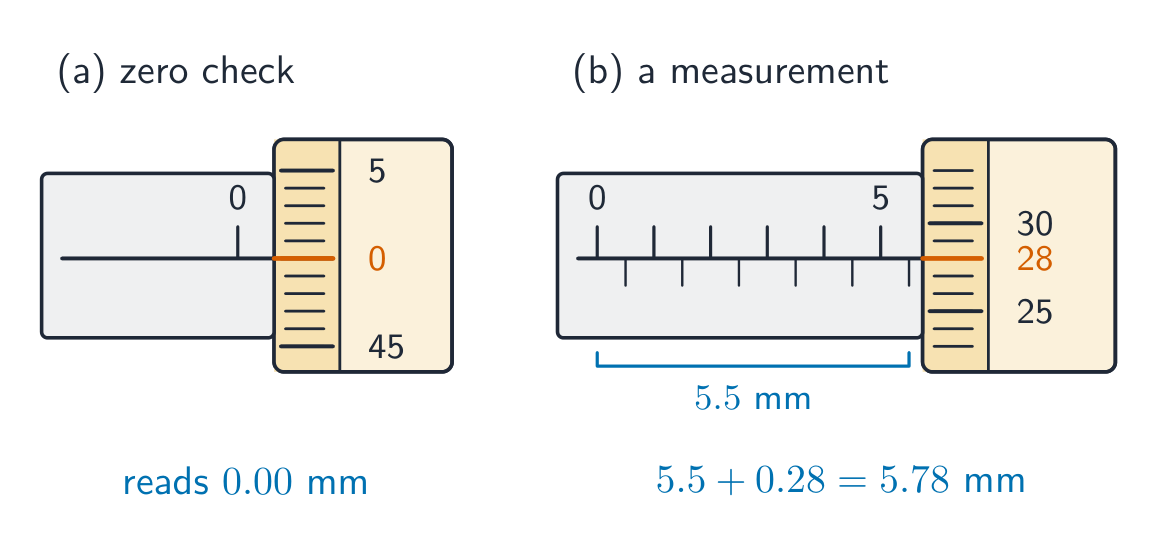


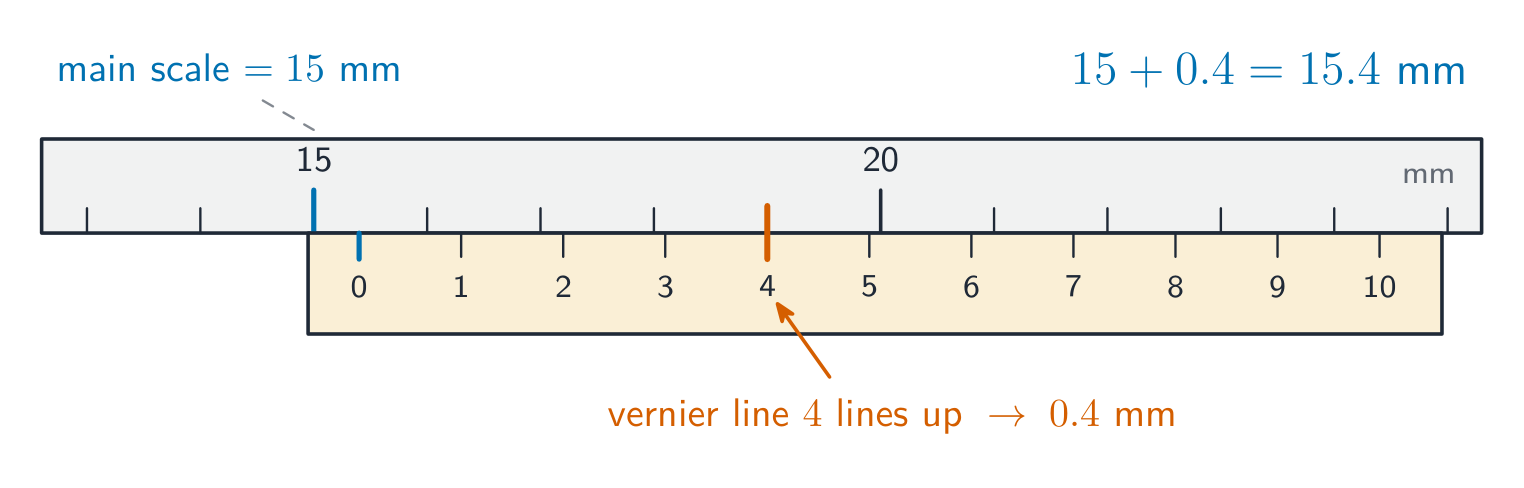
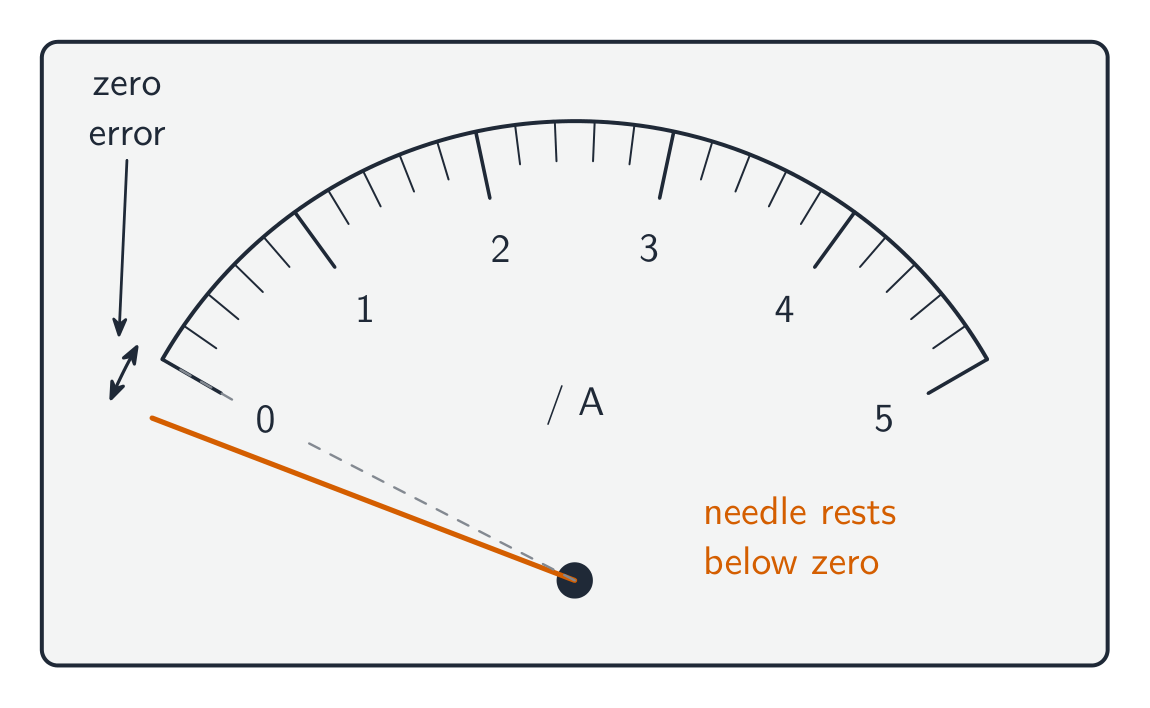
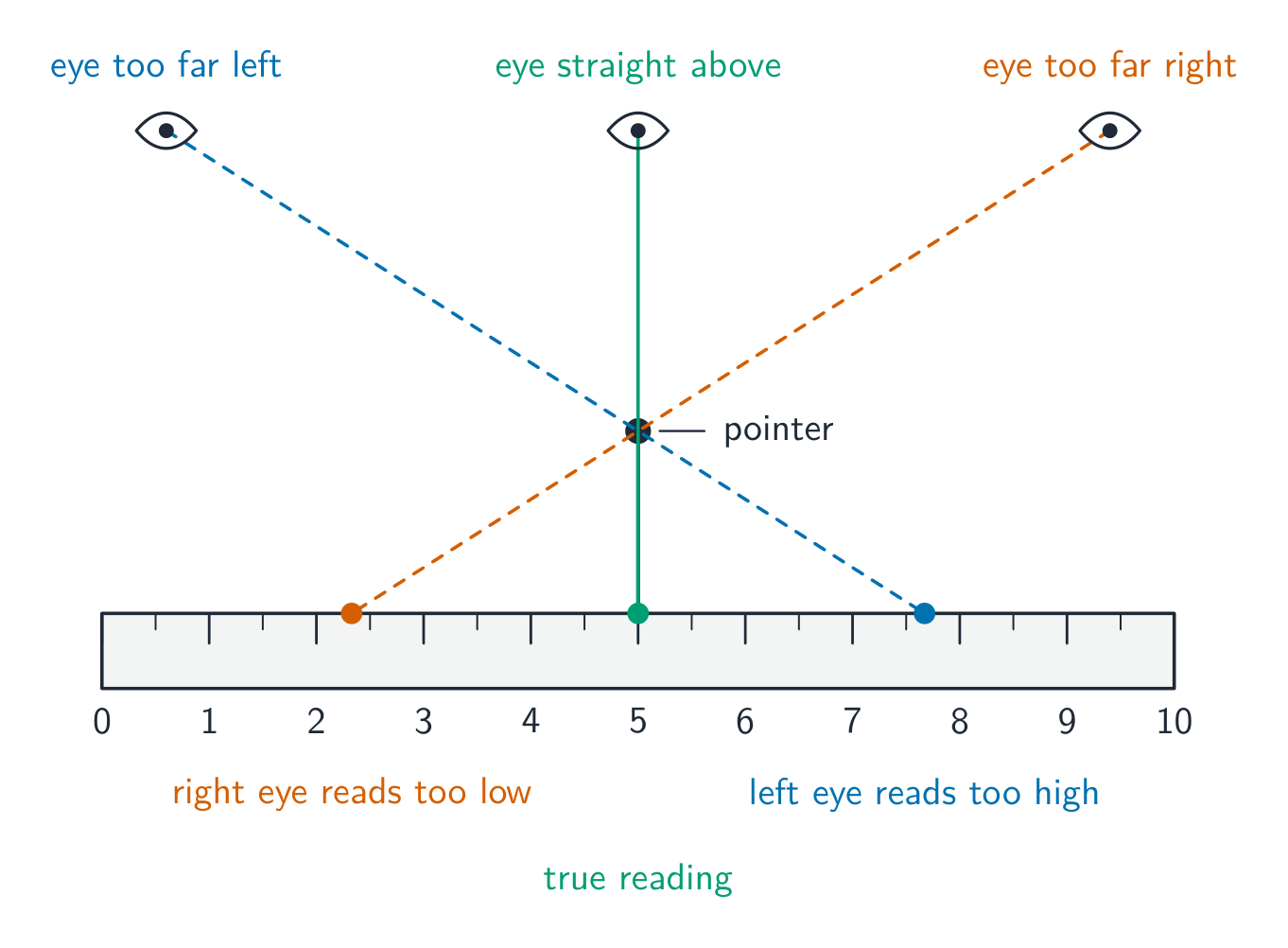
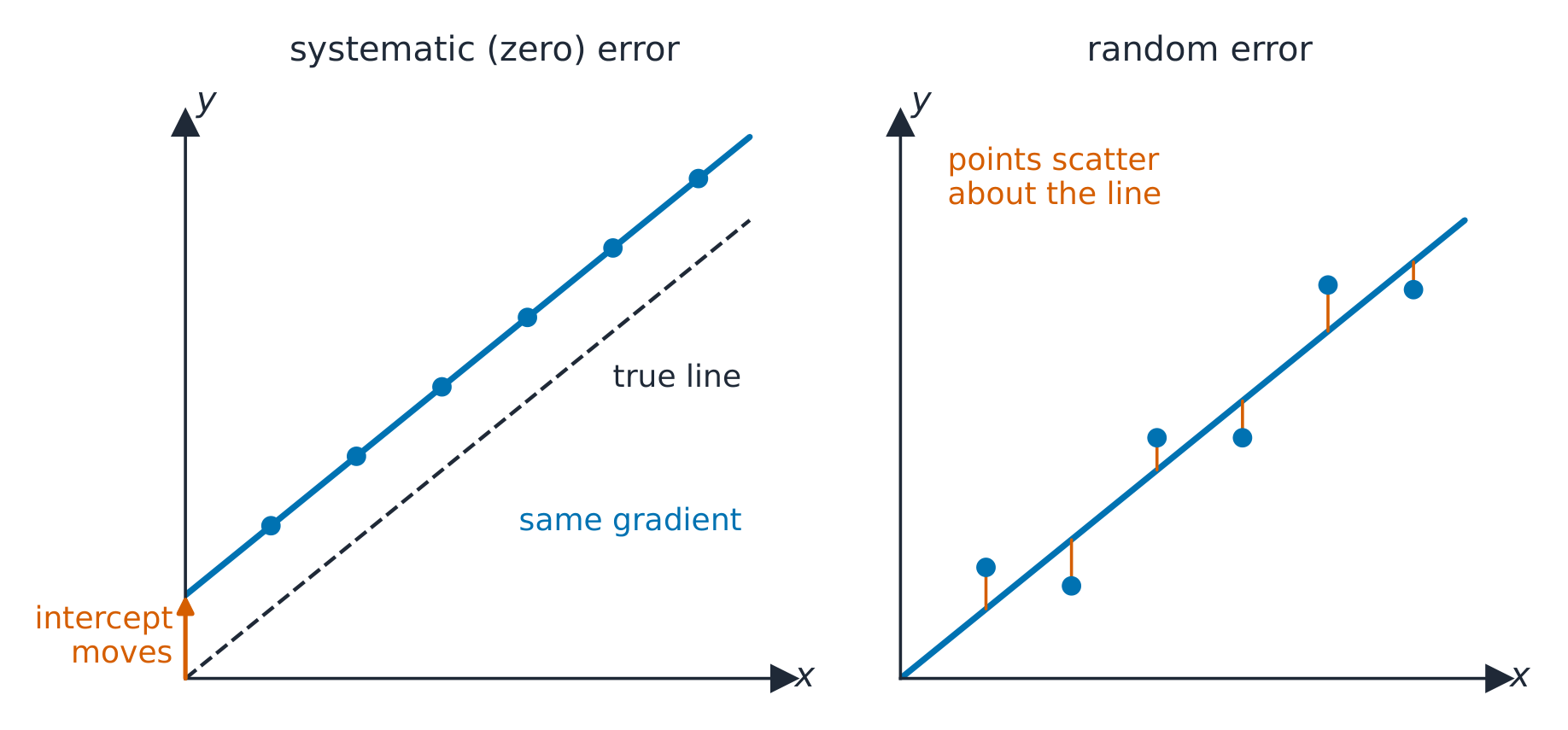
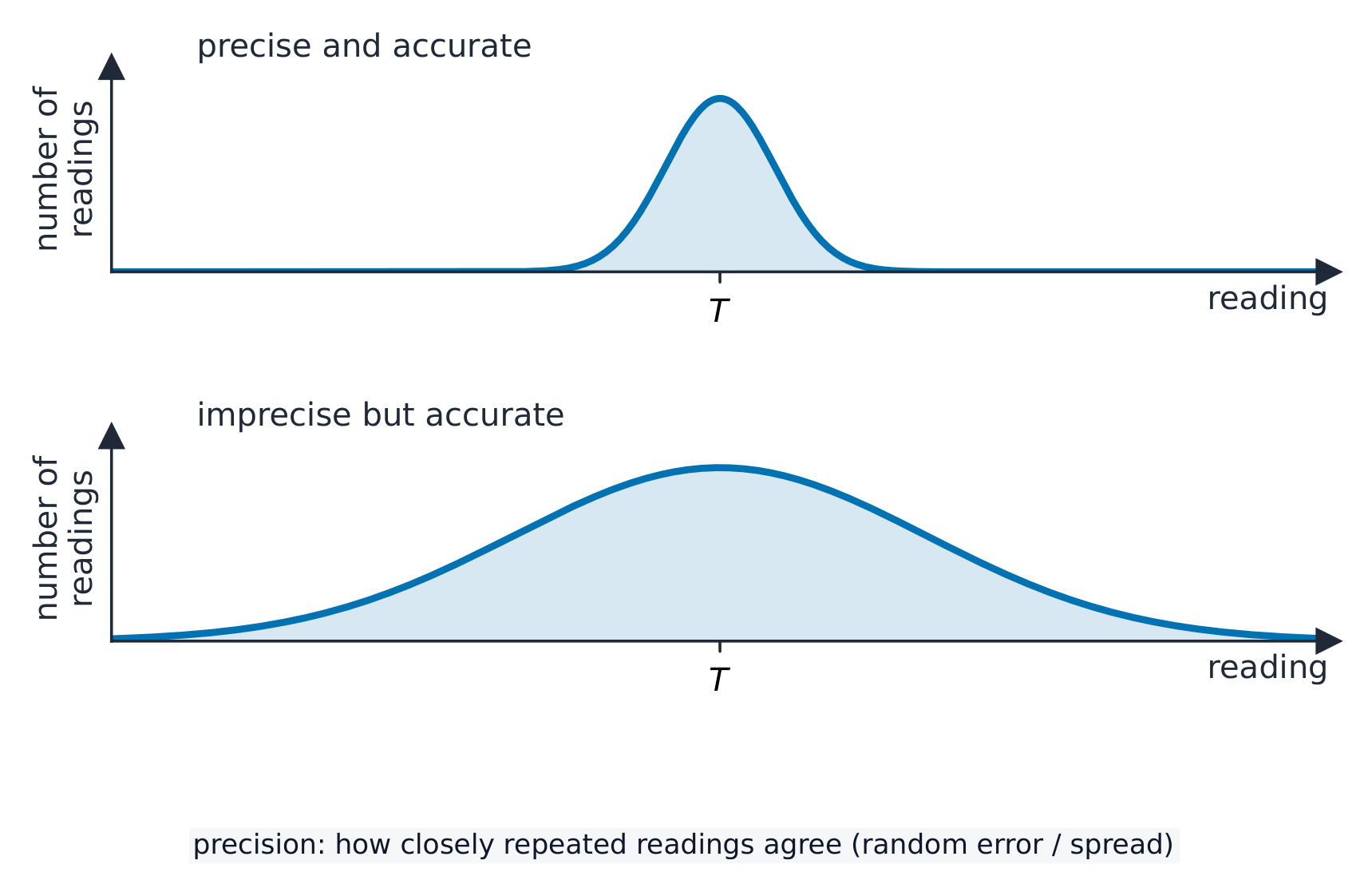
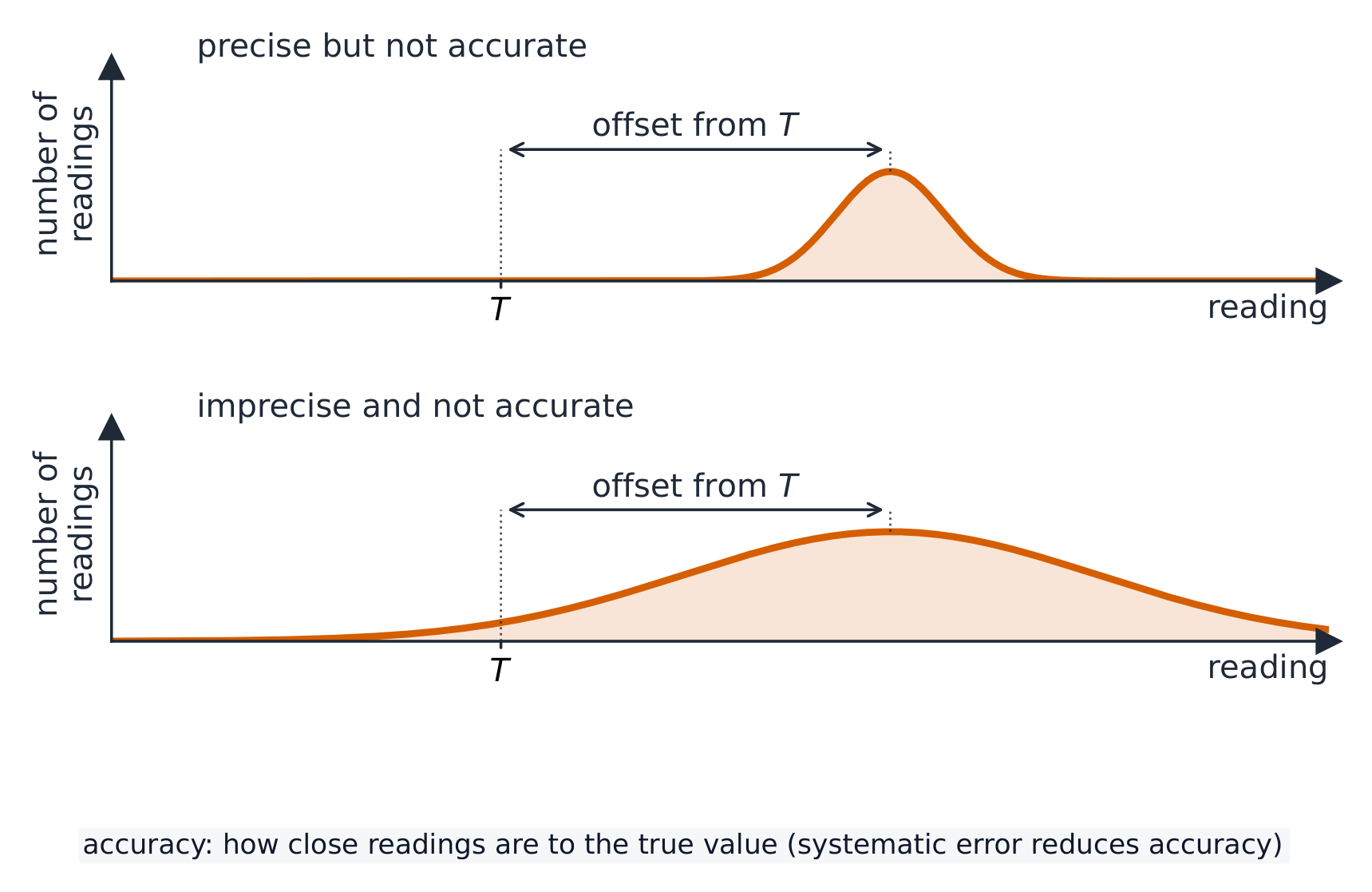
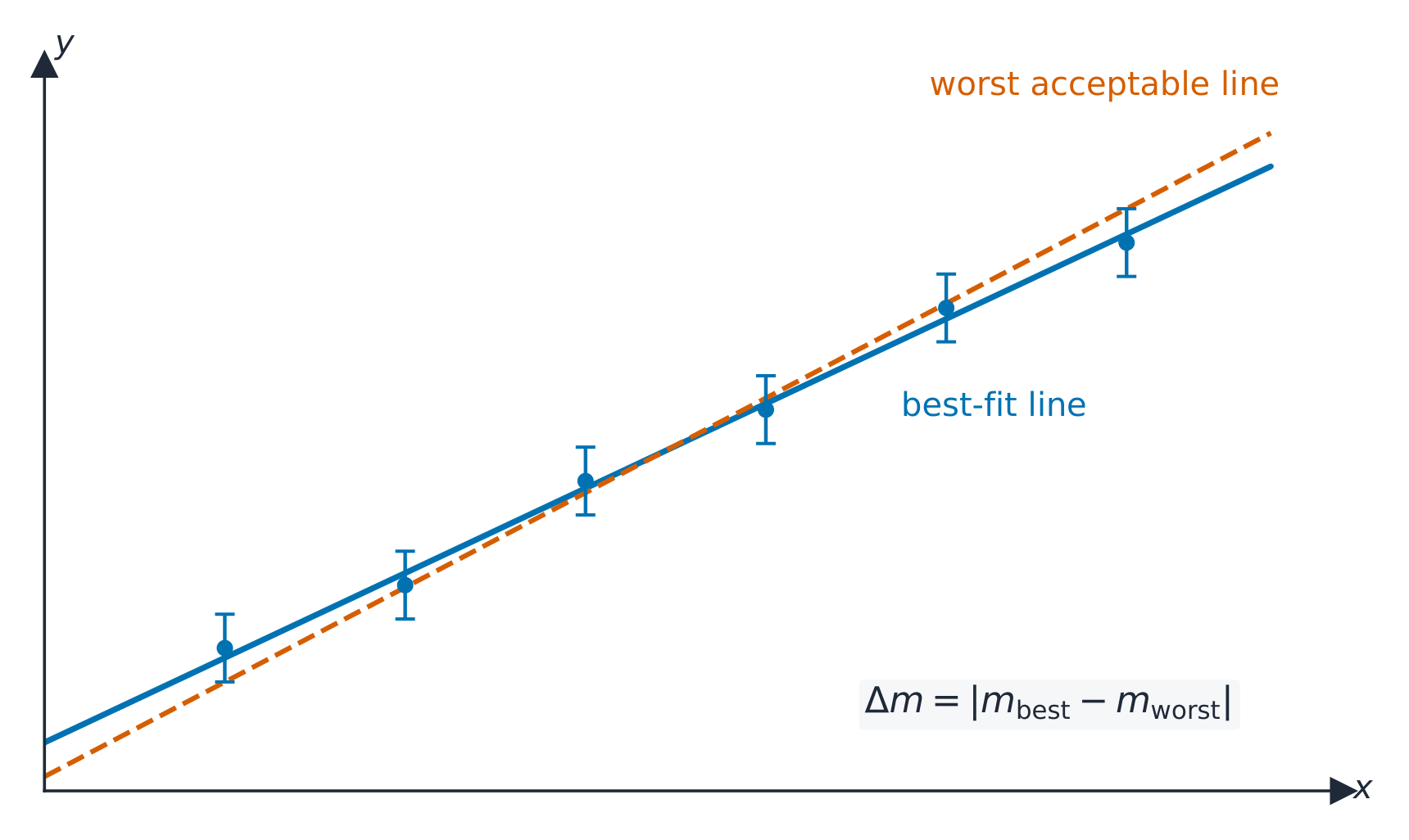

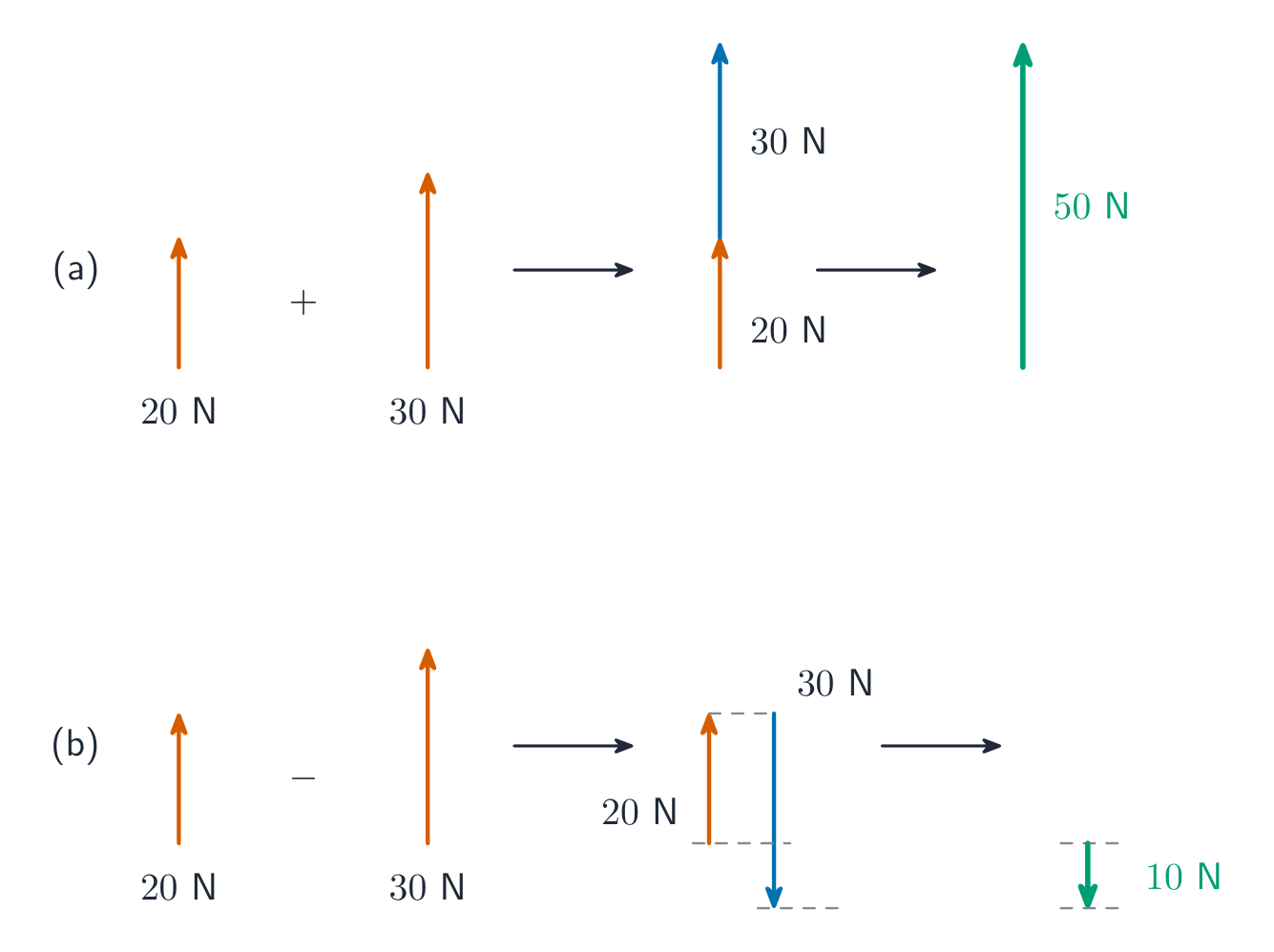
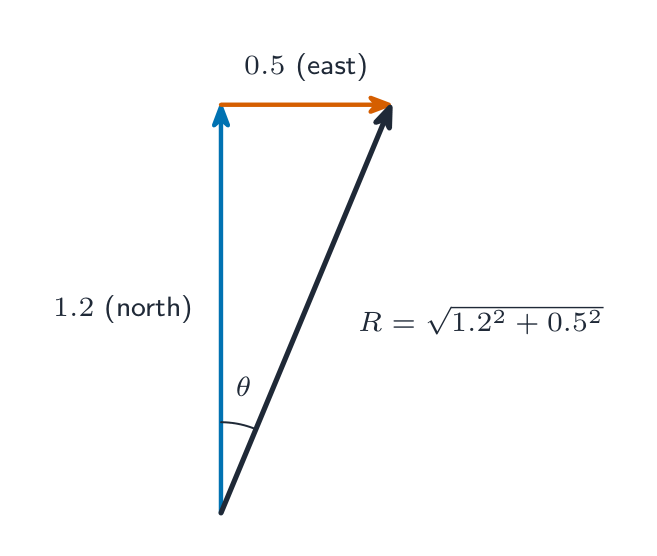
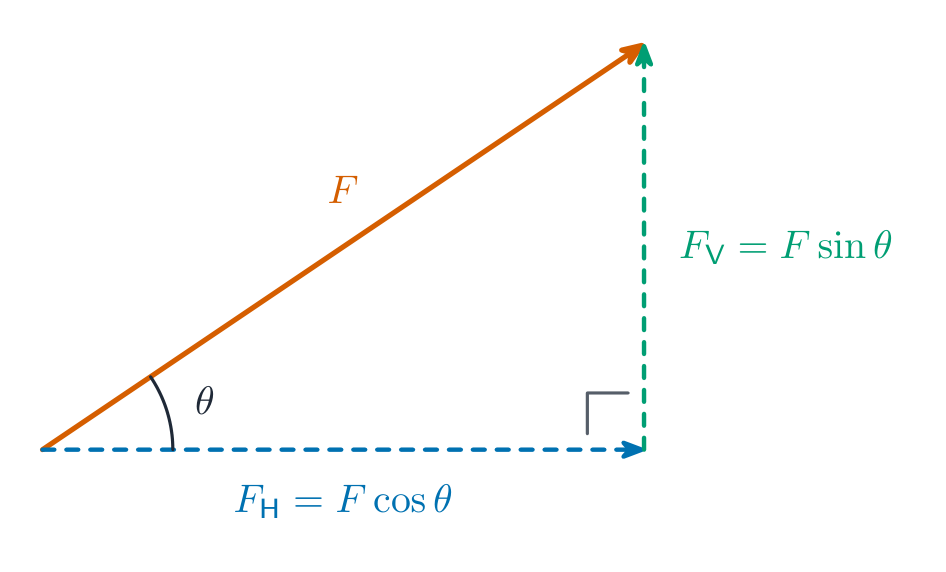
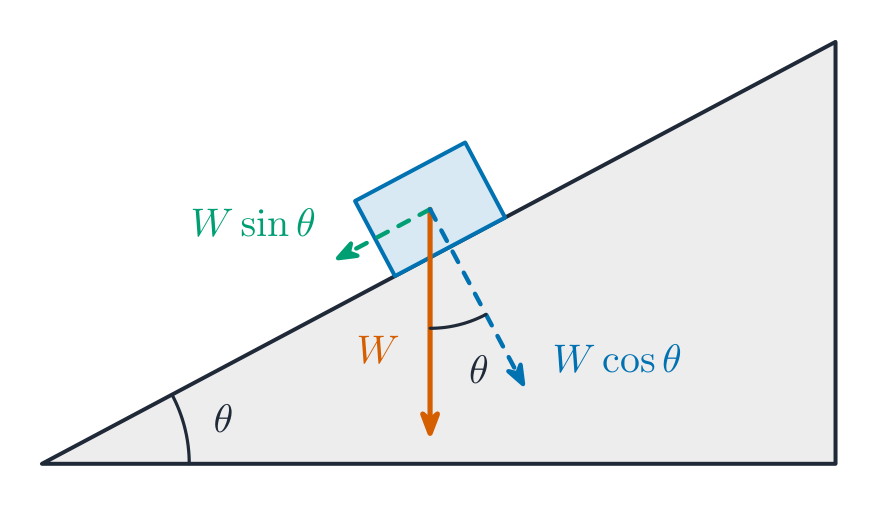

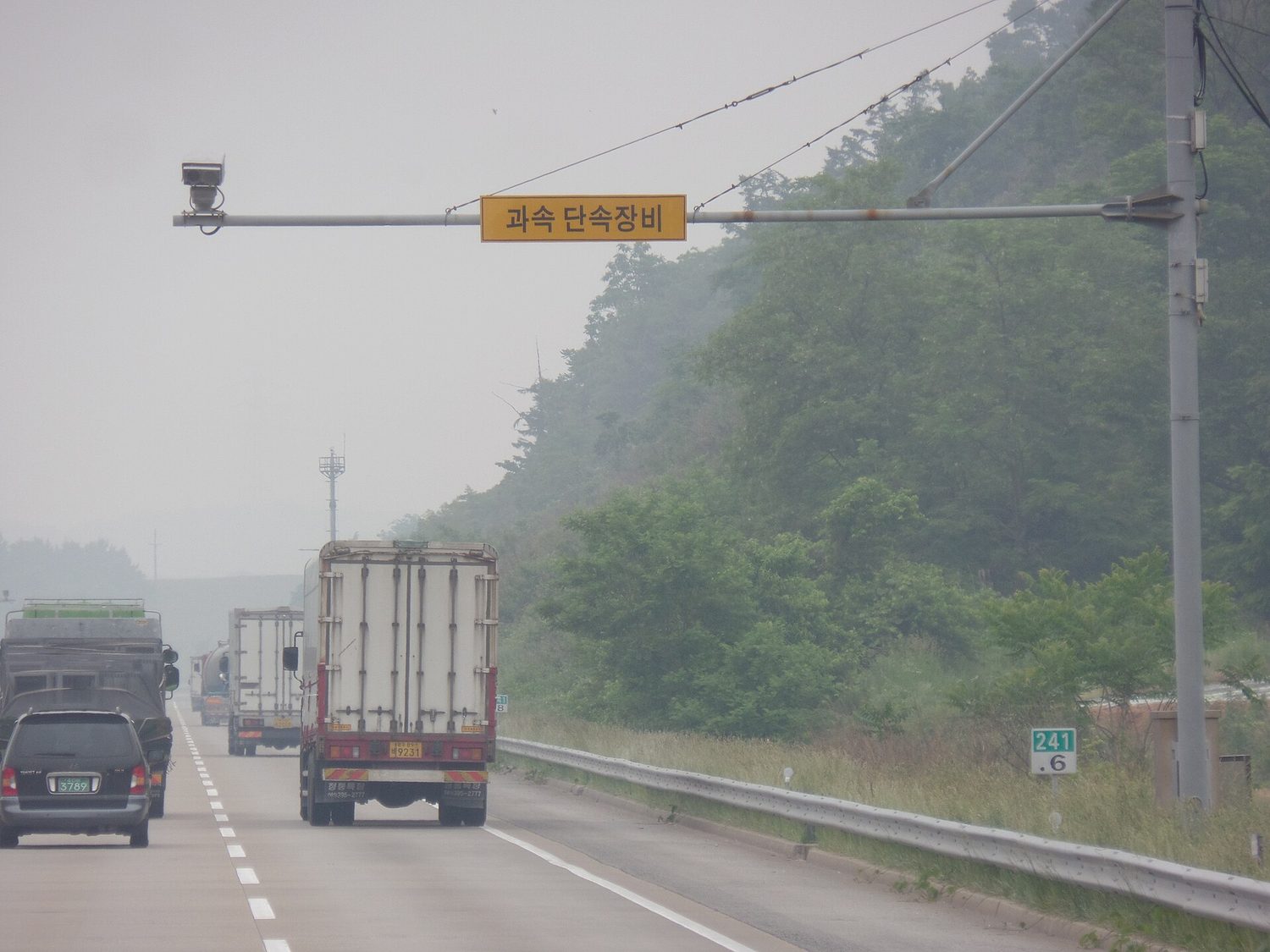

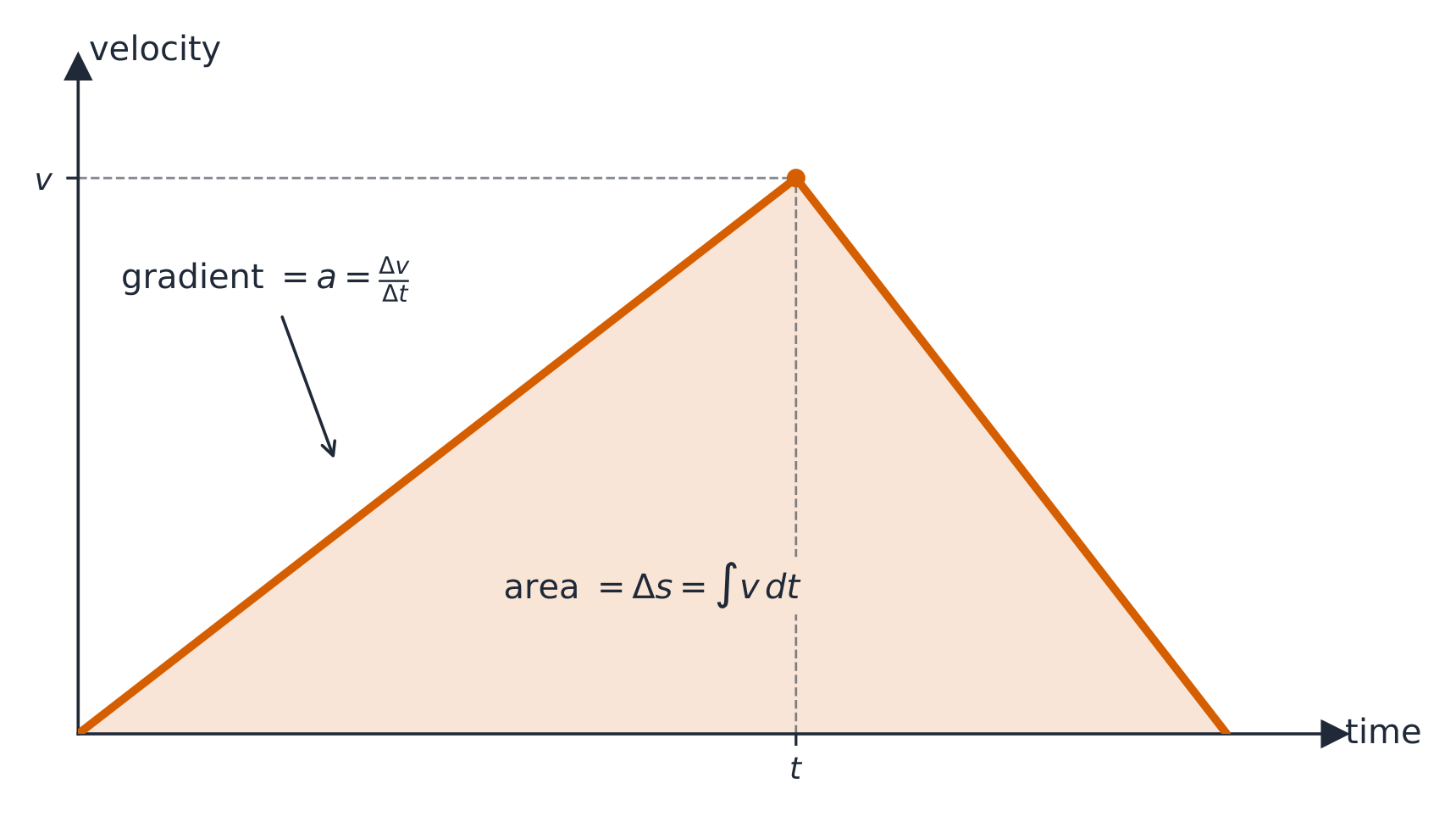
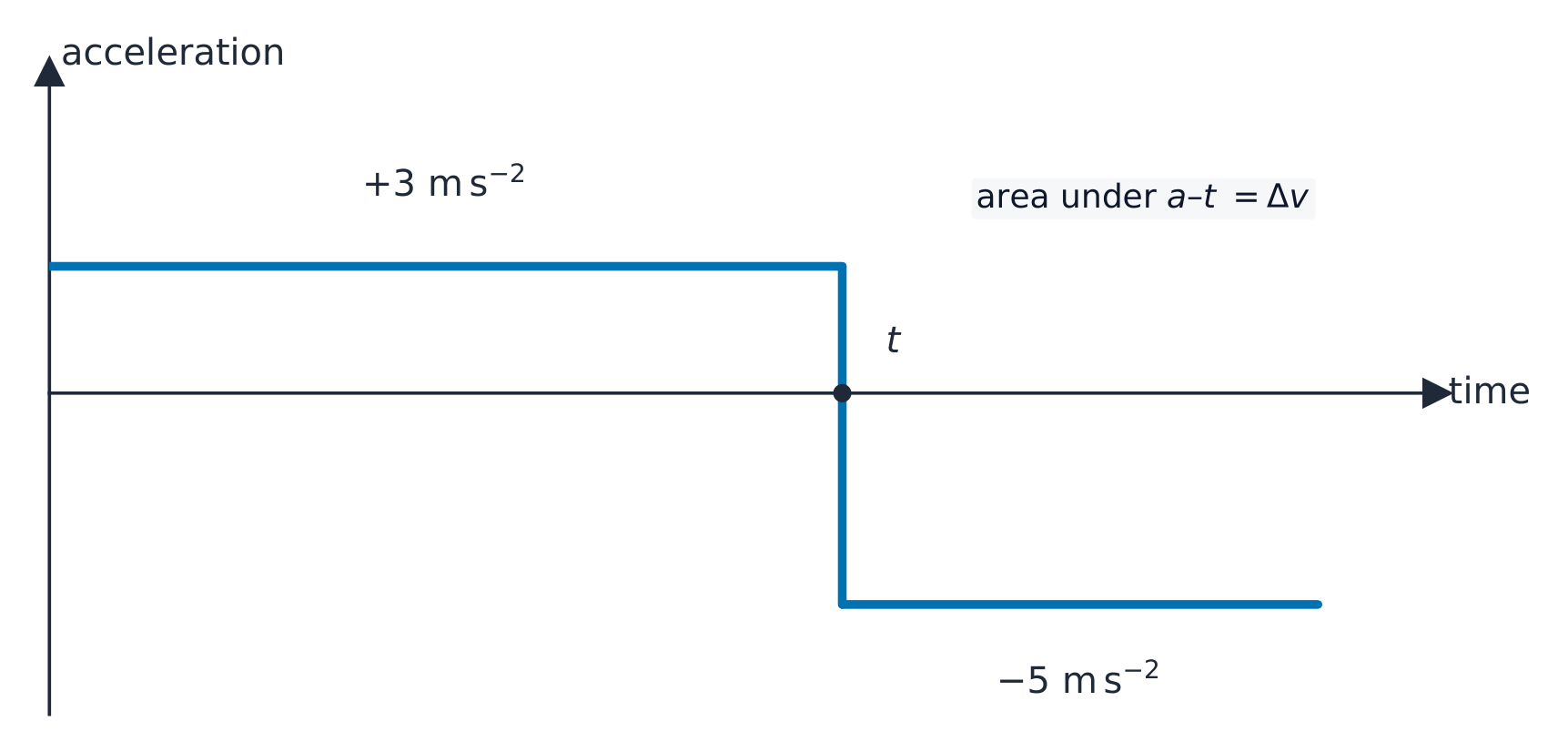
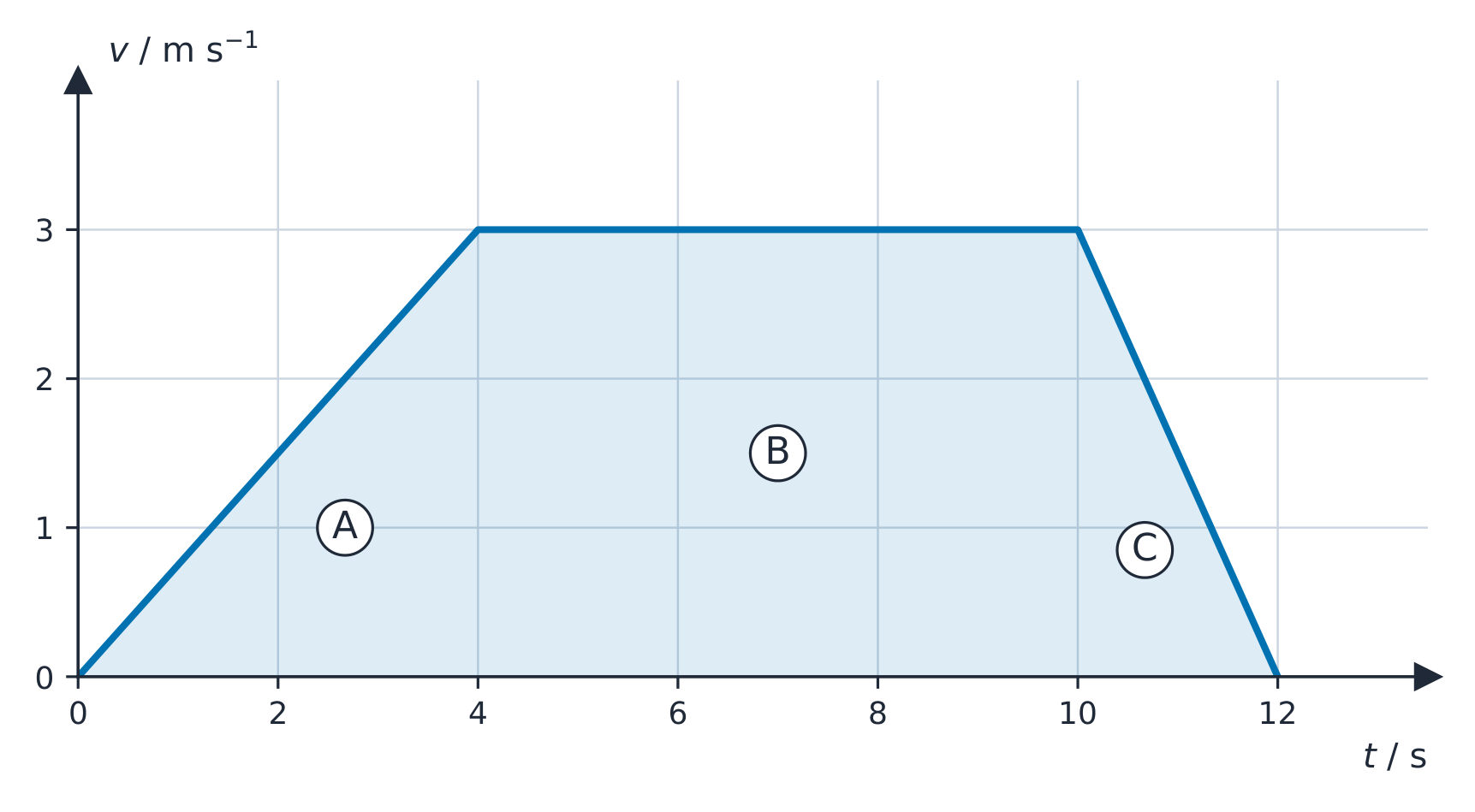
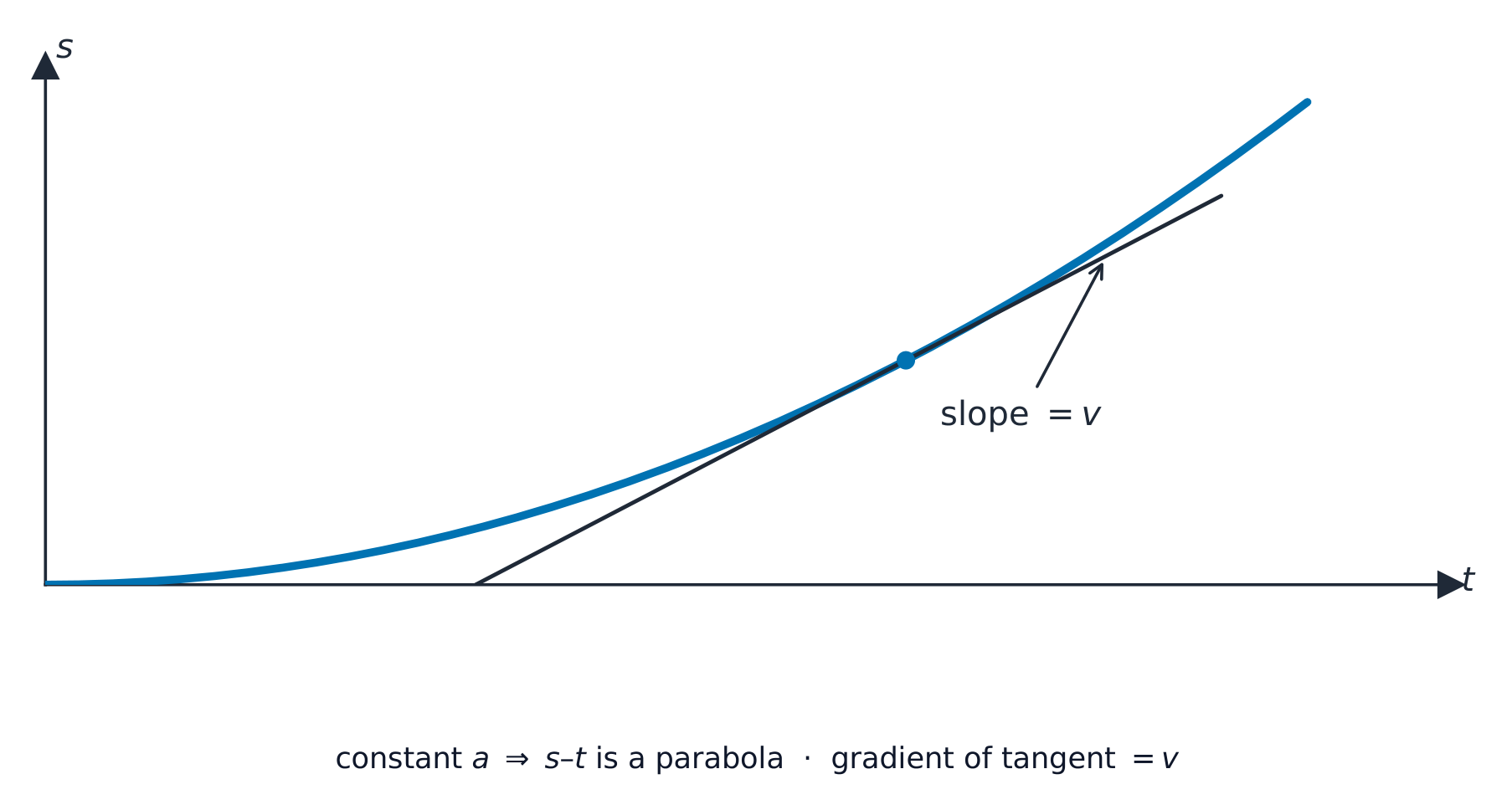


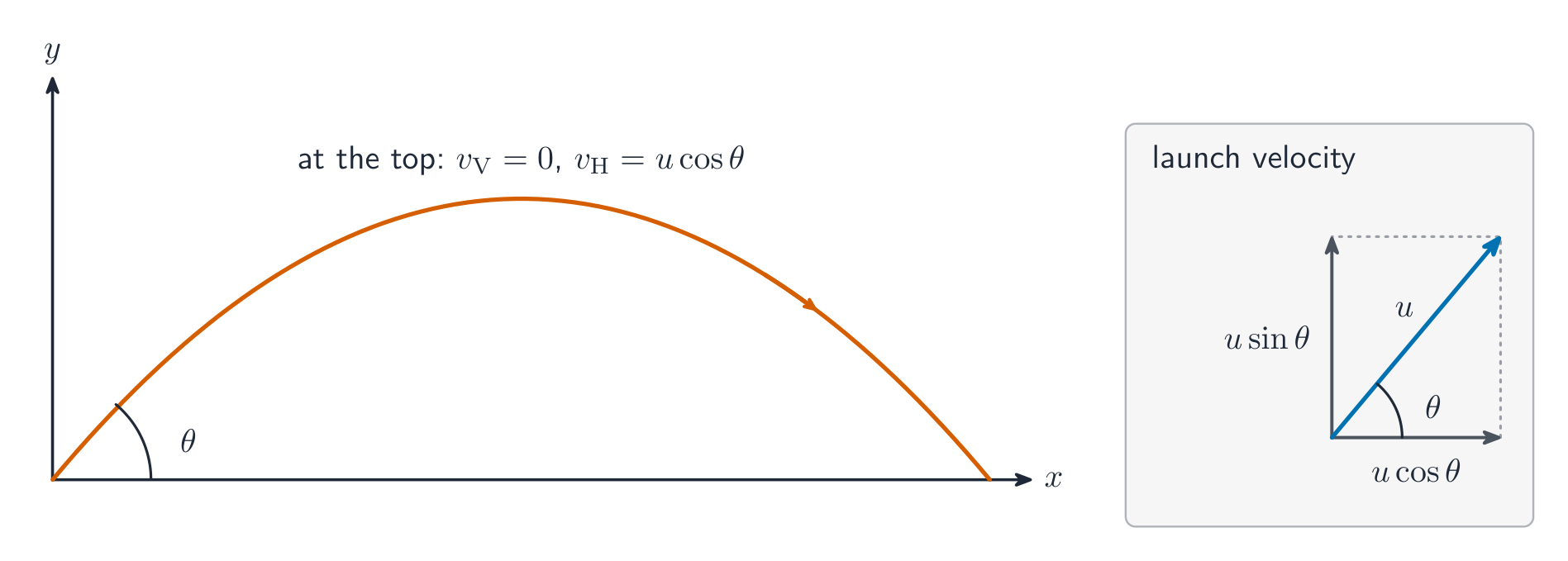
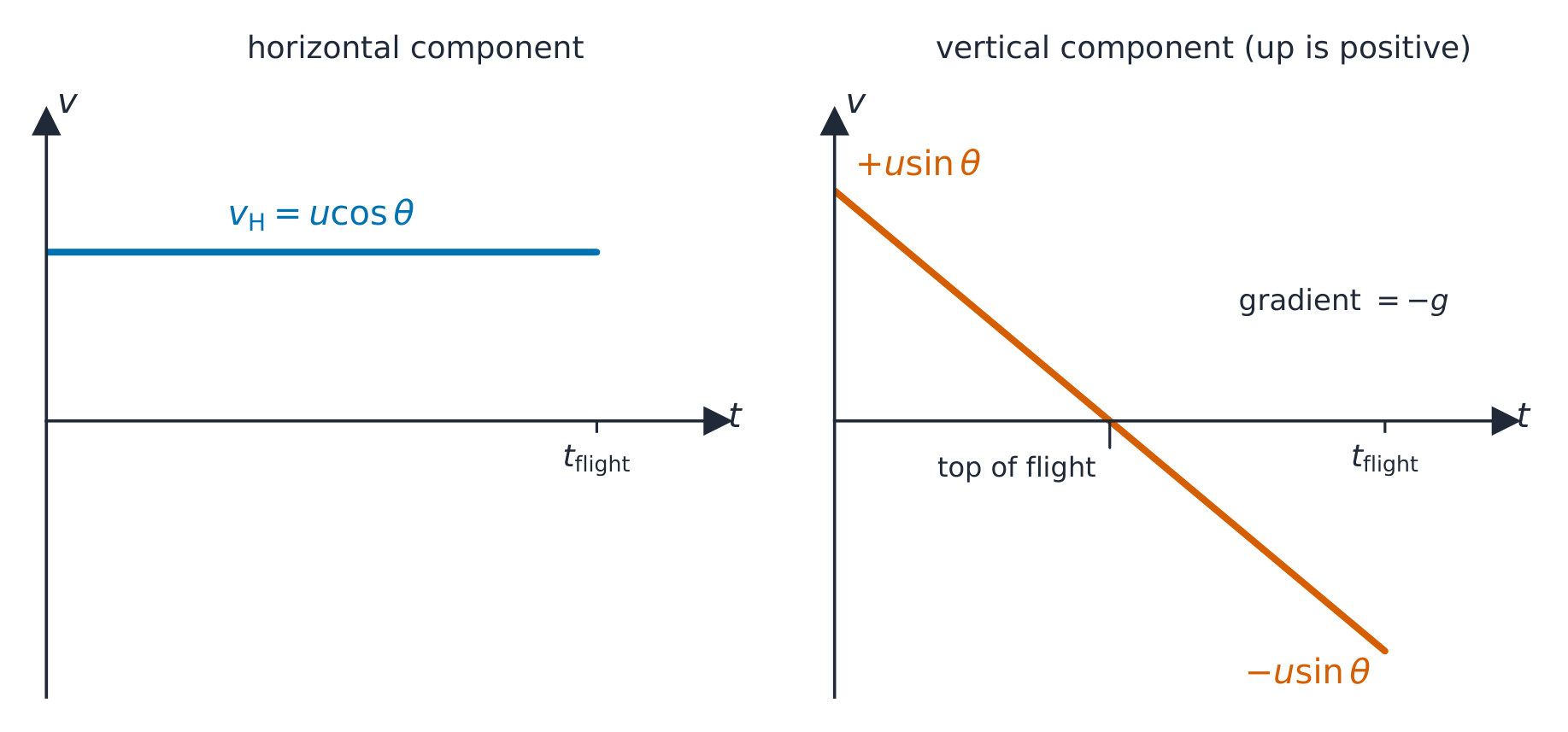

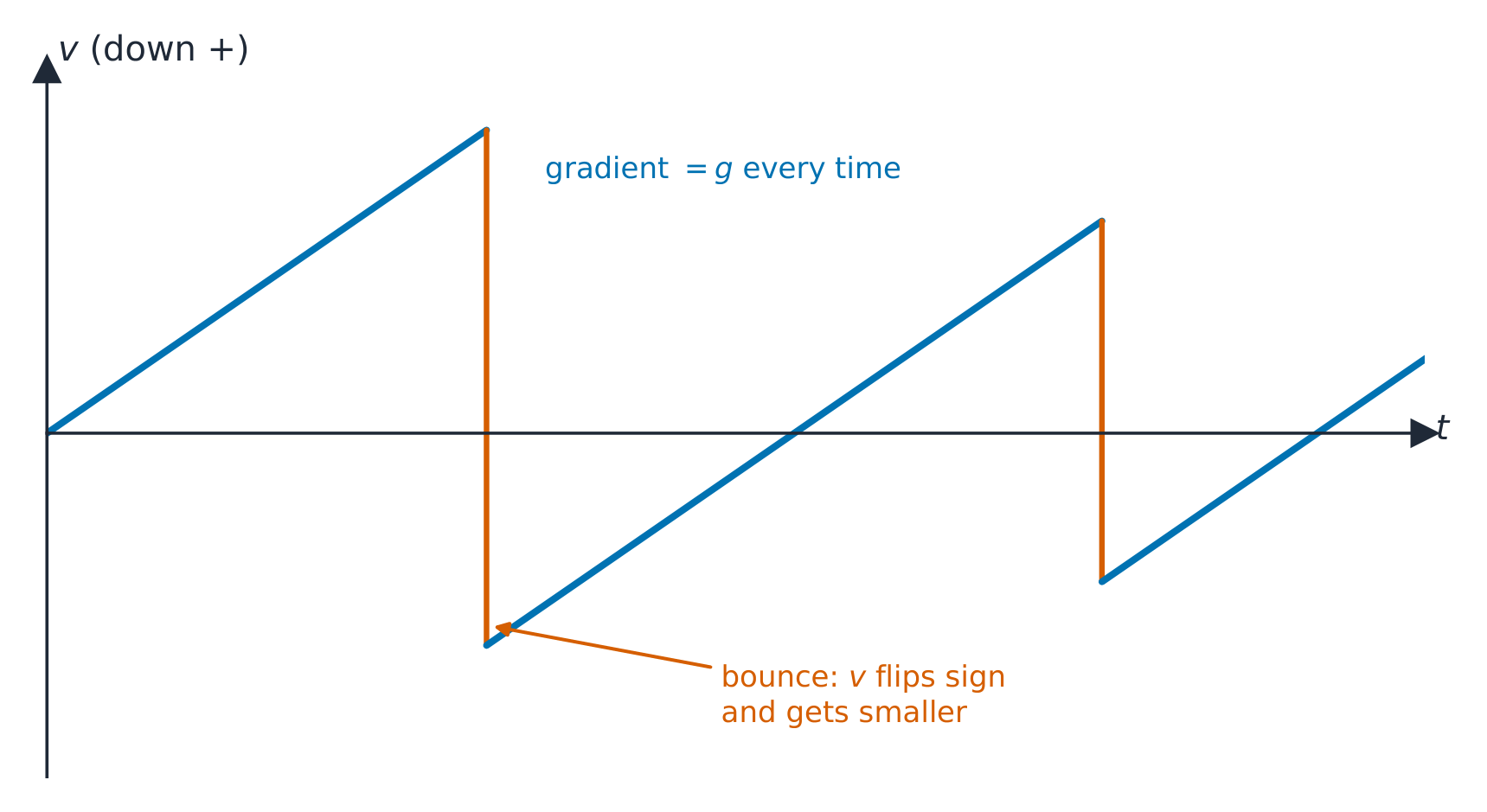
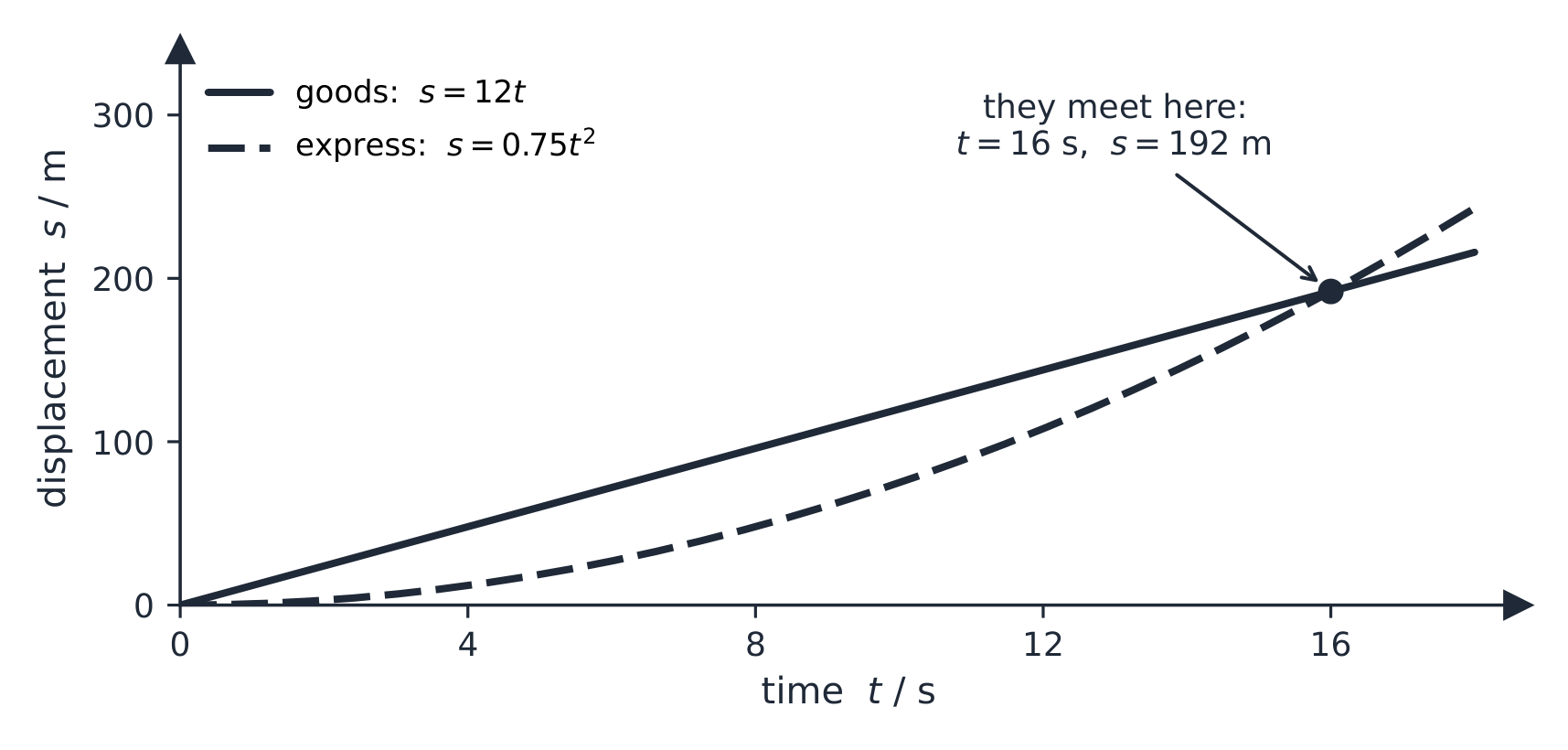

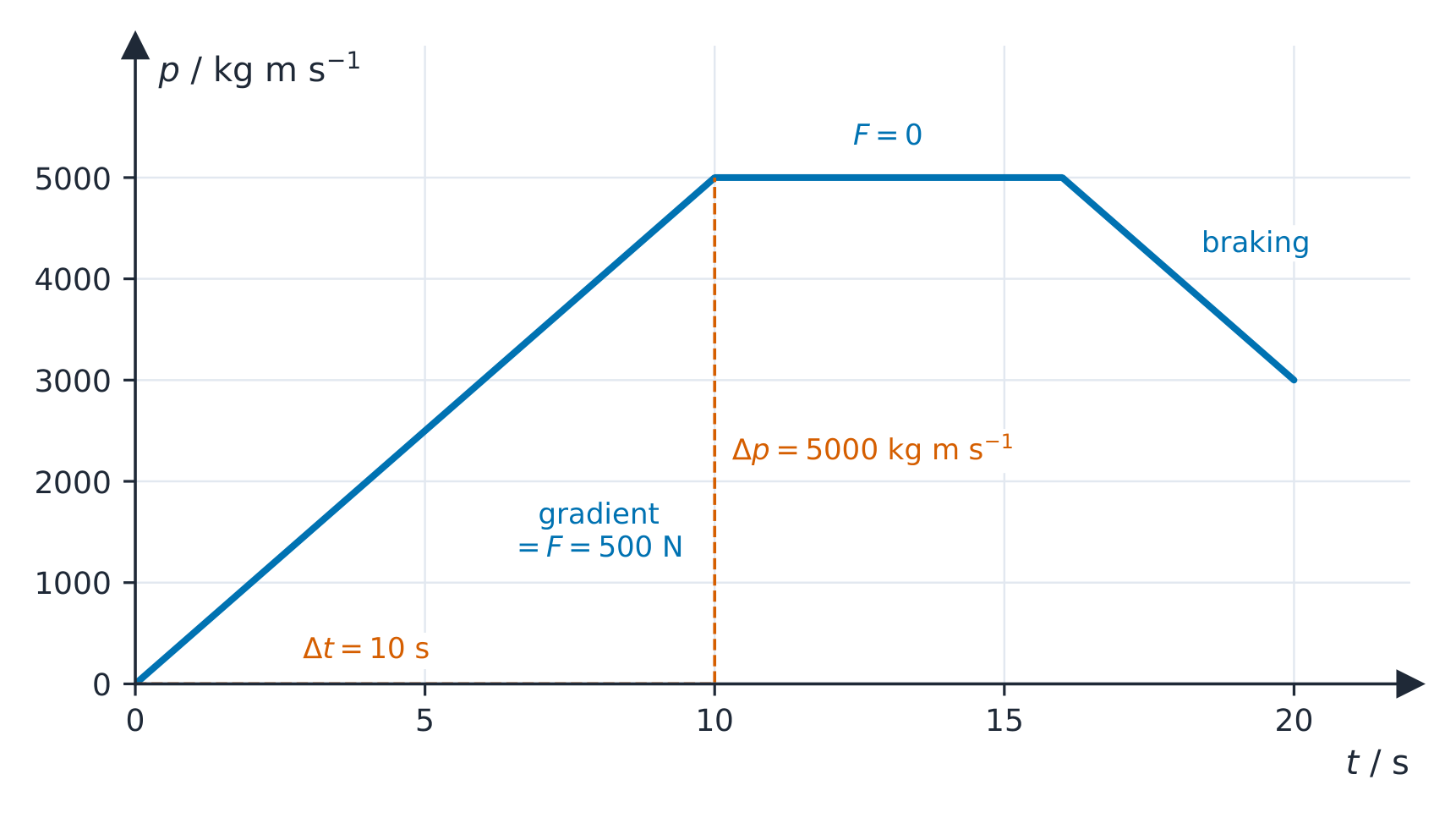


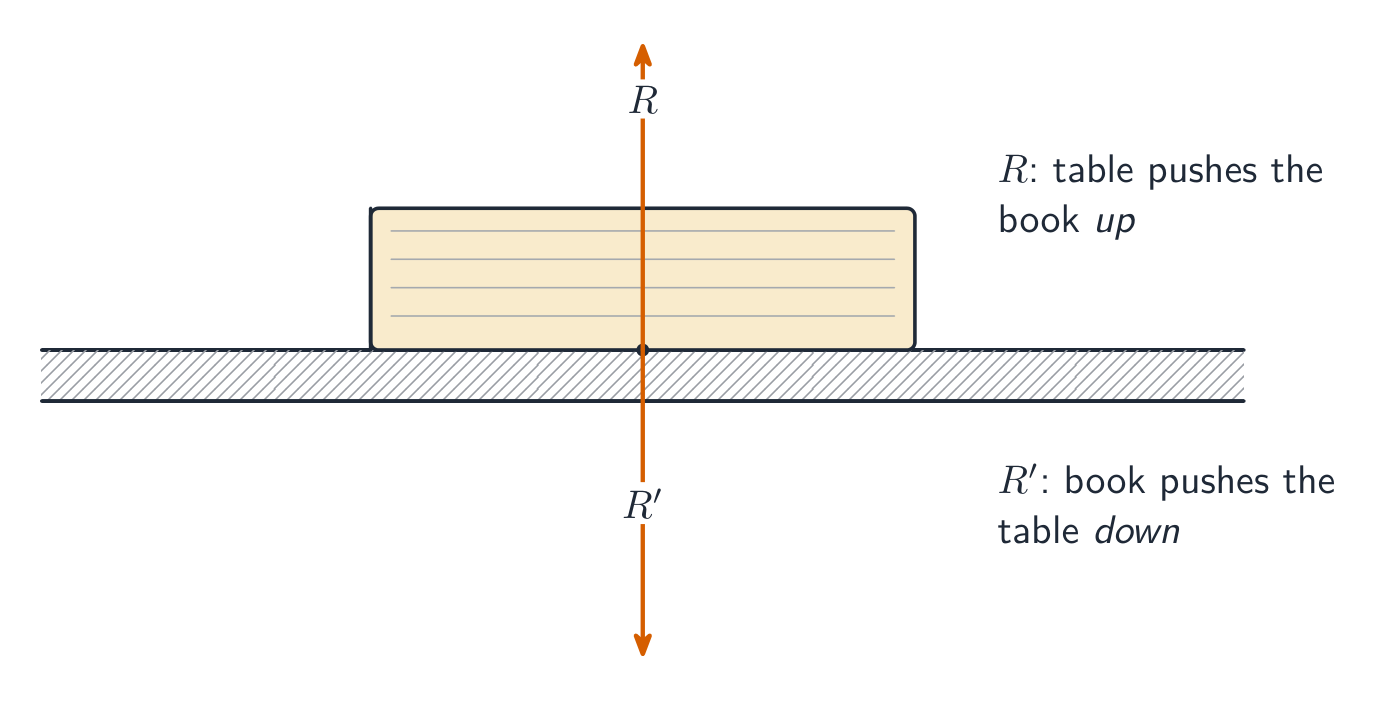

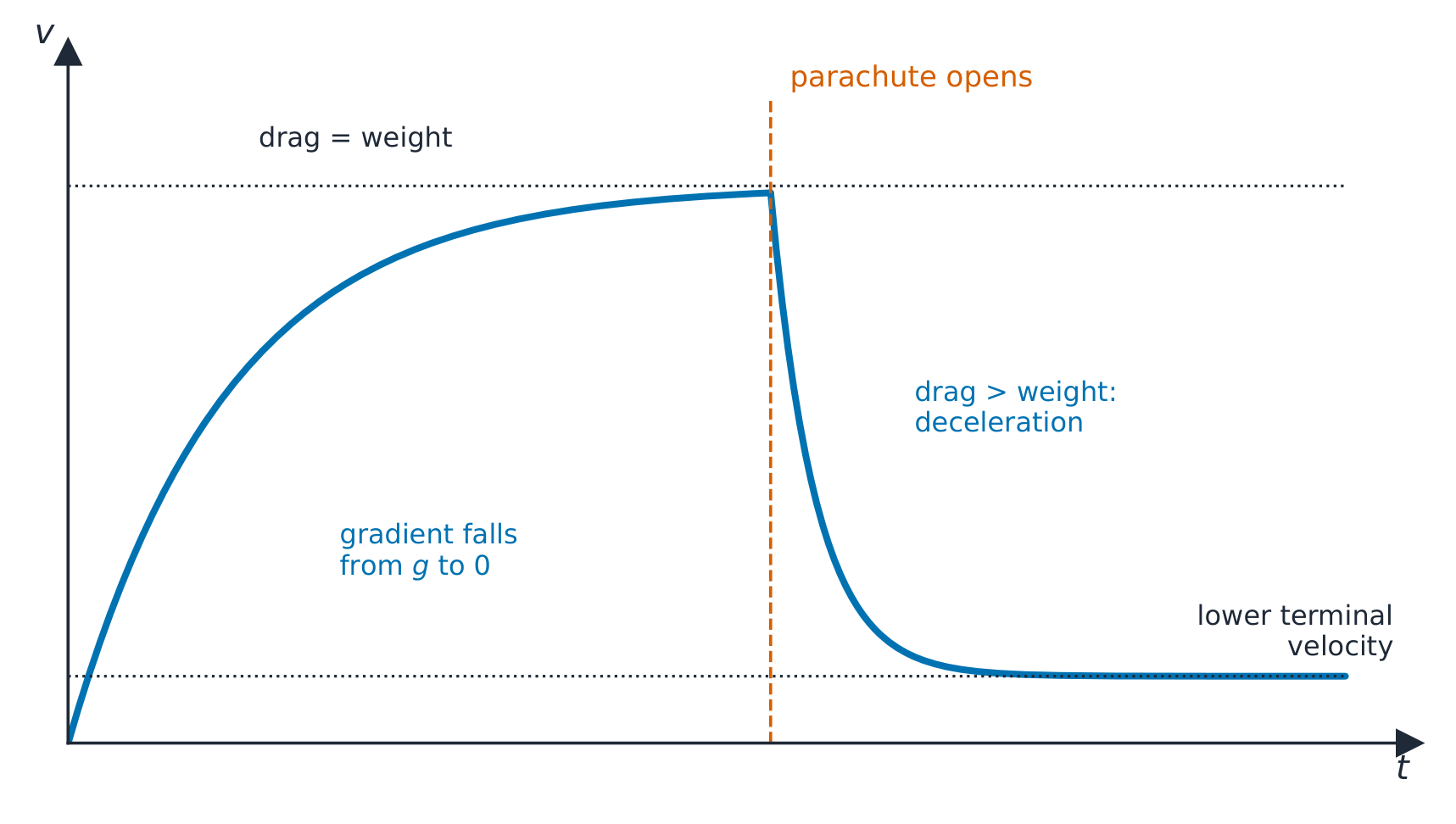
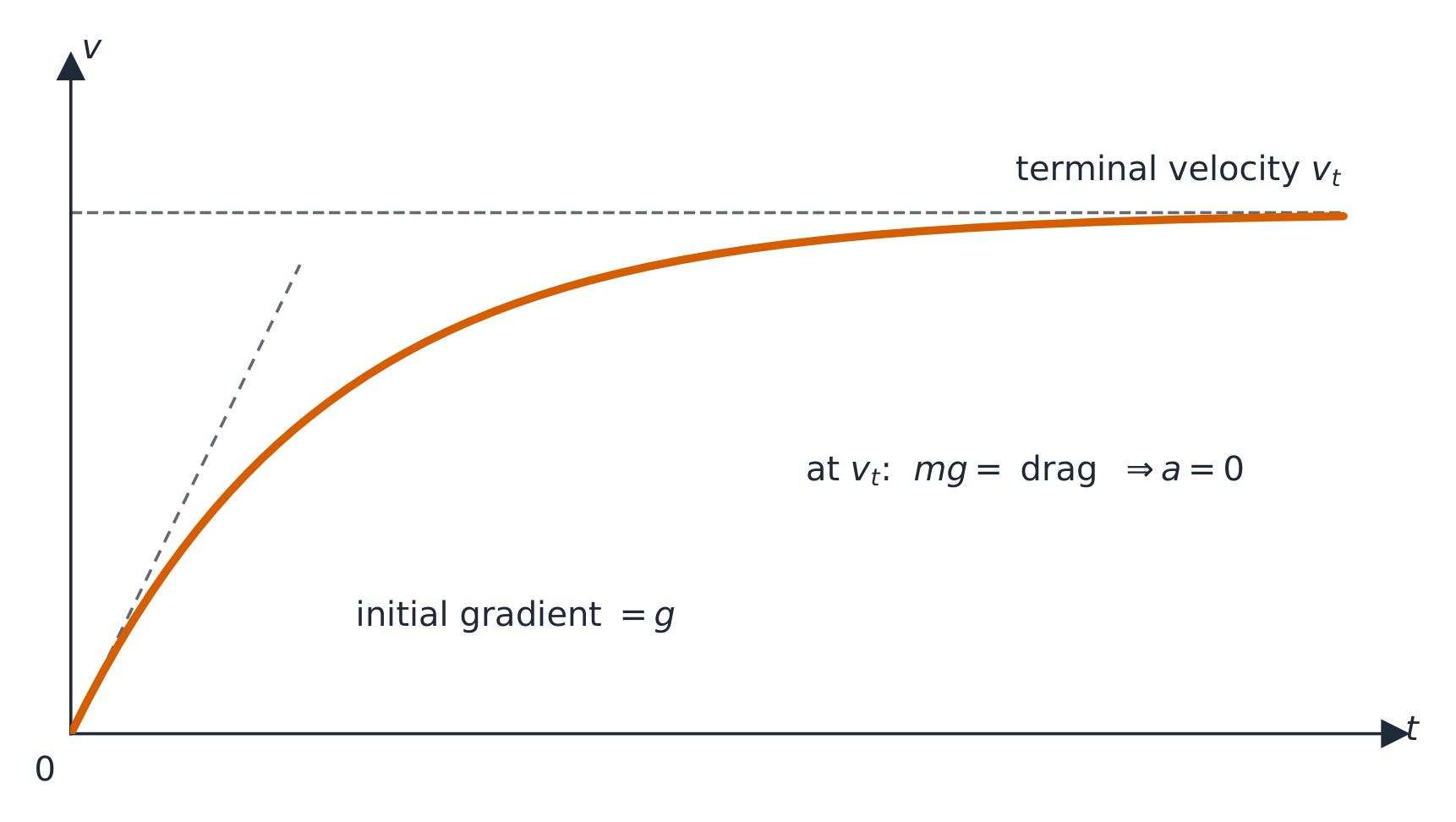


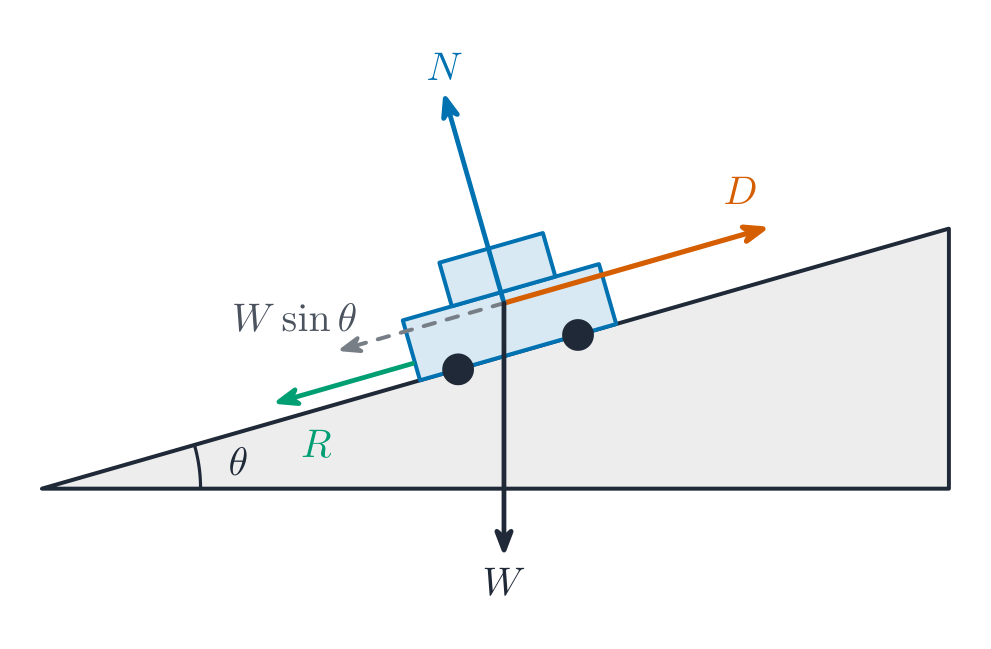


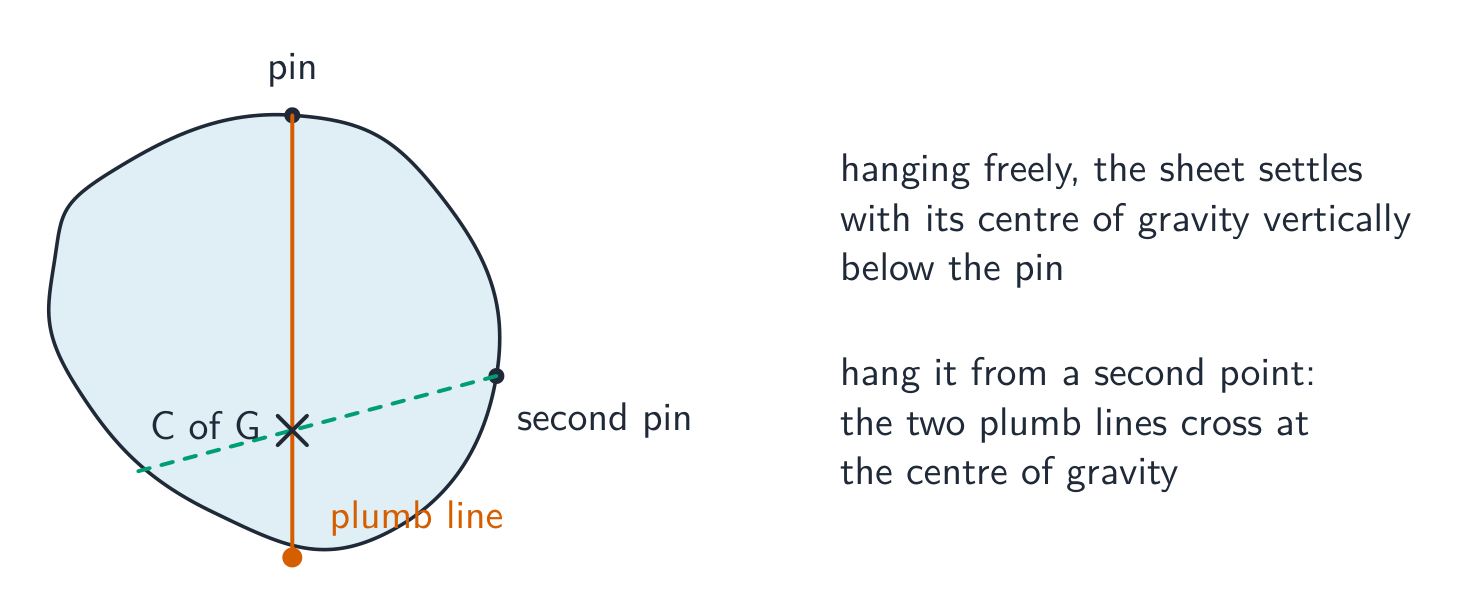


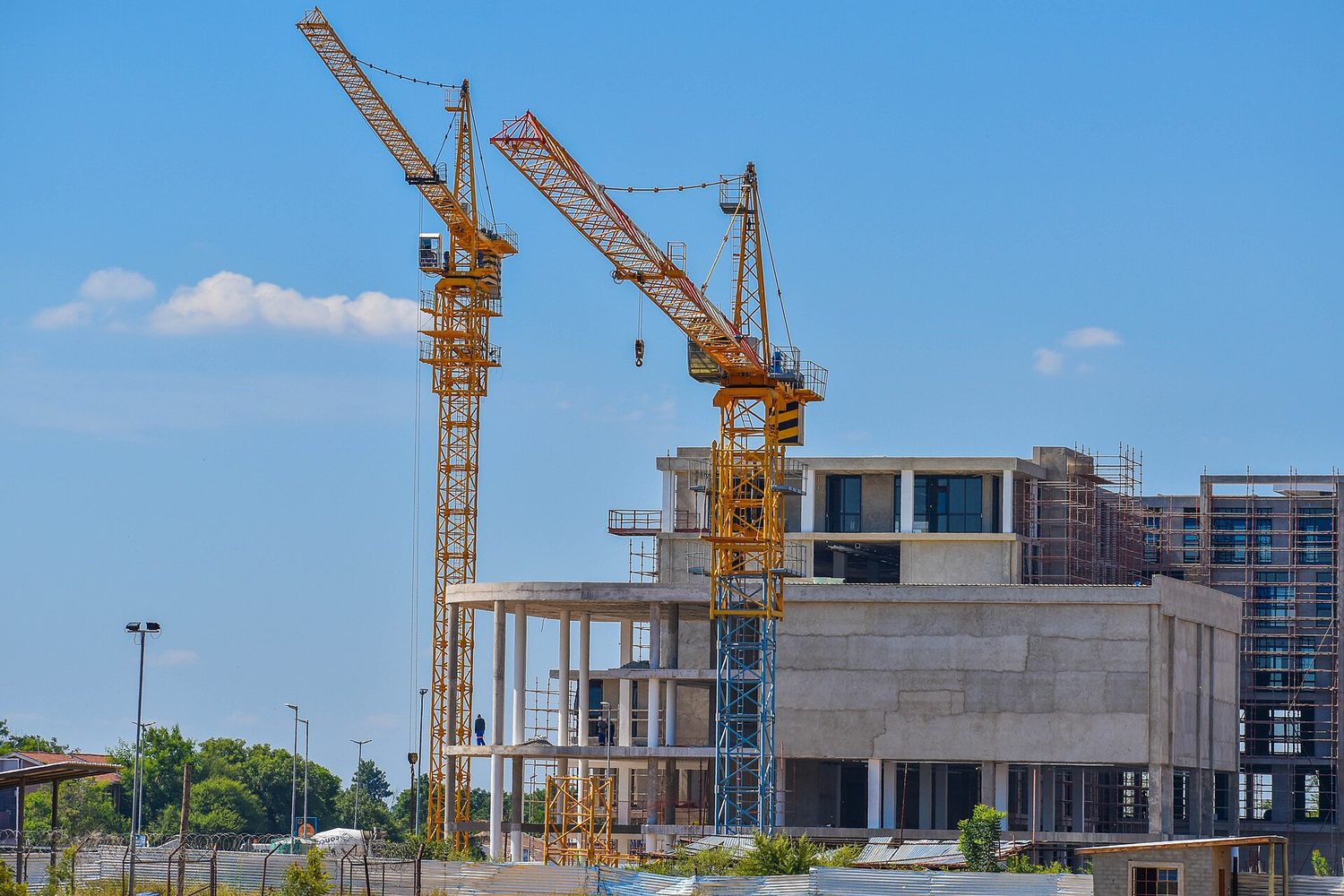
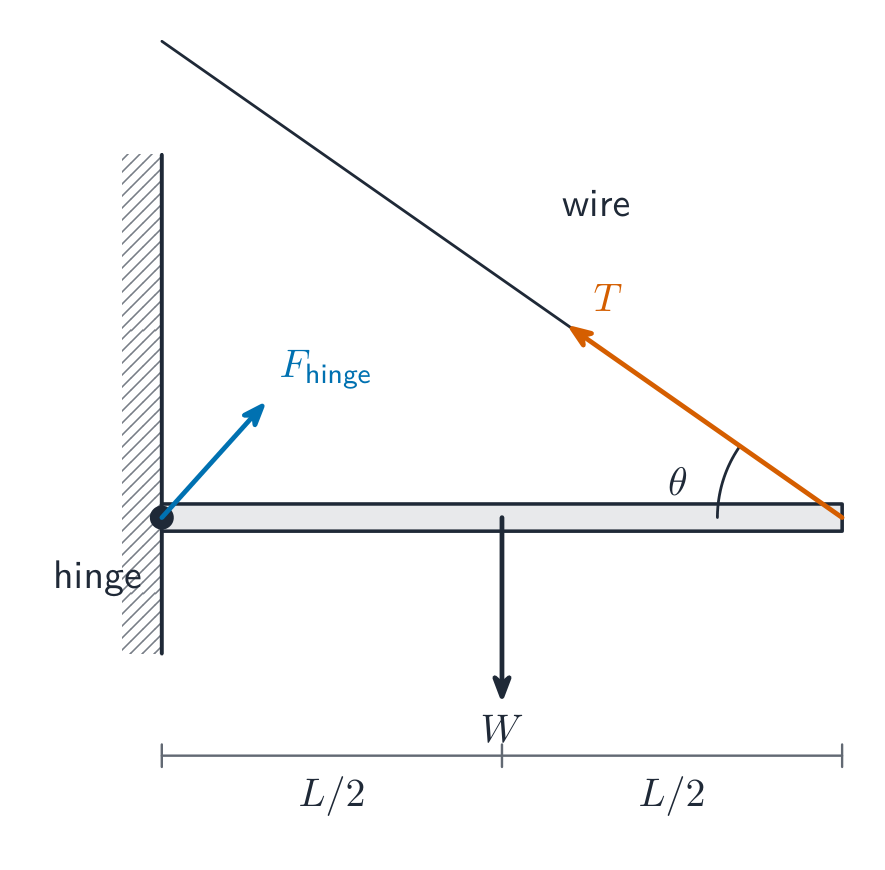
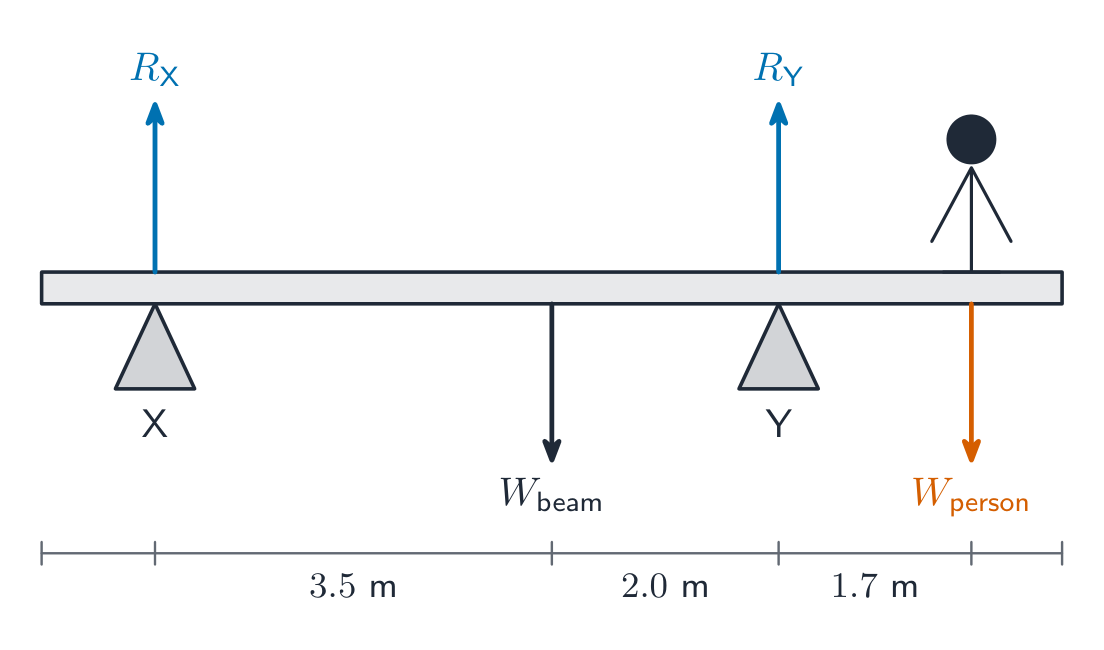

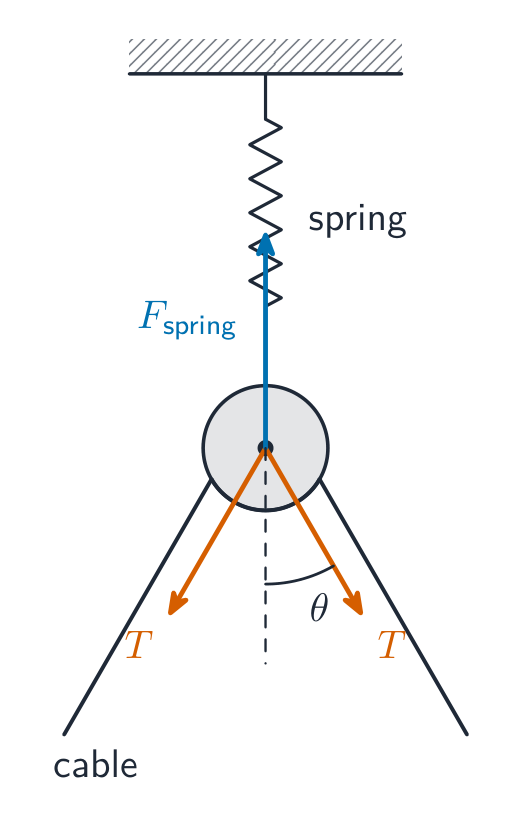



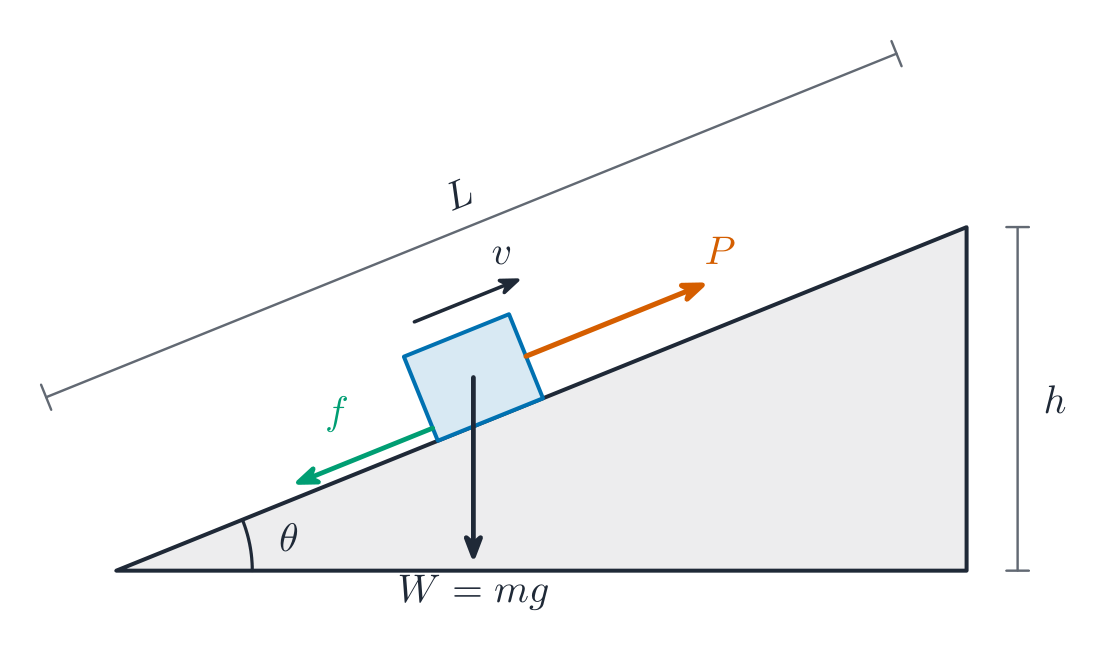

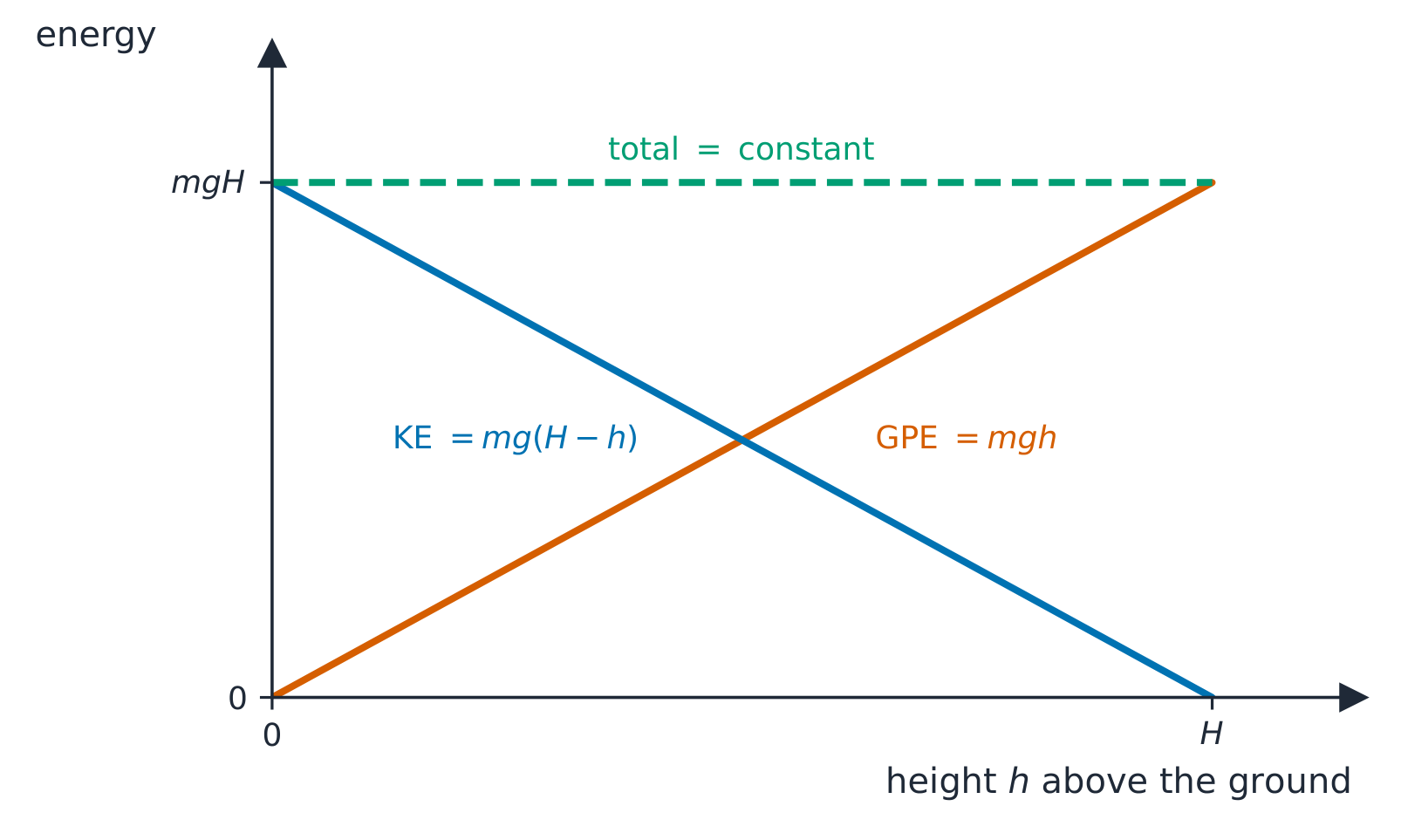
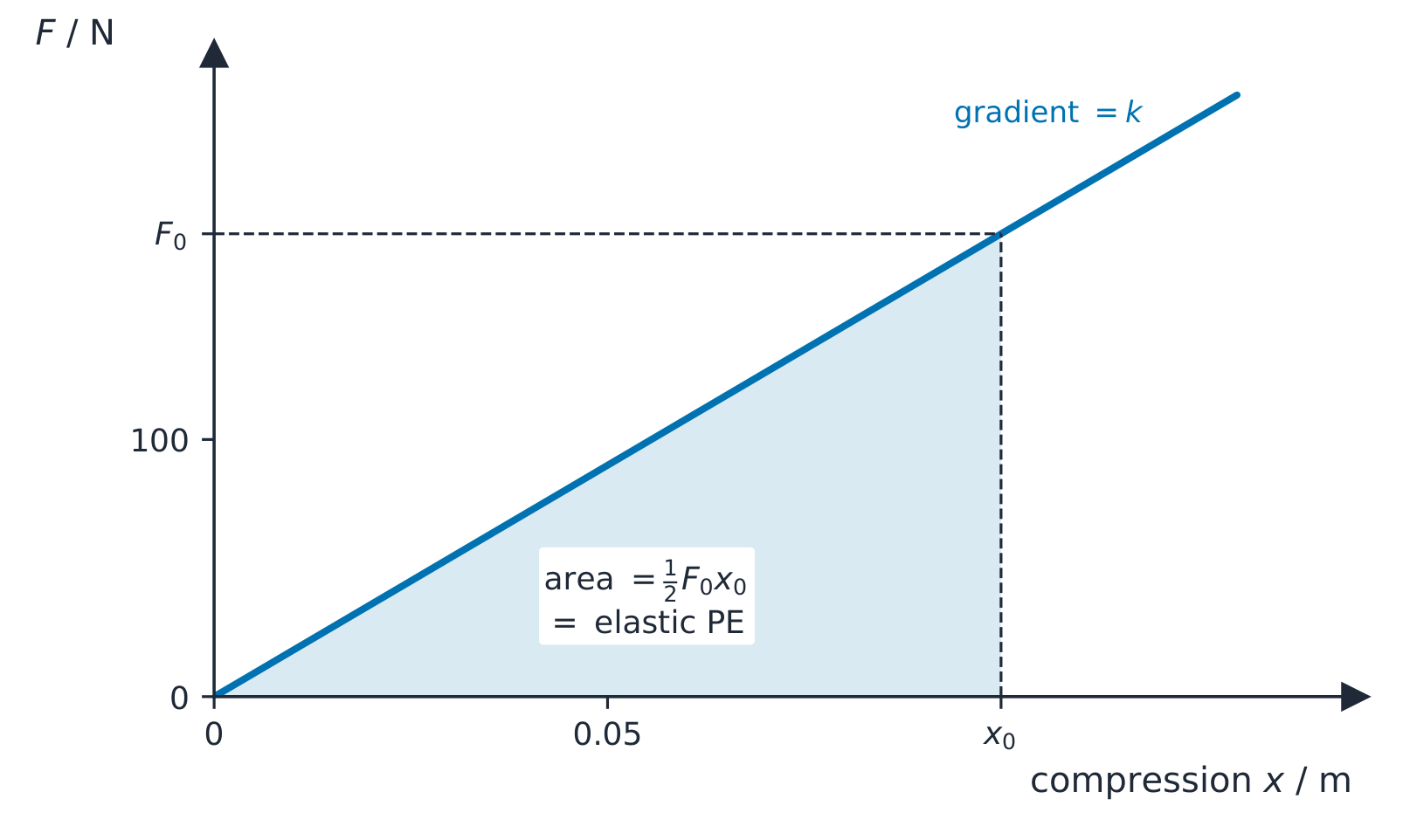


 *Гидроэлектростанция рассчитывается в мегаваттах: энергия запасов воды, деленная на время, необходимое для ее выпуска



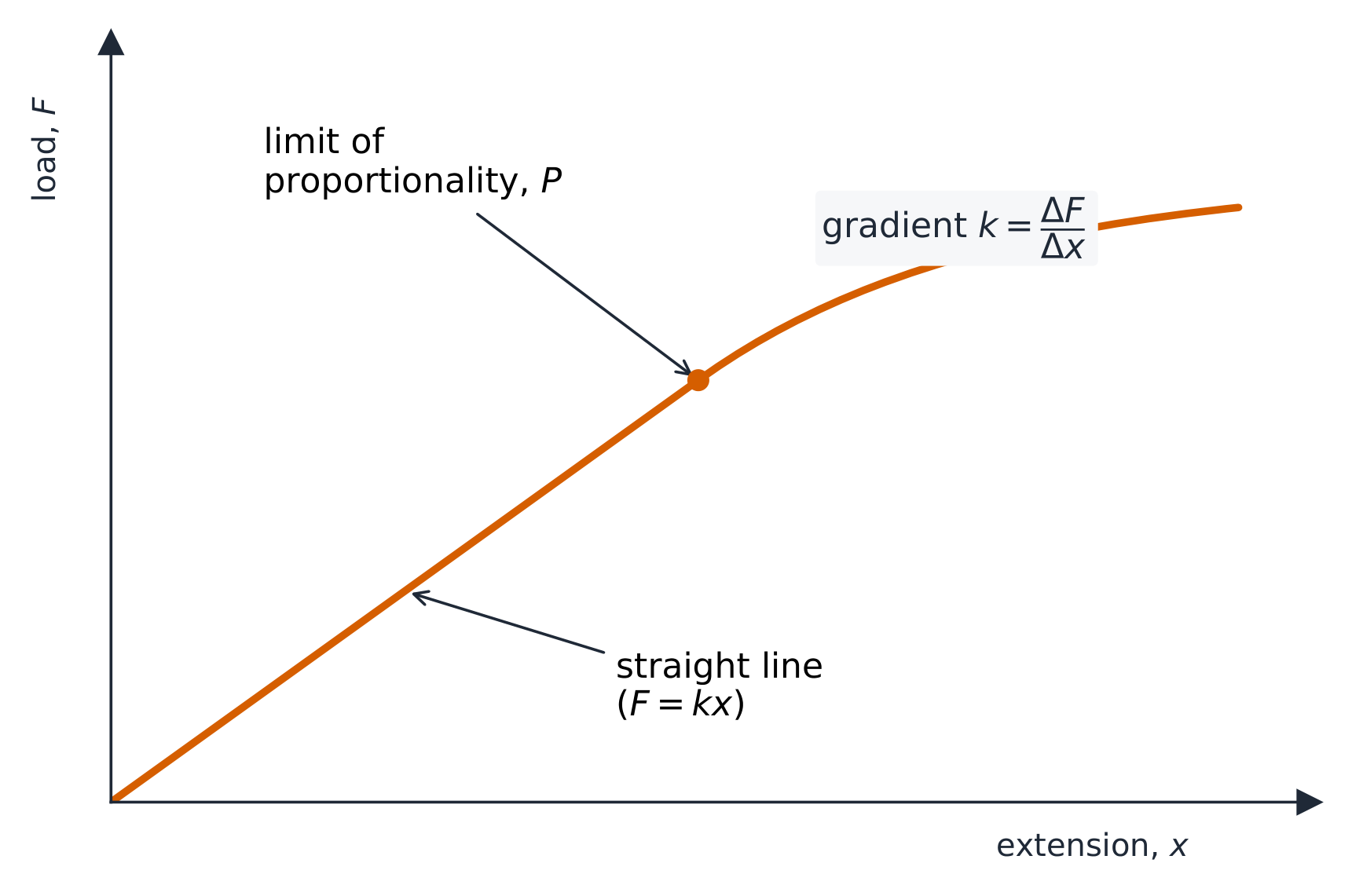
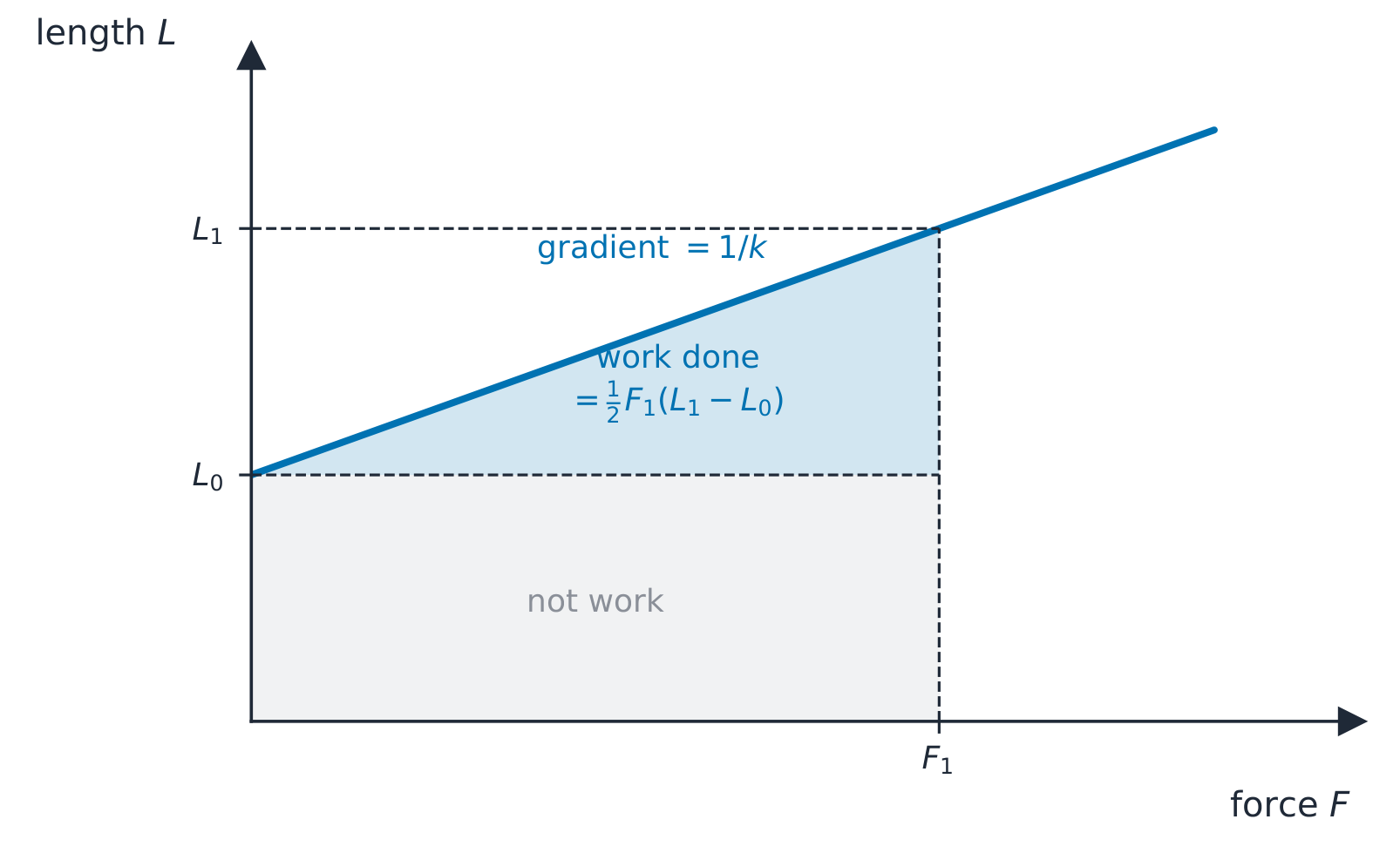
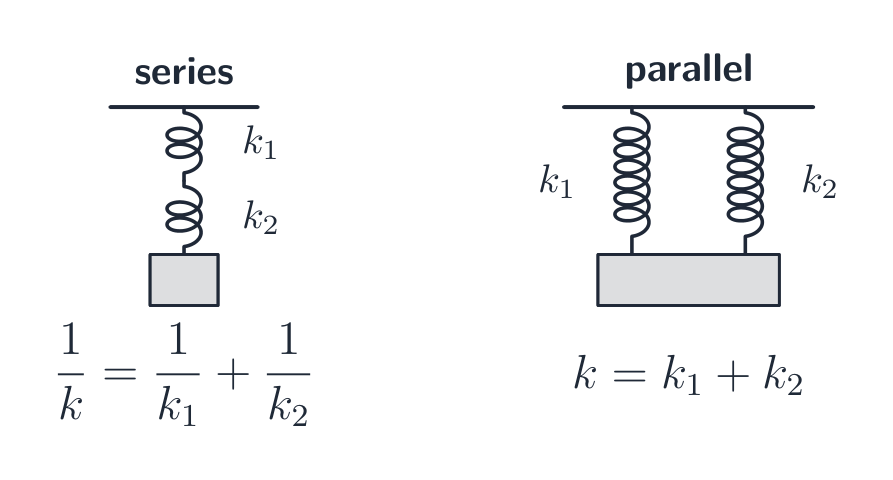

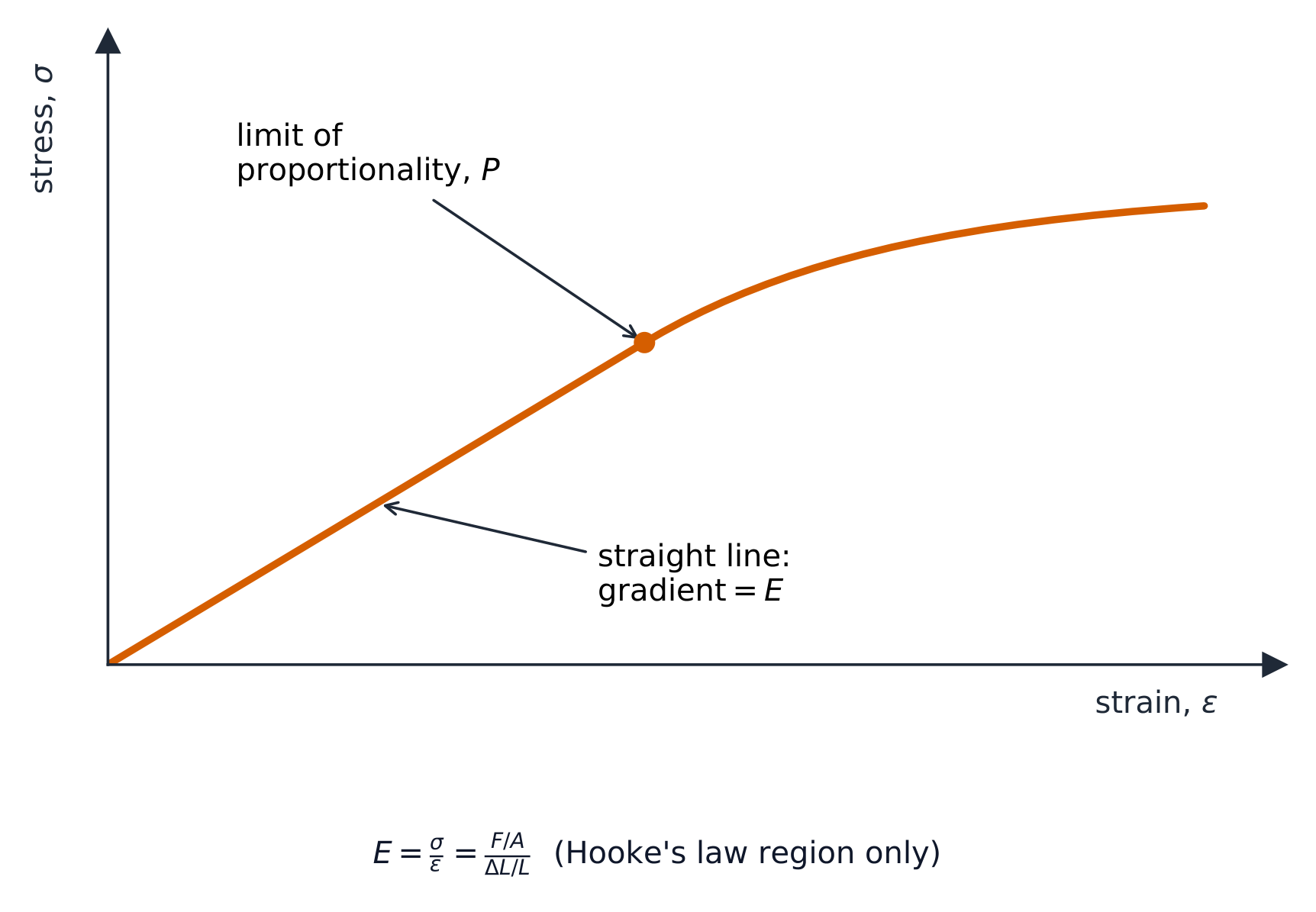
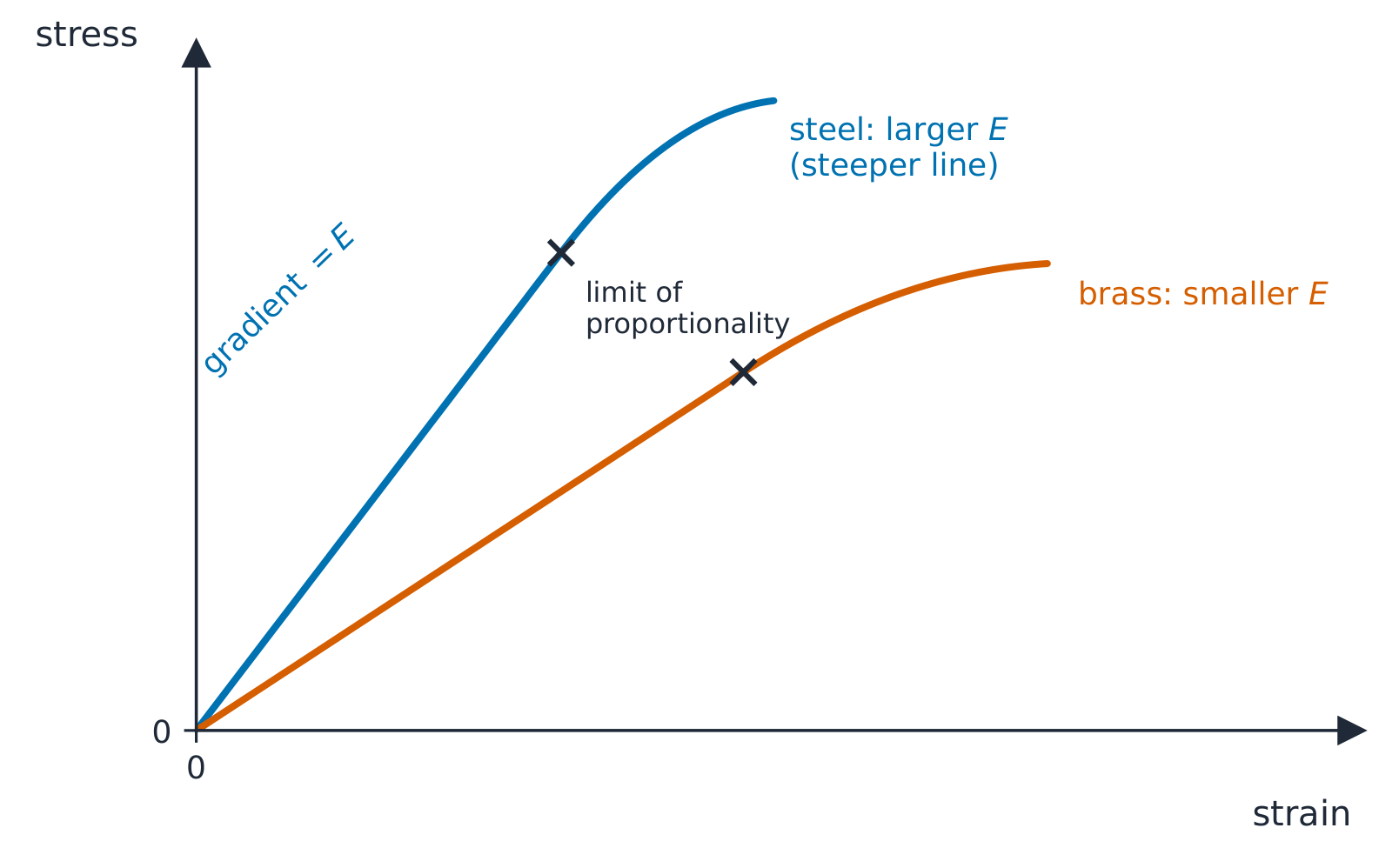

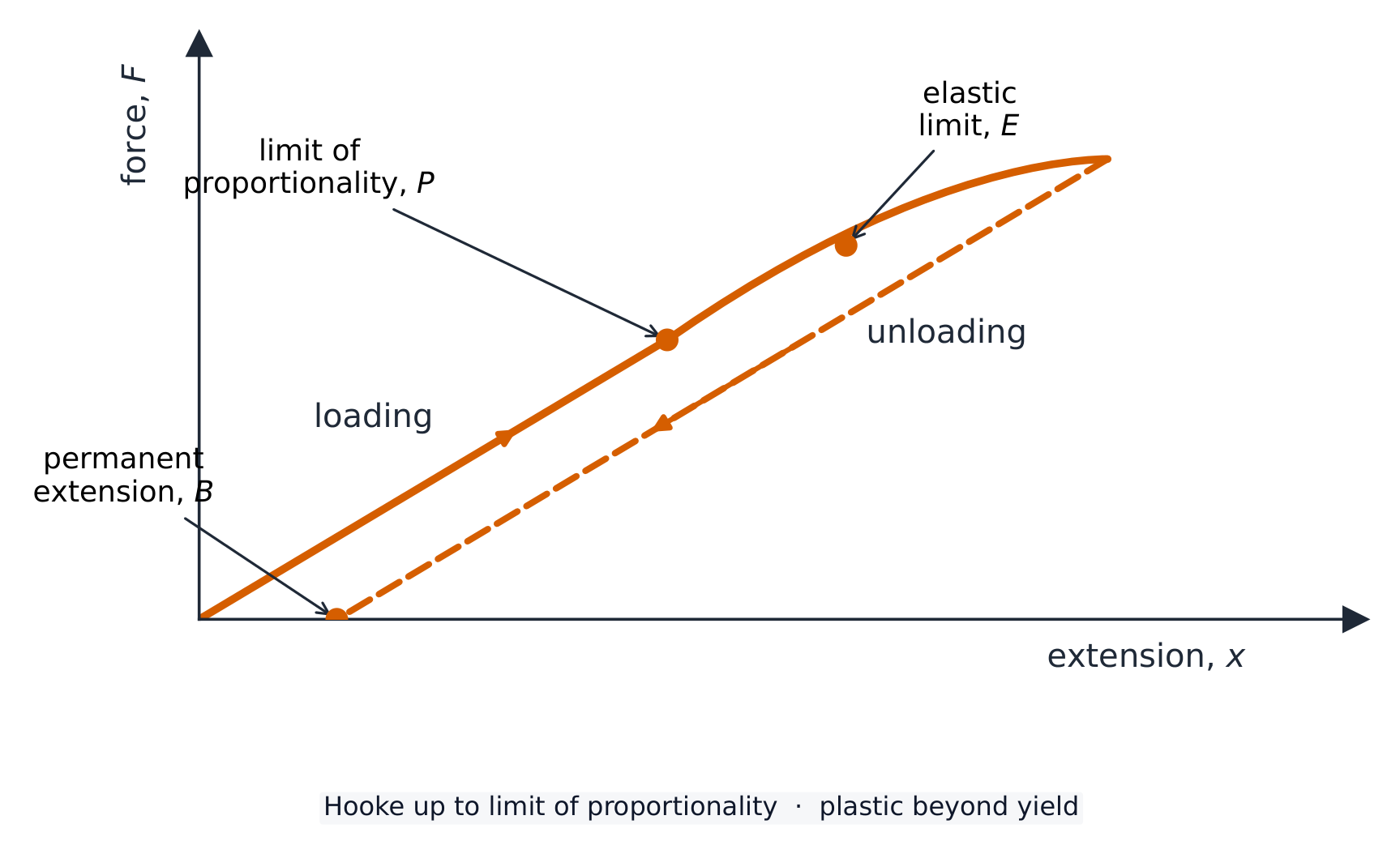
 *Современный универсальный (разрывной) испытательный станок растягивает образец и записывает силу и удлинение
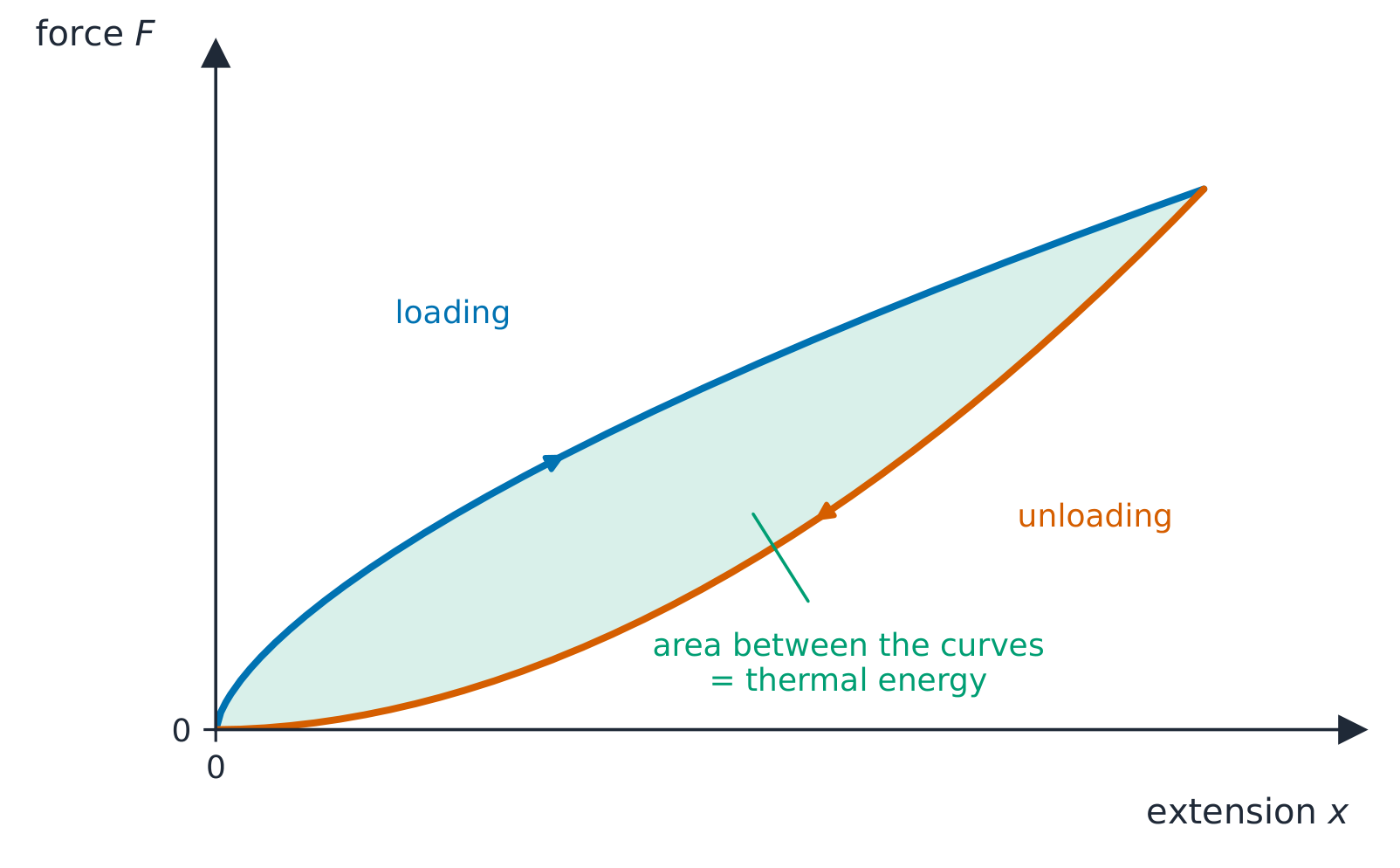 *Резиновая лента возвращается к исходной длине, но площадь между нагружением и разгрузкой — это потерянная в виде тепловой энергии энергия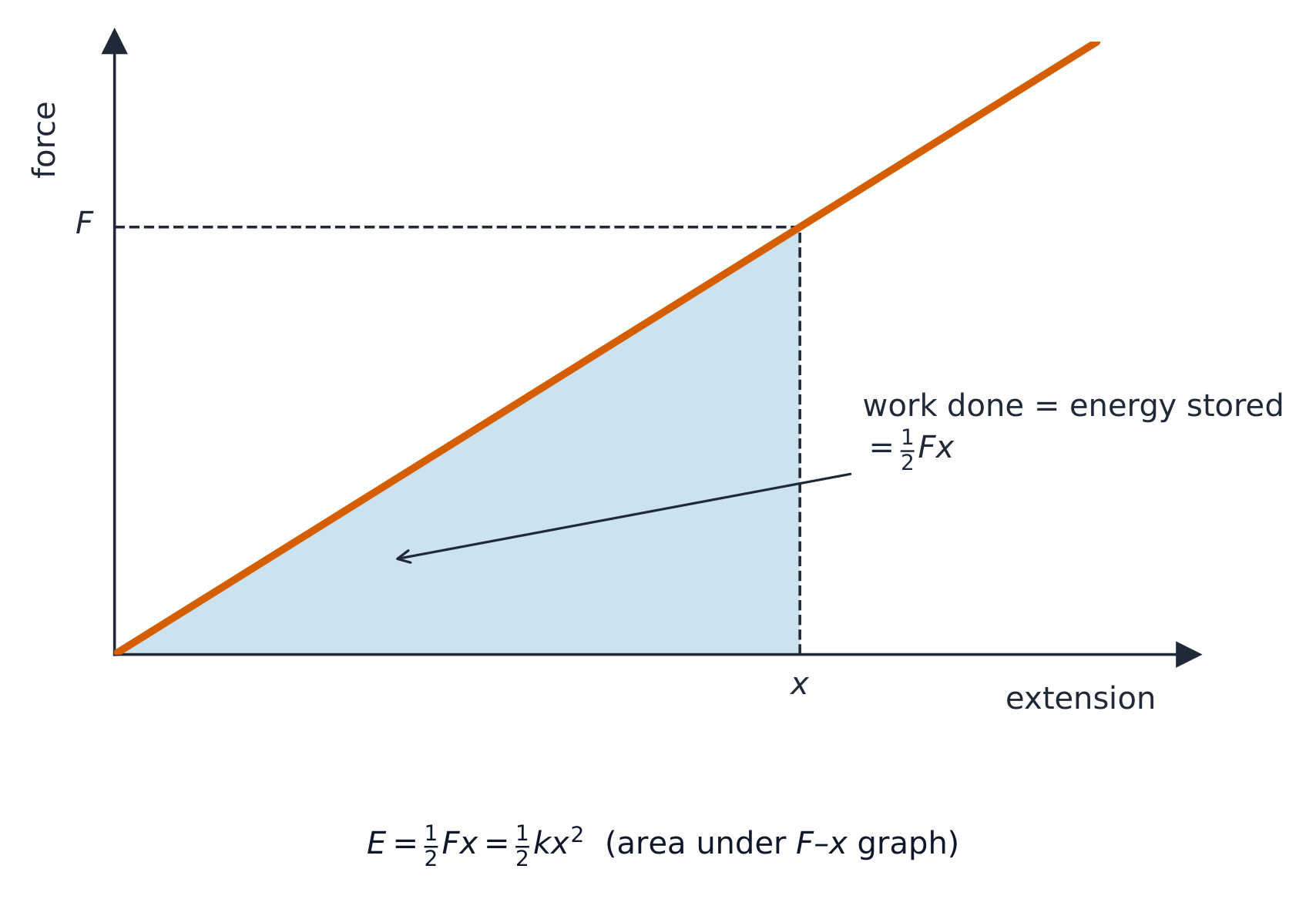


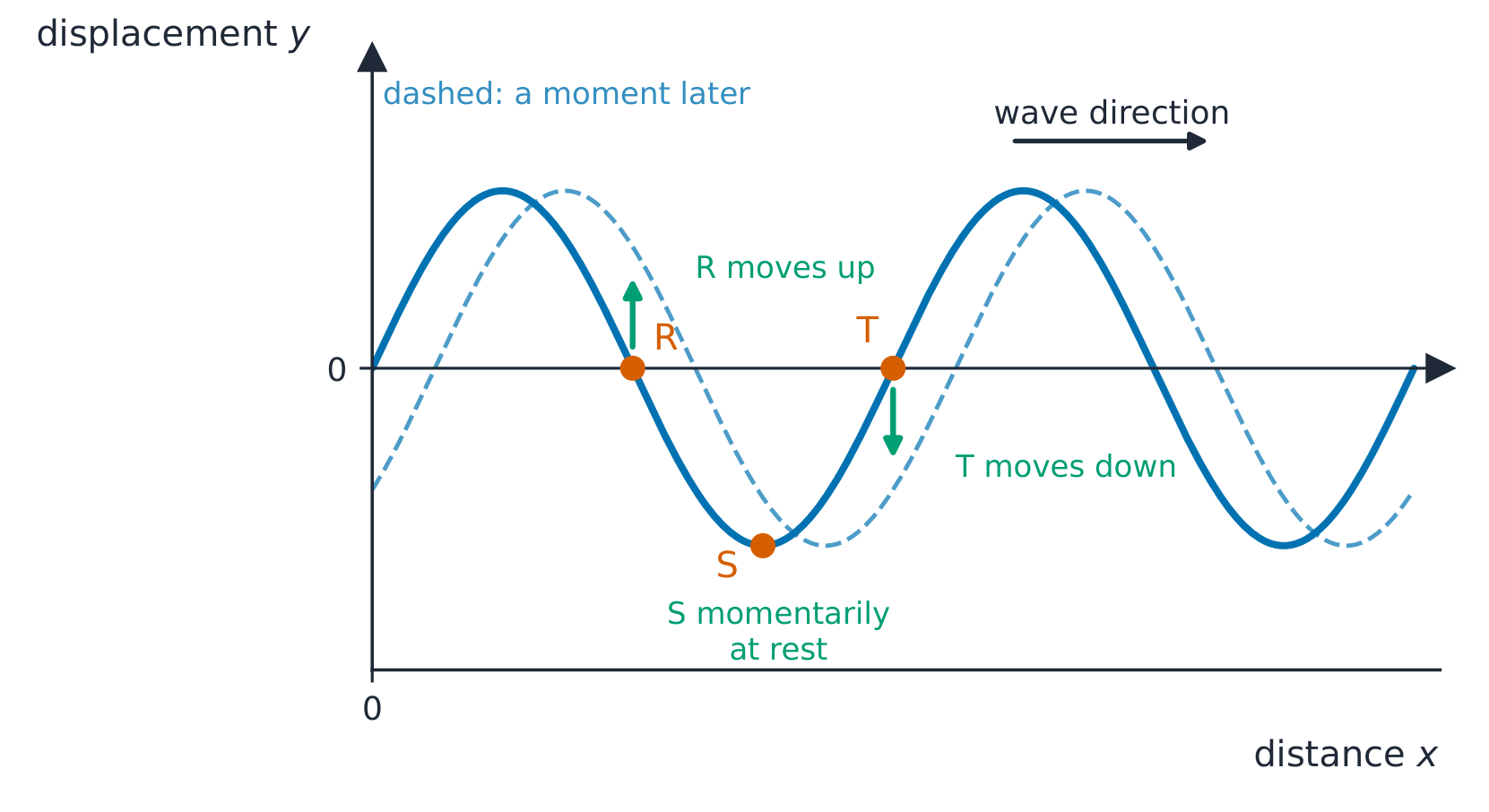
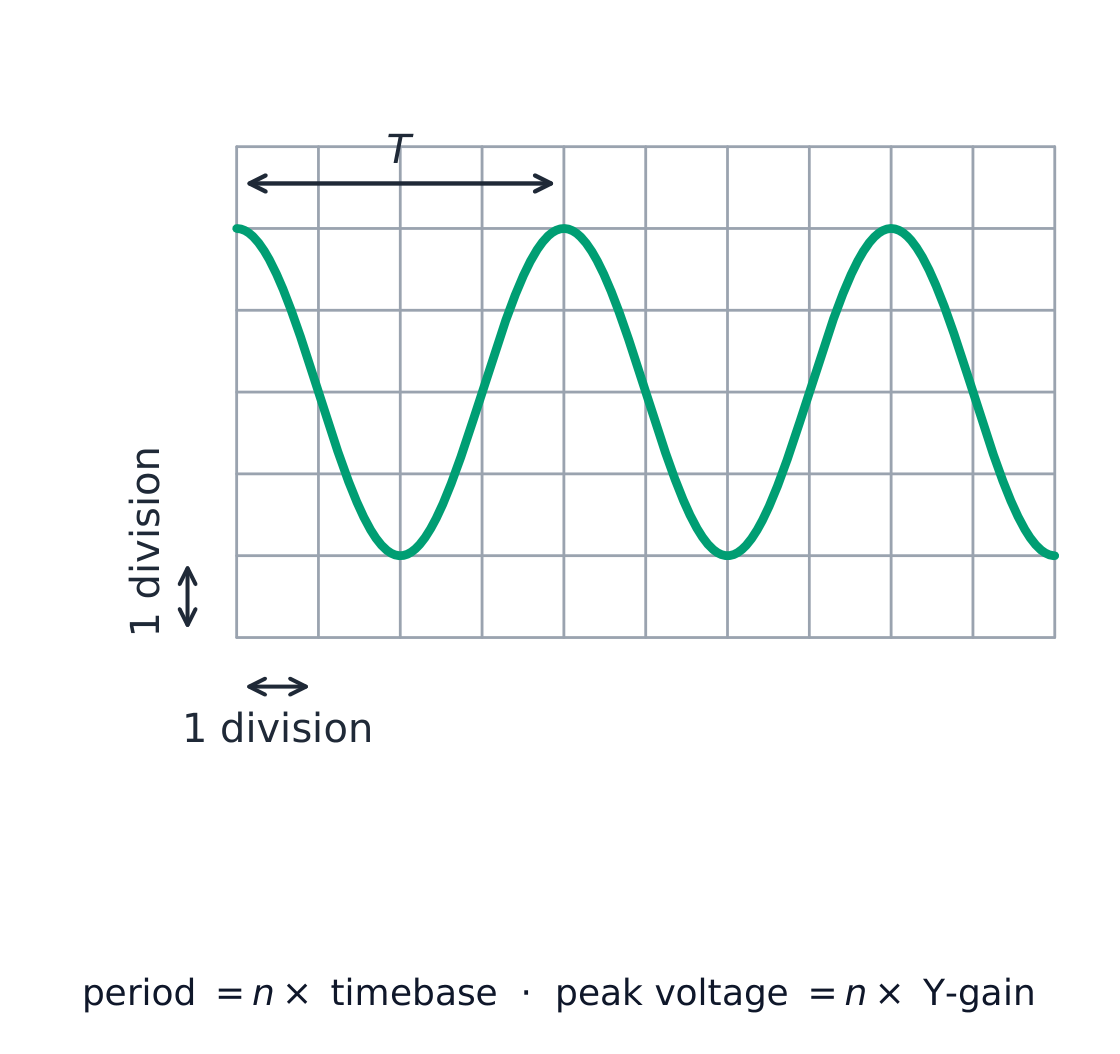


 Продольная волна на пружине «Сlinky» *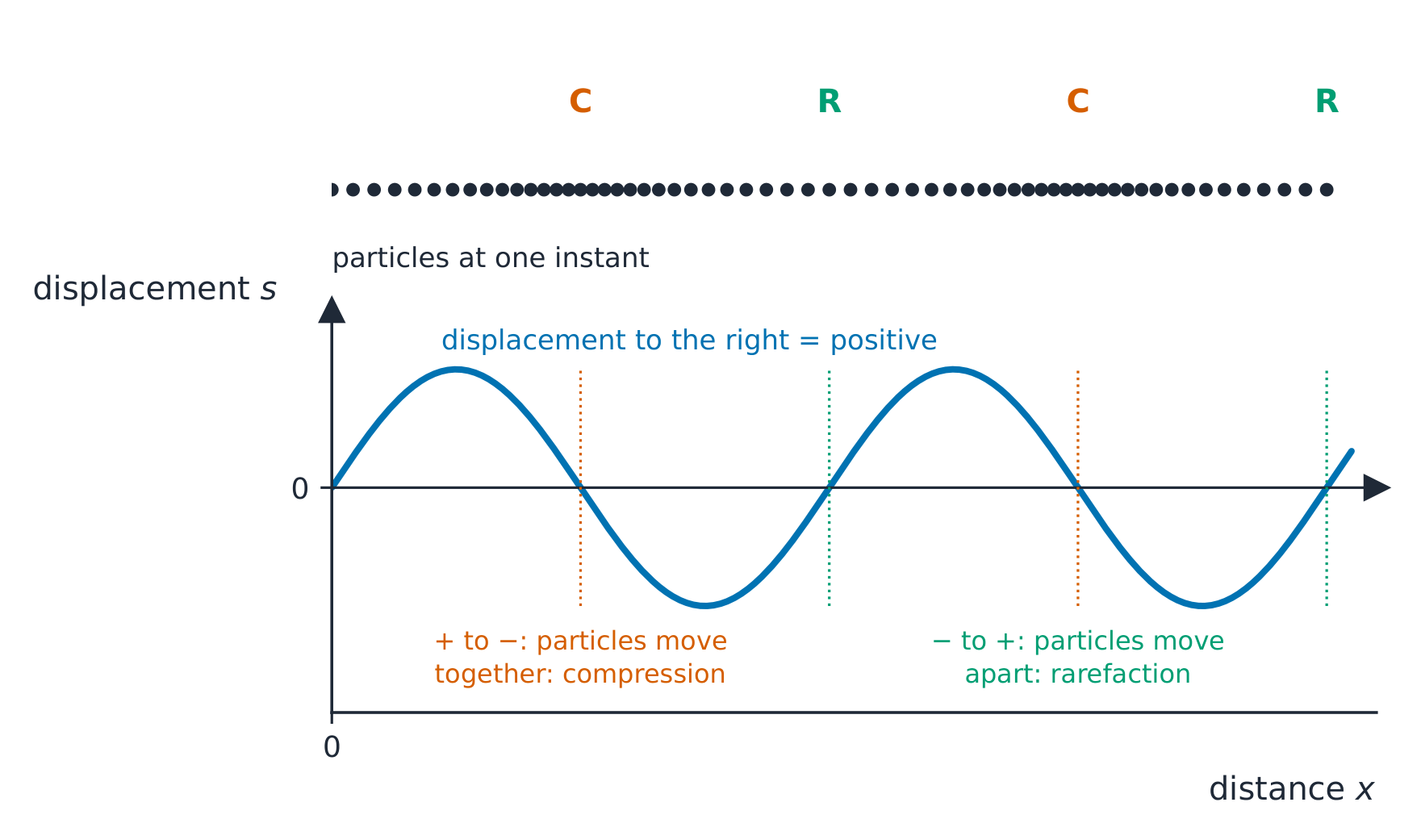

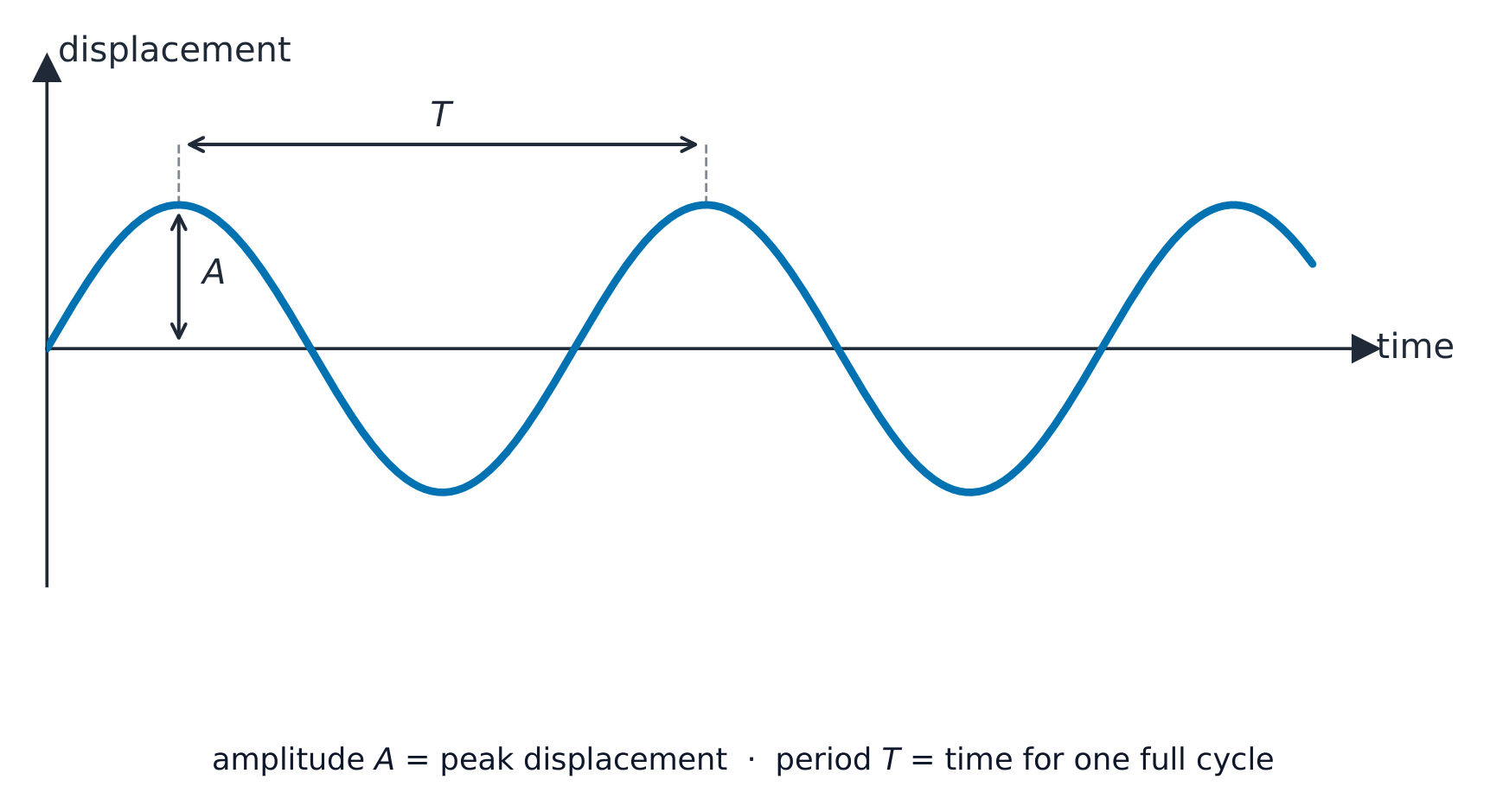

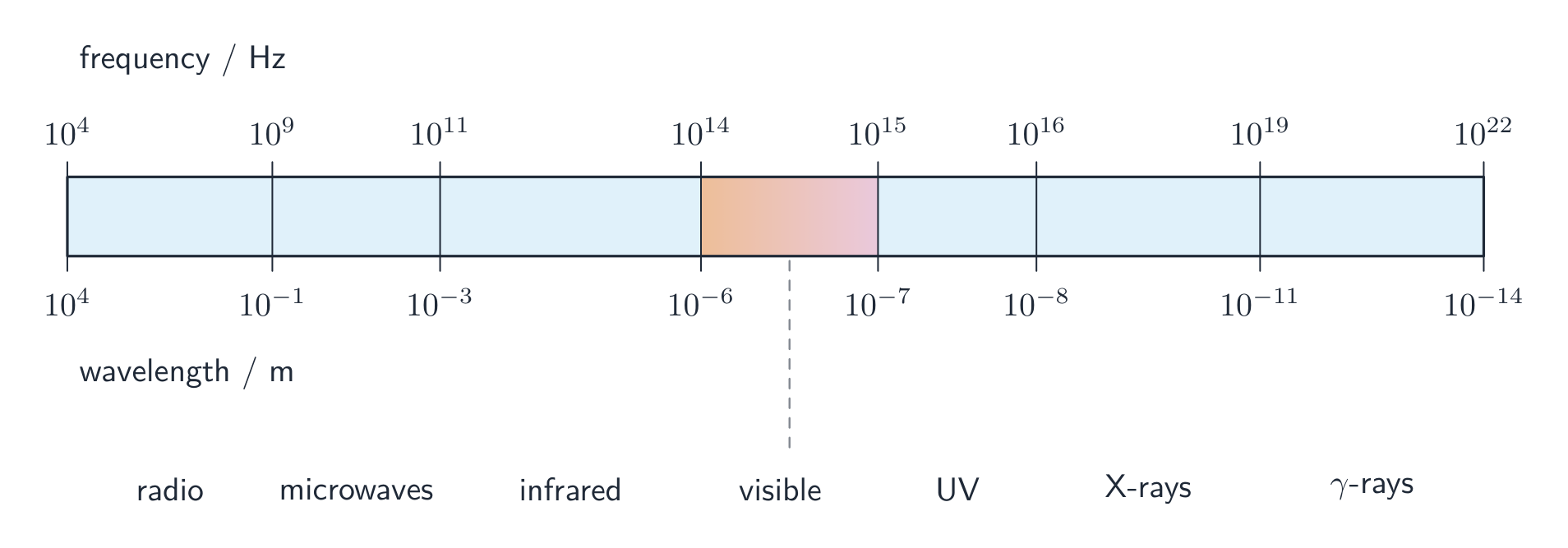


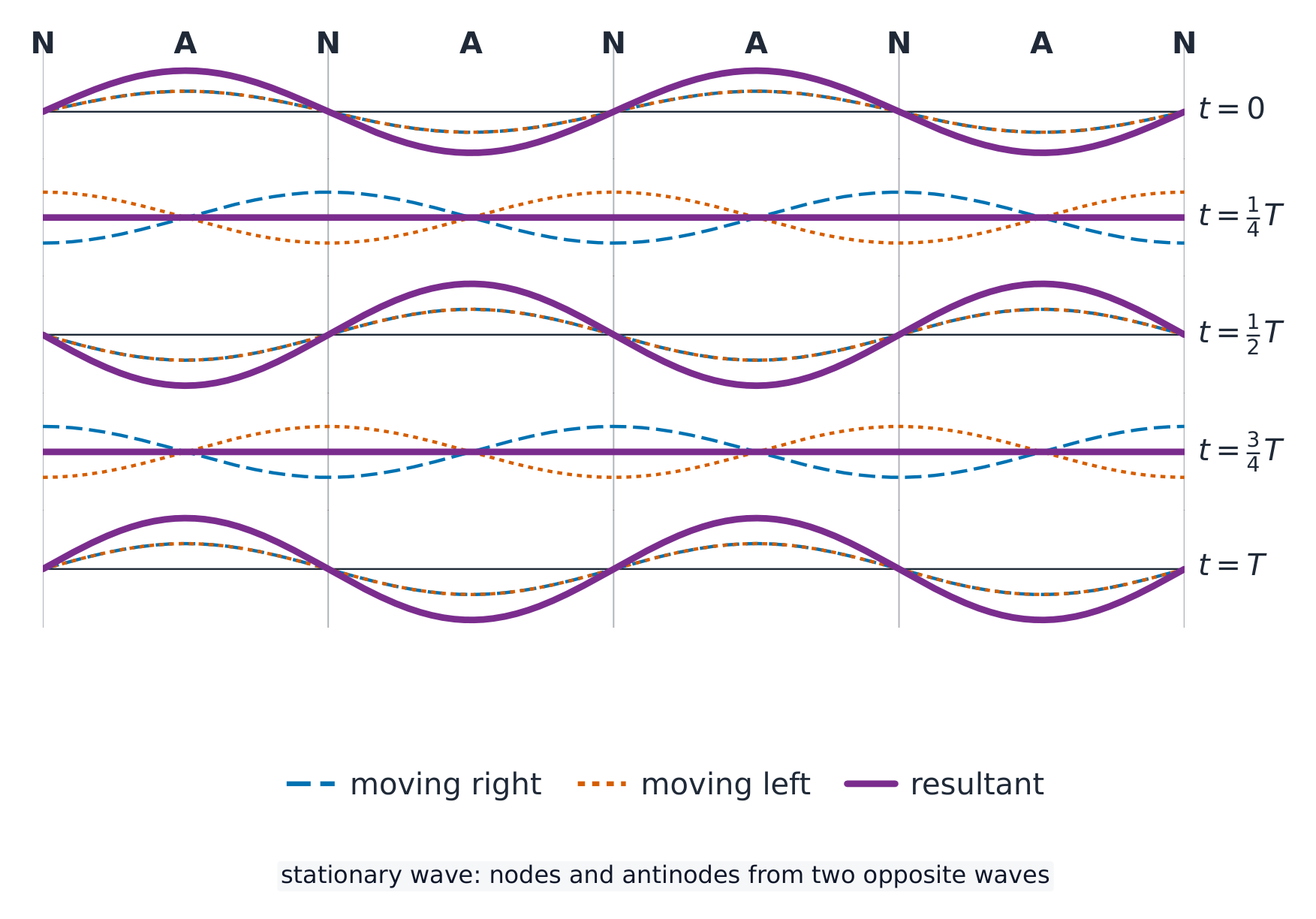

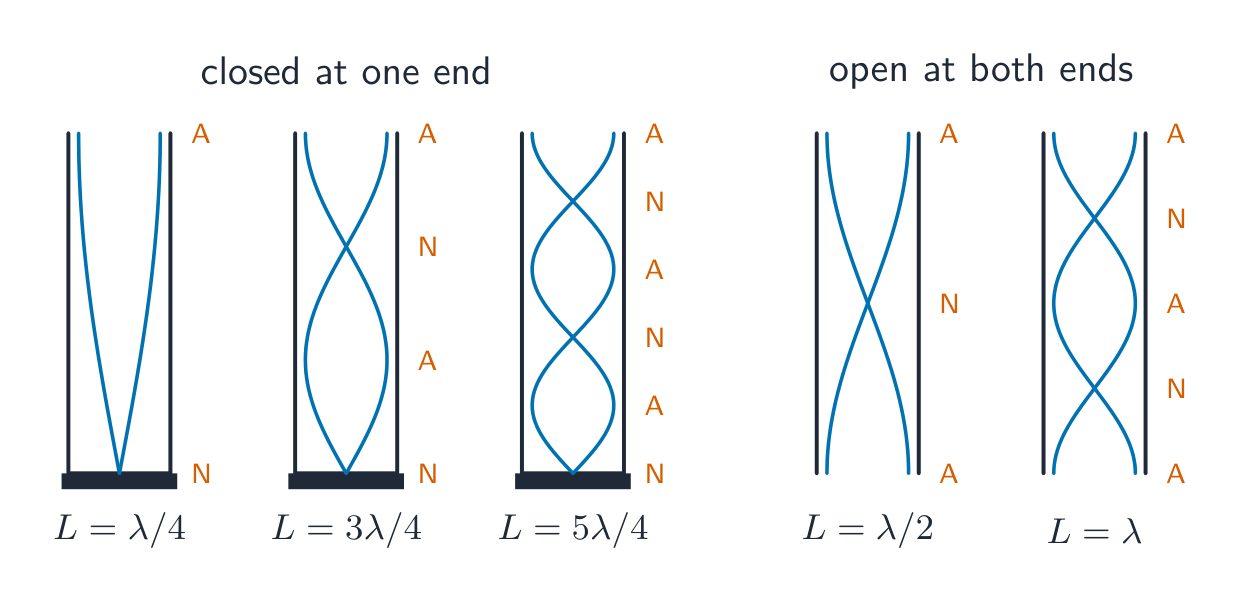


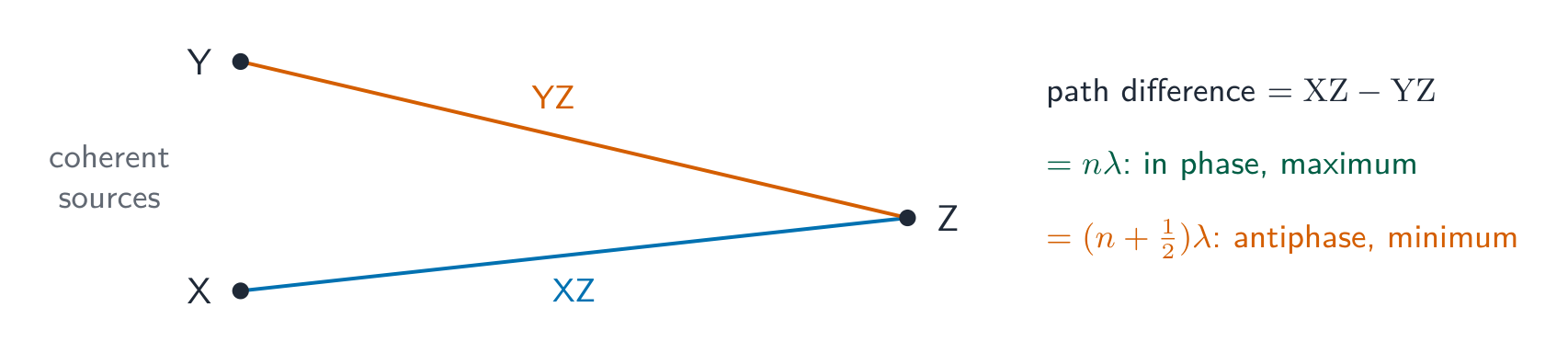

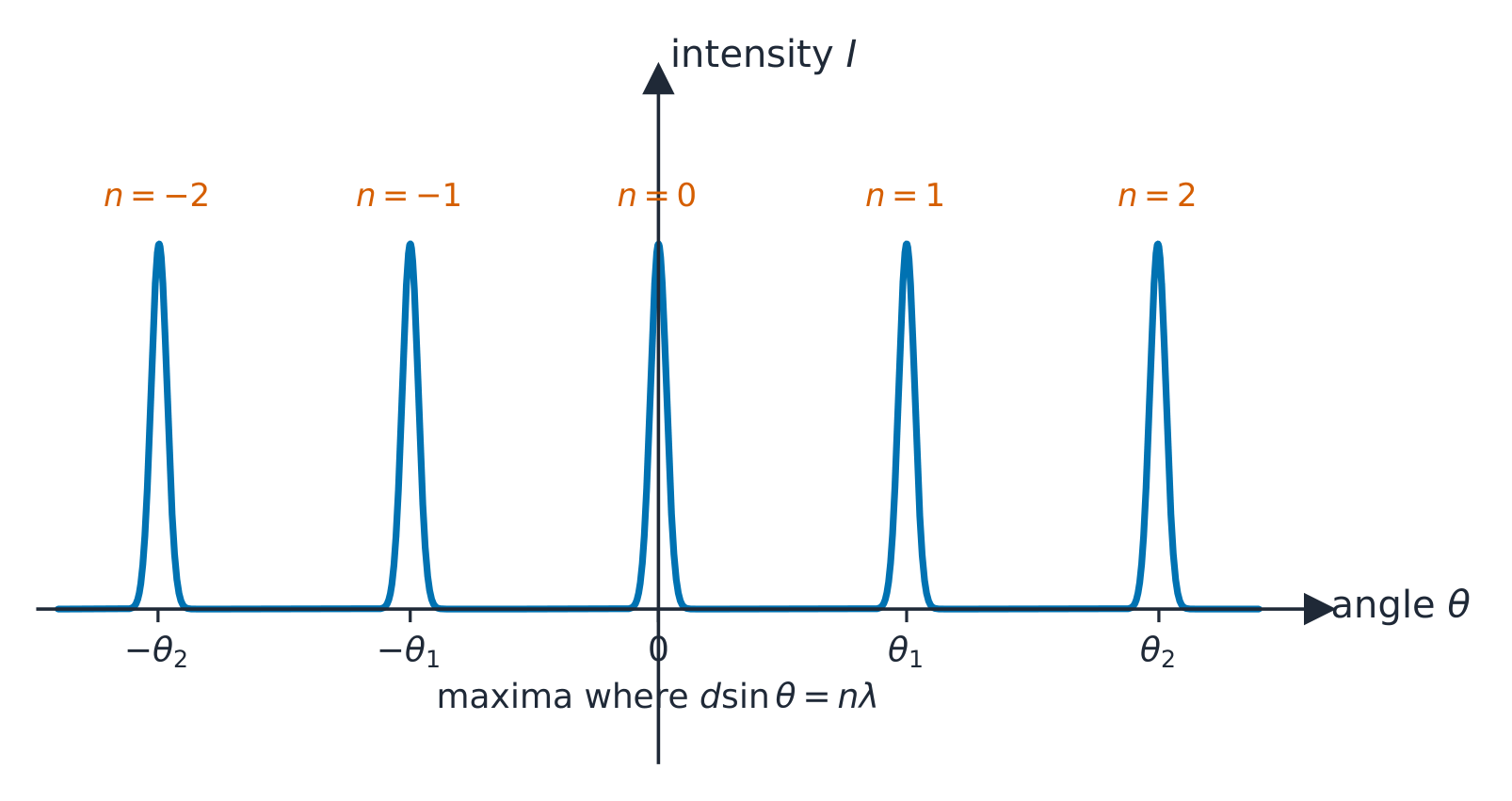


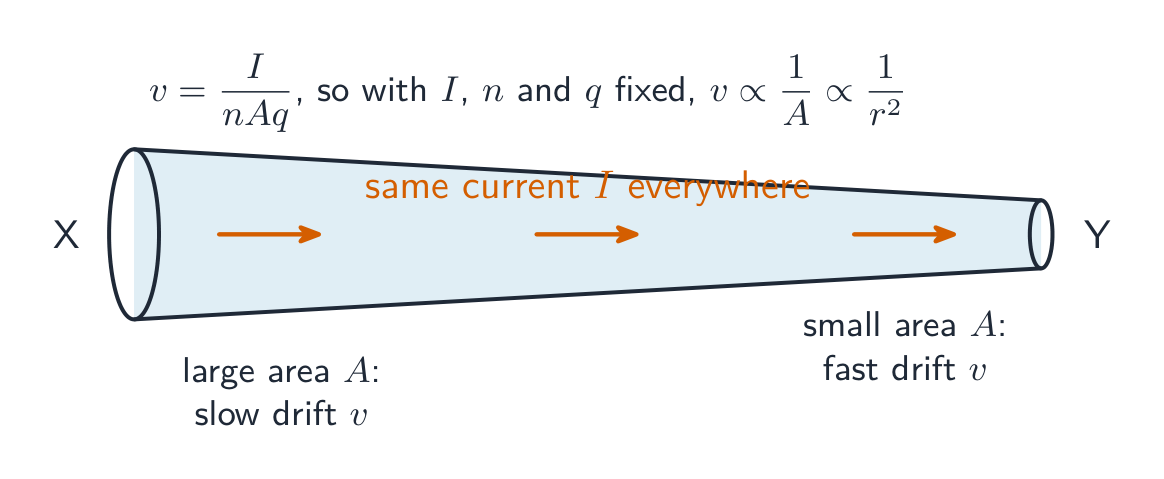


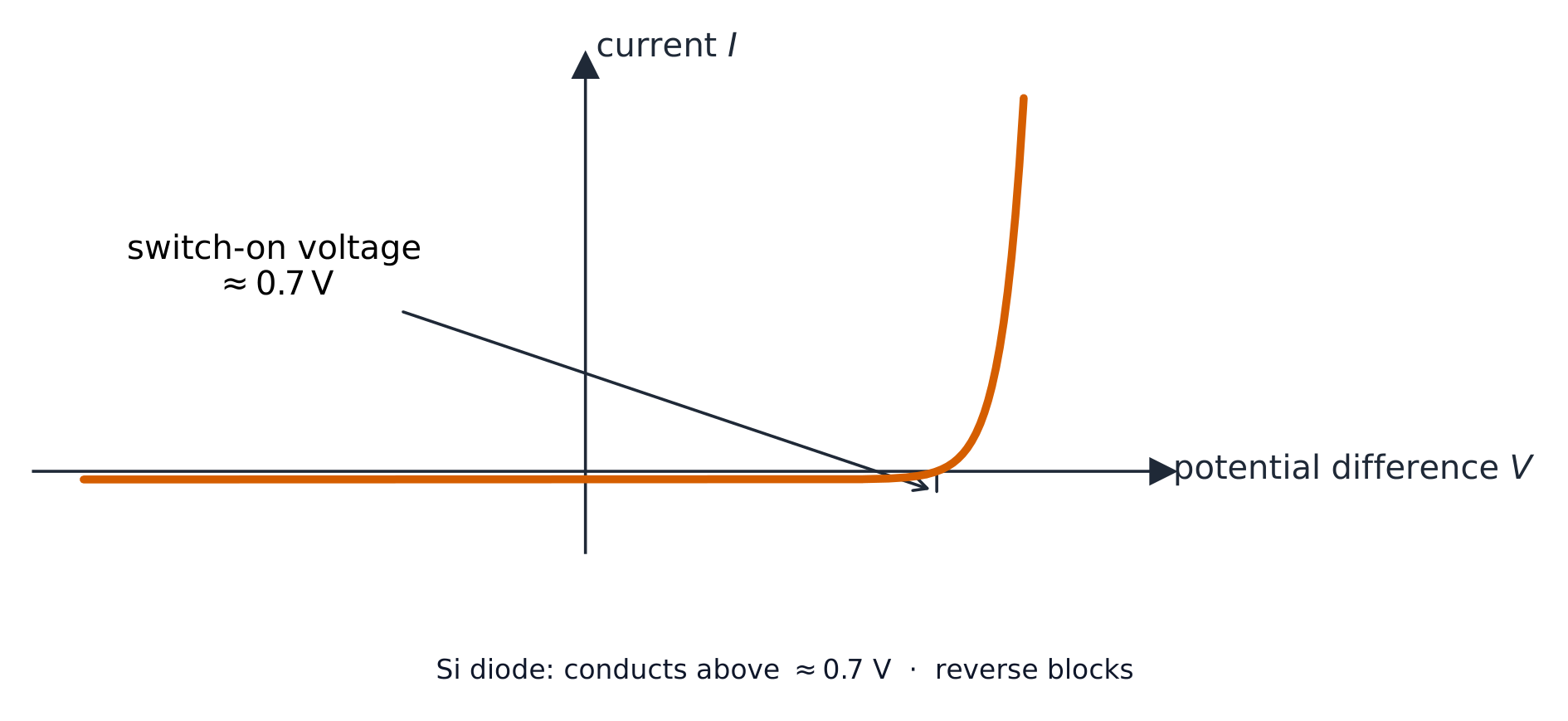


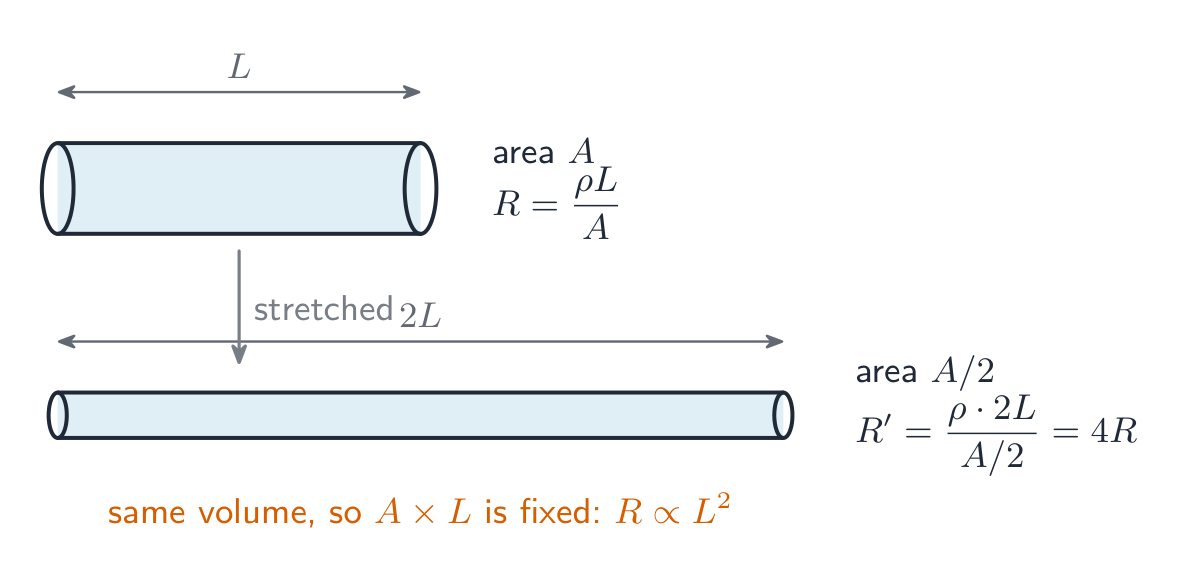
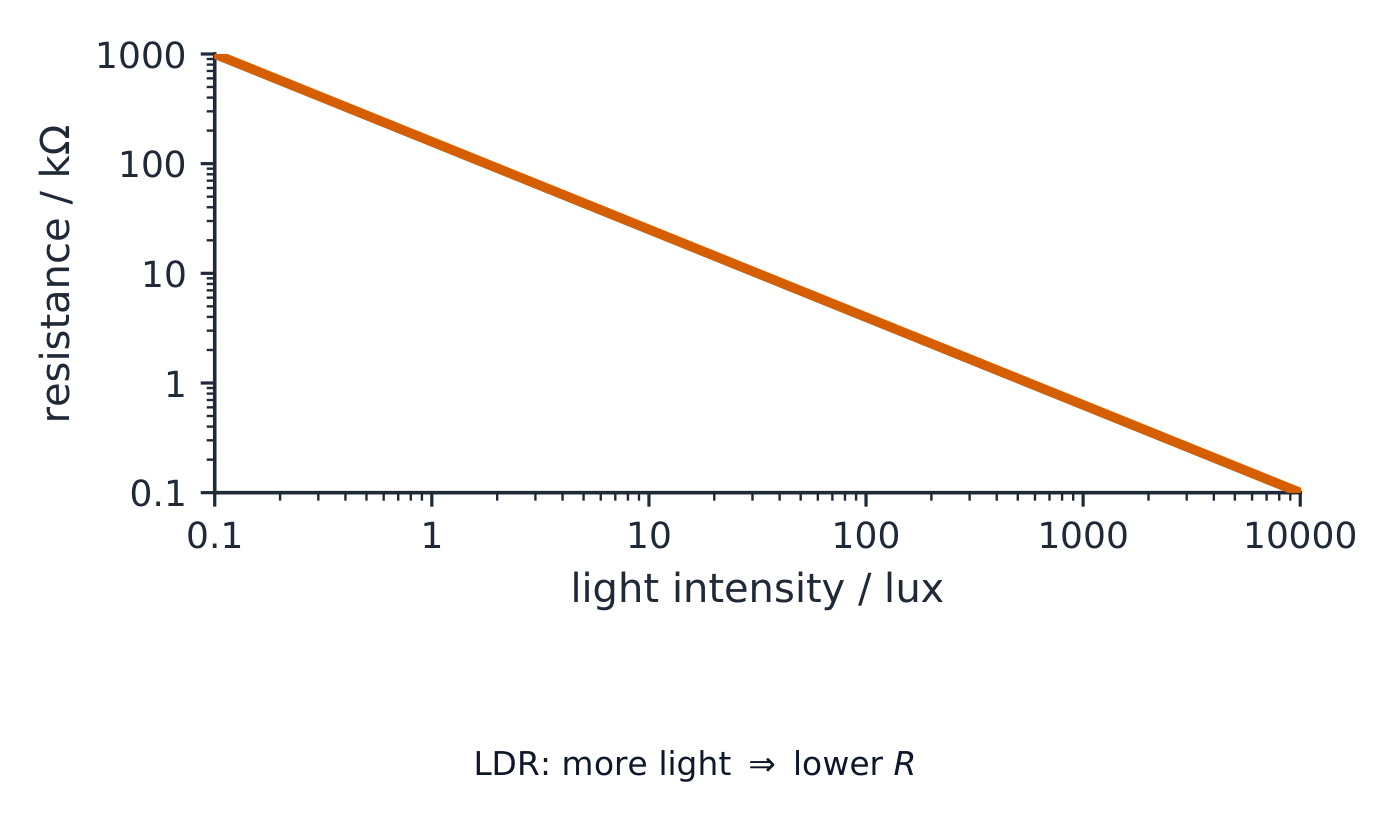
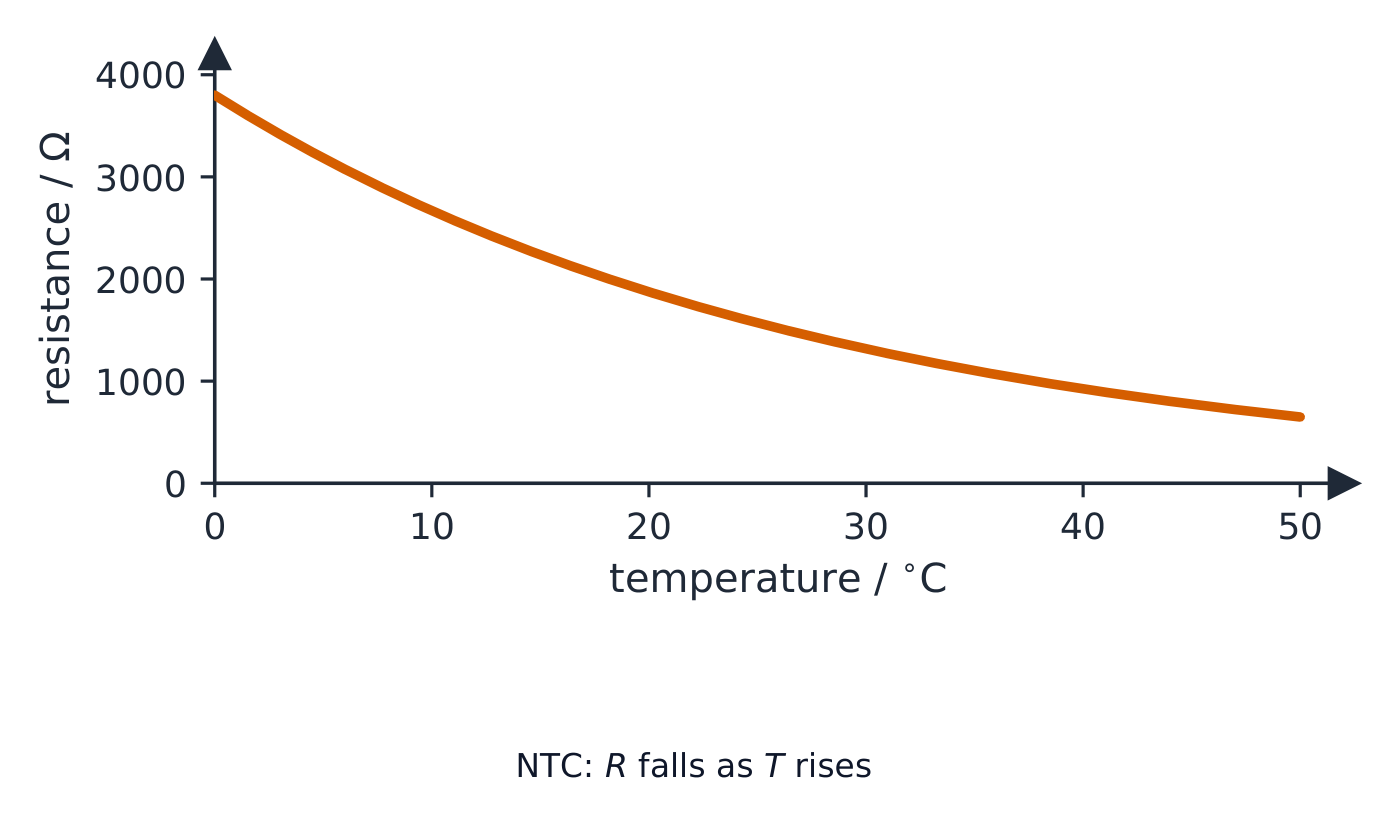


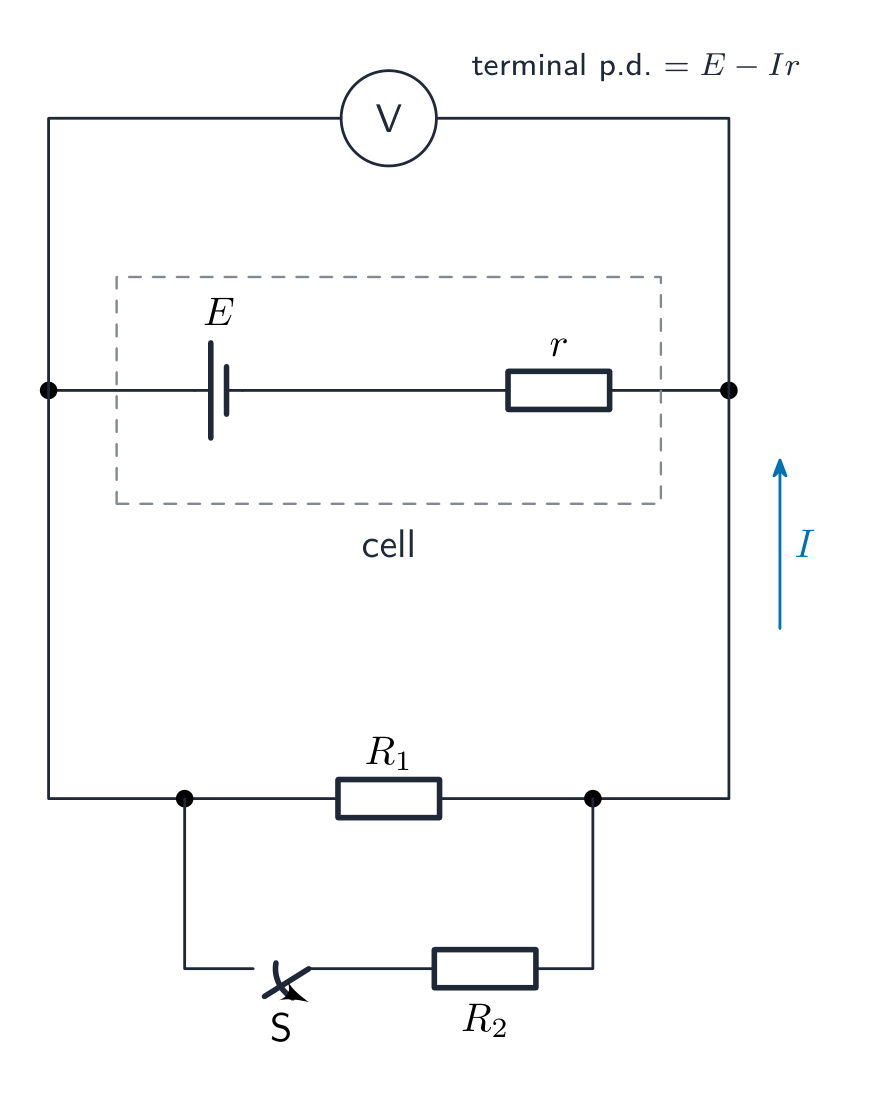

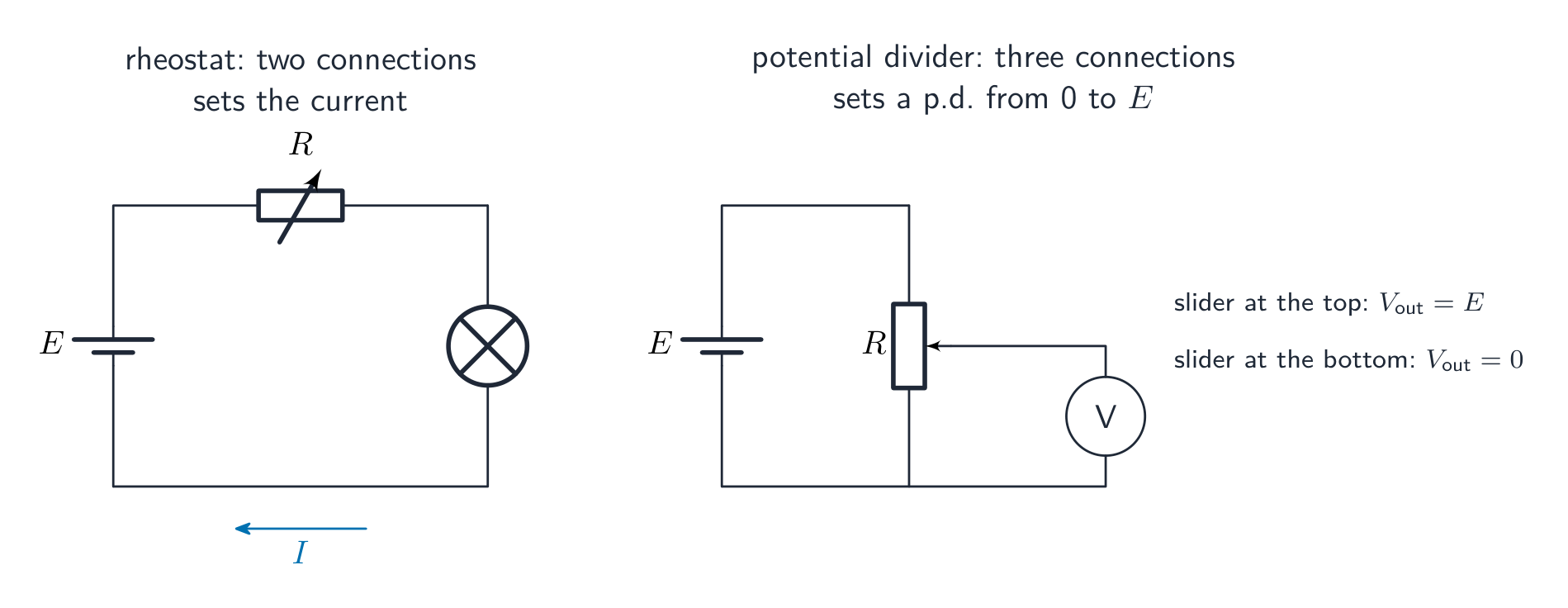


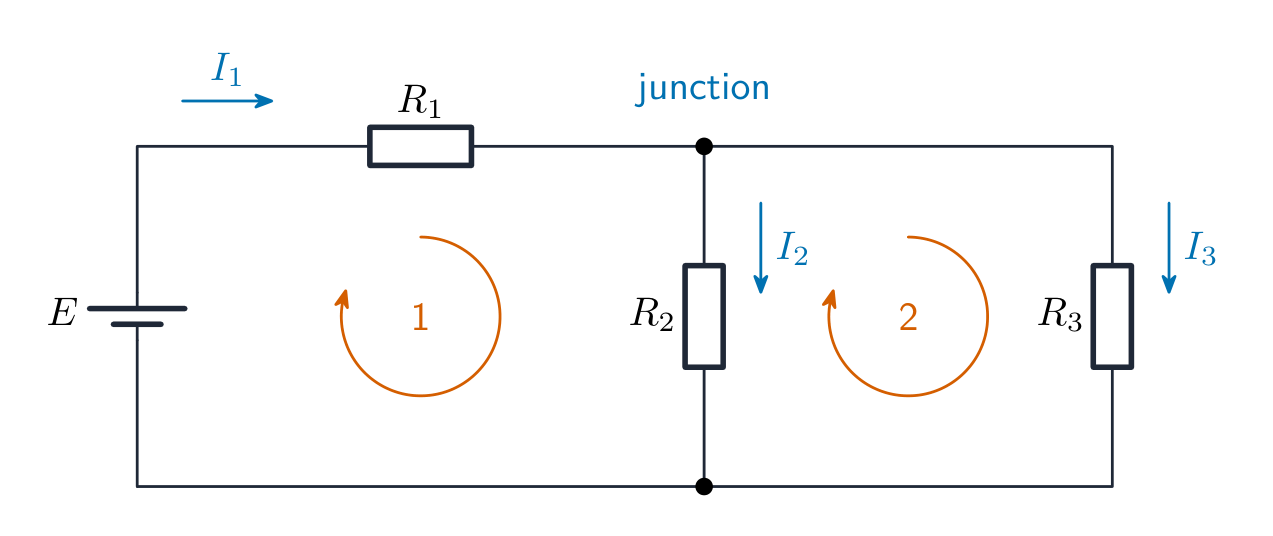


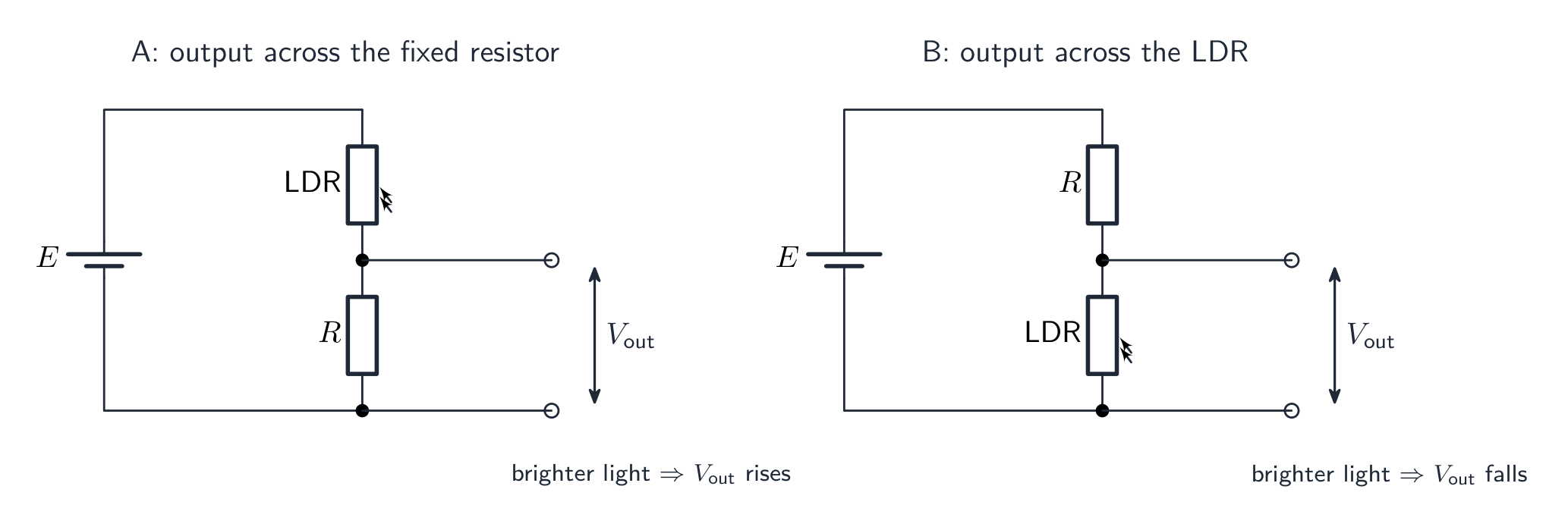


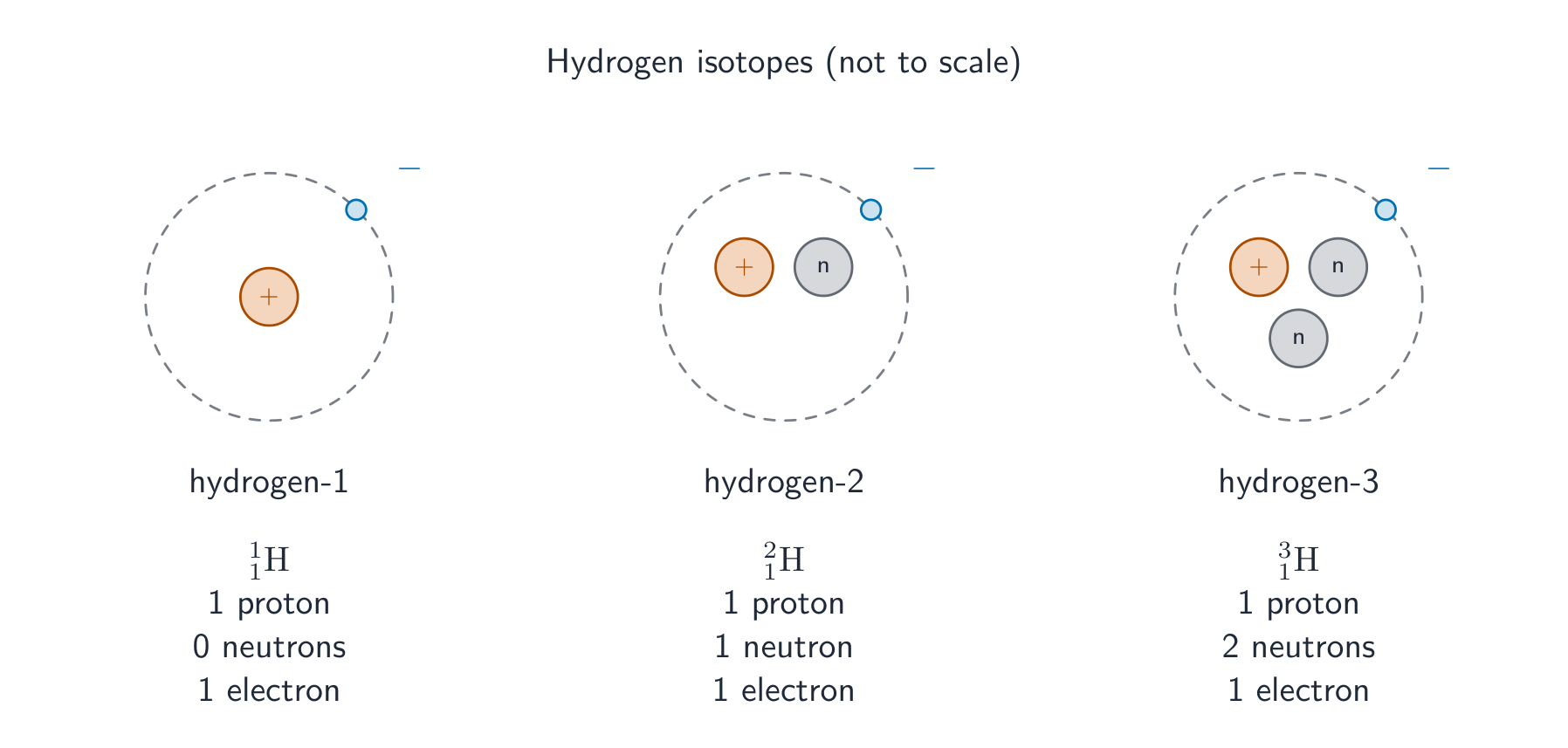


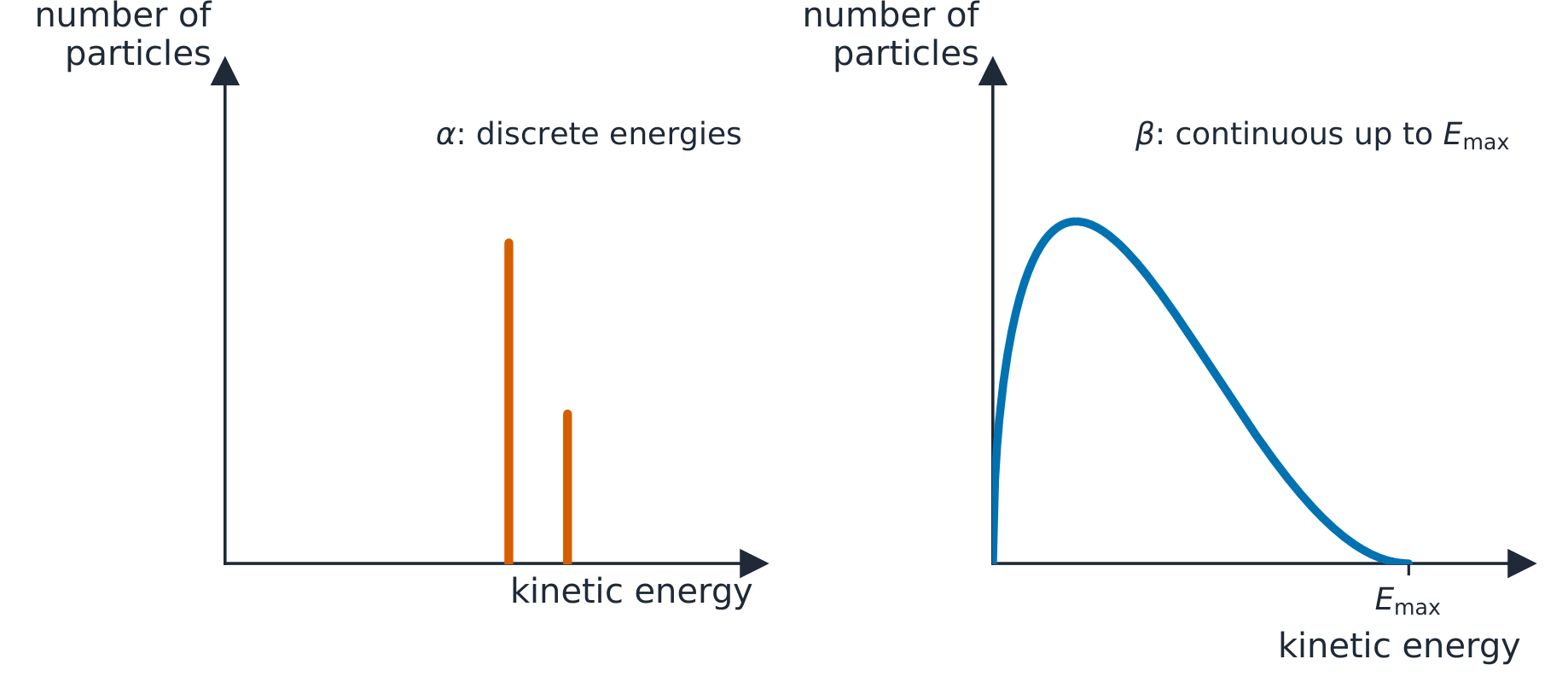
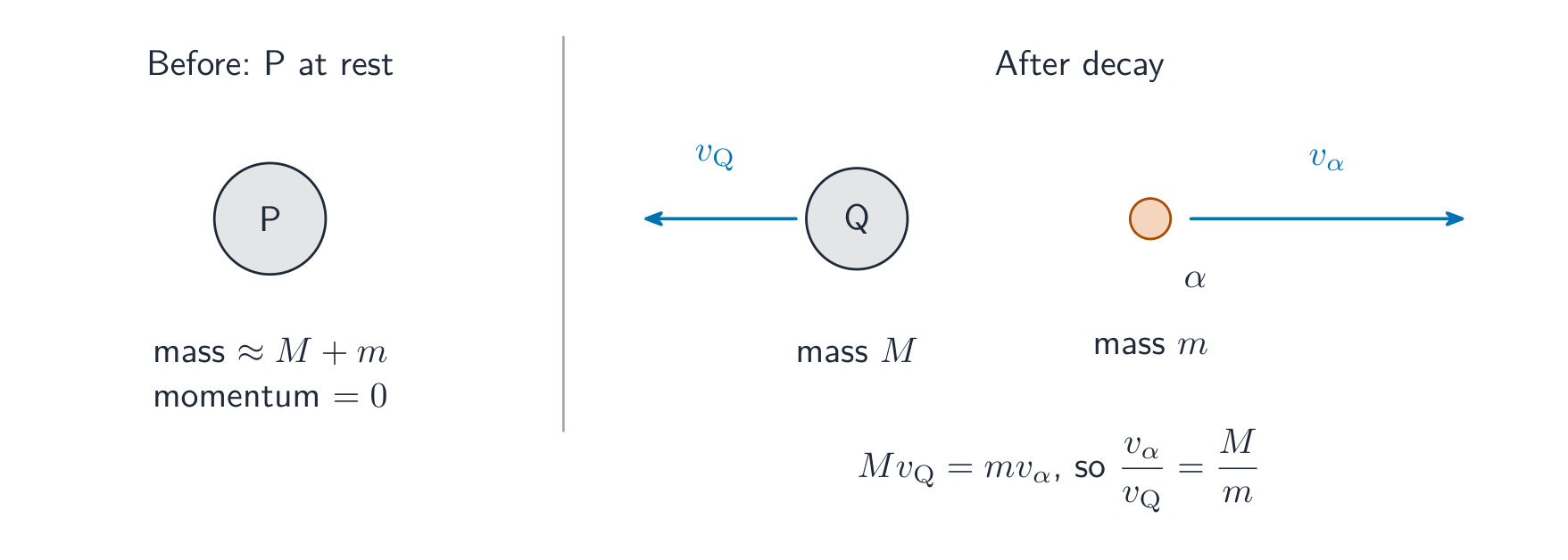



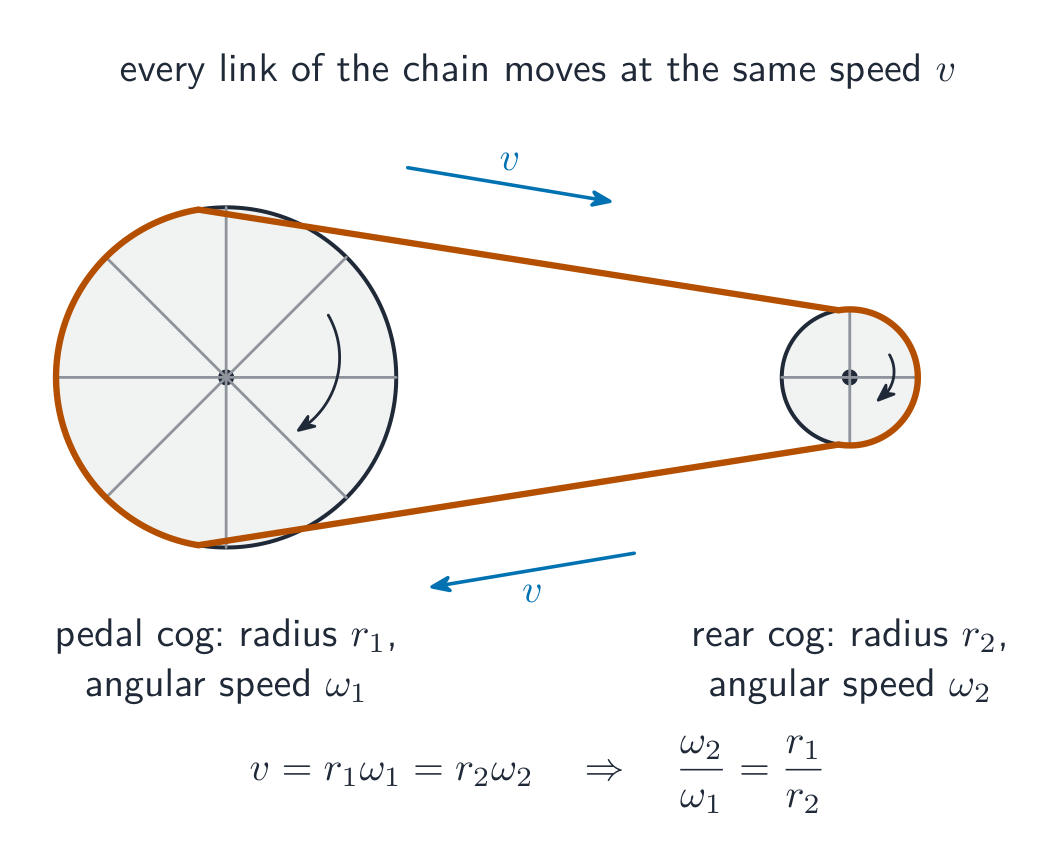


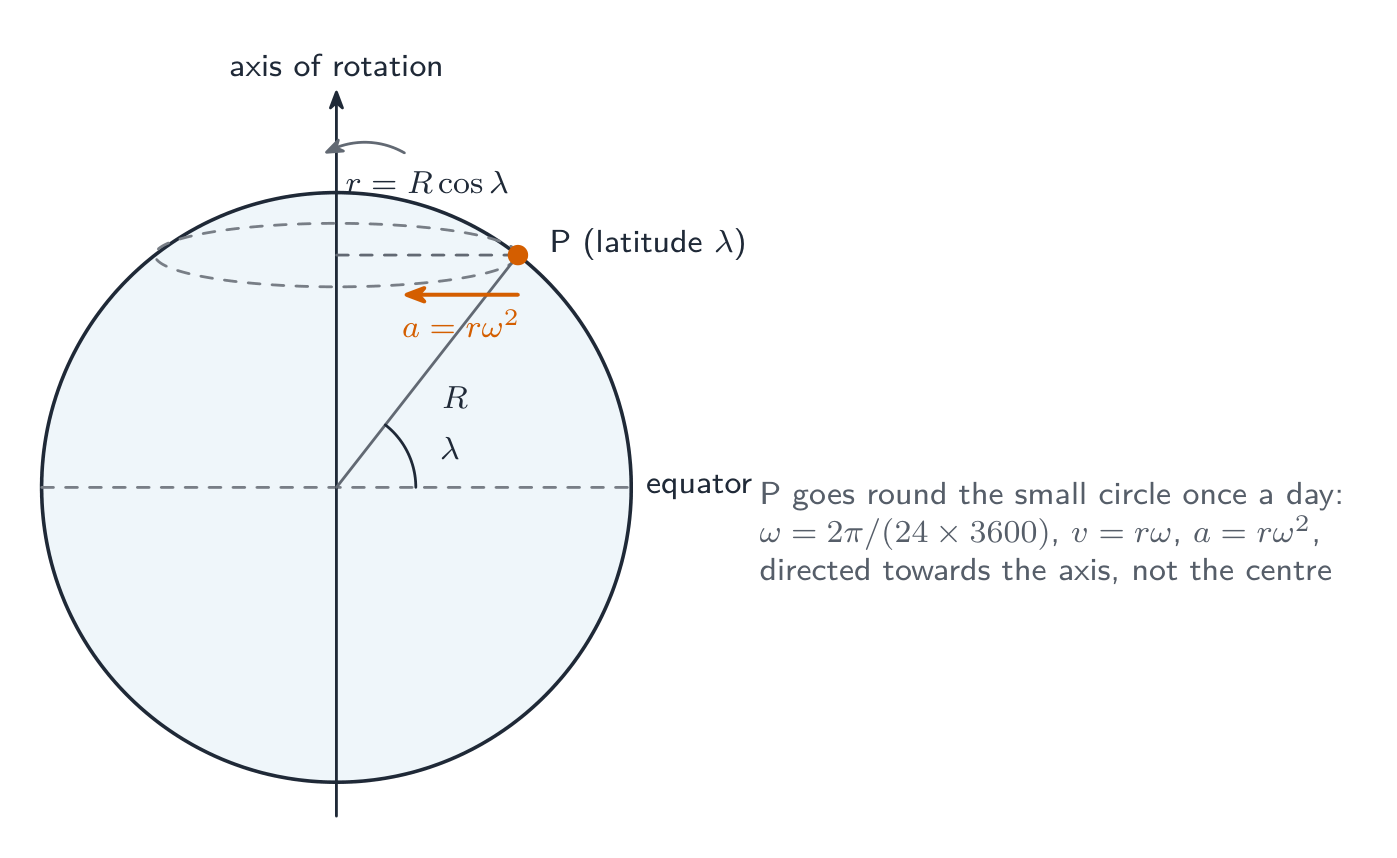


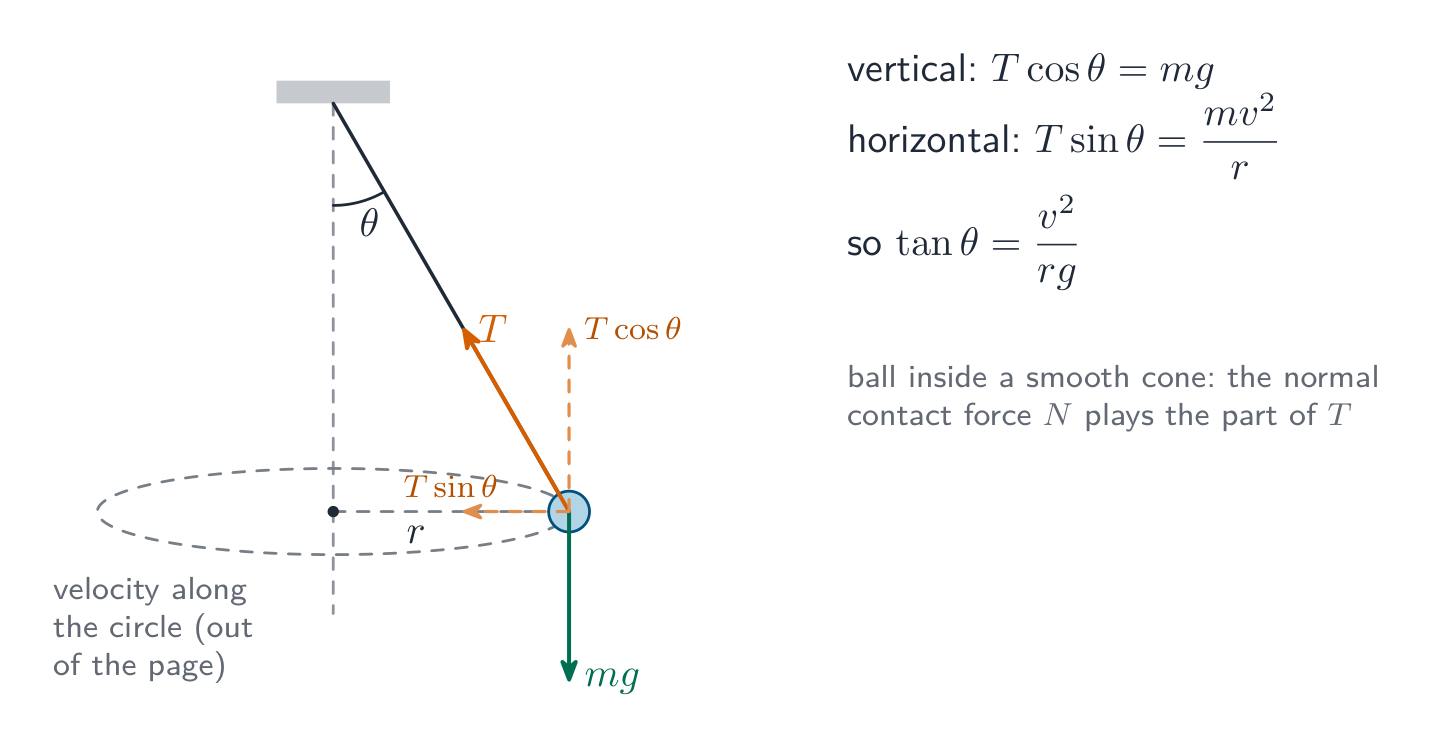


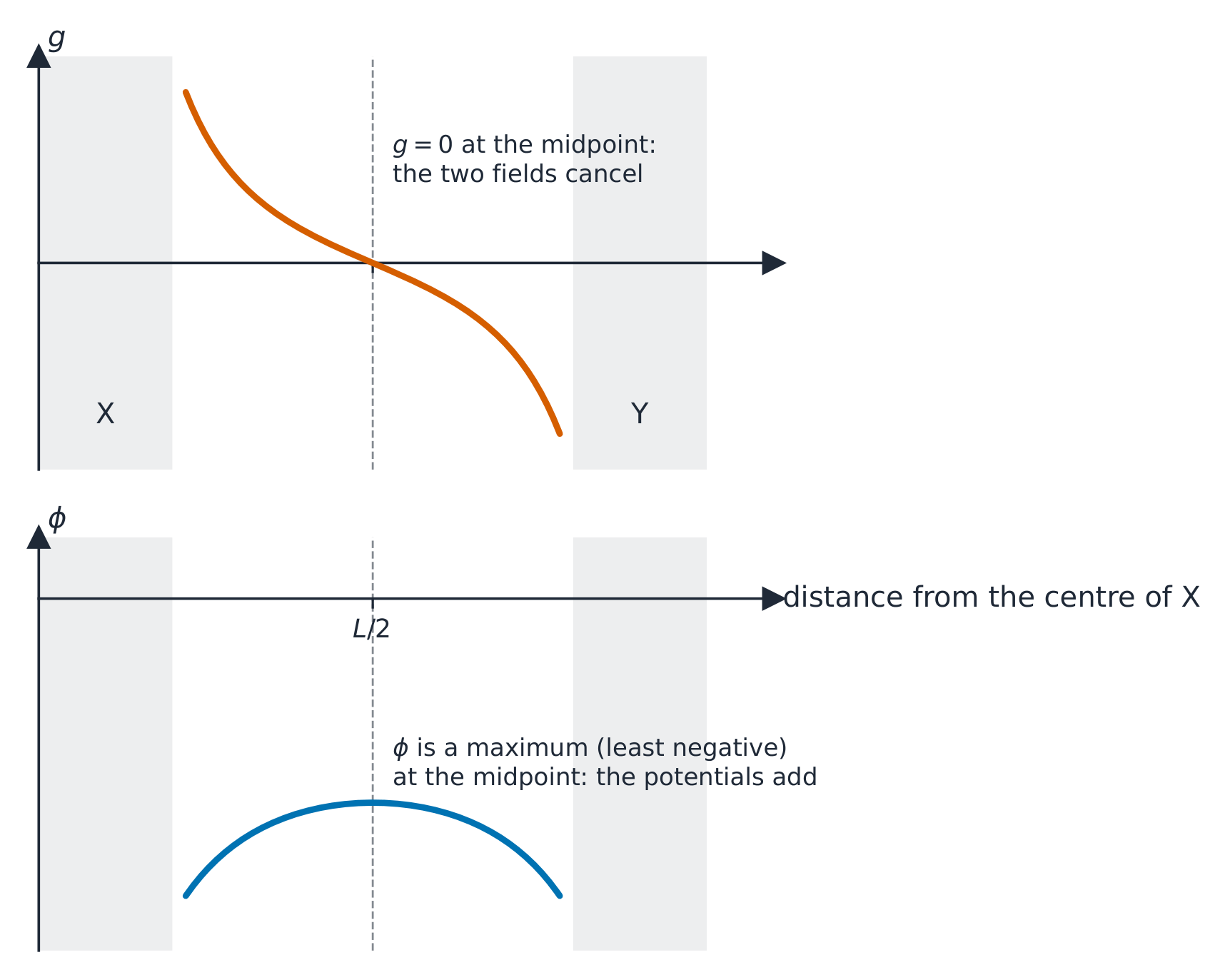


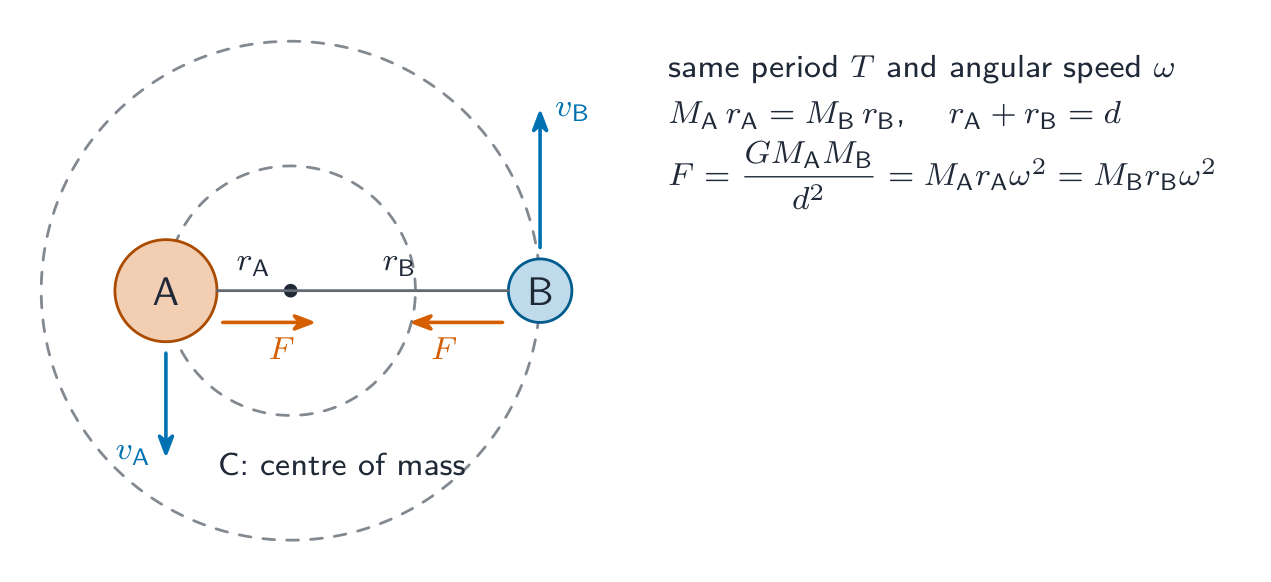


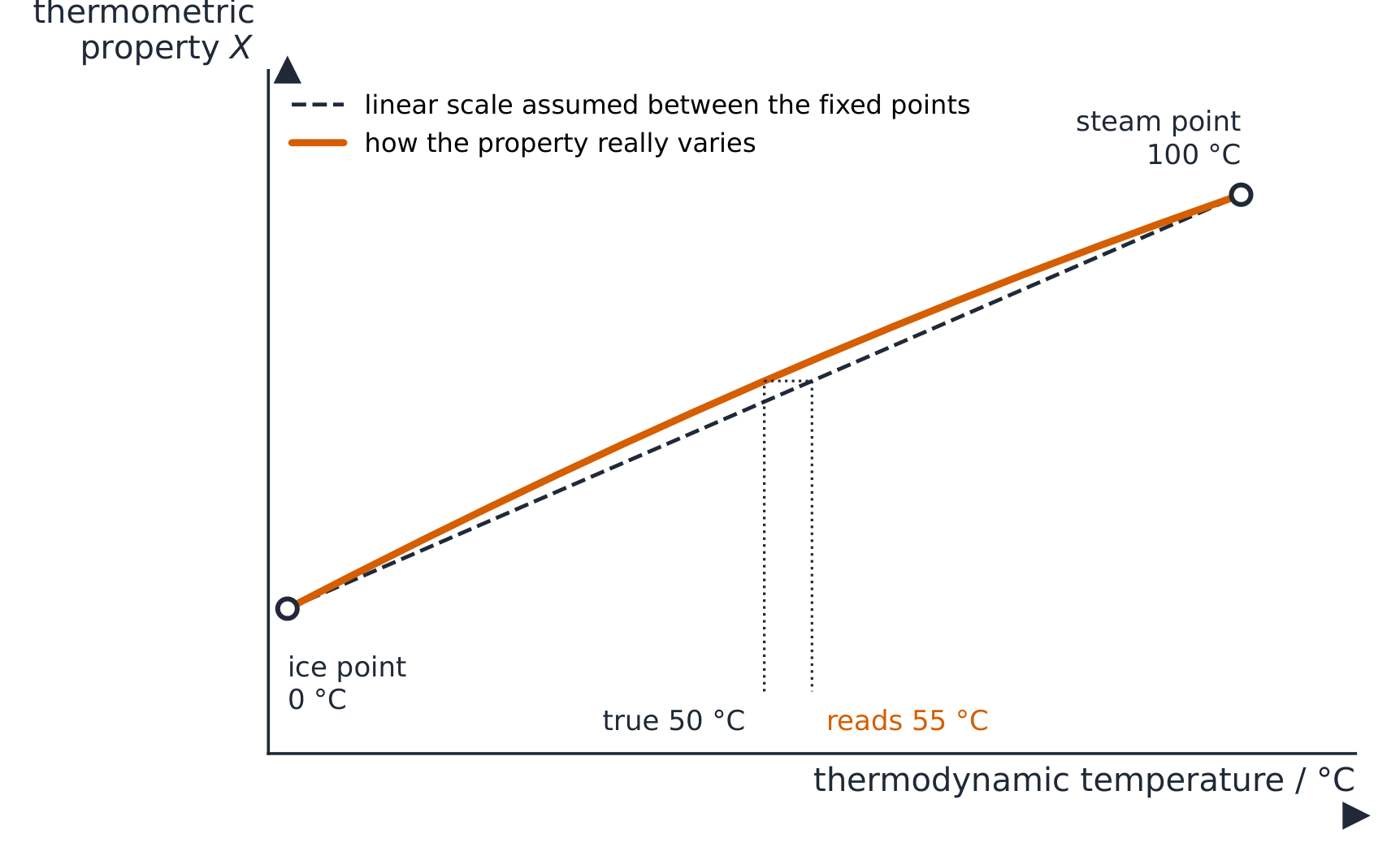


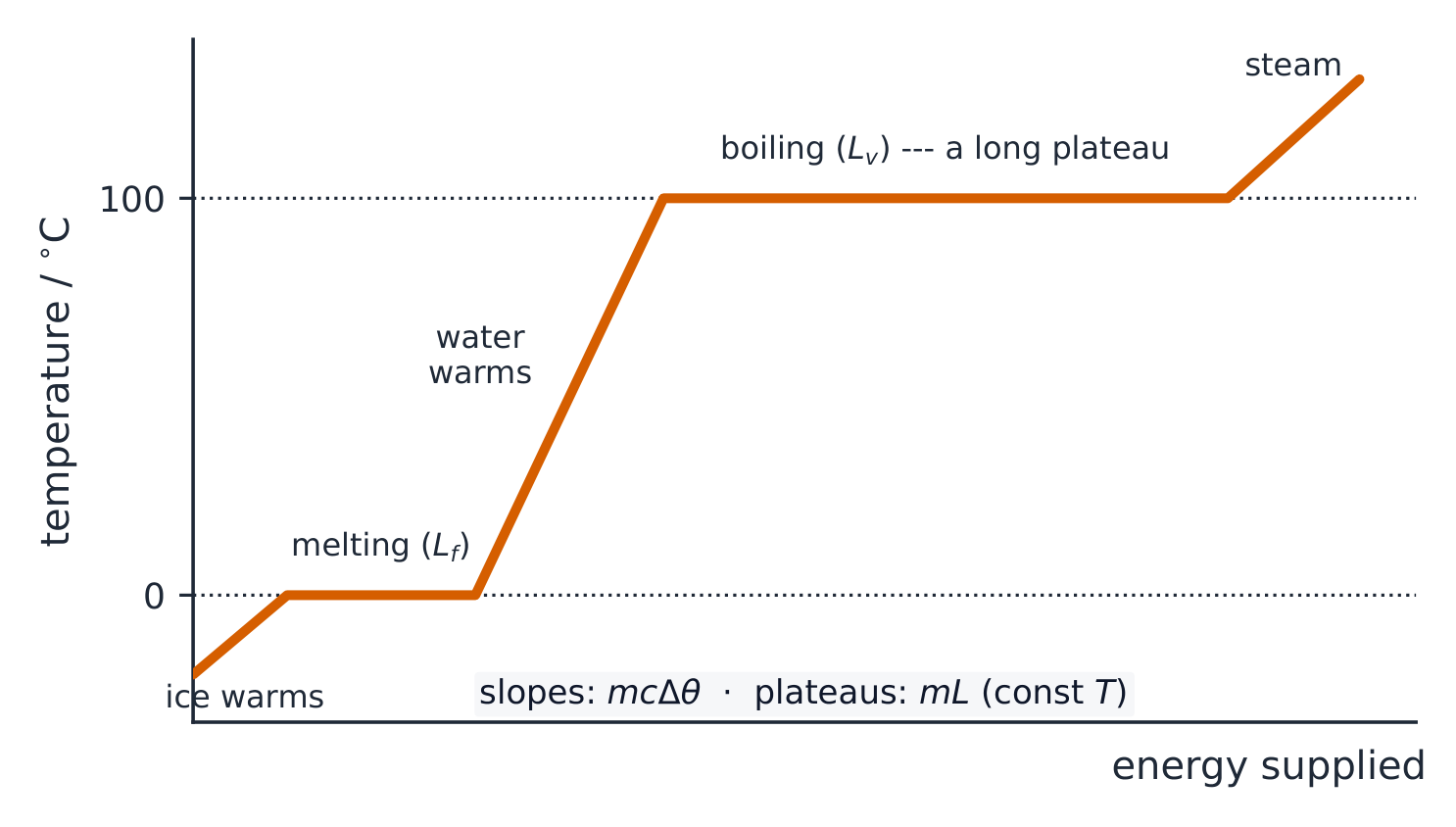


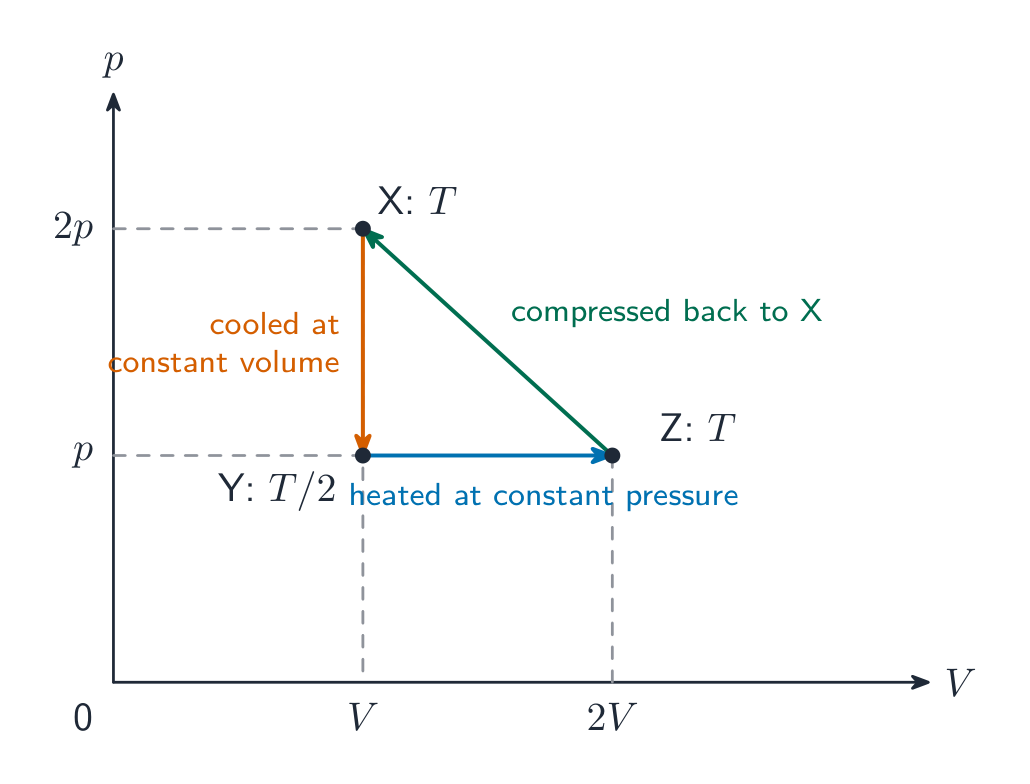

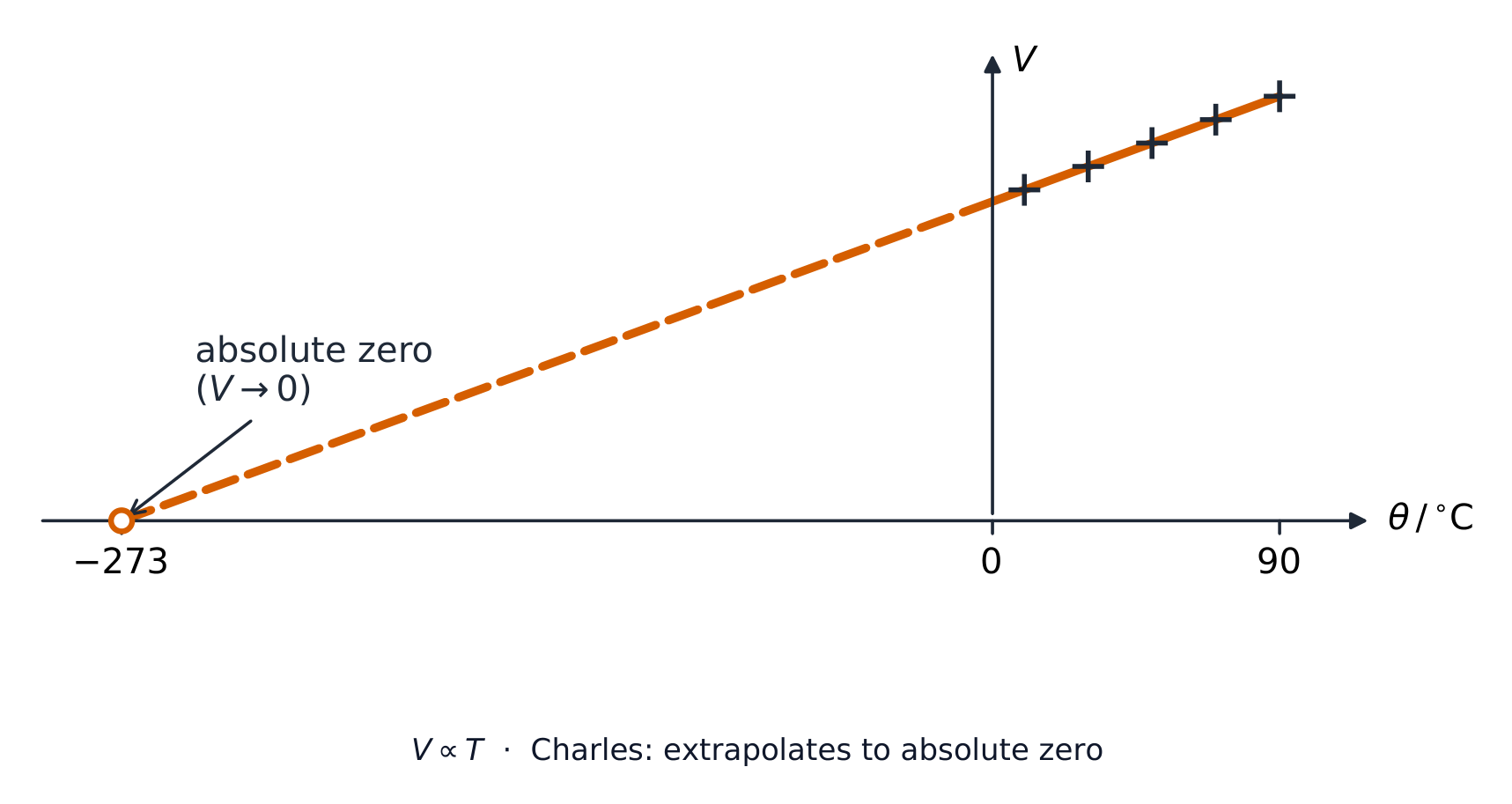


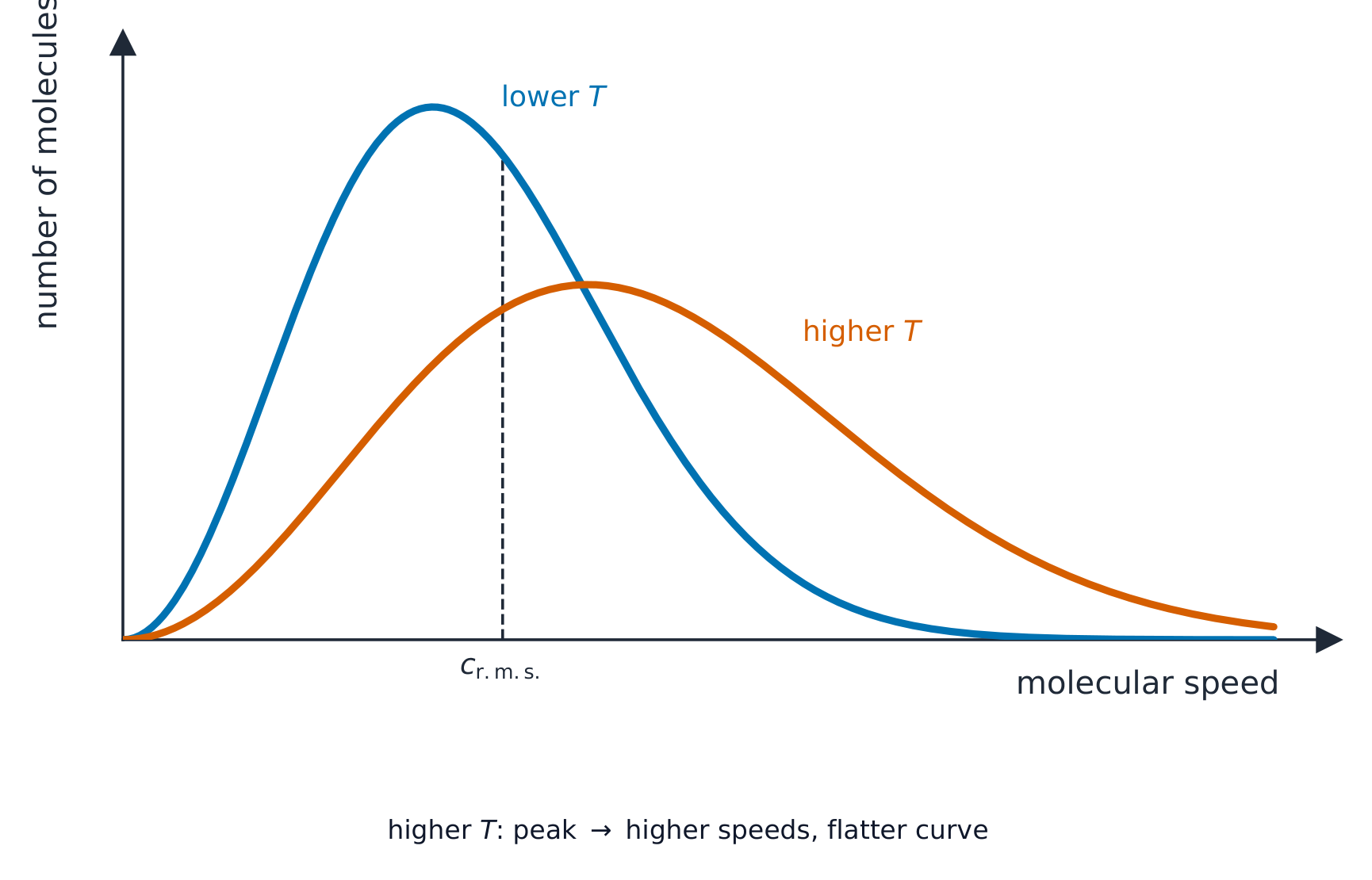
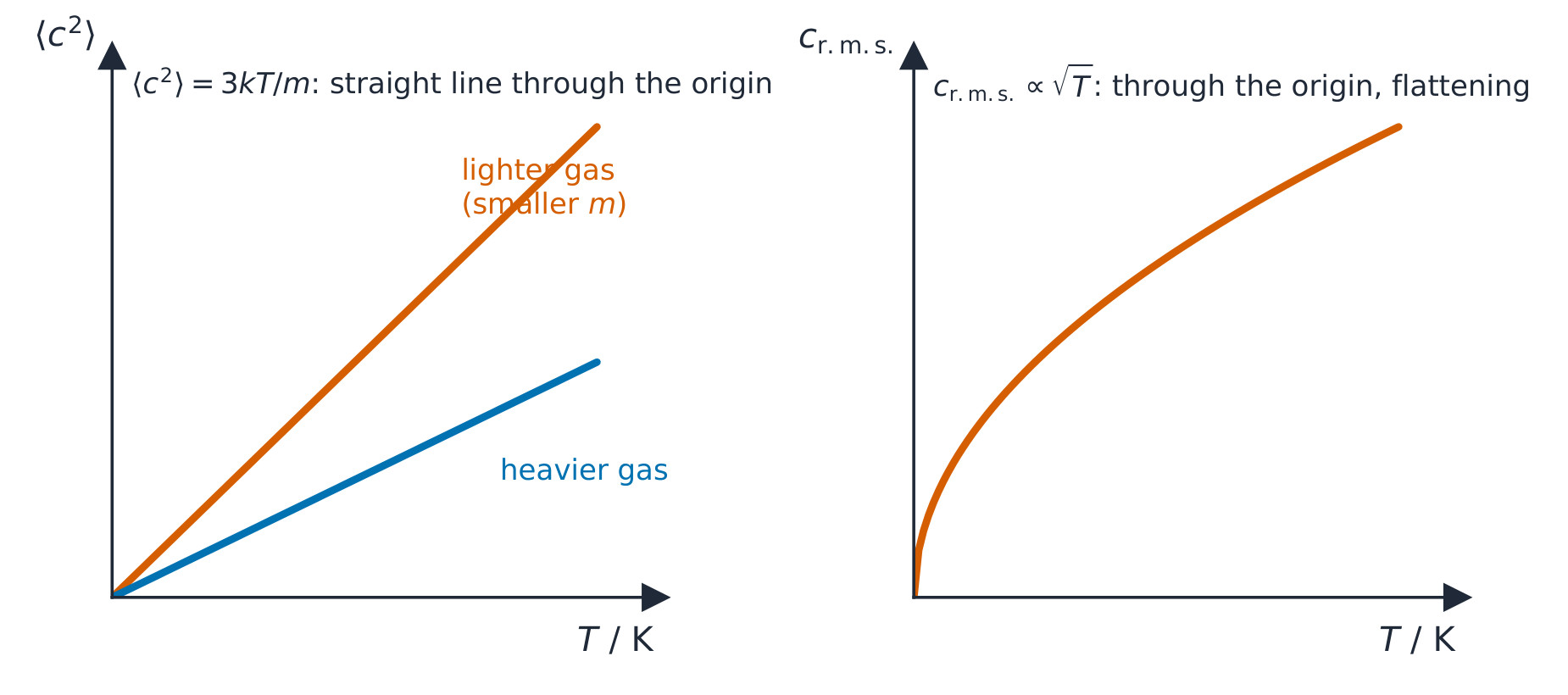


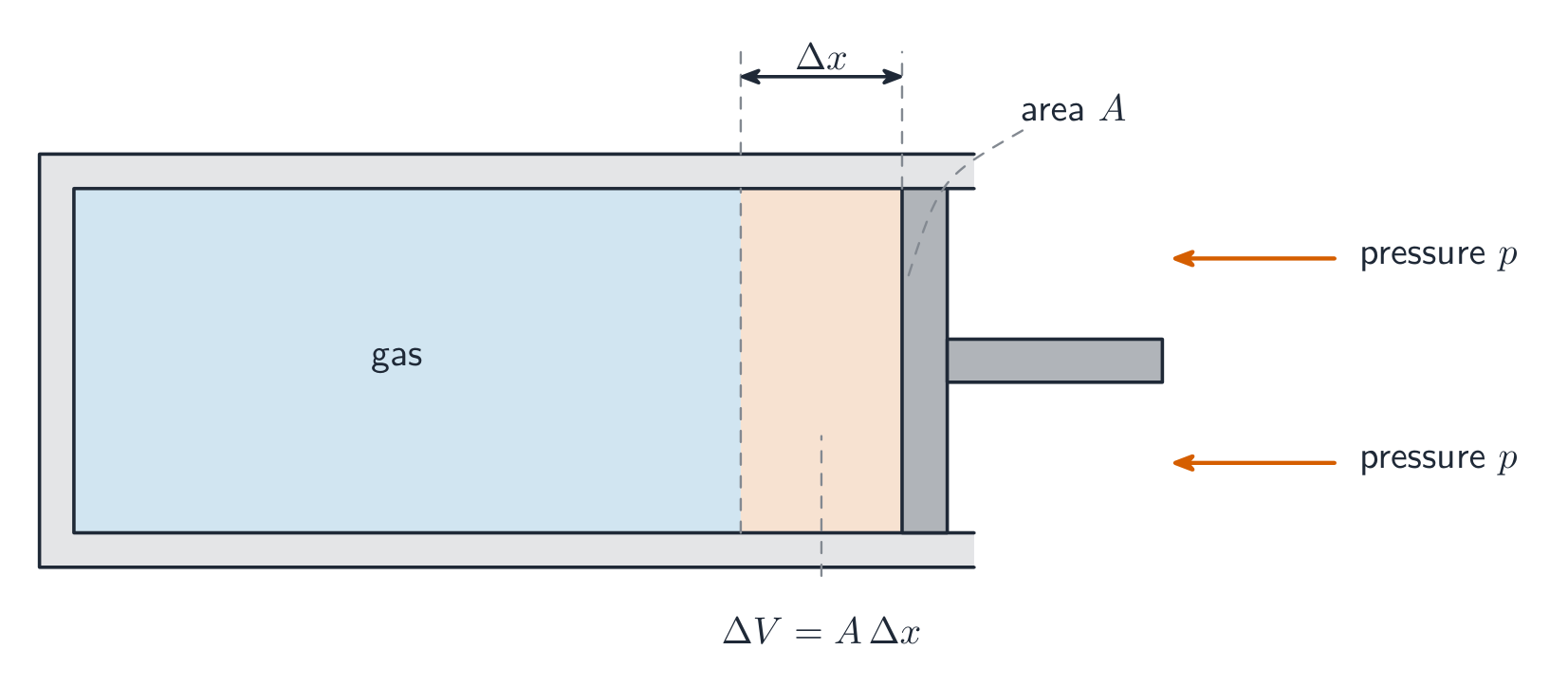
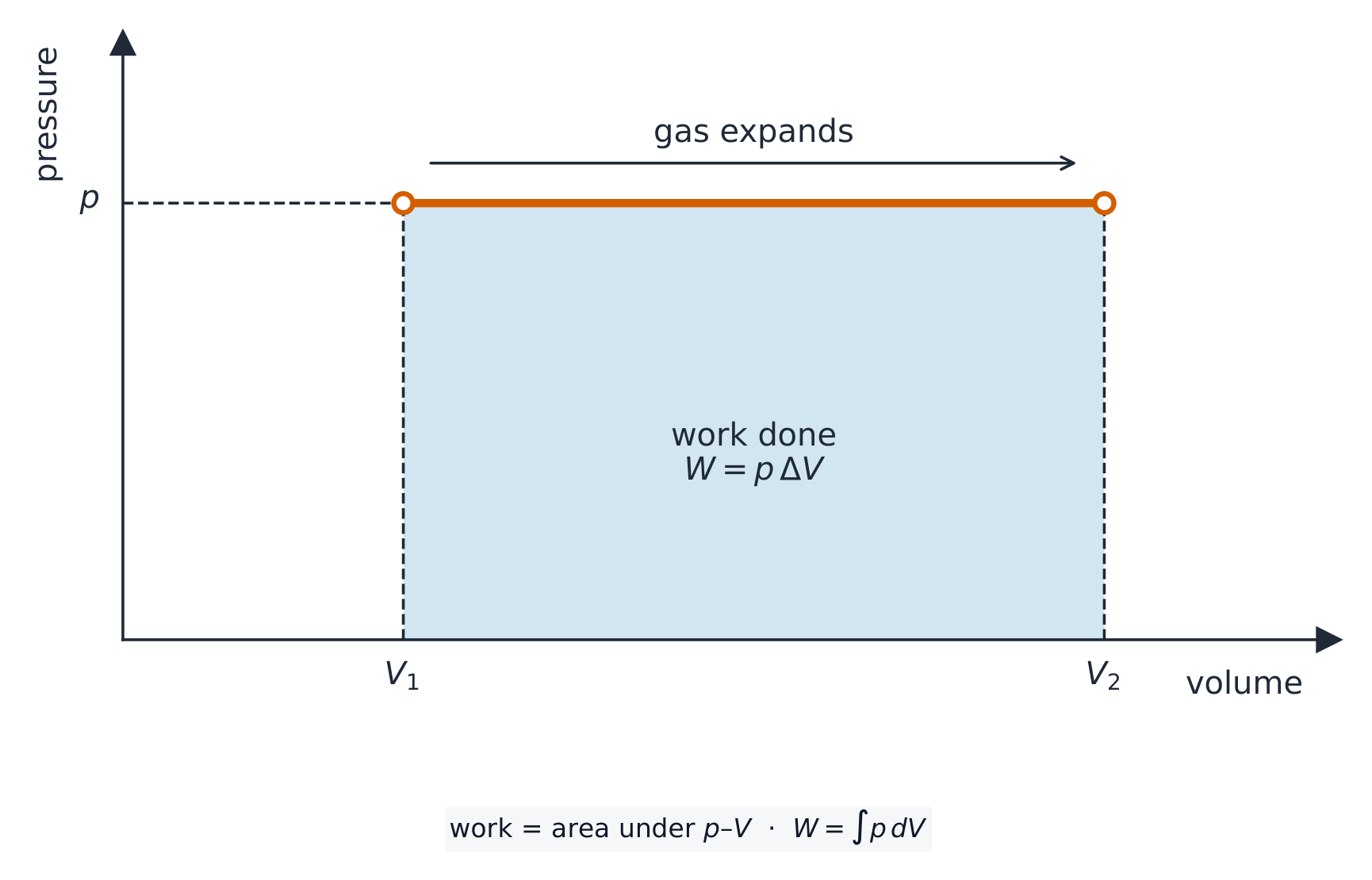


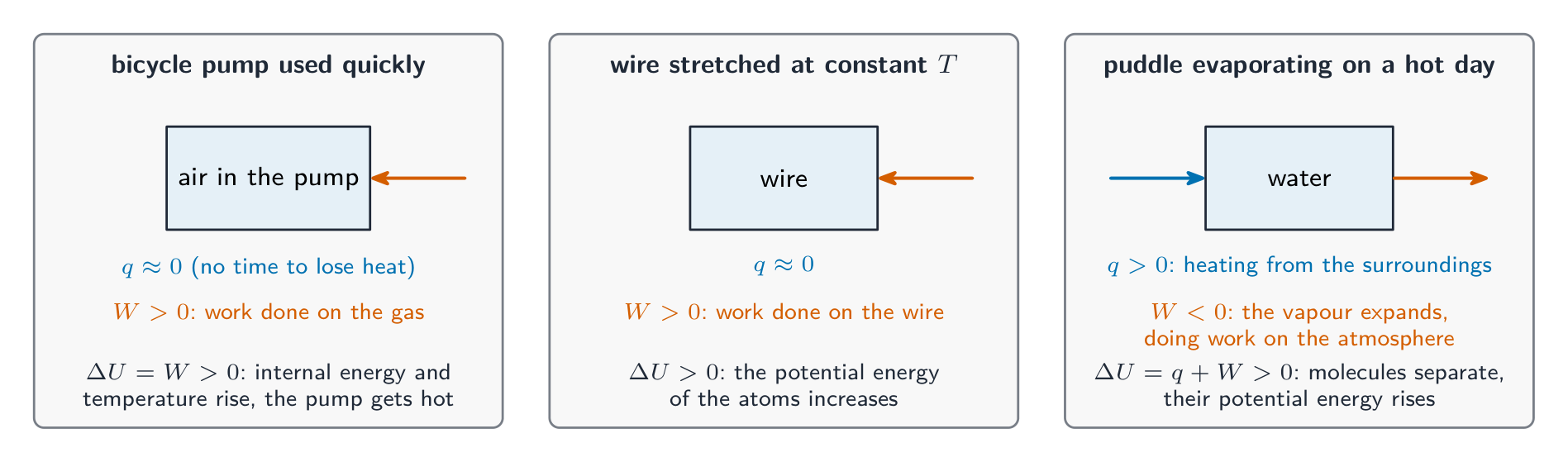
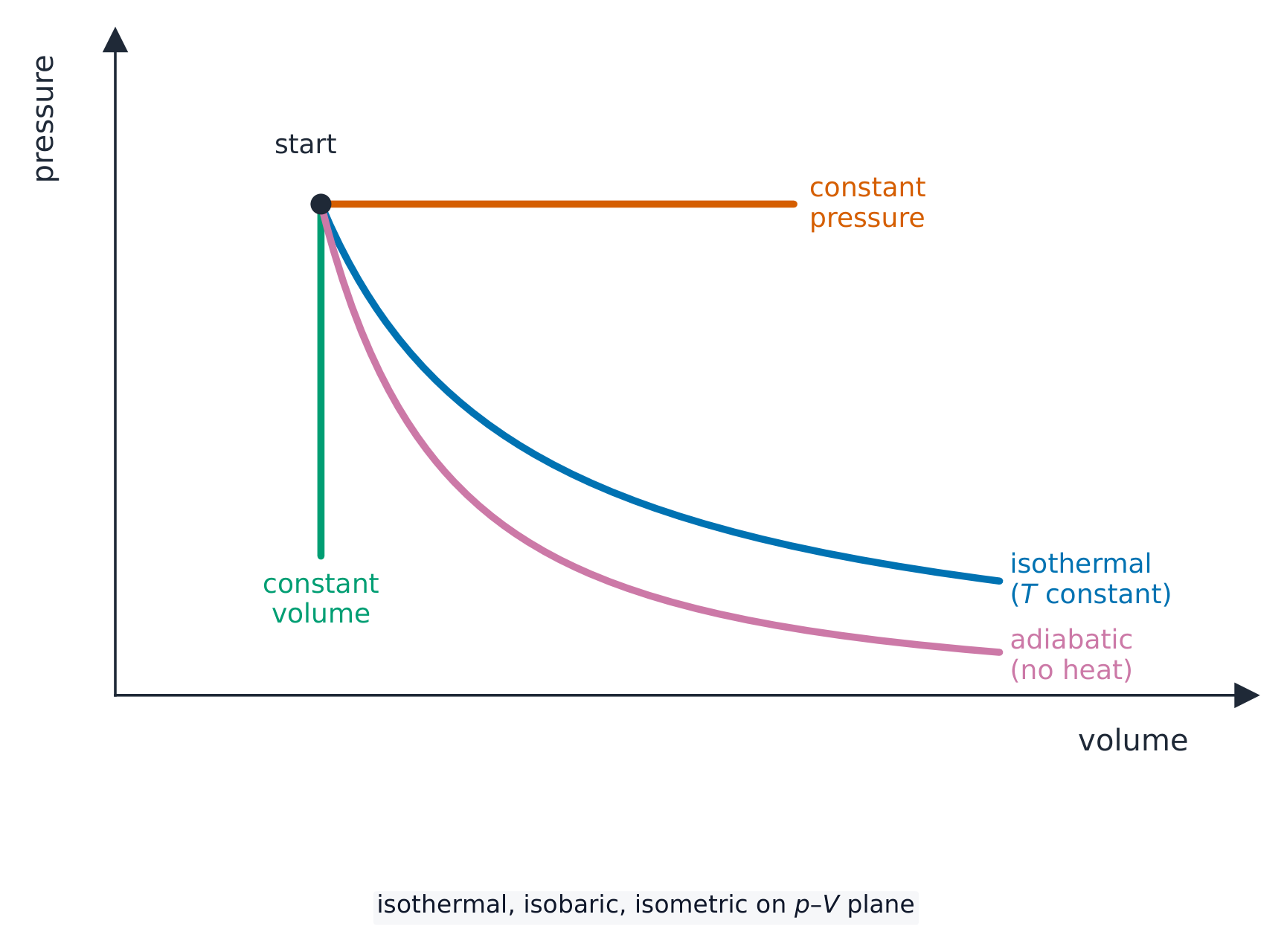
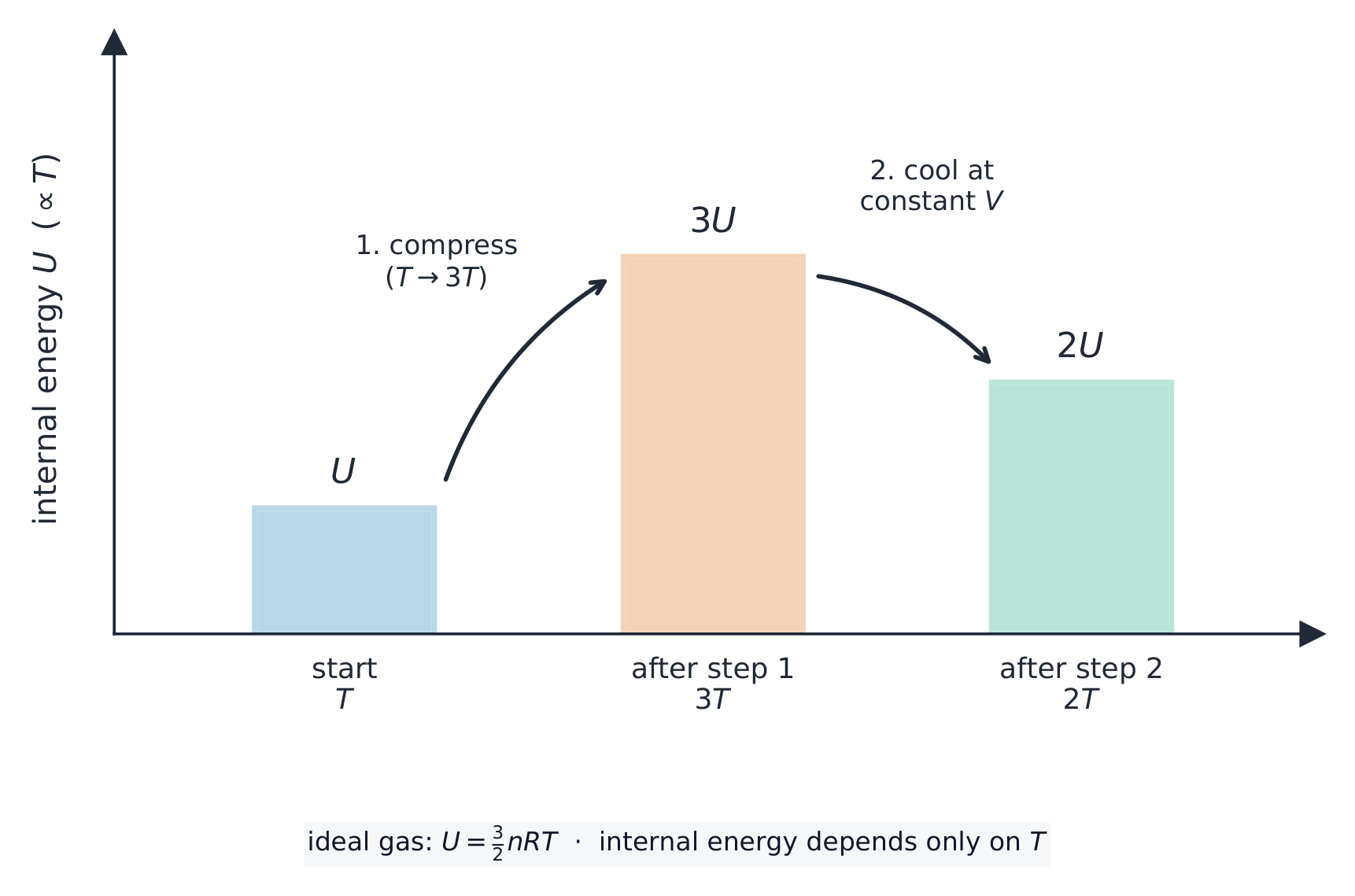
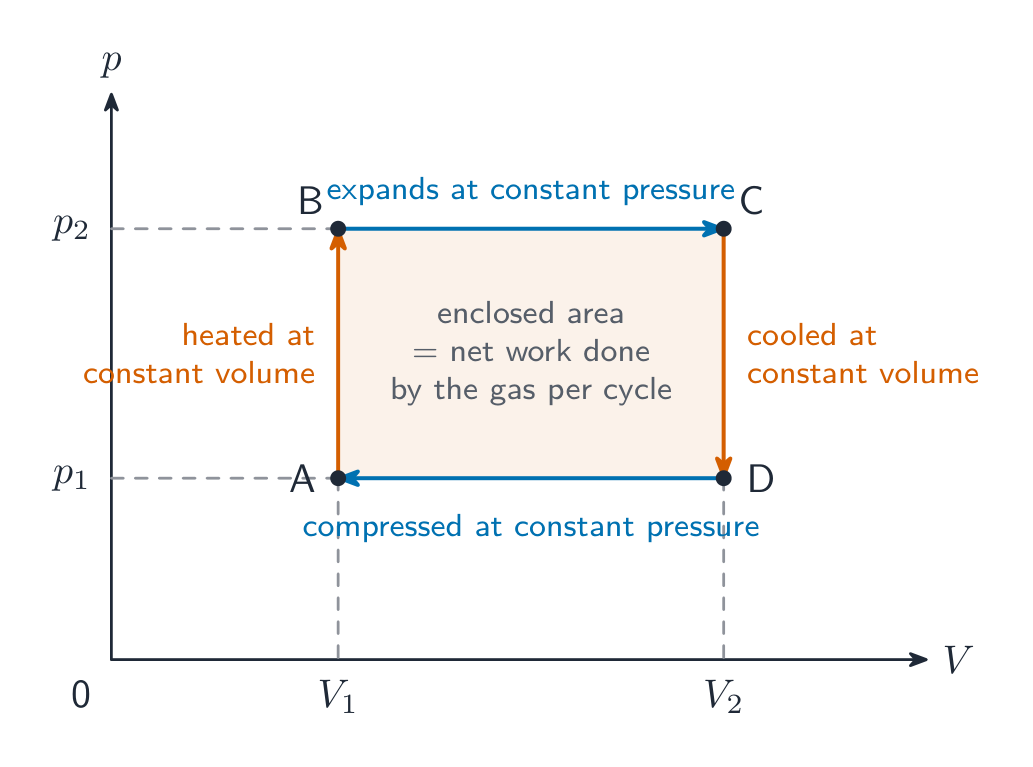


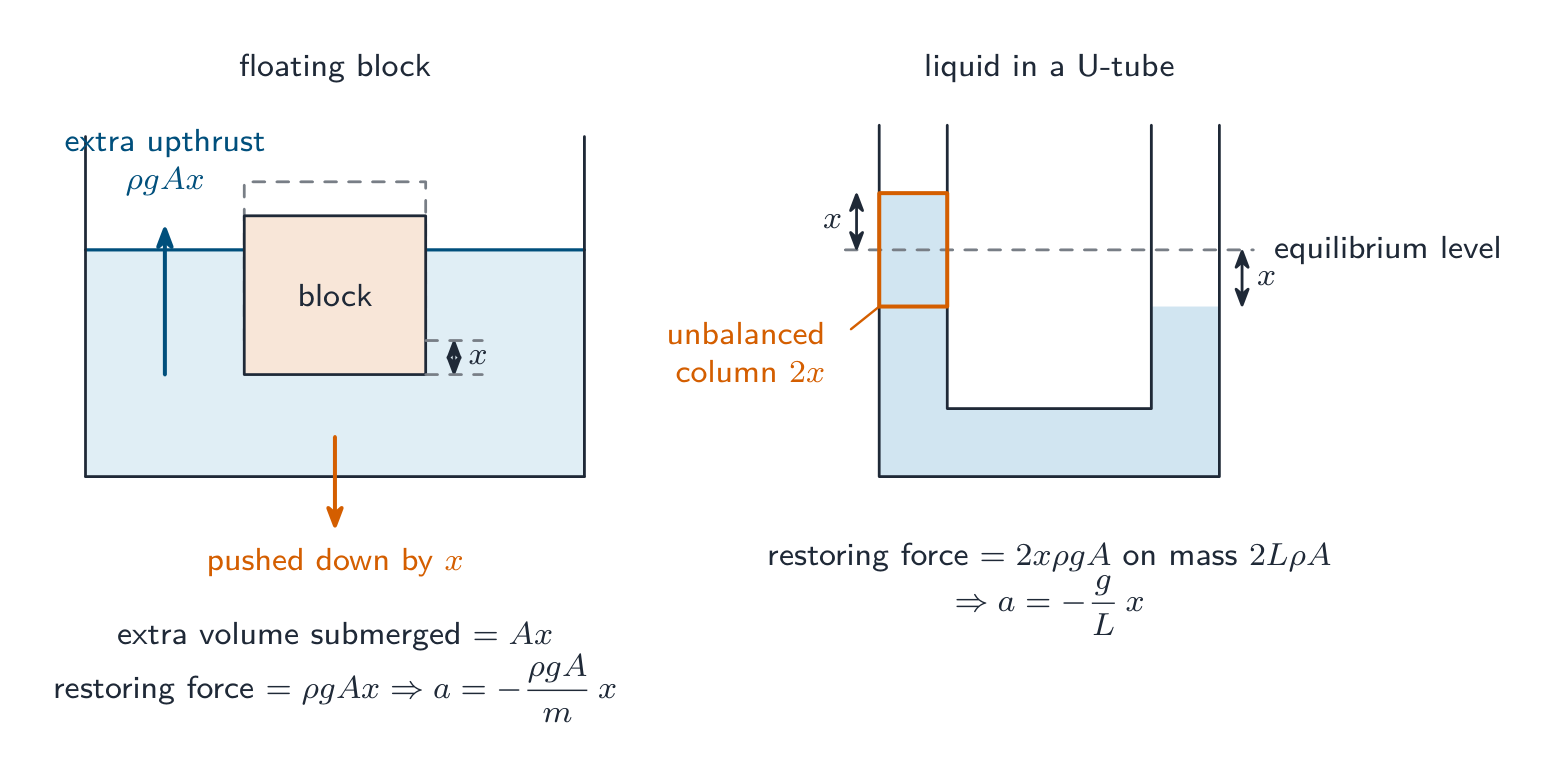
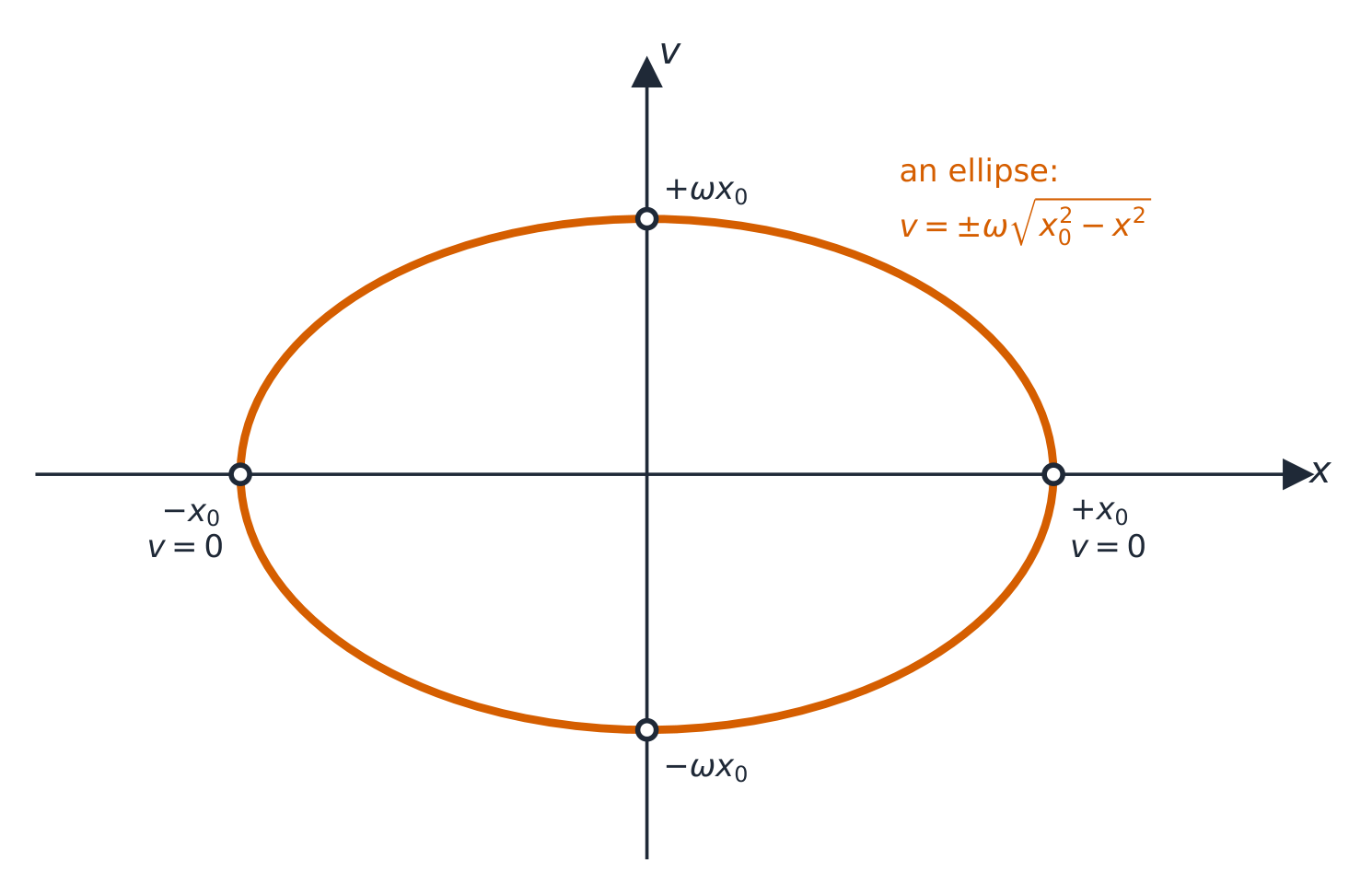


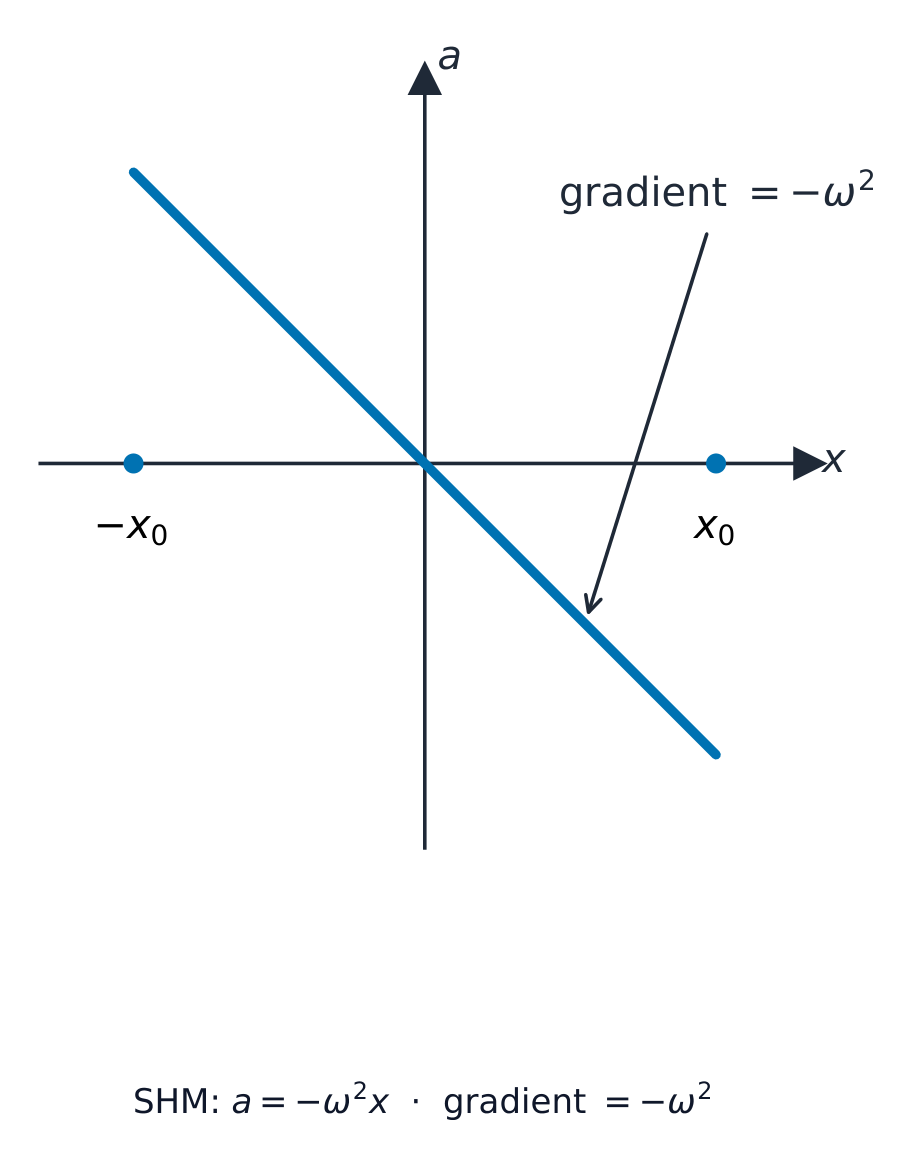
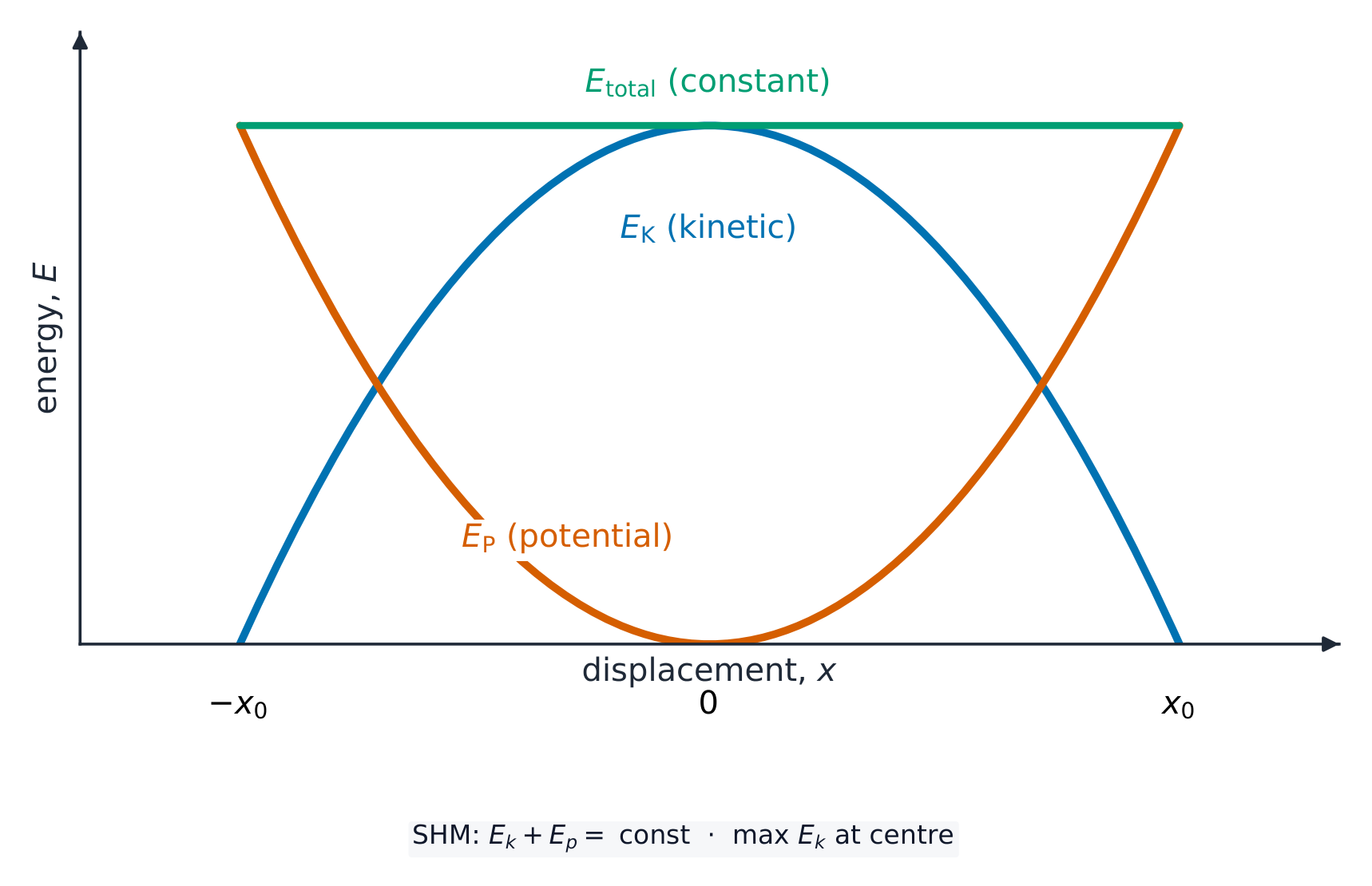

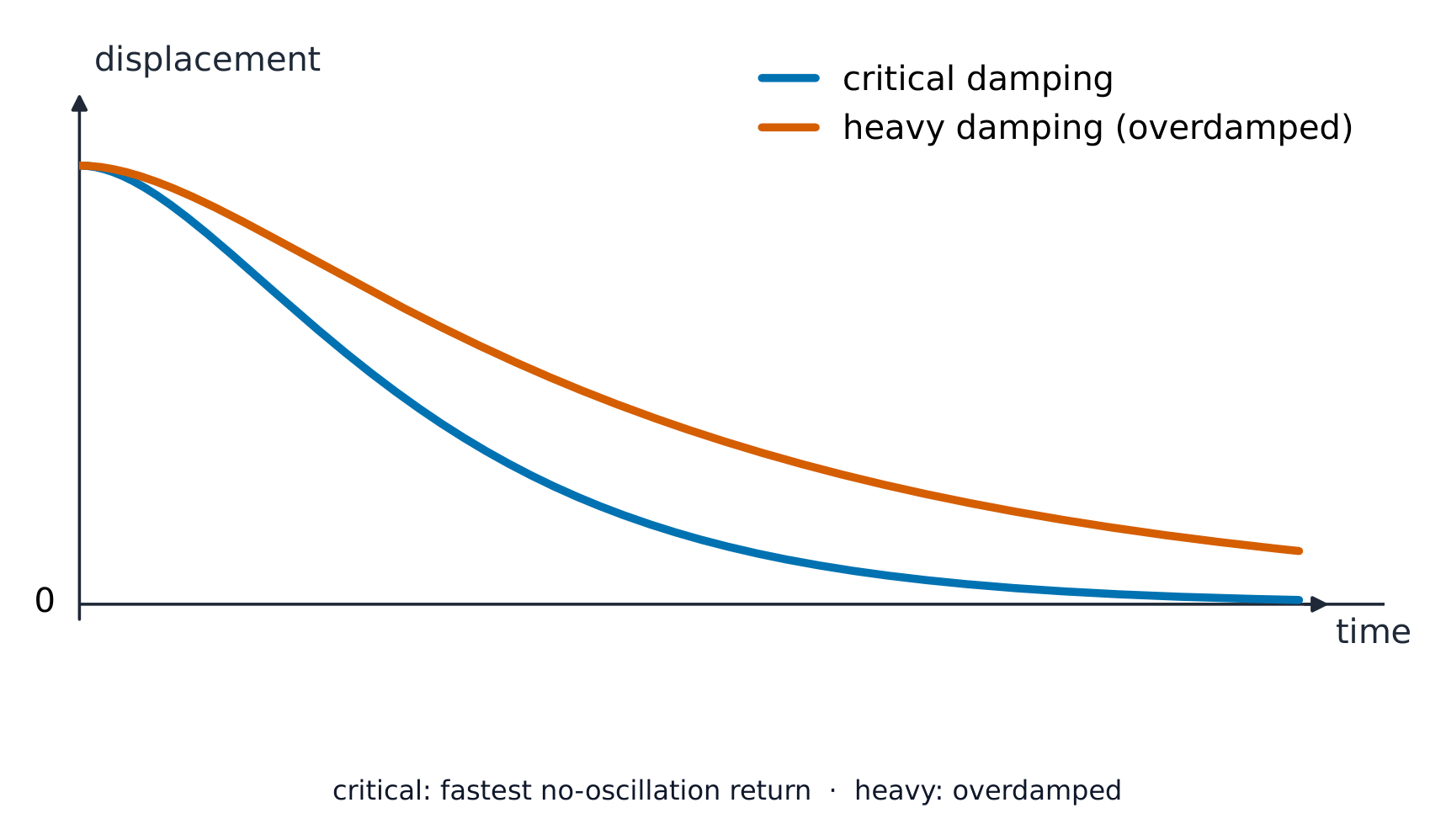
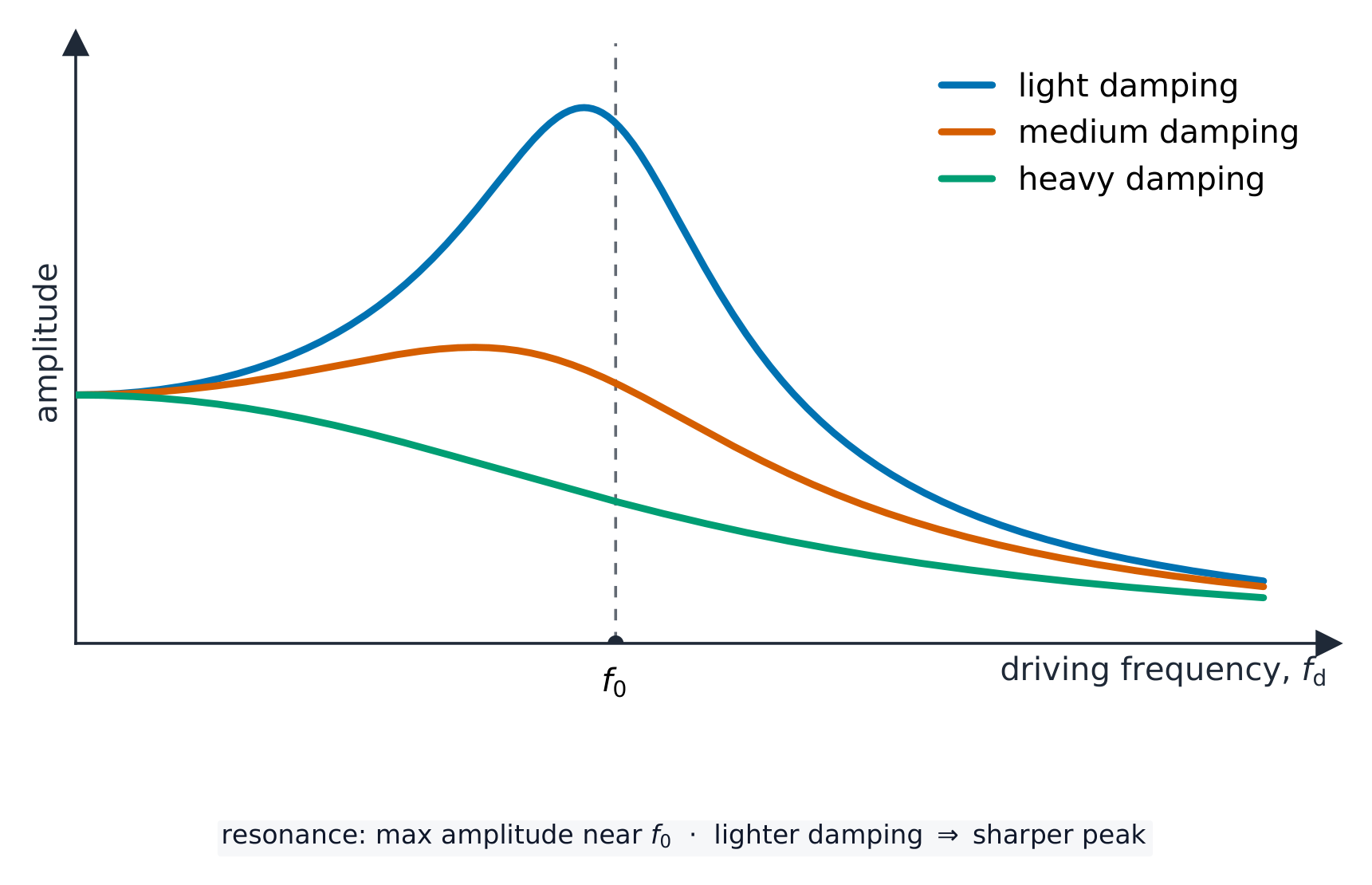


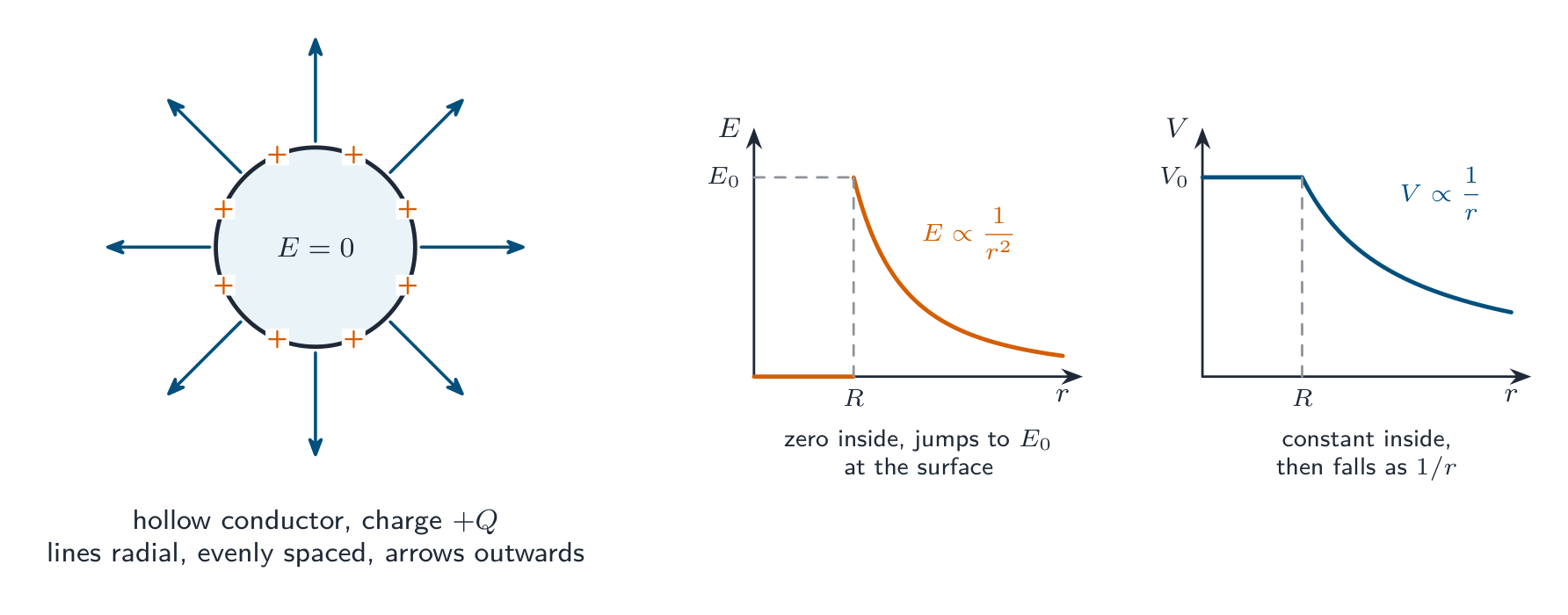


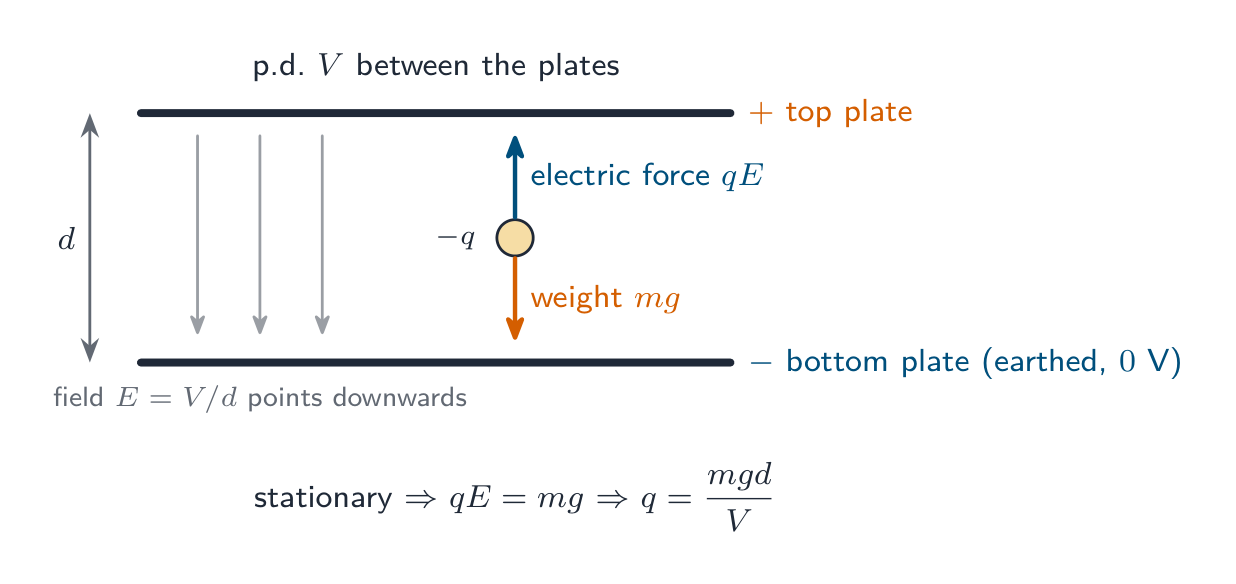

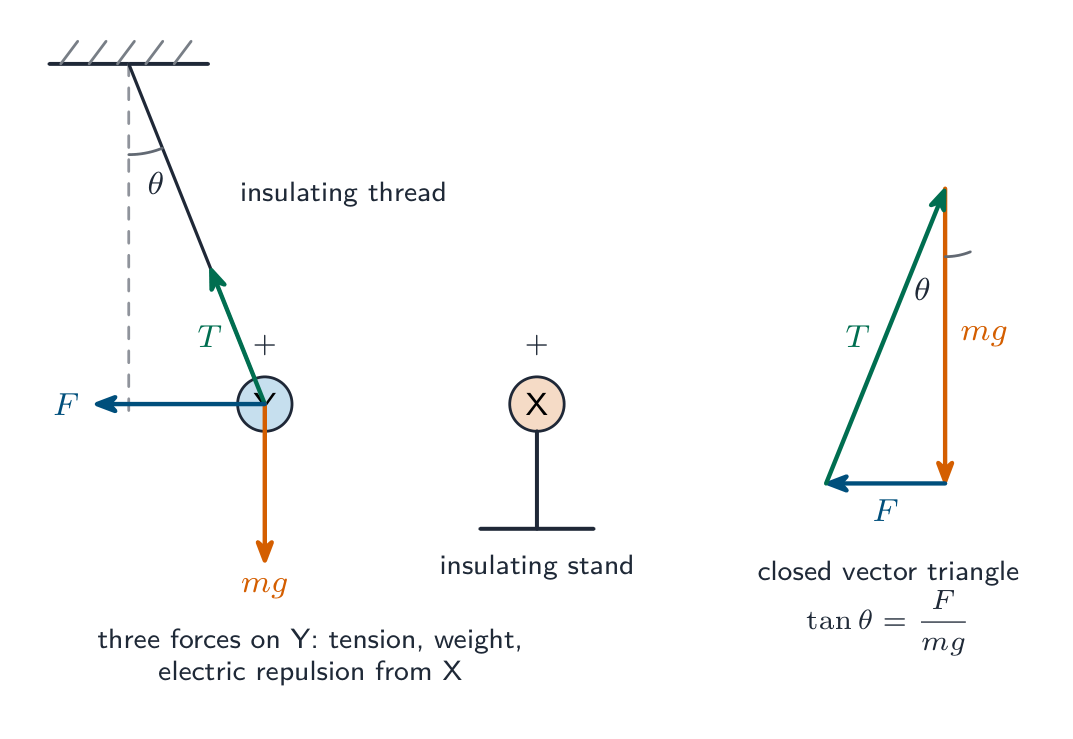
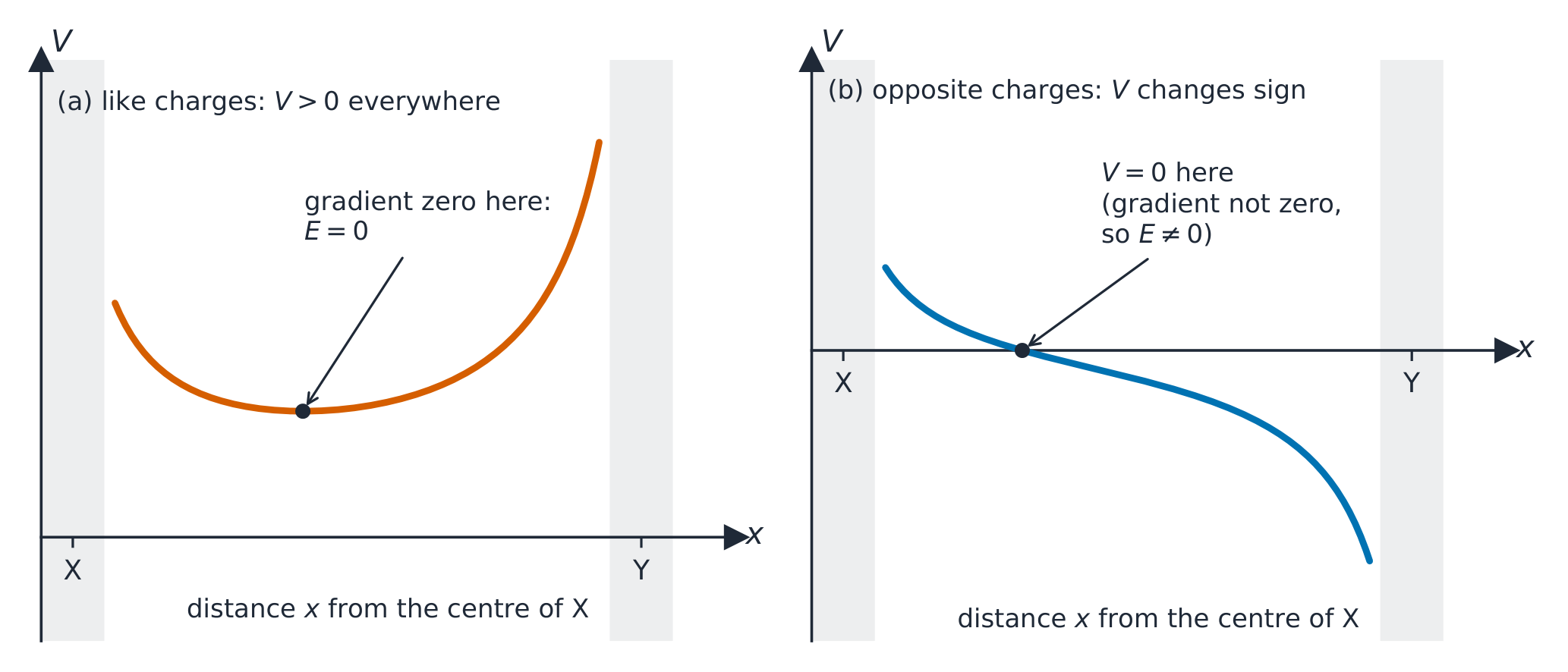
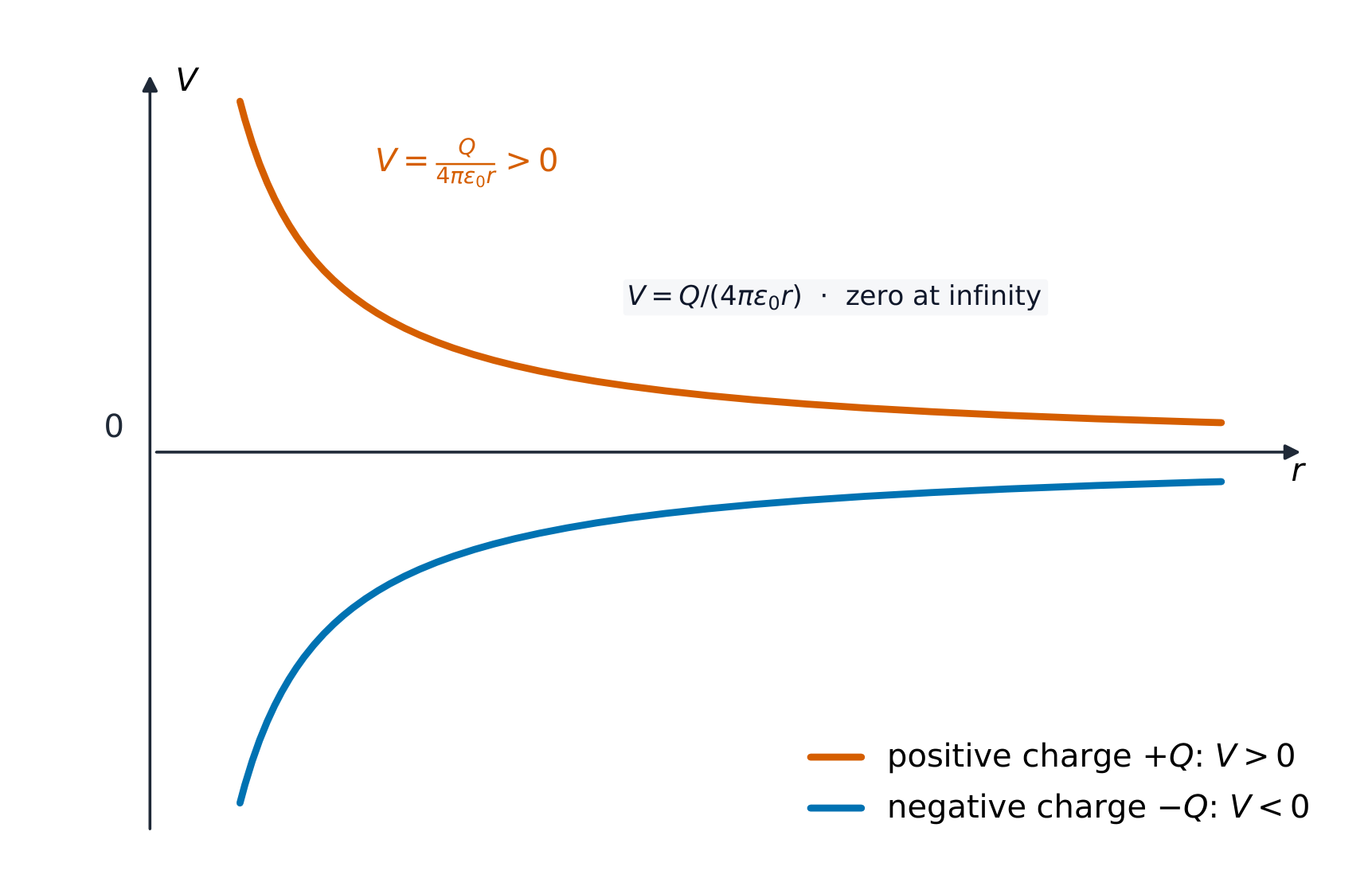
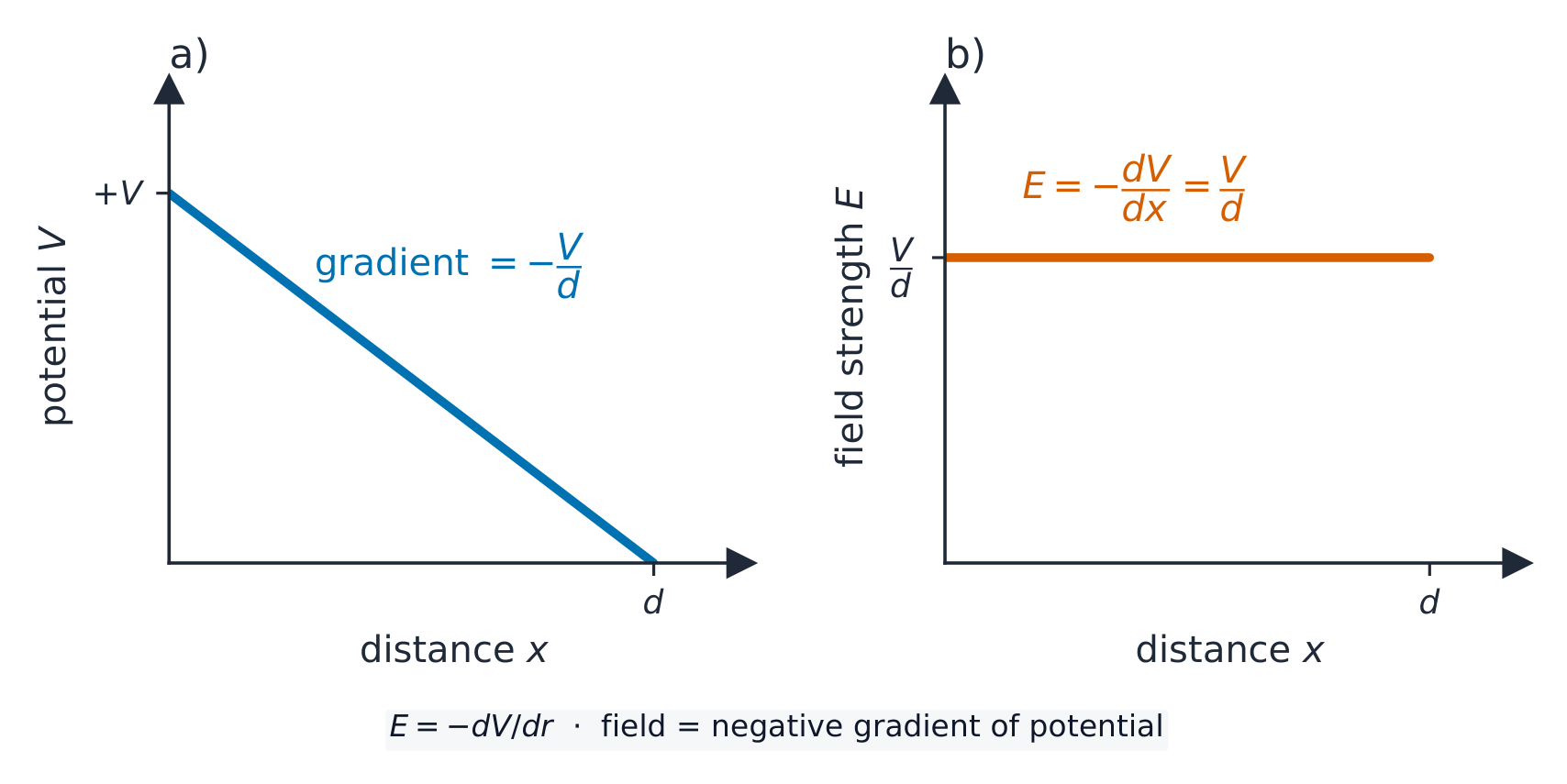
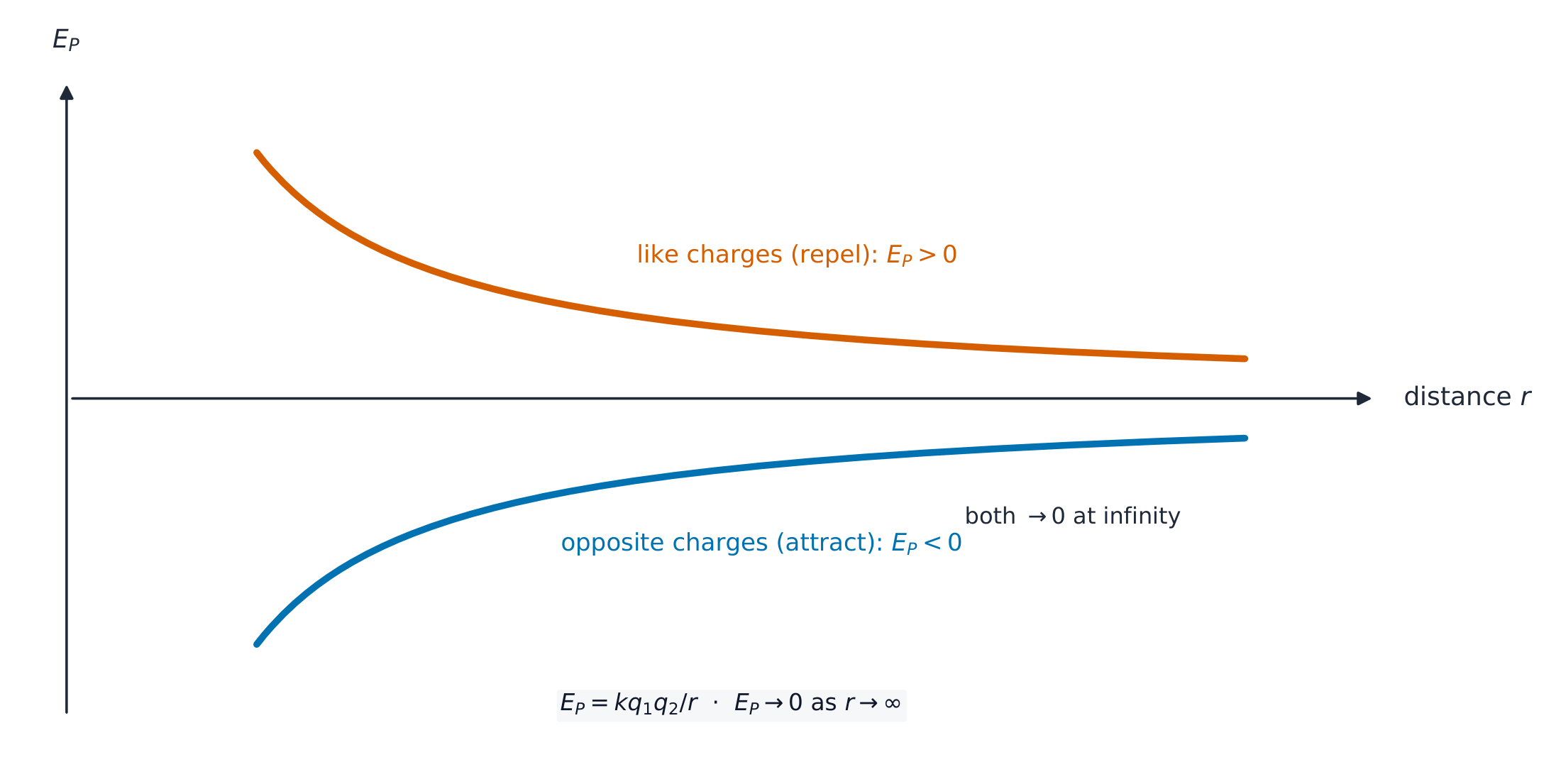


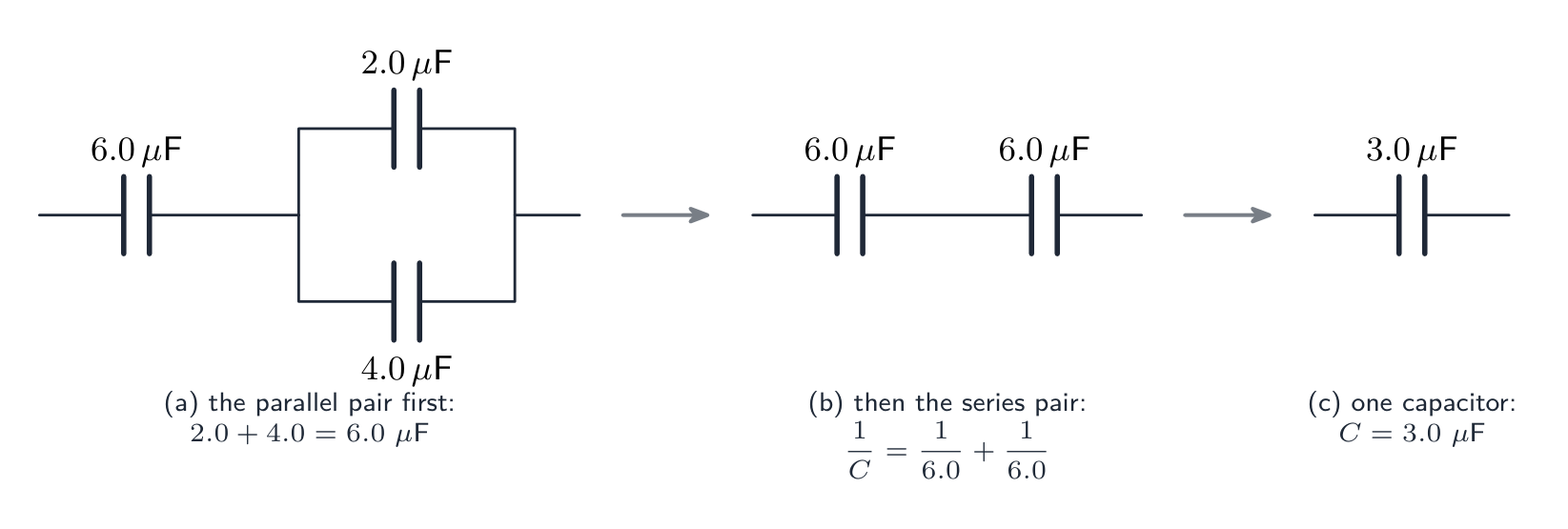

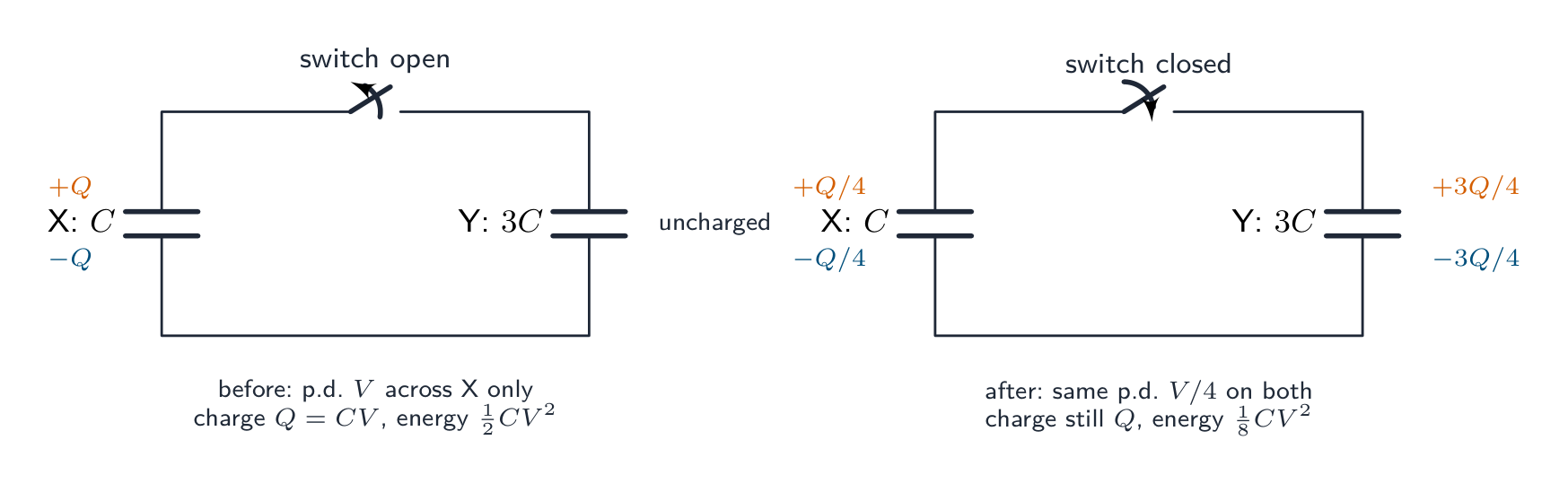

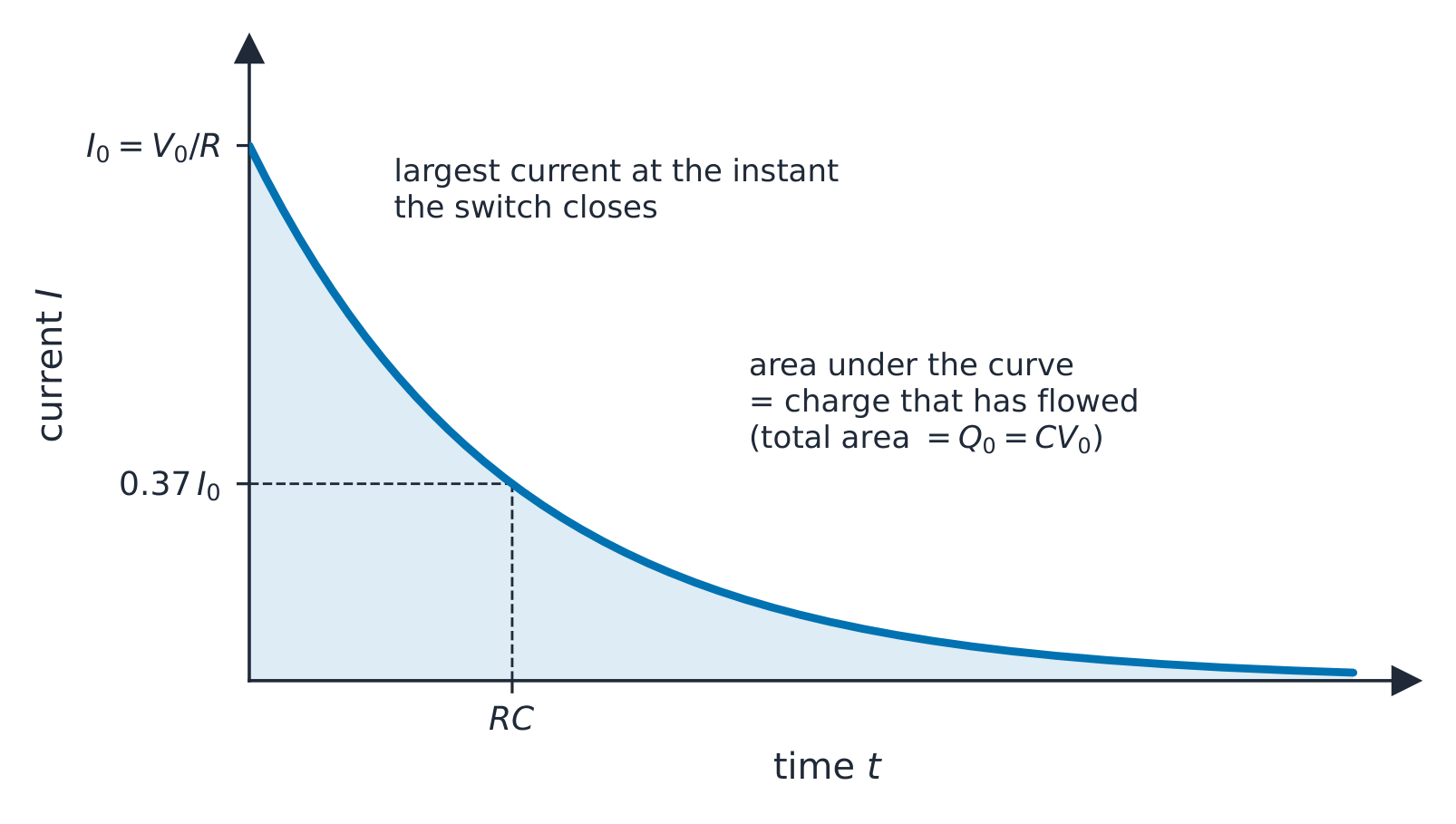


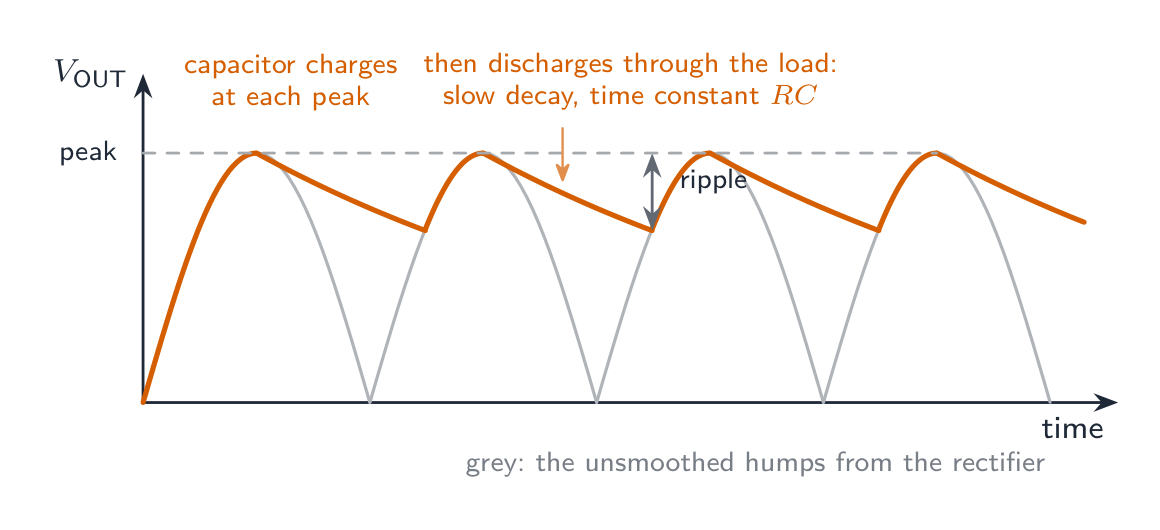


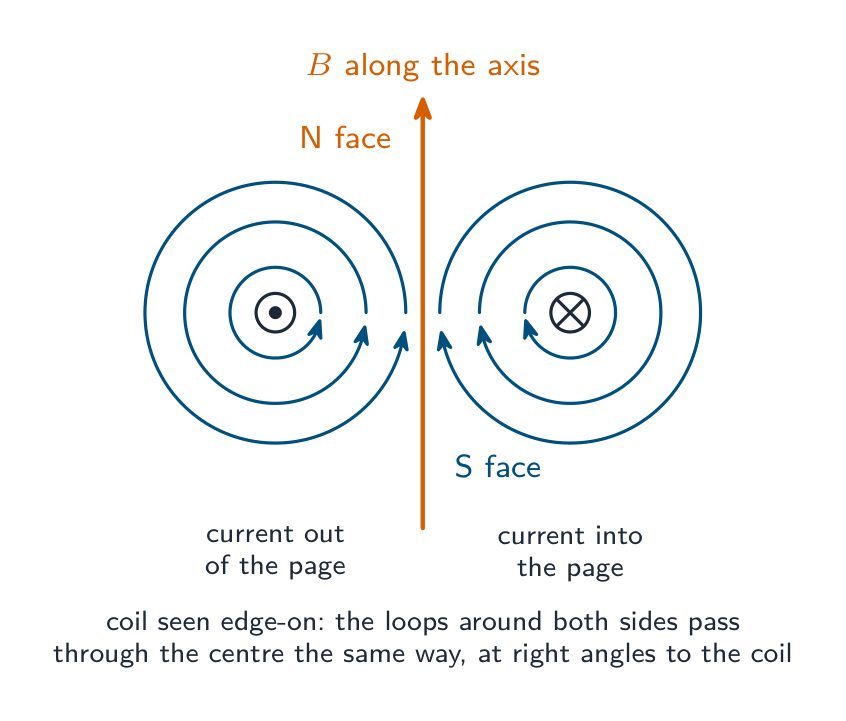
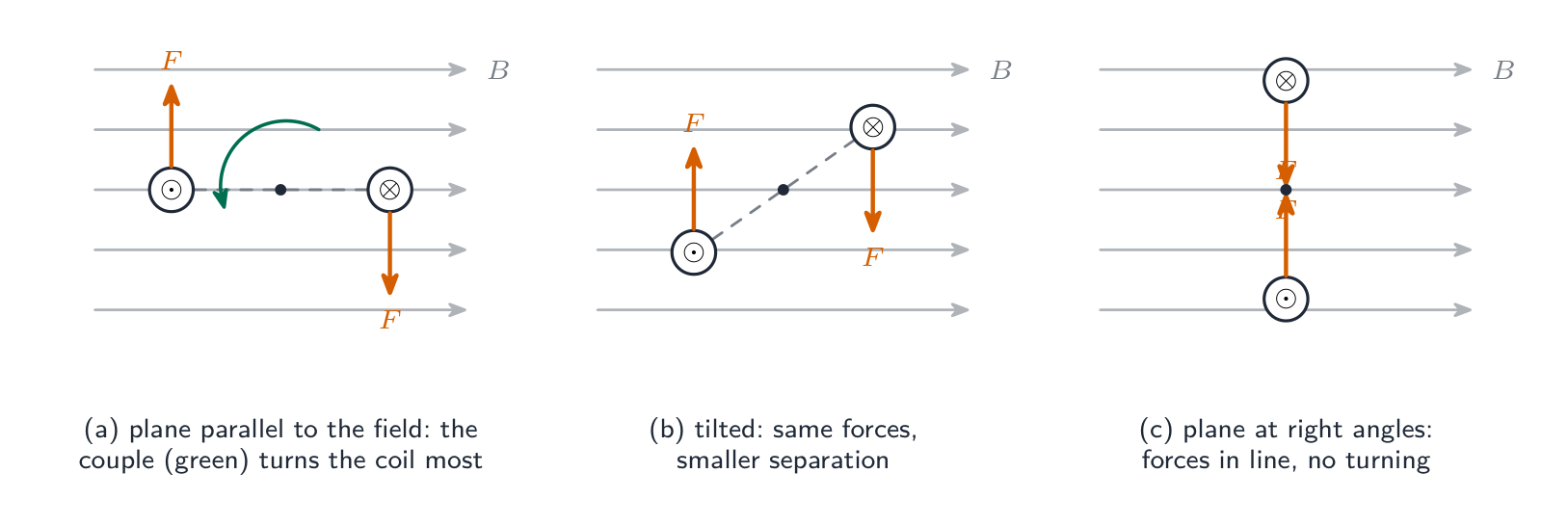


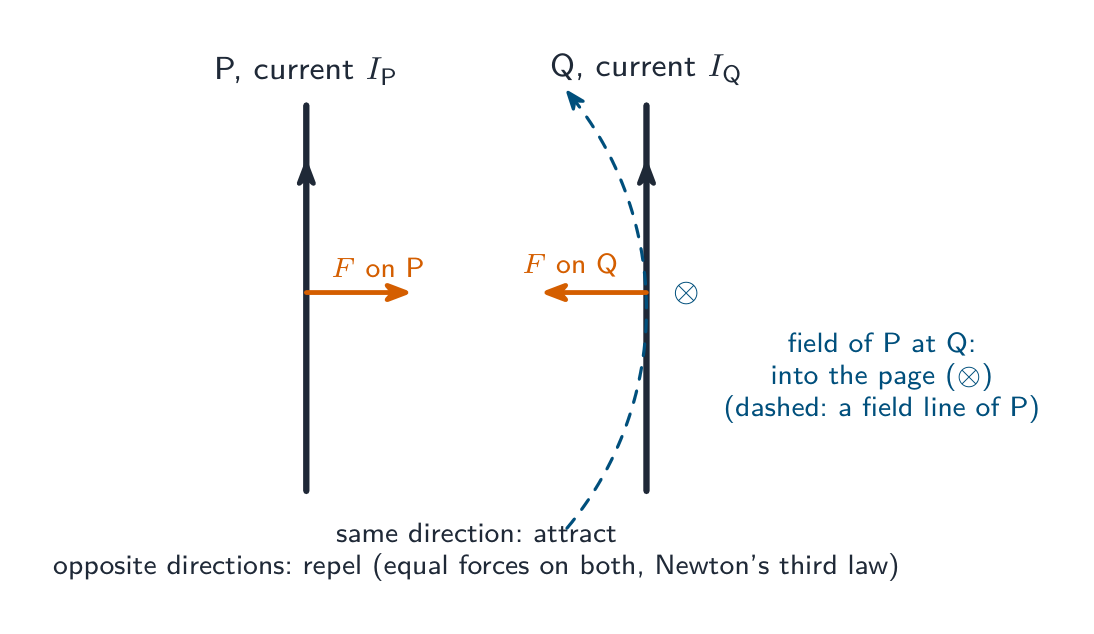
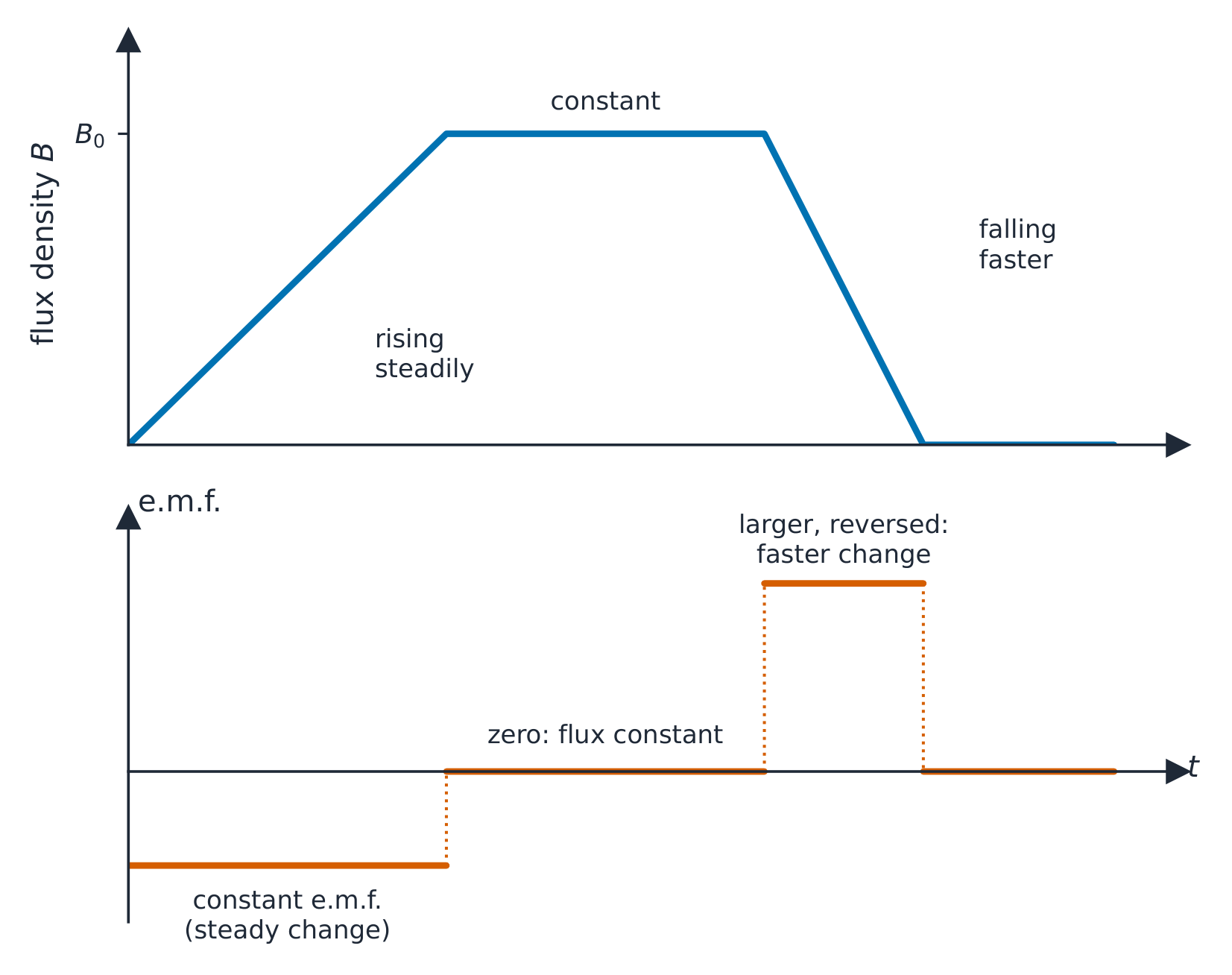


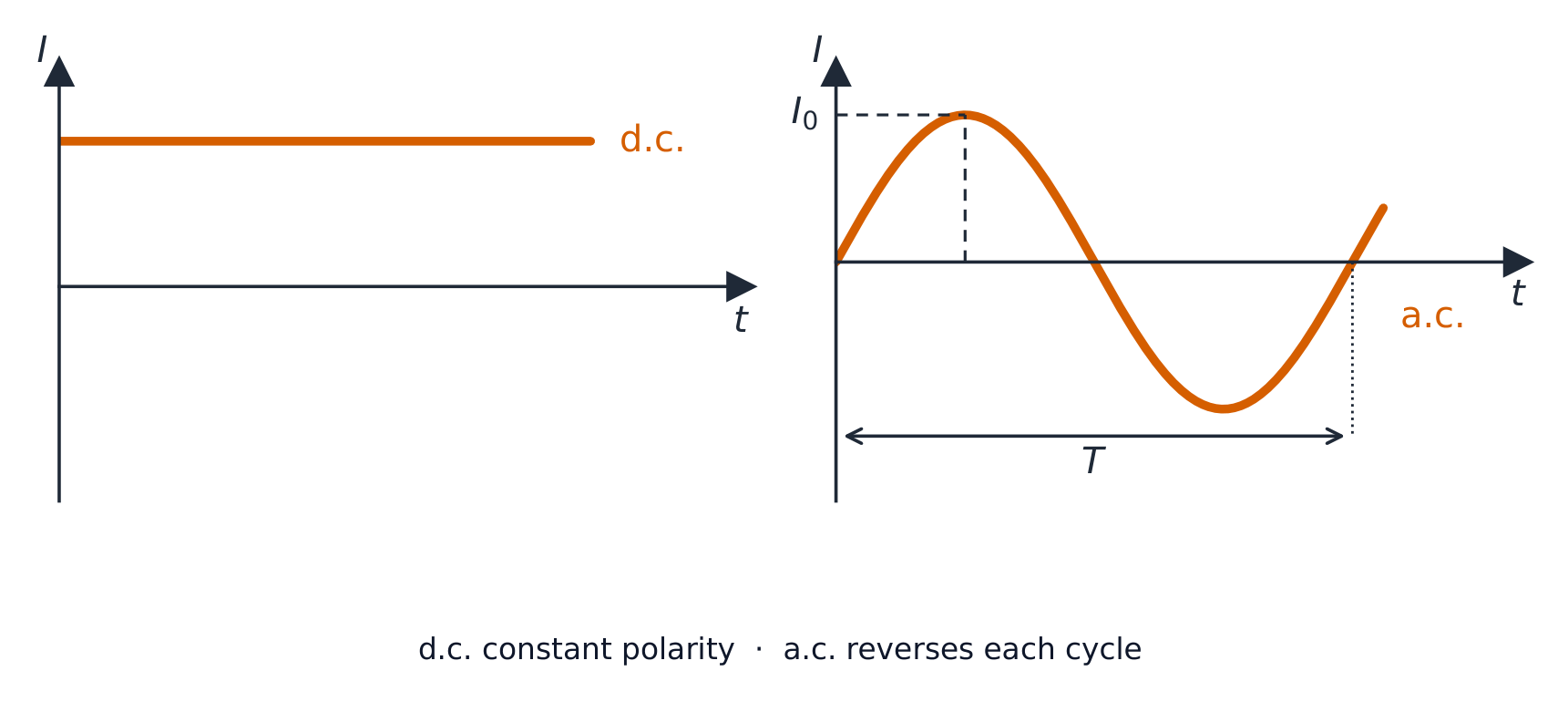


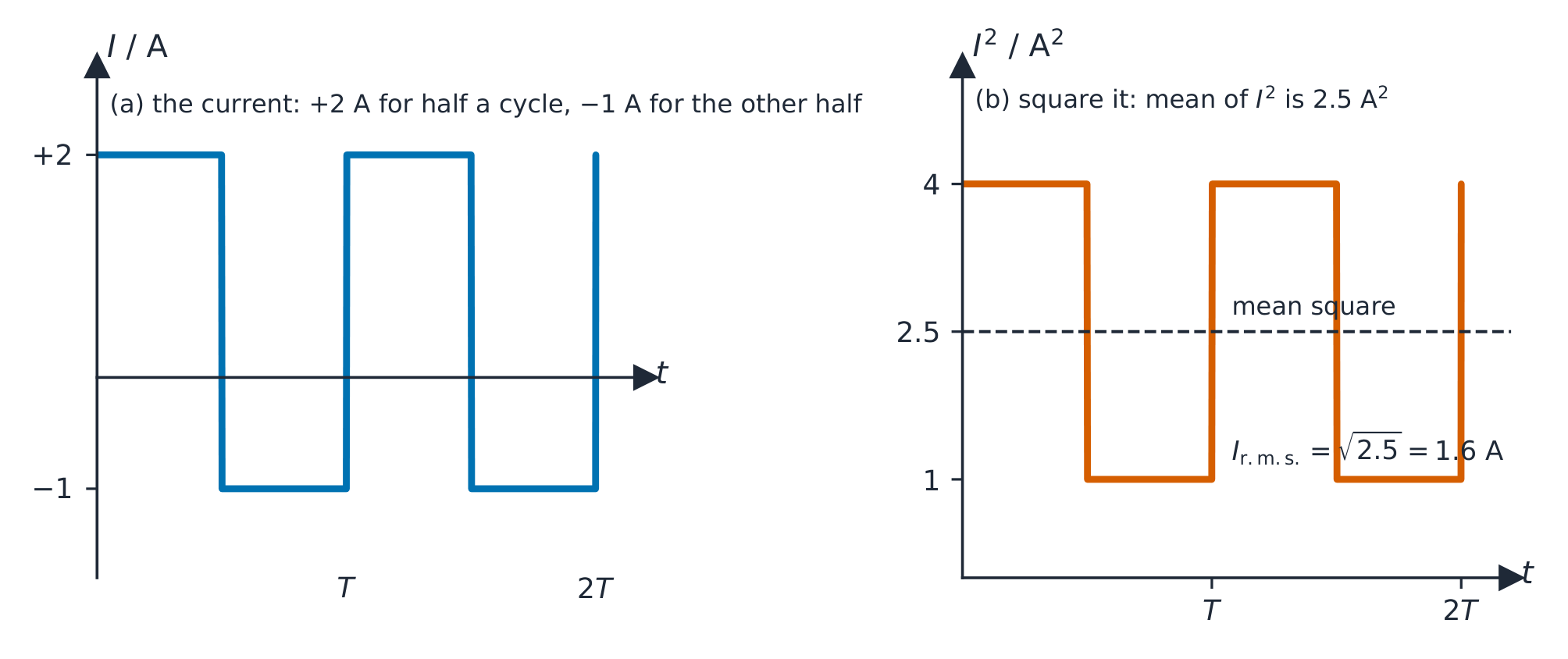






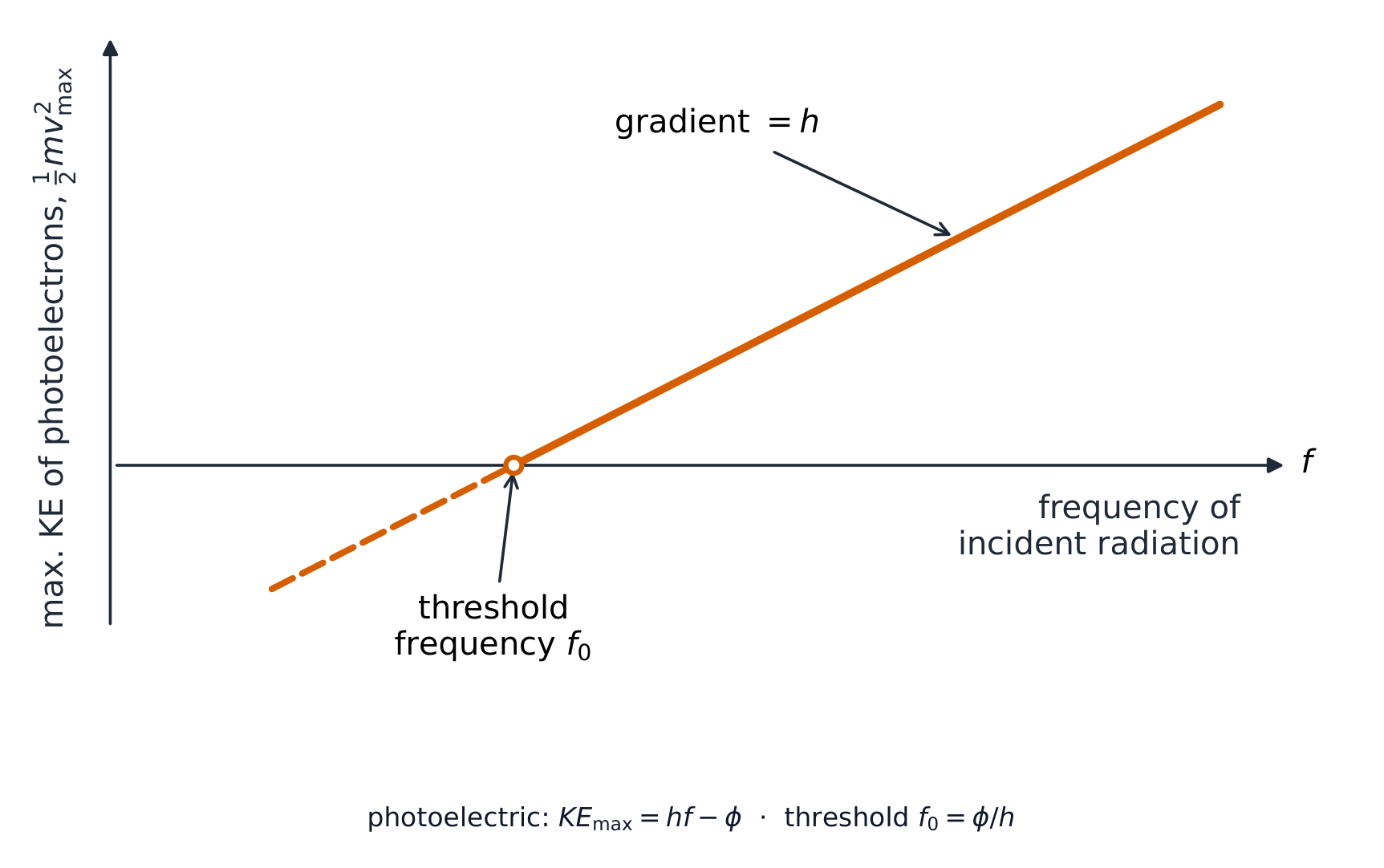
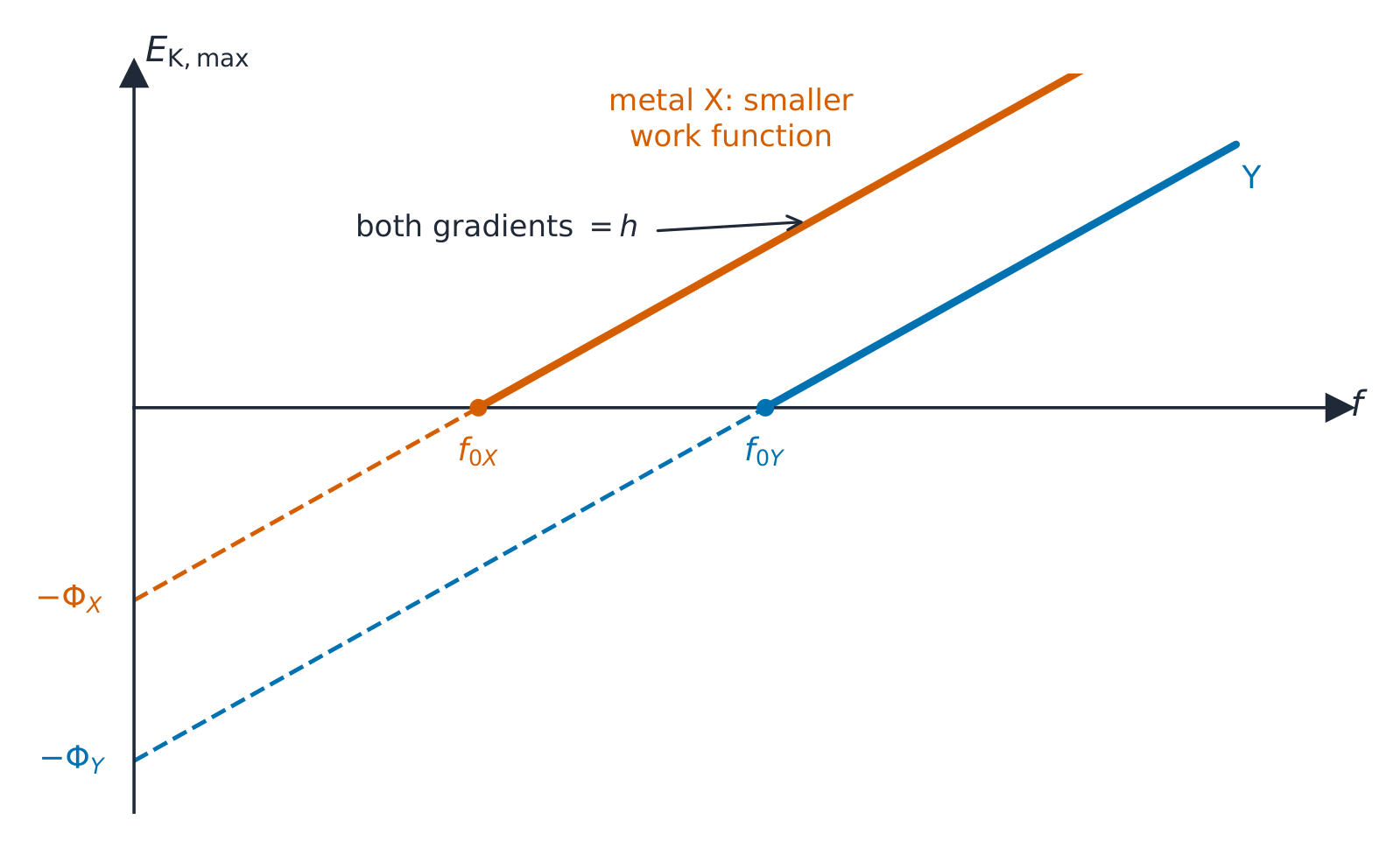
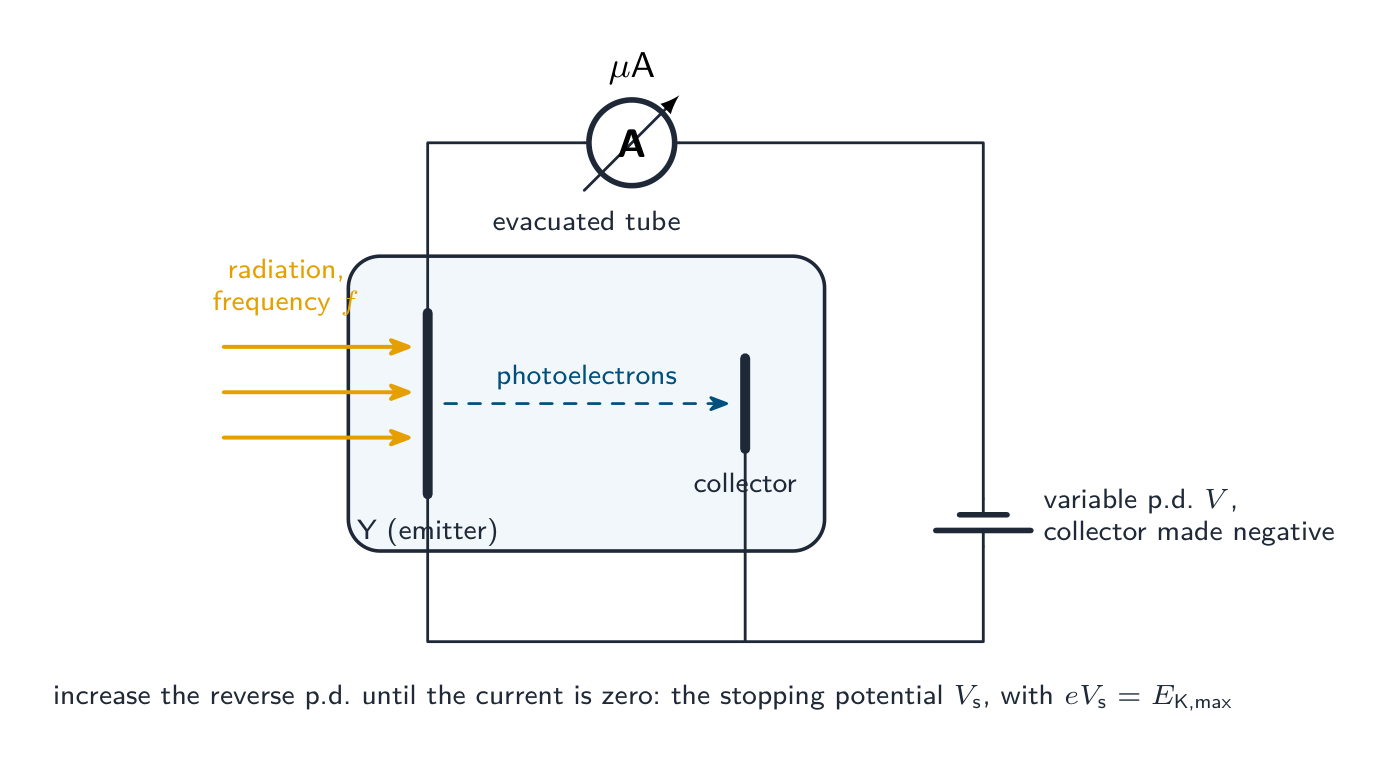


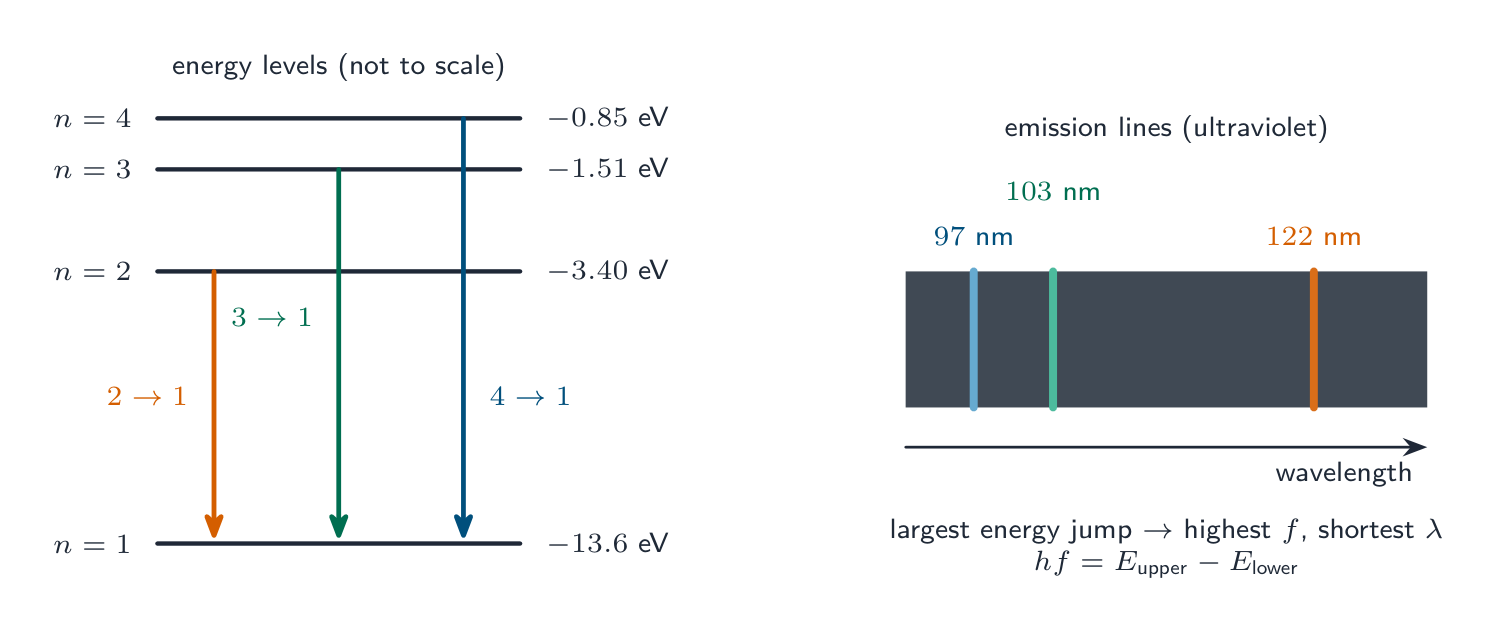


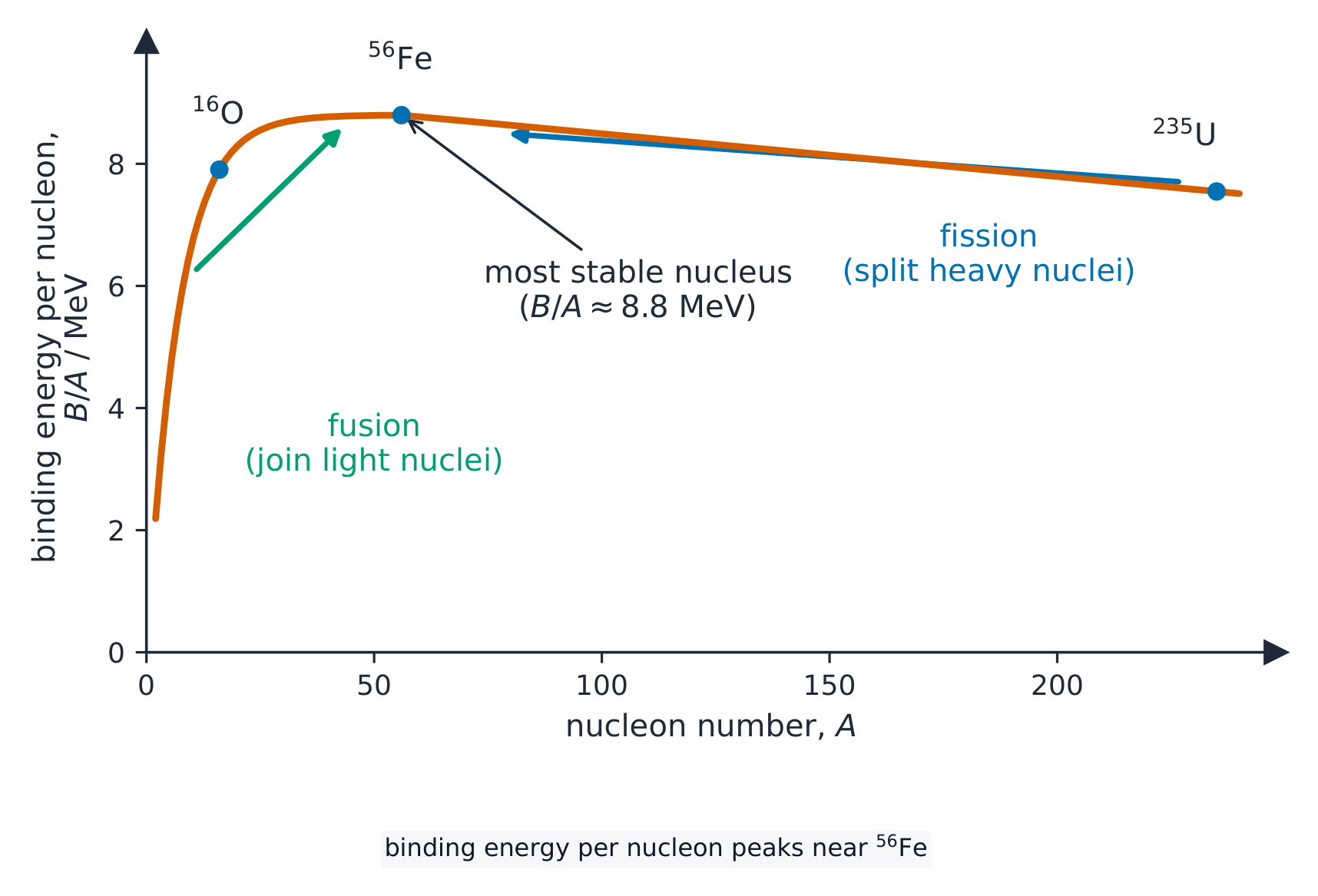


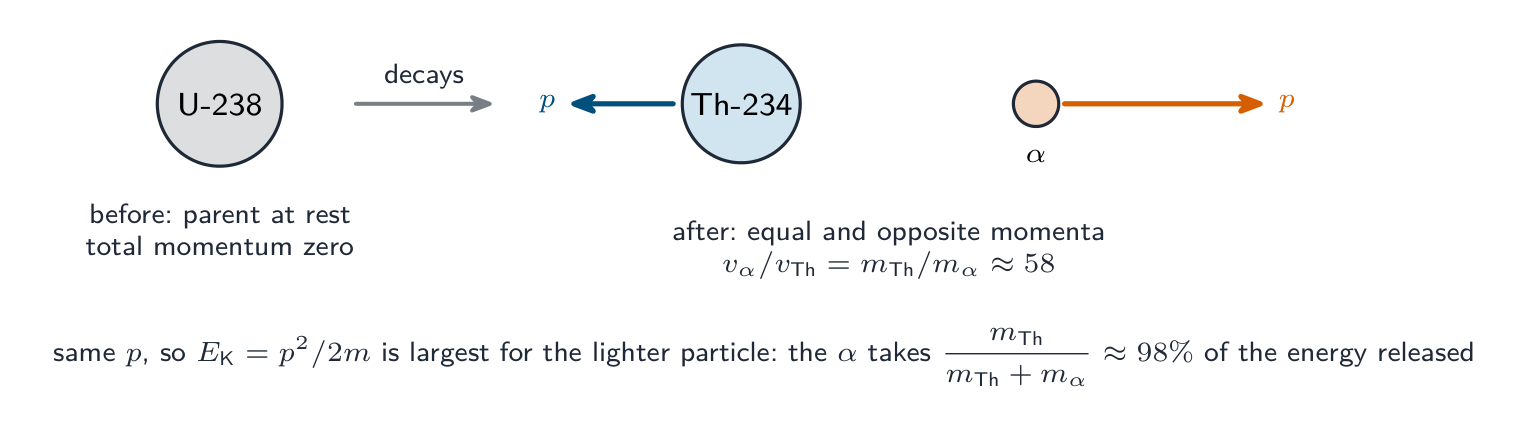

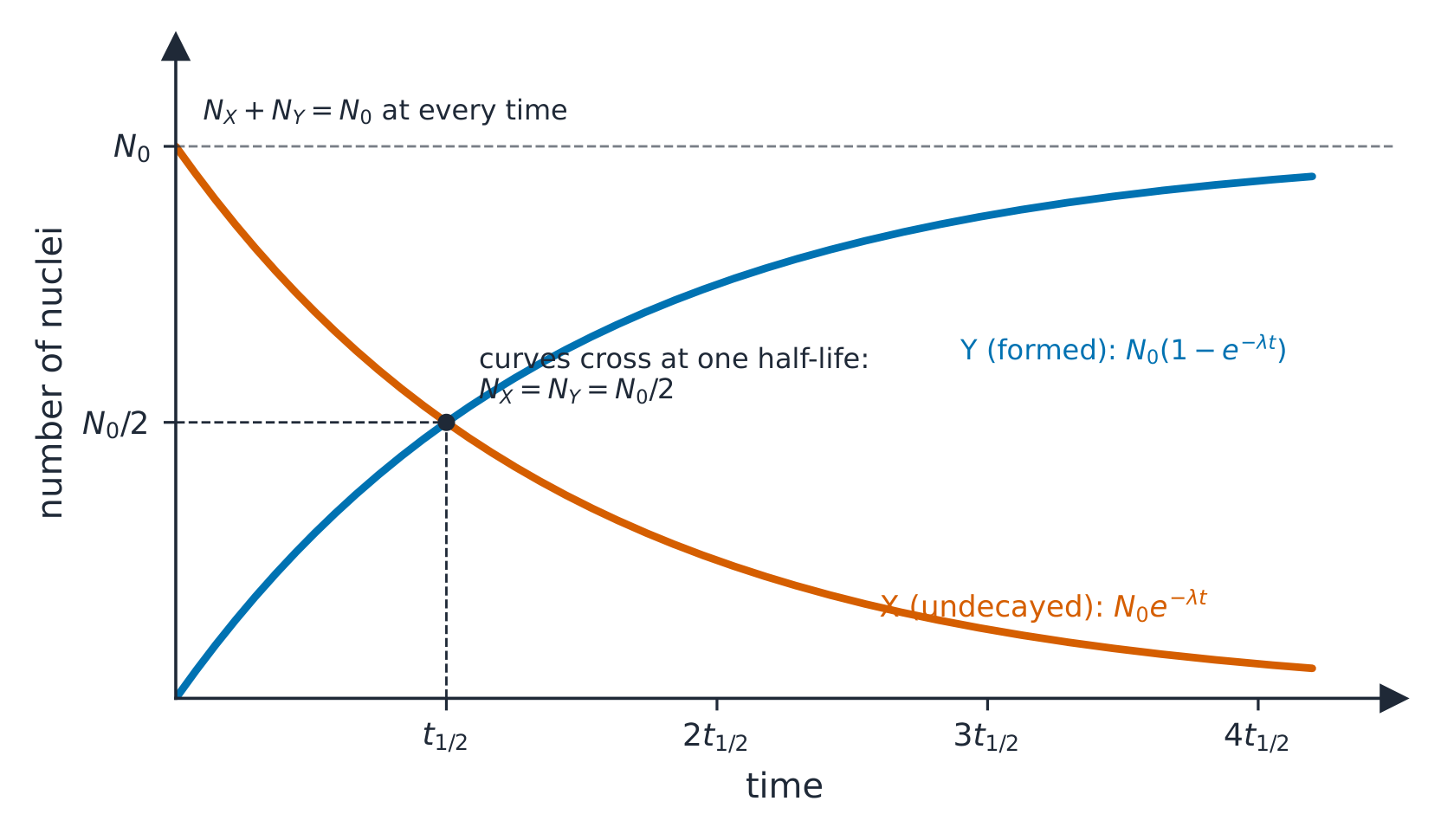
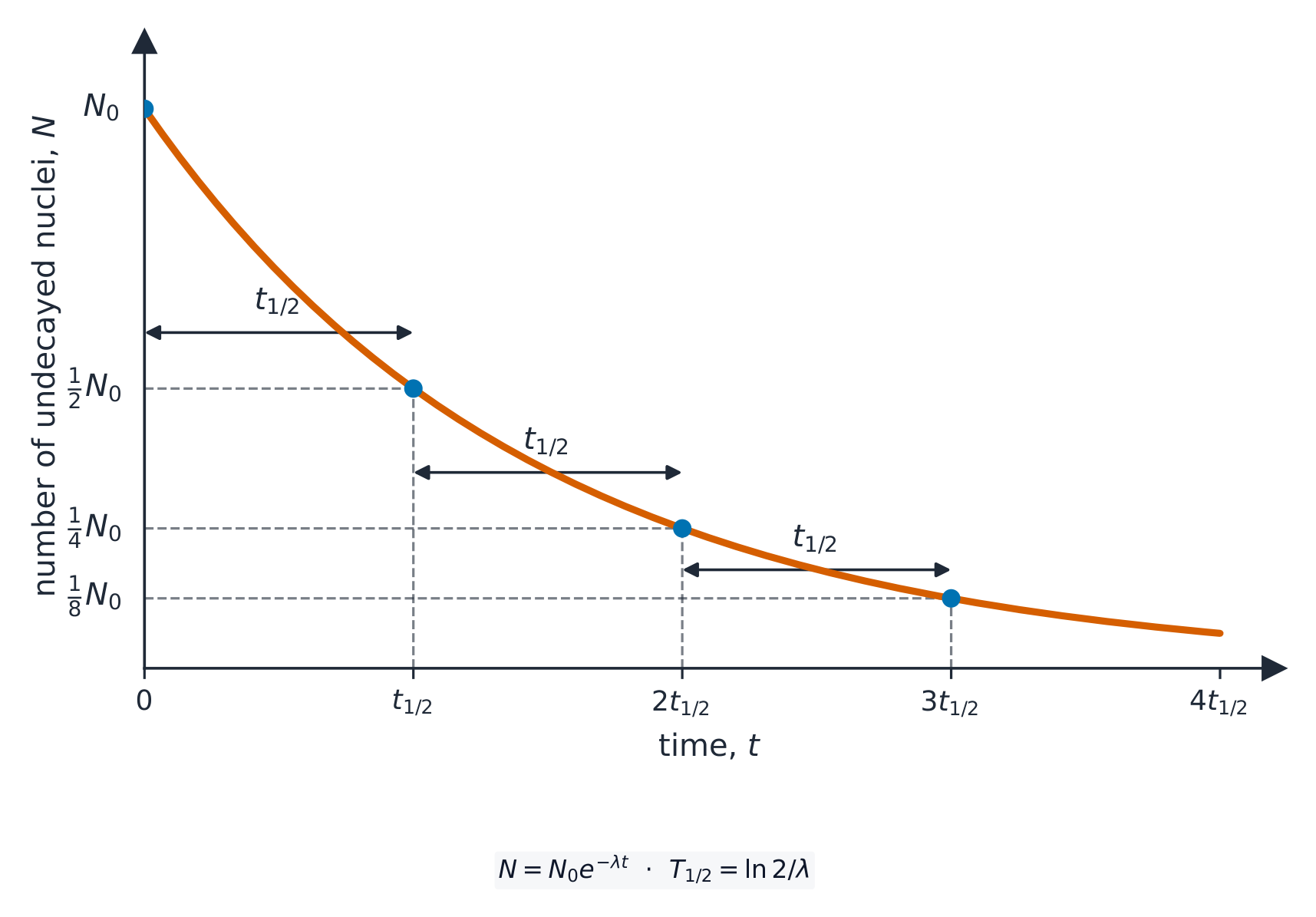


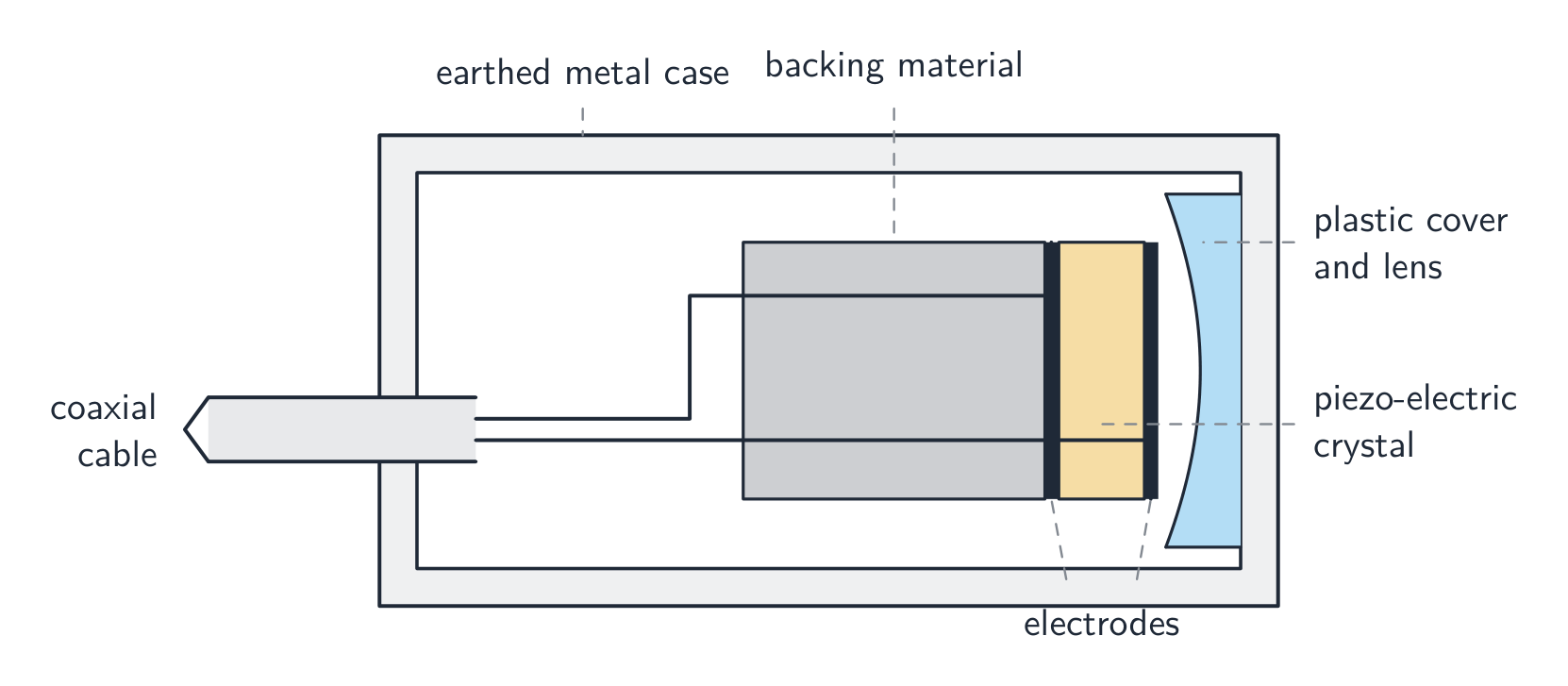


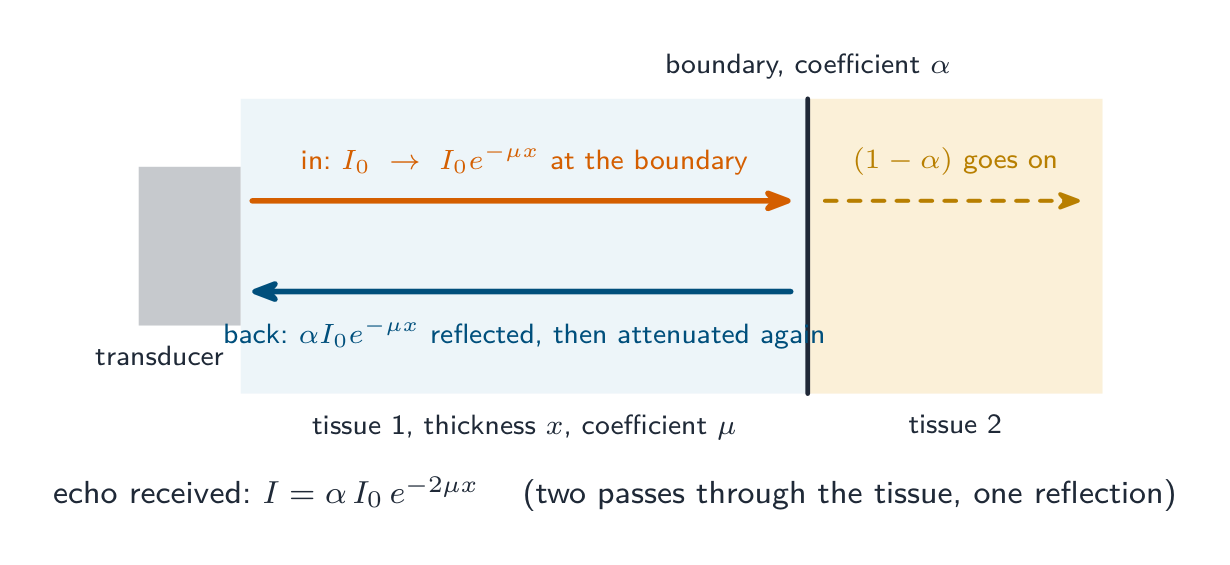

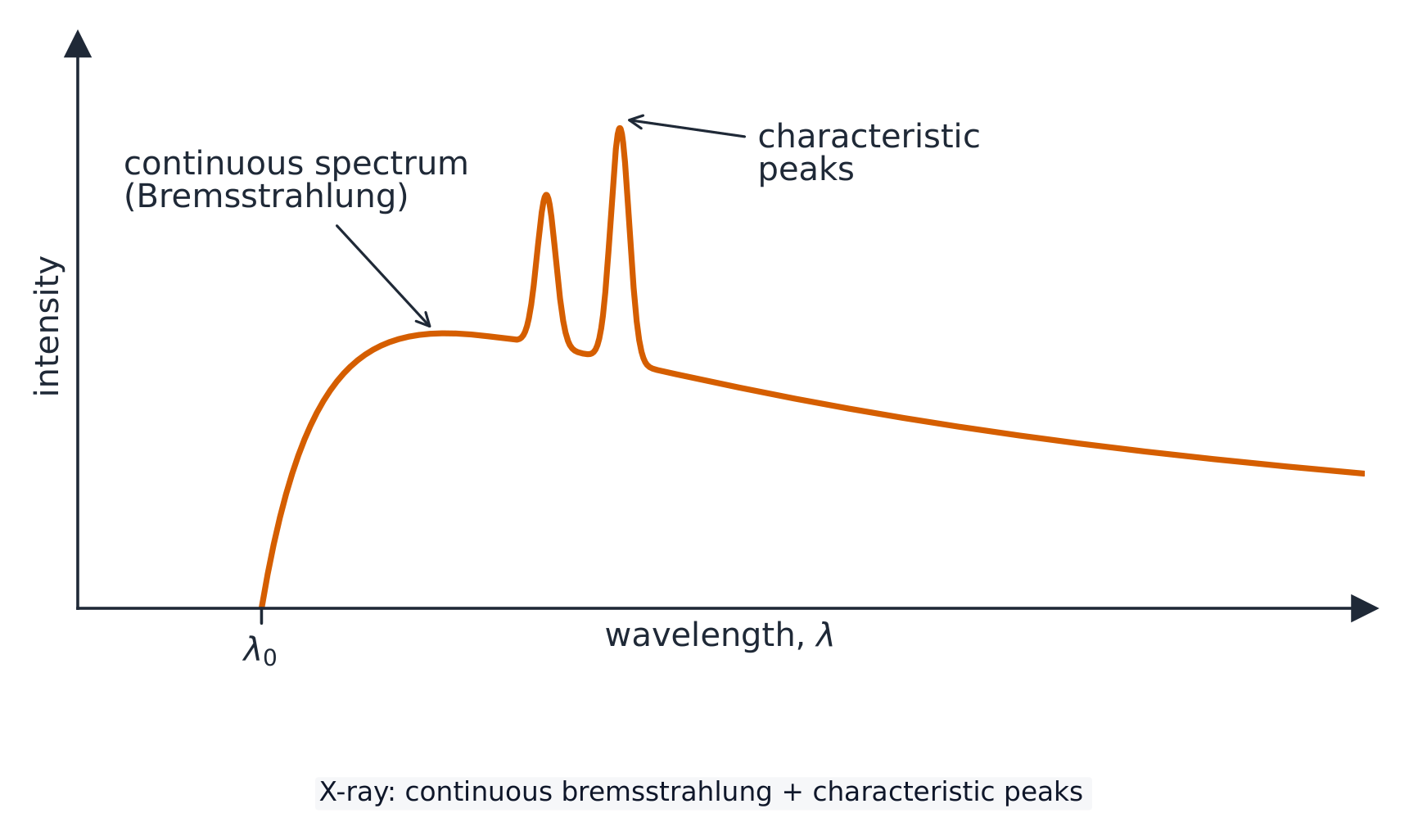



 *Локализация аннигиляции: два фотона, зарегистрированные одновременно, фиксируют прямую, а разница во времени их прибытия определяет место на этой прямой.