跳到主要内容

水生与陆地污染

AP 环境科学 · 第 8 主题

训练
讲义 词汇表
8.1

污染源

大纲
Enduring UnderstandingLearning ObjectiveEssential Knowledge

STB-3
Human activities, including the use of resources, have physical, chemical, and biological consequences for ecosystems.

STB-3.A
Identify differences between point and nonpoint sources of pollution.

  • STB-3.A.1 A point source refers to a single, identifiable source of a pollutant, such as a smokestack or waste discharge pipe.
  • STB-3.A.2 Nonpoint sources of pollution are diffused and can therefore be difficult to identify, such as pesticide spraying or urban runoff.

来源:美国大学理事会 AP 课程与考试说明

污染来源是点源非点源。一个点源(point source)来自一个单一的、可辨认的地方(一个工厂管道、一个污水排放口)——容易定位和监管。一个非点源(nonpoint source)是分散的(农场径流、城市街道径流、汽车尾气)——因为它来自各处而难以控制得多。

词汇表 训练
英文 中文 拼音
point source 点源 diǎn yuán
nonpoint source 非点源 fēi diǎn yuán
8.2

人类对生态系统的影响

大纲
Enduring UnderstandingLearning ObjectiveEssential Knowledge

STB-3
Human activities, including the use of resources, have physical, chemical, and biological consequences for ecosystems.

STB-3.B
Describe the impacts of human activities on aquatic ecosystems.

  • STB-3.B.1 Organisms have a range of tolerance for various pollutants. Organisms have an optimum range for each factor where they can maintain homeostasis. Outside of this range, organisms may experience physiological stress, limited growth, reduced reproduction, and in extreme cases, death.
  • STB-3.B.2 Coral reefs have been suffering damage due to a variety of factors, including increasing ocean temperature, sediment runoff, and destructive fishing practices.
  • STB-3.B.3 Oil spills in marine waters cause organisms to die from the hydrocarbons in oil. Oil that floats on the surface of water can coat the feathers of birds and fur of marine mammals. Some components of oil sink to the ocean floor, killing some bottom-dwelling organisms.
  • STB-3.B.4 Oil that washes up on the beach can have economic consequences on the fishing and tourism industries.
  • STB-3.B.5 Oceanic dead zones are areas of low oxygen in the world's oceans caused by increased nutrient pollution.
  • STB-3.B.6 An oxygen sag curve is a plot of dissolved oxygen levels versus the distance from a source of pollution, usually excess nutrients and biological refuse.
  • STB-3.B.7 Heavy metals used for industry, especially mining and burning of fossil fuels, can reach the groundwater, impacting the drinking water supply.
  • STB-3.B.8 Litter that reaches aquatic ecosystems, besides being unsightly, can create intestinal blockage and choking hazards for wildlife and introduce toxic substances to the food chain.
  • STB-3.B.9 Increased sediment in waterways can reduce light infiltration, which can affect primary producers and visual predators. Sediment can also settle, disrupting habitats.
  • STB-3.B.10 When elemental sources of mercury enter aquatic environments, bacteria in the water convert it to highly toxic methylmercury.

来源:美国大学理事会 AP 课程与考试说明

人类活动——污染、栖息地破坏、过度采收、引入物种——退化生态系统并减少生物多样性。因为物种相互连接,伤害一个部分能波及整个系统。

8.3

内分泌干扰物

大纲
Enduring UnderstandingLearning ObjectiveEssential Knowledge

STB-3
Human activities, including the use of resources, have physical, chemical, and biological consequences for ecosystems.

STB-3.C
Describe endocrine disruptors.

  • STB-3.C.1 Endocrine disruptors are chemicals that can interfere with the endocrine system of animals.

STB-3.D
Describe the effects of endocrine disruptors on ecosystems.

  • STB-3.D.1 Endocrine disruptors can lead to birth defects, developmental disorders, and gender imbalances in fish and other species.

来源:美国大学理事会 AP 课程与考试说明

内分泌干扰物(endocrine disruptors)是模仿或阻断激素的化学品(一些农药、像 BPA 这样的增塑剂),即使在很低的剂量也扰乱野生动物和人类的生长、繁殖和发育。

词汇表 训练
英文 中文 拼音
Endocrine disruptors 内分泌干扰物 nèi fēn mì gān rǎo wù
8.4

人类对湿地与红树林的影响

大纲
Enduring UnderstandingLearning ObjectiveEssential Knowledge

STB-3
Human activities, including the use of resources, have physical, chemical, and biological consequences for ecosystems.

STB-3.E
Describe the impacts of human activity on wetlands and mangroves.

  • STB-3.E.1 Wetlands are areas where water covers the soil, either part or all of the time.
  • STB-3.E.2 Wetlands provide a variety of ecological services, including water purification, flood protection, water filtration, and habitat.
  • STB-3.E.3 Threats to wetlands and mangroves include commercial development, dam construction, overfishing, and pollutants from agriculture and industrial waste.

来源:美国大学理事会 AP 课程与考试说明

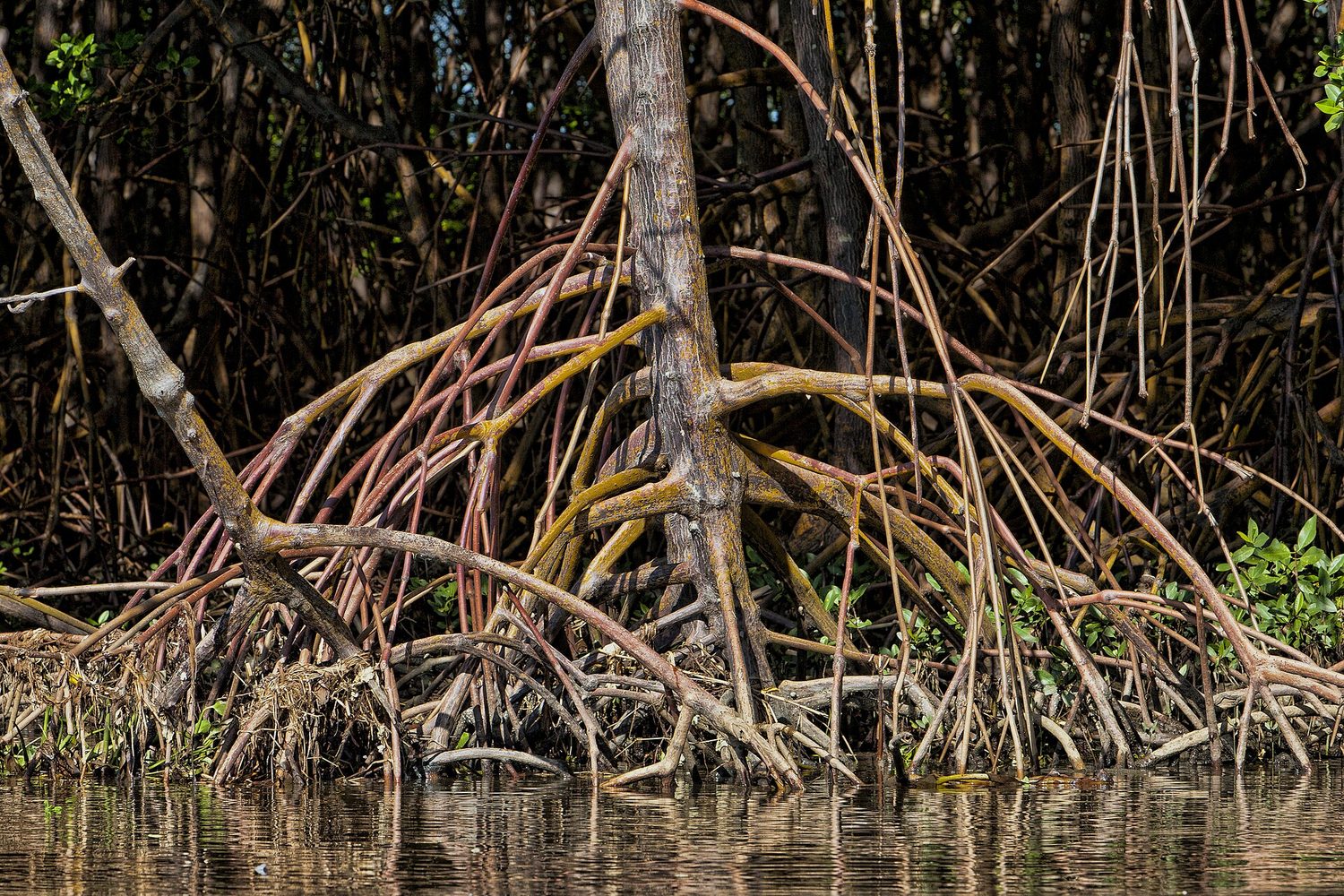
湿地(wetlands)和红树林(mangroves)过滤污染物、储存洪水,并养育幼鱼,但它们为农场、虾塘和开发被排干和清除。失去它们移除有价值的生态系统服务和海岸保护。

红树林拱起的、密密麻麻的支柱根从浅水中伸出
红树林的根:这团根拦住泥沙、平息波浪,并庇护幼鱼——红树林被清除时,这些服务全部失去
词汇表 训练
英文 中文 拼音
Wetlands 湿地 shī dì
mangroves 红树林 hóng shù lín
8.5

富营养化

大纲
Enduring UnderstandingLearning ObjectiveEssential Knowledge

STB-3
Human activities, including the use of resources, have physical, chemical, and biological consequences for ecosystems.

STB-3.F
Explain the environmental effects of excessive use of fertilizers and detergents on aquatic ecosystems.

  • STB-3.F.1 Eutrophication occurs when a body of water is enriched in nutrients.
  • STB-3.F.2 The increase in nutrients in eutrophic aquatic environments causes an algal bloom. When the algal bloom dies, microbes digest the algae, along with the oxygen in the water, leading to a decrease in the dissolved oxygen levels in the water. The lack of dissolved oxygen can result in large die-offs of fish and other aquatic organisms.
  • STB-3.F.3 Hypoxic waterways are those bodies of water that are low in dissolved oxygen.
  • STB-3.F.4 Compared to eutrophic waterways, oligotrophic waterways have very low amounts of nutrients, stable algae populations, and high dissolved oxygen.
  • STB-3.F.5 Anthropogenic causes of eutrophication are agricultural runoff and wastewater release.

来源:美国大学理事会 AP 课程与考试说明

水体富营养化

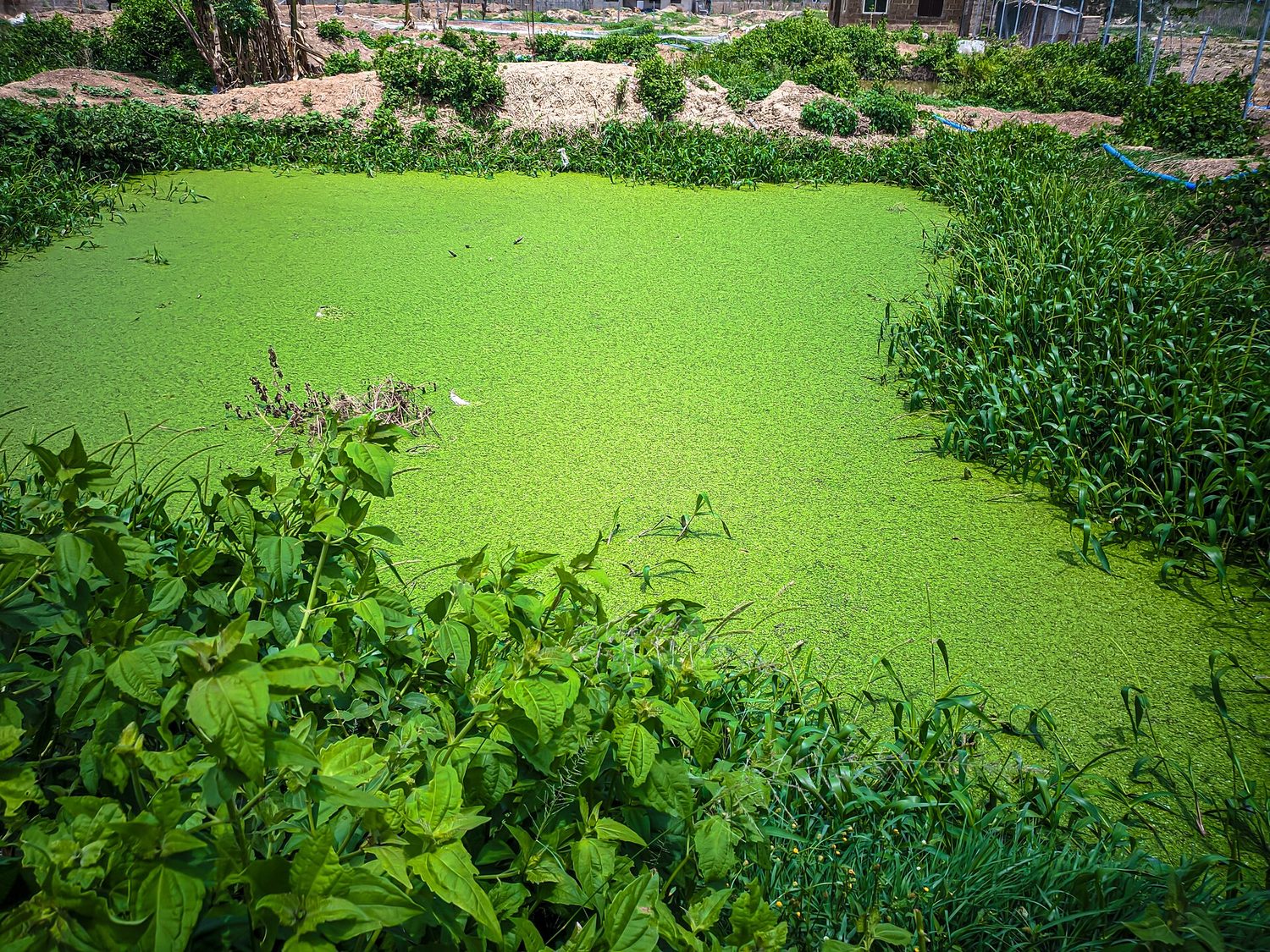
富营养化(eutrophication)在过量的营养(来自肥料和污水的氮、磷)触发藻华(algal blooms)时发生。当藻类死亡时,分解者用尽氧,创造使鱼窒息的缺氧(hypoxic)"死区"。

一个小池塘,整个水面覆盖着厚厚一层鲜绿色的藻类
一个被藻华堵塞的池塘:过量的营养让藻类盖满整个水面。它们死亡腐烂时,水就失去氧
额外的肥料使藻类爆发,然后水失去它的氧
额外的肥料使藻类爆发,然后水失去它的氧
词汇表 训练
英文 中文 拼音
Eutrophication 富营养化 fù yíng yǎng huà
algal blooms 藻华 zǎo huá
hypoxic 缺氧 quē yǎng
8.6

热污染

大纲
Enduring UnderstandingLearning ObjectiveEssential Knowledge

STB-3
Human activities, including the use of resources, have physical, chemical, and biological consequences for ecosystems.

STB-3.G
Describe the effects of thermal pollution on aquatic ecosystems.

  • STB-3.G.1 Thermal pollution occurs when heat released into the water produces negative effects to the organisms in that ecosystem.
  • STB-3.G.2 Variations in water temperature affect the concentration of dissolved oxygen because warm water does not contain as much oxygen as cold water.

来源:美国大学理事会 AP 课程与考试说明

热污染(thermal pollution)是加进水的热,通常来自发电厂冷却。温暖的水容纳更少溶解氧并使适应较凉温度的水生生物受胁迫。

词汇表 训练
英文 中文 拼音
Thermal pollution 热污染 rè wū rǎn
8.7

持久性有机污染物

大纲
Enduring UnderstandingLearning ObjectiveEssential Knowledge

STB-3
Human activities, including the use of resources, have physical, chemical, and biological consequences for ecosystems.

STB-3.H
Describe the effect of persistent organic pollutants (POPs) on ecosystems.

  • STB-3.H.1 Persistent organic pollutants (POPs) do not easily break down in the environment because they are synthetic, carbon-based molecules (such as DDT and PCBs).
  • STB-3.H.2 Persistent organic pollutants (POPs) can be toxic to organisms because they are soluble in fat, which allows them to accumulate in organisms' fatty tissues.
  • STB-3.H.3 Persistent organic pollutants (POPs) can travel over long distances via wind and water before being redeposited.

来源:美国大学理事会 AP 课程与考试说明

持久性有机污染物(persistent organic pollutants)(POPs,像 DDT 和 PCBs)抵抗分解,所以它们持续数十年、远行,而且是脂溶性的,所以它们在生物里积累。这设置生物累积和生物放大。

词汇表 训练
英文 中文 拼音
Persistent organic pollutants 持久性有机污染物 chí jiǔ xìng yǒu jī wū rǎn wù
8.8

生物累积与生物放大

大纲
Enduring UnderstandingLearning ObjectiveEssential Knowledge

STB-3
Human activities, including the use of resources, have physical, chemical, and biological consequences for ecosystems.

STB-3.I
Describe bioaccumulation and biomagnification.

  • STB-3.I.1 Bioaccumulation is the selective absorption and concentration of elements or compounds by cells in a living organism, most commonly fat-soluble compounds.
  • STB-3.I.2 Biomagnification is the increase in concentration of substances per unit of body tissue that occurs in successively higher trophic levels of a food chain or in a food web.

STB-3.J
Describe the effects of bioaccumulation and biomagnification.

  • STB-3.J.1 Some effects that can occur in an ecosystem when a persistent substance is biomagnified in a food chain include eggshell thinning and developmental deformities in top carnivores of the higher trophic levels.
  • STB-3.J.2 Humans also experience harmful effects from biomagnification, including issues with the reproductive, nervous, and circulatory systems.
  • STB-3.J.3 DDT, mercury, and PCBs are substances that bioaccumulate and have significant environmental impacts.

来源:美国大学理事会 AP 课程与考试说明

生物累积与生物放大

生物累积(bioaccumulation)是一种毒素在一个生物之内在它一生里的积累。生物放大(biomagnification)是浓度沿食物链向上的增加——顶级捕食者最终有最高的水平,这就是为什么大的捕食性鱼携带最多的汞。

Worked example. 假设湖水容纳 DDT 仅 $0.01\ \text{ppm}$。浮游生物把它浓缩到 $0.5\ \text{ppm}$、小鱼到 $2\ \text{ppm}$、大鱼到 $10\ \text{ppm}$,而一只食鱼的鹰到 $25\ \text{ppm}$。从水到鹰浓度已经放大了约 $\dfrac{25}{0.01}=2500$ 倍——这就是为什么即使水本身看起来只轻微污染,一个顶级捕食者也能被毒害。

探索

Toxins concentrate up the food chain

Bioaccumulation builds a toxin up in one organism; biomagnification concentrates it at each step up the food chain, so top predators carry the highest doses.

词汇表 训练
英文 中文 拼音
Bioaccumulation 生物累积 shēng wù lěi jī
Biomagnification 生物放大 shēng wù fàng dà
8.9

固体废物处置

大纲
Enduring UnderstandingLearning ObjectiveEssential Knowledge

STB-3
Human activities, including the use of resources, have physical, chemical, and biological consequences for ecosystems.

STB-3.K
Describe solid waste disposal methods.

  • STB-3.K.1 Solid waste is any discarded material that is not a liquid or gas. It is generated in domestic, industrial, business, and agricultural sectors.
  • STB-3.K.2 Solid waste is most often disposed of in landfills. Landfills can contaminate groundwater and release harmful gases.
  • STB-3.K.3 Electronic waste, or e-waste, is composed of discarded electronic devices including televisions, cell phones, and computers.
  • STB-3.K.4 A sanitary municipal landfill consists of a bottom liner (plastic or clay), a storm water collection system, a leachate collection system, a cap, and a methane collection system.

STB-3.L
Describe the effects of solid waste disposal methods.

  • STB-3.L.1 Factors in landfill decomposition include the composition of the trash and conditions needed for microbial decomposition of the waste.
  • STB-3.L.2 Solid waste can also be disposed of through incineration, where waste is burned at high temperatures. This method significantly reduces the volume of solid waste but releases air pollutants.
  • STB-3.L.3 Some items are not accepted in sanitary landfills and may be disposed of illegally, leading to environmental problems. One example is used rubber tires, which when left in piles can become breeding grounds for mosquitoes that can spread disease.
  • STB-3.L.4 Some countries dispose of their waste by dumping it in the ocean. This practice, along with other sources of plastic, has led to large floating islands of trash in the oceans. Additionally, wildlife can become entangled in the waste, as well as ingest it.

来源:美国大学理事会 AP 课程与考试说明

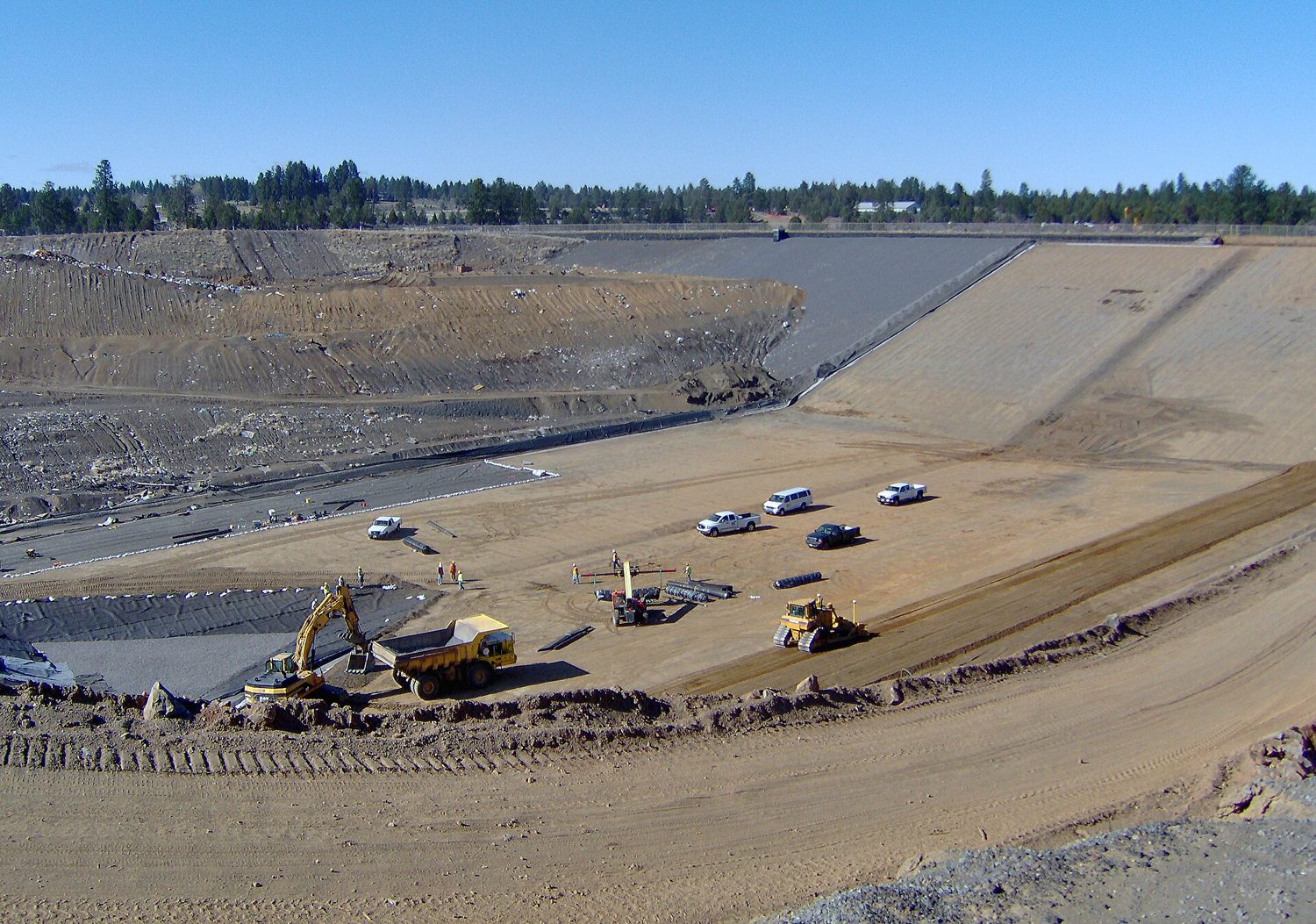
固体废物是任何不是液体或气体的被丢弃材料,由家庭、工业、商业和农业产生。它被埋在卫生填埋场(sanitary landfills)(有衬里以限制渗滤液)或在焚烧炉(incinerators)里燃烧(减少体积但排放污染物)。填埋场占用空间并能泄漏;两者都有环境成本,所以减少废物更受偏好。

考试专门点名两类:电子垃圾(e-waste)(被丢弃的电子产品 - 手机、电脑、电视 - 含有有毒金属),以及海洋倾倒,即塑料和其他废物在远海汇聚成巨大的漂浮垃圾带(garbage patches)。

一大堆掩埋废物的填埋场土丘,高出下面山谷里的城镇
一个填埋场:固体废物被埋在这里有衬里的单元中。它占用土地并能泄漏,这就是为什么减少废物排在最前面
词汇表 训练
英文 中文 拼音
sanitary landfills 卫生填埋场 wèi shēng tián mái chǎng
incinerators 焚烧炉 fén shāo lú
e-waste 电子垃圾 diàn zǐ lā jī
garbage patches 垃圾带 lā jī dài
8.10

废物减量方法

大纲
Enduring UnderstandingLearning ObjectiveEssential Knowledge

STB-3
Human activities, including the use of resources, have physical, chemical, and biological consequences for ecosystems.

STB-3.M
Describe changes to current practices that could reduce the amount of generated waste and their associated benefits and drawbacks.

  • STB-3.M.1 Recycling is a process by which certain solid waste materials are processed and converted into new products.
  • STB-3.M.2 Recycling is one way to reduce the current global demand on minerals, but this process is energy-intensive and can be costly.
  • STB-3.M.3 Composting is the process of organic matter such as food scraps, paper, and yard waste decomposing. The product of this decomposition can be used as fertilizer. Drawbacks to composting include odor and rodents.
  • STB-3.M.4 E-waste can be reduced by recycling and reuse. E-wastes may contain hazardous chemicals, including heavy metals such as lead and mercury, which can leach from landfills into groundwater if they are not disposed of properly.
  • STB-3.M.5 Landfill mitigation strategies range from burning waste for energy to restoring habitat on former landfills for use as parks.
  • STB-3.M.6 The combustion of gases produced from decomposition of organic material in landfills can be used to turn turbines and generate electricity. This process reduces landfill volume.

来源:美国大学理事会 AP 课程与考试说明

废物层级是减量、再利用、回收(reduce, reuse, recycle),加上有机废物的堆肥(composting)。减少消费最好(没有废物要管理);回收和堆肥回收材料并削减填埋场使用。

词汇表 训练
英文 中文 拼音
reduce, reuse, recycle 减量、再利用、回收 jiǎn liàng 、 zài lì yòng 、 huí shōu
composting 堆肥 duī féi
8.11

污水处理

大纲
Enduring UnderstandingLearning ObjectiveEssential Knowledge

STB-3
Human activities, including the use of resources, have physical, chemical, and biological consequences for ecosystems.

STB-3.N
Describe best practices in sewage treatment.

  • STB-3.N.1 Primary treatment of sewage is the physical removal of large objects, often through the use of screens and grates, followed by the settling of solid waste in the bottom of a tank.
  • STB-3.N.2 Secondary treatment is a biological process in which bacteria break down organic matter into carbon dioxide and inorganic sludge, which settles in the bottom of a tank. The tank is aerated to increase the rate at which the bacteria break down the organic matter.
  • STB-3.N.3 Tertiary treatment is the use of ecological or chemical processes to remove any pollutants left in the water after primary and secondary treatment.
  • STB-3.N.4 Prior to discharge, the treated water is exposed to one or more disinfectants (usually, chlorine, ozone, or UV light) to kill bacteria.

来源:美国大学理事会 AP 课程与考试说明

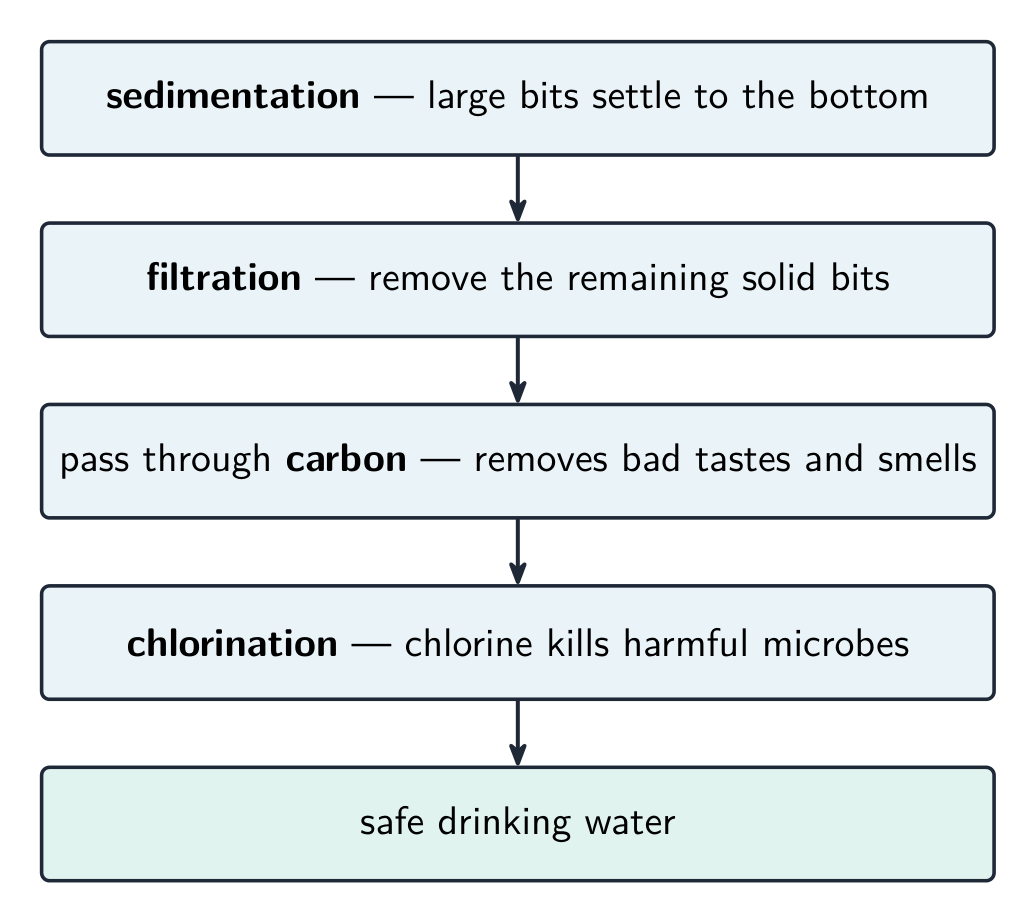
污水处理(sewage treatment)分阶段清洁废水:一级(沉淀出固体)、二级(细菌分解有机物),有时三级(移除营养和消毒)。这保护水道免于病原体和营养污染。

处理水使它安全:沉降、过滤,然后消毒
处理水使它安全:沉降、过滤,然后消毒
词汇表 训练
英文 中文 拼音
Sewage treatment 污水处理 wū shuǐ chǔ lǐ
8.12

半数致死剂量

大纲
Enduring UnderstandingLearning ObjectiveEssential Knowledge

EIN-3
Pollutants can have both direct and indirect impacts on the health of organisms, including humans.

EIN-3.A
Define lethal dose 50% ($LD_{50}$).

  • EIN-3.A.1 Lethal dose 50% ($LD_{50}$) is the dose of a chemical that is lethal to 50% of the population of a particular species.

来源:美国大学理事会 AP 课程与考试说明

剂量反应曲线与半数致死量

半数致死量(LD50)是杀死一个测试种群 50% 的一种物质的剂量。一个更低的 LD50 意味着一种更毒的物质(需要更少才致命)。它是比较毒性的一个标准方式。

Worked example. 化学品 A 有每千克体重 $5\ \text{mg}$ 的 LD50;化学品 B,$500\ \text{mg/kg}$。因为 A 的值小 $100$ 倍,A 约 $100\times$ 更毒。对于一个 $70\ \text{kg}$ 的成人,预期对一半人致命的 A 的剂量是 $5\ \text{mg/kg}\times70\ \text{kg}=350\ \text{mg}$ ——一个微小的量,而 B 会需要 $500\times70=35{,}000\ \text{mg}$($35\ \text{g}$)。

词汇表 训练
英文 中文 拼音
LD50 半数致死量 bàn shù zhì sǐ liàng
8.13

剂量反应曲线

大纲
Enduring UnderstandingLearning ObjectiveEssential Knowledge

EIN-3
Pollutants can have both direct and indirect impacts on the health of organisms, including humans.

EIN-3.B
Evaluate dose response curves.

  • EIN-3.B.1 A dose response curve describes the effect on an organism or mortality rate in a population based on the dose of a particular toxin or drug.

来源:美国大学理事会 AP 课程与考试说明

一条剂量反应曲线(dose–response curve)画出效应对剂量。一般地,更高的剂量造成更大的效应。一些化学品有一个阈值(threshold)(低于它没有效应);对于另一些任何暴露都携带风险。这些曲线指导安全限值。

词汇表 训练
英文 中文 拼音
dose–response curve 剂量反应曲线 jì liàng fǎn yìng qū xiàn
threshold 阈值 yù zhí
8.14

污染与人类健康

大纲
Enduring UnderstandingLearning ObjectiveEssential Knowledge

EIN-3
Pollutants can have both direct and indirect impacts on the health of organisms, including humans.

EIN-3.C
Identify sources of human health issues that are linked to pollution.

  • EIN-3.C.1 It can be difficult to establish a cause and effect between pollutants and human health issues because humans experience exposure to a variety of chemicals and pollutants.
  • EIN-3.C.2 Dysentery is caused by untreated sewage in streams and rivers.
  • EIN-3.C.3 Mesothelioma is a type of cancer caused mainly by exposure to asbestos.
  • EIN-3.C.4 Respiratory problems and overall lung function can be impacted by elevated levels of tropospheric ozone.

来源:美国大学理事会 AP 课程与考试说明

污染直接(来自空气污染的呼吸疾病、来自污染水的中毒)和间接地伤害健康。剂量、持续时间和个体敏感性都影响结果。穷人常常最被暴露而最少被保护。

8.15

病原体与传染病

大纲
Enduring UnderstandingLearning ObjectiveEssential Knowledge

EIN-3
Pollutants can have both direct and indirect impacts on the health of organisms, including humans.

EIN-3.D
Explain human pathogens and their cycling through the environment.

  • EIN-3.D.1 Pathogens adapt to take advantage of new opportunities to infect and spread through human populations.
  • EIN-3.D.2 Specific pathogens can occur in many environments regardless of the appearance of sanitary conditions.
  • EIN-3.D.3 As equatorial-type climate zones spread north and south in to what are currently subtropical and temperate climate zones, pathogens, infectious diseases, and any associated vectors are spreading into these areas where the disease has not previously been known to occur.
  • EIN-3.D.4 Poverty-stricken, low-income areas often lack sanitary waste disposal and have contaminated drinking water supplies, leading to havens and opportunities for the spread of infectious diseases.
  • EIN-3.D.5 Plague is a disease carried by organisms infected with the plague bacteria. It is transferred to humans via the bite of an infected organism or through contact with contaminated fluids or tissues.
  • EIN-3.D.6 Tuberculosis is a bacterial infection that typically attacks the lungs. It is spread by breathing in the bacteria from the bodily fluids of an infected person.
  • EIN-3.D.7 Malaria is a parasitic disease caused by bites from infected mosquitoes. It is most often found in sub-Saharan Africa.
  • EIN-3.D.8 West Nile virus is transmitted to humans via bites from infected mosquitoes.
  • EIN-3.D.9 Severe acute respiratory syndrome (SARS) is a form of pneumonia. It is transferred by inhaling or touching infected fluids.
  • EIN-3.D.10 Middle East Respiratory Syndrome (MERS) is a viral respiratory illness that is transferred from animals to humans.
  • EIN-3.D.11 Zika is a virus caused by bites from infected mosquitoes. It can be transmitted through sexual contact.
  • EIN-3.D.12 Cholera is a bacterial disease that is contracted from infected water.

来源:美国大学理事会 AP 课程与考试说明

病原体(pathogens)(细菌、病毒、寄生虫)通过污染的水和食物传播。考试会点名具体的疾病,并要求你知道每一种是如何传播的,因为传播途径决定了防御方法:

疾病 类型 如何传播
霍乱(cholera) 细菌性 被污水污染的饮用水
痢疾(dysentery) 细菌性 河流与溪流中未经处理的污水
鼠疫(plague) 细菌性 被感染生物(如跳蚤)的叮咬,或接触被感染的体液
结核病(TB)(tuberculosis) 细菌性 吸入被感染者体液中的细菌
疟疾(malaria) 寄生虫性 被感染的蚊子(mosquito)叮咬(多见于撒哈拉以南非洲)
西尼罗/寨卡(West Nile / Zika) 病毒性 被感染的蚊子叮咬(寨卡还可通过性接触传播)
SARS / MERS 病毒性 吸入或接触被感染的体液;MERS 由动物传给人

有两个宏观的观点能得分。贫困加深了这个问题 —— 低收入地区往往缺乏卫生的废物处理和清洁的水,给水传播疾病提供了温床。而气候变化会扩散疾病:随着温暖的赤道气候带向两极扩展,蚊子和其他传播媒介(vectors)—— 以及它们携带的疾病 —— 会进入那些从未有过它们的温带地区。清洁的水、卫生设施和媒介控制仍然是主要的防御。

词汇表 训练
英文 中文 拼音
Pathogens 病原体 bìng yuán tǐ
Cholera 霍乱 huò luàn
Dysentery 痢疾 lì jí
Plague 鼠疫 shǔ yì
Tuberculosis (TB) 结核病 jié hé bìng
Malaria 疟疾 nüè jí
mosquito 蚊子 wén zi
West Nile / Zika 西尼罗/寨卡 xī ní luó / zhài kǎ
vectors 传播媒介 chuán bō méi jiè
8.15

考试技巧

  • 逐步追踪富营养化:营养径流 → 藻华 → 腐烂 → 氧耗尽 → 鱼死。
  • 生物累积在一个生物里积累;生物放大沿食物链向上增加,所以顶级捕食者受打击最重。
  • 读一个 LD50:一个更低的值意味着毒;乘以体重得到一个致死剂量。
  • 排序废物层级 减量 > 再利用 > 回收,以及污水处理的阶段。
  • 把病原体与污染的水以及清洁水/卫生设施防御联系起来。

本主题的互动课程

逐步学习,并即时检测练习。

AP 环境科学历年真题

AP 环境科学的更多主题

登录或创建账号

IGCSE, A-Level & AP