跳到主要内容

能源资源与消耗

AP 环境科学 · 第 6 主题

训练
讲义 词汇表
6.1

可再生与不可再生资源

大纲
Enduring UnderstandingLearning ObjectiveEssential Knowledge

ENG-3
Humans use energy from a variety of sources, resulting in positive and negative consequences.

ENG-3.A
Identify differences between nonrenewable and renewable energy sources.

  • ENG-3.A.1 Nonrenewable energy sources are those that exist in a fixed amount and involve energy transformation that cannot be easily replaced.
  • ENG-3.A.2 Renewable energy sources are those that can be replenished naturally, at or near the rate of consumption, and reused.

来源:美国大学理事会 AP 课程与考试说明

一种可再生资源(renewable resource)在一个人类时间尺度上补充(太阳、风、水、生物质);一种不可再生资源(nonrenewable resource)以固定的量存在,需要数百万年形成(化石燃料、核燃料)。不可再生资源最终会耗尽而且常常污染更多。

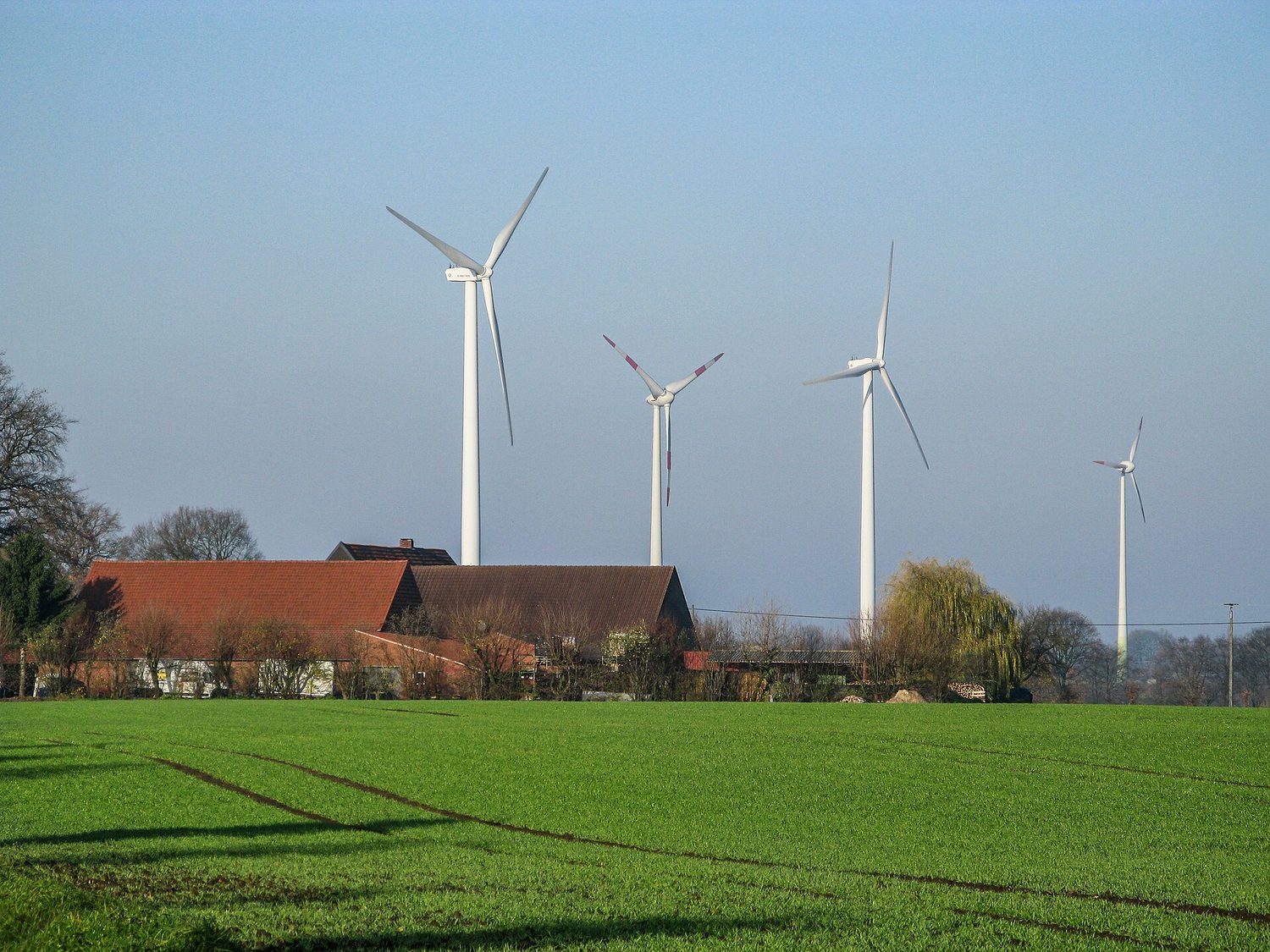
Wind turbines: renewable sources replenish on human timescales; fossil fuels do not
词汇表 训练
英文 中文 拼音
renewable resource 可再生资源 kě zài shēng zī yuán
nonrenewable resource 不可再生资源 bù kě zài shēng zī yuán
fossil fuels 化石燃料 huà shí rán liào
Wind 风能 fēng néng
wind turbines 风力涡轮机 fēng lì wō lún jī
6.2

全球能源消耗

大纲
Enduring UnderstandingLearning ObjectiveEssential Knowledge

ENG-3
Humans use energy from a variety of sources, resulting in positive and negative consequences.

ENG-3.B
Describe trends in energy consumption.

  • ENG-3.B.1 The use of energy resources is not evenly distributed between developed and developing countries.
  • ENG-3.B.2 The most widely used sources of energy globally are fossil fuels.
  • ENG-3.B.3 As developing countries become more developed, their reliance on fossil fuels for energy increases.
  • ENG-3.B.4 As the world becomes more industrialized, the demand for energy increases.
  • ENG-3.B.5 Availability, price, and governmental regulations influence which energy sources people use and how they use them.

来源:美国大学理事会 AP 课程与考试说明

全球能源使用在上升,尤其是在发展中国家。大多数能源仍来自化石燃料(fossil fuels)。富有的国家每人消费最多;对能源的获取塑造经济发展。

探索

Trace energy from source to use

A Sankey diagram shows how energy flows from sources to useful work — and how much is lost. Most primary energy is wasted as heat before it does anything useful.

6.3

燃料类型与用途

大纲
Enduring UnderstandingLearning ObjectiveEssential Knowledge

ENG-3
Humans use energy from a variety of sources, resulting in positive and negative consequences.

ENG-3.C
Identify types of fuels and their uses.

  • ENG-3.C.1 Wood is commonly used as fuel in the forms of firewood and charcoal. It is often used in developing countries because it is easily accessible.
  • ENG-3.C.2 Peat is partially decomposed organic material that can be burned for fuel.
  • ENG-3.C.3 Three types of coal used for fuel are lignite, bituminous, and anthracite. Heat, pressure, and depth of burial contribute to the development of various coal types and their qualities.
  • ENG-3.C.4 Natural gas, the cleanest of the fossil fuels, is mostly methane.
  • ENG-3.C.5 Crude oil can be recovered from tar sands, which are a combination of clay, sand, water, and bitumen.
  • ENG-3.C.6 Fossil fuels can be made into specific fuel types for specialized uses (e.g., in motor vehicles).
  • ENG-3.C.7 Cogeneration occurs when a fuel source is used to generate both useful heat and electricity.

来源:美国大学理事会 AP 课程与考试说明

不同的燃料适合不同的需要:煤和天然气用于电力、石油用于运输,而生物质在许多地区用于取暖和烹饪。每个在成本、可用性和污染上都有取舍。

6.4

自然能源资源的分布

大纲
Enduring UnderstandingLearning ObjectiveEssential Knowledge

ENG-3
Humans use energy from a variety of sources, resulting in positive and negative consequences.

ENG-3.D
Identify where natural energy resources occur.

  • ENG-3.D.1 The global distribution of natural energy resources, such as ores, coal, crude oil, and gas, is not uniform and depends on regions' geologic history.

来源:美国大学理事会 AP 课程与考试说明

能源资源不均匀地分布——石油集中在一些地区、煤在另一些,而可再生资源取决于本地的太阳、风或河流。这种不均匀的分布驱动贸易、经济和地缘政治。

6.5

化石燃料
大纲
Enduring UnderstandingLearning ObjectiveEssential Knowledge

ENG-3
Humans use energy from a variety of sources, resulting in positive and negative consequences.

ENG-3.E
Describe the use and methods of fossil fuels in power generation.

  • ENG-3.E.1 The combustion of fossil fuels is a chemical reaction between the fuel and oxygen that yields carbon dioxide and water and releases energy.
  • ENG-3.E.2 Energy from fossil fuels is produced by burning those fuels to generate heat, which then turns water into steam. That steam turns a turbine, which spins a generator, producing electricity.
  • ENG-3.E.3 Humans use a variety of methods to extract fossil fuels from the earth for energy generation.

ENG-3.F
Describe the effects of fossil fuels on the environment.

  • ENG-3.F.1 Hydrologic fracturing (fracking) can cause groundwater contamination and the release of volatile organic compounds.

来源:美国大学理事会 AP 课程与考试说明

化石燃料(coal、oil、natural gas)由古老的生物形成。它们能量密集而可靠,但不可再生并且是 $\text{CO}_2$ 和空气污染的主要来源。煤是最脏的;天然气燃烧得更清洁但泄漏甲烷(methane)。

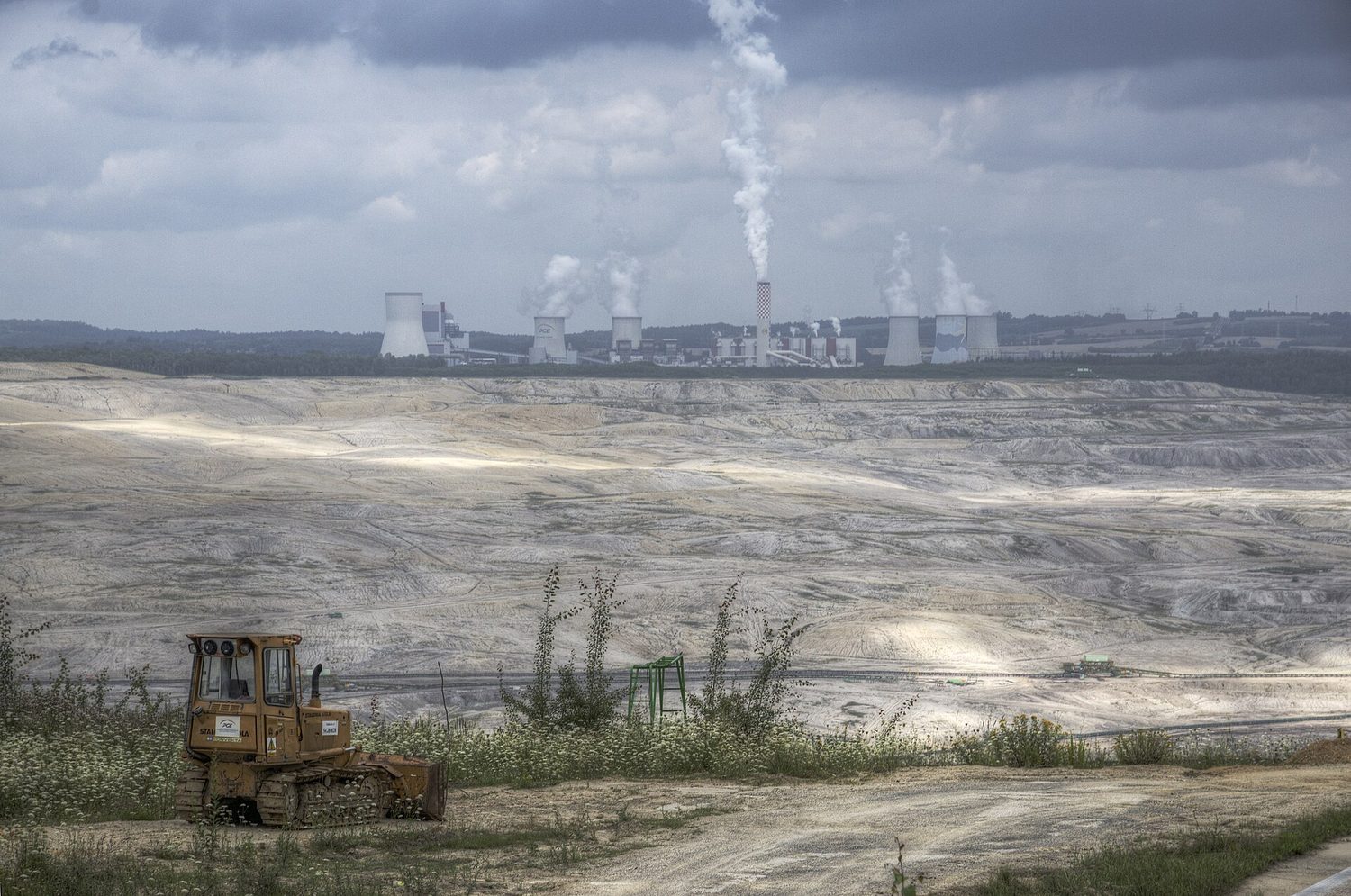
一个露天褐煤矿,后面就是正在燃烧的发电站:燃料从地里挖出后就地燃烧
一个露天褐煤(lignite)矿,给后面的发电站(power station)供料——燃料从地里挖出后就地燃烧

煤分阶段形成,它的等级(rank)随它所经受的热、压力和埋藏深度而上升。部分分解的植物物质先变成泥炭(peat)(它本身也能晒干后燃烧),然后是柔软的褐煤,再是烟煤(bituminous),最后是坚硬的无烟煤(anthracite)——每一步都更干、含碳更多、能量更高,所以无烟煤燃烧得最热、最清洁。

石油和天然气越来越多地通过水力压裂(hydraulic fracturing)(“fracking”)获取:把一种高压液体泵入页岩把它压裂,释放被困的燃料。它解锁了巨大的储量,但能污染地下水(甲烷和化学品进入饮用水井)、向空气释放挥发性有机化合物(volatile organic compounds),并引发小地震。

原油也能从油砂(tar sands)开采——黏土、沙、水和浓稠沥青(bitumen)的混合物。分离出石油既耗能又耗水,还清除大片土地,所以每桶油的环境代价很高。

词汇表 训练
英文 中文 拼音
methane 甲烷 jiǎ wán
lignite 褐煤 hè méi
peat 泥炭 ní tàn
bituminous 烟煤 yān méi
anthracite 无烟煤 wú yān méi
hydraulic fracturing 水力压裂 shuǐ lì yā liè
volatile organic compounds 挥发性有机化合物 huī fā xìng yǒu jī huà hé wù
tar sands 油砂 yóu shā
bitumen 沥青 lì qīng
power station 发电站 fā diàn zhàn
6.6

核能

大纲
Enduring UnderstandingLearning ObjectiveEssential Knowledge

ENG-3
Humans use energy from a variety of sources, resulting in positive and negative consequences.

ENG-3.G
Describe the use of nuclear energy in power generation.

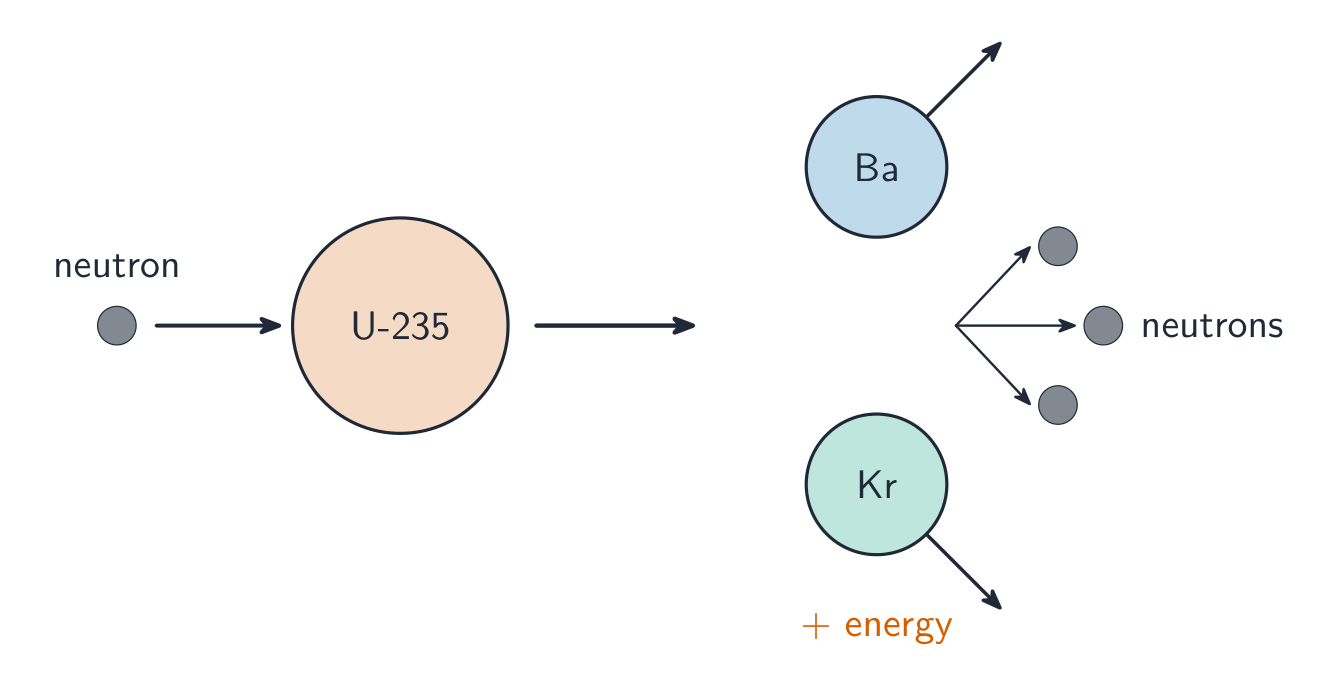
  • ENG-3.G.1 Nuclear power is generated through fission, where atoms of Uranium-235, which are stored in fuel rods, are split into smaller parts after being struck by a neutron. Nuclear fission releases a large amount of heat, which is used to generate steam, which powers a turbine and generates electricity.
  • ENG-3.G.2 Radioactivity occurs when the nucleus of a radioactive isotope loses energy by emitting radiation.
  • ENG-3.G.3 Uranium-235 remains radioactive for a long time, which leads to the problems associated with the disposal of nuclear waste.
  • ENG-3.G.4 Nuclear power generation is a nonrenewable energy source. Nuclear power is considered a cleaner energy source because it does not produce air pollutants, but it does release thermal pollution and hazardous solid waste.

ENG-3.H
Describe the effects of the use of nuclear energy on the environment.

  • ENG-3.H.1 Three Mile Island, Chernobyl, and Fukushima are three cases where accidents or natural disasters led to the release of radiation. These releases have had short- and long-term impacts on the environment.
  • ENG-3.H.2 A radioactive element's half-life can be used to calculate a variety of things, including the rate of decay and the radioactivity level at specific points in time.

来源:美国大学理事会 AP 课程与考试说明

核能(nuclear power)分裂铀(裂变(fission))来煮沸水并驱动涡轮机。它产生没有 $\text{CO}_2$ 并从少量燃料产生大量能量,但风险包括放射性核废料(waste)(长寿命)、堆芯熔毁的危险,和高成本。

Worked example. 放射性废料按它的半衰期(half-life)衰变——它的一半衰变所需的时间。假设一个同位素有 $30$ 年的半衰期而一个反应堆留下 $100\ \text{g}$ 它。$30$ 年后剩 $50\ \text{g}$;$60$ 年后 $25\ \text{g}$;$90$ 年(三个半衰期)后 $100\times\left(\tfrac12\right)^3=12.5\ \text{g}$。因为下降是减半、不是线性的,废料在许多半衰期里保持危险——它必须被安全地存储几个世纪的核心原因。
一个铀-235 原子核的核裂变释放能量
一个铀-235 原子核的核裂变释放能量
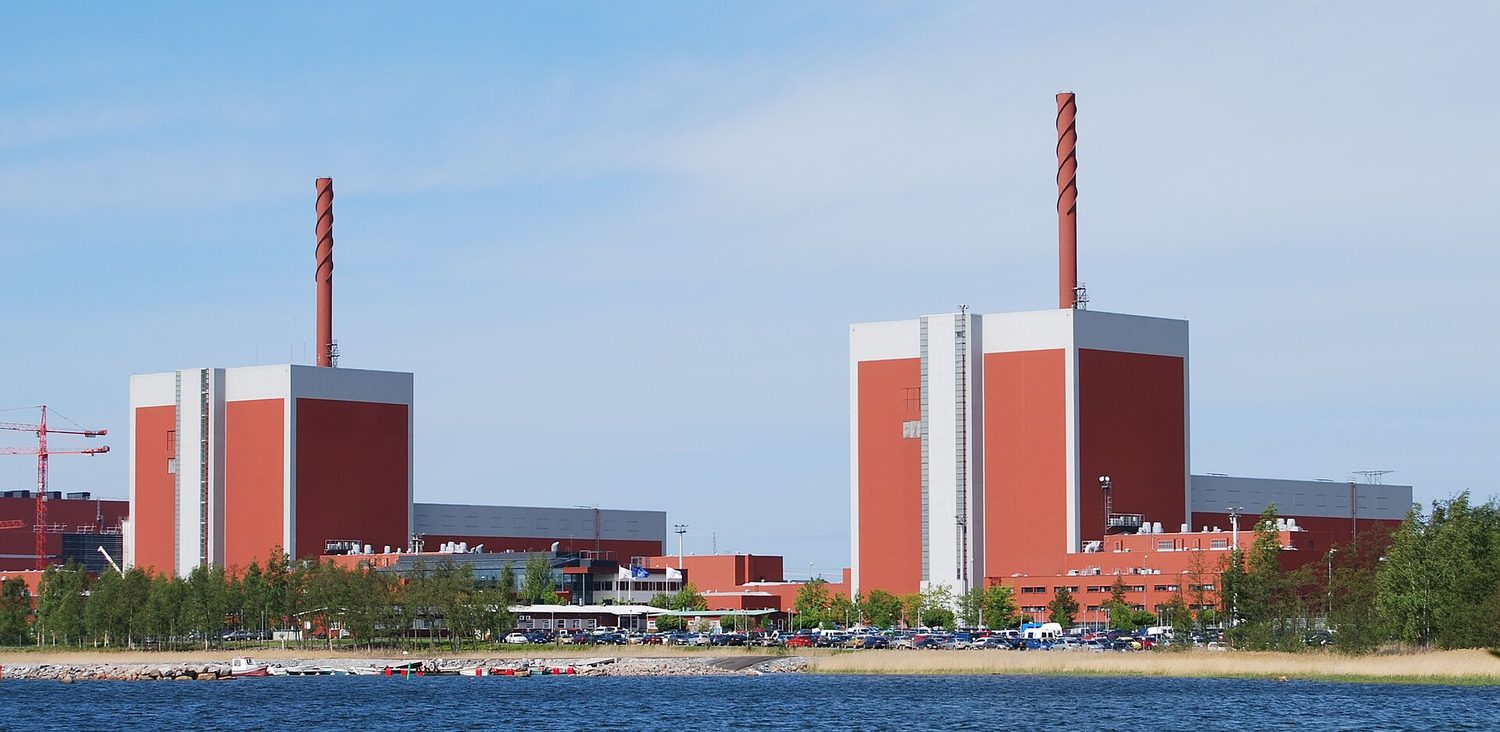
一座海边的核电站:两座大型长方形反应堆建筑,用海水冷却
一座核电站(nuclear power station)。反应堆建筑装着燃料;海提供冷却水。注意没有烟——裂变不释放 $\text{CO}_2$
词汇表 训练
英文 中文 拼音
Nuclear power 核能 hé néng
fission 裂变 liè biàn
waste 核废料 hé fèi liào
nuclear power station 核电站 hé diàn zhàn
6.7

生物质能

大纲
Enduring UnderstandingLearning ObjectiveEssential Knowledge

ENG-3
Humans use energy from a variety of sources, resulting in positive and negative consequences.

ENG-3.I
Describe the effects of the use of biomass in power generation on the environment.

  • ENG-3.I.1 Burning of biomass produces heat for energy at a relatively low cost, but it also produces carbon dioxide, carbon monoxide, nitrogen oxides, particulates, and volatile organic compounds. The overharvesting of trees for fuel also causes deforestation.
  • ENG-3.I.2 Ethanol can be used as a substitute for gasoline. Burning ethanol does not introduce additional carbon into the atmosphere via combustion, but the energy return on energy investment for ethanol is low.

来源:美国大学理事会 AP 课程与考试说明

生物质(biomass)(木材、作物、废物、像乙醇这样的生物燃料)是可再生的,而且若重新种植能碳中和,但燃烧它造成空气污染,而种植燃料作物与食物和栖息地竞争。

乙醇(ethanol)由玉米或甘蔗等作物制成,能替代汽油,燃烧时不增加的碳(植物生长时吸收了那些 $\text{CO}_2$)。它的缺点是能量投资回报率(EROEI)(energy return on energy investment)低:种植、收获和蒸馏作物所用的能量,几乎和燃料最终提供的能量一样多。

词汇表 训练
英文 中文 拼音
Biomass 生物质 shēng wù zhì
Ethanol 乙醇 yǐ chún
energy return on energy investment (EROEI) 能量投资回报率 néng liàng tóu zī huí bào lǜ
6.8

太阳能

大纲
Enduring UnderstandingLearning ObjectiveEssential Knowledge

ENG-3
Humans use energy from a variety of sources, resulting in positive and negative consequences.

ENG-3.J
Describe the use of solar energy in power generation.

  • ENG-3.J.1 Photovoltaic solar cells capture light energy from the sun and transform it directly into electrical energy. Their use is limited by the availability of sunlight.
  • ENG-3.J.2 Active solar energy systems use solar energy to heat a liquid through mechanical and electric equipment to collect and store the energy captured from the sun.
  • ENG-3.J.3 Passive solar energy systems absorb heat directly from the sun without the use of mechanical and electric equipment, and energy cannot be collected or stored.

ENG-3.K
Describe the effects of the use of solar energy in power generation on the environment.

  • ENG-3.K.1 Solar energy systems have low environmental impact and produce clean energy, but they can be expensive. Large solar energy farms may negatively impact desert ecosystems.

来源:美国大学理事会 AP 课程与考试说明

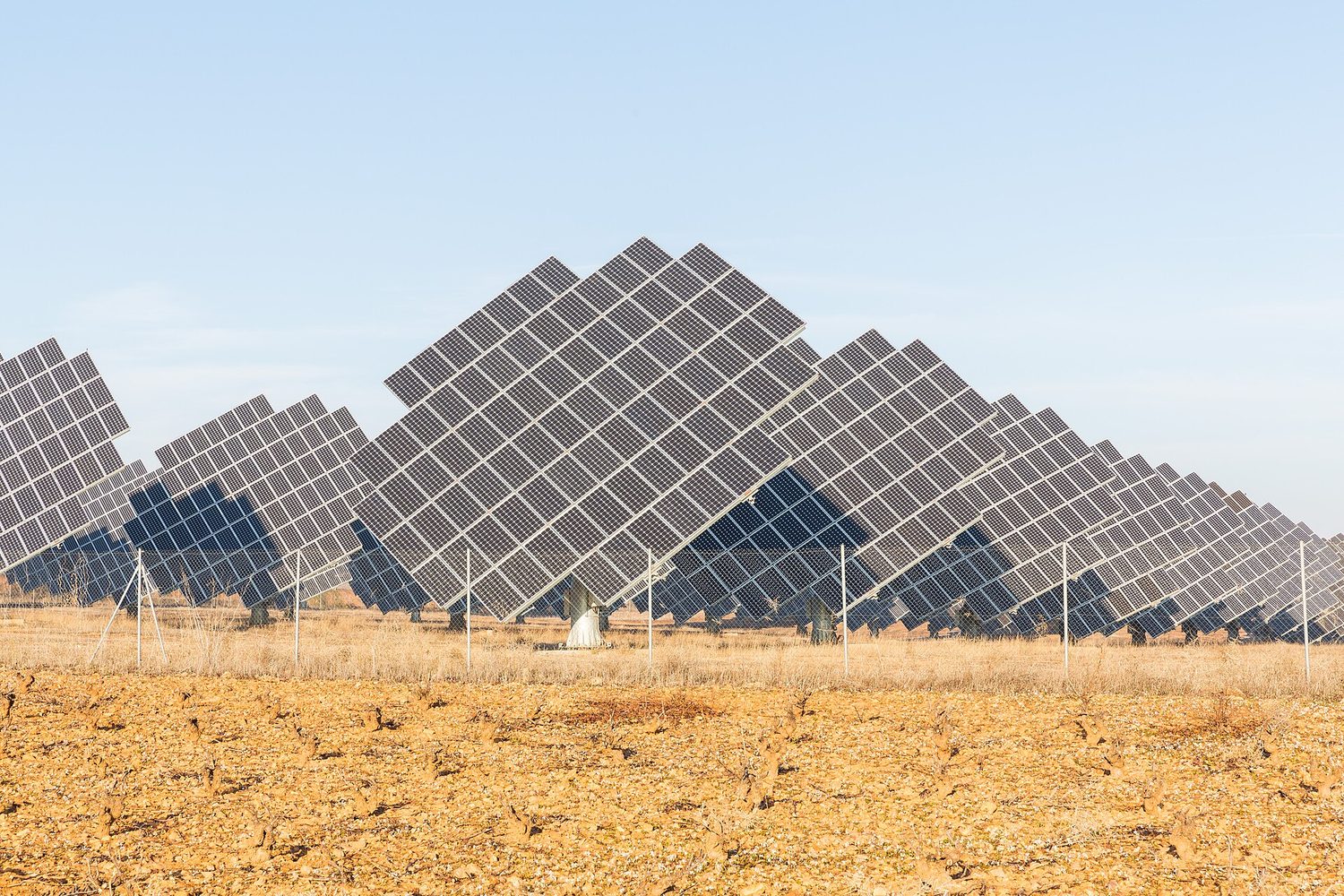
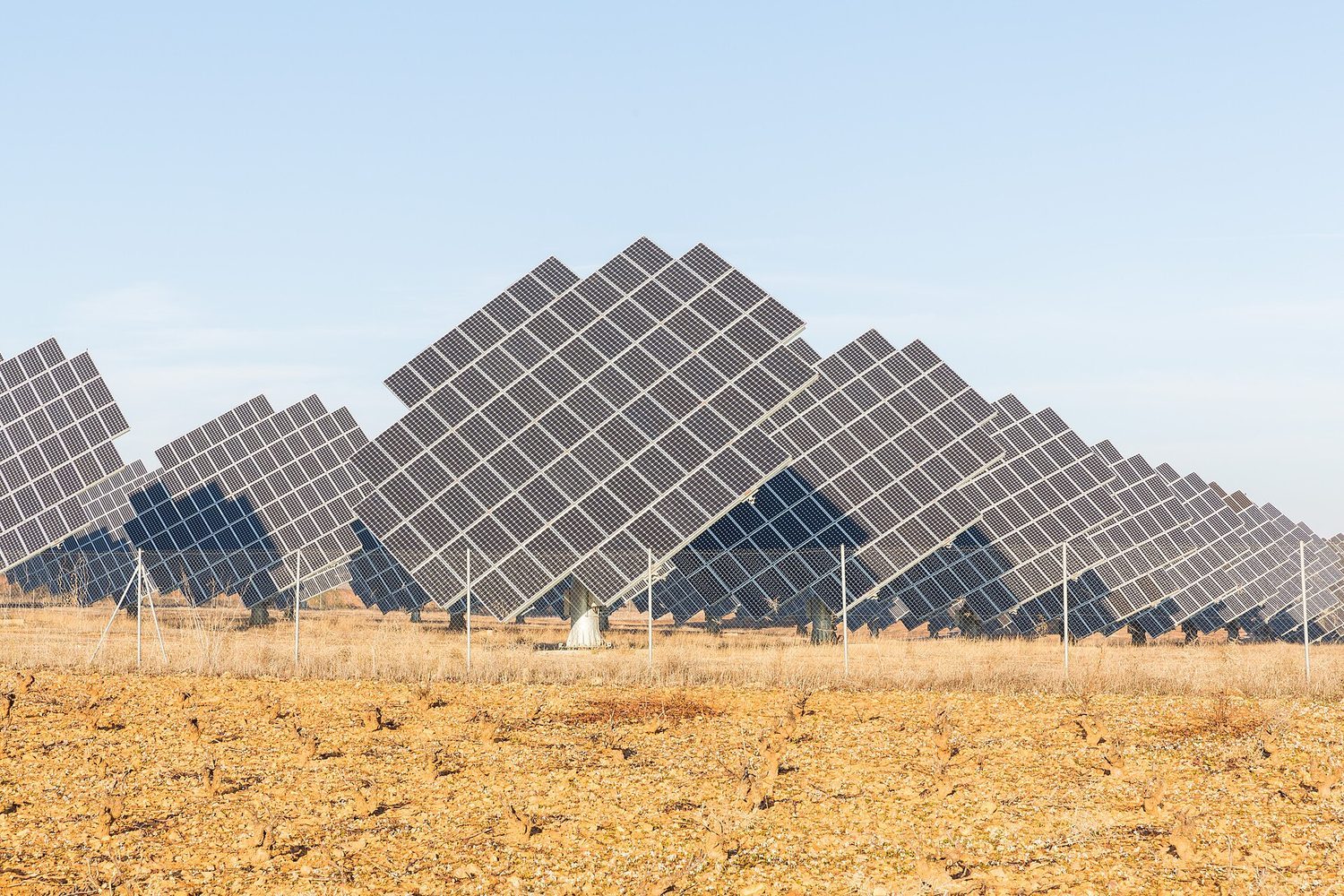
太阳能(solar)把阳光转换成电(光伏板)或热。它是可再生的而且使用时清洁,但间歇性(晚上没有太阳)、需要空间,而且有制造影响。

一大片田地上铺满一排排倾斜的太阳能板,天空湛蓝
一个太阳能电场。一排排光伏(photovoltaic)板朝着太阳倾斜;大的输出需要一大片土地
词汇表 训练
英文 中文 拼音
Solar 太阳能 tài yáng néng
photovoltaic 光伏 guāng fú
6.9

水力发电

大纲
Enduring UnderstandingLearning ObjectiveEssential Knowledge

ENG-3
Humans use energy from a variety of sources, resulting in positive and negative consequences.

ENG-3.L
Describe the use of hydroelectricity in power generation.

  • ENG-3.L.1 Hydroelectric power can be generated in several ways. Dams built across rivers collect water in reservoirs. The moving water can be used to spin a turbine. Turbines can also be placed in small rivers, where the flowing water spins the turbine.
  • ENG-3.L.2 Tidal energy uses the energy produced by tidal flows to turn a turbine.

ENG-3.M
Describe the effects of the use of hydroelectricity in power generation on the environment.

  • ENG-3.M.1 Hydroelectric power does not generate air pollution or waste, but construction of the power plants can be expensive, and there may be a loss of or change in habitats following the construction of dams.

来源:美国大学理事会 AP 课程与考试说明

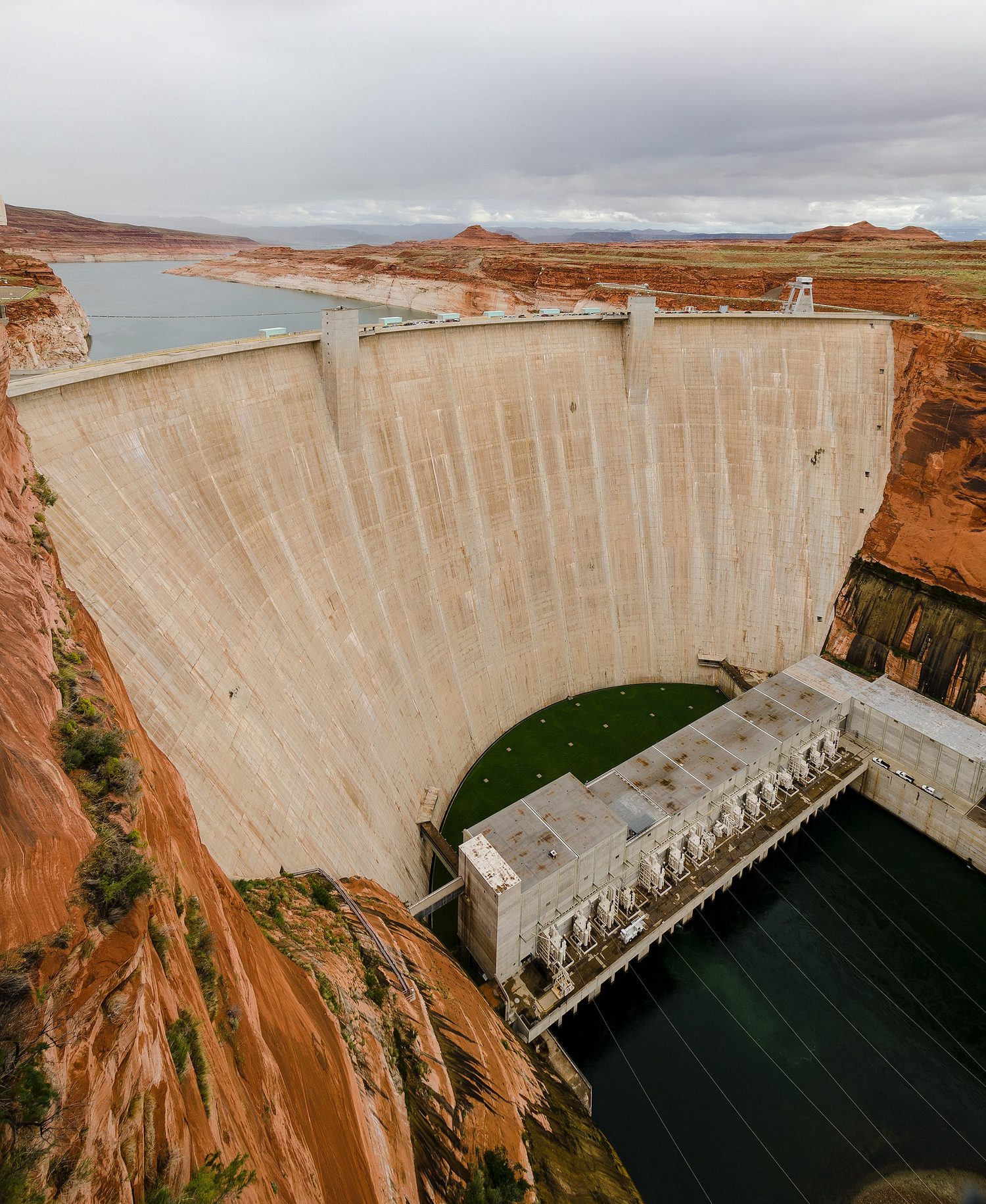
水电(hydroelectric)力用流动的水(大坝)来旋转涡轮机——可再生而低排放,但大坝淹没栖息地、阻挡鱼类迁徙、截留泥沙,并使人们流离失所。

峡谷中一座高高的混凝土大坝:弯曲的坝墙后是满满的水库,坝底是放水的发电房
一座水电大坝(dam)。水库(reservoir)被拦在坝墙后;水穿过大坝落下,旋转坝底发电房里的涡轮机
词汇表 训练
英文 中文 拼音
Hydroelectric 水电 shuǐ diàn
reservoir 水库 shuǐ kù
dam 大坝 dà bà
6.10

地热能

大纲
Enduring UnderstandingLearning ObjectiveEssential Knowledge

ENG-3
Humans use energy from a variety of sources, resulting in positive and negative consequences.

ENG-3.N
Describe the use of geothermal energy in power generation.

  • ENG-3.N.1 Geothermal energy is obtained by using the heat stored in the Earth's interior to heat up water, which is brought back to the surface as steam. The steam is used to drive an electric generator.

ENG-3.O
Describe the effects of the use of geothermal energy in power generation on the environment.

  • ENG-3.O.1 The cost of accessing geothermal energy can be prohibitively expensive, as is not easily accessible in many parts of the world. In addition, it can cause the release of hydrogen sulfide.

来源:美国大学理事会 AP 课程与考试说明

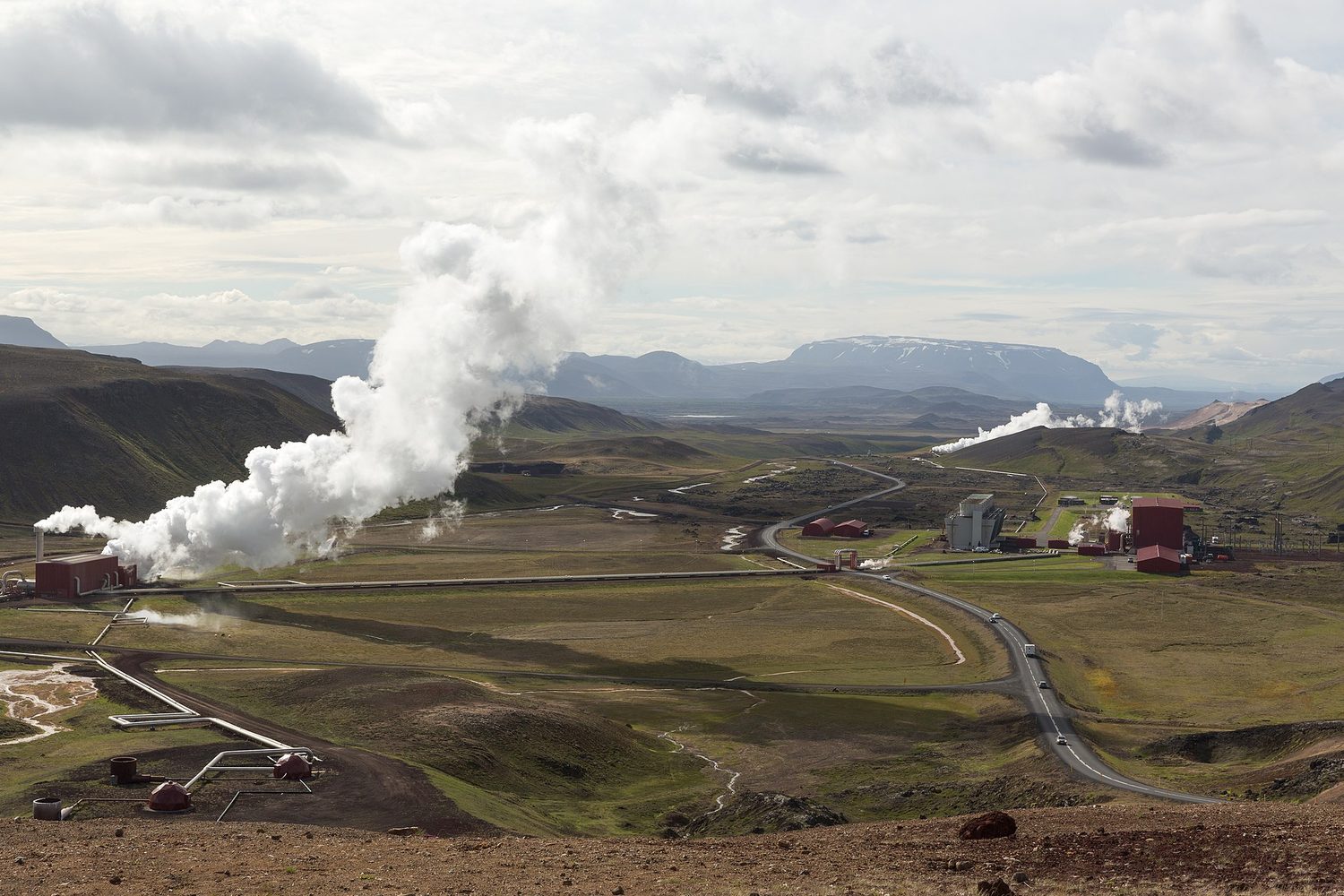
地热能(geothermal)开采地球的内部热用于电力和取暖。它是可再生而可靠的,但只在热岩石接近表面的地方(火山地区)实用,而且能释放地下气体。

冰岛一片光秃秃的火山平原上的地热发电站,白色蒸汽从厂房和管道升起
冰岛(一个火山地区)的一座地热发电站。下面热岩石产生的蒸汽(steam)被管道引上来驱动涡轮机
词汇表 训练
英文 中文 拼音
Geothermal 地热能 dì rè néng
Steam 蒸汽 zhēng qì
6.11

氢燃料电池

大纲
Enduring UnderstandingLearning ObjectiveEssential Knowledge

ENG-3
Humans use energy from a variety of sources, resulting in positive and negative consequences.

ENG-3.P
Describe the use of hydrogen fuel cells in power generation.

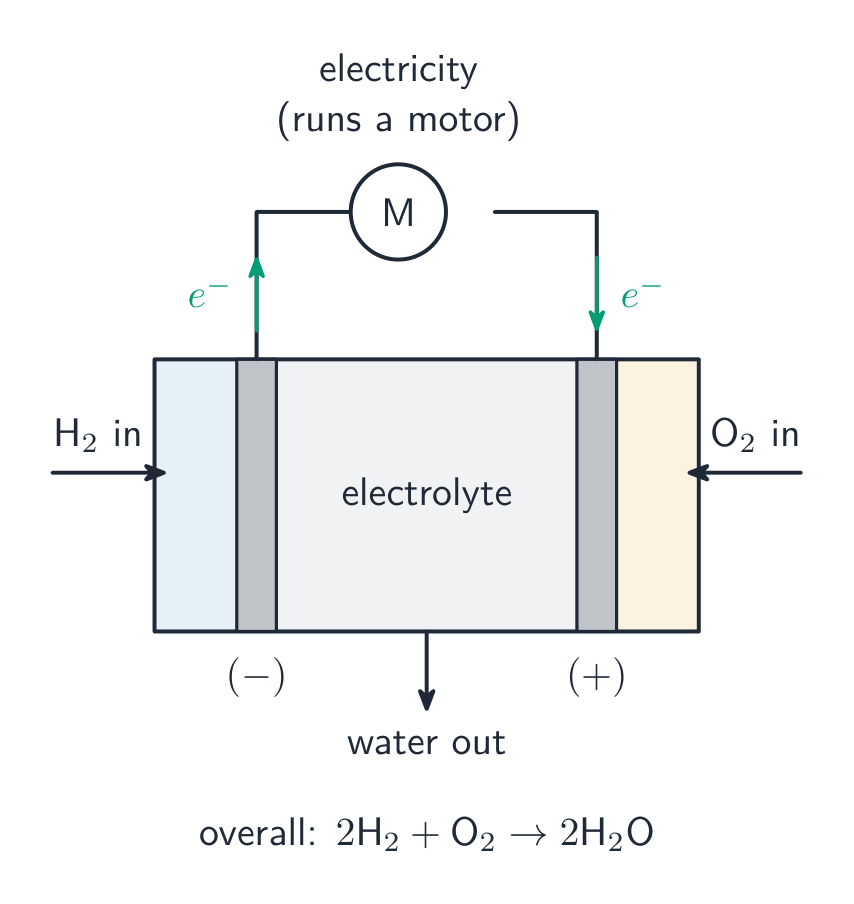
  • ENG-3.P.1 Hydrogen fuel cells are an alternate to non-renewable fuel sources. They use hydrogen as fuel, combining the hydrogen and oxygen in the air to form water and release energy (electricity) in the process. Water is the product (emission) of a fuel cell.

ENG-3.Q
Describe the effects of the use of hydrogen fuel cells in power generation on the environment.

  • ENG-3.Q.1 Hydrogen fuel cells have low environmental impact and produce no carbon dioxide when the hydrogen is produced from water. However, the technology is expensive and energy is still needed to create the hydrogen gas used in the fuel cell.

来源:美国大学理事会 AP 课程与考试说明

一个氢燃料电池(hydrogen fuel cell)结合氢和氧制造电,使用时作为唯一的排放。但生产氢通常需要能量(常常来自化石燃料),而存储很难。

一个氢-氧燃料电池制造电,水作为唯一的产物
词汇表 训练
英文 中文 拼音
hydrogen fuel cell 氢燃料电池 qīng rán liào diàn chí
6.12

风能

大纲
Enduring UnderstandingLearning ObjectiveEssential Knowledge

ENG-3
Humans use energy from a variety of sources, resulting in positive and negative consequences.

ENG-3.R
Describe the use of wind energy in power generation.

  • ENG-3.R.1 Wind turbines use the kinetic energy of moving air to spin a turbine, which spins a generator, producing electricity.

ENG-3.S
Describe the effects of the use of wind energy in power generation on the environment.

  • ENG-3.S.1 Wind energy is a renewable, clean source of energy. However, birds and bats may be killed if they fly into the spinning turbine blades.

来源:美国大学理事会 AP 课程与考试说明

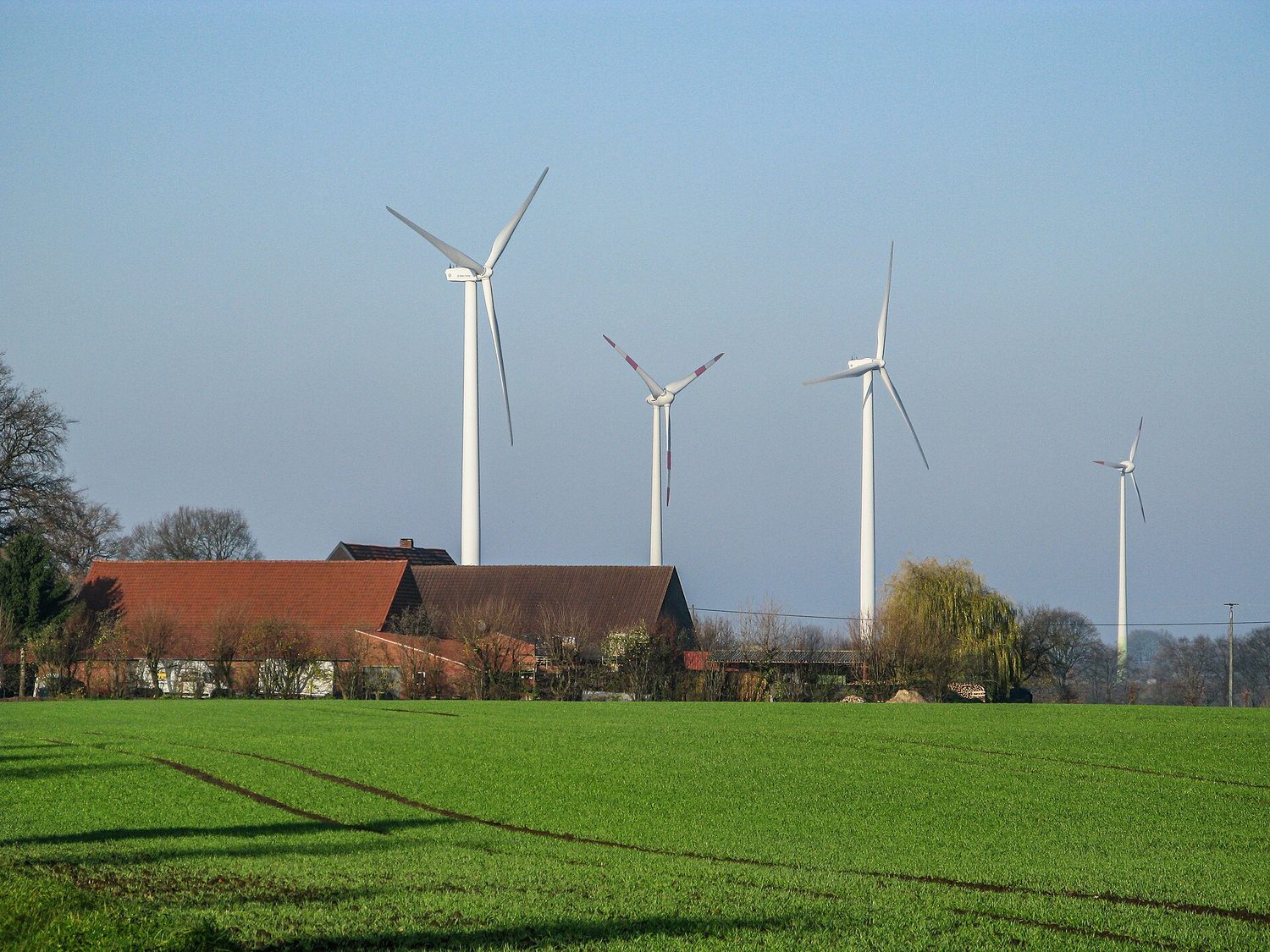
风能(wind)涡轮机把移动的空气转换成电——可再生、清洁而低运营成本,但间歇性、土地或海洋密集,而且对鸟和蝙蝠是一个危险。在风强而稳定的地方最好。

三座高高的白色风力涡轮机立在绿色的农田上
农田上的风力涡轮机(wind turbines)。它们占地很少,所以之间的土地仍然可以耕种
6.13

能源节约

大纲
Enduring UnderstandingLearning ObjectiveEssential Knowledge

ENG-3
Humans use energy from a variety of sources, resulting in positive and negative consequences.

ENG-3.T
Describe methods for conserving energy.

  • ENG-3.T.1 Some of the methods for conserving energy around a home include adjusting the thermostat to reduce the use of heat and air conditioning, conserving water, use of energy-efficient appliances, and conservation landscaping.
  • ENG-3.T.2 Methods for conserving energy on a large scale include improving fuel economy for vehicles, using BEVs (battery electric vehicles) and hybrid vehicles, using public transportation, and implementing green building design features.

来源:美国大学理事会 AP 课程与考试说明

节能(energy conservation)通过效率(LED 照明、隔热、高效电器、公共交通)和行为减少需求。节约能源常常是最便宜和最清洁的选项——你不使用的能源不需要燃料而且不造成污染。

一个相关的效率提升是热电联产(cogeneration)(热与电联合生产):一次燃料燃烧同时用来产生有用的热,捕获普通电厂直接扔掉的废热——所以燃料能量中远更多的部分最终做了有用功。

Worked example. 用一个给出相同光的 $10\ \text{W}$ LED 替换一个 $60\ \text{W}$ 白炽灯泡节省 $50\ \text{W}$。每天运行它 $5$ 小时每天节省 $50\ \text{W}\times5\ \text{h}=250\ \text{Wh}=0.25\ \text{kWh}$,或每年约 $0.25\times365\approx91\ \text{kWh}$。把那个乘以一座城市里的每个灯泡,节约就匹敌一座新发电厂——以远低的成本。

A solar farm: generating more renewable energy and cutting demand are both energy-conservation strategies
词汇表 训练
英文 中文 拼音
Energy conservation 节能 jié néng
cogeneration 热电联产 rè diàn lián chǎn
6.13

考试技巧

  • 可再生(太阳、风、水)与不可再生(化石燃料、核)分开并权衡每种来源的取舍。
  • 化石燃料能量密集但排放 CO₂;不排放 CO₂ 但留下长寿命的废料。
  • 半衰期数学:$n$ 个半衰期后剩下一个分数 $(\tfrac12)^n$
  • 注意太阳能和风能是间歇性的并需要存储或备用。
  • 节约(效率)常常是最便宜、最清洁的选项——不使用的能源不需要燃料。
  • 知道煤的等级(泥炭 → 褐煤 → 烟煤 → 无烟煤;越多热/压力/埋藏 → 能量越高)以及非常规燃料水力压裂(页岩油/气;地下水 + VOC 污染)和油砂(沥青,耗能)。
  • 乙醇不增加净 CO₂,但 EROEI 低;热电联产捕获废热,使一种燃料同时提供电和热。

本主题的互动课程

逐步学习,并即时检测练习。

AP 环境科学历年真题

AP 环境科学的更多主题

登录或创建账号

IGCSE, A-Level & AP