跳到主要内容

种群

AP 环境科学 · 第 3 主题

训练
讲义 词汇表
3.1

广适性物种与特化物种

大纲
Enduring UnderstandingLearning ObjectiveEssential Knowledge

ERT-3
Populations change over time in reaction to a variety of factors.

ERT-3.A
Identify differences between generalist and specialist species.

  • ERT-3.A.1 Specialist species tend to be advantaged in habitats that remain constant, while generalist species tend to be advantaged in habitats that are changing.

来源:美国大学理事会 AP 课程与考试说明

一个广适性物种(generalist)能住在许多栖息地并吃许多食物(浣熊、蟑螂)——灵活,所以它很好地应对变化。一个狭适性物种(specialist)需要特定的条件或食物(熊猫、考拉)——在一个稳定的栖息地里高效但若那个栖息地变化就很脆弱。

词汇表 训练
英文 中文 拼音
generalist 广适性物种 guǎng shì xìng wù zhǒng
specialist 狭适性物种 xiá shì xìng wù zhǒng
3.2

K对策物种与r对策物种

大纲
Enduring UnderstandingLearning ObjectiveEssential Knowledge

ERT-3
Populations change over time in reaction to a variety of factors.

ERT-3.B
Identify differences between K- and r-selected species.

  • ERT-3.B.1 K-selected species tend to be large, have few offspring per reproduction event, live in stable environments, expend significant energy for each offspring, mature after many years of extended youth and parental care, have long life spans/life expectancy, and reproduce more than once in their lifetime. Competition for resources in K-selected species' habitats is usually relatively high.
  • ERT-3.B.2 r-selected species tend to be small, have many offspring, expend or invest minimal energy for each offspring, mature early, have short life spans, and may reproduce only once in their lifetime. Competition for resources in r-selected species' habitats is typically relatively low.
  • ERT-3.B.3 Biotic potential refers to the maximum reproductive rate of a population in ideal conditions.
  • ERT-3.B.4 Many species have reproductive strategies that are not uniquely r-selected or K-selected, or they change in different conditions at different times.
  • ERT-3.B.5 K-selected species are typically more adversely affected by invasive species than r-selected species, which are minimally affected by invasive species. Most invasive species are r-selected species.

来源:美国大学理事会 AP 课程与考试说明

两种繁殖策略:

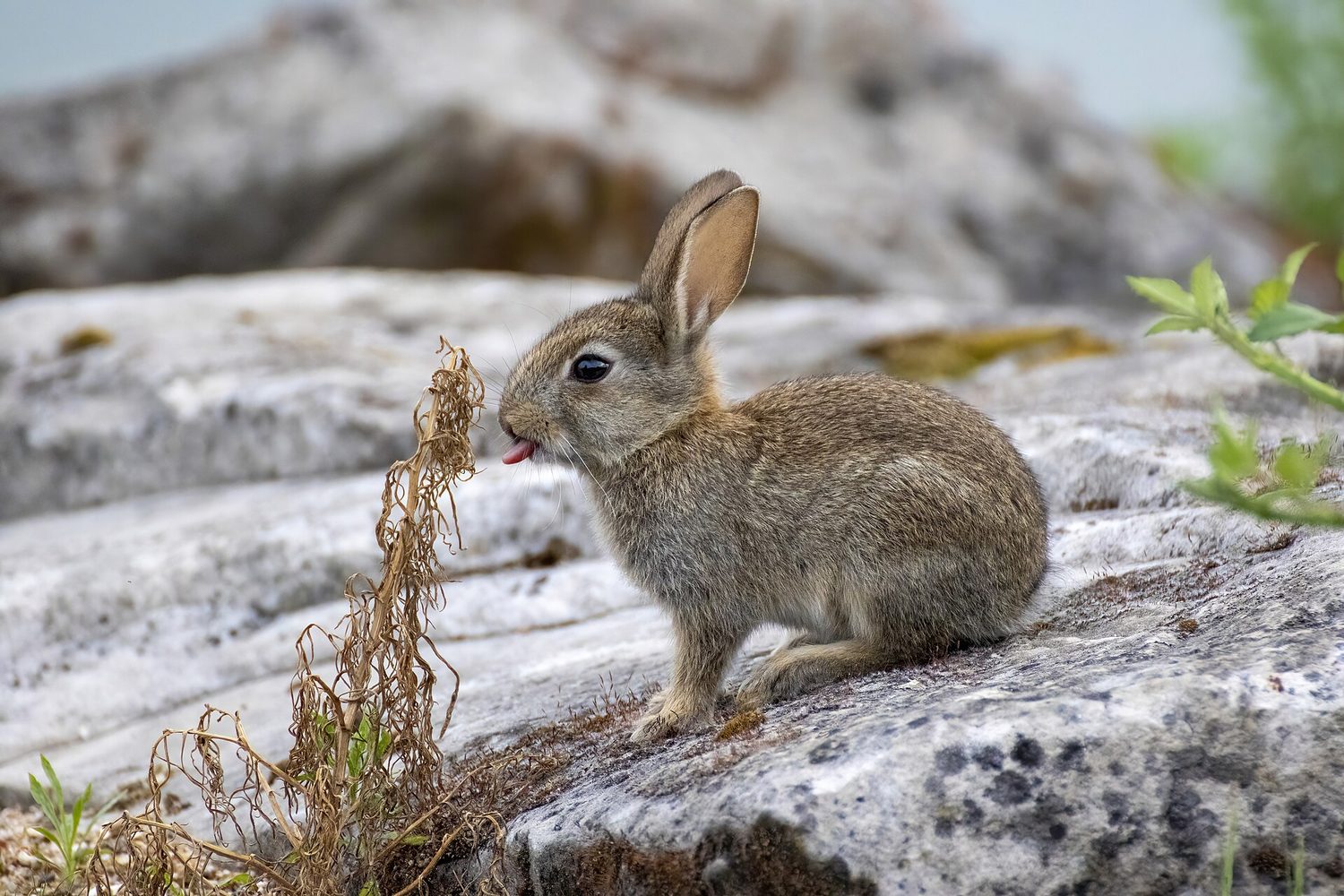
  • $r$ 选择($r$-selected)物种以很少的照顾产生许多后代、快速成熟,并有短的生命(昆虫、杂草)。它们快速定殖并繁荣与崩溃。
  • $K$ 选择($K$-selected)物种以很多照顾产生很少后代、缓慢成熟,并活得长(大象、人)。它们在稳定的环境里接近环境容纳量时做得好,但从损失中恢复得慢。
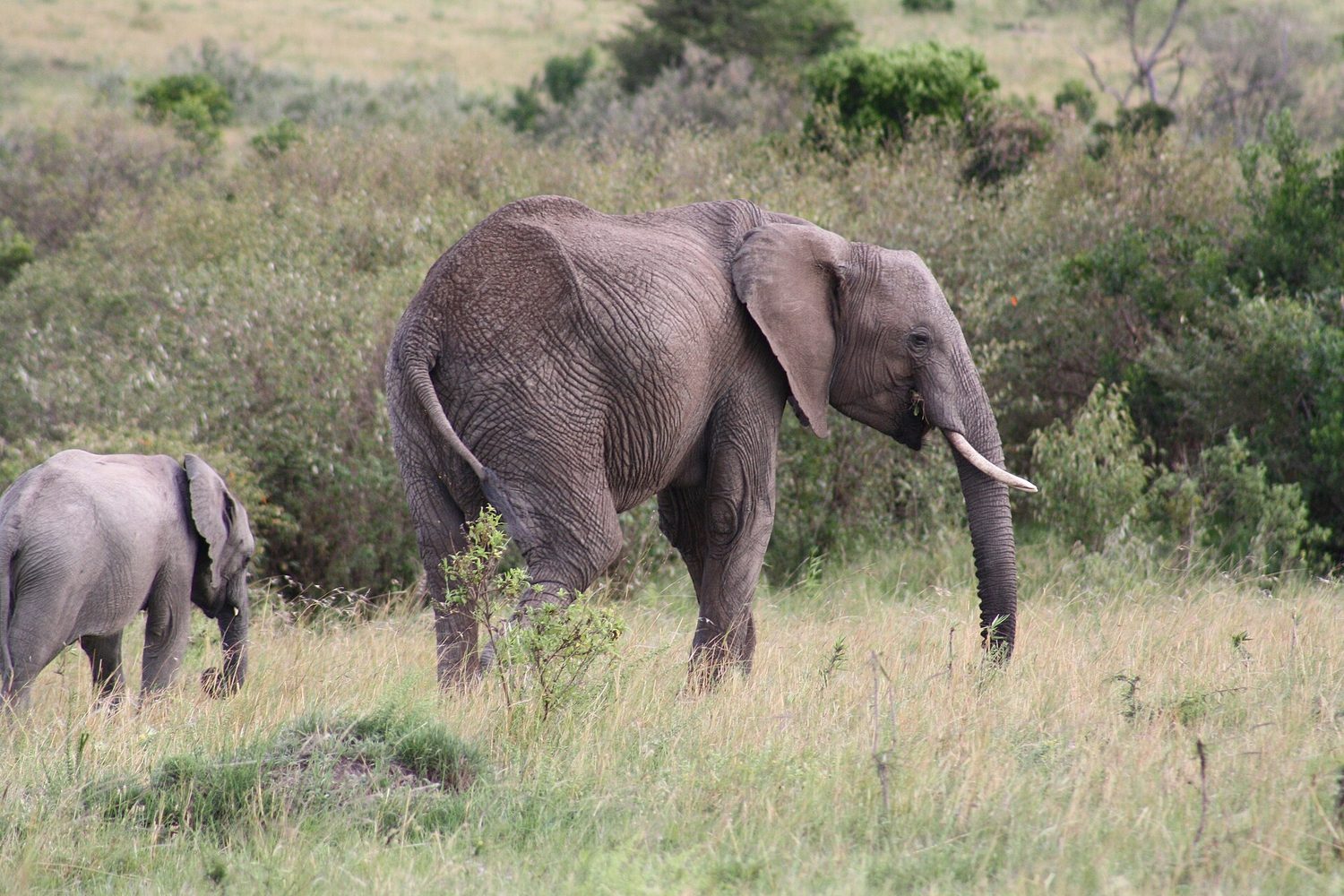
一头成年大象带着它唯一的小象走过草地
一头大象和它唯一的幼崽:K 选择物种后代很少,但对每一个都投入很多,所以数量下降后恢复得慢
A young rabbit: r-selected species produce many offspring quickly with little parental investment
3.3

存活曲线

大纲
Enduring UnderstandingLearning ObjectiveEssential Knowledge

ERT-3
Populations change over time in reaction to a variety of factors.

ERT-3.C
Explain survivorship curves.

  • ERT-3.C.1 A survivorship curve is a line that displays the relative survival rates of a cohort—a group of individuals of the same age—in a population, from birth to the maximum age reached by any one cohort member. There are Type I, Type II, and Type III curves.
  • ERT-3.C.2 Survivorship curves differ for K-selected and r-selected species, with K-selected species typically following a Type I or Type II curve and r-selected species following a Type III curve.

来源:美国大学理事会 AP 课程与考试说明

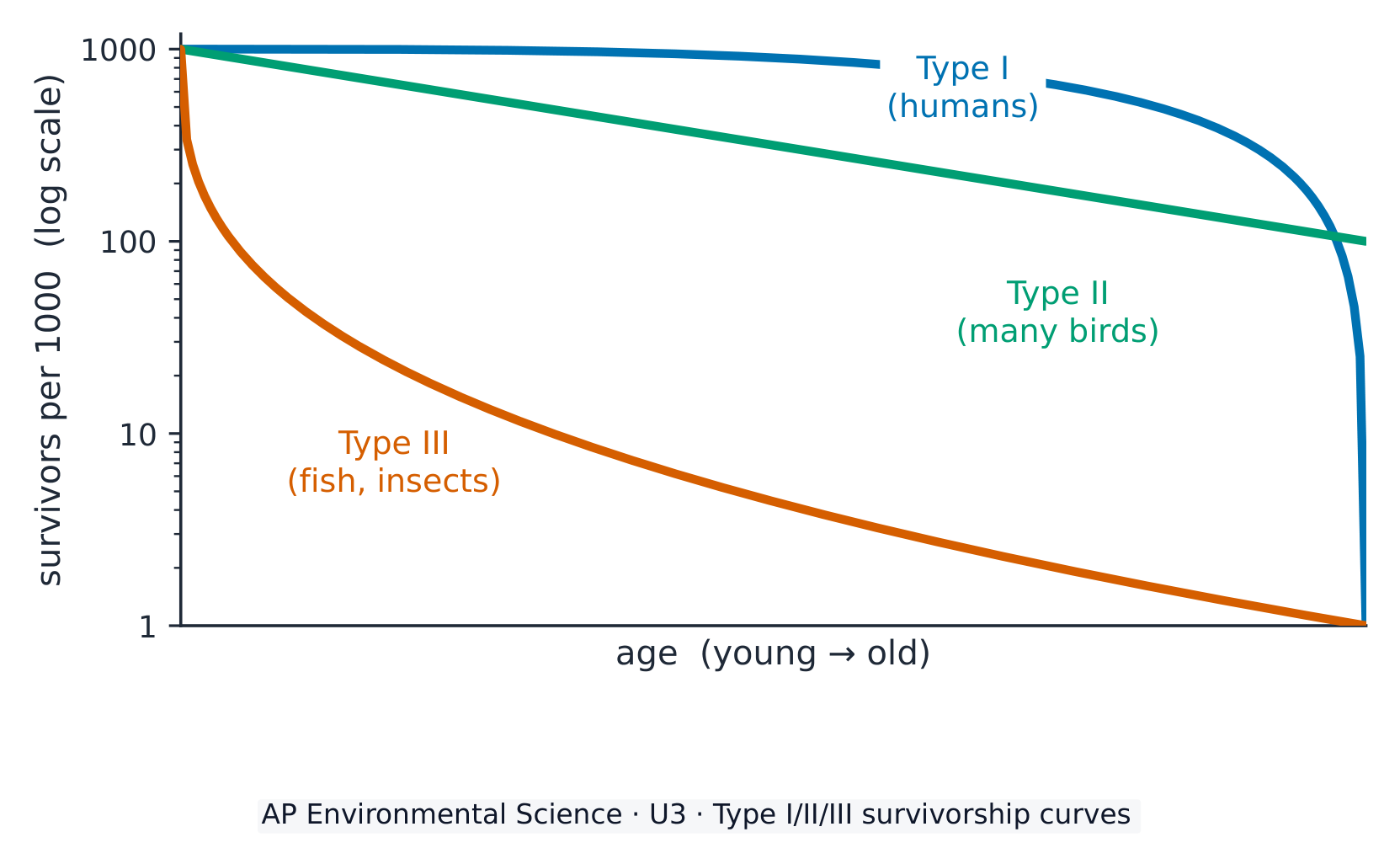
一条存活曲线(survivorship curve)画出多少个体在每个年龄存活(在一个对数尺度上)。类型 I(人):大多数存活到老年,然后死亡——一条凸曲线。类型 II(许多鸟):在所有年龄一个恒定的死亡率——一条直线。类型 III($r$ 选择:鱼、昆虫):大多数年幼死亡,少数存活——一条凹曲线。

对数尺度上的类型 I、II 和 III 存活曲线
词汇表 训练
英文 中文 拼音
survivorship curve 存活曲线 cún huó qū xiàn
3.4

环境容纳量

大纲
Enduring UnderstandingLearning ObjectiveEssential Knowledge

ERT-3
Populations change over time in reaction to a variety of factors.

ERT-3.D
Describe carrying capacity.

  • ERT-3.D.1 When a population exceeds its carrying capacity (carrying capacity can be denoted as K), overshoot occurs. There are environmental impacts of population overshoot, including resource depletion.

ERT-3.E
Describe the impact of carrying capacity on ecosystems.

  • ERT-3.E.1 A major ecological effect of population overshoot is dieback of the population (often severe to catastrophic) because the lack of available resources leads to famine, disease, and/or conflict.

来源:美国大学理事会 AP 课程与考试说明

捕食者与猎物的数量周期波动
指数增长与逻辑斯蒂增长

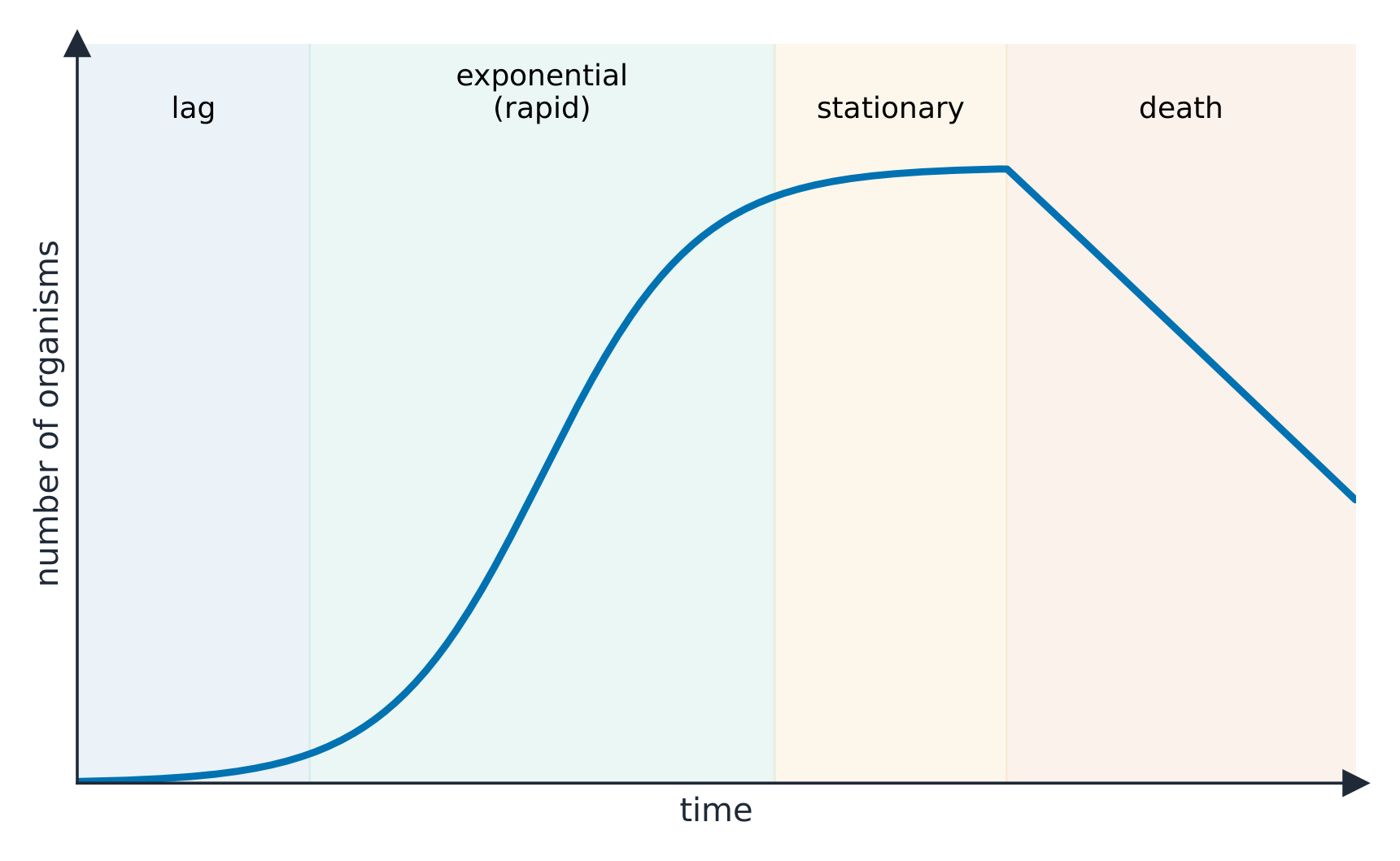
环境容纳量(carrying capacity)($K$)是一个环境能长期支持的最大种群。一个种群可能在资源暂时充足时超越(overshoot)$K$,然后随着资源耗尽而崩溃(crash)(回落(dieback))。种群倾向于围绕 $K$ 波动。
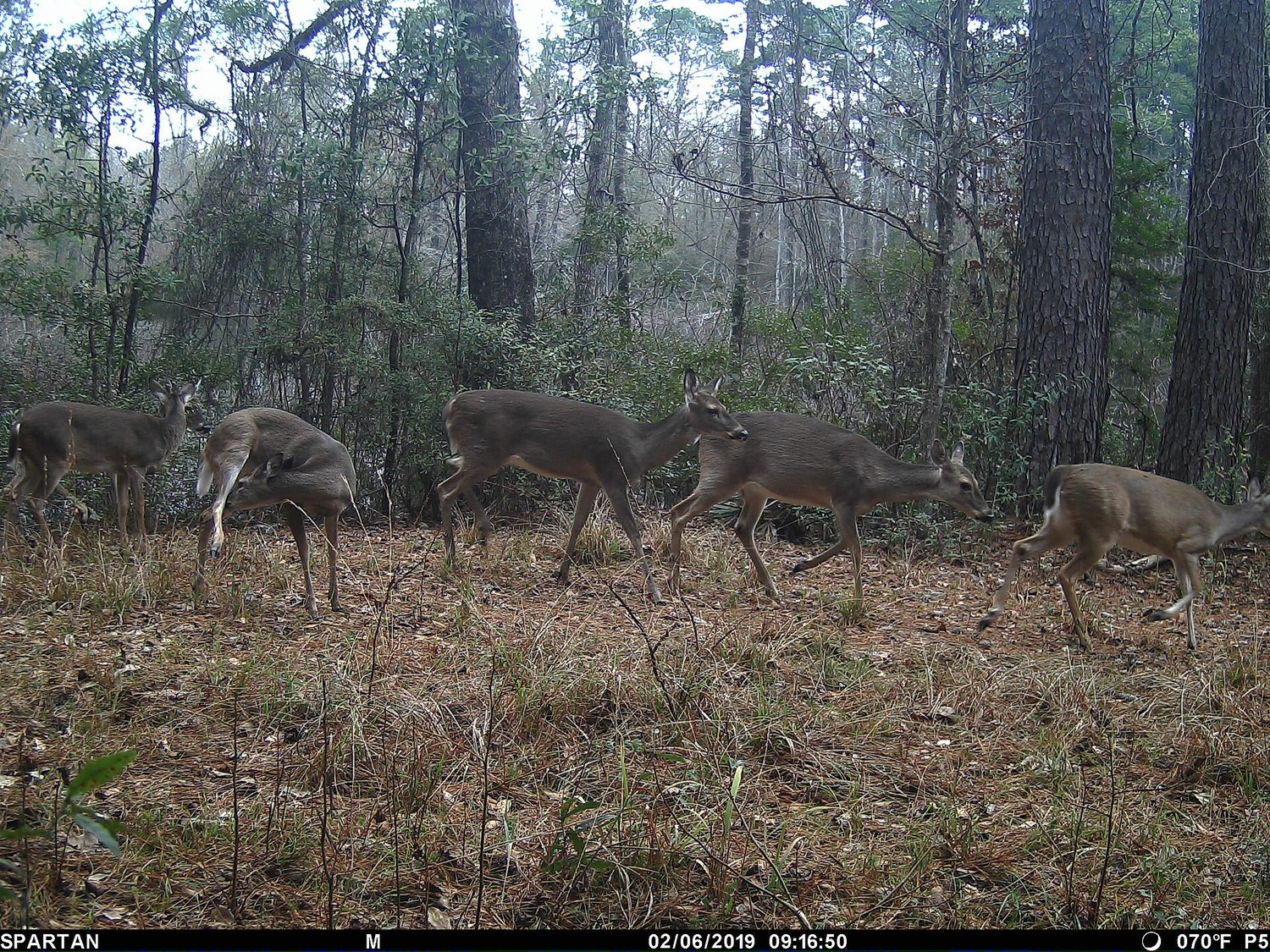
种群增长在环境的环境容纳量处趋平
种群增长在环境的环境容纳量处趋平
A deer herd: when a population approaches carrying capacity, resources limit further growth
探索

Growth up to carrying capacity

A population grows toward the carrying capacity $K$ its resources can support, then levels off. Push the growth rate up and watch it overshoot and settle.

词汇表 训练
英文 中文 拼音
carrying capacity 环境容纳量 huán jìng róng nà liàng
3.5

种群增长与资源可获得性

大纲
Enduring UnderstandingLearning ObjectiveEssential Knowledge

ERT-3
Populations change over time in reaction to a variety of factors.

ERT-3.F
Explain how resource availability affects population growth.

  • ERT-3.F.1 Population growth is limited by environmental factors, especially by the available resources and space.
  • ERT-3.F.2 Resource availability and the total resource base are limited and finite over all scales of time.
  • ERT-3.F.3 When the resources needed by a population for growth are abundant, population growth usually accelerates.
  • ERT-3.F.4 When the resource base of a population shrinks, the increased potential for unequal distribution of resources will ultimately result in increased mortality, decreased fecundity, or both, resulting in population growth declining to, or below, carrying capacity.

来源:美国大学理事会 AP 课程与考试说明

有充足的资源一个种群指数增长(exponentially)($J$ 曲线)。随着资源变得有限,增长减慢到逻辑斯蒂增长(logistic)($S$ 曲线),在 $K$ 处趋平。限制因素(limiting factors)(食物、水、空间、疾病)设定上限。

词汇表 训练
英文 中文 拼音
exponentially 指数增长 zhǐ shù zēng zhǎng
logistic 逻辑斯蒂增长 luó jí sī dì zēng zhǎng
Limiting factors 限制因素 xiàn zhì yīn sù
3.6

年龄结构图

大纲
Enduring UnderstandingLearning ObjectiveEssential Knowledge

EIN-1
Human populations change in reaction to a variety of factors, including social and cultural factors.

EIN-1.A
Explain age structure diagrams.

  • EIN-1.A.1 Population growth rates can be interpreted from age structure diagrams by the shape of the structure.
  • EIN-1.A.2 A rapidly growing population will, as a rule, have a higher proportion of younger people compared to stable or declining populations.

来源:美国大学理事会 AP 课程与考试说明

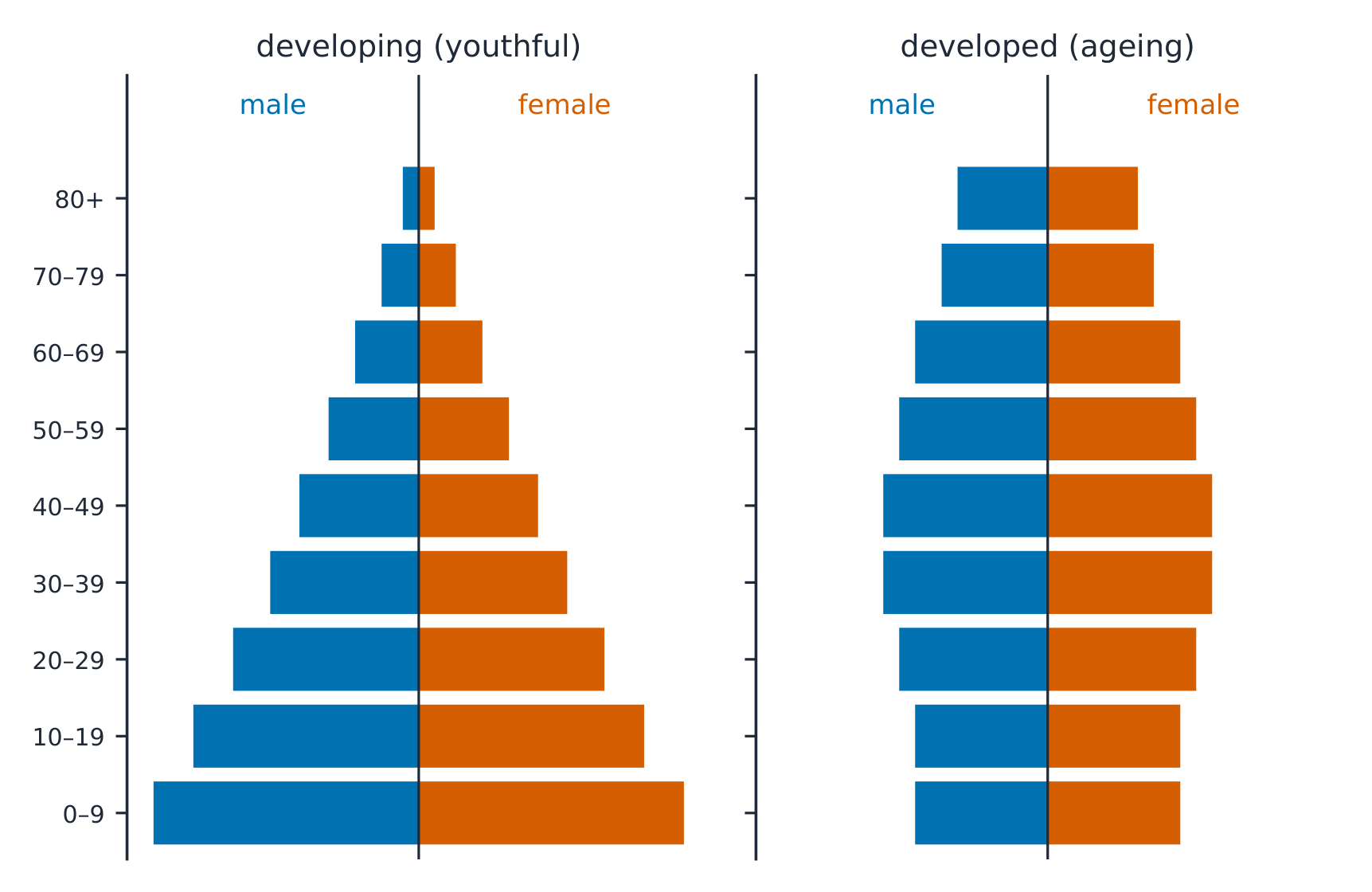
一个年龄结构图(age-structure diagram)显示一个种群在每个年龄组的比例。一个宽的基座(许多年轻人)预测快速增长;均匀的柱预测一个稳定的种群;一个窄的基座预测衰退。它们预测一个国家的未来人口。

一个发展中国家和一个发达国家的人口金字塔
词汇表 训练
英文 中文 拼音
age-structure diagram 年龄结构图 nián líng jié gòu tú
3.7

总和生育率

大纲
Enduring UnderstandingLearning ObjectiveEssential Knowledge

EIN-1
Human populations change in reaction to a variety of factors, including social and cultural factors.

EIN-1.B
Explain factors that affect total fertility rate in human populations.

  • EIN-1.B.1 Total fertility rate (TFR) is affected by the age at which females have their first child, educational opportunities for females, access to family planning, and government acts and policies.
  • EIN-1.B.2 If fertility rate is at replacement levels, a population is considered relatively stable.
  • EIN-1.B.3 Factors associated with infant mortality rates include whether mothers have access to good healthcare and nutrition. Changes in these factors can lead to changes in infant mortality rates over time.

来源:美国大学理事会 AP 课程与考试说明

总生育率(total fertility rate)(TFR)是每个妇女的平均孩子数。约 2.1 的一个替代水平(replacement level)保持一个种群稳定;高于它增长,低于它收缩。TFR 随着教育、对计划生育的获取和更低的婴儿死亡率而下降。

词汇表 训练
英文 中文 拼音
total fertility rate 总生育率 zǒng shēng yù lǜ
3.8

人口动态

大纲
Enduring UnderstandingLearning ObjectiveEssential Knowledge

EIN-1
Human populations change in reaction to a variety of factors, including social and cultural factors.

EIN-1.C.1
Explain how human populations experience growth and decline.

  • EIN-1.C.1 Birth rates, infant mortality rates, and overall death rates, access to family planning, access to good nutrition, access to education, and postponement of marriage all affect whether a human population is growing or declining.
  • EIN-1.C.2 Factors limiting global human population include the Earth's carrying capacity and the basic factors that limit human population growth as set forth by Malthusian theory.
  • EIN-1.C.3 Population growth can be affected by both density-independent factors, such as major storms, fires, heat waves, or droughts, and density-dependent factors, such as access to clean water and air, food availability, disease transmission, or territory size.
  • EIN-1.C.4 The rule of 70 states that dividing the number 70 by the percentage population growth rate approximates the population's doubling time.

来源:美国大学理事会 AP 课程与考试说明

人类人口增长取决于出生率死亡率移民。快速增长使资源紧张并增加生态足迹(ecological footprint)。降低出生率的因素包括教育(尤其是妇女的)、城市化和经济发展。

Worked example. 一个国家有每 $1000$$30$ 的出生率和每 $1000$$10$ 的死亡率。自然增长率是每年 $\dfrac{30-10}{10}=2.0\%$(把千分差除以 $10$ 把它转换成一个百分比)。按 70 法则(rule of 70),人口在约 $\dfrac{70}{2.0}=35$ 年翻倍。若发展把增长率削减到 $1.0\%$,翻倍时间会延长到 $\dfrac{70}{1.0}=70$ 年。

A crowded city crossing: human population dynamics depend on birth rates, death rates and migration
词汇表 训练
英文 中文 拼音
ecological footprint 生态足迹 shēng tài zú jì
3.9

人口转变

大纲
Enduring UnderstandingLearning ObjectiveEssential Knowledge

EIN-1
Human populations change in reaction to a variety of factors, including social and cultural factors.

EIN-1.D
Define the demographic transition.

  • EIN-1.D.1 The demographic transition refers to the transition from high to lower birth and death rates in a country or region as development occurs and that country moves from a pre-industrial to an industrialized economic system. This transition is typically demonstrated through a four-stage demographic transition model (DTM).
  • EIN-1.D.2 Characteristics of developing countries include higher infant mortality rates and more children in the workforce than developed countries.

来源:美国大学理事会 AP 课程与考试说明

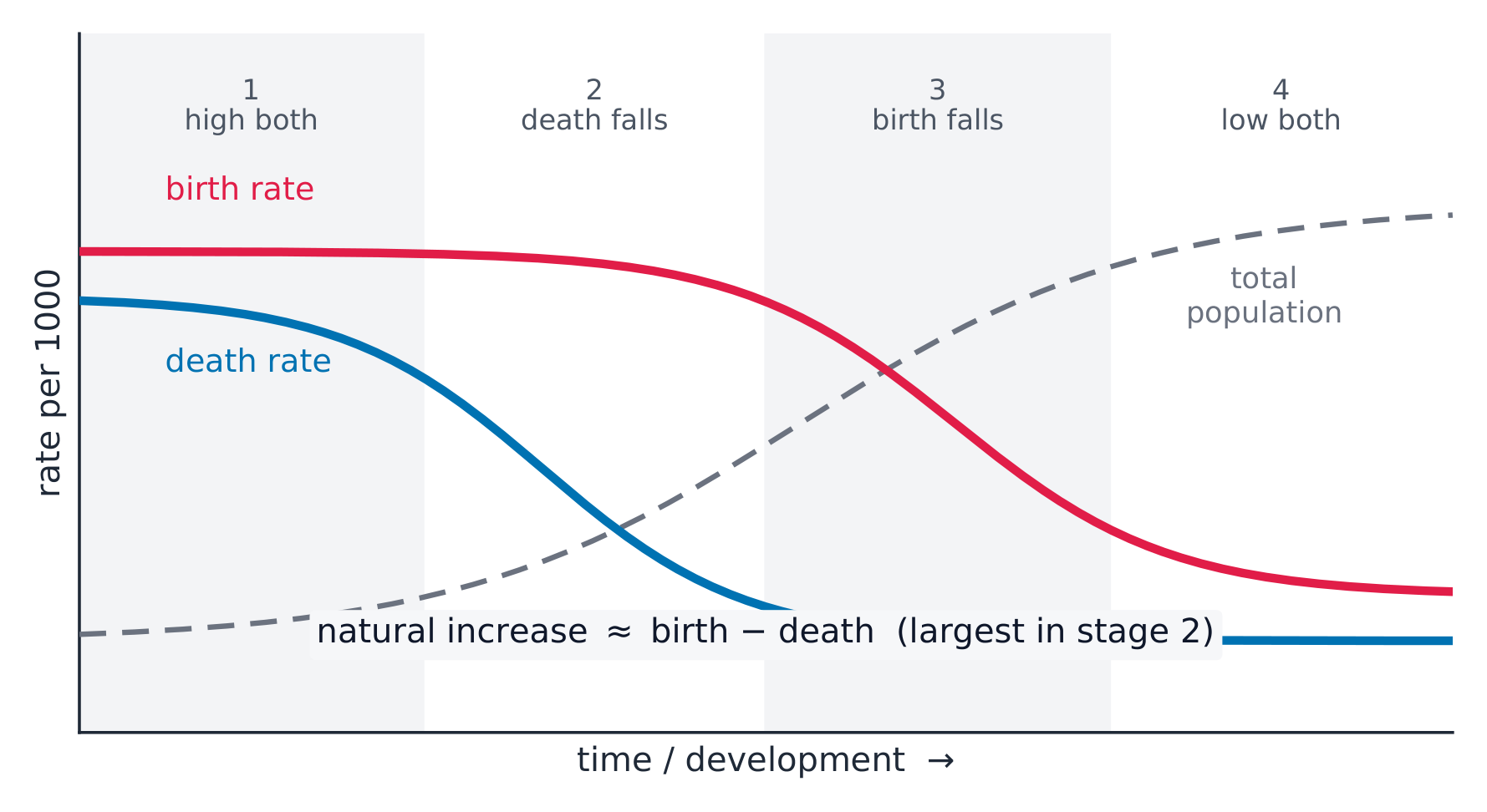
人口转型(demographic transition)描述一个国家的增长在它发展时如何变化,分阶段:(1) 高出生率和死亡率(慢增长);(2) 死亡率下降(快速增长);(3) 出生率下降(减慢的增长);(4) 两者都低(稳定)。发达国家在较后的阶段;许多发展中国家在快速增长的阶段。

人口转型的四个阶段
人口转型的四个阶段

人口在阶段 2 和 3 增长最快——一个仍然高的出生率和一个已经下降的死亡率之间的差距。那个滞后是为什么一个国家的人口在它死亡率下降之后长时间继续攀升。

词汇表 训练
英文 中文 拼音
demographic transition 人口转型 rén kǒu zhuǎn xíng
3.9

考试技巧

  • 70 法则:翻倍时间 ≈ 70 ÷ 增长率(%);一个增长率是(出生 − 死亡)每 1000 ÷ 10。
  • 年龄结构图:一个宽的基座预测快速增长,均匀的柱一个稳定的种群。
  • 对比 r 选择(许多后代、很少照顾)和 K 选择(很少、很多照顾)策略。
  • 知道人口转型阶段以及什么降低出生率(教育、计划生育、发展)。
  • 一个下降的增长率仍然意味着增长——只有当死亡超过出生时种群才收缩。

本主题的互动课程

逐步学习,并即时检测练习。

AP 环境科学历年真题

AP 环境科学的更多主题

登录或创建账号

IGCSE, A-Level & AP