| Enduring Understanding | Learning Objective | Essential Knowledge |
|---|---|---|
ERT-2 | ERT-2.A |
|
生物世界:生物多样性
AP 环境科学 · 第 2 主题
 7:58
7:58
The Living World: Biodiversity
A volcano pushes a new island up out of the sea. At first there is nothing on it — bare rock, no soil, no life at all. Fifty years later, it is green. So how…
英文讲解 · 内嵌中英文字幕
2.1
生物多样性导论
大纲
来源:美国大学理事会 AP 课程与考试说明
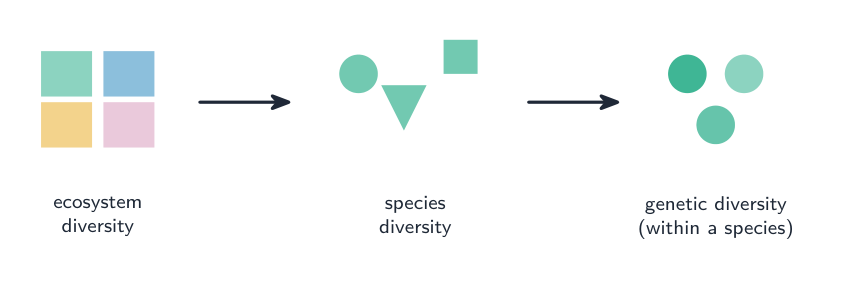
生物多样性(biodiversity)是生命的多样性,在三个层次测量:
- 遗传多样性(genetic diversity)——一个物种之内基因的多样性。更多遗传多样性意味着一个种群能更好地应对环境压力(environmental stressors);一个种群瓶颈(population bottleneck)(数量的一次急剧下降)扔掉那个多样性并使幸存者脆弱。
- 物种多样性(species diversity)——物种的数量(物种丰富度(species richness))以及个体在它们之间分布得多均匀。
- 栖息地多样性(habitat diversity)——一个区域里栖息地的多样性。
物种更丰富的生态系统更有韧性的(resilient):它们更容易从破坏中恢复,因为多样的物种能在条件变化时填补角色。栖息地丧失以一个可预测的顺序移除物种——特化(specialist)物种(狭窄的需要)先走,然后是更强健的广适性(generalist)物种,而需要大领地的物种随着它们的范围缩小而减少。
词汇表
训练
| 英文 | 中文 | 拼音 |
|---|---|---|
| Biodiversity/ˌbaɪəʊdaɪˈvɜːsɪti/ | 生物多样性 | shēng wù duō yàng xìng |
| environmental stressors/enˌvaɪrənˈmentl ˈstresəz/ | 环境压力 | huán jìng yā lì |
| population bottleneck/ˌpɒpjʊˈleɪʃn ˈbɒtəlnek/ | 种群瓶颈 | zhǒng qún píng jǐng |
| species richness/ˈspiːsiːz ˈrɪtʃnəs/ | 物种丰富度 | wù zhǒng fēng fù dù |
| resilient/rɪˈsɪlɪənt/ | 有韧性的 | yǒu rèn xìng de |
| specialist/ˈspeʃəlɪst/ | 特化 | tè huà |
| generalist/ˈdʒenərəlɪst/ | 广适性 | guǎng shì xìng |
| Ecosystem services/ˈiːkəʊsɪstəm ˈsɜːvɪsɪz/ | 生态系统服务 | shēng tài xì tǒng fú wù |
2.2
生态系统服务
大纲
| Enduring Understanding | Learning Objective | Essential Knowledge |
|---|---|---|
ERT-2 | ERT-2.B |
|
ERT-2.C |
|
来源:美国大学理事会 AP 课程与考试说明
生态系统服务(ecosystem services)是自然给人们的免费好处,分四类:
- 供给(provisioning)——产品:食物、淡水、木材、纤维。
- 调节(regulating)——保持条件稳定的过程:气候调节、水过滤、授粉、洪水控制。
- 文化(cultural)——非物质价值:娱乐、美、精神和教育价值。
- 支持(supporting)——使其他成为可能的服务:营养循环、土壤形成、光合作用。
人为的(anthropogenic)(人造成的)活动能扰乱这些服务,带来真实的经济和生态成本——例如,失去授粉者迫使农民为蜜蜂曾经免费做的授粉付钱。
词汇表
训练
| 英文 | 中文 | 拼音 |
|---|---|---|
| Anthropogenic/ˌænθrəpəˈdʒenɪk/ | 人为的 | rén wéi de |
2.3
岛屿生物地理学
大纲
| Enduring Understanding | Learning Objective | Essential Knowledge |
|---|---|---|
ERT-2 | ERT-2.D |
|
ERT-2.E |
|
来源:美国大学理事会 AP 课程与考试说明
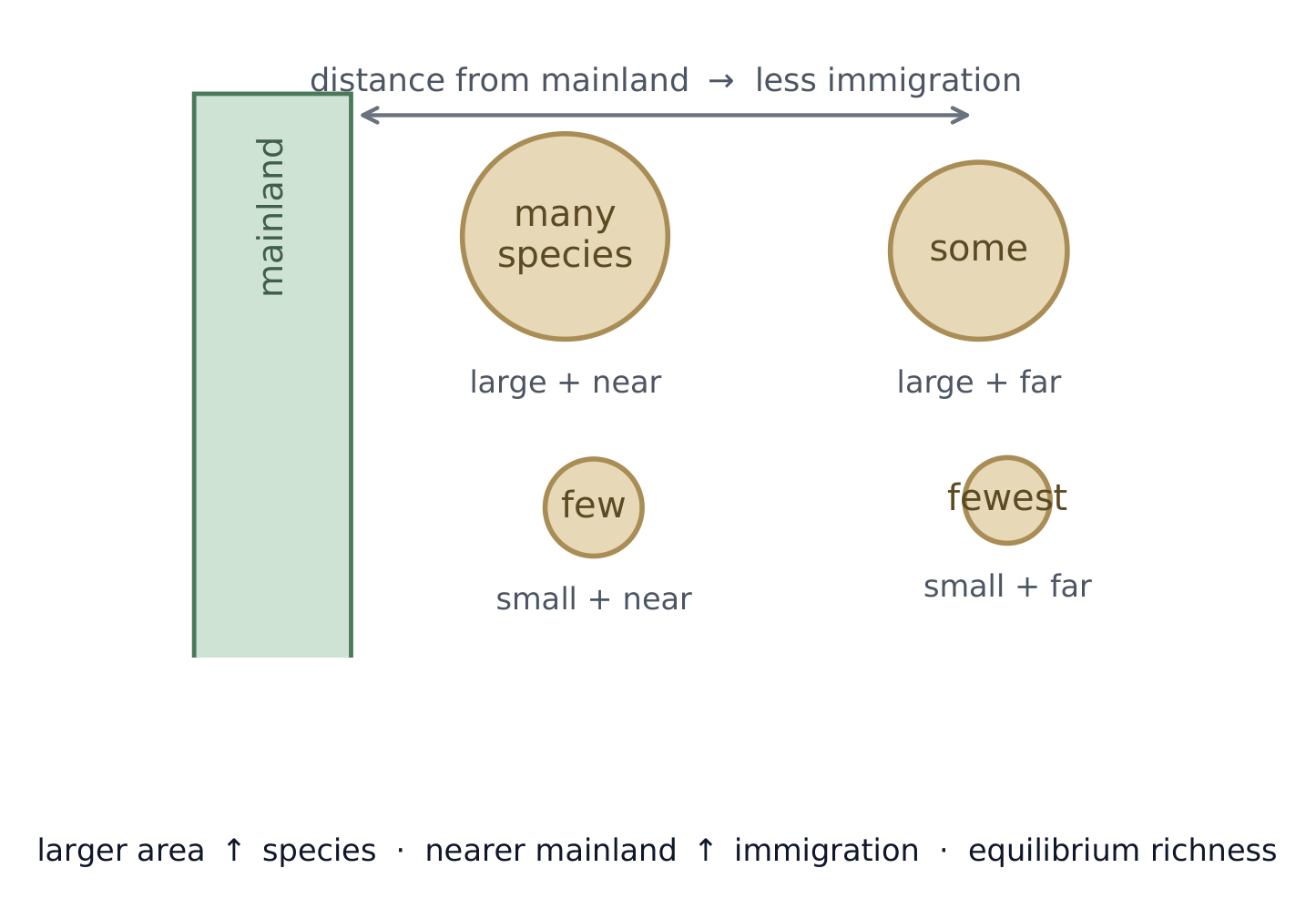
岛屿生物地理学(island biogeography)研究一个岛(或任何孤立的栖息地斑块)容纳多少物种。这个数字稳定在两个速率之间的一个平衡:
- 新物种的迁入(immigration)——对更接近大陆的岛更高。
- 常驻物种的灭绝(extinction)——在更大的岛上更低。
所以大的、近的岛容纳最多物种;小的、遥远的容纳最少。隔离也驱动进化:岛屿物种常常变成特化种因为资源有限,而许多是特有(endemic)的——别处找不到。这使它们脆弱。当一个入侵物种(invasive species)(通常是一个强健的广适性种)到达时,它能在竞争中胜过特化种,它们无处可去。
词汇表
训练
| 英文 | 中文 | 拼音 |
|---|---|---|
| Island biogeography/ˈaɪlənd ˌbaɪəʊdʒɪˈɒɡrəfi/ | 岛屿生物地理学 | dǎo yǔ shēng wù dì lǐ xué |
| endemic/enˈdemɪk/ | 特有 | tè yǒu |
| invasive species/ɪnˈveɪsɪv ˈspiːsiːz/ | 入侵物种 | rù qīn wù zhǒng |
| migration/maɪˈɡreɪʃn/ | 迁徙 | qiān xǐ |
2.4
生态耐受性
大纲
| Enduring Understanding | Learning Objective | Essential Knowledge |
|---|---|---|
ERT-2 | ERT-2.F |
|
来源:美国大学理事会 AP 课程与考试说明
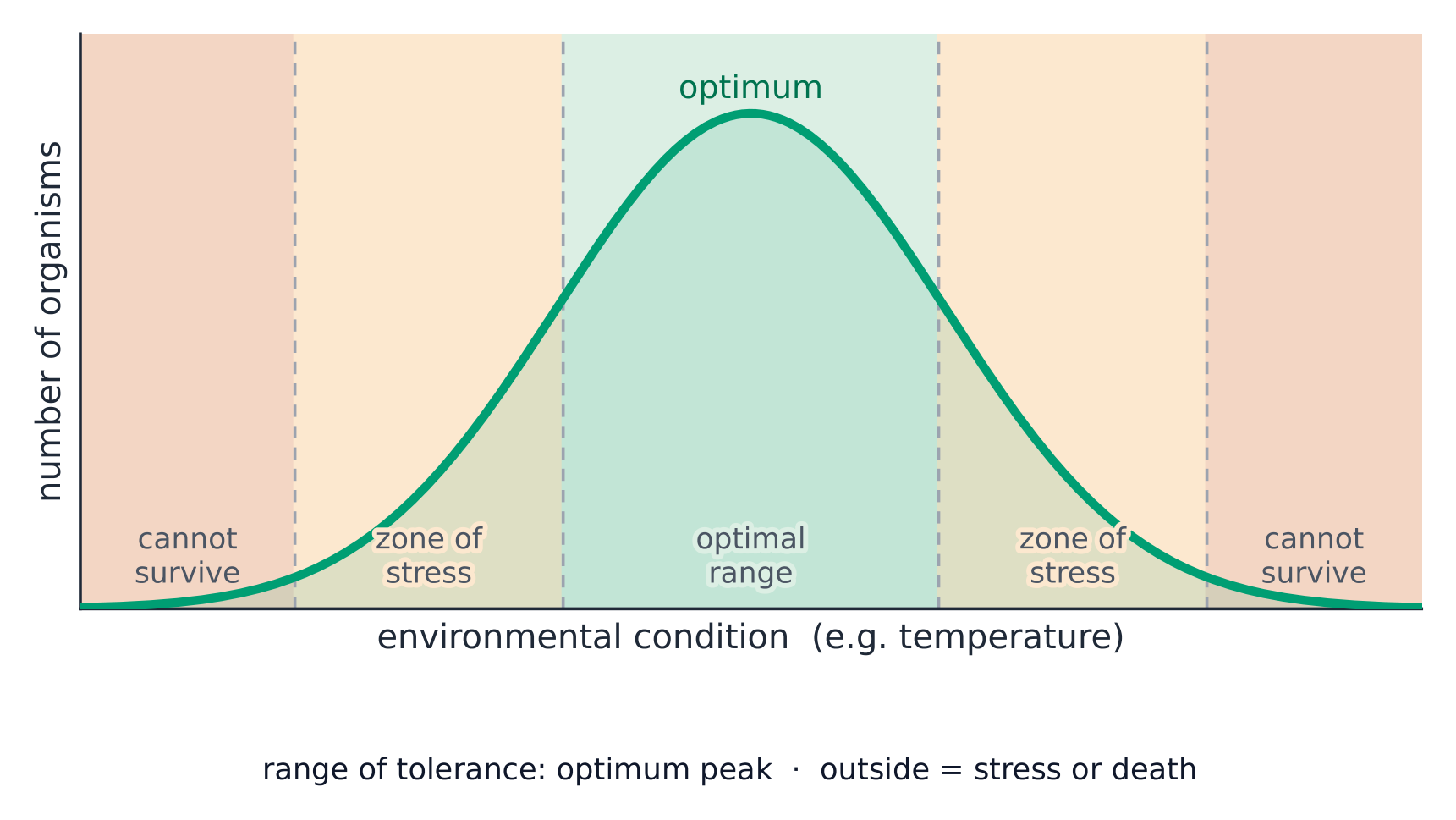
每个物种有一个耐受范围(range of tolerance)——它能生存的条件(温度、盐度、pH、阳光)的跨度。中间附近是一个个体繁荣的最适范围(optimal range);朝向边缘是胁迫区(zones of stress),那里它们生存但难以生长或繁殖;超过极限它们死亡。生态耐受性(ecological tolerance)既适用于一个单一的个体也适用于一个整个物种,而它决定一个生物能住在哪里以及它如何应对变化。
词汇表
训练
| 英文 | 中文 | 拼音 |
|---|---|---|
| range of tolerance/reɪndʒ ɒv ˈtɒlərəns/ | 耐受范围 | nài shòu fàn wéi |
| optimal range/ˈɒptɪml reɪndʒ/ | 最适范围 | zuì shì fàn wéi |
| zones of stress/zəʊnz ɒv stres/ | 胁迫区 | xié pò qū |
| Ecological tolerance/ˌekəˈlɒdʒɪkl ˈtɒlərəns/ | 生态耐受性 | shēng tài nài shòu xìng |
2.5
生态系统的自然干扰
大纲
| Enduring Understanding | Learning Objective | Essential Knowledge |
|---|---|---|
ERT-2 | ERT-2.G |
|
来源:美国大学理事会 AP 课程与考试说明
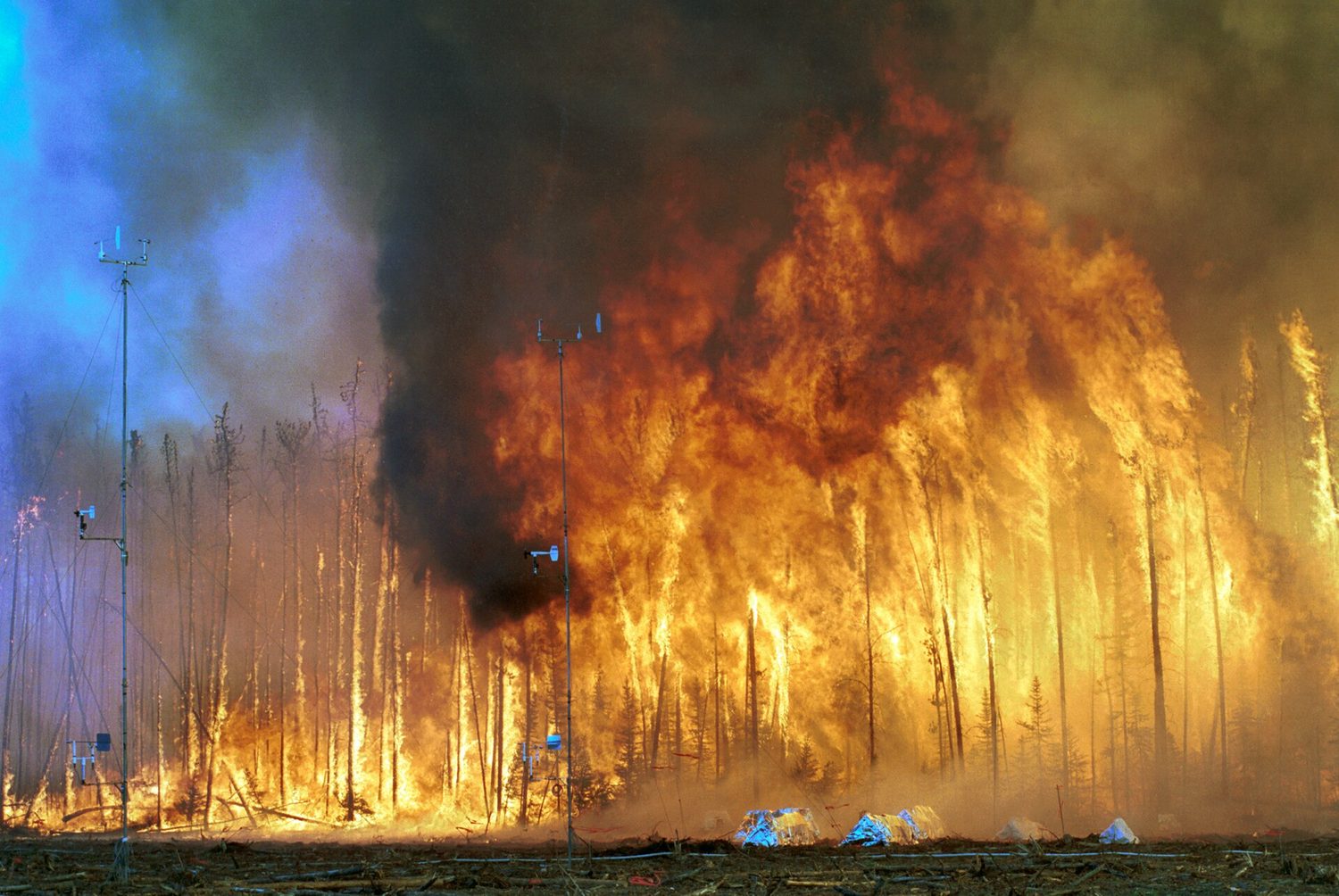
自然事件跨每个时间尺度扰乱生态系统,而一个单一的自然事件能匹敌或超过一个人造的。地球的过程有三种时机模式:
- 周期性(periodic)——规则的循环(季节、潮汐)。
- 偶发性(episodic)——偶尔的、不规则的事件(火、洪水、火山爆发)。
- 随机(random)——没有模式(一次流星撞击)。
在地质时间里,地球的气候因许多原因转变过,而海平面随着冰川冰的量上升和下降过——每个变化重塑大片的栖息地。野生动物通过迁徙(migration)响应,移动短或长距离以跟随条件。
词汇表
训练
| 英文 | 中文 | 拼音 |
|---|---|---|
| Periodic/ˌpɪərɪˈɒdɪk/ | 周期性 | zhōu qī xìng |
| Episodic/ˌepɪˈsɒdɪk/ | 偶发性 | ǒu fā xìng |
| Random/ˈrændəm/ | 随机 | suí jī |
2.6
适应
大纲
| Enduring Understanding | Learning Objective | Essential Knowledge |
|---|---|---|
ERT-2 | ERT-2.H |
|
来源:美国大学理事会 AP 课程与考试说明
一个适应(adaptation)是一个改善在一个环境里生存和繁殖的遗传性状。适应通过自然选择(natural selection)产生——渐进的遗传变化在世代间积累,不是在一个单一的一生之内。当环境变化时,个体必须改变它们的行为、移动,或死亡;若变化来得比一个种群能适应的更快,它减少。一个像火这样的周期性干扰常常是一个健康循环的一部分,而许多物种适应于它(一些松果只在一场火的热量下打开)。
词汇表
训练
| 英文 | 中文 | 拼音 |
|---|---|---|
| adaptation/ˌædæpˈteɪʃn/ | 适应 | shì yìng |
| natural selection/ˈnætʃərəl sɪˈlekʃn/ | 自然选择 | zì rán xuǎn zé |
2.7
生态演替
大纲
| Enduring Understanding | Learning Objective | Essential Knowledge |
|---|---|---|
ERT-2 | ERT-2.I |
|
ERT-2.J |
|
来源:美国大学理事会 AP 课程与考试说明
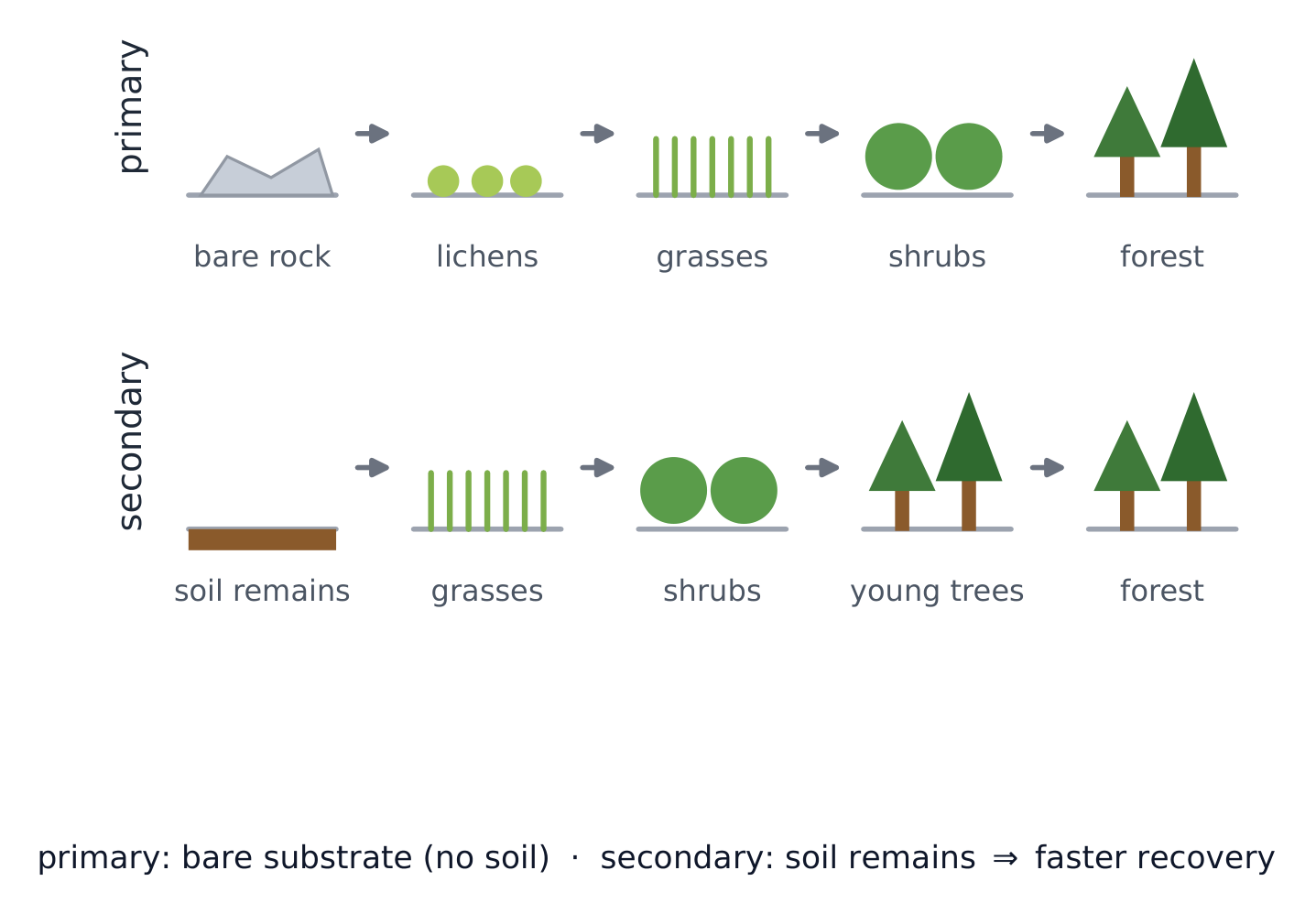
生态演替(ecological succession)是一个群落随时间逐渐的、有序的变化:
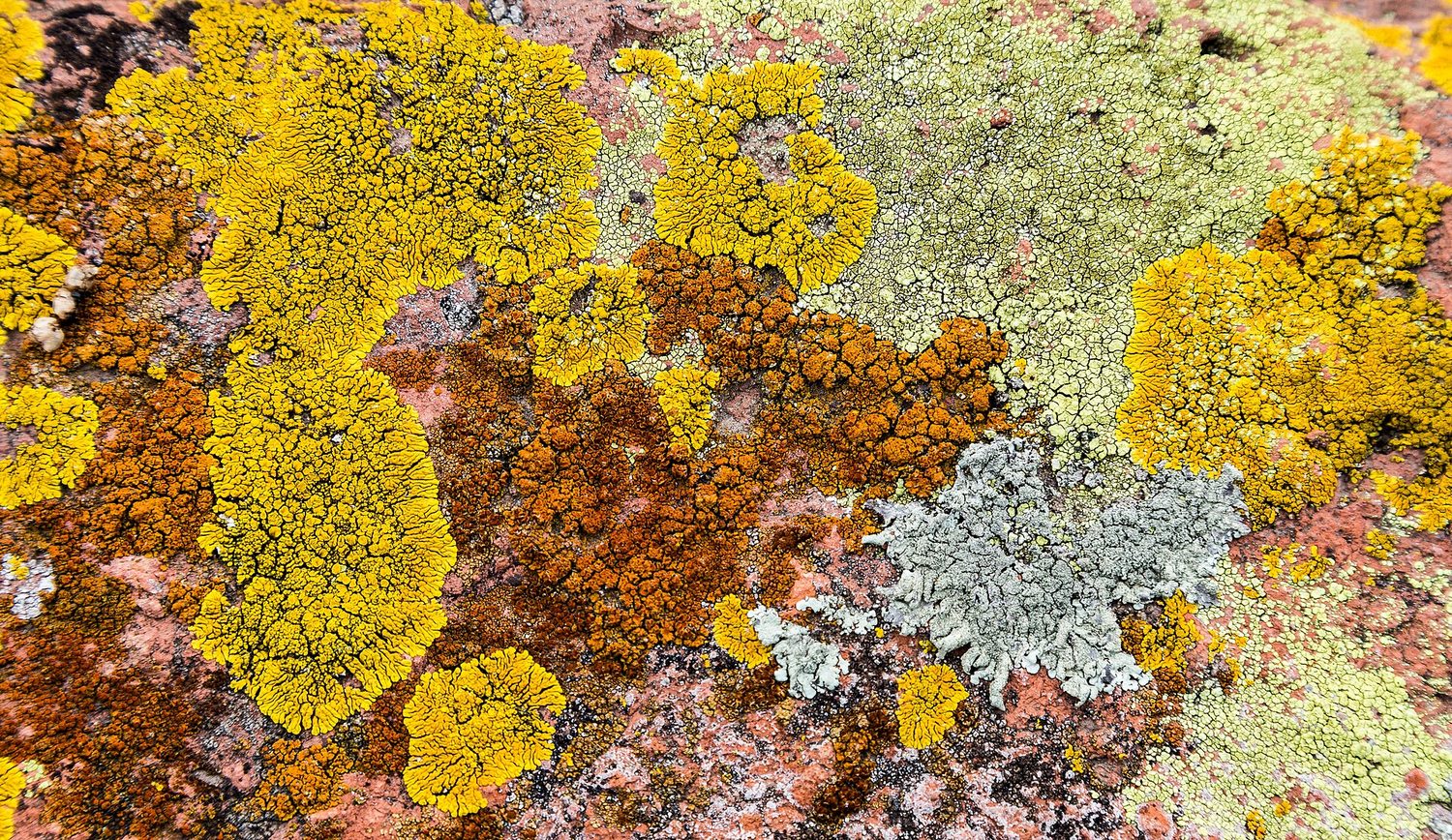
- 初级演替(primary succession)在没有土壤的裸岩上开始——在一个冰川退却或熔岩冷却之后。像地衣(lichens)这样的先锋物种(pioneer species)最先到达并缓慢地建立土壤。它慢。
- 次级演替(secondary succession)跟随一个使土壤完好的干扰——在一场火或废弃的农业之后——所以它快得多。
演替趋向一个相对稳定的顶极群落(climax community)。两个特殊的角色以与它们数量不成比例的方式塑造一个群落:一个关键种(keystone species),它的活动把群落结构维系在一起(移除它群落就崩溃——海獭控制海胆),和一个指示物种(indicator species),它的存在或健康标志整个生态系统的状况(地衣在空气被污染的地方消失)。
Worked example. 一个池塘有 3 种鱼,个体数为 5、3、2($N=10$)。辛普森多样性指数 $=1-\sum\left(\tfrac{n}{N}\right)^2 = 1-\left[(0.5)^2+(0.3)^2+(0.2)^2\right] = 1-0.38 = 0.62$。接近 1 的值意味着高多样性;接近 0 意味着一个物种占主导。再加一个大小均等的第四物种会把指数推得更高。
词汇表
训练
| 英文 | 中文 | 拼音 |
|---|---|---|
| Ecological succession/ˌekəˈlɒdʒɪkl səkˈseʃn/ | 生态演替 | shēng tài yǎn tì |
| Primary succession/ˈpraɪməri səkˈseʃn/ | 初级演替 | chū jí yǎn tì |
| Pioneer species/paɪəˈnɪə ˈspiːsiːz/ | 先锋物种 | xiān fēng wù zhǒng |
| lichens/ˈlaɪkənz/ | 地衣 | dì yī |
| Secondary succession/ˈsekəndəri səkˈseʃn/ | 次级演替 | cì jí yǎn tì |
| climax community/ˈklaɪmæks kəˈmjuːnɪti/ | 顶极群落 | dǐng jí qún luò |
| keystone species/ˈkiːstəʊn ˈspiːsiːz/ | 关键种 | guān jiàn zhǒng |
| indicator species/ˈɪndɪkeɪtə ˈspiːsiːz/ | 指示物种 | zhǐ shì wù zhǒng |
2.7
考试技巧
- 在三个层次描述生物多样性:遗传、物种和栖息地,并把更高的多样性与更大的韧性联系起来。
- 当一个栖息地变化时,特化物种(狭窄的需要)比广适性种更脆弱。
- 把初级演替(裸岩、无土壤、慢)与次级(土壤完好、更快)区分开。
- 解释一个关键种(超大的影响)和一个指示物种(标志生态系统健康)。
- 命名四个生态系统服务(供给、调节、文化、支持)并带例子。
本主题的互动课程
逐步学习,并即时检测练习。