跳到主要内容

第七时期:1890—1945

AP 美国历史 · 第 7 主题

训练
讲义 词汇表
7.1 7.2 7.3

第七时期的时代背景

大纲

7.1 Contextualizing Period 7

Learning ObjectivePreview: Unit 7 Key Concepts

Unit 7.A
Explain the context in which America grew into its role as a world power.

  • KC-7.1 Growth expanded opportunity, while economic instability led to new efforts to reform U.S. society and its economic system.
    • KC-7.1.I The United States continued its transition from a rural, agricultural economy to an urban, industrial economy led by large companies.
    • KC-7.1.II In the Progressive Era of the early 20th century, Progressives responded to political corruption, economic instability, and social concerns by calling for greater government action and other political and social measures.
    • KC-7.1.III During the 1930s, policymakers responded to the mass unemployment and social upheavals of the Great Depression by transforming the U.S. into a limited welfare state, redefining the goals and ideas of modern American liberalism.
  • KC-7.2 Innovations in communications and technology contributed to the growth of mass culture, while significant changes occurred in internal and international migration patterns.
    • KC-7.2.I Popular culture grew in influence in U.S. society, even as debates increased over the effects of culture on public values, morals, and American national identity.
    • KC-7.2.II Economic pressures, global events, and political developments caused sharp variations in the numbers, sources, and experiences of both international and internal migrants.
  • KC-7.3 Participation in a series of global conflicts propelled the United States into a position of international power while renewing domestic debates over the nation’s proper role in the world.
    • KC-7.3.I In the late 19th century and early 20th century, new U.S. territorial ambitions and acquisitions in the Western Hemisphere and the Pacific accompanied heightened public debates over America’s role in the world.
    • KC-7.3.II World War I and its aftermath intensified ongoing debates about the nation’s role in the world and how best to achieve national security and pursue American interests.
    • KC-7.3.III U.S. participation in World War II transformed American society, while the victory of the United States and its allies over the Axis powers vaulted the U.S. into a position of global, political, and military leadership.

7.2 Imperialism: Debates

Thematic FocusLearning ObjectiveHistorical Developments

WOR
America in the World — Diplomatic, economic, cultural, and military interactions between empires, nations, and peoples shape the development of America and America’s increasingly important role in the world.

Unit 7.B
Explain the similarities and differences in attitudes about the nation’s proper role in the world.

  • KC-7.3.I.A Imperialists cited economic opportunities, racial theories, competition with European empires, and the perception in the 1890s that the western frontier was “closed” to argue that Americans were destined to expand their culture and institutions to peoples around the globe.
  • KC-7.3.I.B Anti-imperialists cited principles of self-determination and invoked both racial theories and the U.S. foreign policy tradition of isolationism to argue that the United States should not extend its territory overseas.

7.3 The Spanish–American War

Thematic FocusLearning ObjectiveHistorical Developments

WOR
America in the World — Diplomatic, economic, cultural, and military interactions between empires, nations, and peoples shape the development of America and America’s increasingly important role in the world.

Unit 7.C
Explain the effects of the Spanish–American War.

  • KC-7.3.I.C The American victory in the Spanish–American War led to the U.S. acquisition of island territories in the Caribbean and the Pacific, an increase in involvement in Asia, and the suppression of a nationalist movement in the Philippines.

来源:美国大学理事会 AP 课程与考试说明

第七时期从 1890 年到 1945 年,是篇幅最长、内容最密的一个时期。三条线索贯穿其中:联邦在经济中的权力扩张、大众文化的兴起及其引发的争论,以及美国走向世界强国。

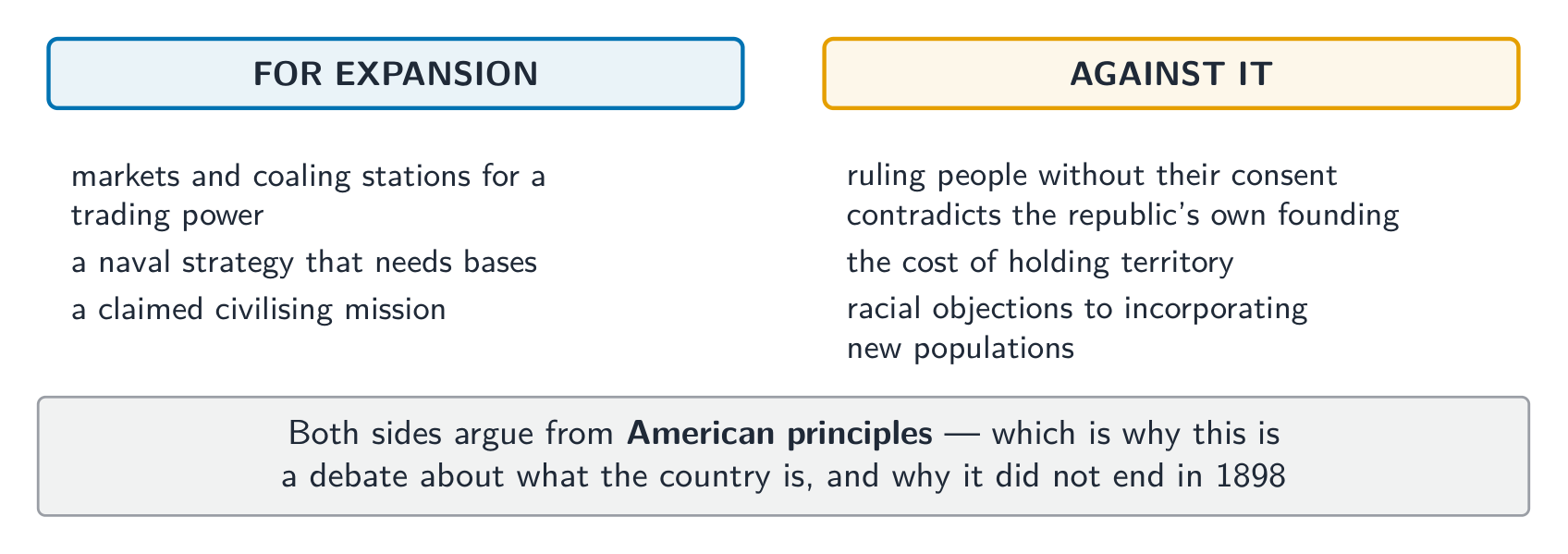
新的领土野心(territorial ambitions)源自对市场的追求、海军战略,以及关于国家使命的信念。美西战争(Spanish-American War)的胜利为美国带来海外属地,也引发了一场真正的争论。

帝国主义之争(imperialism debate)是考点所在:支持者以市场、战略基地与"文明教化使命"为由;反对者则认为,统治未经其同意的人民有悖建国原则,另有一些人从种族或经济角度反对。有力的答案必须写出双方立场。

词汇表 训练
英文 中文 拼音
territorial ambitions 领土野心 lǐng tǔ yě xīn
Spanish-American War 美西战争 měi xī zhàn zhēng
imperialism debate 帝国主义之争 dì guó zhǔ yì zhī zhēng
7.4

进步主义者

大纲

7.4 The Progressives

Thematic FocusLearning ObjectiveHistorical Developments

GEO
Geography and the Environment — Geographic and environmental factors, including competition over and debates about natural resources, shape the development of America and foster regional diversity. The development of America impacts the environment and reshapes geography, which leads to debates about environmental and geographic issues.

Unit 7.D
Compare the goals and effects of the Progressive reform movement.

  • KC-7.1.II.A Some Progressive Era journalists attacked what they saw as political corruption, social injustice, and economic inequality, while reformers, often from the middle and upper classes and including many women, worked to effect social changes in cities and among immigrant populations.
  • KC-7.1.II.D The Progressives were divided over many issues. Some Progressives supported Southern segregation, while others ignored its presence. Some Progressives advocated expanding popular participation in government, while others called for greater reliance on professional and technical experts to make government more efficient. Progressives also disagreed about immigration restriction.
  • KC-7.1.II.B On the national level, Progressives sought federal legislation that they believed would effectively regulate the economy, expand democracy, and generate moral reform. Progressive amendments to the Constitution dealt with issues such as prohibition and women’s suffrage.

Unit 7.E
Compare attitudes toward the use of natural resources from 1890 to 1945.

  • KC-7.1.II.C Preservationists and conservationists both supported the establishment of national parks while advocating different government responses to the overuse of natural resources.

来源:美国大学理事会 AP 课程与考试说明

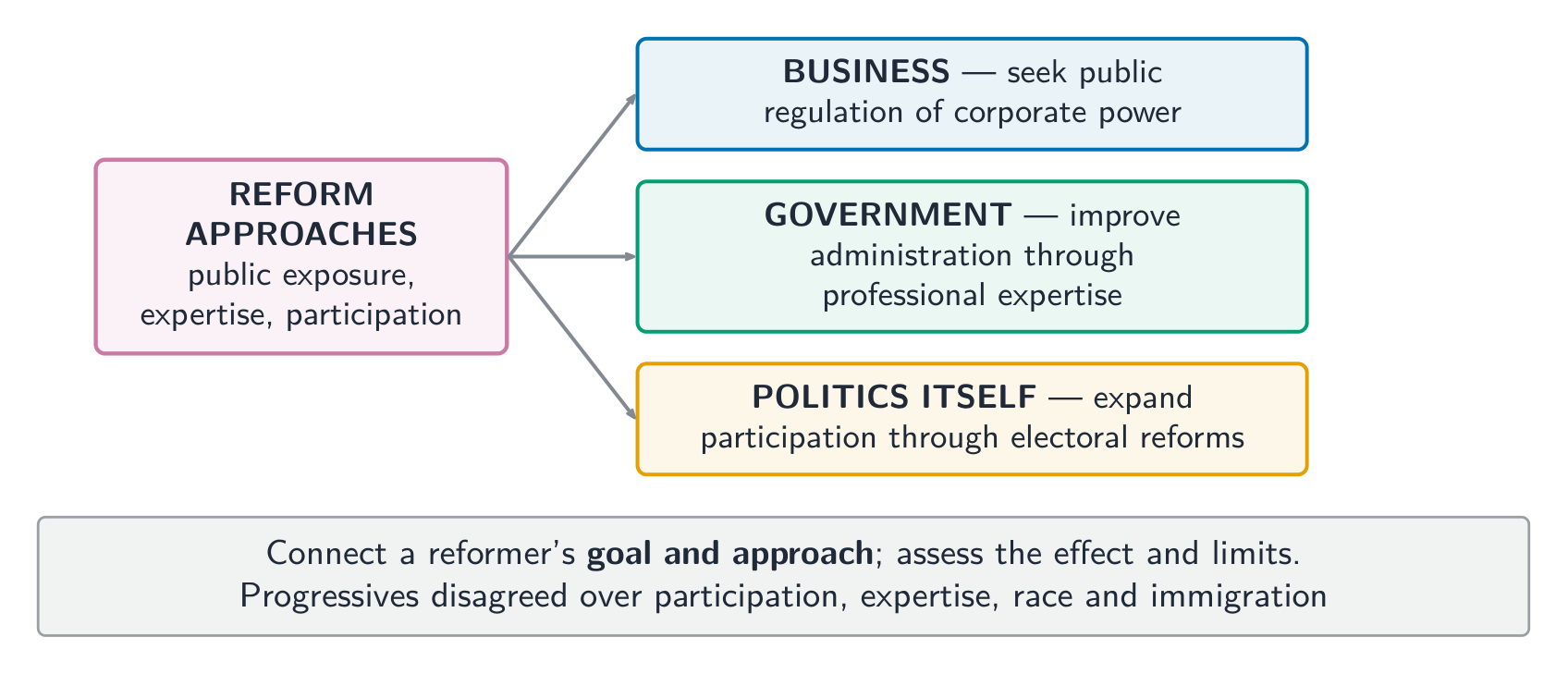
美国继续从乡村农业经济向城市工业化(urban, industrial)经济转型,而进步主义者(Progressives)则回应随之而来的种种问题。

进步主义是一股广泛的改革潮流,而非单一纲领,但其方法是一致的:

  • 运用专业知识与证据(expertise and evidence)诊断社会问题——揭黑记者与社会调查的工作。
  • 运用政府加以解决:对食品药品、劳动条件与垄断进行管制。
  • 改革政治本身(political reform):直接初选、创制与复决、参议员直选。

其局限同样在考查范围内。进步主义改革在很大程度上把非裔美国人排除在外,部分进步主义者甚至支持种族隔离与移民限制。

词汇表 训练
英文 中文 拼音
urban, industrial 城市工业化 chéng shì gōng yè huà
Progressives 进步主义者 jìn bù zhǔ yì zhě
expertise and evidence 专业知识与证据 zhuān yè zhī shí yǔ zhèng jù
politics itself 政治改革 zhèng zhì gǎi gé
reform 改革 gǎi gé
7.5 7.6

第一次世界大战:军事与外交

大纲

7.5 World War I: Military and Diplomacy

Thematic FocusLearning ObjectiveHistorical Developments

WOR
America in the World — Diplomatic, economic, cultural, and military interactions between empires, nations, and peoples shape the development of America and America’s increasingly important role in the world.

Unit 7.F
Explain the causes and consequences of U.S. involvement in World War I.

  • KC-7.3.II.A After initial neutrality in World War I, the nation entered the conflict, departing from the U.S. foreign policy tradition of noninvolvement in European affairs, in response to Woodrow Wilson’s call for the defense of humanitarian and democratic principles.
  • KC-7.3.II.B Although the American Expeditionary Forces played a relatively limited role in combat, the United States’ entry helped to tip the balance of the conflict in favor of the Allies.
  • KC-7.3.II.C Despite Wilson’s deep involvement in postwar negotiations, the U.S. Senate refused to ratify the Treaty of Versailles or join the League of Nations.

7.6 World War I: Home Front

Thematic FocusLearning ObjectiveHistorical Developments

MIG
Migration and Settlement — Push and pull factors shape immigration to and migration within America, and the demographic change as a result of these moves shapes the migrants, society, and the environment.

Unit 7.G
Explain the causes and effects of international and internal migration patterns over time.

  • KC-7.2.I.C Official restrictions on freedom of speech grew during World War I, as increased anxiety about radicalism led to a Red Scare and attacks on labor activism and immigrant culture.
  • KC-7.2.II.A.i Immigration from Europe reached its peak in the years before World War I. During World War I, nativist campaigns against some ethnic groups led to the passage of quotas that restricted immigration, particularly from southern and eastern Europe, and increased barriers to Asian immigration.
  • KC-7.2.II.B.i The increased demand for war production and labor during World War I led many Americans to migrate to urban centers in search of economic opportunities.
  • KC-7.2.II.C In the Great Migration during and after World War I, African Americans escaping segregation, racial violence, and limited economic opportunity in the South moved to the North and West, where they found new opportunities but still encountered discrimination.

来源:美国大学理事会 AP 课程与考试说明

参加第一次世界大战(First World War)动员了经济、扩大了联邦权力,但也加剧了关于国家世界角色的争论,以及国内围绕公民自由的争论——异见在战时受到起诉。

战争引发了大迁徙(Great Migration):非裔美国人北上从事战时工业工作,重塑了北方城市与政治。

战后美国推行单边外交政策(unilateral foreign policy)——拒绝加入国际联盟,同时在经济上继续与外部世界深度往来。

词汇表 训练
英文 中文 拼音
First World War 第一次世界大战 dì yí cì shì jiè dà zhàn
Great Migration 大迁徙 dà qiān xǐ
unilateral foreign policy 单边外交政策 dān biān wài jiāo zhèng cè
7.7 7.8

20世纪20年代:通信与技术革新

大纲

7.7 1920s: Innovations in Communication and Technology

Thematic FocusLearning ObjectiveHistorical Developments

WXT
Work, Exchange, and Technology — The interplay between markets, private enterprise, labor, technology, and government policy shape the American economy. In turn, economic activity shapes society and government policy and drives technological innovation.

Unit 7.H
Explain the causes and effects of the innovations in communication and technology in the United States over time.

  • KC-7.1.I.A New technologies and manufacturing techniques helped focus the U.S. economy on the production of consumer goods, contributing to improved standards of living, greater personal mobility, and better communications systems.
  • KC-7.2.I.A New forms of mass media, such as radio and cinema, contributed to the spread of national culture as well as greater awareness of regional cultures.

7.8 1920s: Cultural and Political Controversies

Thematic FocusLearning ObjectiveHistorical Developments

ARC
American and Regional Culture — Creative expression, demographic change, philosophy, religious beliefs, scientific ideas, social mores, and technology shape national, regional, and group cultures in America, and these varying cultures often play a role in shaping government policy and developing economic systems.

Unit 7.G
Explain the causes and effects of international and internal migration patterns over time.

  • KC-7.1.I.B By 1920, a majority of the U.S. population lived in urban centers, which offered new economic opportunities for women, international migrants, and internal migrants.
  • KC-7.2.II.A.ii After World War I, nativist campaigns against some ethnic groups led to the passage of quotas that restricted immigration, particularly from southern and eastern Europe, and increased barriers to Asian immigration.

Unit 7.I
Explain the causes and effects of developments in popular culture in the United States over time.

  • KC-7.2.I.B Migration gave rise to new forms of art and literature that expressed ethnic and regional identities, such as the Harlem Renaissance movement.
  • KC-7.2.I.D In the 1920s, cultural and political controversies emerged as Americans debated gender roles, modernism, science, religion, and issues related to race and immigration.

来源:美国大学理事会 AP 课程与考试说明

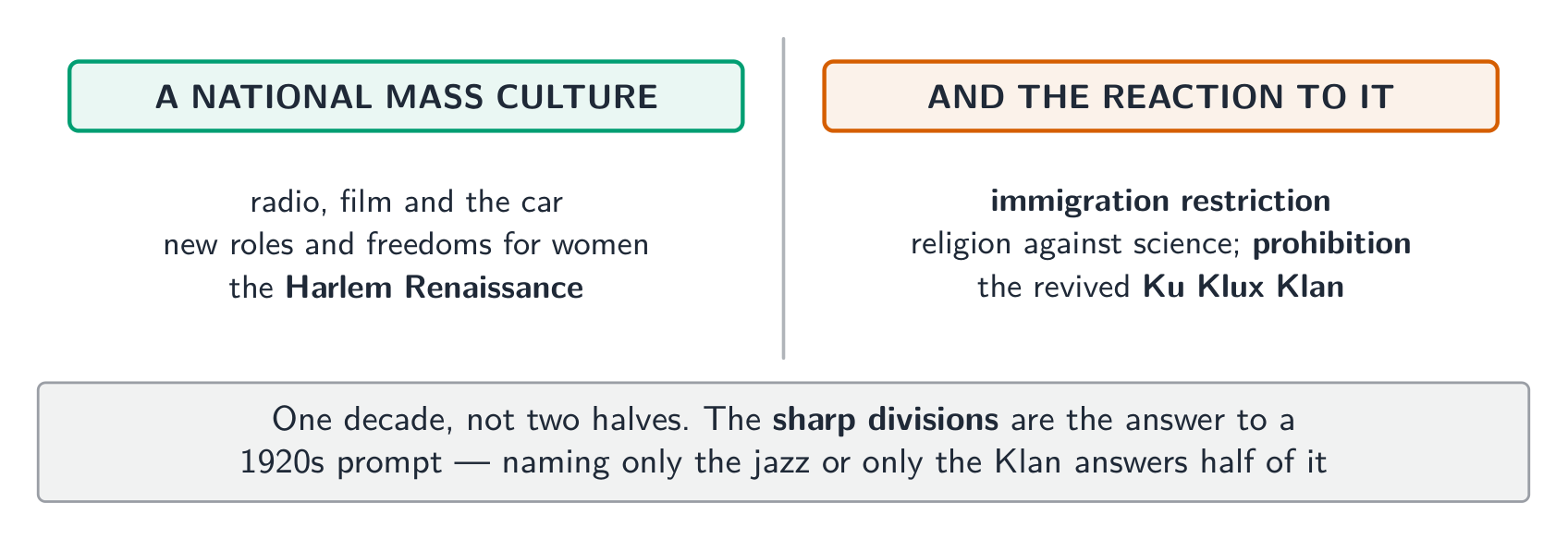
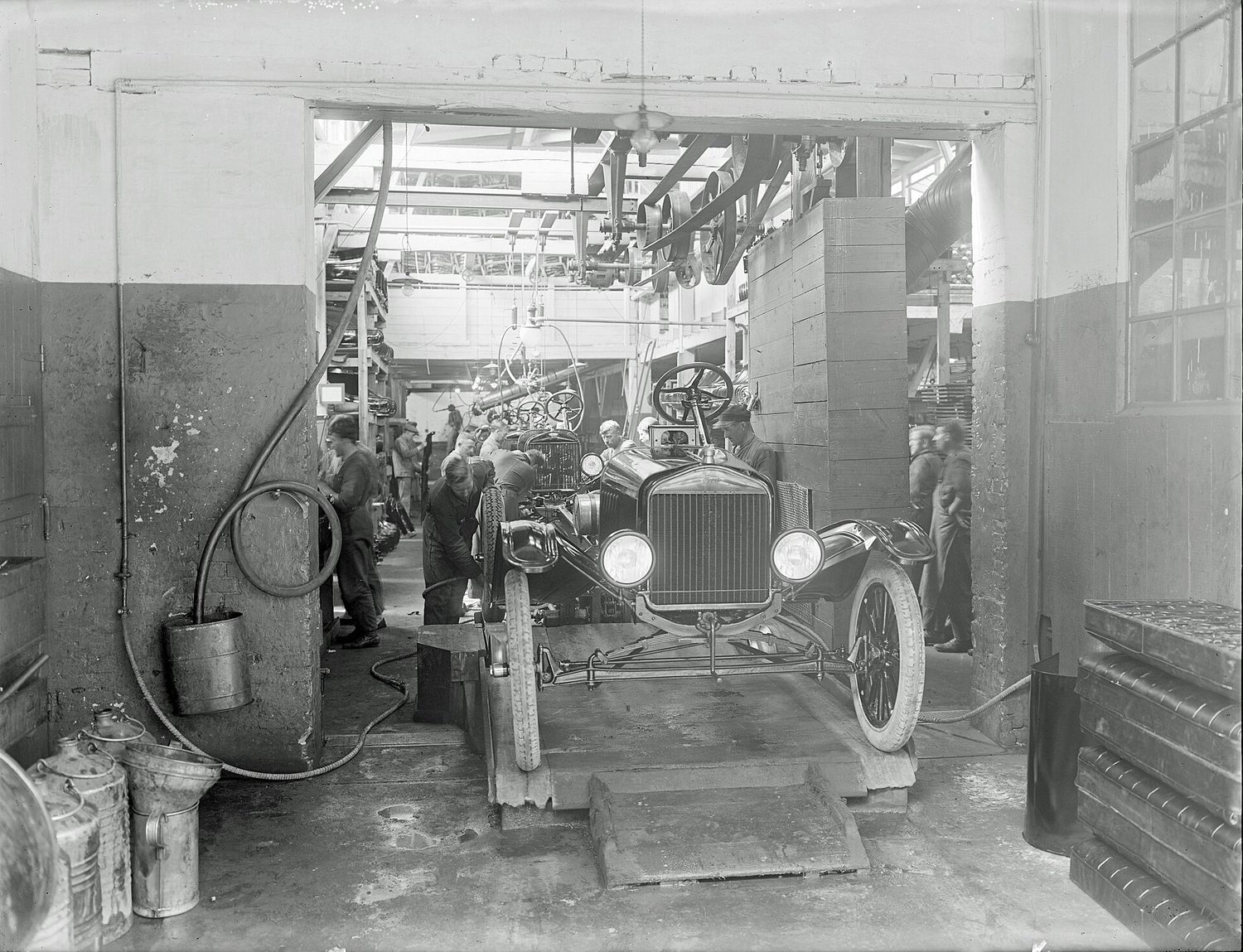
通信与技术的革新——广播、电影、大发行量杂志与汽车——推动了大众文化(mass culture)的成长,并日益塑造全国性的审美趣味。

同一个十年也产生了关于国家应当成为什么样子的尖锐分歧(sharp divisions):

  • 以原籍国配额制推行的移民限制(immigration restriction)。
  • 围绕宗教与科学以及禁酒令(prohibition)的冲突。
  • 死灰复燃的三K党(Ku Klux Klan)与有组织的排外主义。
  • 作为新文化身份宣示的哈莱姆文艺复兴(Harlem Renaissance)与"新女性"。
词汇表 训练
英文 中文 拼音
mass culture 大众文化 dà zhòng wén huà
sharp divisions 尖锐分歧 jiān ruì fēn qí
Immigration restriction 移民限制 yí mín xiàn zhì
prohibition 禁酒令 jìn jiǔ lìng
Ku Klux Klan 三K党 sān K dǎng
Harlem Renaissance 哈莱姆文艺复兴 hā lái mǔ wén yì fù xīng
7.9 7.10

大萧条

大纲

7.9 The Great Depression

Thematic FocusLearning ObjectiveHistorical Developments

WXT
Work, Exchange, and Technology — The interplay between markets, private enterprise, labor, technology, and government policy shape the American economy. In turn, economic activity shapes society and government policy and drives technological innovation.

Unit 7.J
Explain the causes of the Great Depression and its effects on the economy.

  • KC-7.1.I The United States continued its transition from a rural, agricultural economy to an urban, industrial economy led by large companies.
  • KC-7.1.I.C Episodes of credit and market instability in the early 20th century, in particular the Great Depression, led to calls for a stronger financial regulatory system.
  • KC-7.1.III During the 1930s, policymakers responded to the mass unemployment and social upheavals of the Great Depression by transforming the U.S. into a limited welfare state, redefining the goals and ideas of modern American liberalism.

7.10 The New Deal

Thematic FocusLearning ObjectiveHistorical Developments

PCE
Politics and Power — Debates fostered by social and political groups about the role of government in American social, political, and economic life shape government policy, institutions, political parties, and the rights of citizens.

Unit 7.K
Explain how the Great Depression and the New Deal impacted American political, social, and economic life over time.

  • KC-7.1.III.A Franklin Roosevelt’s New Deal attempted to end the Great Depression by using government power to provide relief to the poor, stimulate recovery, and reform the American economy.
  • KC-7.1.III.B Radical, union, and populist movements pushed Roosevelt toward more extensive efforts to change the American economic system, while conservatives in Congress and the Supreme Court sought to limit the New Deal’s scope.
  • KC-7.1.III.C Although the New Deal did not end the Depression, it left a legacy of reforms and regulatory agencies and fostered a long-term political realignment in which many ethnic groups, African Americans, and working-class communities identified with the Democratic Party.
  • KC-7.2.II.B.ii The increased demand for war production and labor during World War II and the economic difficulties of the 1930s led many Americans to migrate to urban centers in search of economic opportunities.

来源:美国大学理事会 AP 课程与考试说明

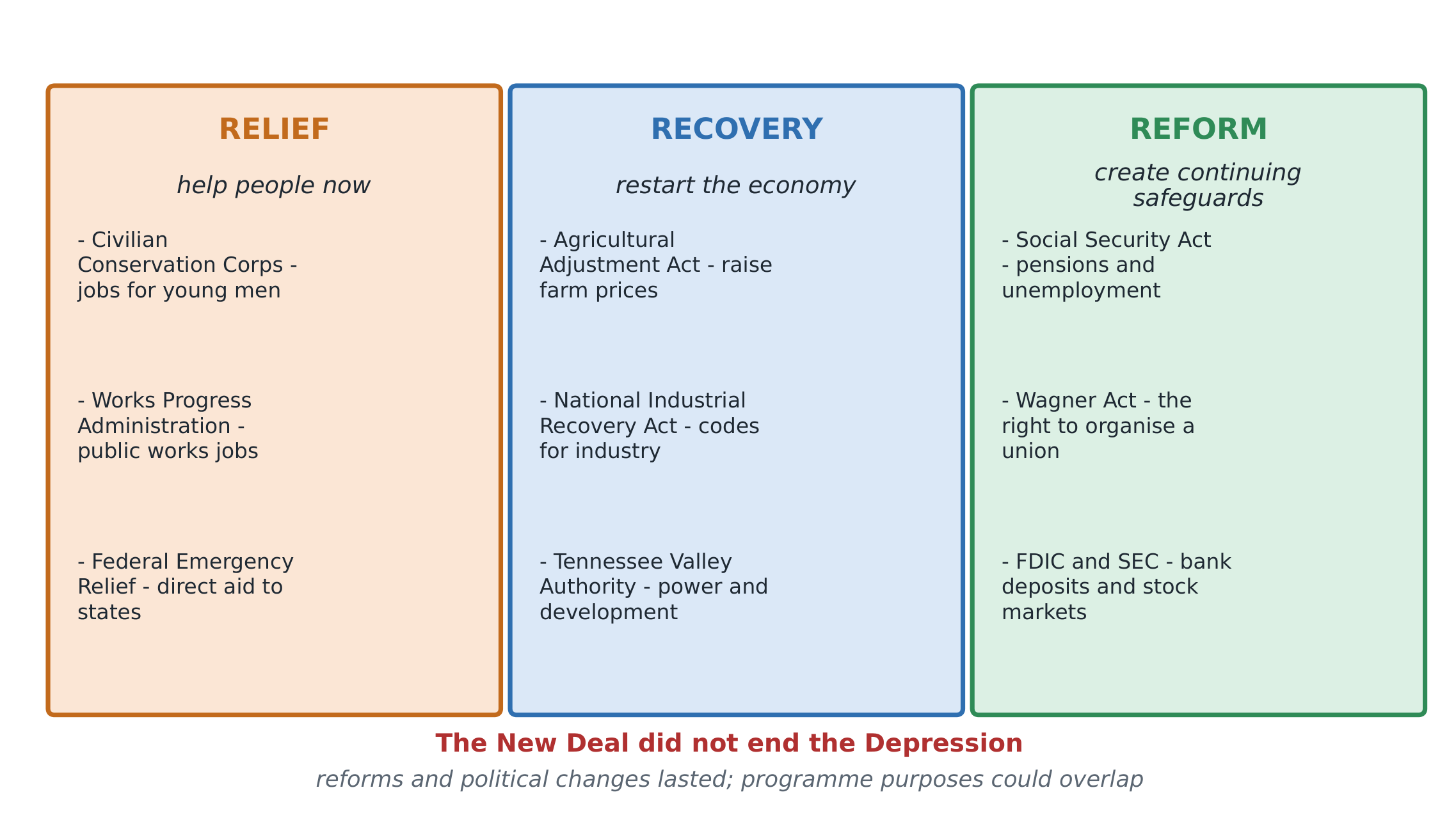
按目的划分的新政:当下的救济、经济的复苏、防止重演的改革
把新政各项计划按目的分为救济、复苏、改革,才能把一份清单变成一个论证

大萧条(Great Depression)带来大规模失业与社会失序,决策者的回应是扩大联邦在经济中的角色。

罗斯福新政(Franklin Roosevelt's New Deal)试图通过救济(relief)、复苏(recovery)与改革(reform)结束大萧条。激进派、工会与民粹运动(radical, union, and populist movements)推动罗斯福采取更大力度的措施——这正是"第二次新政"比第一次更为进取的原因。

CED 给出的结论很直白:新政并未结束大萧条,但留下了持久的改革遗产——社会保障、联邦存款保险、劳工权利,以及"政府应对经济安全负责"这一期待。

词汇表 训练
英文 中文 拼音
Great Depression 大萧条 dà xiāo tiáo
Franklin Roosevelt's New Deal 罗斯福新政 luó sī fú xīn zhèng
relief 救济 jiù jì
recovery 复苏 fù sū
Radical, union, and populist movements 激进派、工会与民粹运动 jī jìn pài 、 gōng huì yǔ mín cuì yùn dòng
7.11 7.12 7.13

两次大战之间的外交政策

大纲

7.11 Interwar Foreign Policy

Thematic FocusLearning ObjectiveHistorical Developments

WOR
America in the World — Diplomatic, economic, cultural, and military interactions between empires, nations, and peoples shape the development of America and America’s increasingly important role in the world.

Unit 7.B
Explain the similarities and differences in attitudes about the nation’s proper role in the world.

  • KC-7.3.II.D In the years following World War I, the United States pursued a unilateral foreign policy that used international investment, peace treaties, and select military intervention to promote a vision of international order, even while maintaining U.S. isolationism.
  • KC-7.3.II.E In the 1930s, while many Americans were concerned about the rise of fascism and totalitarianism, most opposed taking military action against the aggression of Nazi Germany and Japan until the Japanese attack on Pearl Harbor drew the United States into World War II.

7.12 World War II: Mobilization

Thematic FocusLearning ObjectiveHistorical Developments

SOC
Social Structures — Social categories, roles, and practices are created, maintained, challenged, and transformed throughout American history, shaping government policy, economic systems, culture, and the lives of citizens.

Unit 7.L
Explain how and why U.S. participation in World War II transformed American society.

  • KC-7.3.III.B The mass mobilization of American society helped end the Great Depression, and the country’s strong industrial base played a pivotal role in winning the war by equipping and provisioning allies and millions of U.S. troops.
  • KC-7.3.III.C.i Mobilization provided opportunities for women and minorities to improve their socioeconomic positions for the war’s duration, while also leading to debates over racial segregation. Wartime experiences also generated challenges to civil liberties, such as the internment of Japanese Americans.
  • KC-7.2.II.D Migration to the United States from Mexico and elsewhere in the Western Hemisphere increased, in spite of contradictory government policies toward Mexican immigration.

7.13 World War II: Military

Thematic FocusLearning ObjectiveHistorical Developments

WOR
America in the World — Diplomatic, economic, cultural, and military interactions between empires, nations, and peoples shape the development of America and America’s increasingly important role in the world.

Unit 7.M
Explain the causes and effects of the victory of the United States and its allies over the Axis powers.

  • KC-7.3.III.A Americans viewed the war as a fight for the survival of freedom and democracy against fascist and militarist ideologies. This perspective was later reinforced by revelations about Japanese wartime atrocities, Nazi concentration camps, and the Holocaust.
  • KC-7.3.III.C.ii Military service provided opportunities for women and minorities to improve their socioeconomic positions for the war’s duration, while also leading to debates over racial segregation.
  • KC-7.3.III.D The United States and its allies achieved military victory through Allied cooperation, technological and scientific advances, the contributions of servicemen and women, and campaigns such as Pacific “island-hopping” and the D-Day invasion. The use of atomic bombs hastened the end of the war and sparked debates about the morality of using atomic weapons.

来源:美国大学理事会 AP 课程与考试说明

美国人把这场战争视为一场为自由与民主的存续(survival of freedom and democracy)而对抗法西斯侵略的战斗。

全面动员(mass mobilization)帮助结束了大萧条,也改变了社会:

  • 动员与兵役妇女与少数族裔(women and minorities)提供了改善处境的机会,尽管仍处在持续的种族隔离与歧视之中。
  • 来自墨西哥及西半球其他地区的移民增加,以满足劳动力需求。
  • 日裔美国人遭到强制拘禁(interned),这是本时期战时权利被剥夺的最明显案例。

胜利来自盟国合作(Allied cooperation)、工业产能与技术优势,并以对日本使用原子武器告终。

词汇表 训练
英文 中文 拼音
survival of freedom and democracy 自由与民主的存续 zì yóu yǔ mín zhǔ de cún xù
Mass mobilization 全面动员 quán miàn dòng yuán
women and minorities 妇女与少数族裔 fù nǚ yǔ shǎo shù zú yì
interned 拘禁 jū jìn
Allied cooperation 盟国合作 méng guó hé zuò
7.14

战后外交

大纲

7.14 Postwar Diplomacy

Thematic FocusLearning ObjectiveHistorical Developments

WOR
America in the World — Diplomatic, economic, cultural, and military interactions between empires, nations, and peoples shape the development of America and America’s increasingly important role in the world.

Unit 7.N
Explain the consequences of U.S. involvement in World War II.

  • KC-7.3.III.E The war-ravaged condition of Asia and Europe, and the dominant U.S. role in the Allied victory and postwar peace settlements, allowed the United States to emerge from the war as the most powerful nation on Earth.

来源:美国大学理事会 AP 课程与考试说明

亚洲与欧洲饱受战火摧残,而美国在盟国胜利及随后的占领中居于主导地位,这使美国成为世界上最强大的国家——并为第八时期开篇的美苏对抗埋下伏笔。

7.15

第七时期的比较分析

大纲

7.15 Comparison in Period 7

Learning ObjectiveReview: Unit 7 Key Concepts

Unit 7.O
Compare the relative significance of the major events of the first half of the 20th century in shaping American identity.

  • KC-7.1 Growth expanded opportunity, while economic instability led to new efforts to reform U.S. society and its economic system.
    • KC-7.1.I The United States continued its transition from a rural, agricultural economy to an urban, industrial economy led by large companies.
    • KC-7.1.II In the Progressive Era of the early 20th century, Progressives responded to political corruption, economic instability, and social concerns by calling for greater government action and other political and social measures.
    • KC-7.1.III During the 1930s, policymakers responded to the mass unemployment and social upheavals of the Great Depression by transforming the U.S. into a limited welfare state, redefining the goals and ideas of modern American liberalism.
  • KC-7.2 Innovations in communications and technology contributed to the growth of mass culture, while significant changes occurred in internal and international migration patterns.
    • KC-7.2.I Popular culture grew in influence in U.S. society, even as debates increased over the effects of culture on public values, morals, and American national identity.
    • KC-7.2.II Economic pressures, global events, and political developments caused sharp variations in the numbers, sources, and experiences of both international and internal migrants.
  • KC-7.3 Participation in a series of global conflicts propelled the United States into a position of international power while renewing domestic debates over the nation’s proper role in the world.
    • KC-7.3.I In the late 19th century and early 20th century, new U.S. territorial ambitions and acquisitions in the Western Hemisphere and the Pacific accompanied heightened public debates over America’s role in the world.
    • KC-7.3.II World War I and its aftermath intensified ongoing debates about the nation’s role in the world and how best to achieve national security and pursue American interests.
    • KC-7.3.III U.S. participation in World War II transformed American society, while the victory of the United States and its allies over the Axis powers vaulted the U.S. into a position of global, political, and military leadership.

来源:美国大学理事会 AP 课程与考试说明

本时期考查的推理能力是比较。最有用的一组对比是进步时代的改革与新政:两者都扩大了联邦权力,但新政的规模远为庞大,且是对经济崩溃而非对增长作出的回应。

Worked example(一道真实的 AP 考题)。2024 年的长文章题为「评估 1917 至 1945 年间关于美国所受威胁的观念在多大程度上塑造了社会」。有力的论点会点明这些观念以及它们所造成的结果:「1917 至 1945 年间,关于内外威胁的观念在很大程度上塑造了美国社会:它带来战时对异见的限制、20 世纪 20 年代的移民配额,以及对日裔美国人的拘禁;与此同时,同样的恐惧也动员了对联邦权力的广泛支持。」*注意其结构:题干问的是观念*,因此证据必须是观念所造成的东西——政策与社会变化——而不是把两次战争复述一遍。

7.15

考试技巧

  • 帝国主义之争要写出双方;只写一方的答案没有抓住题目的要点。
  • 进步主义是一套方法——先专业调查,再政府行动,再政治改革。它把非裔美国人排除在外这一点也在考查范围内。
  • 把新政各项计划按救济、复苏、改革分类。这一结构能把清单变成论证。
  • 直接给出 CED 的结论:新政并未结束大萧条,却留下了永久性的遗产。
  • 战时为妇女与少数族裔带来的机会既真实又有限。两面都写,才能体现复杂性。
  • 面对 1917 至 1945 年关于恐惧或威胁的题目,用公民自由、移民配额与拘禁作为证据。

AP 美国历史的更多主题

登录或创建账号

IGCSE, A-Level & AP