English
Historical questions can ask you to analyse sources, compare societies, explain causes, describe context 时代背景 or develop an argument. Read the task rather than assuming every question tests the same skill.
Contextualization 情境化 places a development in relevant wider circumstances. Causation 因果关系 explains how and why a development happened. Both require specific knowledge and an explained connection.
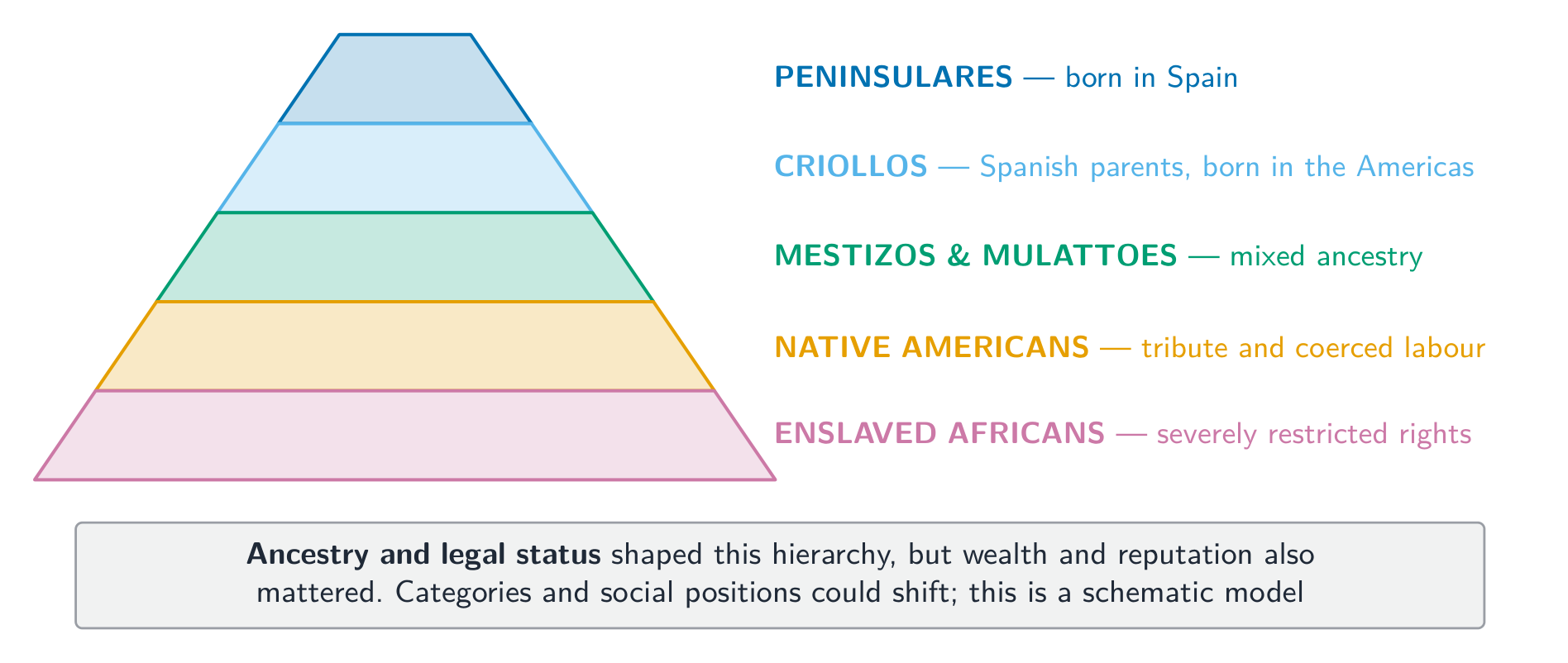
Try it — classify and improve the reasoning. Consider these student statements about colonial labour in Spanish America:
| Statement |
Student reasoning |
| A |
Colonists sought wealth from agriculture and mining. |
| B |
Disease killed many Native people; labour demands continued. |
| C |
Disease alone created African slavery in the Americas. |
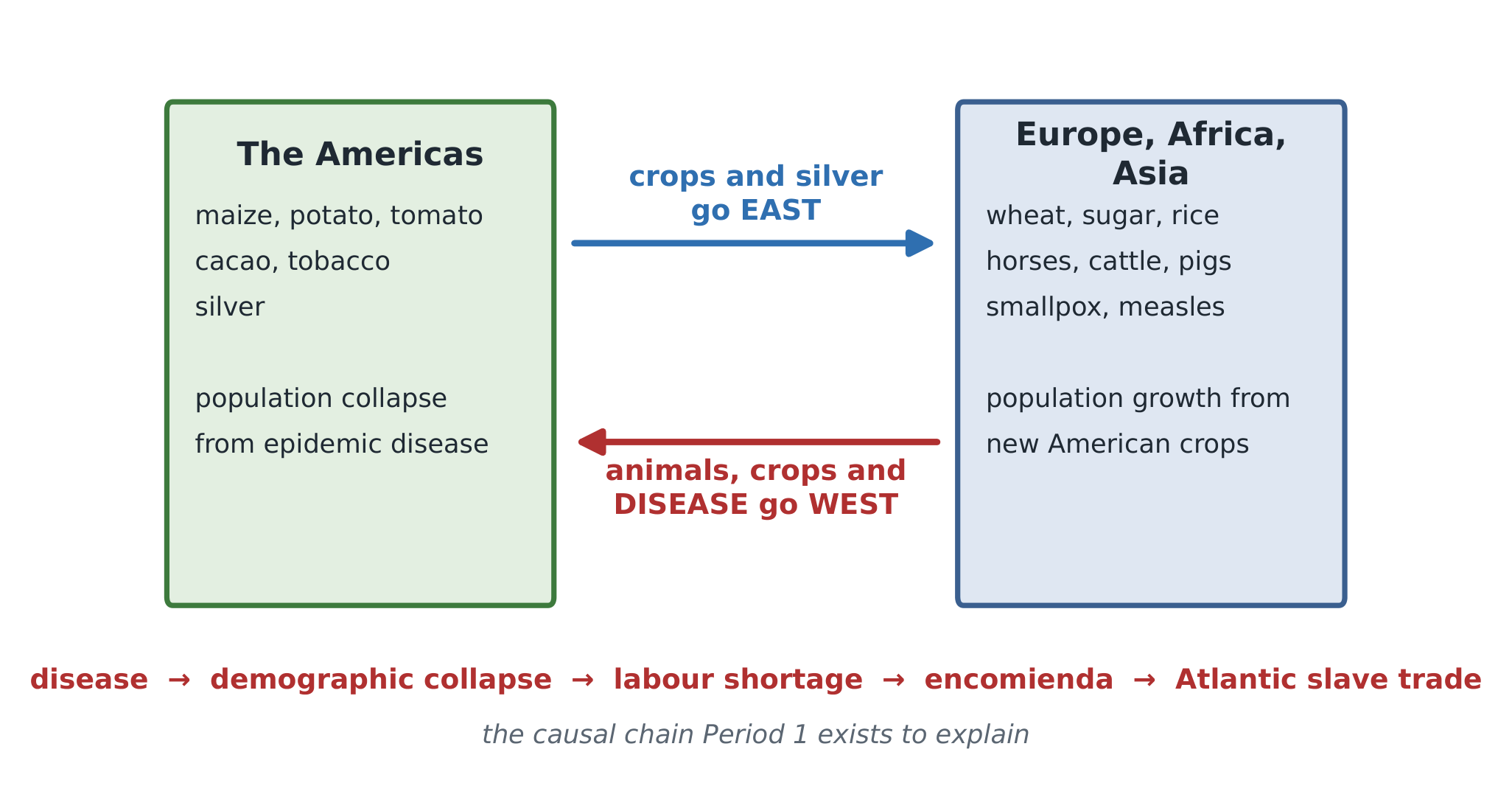
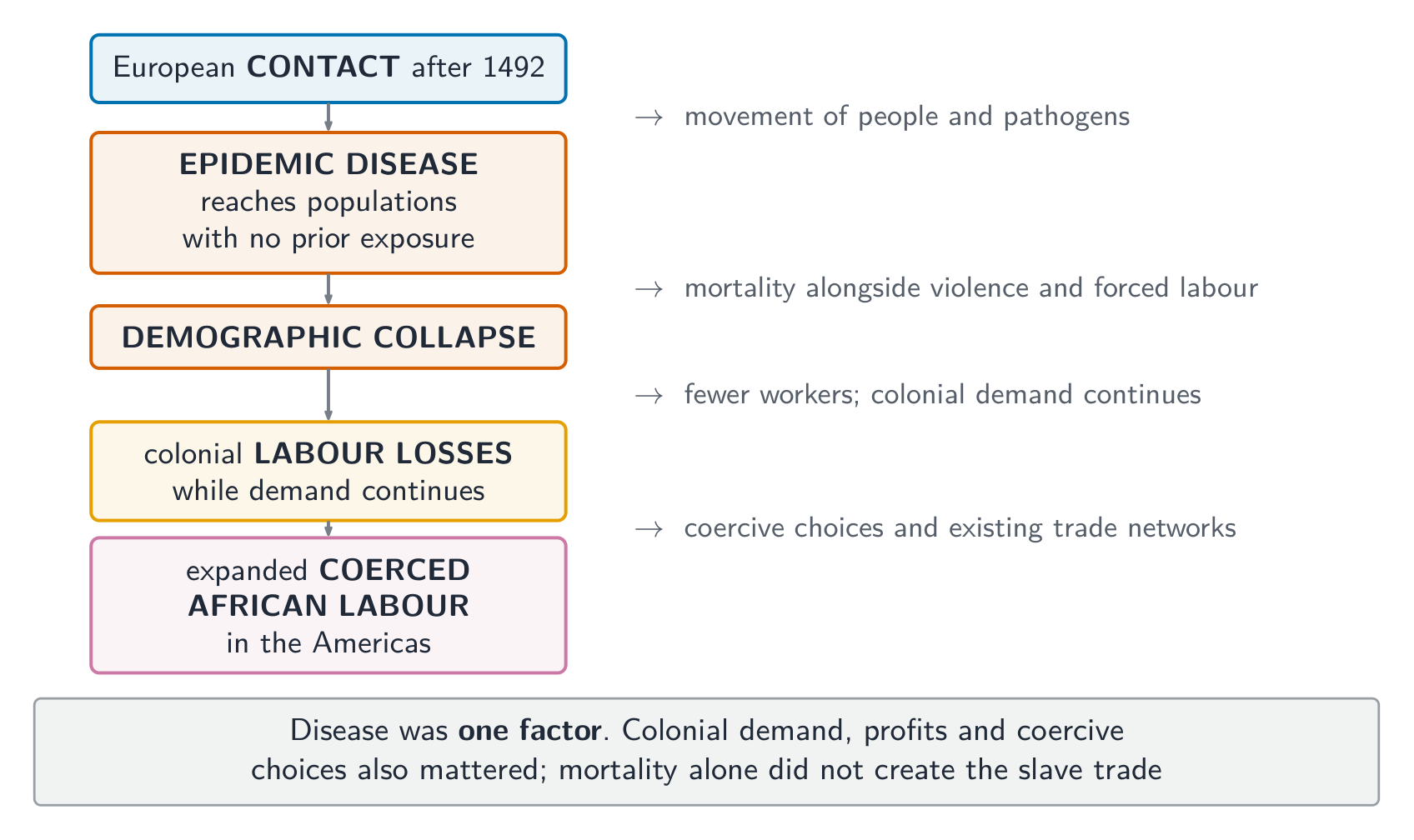
Which statement describes a motive or wider setting? Which begins a causal explanation? Which overclaims? Improve B and C by explaining colonial demand, coercive choices and trade networks.
Worked reasoning. A gives an economic setting and motive. B begins to connect population loss with pressure on the labour supply, but needs a further link: colonists still demanded workers for agriculture and mining. C removes human choices and other causes. European traders and colonists forcibly obtained and exploited enslaved Africans through existing networks to serve colonial production. Disease was one factor, alongside violence and forced labour; it did not alone create the trade. Explaining these choices does not justify them.
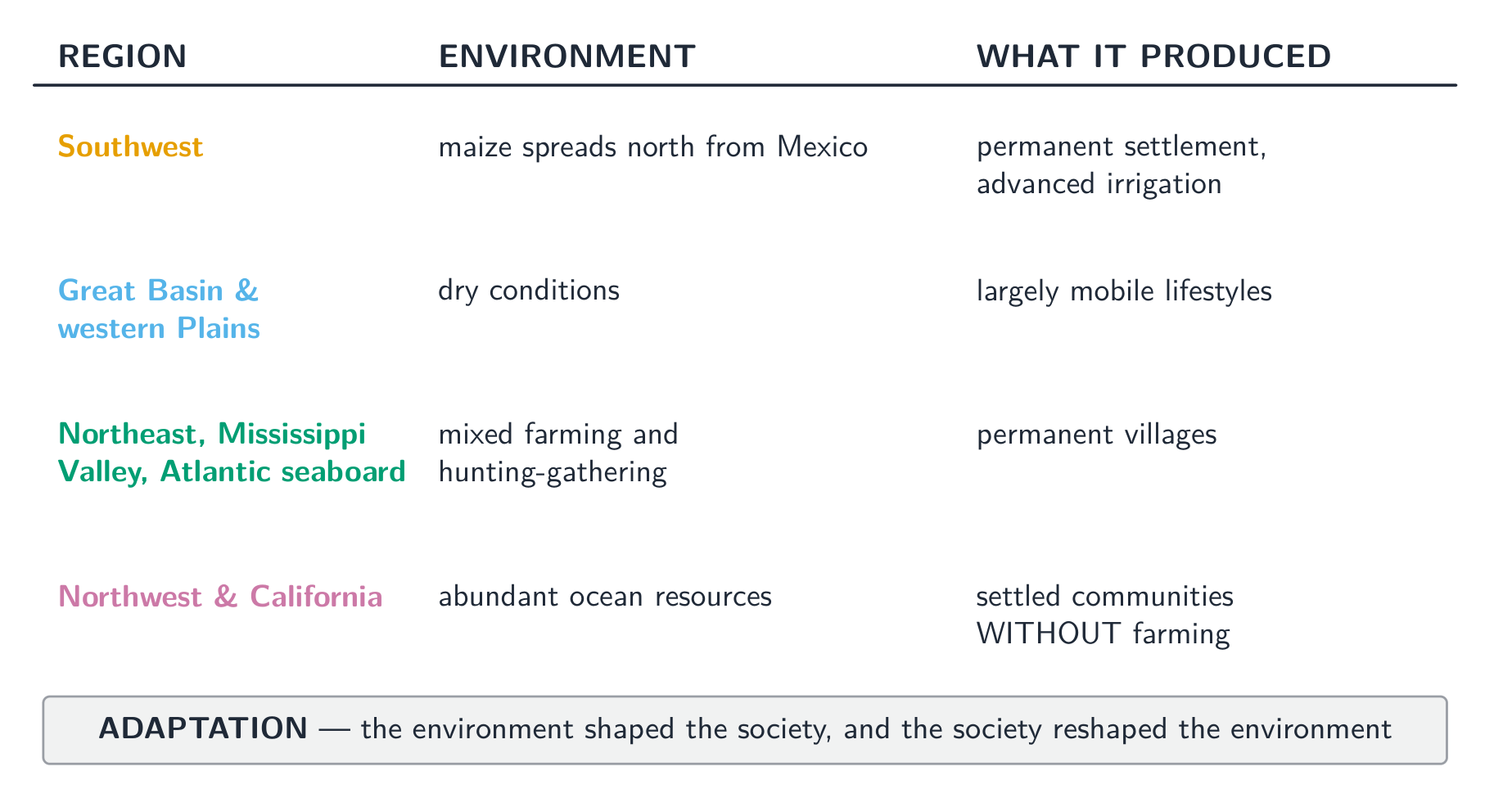
Transfer — more than one reasoning process. Compare the Southwest and the Great Basin before contact. Give one difference in livelihood, connect it to an environmental condition, and avoid saying that all Native societies were the same.
Worked answer. In the Southwest, maize agriculture and irrigation supported permanent settlements. In the Great Basin, arid conditions encouraged mobile hunting and gathering. This compares different adaptations and explains a connection to environment; it is not simply a list of dates. Local societies varied within each regional grouping.
Exam-linked practice — contextualization. The 2023 Set 1 long essay, Question 2, asks students to evaluate change from transatlantic trade in British North American colonial society during 1607–1776 (paraphrased). We practise only its context requirement here, not a complete essay.
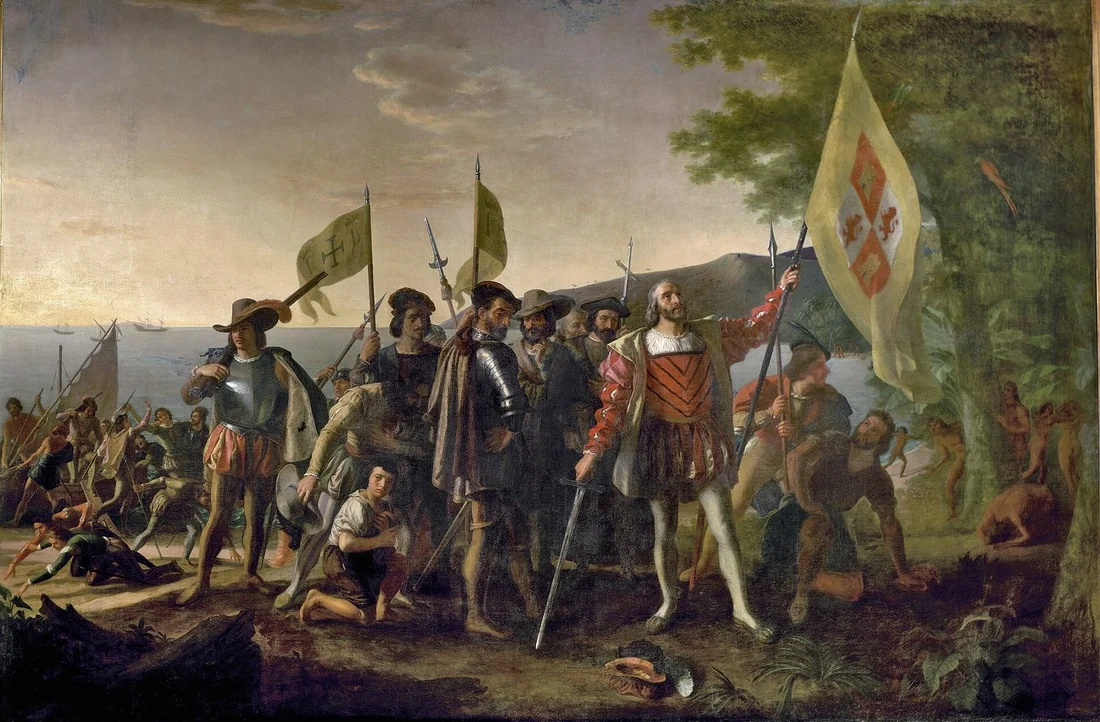
A student opens with: "Europeans travelled across the ocean. Many things happened before 1607." Explain why this lacks useful context. Then write a short opening that connects earlier Spanish colonization, the search for wealth and later English colonial investment.
Teacher-written model. Before English settlement at Jamestown, Spanish colonization had brought American resources into European commerce. Profits from earlier colonies encouraged other European powers to pursue American settlements and trade. This competition helps explain the setting in which British colonial society became tied to Atlantic commerce.
Why the revision helps. It describes a wider development and explains its relevance. An earlier date or a passing name alone is insufficient. This is an illustrative response guided by the official rubric, not an official sample or a guaranteed point. A full essay must also make a defensible claim about the specified period and support it with relevant evidence; earlier Spanish context cannot replace that evidence.
Grounding. Course content follows CED Topics 1.3–1.5 and historical thinking skills 4–6. The exam connection is 2023 Set 1 LEQ2, official scoring guidelines, contextualization row. The distinction between earlier African trafficking and later American colonial demand is supported by the Smithsonian National Museum of African American History and Culture.