English
This topic looks more deeply at consumers, costs and firms.
עברית
נושא זה בוחן לעומק צרכנים, עלויות וחברות.
A-Level Economics · כלכלה A-Level · Topic 7 · נושא 7
 18:50
18:50
מערכת המחירים והכלכליה המיקרו-כלכלית (A Level)
התבוננו בקונים האלו. לכל אחד מהם תקציב מוגבל, וכל פריט נוסף שהם קונים מספק מעט פחות הנאה מהפריט הקודם. כעת, תחנת ברזל עצומה: היא מייצרת…
English narration · English + 中文 subtitles burned in · קריאת קול באנגלית · תרגום אנגלי + סינית שרוף בתוך הסרטון
This topic looks more deeply at consumers, costs and firms.
נושא זה בוחן לעומק צרכנים, עלויות וחברות.

Source: Cambridge International syllabus · מקור: הסיילבוס הבינלאומי של קמבריד'ג'
utility 效用 is the satisfaction a consumer gets from a good.
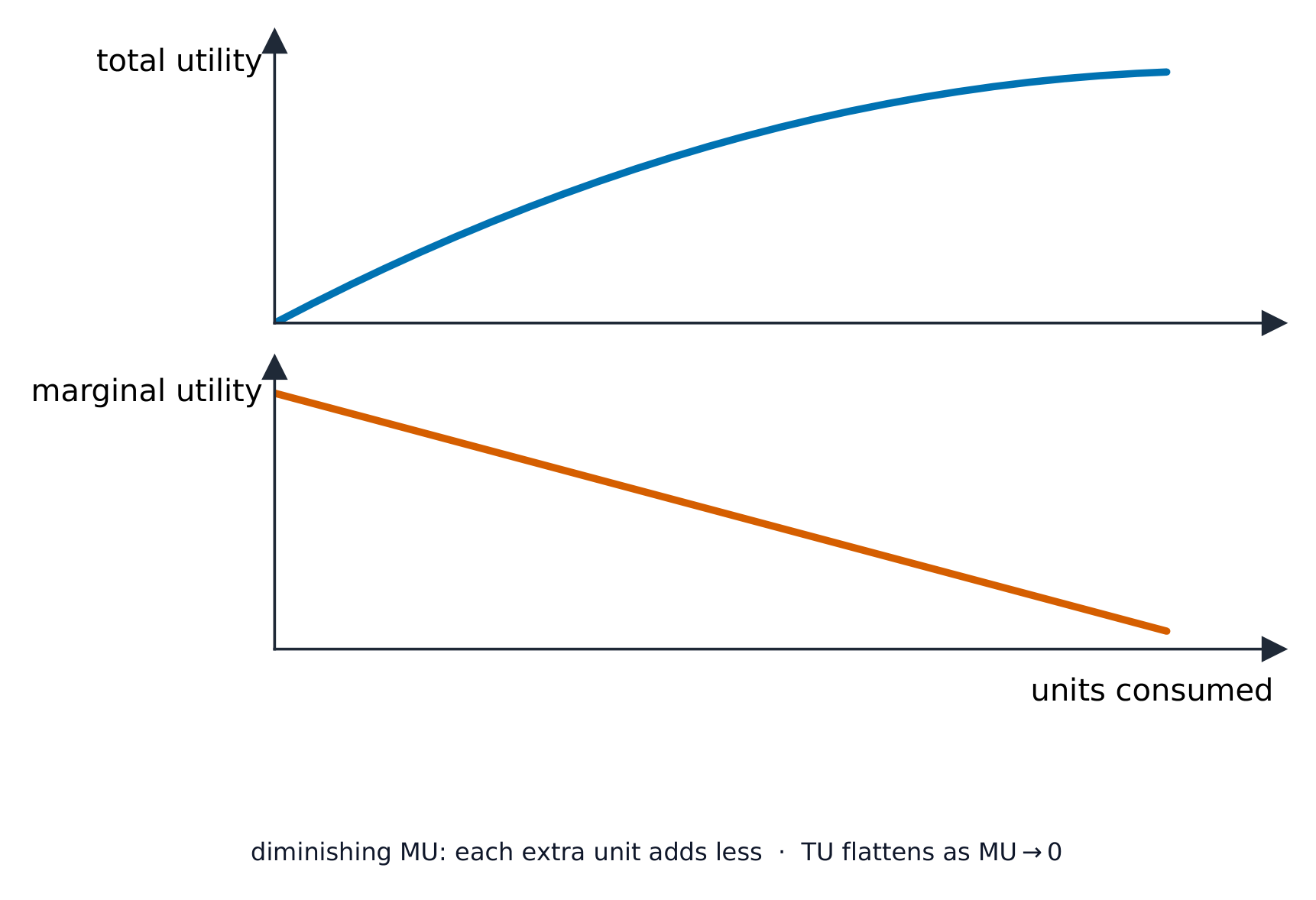
The law of diminishing marginal utility 边际效用递减 says each extra unit gives less extra satisfaction. Total utility still rises, but more and more slowly.
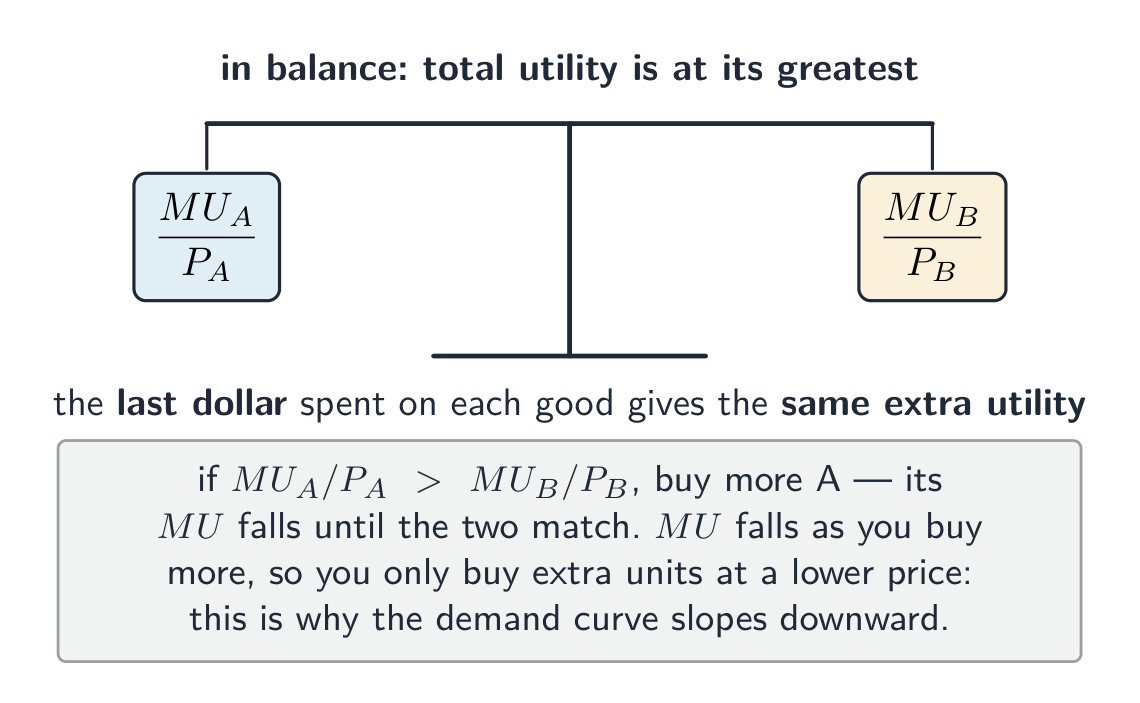
A consumer with a fixed budget gets the most total utility when the last dollar spent on each good gives the same extra utility. This is the equi-marginal principle 等边际原则:
Because marginal utility falls as you buy more, you only buy extra units when the price falls. This is why the demand curve 需求曲线 slopes downward.
The approach is hard to use in practice: utility cannot really be measured in numbers, and people do not calculate like this. It also ignores habit and advertising.
תועלת היא השביעות שהצרכן מקבל ממוצר.
חוק התועלת השולית הפוחתת אומר שכל יחידה נוספת מספקת פחות שביעות נוספת. התועלת הכוללת עדיין עולה, אך בצורה מתונה יותר.
לצרכן עם תקציב קבוע ישנה תועלת כוללת מקסימלית כאשר הדולר האחרון שנופל על כל מוצר מייצר אותה תועלת שולית. זהו עקרון השוויון השולי:
מכיוון שתועלת שולית יורדת כשקונים יותר, קונים רק יחידות נוספות כאשר המחיר יורד. זוהי הסיבה שעקומת הביקוש נוטה מטה.
הגישה קשה לשימוש בפועל: תועלת לא ניתן למדוד באמת במספרים, ואנשים אינם מחשבים כך. כמו כן, גישה זו מתעלמת מהרגלים ומהפרסום.
total utility rises more slowly as quantity increases · התועלת הכוללת עולה לאט יותר ככל שהכמות עולה
Add units consumed and see why extra satisfaction usually falls. · הוסיפו יחידות צריכה והבינו מדוע השביעות הנוספת בדרך כלל יורדת.
| English | עברית |
|---|---|
| utility/juːˈtɪlɪti/ | רצון |
| total utility/ˈtəʊtl juːˈtɪlɪti/ | רצון כולל |
| marginal utility/ˈmɑːdʒɪnl juːˈtɪlɪti/ | רצון שולי |
| diminishing marginal utility/dɪˈmɪnɪʃɪŋ ˈmɑːdʒɪnl juːˈtɪlɪti/ | רצון שולי יורד |
| equi-marginal principle/ˈekwi ˈmɑːdʒɪnl ˈprɪnsɪpl/ | עקרון השוויון השולי |
| demand curve/dɪˈmænd kɜːv/ | עקומת ביקוש |
| indifference curve/ɪnˈdɪfrəns kɜːv/ | עקומת אי-הבחירה |
| budget line/ˈbʌdʒɪt laɪn/ | קו התקציב |
| consumer equilibrium/kənˈsuːmə ˌiːkwɪˈlɪbrɪəm/ | איזון צרכן |
| substitution effect/ˌsʌbstɪˈtjuːʃn ɪˈfekt/ | אפקט ההחלפה |
| income effect/ˈɪŋkʌm ɪˈfekt/ | אפקט הכנסה |
| normal good/ˈnɔːml ɡʊd/ | מוצר רגיל |
| inferior good/ɪnˈfɪərɪə ɡʊd/ | מוצר נחות |
| Giffen good/ˈdʒɪfən ɡʊd/ | סחורת גיפן |
| productive efficiency/prəˈdʌktɪv ɪˈfɪʃənsi/ | יעילות ייצורית |
| allocative efficiency/ˈæləkətɪv ɪˈfɪʃənsi/ | יעילות הקצאה |
| Pareto optimality/pæˈriːtəʊ ˌɒptɪˈmælɪti/ | אופטימליות פארטו |
| dynamic efficiency/daɪˈnæmɪk ɪˈfɪʃənsi/ | יעילות דינמית |
| market failure/ˈmɑːkɪt ˈfeɪlɪə/ | כשל שוק |

Source: Cambridge International syllabus · מקור: הסיילבוס הבינלאומי של קמבריד'ג'
An indifference curve 无差异曲线 shows all the combinations of two goods that give a consumer the same total utility. It slopes downward (more of one good means less of the other) and bows in towards the origin.
A budget line 预算线 shows all the combinations the consumer can just afford with their income, at the current prices.
consumer equilibrium 消费者均衡 is the best the consumer can do: the point where the budget line just touches the highest possible indifference curve.
When the price of a good falls, the consumer buys more for two reasons:
These effects work differently for different goods:
עקומת אי-הבדל מציגה את כל השילובים של שני סוגי סחורות המעניקים לצרכן אותו תועלת כוללת. היא נוטה כלפי מטה (ככל שיש יותר מסחורה אחת, יש פחות מהשנייה) ומתעגלת לכיוון הראשית.
קו תקציב מציג את כל השילובים שהצרכן יכול להרשות לעצמו בדיוק עם הכנסתו, במחירים הנוכחיים.
איזון צרכן הוא הטוב ביותר שיכול להשיג הצרכן: הנקודה שבה קו התקציב נוגע בדיוק בעקומת האי-הבדל הגבוהה האפשרית.
כאשר המחיר של סחורה יורד, הצרכן קונה יותר משתי סיבות:
אפקטים אלו פועלים בצורה שונה עבור סחורות שונות:
good B = income / priceB - slope x good A · good B = הכנסה / מחירB - שיפוע x good A
Move quantity of one good and see the trade-off with the other good. · זז בכמות של סחורה אחת והסתכל על הפיצוי עם הסחורה השנייה.

Source: Cambridge International syllabus · מקור: הסיילבוס הבינלאומי של קמבריד'ג'
Economists judge how well resources are used.
market failure 市场失灵 happens when the free market does not reach an efficient result. The main causes are monopoly power, externalities 外部性, public goods 公共物品, information failure 信息失灵, and factor immobility 要素不流动性 (factors cannot move quickly to where they are needed).
כלכלנים שופטים עד כמה המשאבים משמשים בצורה טובה.
כישלון שוק מתרחש כאשר השוק החופשי אינו מגיע לתוצאה יעילה. הסיבות העיקריות הן כוח מונופולי, חיצוניות, סחרים ציבוריים, כשל מידע ואי-ניידות גורמים (גורמים אינם יכולים להזיז מהר למקומות בהם הם נדרשים).
The market is allocatively efficient where supply meets demand — price equals marginal cost. Market failure pushes it away from that point. · השוק יעיל בהקצאה כאשר ההיצע פוגש את הביקוש — המחיר שווה לעלות השולית. כישלון שוק מרחיק אותו מנקודה זו.

Source: Cambridge International syllabus · מקור: הסיילבוס הבינלאומי של קמבריד'ג'
Some costs and benefits fall on people outside the deal. We separate three levels:
We study externalities with marginal analysis 边际分析, using these curves:
The best outcome for society is where MSC = MSB. But the market produces where MPC = MPB. The gap between these creates lost welfare.
The lost welfare from making too much or too little is the deadweight welfare loss 无谓损失 — the triangle on the diagram between the social and private curves.
חלק מעלויות ורווחים נופלים על אנשים מחוץ לעסקה. אנו מבדילים בין שלושה רמות:
אנו לומדים על חיצוניות באמצעות ניתוח שולין, תוך שימוש בעקומות הבאות:
התוצאה הטובה ביותר לחברה היא במקום בו MSC = MSB. אך השוק מייצר במקום בו MPC = MPB. הפער בין שתי הנקודות הללו יוצר איבוד רווחה.
הרווחה האבודה כתוצאה מייצור יותר מדי או פחות מדי היא איבוד רווחה מתבוסס — המשולש בתרשים בין העקומה החברתית לעקומה הפרטית.
A negative externality means the social cost is above the private supply curve; the free-market quantity is then too high. · חיצונייה שלילית אומרת שהעלות החברתית נמצאת מעל עקומת האספקה הפרטית; כמות השוק החופשי היא אז גבוהה מדי.
| English | עברית |
|---|---|
| externality/ekˈstɜːnælɪti/ | חיצוניות |
| public good/ˈpʌblɪk ɡʊd/ | טוב ציבורי |
| information failure/ˌɪnfəˈmeɪʃn ˈfeɪlɪə/ | כשל מידע |
| factor immobility/ˈfæktə ɪˌməʊˈbɪlɪti/ | חוסר ניידות של גורמים |
| private cost/ˈpraɪvət kɒst/ | עלות פרטית |
| private benefit/ˈpraɪvət ˈbenɪfɪt/ | ה benefit פרטי |
| external cost/ekˈstɜːnl kɒst/ | עלות חיצונית |
| external benefit/ekˈstɜːnl ˈbenɪfɪt/ | תועלת חיצונית |
| social cost/ˈsəʊʃl kɒst/ | עלות חברתית |
| social benefit/ˈsəʊʃl ˈbenɪfɪt/ | benef societal |
| marginal analysis/ˈmɑːdʒɪnl əˈnæləsɪs/ | ניתוח שולי |
| marginal private cost/ˈmɑːdʒɪnl ˈpraɪvət kɒst/ | עלות שולית פרטית |
| marginal social cost/ˈmɑːdʒɪnl ˈsəʊʃl kɒst/ | עלות חברתית שולית |
| marginal private benefit/ˈmɑːdʒɪnl ˈpraɪvət ˈbenɪfɪt/ | תועלת פרטית שולית |
| marginal social benefit/ˈmɑːdʒɪnl ˈsəʊʃl ˈbenɪfɪt/ | תועלת שולית חברתית |
| negative externality/ˈneɡətɪv ekˈstɜːnælɪti/ | חיצוניות שלילית |
| positive externality/ˈpɒzɪtɪv ekˈstɜːnælɪti/ | חיצוניות חיובית |
| deadweight welfare loss/ˈdedweɪt ˈwelfeə lɒs/ | הפסד רעיוני של תועלת |
| short run/ʃɔːt rʌn/ | טווח זמן קצר |
| long run/lɒŋ rʌn/ | טווח זמן ארוך |
| fixed cost/fɪkst kɒst/ | עלות קבועה |
| variable cost/ˈveərɪəbl kɒst/ | עלות משתנה |
| total cost/ˈtəʊtl kɒst/ | עלות כוללת |
| average cost/ˈævrɪdʒ kɒst/ | עלות ממוצעת |
| marginal cost/ˈmɑːdʒɪnl kɒst/ | עלות שולית |
| diminishing returns/dɪˈmɪnɪʃɪŋ rɪˈtɜːnz/ | תוצאה שולית יורדת |
| returns to scale/rɪˈtɜːnz tə skeɪl/ | תמורות סקאלה |

Source: Cambridge International syllabus · מקור: הסיילבוס הבינלאומי של קמבריד'ג'
In the short run 短期, at least one factor is fixed; in the long run 长期, all factors can change.
| Cost | Meaning |
|---|---|
| fixed cost 固定成本 | does not change with output (rent on a factory) |
| variable cost 可变成本 | changes with output (raw materials) |
| total cost 总成本 | fixed cost plus variable cost |
| average cost 平均成本 | total cost per unit: $AC = TC / Q$ |
| marginal cost 边际成本 | the cost of one more unit: $MC = \Delta TC / \Delta Q$ |
Worked example. Making $10$ units costs £500 in total; making $11$ units costs £540. Find the average cost at $10$ units and the marginal cost of the 11th unit.
Here $MC$ ($\text{\pounds} 40$) is below $AC$ ($\text{\pounds} 50$), so making the 11th unit pulls the average cost down — whenever marginal cost is below average cost, average cost falls.
In the short run, output is limited by the law of diminishing returns 边际报酬递减: as you add more of a variable factor (workers) to a fixed factor (machines), each extra worker eventually adds less output. This makes marginal cost rise.
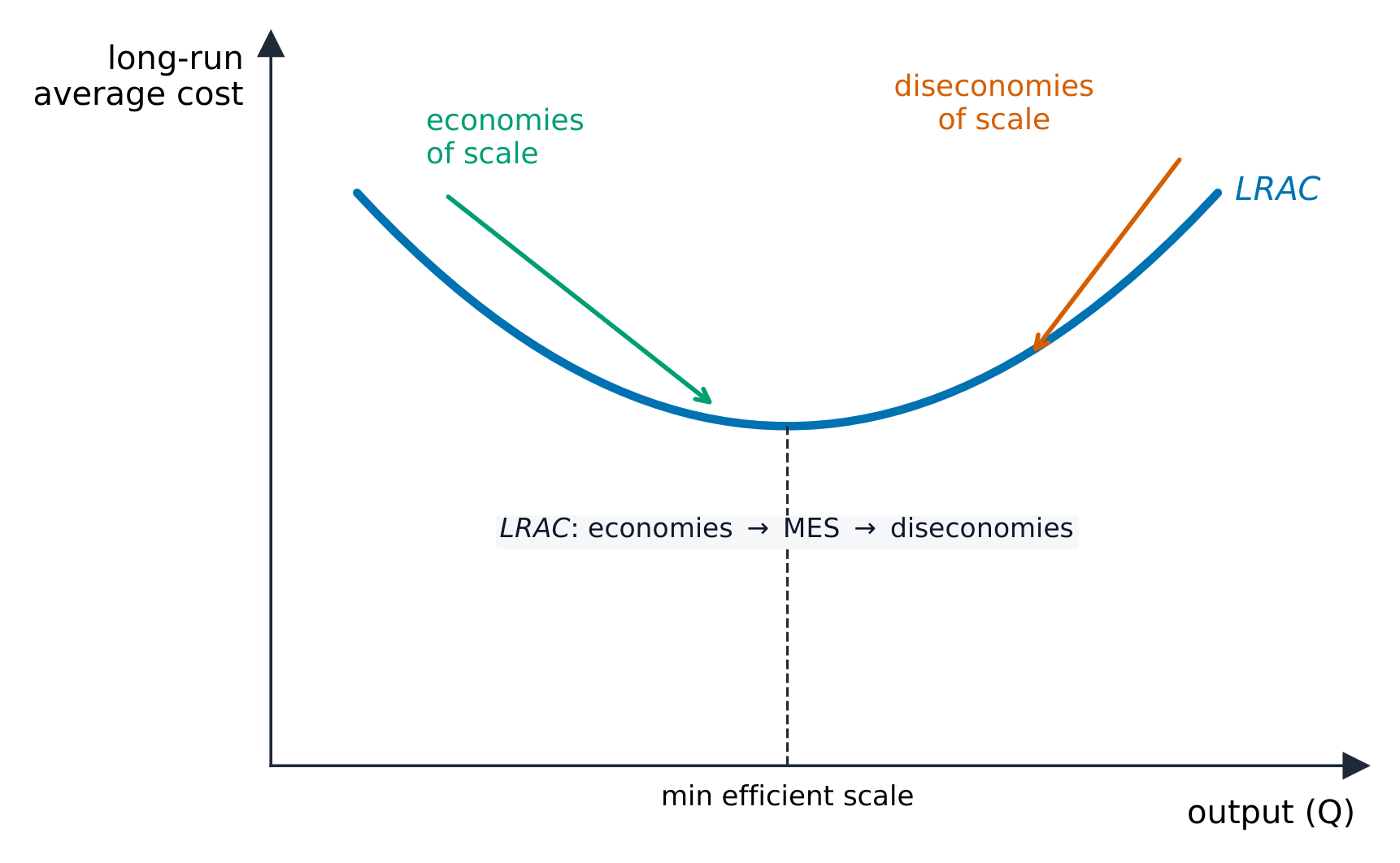
In the long run, all factors vary, so we look at returns to scale 规模报酬. As a firm grows, it can gain economies of scale 规模经济 (lower average cost from buying in bulk, using big machines, and specialising). If it grows too big, it may suffer diseconomies of scale 规模不经济 (poor communication and control), and average cost rises.
| Revenue | Meaning |
|---|---|
| total revenue 总收益 | all money from sales: $TR = P \times Q$ |
| average revenue 平均收益 | revenue per unit, which equals the price |
| marginal revenue 边际收益 | the revenue from one more unit: $MR = \Delta TR / \Delta Q$ |
Worked example. A firm sells $10$ units at £50 each. To sell an 11th unit it must lower the price to £48 on every unit. Find the total revenue at each output and the marginal revenue of the 11th unit.
The marginal revenue ($\text{\pounds} 28$) is well below the £48 price, because the lower price applies to all $11$ units, not just the extra one.
Profit is total revenue minus total cost. Economists include the opportunity cost of the owner's resources in cost, so:
A firm makes the most profit at the output where $MR = MC$.
Worked example. At its best output a firm makes $100$ units, sells each for £12 (its average revenue), and has an average cost of £9. Find the supernormal profit.
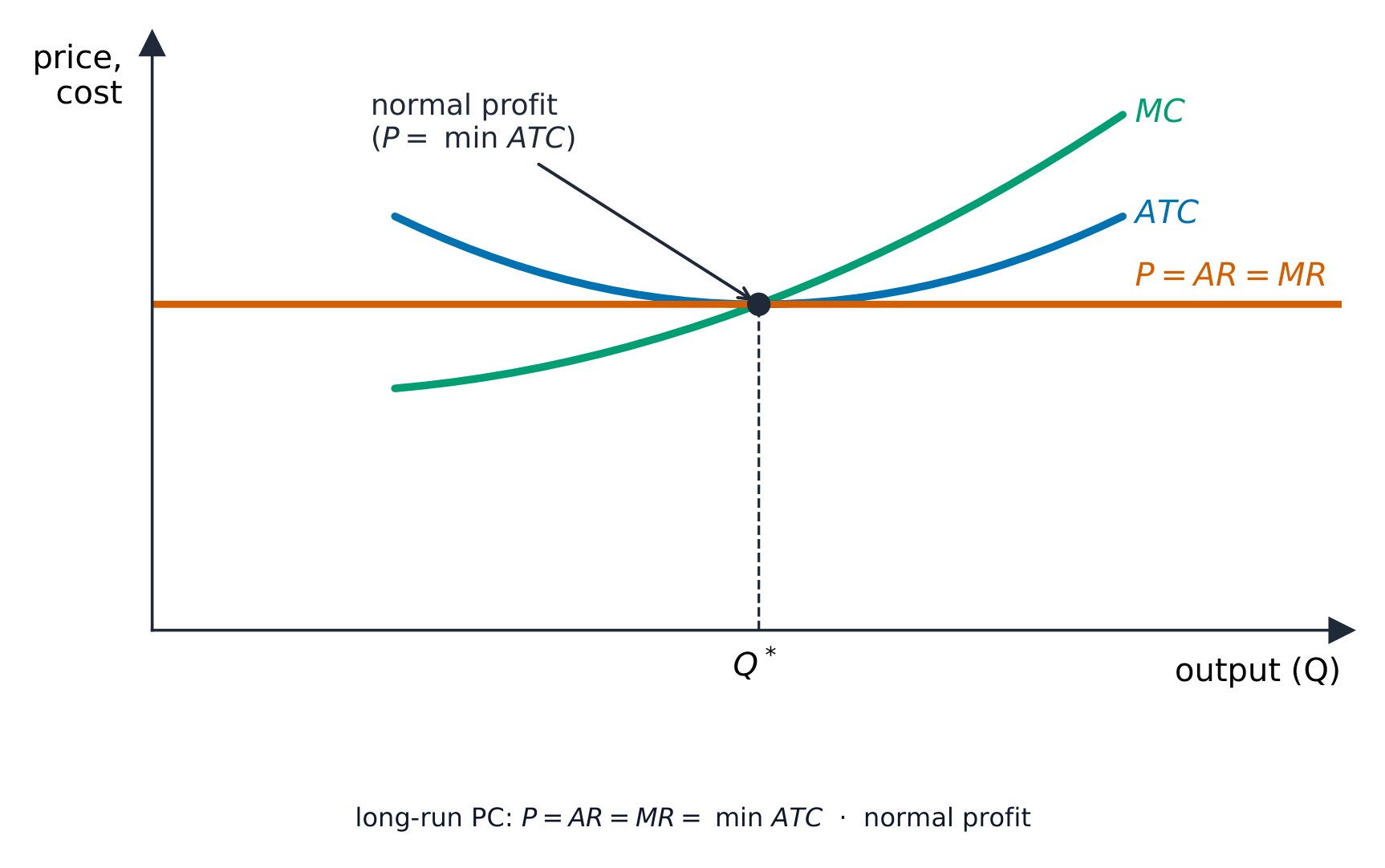
Because average revenue (£12) is above average cost (£9), the firm earns supernormal profit. If instead $AR = AC$, it would make only normal profit; if $AR < AC$, it would make a loss.
בתקופת השורה הקצרה, לפחות גורם אחד קבוע; בתקופת השורה הארוכה, כל הגורמים יכוליםשתנות.
| עלות | משמעות |
|---|---|
| עלות קבועה | אינה משתנה בהתאם לתפוקה (שכירות מפעל) |
| עלות משתנה | משתנה בהתאם לתפוקה (חומרי גלם) |
| עלות כוללת | עלות קבועה פלוס עלות משתנה |
| עלות ממוצעת | עלות כוללת ליחידת מוצר: $AC = TC / Q$ |
| עלות שולית | העלות של יחידה נוספת: $MC = \Delta TC / \Delta Q$ |
דוגמה מפורטת. ייצור $10$ יחידות עולה £500 בסך הכל; ייצור $11$ יחידות עולה £540. מצאו את העלות הממוצעת ב-$10$ יחידות ואת העלות השולית של היחידה ה-11.
כאן $MC$ ($\text{\pounds} 40$) נמוך מ-$AC$ ($\text{\pounds} 50$), ולכן ייצור היחידה ה-11 מוריד את העלות הממוצעת — כל עוד העלות השולית נמוכה מהעלות הממוצעת, העלות הממוצעת יורדת.
בתקופה הקצרה, התפוקה מוגבלת על ידי חוק התגמולים הדוחים: כאשר מוסיפים יותר של גורם משתנה (עובדים) לגורם קבוע (מכונות), כל עובד נוסף מוסיף לבסוף פחות תפוקה. דבר זה גורם לעלות השולית לעלות.

בתקופה הארוכה, כל הגורמים משתנים, ולכן אנו מסתכלים על תגמולי סקאלה. כאשר החברה גדלה, היא יכולה להשיג חסכי סקאלה (עלות ממוצעת נמוכה יותר מהזמנת כמויות גדולות, שימוש במכונות גדולות והתמחות). אם היא גדלה מדי, היא עלולה לסבול מ-חוסרי סקאלה (תקשורת ושליטה לקויה), והעלות הממוצעת עולה.
| הכנסה | משמעות |
|---|---|
| הכנסה כוללת | כל הכסף מהמכירות: $TR = P \times Q$ |
| הכנסה ממוצעת | הכנסה ליחידת מוצר, ששווה למחיר |
| הכנסה שולית | ההכנסה מייחידה נוספת: $MR = \Delta TR / \Delta Q$ |
דוגמה מופתרת. חברה מוכרת $10$ יחידות במחיר של £50 כל אחת. כדי למכור את היחידה ה-11, עליה להוריד את המחיר ל-£48 על כל היחידות. מצאו את ההכנסה הכוללת בכל רמת תפוקה ואת ההכנסה השולית של היחידה ה-11.
ההכנסה השולית ($\text{\pounds} 28$) נמוכה משמעותית ממחיר ה-£48, מכיוון שהמחיר הנמוך חל על כל $11$ היחידות, ולא רק על היחידה הנוספת.
הרווח הוא ההכנסה הכוללה פחות העלות הכוללת. כלכלנים כוללים בעלות את עלות ההזדמנות של המשאבים של בעל העסק, ולכן:
חברה מקסימה את הרווח שלה ברמת התפוקה שבה $MR = MC$.
דוגמה מופתרת. ברמת התפוקה הטובה ביותר, חברה מייצרת $100$ יחידות, מוכרת כל אחת ב-£12 (ההכנסה הממוצעת שלה), והעלות הממוצעת שלה היא £9. מצאו את הרווח המעל-רגיל.
מכיוון שההכנסה הממוצעת (£12) גבוהה מהעלות הממוצעת (£9), החברה מרוויחה רווח מעל-רגיל. אם במקום זאת $AR = AC$, היא הייתה מרוויחה רק רווח רגיל; אם $AR < AC$, היא היית נגרם הפסד.
y = ax² + bx + c
Total revenue rises then falls as price changes. · הכנסה כוללת עולה ולאחר מכן יורדת כאשר המחיר משתנה.
Average cost is U-shaped; marginal cost cuts it at the minimum. Different market structures price relative to these curves. · העלות הממוצעת היא בצורת U; העלות השולית חותכת אותה בנקודת המינימום. מבני שוק שונים קובעים מחירים ביחס לעקומות אלו.
Change output. Marginal cost cuts average cost at its lowest point — the heart of the theory of the firm. · שנה תפוקה. עלות שולית חותכת את העלות הממוצעת בנקודה הנמוכה ביותר שלה — ליבת תורת החברה.
| English | עברית |
|---|---|
| economies of scale/ɪˈkɒnəmiz ɒv skeɪl/ | חסכוני סקאלה |
| diseconomies of scale/ˌdɪsɪˈkɒnəmiz ɒv skeɪl/ | אי-חסכוני סקאלה |
| total revenue/ˈtəʊtl ˈrevənjuː/ | הכנסה כוללת |
| average revenue/ˈævrɪdʒ ˈrevənjuː/ | הכנסה ממוצעת |
| marginal revenue/ˈmɑːdʒɪnl ˈrevənjuː/ | הכנסה שולית |
| normal profit/ˈnɔːml ˈprɒfɪt/ | רווח רגיל |
| supernormal profit/ˈsuːpənɔːml ˈprɒfɪt/ | רווח חריג |
| subnormal profit/ˈsʌbnɔːml ˈprɒfɪt/ | רווח נמוך מתקן |

Source: Cambridge International syllabus · מקור: הסיילבוס הבינלאומי של קמבריד'ג'
A market structure 市场结构 describes a market by the number of firms, the barriers to entry, and the type of product.
| Structure | Firms | Barriers | Product | Long-run profit |
|---|---|---|---|---|
| perfect competition 完全竞争 | very many | none | identical | normal only |
| monopolistic competition 垄断竞争 | many | low | slightly different | normal |
| oligopoly 寡头垄断 | a few | high | varies | often supernormal |
| monopoly 垄断 | one | very high | unique | supernormal |
price discrimination 价格歧视 is charging different consumers different prices for the same good (for example, cheaper train tickets for students). It needs price-setting power, groups with different elasticities, and a way to stop resale between groups. It raises the firm's profit.
מבנה שוק מתאר שוק לפי מספר החברות, מחסומי הכניסה ומיני סוג המוצר.
| מבנה | חברות | מחסומים | מוצר | רווח בטווח הארוך |
|---|---|---|---|---|
| תחרות מושלמת | רבות מאוד | אין | זהה | רק רגיל |
| תחרות מונופוליסטית | רבות | נמוכים | דומה מעט | רגיל |
| אוליגופול | מעטות | גבוהים | משתנה | לעיתים קרובות מעל-רגיל |
| מונופול | אחת | גבוהים מאוד | ייחודי | מעל-רגיל |

הבדלת מחירים היא גביית מחירים שונים מצרכנים שונים עבור אותו מוצר (למשל, כרטיסי רכבת זולים יותר לסטודנטים). היא דורשת כוח לקבוע מחירים, קבוצות בעלות אלסטיות שונה, ודרך למנוע מכירה חוזרת בין הקבוצות. היא מגבירה את הרווח של החברה.
How a firm prices depends on demand and supply; with market power it can charge above the competitive level. · כיצד חברה קובעת מחיר תלויה בביקוש ובהצעה; עם כוח שוק היא יכולה לגבות מעל הרמה התחרותית.
| English | עברית |
|---|---|
| market structure/ˈmɑːkɪt ˈstrʌktʃə/ | מבנה שוק |
| perfect competition/ˈpɜːfekt ˌkɒmpəˈtɪʃn/ | תחרות מושלמת |
| monopolistic competition/məˈnɒpəlɪstɪk ˌkɒmpəˈtɪʃn/ | תחרות מונופוליסטית |
| oligopoly/ˌɒlɪˈɡɒpəli/ | אוליגופול |
| monopoly/məˈnɒpəli/ | מונופול |
| price taker/praɪs ˈteɪkə/ | קבלן מחירים |
| product differentiation/ˈprɒdʌkt ˌdɪfəˌrenʃɪˈeɪʃn/ | הבחלת מוצר |
| collusion/kəˈluːʒn/ | שיתוף פעולה |
| cartel/kɑːˈtel/ | קרטל |
| barriers to entry/ˈbærɪəz tʊ ˈentri/ | מחסומי כניסה |
| price competition/praɪs ˌkɒmpəˈtɪʃn/ | תחרות מחירים |
| non-price competition/nɒn praɪs ˌkɒmpəˈtɪʃn/ | תחרות שאינה מחירית |
| price discrimination/praɪs dɪˌskrɪmɪˈneɪʃn/ | הבחנת מחירים |
| internal growth/ɪnˈtɜːnl ɡrəʊθ/ | גידול פנימי |
| external growth/ekˈstɜːnl ɡrəʊθ/ | גידול חיצוני |
| merger/ˈmɜːdʒə/ | מיזוג |
| horizontal integration/ˌhɒrɪˈzɒntl ˌɪntɪˈɡreɪʃn/ | אינטגרציה אופקית |
| vertical integration/ˈvɜːtɪkl ˌɪntɪˈɡreɪʃn/ | אינטגרציה אנכית |
| conglomerate integration/kənˈɡlɒməreɪt ˌɪntɪˈɡreɪʃn/ | אינטגרציה קונגלומרטית |
| niche/niːʃ/ | נישה |
| barriers to exit/ˈbærɪəz tʊ ˈeɡzɪt/ | מחסומי יציאה |
| profit maximisation/ˈprɒfɪt ˌmæksɪmaɪˈzeɪʃn/ | מיזוג רווחים |
| revenue maximisation/ˈrevənjuː ˌmæksɪmaɪˈzeɪʃn/ | מקסום הכנסות |
| sales maximisation/seɪlz ˌmæksɪmaɪˈzeɪʃn/ | מקסום מכירות |
| satisficing/ˈsætɪsfɪsɪŋ/ | שביעות רצון |
| divorce of ownership from control/dɪˈvɔːs ɒv ˈəʊnəʃɪp frɒm kənˈtrəʊl/ | הפרדה בין ריבונות לשליטה |
| principal-agent problem/ˈprɪnsɪpl ˈeɪdʒənt ˈprɒbləm/ | בעיית סוכן-מייסד |

Source: Cambridge International syllabus · מקור: הסיילבוס הבינלאומי של קמבריד'ג'
Firms grow in two ways:
Many firms stay small because the market is small (local services), the owner wants to keep control, or there are few economies of scale. They survive by offering personal service or filling a niche 利基市场.
Firms also face barriers to entry and barriers to exit 退出壁垒 (such as costly machines that cannot be sold). High exit barriers can trap a firm in a loss-making market.
חברות צומחות בשתי דרכים:
חברות רבות נשארות קטנות משום שהשוק קטן (שירותים מקומיים), המנהל/הבעלים רוצה לשמור על שליטה, או שיש מעט כלכלת סולידיות. הן שורדות על ידי הצעת שירות אישי או תפיסת נישה.
חברות פוגשות גם בחסמי כניסה ובחסמי יציאה (כמו ציוד יקר שאינו ניתן למכירה). חסימת יציאה גבוהה יכולה לתפוס חברה בשוק מפיק מכסאות.
Classify real firm decisions by the objective they reveal. · מיון החלטות של חברות אמיתיות לפי המטרה שהן חושפות.
Source: Cambridge International syllabus · מקור: הסיילבוס הבינלאומי של קמבריד'ג'
Not every firm simply chases the most profit.
In large companies the owners (shareholders) are not the managers. This divorce of ownership from control 所有权与控制权分离 creates the principal-agent problem 委托代理问题: managers (the agents) may pursue their own aims — bigger salaries or an easier life — instead of the owners' aim of maximum profit.
לא כל חברה רודפת רק אחרי הרווח הגדול ביותר.
בחברות גדולות הבעלים (המשקיעים) אינם המנהלים. הפרדה זו בין זכות לניהול יוצרת את בעיית הסוכן: המנהלים (הסוכנים) עשויים לרדוף אחרי מטרות משלהם – שכר גבוה יותר או חיים נעימים יותר – במקום למטרת הבעלים למקסום הרווח.
Classify real firm decisions by the objective they reveal. · מיון החלטות של חברות אמיתיות לפי המטרה שהן חושפות.
Work through it step by step, with instant-check exercises. · לעבור על הדברים צעד אחר צעד, עם תרגילים לבדיקה מיידית.
Loading subjects… · טוען נושאים…