Differing objectives and policies of firms
Introduced| English | Meaning |
|---|---|
| objective/ɒbˈdʒektɪv/ | Specific outcomes that a person or organisation aims to achieve. |
| satisficing/ˈsætɪsfɪsɪŋ/ | Choosing an option that meets an acceptable standard rather than searching for the best possible option. |
| principal-agent problem/ˈprɪnsɪpl ˈeɪdʒənt ˈprɒbləm/ | A conflict arising when an agent acting for a principal has different incentives and the principal cannot fully monitor the agent's actions. |
| divorce of ownership and control/dɪˈvɔːs ɒv ˈəʊnəʃɪp ænd kənˈtrəʊl/ | divorce of ownership and control |
| sales maximisers/seɪlz ˈmæksɪmaɪzəz/ | sales maximisers |
Not every firm just chases profit
- Textbooks assume firms maximise profit. In reality some chase market share, some keep shareholders just happy enough, and managers may pursue their own goals.
- A firm's objective 目标 shapes the price it sets and the output it chooses.
Firm objective lab
Classify real firm decisions by the objective they reveal.
Different objectives
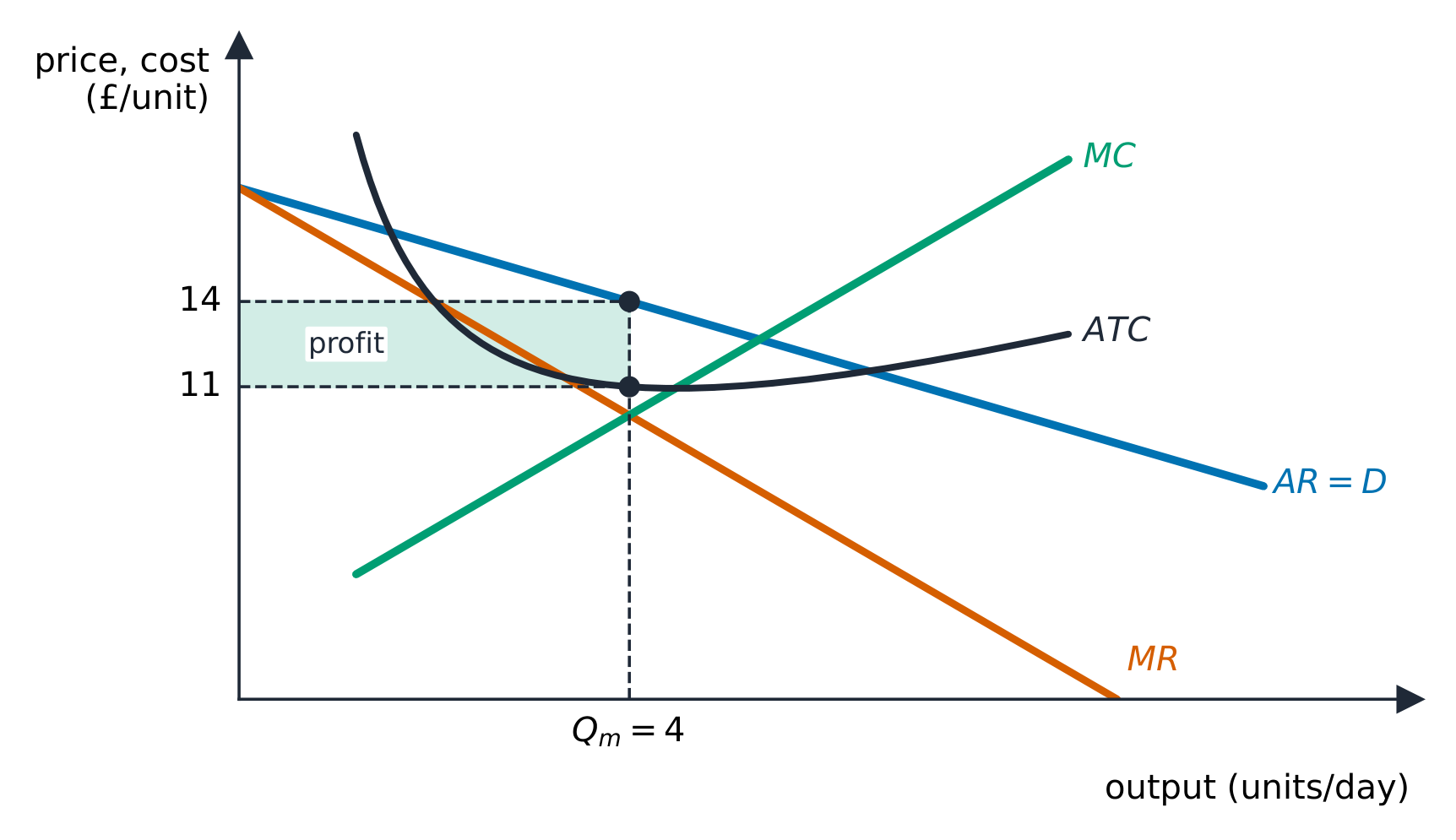
The usual assumption is profit maximisation (MC = MR) — but firms may pursue other goals
A profit-maximising firm produces where:
Difficulty 1/5 · 100 coins + a small bonus on first completion today
Profit max is MR = MC; sales/revenue max is MR = 0.
Match each objective to its rule or aim.
Difficulty 2/5 · 140 coins + a small bonus on first completion today
Different objectives imply different output rules.
The principal-agent problem 委托代理问题
- Owners (principals) want profit; managers (agents) who run the firm may prefer size, salary or an easy life.
- This divorce of ownership and control 所有权与控制权分离 means firms don't always maximise profit.
The principal-agent problem arises because:
Difficulty 1/5 · 100 coins + a small bonus on first completion today
The divorce of ownership and control lets managers pursue their own objectives.
The principal-agent problem is also called the divorce of ownership and ______.
Difficulty 1/5 · 100 coins + a small bonus on first completion today
Owners own; managers control — their goals can differ.
Why it matters
- Revenue maximisers (MR = 0) and sales/volume maximisers (AR = AC) both produce more, at a lower price, than profit maximisers — sales maximisers go furthest, right up to break-even.
- Satisficers settle for "good enough" profit to fund other goals (growth, ethics, staff welfare).
Profit maximising (MR = MC) is just one assumption. Real objectives — sales, market share, survival, social goals — lead to different prices and outputs. State the objective before predicting behaviour.
A sales-maximising firm tends to produce more output than a profit-maximising one.
Difficulty 1/5 · 100 coins + a small bonus on first completion today
Sales max (MR = 0) is at a higher output (and lower price) than profit max (MR = MC).
You've got it
- objectives: profit max (MR = MC), revenue max (MR = 0), sales/volume max (AR = AC, the most output while still breaking even), satisficing, social/ethical goals
- the principal-agent problem: managers (agents) may not pursue owners' (principals') profit
- the objective changes the firm's price and output — so identify it first