ข้ามไปยังเนื้อหา
รายวิชา

GRE · GRE Subject Test · GRE Psychology

  • 1

    I · Biological psychology

    โปรแกรมการเรียนรู้มาเร็วๆ นี้

    เอกสารประกอบการเรียน

    จิตวิทยาชีวภาพ

    ขอบเขตและเงื่อนไขก่อนเข้าเรียน

    หัวข้อ GRE ที่รองรับ 1 (I) อ่าน SP.1, NE.1 และ HB.1 เพื่อรายละเอียดกลไกทางชีวภาพ ข้อสอบที่เป็นทางการที่มีอยู่สามารถตรวจสอบได้ใน bank_review_form.yaml; งานต้นฉบับด้านล่างไม่ใช่รายการของ ETS

    แนวคิดและวิธีการ

    การรับรู้ทางประสาทสัมผัส: การรับกระตุ้นจากประสาทสัมผัส เกณฑ์การตอบสนอง: ขอบเขตสำหรับการรายงานว่ามีสัญญาณปรากฏขึ้น

    การรับรู้ทางประสาทสัมผัสเกี่ยวข้องกับการรับกระตุ้น ส่วนการรับรู้เกี่ยวข้องกับการตีความ ทั้งสองมีปฏิสัมพันธ์กันแต่ไม่สามารถแทนที่กันได้

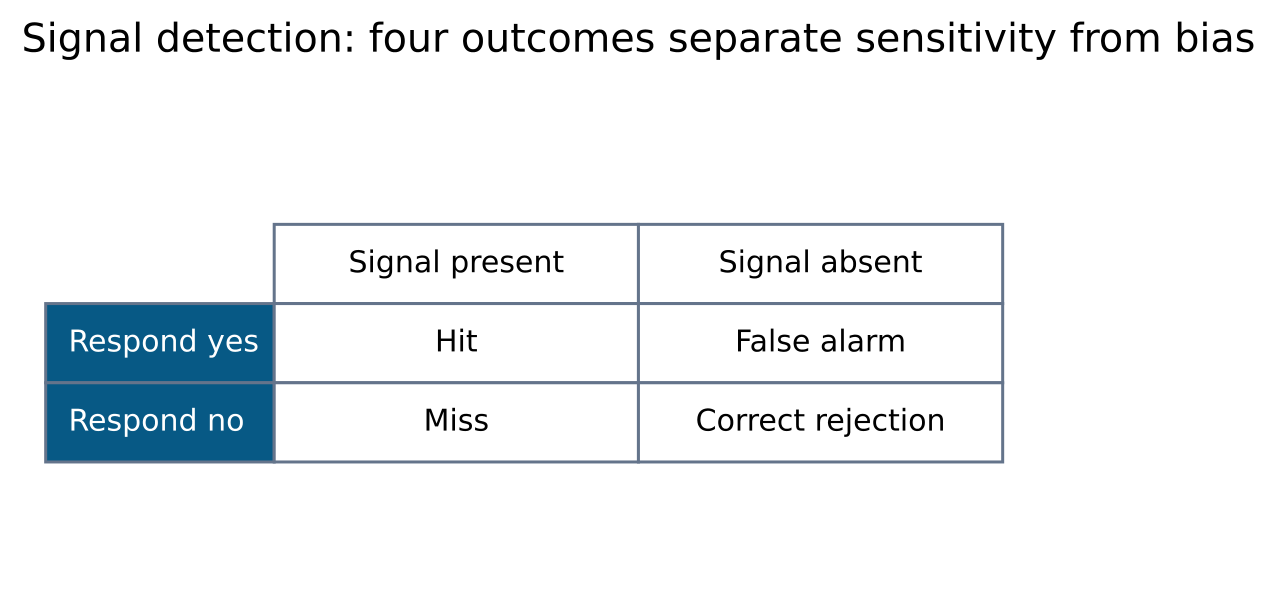
    ทฤษฎีการตรวจจับสัญญาณแยกความไวออกจากเกณฑ์การตอบว่า "ใช่" ความคาดหวังสามารถเปลี่ยนแปลงเกณฑ์การตอบสนองได้

    เซลล์ประสาทสื่อสารผ่านสัญญาณไฟฟ้าและซินاپส์ การมีส่วนร่วมของบริเวณสมอง某一个ไม่ได้บ่งชี้ว่ามันทำงานอย่างโดดเดี่ยว

    การศึกษาจากการทำลายและการถ่ายภาพให้หลักฐานที่แตกต่างกัน พิจารณาปัจจัยรบกวนและข้อจำกัดในการอนุมานสาเหตุจากความเชื่อมโยง

    คำอธิบายทางชีวภาพจำเป็นต้องมีเส้นทางจากกระบวนการทางกายภาพไปสู่พฤติกรรมที่สังเกตได้ ตัวรับเปลี่ยนพลังงานกระตุ้นให้เป็นสัญญาณประสาท ระบบสมองที่เชื่อมต่อกันประมวลผลสัญญาณเหล่านี้ ความเชื่อมโยงในภาพไม่สามารถบอกได้ว่ากิจกรรมนั้นเป็นสาเหตุ ตามมา หรือเพียงร่วม accompanies กับงาน Sleep ยังขึ้นอยู่กับจังหวะรอบวันประมาณหนึ่งและแรงกดดันที่สะสมระหว่างการตื่นMotivation and emotion involve interacting neural, endocrine and environmental processes. A single brain area or hormone is rarely a complete explanation. Detailed methods are in SP.1, NE.1 and HB.1.

    ตัวอย่างเหตุผลประกอบ

    บุคคลที่คาดหวังสัญญาณเตือนจะรายงานเสียงเบามากขึ้นว่าเป็นสัญญาณเตือน จำนวนการแจ้งเตือนที่ถูกต้องอาจเพิ่มขึ้น แต่การแจ้งเตือนผิดพลาดก็อาจเพิ่มขึ้นได้เช่นกัน สิ่งนี้สะท้อนถึงเกณฑ์การตอบสนองที่หลวมกว่ามากกว่าความไวต่อสิ่งเร้าที่ดีขึ้น

    ในงานทดสอบสัญญาณเตือน giả ในกรณีที่มีโบนัสสำหรับการรายงานสัญญาณเตือน จะเพิ่มจำนวนการตรวจจับได้จริงจาก 60/100 เป็น 80/100 และเพิ่มจำนวนการแจ้งเตือนผิดพลาดจาก 10/100 เป็น 30/100 สิ่งนี้พิสูจน์ถึงความไวที่ดีขึ้นหรือไม่?

    อัตราการตรวจจับเพิ่มขึ้นจาก 60% เป็น 80% แต่อัตราการแจ้งเตือนผิดพลาดก็เพิ่มขึ้นจาก 10% เป็น 30% เกณฑ์การตอบสนองที่หลวมลงอาจทำให้เกิดการเปลี่ยนแปลงทั้งสองอย่าง อัตราการตรวจจับเพียงอย่างเดียวไม่สามารถพิสูจน์ความไวที่ดีขึ้นได้ ให้เปรียบเทียบการแยกสัญญาณและเสียงรบกวนโดยใช้ทั้งอัตราและโมเดลที่เหมาะสม Neither the bonus nor these illustrative counts identifies a neural cause.
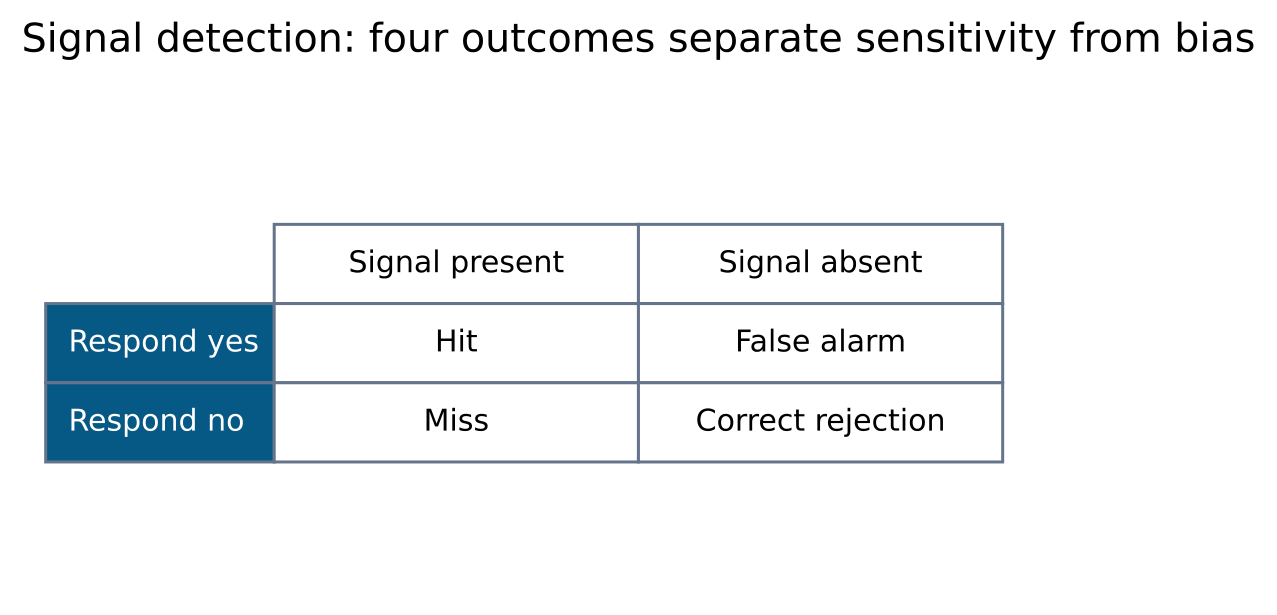
    แผนภาพต้นฉบับสำหรับการรับรู้ทางประสาทสัมผัส การรับรู้ และจิตฟิสิกส์ ความสัมพันธ์และตัวเลขที่ใช้เป็นตัวอย่างไม่ใช่ผลการวิจัย

    การถ่ายโอนแบบอิสระ

    ผู้เข้าร่วมหลับน้อยก่อนการสแกนความจำ ผลการจดจำลดลงและบางบริเวณมีกิจกรรมลดลง ให้คำอธิบายที่ขัดแย้งกันสองประการและการปรับปรุงการออกแบบ

    ลองทำอย่างอิสระ แล้วใช้เฉลยแผ่นทักษะที่จับคู่

    การทบทวนและข้อจำกัดของแหล่งข้อมูล

    หลีกเลี่ยงข้อผิดพลาดนี้: ภาพสมองที่แสดงกิจกรรมระหว่างทำภารกิจ ไม่เป็นหลักฐานว่าบริเวณนั้นเพียงอย่างเดียวทำให้เกิดพฤติกรรม ขอบเขตการสอนมาจากไฟล์ teaching.yaml และการทบทวนแหล่งข้อมูล/คีย์/ครอปใน bank_review_form.yaml เกณฑ์การวินิจฉัยปัจจุบันที่ละเอียดอ่อนต้องการคู่มือที่ได้รับการรับรอง; ทั้งแนวปฏิบัติเก่าของ ETS และเอกสารอ้างอิงทางการศึกษานี้ไม่รับรองเกณฑ์ดังกล่าว
    คำศัพท์
    English ไทย
    sensation/senˈseɪʃn/ การรับรู้ทางประสาทสัมผัส
    response criterion/rɪˈspɒns kraɪˈtɪərɪən/ เกณฑ์การตอบสนอง
  • 2

    II · Cognition, language and learning

    โปรแกรมการเรียนรู้มาเร็วๆ นี้

    เอกสารประกอบการเรียน

    คognition, ภาษาและการเรียนรู้

    ขอบเขตและเงื่อนไขก่อนเข้าเรียน

    หัวข้อ GRE ที่รองรับ 2 (II) อ่าน LR.1, ME.1, LG.1, TH.1 และ ME.2 เพื่อศึกษากลไกทาง cognition อย่างละเอียด คำถามที่เป็นทางการที่มีอยู่สามารถตรวจสอบได้ใน bank_review_form.yaml ภาระงานต้นฉบับด้านล่างไม่ใช่รายการของ ETS

    แนวคิดและวิธีการ

    negative reinforcement: การกำจัดสภาวะที่ไม่พึงประสงค์เพื่อเพิ่มพฤติกรรม morpheme: หน่วยภาษาที่มีความหมายเล็กสุด

    Classical conditioning เชื่อมโยงสิ่งเร้า; operant conditioning เปลี่ยนแปลงพฤติกรรมผ่านผลที่เกิดขึ้น

    Negative reinforcement กำจัดสภาวะไม่สบายและเพิ่มพฤติกรรม ไม่ใช่การลงโทษ

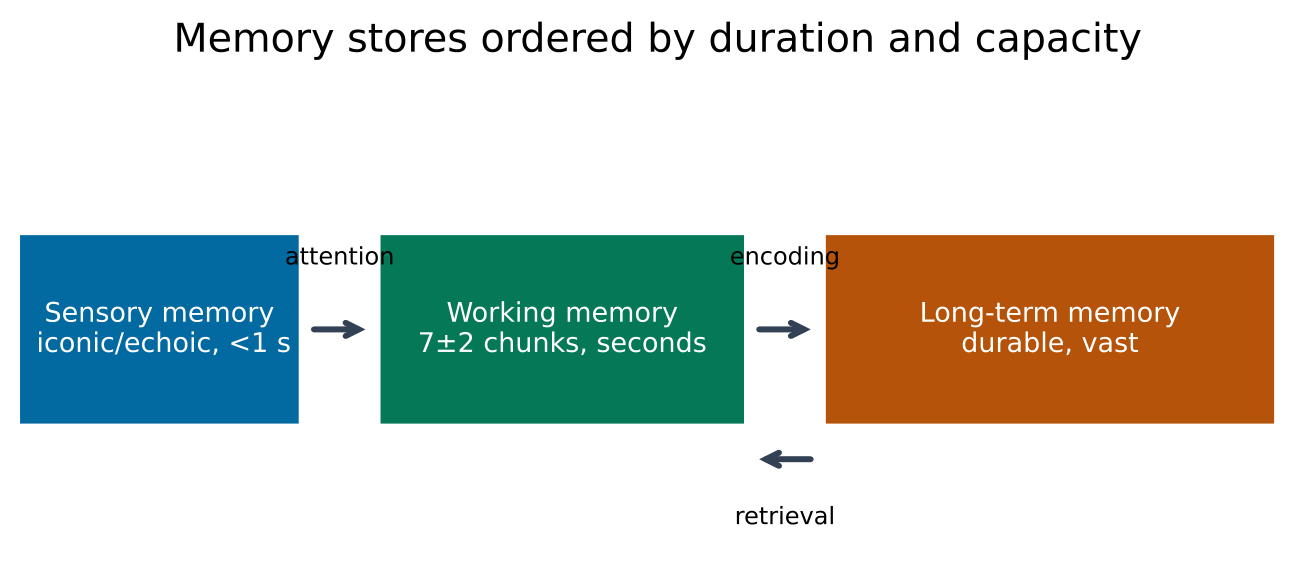
    Working memory รองรับการจัดการในปัจจุบัน Long-term memory รวมถึงรูปแบบ explicit และ implicit

    ภาษาใช้ phonemes สำหรับการแยกแยะเสียงและ morphemes สำหรับหน่วยความหมาย การแก้ปัญหาอาจถูกจำกัดโดย fixation หรือ heuristics ที่มีอคติ

    ระบุสิ่งที่เปลี่ยนแปลงก่อนจะตั้งชื่อกระบวนการเรียนรู้ ใน classical conditioning的信号 predicting อื่นๆ และกระตุ้นปฏิกิริยา ใน operant conditioning ผลลัพธ์ตามมาหลังการกระทำและเปลี่ยนความถี่ในอนาคต ภาระงานความจำแตกต่างกันตาม cues ในการเรียกคืน: การจดจำคำตอบให้ข้อมูลที่ free recall ให้ไม่ได้ ภาระงานภาษาอาจต้องการการแยกแยะเสียง ส่วนคำที่มีความหมายหรือโครงสร้างประโยค; ระบุระดับแทนการใช้ภาษาความสามารถแบบรวมกันเดียว ดู LR.1, ME.1, LG.1, TH.1 และ ME.2 เพื่อการสอนอย่างละเอียด

    ตัวอย่างเหตุผลประกอบ

    สัญญาณเตือนเข็มขัดนิรภัยหยุดเมื่อรัดเข็มขัดแล้ว การลบสัญญาณเตือนทำให้การรัดเข็มขัดมีแนวโน้มมากขึ้น: negative reinforcement หากมีการปรับเพิ่มเพื่อลดการขับขี่ที่ไม่ปลอดภัย นั่นคือ positive punishment คำว่า positive และ negative หมายถึงการเพิ่มและการลบ ไม่ใช่การดีหรือร้าย

    เด็กคนหนึ่งได้ยินทำนองก่อนมื้อเที่ยงและlater水分泌ต่อมัน แยกต่างหาก เด็กหนึ่งได้ token หลังอ่านหนังสือและอ่านบ่อยขึ้น อธิบายกระบวนการที่แตกต่างกัน

    ทำนองทำนายอาหาร; การน้ำลายไหลต่อสัญญาณเข้าข่าย classical conditioning การอ่านทำให้ได้ token และ subsequently เพิ่ม; การเพิ่มผลลัพธ์นั้นเข้าข่าย positive reinforcement เหตุการณ์pleasant ไม่จำเป็นต้องเป็น reinforcement: หลักฐานต้องรวมถึงการเปลี่ยนแปลงในการกระทำเป้าหมาย

    แผนภาพดั้งเดิมสำหรับระบบความจำ กระบวนการและความลืม ความสัมพันธ์และตัวเลขตัวอย่างไม่ใช่ผลการวิจัย

    การถ่ายโอนแบบอิสระ

    นักเรียนจำนิยามเมื่อเห็นตัวอักษรแรกแต่ไม่สามารถเรียกคืนได้โดยไม่ช่วย声称ความจำไม่เคยมีอยู่ ประเมินและเสนอการเปรียบเทียบ

    ลองทำอย่างอิสระ แล้วใช้เฉลยแผ่นทักษะที่จับคู่

    การทบทวนและข้อจำกัดของแหล่งข้อมูล

    หลีกเลี่ยงข้อผิดพลาดนี้: ประสิทธิภาพการจดจำไม่สามารถ treating เป็น identical กับประสิทธิภาพการเรียกคืนโดยไม่ช่วย ขอบเขตการสอนมาจากไฟล์ teaching.yaml และการทบทวนแหล่งข้อมูล/คีย์/ครอปใน bank_review_form.yaml เกณฑ์การวินิจฉัยปัจจุบันที่ละเอียดอ่อนต้องการคู่มือที่ได้รับการรับรอง; ทั้งแนวปฏิบัติเก่าของ ETS และเอกสารอ้างอิงทางการศึกษานี้ไม่รับรองเกณฑ์ดังกล่าว
    คำศัพท์
    English ไทย
    negative reinforcement/ˈneɡətɪv ˌriːɪnˈfɔːsmənt/ การเสริมแรงเชิงลบ
    morpheme/ˈmɔːfiːm/ โมเล็ม
  • 3

    III · Social psychology

    โปรแกรมการเรียนรู้มาเร็วๆ นี้

    เอกสารประกอบการเรียน

    จิตวิทยาสังคม

    ขอบเขตและเงื่อนไขก่อนเข้าเรียน

    หัวข้อ GRE ที่รองรับ 3 (III) อ่าน SO.1 และ SO.2 เพื่อหา attribution, influence และกลไกกลุ่ม คำถามที่เป็นทางการที่มีอยู่สามารถตรวจสอบได้ใน bank_review_form.yaml ภาระงานต้นฉบับด้านล่างไม่ใช่รายการของ ETS

    แนวคิดและวิธีการ

    attribution: คำอธิบายสำหรับพฤติกรรม conformity: เปลี่ยนแปลงพฤติกรรมหรือการตัดสิน相对于กลุ่ม

    การอธิบายพฤติกรรมเกี่ยวข้องกับสาเหตุจาก环境和และลักษณะบุคคล ควรแยกแยะให้ชัดเจน

    การปรับตัวเข้าสังคมเกี่ยวข้องกับความกดดันของกลุ่ม ส่วนความเชื่อฟังเกี่ยวข้องกับการสั่งการของผู้มีอำนาจ ทั้งสองต้องอาศัยบริบททางสังคมที่ชัดเจน

    ความสัมพันธ์ระหว่างทัศนคติและพฤติกรรมขึ้นอยู่กับวิธีการวัดและสถานการณ์ เจตนาที่แสดงออกไม่เท่ากับการกระทำที่สังเกตได้

    งานวิจัยเกี่ยวกับกลุ่มควรพิจารณามาตรฐานทางสังคม การเลือกตัวอย่าง และข้อจำกัดทางจริยธรรมก่อนจะสรุปผลทั่วไป

    แยกสิ่งที่คนทำ สิ่งที่พวกเขาเชื่อในใจ และเหตุผลที่ทำให้พวกเขาทำ ความยินยอมอาจต้องการการยอมรับ ใช้ผู้อื่นเป็นข้อมูล หรือปฏิบัติตามผู้มีอำนาจ การอธิบายควรรายละเอียดว่าปัจจัยจาก环境和และคำอธิบายส่วนบุคคลที่คงที่ต่างกัน กลุ่มมีความแตกต่างต้องใช้ข้อมูลเกี่ยวกับการสุ่มตัวอย่าง มาตรฐาน และโอกาส ฉลากหมวดหมู่ไม่สามารถอธิบายสมาชิกทุกคนได้ ใช้ SO.1 และ SO.2 สำหรับกลไกการอธิบายและการจัดกลุ่ม

    ตัวอย่างเหตุผลประกอบ

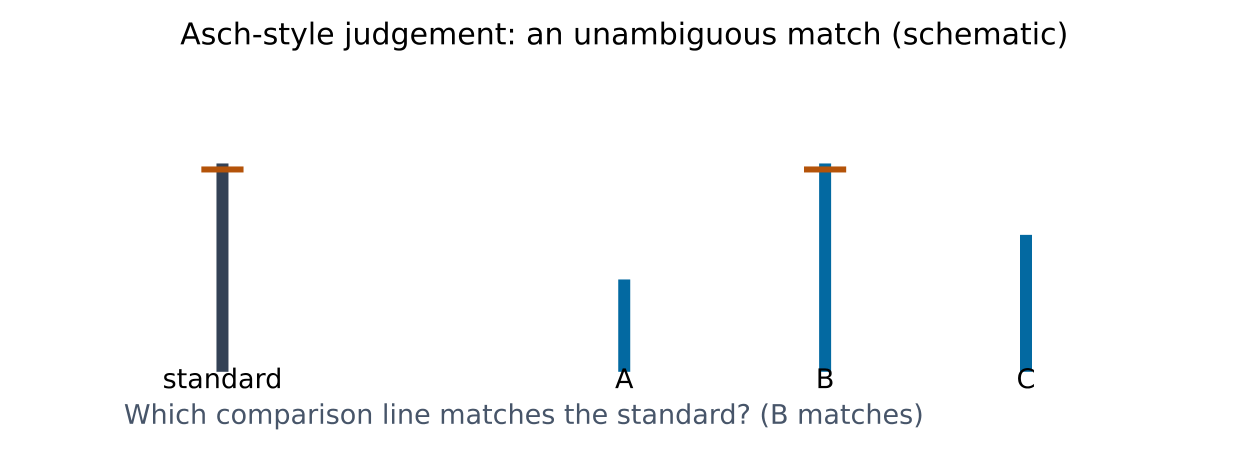
    ผู้เข้าร่วมงานยอมรับคำตอบที่ผิดอย่างเห็นได้ชัดของกลุ่ม หากบุคคลนั้นมีความสงสัยภายในแต่ปฏิบัติตามเพื่อหลีกเลี่ยงการถูกปฏิเสธ การมีอิทธิพลแบบบรรทัดฐาน (normative influence) จึงเป็นคำอธิบายที่เป็นไปได้ การยอมรับกลุ่มในฐานะแหล่งข้อมูลคืออิทธิพลแบบข้อมูล (informational influence)

    นักเรียนเห็นด้วยกับเพื่อนอย่าง公开แต่ในใจตอบถูก ผู้ใหญ่ไม่ได้สั่งการ อิทธิพลใดเหมาะสมที่สุด และอะไรที่ยังไม่แน่นอน?

    ความแตกต่างระหว่าง公开และในใจสอดคล้องกับอิทธิพลตามบรรทัดฐาน: การยอมรับอาจหลีกเลี่ยงการปฏิเสธ ในขณะที่ความเชื่อส่วนตัวต่างออกไป ไม่พอที่จะเรียกว่าความเชื่อฟังเพราะไม่มีการสั่งการจากผู้มีอำนาจ ความกลัวการปฏิเสธเป็นกลไกที่อนุมานได้ การรายงาน privately ที่ได้รับอนุญาตหรือการเปลี่ยนเงื่อนไขความเป็น匿名 อาจเสริมความน่าเชื่อถือ

    แผนภาพต้นฉบับสำหรับ cognition ทางสังคม การอธิบาย และอิทธิพลทางสังคม ความสัมพันธ์และตัวเลขที่ใช้เพื่อ illustrate ไม่ใช่ผลการวิจัย

    การถ่ายโอนแบบอิสระ

    สมาชิกคลับช่วยกันมากกว่าที่ไม่ใช่สมาชิก อธิบายว่าทำไมสิ่งนี้ไม่แสดงว่าการเข้าร่วมคลับทำให้ใจดี แล้วปรับปรุงหลักฐาน

    ลองทำอย่างอิสระ แล้วใช้เฉลยแผ่นทักษะที่จับคู่

    การทบทวนและข้อจำกัดของแหล่งข้อมูล

    หลีกเลี่ยงข้อผิดพลาดนี้: อย่าอนุมานลักษณะบุคคลที่คงตัวจากการกระทำที่มีข้อจำกัดเพียงครั้งเดียว ขอบเขตการสอนมาจาก teaching.yaml และการทบทวน source/key/crop ใน bank_review_form.yaml เกณฑ์วินิจฉัยปัจจุบันที่ละเอียดจำเป็นต้องใช้ manual yang มี authentication; neither historical ETS practice nor this educational reference certifies them.

    คำศัพท์
    English ไทย
    attribution/ətrɪˈbjuːʃn/ การอธิบายเหตุและผล
    conformity/kənˈfɔːmɪti/ การปรับตัวเข้าสังคม
  • 4

    IV · Developmental psychology

    โปรแกรมการเรียนรู้มาเร็วๆ นี้

    เอกสารประกอบการเรียน

    จิตวิทยาพัฒนาการ

    ขอบเขตและเงื่อนไขก่อนเข้าเรียน

    รองรับหัวข้อ GRE 4 (IV) อ่าน DV.1 เพื่อทฤษฎีพัฒนาการและหลักฐานคำถามที่เป็นทางการเดิมสามารถติดตามได้ใน bank_review_form.yaml; tasks เดิมด้านล่างไม่ใช่ items ของ ETS

    แนวคิดและวิธีการ

    cohorts: คนที่มีช่วงเกิดหรือประสบการณ์ทางประวัติศาสตร์ร่วมกัน attrition: การสูญเสียผู้เข้าร่วมในการศึกษา

    การพัฒนาครอบคลุมตลอดชีวิตและหลายด้าน ไม่ใช่แค่ milestones ของวัยเด็กเท่านั้น

    การศึกษา cross-sectional เปรียบเทียบอายุในเวลาหนึ่ง; longitudinal studies ติดตามบุคคลเป็นเวลาหลายปี

    Effects ของ cohorts อาจทำให้การเปรียบเทียบอายุสับสน Longitudinal studiesเผชิญกับ attrition และ effects ของการทดสอบซ้ำ

    ทฤษฎีเสนอคำอธิบายที่ต่างกันของการเปลี่ยนแปลง ใช้กลไกเฉพาะของแต่ละทฤษฎีแทนการ treating stage label เป็นคำอธิบาย

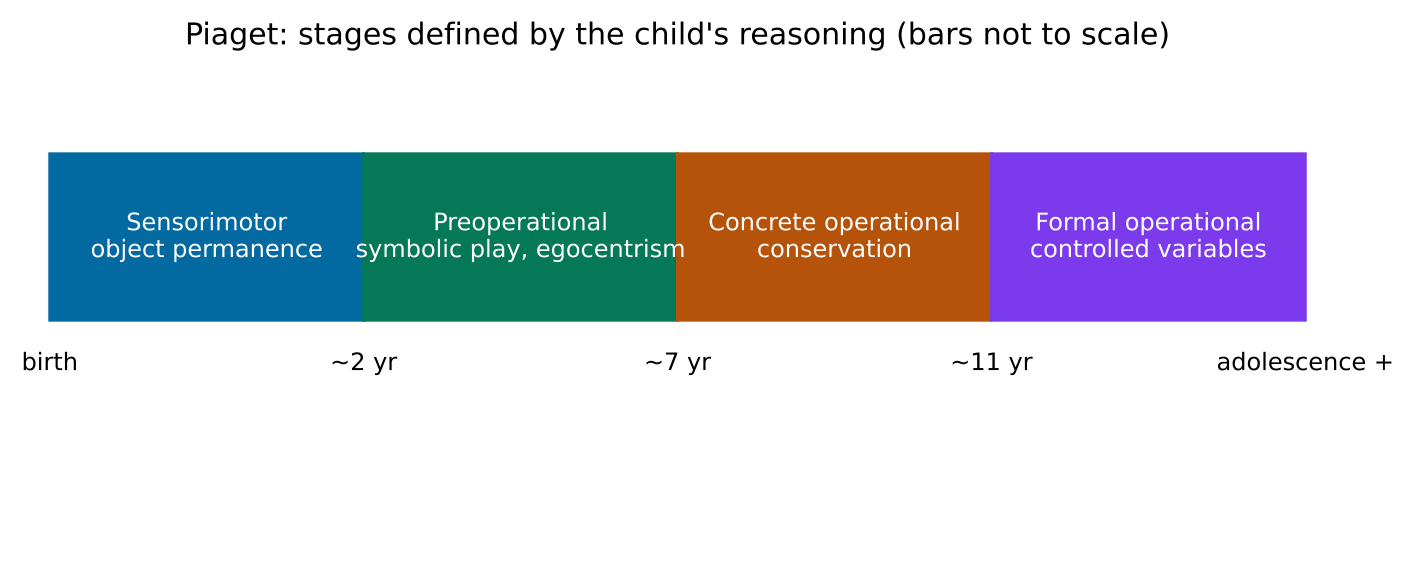
    การพัฒนาสามารถเปลี่ยนความรู้ กลยุทธ์ และ social support ได้ในอัตราที่ต่างกัน คำอธิบายของ Piaget เน้นการเปลี่ยนแปลงในการคิด; Vygotsky เน้นการเรียนรู้ที่สนับสนุนโดย interaction ทางสังคม การ attachment เกี่ยวข้องกับความสัมพันธ์และรูปแบบของ security ไม่ใช่ labelถาวรที่อนุมานจากการแยกตัวเพียงครั้งเดียว ค่าเฉลี่ยของอายุไม่กำหนด deadline สำหรับแต่ละเด็ก เปรียบเทียบการสังเกตซ้ำ ความต้องการของ task และบริบททางวัฒนธรรมก่อนตัดสินใจว่าอะไรเปลี่ยนไป ดู DV.1 เพื่อทฤษฎีและวิธีการ

    ตัวอย่างเหตุผลประกอบ

    การเปรียบเทียบ 20-ปีและ 70-ปี regarding การใช้คอมพิวเตอร์ไม่สามารถแยกตัวแปรอายุได้: พวกเขาได้รับโอกาสในการสัมผัสเทคโนโลยีที่แตกต่างกัน การติดตามกลุ่มเดียวช่วยให้ตรวจสอบการเปลี่ยนแปลงได้แต่อาจสูญเสียผู้เข้าร่วมงานอย่างไม่สม่ำเสมอ สร้างอคติจากการตกหล่น

    เด็กแก้โจทย์การจัดประเภทได้ด้วยคำแนะนำของผู้ใหญ่แต่ไม่ทำได้เมื่ออยู่คนเดียว คำอธิบายแบบ sociocultural จะอธิบายความแตกต่างได้อย่างไร?

    คำแนะนำให้การสนับสนุนภายในขอบเขตที่ประสิทธิภาพภายใต้การสนับสนุนสูงกว่าประสิทธิภาพอิสระ อาจชี้แนะความสนใจหรือจำลองกลยุทธ์ที่มีประโยชน์ บันทึกคำแนะนำจริงและทดสอบโดยไม่ใช้ในภายหลัง; ความสำเร็จภายใต้การสนับสนุนยังไม่ยืนยันความเป็นเลิศอิสระหรือระบุขั้นตอนสากล

    แผนภาพต้นฉบับสำหรับทฤษฎีการพัฒนาและägeสำคัญ ความสัมพันธ์และตัวเลขที่เป็นเพียงตัวอย่างไม่ใช่ผลวิจัย

    การถ่ายโอนแบบอิสระ

    การศึกษาเปรียบเทียบวัยรุ่นและผู้ใหญ่เพียงครั้งเดียว แล้วเรียกความแตกต่างนี้ว่าเปลี่ยนแปลงตามพัฒนาการ ให้รูปแบบการออกแบบ คำอธิบายทางเลือกและการออกแบบเสริมพร้อมข้อจำกัด

    ลองทำอย่างอิสระ แล้วใช้เฉลยแผ่นทักษะที่จับคู่

    การทบทวนและข้อจำกัดของแหล่งข้อมูล

    หลีกเลี่ยงข้อผิดพลาดนี้: แนวโน้มทางพัฒนาการเฉลี่ยไม่ได้บ่งบอกถึงจังหวะหรือผลลัพธ์ที่เหมือนกันสำหรับทุกคน ขอบเขตการสอนมาจาก teaching.yaml และการทบทวน source/key/crop ใน bank_review_form.yaml เกณฑ์วินิจฉัยปัจจุบันรายละเอียดต้องการคู่มือที่ได้รับการรับรอง; ทั้งแนวทาง ETS historial และอ้างอิงทางการศึกษานี้ไม่รับรองเกณฑ์ดังกล่าว
    คำศัพท์
    English ไทย
    cohort/ˈkəʊhɔːt/ กลุ่มคน同一วัย
    attrition/əˈtrɪʃn/ การสูญเสียตัวอย่าง
  • 5

    V · Personality, clinical and abnormal psychology

    โปรแกรมการเรียนรู้มาเร็วๆ นี้

    เอกสารประกอบการเรียน

    จิตวิทยาบุคลิกภาพ จิตวิทยาคลินิก และจิตวิทยาผิดปกติ

    ขอบเขตและเงื่อนไขก่อนเข้าเรียน

    หัวข้อ GRE ที่ได้รับการสนับสนุน 5 (V). อ่าน CL.1, CL.2 และ EP.1 เพื่อการจัดหมวดหมู่และหลักฐานผลลัพธ์ ข้อสอบอย่างเป็นทางการที่มีอยู่สามารถตรวจสอบได้ใน bank_review_form.yaml; งานต้นฉบับด้านล่างไม่ใช่รายการของ ETS

    แนวคิดและวิธีการ

    ลักษณะเฉพาะ: มิติของความแตกต่างระหว่างบุคคลที่ค่อนข้างคงที่ การวินิจฉัยแยก: การเปรียบเทียบคำอธิบายที่เป็นไปได้สำหรับการแสดงออกทางคลินิก

    ทฤษฎีลักษณะเฉพาะอธิบายมิติที่ค่อนข้างคงที่; ทฤษฎีบุคลิกภาพอื่น ๆ เน้นการเรียนรู้ สติปัญญา หรือพลวัตภายใน

    การจัดหมวดหมู่ทางคลินิกใช้รูปแบบ ความบกพร่อง บริบท และการวินิจฉัยแยก อาการเพียงอย่างเดียวไม่เพียงพอ

    liệuรักษาแตกต่างกันในกลไกที่เสนอ การเข้าแบบคิดวิเคราะห์พิจารณาความคิด; การเข้าแบบพฤติกรรมเปลี่ยนแปลงเงื่อนไขการเรียนรู้

    การศึกษาการรักษาต้องการกลุ่มเปรียบเทียบที่เหมาะสมและผลลัพธ์ที่กำหนด บทเรียนเหล่านี้สอนแนวคิดทางวิชาการ ไม่ใช่การวินิจฉัยตนเองหรือคำแนะนำการรักษา

    คำบรรยายลักษณะเฉพาะสรุปแนวโน้มที่ค่อนข้างคงที่; คำบรรยายพฤติกรรมพิจารณาเงื่อนไขการเรียนรู้; คำบรรยายเชิง cognition พิจารณาการตีความ; คำบรรยาย psychodynamic เน้นกระบวนการที่ไม่ได้มีสติ; คำบรรยาย humanistic เน้นประสบการณ์และการเติบโต เปรียบเทียบกลไกและหลักฐาน แทนที่จะ treating these as interchangeable names. หมวดหมู่ทางคลินิกสรุปรูปแบบภายใต้กรอบการวินิจฉัยที่กำหนด ขอบเขตของพวกมันไม่กำหนดสาเหตุ CL.1, CL.2 และ EP.1 ให้การจัดหมวดหมู่ทางการศึกษาและการตีความผลลัพธ์

    ตัวอย่างเหตุผลประกอบ

    กลุ่มการบำบัดดีขึ้นหลังจากหกสัปดาห์ หากไม่มีกลุ่มเปรียบเทียบ การเปลี่ยนแปลงนี้อาจบ่งถึงการบำบัด การฟื้นตัวตามธรรมชาติ ความคาดหวัง หรือการกลับสู่ค่าเฉลี่ย Random allocation และกลุ่มเปรียบเทียบที่เหมาะสมสามารถเพิ่มหลักฐานเชิงเหตุและผล

    คะแนนรายงานตนเองของนักเรียนมีความคงที่ตลอดหลายสัปดาห์แต่เปลี่ยนเมื่อครูอยู่ด้วย สิ่งนี้บ่งบอกอะไรเกี่ยวกับการประเมิน?

    คะแนนที่คงที่อาจแสดงความซ้ำได้ภายใต้เงื่อนไขที่คล้ายกัน การมีอยู่ของครูอาจเปลี่ยนความชอบทางสังคมหรือผลกระทบที่รับรู้ ดังนั้นการตีความจึงขึ้นอยู่กับบริบท ใช้วิธีการและบริบทที่หลากหลาย ความสอดคล้องเพียงอย่างเดียวไม่ validates a trait interpretation nor supplies a diagnosis

    แผนภาพต้นฉบับสำหรับจิตวัดและสร้างแบบทดสอบ ความสัมพันธ์และตัวเลขที่เป็นเพียงตัวอย่างไม่ใช่ผลวิจัย

    การถ่ายโอนแบบอิสระ

    โครงการสนับสนุนที่ควบคุมไม่ได้รายงานการปรับปรุงอย่างมากในผู้被你เลือกให้มีคะแนนเริ่มต้นสูงผิดปกติ ให้ทางเลือกสองอย่างต่อผลของการรักษาและหนึ่งการเปรียบเทียบที่มีประโยชน์

    ลองทำอย่างอิสระ แล้วใช้เฉลยแผ่นทักษะที่จับคู่

    การทบทวนและข้อจำกัดของแหล่งข้อมูล

    หลีกเลี่ยงข้อผิดพลาดนี้: อย่าวินิจฉัยตนเองหรือเพื่อนร่วมชั้นจากคำอธิบายแบบเลือกตอบ การประเมินจริงเป็นของนักคลินิกผู้มีคุณสมบัติ ขอบเขตการสอนมาจาก teaching.yaml และการทบทวน source/key/crop ใน bank_review_form.yaml เกณฑ์วินิจฉัยปัจจุบันรายละเอียดต้องการคู่มือที่ได้รับการรับรอง; ทั้งแนวทาง ETS historial และอ้างอิงทางการศึกษานี้ไม่รับรองเกณฑ์ดังกล่าว
    คำศัพท์
    English ไทย
    trait/treɪt/ ลักษณะบุคลิกภาพ
    differential diagnosis/ˌdɪfəˈrenʃl ˌdaɪəɡˈnəʊsɪs/ การวินิจฉัยแยกโรค
  • 6

    VI · Measurement, methods, statistics and history

    โปรแกรมการเรียนรู้มาเร็วๆ นี้

    เอกสารประกอบการเรียน

    การวัด วิธีการ สถิติ และประวัติศาสตร์

    ขอบเขตและเงื่อนไขก่อนเข้าเรียน

    หัวข้อ GRE ที่ได้รับการสนับสนุน 6 (VI). อ่าน MM.1, MM.2 และ HT.1 เพื่อการวัด การออกแบบ และข้ออ้างทางประวัติศาสตร์ ข้อสอบอย่างเป็นทางการที่มีอยู่สามารถตรวจสอบได้ใน bank_review_form.yaml; งานต้นฉบับด้านล่างไม่ใช่รายการของ ETS

    แนวคิดและวิธีการ

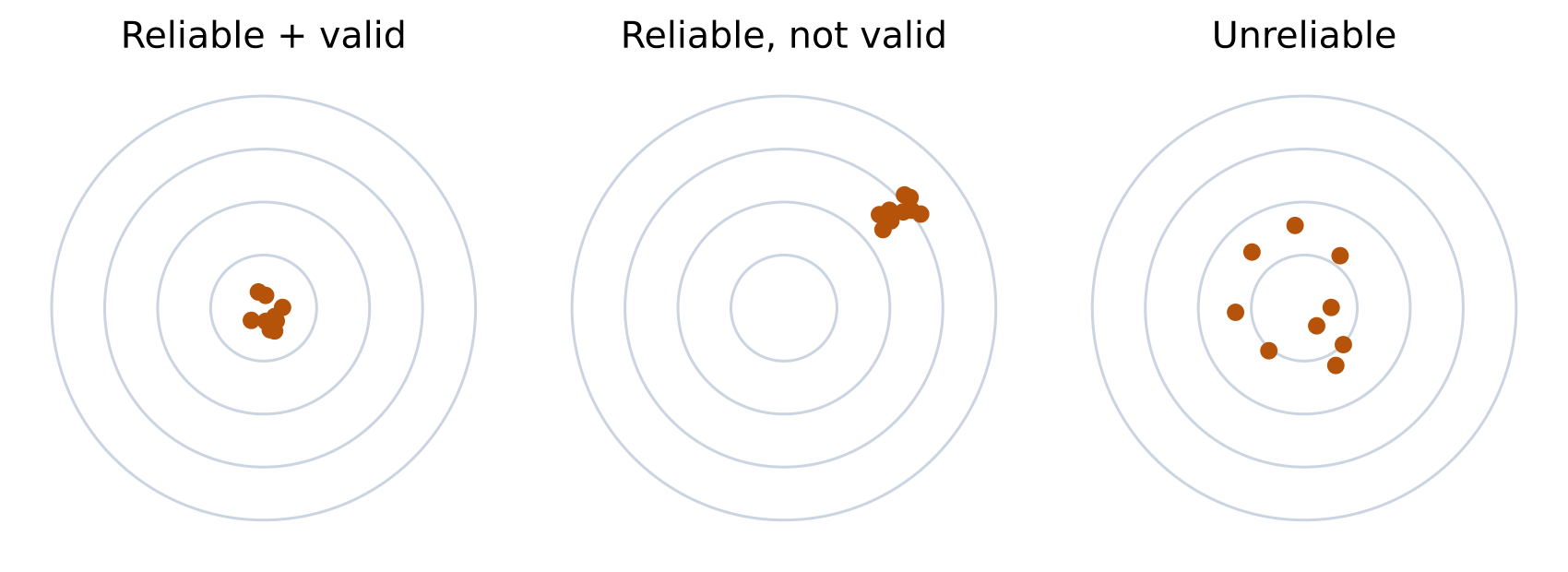
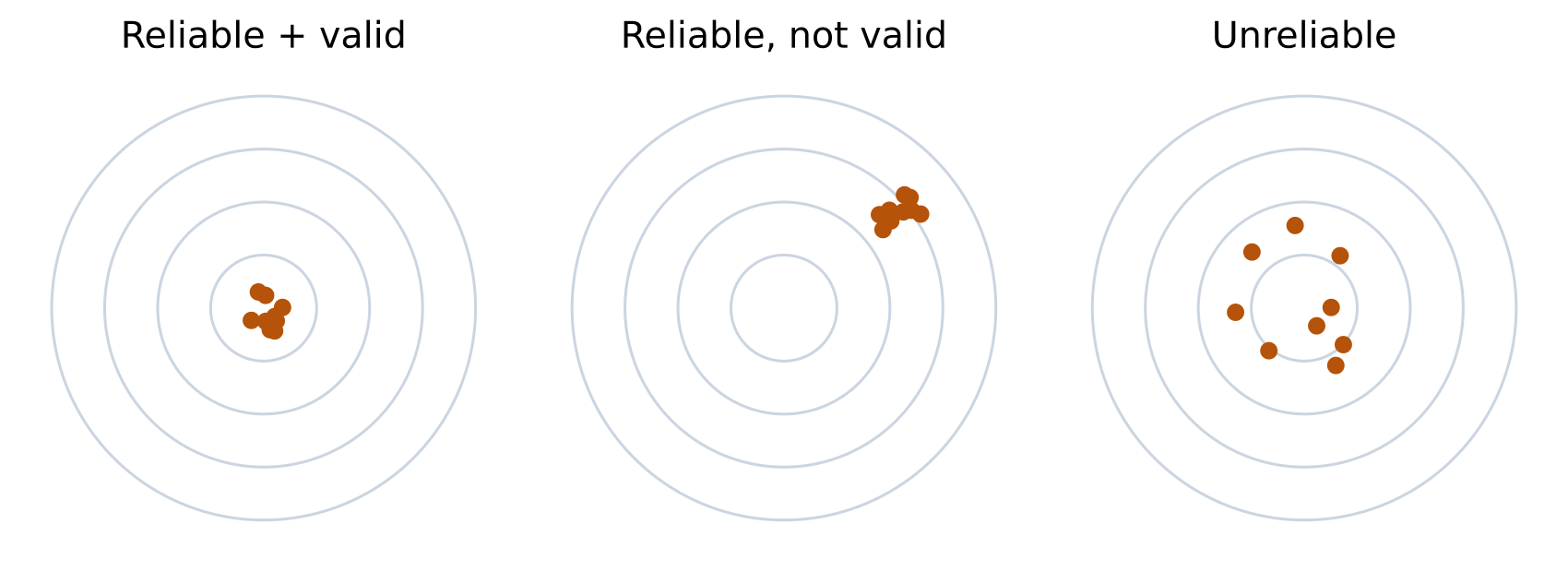
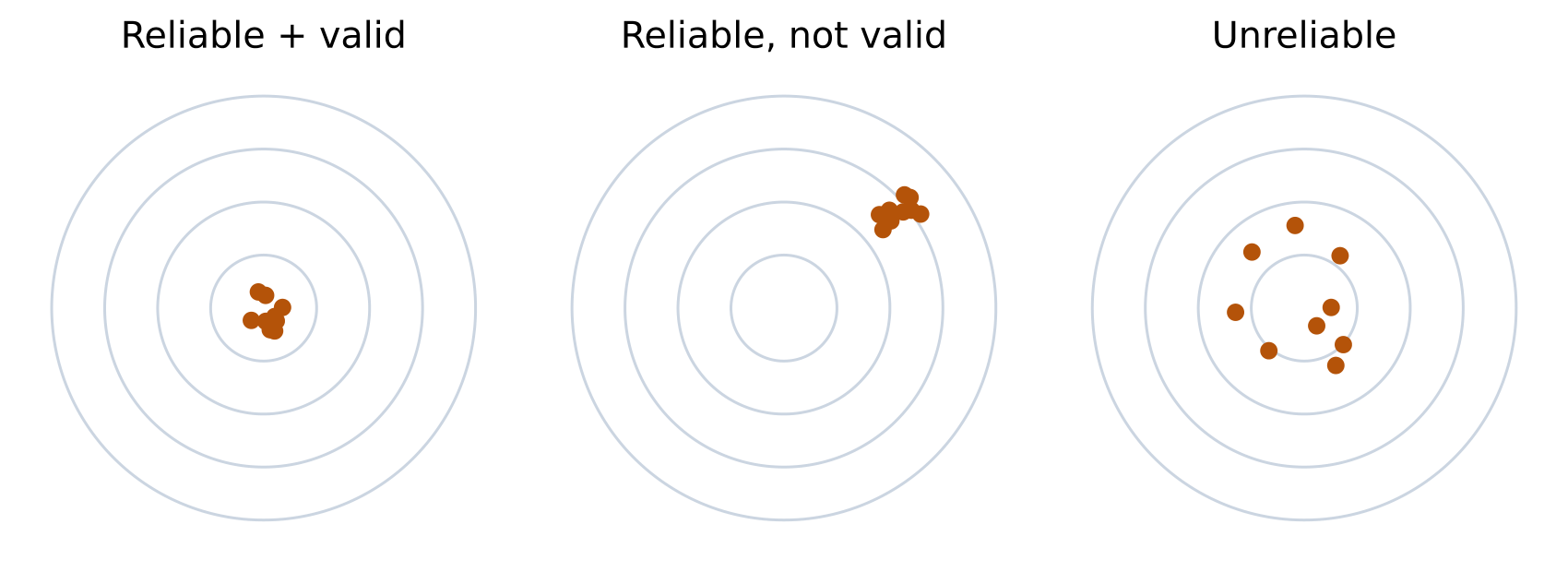
    ความน่าเชื่อถือ: ความสม่ำเสมอของการวัด ความถูกต้อง: หลักฐานที่รองรับการตีความว่าต้องการวัดอะไร

    ความน่าเชื่อถือเกี่ยวข้องกับความสม่ำเสมอ ส่วนความถูกต้องเกี่ยวข้องกับหลักฐานที่สนับสนุนการตีความหรือการใช้งานเฉพาะอย่าง

    นิยามเชิงปฏิบัติการระบุวิธีการวัดแนวคิดให้ชัดเจน การตั้งชื่อแบบสอบถามไม่ได้ยืนยันความถูกต้องของแนวคิด

    การจัดกลุ่มแบบสุ่มช่วยเปรียบเทียบได้ดีขึ้น การสุ่มตัวอย่างช่วยให้สรุปผลไปยังประชากรได้ จริยธรรมเป็นข้อจำกัดทั้งในการออกแบบและการตีความ

    ค่า p คือความน่าจะเป็นของข้อมูลที่สอดคล้องกับสมมติฐานศูนย์น้อยที่สุด ไม่ใช่ความน่าจะเป็นที่สมมติฐานศูนย์จะจริง ข้อคำถามประวัติศาสตร์แยกแยะสำนักคิดและวิธีการต่างๆ ของแต่ละสำนัก

    กำหนดนิยามแนวคิด ระบุตัวบ่งชี้ที่สังเกตได้ แล้วพิจารณาว่าตัวบ่งชี้นั้นรองรับการตีความที่ต้องการหรือไม่ การสุ่มตัวอย่าง关乎ผู้เข้าร่วมการศึกษา ส่วนการจัดกลุ่มแบบสุ่ม关乎เงื่อนไขที่ได้รับ ผลลัพธ์เชิงสาเหตุต้องอาศัยการเปรียบเทียบที่เชื่อถือได้ร่วมกับการวัดและมาตรการด้านจริยธรรม สำนักประวัติศาสตร์ต่างกันในคำถามและวิธีการที่เน้นย้ำ ดู MM.1, MM.2 และ HT.1 ก่อนใช้คำศัพท์ทางสถิติหรือประวัติศาสตร์เป็นการอธิบาย

    ตัวอย่างเหตุผลประกอบ

    การทดสอบความจำให้คะแนนที่คล้ายกันเมื่อทดสอบซ้ำ แต่ส่วนใหญ่วัดทักษะการอ่าน อาจแสดงถึงความน่าเชื่อถือแบบทดสอบ-ทดสอบใหม่ แต่ขาดหลักฐานสำหรับการตีความความจำที่ตั้งใจไว้ การสร้างคุณภาพต้องอาศัยมากกว่าความสอดคล้องจากการทดสอบซ้ำ

    อาสาสมัครถูกจัดกลุ่มแบบสุ่มให้ทำงานความจำสองอย่าง การนี้ทำให้ตัวอย่างเป็นตัวแทนของผู้ใหญ่ทุกคนได้หรือไม่?

    ไม่ การจัดกลุ่มช่วยเปรียบเทียบเงื่อนไขภายในกลุ่มอาสาสมัครแต่ไม่แก้ปัญหาคำเลือกเข้า การสรุปผลต้องระวังเรื่องกระบวนการสรรหา เกณฑ์การคัดเลือก และความแตกต่างของประชากร อธิบายการสุ่มตัวอย่างและการจัดกลุ่มแยกต่างหาก

    แผนภาพต้นฉบับสำหรับจิตวัดและสร้างแบบทดสอบ ความสัมพันธ์และตัวเลขที่เป็นเพียงตัวอย่างไม่ใช่ผลวิจัย

    การถ่ายโอนแบบอิสระ

    รายงานระบุว่า p=.03 และสรุปว่าทฤษฎีมีความน่าจะเป็น 97% ที่จะจริงและมีผลขนาดใหญ่ แก้ไขข้อสรุปทั้งสองให้ถูกต้อง

    ลองทำอย่างอิสระ แล้วใช้เฉลยแผ่นทักษะที่จับคู่

    การทบทวนและข้อจำกัดของแหล่งข้อมูล

    หลีกเลี่ยงข้อผิดพลาดนี้: ความมีนัยสำคัญทางสถิติเพียงอย่างเดียวบอกไม่ได้ถึงขนาดผล คุณค่าในการใช้งาน หรือความลำเอียงในการออกแบบ ขอบเขตการสอนมาจาก teaching.yaml และการทบทวน source/key/crop ใน bank_review_form.yaml เกณฑ์วินิจฉัยปัจจุบันที่ละเอียดต้องใช้คู่มือที่ได้รับการรับรอง Neither historical ETS practice nor this educational reference certifies them.

    คำศัพท์
    English ไทย
    reliability/rɪˌlaɪəˈbɪlɪti/ ความน่าเชื่อถือ
    validity/væˈlɪdɪti/ ความถูกต้อง
  • 7

    VII · Historical perspectives and psychometric interpretation

    โปรแกรมการเรียนรู้มาเร็วๆ นี้

    เอกสารประกอบการเรียน

    มุมมองทางประวัติศาสตร์และการตีความทางจิตmetrics

    ขอบเขตและเงื่อนไขก่อนเข้าเรียน

    หัวข้อ GRE ที่รองรับ 7 (VII) ใช้ MM.1 สำหรับคะแนนมาตรฐาน และ EP.1 สำหรับเครื่องมือคัดกรองตามเงื่อนไข ข้อสอบที่เป็นทางการเดิมติดตามได้ใน bank_review_form.yaml; งานต้นฉบับด้านล่างไม่ใช่ข้อสอบ ETS

    แนวคิดและวิธีการ

    ความน่าเชื่อถือ: ความสม่ำเสมอของการวัดภายใต้เงื่อนไขที่กำหนด ความถูกต้อง: หลักฐานที่รองรับการตีความและการใช้คะแนนอย่างใดอย่างหนึ่ง

    โครงสร้างวิทยาวิเคราะห์ประสบการณ์ที่มีสติ awareness หน้าที่วิทยาถามว่าการกระทำทางจิตช่วยปรับตัวอย่างไร พฤติกรรมวิทยาเน้นการเรียนรู้ที่สังเกตได้ จิตวิทยาเกส탈ต์เน้นการรับรู้ที่เป็นระเบียบ เป็นจุดเน้นทางประวัติศาสตร์ ไม่ใช่ฉลากที่ใช้แทนกันได้

    จิตวิเคราะห์เน้นความขัดแย้งในจิตใต้สำนึก มนุษยนิยมเน้นการมีอำนาจและความเติบโต คognitivism เน้นการประมวลผลข้อมูล เปรียบเทียบกลไกการอธิบายมากกว่าจับคู่ทฤษฎีกับชื่อบุคคลที่คุ้นเคย

    ความน่าเชื่อถือ关乎ความสม่ำเสมอระหว่างครั้งวัด ความถูกต้อง关乎หลักฐานสำหรับการตีความและการใช้งานที่เสนอ ค่าสัมประสิทธิ์ความน่าเชื่อถือสูงไม่สามารถพิสูจน์ได้ว่าทดสอบวัดแนวคิดที่ต้องการได้อย่างยุติธรรม

    มาตรฐานการจัดเตรียมการบริหารconsistentและตัวอย่างอ้างอิงที่เกี่ยวข้อง คะแนนเทียบเกณฑ์ differs from mastery criterion-refs. ค่าทำนายขึ้นอยู่กับ base rates cùng sensitivity and specificity.

    เกณฑ์เปรียบเทียบสถานะเทียบกับประชากรอ้างอิง เกณฑ์ Mastery อธิบายมาตรฐานประสิทธิภาพที่กำหนด Percentile สูงไม่เท่ากับ percentage ถูกสูง การบริหารแบบมาตรฐานลดความแปรปรวนจากขั้นตอนที่ไม่จำเป็น แต่ตัวอย่างเกณฑ์ยังต้องเหมาะกับวัตถุประสงค์的使用 Psychological perspectives สามารถถามคำถามเสริมกัน ความแตกต่างในการเน้นย้ำไม่ทำให้ทุกการสังเกตชี้ชัดต่อสำนักใดสำนักหนึ่ง

    ตัวอย่างเหตุผลประกอบ

    ใน 1,000 คน สมมติว่า 10 มีภาวะเป้าหมาย เครื่องมือคัดกรองตรวจพบ 9 ของผู้ที่มี 10 เหล่านี้ แต่ระบุผิด 99 ของ 990 คนที่เหลือ จากผู้ที่มีผลการคัดกรองเป็นบวก 108 คน มีเพียง 9/108≈8.3% เท่านั้นที่เป็นกรณีบวกจริง นี่คือตัวอย่างวิธีทำสมมติ ไม่ใช่คำแนะนำทางการแพทย์

    ผู้เรียนอยู่ที่เปอร์เซ็นไทล์ที่ 80 ในการทดสอบตามมาตรฐาน และตอบถูก 60% คำถามนี้ขัดแย้งกันหรือไม่?

    ไม่ขัดแย้ง. เปอร์เซ็นต์ความถูกต้องเปรียบเทียบคำตอบที่ถูกต้องกับข้อสอบทั้งหมด ส่วนเปอร์เซ็นไทล์เปรียบเทียบคะแนนของผู้เรียนกับกลุ่มอ้างอิง การทดสอบที่ยากสามารถให้ผลลัพธ์ทั้งสองได้ ควรระบุประชากรมาตรฐานและการเปรียบเทียบเฉพาะเจาะจงแทนการแทนที่หนึ่งด้วยอีกตัวหนึ่ง

    แผนภาพต้นฉบับสำหรับการรับรู้ทางประสาทสัมผัส การรับรู้ และจิตฟิสิกส์ ความสัมพันธ์และตัวเลขที่ใช้เป็นตัวอย่างไม่ใช่ผลการวิจัย

    การถ่ายโอนแบบอิสระ

    ในกรณีสมมติ 2,000 จำนวน 20 คนตรงตามนิยามเป้าหมาย หน้าจอตรวจสอบพบ 18 คนจากกลุ่มนี้และ 198 คนจากอีกกลุ่มหนึ่ง คำนวณสัดส่วนของหน้าจอตรวจสอบที่เป็นบวกที่ตรงตามนิยาม

    ลองทำอย่างอิสระ แล้วใช้เฉลยแผ่นทักษะที่จับคู่

    การทบทวนและข้อจำกัดของแหล่งข้อมูล

    หลีกเลี่ยงข้อผิดพลาดนี้: อย่าเทียบเท่าความไว (sensitivity) กับความน่าจะเป็นที่ผลลัพธ์เป็นบวกจะถูกต้อง และอย่าใช้คะแนนในห้องเรียนเพื่อวินิจฉัยโรค ขอบเขตการสอนมาจาก teaching.yaml และการทบทวน source/key/crop ใน bank_review_form.yaml เกณฑ์การวินิจฉัยปัจจุบันที่ละเอียดต้องใช้คู่มือที่มีรับรอง; ไม่ทั้งแนวปฏิบัติ ETS ในอดีตหรือเอกสารอ้างอิงทางการศึกษาฉบับนี้ที่จะรับรองเกณฑ์เหล่านี้

    คำศัพท์
    English ไทย
    reliability/rɪˌlaɪəˈbɪlɪti/ ความน่าเชื่อถือ
    validity/væˈlɪdɪti/ ความถูกต้อง
  • 8

    CL.1 · Diagnostic systems and disorder classification

    โปรแกรมการเรียนรู้มาเร็วๆ นี้

    เอกสารประกอบการเรียน

    ระบบการวินิจฉัยและการจำแนกรูปแบบความผิดปกติ

    ขอบเขตและเงื่อนไขก่อนเข้าเรียน

    หัวข้อ GRE ที่รองรับ 8 (CL.1). ใช้บทเรียนวัดผลภาพรวม VI เมื่อตีความงานวิจัย ข้อสอบทางการที่มีอยู่สามารถติดตามได้ใน bank_review_form.yaml; ภารกิจต้นฉบับด้านล่างไม่ใช่รายการของ ETS

    แนวคิดและวิธีการ

    เกณฑ์การวินิจฉัย: อาการ ระยะเวลา ความบกพร่อง และข้อกำหนดการตัดออกที่ระบุไว้สำหรับการจำแนกรูปแบบ โมเดล diathesis-stress: คำอธิบายว่าความอ่อนแอและความเครียดจากสิ่งแวดล้อมมีผลต่อความเสี่ยงร่วมกันอย่างไร

    กรอบบันทึกคือ DSM-5-TR การจำแนกรูปแบบทางคลินิกอธิบายรูปแบบ; หมวดหมู่ไม่ได้กำหนดสาเหตุของการแสดงออก รายการ ETS ในอดีตต้องตีความเทียบกับเวอร์ชันแหล่งที่มาที่บันทึกไว้

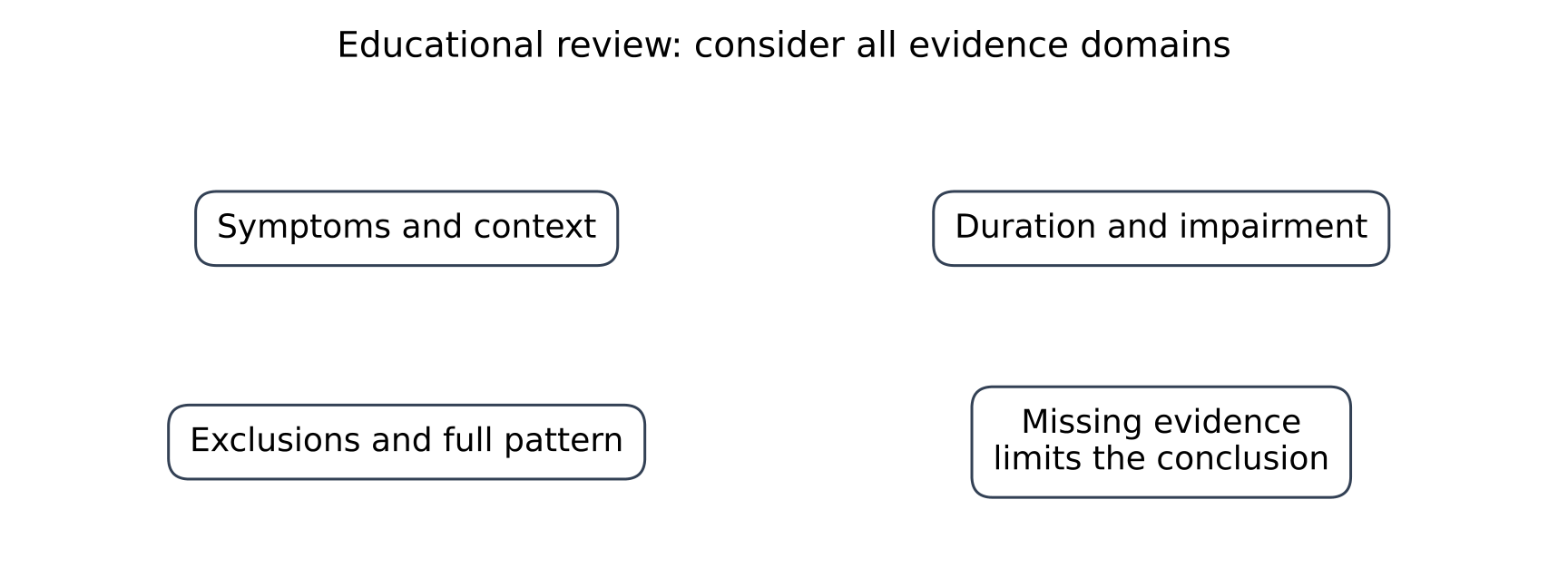
    อาการ ระยะเวลา ความทุกข์ใจหรือความบกพร่องอย่างมีนัยสำคัญทางคลินิก บริบท และการตัดออก ต้องพิจารณาพร้อมกัน ระยะเวลาสั้นๆ โดยตัวเองไม่สามารถยืนยันว่ามีความผิดปกติจากความเครียดเฉียบพลันหรือการวินิจฉัยอื่นใดได้

    โมเดล diathesis-stress ตรวจสอบว่าความอ่อนแอและความเครียดจากสิ่งแวดล้อมมีผลต่อความเสี่ยงร่วมกันอย่างไร既不 family history nor a later event establishes an inevitable outcome or a universal necessity/sufficiency rule.

    การแบ่งแยกทางการศึกษาทั่วไปรวมถึงประสบการณ์เพิ่มเติมเทียบกับฟังก์ชันลดลงในการบรรยายอาการ และการแสดงออกเป็นช่วงเทียบกับรูปแบบที่ยั่งยืน เกณฑ์ปัจจุบันที่ละเอียดต้องใช้คู่มือที่มีรับรอง; คู่มือฝึกฝน GRE ที่ไม่มีนั้นไม่ใช่คู่มือดังกล่าว

    ชื่อการสอนที่บันทึกคือ DSM-5-TR; แนวปฏิบัติ ETS ในอดีตไม่ใช่อำนาจสำหรับเกณฑ์การวินิจฉัยปัจจุบันทุกประการ การวินิจฉัยต้องการรูปแบบสมบูรณ์และการตัดออกภายใต้คู่มือที่เกี่ยวข้อง ระยะเวลาเป็นหลักฐานเพียงส่วนหนึ่ง ไม่ใช่กฎตัดสินใจที่เพียงพอ ความ predisposition และความเครียดเป็นแนวคิดความเสี่ยง:既不 family history nor an adverse event makes an outcome inevitable. หลีกเลี่ยงการจำแนกรูปแบบบุคคลจริงในการสอนในห้องเรียน

    ตัวอย่างเหตุผลประกอบ

    กรณีสมมติมอบเหตุการณ์ร้ายแรงล่าสุดและสองอาการแต่ละเลยความบกพร่อง การตัดออก และการประเมินเต็มรูปแบบ สรุปใดที่ถูกต้อง?

    กรณีสมมตินี้ระบุหลักฐานที่เกี่ยวข้องและข้อมูลที่ขาดหาย มันไม่สามารถยืนยันการวินิจฉัยได้ เกณฑ์ระยะเวลาเพียงอย่างเดียวไม่สามารถเปลี่ยนเรื่องราวสั้นๆ ให้เป็นความผิดปกติทางเลือกได้ การตอบสนองทางการศึกษาที่ถูกต้องคือการระบุโดเมนเกณฑ์ที่ขาดหายไปและแหล่ง/เวอร์ชัน ไม่ใช่การให้คำแนะนำส่วนบุคคล

    โดเมนหลักฐานทางการศึกษา: กรณีสมมติที่ไม่สมบูรณ์ไม่สามารถยืนยันการวินิจฉัยได้

    การถ่ายโอนแบบอิสระ

    บุคคลสมมติสองคนมีปัจจัยเสี่ยงในครอบครัวร่วมกัน; มีเพียงคนหนึ่งที่มีตัวกระตุ้นความเครียดและปัญหาภายหลัง อธิบายการตีความ diathesis-stress และข้อจำกัดของมัน

    ลองทำอย่างอิสระ แล้วใช้เฉลยแผ่นทักษะที่จับคู่

    การทบทวนและข้อจำกัดของแหล่งข้อมูล

    หลีกเลี่ยงข้อผิดพลาดนี้: อย่าสรุปการวินิจฉัยจากระยะเวลาหรืออาการไม่กี่ข้อ หรือเสนอคำแนะนำการรักษาส่วนบุคคล ขอบเขตการสอนมาจาก teaching.yaml และการทบทวน source/key/crop ใน bank_review_form.yaml เกณฑ์การวินิจฉัยปัจจุบันที่ละเอียดต้องใช้คู่มือที่มีรับรอง; ไม่ทั้งแนวปฏิบัติ ETS ในอดีตหรือเอกสารอ้างอิงทางการศึกษาฉบับนี้จะรับรองเกณฑ์เหล่านี้

    คำศัพท์
    English ไทย
    diagnostic criteria/ˌdaɪəɡˈnɒstɪk kraɪˈtɪərɪə/ เกณฑ์การวินิจฉัย
    diathesis-stress model/ˈdaɪəθəsɪs stres ˈmɒdl/ แบบจำลองความเปราะบาง-ความเครียด
  • 9

    CL.2 · Treatment models and outcome evidence

    โปรแกรมการเรียนรู้มาเร็วๆ นี้

    เอกสารประกอบการเรียน

    โมเดลการรักษาและหลักฐานผลการดำเนินการ

    ขอบเขตและเงื่อนไขก่อนเข้าเรียน

    หัวข้อ GRE ที่รองรับ 9 (CL.2). ใช้บทเรียนวัดผลภาพรวม VI เมื่อตีความงานวิจัย ข้อสอบทางการที่มีอยู่สามารถติดตามได้ใน bank_review_form.yaml; ภารกิจต้นฉบับด้านล่างไม่ใช่รายการของ ETS

    แนวคิดและวิธีการ

    การปรับสภาพใหม่: การแทนที่การตอบสนองที่ถูกเงื่อนไขด้วยการจับคู่สิ่งกระตุ้นกับการตอบสนองที่ไม่สอดคล้องกัน เช่น ความผ่อนคลาย ปัจจัยร่วม: ส่วนประกอบที่ร่วมกันใน liệu therapy ต่างๆ เช่น ความสัมพันธ์ระหว่างผู้ให้บริการและผู้รับบริการ และความคาดหวัง ซึ่งถูกเสนอเพื่ออธิบายผลลัพธ์ที่คล้ายคลึงกัน

    แต่ละกลุ่ม liệu therapy เสนอกลไกของตนเอง การทำงานแบบจิตพลวัตมุ่งเป้าไปที่ความขัดแย้งทางจิตใต้สำนึกและความสัมพันธ์ในวัยแรกเริ่ม โดยใช้ปรากฏการณ์การถ่ายโอน; รูปแบบความสัมพันธ์กับวัตถุเน้นย้ำถึงความสัมพันธ์ในวัยแรกเริ่มเป็นพิเศษ การรักษาแบบพฤติกรรมใช้หลักการการเรียนรู้: การลดความกลัวอย่างเป็นระบบโดยทั่วไปจะจับคู่ลำดับขั้นความกลัวที่เพิ่มขึ้นทีละน้อยกับความผ่อนคลาย (การปรับสภาพใหม่) ในขณะที่แนวทางการสัมผัสไม่จำเป็นต้องใช้การจับคู่กับความผ่อนคลาย การบำบัดแบบ شناخت-พฤติกรรมระบุและทดสอบความคิดที่บิดเบือน และเพิ่มการกระตุ้นพฤติกรรม การทำงานแบบเน้นตัวบุคคลมอบความเข้าใจอย่างลึกซึ้ง ความยอมรับอย่างไม่มีเงื่อนไข และความตรงกัน; การทำงานแบบ Gestalt เน้นช่วงปัจจุบัน

    จับคู่เทคนิคกับกลไกและการนำเสนอ: ภาวะกลัวเฉพาะจุดชี้ไปสู่การสัมผัสที่ค่อยเป็นค่อยไป; ภาวะ obsessive-compulsive ชี้ไปสู่การสัมผัสพร้อมการป้องกันการตอบสนอง; ภาวะซึมเศร้า指向การปรับโครงสร้าง شناخت plus การจัดตารางกิจกรรม ผู้ให้ liаya ที่ยึดติดกับความสัมพันธ์กับวัตถุจะเน้นความสัมพันธ์ในวัยแรกเริ่ม ไม่ใช่ยาหรือรายการความคิดที่บิดเบือน

    การอ้างถึงผลลัพธ์ต้องการการควบคุมเนื่องจากภาวะหายเองและการถอยกลับสู่ค่าเฉลี่ย: คนมาขอความช่วยเหลือในช่วงที่แย่ที่สุดแล้วดีขึ้นเอง anyway การทดลองแบบสุ่มมีกลุ่มควบคุมที่มีรายการรอหรือกลุ่ม placebos แยกการได้ผลจากการรักษาออกจากธรรมชาติของการพัฒนา Efficacy คือประสิทธิภาพภายใต้เงื่อนไขที่ควบคุม; Effectiveness คือประสิทธิภาพในการปฏิบัติทั่วไป Meta-analysis รวบรวมการทดลองเพื่อให้ได้ประมาณการที่มั่นคงขึ้น

    เมื่อ liệu therapies ที่ถูกต้องตามหลักวิชาการแสดงผลลัพธ์เฉลี่ยที่คล้ายกัน สมมติฐานปัจจัยร่วมให้เครดิตส่วนประกอบที่ร่วมกันเช่น ความสัมพันธ์การทำงาน ความคาดหวัง และความเข้าใจอย่างลึกซึ้ง แทนที่จะเป็นเทคนิคที่มีแบรนด์ ผลเฉลี่ยที่คล้ายกันไม่ได้พิสูจน์ว่ากลไกเหมือนกัน และการทดลองเดียวไม่สามารถตัดสินคำถามนี้ได้ทั้งทางบวกและลบ

    กลไกและผลลัพธ์คือการอ้างถึงที่แตกต่างกัน Intervention อาจปรับปรุงผลลัพธ์โดยไม่ที่การศึกษายืนยันกลไกที่เสนอไว้ การเปรียบเทียบรายการรอควบคุมการเปลี่ยนแปลงตามธรรมชาติบางประการ แต่ไม่ทั้งหมดความแตกต่างของความใส่ใจและความคาดหวัง การเปรียบเทียบเชิงรุกสามารถ addressing บางส่วนของความแตกต่างเหล่านั้น เปรียบเทียบการจัดสรร การขาดหาย การนิยามผลลัพธ์ และการติดตามผลก่อนจะ attribution ประโยชน์ให้กับเทคนิคใดเทคนิคหนึ่ง ผลเฉลี่ยของตัวอย่างที่คล้ายกันไม่ได้แสดงถึงความเท่าเทียมกัน безการออกแบบที่เหมาะสมและการวิเคราะห์ความไม่แน่นอน

    ตัวอย่างเหตุผลประกอบ

    นักบำบัดที่เน้นทฤษฎีความสัมพันธ์ของวัตถุให้ความสำคัญกับความสัมพันธ์ในวัยต้น การรักษาสายกลัวโดยใช้ลำดับขั้นคู่กับการผ่อนคลายคือการจัด ulangการตอบสนองทางเงื่อนไข กลุ่มที่ได้รับการรักษาและดีขึ้นจากก่อนทดสอบถึงหลังทดสอบแสดงถึงการเปลี่ยนแปลง ไม่ใช่ประสิทธิภาพ: หากไม่มีกลุ่มควบคุม การกลับสู่ค่าเฉลี่ยและภาวะหายเองยังคงเป็น possibility

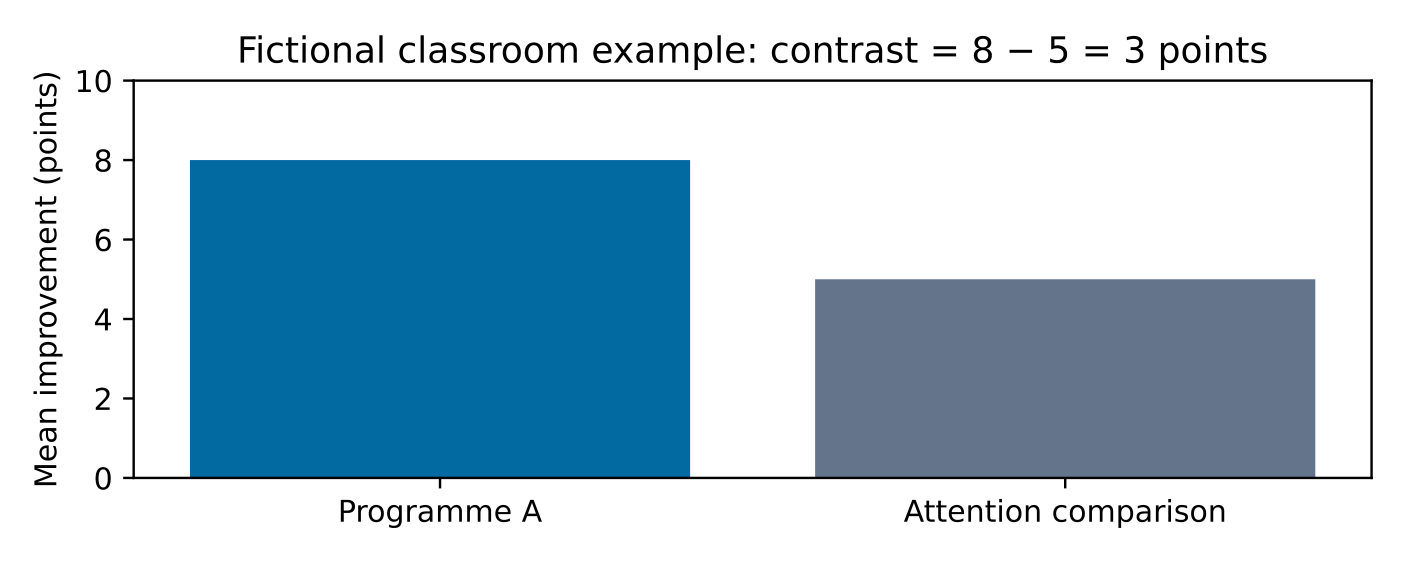
    ในการศึกษา fictitious แบบสุ่ม ผลการปรับปรุงเฉลี่ยคือ 8 คะแนนในโปรแกรม A และ 5 ในการเปรียบเทียบการใส่ใจ What contrast is relevant?

    ความแตกต่างระหว่างกลุ่มในผลการปรับปรุงเฉลี่ย=8−5=3 คะแนน The 8-point within-group gain รวมถึงการเปลี่ยนแปลงที่เกิดขึ้นภายใต้การเปรียบเทียบด้วย The contrast อาจ support一个 relative effect ภายใต้เงื่อนไขการศึกษา แต่ความแม่นยำ ข้อมูลที่หายไปและความหมายของผลลัพธ์ยังคงจำเป็น มันไม่ได้ establish กลไกหรือความเหนือกว่าในทุก setting การปฏิบัติ

    Original fictional programme contrast: eight minus five equals three improvement points.

    การถ่ายโอนแบบอิสระ

    A review combines ten small trials, all drawn from one type of clinic. Why does having ten studies not ensure a universal conclusion?

    ลองทำอย่างอิสระ แล้วใช้เฉลยแผ่นทักษะที่จับคู่

    การทบทวนและข้อจำกัดของแหล่งข้อมูล

    หลีกเลี่ยงข้อผิดพลาดนี้: การอนุมานสาเหตุจากผลกำไรก่อน-หลัง without a control หรือ treating Comparable means as proof of identical mechanisms. Teaching scope comes from teaching.yaml and the source/key/crop review in bank_review_form.yaml. Detailed current diagnostic criteria require an authenticated manual; neither historical ETS practice nor this educational reference certifies them.

    คำศัพท์
    English ไทย
    counterconditioning/ˈkaʊntəkəndɪʃənɪŋ/ การตอบสนองแบบตรงข้าม
    common factors/ˈkɒmən ˈfæktəz/ ปัจจัยร่วม
  • 10

    MM.1 · Psychometrics and test construction

    โปรแกรมการเรียนรู้มาเร็วๆ นี้

    เอกสารประกอบการเรียน

    English

    Psychometrics and test construction

    Scope and prerequisites

    Supported GRE topic 10 (MM.1). Use the overview measurement lesson VI when interpreting research evidence. Existing official questions are traced in bank_review_form.yaml; original tasks below are not ETS items.

    Concepts and method

    standard error of measurement 测量标准误: The expected spread of observed scores around the true score, SD×sqrt(1−r). construct validity 构想效度: Convergent and discriminant evidence that a score reflects the intended trait.

    Reliability is consistency, and its type is named by the design that produced it: the same test twice gives test-retest reliability; two similar forms give alternate-forms reliability; consistency within one sitting (split-half, Cronbach alpha) is internal consistency; agreement between scorers is inter-rater reliability. The Spearman-Brown formula r_full=2r/(1+r) rescales a half-test correlation to full test length: r=.80 becomes about .89.

    Validity is evidence for the proposed interpretation, not of the test itself: content validity asks whether items cover the domain; criterion validity relates scores to an outcome, concurrently or predictively; construct validity assembles convergent and discriminant evidence that the score tracks the intended trait. Reliability caps validity but never establishes it: a consistent scale can systematically measure something else.

    Standard scores re-express raw scores against a norm group: z=(X−mean)/SD, T=50+10z, and Wechsler deviation IQ=100+15z. A z of +2 gives IQ 130 and about the 98th percentile. The standard error of measurement SEM=SD×sqrt(1−r) converts reliability into a score band: SD=15 with r=.91 gives SEM=15×sqrt(.09)=4.5.

    Item analysis checks each item: difficulty p is the proportion answering correctly, and discrimination is the item-total correlation. Items that nearly everyone or no one answers correctly carry little information; negative discrimination flags a likely miskeyed or misleading item.

    Choose the reliability coefficient by the source of variation being studied. A standard error of measurement concerns measurement uncertainty under a model; it is not the standard error of a sample mean. The Spearman–Brown estimate assumes sufficiently comparable halves; a formula cannot repair unrelated item content. Standard scores describe relative position and do not show that a test measures the intended construct fairly across groups.

    Worked reasoning

    Two similar vocabulary tests given a week apart with r=.90 show alternate-forms reliability, not test-retest, because the form changed. With SD=15 and reliability .91, SEM=4.5 points. A z of +2 corresponds to IQ 130. A split-half correlation of .80 corrects to 2×.80/1.80≈.89 at full length.

    A fictional scale has mean 50 points, SD 10 points and reliability .84. A score is 65. Compute z and SEM, showing the formulas.

    z=(X−mean)/SD; z=(65 points−50 points)/(10 points)=1.5, dimensionless. SEM=SD√(1−r); SEM=(10 points)√(1−.84)=4 points. SEM is a model-based uncertainty measure, not proof of validity. T=50+10z; T=50+10(1.5)=65 on the T scale.

    Original schematic for Psychometrics and test construction. Illustrative relationships and numbers are not research results.

    Independent transfer

    Two raters repeatedly disagree by five points but rank scripts identically. Does a high correlation establish agreement? Suggest a check.

    Attempt independently, then use the matching skill sheet solution.

    Review and source limits

    Avoid this error: Calling a two-different-forms correlation test-retest reliability, or citing high reliability as if it were validity evidence. Teaching scope comes from teaching.yaml and the source/key/crop review in bank_review_form.yaml. Detailed current diagnostic criteria require an authenticated manual; neither historical ETS practice nor this educational reference certifies them.

    คำศัพท์
    English ไทย
    standard error of measurement/ˈstændəd ˈerə ɒv ˈmeʒəmənt/ ค่าความคลาดเคลื่อนมาตรฐานของการวัด
    construct validity/ˈkɒnstrʌkt væˈlɪdɪti/ ความ-validของโครงสร้าง
  • 11

    MM.2 · Research designs and statistical interpretation

    โปรแกรมการเรียนรู้มาเร็วๆ นี้

    เอกสารประกอบการเรียน

    English

    Research designs and statistical interpretation

    Scope and prerequisites

    Supported GRE topic 11 (MM.2). Use the overview measurement lesson VI when interpreting research evidence. Existing official questions are traced in bank_review_form.yaml; original tasks below are not ETS items.

    Concepts and method

    interaction effect 交互作用: The dependence of one factor's effect on the level of another factor. random assignment 随机分配: Allocating participants to conditions by chance to support causal inference.

    A true experiment manipulates an independent variable with random assignment of participants to conditions; between-subjects designs give different people to each condition, within-subjects designs measure the same people in every condition and need counterbalancing. A quasi-experiment lacks full assignment, and a correlational study does not manipulate an independent variable. Correlation alone does not establish causation or temporal order. Random assignment supports internal validity (causal inference); random sampling supports external validity (generalisability). They answer different questions.

    Match analysis to design, measurement scale and assumptions. Two independent quantitative groups may suit an independent-samples t-test; paired data require a paired analysis. Factorial designs often use analysis of variance; categorical counts may suit a chi-square test when expected-count assumptions hold. Correlation or regression examines specified associations; neither alone establishes causation.

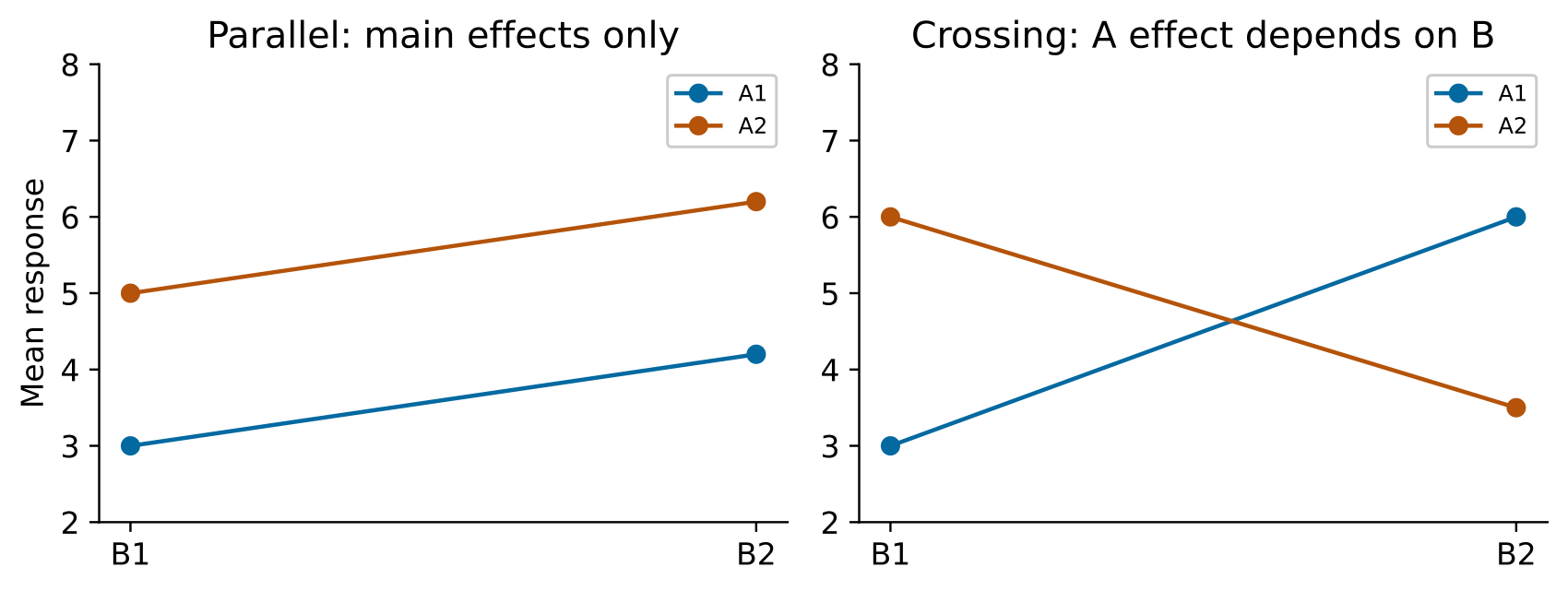
    A main effect averages one factor across the other factor. An interaction means one effect depends on the other factor. Nonparallel sample means suggest an interaction pattern, but variability and the design are needed for population inference. Interactions can exist when averaged main effects cancel; lack of significance is not proof of no effect.

    Mean age 26 with most students 25 or younger is compatible with right skew, but does not uniquely determine distribution shape. Statistical significance is not effect size. A p-value is a probability of results at least as extreme under the specified null model and assumptions, not the probability the null is true. Type I and Type II errors depend on design and decision thresholds.

    Choose a test from the design, scale and assumptions, not merely the number of groups. Paired observations require a paired or repeated-measures analysis; independent groups require an independent-group analysis. An interaction can be meaningful even if averaged main effects cancel. Statistical significance is evidence under a model, not a condition for describing an observed difference. Report estimates and uncertainty and qualify population claims.

    Worked reasoning

    Fictional mean scores are: task A, novices 4 and experts 8; task B, novices 8 and experts 4. Compute marginal means and describe the pattern.

    Novice marginal mean=(4+8)/2=6; expert marginal mean=(8+4)/2=6. Task A marginal mean=(4+8)/2=6; task B marginal mean=(8+4)/2=6. The task contrast reverses by expertise, an interaction pattern despite equal marginal means. Means alone do not establish a population interaction; variability, design and inference are needed.

    Original schematic for Research designs and statistical interpretation. Illustrative relationships and numbers are not research results.

    Independent transfer

    The same 24 people complete two tasks. Another analyst treats the 48 scores as independent. Explain the problem and a suitable analysis family.

    Attempt independently, then use the matching skill sheet solution.

    Review and source limits

    Avoid this error: Drawing a causal conclusion from a correlational design, or reporting a significant interaction as if it were a main effect of one factor. Teaching scope comes from teaching.yaml and the source/key/crop review in bank_review_form.yaml. Detailed current diagnostic criteria require an authenticated manual; neither historical ETS practice nor this educational reference certifies them.

    คำศัพท์
    English ไทย
    interaction effect/ˌɪntəˈrækʃn ɪˈfekt/ ผลเชิงโต้ตอบ
    random assignment/ˈrændəm əˈsaɪnmənt/ การสุ่มจัดกลุ่ม
  • 12

    SP.1 · Sensation, perception and psychophysics

    โปรแกรมการเรียนรู้มาเร็วๆ นี้

    เอกสารประกอบการเรียน

    English

    Sensation, perception and psychophysics

    Scope and prerequisites

    Supported GRE topic 12 (SP.1). Use the overview measurement lesson VI when interpreting research evidence. Existing official questions are traced in bank_review_form.yaml; original tasks below are not ETS items.

    Concepts and method

    difference threshold 差别阈限: The minimum detectable change in a stimulus, a constant fraction of the baseline by Weber's law. transduction 换能: Conversion of physical stimulus energy into neural signals by receptors.

    Psychophysics relates physical intensity to experience. An absolute threshold is a stimulus level meeting a specified detection criterion under specified conditions, often 50% detection; a difference threshold is a detectable change under a stated criterion. Weber's law states that the difference threshold is a constant fraction of the baseline: ΔI/I=k. With k=.02, a 100 g weight needs a 2 g change, while 200 g needs 4 g. Fechner proposed that perceived intensity grows logarithmically with physical intensity.

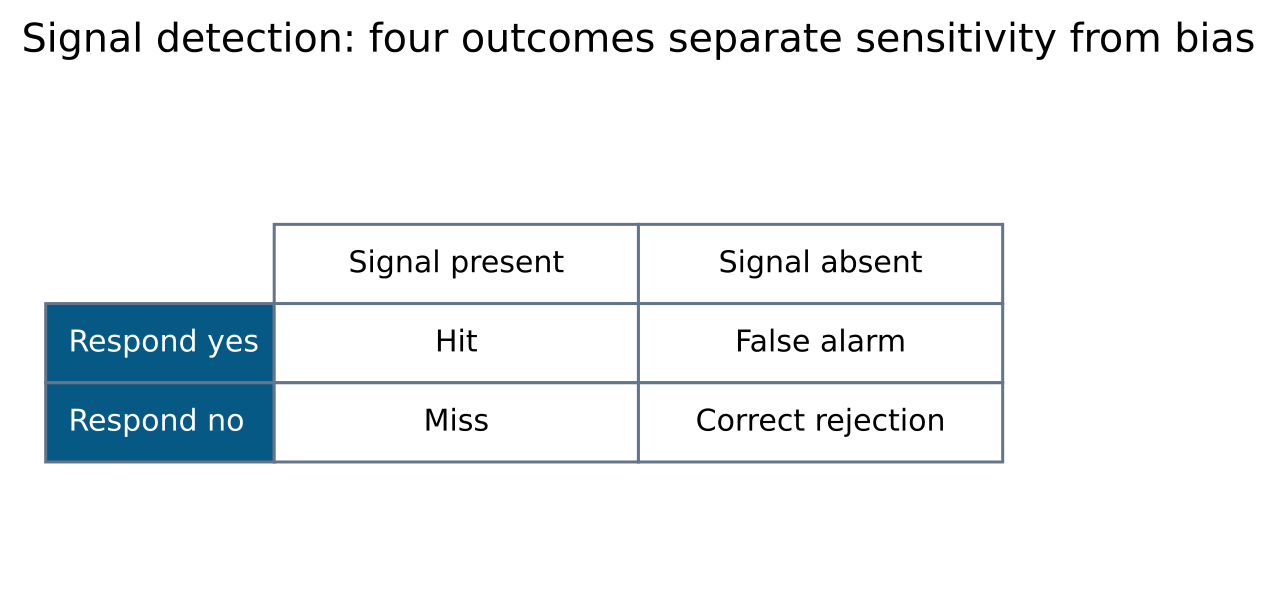
    Real detection is noisy, so signal detection theory separates sensitivity from bias. Presenting signal or noise on each trial gives four outcomes: hits, misses, false alarms and correct rejections. Sensitivity d′ measures how separated the signal and noise distributions are; the criterion measures the observer's willingness to say yes. A payoff change can move the criterion without changing d′, so hit rate alone is not sensitivity.

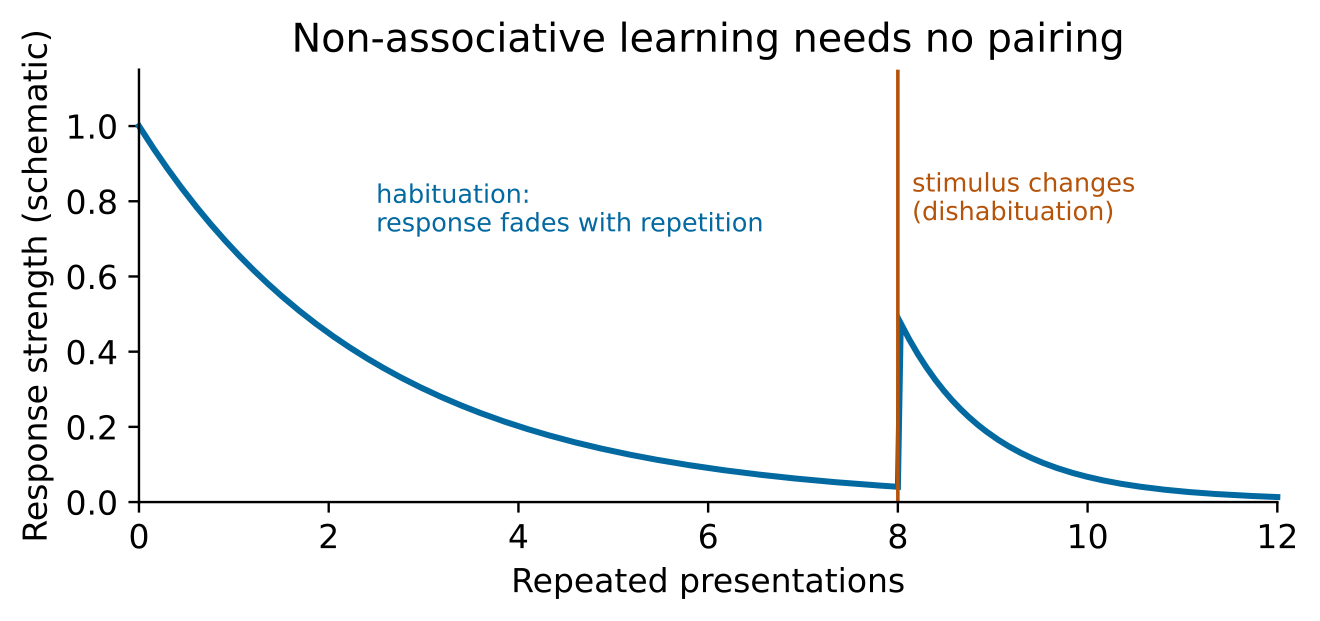
    Sensation begins with transduction: receptors convert physical energy into neural signals, as photoreceptors convert light and hair cells convert sound pressure. Sensory adaptation reduces response to a constant stimulus. Dark adaptation is the recovering sensitivity of the visual system in low light.

    Perception organises input rather than copying it. Gestalt principles group by proximity, similarity, closure and good continuation. Bottom-up processing builds percepts from features; top-down processing applies context and expectation. Categorical perception treats continuous acoustic variation as discrete phonemes: within a category, differences are hard to hear even when physically present.

    A threshold is defined by a detection criterion under specified conditions, often 50% detection for an absolute threshold, rather than a sharp physical boundary between always seen and never seen. Weber's approximation predicts changes proportional to a baseline within its useful range. Transduction changes energy into neural signalling; perception groups and interprets that input. A change in reporting incentives primarily concerns decision criterion, while changes in physical contrast may affect sensitivity.

    Worked reasoning

    With Weber fraction .02, detecting a change from 50 g needs 1 g, and from 500 g needs 10 g. A radiologist who says yes more often after a pay-per-hit scheme shifts criterion, not d′. A listener who cannot distinguish two within-category speech sounds shows categorical perception of a physically continuous dimension.

    With a fictional Weber fraction k=.03, estimate the just noticeable difference for 100 g and 300 g baselines.

    ΔI/I=k, so ΔI=kI. ΔI=.03×100 g=3 g; ΔI=.03×300 g=9 g. The fraction is dimensionless and the result has the baseline's unit. A constant 3 g prediction at both baselines would ignore the proportional model. The approximation does not establish identical thresholds for all observers or intensities.

    Original schematic for Sensation, perception and psychophysics. Illustrative relationships and numbers are not research results.

    Independent transfer

    A listener says yes on more signal and more noise trials after a warning. Explain why sensory adaptation is not the only or best initial explanation.

    Attempt independently, then use the matching skill sheet solution.

    Review and source limits

    Avoid this error: Treating the difference threshold as a fixed amount rather than a fraction of the baseline, or reading a higher hit rate as better sensitivity when the observer simply says yes more. Teaching scope comes from teaching.yaml and the source/key/crop review in bank_review_form.yaml. Detailed current diagnostic criteria require an authenticated manual; neither historical ETS practice nor this educational reference certifies them.

    คำศัพท์
    English ไทย
    difference threshold/ˈdɪfrəns ˈθreʃəʊld/ ขีดจำกัดแห่งความแตกต่าง
    transduction/trænsˈdʌkʃn/ การแปลงสัญญาณ
  • 13

    NE.1 · Neurons, synapses and brain systems

    โปรแกรมการเรียนรู้มาเร็วๆ นี้

    เอกสารประกอบการเรียน

    นิวรอน ซินาปส์ และระบบสมอง

    ขอบเขตและเงื่อนไขก่อนเข้าเรียน

    หัวข้อ GRE ที่รองรับ 13 (NE.1). ใช้บทเรียนภาพรวมการวัด VI เมื่อตีความหลักฐานจากการวิจัย ข้อสอบที่เป็นทางการที่มีอยู่สามารถติดตามได้ใน bank_review_form.yaml; ภารกิจต้นฉบับด้านล่างไม่ใช่ของ ETS

    แนวคิดและวิธีการ

    หลักการทั้งหรือ-none: เมื่อถึงเกณฑ์ นิวรอนจะยิงสไปค์เต็มรูปแบบ; สิ่งกระตุ้นที่แข็งแรงขึ้นเพิ่มอัตรา ไม่ใช่ขนาดสไปค์ การดูดกลับ: การดูดซับสารสื่อประสาทกลับเข้าสู่เซลล์ presynaptic เพื่อสิ้นสุดการทำงานของมัน

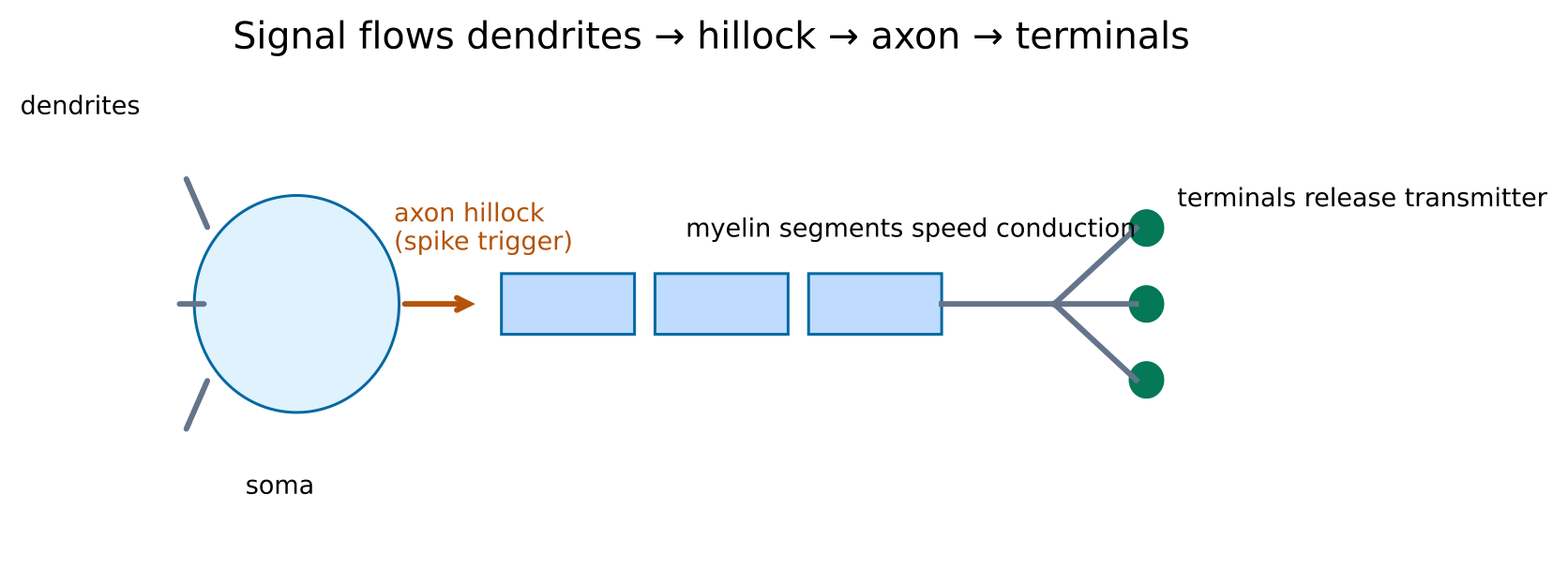
    ศักย์งานเริ่มต้นที่ axon hillock ซึ่งอินพุตแบบ graded รวมกัน; เมื่อถึงเกณฑ์ นิวรอนจะยิงสไปค์เต็มรูปแบบ (หลักการทั้งหรือ-none) และในช่วง refractory period แบบ absolute มันไม่สามารถยิงได้อีกครั้ง ความเข้มของสิ่งกระตุ้นถูกเข้ารหัสโดยอัตราการยิงและจำนวนนิวรอนที่ยิง ไม่ใช่ขนาดสไปค์ Myelin ห่อหุ้ม axon และเร่งการนำส่งโดยการนำส่งแบบ saltatory ระหว่างโหนดของ Ranvier; โรค demyelinating ชะลอหรือขัดขวางการนำส่ง

    ที่ซินาปส์ สไปค์ที่เข้ามาเปิดช่องแคลเซียม Vesicles ปล่อยสารสื่อประสาทลงในช่องว่าง และตัวรับบนเซลล์ postsynaptic แปลงการจับเข้ากับศักย์แบบ new graded potential. Reuptake และการย่อยสลายด้วยเอนไซม์กำจัดสารสื่อประสาท ยาอาจเป็น agonist (เลียนแบบหรือเสริมสารสื่อประสาท) หรือ antagonist (บล็อกตัวรับ); SSRIs บล็อกการดูดกลับของเซโรโทนิน ทิ้งไว้มากกว่าในช่องว่าง

    จุดยึดโครงสร้าง-หน้าที่: Amygdala รองรับอารมณ์และการเรียนรู้ความกลัว; Hippocampus จำเป็นสำหรับการสร้างหน่วยความจำepisodic ใหม่; Hypothalamus ควบคุมแรงขับและ homeostasis; Cerebellum ประสานการเคลื่อนไหว; Broca's area รองรับการผลิตคำพูดและ Wernicke's area เข้าใจ; Prefrontal cortex รองรับวางแผนและการควบคุม การกำหนดตำแหน่งเป็นความจริงแต่บางส่วน: พฤติกรรมส่วนใหญ่เกี่ยวข้องกับเครือข่ายที่กระจาย

    Dopamine แสดงถึงความเฉพาะเจาะจง: มันรองรับการเคลื่อนไหวและรางวัล การสูญเสียมันทำให้เกิดโรคพาร์กินสัน และการส่งสัญญาณ dopaminergic ที่มากเกินไปเชื่อมโยงกับอาการบวกของโรคสยบสติปัญญา ซึ่งยาต้านจิตเวชหลายชนิดรักษาโดยการบล็อกตัวรับ D2 สารสื่อประสาทหนึ่งชนิดให้บริการหลายระบบ ดังนั้นผลกระทบทางพฤติกรรมของยาจึงขึ้นอยู่กับเส้นทาง ไม่ใช่โมเลกุลเพียงอย่างเดียว

    อินพุตที่ปรับระดับได้มีขนาดแตกต่างกันและรวมกันบริเวณจุดกระตุ้น; แอคชันโพเทนเชียลที่แพร่กระจายเป็นแบบทุกหรือไม่มีเลย (all-or-none) อินพุตที่แรงขึ้นสามารถเปลี่ยนความถี่ของการยิงและการเรียกใช้งานเซลล์ แทนที่จะทำให้สไปค์ทุกตัวสูงขึ้น การส่งสัญญาณทางเคมีที่ซินาปส์: เมื่อสารส่งสัญญาณมาถึงจะเปิดช่องแคลเซียม หลอดเวสิเคิลปล่อยสารสื่อประสาท และรีเซปเตอร์จะเปลี่ยนแปลงเซลล์ผู้รับ Agonist เพิ่มการกระทำที่เกี่ยวข้องกับรีเซปเตอร์ ส่วน Antagonist จะขัดขวางการกระทำนั้น ผลลัพธ์ขึ้นอยู่กับชนิดของรีเซปเตอร์และวงจรประสาท ไม่ใช่เพียงชื่อของสารสื่อประสาท

    ตัวอย่างเหตุผลประกอบ

    สไปก์ถูกกระตุ้นที่axon hillock เมื่ออินพุตรวมกันข้าม ngưỡng; หลังการยิง绝对 refractory period จะบังคับให้หยุดพัก การบล็อกการดูดกลับของเซโรโทนินเพิ่มระดับเซโรโทนินในซินาปส์ ซึ่งเป็นกลไกของ SSRI การสูญเสียニューรอนโดพามีนิกทำให้การเคลื่อนไหวผิดปกติในโรคพาร์กินสัน

    สารสมมติชนิดหนึ่งขัดขวางรีเซปเตอร์โดยไม่กระตุ้นมัน สารอีกชนิดหนึ่งชะลอการดูดกลับของสารสื่อประสาท พยากรณ์ผลกระทบทันทีโดยมีข้อจำกัด

    ตัวขัดขวางรีเซปเตอร์ทำหน้าที่เป็น Antagonist ที่รีเซปเตอร์ดังกล่าว การดูดกลับช้าลงอาจยืดระยะเวลาหรือเพิ่มปริมาณสารสื่อประสาทในช่องว่างซินาปส์ คำอธิบายทั้งสองไม่ชี้ชัดถึงพฤติกรรมโดยรวม: ชนิดย่อยของรีเซปเตอร์ ระบบฟีดแบ็ก และเส้นทางที่ได้รับผลกระทบมีความสำคัญ อย่าสรุปเป็นการแนะนำการใช้ยา

    แผนภาพต้นฉบับเกี่ยวกับประสาทเซลล์ ซินาปส์ และระบบสมอง ความสัมพันธ์และตัวเลขเป็นเพียงภาพประกอบ ไม่ใช่ผลการวิจัย

    การถ่ายโอนแบบอิสระ

    สิ่งเร้าที่แรงขึ้นทำให้เกิดสไปค์มากขึ้นแต่มีความสูงเท่าเดิม มุมมองเรื่องรูม่านตาใช้หลักฐานนี้เพื่อโต้แย้งทฤษฎีการยิงแบบทุกหรือไม่มีเลย ให้แก้ไขข้อสรุปดังกล่าว

    ลองทำอย่างอิสระ แล้วใช้เฉลยแผ่นทักษะที่จับคู่

    การทบทวนและข้อจำกัดของแหล่งข้อมูล

    หลีกเลี่ยงข้อผิดพลาดนี้: การอธิบายว่าสิ่งเร้าที่แรงขึ้นจะทำให้สไปค์สูงขึ้น หรือการระบุศูนย์กลางสมองแห่งเดียวว่าเป็นพื้นฐานทั้งหมดของพฤติกรรมซับซ้อน ขอบเขตการสอนมาจากไฟล์ teaching.yaml และการทบทวน source/key/crop ใน bank_review_form.yaml เกณฑ์การวินิจฉัยปัจจุบันที่ละเอียดต้องการคู่มือที่ได้รับการรับรอง neither historical ETS practice nor this educational reference certifies them. Neither historical ETS practice nor this educational reference certifies them.

    คำศัพท์
    English ไทย
    all-or-none principle/ɔːl ɔː nɒn ˈprɪnsɪpl/ กฎทั้งหมดหรือไม่มีเลย
    reuptake/ˈruːpteɪk/ การดูดกลับ
  • 14

    DV.1 · Developmental theories and milestones

    โปรแกรมการเรียนรู้มาเร็วๆ นี้

    เอกสารประกอบการเรียน

    ทฤษฎีการพัฒนาและขั้นตอนสำคัญ

    ขอบเขตและเงื่อนไขก่อนเข้าเรียน

    หัวข้อ GRE ที่รองรับ 14 (DV.1) ใช้บทเรียนการวัดภาพรวม VI เมื่อตีความหลักฐานการวิจัย ข้อสอบที่เป็นทางการที่มีอยู่สามารถติดตามได้ใน bank_review_form.yaml; งานต้นฉบับด้านล่างไม่ใช่ข้อสอบของ ETS

    แนวคิดและวิธีการ

    Object permanence: ความเข้าใจว่าวัตถุยังคงมีอยู่แม้จะอยู่นอกสายตา ซึ่งพัฒนาได้ในระยะ sensorimotor Theory of mind: ความเข้าใจว่าผู้อื่นมีความคิดเชื่อ (beliefs) รวมถึงความเชื่อที่ไม่ถูกต้อง

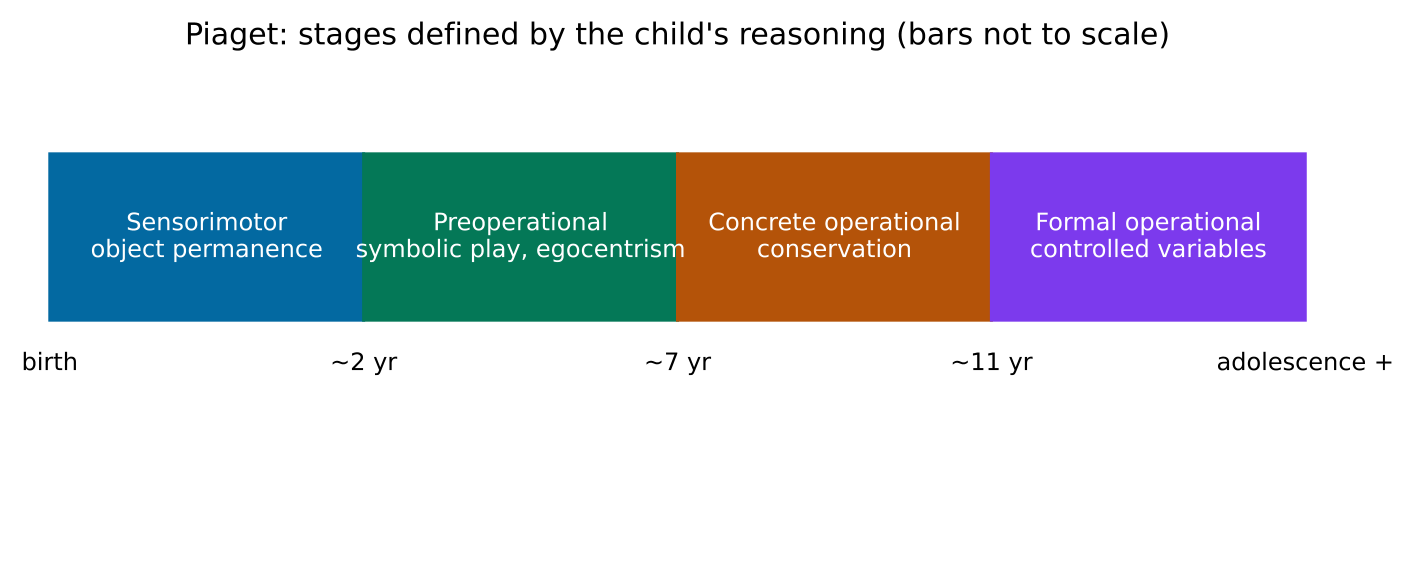
    ขั้นของ Piaget กำหนดโดยสิ่งที่เด็กทำได้ ระยะ Sensorimotor (เกิดจนถึงประมาณ 2): Object permanence. Preoperational (ประมาณ 2 ถึง 7): การเล่นเชิงสัญลักษณ์แต่ยังมีความเห็นแก่ตัวและล้มเหลวในการเข้าใจ Conservation. Concrete operational (ประมาณ 7 ถึง 11): ความเข้าใจ Conservation และการดำเนินการที่กลับได้บนวัสดุรูปธรรม. Formal operational (ประมาณ 11 ขึ้นไป): การคิดแบบ hypothesis-deductive เช่นในงานลูกตุ้ม โดยผู้ทำจะคงปัจจัยหนึ่งไว้แล้วแปรผันอีกปัจจัยหนึ่ง อายุเป็นเพียงประมาณการ; รูปแบบการคิดกำหนดขั้น development

    Kohlberg เรียงลำดับการคิดด้านจริยธรรมเป็นระดับ preconventional (ผลต่อตนเอง), conventional (การยอมรับและกฎเกณฑ์) และ postconventional (หลักการ) Erikson วางกรอบวิกฤตทางจิตสังคมตลอดช่วงชีวิต 8 ขั้น ตั้งแต่ความไว้วางใจต่อความไม่ไว้วางใจในวัยทารก จนถึงความเป็นเอกภาพ vs ความสิ้นหวังในวัยชรา; ความรู้สึกเป็นตัวตน vs ความสับสนในบทบาท เป็นช่วงวัยรุ่น ทฤษฎีขั้น development อธิบายลำดับทั่วไป ไม่ใช่ตารางเวลาตายตัว

    งานวิจัยเรื่อง attachment ใช้สถานการณ์แปลก (strange situation): เด็กที่ปลอดภัยใช้ผู้ดูแลเป็นฐานและได้รับคำปลอบโยนเมื่อกลับมาพบกัน; เด็กที่หลีกเลี่ยงจะรักษาระยะห่าง; เด็กที่ดื้อรั้น (ambivalent) ยึดติดแต่ไม่ปลอบโยนได้ง่าย ความไวต่อการตอบสนองของผู้ดูแลทำนายรูปแบบนี้ และรูปแบบ早期มีความสัมพันธ์กับความสัมพันธ์ในอนาคตแต่ไม่ได้กำหนดทิศทาง

    Theory of mind คือความเข้าใจว่าผู้อื่นมีความเชื่อ รวมถึงความเชื่อที่ผิด任务是 false-belief task: เด็กที่คาดหวังว่าคนค้นหาจะมองหาที่วัตถุอยู่จริง แทนที่จะดูที่คนที่คนหาเคยมองเห็น แสดงว่ายังไม่ผ่านทดสอบ การโกหกอย่างตั้งใจต้องอาศัยการสร้างแบบจำลองความเชื่อของผู้อื่น ดังนั้นการโกหกเพื่อหลอกลวงจึงบ่งบอกถึงการเปลี่ยนแปลงในการแทนที่ทางจิตใจ

    Assimilation ใช้สคีมาที่มีอยู่ Accommodation เปลี่ยนแปลงสคีเมากันเมื่อไม่สอดคล้อง งาน Conservation ตรวจสอบว่าการเปลี่ยนแปลงเปลี่ยนปริมาณหรือไม่ ไม่ใช่แค่การใช้คำของผู้ใหญ่ ในการเรียนรู้ภายใต้การสนับสนุน ต้องแยกแยะระหว่างคำแนะนำที่จัดระเบียบการคิดของเด็ก กับคำแนะนำที่ให้คำตอบโดยตรง การสังเกต attachment เกี่ยวข้องกับพฤติกรรมเฉพาะความสัมพันธ์ภายใต้โปรโตคอล ไม่ใช่การวินิจฉัยบุคลิกของผู้ใหญ่

    ตัวอย่างเหตุผลประกอบ

    เด็กที่แก้ปัญหาลูกตุ้มด้วยการคง X ไว้แล้วเปลี่ยน Y แสดงการให้เหตุผลแบบขั้นสูง การอนุรักษ์ปริมาตรของเหลวข้ามภาชนะบ่งบอกขั้นตอนเชิงประจักษ์ เด็กที่ปลอบโยนได้ง่ายเมื่อพบผู้ดูแลแสดงรูปแบบที่ปลอดภัย การคาดหวังว่าคนค้นหาจะมองหาที่ที่วัตถุอยู่จริงคือความล้มเหลวในงานทดสอบความเชื่อเท็จ

    เด็กเรียกสัตว์สี่ขาทุกอย่างว่าสุนัข แล้วสร้างหมวดหมู่แยกต่างหากสำหรับแมวหลังจากเห็นตัวอย่างเปรียบเทียบ อธิบายกระบวนการทั้งสอง

    การใช้หมวดหมู่สุนัขที่มีอยู่สำหรับแมวเป็นตัวอย่างของ Assimilation การปรับปรุงหมวดหมู่เพื่อแยกแยะแมวคือ Accommodation ตัวอย่างนี้เกี่ยวกับการเปลี่ยนแปลงการจัดประเภท ไม่ใช่การพิสูจน์ขั้น specific หรือสติปัญญาทั่วไปของเด็ก ควรถามเหตุผลของเด็กและทดสอบด้วยตัวอย่างใหม่

    แผนภาพต้นฉบับสำหรับทฤษฎีการพัฒนาและägeสำคัญ ความสัมพันธ์และตัวเลขที่เป็นเพียงตัวอย่างไม่ใช่ผลวิจัย

    การถ่ายโอนแบบอิสระ

    เด็กคาดการณ์ว่าแก้วสูง slim มีน้ำมากกว่าหลังการถ่ายโอน ออกแบบคำถามที่ทดสอบการคิดโดยไม่บอกคำตอบ

    ลองทำอย่างอิสระ แล้วใช้เฉลยแผ่นทักษะที่จับคู่

    การทบทวนและข้อจำกัดของแหล่งข้อมูล

    หลีกเลี่ยงข้อผิดพลาดนี้: การกำหนด stage เพียงตามอายุ หรือ treating a developmental sequence as a fixed timetable; the reasoning profile, not the birthday, defines the stage. Teaching scope comes from teaching.yaml and the source/key/crop review in bank_review_form.yaml. Detailed current diagnostic criteria require an authenticated manual; neither historical ETS practice nor this educational reference certifies them.

    คำศัพท์
    English ไทย
    object permanence/ˈɒbdʒekt ˈpɜːmənəns/ ความถาวรของวัตถุ
    theory of mind/ˈθɪəri ɒv maɪnd/ ทฤษฎีใจ
  • 15

    HT.1 · Theorists, schools and their claims

    โปรแกรมการเรียนรู้มาเร็วๆ นี้

    เอกสารประกอบการเรียน

    English

    Theorists, schools and their claims

    Scope and prerequisites

    Supported GRE topic 15 (HT.1). Use the overview measurement lesson VI when interpreting research evidence. Existing official questions are traced in bank_review_form.yaml; original tasks below are not ETS items.

    Concepts and method

    structuralism 结构主义: Titchener's school analysing experience into basic elements by introspection. cognitive revolution 认知革命: The 1950s restoration of mental processes as lawful objects of study, displacing strict behaviourism.

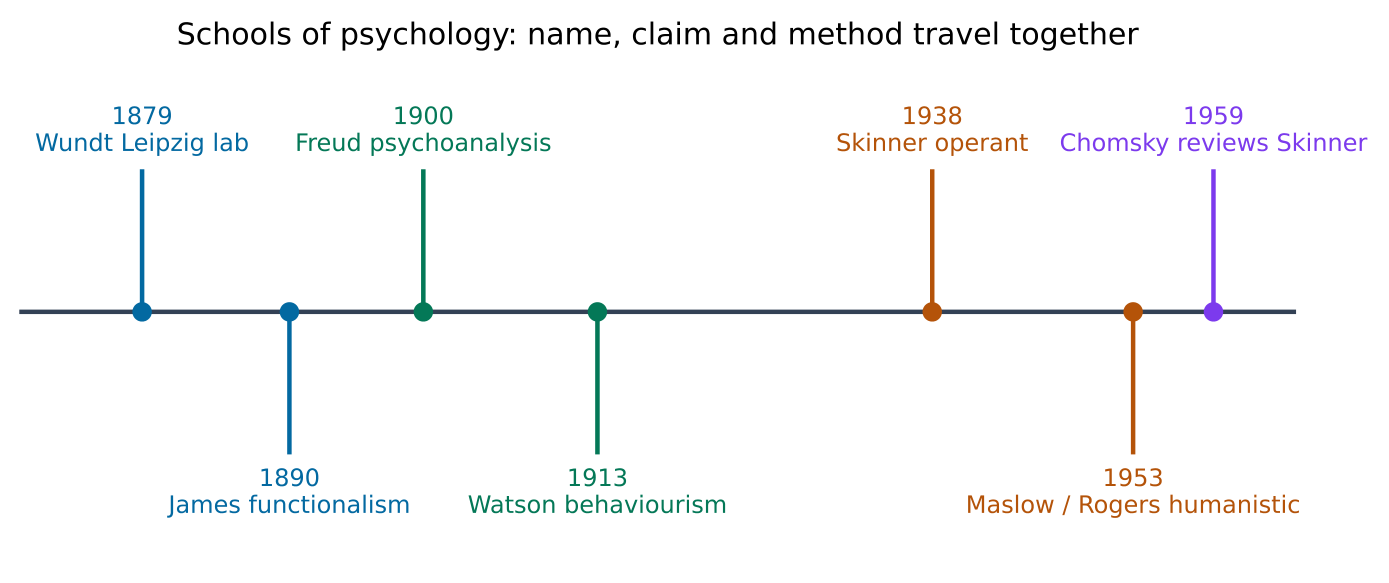
    Psychology's laboratories began in the 1870s: Wilhelm Wundt at Leipzig (1879) and William James's Harvard laboratory work. Wundt's student Titchener carried structuralism, analysing experience into elements by introspection; James's functionalism instead asked what mental processes are for, shaped by evolution. Gestalt psychologists (Wertheimer, Köhler, Koffka) rejected element analysis, arguing that organised wholes precede parts in perception.

    Freud's psychoanalysis centred on unconscious conflict and early experience, with defence mechanisms and stages of psychosexual development; its claims are debated as science but shaped clinical practice. Watson's 1913 behaviourism rejected introspection for observable behaviour, and Skinner's radical behaviourism explained action by operant consequences. Horney analysed coping as moving toward, away from or against people.

    The humanistic third force (Maslow's hierarchy of needs, Rogers's person-centred approach) stressed growth and self-actualisation against both psychoanalysis and behaviourism. The cognitive revolution of the 1950s restored mind as a lawful object: Miller's working-memory limits, Neisser's cognitive synthesis, and Chomsky's 1959 review arguing that Skinner's verbal-behaviour account cannot explain language acquisition.

    Later traditions built on these: Bandura's social learning (the Bobo doll studies) added observation and modelling to conditioning; Beck's cognitive therapy treats distorted thinking in depression; Eysenck described personality on broad dimensions such as extraversion and neuroticism. Match each name to a claim and method, not merely to a famous phrase.

    Classify an explanation by its proposed mechanism and method. Structuralist analysis of experience differs from functional questions about adaptation. Behaviourist accounts study relations among environment and observable action; cognitive accounts use representations and processing. Gestalt accounts emphasize organization rather than reducing every percept to isolated sensations. A historical label is useful only when it identifies a claim that could guide evidence collection.

    Worked reasoning

    Wundt's Leipzig laboratory and James's Harvard work mark the 1870s founding; Titchener turned introspection into structuralism while James asked functional questions. Chomsky's review of Verbal Behavior is a landmark of the cognitive turn against Skinner. A therapist targeting distorted automatic thoughts works in Beck's cognitive tradition.

    One account studies reinforcement schedules; another models a temporary information store; a third studies the purpose a behaviour serves. Match each emphasis.

    Reinforcement schedules fit a behavioural emphasis. A temporary information store fits a cognitive information-processing emphasis. Adaptive purpose fits functionalism's characteristic question. These are explanatory emphases, not a claim that a modern researcher must belong exclusively to one school.

    Original schematic for Theorists, schools and their claims. Illustrative relationships and numbers are not research results.

    Independent transfer

    An answer names a famous theorist but gives no account of the observation. Rewrite it as an explanation that could be checked, using the reinforcement case.

    Attempt independently, then use the matching skill sheet solution.

    Review and source limits

    Avoid this error: Crediting one founder with founding alone, or treating psychoanalytic claims and tested cognitive findings as the same kind of evidence. Teaching scope comes from teaching.yaml and the source/key/crop review in bank_review_form.yaml. Detailed current diagnostic criteria require an authenticated manual; neither historical ETS practice nor this educational reference certifies them.

    คำศัพท์
    English ไทย
    structuralism/ˈstrʌktʃərəlɪzəm/ STRUCTURALISM
    cognitive revolution/ˈkɒɡnɪtɪv ˌrevəˈluːʃn/ ปฏิวัติทางปัญญา
  • 16

    LR.1 · Conditioning, reinforcement and observational learning

    โปรแกรมการเรียนรู้มาเร็วๆ นี้

    เอกสารประกอบการเรียน

    English

    Conditioning, reinforcement and observational learning

    Scope and prerequisites

    Supported GRE topic 16 (LR.1). Use the overview measurement lesson VI when interpreting research evidence. Existing official questions are traced in bank_review_form.yaml; original tasks below are not ETS items.

    Concepts and method

    negative reinforcement 负强化: Strengthening a behaviour by removing an aversive stimulus; not punishment. extinction 消退: Weakening of a conditioned response when the CS no longer predicts the US or the behaviour is no longer reinforced.

    Classical conditioning pairs a neutral stimulus with an unconditioned stimulus until the neutral stimulus (now conditioned) evokes a conditioned response: bell then food gives bell-evoked salivation. Key phenomena: acquisition, extinction when the CS appears without the US, spontaneous recovery after a pause, generalisation to similar stimuli and discrimination between them. The CS predicts the US; timing and contingency matter.

    Operant conditioning changes voluntary behaviour by its consequences. Reinforcement INCREASES behaviour: positive adds something wanted, negative removes something aversive. Punishment DECREASES behaviour: positive adds something aversive, negative removes something wanted. Negative reinforcement is not punishment: both escape and avoidance strengthen the behaviour that ends or prevents the aversive event.

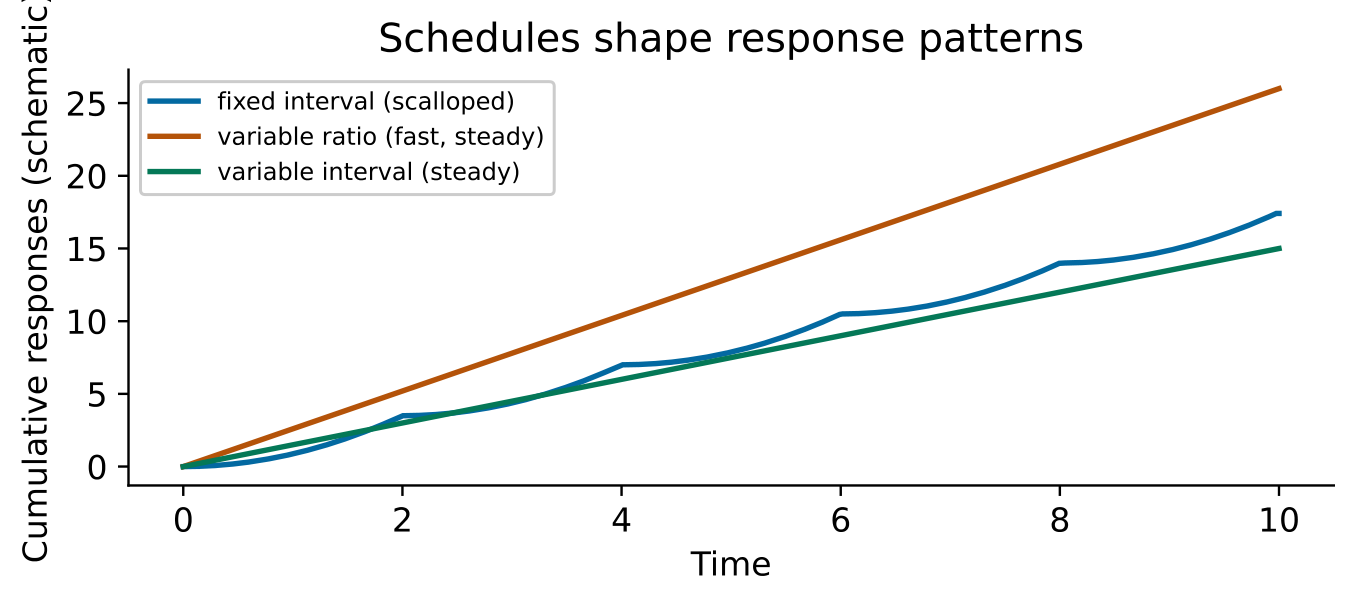
    Reinforcement schedules shape response patterns. Fixed-ratio schedules give high rates with a post-reinforcement pause; variable-ratio schedules give the highest, steadiest rates and resist extinction (gambling). Fixed-interval schedules give scalloped responding that rises near the interval end; variable-interval schedules give steady moderate rates. Ratio schedules count responses; interval schedules count time.

    Observational learning needs attention to the model, retention of what was seen, the ability to reproduce it, and motivation; vicarious reinforcement (seeing the model rewarded) raises imitation. Bandura's Bobo doll studies showed children imitate filmed aggression. Modelling extends learning beyond direct experience.

    Positive means adding; negative means removing. Reinforcement increases the target behaviour; punishment decreases it. Classify from the observed contingency and subsequent behaviour, not the adult's intention. Ratio schedules depend on responses; interval schedules depend on elapsed time before a response can be reinforced. Extinction means the previously reinforced response or cue no longer receives its former consequence; it is not simply forgetting.

    Worked reasoning

    A tone repeatedly followed by food comes to evoke salivation; presenting the tone without food extinguishes it, yet the response can briefly return after a rest (spontaneous recovery). A slot machine is a variable-ratio schedule: rapid, steady, extinction-resistant play. Taking an aspirin to end a headache is negative reinforcement; a fine for late work is negative punishment.

    Access to a game is removed after interruptions, and interruptions decline. An alarm stops after homework begins, and starting increases. Classify both.

    Removing access and decreasing interruptions is negative punishment. Removing the alarm and increasing starting is negative reinforcement. The same word removing occurs in both; the direction of change in the named behaviour separates them. These are descriptions of fictional contingencies, not recommended classroom interventions.

    Original schematic for Conditioning, reinforcement and observational learning. Illustrative relationships and numbers are not research results.

    Independent transfer

    Rewards follow every fifth response in one task and the first response after varying time intervals in another. Identify the schedules and the condition that earns each reward.

    Attempt independently, then use the matching skill sheet solution.

    Review and source limits

    Avoid this error: Calling negative reinforcement punishment, or treating any unpredictable reward as variable-ratio; interval schedules pay the first response AFTER the interval. Teaching scope comes from teaching.yaml and the source/key/crop review in bank_review_form.yaml. Detailed current diagnostic criteria require an authenticated manual; neither historical ETS practice nor this educational reference certifies them.

    คำศัพท์
    English ไทย
    negative reinforcement/ˈneɡətɪv ˌriːɪnˈfɔːsmənt/ การเสริมแรงเชิงลบ
    extinction/ekˈstɪŋkʃn/ การลดทอน
  • 17

    ME.1 · Memory systems, processes and forgetting

    โปรแกรมการเรียนรู้มาเร็วๆ นี้

    เอกสารประกอบการเรียน

    English

    Memory systems, processes and forgetting

    Scope and prerequisites

    Supported GRE topic 17 (ME.1). Use the overview measurement lesson VI when interpreting research evidence. Existing official questions are traced in bank_review_form.yaml; original tasks below are not ETS items.

    Concepts and method

    working memory 工作记忆: The limited active system holding and manipulating a few chunks for seconds. proactive interference 前摄干扰: Older learning disrupting the retention of newer material.

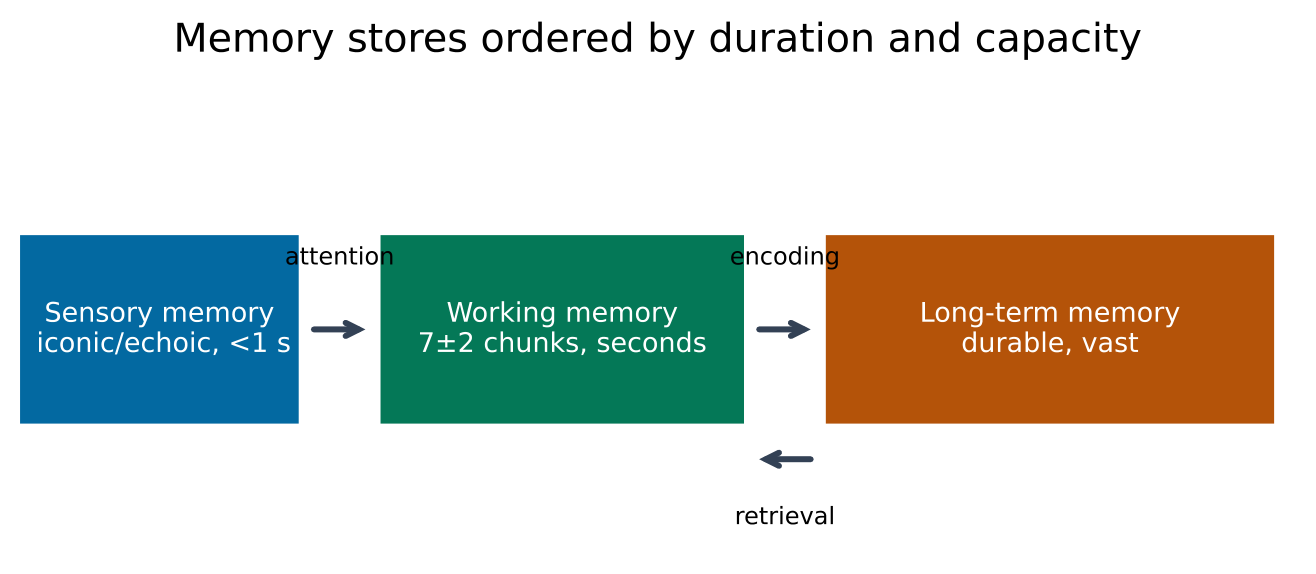
    The modal model orders stores by duration. Sensory memory holds a brief, nearly complete trace — iconic for vision, echoic for hearing — and a mask within 200–300 ms destroys it. Short-term or working memory holds a few chunks for seconds; Miller's classic estimate is 7±2 chunks, and rehearsal keeps material active. Long-term memory is durable and effectively unlimited.

    Working memory is more than a short store: Baddeley's model has a central executive with a phonological loop for speech-like material and a visuospatial sketchpad for images. Chunking recodes items into familiar units, expanding effective capacity without expanding the store.

    Long-term memory divides by content and awareness. Episodic memory is personal events; semantic memory is facts and knowledge; procedural memory is skills. Implicit memory shows in performance without deliberate recall (priming, skills); explicit memory is deliberate recall or recognition. A person can show priming for material they cannot consciously recollect.

    Forgetting has identifiable mechanisms. Proactive interference is old learning disrupting new; retroactive interference is new learning disrupting old. Retrieval failure follows encoding specificity: cues matching the encoding context restore recall. The serial position curve (primacy and recency) separates long-term from immediate-store contributions.

    Sensory stores briefly retain modality-specific input. Working memory maintains and processes a limited amount; chunking changes the effective units. Long-term explicit memory includes episodic events and semantic knowledge; implicit effects include skills and priming. Forgetting may involve interference or retrieval failure, so a failed free-recall test cannot uniquely identify decay. The familiar seven-plus-or-minus-two span is a historical estimate under particular tasks, not a universal working-memory capacity.

    Worked reasoning

    A masked letter array is lost within 300 ms — sensory memory. Remembering a phone number by 3-4 digit chunks uses chunking in working memory. Recognising a face without recalling the meeting is implicit memory. After learning French then Spanish, French vocabulary intrudes into Spanish recall: proactive interference.

    Old account passwords make a new password harder to recall. Later the new password disrupts recall of the old one. Name each direction.

    Old interfering with new is proactive interference; new interfering with old is retroactive interference. Name the target and the interfering material before applying the label. The case does not show that either memory has been erased.

    Original schematic for Memory systems, processes and forgetting. Illustrative relationships and numbers are not research results.

    Independent transfer

    A person improves at a motor task but cannot recall the training session. What distinction fits, and why is one case not proof of a fully isolated system?

    Attempt independently, then use the matching skill sheet solution.

    Review and source limits

    Avoid this error: Treating working memory as a single box, or calling every memory failure decay; interference and cue-dependent retrieval failure account for most exam cases. Teaching scope comes from teaching.yaml and the source/key/crop review in bank_review_form.yaml. Detailed current diagnostic criteria require an authenticated manual; neither historical ETS practice nor this educational reference certifies them.

    คำศัพท์
    English ไทย
    working memory/ˈwɜːkɪŋ ˈmeməri/ ความจำขณะทำงาน
    proactive interference/prəʊˈæktɪv ˌɪntəˈfɪərəns/ การรบกวนแบบเดิม
  • 18

    LG.1 · Language structure, perception and acquisition

    โปรแกรมการเรียนรู้มาเร็วๆ นี้

    เอกสารประกอบการเรียน

    โครงสร้างภาษา การรับรู้ และการเรียนรู้

    ขอบเขตและเงื่อนไขก่อนเข้าเรียน

    หัวข้อ GRE ที่รองรับ 18 (LG.1). ใช้บทเรียนการวัดภาพรวม VI เมื่อตีความหลักฐานการวิจัย คำถามที่เป็นทางการที่มีอยู่สามารถตรวจสอบได้ใน bank_review_form.yaml; งานต้นฉบับด้านล่างไม่ใช่ข้อสอบของ ETS

    แนวคิดและวิธีการ

    morpheme: หน่วยที่เล็กที่สุดที่บรรจุความหมายในภาษา syntax: กฎเกณฑ์ที่กำหนดวิธีการรวมคำเป็นประโยคและกลุ่มคำ

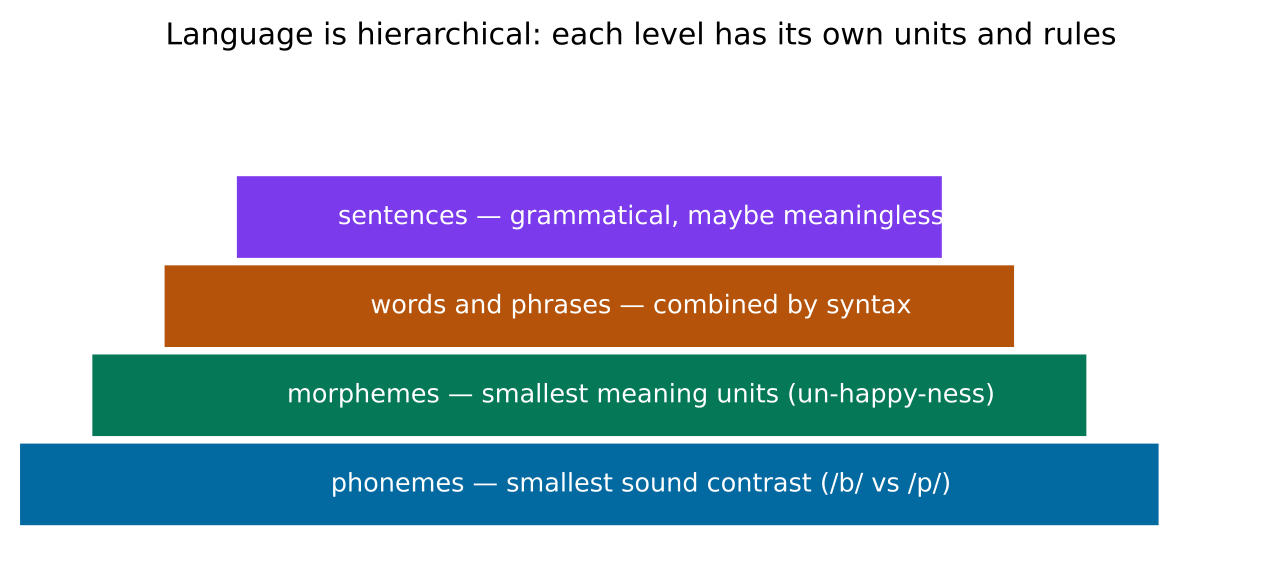
    ภาษาเป็นระบบชั้นเชิง Phonemes เป็นหน่วยเสียงที่เล็กที่สุดที่แยกแยะความหมาย (/b/ กับ /p/); morphemes เป็นหน่วยที่เล็กที่สุดที่บรรจุความหมาย (un-happy-ness มีสามส่วน); syntax ควบคุมการรวมคำเป็นประโยคและกลุ่มคำ; semantics เกี่ยวข้องกับความหมาย ประโยคหนึ่งอาจถูกหลักไวยากรณ์แต่ไร้ความหมาย — syntax และ semantics แยกออกจากกันได้

    การรับรู้การพูดเป็นแบบหมวดหมู่: ความแปรปรวนทางอะคูสติกอย่างต่อเนื่องถูกฟังว่าเป็น phonemes ที่แยกจากกัน ดังนั้นเสียงระหว่าง /b/ และ /p/ จึงถูกรายงานว่าเป็นอย่างใดอย่างหนึ่ง ผู้ฟังแบ่งช่วงการพูดต่อเนื่องโดยใช้ความน่าจะเป็นของการเปลี่ยนผ่านและความรู้ ไม่ใช่ช่องว่างระหว่างคำที่หูได้ยิน

    การอ่านเชื่อมโยงตัวพิมพ์กับเสียงและความหมาย นักอ่านที่ชำนาญใช้ทั้งเส้นทางจากตัวอักษรสู่เสียง (ออกเสียงแต่ละพยางค์) และเส้นทางตรงสำหรับคำที่คุ้นเคย การวิจัยเรื่อง dyslexia แยกความบกพร่องในการถอดรหัสเสียงphonological ออกจากรูปแบบพื้นผิว การศึกษาการเคลื่อนไหวของตาแสดงว่าการอ่านคือการหยุดมองและการกระโดดตามลำดับ ไม่ใช่การเลื่อนลื่นไหล

    การวิจัยเกี่ยวกับความเป็นสองภาษาแยกทักษะภาษาออกจากสติปัญญาทั่วไป คนที่ใช้สองภาษาอย่างสมดุลแสดงถึงผลจากการฝึกควบคุมการทำงานทางจิต ในขณะที่การศึกษาแบบลดทอนอาจทำลายทั้งสองภาษา การเรียนรู้ภาษาที่สองลดลงเมื่ออายุเพิ่มขึ้น โดยเฉพาะด้านออกเสียงและไวยากรณ์ โดยไม่มีจุดตัดสำคัญที่ชัดเจนเพียงจุดเดียว

    Phonemes แยกแยะหมวดหมู่เสียง; morphemes บรรจุความหมาย Syntax เกี่ยวกับการจัดวางคำ; Semantics เกี่ยวกับความหมาย; Pragmatics เกี่ยวกับการใช้งานในบริบท ประโยคที่ถูกหลักไวยากรณ์อาจมีความหมายแปลกประหลาด ความผิดพลาดตามกฎของเด็กสามารถแสดงถึงการประยุกต์ใช้ที่สร้างสรรค์แทนการคัดลอกอย่างแม่นยำ ทั้งโอกาสการเรียนรู้และข้อจำกัดทางชีวภาพล้วนสำคัญ ข้อผิดพลาดเพียงข้อไม่สามารถตัดสินทฤษฎีการเรียนรู้ภาษาทุกทฤษฎีได้

    ตัวอย่างเหตุผลประกอบ

    Un-happy-ness มีสามโมฟีเมม แต่รูปแบบการพูดมีphonemes มากกว่าsyllables เสียงระหว่าง /b/ และ /p/ ถูกฟังเป็นอย่างใดอย่างหนึ่งอย่างชัดเจน — การรับรู้แบบหมวดหมู่ (categorical perception). Colourless green ideas sleep furiously เป็นหลักไวยากรณ์แต่ไร้ความหมาย ซึ่งแยกsyntax ออกจากsemantics

    เด็กพูด walked ถูกต้องแล้วจึงพูด goed รูปที่สองบ่งบอกอะไรเกี่ยวกับการเรียนรู้ และสิ่งใดถือเป็นการอ้างเกินจริง?

    Goed ใช้รูปแบบกาลอดีตที่สร้างขึ้นเองกับกริยาไม่ปกติ สอดคล้องกับการปรับให้เข้ารูป过度regularization เด็กกำลังทำมากกว่าแค่ทอซ้ำทุก bentuk อย่างถูกต้อง สิ่งนี้ไม่ได้พิสูจน์ว่าข้อมูลหรือแรงจูงใจไม่เคยมีบทบาท หรือว่ามีทฤษฎีใดทฤษฎีหนึ่งสมบูรณ์แล้ว ให้ตรวจสอบรูปแบบAcross forms และการพัฒนา

    แผนภาพต้นฉบับสำหรับโครงสร้างภาษา การรับรู้ และการเรียนรู้ ความสัมพันธ์และตัวเลขที่เป็นตัวอย่างไม่ใช่ผลการวิจัย

    การถ่ายโอนแบบอิสระ

    อธิบายว่าข้อความหนึ่งจะมี语法ถูกต้องแต่ถูกเข้าใจผิดเนื่องจากบริบทได้อย่างไร โดยใช้ตัวอย่างต้นฉบับ

    ลองทำอย่างอิสระ แล้วใช้เฉลยแผ่นทักษะที่จับคู่

    การทบทวนและข้อจำกัดของแหล่งข้อมูล

    หลีกเลี่ยงข้อผิดพลาดนี้: นับ morpheme จากจำนวนตัวอักษรหรือพยางค์ หรือ treating word boundaries in speech as physically present; segmentation is inferred by the listener. Teaching scope comes from teaching.yaml and the source/key/crop review in bank_review_form.yaml. Detailed current diagnostic criteria require an authenticated manual; neither historical ETS practice nor this educational reference certifies them.

    คำศัพท์
    English ไทย
    morpheme/ˈmɔːfiːm/ โมเล็ม
    syntax/ˈsɪntæks/ ไวยากรณ์
  • 19

    TH.1 · Thinking, problem solving and intelligence

    โปรแกรมการเรียนรู้มาเร็วๆ นี้

    เอกสารประกอบการเรียน

    English

    Thinking, problem solving and intelligence

    Scope and prerequisites

    Supported GRE topic 19 (TH.1). Use the overview measurement lesson VI when interpreting research evidence. Existing official questions are traced in bank_review_form.yaml; original tasks below are not ETS items.

    Concepts and method

    availability heuristic 可得性启发式: Estimating frequency or likelihood by how easily examples come to mind. representativeness heuristic 代表性启发式: Judging probability by similarity to a prototype, neglecting base rates.

    Concepts group instances; natural concepts have fuzzy boundaries organised around prototypes, so a robin is a "better" bird than a penguin and is verified faster. Schemas are organised knowledge structures about domains; scripts are schemas for event sequences (the restaurant script). Schemas guide encoding and also distort recall toward the expected.

    An algorithm guarantees a solution by exhaustive rule; heuristics trade certainty for speed. Availability estimates frequency by ease of recall, so vivid events are overestimated. Representativeness judges by similarity to a prototype and neglects base rates. Anchoring drags estimates toward an initial number. Framing changes choices between logically equivalent descriptions, and confirmation bias seeks only supporting evidence.

    Problem solving fails in characteristic ways: functional fixedness (objects only in usual roles), mental set (old solutions to new problems), and missing insight restructuring. Means-end analysis reduces the difference to the goal; working backward suits problems with a clear goal state.

    Intelligence theories differ on structure: Spearman's general factor g, Cattell's fluid versus crystallised abilities, Gardner's multiple intelligences, Sternberg's triarchic analysis. Test interpretation follows the psychometrics of earlier units: scores are reliable for prediction within their validation samples, but a score measures performance on the test, not a fixed essence.

    An algorithm follows steps that guarantee a solution for its specified problem class when correctly applied. A heuristic is an efficient shortcut that may fail. Representativeness judges similarity and can neglect base rates; availability uses ease of recall and can confuse memorable with frequent. Mental set and functional fixedness constrain which solutions are considered. Intelligence tests measure performances under particular conditions and require validity and fairness evidence for their use.

    Worked reasoning

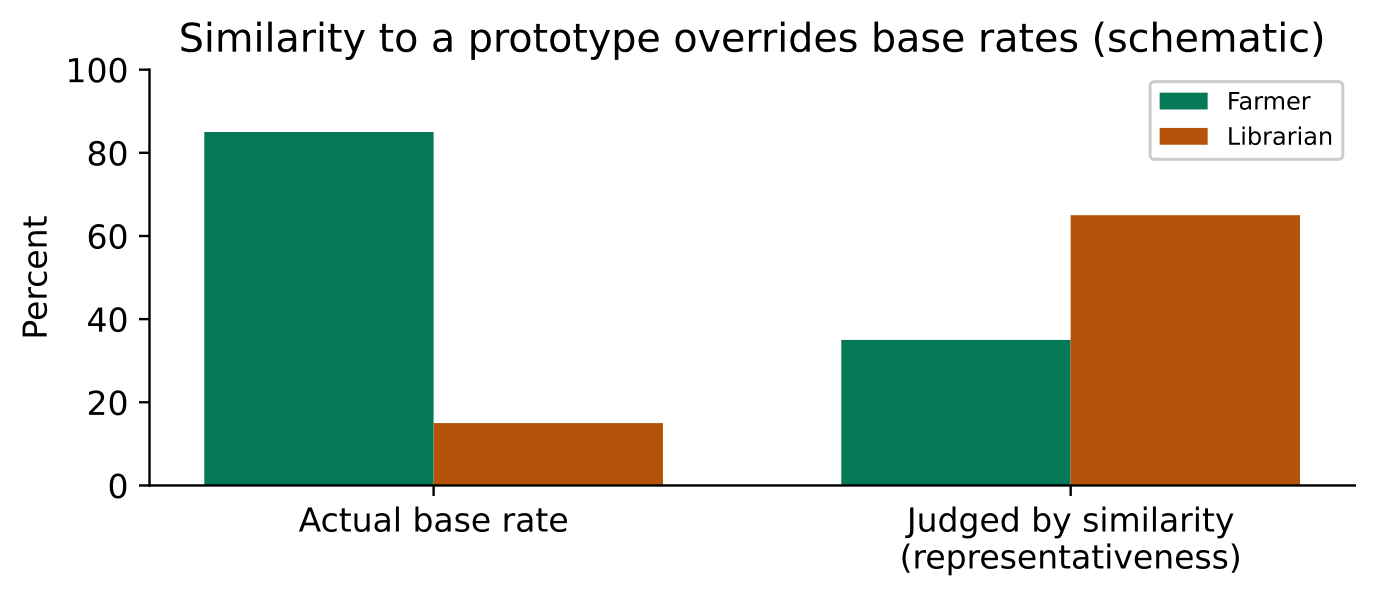
    Estimating plane crashes as commoner than car deaths after news coverage is the availability heuristic. Judging a quiet bookish stranger more likely a librarian than a farmer, despite far more farmers, is representativeness neglecting base rates. Using a candle only as a candle, not as part of a shelf, is functional fixedness.

    A description fits a rare occupation. A pupil chooses it without checking how many people have each occupation. Identify the reasoning risk.

    Representativeness can override base-rate information: similarity to a stereotype does not by itself determine probability. Combine relevant likelihood information with prior frequencies if available. A vivid description supplies neither a population count nor proof of group traits.

    Original schematic for Thinking, problem solving and intelligence. Illustrative relationships and numbers are not research results.

    Independent transfer

    A method works on nine puzzles and fails on a tenth with different constraints. Explain how to decide whether the method is an algorithm or heuristic and propose a response.

    Attempt independently, then use the matching skill sheet solution.

    Review and source limits

    Avoid this error: Calling a heuristic an error in itself; heuristics are efficient defaults whose costs are predictable. Do not equate a test score with a fixed measure of worth or potential. Teaching scope comes from teaching.yaml and the source/key/crop review in bank_review_form.yaml. Detailed current diagnostic criteria require an authenticated manual; neither historical ETS practice nor this educational reference certifies them.

    คำศัพท์
    English ไทย
    availability heuristic/əˌveɪləˈbɪlɪti hjuːˈrɪstɪk/ heuristic ความพร้อมใช้งาน
    representativeness heuristic/ˌreprɪˈzentətɪvnəs hjuːˈrɪstɪk/ heuristic ความแทนที่
  • 20

    SO.1 · Social cognition, attribution and social influence

    โปรแกรมการเรียนรู้มาเร็วๆ นี้

    เอกสารประกอบการเรียน

    English

    Social cognition, attribution and social influence

    Scope and prerequisites

    Supported GRE topic 20 (SO.1). Use the overview measurement lesson VI when interpreting research evidence. Existing official questions are traced in bank_review_form.yaml; original tasks below are not ETS items.

    Concepts and method

    fundamental attribution error 基本归因错误: Over-attributing others' behaviour to disposition while neglecting the situation. normative influence 规范性影响: Conforming to gain acceptance or avoid rejection, distinct from informational influence.

    Attribution assigns causes to behaviour: internal (dispositional) or external (situational). The fundamental attribution error over-uses dispositional explanations for others, and the actor-observer asymmetry reverses this for ourselves. Correspondent inference asks when an act reveals a trait: freely chosen, unexpected or low-consensus acts are the most informative.

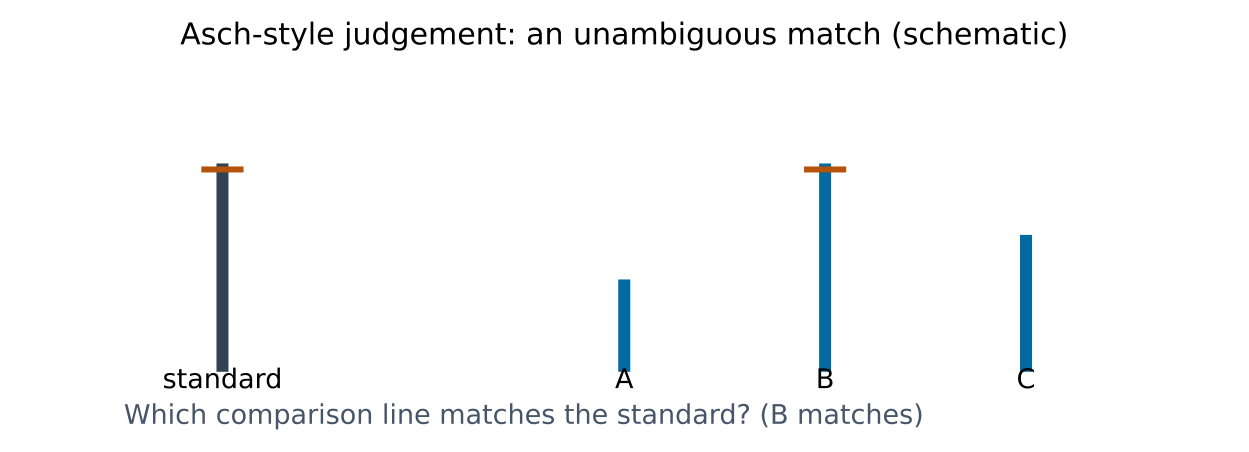
    Influence comes in two kinds: normative influence is conforming to be accepted; informational influence is accepting others' behaviour as evidence about reality. Asch's line studies showed conformity to a unanimous majority on unambiguous judgements; Milgram's obedience studies showed destructive compliance with an authority. Conformity falls sharply with one dissenting partner.

    Cognitive dissonance is the tension from holding inconsistent cognitions, reduced by changing attitudes or justifications; with insufficient external justification, people internalise the behaviour. Persuasion follows the elaboration likelihood model: the central route (arguments) produces durable change when audiences can and will think; the peripheral route (cues, attractiveness) is fragile.

    Self-evaluation processes include self-affirmation (restoring worth in an unaffected domain after a threat), self-verification (seeking confirming feedback), self-monitoring (adjusting self-presentation) and the self-serving bias (success internal, failure external). Excitation transfer lets residual arousal from one event intensify a later emotional reaction.

    Attribution distinguishes situational and dispositional explanations. Informational influence treats others as evidence; normative influence concerns acceptance. Obedience involves an authority's direction. An attitude includes evaluative components, while an action also depends on opportunity, incentives and constraints. A mechanism needs discriminating evidence: public agreement alone cannot uniquely identify private belief.

    Worked reasoning

    Screaming at a friend after a parking ticket is excitation transfer: residual arousal intensifies the later anger. Reminding yourself of a strength after a comparison threat is self-affirmation. Agreeing with a unanimous group on an obvious line length is normative conformity. A vague appeal working only when the audience is distracted is peripheral-route persuasion.

    A student copies a group's route choice because they believe the group knows the campus. How does this differ from copying to avoid ridicule?

    Believing the group has useful knowledge fits informational influence. Avoiding ridicule fits normative influence. The same outward action can arise through different mechanisms. Anonymity, uncertainty and private accounts may help distinguish them in an ethically approved task.

    Original schematic for Social cognition, attribution and social influence. Illustrative relationships and numbers are not research results.

    Independent transfer

    A late student is called lazy, but the bus stopped unexpectedly. Build a better attribution and name what remains unknown.

    Attempt independently, then use the matching skill sheet solution.

    Review and source limits

    Avoid this error: Do not merge conformity and obedience (peer pressure versus authority), or call every dispositional inference an error; the error is neglecting the situation, not using traits at all. Teaching scope comes from teaching.yaml and the source/key/crop review in bank_review_form.yaml. Detailed current diagnostic criteria require an authenticated manual; neither historical ETS practice nor this educational reference certifies them.

    คำศัพท์
    English ไทย
    fundamental attribution error/ˌfʌndəˈmentl ətrɪˈbjuːʃn ˈerə/ ความผิดพลาดในการอธิบายเชิงพื้นฐาน
    normative influence/ˈnɔːmətɪv ˈɪnfluːəns/ อิทธิพลแบบกำหนดมาตรฐาน
  • 21

    SO.2 · Groups, relationships and intergroup processes

    โปรแกรมการเรียนรู้มาเร็วๆ นี้

    เอกสารประกอบการเรียน

    English

    Groups, relationships and intergroup processes

    Scope and prerequisites

    Supported GRE topic 21 (SO.2). Use the overview measurement lesson VI when interpreting research evidence. Existing official questions are traced in bank_review_form.yaml; original tasks below are not ETS items.

    Concepts and method

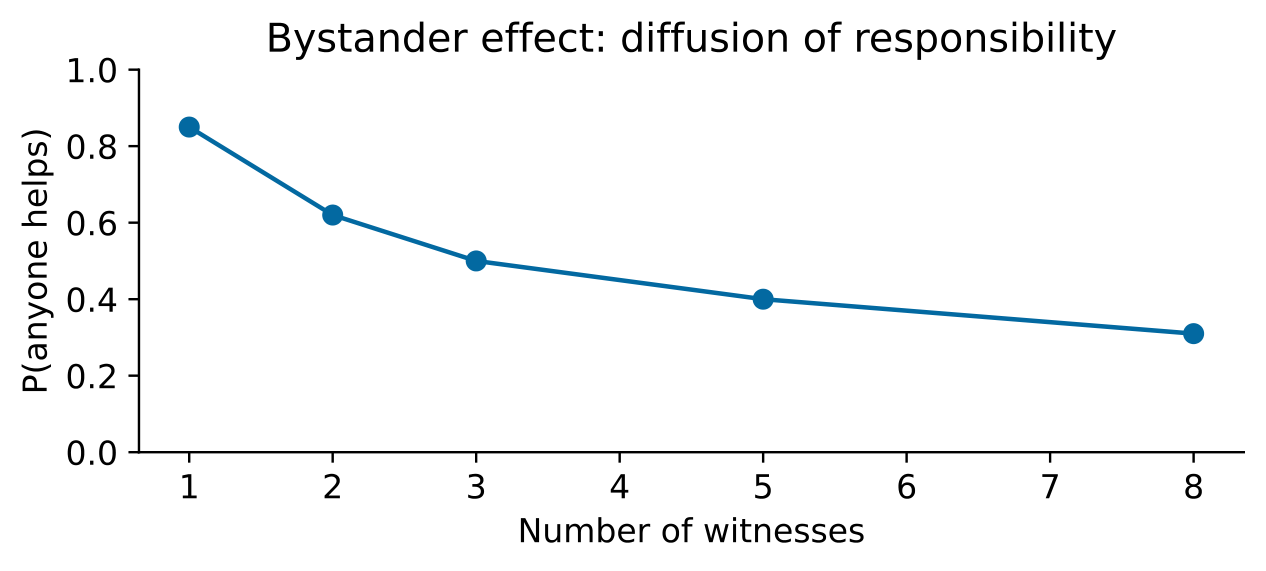
    social loafing 社会惰化: Reduced individual effort when contributions are pooled and unidentifiable. bystander effect 旁观者效应: Help becomes less likely as the number of witnesses grows, via diffusion of responsibility.

    Groups change performance. Social facilitation: the presence of others strengthens dominant responses, helping well-learned tasks and hurting novel ones. Social loafing: effort falls when individual contributions are unidentifiable. Groupthink: cohesive groups under pressure suppress dissent and reach poor decisions; deindividuation: anonymity in a crowd lowers self-restraint.

    Attraction is predicted first by propinquity — physical or functional proximity, as in making friends on the same dorm floor — then similarity and reciprocal liking; mere exposure breeds familiarity-based liking. Social exchange theory reads relationships as outcomes minus costs against a comparison level; interdependence analyses use each partner's payoff structure.

    Separate the intergroup trio: stereotypes are beliefs about groups, prejudice is evaluative affect, discrimination is behaviour. The minimal-group paradigm shows in-group favouritism from arbitrary assignment alone; realistic conflict theory ties hostility to competition over resources; the contact hypothesis reduces prejudice under equal status, common goals and cooperative contact, not mere exposure.

    The bystander effect: help falls as witnesses increase, through diffusion of responsibility and pluralistic ignorance (each reads others' calm as no emergency). Aggression research links frustration to aggression and shows how residual arousal (excitation transfer) can escalate conflict; altruism is helped by clear identification of a single victim.

    Diffusion of responsibility can reduce an individual's felt obligation when others could act. Pluralistic ignorance can make people interpret others' inaction as evidence that help is unnecessary. Cohesion can support cooperation but does not always improve judgement. Group polarization concerns a shift toward an initially favoured direction; groupthink concerns decision processes that suppress critical evaluation. Intergroup explanations must examine structures, norms and contact conditions, not assume every member shares one attitude.

    Worked reasoning

    Friends cluster on the same dorm floor — propinquity. A tug-of-war team slacks when pulls are pooled — social loafing under unidentifiable contributions. Arbitrary badge colours producing in-group preference is the minimal-group effect. Nobody calling for help in a crowded plaza is diffusion of responsibility.

    Several witnesses wait because each thinks another will call for help. Name the mechanism and distinguish it from believing no help is needed.

    Expecting someone else to act fits diffusion of responsibility. Interpreting everyone else's calm as evidence there is no emergency fits pluralistic ignorance. The case needs their accounts or an appropriate manipulation to distinguish mechanisms; mere group size does not establish either.

    Original schematic for Groups, relationships and intergroup processes. Illustrative relationships and numbers are not research results.

    Independent transfer

    A group makes a more extreme decision after discussion. Give evidence needed to identify polarization and one alternative process.

    Attempt independently, then use the matching skill sheet solution.

    Review and source limits

    Avoid this error: Writing stereotype, prejudice and discrimination as synonyms, or promising that any contact fixes prejudice; contact works under conditions, not by default. Teaching scope comes from teaching.yaml and the source/key/crop review in bank_review_form.yaml. Detailed current diagnostic criteria require an authenticated manual; neither historical ETS practice nor this educational reference certifies them.

    คำศัพท์
    English ไทย
    social loafing/ˈsəʊʃl ˈləʊfɪŋ/ การลดแรงจูงใจทางสังคม
    bystander effect/ˈbaɪstændə ɪˈfekt/ ผลของผู้มีสายตาข้างเคียง
  • 22

    AT.1 · Attention limits and non-associative learning

    โปรแกรมการเรียนรู้มาเร็วๆ นี้

    เอกสารประกอบการเรียน

    ขอบเขตความสนใจและการเรียนรู้ที่ไม่ใช่การเชื่อมโยง

    ขอบเขตและเงื่อนไขก่อนเข้าเรียน

    หัวข้อ GRE ที่รองรับ 22 (AT.1). ใช้บทเรียนวัดผลภาพรวม VI เมื่อตีความหลักฐานการวิจัย คำถามอย่างเป็นทางการที่มีอยู่แล้วสามารถติดตามได้ใน bank_review_form.yaml; ภารกิจต้นฉบับด้านล่างไม่ใช่รายการของ ETS

    แนวคิดและวิธีการ

    habituation: การลดลงของการตอบสนองที่ไม่ใช่การเชื่อมโยงต่อสิ่งเร้าที่ซ้ำซ้อน ฟื้นคืนได้ด้วยการเปลี่ยนสิ่งเร้า divided attention: การแบ่งปันขีดจำกัดความสามารถส่วนกลาง Across ภารกิจพร้อมกัน โดยมีต้นทุนกำหนดโดยภาระงาน

    ความสนใจมีขีดจำกัด Early-selection accounts กรองตามคุณสมบัติทางกายภาพ Late-selection accounts กรองหลังจากมีความหมาย และทฤษฎี multimode (Johnston and Heinz) ทำให้จุดเลือกยืดหยุ่นตามความต้องการของภารกิจ Divided attention ล้มเหลวเมื่อภาระงานรวมเกินขีดจำกัด: การโทรแบบแฮนด์ฟรียังทำให้ขับรถช้าลงเพราะ Bottleneck อยู่ตรงส่วนกลาง ไม่ใช่การ操控

    ทฤษฎีโหลดการรับรู้แยกความแตกต่างระหว่างโหลดการรับรู้กับโหลดความจำระยะสั้น: โหลดการรับรู้สูงในงานหลักจะกีดกันสิ่งรบกวนใจ ในขณะที่โหลดความจำระยะสั้นสูงจะเปิดโอกาสให้สิ่งรบกวนใจเข้ามามีผล การคาดการณ์ขึ้นอยู่กับระดับโหลด ไม่ใช่คำกล่าวอ้างว่าการทำงานหลายอย่างพร้อมกันเป็นไปไม่ได้เสมอไป

    การปรับตัว (Habituation) เป็นการเรียนรู้ที่ไม่ใช่แบบมีเงื่อนไข: การนำเสนอสิ่งกระตุ้นซ้ำๆ จะทำให้ปฏิกิริยาลดลง และเมื่อมีการเปลี่ยนแปลงสิ่งกระตุ้น ปฏิกิริยาจะกลับคืนมาใหม่ (Dishabituation) ไม่มีการจับคู่กับสิ่งกระตุ้นอื่น ซึ่งแตกต่างจากการ condicionadoแบบคลาสสิก ผู้ที่เดินทางและหยุดฟังเสียงรถไฟตามตารางเวลาได้แสดงถึงการปรับตัว; ปฏิกิริยาจะกลับมาหากตารางเวลาเปลี่ยนไป

    การปรับตัวถูกใช้เป็นเครื่องมือวัด: ทารกจะจ้องมองสิ่งกระตุ้นใหม่นานกว่า ดังนั้นระยะเวลาการจ้องมองที่เพิ่มขึ้นหลังการปรับตัวบ่งบอกถึงความสามารถในการแยกแยะ การดับสูญ (Extinction) ในการ condicionadoแตกต่างกันไป: ในกรณีนั้นความสัมพันธ์ที่เรียนรู้จะถูกถอนออก ไม่ใช่ merely การนำเสนอสิ่งกระตุ้นซ้ำๆ

    โมเดลการเลือกทางจิตใจระบุตำแหน่งและภายใต้ข้อจำกัดใดที่การเลือกเกิดขึ้น โหลดการรับรู้และความต้องการควบคุมความจำระยะสั้นอาจทำให้การคาดการณ์ที่แตกต่างกัน; คำกล่าวทั่วไปที่ว่าความรบกวนใจเพิ่มขึ้นเสมอเมื่อโหลดสูงขึ้นไม่เพียงพอ การปรับตัวคือการลดลงของปฏิกิริยาหลังจากการสัมผัสซ้ำๆ; ปฏิกิริยาที่เพิ่มขึ้นใหม่ต่อการเปลี่ยนแปลงสนับสนุนการแยกแยะ ให้แยกมันออกจากภาวะปรับตัวของตัวรับ ความล้า และการดับสูญ通过对 stimulus history และ Comparison ที่เหมาะสม

    ตัวอย่างเหตุผลประกอบ

    ผู้ขับขี่ที่กำลังโทรแบบแฮนด์ฟรีเบรกช้าลงเพราะความจุในระบบกลางถูกแบ่งปัน ไม่ใช่เพราะใช้มือถือโทรศัพท์ ชาวเมืองที่หยุด noticing เสียงจราจรที่ต่อเนื่องเป็น Adaptive; แต่จะ Notice ทันทีเมื่อเสียงนั้นหยุดหรือเปลี่ยนไป (Dishabituation). เด็กทารกที่มองภาพที่เปลี่ยนแปลงนานขึ้นแสดงถึงความสามารถในการแยกแยะผ่านการฟื้นตัวของเวลาในการมอง

    ระยะเวลาการจ้องมองลดลงเมื่อมีการแสดงผลซ้ำๆ และเพิ่มขึ้นเมื่อสีเปลี่ยนไป สิ่งใดได้รับการสนับสนุน และสิ่งใดยังไม่เป็นที่แน่นอน?

    การฟื้นตัวสอดคล้องกับการแยกแยะการเปลี่ยนแปลงหลังการปรับตัว มันไม่ได้แสดงถึงแนวคิดเรื่องสีแบบผู้ใหญ่หรือพิสูจน์วิธีการแทนค่าภาพแสดงผลได้อย่างแม่นยำ ควรควบคุมความแตกต่างด้านความโดดเด่นพื้นฐานและเปรียบเทียบภาพแสดงผลที่แปลกใหม่และคุ้นเคยที่เหมาะสม

    แผนภาพต้นฉบับสำหรับขีดจำกัดของการเลือกทางจิตใจและการเรียนรู้ที่ไม่ใช่แบบเงื่อนไข. ความสัมพันธ์และตัวเลขที่เป็นตัวอย่างไม่ใช่ผลการวิจัย

    การถ่ายโอนแบบอิสระ

    ปฏิกิริยาลงเมื่อมีการนำเสนอเสียงซ้ำๆ เสนอการตรวจสอบเพื่อขจัดความล้าและอธิบายว่าทำไมการดับสูญจึงไม่ได้รับการยืนยัน

    ลองทำอย่างอิสระ แล้วใช้เฉลยแผ่นทักษะที่จับคู่

    การทบทวนและข้อจำกัดของแหล่งข้อมูล

    หลีกเลี่ยงข้อผิดพลาดนี้: การเรียกการปรับตัวว่าเป็นรูปแบบหนึ่งของการ condicionado หรือการอ้างว่าการเลือกทางจิตใจล้มเหลวเสมอ تحتทุกสถานการณ์งานคู่; ค่าใช้จ่ายขึ้นอยู่กับโหลดและจุดการเลือก ขอบเขตการสอนมาจาก teaching.yaml และการทบทวน source/key/crop ใน bank_review_form.yaml เกณฑ์วินิจฉัยปัจจุบันที่ละเอียดจำเป็นต้องใช้คู่มือที่ได้รับการรับรอง; Neither historical ETS practice nor this educational reference certifies them.

    คำศัพท์
    English ไทย
    habituation/ˌhæbɪtʃuːˈeɪʃn/ การปรับตัวต่อสิ่งเร้าซ้ำๆ
    divided attention/dɪˈvaɪdɪd əˈtenʃn/ ความสนใจที่แบ่งปัน
  • 23

    EX.1 · Evolutionary and comparative perspectives

    โปรแกรมการเรียนรู้มาเร็วๆ นี้

    เอกสารประกอบการเรียน

    English

    Evolutionary and comparative perspectives

    Scope and prerequisites

    Supported GRE topic 23 (EX.1). Use the overview measurement lesson VI when interpreting research evidence. Existing official questions are traced in bank_review_form.yaml; original tasks below are not ETS items.

    Concepts and method

    inclusive fitness 广义适合度: Reproductive success counting both direct offspring and the reproduction of relatives weighted by relatedness. fixed action pattern 固定行为模式: An invariant species-typical sequence released by a specific sign stimulus.

    Kin selection explains helping by inclusive fitness: a gene spreads by aiding relatives who share it. Hamilton's rule says helping pays when rB>C — benefit to the recipient weighted by relatedness exceeds cost to the helper. With benefits and costs held equal, closer relatedness makes the inequality more likely to hold: compare siblings (r=.5) with first cousins (r=.125). The rule predicts direction and rough ordering, not exact human behaviour.

    Ethology studies species-typical behaviour. A fixed action pattern is an invariant sequence released by a specific sign stimulus and run to completion, as in classic egg-retrieval or mating displays. Because it is triggered rather than assembled, a fixed action pattern can be hijacked by supernormal stimuli — models with exaggerated features.

    Evolutionary explanations ask about function: how a behaviour raised reproductive success in ancestral environments. They compete or combine with learning accounts; prepared learning (fast acquisition of evolutionarily relevant fears like snakes) shows both at once. An evolutionary story is a hypothesis about history, and needs comparative or experimental evidence, not plausibility alone.

    Comparative caution cuts both ways: do not read human motives into animal behaviour (anthropomorphism), and do not assume a human behaviour is learned when cross-species patterns suggest otherwise. The examinable skill is matching each explanation to its evidence type.

    Hamilton's inequality is a model of selection under stated costs, benefits and relatedness, not an instruction about human duty. Inclusive fitness concerns effects on genetic representation through self and relatives. Fixed action patterns describe characteristic sequences in classic ethological models; real behaviour can vary with state and context. Evolutionary function and immediate learning mechanisms can complement each other. A plausible adaptive story requires evidence that distinguishes it from alternatives.

    Worked reasoning

    Helping a sibling before a cousin fits rB>C ordering. A goose retrieving a doorknob as if it were an egg shows a fixed action pattern released by an exaggerated sign stimulus. Acquiring a fear of snakes after one bad experience, but not of flowers, illustrates prepared learning.

    In a fictional fitness model, B=8, C=3 and r=.5. Test the inequality. Repeat for r=.125.

    rB>C. For r=.5, rB=.5×8=4>3, so the stated condition holds. For r=.125, rB=.125×8=1<3, so it does not. Benefits and costs must use compatible fitness measures. Relatedness alone cannot rank helping when B or C differs across cases.

    Original schematic for Evolutionary and comparative perspectives. Illustrative relationships and numbers are not research results.

    Independent transfer

    An animal quickly learns one fear association. Explain why this can be compatible with both learning and an evolutionary account, and what evidence is needed.

    Attempt independently, then use the matching skill sheet solution.

    Review and source limits

    Avoid this error: Treating Hamilton's rule as a precise human calculator, or explaining any observed behaviour as adaptive after the fact; an evolutionary claim needs evidence, not a plausible story. Teaching scope comes from teaching.yaml and the source/key/crop review in bank_review_form.yaml. Detailed current diagnostic criteria require an authenticated manual; neither historical ETS practice nor this educational reference certifies them.

    คำศัพท์
    English ไทย
    inclusive fitness/ɪnˈkluːsɪv ˈfɪtnəs/ ความเหมาะสมทางชีวภาพแบบรวม
    fixed action pattern/fɪkst ˈækʃn ˈpætn/ รูปแบบพฤติกรรมที่คงที่
  • 24

    ME.2 · Encoding depth and retrieval routes

    โปรแกรมการเรียนรู้มาเร็วๆ นี้

    เอกสารประกอบการเรียน

    English

    Encoding depth and retrieval routes

    Scope and prerequisites

    Supported GRE topic 24 (ME.2). Use the overview measurement lesson VI when interpreting research evidence. Existing official questions are traced in bank_review_form.yaml; original tasks below are not ETS items.

    Concepts and method

    levels of processing 加工水平: The account in which memory strength follows the depth of encoding analysis. transfer-appropriate processing 迁移适宜性加工: Encoding helps most when its form matches the retrieval test.

    Levels of processing (Craik and Lockhart) hold that memory strength follows the depth of encoding, not the intention to learn. Shallow tasks (is the word in capitals?) give weak traces; phonemic tasks (does it rhyme?) are intermediate; semantic tasks (does it fit the sentence?) are deepest. Incidental learners doing deep tasks can out-remember intentional learners doing shallow ones.

    Maintenance rehearsal repeats material without change and holds it briefly; elaborative rehearsal links it to meaning, images and prior knowledge, producing durable traces. The generation effect — better memory for answers you produce than words you read — is elaboration at work.

    Transfer-appropriate processing adds the retrieval side: encoding helps most when it matches the test. Semantic encoding suits semantic tests; phonemic encoding can beat it on rhyme-recognition tests. Depth usually wins because most tests probe meaning, but the match, not depth alone, decides.

    Encoding specificity applies the same match principle to context: recall improves when the retrieval environment or state matches encoding. These effects sit beside the interference mechanisms from the earlier memory unit: depth builds the trace, match retrieves it.

    Semantic elaboration often supports later meaning-based recall because it creates useful relationships and retrieval routes. Maintenance repetition can keep information active without the same elaboration. Transfer-appropriate processing asks whether encoding operations fit the later test. Therefore depth is not an unconditional ranking of all possible tasks. Context match can provide cues; it is one influence among many, not a guarantee of recall.

    Worked reasoning

    Answering "does it fit the sentence" beats "is it in capitals" on later recall, even with no warning of a test. Generating the missing word in a list beats reading it. Rhyme-encoding can beat meaning-encoding on a rhyme test — transfer-appropriate processing. Divers remembering word lists better underwater (where they learned them) show encoding specificity.

    One group judges meaning and another judges rhyme. On a rhyme-recognition test, the rhyme group performs better. Does this disprove every benefit of semantic encoding?

    No. The result is consistent with an encoding–test match. It qualifies a claim that deeper meaning processing always wins. Compare both groups on meaning-based and rhyme-based tests to examine the interaction between encoding and retrieval demand. Keep exposure and time comparable.

    Original schematic for Encoding depth and retrieval routes. Illustrative relationships and numbers are not research results.

    Independent transfer

    Design a two-by-two classroom study that distinguishes an encoding advantage from a matching advantage, then predict the informative pattern.

    Attempt independently, then use the matching skill sheet solution.

    Review and source limits

    Avoid this error: Equating repetition with learning: maintenance rehearsal holds material briefly but builds weak traces, and intention to learn without a deep task adds little. Teaching scope comes from teaching.yaml and the source/key/crop review in bank_review_form.yaml. Detailed current diagnostic criteria require an authenticated manual; neither historical ETS practice nor this educational reference certifies them.

    คำศัพท์
    English ไทย
    levels of processing/ˈlevlz ɒv ˈprəʊsesɪŋ/ ระดับการประมวลผล
    transfer-appropriate processing/ˈtrænsfɜː əˈprəʊprɪət ˈprəʊsesɪŋ/ การประมวลผลที่เหมาะสมต่อการถ่ายโอน
  • 25

    HB.1 · Hormones, stress and behavioural regulation

    โปรแกรมการเรียนรู้มาเร็วๆ นี้

    เอกสารประกอบการเรียน

    ฮอร์โมน ความเครียด และการควบคุมพฤติกรรม

    ขอบเขตและเงื่อนไขก่อนเข้าเรียน

    หัวข้อ GRE ที่รองรับ 25 (HB.1). ใช้บทเรียนวัดผลภาพรวม VI เมื่อตีความหลักฐานจากการวิจัย ข้อสอบที่เป็นทางการที่มีอยู่สามารถตรวจสอบได้ใน bank_review_form.yaml; ภาระงานต้นฉบับด้านล่างไม่ใช่รายการของ ETS

    แนวคิดและวิธีการ

    แกน HPA—: ลำดับไฮโปทาลามัส-พิวิตารี-อะดรีนัล ที่ผลิตการตอบสนองต่อความเครียดด้วยคอร์ติซอลที่ช้ากว่า การตอบกลับแบบลบ: ผลิตภัณฑ์ที่ยับยั้งการปล่อยย้อนกลับขึ้นต้นของตนเอง เพื่อจำกัดความเข้มของปฏิกิริยา

    การตอบสนองต่อความเครียดทำงานด้วยกลไกสองระบบ ระบบ симพาเทติก-อะดรีนัล-เมดูลลารี่จะหลั่งอะดรีนาลีนภายในไม่กี่วินาที ส่วนแกน HPA ที่ช้ากว่า จะส่งสัญญาณจากไฮโปทาลามัส (CRH) ไปยังต่อมหมวกไตส่วนกลาง (ACTH) และต่อมหมวกไตส่วนนอก (คортиซอล) ภายในเวลาเป็นนาที เพื่อระดมพลังงานและหยุดการทำงานที่ไม่จำเป็น ความเครียดเรื้อรังอาจกระทบสุขภาพผ่านหลายเส้นทางที่ซับซ้อน คортиซอลเป็นหนึ่งในองค์ประกอบของการควบคุมนี้ ไม่ใช่สาเหตุเดียวที่หลีกเลี่ยงไม่ได้

    ฮอร์โมนสำคัญในการควบคุม: โปรเจสเตอโรนเตรียมและรักษาเยื่อบุโพรงมดลูกสำหรับการฝังตัว; ออกซิโตซินกระตุ้นการหดตัวของมดลูกในระหว่างคลอดและการหลั่งน้ำนม และมีบทบาทในการสร้างความผูกพัน; เมลาโทนินปรับจังหวะการนอนหลับ-ตื่น; อินซูลินและกลูคาگونจัดการระดับน้ำตาลในเลือดในทางตรงกันข้าม ให้จับคู่ฮอร์โมนกับวงจรหน้าที่มันทำหน้าที่ ไม่ใช่กับฉลากอารมณ์ทั่วไป

    ฮอร์โมนแตกต่างจากการส่งสัญญาณประสาทในด้านเวลาและการเป้าหมาย: การส่งสัญญาณทางประสาทมักเร็วและกำหนดทิศทางเฉพาะจุด ในขณะที่การส่งสัญญาณทางฮอร์โมนมักใช้เวลานานกว่าผ่านการไหลเวียนเลือด ทั้งนี้เป็นแนวโน้มที่มีข้อยกเว้น ไม่ใช่การแบ่งแยกเด็ดขาด เซลล์ที่มีตัวรับที่ตรงกันเท่านั้นจึง responds ได้ ดังนั้นฮอร์โมนที่ไหลเวียนในร่างกายจึงยังคงเลือกกระทำได้อย่างเฉพาะเจาะจง

    ระบบตอบกลับช่วยให้ระบบมีขอบเขต: คортиซอลยับยั้งการปล่อย CRH และ ACTH (การตอบกลับแบบลบ) ทำให้แกนนี้ลดระดับลงเมื่อสิ่งกระตุ้นความเครียดผ่านไป ความล้มเหลวของระบบตอบกลับหรือการกระตุ้นเรื้อรัง — ไม่ใช่ตัวฮอร์โมนเอง — คือสิ่งที่เปลี่ยนการตอบสนองที่เป็นประโยชน์ให้เป็นภาระต่อสุขภาพ

    ลำดับการของแกน HPA เชื่อมโยง CRH จากไฮโปทาลามัส, ACTH จากต่อมหมวกไตส่วนกลาง และคortiซอลจากต่อมหมวกไตส่วนนอก คortiซอลมีส่วนร่วมในการตอบกลับที่ยับยั้งการปล่อยย้อนกลับ ระบบсимพาเทติก-อะดรีนัลสามารถทำงานได้เร็วกว่า การส่งสัญญาณทางประสาทและต่อมไร้ท่อมีความทับซ้อนกัน เวลาเป็นเพียงแนวโน้มที่ใช้ประโยชน์ ไม่ใช่การแบ่งแยกเร็ว/ช้าอย่างเด็ดขาด ฮอร์โมนที่ไหลเวียนเลือกกระทำเพราะเซลล์เป้าหมายมีตัวรับต่างกัน ความเครียดเรื้อรังเกี่ยวข้องกับหลายเส้นทาง ไม่สามารถลดทอนให้เหลือแค่ผลของคortiซอลอย่างเดียวได้

    ตัวอย่างเหตุผลประกอบ

    ตัวอย่างสถานการณ์ใกล้เคียงอุบัติเหตุ: อะดรีนาลีนถูกหลั่งภายในไม่กี่วินาที ตามด้วยคอร์ติซอลผ่านแกน HPA ในเวลาเป็นนาที;随后,皮质醇会抑制 CRH/ACTH 以平复反应。孕酮为受精卵着床做准备。褪黑素在夜间升高以调节睡眠周期。

    เรียงลำดับ CRH, ACTH และคortiซอลตามตำแหน่งในเส้นทาง HPA จากนั้นอธิบายการตอบกลับแบบลบโดยไม่เรียกคortiซอลว่าเป็นสารอันตราย

    ไฮโปทาลามัสปล่อย CRH ซึ่งกระตุ้นต่อมหมวกไตส่วนกลางให้ปล่อย ACTH ซึ่งกระตุ้นต่อมหมวกไตส่วนนอกให้ปล่อยคortiซอล คortiซอลสามารถยับยั้งสัญญาณย้อนกลับ ช่วยในการควบคุมการตอบสนอง การควบคุมที่เหมาะสมนี้แตกต่างจากการบอกว่าฮอร์โมนนั้นเป็นอันตรายเสมอไป การกระตุ้นซ้ำๆ บริบท และการควบคุมมีความสำคัญ

    แผนภาพต้นฉบับเกี่ยวกับฮอร์โมน ความเครียด และการควบคุมพฤติกรรม ความสัมพันธ์และตัวเลขที่แสดงเป็นเพียงตัวอย่าง ไม่ใช่ผลการวิจัย

    การถ่ายโอนแบบอิสระ

    ฮอร์โมนเข้าถึงอวัยวะหลายแห่งแต่ส่งผลต่อเซลล์บางชนิดเท่านั้น อธิบายว่าทำไมการไหลเวียนกว้างขวางและการกระทำแบบเฉพาะเจาะจงจึงเข้ากันได้

    ลองทำอย่างอิสระ แล้วใช้เฉลยแผ่นทักษะที่จับคู่

    การทบทวนและข้อจำกัดของแหล่งข้อมูล

    หลีกเลี่ยงข้อผิดพลาดนี้: การกำหนดอารมณ์เดียวให้กับฮอร์โมน หรือการลืมเรื่องความจำเพาะของตัวรับ; ฮอร์โมนกระจายสัญญาณแต่มีเพียงเซลล์ที่มีตัวรับเท่านั้นที่ตอบรับ ขอบเขตการสอนมาจากรายละเอียดใน teaching.yaml และการทบทวน source/key/crop ใน bank_review_form.yaml เกณฑ์วินิจฉัยปัจจุบันที่ละเอียดอ่อนจำเป็นต้องใช้คู่มือที่ได้รับการรับรองNeither historical ETS practice nor this educational reference certifies them.

    คำศัพท์
    English ไทย
    HPA axis/ˌeɪtʃ piː ˈeɪ ˈæksɪs/ แกนไฮโปทาลามัส-hypophysis-renal
    negative feedback/ˈneɡətɪv ˈfiːdbæk/ ปฏิกิริยาลบ
  • 26

    EP.1 · Epidemiology and clinical evidence

    โปรแกรมการเรียนรู้มาเร็วๆ นี้

    เอกสารประกอบการเรียน

    ระบาดวิทยาและหลักฐานทางคลินิก

    ขอบเขตและเงื่อนไขก่อนเข้าเรียน

    หัวข้อ GRE ที่ได้รับการสนับสนุน 26 (EP.1). ใช้บทเรียนการวัดภาพรวม VI เมื่อตีความหลักฐานการวิจัย คำถามที่เป็นทางการเดิมสามารถติดตามได้ใน bank_review_form.yaml; ภารกิจดั้งเดิมด้านล่างไม่ใช่ข้อสอบของ ETS

    แนวคิดและวิธีการ

    อุบัติการณ์(): จำนวนหรืออัตราของเคสใหม่ที่เกิดขึ้นในช่วงเวลาหนึ่ง ความชุก: สัดส่วนของประชากรที่มีภาวะดังกล่าว ณ เวลาหนึ่ง

    อุบัติการณ์นับเคสใหม่ในช่วงเวลาหนึ่ง (จำนวนการวินิจฉัยใหม่ในปี); ความชุกนับเคสทั้งหมดที่มีอยู่ ณ เวลาหนึ่ง ภาวะเรื้อรังอาจมีอุบัติการณ์ต่ำแต่มีความชุกสูง; การระบาดของโรคเฉียบพลันสั้นๆ แสดงผลตรงกันข้าม จำนวนเคสใหม่ในสหรัฐอเมริกาในช่วง过去一年คือข้อมูลอุบัติการณ์

    อัตราต้องการตัวส่วน: อัตราอุบัติการณ์คือเคสใหม่หารด้วยคน-เวลาที่เสี่ยง; ความชุกคือเคสที่มีอยู่หารด้วยประชากร การเปรียบเทียบจำนวนดิบระหว่างประชากรที่มีขนาดต่างกันอาจทำให้เข้าใจผิด; ให้เปรียบเทียบอัตรา

    รายงานเคส, การศึกษากรณี-ควบคุม, กลุ่มตัวอย่าง, การทดลองแบบสุ่ม และเมตาwget ตอบคำถามที่แตกต่างกัน การจัดแบบสุ่มสามารถลดความบิดเบือนพื้นฐานภายใต้การดำเนินการที่เหมาะสม; การออกแบบเชิงสังเกตการณ์ต้องการการวิเคราะห์ตัวแปรบิดเบือนอย่างชัดเจน คุณภาพ, ความลำเอียง, ความเกี่ยวข้อง และความไม่แน่นอนต้องถูกประเมินภายในแต่ละการออกแบบ เมตาwgetไม่สามารถซ่อมแซมการศึกษาส่วนประกอบที่อ่อนแอได้อัตโนมัติ

    การคัดกรองและความเสี่ยงขึ้นอยู่กับอัตราการพื้นฐาน: ด้วยความชุกต่ำ แม้การทดสอบที่แม่นยำก็ให้ผลบวกปลอมส่วนใหญ่ในกลุ่มผลบวก จำนวนที่ต้องรักษาและความเสี่ยงสัมพัทธ์เทียบกับความเสี่ยงสัมบูรณ์อ่านได้จากค่าพื้นฐาน ไม่ใช่จากฉลากการรักษาเพียงอย่างเดียว

    สัดส่วนอุบัติการณ์สะสมใช้เคสใหม่ในกลุ่มคนที่มีความเสี่ยงเริ่มต้นในช่วงเวลาที่กำหนด อัตราอุบัติการณ์ใช้คน-เวลา ในขณะที่ความชุกจุดนับเคสที่มีอยู่ ณ เวลาที่กำหนด อย่าสลับตัวส่วนหรือหน่วย их Design labels are guides, not an automatic quality ladder: a biased trial or weak meta-analysis can mislead. Relative risk reduction needs its baseline; absolute change and follow-up duration are necessary for interpretation.

    ตัวอย่างเหตุผลประกอบ

    การนับการวินิจฉัยโรคจิตเภทใหม่ในปีนี้วัดค่าอุบัติการณ์; การนับทุกคนที่ได้รับการวินิจฉัยปัจจุบันวัดค่าความชุก. การลดความเสี่ยงสัมพัทธ์ 50% จาก 2% เป็น 1% คือการเปลี่ยนแปลงสัมบูรณ์ 1 จุด. การคัดกรองโรคหายากที่มีผลบวกปลอมจำนวนมากเกิดโดยตรงจากอัตราการพื้นฐานที่ต่ำ

    ในกลุ่มประชากรปิดสมมติ 12 จาก 600 คนที่ไม่ได้เป็นโรคเริ่มต้น มีภาวะป่วยขึ้นใหม่ภายในหนึ่งปี โดยมีการติดตามผลครบถ้วน จงคำนวณอัตราการเกิดสะสม (cumulative incidence) หาก 30 จาก 750 คนมีภาวะนี้ในการสำรวจข้อมูล ณ เวลาหนึ่ง จงคำนวณความชุก (prevalence)

    อัตราการเกิดสะสม = จำนวนกรณีใหม่ / กลุ่มเสี่ยงเริ่มต้น = 12/600 = .02 หรือ 2% ภายในหนึ่งปี ความชุกจุด = จำนวนกรณีที่มีอยู่เดิม / ประชากร ณ เวลานั้น = 30/750 = .04 หรือ 4% ตัวแรกไม่ใช่อัตราอุบัติการณ์แบบเวลา-คน (person-time incidence rate) ส่วนตัวที่สองรวมทั้งกรณีเก่าและใหม่ที่มีอยู่ในช่วงการสำรวจ

    แผนภาพต้นฉบับสำหรับวิทยาการระบาดและหลักฐานทางคลินิก ความสัมพันธ์และตัวเลขที่แสดงเป็นเพียงตัวอย่าง ไม่ใช่ผลการวิจัย

    การถ่ายโอนแบบอิสระ

    ความเสี่ยงจากการทดลองสมมติในช่วงเวลาเดียวกันคือ 4% ในกลุ่มควบคุม และ 3% ในกลุ่มการรักษา จงคำนวณการลดลงสัมพัทธ์และการลดลงสัมบูรณ์ รวมถึงค่า NNT แล้วระบุข้อจำกัด

    ลองทำอย่างอิสระ แล้วใช้เฉลยแผ่นทักษะที่จับคู่

    การทบทวนและข้อจำกัดของแหล่งข้อมูล

    หลีกเลี่ยงข้อผิดพลาดนี้: การรายงานจำนวนกรณีใหม่ในความชุก หรือการอ้างอิง relative risk โดยไม่ระบุค่าพื้นฐานสัมบูรณ์ ขอบเขตการสอนมาจาก teaching.yaml และการทบทวน source/key/crop ใน bank_review_form.yaml เกณฑ์การวินิจฉัยปัจจุบันที่ละเอียดต้องการคู่มือที่ได้รับการรับรอง; ไม่มีความฝึกปฏิบัติ ETS ในอดีตหรือเอกสารการสอนนี้จะรับรองเกณฑ์เหล่านั้น

    คำศัพท์
    English ไทย
    incidence/ˈɪnsɪdəns/ อัตราการเกิดโรค (กรณีใหม่)
    prevalence/ˈprevələns/ อัตราป่วย

เข้าสู่ระบบหรือสร้างบัญชี

IGCSE, A-Level & AP