Skip to content · ⁨דלג לתוכן⁩

The price system and the microeconomy · ⁨מערכת המחירים והכלכליה המיקרו-כלכלית⁩

A-Level Economics · ⁨כלכלה A-Level⁩ · Topic 2 · ⁨נושא 2⁩

Video lesson for this topic · ⁨שיעור וידאו לנושא זה⁩ Open the video page · ⁨פתח את עמוד הוידאו⁩
16:11

מערכת המחירים והכלכליה המיקרו-כלכלית

אף אחד בשוק הזה אינו מנהל. אף רשמי לא קובע מהו מחיר הקילוג של עגבניות. עם זאת, לכל דוכן יש מחיר, ועד הערב כמעט הכל נמכר…

English narration · English + 中文 subtitles burned in · ⁨קריאת קול באנגלית · תרגום אנגלי + סינית שרוף בתוך הסרטון⁩

2.1

Demand · ⁨ביקוש⁩

Syllabus · ⁨סיילבוס⁩
English
  1. explain the determinants of demand and supply and distinguish movements along from shifts of the curves
  2. derive individual and market demand and supply
  3. explain the relationship between marginal utility and the demand curve
עברית
  1. הסבר הגורמים המכתיבים את הביקוש ואת ההיצע, והבחנה בין תנועה לאורך העקומות לבין הזזתן
  2. נגזור ביקוש והיצע פרטיים ושוקיים
  3. הסבר הקשר בין תועלת שולית לבין עקום הביקוש

Source: Cambridge International syllabus · ⁨מקור: הסיילבוס הבינלאומי של קמבריד'ג'⁩

English
Demand shifts right: P and Q rise

demand 需求 is the quantity of a good that buyers are willing and able to buy at each price 价格 in a period of time. It is not just a wish — buyers must also be able to pay.

The law of demand says: when the price rises, the quantity demanded 需求量 falls; when the price falls, the quantity demanded rises. Price and quantity move in opposite directions.

So the demand curve 需求曲线 slopes downward, from top-left to bottom-right.

What shifts the demand curve

A change in the good's own price is shown as a movement along the demand curve. A change in any other cause shifts the whole curve to a new position — this is a shift 移动 of demand. The main causes (the determinants 决定因素) are:

  • income 收入 — for most goods, higher income raises demand.
  • the price of a substitute 替代品 — a good you can use instead (tea for coffee). If the substitute's price rises, demand for this good rises.
  • the price of a complement 互补品 — a good used together with this one (cars and petrol). If the complement's price rises, demand for this good falls.
  • tastes and fashion, the size of the population, and advertising.

Individual and market demand

One consumer 消费者 has an individual demand. The market demand 市场需求 is found by adding up the quantity that all consumers want at each price (adding the curves sideways).

Marginal utility and demand

utility 效用 is the satisfaction you get from consuming a good. marginal utility 边际效用 is the extra utility from one more unit.

The law of diminishing marginal utility 边际效用递减 says each extra unit gives less extra satisfaction than the one before. Because later units are worth less to you, you will only buy them at a lower price. This is why the demand curve slopes downward.

עברית
הזזה של הביקוש ימינה: P ו-Q עולים

ביקוש הוא הכמות של סחורה שקונים מוכנים ויכולים לקנות בכל מחיר בתקופה נתונה. זו לא רק משאלה — הקונים גם צריכים להיות מסוגלים לשלם.

חוק הביקוש אומר: כאשר המחיר עולה, כמות הביקוש יורדת; כאשר המחיר יורד, כמות הביקוש עולה. המחיר והכמות זזים בכיוונים הפוכים.

לכן עקומת הביקוש בעלת נטייה יורדת, מפינה שמאלית-עליונה לימינה-תחתונה.

מה מזז את עקומת הביקוש

שינוי ב-מחיר עצמי של הסחורה מוצג כ-תנועה לאורך עקומת הביקוש. שינוי בכל גורם אחר מזיז את כל העקומה למיקום חדש — זהו שינוי בביקוש. הגורמים העיקריים (המכשירים) הם:

  • הכנסה — ברוב המקרים, הכנסה גבוהה מעלה את הביקוש.
  • המחיר של טוב جایز — טוב שתוכל להשתמש במקום (תה במקום קפה). אם המחיר של הטוב החלופי עולה, הביקוש לסחורה זו עולה.
  • המחיר של טוב משלים — טוב המשמש יחד עם זה (מכוניות ובנזין). אם המחיר של הטוב המשלים עולה, הביקוש לסחורה זו יורד.
  • טעמים ואופנה, גודל האוכלוסיה, ופרסום.
עקומת ביקוש בעלת נטייה יורדת עם הזזות ימינה ושמאלה
שינוי בהכנסה, טעמים או מחירים רלוונטיים מזיז את כל העקומה ($D_1$ ימינה, $D_2$ שמאלה); שינוי במחיר עצמי של הסחורה הוא תנועה לאורך העקומה.

ביקוש פרטי ושוקי

לצרכן אחד יש ביקוש פרטי. הביקוש השוקי נמצא על ידי סיכום הכמות שכל הצרכנים רוצים בכל מחיר (סיכום העקומות בצדדים).

תועלת שולית וביקוש

תועלת היא השביעות שמקבלים מצריכת סחורה. תועלת שולית היא התועלת הנוספת שמקבלים מרכישה של יחידה נוספת.

חוק התועלת השולית הפוחתת קובע שכל יחידה נוספת מספקת פחות שביעות מהיחידה שקדמה לה. מכיוון שבערך היחידות הבאות נמוך יותר עבורכם, תקנו אותן רק במחיר נמוך יותר. זוהי הסיבה לכיוון המורד של עקומת הביקוש.

גרף עמודות המתאר את ירידת התועלת השולית עם כל יחידה צרוכה נוספת, כאשר העמודות מתקצרות מהיחידה הראשונה עד לחמישית
כל יחידה נוספת מוסיפה פחות שביעות מהקודמת – ולכן קונים יוכנים לשלם פחות על יחידות מאוחרות יותר, דבר הגורם לעקומת הביקוש להיות בעלת שיפוע מורד
Explore · ⁨חקור⁩

Demand & supply · ⁨ביקוש והיצע⁩

Demand slopes down — a lower price, more is wanted. · ⁨ביקוש יורד — מחיר נמוך יותר, נדרשת כמות גדולה יותר.⁩

Vocabulary · ⁨מילון מונחים⁩ Train · ⁨אימון⁩
English עברית
demand/dɪˈmænd/ ביקוש
shift/ʃɪft/ הזזה
determinants/dɪˈtɜːmɪnənts/ גורמים קובעים
utility/juːˈtɪlɪti/ רצון
marginal utility/ˈmɑːdʒɪnl juːˈtɪlɪti/ רצון שולי
diminishing marginal utility/dɪˈmɪnɪʃɪŋ ˈmɑːdʒɪnl juːˈtɪlɪti/ רצון שולי יורד
supply/səˈplaɪ/ היצע
producer/prəˈdjuːsə/ יצרן
Watch lesson · ⁨צפה בשיעור⁩
2.1

Supply · ⁨אספקה⁩

English

supply 供给 is the quantity of a good that producers 生产者 are willing and able to sell at each price in a period of time.

The law of supply says: when the price rises, the quantity supplied 供给量 rises. Higher prices mean more profit 利润, so firms make more. So the supply curve 供给曲线 slopes upward.

What shifts the supply curve

A change in the good's own price is a movement along the supply curve. Other causes shift the whole curve:

  • costs of production 生产成本 — if wages, raw materials or rent get dearer, supply falls.
  • technology — better machines raise supply.
  • a subsidy 补贴 (government payment to producers) raises supply; an indirect tax lowers it.
  • the number of firms 企业 in the market, and weather (for farm goods).

Individual and market supply

The market supply 市场供给 is found by adding up the quantity all firms will sell at each price.

עברית

אספקה היא כמות הסחורה שהמייצרים מעוניינים ויכולים למכור בכל מחיר בתקופת זמן נתונה.

חוק האספקה קובע: כאשר המחיר עולה, הכמות המוצעת עולה. מחירים גבוהים משמעים רווח גדול יותר, ולכן חברות מייצרות יותר. לכן עקומת האספקה נוטה כלפי מעלה.

מה מזז את עקומת האספקה

שינוי במחירה של הסחורה עצמה גורם לתנועה לאורך עקומת האספקה. גורמים אחרים מזיזים את העקומה כולה:

  • עלויות ייצור — אם שכר, חומרי גלם או השכירות הופכים לבוהים, האספקה יורדת.
  • טכנולוגיה — מכשירים טובים מעלים את האספקה.
  • סבסוד (תשלום ממשלתי למייצרים) מעלה את האספקה; מיסוי עקיף מוריד אותו.
  • מספר החברות בשוק, ומזג האוויר (למוצרים חקלאיים).
עקומת אספקה בעלת שיפוע עולה עם הזזות ימינה ושמאלה
עלויות נמוכות יותר, טכנולוגיה טובה יותר או סבסוד מזיזים את האספקה ימינה ($S_1$); עלויות גבוהות יותר או מיסוי מזיזים אותה שמאלה ($S_2$).

אספקה אישית ואספקת שוק

אספקת השוק נמצאת על ידי סיכום הכמות שכל החברות ימכרו בכל מחיר.

Explore · ⁨חקור⁩

Demand & supply · ⁨ביקוש והיצע⁩

Supply slopes up — a higher price, more is produced. · ⁨היצע נוטה לעלה — מחיר גבוה יותר, יותר מיוצר.⁩

2.2

Price elasticity of demand · ⁨אלסטיות מחיר בביקוש⁩

Syllabus · ⁨סיילבוס⁩
English
  1. define, calculate and interpret price elasticity of demand (PED), income elasticity (YED) and cross elasticity (XED)
  2. explain the determinants of each and the relationship between PED and total revenue/expenditure
  3. explain the usefulness of elasticities to firms and government
עברית
  1. הגדר, חשב ופרש אלסטיות מחיר בביקוש (PED), אלסטיות הכנסה (YED) ואלסטיות צולבת (XED)
  2. הסבר הגורמים המכתיבים כל אחד מהם, והקשר בין PED להכנסה כוללת/הוצאה
  3. הסבר השימושיות של האלסטיות לחברות ולממשלה

Source: Cambridge International syllabus · ⁨מקור: הסיילבוס הבינלאומי של קמבריד'ג'⁩

English
Supply shifts right: P falls, Q rises

price elasticity of demand 需求价格弹性 (PED) measures how much the quantity demanded responds when the price changes.

$$\text{PED} = \frac{\%\ \text{change in quantity demanded}}{\%\ \text{change in price}}$$

PED is normally negative (because of the law of demand), but we usually look at the size and drop the minus sign.

Worked example. The price of a good rises by 10% and the quantity demanded falls by 25%. Find the PED and classify the demand.

$$\text{PED} = \frac{-25}{10} = -2.5$$

Ignoring the minus sign, $2.5 > 1$, so demand is elastic — quantity responded much more than the price did.

Value Name Meaning
more than 1 elastic 富有弹性 quantity responds a lot
less than 1 inelastic 缺乏弹性 quantity responds a little
equal to 1 unit elastic 单位弹性 quantity changes by the same % as price
0 perfectly inelastic 完全无弹性 quantity does not change at all
infinity perfectly elastic 完全有弹性 any price rise sends demand to zero

What makes demand elastic or inelastic

  • the number and closeness of substitutes (more substitutes → more elastic).
  • whether the good is a necessity 必需品 (inelastic) or a luxury 奢侈品 (elastic).
  • the share of income spent on the good (a large share → more elastic).
  • time — demand is more elastic in the long run, when buyers can find other options.
  • habit or addiction makes demand inelastic.

PED and total revenue

total revenue 总收益 is the money a firm earns: $\text{TR} = \text{price} \times \text{quantity}$. PED tells a firm what happens to revenue when it changes the price:

If demand is… price rises price falls
inelastic total revenue rises total revenue falls
elastic total revenue falls total revenue rises
unit elastic total revenue stays the same total revenue stays the same

This is useful to firms (how to price for more revenue) and to governments 政府 (a tax on an inelastic good, like petrol, raises a lot of revenue without cutting sales much).

עברית
העברת ה offers ימינה: P יורד, Q עולה

אלסטיות מחיר בביקוש (PED) מודדת עד כמה כמות הביקוש מגיבה לשינוי במחיר.

$$\text{PED} = \frac{\%\ \text{change in quantity demanded}}{\%\ \text{change in price}}$$

PED היא בדרך כלל שלילית (בגלל חוק הביקוש), אך אנו נוטים להסתכל על הגודל ולהתעלם מהסימן השלילי.

דוגמה פותרת. המחיר של סחרה עולה ב-10% והכמות המבוקשת יורדת ב-25%. מצאו את ה-PED וסווגו את הביקוש.

$$\text{PED} = \frac{-25}{10} = -2.5$$

ללא סימן השלילי, $2.5 > 1$, ולכן הביקוש אלסטי — הכמות הגיבה הרבה יותר מאשר המחיר.

חצר תחנת דלק: לדלק יש ביקוש אלסטי למחיר, ולכן עליית מחיר מקצרת את הכמות הנקנית מעט
לדלק יש ביקוש אלסטי למחיר: נהגים חייבים לקנות אותו, ולכן מחיר גבוה מקצר את הכמות הנקנית מעט.
ערך שם משמעות
יותר מ-1 אלסטי הכמות מגיבה הרבה
פחות מ-1 אינאלסטי הכמות מגיבה מעט
שווה ל-1 אלסטיות יחידה הכמות משתנה באותה אחוז בדיוק כמו המחיר
0 אינאלסטיות מוחלטת הכמות אינה משתנה כלל
אינסוף אלסטיות מוחלטת כל עליית מחיר מובילה לביקוש אפס
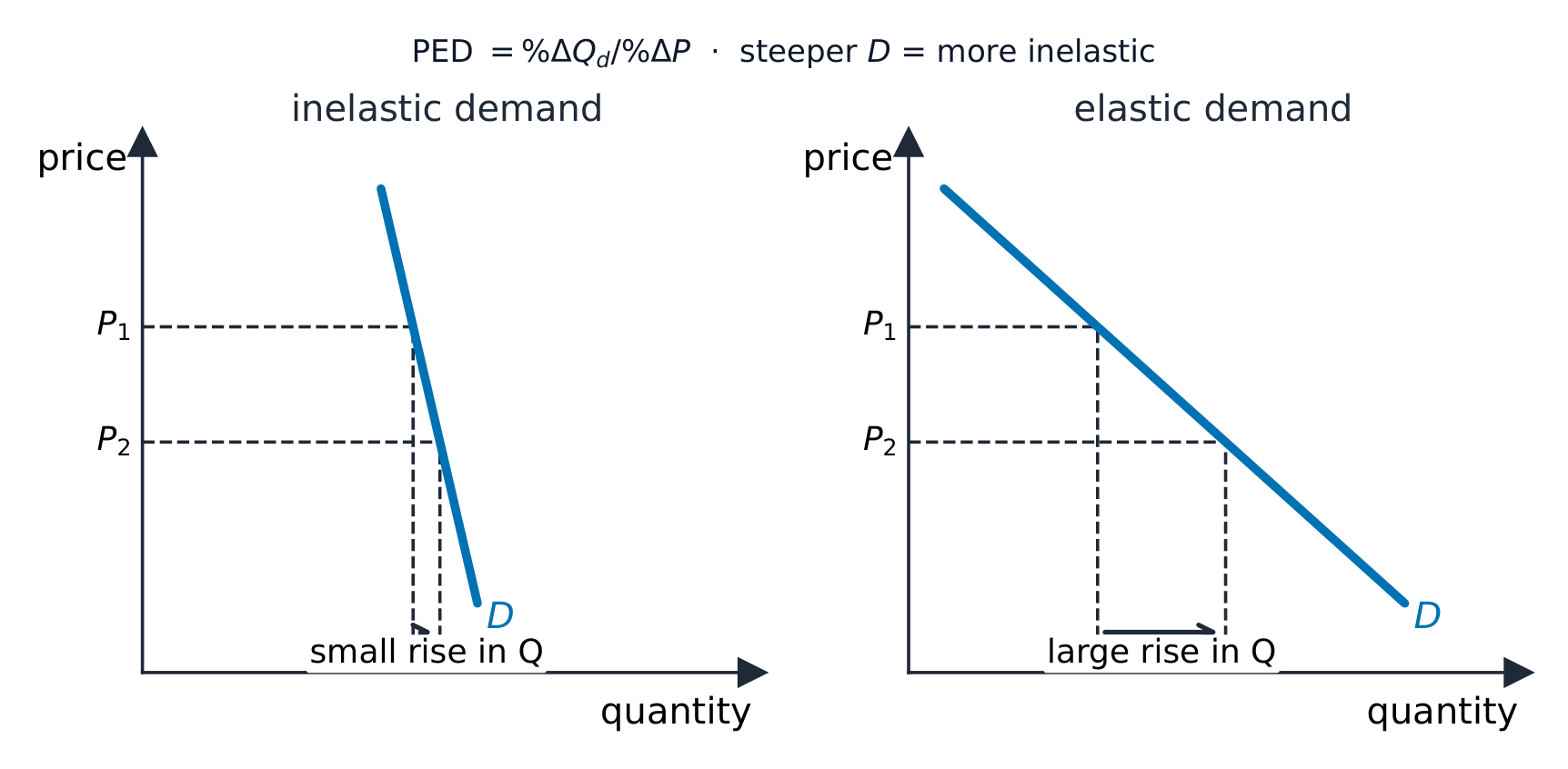
עקום ביקוש אינאלסטי תלול לצד עקום ביקוש אלסטי שטוח
כאשר הביקוש אינאלסטי (תלול), שינוי במחיר זז מעט בכמות; כאשר הוא אלסטי (שטוח), אותו שינוי במחיר מזיז את הכמות הרבה.

מה גורם לביקוש להיות אלסטי או אינאלסטי

  • מספר הסוגרים ומידת הקרבה שלהם (יותר סוגרים → יותר אלסטיות).
  • האם הסחורה היא צורך יומיומי (אינאלסטי) או מוצר יוקרה (אלסטי).
  • החלק מההכנסה המופנה על הסחורה (חלק גדול → יותר אלסטיות).
  • זמן — הביקוש יותר אלסטי בטווח הארוך, כאשר קונים יכולים למצוא אלטרנטיבות אחרות.
  • הרגל או תלות גורמים לביקוש אלסטי.

אלסטיות מחיר והכנסה כוללת

הכנסה כוללת היא הסכום שמחלה מרוויחה: $\text{TR} = \text{price} \times \text{quantity}$. PED מסביר למחלה מה קורה להכנסה כאשר משנה את המחיר:

אם הביקוש… המחיר עולה המחיר יורד
אלסטי ההכנסה כוללת עולה ההכנסה כוללת יורדת
אלסטי ההכנסה כוללת יורדת ההכנסה כוללת עולה
אחיד-אלסטי ההכנסה כוללת נשארת זהה ההכנסה כוללת נשארת זהה

דבר זה שימושי למחלות (איך לקבוע מחיר להכנסה גבוהה יותר) ולממשלות (מס על מוצר אלסטי, כמו בנזין, מייצר הכנסה רבה מבלי לצמצם מכירות באופן משמעותי).

Vocabulary · ⁨מילון מונחים⁩ Train · ⁨אימון⁩
English עברית
price/praɪs/ מחיר
quantity demanded/ˈkwɒntɪti dɪˈmændɪd/ כמות ביקוש
demand curve/dɪˈmænd kɜːv/ עקומת ביקוש
elastic/ɪˈlæstɪk/ גמיש
inelastic/ɪnɪˈlæstɪk/ בלתי גמיש
unit elastic/ˈjuːnɪt ɪˈlæstɪk/ אלסטיות יחידה
perfectly inelastic/ˈpɜːfektlɪ ɪnɪˈlæstɪk/ בלאסטיות מוחלטת
perfectly elastic/ˈpɜːfektlɪ ɪˈlæstɪk/ אלסטי מושלם
necessity/nəˈsesɪti/ מוצר הכרחי
luxury/ˈlʌkʃəri/ מוצר מפנק
total revenue/ˈtəʊtl ˈrevənjuː/ הכנסה כוללת
government/ˈɡʌvənmənt/ ממשלה
income elasticity of demand/ˈɪŋkʌm ɪlæˈstɪsɪti ɒv dɪˈmænd/ אלסטיות הכנסה של ביקוש
normal good/ˈnɔːml ɡʊd/ מוצר רגיל
inferior good/ɪnˈfɪərɪə ɡʊd/ מוצר נחות
cross elasticity of demand/krɒs ɪlæˈstɪsɪti ɒv dɪˈmænd/ אלסטיות צולבת בביקוש
price elasticity of supply/praɪs ɪlæˈstɪsɪti ɒv səˈplaɪ/ אלסטיות מחיר של היצע
spare capacity/speə kəˈpæsɪti/ קיבולת עודפת
stocks/stɒks/ מלאי
momentary/ˈməʊməntəri/ רגעי
short run/ʃɔːt rʌn/ טווח זמן קצר
long run/lɒŋ rʌn/ טווח זמן ארוך
Watch lesson · ⁨צפה בשיעור⁩
2.2

Income elasticity of demand · ⁨אלסטיות הכנסה של ביקוש⁩

English

income elasticity of demand 需求收入弹性 (YED) measures how much demand responds when income changes.

$$\text{YED} = \frac{\%\ \text{change in quantity demanded}}{\%\ \text{change in income}}$$
  • a normal good 正常品 has positive YED: demand rises as income rises. Necessities have YED between 0 and 1; luxuries have YED above 1.
  • an inferior good 低档品 has negative YED: demand falls as income rises (people switch to better goods). An example is cheap instant noodles.

Worked example. A person's income rises by 20% and their demand for restaurant meals rises by 30%. Find the YED and classify the good.

$$\text{YED} = \frac{+30}{+20} = +1.5$$

YED is positive and greater than 1, so restaurant meals are a normal good — and a luxury.

This helps firms plan: as incomes grow, demand for luxuries grows fastest.

עברית

אלסטיות הכנסה של ביקוש (YED) מודדת עד כמה הביקוש מגיב לשינוי בהכנסה.

כשהכנסה עולה, הביקוש למוצרי רגילים עולה אך הביקוש למוצרים דוחקים יורד
ככל שההכנסה עולה, הביקוש למוצר רגיל עולה אך הביקוש למוצר נמוך איכות יורד
$$\text{YED} = \frac{\%\ \text{change in quantity demanded}}{\%\ \text{change in income}}$$
  • למוצר רגיל יש YED חיובי: הביקוש עולה כשהכנסה עולה. צרכים בסיסיים יש להם YED בין 0 ל-1; מוצרי יוקרה יש להם YED מעל 1.
  • למוצר דוחק יש YED שלילי: הביקוש יורד כשהכנסה עולה (אנשים עוברים למוצרים טובים יותר). דוגמה היא חולת מיידית זולה.

דוגמה פותרת. ההכנסה של אדם עלתה ב-20% והביקוש שלו לארוחות במסעדה עלה ב-30%. מצאו את ה-YED וסווגו את המוצר.

$$\text{YED} = \frac{+30}{+20} = +1.5$$

ה-YED הוא חיובי וגדול מ-1, ולכן ארוחות במסעדה הן מוצר רגיל — ומוצר יוקרה.

דבר זה עוזר למחלות לתכנן: כשהכנסות עולות, הביקוש למוצרי יוקרה עולה בקצב המהיר ביותר.

Vocabulary · ⁨מילון מונחים⁩ Train · ⁨אימון⁩
English עברית
income/ˈɪŋkʌm/ הכנסה
substitute/ˈsʌbstɪtjuːt/ תחליף
complement/ˈkɒmplɪmənt/ משלים
consumer/kənˈsuːmə/ צרכן
market demand/ˈmɑːkɪt dɪˈmænd/ ביקוש בשוק
2.2

Cross elasticity of demand · ⁨אלסטיות צולבת של ביקוש⁩

English

cross elasticity of demand 需求交叉弹性 (XED) measures how much demand for one good responds when the price of another good changes.

$$\text{XED} = \frac{\%\ \text{change in quantity demanded of A}}{\%\ \text{change in price of B}}$$
  • for substitutes, XED is positive (the price of B rises, so people buy more A).
  • for complements, XED is negative (the price of B rises, so people buy less A and less B).
  • for goods that are not related, XED is about zero.

Worked example. When the price of tea rises by 10%, the quantity of coffee demanded rises by 4%. Find the XED and say how the two goods are related.

$$\text{XED} = \frac{+4}{+10} = +0.4$$

XED is positive, so tea and coffee are substitutes.

This helps a firm watch its rivals: if XED with a rival's good is high and positive, a price cut by the rival will hurt its sales.

עברית

אלסטיות צולבת של ביקוש (XED) מודדת עד כמה הביקוש למוצר אחד מגיב כאשר מחיר מוצר אחר משתנה.

$$\text{XED} = \frac{\%\ \text{change in quantity demanded of A}}{\%\ \text{change in price of B}}$$
  • עבור תחליפים, XED הוא חיובי (המחיר של B עולה, ולכן אנשים קונים יותר A).
  • עבור משלים, XED הוא שלילי (המחיר של B עולה, ולכן אנשים קונים פחות A ופחות B).
  • עבור מוצרים שאינם קשורים, XED הוא כמעט אפס.

דוגמה פתורה. כאשר המחיר של תה עולה ב-10%, הכמות המבוקשת של קפה עולה ב-4%. חשב את ה-XED וקבע כיצד שני המוצרים קשורים זה לזה.

$$\text{XED} = \frac{+4}{+10} = +0.4$$
שלושה כרטיסים: עליית מחיר התה מעלה את הביקוש לקפה ולכן XED חיובי למחליפים; עליית מחיר הדפוסור מפחיתה את הביקוש לדיו ולכן XED שלילי למשלבים; מוצרים לא קשורים יש להם XED קרוב לאפס
סימן ה-XED: חיובי למחליפים, שלילי למשלבים, כמעט אפס למוצרים לא קשורים

XED הוא חיובי, ולכן תה וקפה הם מחליפים זה לזה.

דבר זה עוזר לחברה לעקוב אחרי המתחרים שלה: אם ה-XED עם מוצר של מתחרה גבוה וחיובי, הנחת מחיר על ידי המתחרה תפגע במכירותיה.

2.3

Price elasticity of supply · ⁨אלסטיות מחיר של הצעה⁩

Syllabus · ⁨סיילבוס⁩
English
  1. define, calculate and interpret price elasticity of supply (PES)
  2. explain the determinants of PES, including time period (momentary, short run, long run)
עברית
  1. הגדר, חשב ופרש אלסטיות מחיר בהיצע (PES)
  2. הסבר הגורמים המכתיבים את PES, כולל תקופת זמן (רגעית, קצר טווח, ארוך טווח)

Source: Cambridge International syllabus · ⁨מקור: הסיילבוס הבינלאומי של קמבריד'ג'⁩

English
Elastic vs inelastic demand

price elasticity of supply 供给价格弹性 (PES) measures how much the quantity supplied responds when the price changes.

$$\text{PES} = \frac{\%\ \text{change in quantity supplied}}{\%\ \text{change in price}}$$

PES is positive. Supply is elastic if it responds a lot, inelastic if it responds little.

Worked example. The price of a good rises by 8% and the quantity supplied rises by 4%. Find the PES.

$$\text{PES} = \frac{4}{8} = 0.5$$

PES is less than 1, so supply is inelastic.

What makes supply more elastic:

  • spare capacity 闲置产能 — unused machines and workers, so firms can quickly make more.
  • stocks 库存 — goods stored in a warehouse that can be sold fast.
  • how easily factors of production can move into the industry.
  • time. Economists split time into three periods:
    • the momentary 瞬时 period — supply is fixed; PES is zero.
    • the short run 短期 — at least one factor is fixed, so supply can rise only a little.
    • the long run 长期 — all factors can change, so supply is most elastic.
עברית
ביקוש אלסטי לעומת אי-אלסטי

אלסטיות מחיר של הצעה (PES) נמדדת לפי ההתייחסות הכמות המוצעת לשינוי במחיר.

$$\text{PES} = \frac{\%\ \text{change in quantity supplied}}{\%\ \text{change in price}}$$

PES הוא חיובי. ההצעה היא אלסטית אם היא מגיבה רבות, ואינה אלסטית אם היא מגיבה מעט.

דוגמה פתורה. המחיר של מוצר עלה ב-8% והכמות המוצעת עלתה ב-4%. חשב את ה-PES.

$$\text{PES} = \frac{4}{8} = 0.5$$

PES הוא קטן מ-1, ולכן ההצעה אינה אלסטית.

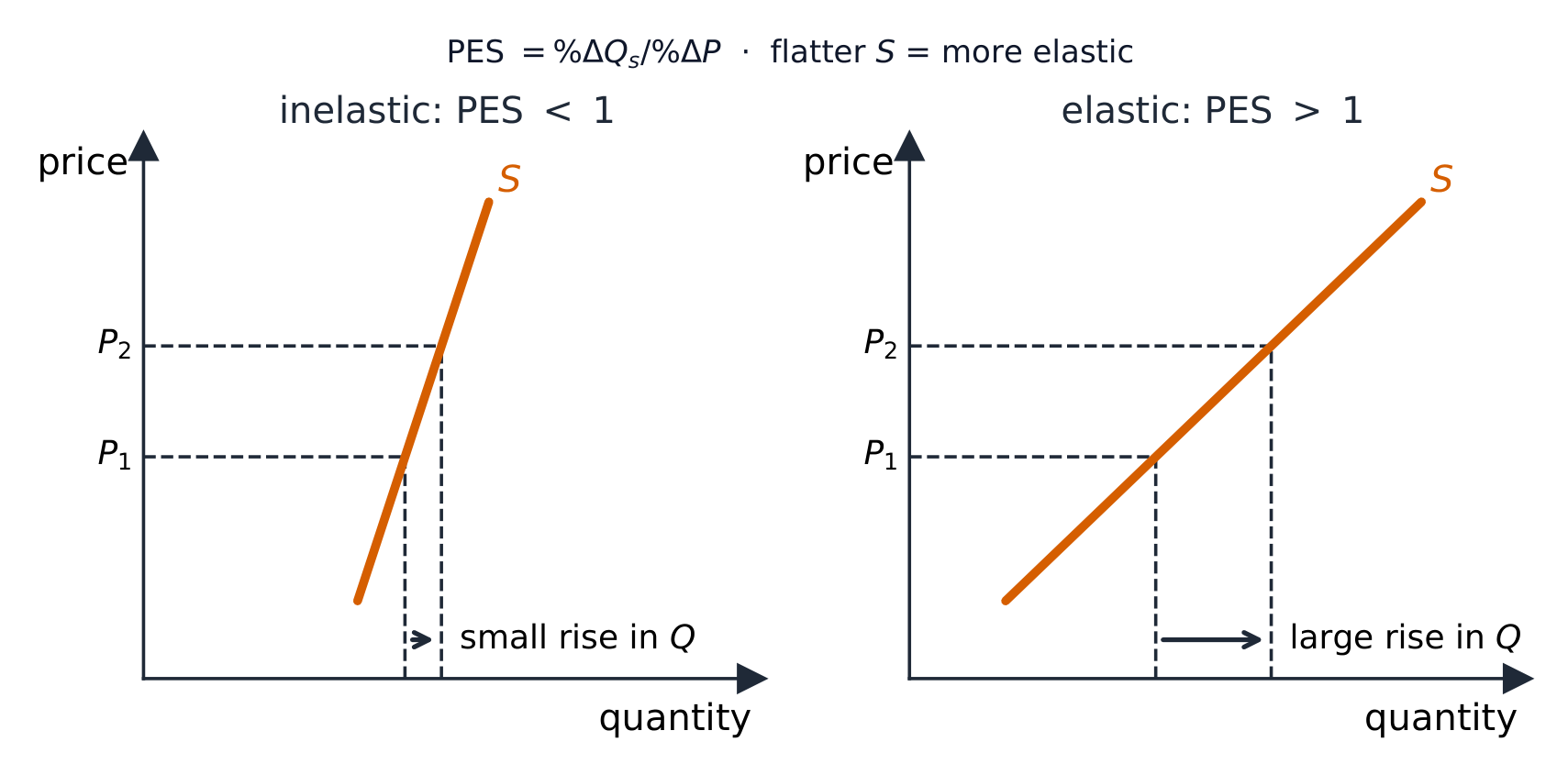
שתי curves הצעה: אותה עליית מחיר מביאה לתגובה כמותית קטנה על העקומה האלסטית התלולה וגדולה על העקומה האלסטית השטוחה
אותה עליית מחיר: תגובת הצעה קטנה כאשר PES קטן מ-1, ותגובה גדולה כאשר PES גדול מ-1

מה גורם להצעה להיות יותר אלסטית:

  • קיבולת עודפת — מכונות ועובדים לא משתמשים בהם, כך שהחברות יכולות לייצר יותר במהירות.
  • מלאי — מוצרים מאוחזים במחסן שיכולים להימכר במהירות.
  • כמה קל לגורמי ייצור להיכנס לתעשייה.
  • זמן. כלכלנים מחלקים את הזמן לשלושה תקופות:
    • התקופה הרגעית — ההצעה קבועה; PES הוא אפס.
    • הקצר טווח — גורם אחד לפחות קבוע, ולכן ההצעה יכולה לעלות רק מעט.
    • טווח ארוך — כל הגורמים יכולים להשתנות, ולכן האספקה היא הגמישה ביותר.
Explore · ⁨חקור⁩

Demand & supply · ⁨ביקוש והיצע⁩

Supply elasticity is how much quantity responds to price. · ⁨אלסטיות אספקה היא עד כמה הכמות מגיבה למחיר.⁩

Vocabulary · ⁨מילון מונחים⁩ Train · ⁨אימון⁩
English עברית
quantity supplied/ˈkwɒntɪti səˈplaɪd/ כמות המוצעת
profit/ˈprɒfɪt/ רווח
supply curve/səˈplaɪ kɜːv/ עקומת הצעה
costs of production/kɒsts ɒv prəˈdʌkʃn/ עלויות ייצור
subsidy/ˈsʌbsɪdi/ סובסידיה
firm/fɜːm/ חברה
market supply/ˈmɑːkɪt səˈplaɪ/ היצע בשוק
price elasticity of demand/praɪs ɪlæˈstɪsɪti ɒv dɪˈmænd/ אלסטיות מחיר של הביקוש
Watch lesson · ⁨צפה בשיעור⁩
2.4

The interaction of demand and supply · ⁨האינטראקציה בין ביקוש והיצע⁩

Syllabus · ⁨סיילבוס⁩
English
  1. explain equilibrium price and quantity and how shifts in demand and supply change equilibrium
  2. explain disequilibrium (excess demand and excess supply) and the functions of the price mechanism
  3. apply demand and supply analysis to product, factor and foreign exchange markets
עברית
  1. הסבר מחיר וכמות איזון ואופן השפעת הזזות בביקוש והיצע על האיזון
  2. הסבר אי-איזון (ביקוש עודף והיצע עודף) ותפקודיו של מנגנון המחירים
  3. יישום ניתוח ביקוש והיצע לשווקי מוצרים, גורמים ומטבעות זרות

Source: Cambridge International syllabus · ⁨מקור: הסיילבוס הבינלאומי של קמבריד'ג'⁩

English

Equilibrium

The market is in equilibrium 均衡 where the demand curve crosses the supply curve. Here demand equals supply. This gives the equilibrium price 均衡价格 and the equilibrium quantity 均衡数量. There is no pressure for the price to change.

Disequilibrium

When the price is not at equilibrium, the market is in disequilibrium 非均衡:

  • if the price is too low, there is excess demand 超额需求 (a shortage 短缺). Buyers compete, so the price is pushed up.
  • if the price is too high, there is excess supply 超额供给. Sellers cannot sell everything, so the price is pushed down.

In both cases the price moves back to equilibrium. This shows the price mechanism doing its jobs of signalling, rationing and giving an incentive.

How shifts change the equilibrium

Change Effect on price Effect on quantity
demand rises (shifts right) rises rises
demand falls (shifts left) falls falls
supply rises (shifts right) falls rises
supply falls (shifts left) rises falls

Demand and supply in different markets

The same analysis works in many markets:

  • in product markets 产品市场, demand and supply set the price of goods and services.
  • in factor markets 要素市场, they set the price of factors — for example, the demand for and supply of labour set the wage 工资.
  • in the foreign exchange market 外汇市场, the demand for and supply of a currency set the exchange rate 汇率 (the price of one currency in terms of another).
עברית
חנות שוק חיצונית אמיתית: תצוגת ירקות של צמחן עם תגיות מחיר כתובות ביד, וקונים עם עגלות בוחרים מוצרים
בשוק, קונים ומוכרים נפגשים והמחיר נקבע שם שבו הביקוש שווה להיצע

איזון

לשוק יש איזון כאשר עקומת הביקוש חוצה את עקומת ההיצע. כאן הביקוש שווה להיצע. הדבר נותן את מחיר האיזון ואת כמות האיזון. אין לחץ למחיר להשתנות.

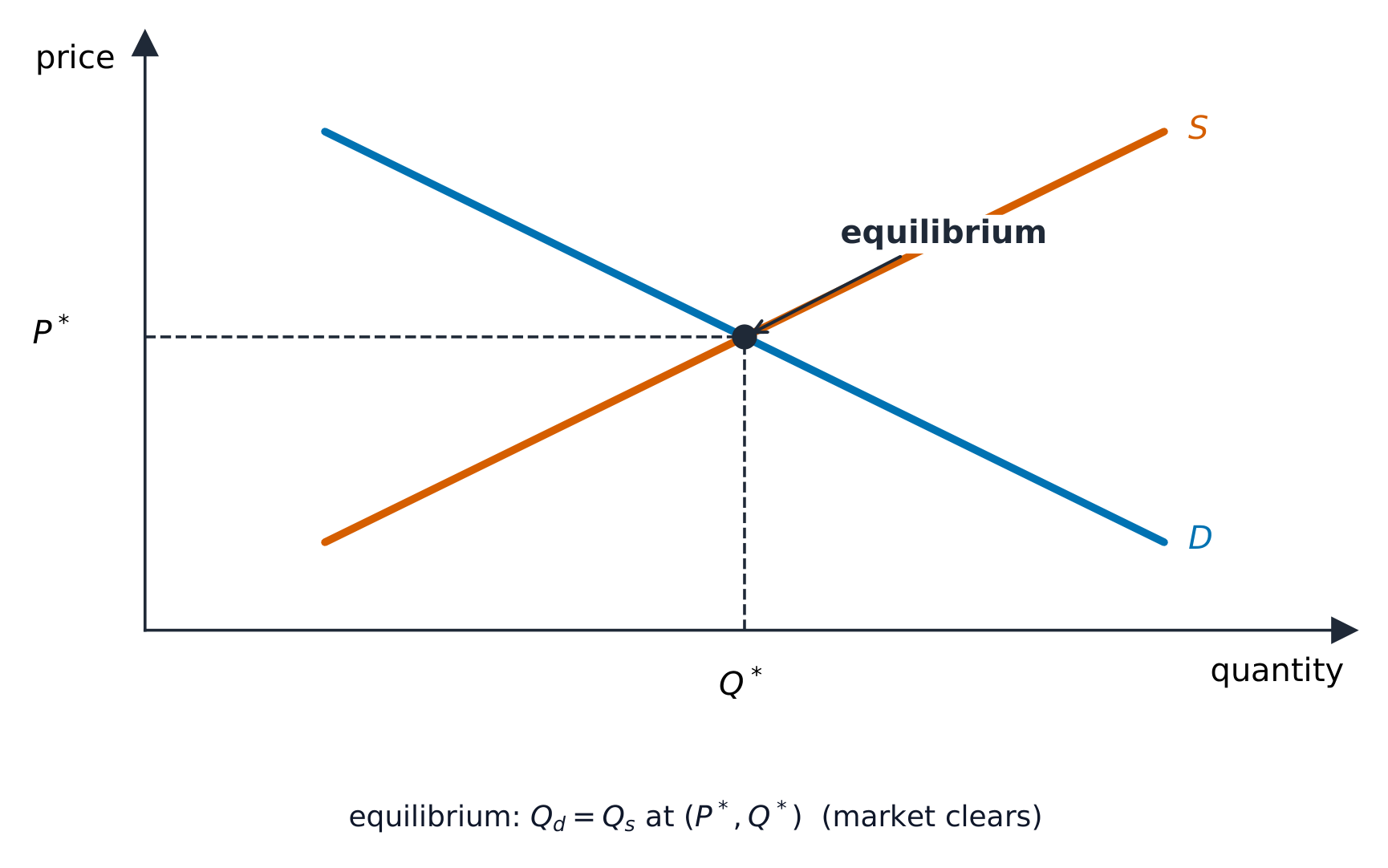
ביקוש והיצע שנפגשים במחיר ובכמות האיזון
במחיר האיזון $P^*$ ובכמות $Q^*$ העקומות נפגשות, ולכן הכמות המבוקשת שווה לכמות המוצעת.

אי-איזון

כאשר המחיר אינו ברמת האיזון, לשוק יש אי-איזון:

  • אם המחיר נמוך מדי, יש ביקוש עודף (חסר). קונים מתחרים זה בזה, ולכן המחיר מועלה.
  • אם המחיר גבוה מדי, יש היצע עודף. סוחרים לא מצליחים למכור הכל, ולכן המחיר מופרך.

בשני המקרים המחיר חוזר לאיזון. הדבר מראה את מנגנון המחיר מבצע את משימותיו של סימון, הקצאה ומתן激励 (עיוד).

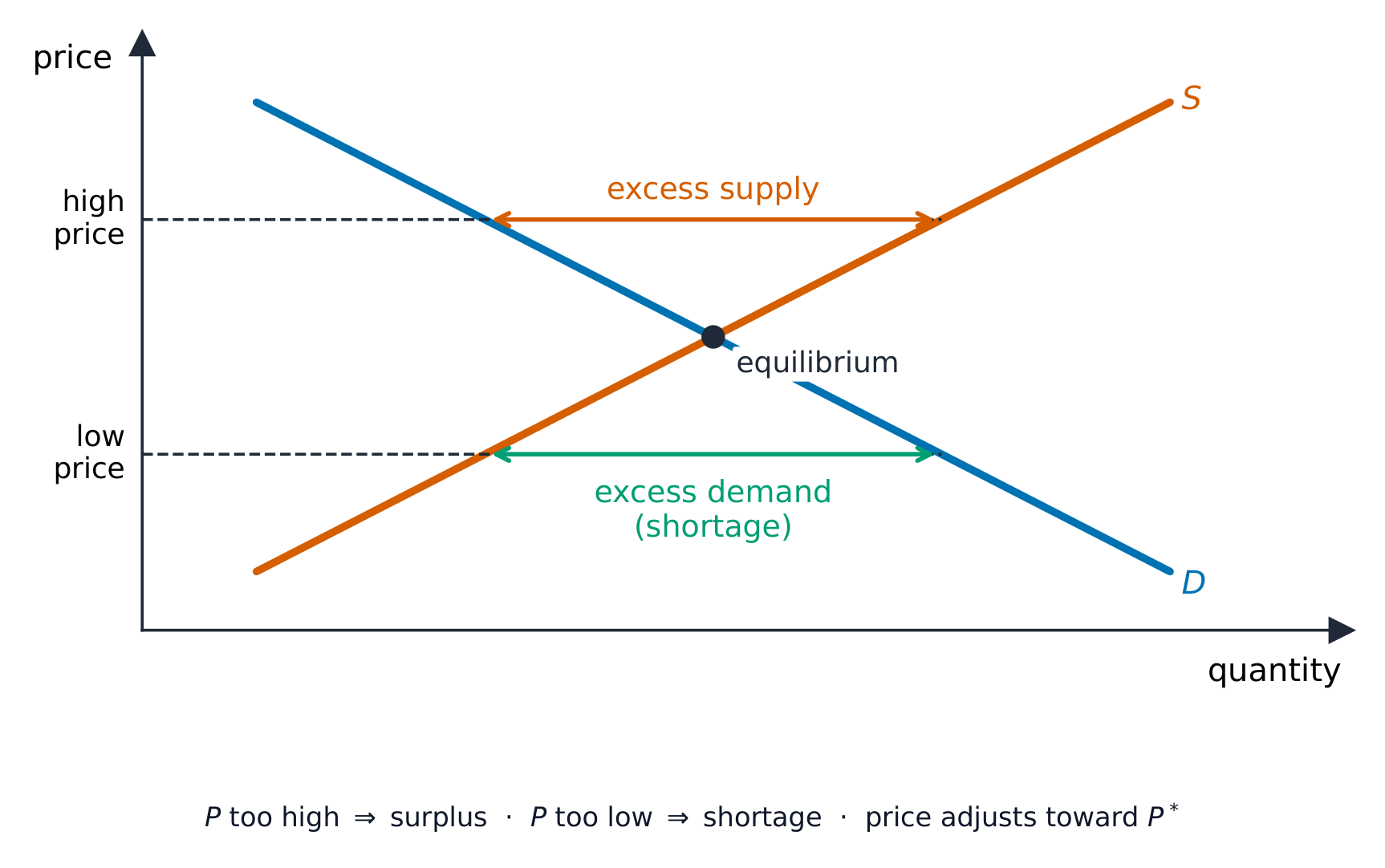
היצע עודף מעל מחיר האיזון וביקוש עודף מתחת לו
מעל מחיר האיזון יש היצע עודף; מתחת לו יש ביקוש עודף (חסר). בכל מקרה המחיר מופרך חזרה לאיזון.

כיצד שינויים משנים את האיזון

שינוי השפעה על המחיר השפעה על הכמות
הביקוש עולה (זז ימינה) עולה עולה
הביקוש יורד (זז שמאלה) יורד יורד
ההיצע עולה (זז ימינה) יורד עולה
ההיצע יורד (זז שמאלה) עולה יורד
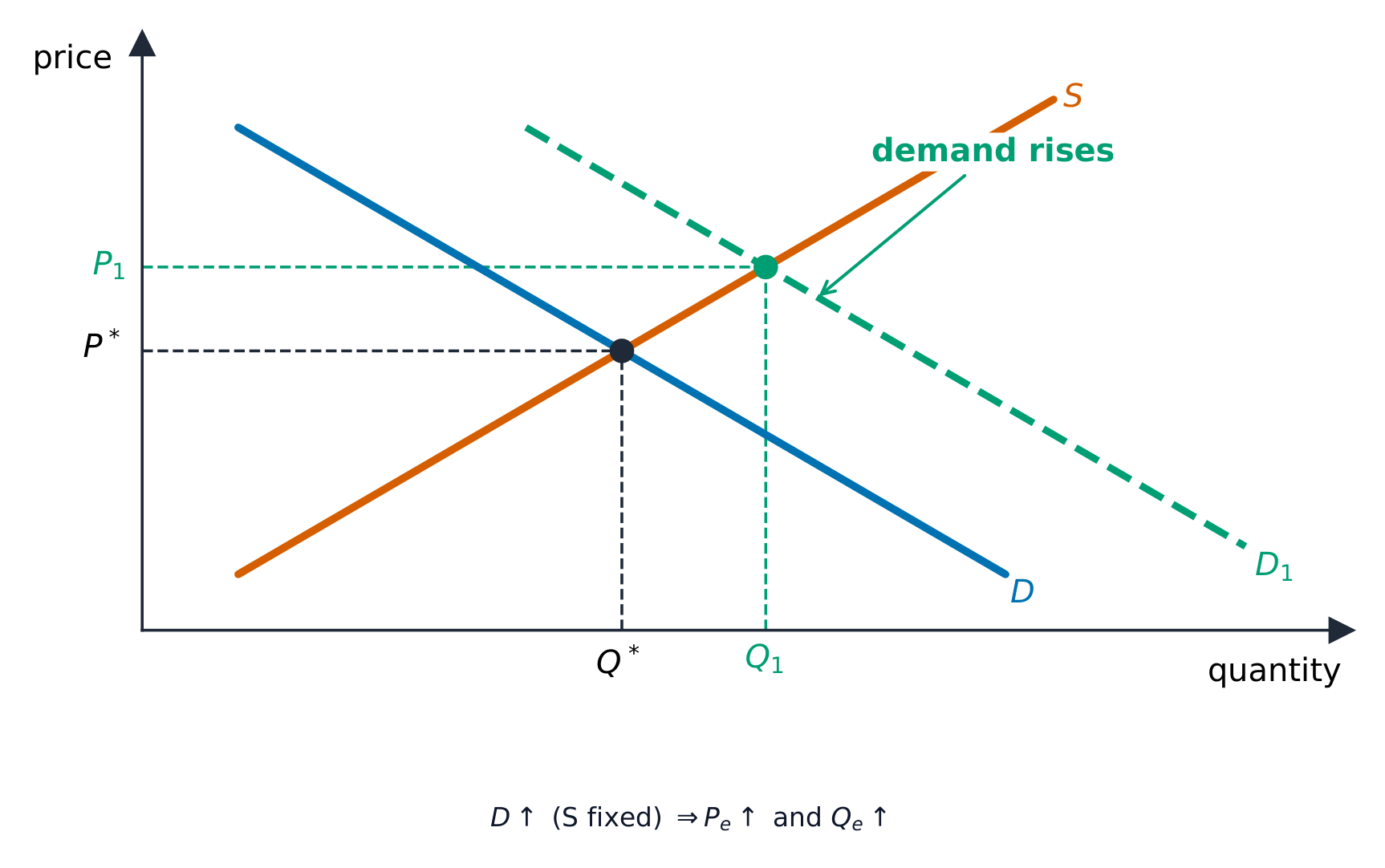
הזזה ימינה של ביקוש המעלה את המחיר והכמות באיזון
בהינתן שחילוץ קבוע, עלייה בביקוש ($D \to D_1$) מעלה גם את מחיר האיזון וגם את כמות האיזון.

ביקוש וחילוץ בשווקים שונים

הניתוח הזה חל על שווקים רבים:

  • בשווקי מוצרים, הביקוש והחילוץ קובעים את מחיר הסחורות והשירותים.
  • בשווקי גורמים, הם קובעים את מחיר הגורמים — למשל, הביקוש והחילוץ בעבודה קובעים את השכר.
  • בשוק המטבע החוץ-ארצי, הביקוש והחילוץ במטבע קובעים את מחיר ההחלפה (מחירו של מטבע אחד ביחס למטבע אחר).
Explore · ⁨חקור⁩

Demand & supply · ⁨ביקוש והיצע⁩

Where demand meets supply sets the equilibrium price and quantity. · ⁨היכן demand פוגשת offer קובעת את מחיר האיזון וכמותו.⁩

Explore · ⁨חקור⁩

Finding the equilibrium price · ⁨מציאת מחיר האיזון⁩

Shift demand or supply and watch the equilibrium price and quantity move to where the two lines cross. · ⁨הזז ביקוש או הצעה והצפה איך מחיר הכמות האיזון משתנים לנקודה שבה שתי הקווים נחתכים.⁩

Vocabulary · ⁨מילון מונחים⁩ Train · ⁨אימון⁩
English עברית
equilibrium/ˌiːkwɪˈlɪbrɪəm/ איזון
equilibrium price/ˌiːkwɪˈlɪbrɪəm praɪs/ מחיר איזון
equilibrium quantity/ˌiːkwɪˈlɪbrɪəm ˈkwɒntɪti/ כמות איזון
disequilibrium/ˌdɪˌsiːkwɪˈlɪbrɪəm/ אי-שיווי משקל
excess demand/ekˈses dɪˈmænd/ ביקוש יתר
shortage/ˈʃɔːtɪdʒ/ מחסור
excess supply/ekˈses səˈplaɪ/ היצע עודף
product market/ˈprɒdʌkt ˈmɑːkɪt/ שוק המוצר
factor market/ˈfæktə ˈmɑːkɪt/ שוק גורמי ייצור
wage/weɪdʒ/ שכר
foreign exchange market/ˈfɒrən eksˈtʃeɪndʒ ˈmɑːkɪt/ שוק המטבעות
exchange rate/eksˈtʃeɪndʒ reɪt/ שיעור החלפה
consumer surplus/kənˈsuːmə ˈsɜːpləs/ עודף צרכנים
producer surplus/prəˈdjuːsə ˈsɜːpləs/ עודף מייצרים
welfare/ˈwelfeə/ רווחה
Watch lesson · ⁨צפה בשיעור⁩
2.5

Consumer and producer surplus · ⁨עודף צרכני ועודף מייצר⁩

Syllabus · ⁨סיילבוס⁩
English
  1. define and identify consumer surplus and producer surplus on a diagram
  2. explain how changes in demand, supply and price affect consumer and producer surplus
עברית
  1. הגדר וזהה עודף צרכנים ועודף יצרנים בתרשים
  2. הסבר כיצד שינויים בביקוש, היצע ומחיר משפיעים על עודף הצרכנים ועודף היצרנים

Source: Cambridge International syllabus · ⁨מקור: הסיילבוס הבינלאומי של קמבריד'ג'⁩

English

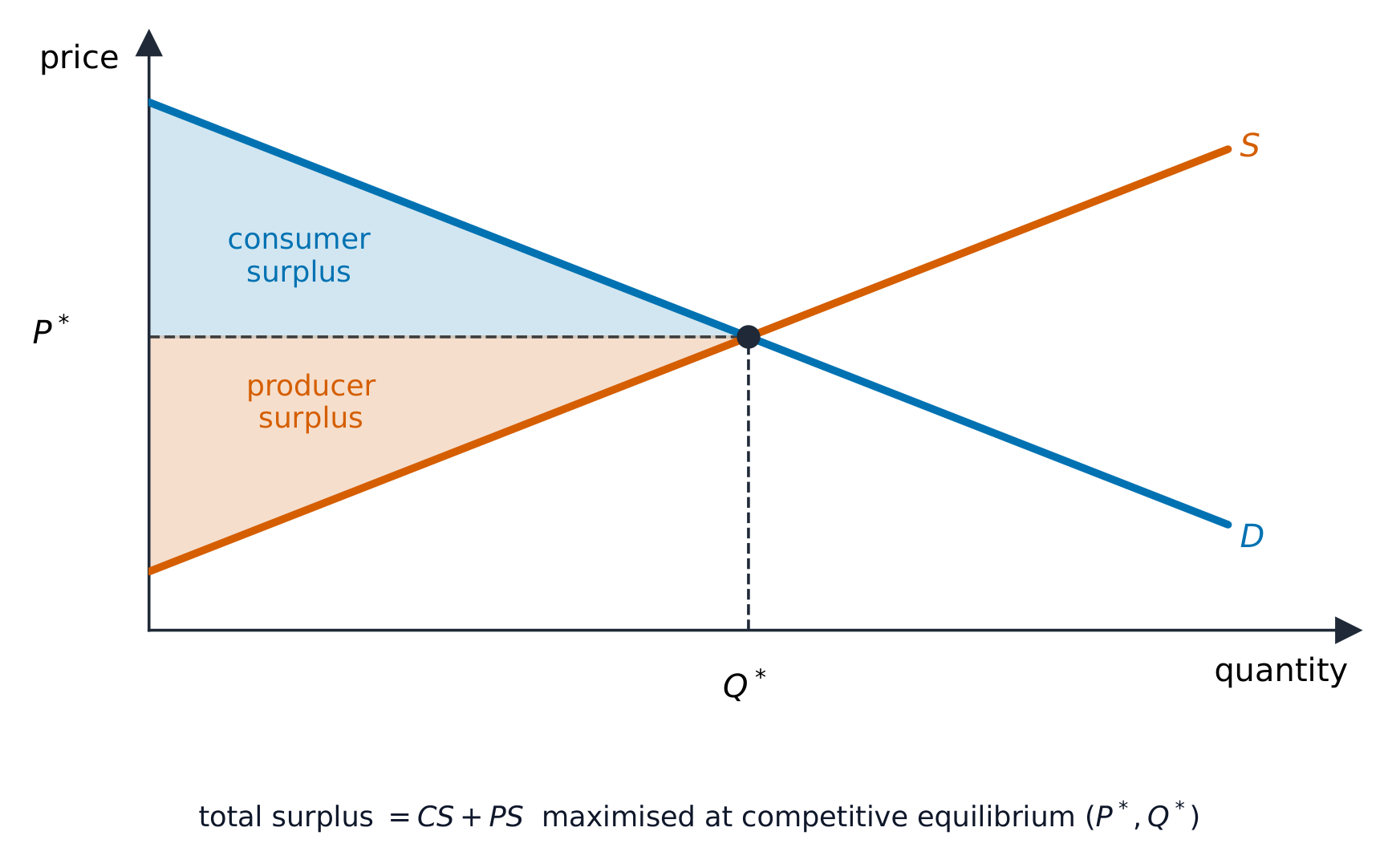
consumer surplus 消费者剩余 is the gain to buyers. It is the difference between the most a consumer was willing to pay and the price actually paid. On a diagram it is the area below the demand curve and above the price line.

producer surplus 生产者剩余 is the gain to sellers. It is the difference between the price a producer receives and the lowest price the producer would have accepted. On a diagram it is the area above the supply curve and below the price line.

How they change:

  • if demand rises, the price and quantity rise, so producer surplus rises and consumer surplus usually rises too.
  • if supply rises, the price falls and quantity rises, so consumer surplus rises.
  • a higher price (with the curves fixed) raises producer surplus but lowers consumer surplus.

Together, consumer surplus plus producer surplus is the total welfare 福利 (gain to society) from the market. It is largest at the free-market equilibrium.

עברית

עודף צרכני הוא התועלת לרוכשים. זהו ההפרש בין המקסימום שהצרכן היה מוכן לשלם לבין המחיר ששולם בפועל. בגרף, זהו השטח מתחת לעקומת הביקוש ומעל קו המחיר.

עודף מייצר הוא התועלת למכר们. זהו ההפרש בין המחיר שמייצר מקבל לבין המחיר הנמוך ביותר שהמייצר היה מסכים לקבל. בגרף, זהו השטח מעל עקומת החילוץ ומתחת לקו המחיר.

עודף צרכני ועודף מייצר מצופים סביב נקודת האיזון
עודף צרכני הוא השטח מתחת לביקוש ומעל המחיר; עודף מייצר הוא השטח מעל חילוץ ומתחת למחיר.

כיצד הם משתנים:

  • אם הביקוש עולה, המחיר והכמות עולים, ולכן העודף המייצר עולה והעודף הצרכני בדרך כלל עולה גם כן.
  • אם החילוץ עולה, המחיר יורד והכמות עולה, ולכן העודף הצרכני עולה.
  • מחיר גבוה יותר (כאשר העקומות קבועות) מעלה את העודף המייצר אך מפחית את העודף הצרכני.

יחד, העודף הצרכני פלוס העודף המייצר מהווים את הרווח (התועלת לחברה) הכולל מהשווק. הוא גדול ביותר באיזון שוק חופשי.

Explore · ⁨חקור⁩

Demand & supply · ⁨ביקוש והיצע⁩

Surplus sits between the curves and the going price. · ⁨עודף ממוקם בין העקומות לבין המחיר הנדון.⁩

Watch lesson · ⁨צפה בשיעור⁩
2.5

Exam tips · ⁨טיפים לבחינות⁩

English
  • Quote the elasticity formula and interpret the value: PED inelastic ($<1$), elastic ($>1$); link PED to total revenue.
  • Distinguish a movement along (a price change) from a shift (a non-price factor) of demand or supply.
  • Use the sign of XED (substitutes $+$, complements $-$) and YED (normal $+$, inferior $-$).
  • On a diagram, label consumer and producer surplus and show how a price change alters each.
עברית
  • ציטוט נוסחת האלסטיות ופרשנות הערך: PED אלסטי ($<1$), אלסטי ($>1$); קישור PED להכנסה כוללת.
  • הבחנה בין תנועה לאורך (שינוי במחיר) לבין הזזה (גורם שאינו מחיר) של ביקוש או חילוץ.
  • שימוש ב-סימן של XED (תחליפים $+$, משלים $-$) ו-YED (רגילים $+$, תחתיים $-$).
  • על גרף, סימן עודף צרכנים ועודף יצרנים והראה כיצד שינוי במחיר משנה כל אחד מהם.

Interactive lessons on this topic · ⁨שיעורים אינטראקטיביים בנושא זה⁩

Work through it step by step, with instant-check exercises. · ⁨לעבור על הדברים צעד אחר צעד, עם תרגילים לבדיקה מיידית.⁩

Past Papers · ⁨מבחני עבר⁩

More topics in A-Level Economics · ⁨כלכלה A-Level⁩ · ⁨נושאים נוספים בA-Level Economics · ⁨כלכלה A-Level⁩⁩

Log in or create account · ⁨היכנס או צור חשבון⁩

IGCSE, A-Level & AP