Skip to content · ⁨الانتقال إلى المحتوى⁩

The price system and the microeconomy · ⁨نظام الأسعار والاقتصاد الجزئي⁩

A-Level Economics · ⁨A-Level الاقتصاد⁩ · Topic 2 · ⁨الموضوع 2⁩

Video lesson for this topic · ⁨درس فيديو لهذا الموضوع⁩ Open the video page · ⁨افتح صفحة الفيديو⁩
16:11

نظام الأسعار والاقتصاد الجزئي

لا أحد في هذا السوق يتولى القيادة. لا مسؤول يحدد ما يجب أن يكون سعر كيلو الطماطم. ومع ذلك، لكل كشك سعر، وبحلول المساء تقريباً كل شيء قد…

English narration · English + 中文 subtitles burned in · ⁨سرد باللغة الإنجليزية · ترجمة مدمجة بالإنجليزية + الصينية⁩

2.1

Demand · ⁨الطلب⁩

Syllabus · ⁨المنهج⁩
English
  1. explain the determinants of demand and supply and distinguish movements along from shifts of the curves
  2. derive individual and market demand and supply
  3. explain the relationship between marginal utility and the demand curve
العربية
  1. شرح محددات الطلب والعرض والتمييز بين الحركات على طول المنحنيات وانزياحاتها
  2. اشتقاق طلب وعرض الفرد والسوق
  3. شرح العلاقة بين المنفعة الحدية ومنحنى الطلب

Source: Cambridge International syllabus · ⁨المصدر: منهج كامبريدج الدولي⁩

English
Demand shifts right: P and Q rise

demand 需求 is the quantity of a good that buyers are willing and able to buy at each price 价格 in a period of time. It is not just a wish — buyers must also be able to pay.

The law of demand says: when the price rises, the quantity demanded 需求量 falls; when the price falls, the quantity demanded rises. Price and quantity move in opposite directions.

So the demand curve 需求曲线 slopes downward, from top-left to bottom-right.

What shifts the demand curve

A change in the good's own price is shown as a movement along the demand curve. A change in any other cause shifts the whole curve to a new position — this is a shift 移动 of demand. The main causes (the determinants 决定因素) are:

  • income 收入 — for most goods, higher income raises demand.
  • the price of a substitute 替代品 — a good you can use instead (tea for coffee). If the substitute's price rises, demand for this good rises.
  • the price of a complement 互补品 — a good used together with this one (cars and petrol). If the complement's price rises, demand for this good falls.
  • tastes and fashion, the size of the population, and advertising.

Individual and market demand

One consumer 消费者 has an individual demand. The market demand 市场需求 is found by adding up the quantity that all consumers want at each price (adding the curves sideways).

Marginal utility and demand

utility 效用 is the satisfaction you get from consuming a good. marginal utility 边际效用 is the extra utility from one more unit.

The law of diminishing marginal utility 边际效用递减 says each extra unit gives less extra satisfaction than the one before. Because later units are worth less to you, you will only buy them at a lower price. This is why the demand curve slopes downward.

العربية
انتقال الطلب لليمين: السعر K quantity يرتفعان

الطلب هو الكمية من سلعة ما يرغب المشترون في شراؤها ويستطيعون دفع ثمنها عند كل سعر خلال فترة زمنية. إنه ليس مجرد رغبة — بل يجب أن يكون المشترون قادرين أيضًا على الدفع.

تنص قانون الطلب على: عندما يرتفع السعر، تنخفض الكمية المطلوبة؛ وعندما ينخفض السعر، تزداد الكمية المطلوبة. يتحرك السعر والكمية في اتجاهين متعاكسين.

لذلك يكون منحنى الطلب مائلًا نحو الأسفل، من أعلى اليسار إلى أسفل اليمين.

ما الذي يحرك منحنى الطلب

التغير في سعر السلعة نفسها يظهر كـ حركة على طول منحنى الطلب. أما التغير في أي سبب آخر فيزيح المنحنى بأكمله إلى موضع جديد — وهذا هو إزاحة الطلب. الأسباب الرئيسية (أو المحددات) هي:

  • الدخل — لمعظم السلع، يؤدي ارتفاع الدخل إلى زيادة الطلب.
  • سعر سلعة بديلة — وهي سلعة يمكنك استخدامها بدلاً منها (الشاي بدلاً من القهوة). إذا ارتفع سعر السلعة البديلة، يزداد الطلب على هذه السلعة.
  • سعر سلعة متممة — وهي سلعة تُستخدم مع هذه السلعة (السيارات والبنزين). إذا ارتفع سعر السلعة المتممة، ينخفض الطلب على هذه السلعة.
  • الأذواق والموضة، وحجم السكان، والإعلانات.
منحنى طلب مائل نحو الأسفل مع إزاحات لليمين واليسار
يؤدي التغير في الدخل أو الأذواق أو الأسعار ذات الصلة إلى إزاحة المنحنى بأكمله (إلى $D_1$ يميناً، أو $D_2$ يساراً)؛ بينما التغير في سعر السلعة نفسها يمثل حركة على طول المنحنى.

الطلب الفردي وطلب السوق

لكل مستهلك طلب فردي. يُحسب طلب السوق عن طريق جمع الكميات التي يرغب فيها جميع المستهلكين عند كل سعر (بتجميع المنحنيات أفقيًا).

المنفعة الحدية والطلب

المنفعة هي الرضا الذي تحصل عليه من استهلاك سلعة ما. المنفعة الحدية هي المنفعة الإضافية الناتجة عن وحدة إضافية واحدة.

تنص قانون تناقص المنفعة الحدية على أن كل وحدة إضافية توفر رضا إضافيًا أقل من الوحدة التي سبقتها. وبما أن الوحدات اللاحقة تكون أقل قيمة بالنسبة لك، فإنك لن تشتريها إلا بسعر أقل. ولهذا السبب يكون منحنى الطلب مائلًا نحو الأسفل.

رسم بياني عمودي يوضح تناقص المنفعة الحدية مع كل وحدة إضافية مستهلكة، حيث تتناقص أطوال الأعمدة من الوحدة الأولى إلى الخامسة
كل وحدة إضافية تضيف رضا أقل من السابقة لها — لذا سيدفع المشترون أسعارًا أقل للوحدات اللاحقة، وهو ما يفسر ميلان منحنى الطلب نحو الأسفل
Explore · ⁨استكشف⁩

Demand & supply · ⁨الطلب والعرض⁩

Demand slopes down — a lower price, more is wanted. · ⁨الطلب ينحدر للأسفل — كلما انخفض السعر، زاد الكمية المطلوبة.⁩

Vocabulary · ⁨مفردات⁩ Train · ⁨تدريب⁩
English العربية
demand/dɪˈmænd/ الطلب
shift/ʃɪft/ إزاحة
determinants/dɪˈtɜːmɪnənts/ المحددات
utility/juːˈtɪlɪti/ أداة مساعدة
marginal utility/ˈmɑːdʒɪnl juːˈtɪlɪti/ المنفعة الحدية
diminishing marginal utility/dɪˈmɪnɪʃɪŋ ˈmɑːdʒɪnl juːˈtɪlɪti/ انخفاض المنفعة الحدية
supply/səˈplaɪ/ مزود
producer/prəˈdjuːsə/ منتج
Watch lesson · ⁨شاهد الدرس⁩
2.1

Supply · ⁨العرض⁩

English

supply 供给 is the quantity of a good that producers 生产者 are willing and able to sell at each price in a period of time.

The law of supply says: when the price rises, the quantity supplied 供给量 rises. Higher prices mean more profit 利润, so firms make more. So the supply curve 供给曲线 slopes upward.

What shifts the supply curve

A change in the good's own price is a movement along the supply curve. Other causes shift the whole curve:

  • costs of production 生产成本 — if wages, raw materials or rent get dearer, supply falls.
  • technology — better machines raise supply.
  • a subsidy 补贴 (government payment to producers) raises supply; an indirect tax lowers it.
  • the number of firms 企业 in the market, and weather (for farm goods).

Individual and market supply

The market supply 市场供给 is found by adding up the quantity all firms will sell at each price.

العربية

العرض هو الكمية من سلعة ما يرغب المنتجون في بيعها ويستطيعون تقديمها عند كل سعر خلال فترة زمنية.

تنص قانون العرض على: عندما يرتفع السعر، تزداد الكمية المعروضة. تؤدي الأسعار الأعلى إلى مزيد من الربح، مما يدفع الشركات لإنتاج المزيد. وبالتالي يكون منحنى العرض مائلًا نحو الأعلى.

ما الذي يحرك منحنى العرض

التغير في سعر السلعة نفسها هو حركة على طول منحنى العرض. أما الأسباب الأخرى فتزيح المنحنى بأكمله:

  • تكاليف الإنتاج — إذا أصبحت الأجور أو المواد الخام أو الإيجارات أغلى، ينخفض العرض.
  • التكنولوجيا — تحسين الآلات يزيد العرض.
  • البدالة (دفع الحكومة للمنتجين) تزيد العرض؛ بينما تخفيض الضرائب غير المباشرة يقلله.
  • عدد الشركات في السوق، والطقس (بالنسبة للسلع الزراعية).
منحنى عرض صاعد مع إزيمات يمينية ويسارية
انخفاض التكاليف، أو تحسين التكنولوجيا، أو البدالة يُزيح العرض إلى اليمين ($S_1$)؛ بينما ارتفاع التكاليف أو فرض ضريبة يُزيحه إلى اليسار ($S_2$).

العرض الفردي وعرض السوق

يُحسب عرض السوق عن طريق جمع الكميات التي ستبيعها جميع الشركات عند كل سعر.

Explore · ⁨استكشف⁩

Demand & supply · ⁨الطلب والعرض⁩

Supply slopes up — a higher price, more is produced. · ⁨العرض يصعد للأعلى — كلما ارتفع السعر، زاد الإنتاج.⁩

2.2

Price elasticity of demand · ⁨مرونة الطلب السعرية⁩

Syllabus · ⁨المنهج⁩
English
  1. define, calculate and interpret price elasticity of demand (PED), income elasticity (YED) and cross elasticity (XED)
  2. explain the determinants of each and the relationship between PED and total revenue/expenditure
  3. explain the usefulness of elasticities to firms and government
العربية
  1. تعريف وحساب وتفسير مرونة سعر الطلب (PED)، مرونة الدخل (YED) والمرونة المتقاطعة (XED)
  2. شرح محددات كل منها والعلاقة بين مرونة سعر الطلب والإجمالي الإيرادات/الإنفاق
  3. شرح فائدة المرونة للشركات والحكومة

Source: Cambridge International syllabus · ⁨المصدر: منهج كامبريدج الدولي⁩

English
Supply shifts right: P falls, Q rises

price elasticity of demand 需求价格弹性 (PED) measures how much the quantity demanded responds when the price changes.

$$\text{PED} = \frac{\%\ \text{change in quantity demanded}}{\%\ \text{change in price}}$$

PED is normally negative (because of the law of demand), but we usually look at the size and drop the minus sign.

Worked example. The price of a good rises by 10% and the quantity demanded falls by 25%. Find the PED and classify the demand.

$$\text{PED} = \frac{-25}{10} = -2.5$$

Ignoring the minus sign, $2.5 > 1$, so demand is elastic — quantity responded much more than the price did.

Value Name Meaning
more than 1 elastic 富有弹性 quantity responds a lot
less than 1 inelastic 缺乏弹性 quantity responds a little
equal to 1 unit elastic 单位弹性 quantity changes by the same % as price
0 perfectly inelastic 完全无弹性 quantity does not change at all
infinity perfectly elastic 完全有弹性 any price rise sends demand to zero

What makes demand elastic or inelastic

  • the number and closeness of substitutes (more substitutes → more elastic).
  • whether the good is a necessity 必需品 (inelastic) or a luxury 奢侈品 (elastic).
  • the share of income spent on the good (a large share → more elastic).
  • time — demand is more elastic in the long run, when buyers can find other options.
  • habit or addiction makes demand inelastic.

PED and total revenue

total revenue 总收益 is the money a firm earns: $\text{TR} = \text{price} \times \text{quantity}$. PED tells a firm what happens to revenue when it changes the price:

If demand is… price rises price falls
inelastic total revenue rises total revenue falls
elastic total revenue falls total revenue rises
unit elastic total revenue stays the same total revenue stays the same

This is useful to firms (how to price for more revenue) and to governments 政府 (a tax on an inelastic good, like petrol, raises a lot of revenue without cutting sales much).

العربية
انزياح العرض لليمين: انخفاض P، ارتفاع Q

مرونة الطلب السعرية (PED) تقيس مدى استجابة الكمية المطلوبة للتغير في السعر.

$$\text{PED} = \frac{\%\ \text{change in quantity demanded}}{\%\ \text{change in price}}$$

عادةً ما تكون PED سالبة (بسبب قانون الطلب)، لكننا ننظر عادةً إلى القيمة المطلقة ونستبعد الإشارة السالبة.

مثال محلول. ارتفع سعر سلعة بنسبة 10% وانخفضت الكمية المطلوبة بنسبة 25%. أوجد PED وصنف الطلب.

$$\text{PED} = \frac{-25}{10} = -2.5$$

بغض النظر عن الإشارة السالبة، $2.5 > 1$، لذا فإن الطلب مرِن — إذ كانت استجابة الكمية أكبر بكثير من استجابة السعر.

محط وقود: البنزين له طلب غير مرن سعريًا، لذا فإن ارتفاع السعر يقلل الكمية المشتراة قليلاً فقط
البنزين له طلب غير مرن سعريًا: السائقون مضطرون لشراءه، لذا فإن ارتفاع السعر يقلل الكمية المشتراة قليلاً فقط.
القيمة الاسم المعنى
أكثر من 1 مرِن الكمية تستجيب بشكل كبير
أقل من 1 غير مرِن الكمية تستجيب بشكل طفيف
تساوي 1 مرِن بوحدة واحدة تتغير الكمية بنفس النسبة المئوية للسعر
0 غير مرِن تمامًا لا تتغير الكمية على الإطلاق
ما لا نهاية مرِن تمامًا أي ارتفاع في السعر يجعل الطلب صفراً
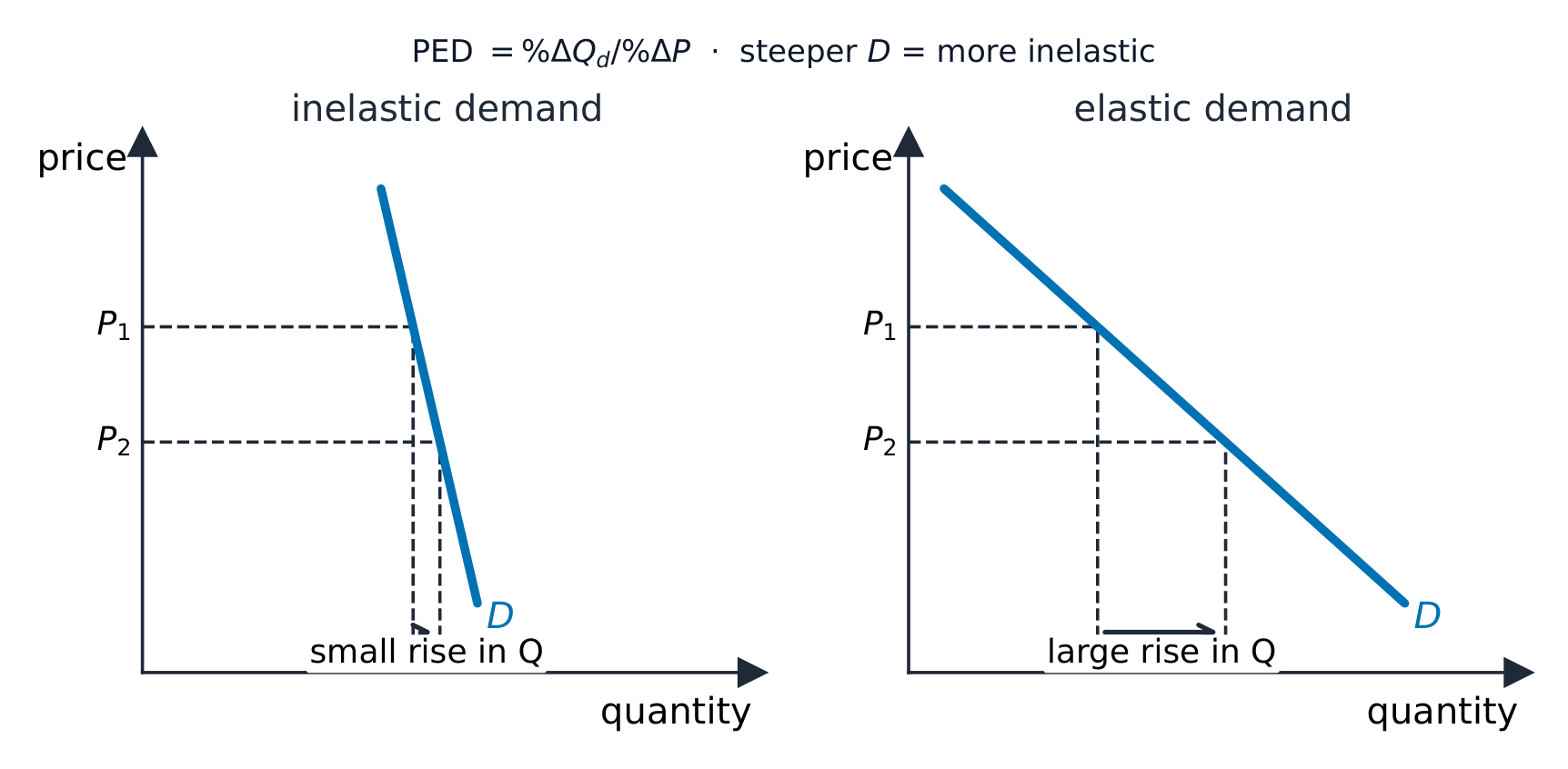
طلب غير مرن حاد بجوار طلب مرن مسطح
عندما يكون الطلب غير مرِن (حاد)، فإن التغير في السعر لا يؤثر تقريبًا على الكمية؛ وعندما يكون مرِنًا (مسطحًا)، فإن نفس التغير في السعر يُحدث تغييرًا كبيرًا في الكمية.

ما الذي يجعل الطلب مرِنًا أو غير مرِن

  • عدد وقرب السلع البديلة (زيادة البديلات → زيادة المرونة).
  • ما إذا كانت السلعة ضرورية (غير مرِن) أم فاخرة (مرِن).
  • حصة الدخل المنفقة على السلعة (حصة كبيرة → مرونة أعلى).
  • الوقت — الطلب يكون أكثر مرونة على المدى الطويل، عندما يستطيع المشترين إيجاد بدائل أخرى.
  • العادة أو الإدمان تجعل الطلب غير مرن.

مرونة الطلب السعرية والإجمالي للدخل

الإجمالي للدخل هو المال الذي يكسبه المنشأة: $\text{TR} = \text{price} \times \text{quantity}$. tells a firm what happens to revenue when it changes the price: tells a firm what happens to revenue when it changes the price:

إذا كان الطلب… يرتفع السعر ينخفض السعر
غير مرن يرتفع الإجمالي للدخل ينخفض الإجمالي للدخل
مرن ينخفض الإجمالي للدخل يرتفع الإجمالي للدخل
وحدة المرونة يبقى الإجمالي للدخل ثابتاً يبقى الإجمالي للدخل ثابتاً

هذا مفيد للمنشآت (كيفية تسعيرها لزيادة الإيرادات) ولـ الحكومات (فرض ضريبة على سلعة غير مرنة مثل البنزين يرفع إيرادات كبيرة دون خفض المبيعات كثيراً).

Vocabulary · ⁨مفردات⁩ Train · ⁨تدريب⁩
English العربية
price/praɪs/ السعر
quantity demanded/ˈkwɒntɪti dɪˈmændɪd/ الكمية المطلوبة
demand curve/dɪˈmænd kɜːv/ منحنى الطلب
firm/fɜːm/ شركة
market supply/ˈmɑːkɪt səˈplaɪ/ عرض السوق
price elasticity of demand/praɪs ɪlæˈstɪsɪti ɒv dɪˈmænd/ مرونة الطلب السعرية
elastic/ɪˈlæstɪk/ مرن
inelastic/ɪnɪˈlæstɪk/ غير مرن
unit elastic/ˈjuːnɪt ɪˈlæstɪk/ مرن بوحدة واحدة
perfectly inelastic/ˈpɜːfektlɪ ɪnɪˈlæstɪk/ غير مرن تماماً
perfectly elastic/ˈpɜːfektlɪ ɪˈlæstɪk/ مرن تماماً
necessity/nəˈsesɪti/ الضرورة
luxury/ˈlʌkʃəri/ سلعة فاخرة
total revenue/ˈtəʊtl ˈrevənjuː/ إجمالي الإيرادات
government/ˈɡʌvənmənt/ الحكومة
income elasticity of demand/ˈɪŋkʌm ɪlæˈstɪsɪti ɒv dɪˈmænd/ مرونة الطلب الدخلية
Watch lesson · ⁨شاهد الدرس⁩
2.2

Income elasticity of demand · ⁨مرونة الطلب الدخلية⁩

English

income elasticity of demand 需求收入弹性 (YED) measures how much demand responds when income changes.

$$\text{YED} = \frac{\%\ \text{change in quantity demanded}}{\%\ \text{change in income}}$$
  • a normal good 正常品 has positive YED: demand rises as income rises. Necessities have YED between 0 and 1; luxuries have YED above 1.
  • an inferior good 低档品 has negative YED: demand falls as income rises (people switch to better goods). An example is cheap instant noodles.

Worked example. A person's income rises by 20% and their demand for restaurant meals rises by 30%. Find the YED and classify the good.

$$\text{YED} = \frac{+30}{+20} = +1.5$$

YED is positive and greater than 1, so restaurant meals are a normal good — and a luxury.

This helps firms plan: as incomes grow, demand for luxuries grows fastest.

العربية

مرونة الطلب الدخلية (YED) تقيس مدى استجابة الطلب عند تغير الدخل.

As income rises, demand for a normal good rises but demand for an inferior good falls
مع ارتفاع الدخل، يرتفع الطلب على السلعة العادية لكن يتناقص الطلب على السلعة المتدنية الجودة
$$\text{YED} = \frac{\%\ \text{change in quantity demanded}}{\%\ \text{change in income}}$$
  • السلعة العادية لها YED موجب: يرتفع الطلب مع ارتفاع الدخل. السلع الأساسية لها YED بين 0 و1؛ والسلع الفاخرة لها YED فوق 1.
  • السلعة الرديئة لها YED سالب: ينخفض الطلب مع ارتفاع الدخل (لأن الناس ينتقلون إلى سلع أفضل). مثال على ذلك المعكرونة الفورية الرخيصة.

مثال محلول. ارتفع دخل شخص بنسبة 20% وارتفع طلبه على وجبات المطاعم بنسبة 30%. أوجد YED وصنف السلعة.

$$\text{YED} = \frac{+30}{+20} = +1.5$$

YED موجب وأكبر من 1، لذا فإن وجبات المطاعم هي سلعة عادية — وفاخرة.

هذا يساعد المنشآت في التخطيط: مع نمو incomes، ينمو الطلب على السلع الفاخرة بأسرع معدل.

Vocabulary · ⁨مفردات⁩ Train · ⁨تدريب⁩
English العربية
income/ˈɪŋkʌm/ الدخل
normal good/ˈnɔːml ɡʊd/ سلعة عادية
inferior good/ɪnˈfɪərɪə ɡʊd/ سلعة رديئة
cross elasticity of demand/krɒs ɪlæˈstɪsɪti ɒv dɪˈmænd/ المرونة البينية للطلب
price elasticity of supply/praɪs ɪlæˈstɪsɪti ɒv səˈplaɪ/ مرونة العرض للسعر
spare capacity/speə kəˈpæsɪti/ الطاقة الاحتياطية
stocks/stɒks/ المخزون
momentary/ˈməʊməntəri/ لحظي
short run/ʃɔːt rʌn/ قصير الأجل
long run/lɒŋ rʌn/ طويل الأجل
2.2

Cross elasticity of demand · ⁨مرونة الطلب المتقاطعة⁩

English

cross elasticity of demand 需求交叉弹性 (XED) measures how much demand for one good responds when the price of another good changes.

$$\text{XED} = \frac{\%\ \text{change in quantity demanded of A}}{\%\ \text{change in price of B}}$$
  • for substitutes, XED is positive (the price of B rises, so people buy more A).
  • for complements, XED is negative (the price of B rises, so people buy less A and less B).
  • for goods that are not related, XED is about zero.

Worked example. When the price of tea rises by 10%, the quantity of coffee demanded rises by 4%. Find the XED and say how the two goods are related.

$$\text{XED} = \frac{+4}{+10} = +0.4$$

XED is positive, so tea and coffee are substitutes.

This helps a firm watch its rivals: if XED with a rival's good is high and positive, a price cut by the rival will hurt its sales.

العربية

مرونة الطلب المتقاطعة (XED) تقيس مدى استجابة الطلب على سلعة ما عند تغير سعر سلعة أخرى.

$$\text{XED} = \frac{\%\ \text{change in quantity demanded of A}}{\%\ \text{change in price of B}}$$
  • بالنسبة للـ بديلات، تكون XED موجبة (يرتفع سعر B، فيشتري الناس المزيد من A).
  • بالنسبة للـ مكملات، تكون XED سالبة (يرتفع سعر B، فيشتري الناس أقل من A والأقل من B).
  • بالنسبة للسلع غير المرتبطة، تكون XED حوالي الصفر.

مثال محلول. عندما ارتفع سعر الشاي بنسبة 10%, ارتفعت الكمية المطلوبة من القهوة بنسبة 4%. أوجد XED وحدد العلاقة بين السلعتين.

$$\text{XED} = \frac{+4}{+10} = +0.4$$
Three cards: a tea price rise raises coffee demand so XED is positive for substitutes; a printer price rise lowers ink demand so XED is negative for complements; unrelated goods have XED near zero
إشارة XED: موجبة للبديلات، سالبة للمكملات، قريبة من الصفر للسلع غير المرتبطة

XED موجبة، لذا الشاي والقهوة بديلتان.

هذا يساعد المنشأة على مراقبة منافسيها: إذا كانت XED مع سلعة منافس عالية وموجبة، فإن خفض المنافس للسعر سيؤثر على مبيعاته.

Vocabulary · ⁨مفردات⁩ Train · ⁨تدريب⁩
English العربية
substitute/ˈsʌbstɪtjuːt/ استبدال
complement/ˈkɒmplɪmənt/ مكمّل
consumer/kənˈsuːmə/ استهلاكية
market demand/ˈmɑːkɪt dɪˈmænd/ طلب السوق
2.3

Price elasticity of supply · ⁨مرونة العرض السعرية⁩

Syllabus · ⁨المنهج⁩
English
  1. define, calculate and interpret price elasticity of supply (PES)
  2. explain the determinants of PES, including time period (momentary, short run, long run)
العربية
  1. تعريف وحساب وتفسير مرونة عرض السعر (PES)
  2. شرح محددات مرونة عرض السعر، بما في ذلك الفترة الزمنية (اللحظي، المدى القصير، المدى الطويل)

Source: Cambridge International syllabus · ⁨المصدر: منهج كامبريدج الدولي⁩

English
Elastic vs inelastic demand

price elasticity of supply 供给价格弹性 (PES) measures how much the quantity supplied responds when the price changes.

$$\text{PES} = \frac{\%\ \text{change in quantity supplied}}{\%\ \text{change in price}}$$

PES is positive. Supply is elastic if it responds a lot, inelastic if it responds little.

Worked example. The price of a good rises by 8% and the quantity supplied rises by 4%. Find the PES.

$$\text{PES} = \frac{4}{8} = 0.5$$

PES is less than 1, so supply is inelastic.

What makes supply more elastic:

  • spare capacity 闲置产能 — unused machines and workers, so firms can quickly make more.
  • stocks 库存 — goods stored in a warehouse that can be sold fast.
  • how easily factors of production can move into the industry.
  • time. Economists split time into three periods:
    • the momentary 瞬时 period — supply is fixed; PES is zero.
    • the short run 短期 — at least one factor is fixed, so supply can rise only a little.
    • the long run 长期 — all factors can change, so supply is most elastic.
العربية
الطلب المرن مقابل غير المرن

مرونة العرض السعرية (PES) تقيس مدى استجابة الكمية المعروضة عند تغير السعر.

$$\text{PES} = \frac{\%\ \text{change in quantity supplied}}{\%\ \text{change in price}}$$

PES موجبة. العرض يكون مرناً إذا استجاب بشدة، وغير مرن إذا استجابة قليلة.

مثال محلول. ارتفع سعر سلعة بنسبة 8% وارتفعت الكمية المعروضة بنسبة 4%. أوجد PES.

$$\text{PES} = \frac{4}{8} = 0.5$$

PES أقل من 1، لذا العرض غير مرن.

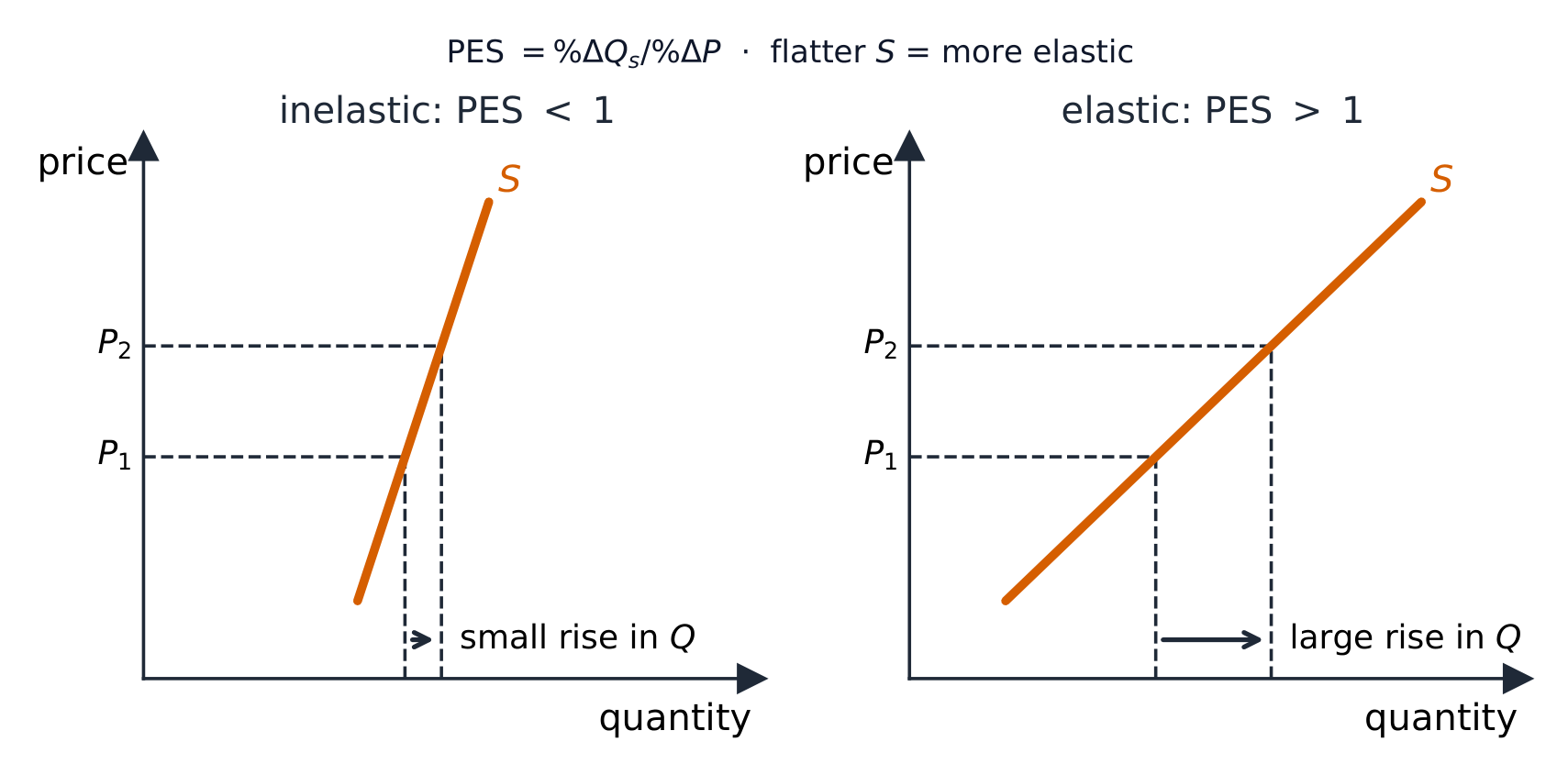
Two supply curves: the same price rise brings a small quantity response on the steep inelastic curve and a large response on the shallow elastic curve
نفس الارتفاع في السعر: استجابة عرض صغيرة عندما يكون PES أقل من 1، واستجابة كبيرة عندما يكون PES أكبر من 1

ما يجعل العرض أكثر مرونة:

  • السعة الفائضة — آلات وعاملين غير مستخدمين، مما يسمح للمنشآت بزيادة الإنتاج بسرعة.
  • المخزون — سلع مخزنة في مستودع يمكن بيعها بسرعة.
  • مدى سهولة انتقال عوامل الإنتاج إلى الصناعة.
  • الوقت. يقسم الاقتصاديون الوقت إلى ثلاث فترات:
    • فترة اللحظة — العرض ثابت؛ PES يساوي صفراً.
    • المدى القصير — عامل واحد على الأقل ثابت، لذا لا يمكن أن يرتفع العرض إلا قليلاً.
    • المدى الطويل — جميع العوامل قابلة للتغيير، لذا العرض هو الأكثر مرونة.
Explore · ⁨استكشف⁩

Demand & supply · ⁨الطلب والعرض⁩

Supply elasticity is how much quantity responds to price. · ⁨مرونة العرض هي مدى استجابة الكمية للسعر.⁩

Vocabulary · ⁨مفردات⁩ Train · ⁨تدريب⁩
English العربية
quantity supplied/ˈkwɒntɪti səˈplaɪd/ الكمية المعروضة
profit/ˈprɒfɪt/ ربح
supply curve/səˈplaɪ kɜːv/ منحنى العرض
costs of production/kɒsts ɒv prəˈdʌkʃn/ تكاليف الإنتاج
subsidy/ˈsʌbsɪdi/ إعانة
Watch lesson · ⁨شاهد الدرس⁩
2.4

The interaction of demand and supply · ⁨تفاعل الطلب والعرض⁩

Syllabus · ⁨المنهج⁩
English
  1. explain equilibrium price and quantity and how shifts in demand and supply change equilibrium
  2. explain disequilibrium (excess demand and excess supply) and the functions of the price mechanism
  3. apply demand and supply analysis to product, factor and foreign exchange markets
العربية
  1. شرح سعر الكمية التوازنية وكيف أن انزياحات الطلب والعرض تغير التوازن
  2. شرح عدم التوازن (الطلب الفائض والعرض الفائض) ووظائف آلية السعر
  3. تطبيق تحليل الطلب والعرض على أسواق المنتجات، وعوامل الإنتاج، وأموال الصرف الأجنبية

Source: Cambridge International syllabus · ⁨المصدر: منهج كامبريدج الدولي⁩

English

Equilibrium

The market is in equilibrium 均衡 where the demand curve crosses the supply curve. Here demand equals supply. This gives the equilibrium price 均衡价格 and the equilibrium quantity 均衡数量. There is no pressure for the price to change.

Disequilibrium

When the price is not at equilibrium, the market is in disequilibrium 非均衡:

  • if the price is too low, there is excess demand 超额需求 (a shortage 短缺). Buyers compete, so the price is pushed up.
  • if the price is too high, there is excess supply 超额供给. Sellers cannot sell everything, so the price is pushed down.

In both cases the price moves back to equilibrium. This shows the price mechanism doing its jobs of signalling, rationing and giving an incentive.

How shifts change the equilibrium

Change Effect on price Effect on quantity
demand rises (shifts right) rises rises
demand falls (shifts left) falls falls
supply rises (shifts right) falls rises
supply falls (shifts left) rises falls

Demand and supply in different markets

The same analysis works in many markets:

  • in product markets 产品市场, demand and supply set the price of goods and services.
  • in factor markets 要素市场, they set the price of factors — for example, the demand for and supply of labour set the wage 工资.
  • in the foreign exchange market 外汇市场, the demand for and supply of a currency set the exchange rate 汇率 (the price of one currency in terms of another).
العربية
A real outdoor market stall: a greengrocer's vegetable display with handwritten price tags, and shoppers with trolleys choosing produce
في سوق، يلتقي المشترون والبائعون ويستقر السعر حيث يتساوى الطلب والعرض

التوازن

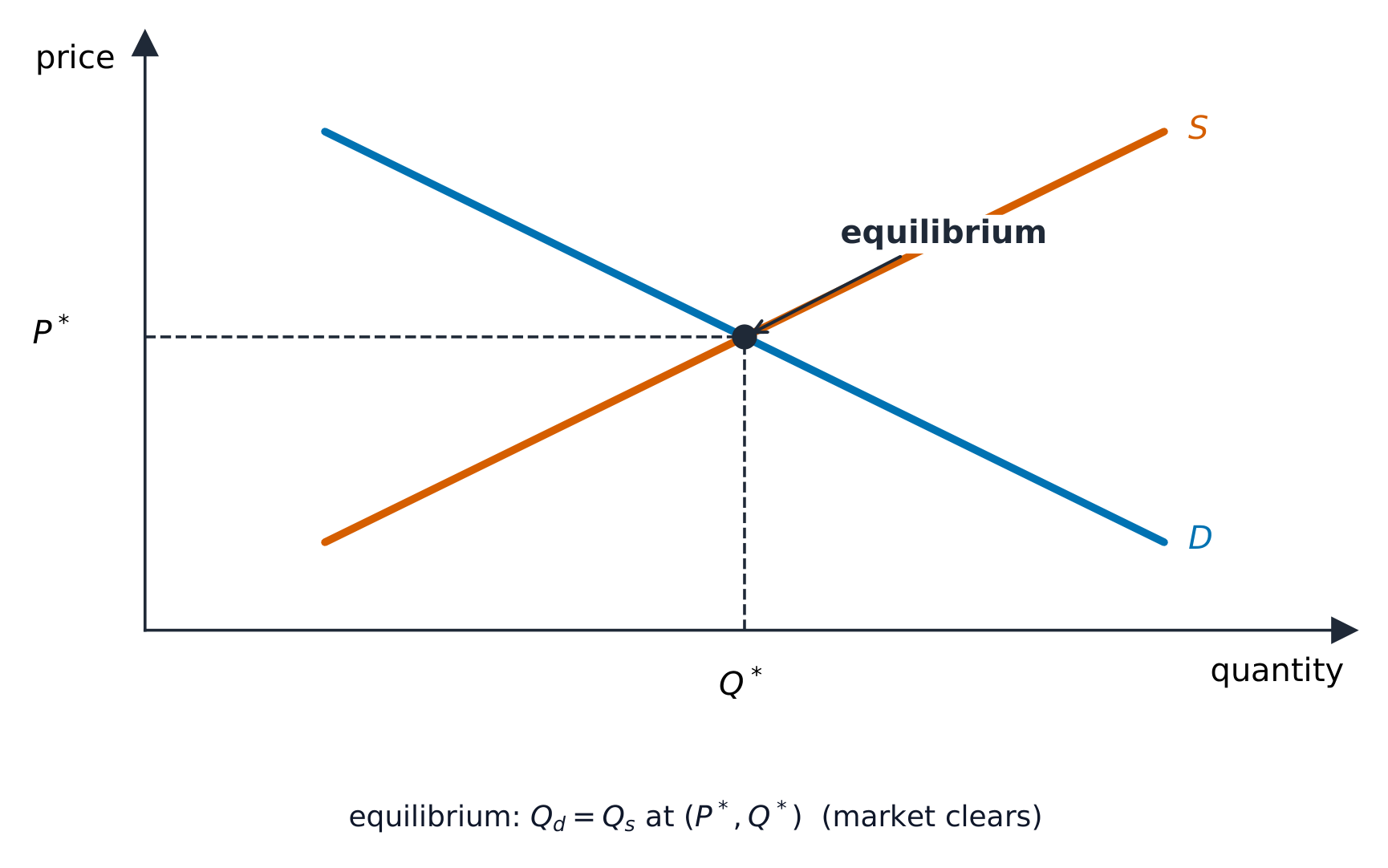
يكون السوق في توازن حيث يتقاطع منحنى الطلب مع منحنى العرض. هنا الطلب يساوي العرض. هذا يعطي سعر التوازن وكمية التوازن. لا يوجد ضغط لتغير السعر.

Demand and supply crossing at the equilibrium price and quantity
عند سعر التوازن $P^*$ وكمية $Q^*$ يتقاطع المنحنيان، لذا الكمية المطلوبة تساوي الكمية المعروضة.

عدم التوازن

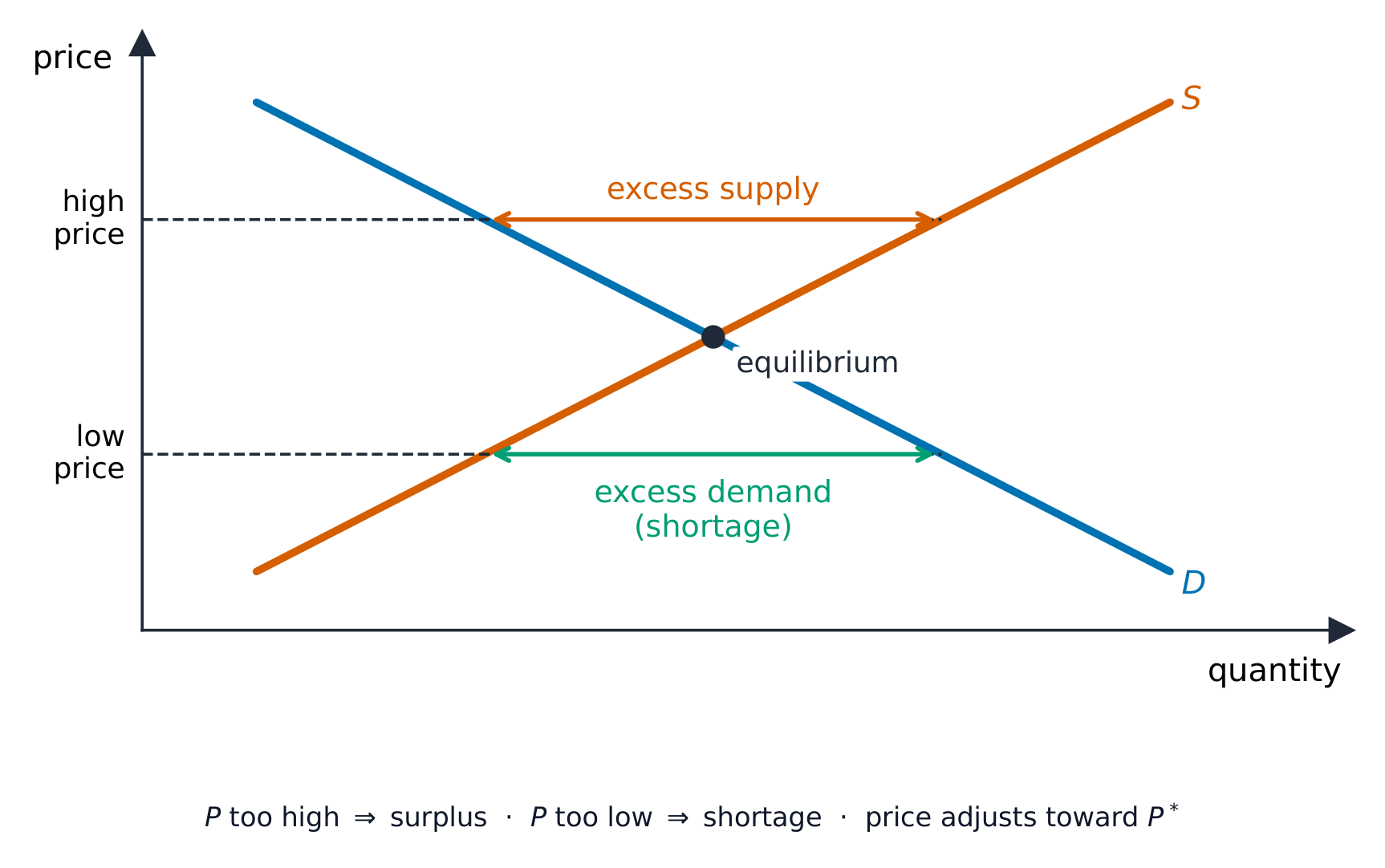
عندما لا يكون السعر عند مستوى التوازن، يكون السوق في عدم توازن:

  • إذا كان السعر منخفضاً جداً، يكون هناك طلب زائد (نقص). يتنافس المشترون، مما يدفع السعر للأعلى.
  • إذا كان السعر مرتفعاً جداً، يكون هناك عرض زائد. لا يستطيع البائعون بيع كل شيء، مما يدفع السعر للأسفل.

في الحالتين يعود السعر إلى التوازن. وهذا يظهر آلية السعر وهي تقوم بوظائفها في الإشارة، والتوزيع، وتقديم الحافز.

Excess supply above the equilibrium price and excess demand below it
فوق سعر التوازن يكون هناك عرض زائد؛ وتحتَه يكون هناك طلب زائد (نقص). وفي كلتا الحالتين يُدفع السعر مجدداً نحو التوازن.

كيف تُغيّر التحولات التوازن

التغيير التأثير على السعر التأثير على الكمية
زيادة الطلب (تحرك لليمين) يرتفع ترتفع
انخفاض الطلب (تحرك لليسار) ينخفض تنخفض
زيادة العرض (تحرك لليمين) ينخفض ترتفع
انخفاض العرض (تحرك لليسار) يرتفع تنخفض
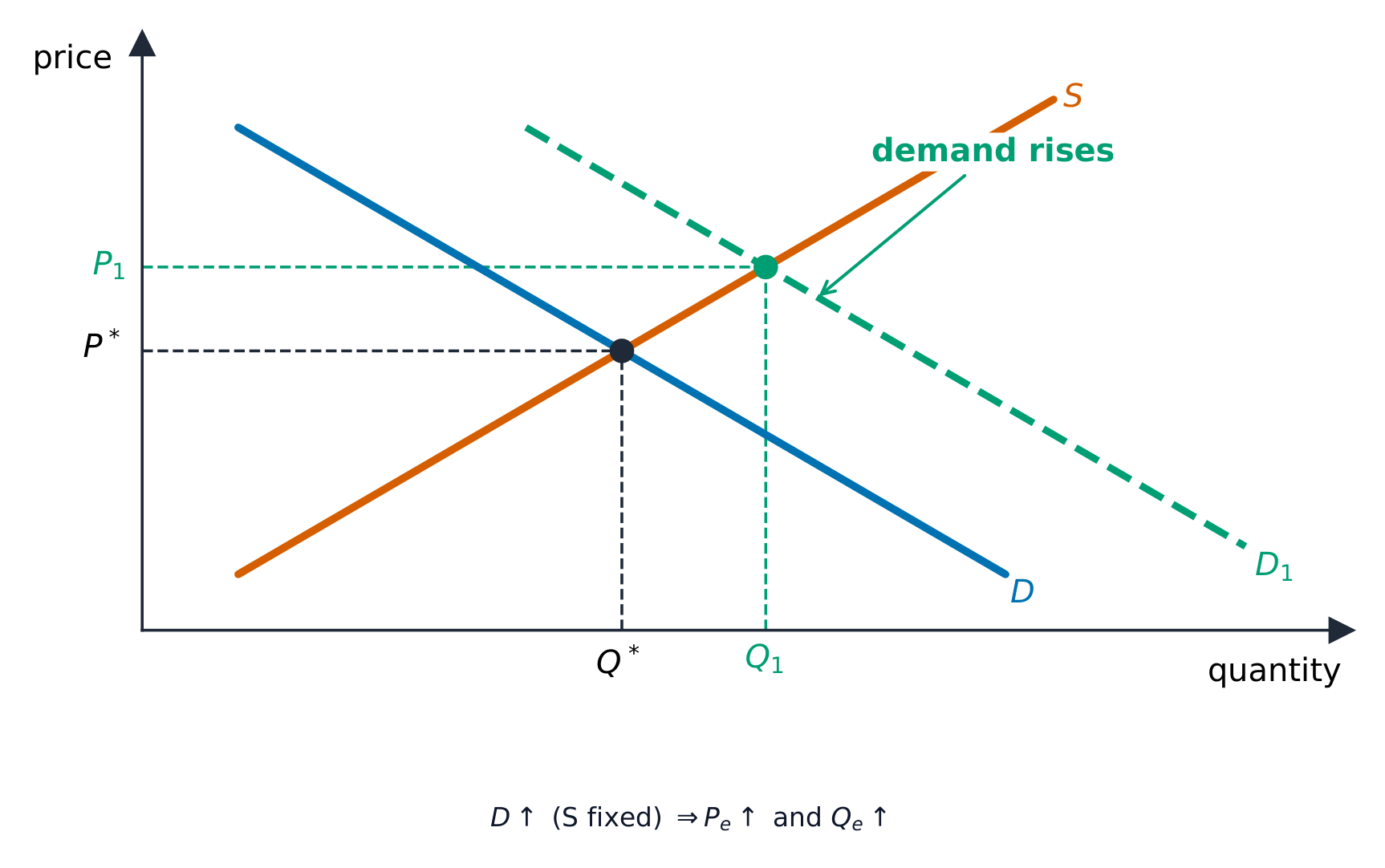
انزياح لليمين في الطلب يرفع سعر التوازن والكمية
مع ثبات العرض، يؤدي ارتفاع الطلب ($D \to D_1$) إلى زيادة كل من سعر التوازن والكمية المتوازنة.

الطلب والعرض في أسواق مختلفة

ينطبق نفس التحليل على العديد من الأسواق:

  • في أسواق المنتجات، يحدد الطلب والعرض أسعار السلع والخدمات.
  • في أسواق عوامل الإنتاج، يحددان أسعار العوامل — على سبيل المثال، يحدد طلب وعرض العمل الأجر.
  • في سوق العملات الأجنبية، يحدد طلب وعرض عملة معينة سعر الصرف (سعر عملة واحدة بدلالة أخرى).
Explore · ⁨استكشف⁩

Demand & supply · ⁨الطلب والعرض⁩

Where demand meets supply sets the equilibrium price and quantity. · ⁨حيث يتقاطع الطلب مع العرض يحدد سعر التوازن والكمية.⁩

Explore · ⁨استكشف⁩

Finding the equilibrium price · ⁨إيجاد سعر التوازن⁩

Shift demand or supply and watch the equilibrium price and quantity move to where the two lines cross. · ⁨غيّر الطلب أو العرض وراقب حركة سعر التوازن والكمية نحو نقطة تقاطع الخطين.⁩

Vocabulary · ⁨مفردات⁩ Train · ⁨تدريب⁩
English العربية
equilibrium/ˌiːkwɪˈlɪbrɪəm/ الاتزان
equilibrium price/ˌiːkwɪˈlɪbrɪəm praɪs/ سعر التوازن
equilibrium quantity/ˌiːkwɪˈlɪbrɪəm ˈkwɒntɪti/ كمية التوازن
disequilibrium/ˌdɪˌsiːkwɪˈlɪbrɪəm/ عدم الاتزان
excess demand/ekˈses dɪˈmænd/ فائض الطلب
shortage/ˈʃɔːtɪdʒ/ عجزاً
excess supply/ekˈses səˈplaɪ/ فائض العرض
product market/ˈprɒdʌkt ˈmɑːkɪt/ سوق المنتجات
factor market/ˈfæktə ˈmɑːkɪt/ سوق العوامل
wage/weɪdʒ/ الأجر
foreign exchange market/ˈfɒrən eksˈtʃeɪndʒ ˈmɑːkɪt/ سوق العملات الأجنبية
exchange rate/eksˈtʃeɪndʒ reɪt/ معدل الصرف
consumer surplus/kənˈsuːmə ˈsɜːpləs/ فائض المستهلك
producer surplus/prəˈdjuːsə ˈsɜːpləs/ فائض المنتج
welfare/ˈwelfeə/ الرفاهية
Watch lesson · ⁨شاهد الدرس⁩
2.5

Consumer and producer surplus · ⁨فائض المستهلك وفائض المنتج⁩

Syllabus · ⁨المنهج⁩
English
  1. define and identify consumer surplus and producer surplus on a diagram
  2. explain how changes in demand, supply and price affect consumer and producer surplus
العربية
  1. تعريف وتحديد فائض المستهلك وفائض المنتج في الرسم البياني
  2. اشرح كيف تؤثر التغيرات في الطلب والعرض والسعر على فائض المستهلك وفائض المنتج

Source: Cambridge International syllabus · ⁨المصدر: منهج كامبريدج الدولي⁩

English

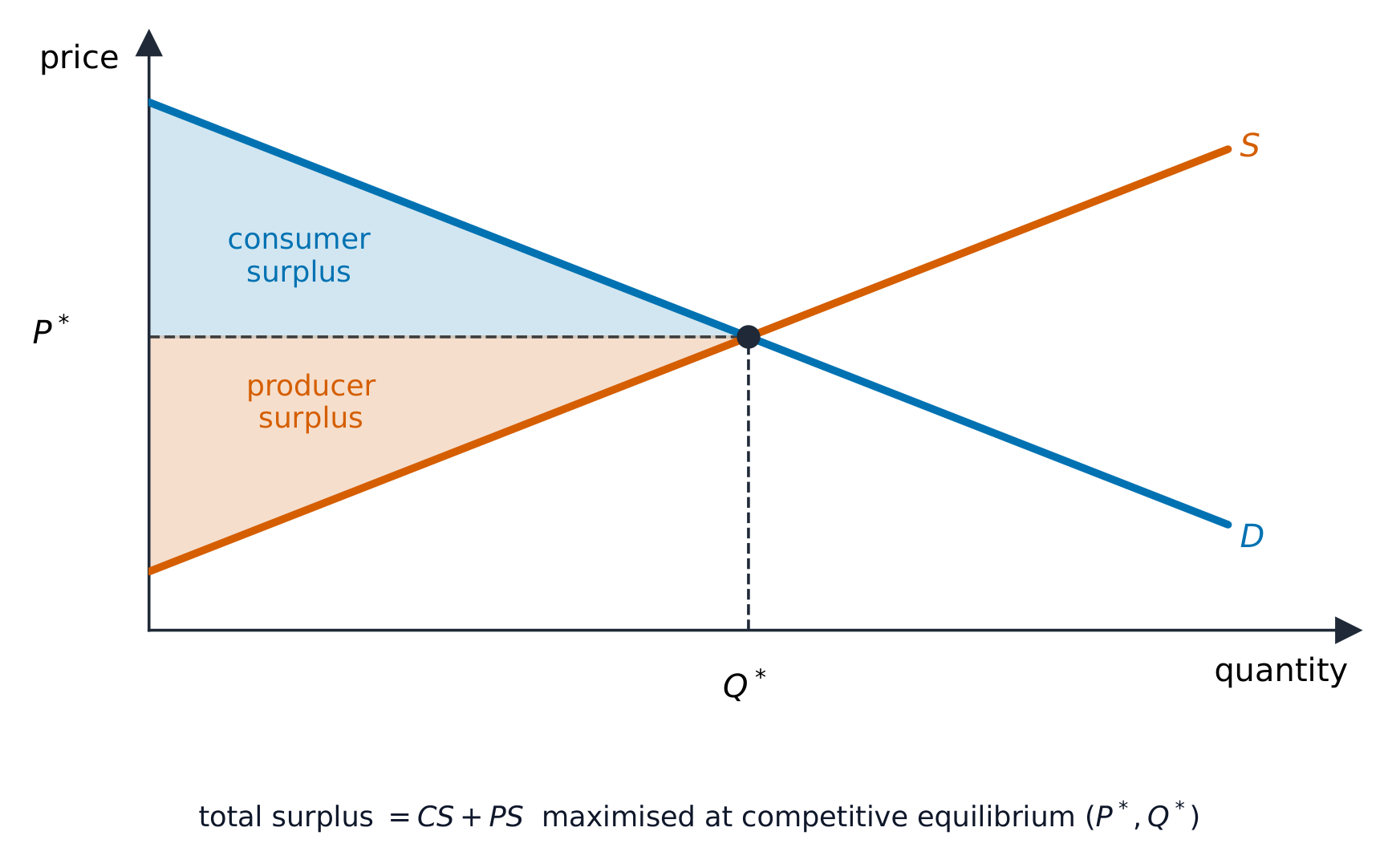
consumer surplus 消费者剩余 is the gain to buyers. It is the difference between the most a consumer was willing to pay and the price actually paid. On a diagram it is the area below the demand curve and above the price line.

producer surplus 生产者剩余 is the gain to sellers. It is the difference between the price a producer receives and the lowest price the producer would have accepted. On a diagram it is the area above the supply curve and below the price line.

How they change:

  • if demand rises, the price and quantity rise, so producer surplus rises and consumer surplus usually rises too.
  • if supply rises, the price falls and quantity rises, so consumer surplus rises.
  • a higher price (with the curves fixed) raises producer surplus but lowers consumer surplus.

Together, consumer surplus plus producer surplus is the total welfare 福利 (gain to society) from the market. It is largest at the free-market equilibrium.

العربية

فائض المستهلك هو الربح الذي يحققه المشترون. وهو الفرق بين أعلى مبلغ كان مستعداً لدفعه والمبلغ الفعلي المدفوع. على الرسم البياني، هو المنطقة أسفل منحنى الطلب وأعلى من خط السعر.

فائض المنتج هو الربح الذي يحققه البائعون. وهو الفرق بين السعر الذي يتلقاه المنتج وأدنى سعر كان مستعداً لقبوله. على الرسم البياني، هو المنطقة أعلى منحنى العرض وأسفل من خط السعر.

فائض المستهلك وفائض المنتج مظللين حول نقطة التوازن
فائض المستهلك هو المنطقة أسفل الطلب وأعلى السعر؛ فائض المنتج هو المنطقة أعلى العرض وأسفل السعر.

كيف تتغير:

  • إذا ارتفع الطلب، يرتفع السعر والكمية، لذا يرتفع فائض المنتج ويزيد فائض المستهلك عادةً أيضاً.
  • إذا ارتفع العرض، ينخفض السعر وترتفع الكمية، لذا يرتفع فائض المستهلك.
  • ارتفاع السعر (مع بقاء المنحنيات ثابتة) يرفع فائض المنتج لكن يقلل فائض المستهلك.

مجتمعةً، فائض المستهلك زائد فائض المنتج يمثل إجمالي الرفاهية (ربح المجتمع) الناتج عن السوق. تكون أكبر ما يمكن عند نقطة توازن السوق الحر.

Explore · ⁨استكشف⁩

Demand & supply · ⁨الطلب والعرض⁩

Surplus sits between the curves and the going price. · ⁨الفائض يقع بين المنحنيين والسعر الجاري.⁩

Watch lesson · ⁨شاهد الدرس⁩
2.5

Exam tips · ⁨نصائح للامتحان⁩

English
  • Quote the elasticity formula and interpret the value: PED inelastic ($<1$), elastic ($>1$); link PED to total revenue.
  • Distinguish a movement along (a price change) from a shift (a non-price factor) of demand or supply.
  • Use the sign of XED (substitutes $+$, complements $-$) and YED (normal $+$, inferior $-$).
  • On a diagram, label consumer and producer surplus and show how a price change alters each.
العربية
  • اذكر صيغة المرونة وتفسير القيمة: مرونة الطلب السعرية غير مرنة ($<1$)، مرنة ($>1$)؛ واربط مرونة الطلب السعرية بالإيراد الكلي.
  • فرّق بين الحركة على طول (نتيجة تغير السعر) والإزاحة (بسبب عامل غير سعري) للطلب أو العرض.
  • استخدم إشارة مرونة الطلب المتبادلة (بديل $+$، مكمل $-$) ومرونة الطلب الدخلية (عادي $+$، رديء $-$).
  • على رسم بياني، حدد فائض المستهلك وفائض المنتج وأظهر كيف يغير تغير السعر كلًا منهما.

Interactive lessons on this topic · ⁨دروس تفاعلية حول هذا الموضوع⁩

Work through it step by step, with instant-check exercises. · ⁨ا-working عليه خطوة بخطوة، مع تمارين تحقق فوري.⁩

Past Papers · ⁨أوراق الامتحانات السابقة⁩

More topics in A-Level Economics · ⁨A-Level الاقتصاد⁩ · ⁨المزيد من المواضيع في A-Level Economics · ⁨A-Level الاقتصاد⁩⁩

Log in or create account · ⁨تسجيل الدخول أو إنشاء حساب⁩

IGCSE, A-Level & AP