跳到主要内容

18世纪后期的冲突、危机与反应

AP 欧洲历史 · 第 5 主题

训练
讲义 词汇表
5.1

18世纪各国的时代背景

大纲

5.1 Contextualizing 18th-Century States

Learning ObjectivePreview: Unit 5 Key Concepts

Unit 5.A
Explain the context in which the European states experienced crisis and conflict from 1648 to 1815.

  • KC-2.1 Different models of political sovereignty affected the relationship among states and between states and individuals.
    • KC-2.1.IV The French Revolution posed a fundamental challenge to Europe’s existing political and social order.
    • KC-2.1.V Claiming to defend the ideals of the French Revolution, Napoleon Bonaparte imposed French control over much of the European continent, which eventually provoked a nationalistic reaction.
  • KC-2.2 The expansion of European commerce accelerated the growth of a worldwide economic network.
    • KC-2.2.III Commercial rivalries influenced diplomacy and warfare among European states in the early modern era.
  • KC-2.3 The spread of Scientific Revolution concepts and practices and the Enlightenment’s application of these concepts and practices to political, social, and ethical issues led to an increased but not unchallenged emphasis on reason in European culture.
    • KC-2.3.VI While Enlightenment values dominated the world of European ideas and culture, they were challenged by the revival of public expression of emotions and feeling.
    • KC-2.3.VI.D Revolution, war and rebellion demonstrated the emotional power of mass politics and nationalism.

来源:美国大学理事会 AP 课程与考试说明

第五单元讲述旧秩序的危机:全球商业竞争、法国大革命、拿破仑,以及随后的和约安排。本课程的三项核心概念在此汇合——政治主权的各种模式、欧洲商业扩张为全球网络,以及启蒙观念的传播。

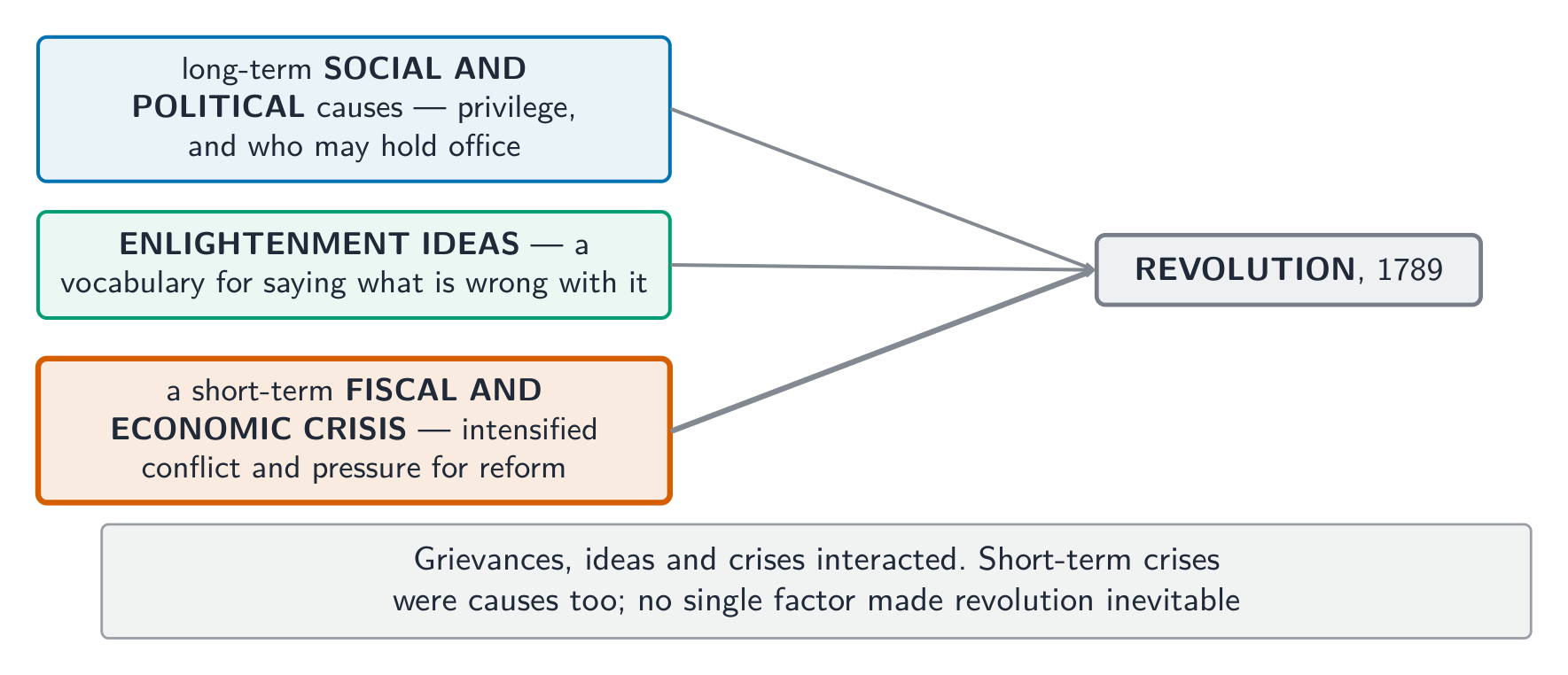
把整个单元当作一条论证来把握最为有效:商业竞争使国家财政紧张,启蒙观念提供了挑战权威的语言,而两者相遇之处便发生了革命。

5.2

全球市场的兴起

大纲

5.2 The Rise of Global Markets

Thematic FocusLearning ObjectiveHistorical Developments

ECD
Economic and Commercial Developments — Economic development, especially the development of capitalism, played an important role in Europe’s history, often having significant social, political, and cultural effects.

Unit 5.B
Explain the causes and consequences of European maritime competition from 1648 to 1815.

  • KC-2.2 The expansion of European commerce accelerated the growth of a worldwide economic network.
    • KC-2.2.III Commercial rivalries influenced diplomacy and warfare among European states in the early modern era.
    • KC-2.2.III.A European sea powers vied for Atlantic influence throughout the 18th century.
    • KC-2.2.III.B Portuguese, Dutch, French, and British rivalries in Asia culminated in British domination in India and Dutch control of the East Indies.

来源:美国大学理事会 AP 课程与考试说明

欧洲商业的扩张加速了全球经济网络(worldwide economic network)的成长。欧洲各国之间的海上竞争不再是欧洲政治的余兴——海外贸易与殖民地如今是欧洲权力得失之所在。

5.3

英国的崛起

大纲

5.3 Britain’s Ascendency

Thematic FocusLearning ObjectiveHistorical Developments

SOP
States and Other Institutions of Power — European states and nations developed governmental and civil institutions from 1450 to the present to organize society and consolidate political power, with a variety of social, cultural, and economic effects.

Unit 5.C
Explain the economic and political consequences of the rivalry between Britain and France from 1648 to 1815.

  • KC-2.1.III.D Rivalry between Britain and France resulted in world wars fought both in Europe and in the colonies, with Britain supplanting France as the greatest European power.

Illustrative examples:

  • Conflict between the French and the British: §Bullet Seven Years’ War §Bullet American Revolution

来源:美国大学理事会 AP 课程与考试说明

英法之间的竞争导致了在欧洲与殖民地同时进行的世界性战争,其结果是英国取代法国成为欧洲最强国(supplanting France)。

由此产生两项后果,两者都在考查范围内。英国获得了塑造下一个世纪的商业与海军优势。而法国在这些战争中耗费巨大,进入 1780 年代时便面临财政危机(fiscal crisis)——这正是本节与下一节之间的直接联系。

词汇表 训练
英文 中文 拼音
accelerated the growth of a worldwide economic network 全球经济网络 quán qiú jīng jì wǎng luò
Britain supplanting France as the greatest European power 取代法国 qǔ dài fǎ guó
fiscal crisis 财政危机 cái zhèng wēi jī
resulted from a combination of long-term social and political causes, as well as Enlightenment ideas, exacerbated by short-term fiscal and economic crises 短期财政与经济危机 duǎn qī cái zhèng yǔ jīng jì wēi jī
first, or liberal, phase 自由派阶段 zì yóu pài jiē duàn
5.4

法国大革命

大纲

5.4 The French Revolution

Thematic FocusLearning ObjectiveHistorical Developments

SOP
States and Other Institutions of Power — European states and nations developed governmental and civil institutions from 1450 to the present to organize society and consolidate political power, with a variety of social, cultural, and economic effects.

Unit 5.D
Explain the causes, events, and consequences of the French Revolution.

  • KC-2.1.IV.A The French Revolution resulted from a combination of long-term social and political causes, as well as Enlightenment ideas, exacerbated by short-term fiscal and economic crises.
  • KC-2.1.IV.B The first, or liberal, phase of the French Revolution established a constitutional monarchy, increased popular participation, nationalized the Catholic Church, and abolished hereditary privileges.
  • KC-2.1.IV.C After the execution of Louis XVI, the radical Jacobin republic led by Robespierre responded to opposition at home and war abroad by instituting the Reign of Terror, fixing prices and wages, and pursuing a policy of de-Christianization.
  • KC-2.1.IV.D Revolutionary armies, raised by mass conscription, sought to bring the changes initiated in France to the rest of Europe.
  • KC-2.1.IV.E Women enthusiastically participated in the early phases of the revolution; however, while there were brief improvements in the legal status of women, citizenship in the republic was soon restricted to men.

Illustrative examples:

  • Causes of the French Revolution: §Bullet Peasant and bourgeois grievances §Bullet Bread shortages §Bullet French involvement in American Revolution Actions taken during the moderate phase of the French Revolution: §Bullet Declaration of the Rights of Man and Citizen §Bullet Civil Constitution of the Clergy §Bullet Constitution of 1791 §Bullet Abolition of provinces and division of France into departments Radical Jacobin leaders and institutions: §Bullet Georges Danton §Bullet Jean-Paul Marat §Bullet Committee of Public Safety Mass conscription: §Bullet Levée en masse Female involvement in the revolution: §Bullet October March on Versailles §Bullet Olympe de Gouges §Bullet Society of Republican Revolutionary Women

来源:美国大学理事会 AP 课程与考试说明

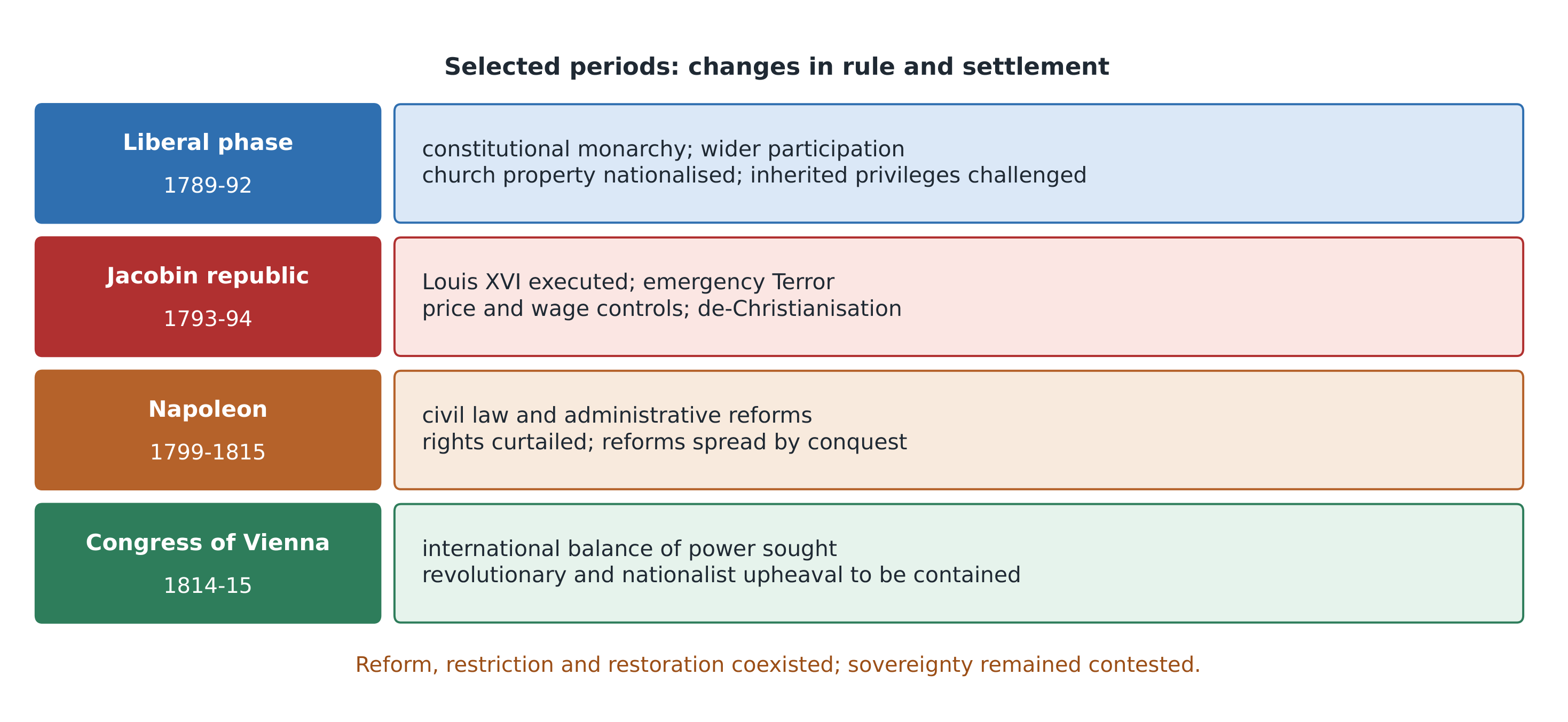
大革命的四个阶段,以及每个阶段各自改变了什么——这是整个单元的骨干
题目几乎总会点名某一阶段;弄清问的是哪一个,答案就完成了一半

大革命源于长期的社会与政治原因以及启蒙观念的结合,并被短期的财政与经济危机(short-term fiscal and economic crises)所激化。这一公式——长期原因加观念加短期触发——出自 CED 自身,几乎适用于任何起因类题目。

CED 随后把大革命划分为若干阶段,而区分它们能得分:

  • 第一阶段,即自由派阶段(liberal phase),确立了君主立宪(constitutional monarchy),扩大了民众参与,把天主教会收归国有,并废除了世袭特权(hereditary privileges)。
  • 路易十六被处决之后,由罗伯斯庇尔(Robespierre)领导的激进的雅各宾共和国(radical Jacobin republic)以实行恐怖统治(Reign of Terror)、限定物价与工资并推行去基督教化(de-Christianisation)来回应国内的反对与国外的战争。
  • 大规模征兵(mass conscription)组建的革命军队,试图把法国已开始的变革带到欧洲其余地方。

女性的参与是可考的,而且很具体:女性在早期阶段热情参与,其法律地位曾短暂改善,但后来被排除在政治参与之外。这句话的两半都必须写到。

词汇表 训练
英文 中文 拼音
constitutional monarchy 君主立宪 jūn zhǔ lì xiàn
hereditary privileges 世袭特权 shì xí tè quán
radical Jacobin republic 雅各宾共和国 yǎ gè bīn gòng hé guó
Robespierre 罗伯斯庇尔 luó bó sī bì ěr
Reign of Terror 恐怖统治 kǒng bù tǒng zhì
de-Christianisation 去基督教化 qù jī dū jiào huà
mass conscription 大规模征兵 dà guī mó zhēng bīng
revolt of enslaved people led by Toussaint L'Ouverture 杜桑·卢维杜尔 dù sāng · lú wéi dù ěr
5.5

法国大革命的影响

大纲

5.5 The French Revolution’s Effects

Thematic FocusLearning ObjectiveHistorical Developments

SCD
Social Organization and Development — Economic, political, and cultural factors have influenced the form and status of family, class, and social groups in European history, which has, in turn, affected both the individual and society.

Unit 5.E
Explain how the events and developments of the French Revolution influenced political and social ideas from 1648 to 1815.

  • KC-2.1.IV.F Revolutionary ideals inspired a revolt of enslaved people led by Toussaint L’Ouverture in the French colony of Saint-Domingue, which became the independent nation of Haiti in 1804.
  • KC-2.1.IV.G While many were inspired by the revolution’s emphasis on equality and human rights, others condemned its violence and disregard for traditional authority.

Illustrative examples:

  • Opponents of the revolution: §Bullet Edmund Burke

来源:美国大学理事会 AP 课程与考试说明

  • 革命理想激发了法国殖民地圣多明各由杜桑·卢维杜尔(Toussaint L'Ouverture)领导的被奴役者起义,该地后来成为独立的海地。这是 CED 的例证:革命原则一旦以普世的方式表述,便无法被限定在欧洲之内。
  • 许多人受到革命对平等与人权的强调的鼓舞,另一些人则谴责其暴力及其对传统权威的漠视——这正是作为一种政治立场的现代保守主义的起点。
5.6

拿破仑的崛起、称霸与失败

大纲

5.6 Napoleon’s Rise, Dominance, and Defeat

Thematic FocusLearning ObjectiveHistorical Developments

SOP
States and Other Institutions of Power — European states and nations developed governmental and civil institutions from 1450 to the present to organize society and consolidate political power, with a variety of social, cultural, and economic effects.

Unit 5.F
Explain the effects of Napoleon’s rule on European social, economic, and political life. THEMATIC FOCUS National and European Identity NEI Definitions and perceptions of regional, cultural, national, and European identity have developed and been challenged over time, with varied and often profound effects on the political, social, and cultural order in Europe. LEARNING OBJECTIVE

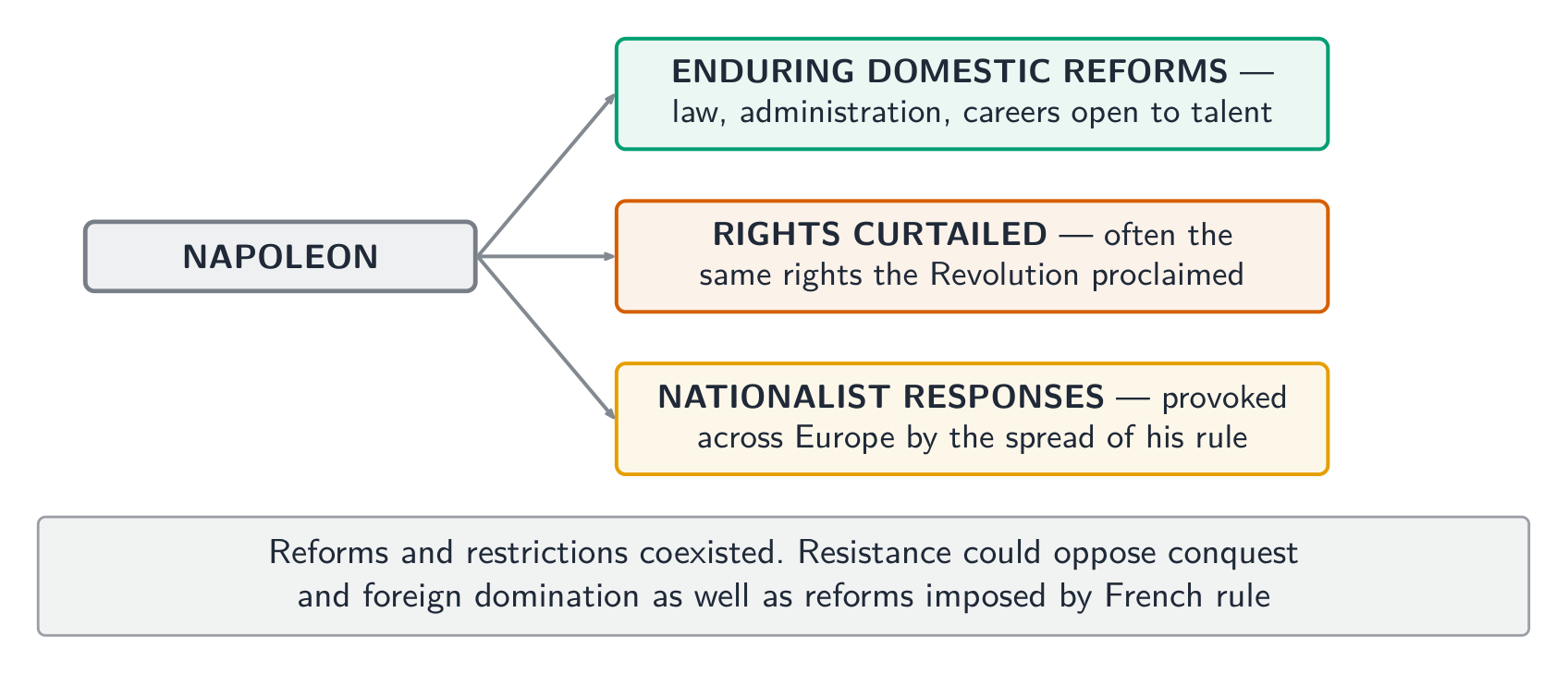
  • KC-2.1.V.A As first consul and emperor, Napoleon undertook a number of enduring domestic reforms while often curtailing some rights and manipulating popular impulses behind a façade of representative institutions.
  • KC-2.1.V.B Napoleon’s new military tactics allowed him to exert direct or indirect control over much of the European continent, spreading the ideals of the French Revolution across Europe. HISTORICAL DEVELOPMENTS

Unit 5.G
Explain the nationalist responses to Napoleon’s rule in Europe.

  • KC-2.1.V.C Napoleon’s expanding empire created nationalist responses throughout Europe.

Illustrative examples:

  • Reforms under Napoleon: §Bullet Careers open to talent §Bullet Educational system §Bullet Centralized bureaucracy §Bullet Civil Code §Bullet Concordat of 1801 Curtailment of rights under Napoleon: §Bullet Secret police §Bullet Censorship §Bullet Limitation of women’s rights Nationalist responses to Napoleon: §Bullet Student protest in German states §Bullet Guerilla war in Spain §Bullet Russian scorched earth policy

来源:美国大学理事会 AP 课程与考试说明

作为第一执政与皇帝,拿破仑(Napoleon)推行了持久的国内改革(enduring domestic reforms)——法典编纂、行政与财政重组、宗教安排——同时也常常限制各项权利并操纵民意。

他的新式军事战术使他得以对欧洲大陆的大部分实行直接或间接控制,并把革命的各项改革推广到他所统治的地区。

而他不断扩张的帝国在整个欧洲激起了民族主义回应(nationalist responses)——各地人民以对抗法国统治来界定自身,革命自身的民族原则由此被反过来用于对付法国。这一反讽是本节最好的论述题素材。

词汇表 训练
英文 中文 拼音
Napoleon 拿破仑 ná pò lún
enduring domestic reforms 持久的国内改革 chí jiǔ de guó nèi gǎi gé
created nationalist responses throughout Europe 民族主义回应 mín zú zhǔ yì huí yìng
5.7

维也纳会议

大纲

5.7 The Congress of Vienna

Thematic FocusLearning ObjectiveHistorical Developments

SOP
States and Other Institutions of Power — European states and nations developed governmental and civil institutions from 1450 to the present to organize society and consolidate political power, with a variety of social, cultural, and economic effects.

Unit 5.H
Explain how states responded to Napoleonic rule in Europe and the consequences of the response.

  • KC-2.1.V.D After the defeat of Napoleon by a coalition of European powers, the Congress of Vienna (1814–1815) attempted to restore the balance of power in Europe and contain the danger of revolutionary or nationalistic upheavals in the future.

来源:美国大学理事会 AP 课程与考试说明

在拿破仑被欧洲各国联盟击败之后,维也纳会议(Congress of Vienna,1814-1815)试图恢复均势(balance of power),并遏制未来革命或民族主义动荡的危险

要注意这是两个不同的目标:一个是国家之间的安排,另一个是对某一类政治的防范。第七单元在很大程度上就是第二个目标失败的故事。

词汇表 训练
英文 中文 拼音
Congress of Vienna (1814-1815) 维也纳会议 wéi yě nà huì yì
restore the balance of power 均势 jūn shì
5.8

浪漫主义

大纲

5.8 Romanticism

Thematic FocusLearning ObjectiveHistorical Developments

CID
Cultural and Intellectual Developments — The creation and transmission of knowledge, including the relationship between traditional sources of authority and the development of differing world views, had significant political, intellectual, economic, cultural, and social effects on European and world societies.

Unit 5.I
Explain how and why the Romantic Movement and religious revival challenged Enlightenment thought from 1648 to 1815.

  • KC-2.3.VI.A Rousseau questioned the exclusive reliance on reason and emphasized the role of emotions in the moral improvement of self and society.
  • KC-2.3.VI.B Romanticism emerged as a challenge to Enlightenment rationality.
  • KC-2.3.VI.C Consistent with the Romantic Movement, religious revival occurred in Europe and included notable movements such as Methodism, founded by John Wesley.
  • KC-2.3.VI.D Revolution, war, and rebellion demonstrated the emotional power of mass politics and nationalism.

来源:美国大学理事会 AP 课程与考试说明

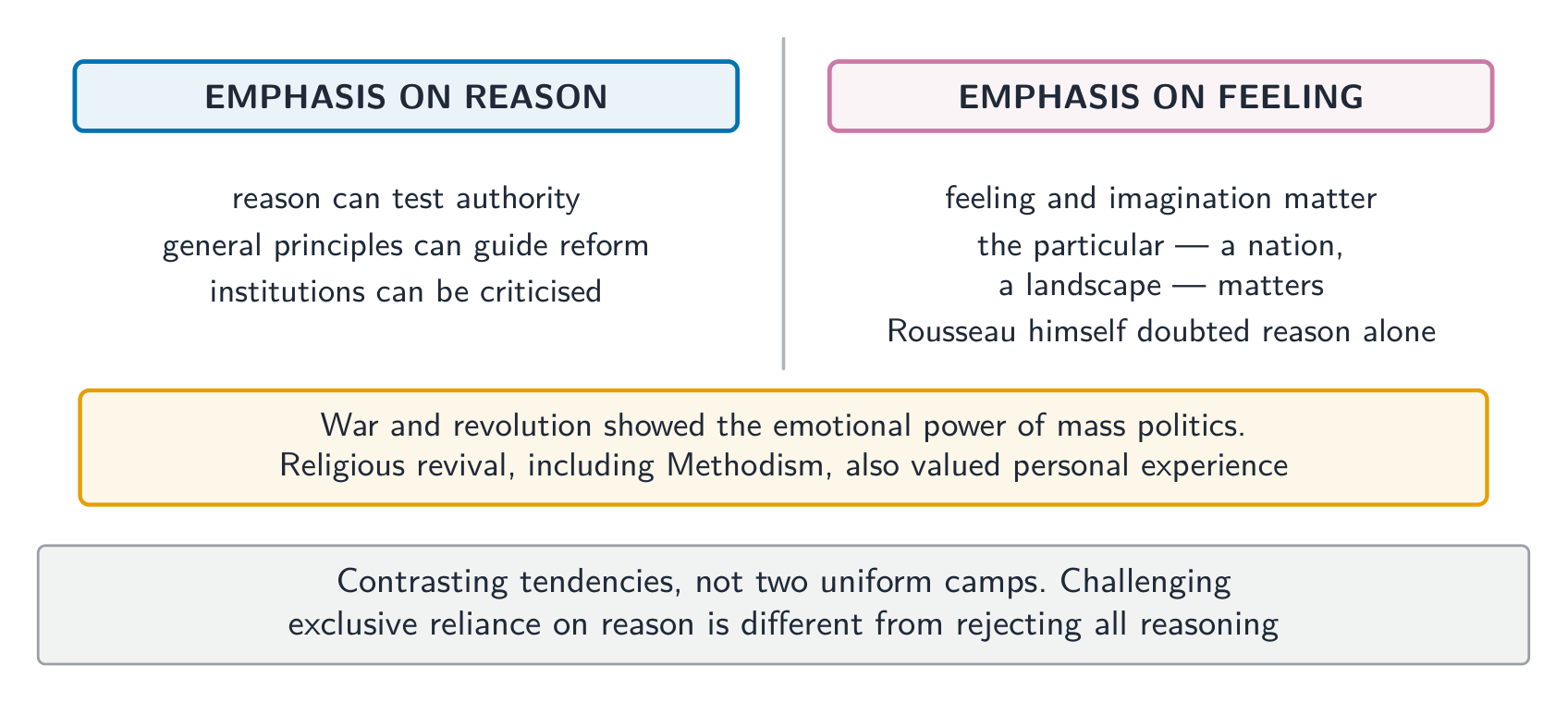
浪漫主义(Romanticism)作为对启蒙理性的挑战(challenge to Enlightenment rationality)而兴起。CED 给出了精确的依据:

  • 卢梭质疑对理性的独尊,强调情感(emotions)在自我与社会的道德改善中的作用——因此这一挑战始于启蒙运动内部。
  • 与浪漫主义相一致,欧洲出现了宗教复兴(religious revival),包括循道宗(Methodism)等运动。
  • 革命、战争与叛乱展示了群众政治与民族主义的情感力量(emotional power of mass politics and nationalism)。

最后这一点正是浪漫主义属于本单元而非艺术章节的原因:这一时期刚刚证明,政治运动既靠论证运转,也靠情感运转。

词汇表 训练
英文 中文 拼音
Romanticism 浪漫主义 làng màn zhǔ yì
challenge to Enlightenment rationality 对启蒙理性的挑战 duì qǐ méng lǐ xìng de tiǎo zhàn
emotions 情感 qíng gǎn
religious revival 宗教复兴 zōng jiào fù xīng
Methodism 循道宗 xún dào zōng
Revolution, war, and rebellion demonstrated the emotional power of mass politics and nationalism 群众政治与民族主义的情感力量 qún zhòng zhèng zhì yǔ mín zú zhǔ yì de qíng gǎn lì liàng
5.9

18世纪各国的延续与变化

大纲

5.9 Continuity and Change in 18th-Century States

Learning ObjectiveReview: Unit 5 Key Concepts

Unit 5.J
Explain how the developments and challenges to the political order resulted in change in the period from 1648 to 1815.

  • KC-2.1 Different models of political sovereignty affected the relationship among states and between states and individuals.
    • KC-2.1.IV The French Revolution posed a fundamental challenge to Europe’s existing political and social order.
    • KC-2.1.V Claiming to defend the ideals of the French Revolution, Napoleon Bonaparte imposed French control over much of the European continent, which eventually provoked a nationalistic reaction.
  • KC-2.2 The expansion of European commerce accelerated the growth of a worldwide economic network.
    • KC-2.2.III Commercial rivalries influenced diplomacy and warfare among European states in the early modern era.
  • KC-2.3 The spread of Scientific Revolution concepts and practices and the Enlightenment’s application of these concepts and practices to political, social, and ethical issues led to an increased but not unchallenged emphasis on reason in European culture.
    • KC-2.3.VI While Enlightenment values dominated the world of European ideas and culture, they were challenged by the revival of public expression of emotions and feeling.
    • KC-2.3.VI.D Revolution, war and rebellion demonstrated the emotional power of mass politics and nationalism.

来源:美国大学理事会 AP 课程与考试说明

本单元考查的推理能力是延续与变化

**Worked example(一道真实的 AP 考题)。*本单元的 AP 欧洲史简答题会要求,例如「解释 1789 至 1815 年间法国大革命改变欧洲政治生活的一种方式」。满分答案会点出这一变化并追溯其机制:「大革命确立了主权属于民族而非君主的原则,而由大规模征兵组建的革命军队把这一原则带到了全欧洲。即使在法国统治不受欢迎的地方,当地人也开始把自身界定为有权自我治理的民族,因此这一观念比拿破仑的失败更为持久。」*注意答案越过了 1815 年:变化类题目要的是延续下来的东西。

5.9

考试技巧

  • 使用 CED 的起因公式:长期原因 + 启蒙观念 + 短期财政危机
  • 弄清题目问的是哪个阶段。自由派阶段、激进阶段、拿破仑时期与维也纳安排所做的事截然不同。
  • 谈女性时要写两半——早期的热情参与,后来的被排除。
  • 海地表明革命原则逸出了欧洲。它价值很高却常被略去。
  • 拿破仑是兼而有之:持久的改革被限制的权利。任何一面单独出现都不是答案。
  • 浪漫主义的挑战始于启蒙运动内部,始于卢梭。这一联系比把它当作简单的反动要成熟得多。

本主题的互动课程

逐步学习,并即时检测练习。

AP 欧洲历史的更多主题

登录或创建账号

IGCSE, A-Level & AP