跳到主要内容

文艺复兴与探索时代

AP 欧洲历史 · 第 1 主题

训练
讲义 词汇表
1.1

文艺复兴与大发现的时代背景

大纲

1.1 Contextualizing Renaissance and Discovery

Learning ObjectivePreview: Unit 1 Key Concepts

Unit 1.A
Explain the context in which the Renaissance and Age of Discovery developed.

  • KC-1.1 The rediscovery of works from ancient Greece and Rome and observation of the natural world changed many Europeans’ view of their world.
    • KC-1.1.I A revival of classical texts led to new methods of scholarship and new values in both society and religion.
    • KC-1.1.III The visual arts incorporated the new ideas of the Renaissance and were used to promote personal, political, and religious goals.
  • KC-1.3 Europeans explored and settled overseas territories, encountering and interacting with indigenous populations.
    • KC-1.3.I European nations were driven by commercial and religious motives to explore overseas territories and establish colonies.
  • KC-1.4 European society and the experiences of everyday life were increasingly shaped by commercial and agricultural capitalism, notwithstanding the continued existence of medieval social and economic structures.
    • KC-1.4.I Economic change produced new social patterns, while traditions of hierarchy and status continued.
    • KC-1.4.II Most Europeans derived their livelihood from agriculture and oriented their lives around the seasons, the village, or the manor, although economic changes began to alter rural production and power.
  • KC-1.5 The struggle for sovereignty within and among states resulted in varying degrees of political centralization.
    • KC-1.5.I The new concept of the sovereign state and secular systems of law played a central role in the creation of new political institutions.

来源:美国大学理事会 AP 课程与考试说明

第一单元大致讲述 1450 至 1648 年,其中有四项变化同时展开。CED 把它们列为本单元的核心概念,而几乎每道题目都会用到其中至少两项:

  • 对古希腊罗马古典著作(classical works)的重新发现,以及对自然世界的观察,改变了许多欧洲人看待世界的方式
  • 欧洲人探索并殖民海外领地,与原住民(Indigenous populations)相遇并互动。
  • 欧洲社会与日常生活日益受商业与农业资本主义(commercial and agricultural capitalism)塑造,尽管更古老的传统仍与之并存。
  • 国家内部与国家之间的主权(sovereignty)争夺,造成了程度不一的政治集权(political centralisation)。

最后那个说法——程度不一——是贯穿整门课程的一条准则。欧洲史奖励能说清某项变化在一地比另一地走得多远的答案。

词汇表 训练
英文 中文 拼音
rediscovery of classical works 古典著作 gǔ diǎn zhù zuò
Indigenous populations 原住民 yuán zhù mín
commercial and agricultural capitalism 商业与农业资本主义 shāng yè yǔ nóng yè zī běn zhǔ yì
struggle for sovereignty 主权 zhǔ quán
varying degrees of political centralisation 政治集权 zhèng zhì jí quán
Italian Renaissance humanists 人文主义者 rén wén zhǔ yì zhě
1.2

意大利文艺复兴

大纲

1.2 Italian Renaissance

Thematic FocusLearning ObjectiveHistorical Developments

CID
Cultural and Intellectual Developments — The creation and transmission of knowledge, including the relationship between traditional sources of authority and the development of differing world views, had significant political, intellectual, economic, cultural, and social effects on European and world societies.

Unit 1.B
Explain how the revival of classical texts contributed to the development of the Renaissance in Italy.

  • KC-1.1.I.A Italian Renaissance humanists, including Petrarch, promoted a revival in classical literature and created new philological approaches to ancient texts. Some Renaissance humanists furthered the values of secularism and individualism.

Unit 1.C
Explain the political, intellectual, and cultural effects of the Italian Renaissance.

  • KC-1.1.I.B Humanist revival of Greek and Roman texts, spread by the printing press, challenged the institutional power of universities and the Catholic Church. This shifted education away from a primary focus on theological writings toward classical texts and new methods of scientific inquiry.
  • KC-1.1.I.C Admiration for Greek and Roman political institutions supported a revival of civic humanist culture in the Italian city-states and produced secular models for individual and political behavior.
  • KC-1.1.III.A In the Italian Renaissance, rulers and popes concerned with enhancing their prestige commissioned paintings and architectural works based on classical styles, the developing “naturalism” in the artistic world, and often the newly invented technique of geometric perspective.

Illustrative examples:

  • Italian Renaissance humanists:
    • Petrarch (pre-1450)
    • Lorenzo Valla
    • Marsilio Ficino
    • Pico della Mirandola
  • Individuals promoting secular models for individual and political behavior:
    • Niccolò Machiavelli
    • Baldassare Castiglione
    • Francesco Guicciardini
  • Individuals promoting a revival of Greek and Roman texts:
    • Leonardo Bruni
    • Leon Battista Alberti
    • Niccolò Machiavelli
  • Painters and architects:
    • Michelangelo
    • Donatello
    • Raphael
    • Andrea Palladio
    • Leon Battista Alberti
    • Filippo Brunelleschi

来源:美国大学理事会 AP 课程与考试说明

意大利文艺复兴的人文主义者(humanists),包括彼特拉克(Petrarch),推动了古典文学的复兴,并创立了处理古代文本的新语文学(philological)方法——以原文批判性地阅读它们,视之为历史文献。

这一复兴产生了 CED 分别点明的三项影响:

  • 经由印刷机(printing press)传播,人文主义者对希腊罗马文本的重新发掘挑战了大学与天主教会的制度性权威
  • 对希腊罗马政治制度的推崇,在意大利各城邦促成了公民人文主义(civic humanism)的复兴,并产生了新的政治思想著作。
  • 意在提升声望(enhancing prestige)的统治者与教皇,委托创作以古典为范本的绘画与建筑。

第三点是学生用得最少的。文艺复兴艺术可以作为政治证据来考:赞助是一种正当性主张,而不只是绘画趣味。

词汇表 训练
英文 中文 拼音
Petrarch 彼特拉克 bǐ tè lā kè
philological 语文学 yǔ wén xué
printing press 印刷机 yìn shuā jī
civic humanism 公民人文主义 gōng mín rén wén zhǔ yì
enhancing their prestige 提升声望 tí shēng shēng wàng
1.3

北方文艺复兴

大纲

1.3 Northern Renaissance

Thematic FocusLearning ObjectiveHistorical Developments

CID
Cultural and Intellectual Developments — The creation and transmission of knowledge, including the relationship between traditional sources of authority and the development of differing world views, had significant political, intellectual, economic, cultural, and social effects on European and world societies.

Unit 1.D
Explain how Renaissance ideas were developed, maintained, and changed as the Renaissance spread to northern Europe.

  • KC-1.1.III.B The Northern Renaissance retained a more religious focus, which resulted in more human-centered naturalism that considered individuals and everyday life appropriate objects of artistic representation.
  • KC-1.2.I.A Christian humanism, embodied in the writings of Erasmus, employed Renaissance learning in the service of religious reform.

Illustrative examples:

  • Artists who employed naturalism:
    • Pieter Bruegel the Elder
    • Rembrandt

来源:美国大学理事会 AP 课程与考试说明

文艺复兴的观念北传时发生了变化。北方文艺复兴保留了更强的宗教关切,产生了一种以人为中心的自然主义(human-centred naturalism),把个人与日常生活视为艺术的正当题材。

在思想上,关键发展是基督教人文主义(Christian humanism),以伊拉斯谟(Erasmus)的著作为代表,把文艺复兴的学识用于宗教改革(religious reform)。把握这一联系会让第二单元容易得多:宗教改革并非凭空而来。

词汇表 训练
英文 中文 拼音
human-centred naturalism 以人为中心的自然主义 yǐ rén wéi zhōng xīn de zì rán zhǔ yì
Christian humanism 基督教人文主义 jī dū jiào rén wén zhǔ yì
Erasmus 伊拉斯谟 yī lā sī mó
religious reform 宗教改革 zōng jiào gǎi gé
the invention of printing promoted the dissemination of new ideas 新思想的传播 xīn sī xiǎng de chuán bō
1.4

印刷术

大纲

1.4 Printing

Thematic FocusLearning ObjectiveHistorical Developments

TSI
Technological and Scientific Innovation — Scientific and technological innovations have increased efficiency, improved daily life, and shaped human development and interactions, having both intended and unintended consequences.

Unit 1.E
Explain the influence of the printing press on cultural and intellectual developments in modern European history.

  • KC-1.1.II The invention of printing promoted the dissemination of new ideas.
    • KC-1.1.II.A The invention of the printing press in the 1450s helped spread the Renaissance beyond Italy and encouraged the growth of vernacular literature, which would eventually contribute to the development of national cultures.

来源:美国大学理事会 AP 课程与考试说明

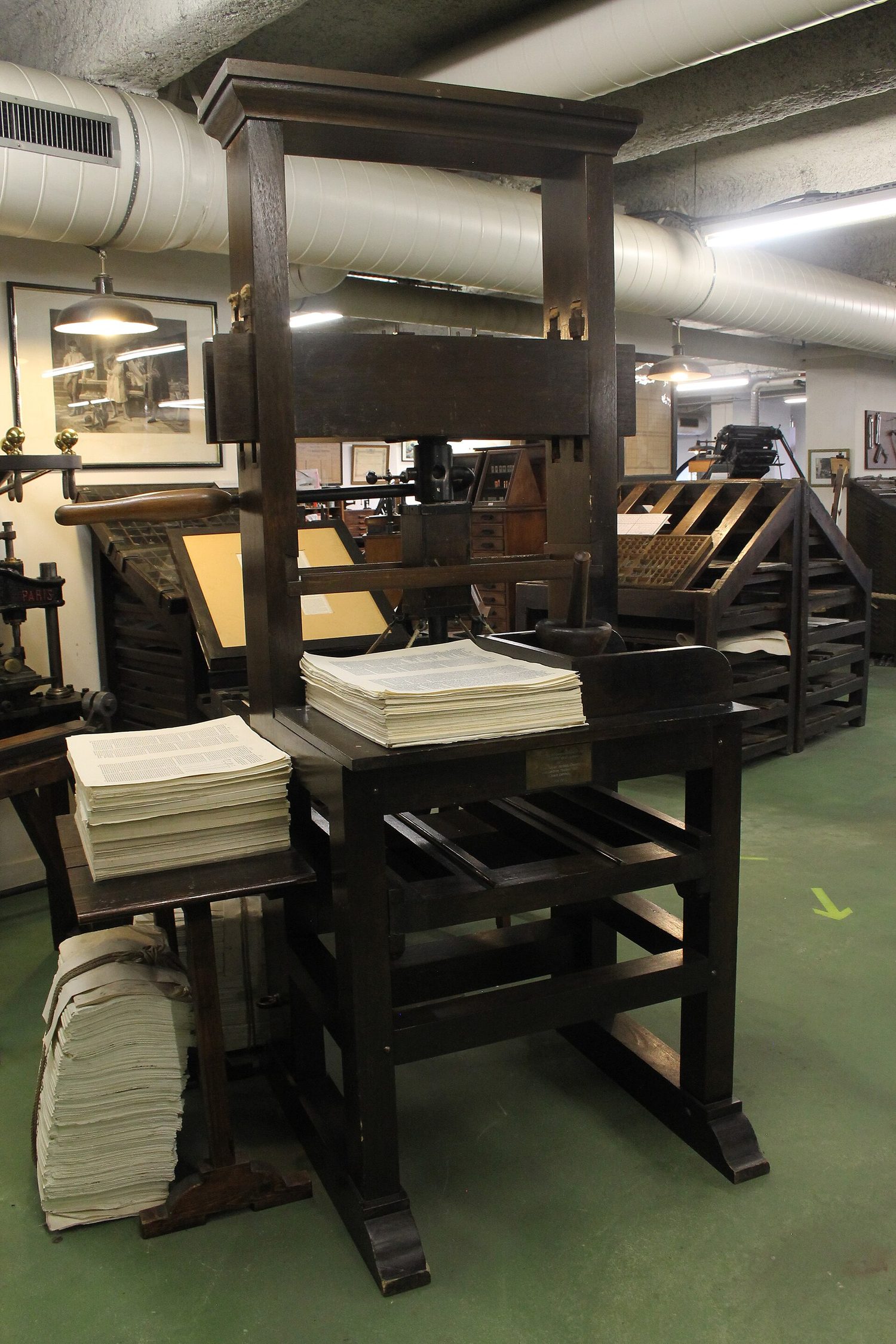
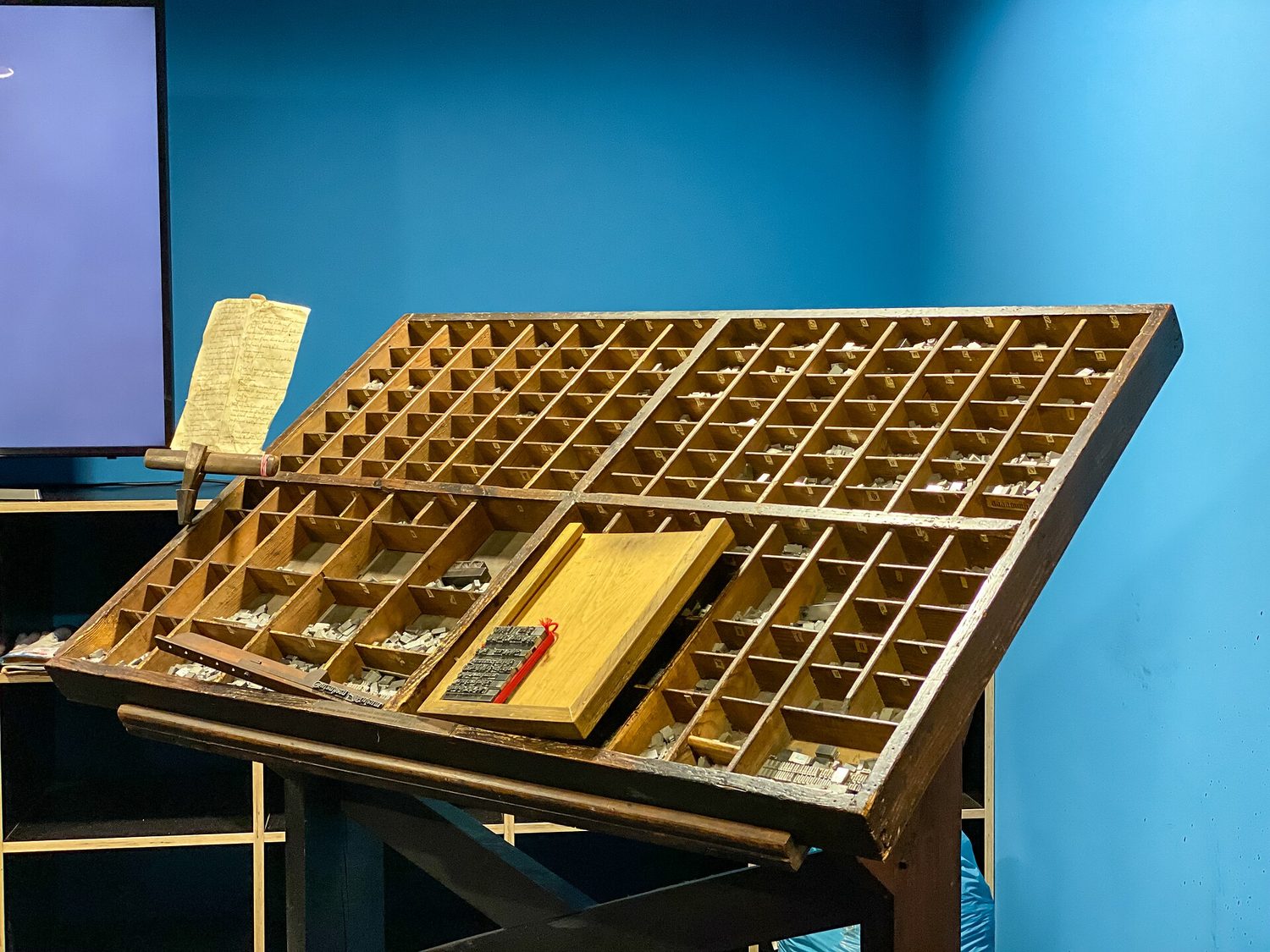
CED 为印刷单列一节自有其道理:印刷术的发明促进了新思想的传播(dissemination of new ideas)。

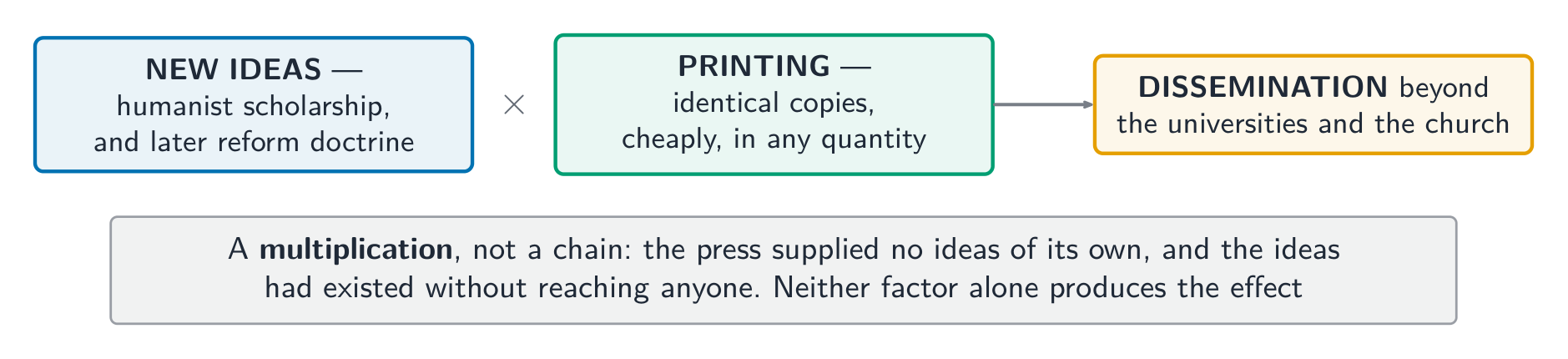
理解印刷术最好的方式是把它看作放大器而非起因。它并没有创造人文主义、宗教异见或政治论争——但它改变了这些事物的速度、范围与成本,而这正是观念得以摆脱既有机构对文本流通的控制的原因。

1.5

新君主国

大纲

1.5 New Monarchies

Thematic FocusLearning ObjectiveHistorical Developments

SOP
States and Other Institutions of Power — European states and nations developed governmental and civil institutions from 1450 to the present to organize society and consolidate political power, with a variety of social, cultural, and economic effects.

Unit 1.F
Explain the causes and effects of the development of political institutions from 1450 to 1648.

  • KC-1.2.II.A Monarchs and princes, including the English rulers Henry VIII and Elizabeth I, initiated religious reform from the top down in an effort to exercise greater control over religious life and morality.
  • KC-1.5.I.A New monarchies laid the foundation for the centralized modern state by establishing monopolies on tax collection, employing military force, dispensing justice, and gaining the right to determine the religion of their subjects.
  • KC-1.5.I.C Across Europe, commercial and professional groups gained in power and played a greater role in political affairs.
  • KC-1.5.I.D Continued political fragmentation in Renaissance Italy provided a background for the development of new concepts of the secular state.

Illustrative examples:

  • State actions to control religion and morality:
    • Spanish Inquisition
    • Concordat of Bologna
    • Book of Common Prayer
    • Peace of Augsburg
  • Monarchical control:
    • Ferdinand and Isabella of Spain consolidating control of the military
    • Star Chamber
    • Concordat of Bologna
    • Peace of Augsburg
    • Edict of Nantes
  • Commercial and professional groups that gained in power:
    • Merchants and financiers in Renaissance Italy and northern Europe
    • Nobles of the robe in France
  • Secular political theorists:
    • Jean Bodin
    • Hugo Grotius
    • Niccolò Machiavelli

来源:美国大学理事会 AP 课程与考试说明

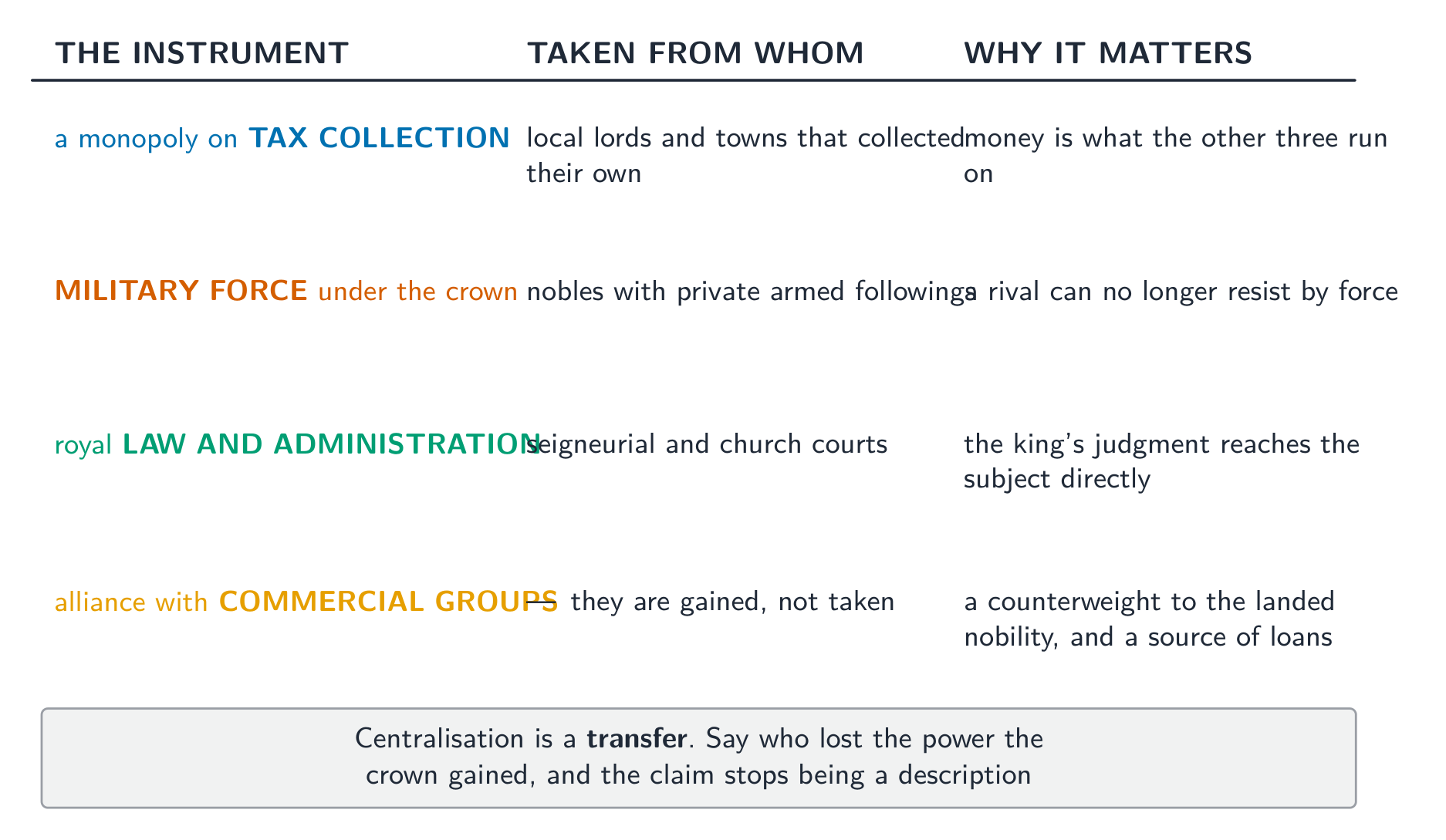
新君主国(new monarchies)通过以下方式为中央集权的现代国家奠定基础:

  • 确立征税垄断权(monopolies on tax collection);
  • 掌握受王权支配的军事力量(military force);
  • 并日益控制法律与行政

还有两股制衡力量也在考查范围内。商业与专业群体在欧洲各地取得权力,在政治事务中扮演更大角色。而意大利在文艺复兴时期持续的政治分裂,则为世俗国家(secular state)新观念的形成提供了背景——理论出自集权失败之处,而非成功之处。

一些君主,包括亨利八世伊丽莎白一世,也自上而下发起宗教改革以强化王权控制——这一点同时属于本单元与下一单元。

词汇表 训练
英文 中文 拼音
new monarchies 新君主国 xīn jūn zhǔ guó
monopolies on tax collection 征税垄断权 zhēng shuì lǒng duàn quán
employing military force 军事力量 jūn shì lì liàng
secular state 世俗国家 shì sú guó jiā
Advances in navigation, cartography, and military technology 航海、制图与军事技术 háng hǎi 、 zhì tú yǔ jūn shì jì shù
1.6

技术进步与大探索时代

大纲

1.6 Technological Advances and the Age of Exploration

Thematic FocusLearning ObjectiveHistorical Developments

TSI
Technological and Scientific Innovation — Scientific and technological innovations have increased efficiency, improved daily life, and shaped human development and interactions, having both intended and unintended consequences.

Unit 1.G
Explain the technological factors that facilitated European exploration and expansion from 1450 to 1648. THEMATIC FOCUS Interaction of Europe and the World INT Motivated by a variety of factors, Europe’s interaction with the world led to political, economic, social, and cultural exchanges that influenced both European and non-European societies. LEARNING OBJECTIVE

  • KC-1.3.II Advances in navigation, cartography, and military technology enabled Europeans to establish overseas colonies and empires. HISTORICAL DEVELOPMENTS

Unit 1.H
Explain the motivations for and effects of European exploration and expansion from 1450 to 1648.

  • KC-1.3.I.A European states sought direct access to gold, spices, and luxury goods to enhance personal wealth and state power.
  • KC-1.3.I.B The rise of mercantilism gave the state a new role in promoting commercial development and the acquisition of colonies overseas.
  • KC-1.3.I.C Christianity was a stimulus for exploration as governments and religious authorities sought to spread the faith, and for some it served as a justification for the subjugation of indigenous civilizations.

Illustrative examples:

  • Navigational technology:
    • Compass
    • Sternpost rudder
    • Portolani
    • Quadrant and astrolabe
    • Lateen rig
  • Military technology:
    • Guns and gunpowder
  • States seeking access to luxury goods:
    • Spanish in the New World
    • Portuguese in the Indian Ocean World
    • Dutch in the East Indies/Asia
  • Mercantilist policies employed by the state:
    • Jean-Baptiste Colbert
  • Religion and exploration:
    • Jesuit activities

来源:美国大学理事会 AP 课程与考试说明

航海、制图与军事技术(navigation, cartography, and military technology)的进步,使欧洲人得以建立海外殖民地与帝国。技术是使之成为可能的条件;CED 随后单独给出了动机:

  • 欧洲各国寻求直接获取黄金、香料与奢侈品,以增进个人财富与国家权力。
  • 重商主义(mercantilism)的兴起赋予国家推动商业发展与获取殖民地的新角色。
  • 基督教是一项动因(religious stimulus):政府与宗教当局意图传播信仰——对一些人而言它也充当了辩护理由。

要把使之可能的条件与动机分作两类。问"为什么"的题目要的是动机;问"如何成为可能"的题目要的是技术。

词汇表 训练
英文 中文 拼音
mercantilism 重商主义 zhòng shāng zhǔ yì
Christianity was a stimulus 宗教动因 zōng jiào dòng yīn
through coercion and negotiation 强制与谈判 qiáng zhì yǔ tán pàn
1.7

世界舞台上的竞争者

大纲

1.7 Rivals on the World Stage

Thematic FocusLearning ObjectiveHistorical Developments

ECD
Economic and Commercial Developments — Economic development, especially the development of capitalism, played an important role in Europe’s history, often having significant social, political, and cultural effects.

Unit 1.I
Explain how and why trading networks and colonial expansion affected relations between and among European states.

  • KC-1.3.III Europeans established overseas empires and trade networks through coercion and negotiation.
    • KC-1.3.III.B The Spanish established colonies across the Americas, the Caribbean, and the Pacific, which made Spain a dominant state in Europe in the 16th century.
    • KC-1.3.III.C The Atlantic nations of France, England, and the Netherlands followed by establishing their own colonies and trading networks to compete with Portuguese and Spanish dominance in the 17th century.
    • KC-1.3.III.D The competition for trade led to conflicts and rivalries among European powers in the 17th and 18th centuries.

Illustrative examples:

  • Colonial conflicts and rivalries:
    • Asiento
    • War of the Spanish Succession
    • Seven Years’ War
    • Treaty of Tordesillas

来源:美国大学理事会 AP 课程与考试说明

欧洲人通过强制与谈判(coercion and negotiation)建立海外帝国与贸易网络——两者兼有,而非其一。当地国家强大之处,欧洲人为贸易权而谈判;不强大之处,强制随之而来。

欧洲各国为争夺这些网络而展开的竞争,也重塑了欧洲内部的关系。商业竞争成为欧洲战争的长期根源,这一延续性一直贯穿到第七单元。

1.8

殖民扩张与哥伦布大交换

大纲

1.8 Colonial Expansion and Columbian Exchange

Thematic FocusLearning ObjectiveHistorical Developments

INT
Interaction of Europe and the World — Motivated by a variety of factors, Europe’s interaction with the world led to political, economic, social, and cultural exchanges that influenced both European and non-European societies.

Unit 1.J
Explain the economic impact of European colonial expansion and development of trade networks.

  • KC-1.3.III.A The Portuguese established a commercial network along the African coast, in South and East Asia, and in South America in the late 15th and throughout the 16th centuries.
  • KC-1.3.IV.i Europe’s colonial expansion led to a global exchange of goods, flora, and fauna; a shift toward European dominance; and the expansion of the trade in enslaved persons.
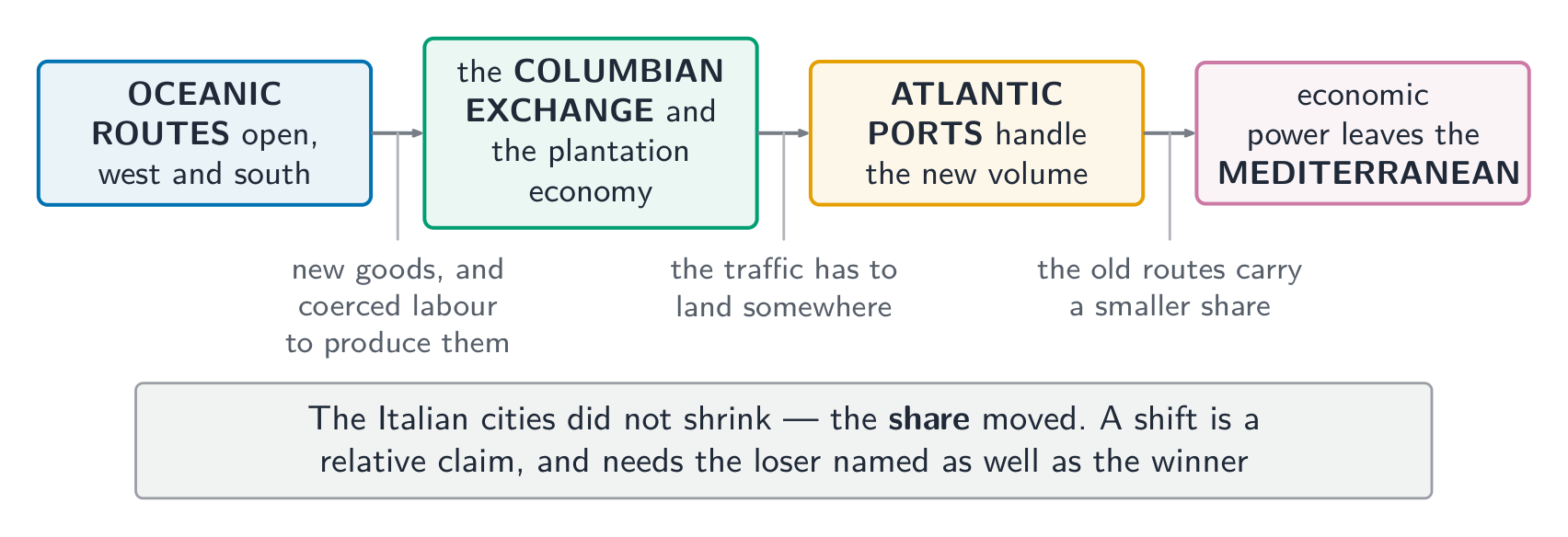
  • KC-1.3.IV.A The exchange of goods shifted the center of economic power in Europe from the Mediterranean to the Atlantic states and brought the latter into an expanding world economy.
  • KC-1.3.IV.B.i The exchange of new plants, animals, and diseases—the Columbian Exchange—created economic opportunities for Europeans.

Unit 1.K
Explain the social and cultural impact of European colonial expansion and development of trade networks.

  • KC-1.3.IV.ii Europe’s colonial expansion led to a global exchange of goods, flora, fauna, cultural practices, and diseases, resulting in the destruction of some indigenous civilizations, a shift toward European dominance, and the expansion of the trade in enslaved persons.
  • KC-1.3.IV.B.ii The exchange of new plants, animals, and diseases—the Columbian Exchange—in some cases facilitated European subjugation and destruction of indigenous peoples, particularly in the Americas.

Illustrative examples:

  • Important Atlantic port cities:
    • London
    • Bristol
    • Amsterdam
    • Antwerp
  • New plants, animals, and diseases (from Europe to the Americas):
    • Wheat
    • Cattle
    • Horses
    • Pigs
    • Sheep
    • Smallpox
    • Measles
  • New plants, animals, and diseases (from the Americas to Europe):
    • Tomatoes
    • Potatoes
    • Squash
    • Corn
    • Tobacco
    • Turkeys

来源:美国大学理事会 AP 课程与考试说明

葡萄牙人在十五世纪末与十六世纪沿非洲海岸以及在南亚、东亚建立了商业网络;其他国家随后跟进。

哥伦布大交换(Columbian Exchange)——新植物、动物与疾病的交换——被 CED 有意以双重视角呈现,两面都在考查范围内:

  • 为欧洲人创造了经济机会
  • 便利了欧洲人的征服以及对原住民社会的摧毁,主要通过疾病。

在经济上,货物交换使欧洲经济重心从地中海转向大西洋沿岸国家(from the Mediterranean to the Atlantic states)。这一转移解释了为何第三单元的强国不是第一单元的强国。

词汇表 训练
英文 中文 拼音
Columbian Exchange 哥伦布大交换 gē lún bù dà jiāo huàn
shifted the centre of economic power in Europe from the Mediterranean to the Atlantic states 从地中海转向大西洋 cóng dì zhōng hǎi zhuǎn xiàng dà xī yáng
expanded the trade of enslaved Africans 奴隶贸易 nú lì mào yì
1.9

奴隶贸易

大纲

1.9 The Slave Trade

Thematic FocusLearning ObjectiveHistorical Developments

INT
Interaction of Europe and the World — Motivated by a variety of factors, Europe’s interaction with the world led to political, economic, social, and cultural exchanges that influenced both European and non-European societies.

Unit 1.L
Explain the causes for and the development of the slave trade.

  • KC-1.3.IV.C Europeans expanded the trade of enslaved Africans in response to the establishment of a plantation economy in the Americas and demographic catastrophes among indigenous peoples.

Illustrative examples:

  • Slave trade developments:
    • Middle Passage
    • Planter society

来源:美国大学理事会 AP 课程与考试说明

欧洲人扩大了对被奴役非洲人的贸易(slave trade),以回应美洲种植园经济(plantation economy)的建立与原住民人口的锐减。

这一因果链在 CED 中是明确的,应当作为链条来复述:种植园农业所需的劳动力规模,是人口遭到摧毁的美洲无法供给的,而这一需求由扩大的大西洋人口贩运来满足。

词汇表 训练
英文 中文 拼音
plantation economy 种植园经济 zhòng zhí yuán jīng jì
Innovations in banking and finance 银行与金融 yín háng yǔ jīn róng
1.10

商业革命

大纲

1.10 The Commercial Revolution

Thematic FocusLearning ObjectiveHistorical Developments

SCD
Social Organization and Development — Economic, political, and cultural factors have influenced the form and status of family, class, and social groups in European history, which has, in turn, affected both the individual and society.

Unit 1.M
Explain European commercial and agricultural developments and their economic effects from 1450 to 1648.

  • KC-1.4.I.A Innovations in banking and finance promoted the growth of urban financial centers and a money economy.
  • KC-1.4.II Most Europeans derived their livelihood from agriculture and oriented their lives around the seasons, the village, or the manor, although economic changes began to alter rural production and power.
    • KC-1.4.II.A Subsistence agriculture was the rule in most areas, with three-crop field rotation in the north and two-crop rotation in the Mediterranean; in many cases, farmers paid rent and labor services for their lands.
    • KC-1.4.II.B The price revolution contributed to the accumulation of capital and the expansion of the market economy through the commercialization of agriculture, which benefited large landowners in western Europe.
    • KC-1.4.III.A Population recovered to its pre-Great Plague level in the 16th century, and continuing population pressures contributed to uneven price increases; agricultural commodities increased more sharply than wages, reducing living standards for some.

Unit 1.N
Explain European commercial and agricultural developments and their social effects from 1450 to 1648.

  • KC-1.4.I Economic change produced new social patterns, while traditions of hierarchy and status continued.
    • KC-1.4.I.B The growth of commerce produced a new economic elite, which related to traditional land-holding elites in different ways in Europe’s various geographic regions.
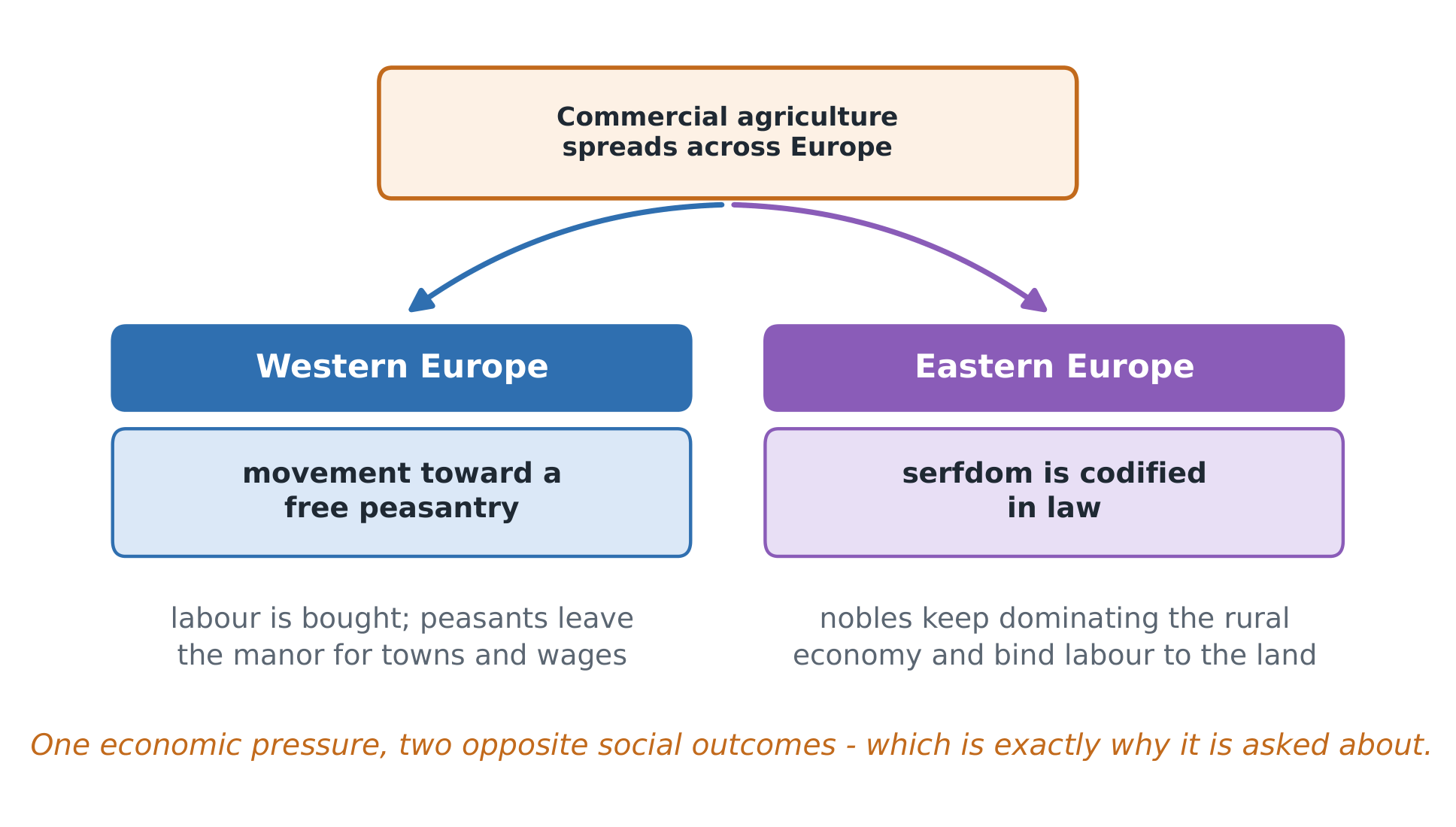
  • KC-1.4.II.C As western Europe moved toward a free peasantry and commercial agriculture, serfdom was codified in the east, where nobles continued to dominate economic life on large estates.
  • KC-1.4.II.D The attempts of landlords to increase their revenues by restricting or abolishing the traditional rights of peasants led to revolt.
  • KC-1.4.III.B Migrants to the cities challenged the ability of merchant elites and craft guilds to govern, and strained resources.
  • KC-1.4.IV.C From the late 16th century on, Europeans responded to economic and environmental challenges, such as the Little Ice Age, by delaying marriage and childbearing. This European marriage pattern restrained population growth and ultimately improved the economic condition of families.

Illustrative examples:

  • Innovations in banking and finance:
    • Double-entry bookkeeping
    • Bank of Amsterdam
    • The Dutch East India Company
    • The British East India Company
  • The commercialization of agriculture:
    • Enclosure movement
    • Restricted use of the village common
    • Freehold tenure
  • New economic elites:
    • Italian merchant princes
    • Nobles of the robe in France
  • The way new migrants challenged urban elites:
    • Sanitation problems caused by overpopulation
    • Employment
    • Poverty
    • Crime

来源:美国大学理事会 AP 课程与考试说明

同一个世纪把西欧与东欧推向相反方向——而 CED 就此发问
商业化农业在西方解放了农民,在东方却束缚了农民

银行与金融(banking and finance)的创新推动了城市金融中心与货币经济(money economy)的成长。经济变化产生了新的社会模式,而等级与身份的传统仍在延续——两者并存,这正是 CED 自身的表述。

多数欧洲人仍以农业为生,围绕季节、村庄或庄园安排生活。而在其中,一道明显的分野出现了:

  • 西欧走向自由农民(free peasantry)与商业化农业。
  • 在东方,随着贵族继续支配乡村经济,农奴制被法典化(serfdom was codified)。

同一种商业压力产生了相反的结果,这恰恰是它可考的原因。另有两项相关后果:地主试图通过限制农民传统权利来增加收入,引发了反抗(revolt);而迁入城市的移民使资源紧张,并挑战了商人精英与行会的治理能力。

最后,自十六世纪后期起,欧洲人以推迟婚育回应经济与环境压力——包括小冰期(Little Ice Age)——这是一项值得掌握的人口适应,因为它是不常见的证据。

词汇表 训练
英文 中文 拼音
money economy 货币经济 huò bì jīng jì
free peasantry 自由农民 zì yóu nóng mín
serfdom was codified 农奴制被法典化 nóng nú zhì bèi fǎ diǎn huà
revolt 反抗 fǎn kàng
Little Ice Age 小冰期 xiǎo bīng qī
1.11

文艺复兴与大发现时代的因果关系

大纲

1.11 Causation in the Renaissance and Age of Discovery

Learning ObjectiveReview: Unit 1 Key Concepts

Unit 1.O
Explain the causes and consequences of the Renaissance and Age of Discovery.

  • KC-1.1 The rediscovery of works from ancient Greece and Rome and observation of the natural world changed many Europeans’ view of their world.
    • KC-1.1.I A revival of classical texts led to new methods of scholarship and new values in both society and religion.
    • KC-1.1.III The visual arts incorporated the new ideas of the Renaissance and were used to promote personal, political, and religious goals.
  • KC-1.3 Europeans explored and settled overseas territories, encountering and interacting with indigenous populations.
    • KC-1.3.I European nations were driven by commercial and religious motives to explore overseas territories and establish colonies.
  • KC-1.4 European society and the experiences of everyday life were increasingly shaped by commercial and agricultural capitalism, notwithstanding the continued existence of medieval social and economic structures.
    • KC-1.4.I Economic change produced new social patterns, while traditions of hierarchy and status continued.
    • KC-1.4.II Most Europeans derived their livelihood from agriculture and oriented their lives around the seasons, the village, or the manor, although economic changes began to alter rural production and power.
  • KC-1.5 The struggle for sovereignty within and among states resulted in varying degrees of political centralization.
    • KC-1.5.I The new concept of the sovereign state and secular systems of law played a central role in the creation of new political institutions.

来源:美国大学理事会 AP 课程与考试说明

本单元考查的推理能力是因果关系

**Worked example(一道真实的 AP 考题)。*本单元的 AP 欧洲史简答题会要求,例如「解释 1450 至 1648 年间印刷术的发展影响欧洲思想生活的一种方式」。满分答案给出的是机制,而不是事实:「印刷术使希腊罗马文本的人文主义校订本得以廉价而一致地复制,因此全欧洲的学者都能阅读并比对同样的校勘本。这削弱了大学与教会对文本流通的控制,也使一项论点一旦付印便极难压制。」*注意其结构:影响要求把后果经由一个过程追溯出来。

1.11

考试技巧

  • "程度不一"是 CED 自己对集权的用词。要比较走了多远,而不只是有没有
  • 文艺复兴艺术是政治证据。赞助是对声望与正当性的主张。
  • 把印刷术当作放大器,而不是首要起因。这一框架能回答多数印刷术题目。
  • 把探索的技术条件动机分开。题目问的是其中之一。
  • 哥伦布大交换有两面——欧洲人的机会与原住民的毁灭。两面都要写。
  • 农奴制上的东西分野价值高且常被遗漏。一个起因,两个相反的结果。

本主题的互动课程

逐步学习,并即时检测练习。

AP 欧洲历史的更多主题

登录或创建账号

IGCSE, A-Level & AP