跳到主要内容

宗教改革时代

AP 欧洲历史 · 第 2 主题

训练
讲义 词汇表
2.1

16与17世纪挑战与发展的时代背景

大纲

2.1 Contextualizing 16th- and 17th-Century Challenges and Developments

Learning ObjectivePreview: Unit 2 Key Concepts

Unit 2.A
Explain the context in which the religious, political, and cultural developments of the 16th and 17th centuries took place.

  • KC-1.2 Religious pluralism challenged the concept of a unified Europe.
    • KC-1.2.I The Protestant and Catholic reformations fundamentally changed theology, religious institutions, culture, and attitudes toward wealth and prosperity.
    • KC-1.2.II Religious reform both increased state control of religious institutions and provided justifications for challenging state authority.
    • KC-1.2.III Conflicts among religious groups overlapped with political and economic competition within and among states.
  • KC-1.4 European society and the experiences of everyday life were increasingly shaped by commercial and agricultural capitalism, notwithstanding the continued existence of medieval social and economic structures.
    • KC-1.4.III Population shifts and growing commerce caused the expansion of cities, which often placed stress on their traditional political and social structures.
    • KC-1.4.IV The family remained the primary social and economic institution of early modern Europe and took several forms, including the nuclear family.
    • KC-1.4.V Popular culture, leisure activities, and rituals reflecting the continued popularity of folk ideas reinforced and sometimes challenged communal ties and norms.
  • KC-1.5 The struggle for sovereignty within and among states resulted in varying degrees of political centralization.
    • KC-1.5.I The new concept of the sovereign state and secular systems of law played a central role in the creation of new political institutions.

来源:美国大学理事会 AP 课程与考试说明

第二单元讲述宗教改革与宗教战争,CED 把整个时期围绕一项论断展开:宗教多元(religious pluralism)挑战了统一欧洲的观念

另有两条线索与之并行,并与宗教一同受到考查——日常生活被商业与农业资本主义重塑,以及主权争夺造成程度不一的政治集权。本单元的典型题目会问宗教变化与政治变化如何相互作用,因此把两者放在彼此隔离的心理格子里,正是学生在这里失分的主要方式。

2.2

路德与新教改革

大纲

2.2 Luther and the Protestant Reformation

Thematic FocusLearning ObjectiveHistorical Developments

CID
Cultural and Intellectual Developments — The creation and transmission of knowledge, including the relationship between traditional sources of authority and the development of differing world views, had significant political, intellectual, economic, cultural, and social effects on European and world societies.

Unit 2.B
Explain how and why religious belief and practices changed from 1450 to 1648.

  • KC-1.2.I.B Reformers Martin Luther and John Calvin criticized Catholic abuses and established new interpretations of Christian doctrine and practice. Responses to Luther and Calvin included religious radicals, including the Anabaptists, and other groups, such as German peasants.
  • KC-1.2.I.C Some Protestant groups sanctioned the notion that wealth accumulation was a sign of God’s favor and a reward for hard work.

Illustrative examples:

  • New Protestant interpretations of Christian doctrine and practice:
    • Priesthood of all believers
    • Primacy of scripture §Bullet Predestination §Bullet Salvation by faith alone
  • Protestants who viewed wealth as signs of God’s favor: §Bullet Calvinists

来源:美国大学理事会 AP 课程与考试说明

改革者马丁·路德(Martin Luther)与加尔文(John Calvin)批评天主教的弊端,并确立了对基督教教义(doctrine)与实践的新诠释。CED 强调的是诠释:改变的不只是行为,还有关于救赎如何实现、宗教权威何在的整套说法。

第二项更具社会性的论断也在考查范围内,却常被遗忘:一些新教团体认可财富积累(accumulation of wealth)是上帝眷顾的标志,是勤勉的回报。这是宗教改革与第一单元商业发展之间的联系,值得为经济类题目备好。

词汇表 训练
英文 中文 拼音
religious pluralism challenged the concept of a unified Europe 宗教多元 zōng jiào duō yuán
Martin Luther 马丁·路德 mǎ dīng · lù dé
John Calvin 加尔文 jiā ěr wén
new interpretations of Christian doctrine 教义 jiào yì
sanctioned the notion that the accumulation of wealth was a sign of God's favour 财富积累 cái fù jī lěi
used the printing press 印刷机 yìn shuā jī
Calvin and the Anabaptists 再洗礼派 zài xǐ lǐ pài
refused to recognise the subordination of the church to the secular state 教会从属于世俗国家 jiào huì cóng shǔ yú shì sú guó jiā
expanded Ottoman Empire 奥斯曼帝国 ào sī màn dì guó
promote political and economic interests 政治与经济利益 zhèng zhì yǔ jīng jì lì yì
2.3

新教改革的延续

大纲

2.3 Protestant Reform Continues

Thematic FocusLearning ObjectiveHistorical Developments

CID
Cultural and Intellectual Developments — The creation and transmission of knowledge, including the relationship between traditional sources of authority and the development of differing world views, had significant political, intellectual, economic, cultural, and social effects on European and world societies.

Unit 2.B
Explain how and why religious belief and practices changed from 1450 to 1648.

  • KC-1.1.II.B Protestant reformers used the printing press to disseminate their ideas, which spurred religious reform and helped it to become widely established.
  • KC-1.2.II.B Some Protestants, including Calvin and the Anabaptists, refused to recognize the subordination of the church to the secular state.
  • KC-1.2.II.C Religious conflicts became a basis for challenging the monarchs’ control of religious institutions.

Illustrative examples:

  • Reformers using press to disseminate ideas: §Bullet Martin Luther §Bullet Vernacular Bibles Religious conflicts caused by groups challenging the monarch’s control of religious institutions:
    • Huguenots
    • Puritans
    • Nobles in Poland

来源:美国大学理事会 AP 课程与考试说明

有三项发展使宗教改革越过了第一代人:

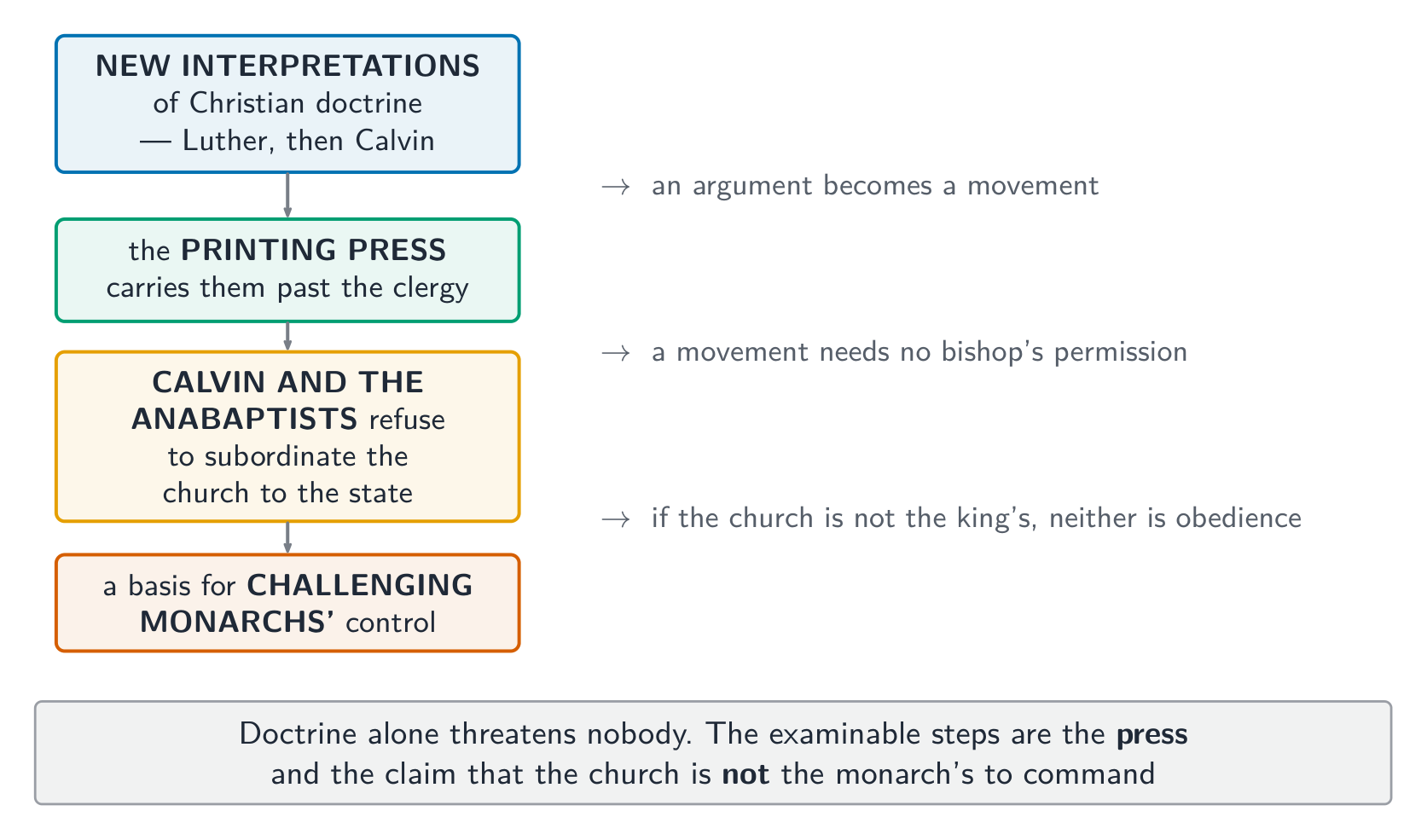
  • 新教改革者利用印刷机(printing press)传播其思想,推动了改革并使之得以长久。印刷术再次充当放大器——这正是这场运动没有像先前那些一样收场的原因。
  • 一些新教徒,包括加尔文与再洗礼派(Anabaptists),拒不承认教会从属于世俗国家(subordination of the church to the secular state)。
  • 宗教冲突成为挑战君主控制宗教机构的依据。

后两项是披着宗教语言的政治主张,CED 也正是这样处理它们的。一旦宗教权威可被争夺,那么声称控制它的人的权威同样可被争夺。

2.4

宗教战争

大纲

2.4 Wars of Religion

Thematic FocusLearning ObjectiveHistorical Developments

SOP
States and Other Institutions of Power — European states and nations developed governmental and civil institutions from 1450 to the present to organize society and consolidate political power, with a variety of social, cultural, and economic effects.

Unit 2.C
Explain how matters of religion influenced and were influenced by political factors from 1450 to 1648.

  • KC-1.2.III.A Issues of religious reform exacerbated conflicts between the monarchy and the nobility, as in the French wars of religion.
  • KC-1.2.III.B Habsburg rulers confronted an expanded Ottoman Empire while attempting unsuccessfully to restore Catholic unity across Europe.
  • KC-1.2.III.C States exploited religious conflicts to promote political and economic interests.
  • KC-1.2.III.D A few states, such as France with the Edict of Nantes, allowed religious pluralism in order to maintain domestic peace.
  • KC-1.5.I.B The Peace of Westphalia (1648), which marked the effective end of the medieval ideal of universal Christendom, accelerated the decline of the Holy Roman Empire by granting princes, bishops, and other local leaders control over religion.

Illustrative examples:

  • Key factors in the French wars of religion:
    • Catherine de’ Medici
    • St. Bartholomew’s Day massacre
    • War of the Three Henrys
    • Henry IV
  • Habsburg rulers: §Bullet Charles V State exploitation of religious conflicts:
    • Catholic Spain and Protestant England
    • France, Sweden, and Denmark in the Thirty Years’ War
  • States allowing religious pluralism:
    • Poland
    • The Netherlands

来源:美国大学理事会 AP 课程与考试说明

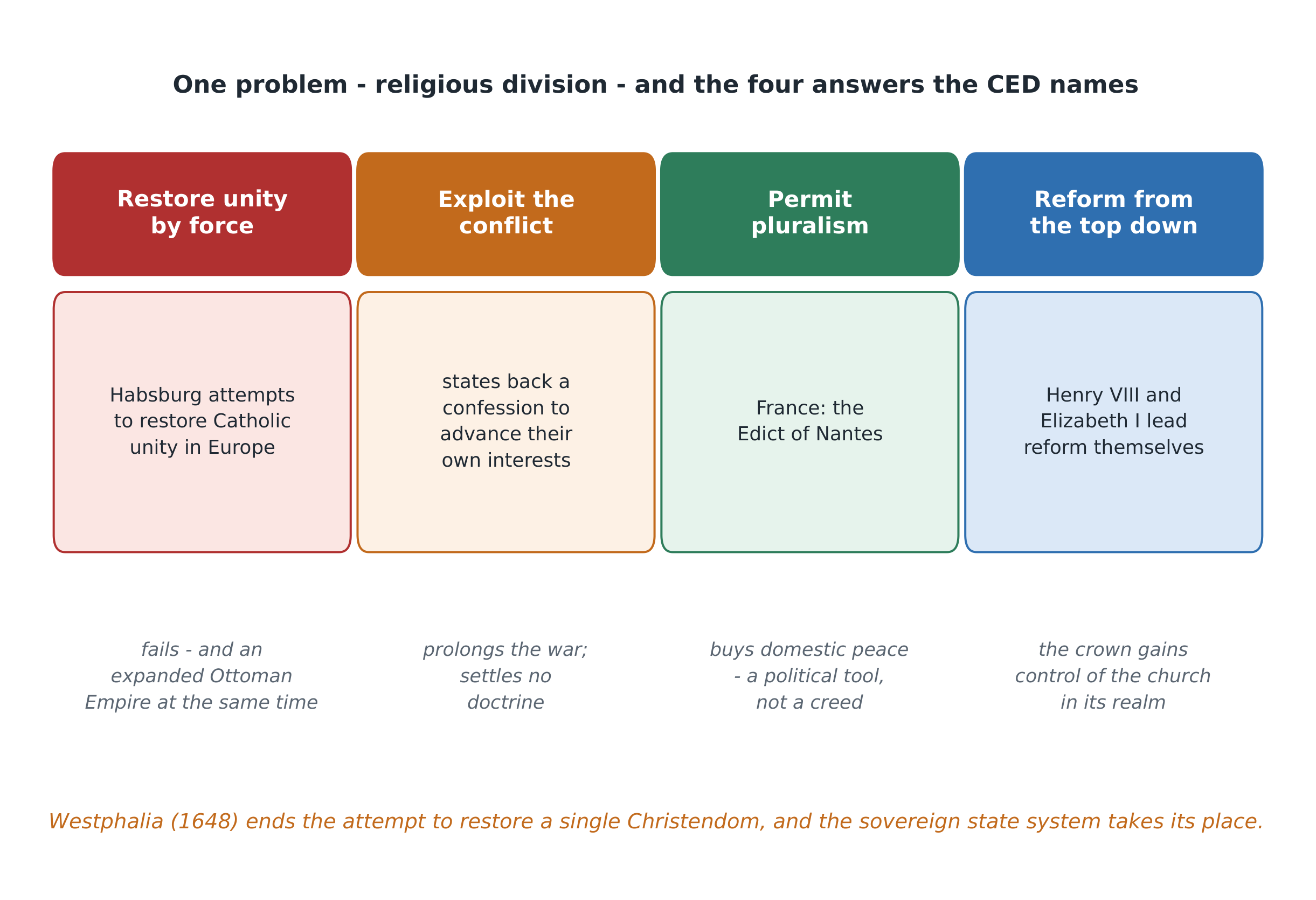
十六世纪的国家面对宗教分裂的四种应对方式——CED 把四种都点了名
其中只有一种能终结冲突,而它并不是多数统治者最先尝试的那一种

CED 给出了国家面对宗教分裂的四种应对,有力的答案会把它们作为一组来处理:

  • 以武力恢复统一——哈布斯堡统治者试图在全欧洲恢复天主教统一并告失败,同时还要面对扩张中的奥斯曼帝国(Ottoman Empire)。
  • 利用冲突——各国利用宗教争端来促进自身的政治与经济利益(political and economic interests),而非为了裁定教义。
  • 容许多元——少数国家,如颁布南特敕令(Edict of Nantes)的法国,为维持国内和平(domestic peace)而容许宗教多元。
  • 自上而下改革——包括亨利八世伊丽莎白一世在内的君主亲自发起宗教改革,以加强对本国教会的控制。

宗教改革还加剧了君主与贵族之间的冲突,如法国宗教战争——宗教提供了语言,既有的政治对立提供了力量。

和约与战争同等重要:威斯特伐利亚和约(Peace of Westphalia,1648)标志着中世纪普世基督教世界(universal Christendom)理想的实际终结,并加速了神圣罗马帝国的衰落。第三单元正是由这一枢纽开启的。

词汇表 训练
英文 中文 拼音
Edict of Nantes 南特敕令 nán tè chì lìng
in order to maintain domestic peace 国内和平 guó nèi hé píng
Peace of Westphalia (1648) 威斯特伐利亚和约 wēi sī tè fá lì yà hé yuē
universal Christendom 普世基督教世界 pǔ shì jī dū jiào shì jiè
2.5

天主教改革

大纲

2.5 The Catholic Reformation

Thematic FocusLearning ObjectiveHistorical Developments

CID
Cultural and Intellectual Developments — The creation and transmission of knowledge, including the relationship between traditional sources of authority and the development of differing world views, had significant political, intellectual, economic, cultural, and social effects on European and world societies.

Unit 2.D
Explain the continuities and changes in the role of the Catholic Church from 1450 to 1648.

  • KC-1.2.I.D The Catholic Reformation, exemplified by the Jesuit Order and the Council of Trent, revived the church but cemented division within Christianity.

Illustrative examples:

  • The Catholic Reformation:
    • St. Teresa of Avila
    • Ursulines
    • Roman Inquisition
    • Index of Prohibited Books

来源:美国大学理事会 AP 课程与考试说明

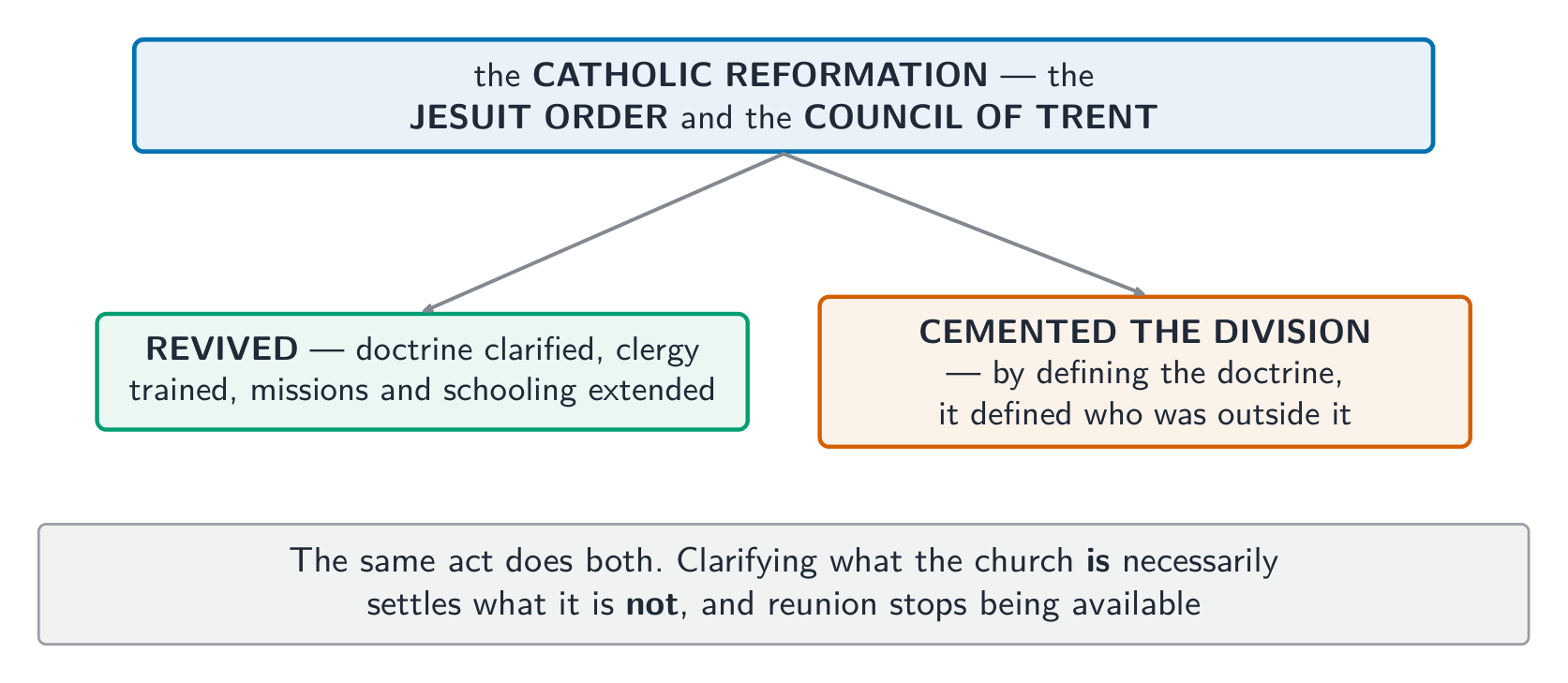
耶稣会(Jesuit Order)与特伦特会议(Council of Trent)为代表的天主教改革(Catholic Reformation)复兴了教会,却也固化了基督教内部的分裂

这句话的两半正是延续与变化类题目的答案。教会更新了自身的制度、教义、教育与传教范围——而在精确界定教义的同时,它也使重新合一成为不可能。复兴与永久分裂是同一个行动。

词汇表 训练
英文 中文 拼音
Catholic Reformation 天主教改革 tiān zhǔ jiào gǎi gé
Jesuit Order 耶稣会 yē sū huì
Council of Trent 特伦特会议 tè lún tè huì yì
Established hierarchies of class, religion, and gender 阶级、宗教与性别等级 jiē jí 、 zōng jiào yǔ xìng bié děng jí
separate but complementary tasks 分工互补 fēn gōng hù bǔ
raised debates about female education 女性教育 nǚ xìng jiào yù
2.6

16世纪的社会与政治

大纲

2.6 16th-Century Society and Politics

Thematic FocusLearning ObjectiveHistorical Developments

SCD
Social Organization and Development — Economic, political, and cultural factors have influenced the form and status of family, class, and social groups in European history, which has, in turn, affected both the individual and society.

Unit 2.E
Explain how economic and intellectual developments from 1450 to 1648 affected social norms and hierarchies.

  • KC-1.4.I.C Established hierarchies of class, religion, and gender continued to define social status and perceptions in rural and urban settings.
  • KC-1.4.IV.A Rural and urban households worked as units, with men and women engaged in separate but complementary tasks.
  • KC-1.4.IV.B The Renaissance and Reformation raised debates about female education and women’s roles in the family, church, and society.
  • KC-1.4.III.C Social dislocation, coupled with the shifting authority of religious institutions during the Reformation, left city governments with the task of regulating public morals.
  • KC-1.4.V.A Leisure activities continued to be organized according to the religious calendar and the agricultural cycle, and remained communal in nature.
  • KC-1.4.V.B Local and church authorities continued to enforce communal norms through rituals of public humiliation.
  • KC-1.4.V.C Reflecting folk ideas and social and economic upheaval, accusations of witchcraft peaked between 1580 and 1650.

Illustrative examples:

  • Continued social hierarchies:
    • Prestige of land ownership
    • Aristocratic privileges regarding taxes, fees for services, and legal protections
    • Political exclusion of women
  • Debates about female roles:
    • Women’s intellect and education
    • Women as preachers
    • La Querelle des Femmes
  • Regulating public morals:
    • New secular laws regulating private life
    • Stricter codes on prostitution and begging
    • Abolishing or restricting Carnival
  • Communal leisure activities:
    • Saint’s day festivities
    • Carnival
    • Blood sports
  • Rituals of public humiliation:
    • Charivari
    • Stocks
    • Public whipping and branding
  • Factors in witchcraft accusations:
    • Prominence of women
    • Regional variation
    • Social upheaval

来源:美国大学理事会 AP 课程与考试说明

这是本单元的社会史一节,其中可考内容密集,论述题却很少用到:

  • 既有的阶级、宗教与性别等级(hierarchies of class, religion, and gender)在乡村与城市继续界定社会身份。
  • 乡村与城市的家户作为生产单位运作,男女从事分工互补(separate but complementary)的工作。
  • 文艺复兴与宗教改革引发了关于女性教育(female education)以及女性在家庭、教会与社会中角色的辩论。
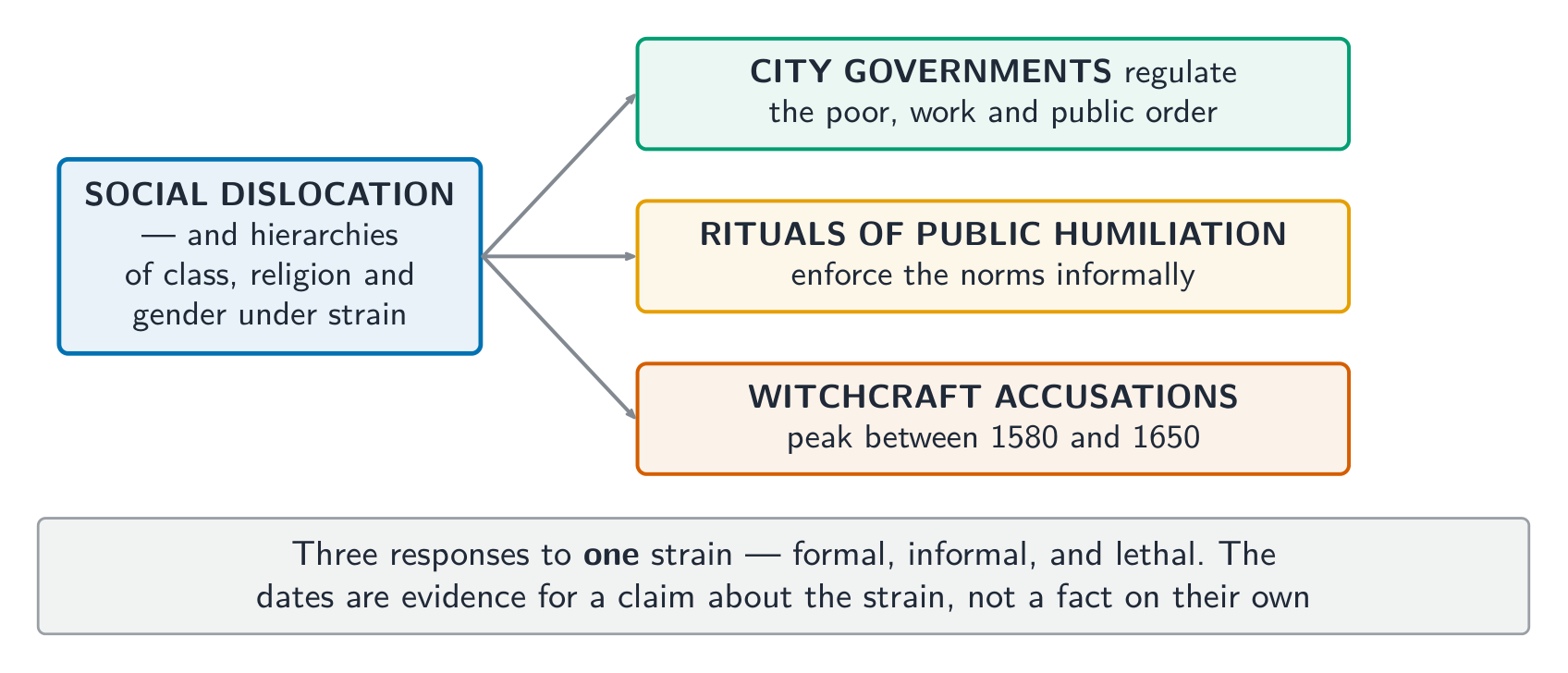
  • 社会失序(social dislocation)加上宗教机构权威的变动,把由此产生的问题留给了城市当局处理。
  • 闲暇仍按宗教历法与农业周期安排,并保持其共同体性质。
  • 地方与教会当局通过公开羞辱(public humiliation)的仪式来执行共同体规范。
  • 反映民间观念与社会经济动荡的巫术指控(accusations of witchcraft)在 1580 至 1650 年间达到顶峰

巫术指控的顶峰之所以值得记住,恰恰在于它的年代:它与宗教冲突和经济压力最剧烈的时期重合,而这正是它能作为证据而非轶事使用的原因。

词汇表 训练
英文 中文 拼音
Social dislocation 社会失序 shè huì shī xù
rituals of public humiliation 公开羞辱 gōng kāi xiū rǔ
accusations of witchcraft peaked between 1580 and 1650 巫术指控 wū shù zhǐ kòng
2.7

16世纪的艺术:风格主义与巴洛克艺术

大纲

2.7 Art of the 16th Century: Mannerism and Baroque Art

Thematic FocusLearning ObjectiveHistorical Developments

CID
Cultural and Intellectual Developments — The creation and transmission of knowledge, including the relationship between traditional sources of authority and the development of differing world views, had significant political, intellectual, economic, cultural, and social effects on European and world societies.

Unit 2.F
Explain how and why artistic expression changed from 1450 to 1648.

  • KC-1.1.III.C Mannerist and Baroque artists employed distortion, drama, and illusion in their work. Monarchies, city-states, and the church commissioned these works as a means of promoting their own stature and power.

Illustrative examples:

  • Mannerist and Baroque artists whose art was used in new public buildings:
    • El Greco
    • Artemisia Gentileschi
    • Gian Bernini
    • Peter Paul Rubens

来源:美国大学理事会 AP 课程与考试说明

手法主义与巴洛克(Mannerist and Baroque)艺术家运用变形、戏剧性与幻觉(distortion, drama, and illusion)。君主国、城邦与教会委托创作了这些作品。

可考的要点与第一单元相同,只是更进一步:艺术是为说服而受托创作的。天主教堂中的巴洛克戏剧性与王室宫廷中的巴洛克恢弘,是在不同方向上做同一件事——在权威受到争夺的时代宣示赞助人的权威。

词汇表 训练
英文 中文 拼音
Mannerist and Baroque 手法主义与巴洛克 shǒu fǎ zhǔ yì yǔ bā luò kè
distortion, drama, and illusion 变形、戏剧性与幻觉 biàn xíng 、 xì jù xìng yǔ huàn jué
2.8

宗教改革与宗教战争时代的因果关系

大纲

2.8 Causation in the Age of Reformation and the Wars of Religion

Learning ObjectiveReview: Unit 2 Key Concepts

Unit 2.G
Explain how the religious, political, and cultural developments of the 16th and 17th centuries affected European society from 1450 to 1648.

  • KC-1.2 Religious pluralism challenged the concept of a unified Europe.
    • KC-1.2.I The Protestant and Catholic reformations fundamentally changed theology, religious institutions, culture, and attitudes toward wealth and prosperity.
    • KC-1.2.II Religious reform both increased state control of religious institutions and provided justifications for challenging state authority.
    • KC-1.2.III Conflicts among religious groups overlapped with political and economic competition within and among states.
  • KC-1.4 European society and the experiences of everyday life were increasingly shaped by commercial and agricultural capitalism, notwithstanding the continued existence of medieval social and economic structures.
    • KC-1.4.III Population shifts and growing commerce caused the expansion of cities, which often placed stress on their traditional political and social structures.
    • KC-1.4.IV The family remained the primary social and economic institution of early modern Europe and took several forms, including the nuclear family.
    • KC-1.4.V Popular culture, leisure activities, and rituals reflecting the continued popularity of folk ideas reinforced and sometimes challenged communal ties and norms.
  • KC-1.5 The struggle for sovereignty within and among states resulted in varying degrees of political centralization.
    • KC-1.5.I The new concept of the sovereign state and secular systems of law played a central role in the creation of new political institutions.

来源:美国大学理事会 AP 课程与考试说明

本单元考查的推理能力是因果关系

**Worked example(一道真实的 AP 考题)。*本单元的 AP 欧洲史简答题会要求,例如「解释十六世纪政治发展受宗教变化影响的一种方式」。满分答案会点出这一影响的两个方向:「宗教改革为贵族提供了抵抗王权的语言与理由,如在法国宗教战争中,贵族家族以教派归属来组织对王室的反对。因此君主的回应——最终是南特敕令——是对一场宗教争端的政治解决:以容忍换取王权控制的恢复。」*注意答案在两个方向上都作了推进,因为 CED 自身的框架就是如此。

2.8

考试技巧

  • 在本单元绝不要把宗教与政治分开。几乎每道题目考查的都是二者的互动。
  • 四种国家应对——武力、利用、容忍、自上而下改革——为任何宗教战争题目提供了极好的答案骨架。
  • 威斯特伐利亚是枢纽:普世基督教世界的终结,主权国家体系的开端。
  • 天主教改革同时复兴并分裂。两半都能得分。
  • 容忍是一种政治手段,而非道德立场。南特敕令买来的是国内和平。
  • 把**巫术指控的顶峰(1580-1650)**当作有年代的社会与宗教压力证据,而不是点缀。

本主题的互动课程

逐步学习,并即时检测练习。

AP 欧洲历史的更多主题

登录或创建账号

IGCSE, A-Level & AP