跳到主要内容

全球化

AP 世界历史知识点 9

本主题的视频课程 打开视频页面
7:39

单元 9:全球化

单元 9 的核心在于评估而非叙事。它提及的几乎所有发展都产生了收益与代价,考题奖励那些……的答案

英文讲解 · 可切换中英文字幕

9.1

1900年后技术与交流的进步

教学大纲
9.1 1900年后的技术进步与交流

主题聚焦(TEC): 技术与创新 ——人类的适应与创新提高了效率、舒适度和安全性,技术进步塑造了人类的发展以及彼此间的互动,并产生了预期和非预期的后果。

第9单元学习目标A: 解释从1900年至今新技术的发展如何改变了世界。

  • KC-6.1.I.A 新的交流方式——包括无线电通信、移动通信和互联网——以及交通运输,如航空旅行和集装箱运输,缩小了地理距离带来的障碍。
  • KC-6.1.I.D 能源技术,包括石油和核能的使用,提高了生产力并增加了物质产品的生产。
  • KC-6.1.III.B 更有效的避孕方法使女性对生育拥有了更大的控制权,改变了生殖实践,并促成了世界大部分地区生育率的下降。
  • KC-6.1.I.B 绿色革命和商业化农业提高了生产力,支撑了地球日益增长的人口,同时化学农业和转基因农业形式得以推广。
  • KC-6.1.I.C 医学创新,包括疫苗和抗生素,增强了人类生存能力和延长了寿命。
来源:College Board AP 课程与考试说明

English

On 8 May 1980 the World Health Assembly declared that smallpox had been eradicated. The disease had killed perhaps 300 million people in the twentieth century alone; its last natural case was a hospital cook in Somalia in 1977. A worldwide vaccination campaign, run through a global institution, had ended it. Unit 9 covers globalisation after 1900: new technology, disease, the environment, the world economy, rights, culture and the institutions that tie the world together.

In this unit you will:

  • Explain how new technology made globalisation 全球化 faster, and where it had limits.
  • Explain how medicine changed disease, and which diseases remained.
  • Explain the debates about the environment 环境.
  • Explain the move to free-market 自由市场 economic policies.
  • Explain calls for rights and reform, global culture, and resistance to globalisation.
  • Explain the role of international institutions.

New technology changed how fast people, goods and ideas moved.

  • Communication: radio and television, then the internet 互联网: ARPANET linked its first computers in 1969, and Tim Berners-Lee's World Wide Web opened to the public in 1991. Mobile phones spread across the world after 2000.
  • Transport: passenger jets made long-distance travel common, and the shipping container (first used in 1956) cut the cost of sea freight.
  • Energy: oil replaced coal as the main fuel; nuclear power began in the 1950s.
  • The Green Revolution 绿色革命: new wheat and rice varieties, with fertiliser and irrigation, raised harvests in Mexico, India and elsewhere from the 1960s. Norman Borlaug won the Nobel Peace Prize for this work in 1970.
A bundle of fibre-optic strands fanning out against a dark background, each thin glass strand glowing with a point of blue-white light at its tip
Fibre-optic cable carries data as pulses of light: the communications technology behind faster global exchange after 1900
词汇 训练
English 中文 拼音
globalisation/ˌɡləʊbəlaɪˈzeɪʃn/ 全球化 quán qiú huà
environment/enˈvaɪrənmənt/ 环境 huán jìng
free-market/friː ˈmɑːkɪt/ 自由市场 zì yóu shì chǎng
internet/ˈɪntənet/ 互联网 hù lián wǎng
Green Revolution/ɡriːn ˌrevəˈluːʃn/ 绿色革命 lǜ sè gé mìng
9.2

1900年后技术的进步与局限:疾病

教学大纲
9.2 1900年后的技术进步与局限性:疾病

主题焦点(ENV): 人类与环境 —— 环境塑造人类社会,随着人口的增长和变化,这些人口反过来也塑造着它们的环境。

第9单元B学习目标: 解释环境因素如何随时间影响人类人口。

  • KC-6.1.III 疾病以及医学和科学的发展对世界各地的人口产生了重大影响。
  • KC-6.1.III.A 与贫困相关的疾病持续存在,而其他疾病则作为新的大流行病出现,并对人类人口构成威胁,在某些情况下导致了社会动荡。这些爆发推动了技术和医学的进步。某些疾病发病率较高仅仅是因为预期寿命的增加。

示例:

  • 与贫困相关的疾病:§ 疟疾 § 结核病 § 霍乱
  • 新兴流行病:§ 1918年流感大流行 § 埃博拉 § 艾滋病/人类免疫缺陷病毒
  • 与预期寿命增加相关的疾病:§ 心脏病 § 阿尔茨海默病

来源:College Board AP 课程与考试说明

English

Medicine saved millions of lives. Penicillin, found by Alexander Fleming in 1928, was mass-produced from the 1940s; Jonas Salk's polio vaccine was licensed in 1955; and smallpox was eradicated by 1980.

But disease still killed millions:

  • Diseases linked to poverty 与贫困相关的疾病: malaria, tuberculosis and cholera, where clean water and health care were lacking.
  • Epidemics 流行病 and pandemics 大流行: the 1918–1919 influenza killed about 50 million people; HIV/AIDS, identified in the early 1980s, spread worldwide; Ebola struck West Africa in 2014–2016; COVID-19 was declared a pandemic on 11 March 2020.
  • Diseases of longer lives: as people lived longer, heart disease, cancer and Alzheimer's disease became more common.
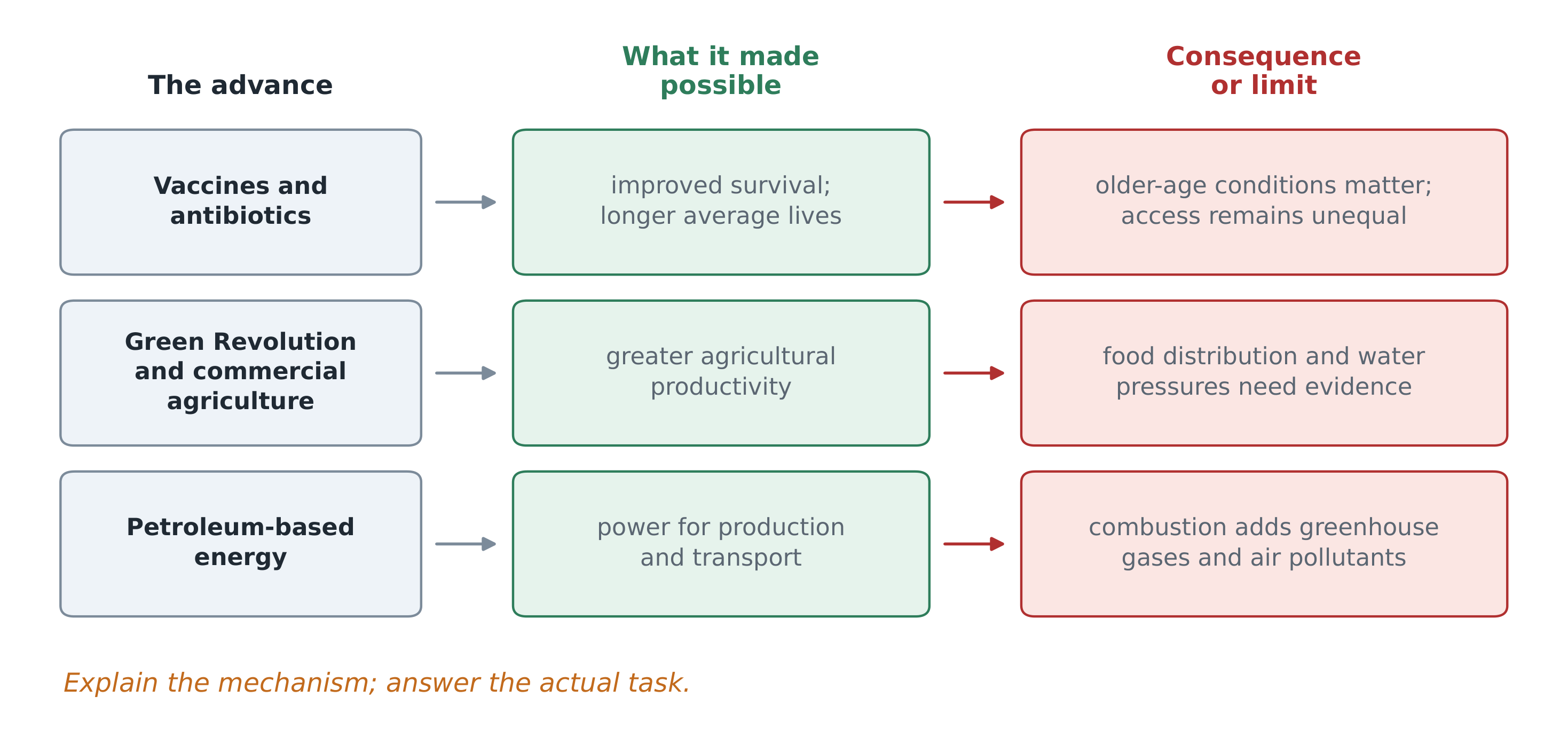
Trace an advance to its effects and limits; choose the chain that answers the task.
词汇 训练
English 中文 拼音
diseases linked to poverty/dɪˈziːzɪz lɪŋkt tə ˈpɒvəti/ 与贫困相关的疾病 yǔ pín kùn xiāng guān de jí bìng
epidemics/ˌepɪˈdemɪks/ 流行病 liú xíng bìng
pandemics/pænˈdemɪks/ 大流行 dà liú xíng
9.3

技术进步:1900年后关于环境的争论

教学大纲
9.3 技术进步:1900年以来的环境争论

主题重点(ENV): 人类与环境 —— 环境塑造人类社会,而随着人口的增长与变迁,这些人口反过来也重塑着其所处的环境。

第9单元学习目标C: 解释1900年至今环境变化的原因与影响。

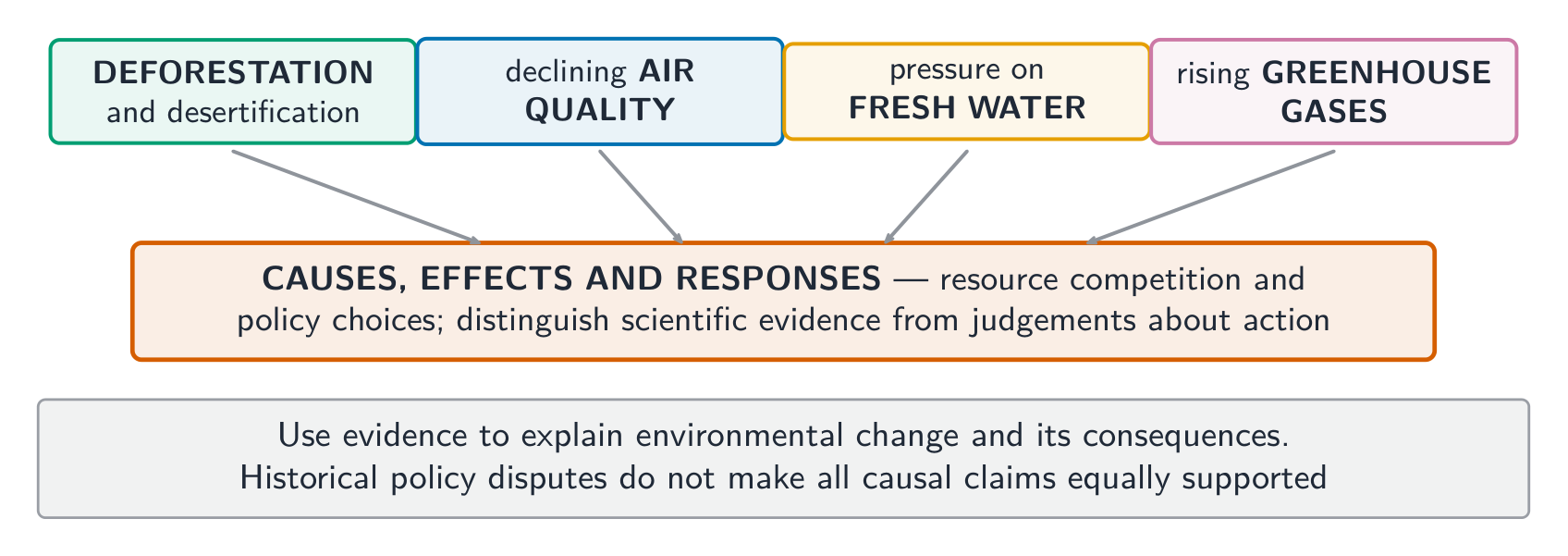
  • KC-6.1.II.A 随着人类活动导致森林砍伐、土地荒漠化、空气质量下降以及全球淡水资源消耗增加,人类对这些资源及其他资源的争夺比以往任何时候都更加激烈。
  • KC-6.1.II.B 温室气体和污染物排放到大气中,引发了关于气候变化本质及成因的争论。

来源:College Board AP 课程与考试说明

English

The world's population grew from about 1.6 billion in 1900 to 6.1 billion in 2000 and 8 billion in 2022. More people, more industry and more farming changed the environment.

  • Deforestation 森林砍伐 for farms and cattle, especially in the Amazon.
  • Desertification 荒漠化 in the Sahel, where land dried out after drought and overuse.
  • Air pollution and greenhouse gases 温室气体 from burning coal, oil and gas, which cause climate change 气候变化.
Environmental causes and effects inform arguments about responses.

States disagreed about who should act. Industrial countries had produced most of the past emissions, while developing countries wanted to grow. The Kyoto Protocol (1997) set targets only for industrial countries; in the Paris Agreement (2015) almost every state set its own targets. The IPCC's 2023 summary states that human activities have "unequivocally caused global warming".

探索

相互独立的原因、观察与政策判断

区分环境证据与责任判定;完成实际的历史任务。

词汇 训练
English 中文 拼音
deforestation/diːˌfɒrɪˈsteɪʃn/ 森林砍伐 sēn lín kǎn fá
desertification/dɪˌzɜːtɪfɪˈkeɪʃn/ 荒漠化 huāng mò huà
greenhouse gases/ˈɡriːnhaʊs ˈɡæsɪz/ 温室气体 wēn shì qì tǐ
climate change/ˈklaɪmət tʃeɪndʒ/ 气候变化 qì hòu biàn huà
9.4

全球化时代的经济

教学大纲
9.4 全球时代的经济学

主题重点(ECN): 经济体系 —— 随着社会的发展,它们影响并受其生产、交换和消费商品与服务方式的影响。

第9.D单元学习目标: 解释1900年至今全球经济中的延续与变革。

  • KC-6.3.I.D 在冷战结束加速的趋势下,许多政府在20世纪后期鼓励自由市场经济政策并推动经济自由化。
  • KC-6.3.I.E 20世纪后期,信息和通信技术革命导致一些地区知识型经济的增长,而工业生产与制造业则日益转移到亚洲和拉丁美洲。
  • KC-6.3.II.B 不断变化的经济制度、跨国公司和区域贸易协定反映了与自由市场经济相关的原则和实践在全球范围内的传播。

示例说明:

  • 政府加强对自由市场政策的鼓励:§ 罗纳德·里根治下的美国 § 玛格丽特·撒切尔治下的英国 § 邓小平治下的中国 § 奥古斯托·皮诺切特治下的智利 知识型经济:§ 芬兰 § 日本 § 美国 亚洲生产与制造业经济:§ 越南
    • 孟加拉国
  • 拉丁美洲生产与制造业经济:
    • 墨西哥
    • 洪都拉斯
  • 经济制度与区域贸易协定:
    • 世界贸易组织(WTO)
    • 北美自由贸易协定(NAFTA)
    • 东南亚国家联盟(ASEAN)
  • 跨国公司:
    • 雀巢
    • 日产
    • 马欣德拉和马欣德拉

来源:College Board AP 课程与考试说明

English

From the late 1970s many states moved away from state control of the economy towards free markets.

  • Free-market reforms: Margaret Thatcher in Britain (from 1979) and Ronald Reagan in the United States (from 1981) cut taxes, sold state businesses and reduced regulation.
  • China: from 1978 Deng Xiaoping opened China to foreign investment, starting with special economic zones 经济特区 such as Shenzhen (1980), while the Communist Party kept political control.
  • Trade agreements: NAFTA (1994) linked the economies of the United States, Canada and Mexico; the World Trade Organization was founded in 1995.
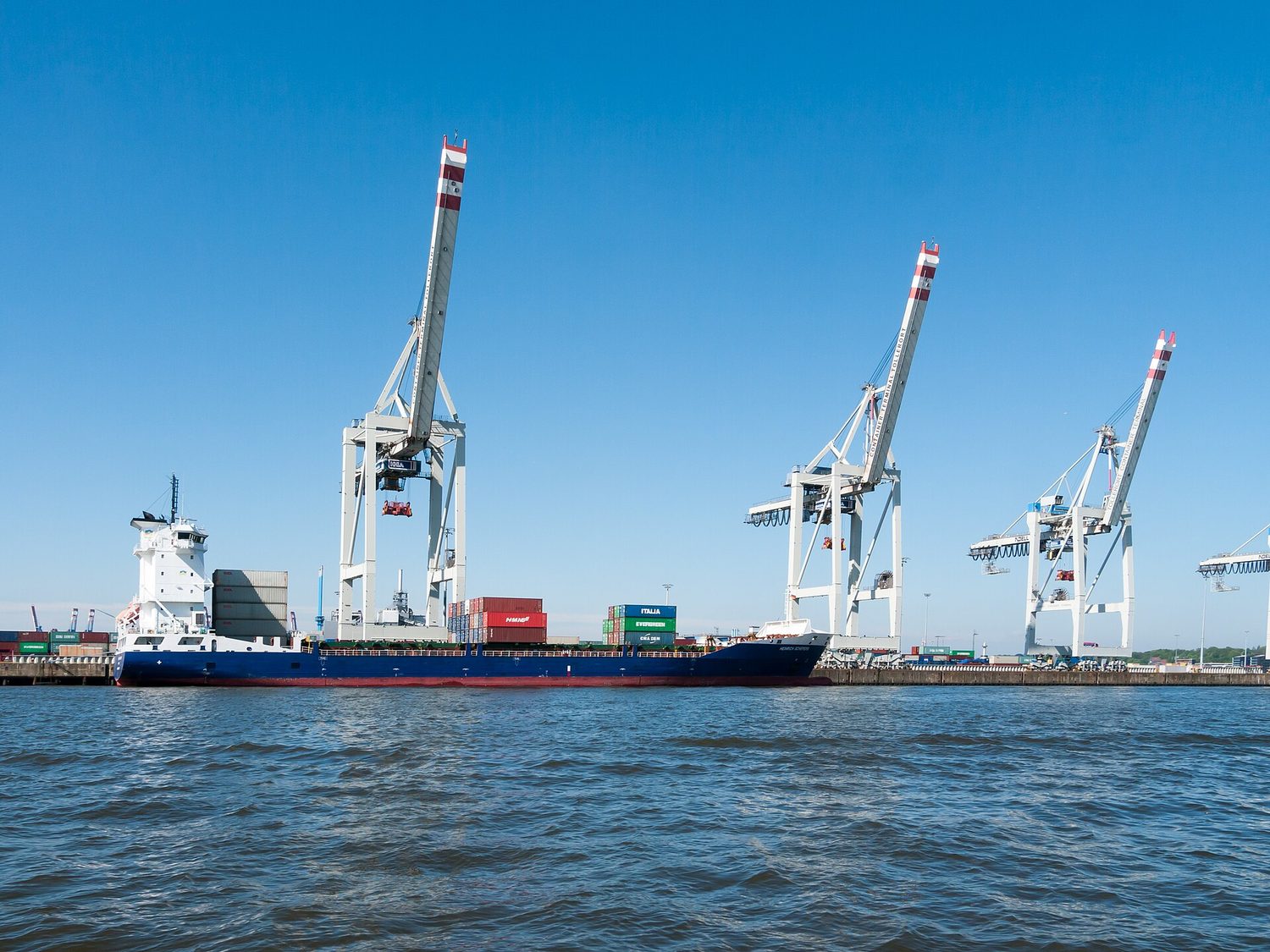
A container terminal - the physical form of the globalized economy

Multinational corporations 跨国公司 now made and sold goods in many countries at once. Global markets also spread crises: the financial crisis of 2008 began in the United States and became a worldwide recession.

词汇 训练
English 中文 拼音
special economic zones/ˈspeʃl ˌiːkəˈnɒmɪk zəʊnz/ 经济特区 jīng jì tè qū
multinational corporations/ˌmʌltɪˈnæʃənl ˌkɔːpəˈreɪʃnz/ 跨国公司 kuà guó gōng sī
9.5

1900年后的改革呼声与回应

教学大纲
9.5 1900年以后的改革呼吁与回应

主题焦点 (SIO):社会互动与组织——社会将其成员分组的方式,以及规范这些群体之间以及个体之间互动的准则,如何影响政治、经济和文化机构及组织。

第9单元学习目标 E: 解释社会类别、角色和实践如何在历史上被维持和受到挑战。

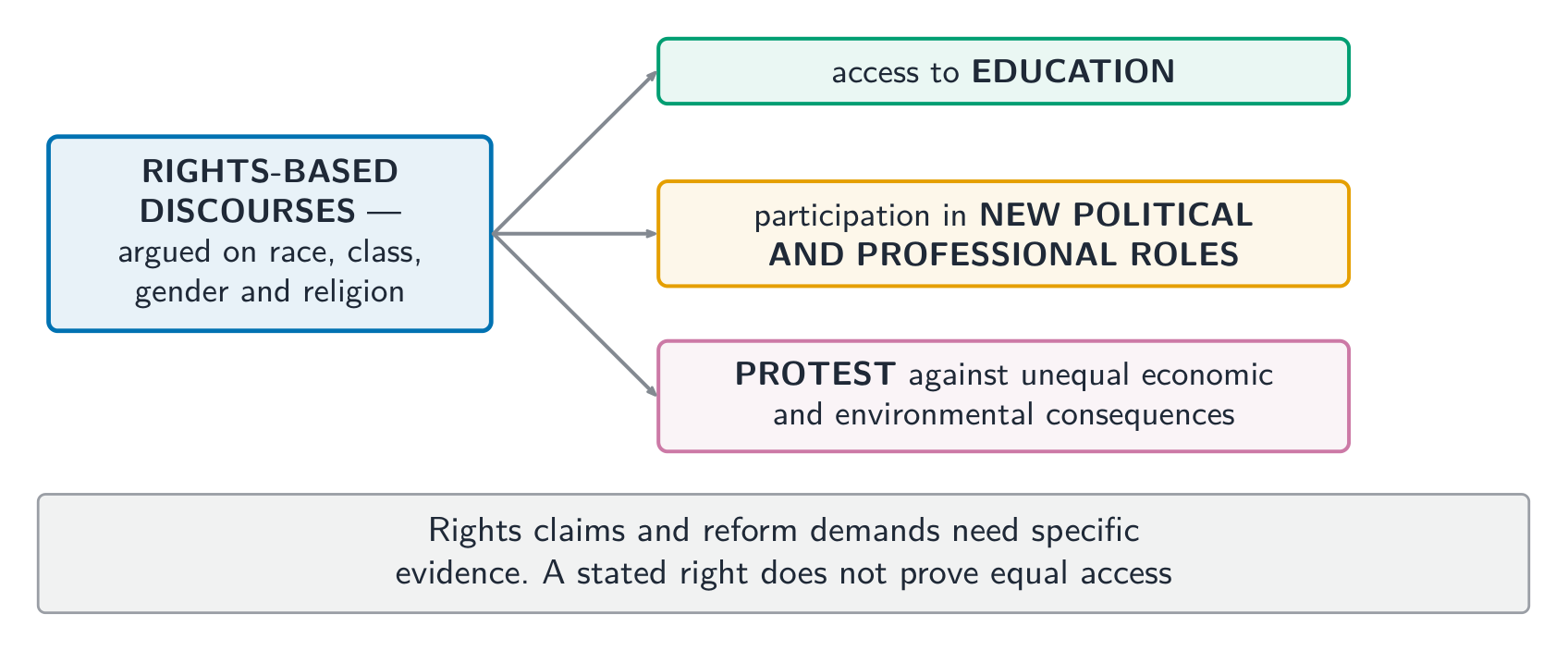
  • KC-6.3.III.i 基于权利的 discourse(话语)挑战了关于种族、阶级、性别和宗教的旧有假设。
  • KC-6.3.III.ii 在世界大部分地区,接受教育的机会以及在新的政治和专业角色中的参与,在种族、阶级、性别和宗教方面变得更加包容。
  • KC-6.3.II.C 世界各地的运动抗议全球一体化带来的环境和经济后果的不平等。

示例说明:

  • 对有关种族、阶级、性别和宗教的假设提出的挑战:
    • 《联合国世界人权宣言》,特别是其旨在保护儿童、妇女和难民权利的部分
    • 全球女权主义运动
    • 黑人性运动(Negritude movement)
    • 拉丁美洲的解放神学
  • 教育和政治、专业角色的准入增加:
    • 美国(1920年)、巴西(1932年)、土耳其(1934年)、日本(1945年)、印度(1947年)和摩洛哥(1963年)赋予女性的选举权和/或担任公职的权利
    • 女性识字率上升,以及大多数地区女性在高等教育中人数增加
    • 1965年美国《民权法案》
    • 种族隔离制度的终结
    • 印度的种姓保留制度
  • 环保运动:
    • 绿色和平组织(Greenpeace)
    • 王嘉尔·马塔伊(Wangari Maathai)教授在肯尼亚发起的“绿带运动”
  • 经济运动:
    • 世界公平贸易组织

来源:College Board AP 课程与考试说明

English

After 1945 people around the world demanded equal rights. The Universal Declaration of Human Rights 世界人权宣言 (1948) set out rights for every person; its Article 26 says that "everyone has the right to education".

  • Women's rights: women won the vote in most countries during the twentieth century, and feminism 女权主义 campaigned for equal pay and legal equality.
  • Caste: B. R. Ambedkar, born a Dalit, led the drafting of India's 1950 constitution, which outlawed "untouchability".
  • Race: the US civil rights movement and the end of apartheid in South Africa (1994).
  • Religion and reform: in Latin America, liberation theology 解放神学 called on the Catholic Church to stand with the poor.
Rights arguments and reform demands must be connected to specific evidence.

Responses differed: some states changed their laws, while others crushed protest.

词汇 训练
English 中文 拼音
Universal Declaration of Human Rights/ˌjuːnɪˈvɜːsl ˌdekləˈreɪʃn ɒv ˈhjuːmən raɪts/ 世界人权宣言 shì jiè rén quán xuān yán
feminism/ˈfemɪnɪzəm/ 女权主义 nǚ quán zhǔ yì
liberation theology/ˌlɪbəˈreɪʃn θɪˈɒlədʒi/ 解放神学 jiě fàng shén xué
9.6

1900年后的全球化文化

教学大纲
9.6 1900年后的全球化文化

主题聚焦(CDI):文化发展与互动 —— 思想、信仰和宗教的发展反映了社会中群体的自我认知,而社会及其信仰之间的互动往往具有政治、社会和文化影响。

第9单元学习目标F: 解释全球化如何以及为何随时间推移改变文化。

  • KC-6.3.IV.i 20世纪的政治和社会变革导致了艺术领域的变化;在20世纪下半叶,流行文化和消费文化变得更加全球化。
  • KC-6.3.IV.ii 艺术、娱乐和流行文化日益反映出一个全球化社会的影响。
  • KC-6.3.IV.iii 消费文化走向全球化并超越了国界。

示例:

  • 全球文化:
    • 音乐:雷鬼乐(Reggae)
    • 电影:宝莱坞(Bollywood)
    • 社交媒体:脸书(Facebook)、推特(Twitter)
    • 电视:英国广播公司(BBC)
    • 体育:世界杯足球赛、奥运会
  • 全球消费主义:
    • 在线商业:阿里巴巴、易贝(eBay)
    • 全球品牌:丰田(Toyota)、可口可乐(Coca-Cola)

来源:College Board AP 课程与考试说明

English

Popular culture spread across borders through film, music, television and the internet.

  • Indian Bollywood 宝莱坞 films are watched across Asia, Africa and the Middle East.
  • Jamaican reggae, through Bob Marley, and South Korean K-pop found fans around the world.
  • Sport became global: the Olympic Games and the FIFA World Cup are watched by billions.
  • Consumer culture 消费文化: the same brands and fast-food chains appeared in cities everywhere.

Culture flowed in more than one direction, but critics argued that American products dominated.

词汇 训练
English 中文 拼音
Bollywood/ˈbɒliwʊd/ 宝莱坞 bǎo lái wù
consumer culture/kənˈsuːmə ˈkʌltʃə/ 消费文化 xiāo fèi wén huà
9.7

1900年后对全球化的抵制

教学大纲
9.7 1900年以来的反全球化运动

主题重点 (CDI): 文化发展与互动 —— 思想、信仰和宗教的发展展示了社会中群体如何认识自身,而社会及其信仰之间的互动往往具有政治、社会和文化影响。

第9单元G学习目标: 解释从1900年至今对日益增长的全球化的各种反应。

  • KC-6.3.IV.iv 对文化及经济全球化上升的反应呈现出多种形式。

示例:

  • 对经济全球化的反应:
    • 反对国际货币基金组织(IMF)和世界银行的行动主义
    • 本土化社交媒体的兴起(如中国的微博)

来源:College Board AP 课程与考试说明

English

Some people resisted the effects of globalisation.

  • Protests against free trade: in 1999 tens of thousands of protesters gathered at the WTO meeting in Seattle.
  • The Zapatistas 萨帕塔民族解放军 rose in southern Mexico on 1 January 1994, the day NAFTA began, saying it would harm Indigenous farmers.
  • Environmental movements: Wangari Maathai's Green Belt Movement 绿带运动 (founded 1977) planted millions of trees in Kenya; she won the Nobel Peace Prize in 2004.
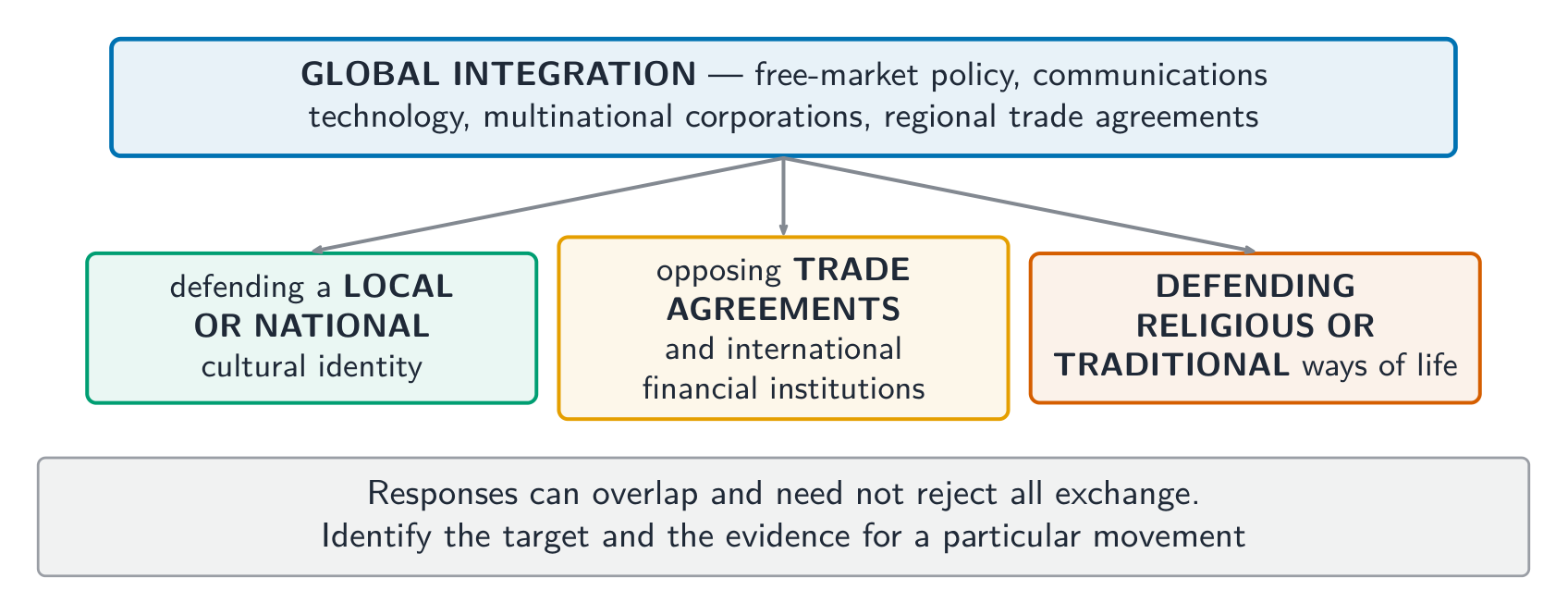
Different responses target different aspects of integration; they can overlap.
探索

根据每种拒绝所捍卫的对象进行分类

识别回应所针对的对象,不要假设所有国际联系都遭到反对。

词汇 训练
English 中文 拼音
Zapatistas/ˈzæpətɪstəz/ 萨帕塔民族解放军 sà pà tǎ mín zú jiě fàng jūn
Green Belt Movement/ɡriːn belt ˈmuːvmənt/ 绿带运动 lǜ dài yùn dòng
9.8

全球化世界中发展起来的机构

教学大纲
9.8 全球化世界中发展的机构

主题重点(GOV): 治理 —— 多种内部和外部因素共同促成了国家的形成、扩张与衰落。政府通过一系列行政机构、政策和程序来维持秩序;各国获取、保留和行使权力的方式及目的各不相同。

第9单元H学习目标: 解释全球化如何改变国家之间的国际互动及其原因。

  • KC-6.3.II.A 新的国际组织,包括联合国,应运而生,其公开宗旨是维护世界和平并促进国际合作。

来源:College Board AP 课程与考试说明

English

New institutions tried to manage a connected world.

  • The United Nations 联合国 (1945) was founded to keep peace and promote cooperation; Article 1 of its Charter sets out these purposes.
  • The World Bank and the IMF 国际货币基金组织 (planned at Bretton Woods, 1944) lend money to states for development and in crises.
  • Regional groups: the European Union (1993), ASEAN (1967) and the African Union (2002).
  • Non-governmental organisations 非政府组织 (NGOs), such as Doctors Without Borders (1971), work across borders without being run by states.
词汇 训练
English 中文 拼音
United Nations/juːˈnaɪtɪd ˈneɪʃnz/ 联合国 lián hé guó
IMF/ˌaɪ em ˈef/ 国际货币基金组织 guó jì huò bì jī jīn zǔ zhī
non-governmental organisations/nɒn ˌɡʌvənˈmentl ˌɔːɡənaɪˈzeɪʃnz/ 非政府组织 fēi zhèng fǔ zǔ zhī
9.9

全球化世界中的延续与变化

教学大纲
9.9 全球化世界中的连续性与变迁

第9单元.I 学习目标: 解释1900年至今科学与技术带来变革的程度。

  • KC-6.1 科学和技术的快速进步改变了人们对宇宙和自然世界的理解,并推动了通信、交通、工业、农业和医学的进步。
    • KC-6.1.I.A 新的通信方式——包括无线电通信、移动通信和互联网——以及交通运输,如航空旅行和集装箱运输,缩小了地理距离带来的障碍。
    • KC-6.1.I.D 能源技术,包括石油和核能的利用,提高了生产力并增加了物质产品的生产。
    • KC-6.1.III.B 更有效的避孕手段使女性对生育有了更大的控制权,改变了生殖实践,并促成了世界上大部分地区生育率的下降。
    • KC-6.1.I.B 绿色革命和商业农业提高了生产力,支撑着地球日益增长的人口;化学和基因改良农业形式的传播也起到了推动作用。
    • KC-6.1.I.C 医学创新,包括疫苗和抗生素,增强了人类的生存能力并延长了寿命。
  • KC-6.3.I 各国以多种方式应对20世纪的经济挑战。
  • KC-6.3.III.i 基于权利的话语挑战了关于种族、阶级、性别和宗教的旧有假设。
  • KC-6.3.III.ii 在世界上许多地区,受教育权以及参与新的政治和专业角色变得更加包容,涵盖了种族、阶级、性别和宗教等方面。
  • KC-6.3.IV.i 20世纪的政治和社会变革导致了艺术领域的变化;而在该世纪后半叶,大众文化和消费文化变得更加全球化。
  • KC-6.3.IV.ii 艺术、娱乐和大众文化越来越多地反映了全球化社会的影响。
  • KC-6.3.IV.iii 消费文化变得全球化并超越了国界。

来源:College Board AP 课程与考试说明

English

Topic 9.9 asks how far globalisation changed the world after 1900.

  • Change: communication became almost instant, trade grew enormously, and global institutions grew.
  • Continuity: states still made most decisions; inequality between rich and poor countries continued; diseases of poverty remained.
An extent argument in four steps: a baseline where distance was a barrier, the change brought by radio, mobile phones, the internet, air travel and containers, the continuity of access, borders and inequality, and the judgement that distance was managed but location still mattered
Baseline, change, continuity, then a judgement of extent.
9.9

范例:简答题

English

Each part needs one or two sentences: answer the question, cite one specific piece of evidence, and explain how it supports the answer.

(a) Briefly describe ONE technological advance that increased global exchange after 1900.

(b) Briefly describe ONE disease that continued to affect large populations after 1900.

(c) Briefly explain ONE way people resisted economic globalisation.

Model answer.

  • (a) The internet, opened to the public through the World Wide Web in 1991, let people send information around the world almost instantly.
  • (b) Malaria continued to kill large numbers of people in poorer tropical regions, where mosquito control and health care were limited.
  • (c) The Zapatistas rose in Mexico on the day NAFTA began in 1994, because they believed free trade would ruin Indigenous farmers.
9.9

例题:关于程度的论证

English

Evaluate the extent to which globalisation reduced the importance of nation-states after 1945.

Step 1: the baseline. In 1945 states controlled their borders, currencies and trade policies almost completely.

Step 2: the change. States gave up some control: members of the WTO accepted its trade rules, and members of the European Union share laws and, for many, one currency. Multinational corporations and NGOs act across borders.

Step 3: the continuity. States still make the decisions that matter most: they make war, control migration and choose whether to join or leave institutions. Britain voted to leave the European Union in 2016.

Step 4: the judgement. Globalisation reduced the importance of states to a limited extent: they share some economic power with institutions and corporations, but they keep the final say over security and borders.

9.9

常见错误

English
  • Listing technology without explaining how it increased exchange.
  • Saying modern medicine ended disease: diseases of poverty and new epidemics remained.
  • Writing about climate change with no data, place or date.
  • Treating globalisation as only economic: it also changed culture, rights and institutions.
  • Forgetting resistance: people opposed free trade and cultural change.
  • In an extent essay, giving only one side.
9.9

关键术语

English

globalisation: The growing connection of the world's economies, cultures and peoples.

Green Revolution: New crop varieties and farming methods that raised food production from the 1960s.

pandemic: An outbreak of disease that spreads across many countries.

deforestation: The large-scale clearing of forests.

free market: An economy where prices and production are set mainly by private buyers and sellers.

multinational corporation: A company that operates in many countries.

NGO: A non-governmental organisation that works across borders without being run by a state.

liberation theology: A Catholic movement in Latin America that put the needs of the poor at the centre.

9.9

自我检测

English
  • Give one success and one limit of medicine after 1900.
  • Name two free-market reformers and the year their reforms began.
  • Give one global institution and say what it does.

Answers: Success: smallpox eradication (1980) or the polio vaccine (1955); limit: malaria, HIV/AIDS or COVID-19. Thatcher (1979) and Reagan (1981), or Deng Xiaoping (1978). For example, the United Nations keeps peace and promotes cooperation; the IMF lends to states in crisis; the WTO sets trade rules.

9.9

本课资料

English

College Board, AP World History: Modern Course and Exam Description, Unit 9, topics 9.1–9.9 (syllabi/ap/ap_world_history_CED.pdf). The practice questions are written for this course, not taken from past papers.

这有帮助吗?

该知识点的互动课程

逐步完成,配合即时检查练习。

历年真题

更多 AP 世界历史 知识点

登录或创建账户

IGCSE, A-Level & AP