跳到主要内容

全球织锦

AP 世界历史 · 第 1 主题

训练
讲义 词汇表
1.1

约1200年至约1450年东亚的发展

大纲

1.1 Developments in East Asia from c. 1200 to c. 1450

Thematic FocusLearning ObjectiveHistorical Developments

CDI
Cultural Developments and Interactions — The development of ideas, beliefs, and religions illustrates how groups in society view themselves, and the interactions of societies and their beliefs often have political, social, and cultural implications.

Unit 1.A
Explain the systems of government employed by Chinese dynasties and how they developed over time.

  • KC-3.2.I.A Empires and states in Afro-Eurasia and the Americas demonstrated continuity, innovation, and diversity in the 13th century. This included the Song Dynasty of China, which utilized traditional methods of Confucianism and an imperial bureaucracy to maintain and justify its rule.

Unit 1.B
Explain the effects of Chinese cultural traditions on East Asia over time. THEMATIC FOCUS Economics Systems ECN As societies develop, they affect and are affected by the ways that they produce, exchange, and consume goods and services. LEARNING OBJECTIVE

  • KC-3.1.III.D.i Chinese cultural traditions continued, and they influenced neighboring regions.
  • KC-3.1.III.D.ii Buddhism and its core beliefs continued to shape societies in Asia and included a variety of branches, schools, and practices. HISTORICAL DEVELOPMENTS

Unit 1.C
Explain the effects of innovation on the Chinese economy over time.

  • KC-3.3.III.A.i The economy of Song China became increasingly commercialized while continuing to depend on free peasant and artisanal labor.
  • KC-3.1.I.D The economy of Song China flourished as a result of increased productive capacity, expanding trade networks, and innovations in agriculture and manufacturing.

Illustrative examples:

  • Cultural traditions:
    • Filial piety in East Asia
    • Influence of Neo-Confucianism and Buddhism in East Asia
    • Confucian traditions of both respect for and expected deference from women
    • Chinese literary and scholarly traditions and their spread to Heian Japan and Korea
  • Branches of Buddhism:
    • Theravada
    • Mahayana
    • Tibetan
  • Technological innovations:
    • Champa rice
    • Transportation innovations, like the Grand Canal expansion
    • Steel and iron production
    • Textiles and porcelains for export

来源:美国大学理事会 AP 课程与考试说明

第一单元概览约 1200 至 1450 年世界主要区域的状况,时间点正好在第二单元那些大型联通网络形成之前。它的目的在于比较:学完之后,你应当能说清其中任意两个社会如何治理、靠什么维系,以及以何为生。

有三个问题适用于所有区域,而为每个区域回答这三个问题,就是这一单元的全部内容:

  • **国家如何组织?**谁在统治,通过哪些官员,经费从何而来?
  • **哪种信仰体系塑造社会?**在这里的每一个区域,宗教都提供法律、教育与统治合法性。
  • **经济基础是什么?**几乎处处以农业为主,但劳动制度与贸易水平差异极大。
1.1

约1200年至约1450年东亚的发展

大纲

1.1 Developments in East Asia from c. 1200 to c. 1450

Thematic FocusLearning ObjectiveHistorical Developments

CDI
Cultural Developments and Interactions — The development of ideas, beliefs, and religions illustrates how groups in society view themselves, and the interactions of societies and their beliefs often have political, social, and cultural implications.

Unit 1.A
Explain the systems of government employed by Chinese dynasties and how they developed over time.

  • KC-3.2.I.A Empires and states in Afro-Eurasia and the Americas demonstrated continuity, innovation, and diversity in the 13th century. This included the Song Dynasty of China, which utilized traditional methods of Confucianism and an imperial bureaucracy to maintain and justify its rule.

Unit 1.B
Explain the effects of Chinese cultural traditions on East Asia over time. THEMATIC FOCUS Economics Systems ECN As societies develop, they affect and are affected by the ways that they produce, exchange, and consume goods and services. LEARNING OBJECTIVE

  • KC-3.1.III.D.i Chinese cultural traditions continued, and they influenced neighboring regions.
  • KC-3.1.III.D.ii Buddhism and its core beliefs continued to shape societies in Asia and included a variety of branches, schools, and practices. HISTORICAL DEVELOPMENTS

Unit 1.C
Explain the effects of innovation on the Chinese economy over time.

  • KC-3.3.III.A.i The economy of Song China became increasingly commercialized while continuing to depend on free peasant and artisanal labor.
  • KC-3.1.I.D The economy of Song China flourished as a result of increased productive capacity, expanding trade networks, and innovations in agriculture and manufacturing.

Illustrative examples:

  • Cultural traditions:
    • Filial piety in East Asia
    • Influence of Neo-Confucianism and Buddhism in East Asia
    • Confucian traditions of both respect for and expected deference from women
    • Chinese literary and scholarly traditions and their spread to Heian Japan and Korea
  • Branches of Buddhism:
    • Theravada
    • Mahayana
    • Tibetan
  • Technological innovations:
    • Champa rice
    • Transportation innovations, like the Grand Canal expansion
    • Steel and iron production
    • Textiles and porcelains for export

来源:美国大学理事会 AP 课程与考试说明

宋朝中国(Song China)是本单元的基准型国家。其经济日益商业化(commercialized),同时仍以农业为主(agrarian),支撑它的是不断提高的生产能力——占城稻(Champa rice)、钢铁生产,以及扩建大运河(Grand Canal)等交通改善。

政府依托由科举制度(civil service examination)选任官员的官僚体系(bureaucracy)运作,以才取士,使国家具有异乎寻常的行政深度。

中国的文化传统得以延续,并影响邻近区域——朝鲜、日本与越南吸收了文字、官僚体制与信仰体系。新儒学(Neo-Confucianism)塑造社会,其中包括孝道(filial piety)以及对女性顺从的期待。佛教(Buddhism)继续塑造亚洲社会并进一步传播,其形态包括上座部佛教(Theravada)、大乘佛教(Mahayana)与藏传佛教(Tibetan)。

词汇表 训练
英文 中文 拼音
Song China 宋朝中国 sòng cháo zhōng guó
commercialized 商业化 shāng yè huà
agrarian 农业为主 nóng yè wéi zhǔ
Champa rice 占城稻 zhàn chéng dào
Grand Canal 大运河 dà yùn hé
bureaucracy 官僚体系 guān liáo tǐ xì
civil service examination 科举制度 kē jǔ zhì dù
Neo-Confucianism 新儒学 xīn rú xué
filial piety 孝道 xiào dào
Buddhism 佛教 fó jiào
Theravada 上座部佛教 shàng zuò bù fó jiào
Mahayana 大乘佛教 dà chéng fó jiào
Tibetan 藏传佛教 cáng chuán fó jiào
1.2

约1200年至约1450年伊斯兰世界的发展

大纲

1.2 Developments in Dar al-Islam from c. 1200 to c. 1450

Thematic FocusLearning ObjectiveHistorical Developments

CDI
Cultural Developments and Interactions — The development of ideas, beliefs, and religions illustrates how groups in society view themselves, and the interactions of societies and their beliefs often have political, social, and cultural implications.

Unit 1.D
Explain how systems of belief and their practices affected society in the period from c. 1200 to c. 1450. THEMATIC FOCUS Governance GOV A variety of internal and external factors contribute to state formation, expansion, and decline. Governments maintain order through a variety of administrative institutions, policies, and procedures, and governments obtain, retain, and exercise power in different ways and for different purposes. LEARNING OBJECTIVE

  • KC-3.1.III.D.iii Islam, Judaism, Christianity, and the core beliefs and practices of these religions continued to shape societies in Africa and Asia. HISTORICAL DEVELOPMENTS

Unit 1.E
Explain the causes and effects of the rise of Islamic states over time.

  • KC-3.2.I As the Abbasid Caliphate fragmented, new Islamic political entities emerged, most of which were dominated by Turkic peoples. These states demonstrated continuity, innovation, and diversity.
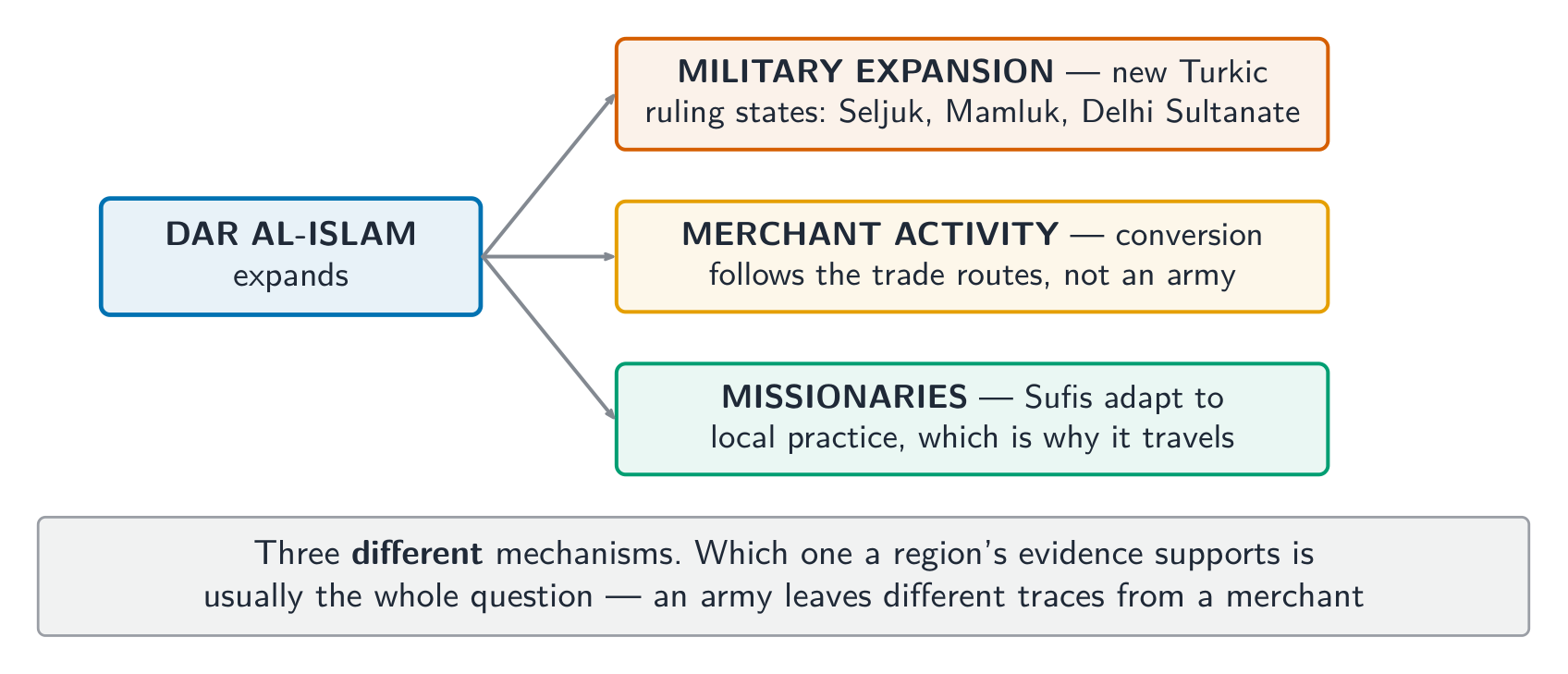
  • KC-3.1.III.A Muslim rule continued to expand to many parts of Afro-Eurasia due to military expansion, and Islam subsequently expanded through the activities of merchants, missionaries, and Sufis. HISTORICAL DEVELOPMENTS

Unit 1.F
Explain the effects of intellectual innovation in Dar al-Islam.

  • KC-3.2.II.A.i Muslim states and empires encouraged significant intellectual innovations and transfers.

Illustrative examples:

  • New Islamic political entities:
    • Seljuk Empire
    • Mamluk sultanate of Egypt
    • Delhi sultanates (CONT’D) Innovations:
    • Advances in mathematics (Nasir al-Din al-Tusi)
    • Advances in literature ('A'ishah al-Ba'uniyyah)
    • Advances in medicine Transfers:
    • Preservation and commentaries on Greek moral and natural philosophy
    • House of Wisdom in Abbasid Bagdad
    • Scholarly and cultural transfers in Muslim and Christian Spain

来源:美国大学理事会 AP 课程与考试说明

随着阿拔斯哈里发国(Abbasid Caliphate)分裂,新的伊斯兰政治实体出现,其中多数源出突厥人(Turkic)——包括塞尔柱帝国(Seljuk Empire)、埃及马穆鲁克苏丹国(Mamluk sultanate of Egypt)与德里苏丹国(Delhi Sultanate)。

穆斯林统治继续在欧亚非扩展,途径包括军事扩张商人活动(merchant activity),以及传教士(missionaries)尤其是苏非派(Sufis)的工作——他们灵活的修行方式助推了伊斯兰教的传播。

穆斯林国家鼓励重要的智识创新与传播(intellectual innovations and transfers):数学、医学与天文学的进展,以及对希腊学问的保存与拓展,后者其后传入欧洲。

词汇表 训练
英文 中文 拼音
Abbasid Caliphate 阿拔斯哈里发国 ā bá sī hā lǐ fā guó
Turkic 突厥人 tū jué rén
Seljuk Empire 塞尔柱帝国 sāi ěr zhù dì guó
Mamluk sultanate of Egypt 埃及马穆鲁克苏丹国 āi jí mǎ mù lǔ kè sū dān guó
Delhi Sultanate 德里苏丹国 dé lǐ sū dān guó
merchant activity 商人活动 shāng rén huó dòng
missionaries 传教士 chuán jiào shì
Sufis 苏非派 sū fēi pài
intellectual innovations and transfers 智识创新与传播 zhì shí chuàng xīn yǔ chuán bō
1.3

约1200年至约1450年南亚与东南亚的发展

大纲

1.3 Developments in South and Southeast Asia from c. 1200 to c. 1450

Thematic FocusLearning ObjectiveHistorical Developments

CDI
Cultural Developments and Interactions — The development of ideas, beliefs, and religions illustrates how groups in society view themselves, and the interactions of societies and their beliefs often have political, social, and cultural implications.

Unit 1.G
Explain how the various belief systems and practices of South and Southeast Asia affected society over time. THEMATIC FOCUS Governance GOV A variety of internal and external factors contribute to state formation, expansion, and decline. Governments maintain order through a variety of administrative institutions, policies, and procedures, and governments obtain, retain, and exercise power in different ways and for different purposes. LEARNING OBJECTIVE

  • KC-3.1.III.D.iv Hinduism, Islam, and Buddhism, and their core beliefs and practices, continued to shape societies in South and Southeast Asia. HISTORICAL DEVELOPMENTS

Unit 1.H
Explain how and why various states of South and Southeast Asia developed and maintained power over time.

  • KC-3.2.I.B.i State formation and development demonstrated continuity, innovation, and diversity, including the new Hindu and Buddhist states that emerged in South and Southeast Asia.

Illustrative examples:

  • Beliefs and practices:
    • Bhakti movement
    • Sufism
    • Buddhist monasticism
  • Hindu/Buddhist states:
    • Vijayanagara Empire
    • Srivijaya Empire
    • Rajput kingdoms
    • Khmer Empire
    • Majapahit
    • Sukhothai kingdom
    • Sinhala dynasties

来源:美国大学理事会 AP 课程与考试说明

印度教(Hinduism)、伊斯兰教佛教继续塑造该区域,而它们的相遇催生了新的虔信形式——印度教中的巴克提运动(bhakti movement)与伊斯兰教中的苏非主义(Sufism),两者都强调个人的直接虔敬。

国家形成体现了本单元"延续与多样"的主题:德里苏丹国统治北部大片地区,南部兴起维查耶纳伽尔(Vijayanagara),而在东南亚,以海洋为依托的满者伯夷(Majapahit)与以陆地为依托的高棉帝国(Khmer Empire)以不同方式组织权力。

词汇表 训练
英文 中文 拼音
Hinduism 印度教 yìn dù jiào
bhakti movement 巴克提运动 bā kè tí yùn dòng
Vijayanagara 维查耶纳伽尔 wéi chá yé nà gā ěr
Majapahit 满者伯夷 mǎn zhě bó yí
Khmer Empire 高棉帝国 gāo mián dì guó
1.4 1.5

美洲的国家建构

大纲

1.4 State Building in the Americas

Thematic FocusLearning ObjectiveHistorical Developments

GOV
Governance — A variety of internal and external factors contribute to state formation, expansion, and decline. Governments maintain order through a variety of administrative institutions, policies, and procedures, and governments obtain, retain, and exercise power in different ways and for different purposes.

Unit 1.I
Explain how and why states in the Americas developed and changed over time.

  • KC-3.2.I.D.i In the Americas, as in Afro-Eurasia, state systems demonstrated continuity, innovation, and diversity, and expanded in scope and reach.

Illustrative examples:

  • State systems in the Americas:
    • Maya city-states
    • Mexica
    • Inca
    • Chaco
    • Mesa Verde
    • Cahokia

1.5 State Building in Africa

Thematic FocusLearning ObjectiveHistorical Developments

GOV
Governance — A variety of internal and external factors contribute to state formation, expansion, and decline. Governments maintain order through a variety of administrative institutions, policies, and procedures, and governments obtain, retain, and exercise power in different ways and for different purposes.

Unit 1.J
Explain how and why states in Africa developed and changed over time.

  • KC-3.2.I.D.ii In Africa, as in Eurasia and the Americas, state systems demonstrated continuity, innovation, and diversity and expanded in scope and reach.

Illustrative examples:

  • State systems in Africa:
    • Great Zimbabwe
    • Ethiopia
    • Hausa kingdoms

来源:美国大学理事会 AP 课程与考试说明

用同样三个问题考察六个区域——这正是本单元所要支撑的比较
一套框架,六个区域:国家、信仰体系与经济基础,正是比较类题目真正要问的东西

美洲,各国家体系体现出延续、创新与多样:玛雅(Maya)城邦、以纳贡扩张的墨西加人(Mexica,阿兹特克),以及拥有中央集权行政、劳役义务与道路系统的印加(Inca)。

非洲,各国家体系同样各异:大津巴布韦(Great Zimbabwe)依托黄金与牲畜兴起,埃塞俄比亚(Ethiopia)是历史悠久的基督教王国,而豪萨城邦(Hausa Kingdoms)则位于跨撒哈拉贸易路线之上。

词汇表 训练
英文 中文 拼音
Maya 玛雅 mǎ yǎ
Mexica 墨西加人 mò xī jiā rén
Inca 印加 yìn jiā
Great Zimbabwe 大津巴布韦 dà jīn bā bù wéi
Ethiopia 埃塞俄比亚 āi sāi é bǐ yà
Hausa Kingdoms 豪萨城邦 háo sà chéng bāng
1.6

约1200年至约1450年欧洲的发展

大纲

1.6 Developments in Europe from c. 1200 to c. 1450

Thematic FocusLearning ObjectiveHistorical Developments

SIO
Social Interactions and Organization — The process by which societies group their members and the norms that govern the interactions between these groups and between individuals influence political, economic, and cultural institutions and organization.

Unit 1.K
Explain how the beliefs and practices of the predominant religions in Europe affected European society. THEMATIC FOCUS Governance GOV A variety of internal and external factors contribute to state formation, expansion, and decline. Governments maintain order through a variety of administrative institutions, policies, and procedures, and governments obtain, retain, and exercise power in different ways and for different purposes. LEARNING OBJECTIVE

  • KC-3.1.III.D.v Christianity, Judaism, Islam, and the core beliefs and practices of these religions continued to shape societies in Europe. HISTORICAL DEVELOPMENTS

Unit 1.L
Explain the causes and consequences of political decentralization in Europe from c. 1200 to c. 1450.

  • KC-3.2.I.B.ii Europe was politically fragmented and characterized by decentralized monarchies, feudalism, and the manorial system.

Unit 1.M
Explain the effects of agriculture on social organization in Europe from c. 1200 to c. 1450.

  • KC-3.3.III.C Europe was largely an agricultural society dependent on free and coerced labor, including serfdom.

来源:美国大学理事会 AP 课程与考试说明

欧洲政治上分裂(politically fragmented),以分权的君主国与封建制度(feudalism)为特征——即以服役换取土地的制度。君主逐步集权,但其行政能力远不及宋朝中国。

基督教(Christianity)、犹太教(Judaism)与伊斯兰教都塑造着欧洲社会,而教会提供法律、学问与统治合法性。

欧洲以农业为主,依赖自由与强制劳动(free and coerced labour),其中包括农奴制(serfdom)。

词汇表 训练
英文 中文 拼音
politically fragmented 政治上分裂 zhèng zhì shàng fēn liè
feudalism 封建制度 fēng jiàn zhì dù
Christianity 基督教 jī dū jiào
Judaism 犹太教 yóu tài jiào
free and coerced labour 自由与强制劳动 zì yóu yǔ qiáng zhì láo dòng
serfdom 农奴制 nóng nú zhì
1.7

约1200年至约1450年时期的比较分析

大纲

1.7 Comparison in the Period from c. 1200 to c. 1450

Learning ObjectiveReview: Unit 1 Key Concepts

Unit 1.N
Explain the similarities and differences in the processes of state formation from c. 1200 to c. 1450.

  • KC-3.2 State formation and development demonstrated continuity, innovation, and diversity in various regions.
    • KC-3.2.I As the Abbasid Caliphate fragmented, new Islamic political entities emerged, most of which were dominated by Turkic peoples. These states demonstrated continuity, innovation, and diversity.
    • KC-3.2.I.A Empires and states in Afro-Eurasia and the Americas demonstrated continuity, innovation, and diversity in the 13th century. This included the Song Dynasty of China, which utilized traditional methods of Confucianism and an imperial bureaucracy to maintain and justify its rule.
    • KC-3.2.I.B.i State formation and development demonstrated continuity, innovation, and diversity, including the new Hindu and Buddhist states that emerged in South and Southeast Asia.
    • KC-3.2.I.D.i In the Americas, as in Afro-Eurasia, state systems demonstrated continuity, innovation, and diversity, and expanded in scope and reach.
    • KC-3.2.I.D.ii In Africa, as in Eurasia and the Americas, state systems demonstrated continuity, innovation, and diversity, and expanded in scope and reach.

来源:美国大学理事会 AP 课程与考试说明

本单元考查的推理能力是比较(comparison)。真正有效的比较是结构性的,而不是评价性的:

  • 中央集权行政(宋朝中国、印加)对比分裂或分权统治(欧洲、阿拔斯之后的伊斯兰各国)。
  • 考试选官对比以出身选官。
  • 纳贡支撑的国家(墨西加)对比以赋税支撑的国家(宋朝中国)。

Worked example(一道真实的 AP 考题)。AP 世界历史的简答题常要求学生「指出一处相似之处」「解释一处不同之处」,对象是同一时期的两个区域。本单元的满分答案会点出某一特征并同时套用于两者:「宋朝中国与印加帝国都依靠中央集权的官僚体系治理广阔疆域,但宋朝通过竞争性的科举选任官员,而印加则依靠世袭精英与劳役义务来充实行政。」*注意其结构:比较必须是一个特征、两个社会*。分别描述两个社会、让读者自己去推出比较,是拿不到分的。

词汇表 训练
英文 中文 拼音
comparison 比较 bǐ jiào
1.7

考试技巧

  • 用同样三个问题——国家、信仰体系、经济——去学每个区域,这样任何比较题都已经有了结构。
  • 宋朝中国是基准:科举制官僚体系、商业化农业,以及对邻邦的文化影响。
  • 关于伊斯兰世界,要记住模式是分裂为新国家加上通过贸易与苏非传教士持续扩张
  • 谈美洲与非洲要给出具体国家名称。墨西加的纳贡印加的劳役义务马里大津巴布韦的黄金都是可靠的例证。
  • 欧洲的标志性特征是分裂封建制度强制性农业劳动
  • 写比较时要一个特征贯穿两个社会,绝不要写成两段各自独立的描述。

本主题的互动课程

逐步学习,并即时检测练习。

AP 世界历史的更多主题

登录或创建账号

IGCSE, A-Level & AP