跳到主要内容

陆基帝国

AP 世界历史 · 第 3 主题

训练
讲义 词汇表
3.1

帝国的扩张

大纲

3.1 Empires Expand

Thematic FocusLearning ObjectiveHistorical Developments

GOV
Governance — A variety of internal and external factors contribute to state formation, expansion, and decline. Governments maintain order through a variety of administrative institutions, policies, and procedures, and governments obtain, retain, and exercise power in different ways and for different purposes.

Unit 3.A
Explain how and why various land-based empires developed and expanded from 1450 to 1750.

  • KC-4.3.II Imperial expansion relied on the increased use of gunpowder, cannons, and armed trade to establish large empires in both hemispheres.
  • KC-4.3.II.B Land empires included the Manchu in Central and East Asia; the Mughal in South and Central Asia; the Ottoman in Southern Europe, the Middle East, and North Africa; and the Safavids in the Middle East.
  • KC-4.3.III.i Political and religious disputes led to rivalries and conflict between states.

Illustrative examples:

  • State rivalries:
    • Safavid–Mughal conflict
    • Songhai Empire’s conflict with Morocco

来源:美国大学理事会 AP 课程与考试说明

第三单元讲述约 1450 至 1750 年陆基帝国(land-based empires)。四个问题贯穿全篇:它们如何扩张、如何治理、靠什么维持财政,以及如何运用宗教。

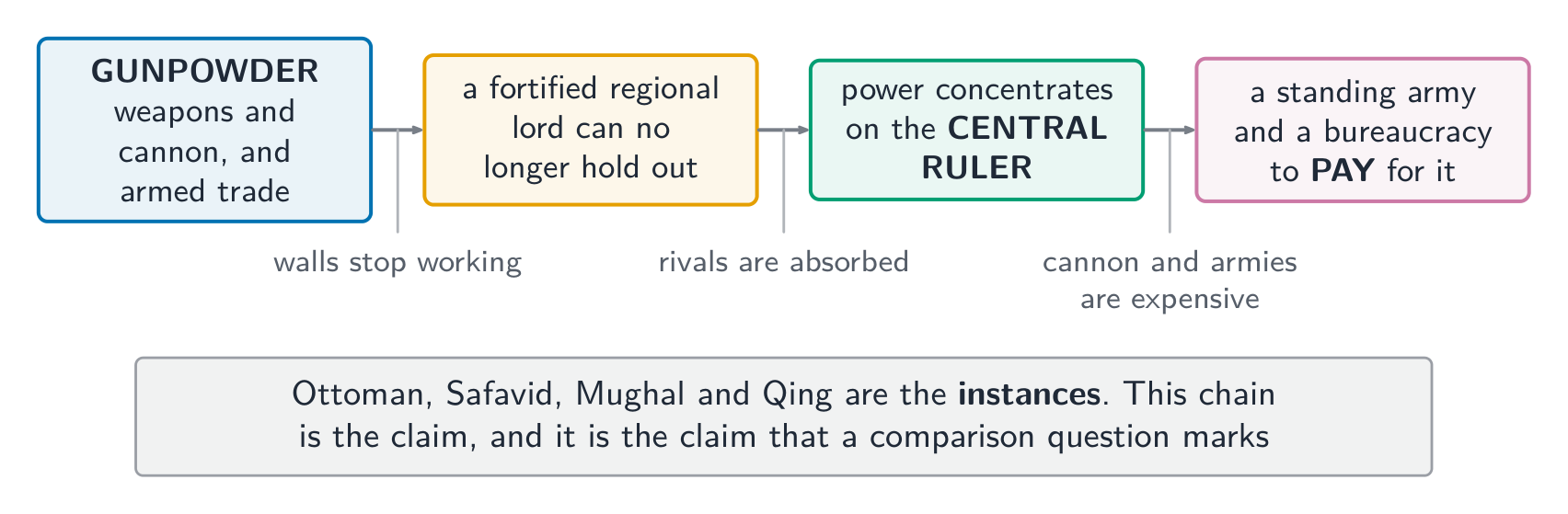
扩张依赖火药、火炮与武装贸易(gunpowder, cannons, and armed trade)的日益使用——因此它们常被称为火药帝国(gunpowder empires)。掌握火药武器使中央统治者得以压制地方对手与筑垒贵族,于是军事技术与政治集权同步推进。

需要掌握的帝国有:

  • 中亚与东亚的满清(Manchu/Qing)。
  • 南亚的莫卧儿(Mughal)。
  • 东地中海及其以外的奥斯曼(Ottoman)。
  • 波斯的萨法维(Safavid)。
词汇表 训练
英文 中文 拼音
land-based empires 陆基帝国 lù jī dì guó
increased use of gunpowder, cannons, and armed trade 火药、火炮与武装贸易 huǒ yào 、 huǒ pào yǔ wǔ zhuāng mào yì
gunpowder empires 火药帝国 huǒ yào dì guó
Manchu (Qing) 满清 mǎn qīng
Mughal 莫卧儿 mò wò ér
Ottoman 奥斯曼 ào sī màn
Safavid 萨法维 sà fǎ wéi
3.2

帝国:行政管理

大纲

3.2 Empires: Administration

Thematic FocusLearning ObjectiveHistorical Developments

GOV
Governance — A variety of internal and external factors contribute to state formation, expansion, and decline. Governments maintain order through a variety of administrative institutions, policies, and procedures, and governments obtain, retain, and exercise power in different ways and for different purposes.

Unit 3.B
Explain how rulers used a variety of methods to legitimize and consolidate their power in land-based empires from 1450 to 1750.

  • KC-4.3.I.C Recruitment and use of bureaucratic elites, as well as the development of military professionals, became more common among rulers who wanted to maintain centralized control over their populations and resources.
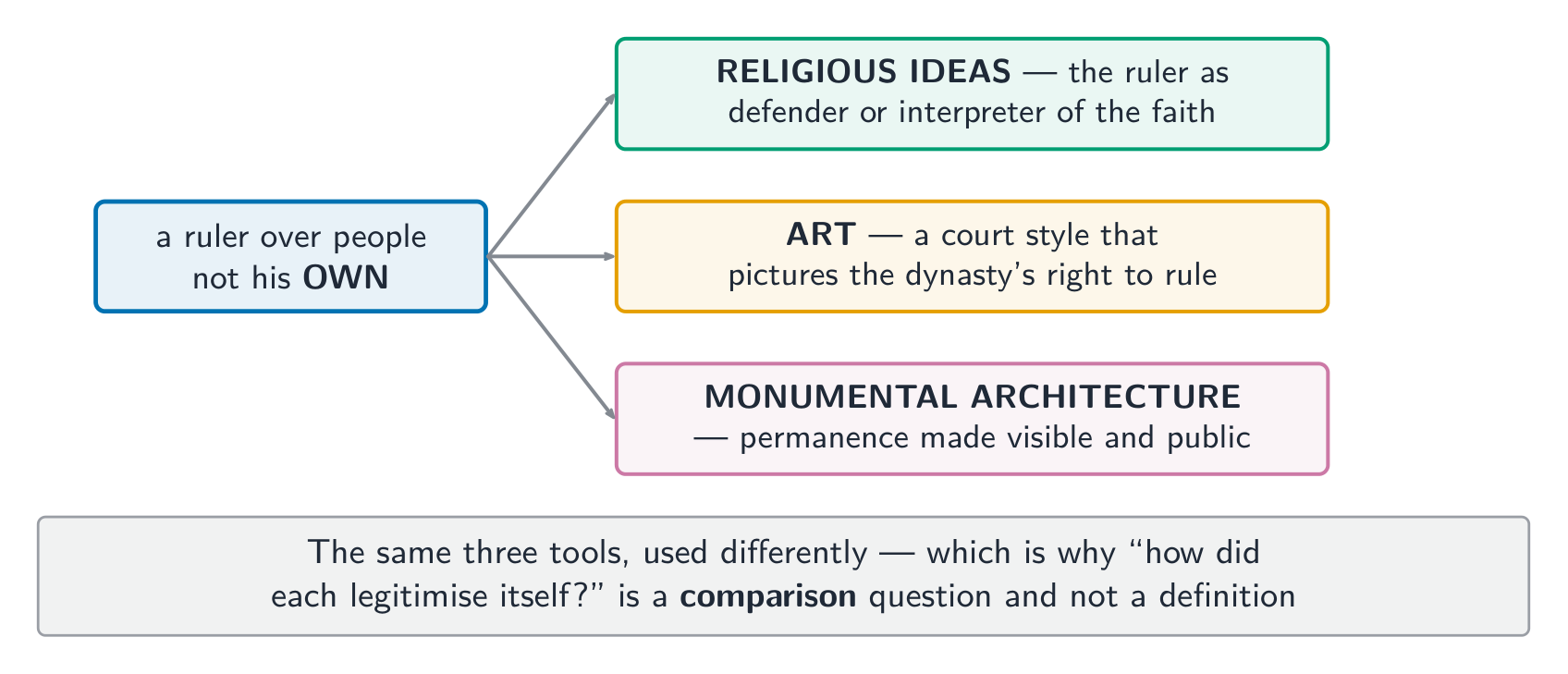
  • KC-4.3.I.A Rulers continued to use religious ideas, art, and monumental architecture to legitimize their rule.
  • KC-4.3.I.D Rulers used tribute collection, tax farming, and innovative tax-collection systems to generate revenue in order to forward state power and expansion.

Illustrative examples:

  • Bureaucratic elites or military professionals:
    • Ottoman devshirme
    • Salaried samurai
  • Religious ideas:
    • Mexica practice of human sacrifice
    • European notions of divine right
    • Songhai promotion of Islam
  • Art and monumental architecture:
    • Qing imperial portraits
    • Incan sun temple of Cuzco
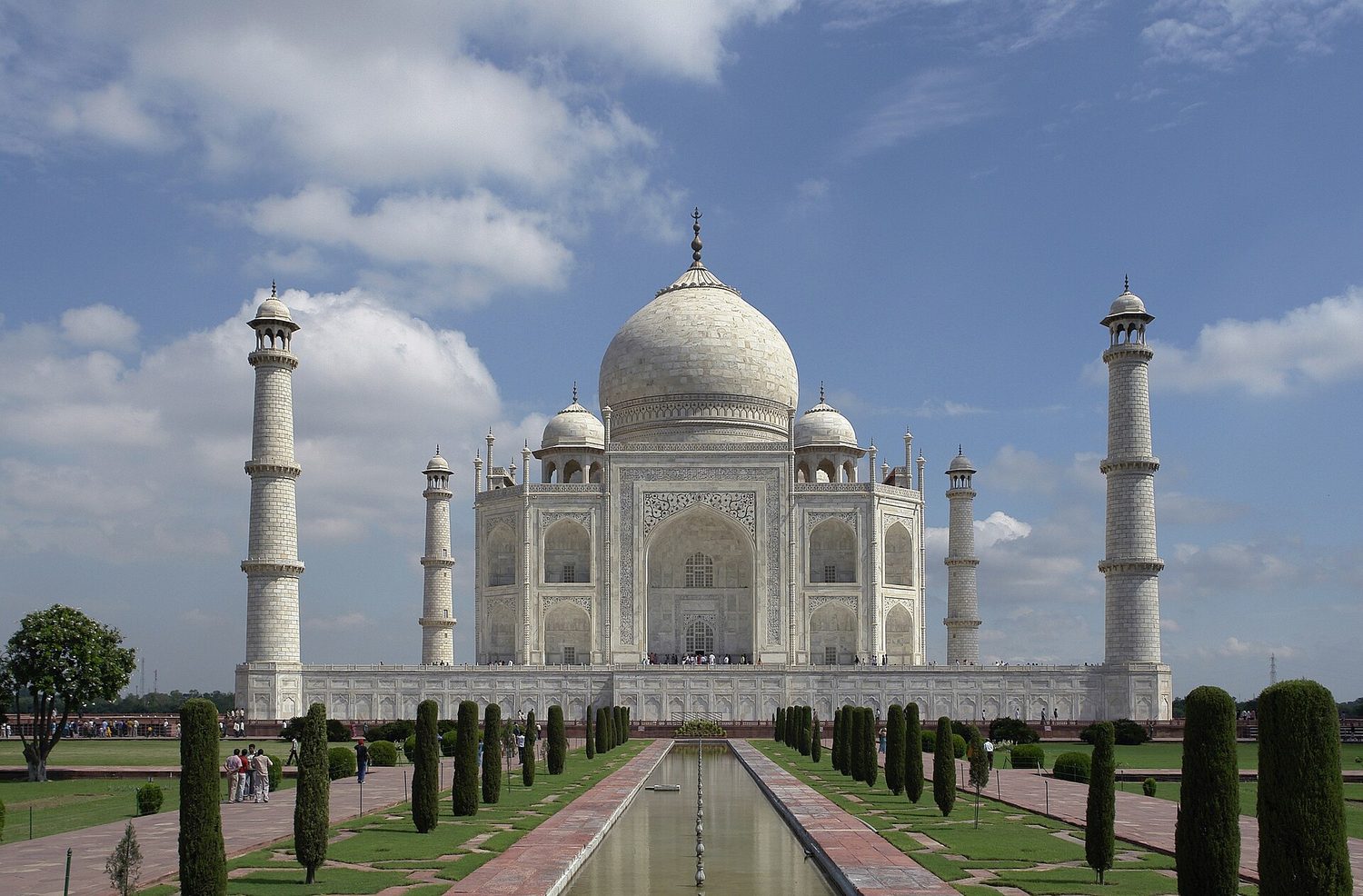
    • Mughal mausolea and mosques
    • European palaces, such as Versailles
  • Tax-collection systems:
    • Mughal zamindar tax collection
    • Ottoman tax farming
    • Mexica tribute lists
    • Ming practice of collecting taxes in hard currency

来源:美国大学理事会 AP 课程与考试说明

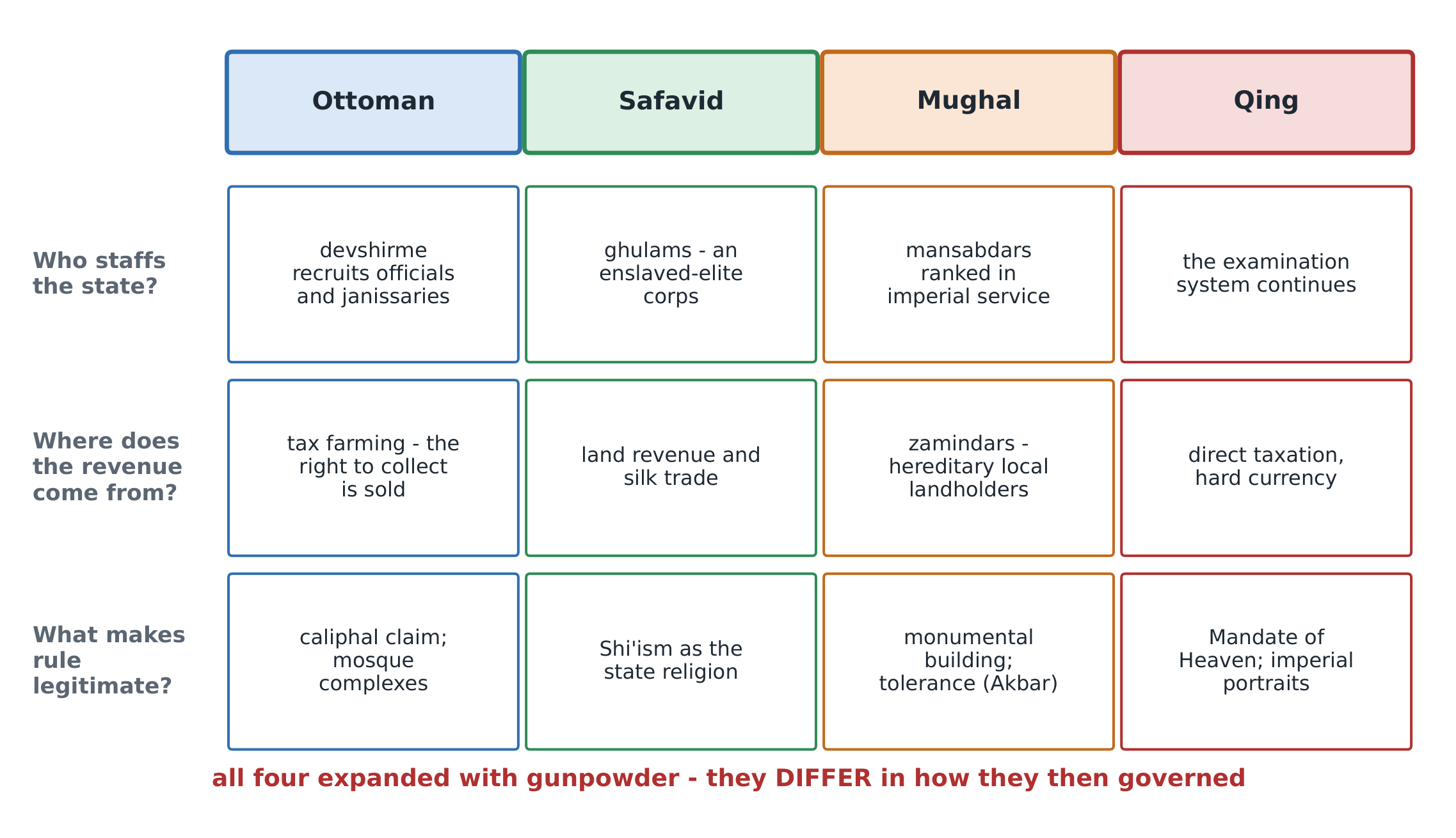
四个帝国,同一套工具:各自如何选任官员、筹措财政与确立统治合法性
同样的三个难题——人员、财源、合法性——被各帝国以不同方式解决

统治者面对同一个问题:如何控制远离都城的疆域。CED 点明了他们使用的工具。

官僚精英的选任(recruitment of bureaucratic elites)与职业军人(military professionals)的培养,为统治者提供了地位来自国家而非出身的官员。最典型的例子是奥斯曼的德夫希尔梅(devshirme)制度,它选拔并训练行政官员与士兵,包括耶尼切里(janissaries);满清延续了中国的科举(examination)制度;萨法维则使用古拉姆(ghulams)。

财政收入通过纳贡(tribute collection)、包税制(tax farming)与各种创新的征税制度取得。莫卧儿的柴明达尔(zamindar)制度与奥斯曼的包税制是标准例证,明朝以硬通货(hard currency)征税则是另一例。

词汇表 训练
英文 中文 拼音
Recruitment of bureaucratic elites 官僚精英的选任 guān liáo jīng yīng de xuǎn rèn
military professionals 职业军人 zhí yè jūn rén
devshirme 德夫希尔梅 dé fū xī ěr méi
janissaries 耶尼切里 yé ní qiè lǐ
ghulams 古拉姆 gǔ lā mǔ
tribute collection 纳贡 nà gòng
tax farming 包税制 bāo shuì zhì
zamindar 柴明达尔 chái míng dá ěr
hard currency 硬通货 yìng tōng huò
3.3

帝国:信仰体系

大纲

3.3 Empires: Belief Systems

Thematic FocusLearning ObjectiveHistorical Developments

CDI
Cultural Developments and Interactions — The development of ideas, beliefs, and religions illustrates how groups in society view themselves, and the interactions of societies and their beliefs often have political, social, and cultural implications.

Unit 3.C
Explain continuity and change within the various belief systems during the period from 1450 to 1750.

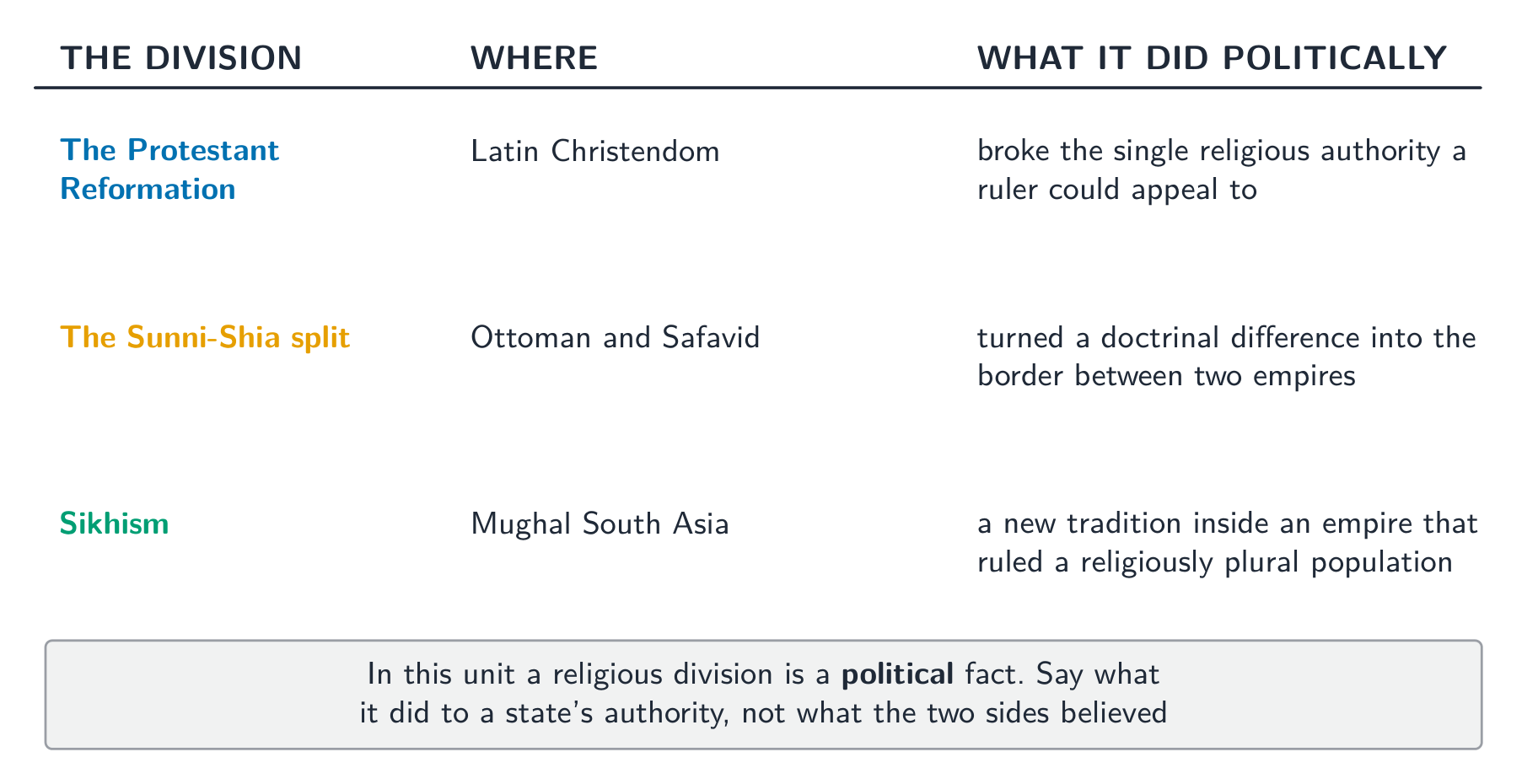
  • KC-4.1.VI.i The Protestant Reformation marked a break with existing Christian traditions and both the Protestant and Catholic reformations contributed to the growth of Christianity.
  • KC-4.1.VI.ii Political rivalries between the Ottoman and Safavid empires intensified the split within Islam between Sunni and Shi’a.
  • KC-4.1.VI.iii Sikhism developed in South Asia in a context of interactions between Hinduism and Islam.

来源:美国大学理事会 AP 课程与考试说明

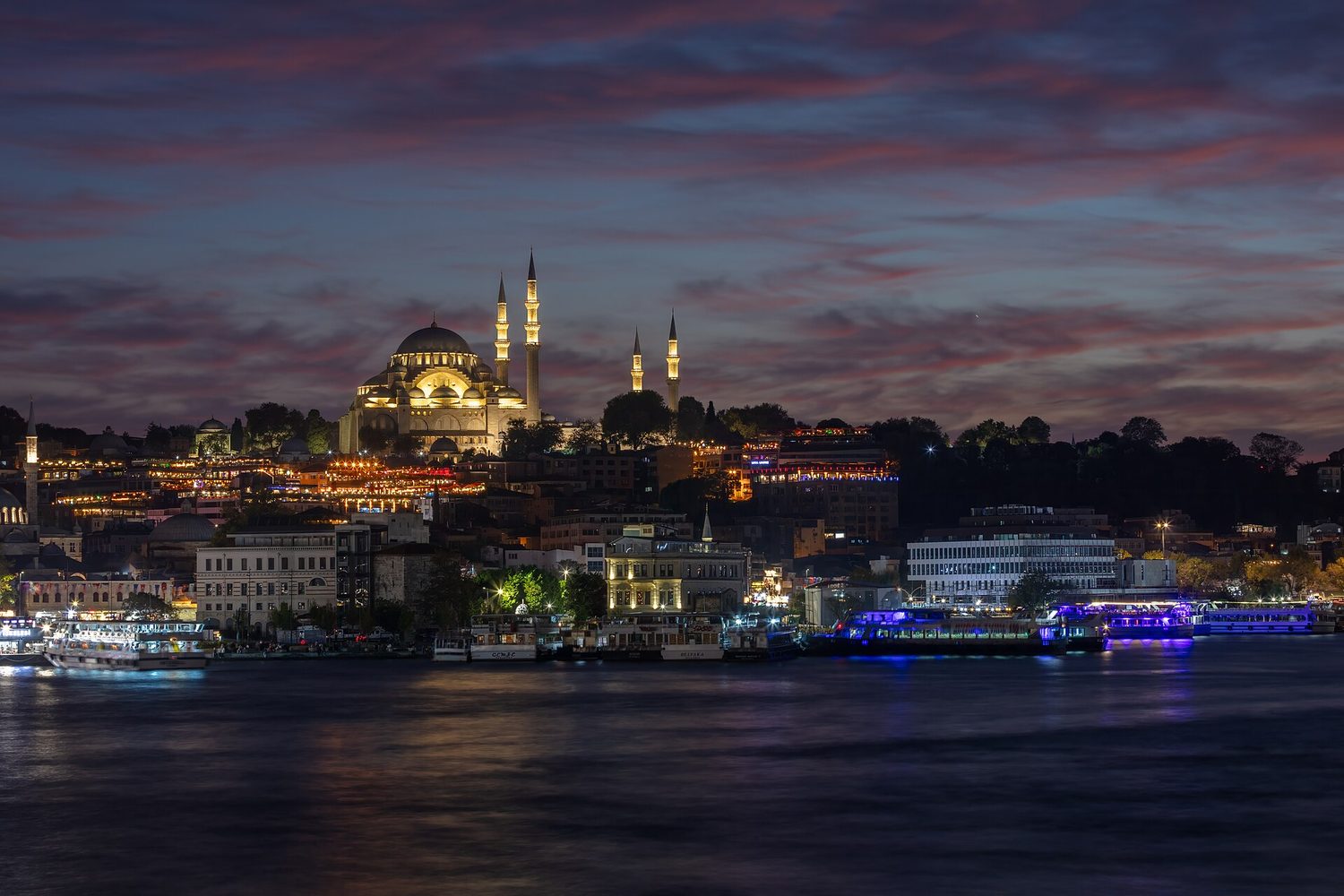
统治者继续借助宗教观念、艺术与纪念性建筑(religious ideas, art, and monumental architecture)确立统治合法性——莫卧儿的清真寺与陵墓、奥斯曼的清真寺建筑群、清朝的帝王画像,以及凡尔赛宫等欧洲宫殿,所起的作用是一样的。

宗教变迁也带来冲突:

  • 新教改革(Protestant Reformation)标志着与既有基督教传统的决裂,并在欧洲引发持久的宗教与政治冲突。
  • 奥斯曼与萨法维之间的政治对抗加剧了逊尼派与什叶派分裂(Sunni-Shia split),这显示出国家间的对抗如何加深一场宗教分歧。
  • 锡克教(Sikhism)在印度教与伊斯兰教互动的背景下于南亚形成。

政治与宗教争端共同在欧亚各地造成了国家之间的对抗与冲突(rivalries and conflict between states)。

词汇表 训练
英文 中文 拼音
religious ideas, art, and monumental architecture 宗教观念、艺术与纪念性建筑 zōng jiào guān niàn 、 yì shù yǔ jì niàn xìng jiàn zhù
Protestant Reformation 新教改革 xīn jiào gǎi gé
Sunni-Shia split 逊尼派与什叶派分裂 xùn ní pài yǔ shén yè pài fēn liè
Sikhism 锡克教 xī kè jiào
rivalries and conflict between states 国家之间的对抗与冲突 guó jiā zhī jiān de duì kàng yǔ chōng tū
3.4

陆基帝国的比较分析

大纲

3.4 Comparison in Land-Based Empires

Learning ObjectiveReview: Unit 3 Key Concepts

Unit 3.D
Compare the methods by which various empires increased their influence from 1450 to 1750.

  • KC-4.1 The interconnection of the Eastern and Western Hemispheres made possible by transoceanic voyaging, transformed trade and had a significant social impact on the world.
    • KC-4.1.VI In some cases, the increase and intensification of interactions between newly connected hemispheres expanded the reach and furthered development of existing religions, and contributed to religious conflicts and the development of syncretic belief systems and practices.
  • KC-4.3 Empires achieved increased scope and influence around the world, shaping and being shaped by the diverse populations they incorporated.
    • KC-4.3.II Imperial expansion relied on the increased use of gunpowder, cannons, and armed trade to establish large empires in both hemispheres.
    • KC-4.3.II.B Land empires included the Manchu in Central and East Asia; Mughal in South and Central Asia; Ottoman in Southern Europe, the Middle East, and North Africa; and the Safavids in the Middle East.
    • KC-4.3.III.i Political and religious disputes led to rivalries and conflict between states.

来源:美国大学理事会 AP 课程与考试说明

本单元考查的推理能力是比较,而有效的比较关乎方法,而非规模:

  • 科举选官(清)对比以奴隶精英制选官(奥斯曼德夫希尔梅、萨法维古拉姆)。
  • 包税制(奥斯曼)对比土地税中间人(莫卧儿柴明达尔)对比直接征税(明朝硬通货)。
  • 宗教身份确立合法性(萨法维以什叶派为国教)对比以容纳多元确立合法性(阿克巴时期的莫卧儿政策)。

Worked example(一道真实的 AP 考题)。本单元的 AP 世界历史简答题通常要求学生「解释一处相似之处」,或「解释陆基帝国维持权力方式上的一处不同」。满分答案会为两者点出方法并说明其效果:「奥斯曼与莫卧儿都借助中间人而非领薪税吏来征收赋税,但奥斯曼采用包税制,即以固定付款出售征税权;而莫卧儿依靠柴明达尔,这些世袭地主的地方声望使他们对乡村拥有长久的利益关切。」*注意其结构:比较的是同一项职能*(筹措财政)的两种做法,并说明其后果。

3.4

考试技巧

  • 要说清火药为什么重要:它使中央统治者得以压制地方对手,因此军事变革与集权是同步的。
  • 行政方法而不是按疆域来记这四个帝国——德夫希尔梅、科举、柴明达尔、古拉姆。
  • 包税制出售的是征税权,而柴明达尔是世袭地主。题目正是考这一区别。
  • 纪念性建筑是确立合法性的证据,而不是装饰。要写出它在做什么。
  • 奥斯曼与萨法维的对抗是政治冲突加深宗教分歧的范例。
  • 比较应当写成同一项职能的两种做法,并说明其后果。

本主题的互动课程

逐步学习,并即时检测练习。

AP 世界历史的更多主题

登录或创建账号

IGCSE, A-Level & AP