- explain the need for business finance (capital expenditure and revenue expenditure, working capital)
- distinguish the meaning of cash and profit
财务与会计
A-Level 商业 · 第 5 主题
 15:50
15:50
Finance and Accounting
A business can be profitable and still die. Here is how. You sell a hundred thousand pounds of goods on credit in March. The profit looks excellent. But the…
英文讲解 · 内嵌中英文字幕
5.1
企业融资

大纲
来源:剑桥国际大纲
企业资金(business finance)是一个企业开办、运营和成长所需的钱。一个新企业需要钱来买经营场所(premises)和设备;一个成长的企业需要钱用于新项目;而每个企业都需要钱来支付日常账单。
探索
Sources of finance lab
Choose the best type of finance by time, risk and ownership.
词汇表
训练
| 英文 | 中文 | 拼音 |
|---|---|---|
| business finance/ˈbɪznəs ˈfaɪnæns/ | 企业资金 | qǐ yè zī jīn |
| premises/ˈpremɪsɪz/ | 经营场所 | jīng yíng chǎng suǒ |
5.1
资本性支出与收益性支出

支出分成两种类型:
- 资本性支出(capital expenditure)——花在长期持续的固定资产(fixed assets)上的钱,如机器、车辆和建筑。
- 收益性支出(revenue expenditure)——花在日常运营上的钱,如工资、租金和原材料。
词汇表
训练
| 英文 | 中文 | 拼音 |
|---|---|---|
| capital expenditure/ˈkæpɪtl ekˈspendɪtʃə/ | 资本性支出 | zī běn xìng zhī chū |
| fixed assets/fɪkst ˈæsets/ | 固定资产 | gù dìng zī chǎn |
| revenue expenditure/ˈrevənjuː ekˈspendɪtʃə/ | 收益性支出 | shōu yì xìng zhī chū |
5.1
营运资本

营运资本(working capital)是一个企业用于它日常需要的钱。它从资产负债表(balance sheet)求得:
$$\text{working capital} = \text{current assets} - \text{current liabilities}$$
这里流动资产(current assets)是一年内变成现金的东西(现金、库存、顾客欠的钱),而流动负债(current liabilities)是一年内到期的债务。太少的营运资本很危险——企业可能不能支付它的账单。
词汇表
训练
| 英文 | 中文 | 拼音 |
|---|---|---|
| working capital/ˈwɜːkɪŋ ˈkæpɪtl/ | 营运资本 | yíng yùn zī běn |
| balance sheet/ˈbæləns ʃiːt/ | 资产负债表 | zī chǎn fù zhài biǎo |
| current assets/ˈkʌrənt ˈæsets/ | 流动资产 | liú dòng zī chǎn |
| current liabilities/ˈkʌrənt ˌlaɪəˈbɪlɪtiz/ | 流动负债 | liú dòng fù zhài |
| cash/kæʃ/ | 现金 | xiàn jīn |
5.1
现金不等于利润

这是一个关键的思想。
- 利润(profit)是一段时间内从总收益中取出总成本时剩下的。
- 现金(cash)是企业现在实际拥有可花的钱。
一个企业能有利可图但仍用完现金——例如,若它出售商品但顾客还没付钱。许多企业失败不是因为低利润,而是因为用完现金。
词汇表
训练
| 英文 | 中文 | 拼音 |
|---|---|---|
| profit/ˈprɒfɪt/ | 利润 | lì rùn |
5.2
融资来源

大纲
- describe internal and external, short- and long-term sources of finance (retained profit, sale of assets, share capital, loans, debentures, overdraft, leasing, hire purchase, trade credit, venture capital, crowdfunding, microfinance)
- explain the factors affecting the choice of source of finance
来源:剑桥国际大纲
资金能来自企业内部(内部来源(internal sources))或来自外部(外部来源(external sources))。它也能是短期(short-term,一年内偿还)或长期(long-term)。
| 来源 | 类型 | 它是什么 |
|---|---|---|
| 留存利润(retained profit) | 内部、长 | 保留在企业中而不是支付出去的利润 |
| 出售资产(sale of assets) | 内部 | 出售企业不再需要的物品 |
| 股本(share capital) | 外部、长 | 通过出售股份筹集的钱 |
| 贷款(loan) | 外部、长 | 连本带息偿还的借来的钱 |
| 公司债券(debenture) | 外部、长 | 一个公司出售的一个长期贷款凭证 |
| 透支(overdraft) | 外部、短 | 银行让账户在一小段时间内低于零 |
| 租赁(leasing) | 外部 | 租一个资产而不是买它 |
| 分期付款(hire purchase) | 外部 | 通过分期支付来买一个资产 |
| 商业信用(trade credit) | 外部、短 | 稍后付给一个供应商(例如 30 天后) |
| 风险资本(venture capital) | 外部、长 | 来自投资者投入有风险的年轻企业的钱 |
| 众筹(crowdfunding) | 外部 | 从许多人在线筹集的小额 |
| 小额信贷(microfinance) | 外部 | 给很少接触银行的人的小额贷款 |

探索
Sources of finance lab
Choose the best type of finance by time, risk and ownership.
词汇表
训练
| 英文 | 中文 | 拼音 |
|---|---|---|
| internal sources/ɪnˈtɜːnl ˈsɔːsɪz/ | 内部来源 | nèi bù lái yuán |
| external sources/ekˈstɜːnl ˈsɔːsɪz/ | 外部来源 | wài bù lái yuán |
| short-term/ʃɔːt tɜːm/ | 短期 | duǎn qī |
| long-term/lɒŋ tɜːm/ | 长期 | cháng qī |
| retained profit/rɪˈteɪnd ˈprɒfɪt/ | 留存利润 | liú cún lì rùn |
| sale of assets/seɪl ɒv ˈæsets/ | 出售资产 | chū shòu zī chǎn |
| share capital/ʃeə ˈkæpɪtl/ | 股本 | gǔ běn |
| loan/ləʊn/ | 贷款 | dài kuǎn |
| debenture/deˈbentʃə/ | 公司债券 | gōng sī zhài quàn |
| overdraft/ˈəʊvədræft/ | 透支 | tòu zhī |
| leasing/ˈliːsɪŋ/ | 租赁 | zū lìn |
| hire purchase/ˈhaɪə ˈpɜːtʃɪs/ | 分期付款 | fēn qī fù kuǎn |
| trade credit/treɪd ˈkredɪt/ | 商业信用 | shāng yè xìn yòng |
| venture capital/ˈventʃə ˈkæpɪtl/ | 风险资本 | fēng xiǎn zī běn |
| crowdfunding/ˈkraʊdfʌndɪŋ/ | 众筹 | zhòng chóu |
| microfinance/ˌmaɪkrəʊfaɪˈnæns/ | 小额信贷 | xiǎo é xìn dài |
5.2
选择融资来源

没有单一的最佳来源。选择取决于:
- 所需的数额——大数额可能需要股份或一个长期贷款。
- 目的——长期资产应当用长期资金。
- 成本——利息和费用在来源之间不同。
- 法律结构——只有一个公司能出售股份。
- 企业已经欠多少,以及它是否能提供抵押品(collateral,若贷款不被偿还贷款人能拿走的一个资产)。
词汇表
训练
| 英文 | 中文 | 拼音 |
|---|---|---|
| collateral/kəˈlætərəl/ | 抵押品 | dǐ yā pǐn |
5.3
现金流的预测与管理
大纲
- construct and interpret a cash-flow forecast and explain the causes of cash-flow problems
- explain methods of improving cash flow and the importance of working capital management
来源:剑桥国际大纲
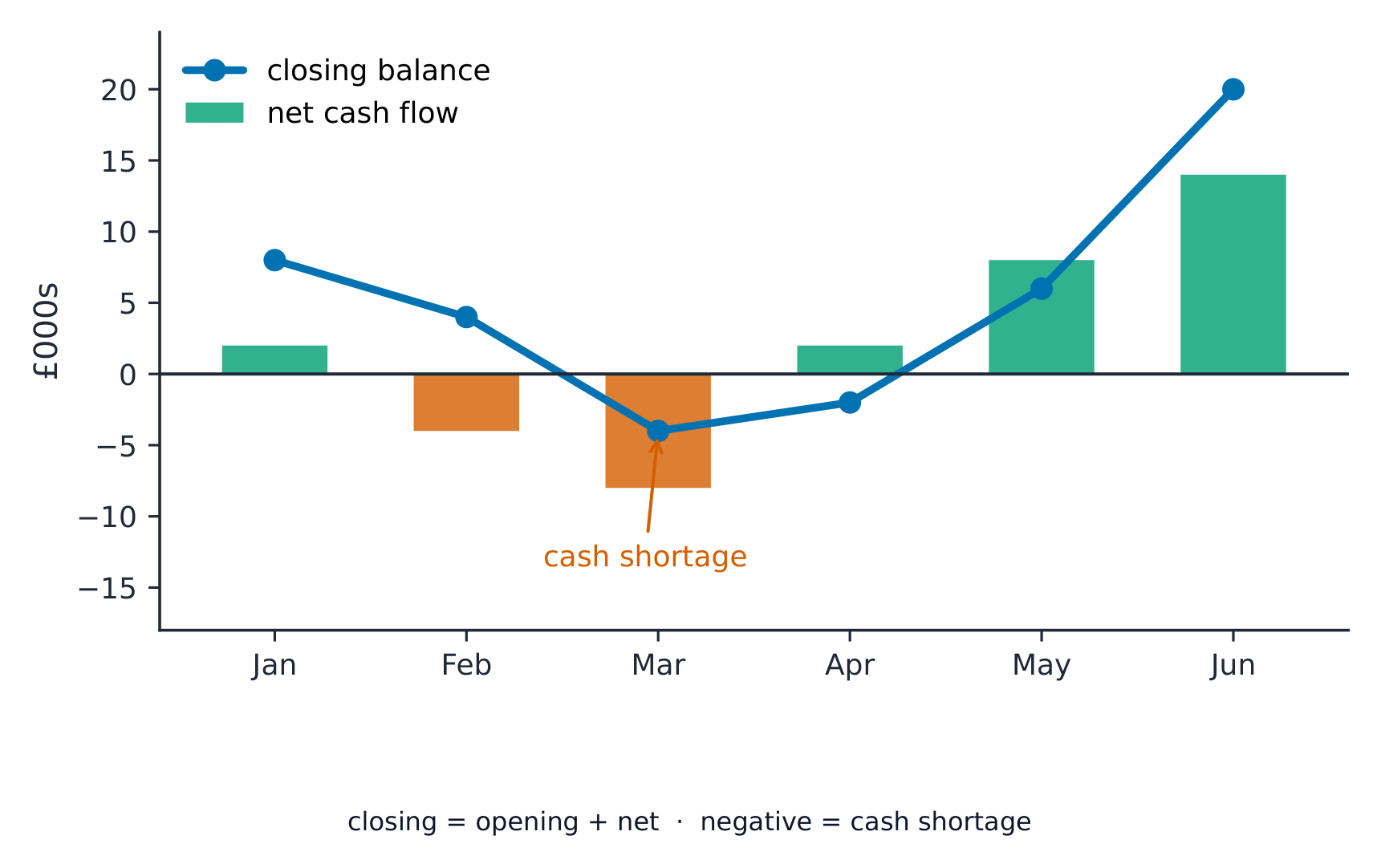
一个现金流量预测(cash-flow forecast)预测每个月进来和出去的现金。它帮助一个企业尽早发现一个短缺。
- 现金流入(cash inflows)——进来的钱,大多来自销售。
- 现金流出(cash outflows)——出去的钱,如工资和租金。
- 净现金流(net cash flow)——这段时间的流入减流出。
$$\text{net cash flow} = \text{cash inflows} - \text{cash outflows}$$
期初余额(opening balance)是月初的现金。加上净现金流给出期末余额(closing balance),它变成下个月的期初余额。
探索
A cash-flow forecast
A cash-flow forecast tracks money in and out each month — to spot a shortfall before it happens.
词汇表
训练
| 英文 | 中文 | 拼音 |
|---|---|---|
| cash-flow forecast/kæʃ fləʊ ˈfɔːkæst/ | 现金流量预测 | xiàn jīn liú liàng yù cè |
| cash inflows/kæʃ ˈɪnfləʊz/ | 现金流入 | xiàn jīn liú rù |
| cash outflows/kæʃ aʊtˈfləʊz/ | 现金流出 | xiàn jīn liú chū |
| net cash flow/net kæʃ fləʊ/ | 净现金流 | jìng xiàn jīn liú |
| opening balance/ˈəʊpənɪŋ ˈbæləns/ | 期初余额 | qī chū yú é |
| closing balance/ˈkləʊzɪŋ ˈbæləns/ | 期末余额 | qī mò yú é |
5.3
现金流问题及其解决办法
现金流问题的常见原因是:太多的赊销、持有太多的存货、一次买太多的资产,以及过度交易(overtrading,增长得对可用的现金来说太快)。
改善现金流的方式:
- 更快地把现金收进来——要求顾客更快付款,或为快速付款提供折扣。
- 延迟现金出去——与供应商约定更长的商业信用。
- 安排一个透支或短期贷款来覆盖一个缺口。
- 持有更少的存货以腾出现金。
好的营运资本管理保持足够的现金以保持安全,而不持有那么多以至于钱闲置。
探索
Cash-flow forecast lab
Drag the monthly cash in, cash out and the one-off purchase — find the month that closes in the red, then fix it before it happens.
词汇表
训练
| 英文 | 中文 | 拼音 |
|---|---|---|
| overtrading/ˌəʊvəˈtreɪdɪŋ/ | 过度交易 | guò dù jiāo yì |
5.4
成本

大纲
- classify costs (fixed, variable, direct, indirect, marginal, average) and use cost information for decision-making
- construct and interpret break-even analysis (break-even point, margin of safety, contribution) and explain its limitations
来源:剑桥国际大纲
一个成本(cost)是企业花来制造它产品的钱。我们以几种方式给成本分类:
- 固定成本(fixed costs)——不随产出改变的成本,如租金。
- 可变成本(variable costs)——随产出上升和下降的成本,如原材料。
- 直接成本(direct costs)——清晰地与一个产品联系的成本,如它的材料。
- 间接成本(indirect costs,间接费用)——不与一个产品联系的成本,如经理薪水。
- 边际成本(marginal cost)——制造多一单位的成本。
- 平均成本(average cost)——每单位的成本,由总成本 ÷ 单位数求得。
成本信息帮助管理者设定价格、选择制造什么,并控制支出。
探索
Costs
y = ax + b
Total cost = fixed cost (intercept) + variable cost per unit (gradient).
词汇表
训练
| 英文 | 中文 | 拼音 |
|---|---|---|
| cost/kɒst/ | 成本 | chéng běn |
| fixed costs/fɪkst kɒsts/ | 固定成本 | gù dìng chéng běn |
| variable costs/ˈveərɪəbl kɒsts/ | 可变成本 | kě biàn chéng běn |
| direct costs/daɪˈrekt kɒsts/ | 直接成本 | zhí jiē chéng běn |
| indirect costs/ɪndaɪˈrekt kɒsts/ | 间接成本 | jiàn jiē chéng běn |
| marginal cost/ˈmɑːdʒɪnl kɒst/ | 边际成本 | biān jì chéng běn |
| average cost/ˈævrɪdʒ kɒst/ | 平均成本 | píng jūn chéng běn |
| break-even/breɪk ˈiːvən/ | 盈亏平衡 | yíng kuī píng héng |
5.4
盈亏平衡分析

贡献(contribution)是每次销售为支付固定成本增加多少:
$$\text{contribution per unit} = \text{selling price} - \text{variable cost per unit}$$
盈亏平衡(break-even)是总收益等于总成本的点,所以利润为零。以单位计的盈亏平衡点(break-even point)是:
$$\text{break-even point} = \frac{\text{fixed costs}}{\text{contribution per unit}}$$
安全边际(margin of safety)是当前销售在盈亏平衡点之上多远:
$$\text{margin of safety} = \text{actual output} - \text{break-even output}$$
例题。 一个产品以 £20 出售,每单位可变成本 £12。固定成本是 £40,000,而企业制造 6,000 单位。求每单位贡献、盈亏平衡产出和安全边际。
$$\text{contribution per unit} = \text{\pounds} 20 - \text{\pounds} 12 = \text{\pounds} 8$$
$$\text{break-even point} = \frac{\text{\pounds} 40\,000}{\text{\pounds} 8} = 5\,000 \text{ units}$$
$$\text{margin of safety} = 6\,000 - 5\,000 = 1\,000 \text{ units}$$
一个大的安全边际意味着销售在企业亏损之前能下降很多。盈亏平衡分析快速而有用,但它有局限性(limitations):它假设售价和成本保持不变,以及制造的一切都被出售。
探索
Break-even chart
Add a revenue line to the fixed-cost and total-cost lines. Where revenue meets total cost is the break-even point; beyond it the firm makes a profit.
探索
Break-even analysis
Break-even is where total revenue crosses total cost.
词汇表
训练
| 英文 | 中文 | 拼音 |
|---|---|---|
| contribution/ˌkɒntrɪˈbjuːʃn/ | 贡献 | gòng xiàn |
| break-even point/breɪk ˈiːvən pɔɪnt/ | 盈亏平衡点 | yíng kuī píng héng diǎn |
| margin of safety/ˈmɑːdʒɪn ɒv ˈseɪfti/ | 安全边际 | ān quán biān jì |
| limitations/ˌlɪmɪˈteɪʃnz/ | 局限性 | jú xiàn xìng |
5.5
预算

大纲
- explain the purpose of budgets and types of budget (incremental, zero-based)
- calculate and interpret variances (favourable and adverse) using variance analysis
来源:剑桥国际大纲
一个预算(budget)是未来的一个财务计划——一个收入或支出的标的。预算帮助一个企业规划、控制钱,并检查绩效。两种类型是:
- 增量预算(incremental budget)——去年的预算改变一个小的数额。
- 零基预算(zero-based budget)——每个成本每年都必须从零解释。
一个差异(variance)是预算数字和实际数字之间的差:
$$\text{variance} = \text{actual figure} - \text{budgeted figure}$$
例题。 一个企业为工资预算 £30,000,但实际花了 £34,000。求差异并说它是有利还是不利。
$$\text{variance} = \text{\pounds} 34\,000 - \text{\pounds} 30\,000 = \text{\pounds} 4\,000$$
成本比计划的更高,所以这是一个不利差异。
- 一个有利差异(favourable variance)对利润更好(成本比计划的更低,或收益更高)。
- 一个不利差异(adverse variance)对利润更坏(成本比计划的更高,或收益更低)。
研究差异向管理者显示计划哪里出错了,所以他们能行动。

探索
Budget control cycle
Follow how a budget becomes a control system, not just a number.
词汇表
训练
| 英文 | 中文 | 拼音 |
|---|---|---|
| budget/ˈbʌdʒɪt/ | 预算 | yù suàn |
| incremental budget/ˌɪŋkrɪˈmentl ˈbʌdʒɪt/ | 增量预算 | zēng liàng yù suàn |
| zero-based budget/ˈzɪərəʊ beɪst ˈbʌdʒɪt/ | 零基预算 | líng jī yù suàn |
| variance/ˈveərɪəns/ | 差异 | chā yì |
| favourable variance/ˈfeɪvərəbl ˈveərɪəns/ | 有利差异 | yǒu lì chā yì |
| adverse variance/ædˈvɜːs ˈveərɪəns/ | 不利差异 | bù lì chā yì |
5.5
考试技巧
- 显示现金不是利润——一个有利可图的企业仍能因一个现金流短缺而失败。
- 对于盈亏平衡:每单位贡献 $=$ 价格 $-$ 可变成本;盈亏平衡 $=$ 固定成本 $\div$ 贡献;安全边际 $=$ 实际 $-$ 盈亏平衡产出。
- 把一个资金来源匹配到需要(短期用于现金流,长期或股权用于资产)和企业的类型。
- 计算一个差异并把它标为有利或不利(实际对预算)。
本主题的互动课程
逐步学习,并即时检测练习。