- explain the role of marketing, market and product orientation, and customer relationship marketing (CRM)
- explain market size, market growth and market share, mass and niche markets and market segmentation
- explain demand and supply and the concept of elasticity (price, income, cross) and its usefulness
市场营销
A-Level 商业 · 第 3 主题
 15:14
15:14
Marketing
Two shops sell the same coffee at the same price. One is always busy; the other sits empty. Nothing about the product explains it. The difference is marketing…
英文讲解 · 内嵌中英文字幕
3.1
市场营销的本质
大纲
来源:剑桥国际大纲
市场营销(marketing)是找出顾客想要什么、然后以获利的方式制造并出售满足那些欲望的产品的工作。好的营销把企业与它的市场(market,一个产品所有的买者和卖者)联系起来。
一个企业能是:
- 产品导向(product-orientated)——它首先聚焦于产品并希望顾客会买它。这适合新的或技术性的产品。
- 市场导向(market-orientated)——它首先找出顾客想要什么,然后制造它。这降低失败的风险。
客户关系营销(customer relationship marketing,CRM)意味着与顾客建立长期的联系,所以他们再次回来。留住一个顾客比找一个新的更便宜。
探索
Marketing mix lab
See which part of the marketing mix changes in each real decision.
词汇表
训练
| 英文 | 中文 | 拼音 |
|---|---|---|
| marketing/ˈmɑːkɪtɪŋ/ | 市场营销 | shì chǎng yíng xiāo |
| market/ˈmɑːkɪt/ | 市场 | shì chǎng |
| product-orientated/ˈprɒdʌkt ˈɔːrɪənteɪtɪd/ | 产品导向 | chǎn pǐn dǎo xiàng |
| market-orientated/ˈmɑːkɪt ˈɔːrɪənteɪtɪd/ | 市场导向 | shì chǎng dǎo xiàng |
| customer relationship marketing/ˈkʌstəmə rɪˈleɪʃənʃɪp ˈmɑːkɪtɪŋ/ | 客户关系营销 | kè hù guān xì yíng xiāo |
| demand/dɪˈmænd/ | 需求 | xū qiú |
| supply/səˈplaɪ/ | 供给 | gōng jǐ |
| elasticity/ɪlæˈstɪsɪti/ | 弹性 | tán xìng |
| product/ˈprɒdʌkt/ | 产品 | chǎn pǐn |
3.1
市场规模、增长与份额
- 市场规模(market size)——一个市场中所有企业的总销售,按价值或按单位数。
- 市场增长(market growth)——市场变大有多快,显示为一个百分比。
- 市场份额(market share)——一个企业的销售占总市场的百分比:
$$\text{market share} = \frac{\text{firm's sales}}{\text{total market sales}} \times 100\%$$
一个上升的市场份额是强营销的一个迹象。
例题。 一个企业在一个总共价值 £50 百万的市场中卖 £4 百万的商品。求它的市场份额。
$$\text{market share} = \frac{4}{50} \times 100\% = 8\%.$$
若整个市场增长但企业的销售停留在 £4 百万,它的市场份额下降——所以一个企业能卖同样的量却对增长更快的竞争对手失去地盘。
词汇表
训练
| 英文 | 中文 | 拼音 |
|---|---|---|
| market size/ˈmɑːkɪt saɪz/ | 市场规模 | shì chǎng guī mó |
| market growth/ˈmɑːkɪt ɡrəʊθ/ | 市场增长 | shì chǎng zēng zhǎng |
| market share/ˈmɑːkɪt ʃeə/ | 市场份额 | shì chǎng fèn é |
| growth/ɡrəʊθ/ | 成长期 | chéng zhǎng qī |
3.1
大众市场与利基市场

- 一个大众市场(mass market)大,产品瞄准大多数买者(例如软饮料)。销售高,但竞争强。
- 一个利基市场(niche market)是一个市场的一个带特殊需求的小部分(例如左撇子工具)。竞争更弱,但销售更小。
词汇表
训练
| 英文 | 中文 | 拼音 |
|---|---|---|
| mass market/mæs ˈmɑːkɪt/ | 大众市场 | dà zhòng shì chǎng |
| niche market/niːʃ ˈmɑːkɪt/ | 利基市场 | lì jī shì chǎng |
3.1
市场细分
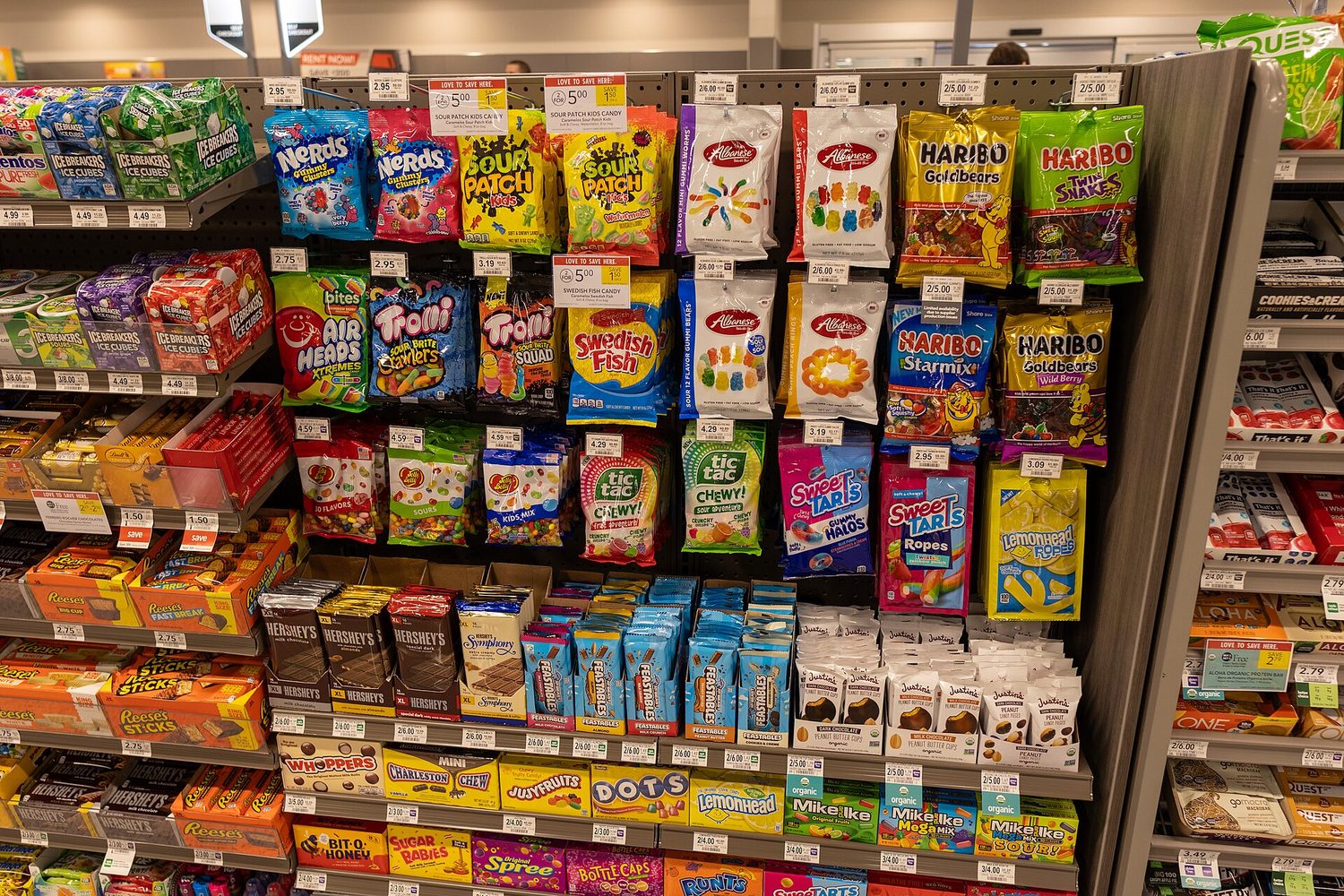
市场细分(market segmentation)意味着把一个市场分成相似的买者的群(细分市场(segments))。常见的细分方式是按年龄、收入、性别、位置和生活方式。细分让一个企业把正确的产品和信息瞄准每个群,它提高销售并削减浪费。

词汇表
训练
| 英文 | 中文 | 拼音 |
|---|---|---|
| market segmentation/ˈmɑːkɪt ˌseɡmənˈteɪʃn/ | 市场细分 | shì chǎng xì fēn |
| segments/ˈseɡmənts/ | 细分市场 | xì fēn shì chǎng |
3.1
需求、供给与弹性

需求(demand)是买者在每个价格会买多少一个产品。供给(supply)是卖者在每个价格会提供多少。通常,当价格下降时,需求上升。
弹性(elasticity)测量需求对一个改变反应有多强。你应当知道三种类型。
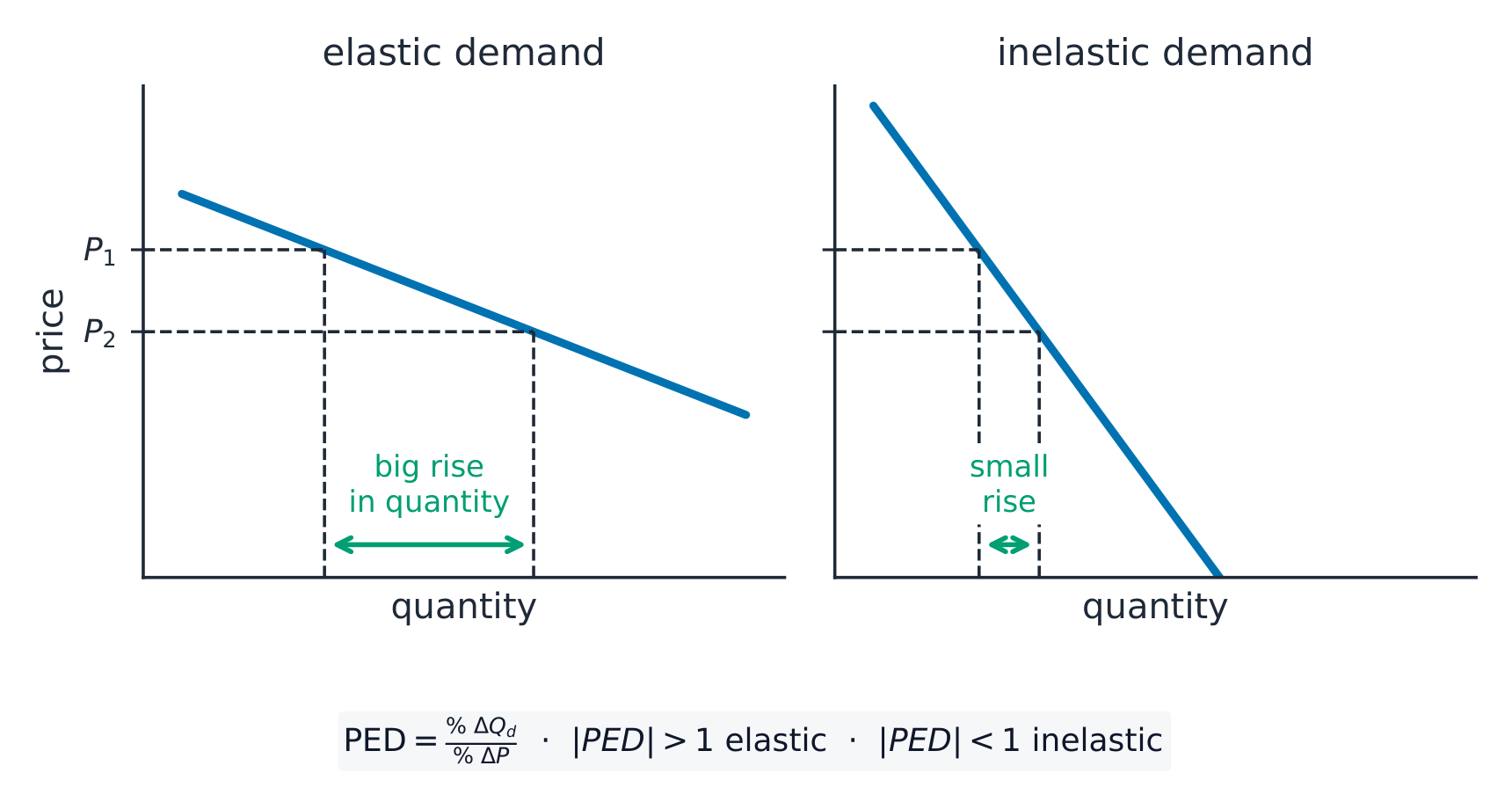
需求价格弹性(price elasticity of demand,PED)测量需求如何对一个价格改变反应:
$$\text{PED} = \frac{\%\ \text{change in quantity demanded}}{\%\ \text{change in price}}$$
- 若 PED 大于 1,需求是富有弹性(price elastic)的——一个小的降价大大提高销售,所以降价能提高收益。
- 若 PED 小于 1,需求是缺乏弹性(price inelastic)的——需求改变很少,所以提价能提高收益。
需求收入弹性(income elasticity of demand,YED)测量需求如何对顾客收入的一个改变反应。奢侈品反应强烈;基本物品反应微弱。
需求交叉弹性(cross elasticity of demand,XED)测量对一个产品的需求如何对另一个的一个价格改变反应。它对替代品(substitutes,例如茶和咖啡)为正,对互补品(complements,例如汽车和燃料)为负。
弹性有用,因为它帮助一个企业预测一个价格改变会如何影响销售和收益。
探索
Demand, supply & elasticity
Price is set where demand meets supply.
探索
Demand and supply
Shift the curves to see how price is set in a market — and how elasticity decides how much quantity responds.
词汇表
训练
| 英文 | 中文 | 拼音 |
|---|---|---|
| price elasticity of demand/praɪs ɪlæˈstɪsɪti ɒv dɪˈmænd/ | 需求价格弹性 | xū qiú jià gé tán xìng |
| price elastic/praɪs ɪˈlæstɪk/ | 富有弹性 | fù yǒu tán xìng |
| price inelastic/praɪs ɪnɪˈlæstɪk/ | 缺乏弹性 | quē fá tán xìng |
| income elasticity of demand/ˈɪŋkʌm ɪlæˈstɪsɪti ɒv dɪˈmænd/ | 需求收入弹性 | xū qiú shōu rù tán xìng |
| cross elasticity of demand/krɒs ɪlæˈstɪsɪti ɒv dɪˈmænd/ | 需求交叉弹性 | xū qiú jiāo chā tán xìng |
| substitutes/ˈsʌbstɪtjuːts/ | 替代品 | tì dài pǐn |
| complements/ˈkɒmplɪmənts/ | 互补品 | hù bǔ pǐn |
| price/praɪs/ | 价格 | jià gé |
3.2
市场调研
大纲
- distinguish primary and secondary market research and qualitative and quantitative data
- explain sampling methods and the reliability of data; present and interpret market research findings
来源:剑桥国际大纲
市场调研(market research)是收集和研究关于顾客、竞争对手(competitors)和市场的信息。
- 一手调研(primary research)——你自己收集的新信息,通过调查、面试或观察。它符合你确切的需要,但花费更多且要花时间。
- 二手调研(secondary research)——已经存在的信息,如报告、网站和销售记录。它便宜而快,但可能过时或不完全正确。
数据能是:
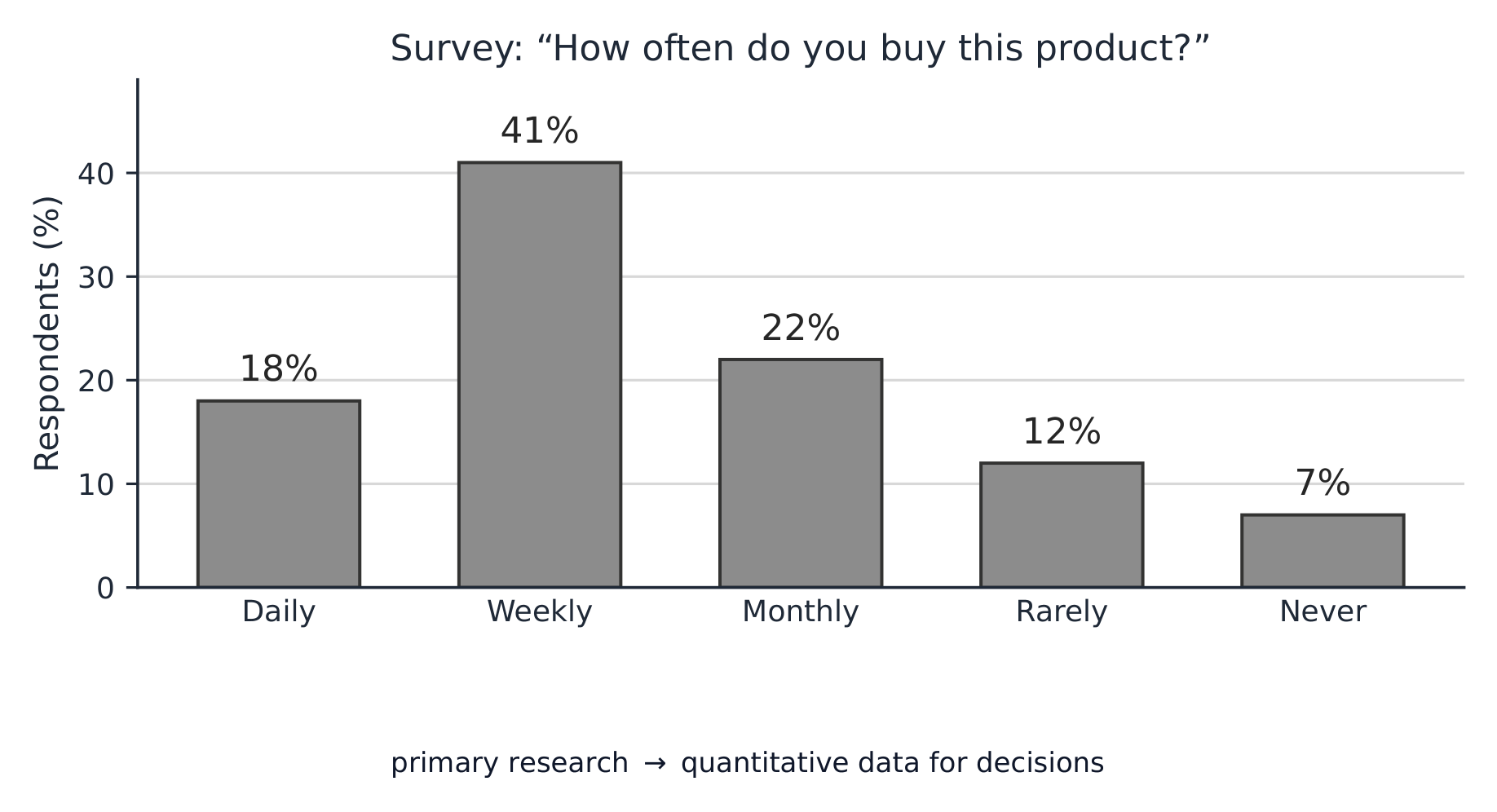
- 定量数据(quantitative data)——数字里的事实(例如"60% 每周购买")。容易比较。
- 定性数据(qualitative data)——观点和原因(例如"人们为什么喜欢这个品牌")。给出更深的理解。
Sampling and reliability
一个样本(sample)是被问的一小群人,被选来代表整个市场。抽样(sampling)方法包括:
- 随机抽样(random sampling)——每个人有平等的被选中的机会。
- 配额抽样(quota sampling)——每个群被问设定的数目。
- 分层抽样(stratified sampling)——样本复制整个市场的构成。
一个更大、精心选择的样本给出更可靠(reliable)的结果。糟糕的抽样能引起偏差(bias),它使发现错误。结果常常显示在表格和图表中,然后被仔细阅读以引导决定。
探索
Market research cycle
Follow how a business turns customer data into a marketing decision.
词汇表
训练
| 英文 | 中文 | 拼音 |
|---|---|---|
| market research/ˈmɑːkɪt rɪˈsɜːtʃ/ | 市场调研 | shì chǎng diào yán |
| competitors/kəmˈpetɪtəz/ | 竞争对手 | jìng zhēng duì shǒu |
| primary research/ˈpraɪməri rɪˈsɜːtʃ/ | 一手调研 | yī shǒu diào yán |
| secondary research/ˈsekəndəri rɪˈsɜːtʃ/ | 二手调研 | èr shǒu diào yán |
| quantitative data/ˈkwɒntɪteɪtɪv ˈdeɪtə/ | 定量数据 | dìng liàng shù jù |
| qualitative data/ˈkwɒlɪteɪtɪv ˈdeɪtə/ | 定性数据 | dìng xìng shù jù |
| sample/ˈsæmpl/ | 样本 | yàng běn |
| sampling/ˈsæmplɪŋ/ | 抽样 | chōu yàng |
| random sampling/ˈrændəm ˈsæmplɪŋ/ | 随机抽样 | suí jī chōu yàng |
| quota sampling/ˈkwəʊtə ˈsæmplɪŋ/ | 配额抽样 | pèi é chōu yàng |
| stratified sampling/ˈstrætɪfaɪd ˈsæmplɪŋ/ | 分层抽样 | fēn céng chōu yàng |
| reliable/rɪˈlaɪəbl/ | 可靠的 | kě kào de |
| bias/ˈbaɪəs/ | 偏差 | piān chā |
3.3
营销组合

大纲
- explain the elements of the marketing mix (product, price, place, promotion) and their integration
- product: product development, the product life cycle, the product portfolio (Boston Matrix), branding
- price: pricing methods and strategies (cost-plus, penetration, skimming, competitive, price discrimination, dynamic, psychological)
- place and promotion: distribution channels, above- and below-the-line promotion, and digital/e-commerce marketing
来源:剑桥国际大纲
营销组合(marketing mix)是一个企业为出售一个产品做出的一套选择。它常被叫作 4Ps:
| P | 它回答的问题 |
|---|---|
| 产品(product) | 我们在卖什么? |
| 价格(price) | 我们收多少? |
| 渠道(place) | 顾客在哪里、如何买它? |
| 促销(promotion) | 我们如何告诉顾客关于它? |

四个部分必须一起工作。例如,一个高价格需要高质量和一个好形象。使各部分彼此契合叫整合(integration)。
词汇表
训练
| 英文 | 中文 | 拼音 |
|---|---|---|
| marketing mix/ˈmɑːkɪtɪŋ mɪks/ | 营销组合 | yíng xiāo zǔ hé |
| place/pleɪs/ | 渠道 | qú dào |
| promotion/prəˈməʊʃn/ | 促销 | cù xiāo |
| integration/ˌɪntɪˈɡreɪʃn/ | 整合 | zhěng hé |
| product life cycle/ˈprɒdʌkt laɪf ˈsaɪkl/ | 产品生命周期 | chǎn pǐn shēng mìng zhōu qī |
| branding/ˈbrændɪŋ/ | 品牌 | pǐn pái |
3.3
产品
一个好产品是组合的核心。
产品开发(product development)是设计和改善产品以满足顾客需求并击败竞争对手的工作。
The product life cycle
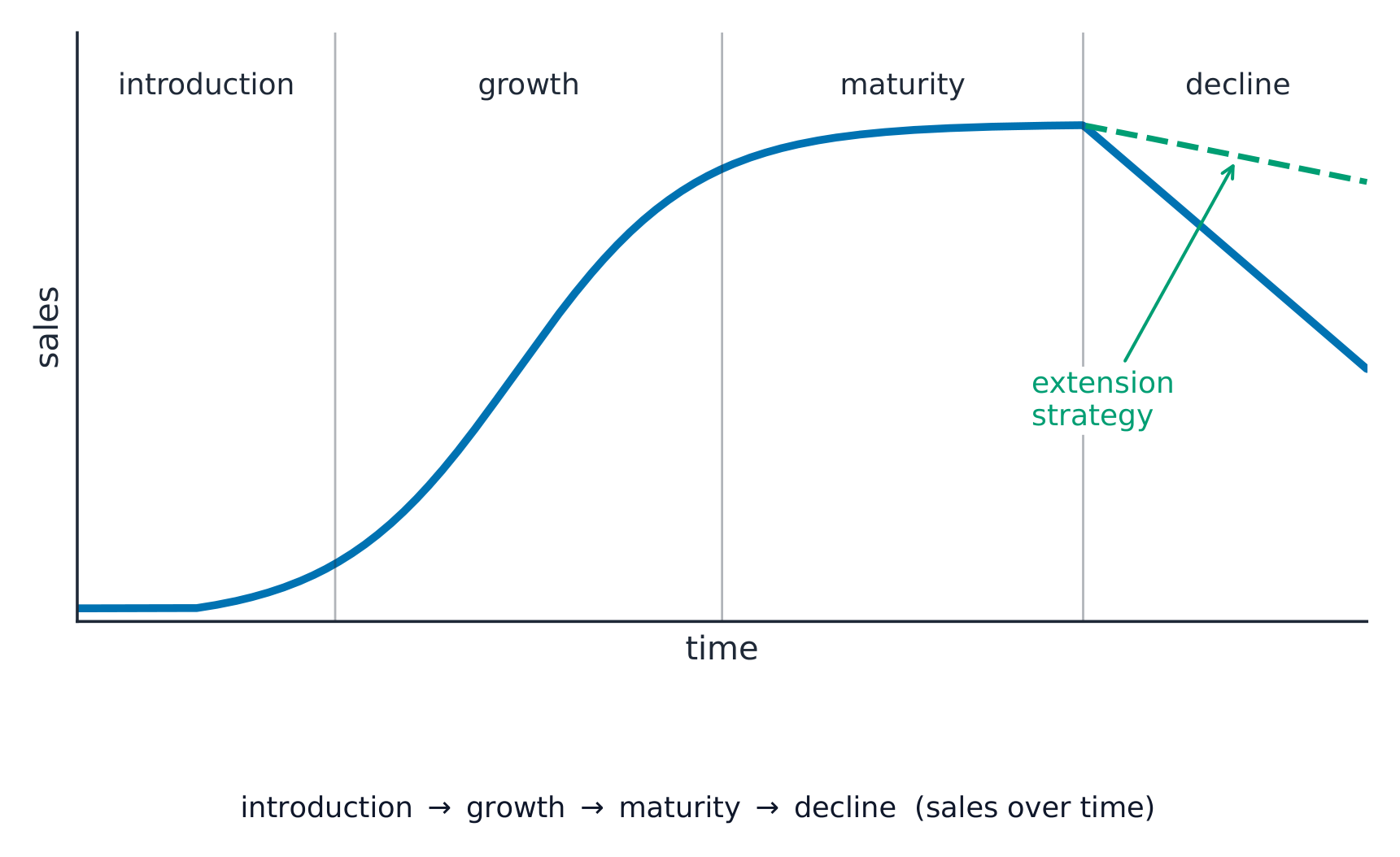
产品生命周期(product life cycle)显示一个产品随时间的销售,分四个阶段:
- 引入期(introduction)——发布;低销售、高促销成本。
- 成长期(growth)——销售快速上升。
- 成熟期(maturity)——销售达到它们的峰值并趋平。
- 衰退期(decline)——随着品味改变,销售下降。
为了在成熟期保持销售,企业用延长策略(extension strategies),如新包装、新用途,或在新市场销售。
The product portfolio (Boston Matrix)
产品组合(product portfolio)是一个企业出售的全部产品范围。波士顿矩阵(Boston Matrix)按市场份额和市场增长给产品分类:
| 高市场增长 | 低市场增长 | |
|---|---|---|
| 高份额 | 明星产品(stars) | 现金牛(cash cows) |
| 低份额 | 问题产品(question marks) | 瘦狗产品(dogs) |

明星产品需要投资但可能变成现金牛。现金牛带来稳定的利润。问题产品有风险。瘦狗产品通常被放弃。
Branding
品牌(branding)给一个产品一个顾客识别的名称、设计和形象。一个强品牌建立忠诚度(loyalty)、让企业收更多钱,并使新产品更容易发布。
探索
The product life cycle
Most products pass through four sales stages over time — from launch to decline.
探索
Balance the product portfolio
Pick a product and drag its market share and growth — it re-classifies live, and Play walks one product through its whole life across the matrix.
词汇表
训练
| 英文 | 中文 | 拼音 |
|---|---|---|
| product development/ˈprɒdʌkt dɪˈveləpmənt/ | 产品开发 | chǎn pǐn kāi fā |
| introduction/ˌɪntrəˈdʌkʃn/ | 引入期 | yǐn rù qī |
| maturity/məˈtʃʊərɪti/ | 成熟期 | chéng shú qī |
| decline/dɪˈklaɪn/ | 衰退期 | shuāi tuì qī |
| extension strategies/ekˈstenʃn ˈstrætədʒiz/ | 延长策略 | yán cháng cè lüè |
| product portfolio/ˈprɒdʌkt pɔːtˈfəʊlɪəʊ/ | 产品组合 | chǎn pǐn zǔ hé |
| Boston Matrix/ˈbɒstn ˈmeɪtrɪks/ | 波士顿矩阵 | bō shì dùn jǔ zhèn |
| stars/stɑːz/ | 明星产品 | míng xīng chǎn pǐn |
| cash cows/kæʃ kaʊz/ | 现金牛 | xiàn jīn niú |
| question marks/ˈkwestʃn mɑːks/ | 问题产品 | wèn tí chǎn pǐn |
| dogs/dɒɡz/ | 瘦狗产品 | shòu gǒu chǎn pǐn |
| loyalty/ˈlɔɪəlti/ | 忠诚度 | zhōng chéng dù |
3.3
价格

选择一个价格是一个关键决定。主要的方法和策略是:
| 方法 / 策略 | 它如何工作 |
|---|---|
| 成本加成定价(cost-plus pricing) | 把一个固定的利润率加到单位成本 |
| 渗透定价(penetration pricing) | 设一个低价格以进入一个市场并赢得份额 |
| 撇脂定价(price skimming) | 先为一个新的、特殊的产品设一个高价格,然后降低它 |
| 竞争定价(competitive pricing) | 设一个接近竞争对手价格的价格 |
| 价格歧视(price discrimination) | 对不同的群收不同的价格(例如高峰对非高峰) |
| 动态定价(dynamic pricing) | 随着需求改变经常改变价格 |
| 心理定价(psychological pricing) | 用像 $9.99 这样感觉更低的价格 |
最佳价格取决于成本、竞争者、产品的生命周期阶段,以及需求价格弹性有多大。
探索
Marketing mix lab
See which part of the marketing mix changes in each real decision.
词汇表
训练
| 英文 | 中文 | 拼音 |
|---|---|---|
| cost-plus pricing/kɒst plʌs ˈpraɪsɪŋ/ | 成本加成定价 | chéng běn jiā chéng dìng jià |
| penetration pricing/ˌpenɪˈtreɪʃn ˈpraɪsɪŋ/ | 渗透定价 | shèn tòu dìng jià |
| price skimming/praɪs ˈskɪmɪŋ/ | 撇脂定价 | piē zhī dìng jià |
| competitive pricing/kəmˈpetɪtɪv ˈpraɪsɪŋ/ | 竞争定价 | jìng zhēng dìng jià |
| price discrimination/praɪs dɪˌskrɪmɪˈneɪʃn/ | 价格歧视 | jià gé qí shì |
| dynamic pricing/daɪˈnæmɪk ˈpraɪsɪŋ/ | 动态定价 | dòng tài dìng jià |
| psychological pricing/saɪkəˈlɒdʒɪkl ˈpraɪsɪŋ/ | 心理定价 | xīn lǐ dìng jià |
3.3
渠道与促销

渠道(place)是产品如何通过一个分销渠道(distribution channel)到达顾客。一个短渠道(制造商 → 顾客)给更多控制;一个更长的渠道(制造商 → 批发商(wholesaler)→ 商店 → 顾客)到达更多买者。

促销(promotion)告诉顾客关于一个产品并说服他们买。它分成:
- 大众媒体广告(above-the-line promotion)——大众媒体中付费的广告(advertising),如电视和在线广告,瞄准一个广泛的受众。
- 直接促销(below-the-line promotion)——企业控制的针对性方法,如折扣、免费样品和直邮。
数字营销(digital marketing)和电子商务(e-commerce,在线买卖)现在扮演一个巨大的角色。它们让小企业便宜地到达世界市场、把广告瞄准正确的人,并在一天的任何时候销售。
词汇表
训练
| 英文 | 中文 | 拼音 |
|---|---|---|
| distribution channel/ˌdɪstrɪˈbjuːʃn ˈtʃænl/ | 分销渠道 | fēn xiāo qú dào |
| wholesaler/ˈhəʊlseɪlə/ | 批发商 | pī fā shāng |
| above-the-line promotion/əˈbʌv ðə laɪn prəˈməʊʃn/ | 大众媒体广告 | dà zhòng méi tǐ guǎng gào |
| advertising/ˈædvətaɪzɪŋ/ | 广告 | guǎng gào |
| below-the-line promotion/bɪˈləʊ ðə laɪn prəˈməʊʃn/ | 直接促销 | zhí jiē cù xiāo |
| digital marketing/ˈdɪdʒɪtl ˈmɑːkɪtɪŋ/ | 数字营销 | shù zì yíng xiāo |
| e-commerce/iː ˈkɒmɜːs/ | 电子商务 | diàn zi shāng wù |
3.3
考试技巧
- 把市场份额和市场增长计算为百分比;一个企业能增长却在一个增长更快的市场中失去份额。
- 用需求价格弹性决定定价:在需求缺乏弹性时提价(收益上升),在富有弹性时削减它。
- 区分一手对二手和定量对定性调研,并评论抽样可靠性。
- 把**营销组合(4Ps)**当作一套协调的东西——每个 P 应当支持其他的。
本主题的互动课程
逐步学习,并即时检测练习。