Break-even analysis · 盈亏平衡分析
| English | 中文 | Pinyin · 拼音 |
|---|---|---|
| break-even point/breɪk ˈiːvən pɔɪnt/ | 盈亏平衡点 | yíng kuī píng héng diǎn |
| contribution/ˌkɒntrɪˈbjuːʃn/ | 贡献 | gòng xiàn |
| fixed costs/fɪkst kɒsts/ | 固定成本 | gù dìng chéng běn |
| break-even output/breɪk ˈiːvən ˈaʊtpʊt/ | 盈亏平衡产量 | yíng kuī píng héng chǎn liàng |
| total revenue/ˈtəʊtl ˈrevənjuː/ | 总收入 | zǒng shōu rù |
| margin of safety/ˈmɑːdʒɪn ɒv ˈseɪfti/ | 安全边际 | ān quán biān jì |
The point where you stop losing money
- A new café pays rent and wages from day one, but takings build slowly. At some level of sales, it finally covers its costs.
- That magic level is the break-even point 盈亏平衡点.
你停止亏钱的那个点
- 一家新咖啡馆从第一天起就付租金和工资,但收入慢慢积累。在某个销售水平,它最终涵盖它的成本。
- 那个神奇的水平是盈亏平衡点(break-even point)。
Selling price is 15 and variable cost per unit is 9. What is the contribution per unit? · 售价是 15 而每单位可变成本是 9。每单位贡献是多少?
Contribution = 15 − 9 = 6. · 贡献 = 15 − 9 = 6。
Selling price minus variable cost per unit gives the ______ per unit. · 售价减去每单位可变成本给出每单位的______。
Contribution covers fixed costs, then becomes profit. · 贡献涵盖固定成本,然后变成利润。
Contribution 贡献
- Contribution per unit = selling price − variable cost per unit.
- Each unit sold "contributes" this much towards covering fixed costs 固定成本.
贡献
- 每单位贡献(contribution per unit)= 售价 − 每单位可变成本。
- 每个售出的单位为涵盖固定成本"贡献"这么多。
Break-even analysis · 盈亏平衡分析
Break-even · 盈亏平衡点 is where total revenue · 收入 crosses total cost · 成本. · 盈亏平衡是总收入穿过总成本之处。
Fixed costs are 3,000 and contribution per unit is 6. What is the break-even output (units)? · 固定成本是 3,000 而每单位贡献是 6。盈亏平衡产出(单位)是多少?
Break-even = 3000 ÷ 6 = 500 units. · 盈亏平衡 = 3000 ÷ 6 = 500 单位。
At the break-even point, the business makes: · 在盈亏平衡点,企业:
Revenue exactly equals total cost — no profit, no loss. · 收入恰好等于总成本——没有利润,没有亏损。
The break-even point
- Break-even output 盈亏平衡产量 = fixed costs ÷ contribution per unit.
- At this output, total revenue 总收入 exactly equals total cost — no profit, no loss.
Below break-even the firm makes a loss; above it, a profit.
盈亏平衡点
- 盈亏平衡产出(break-even output)= 固定成本 ÷ 每单位贡献。
- 在这个产出,总收入恰好等于总成本——没有利润,没有亏损。
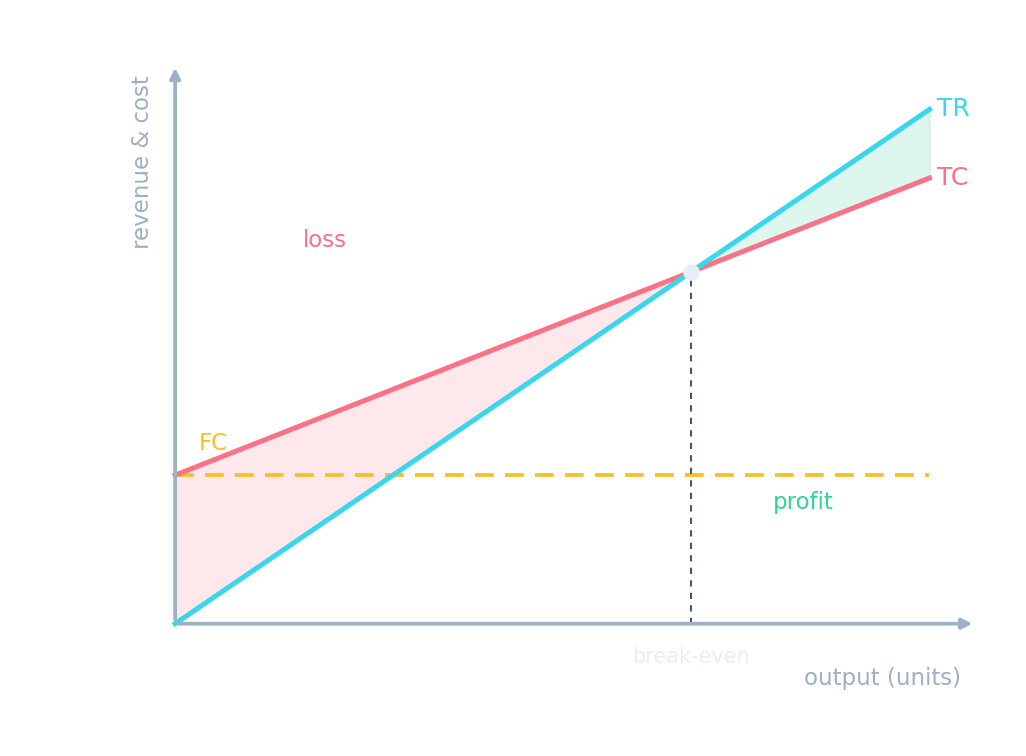
在盈亏平衡之下,企业亏损;在它之上,盈利。
Break-even output is 400 and the firm sells 520. What is the margin of safety (units)? · 盈亏平衡产出是 400 而企业卖 520。安全边际(单位)是多少?
Margin of safety = 520 − 400 = 120 units. · 安全边际 = 520 − 400 = 120 单位。
Margin of safety 安全边际
- Margin of safety = actual output − break-even output.
- It shows how far sales can fall before the firm makes a loss.
Worked example. Price 20, variable cost 12 → contribution = 8. Fixed costs 4,000 → break-even = 4000 ÷ 8 = 500 units. If the firm sells 650, the margin of safety is 650 − 500 = 150 units.
安全边际
- 安全边际(margin of safety)= 实际产出 − 盈亏平衡产出。
- 它显示销售能下降多远才使企业亏损。
例题。 价格 20,可变成本 12 → 贡献 = 8。固定成本 4,000 → 盈亏平衡 = 4000 ÷ 8 = 500 单位。如果企业卖 650,安全边际是 650 − 500 = 150 单位。
You've got it
- contribution per unit = price − variable cost per unit
- break-even output = fixed costs ÷ contribution per unit (revenue = total cost)
- margin of safety = actual − break-even output: how far sales can fall
你掌握了
- 每单位贡献 = 价格 − 每单位可变成本
- 盈亏平衡产出 = 固定成本 ÷ 每单位贡献(收入 = 总成本)
- 安全边际 = 实际 − 盈亏平衡产出:销售能下降多远