Costs · 成本
| English | 中文 | Pinyin · 拼音 |
|---|---|---|
| variable costs/ˈveərɪəbl kɒsts/ | 可变成本 | kě biàn chéng běn |
| fixed costs/fɪkst kɒsts/ | 固定成本 | gù dìng chéng běn |
| output/ˈaʊtpʊt/ | 产出 | chǎn chū |
| raw materials/rɔː məˈtɪərɪəlz/ | 原材料 | yuán cái liào |
| total cost/ˈtəʊtl kɒst/ | 总成本 | zǒng chéng běn |
| marginal cost/ˈmɑːdʒɪnl kɒst/ | 边际成本 | biān jì chéng běn |
| average cost/ˈævrɪdʒ kɒst/ | 平均成本 | píng jūn chéng běn |
What does it cost to make?
- Before a firm can price, budget or judge profit, it must understand its costs — and not all costs behave the same way.
- Some stay flat; others rise with every unit made.
制造它要花多少成本?
- 在一个企业能定价、做预算或判断利润之前,它必须理解它的成本——而且不是所有成本都以相同的方式表现。
- 有些保持平稳;其他的随每个制造的单位上升。
Which is a fixed cost? · 哪个是一项固定成本?
Rent does not change with output — a fixed cost. · 租金不随产出变化——一项固定成本。
Fixed cost 500, variable cost 4 per unit, output 200. What is total cost? · 固定成本 500,每单位可变成本 4,产出 200。总成本是多少?
TC = 500 + 4 × 200 = 1300. · TC = 500 + 4 × 200 = 1300。
Total cost equals fixed cost plus ______ cost. · 总成本等于固定成本加______成本。
TC = FC + VC. · TC = FC + VC。
Fixed and variable costs 可变成本
- Fixed costs 固定成本 don't change with output 产出: rent, salaries, insurance.
- Variable costs rise with output: raw materials 原材料, piece-rate wages, power.
- Total cost 总成本 = fixed + variable costs.
Total cost is fixed cost plus variable cost; it rises in parallel with variable cost.
固定成本与可变成本
- 固定成本(fixed costs)不随产出变化:租金、薪水、保险。
- 可变成本(variable costs)随产出上升:原材料、计件工资、电力。
- 总成本 = 固定 + 可变成本。
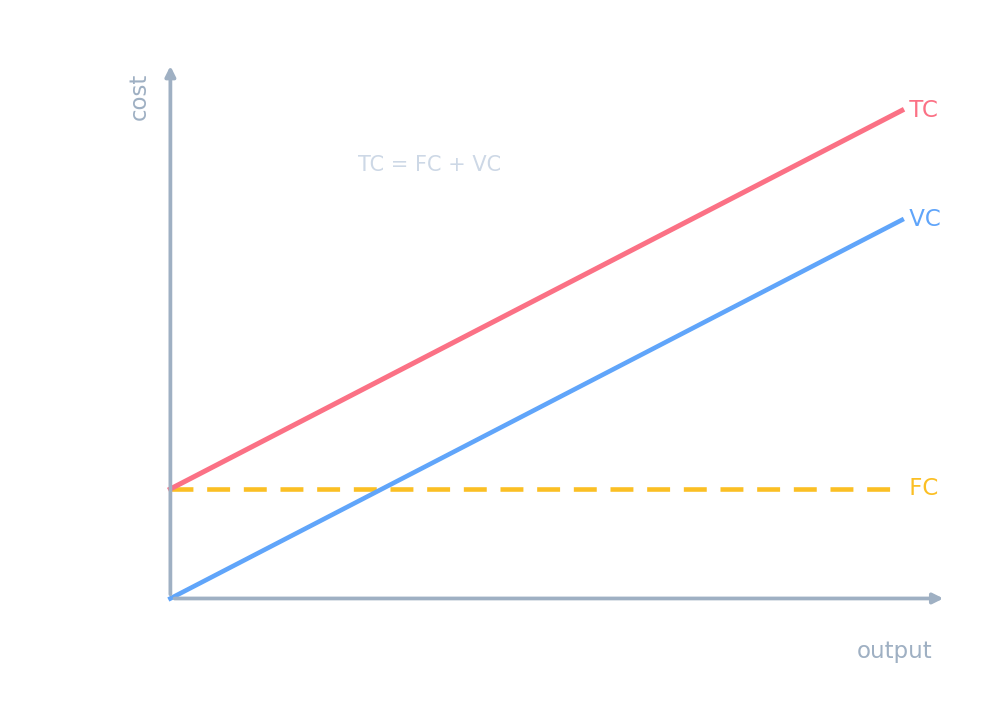
总成本是固定成本加可变成本;它与可变成本平行上升。
Costs · 成本
y = ax + b
Total cost = fixed cost · 固定成本 (intercept) + variable cost per unit (gradient). · 总成本 = 固定成本(截距)+ 每单位可变成本(斜率)。
Total cost is 1200 and output is 150 units. What is average cost per unit? · 总成本是 1200 而产出是 150 单位。每单位平均成本是多少?
AC = 1200 ÷ 150 = 8 per unit. · AC = 1200 ÷ 150 = 每单位 8。
Marginal cost is the cost of: · 边际成本是以下的成本:
Marginal cost is the extra cost of one additional unit. · 边际成本是一个额外单位的额外成本。
Average and marginal cost 边际成本
- Average cost 平均成本 = total cost ÷ output — the cost per unit.
- Marginal cost = the cost of making one more unit.
Worked example. Fixed cost 400, variable cost 6 per unit, output 100. Total cost = 400 + 6×100 = 1000. Average cost = 1000 ÷ 100 = 10 per unit.
Fixed, variable and total cost as output rises
平均成本与边际成本
- 平均成本(average cost)= 总成本 ÷ 产出——每单位成本。
- 边际成本(marginal cost)= 制造多一个单位的成本。
例题。 固定成本 400,可变成本每单位 6,产出 100。总成本 = 400 + 6×100 = 1000。平均成本 = 1000 ÷ 100 = 每单位 10。

随着产出上升的固定、可变和总成本
Break-even chart · 盈亏平衡图
Add a revenue line to the fixed-cost and total-cost lines. Where revenue meets total cost is the break-even point; beyond it the firm makes a profit. · 在固定成本线和总成本线上再加一条收入线。收入与总成本相遇处是盈亏平衡点;超过它,企业开始盈利。
Why costs matter
- Costs set the floor for pricing and decide profit.
- Knowing fixed vs variable costs is essential for break-even and decision-making.
Capital spending buys fixed assets; revenue spending covers running costs
为什么成本重要
- 成本设定定价的底线并决定利润。
- 知道固定对可变成本对盈亏平衡和决策至关重要。
You've got it
- fixed costs don't change with output; variable costs do; total = fixed + variable
- average cost = total ÷ output; marginal cost = cost of one more unit
- understanding costs underpins pricing, profit and break-even
你掌握了
- 固定成本不随产出变化;可变成本变化;总 = 固定 + 可变
- 平均成本 = 总 ÷ 产出;边际成本 = 多一个单位的成本
- 理解成本支撑定价、利润和盈亏平衡