English
This final topic covers trade imbalances, exchange rates in depth, and how countries develop and connect.
ไทย
หัวข้อสุดท้ายนี้ครอบคลุมความไม่สมดุลทางการค้า อัตราแลกเปลี่ยนอย่างละเอียด以及如何ประเทศพัฒนาและเชื่อมต่อ
A-Level Economics · Economics A-Level · Topic 11 · หัวข้อ 11
 8:57
8:57
ปัญหาเศรษฐกิจระหว่างประเทศ (A-Level)
เงินของประเทศหนึ่งสูญเสียมูลค่าลงหนึ่งในห้าภายในคืนเดียว การส่งออกกลายเป็นราคาถูกอย่างฉับพลัน และการนำเข้าแพงขึ้นทันที ดังนั้นช่องว่างทางการค้าควรจะหดตัวลงทันที มันไม่ได้ทำเช่นนั้น…
English narration · English + 中文 subtitles burned in · การบรรยายภาษาอังกฤษ · คำบรรยายภาษาอังกฤษ + 中文 ลอยตัวบนภาพ
This final topic covers trade imbalances, exchange rates in depth, and how countries develop and connect.
หัวข้อสุดท้ายนี้ครอบคลุมความไม่สมดุลทางการค้า อัตราแลกเปลี่ยนอย่างละเอียด以及如何ประเทศพัฒนาและเชื่อมต่อ
Source: Cambridge International syllabus · แหล่งที่มา: หลักสูตร Cambridge International
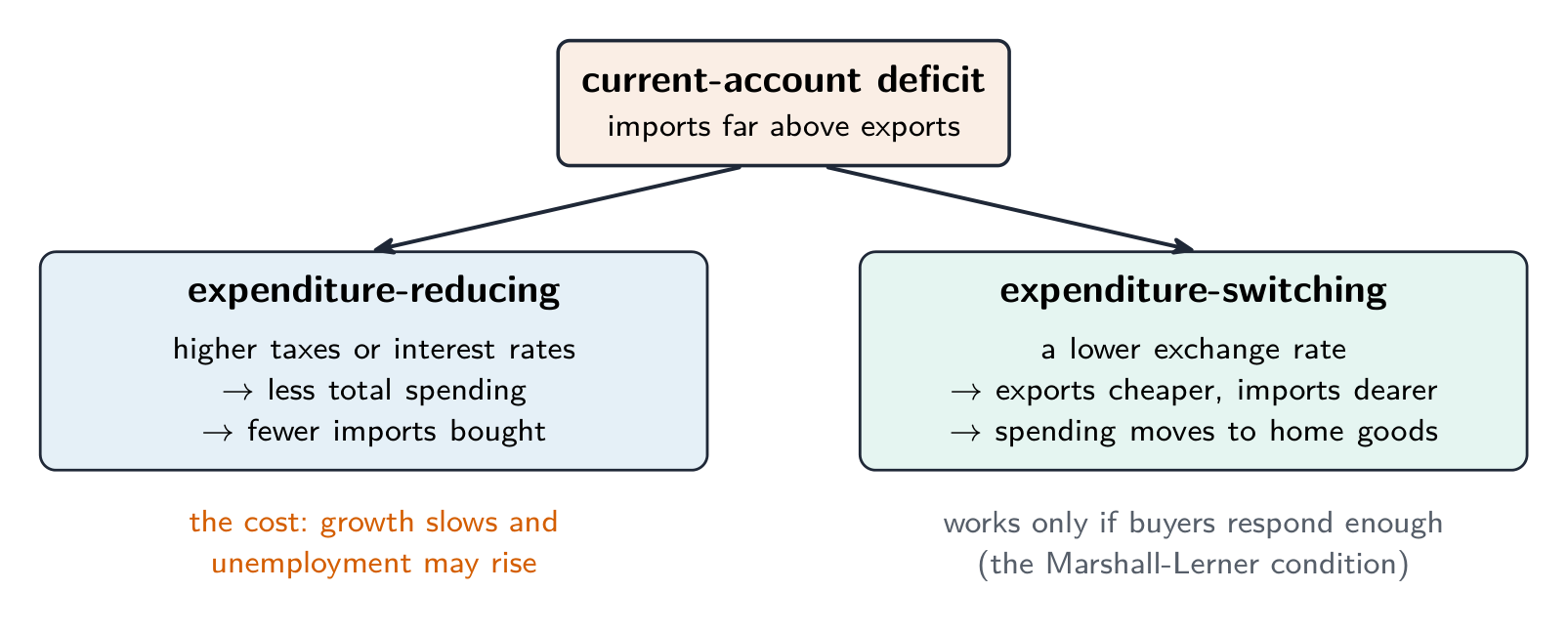
A country with a large balance of payments 国际收支 problem — usually a deficit on the current account 经常账户 — can use two kinds of policy.
A lower exchange rate only improves the current account if buyers respond enough. The Marshall-Lerner condition 马歇尔勒纳条件 says the sum of the price elasticities of demand for exports and imports must be greater than one:
Worked example. After a depreciation, the demand for a country's exports has $PED = 0.6$ and its demand for imports has $PED = 0.7$. Will the current account improve?
so the Marshall-Lerner condition is met, and the depreciation should improve the current account in the long run. (If the two elasticities had summed to less than $1$ — for example $0.3 + 0.4 = 0.7$ — a depreciation would make the deficit worse.)
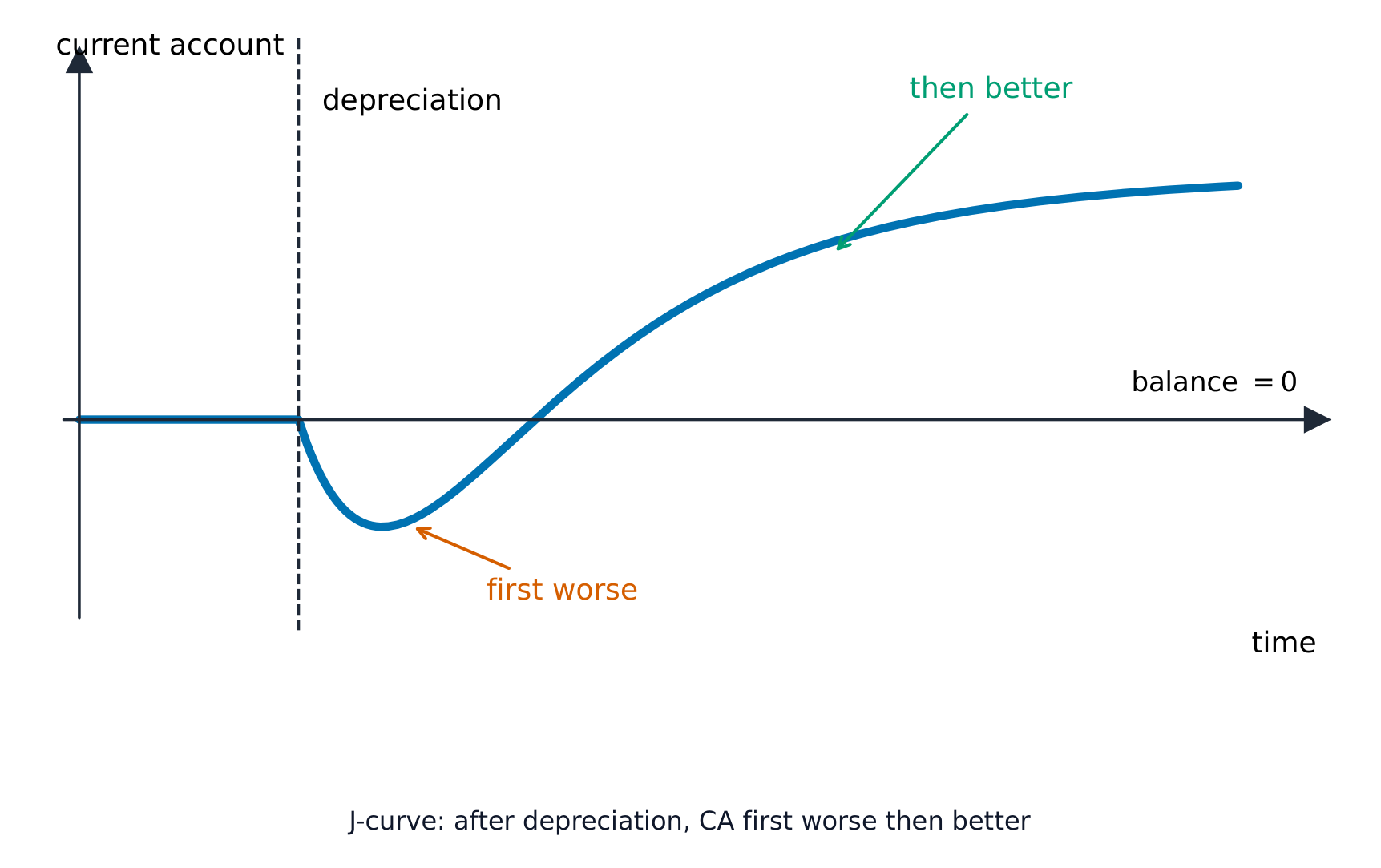
Even when this holds, the gain takes time. The J-curve effect J曲线效应 describes what happens: just after a depreciation, the current account first gets worse (imports cost more straight away, but trade volumes are slow to change), then later improves as buyers adjust — tracing the shape of a letter J.
ประเทศที่มีปัญหา ดุลการค้า อย่างใหญ่ — มักจะเป็นขาดดุลใน บัญชีเดินสะพัด — สามารถใช้นโยบายได้สองประเภท
อัตราแลกเปลี่ยนที่ต่ำลงจะช่วยปรับปรุงบัญชีเดินสะพัดได้ก็ต่อเมื่อผู้ซื้อตอบสนองเพียงพอ เงื่อนไขมาร์แชล-เลอวน กล่าวว่าผลรวมของความยืดหยุ่นต่อราคาของอุปสงค์สำหรับสินค้าส่งออกและสินค้านำเข้าต้องมากกว่าหนึ่ง:
ตัวอย่างการวิเคราะห์. หลังจากการ deprecate อุปสงค์สำหรับสินค้าส่งออกของประเทศมี $PED = 0.6$ และอุปสงค์สำหรับสินค้านำเข้ามี $PED = 0.7$ บัญชีเดินสะพัดจะดีขึ้นหรือไม่?
ดังนั้นเงื่อนไขมาร์แชล-เลอวน เป็นจริง และการ depreciate ควรปรับปรุงบัญชีเดินสะพัดในระยะยาว (หากความยืดหยุ่นทั้งสองรวมกันได้น้อยกว่า $1$ - ตัวอย่างเช่น $0.3 + 0.4 = 0.7$ - การ depreciate จะทำให้ขาดดุล แย่ลง.)
แม้ว่าสิ่งนี้จะเกิดขึ้น ผลลัพธ์ก็ใช้เวลา ผลกระทบ curve J J อธิบายสิ่งที่เกิดขึ้น: ทันทีหลังจากการ depreciate บัญชีเดินสะพัดเริ่มแรกจะ แย่ลง (สินค้านำเข้ามีราคาแพงขึ้นทันทีแต่ปริมาณการค้าเปลี่ยนแปลงช้า) จากนั้นจึงดีขึ้นเมื่อผู้ซื้อปรับตัว - วาดรูปทรงของตัวอักษร J
Classify real examples by the economic idea they show. · จำแนกตัวอย่างจริงตามแนวคิดทางเศรษฐศาสตร์ที่แสดงออก
| English | ไทย |
|---|---|
| depreciation/dɪˌpriːʃɪˈeɪʃn/ | การเสื่อมค่า |
| devaluation/diːˌvæljuːˈeɪʃn/ | การลดมูลค่า |
| Marshall-Lerner condition/ˈmɑːʃl ˈlɜːnə kənˈdɪʃn/ | cs Marshall-Lerner |
| J-curve effect/dʒeɪ kɜːv ɪˈfekt/ | ผล J-curve |
| nominal exchange rate/ˈnɒmɪnl eksˈtʃeɪndʒ reɪt/ | อัตราแลกเปลี่ยน nomiinal |
| real exchange rate/rɪəl eksˈtʃeɪndʒ reɪt/ | อัตราแลกเปลี่ยนจริง |
| trade-weighted exchange rate/treɪd ˈweɪtɪd eksˈtʃeɪndʒ reɪt/ | อัตราแลกเปลี่ยนน้ำหนักการค้า |
| effective exchange rate/ɪˈfektɪv eksˈtʃeɪndʒ reɪt/ | อัตราแลกเปลี่ยนที่มีประสิทธิภาพ |
| floating exchange rate/ˈfləʊtɪŋ eksˈtʃeɪndʒ reɪt/ | อัตราแลกเปลี่ยนลอยตัว |
| fixed exchange rate/fɪkst eksˈtʃeɪndʒ reɪt/ | อัตราแลกเปลี่ยนคงที่ |
| managed exchange rate/ˈmænɪdʒd eksˈtʃeɪndʒ reɪt/ | อัตราแลกเปลี่ยนที่มีจัดการ |

Source: Cambridge International syllabus · แหล่งที่มา: หลักสูตร Cambridge International
An exchange rate is the price of one currency in terms of another. There is more than one way to measure it:
Under floating rates, a rise in value is an appreciation 升值 and a fall is a depreciation. Under a fixed system, a deliberate rise is a revaluation 法定升值 and a deliberate fall is a devaluation. A weaker currency tends to raise exports and inflation; a stronger currency does the opposite.
อัตราแลกเปลี่ยน คือราคาของสกุลเงินหนึ่งเป็นสกุลเงินอีกสกุลหนึ่ง มีวิธีการวัดมากกว่าหนึ่งวิธี:
ภายใต้อัตราลอยตัว การเพิ่มขึ้นของมูลค่าคือ ** appreciation** และการลดลงคือ depreciation. ภายใต้ระบบคงที่ การเพิ่มขึ้นอย่างตั้งใจคือ revaluation และการลดลงอย่างตั้งใจคือ devaluation. สกุลเงินที่อ่อนค่ามักจะเพิ่ม صادراتและเงินเฟ้อ; สกุลเงินที่แข็งค่าจะทำตรงกันข้าม
The exchange rate is set by the demand for and supply of the currency. Shift either to see the rate appreciate or depreciate. · อัตราแลกเปลี่ยนกำหนดโดยแรงdemandและsupplyของสกุลเงิน เลื่อนทั้งสองเพื่อให้เห็นการ appreciation หรือ depreciation
| English | ไทย |
|---|---|
| balance of payments/ˈbæləns ɒv ˈpeɪmənts/ | ดุลการค้า |
| current account/ˈkʌrənt əˈkaʊnt/ | บัญชี جاری |
| expenditure-reducing/ekˈspendɪtʃə rɪˈdjuːsɪŋ/ | expenditure-reducing |
| expenditure-switching/ekˈspendɪtʃə ˈswɪtʃɪŋ/ | expenditure-switching |
| exchange rate/eksˈtʃeɪndʒ reɪt/ | อัตราแลกเปลี่ยน |
| appreciation/əˌpriːʃɪˈeɪʃn/ | การเพิ่มมูลค่า |
| revaluation/rɪˌvæljuːˈeɪʃn/ | การเพิ่มมูลค่า |
| economic growth/ˌiːkəˈnɒmɪk ɡrəʊθ/ | การเติบโตทางเศรษฐกิจ |
| economic development/ˌiːkəˈnɒmɪk dɪˈveləpmənt/ | การพัฒนาเศรษฐกิจ |
| standard of living/ˈstændəd ɒv ˈlɪvɪŋ/ | ระดับชีวิต |
| Human Development Index/ˈhjuːmən dɪˈveləpmənt ˈɪndeks/ | ดัชนีการพัฒนามนุษย์ |
| life expectancy/laɪf ekˈspektənsi/ | อายุขัย |
| years of schooling/jɪəz ɒv ˈskuːlɪŋ/ | ระยะเวลาเรียน |
| developed country/dɪˈveləpt ˈkʌntri/ | ประเทศพัฒนาแล้ว |
| developing country/dɪˈveləpɪŋ ˈkʌntri/ | ประเทศกำลังพัฒนา |
| birth rate/bɜːθ reɪt/ | อัตราการเกิด (Birth rate) |

Source: Cambridge International syllabus · แหล่งที่มา: หลักสูตร Cambridge International
It is important not to confuse two ideas:
A country can grow without developing much (if the extra income goes to a few people). Development usually means rising incomes plus better health, more schooling, and less poverty.
The best-known measure is the Human Development Index 人类发展指数 (HDI). It combines three things into one number between 0 and 1:
Other useful signs of development include access to clean water, the number of doctors per person, and mobile-phone and internet use.
สิ่งสำคัญคืออย่าสับสนระหว่างแนวคิดสองอย่างนี้:

ประเทศสามารถเติบโตโดยไม่พัฒนาเท่าไหร่ (หากรายได้เพิ่มเติม去向กลุ่มคนไม่กี่คน) การพัฒนาโดยทั่วไปหมายถึงรายได้เพิ่มขึ้น plus สุขภาพที่ดีขึ้น การเรียนรู้มากขึ้น และความยากจนที่ลดลง
ตัวชี้วัดที่รู้จักกันดีที่สุดคือ ดัชนีการพัฒนามนุษย์ (HDI) ซึ่งนำสามสิ่งมารวมเป็นตัวเลขเดียวระหว่าง 0 ถึง 1:

สัญญาณของการพัฒนาที่มีประโยชน์อื่น ๆ รวมถึงการเข้าถึงน้ำสะอาด จำนวนแพทย์ต่อคน และการใช้โทรศัพท์มือถือและอินเทอร์เน็ต
Follow how policy and resources can change living standards. · ติดตามว่านโยบายและทรัพยากรสามารถเปลี่ยนแปลงมาตรฐานการใช้ชีวิตได้อย่างไร
Source: Cambridge International syllabus · แหล่งที่มา: หลักสูตร Cambridge International
We often compare a developed country 发达国家 (high income, like Germany) with a developing country 发展中国家 (lower income, like Kenya). They differ in clear ways:
| Feature | Developed | Developing |
|---|---|---|
| income per person | high | low |
| birth rate 出生率 and population growth | low | often high |
| life expectancy | high | lower |
| share of workers in farming | small | large |
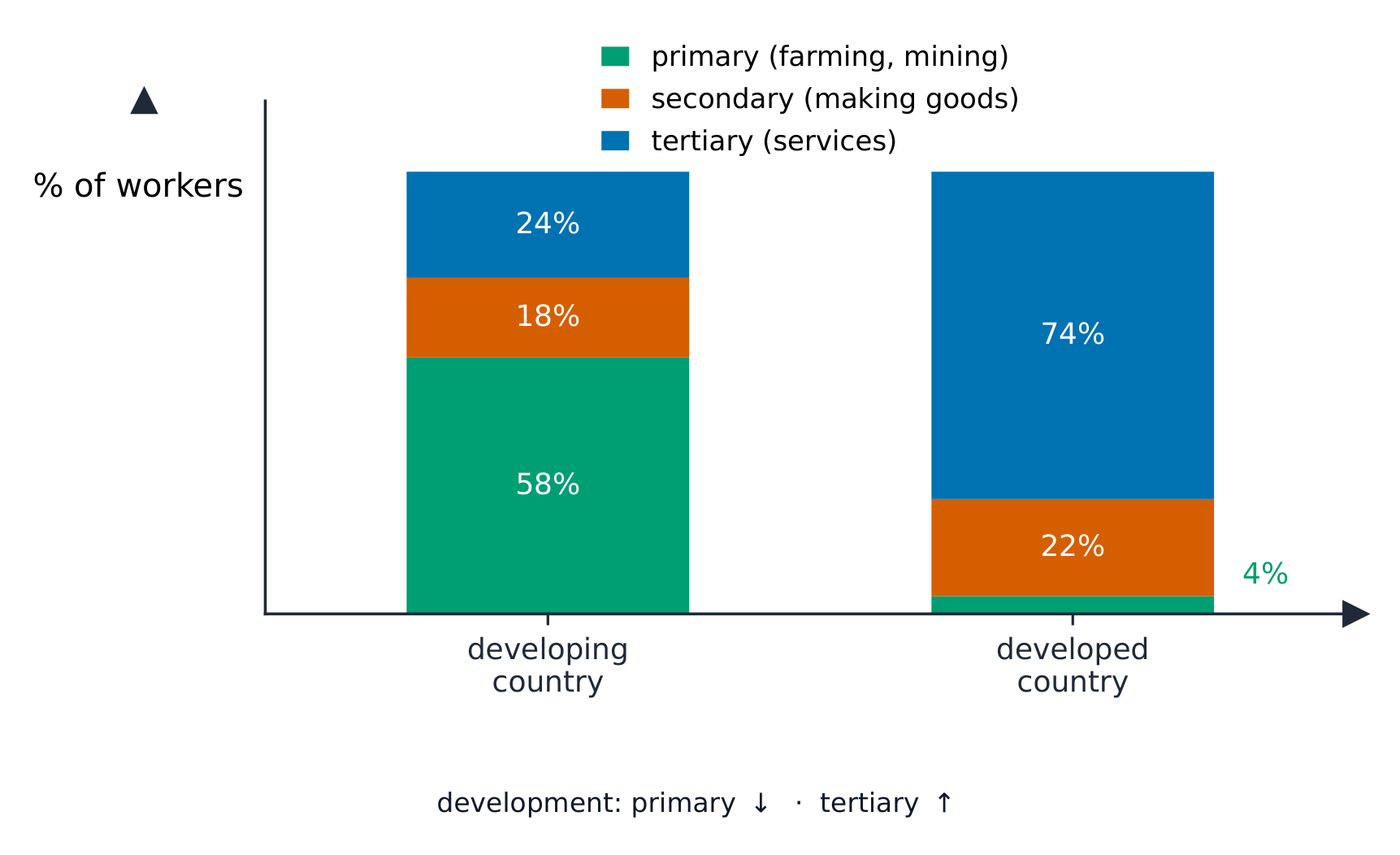
The employment structure 就业结构 also differs. As a country develops, workers move out of the primary sector 第一产业 (farming and mining), into the secondary sector 第二产业 (making goods), and later into the tertiary sector 第三产业 (services).
Many things shape development: savings and investment, the quality of education and health, infrastructure, stable government and law, and access to world markets.
เรามักเปรียบเทียบ ประเทศพัฒนาแล้ว (รายได้สูง เช่น เยอรมนี) กับ ประเทศกำลังพัฒนา (รายได้ต่ำกว่า เช่นเคนยา) ทั้งสองมีลักษณะแตกต่างกันอย่างชัดเจน:
| คุณสมบัติ | พัฒนาแล้ว | กำลังพัฒนา |
|---|---|---|
| รายได้ต่อหัว | สูง | ต่ำ |
| อัตราการเกิด และการเติบโตของประชากร | ต่ำ | มักจะสูง |
| อายุขัย | สูง | ต่ำลง |
| สัดส่วนแรงงานในภาคเกษตร | น้อย | มาก |
โครงสร้างการจ้างงาน ก็แตกต่างกันด้วย เมื่อประเทศพัฒนา แรงงานจะเคลื่อนย้ายออกจาก ภาคปฐมภูมิ (เกษตรกรรมและการเหมืองแร่) เข้าสู่ ภาคทุติยภูมิ (การผลิตสินค้า) และในภายหลังเข้าสู่ ภาค tertiary (บริการ)
หลายปัจจัยกำหนดการพัฒนา: การออมและการลงทุน คุณภาพการศึกษาและสุขภาพ โครงสร้างพื้นฐาน รัฐบาลและความมั่นคงทางกฎหมาย以及การเข้าถึงตลาดโลก
Classify real examples by the economic idea they show. · จำแนกตัวอย่างจริงตามแนวคิดทางเศรษฐศาสตร์ที่แสดงออก
| English | ไทย |
|---|---|
| employment structure/emˈplɔɪmənt ˈstrʌktʃə/ | โครงสร้างการจ้างงาน |
| primary sector/ˈpraɪməri ˈsektə/ | sector primary |
| secondary sector/ˈsekəndəri ˈsektə/ | sector secondary |
| tertiary sector/ˈtɜːʃjəri ˈsektə/ | sector tertiary |
| aid/eɪd/ | ความช่วยเหลือ |
| debt/det/ | หนี้สิน |
| foreign direct investment/ˈfɒrən daɪˈrekt ɪnˈvestmənt/ | การลงทุนโดยตรงจากต่างประเทศ |
| multinational corporation/ˌmʌltɪˈnæʃənl ˌkɔːpəˈreɪʃn/ | บริษัทข้ามชาติ |
| migration/maɪˈɡreɪʃn/ | การย้ายถิ่น |
| remittances/rɪˈmɪtənsɪz/ | Remittances |
Source: Cambridge International syllabus · แหล่งที่มา: หลักสูตร Cambridge International
Richer and poorer countries are linked in several ways, each with good and bad sides.
ประเทศรวยและประเทศจนเชื่อมโยงกันในหลายวิธี แต่ละวิธีมีทั้งข้อดีและข้อเสีย
Classify real examples by the economic idea they show. · จำแนกตัวอย่างจริงตามแนวคิดทางเศรษฐศาสตร์ที่แสดงออก

Source: Cambridge International syllabus · แหล่งที่มา: หลักสูตร Cambridge International
globalisation 全球化 is the growing links between countries — in trade, money, technology and people — so that the world acts more like one market. Its causes include cheaper transport and communication, free trade 自由贸易 agreements, and the spread of multinational firms.
Countries often join a trade bloc 贸易集团 — a group that trades freely among themselves (like the European Union).
| Benefits | Costs |
|---|---|
| lower prices and more choice | some industries and jobs are lost to cheaper countries |
| faster growth and technology transfer | the gap between rich and poor can widen |
| larger markets for firms | more pollution and use of resources |
| poorer countries can industrialise | powerful multinationals may avoid tax and dodge protectionism 贸易保护主义 rules |
Globalisation helps developed and developing economies in different ways, but the gains are not shared evenly, which is why it remains so argued about.
ภาวะโลกาภิวัตน์ คือความเชื่อมโยงที่เพิ่มขึ้นระหว่างประเทศ — ในด้านการค้า เงิน เทคโนโลยีและผู้คน — sehinggaโลกทำงาน更像หนึ่งตลาด สาเหตุรวมถึงค่าขนส่งและการสื่อสารที่ถูกลง ข้อตกลงการค้าเสรี และการขยายตัวของบริษัทข้ามชาติ
ประเทศมักเข้าร่วม ** blocการค้า** — กลุ่มที่ค้าขายด้วยกันเองอย่างอิสระ (เช่น สหภาพยุโรป)
| ผลประโยชน์ | ค่าใช้จ่าย |
|---|---|
| ราคาต่ำลงและมีตัวเลือกมากขึ้น | บางอุตสาหกรรมและงานหายไปให้กับประเทศที่ราคาถูกกว่า |
| การเติบโตที่เร็วขึ้นและการถ่ายทอดเทคโนโลยี | ช่องว่างระหว่างคนรวยและคนจนอาจกว้างขึ้น |
| ตลาดที่ใหญ่ขึ้นสำหรับบริษัท | มลพิษเพิ่มขึ้นและการใช้ทรัพยากรมากขึ้น |
| ประเทศยากจนสามารถอุตสาหกรรม化ได้ | บริษัทข้ามชาติที่มีอำนาจอาจหลีกเลี่ยงภาษีและหลอกลบกฎ ** Protectionism** |
ภาวะโลกาภิวัตน์ช่วยเศรษฐกิจพัฒนาแล้วและกำลังพัฒนาในรูปแบบที่แตกต่างกัน แต่ผลที่ได้รับไม่ถูกแบ่งปันอย่างเท่าเทียม นี่คือเหตุผลที่它还ถูกถกเถียงกันอย่างกว้างขวาง
See how trade or exchange-rate pressure changes domestic outcomes. · ดูว่าการค้าหรือแรงกดดันค่าเงินเปลี่ยนผลลัพธ์ภายในประเทศอย่างไร
| English | ไทย |
|---|---|
| globalisation/ˌɡləʊbəlaɪˈzeɪʃn/ | globalisation |
| free trade/friː treɪd/ | การค้าเสรี |
| trade bloc/treɪd blɒk/ | บล็อกการค้า (trade bloc) |
| protectionism/prəˈtekʃənɪzəm/ | การปกป้อง |
Work through it step by step, with instant-check exercises. · ทำทีละขั้นตอน พร้อมแบบฝึกหัดตรวจสอบผลทันที
Past Papers · ข้อสอบย้อนหลัง
Loading subjects… · กำลังโหลดวิชา…