Policies to correct disequilibrium
Introduced| English | Meaning |
|---|---|
| internal balance/ɪnˈtɜːnl ˈbæləns/ | Stable prices + full employment. |
| external balance/ekˈstɜːnl ˈbæləns/ | external balance |
| balance of payments/ˈbæləns ɒv ˈpeɪmənts/ | A record of economic transactions between an economy's residents and the rest of the world over a period. |
| demand-management/dɪˈmænd ˈmænɪdʒmənt/ | demand-management |
| expenditure-switching/ekˈspendɪtʃə ˈswɪtʃɪŋ/ | Describing policies that redirect spending between domestic and foreign goods and services. |
| expenditure-reducing/ekˈspendɪtʃə rɪˈdjuːsɪŋ/ | Describing policies that lower total spending, often to reduce demand for imports or address an external deficit. |
Balancing the books, inside and out
- A government wants internal balance 内部平衡 (stable prices, full employment) AND external balance 外部平衡 (a sustainable current account). Often a policy that fixes one upsets the other.
- Correcting a disequilibrium means choosing a policy mix that addresses the right imbalance.
Economics case lab
Classify real examples by the economic idea they show.
Internal balance refers to:
Difficulty 1/5 · 100 coins + a small bonus on first completion today
Internal balance = stable prices and full employment; external balance = a sustainable BoP.
External balance means a sustainable balance of ______.
Difficulty 1/5 · 100 coins + a small bonus on first completion today
No huge persistent current-account deficit.
Internal vs external balance
- Internal balance: low inflation and low unemployment at home.
- External balance: a sustainable balance of payments 国际收支 (no huge, persistent deficit).
- A demand boost can cut unemployment (internal) but worsen the trade deficit (external).
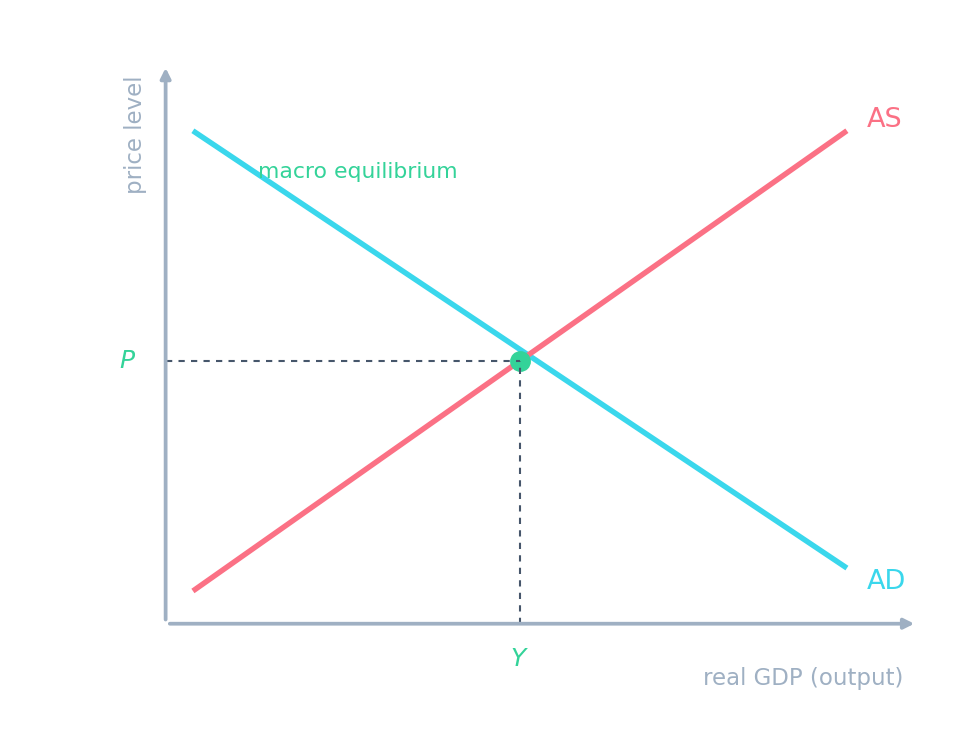
AD-AS sets internal balance (output and prices); demand changes here also spill over to the external balance via imports.
A demand boost can improve internal balance (jobs) but worsen external balance (the trade deficit).
Difficulty 1/5 · 100 coins + a small bonus on first completion today
Higher demand raises imports, widening the current-account deficit.
Policy responses
- Demand-management 需求管理 (fiscal/monetary) for cyclical internal problems.
- Expenditure-switching 支出转换 (depreciation, tariffs) and expenditure-reducing 支出减少 (tighter fiscal/monetary) for external deficits.
- Supply-side policy improves competitiveness — helping both balances at once in the long run.
Internal and external goals can clash. Stimulating demand to cut unemployment can widen the current-account deficit; tightening to fix the deficit can raise unemployment. Mind the trade-off.
Which is an expenditure-switching policy for a trade deficit?
Difficulty 1/5 · 100 coins + a small bonus on first completion today
Depreciation switches demand to home goods; the others reduce total expenditure.
Which policy can help both internal and external balance in the long run?
Difficulty 1/5 · 100 coins + a small bonus on first completion today
Improving productivity/competitiveness supports growth, jobs and exports together.
The internal-external conflict
- A policy aimed at one balance often disturbs the other: boosting demand cuts unemployment (internal) but widens the deficit (external).
- The skill is choosing a mix that addresses the priority imbalance with the least damage to the other.
You've got it
- internal balance = stable prices + full employment; external balance = sustainable BoP
- they can conflict (demand boost cuts unemployment but widens the deficit)
- mix demand-management, expenditure-switching/reducing, and supply-side policy