English
This topic studies the wider economy at A Level depth: how spending multiplies, how growth links to the environment, the jobs–prices link, and money.
日本語
このトピックはA-Levelの深さで広範な経済を扱う:支出の乗数効果、成長と環境の関連、雇用と物価の関係、および通貨についてである。
A-Level Economics · Aレベル経済学 · Topic 9 · トピック 9
 8:33
8:33
マクロ経済(A Level)
一つの建物が立ち上がる様子を見よ。誰かが鉄骨やコンクリート、賃金を支払っている。しかし物語はそこで終わらない。建設業者はその賃金を家持ち帰り、…
English narration · English + 中文 subtitles burned in · 英語ナレーション・英語+中文字幕 burning-in
This topic studies the wider economy at A Level depth: how spending multiplies, how growth links to the environment, the jobs–prices link, and money.
このトピックはA-Levelの深さで広範な経済を扱う:支出の乗数効果、成長と環境の関連、雇用と物価の関係、および通貨についてである。

Source: Cambridge International syllabus · 出典: Cambridge International シラバス
The circular flow of income 收入循环流 shows money passing between households and firms. injections 注入 add money to the flow (investment, government spending, exports); leakages 漏出 take it out (saving, taxation, imports).
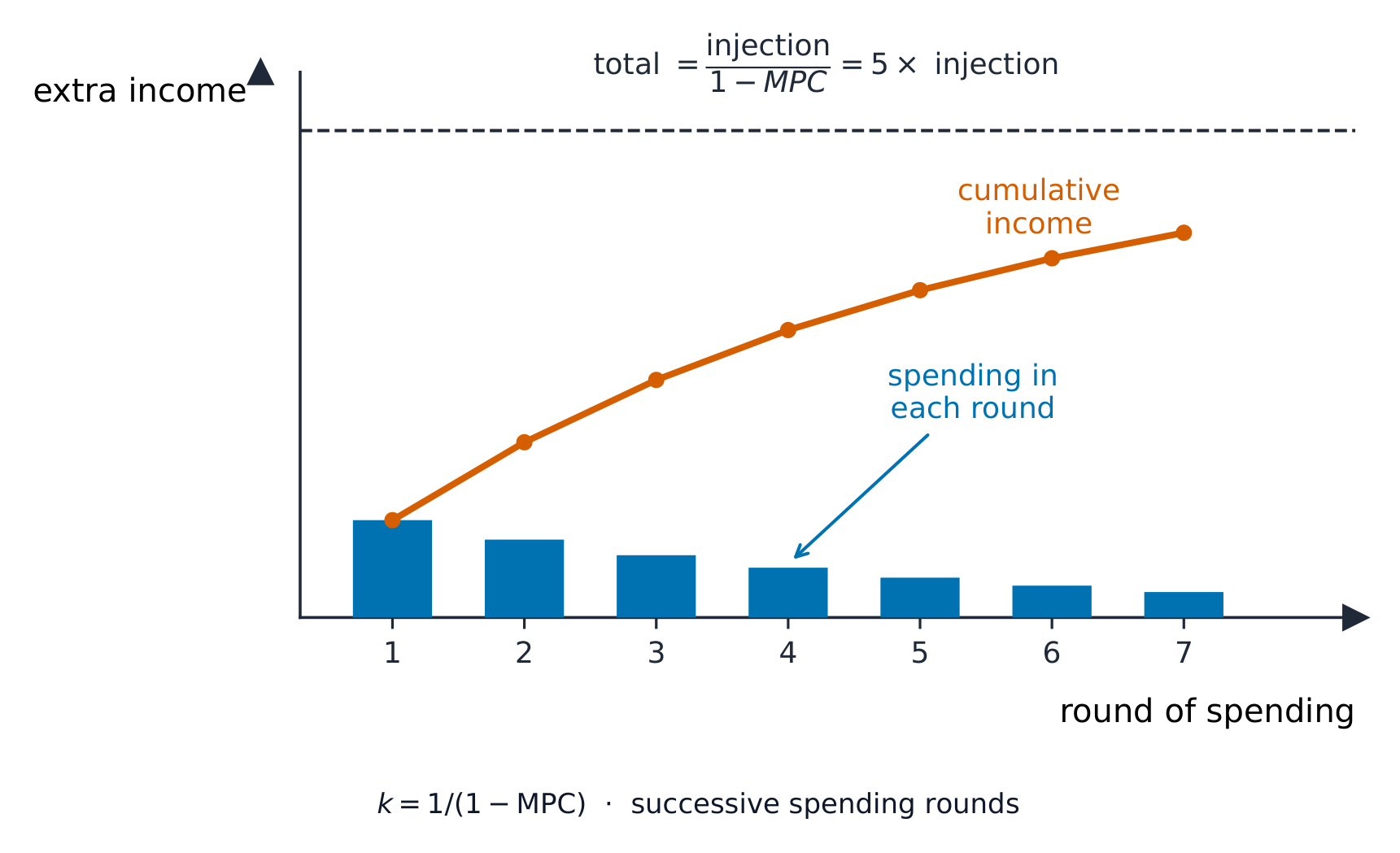
An injection raises income by more than the first amount. This is the multiplier 乘数. When a firm builds a factory, the builders earn income, and they spend part of it, which becomes someone else's income, and so on.
How much is spent again depends on the marginal propensity to consume 边际消费倾向 (MPC) — the fraction of extra income that people spend on home goods. The rest leaks out. In a simple model:
A bigger MPC (smaller leakages) gives a bigger multiplier. The main leakages are measured by the marginal propensity to save 边际储蓄倾向 (MPS) and the marginal propensity to import 边际进口倾向 (MPM).
Worked example. In an economy the MPC is $0.8$. Find the multiplier, then the effect of a $\text{\pounds} 10$ billion rise in investment.
National income therefore rises by $5 \times \text{\pounds} 10\text{ billion} = \text{\pounds} 50\text{ billion}$ — five times the original injection. (Because all income is either spent or saved, $\text{MPC} + \text{MPS} = 1$, so here $\text{MPS} = 0.2$ and the multiplier is also $1/\text{MPS}$.)
The accelerator 加速数 says that investment 投资 depends on the rate of change of output. When demand is rising quickly, firms need lots of new capital, so investment jumps. When demand merely stays high, investment falls back.
**循環流(所得の循環)**は、家庭と企業の間での資金の流れを示す。**injections(注入)**は流れに資金を加える(投資、政府支出、輸出);**leakages(漏れ)**は流れから資金を取り出す(貯蓄、課税、輸入)。
注入は最初の金額よりmore(大きく)所得を増やす。これが乗数である。企業が工場を建設すると、建設従事者は収入を得て、その一部を消費する。それが他人の収入となり、さらに消費され、というように続く。
再び消費される額はmarginal propensity to consume (MPC) ——追加所得の中で家庭用財に消費される割合——に依存する。残りは漏れる。単純なモデルでは:
MPC が大きい(漏れが少ない)ほど、大きな乗数が生まれる。主要な漏れは、marginal propensity to save (MPS) と marginal propensity to import (MPM) で測定される。
worked example. 経済におけるMPCが$0.8$の場合、乗数を求め、投資が$\text{\pounds} 10$億増えた時の効果を計算せよ。
したがって国民所得は$5 \times \text{\pounds} 10\text{ billion} = \text{\pounds} 50\text{ billion}$だけ増加する——元の注入の五倍である。(全所得は消費または貯蓄のいずれかであるため、$\text{MPC} + \text{MPS} = 1$、ここで$\text{MPS} = 0.2$、乗数もまた$1/\text{MPS}$である。)
エクセラーターとは、投資が産出量の変化率に依存するという理論です。需要が急増している場合、企業は大量の新しい資本を必要とするため、投資が跳ね上がります。しかし、需要が高水準で停滞しているだけの場合、投資は減少します。
Income circles between households and firms. An injection (e.g. investment) is re-spent again and again — the multiplier effect. · 所得は家計と企業の間で循環する。投入(例えば投資)が再び支出され、さらにその收入が再支出されることで、乗数効果が生まれる。
Drag the injection and the MPC, then press Play — each spending round is MPC times the last, and the total settles at k × the injection. · 注入額とMPCをドラッグし、再生ボタンを押す——各支出ラウンドは直前のMPC倍であり、合計はk × 注入額で収束する。
| English | 日本語 |
|---|---|
| circular flow of income/ˈsɜːkjʊlə fləʊ ɒv ˈɪŋkʌm/ | 所得循環流 |
| injections/ɪnˈdʒekʃnz/ | 注入 |
| leakages/ˈliːkɪdʒɪz/ | 漏洩 |
| multiplier/ˌmʌltɪˈplaɪə/ | 乗数効果 |
| marginal propensity to consume/ˈmɑːdʒɪnl prəˈpensɪti tə kənˈsjuːm/ | 限界消費性向 |
| marginal propensity to save/ˈmɑːdʒɪnl prəˈpensɪti tə seɪv/ | 限界貯蓄性向 |
| marginal propensity to import/ˈmɑːdʒɪnl prəˈpensɪti tʊ ɪmˈpɔːt/ | 限界輸入性向 |
| accelerator/əkˈseləreɪtə/ | 加速原理 |

Source: Cambridge International syllabus · 出典: Cambridge International シラバス
economic growth 经济增长 is a rise in real output.
The output gap 产出缺口 is the difference between actual output and potential output. A positive gap (actual above potential) tends to cause inflation; a negative gap (actual below potential) means spare capacity and unemployment.
sustainable growth 可持续增长 is growth that meets today's needs without harming the ability of future generations to meet theirs. Fast growth can use up non-renewable resources and cause pollution, which threatens sustainability 可持续性. So a country must weigh growth today against the environment and resources of tomorrow.
経済成長とは、実質的な産出量が増加することを指します。
生産ギャップとは、実際の産出量と潜在生産量の差のことです。正のギャップ(実際が潜在を上回る)はインフレを引き起こす傾向があり、負のギャップ(実際が潜在を下回る)は余剰生産能力と失業を意味します。

持続可能な成長とは、今日のニーズを満たしつつ、将来の世代が自らのニーズを満たす能力を損なわない成長です。急速な成長は再生可能でない資源の枯渇や汚染を招き、これが持続可能性を脅かします。したがって、国は今日の成長と明日の環境・資源とのバランスを取らなければなりません。

Classify real examples by the economic idea they show. · 經濟の概念を示す実例を分類せよ。
| English | 日本語 |
|---|---|
| investment/ɪnˈvestmənt/ | 投資 |
| consumption/kənˈsʌmpʃn/ | 消費 |
| saving/ˈseɪvɪŋ/ | 貯蓄 |
| disposable income/dɪˈspəʊzəbl ˈɪŋkʌm/ | 可処分所得 |
| economic growth/ˌiːkəˈnɒmɪk ɡrəʊθ/ | 経済成長である |
| actual growth/ˈæktʃuːəl ɡrəʊθ/ | 実態成長率 |
| potential growth/pəˈtenʃl ɡrəʊθ/ | 潜在成長率 |
| output gap/ˈaʊtpʊt ɡæp/ | 産出ギャップ |
| sustainable growth/səˈsteɪnəbl ɡrəʊθ/ | 持続可能な成長 |
| sustainability/səˌsteɪnəˈbɪlɪti/ | 持続可能性 |

Source: Cambridge International syllabus · 出典: Cambridge International シラバス
unemployment 失业 is measured in two ways: the claimant count 申领救济人数 (people claiming benefits) and the wider labour force survey 劳动力调查 (a sample asked about work).
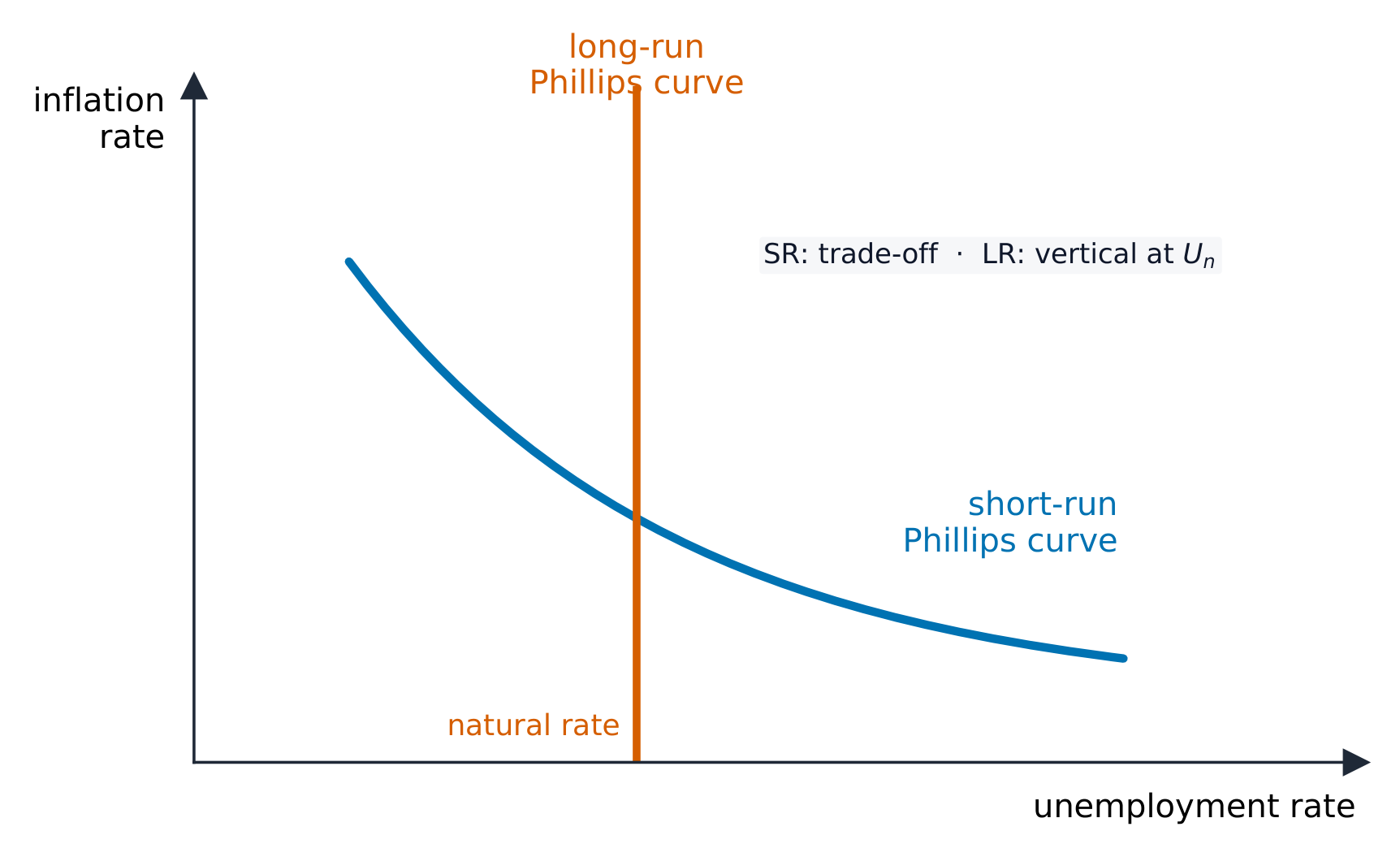
The natural rate of unemployment 自然失业率 is the unemployment left when the labour market is in balance (mainly frictional and structural). It cannot be removed just by raising demand.
The Phillips curve 菲利普斯曲线 shows the link between unemployment and inflation:
失業は主に2つの方法で測定されます。一つは受給者数(給付を受けている人々)であり、もう一つはより広範な労働力調査(仕事について質問されるサンプル集団)です。
自然失業率とは、労働市場が均衡している時に残る失業率のことです(主に摩擦的・構造的失業)。これは単に需要を上げることでは解消できません。
フィリップス曲線は、失業とインフレの関係を示します:
Follow how policy and resources can change living standards. · 政策と資源が生活水準をどのように変化させるかを追跡せよ。
| English | 日本語 |
|---|---|
| unemployment/ʌnemˈplɔɪmənt/ | 失業とのトレードオフを示す |
| claimant count/ˈkleɪmənt kaʊnt/ | 受給者数 |
| labour force survey/ˈleɪbə fɔːs ˈsɜːveɪ/ | 労働力調査 |
| frictional unemployment/ˈfrɪkʃənl ʌnemˈplɔɪmənt/ | 摩擦的失業 |
| structural unemployment/ˈstrʌktʃərəl ʌnemˈplɔɪmənt/ | 構造的失業 |
| cyclical unemployment/ˈsaɪklɪkl ʌnemˈplɔɪmənt/ | 循環的失業 |
| seasonal unemployment/ˈsiːzənl ʌnemˈplɔɪmənt/ | 季節的失業 |
| natural rate of unemployment/ˈnætʃərəl reɪt ɒv ʌnemˈplɔɪmənt/ | 自然雇用量の地点で垂直である |
| Phillips curve/ˈfɪlɪps kɜːv/ | フィリップス曲線 |

Source: Cambridge International syllabus · 出典: Cambridge International シラバス
money 货币 is anything widely accepted in payment. It has four jobs:
Good money is durable, easy to carry, easy to divide, hard to fake, and limited in supply.
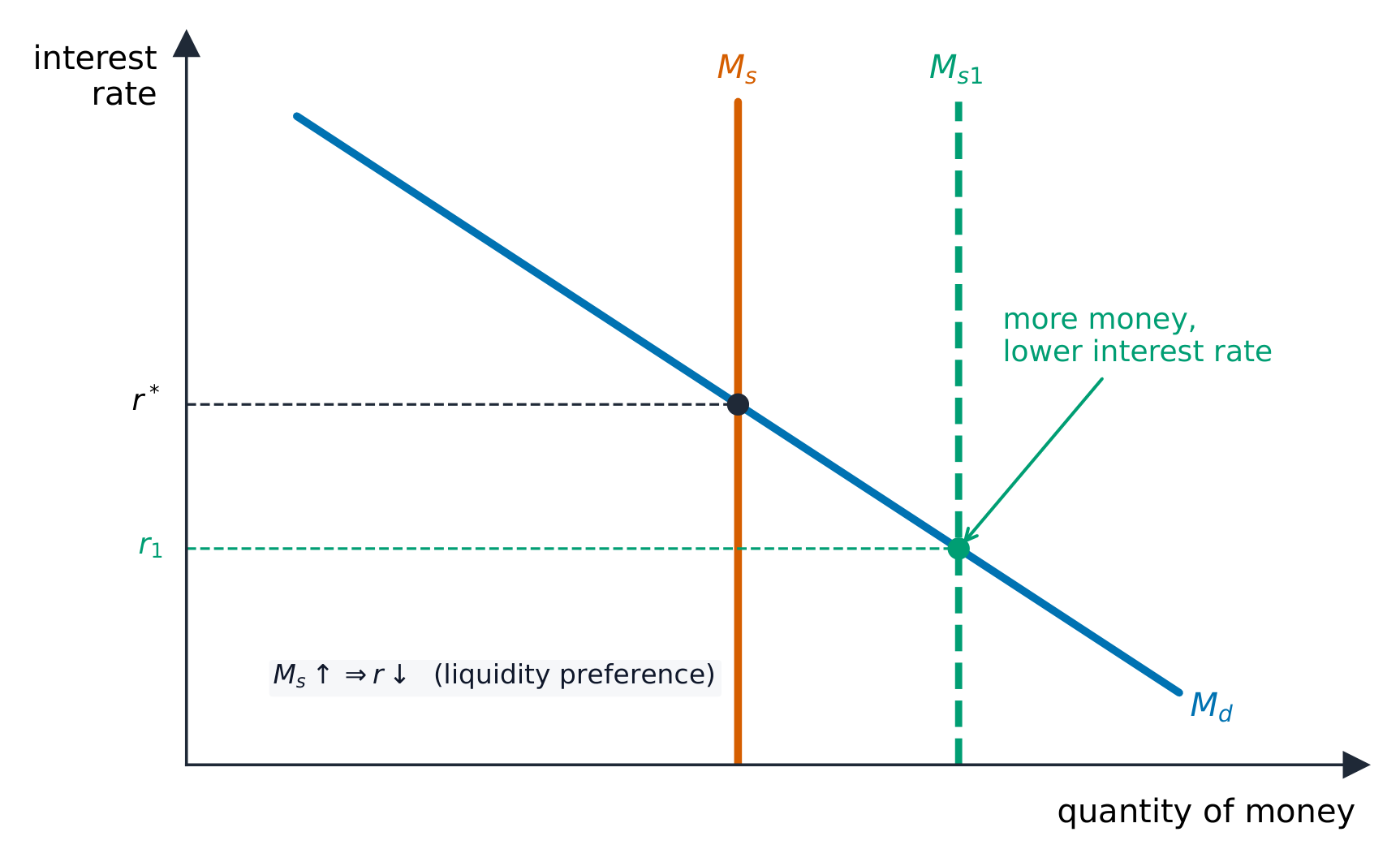
People hold money rather than other assets for its liquidity 流动性 (it can be spent at once). The demand for money 货币需求 — also called liquidity preference 流动性偏好 — comes from the need to make everyday payments, to keep a safety buffer, and to be ready to buy assets.
The interest rate 利率 is the price of borrowing money. It is set where the demand for money meets the money supply 货币供给. A larger money supply tends to lower the interest rate.
moral hazard 道德风险 is the danger that banks take bigger risks because they expect to be rescued if things go wrong. If a bank believes the government will bail it out, it may lend recklessly — knowing it keeps the gains but passes losses to others.
通貨とは、広く支払い手段として受け入れられる任何东西を指します。主な役割は4つあります:
適度な通貨は耐久性があり、持ち運びやすく、分割しやすく、偽造されにくく、供給量が限定されています。

人々は他の資産ではなく通貨を持つことで、その流動性(即座に使用できること)を得ます。通貨需要(または流動性選好)は、日常的な支払いを行う必要性、安全 buffer を確保する必要性、そして資産購入の準備をする必要性によって生じます。
金利とは、お金を借りるための価格です。これは通貨需要と通貨供給が一致する地点で決定されます。通貨供給が増えると、金利は低下する傾向があります。
モラルハザードとは、銀行が不況時に政府から救済されることを期待してより大きなリスクを取る危険性を指します。銀行が政府に救助される可能性があると信じている場合、利益を維持しつつ損失を他者に転嫁できるため、無責任な貸出を行うことがあります。
Classify real examples by the economic idea they show. · 經濟の概念を示す実例を分類せよ。
| English | 日本語 |
|---|---|
| money/ˈmʌni/ | お金 |
| medium of exchange/ˈmiːdɪəm ɒv eksˈtʃeɪndʒ/ | 交換手段 |
| store of value/stɔː ɒv ˈvæljuː/ | 価値の保存 |
| unit of account/ˈjuːnɪt ɒv əˈkaʊnt/ | 計測単位 |
| standard of deferred payment/ˈstændəd ɒv dɪˈfɜːd ˈpeɪmənt/ | 延期支払の基準 |
| central bank/ˈsentrəl bæŋk/ | 中央銀行 |
| lender of last resort/ˈlendə ɒv læst rɪˈzɔːt/ | 最終借手 |
| commercial bank/kəˈmɜːʃl bæŋk/ | 商業銀行 |
| liquidity/lɪˈkwɪdɪti/ | 流動性 |
| demand for money/dɪˈmænd fɔː ˈmʌni/ | 貨幣需要 |
| liquidity preference/lɪˈkwɪdɪti ˈprefrəns/ | 流動性選好 |
| interest rate/ˈɪntrest reɪt/ | 金利 |
| money supply/ˈmʌni səˈplaɪ/ | 貨幣供給量 |
| moral hazard/ˈmɒrəl ˈhæzəd/ | 道徳的ハザード |
Work through it step by step, with instant-check exercises. · 一歩ずつ進め、即時チェック付きの問題で学習します。
Loading subjects… · 科目を読み込み中...