Employment and unemployment
Introduced| English | Meaning |
|---|---|
| unemployment rate/ʌnemˈplɔɪmənt reɪt/ | The percentage of the labour force that is unemployed under the measure being used. |
| claimant count/ˈkleɪmənt kaʊnt/ | The number of people claiming specified unemployment-related benefits, used as one indicator of unemployment. |
| frictional/ˈfrɪkʃənl/ | Describing unemployment that occurs while people search for jobs or move between jobs. |
| structural/ˈstrʌktʃərəl/ | Describing economic effects caused by underlying features or changes in the organisation of production and labour markets. |
| cyclical/ˈsaɪklɪkl/ | Related to recurring expansions and contractions in economic activity. |
| seasonal/ˈsiːzənl/ | Varying in a recurring pattern at particular times of the year. |
Counting the jobless
- Unemployment isn't just a statistic — it's lost output, lost income, and social harm. Governments watch it closely.
- Its level, types and causes all feed into the AD-AS picture you've built.
Development chain lab
Follow how policy and resources can change living standards.
There are 3 million unemployed in a labour force of 40 million. What is the unemployment rate (%)?
Difficulty 2/5 · 140 coins + a small bonus on first completion today
(3 / 40) × 100 = 7.5%.
The unemployment rate divides the number unemployed by the labour ______.
Difficulty 1/5 · 100 coins + a small bonus on first completion today
Rate = unemployed / labour force × 100.
Measuring unemployment
- The unemployment rate 失业率 = unemployed ÷ labour force × 100.
- Measures: the claimant count 申领救济人数 (those on benefits) and the wider ILO/Labour Force Survey.
Worked example. 3 million unemployed in a labour force of 40 million. Rate = (3 ÷ 40) × 100 = 7.5%.
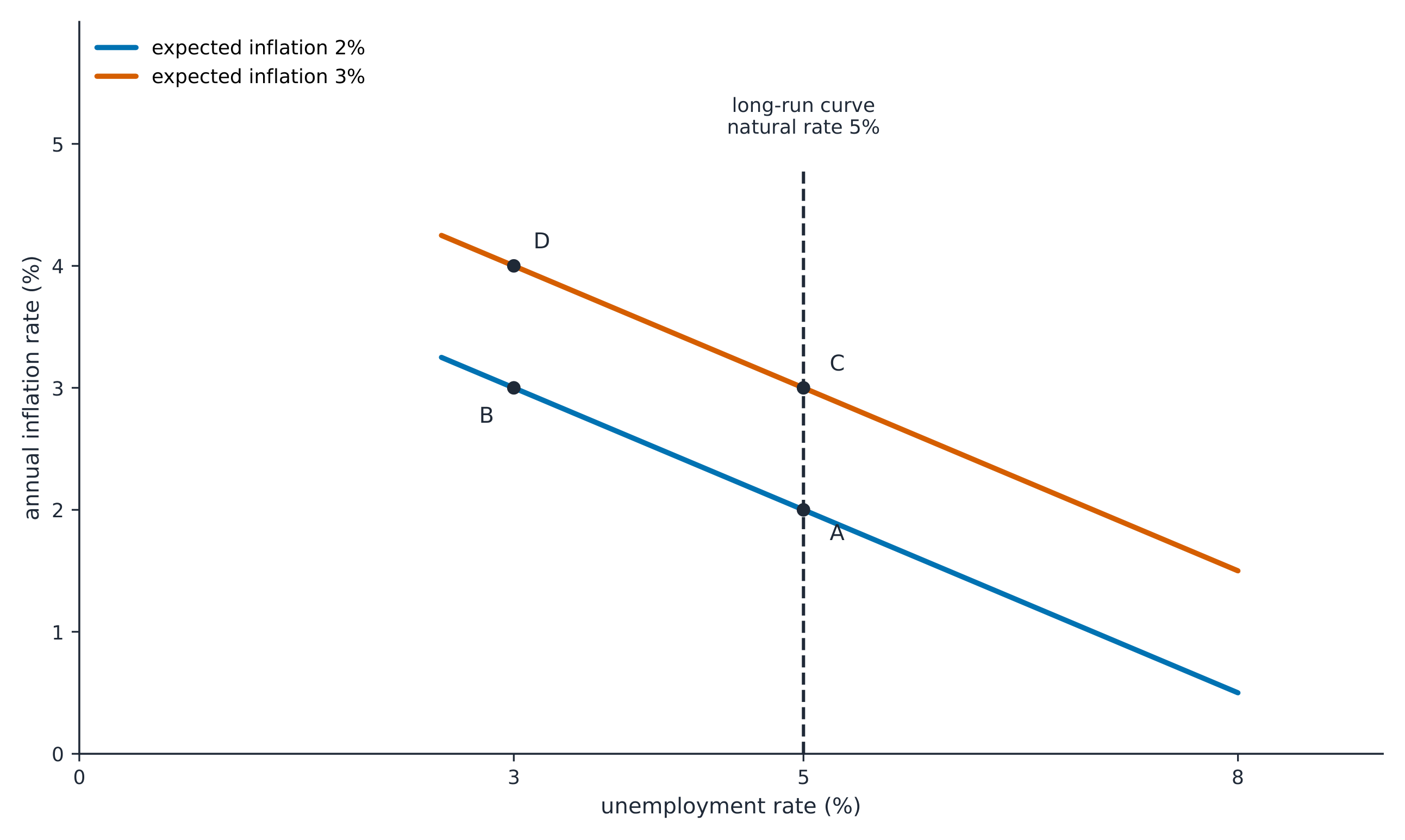
The short-run and long-run Phillips curves
Unemployment caused by a mismatch between workers' skills and available jobs is:
Difficulty 1/5 · 100 coins + a small bonus on first completion today
Structural unemployment comes from industry/skill mismatch (e.g. declining industries).
Cyclical unemployment rises when aggregate demand falls in a recession.
Difficulty 1/5 · 100 coins + a small bonus on first completion today
Demand-deficient (cyclical) unemployment moves with the economic cycle.
Match each type of unemployment to its cause.
Difficulty 2/5 · 140 coins + a small bonus on first completion today
Each type has a distinct cause.
Types of unemployment
- Frictional 摩擦性 (between jobs), structural 结构性 (skills/industry mismatch), cyclical 周期性 (demand-deficient, in recessions), and seasonal 季节性.
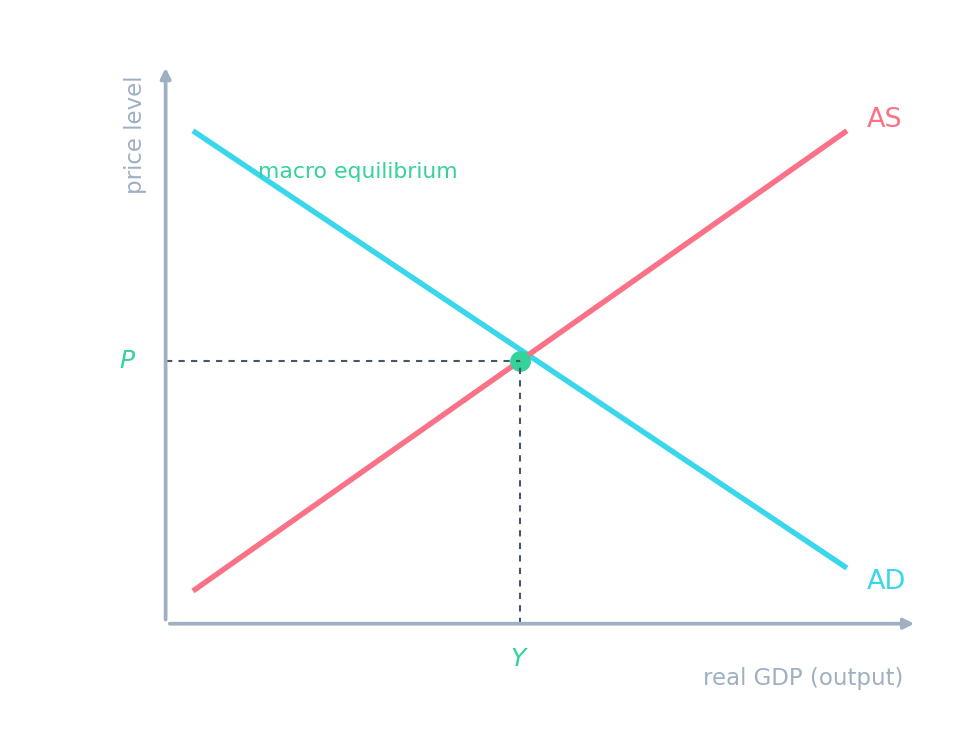
A fall in AD reduces output, so firms need fewer workers — cyclical (demand-deficient) unemployment.
Costs of unemployment
- To the individual (lost income, skills, wellbeing), to firms (lower demand), and to the government (more benefits, less tax) — plus lost national output.

Four types of unemployment: frictional, structural, cyclical and seasonal
You've got it
- unemployment rate = unemployed ÷ labour force × 100
- types: frictional, structural, cyclical, seasonal; cyclical rises when AD falls
- costs fall on individuals, firms, the government and national output