English
This topic looks at how governments correct market failure 市场失灵, make incomes fairer, and act in the labour market.
日本語
このトピックでは、政府が市場の失敗を是正し、所得を公正にし、労働市場で行動する方法について扱う。
A-Level Economics · Aレベル経済学 · Topic 8 · トピック 8
 8:20
8:20
政府によるミクロ経済的介入(A Level)
3枚の一般的な写真。安価に販売されているたばこ。豊かな都市部を見下ろすスズ板の屋根が密集した丘。工場床…。
English narration · English + 中文 subtitles burned in · 英語ナレーション・英語+中文字幕 burning-in
This topic looks at how governments correct market failure 市场失灵, make incomes fairer, and act in the labour market.
このトピックでは、政府が市場の失敗を是正し、所得を公正にし、労働市場で行動する方法について扱う。

Source: Cambridge International syllabus · 出典: Cambridge International シラバス
A government has many tools to push a market towards a better use of resources.
A firm with monopoly power 垄断势力 can raise prices and cut output. competition policy 竞争政策 is the set of laws used to protect competition — for example, blocking mergers that create too much power, banning price-fixing, and fining firms that abuse their position.
Intervention can backfire. government failure 政府失灵 is when the government's action leads to a worse use of resources than before — through poor information, high costs, long time lags, or unintended effects (such as a black market caused by a price control).
政府には、市場を資源のより適切な使用へと導くための多くの手段がある。
独占的権力を持つ企業は価格を上げ、生産量を減らすことができる。競争政策は競争を守るために用いられる法律のセットであり、例えば、過度な権力を生む合併の阻止、価格談合の禁止、地位の乱用を行う企業への罰金などが含まれる。
介入が逆効果になることがある。政府の失敗とは、政府の行動が、情報の不備、コストの高さ、長いタイムラグ、意図しない影響(価格統制による闇市場の発生など)によって、それ以前よりも資源の非効率な使用をもたらすことを指す。
An externality (like pollution) means the market price ignores a real cost — output ends up above the efficient level. Add the external cost to see the gap. · 外部不経済(汚染など)とは、市場価格が現実的なコストを無視することを意味し、生産量が効率性のある水準を超えてしまう。外部コストを加算することでそのギャップが見える。
| English | 日本語 |
|---|---|
| market failure/ˈmɑːkɪt ˈfeɪlɪə/ | 市場の失敗 |
| indirect tax/ɪndaɪˈrekt tæks/ | 間接税 |
| subsidy/ˈsʌbsɪdi/ | 補助金 |
| price control/praɪs kənˈtrəʊl/ | 価格統制 |
| tradable permits/ˈtreɪdəbl ˈpɜːmɪts/ | 排出権取引制度 |
| regulation/ˌreɡjʊˈleɪʃn/ | 規制 |
| state provision/steɪt prəˈvɪʒn/ | 公的供給 |
| nationalisation/ˌnæʃənəlaɪˈzeɪʃn/ | 国有化 |
| privatisation/ˌpraɪvətaɪˈzeɪʃn/ | 民営化 |
| monopoly power/məˈnɒpəli ˈpaʊə/ | 独占的権力 |
| competition policy/ˌkɒmpəˈtɪʃn ˈpɒlɪsi/ | 競争政策 |

Source: Cambridge International syllabus · 出典: Cambridge International シラバス
It is important to separate two words that sound alike:
A fair (equitable) outcome is not always an equal one. Most governments worry about too much inequality 不平等.
Remember the difference between the two things being shared:
These bring about redistribution 再分配 — moving income from richer to poorer people. Wealth is harder to redistribute than income, because the rich can hide assets or move them abroad, and wealth taxes are hard to collect.
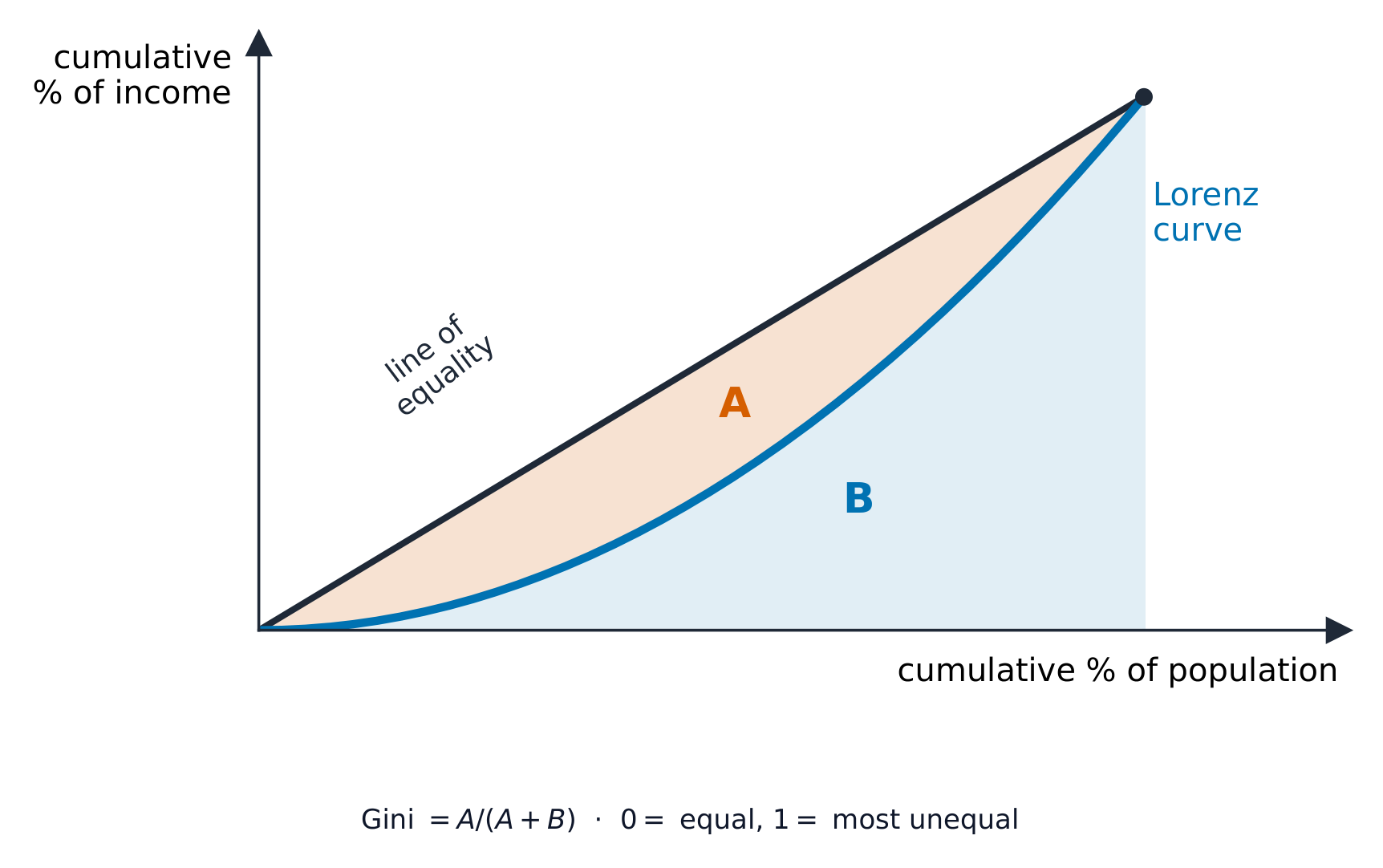
Worked example. Country X has a Gini coefficient of 0.25 and country Y one of 0.48. What does that mean, and what does each Lorenz curve look like? The Gini runs from 0 (perfect equality) to 1 (one person has everything), so a higher number means more unequal: country Y at 0.48 is markedly more unequal than X at 0.25. On the graph, Y's Lorenz curve sags further below the 45° line of equality, while X's hugs it more closely. The Gini is exactly the area between the line of equality and the Lorenz curve, as a fraction of the whole triangle beneath that line - which is why a bigger sag gives a bigger number. One caution is worth stating: the Gini measures relative inequality only. It says nothing about absolute living standards, so a poor country and a rich one can share the same Gini.
似ている2つの言葉の区別が重要である:

公正(公平)な結果は必ずしも均等な結果とは限らない。ほとんどの政府は過度な格差を懸念している。
共有されている2つのものの違いをrememberすること:

これらは再配分をもたらす——富を豊かな人々から贫しい人々へ移転することである。富は所得よりも再配分が難しい。なぜなら、富裕層は資産を隠したり国外に移動させたりできるためであり、かつ資産税の徴収自体が困難だからである。
** worked example.** 国Xのジニ係数は0.25、国Yは0.48である。これは何を意味し、それぞれのローレンツ曲線はどのような形になるか。ジニ係数は0(完全平等)から1(一人が全てを持つ)まで取值するため、数字が大きいほど不平等度が高い。つまり、0.48の国Yは0.25の国Xに比べて明らかに不平等度が高い。グラフ上では、Yのローレンツ曲線は45°の等分布線に対してより深く下方へ湾曲するのに対し、Xの曲線はそれにより密着している。ジニ係数とは、等分布線とローレンツ曲線の間の面積を、その線の下にある三角形全体の面積で割った比率である。したがって、湾曲が大きいほど値が大きくなる。ただし注意すべき点がある:ジニ係数は相対的な不平等のみを測るものであり、絶対的な生活水準については何ら示唆しない。そのため、貧しい国と裕福な国が同じジニ係数を持つこともあり得る。
Follow how policy can change disposable income and opportunity. · 政策が可処分所得や機会に与える影響を追跡する。
Drag each economy's top-20% income share — the curve that hugs the line of equality has the lower Gini, and the quintile chips give the exam-table numbers. · 各経済の上位20%所得比率をドラッグする——等分配線に沿う曲線ほどジニ係数は低く、クインタイルチップが試験表の数値を示す。
| English | 日本語 |
|---|---|
| equity/ˈekwɪti/ | 公正性 |
| equality/iːˈkwɒlɪti/ | 平等性 |
| inequality/ɪniːˈkwɒlɪti/ | 不平等 |
| income/ˈɪŋkʌm/ | 収入 |
| wealth/welθ/ | 富 |
| Lorenz curve/ˈlɒrənts kɜːv/ | ローレンツ曲線 |
| Gini coefficient/ˈdʒiːni ˌkəʊɪˈfɪʃənt/ | ジニ係数 |
| progressive tax/prəˈɡresɪv tæks/ | 累進所得税 |
| benefits/ˈbenɪfɪts/ | 利益 |
| transfer payments/ˈtrænsfɜː ˈpeɪmənts/ | 給付金 |
| redistribution/ˌriːˌdɪstrɪˈbjuːʃn/ | 再配分 |

Source: Cambridge International syllabus · 出典: Cambridge International シラバス
A wage is just a price — the price of labour — so we use demand and supply to study the labour market 劳动力市场.
The demand for labour 劳动力需求 is a derived demand 派生需求: firms want workers not for their own sake, but to make goods that sell. So labour demand depends on the marginal revenue product 边际收益产品 (MRP) — the extra revenue one more worker brings in. A worker is worth hiring while the MRP is at least as big as the wage.
The supply of labour 劳动力供给 to a job rises when the wage 工资 rises, and also depends on training needed, working conditions, and how many people have the right skills.
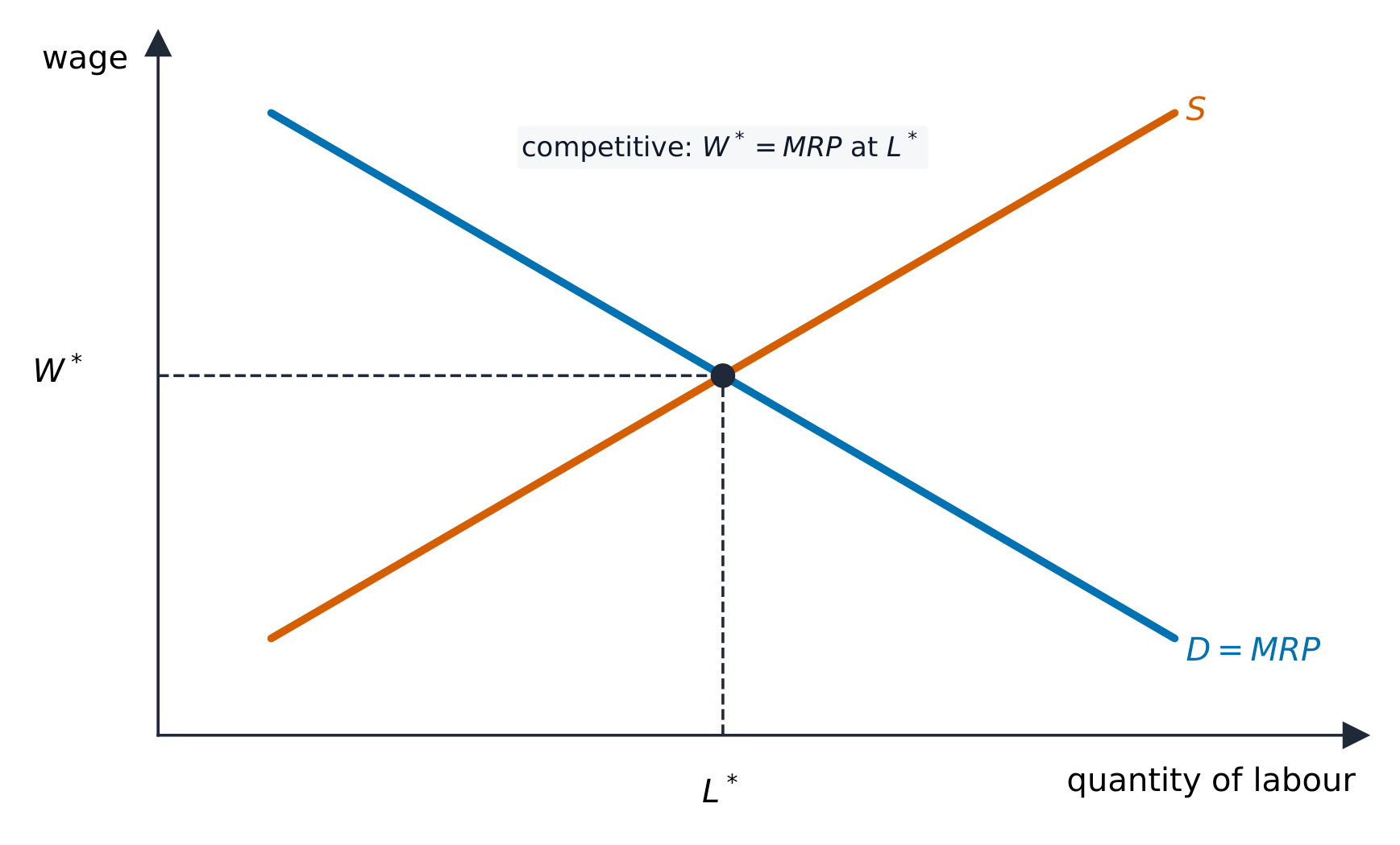
In a competitive labour market, the wage settles where the demand for labour equals the supply of labour.
Wages differ between jobs — this is a wage differential 工资差异. The main reasons are differences in MRP (skilled work is more productive), the training and qualifications needed, and the risk or unpleasantness of the work.
Some wage gaps come from discrimination 歧视 — paying people differently because of gender, race or age rather than their productivity. Governments use equal-pay laws and anti-discrimination laws to reduce this.
賃金は単なる価格——労働の価格——であるため、労働需要と供給を用いて労働市場を分析する。
労働の需要は派生需要である。企業は労働者自身を欲しているわけではなく、販売可能な商品を生産するために労働者を求める。したがって、労働の需要は限界収益産出量(MRP)——追加の労働者がもたらす追加の収益——に依存する。労働者のMRPが賃金以上である限り、雇用する価値がある。
ある職種への労働の供給は、賃金が上昇すると増加する。また、必要な研修内容、労働条件、および適正なスキルを持つ人の数にも依存する。
競争的な労働市場では、労働の需要と労働の供給が一致する地点で賃金が決定される。

職種間で賃金に差がある——これを賃金格差という。主な原因は、MRPの違い(熟練労働は生産性が高い)、必要な研修や資格、および仕事のリスクや不快さの違いである。
一部の賃金格差は差別によるものである——生産性ではなく、性別、人種、年齢に基づいて異なる賃金を支払うことである。政府は同一賃金法や差別禁止法を用いてこれを解消しようとする。
Wages are a price. The demand for labour (from firms) and the supply of labour (from workers) set the equilibrium wage. · 賃金は価格である。企業の求める労働力(需要)と労働者の提供する労働力(供給)が均衡賃金を決定する。
| English | 日本語 |
|---|---|
| labour market/ˈleɪbə ˈmɑːkɪt/ | 労働市場 |
| demand for labour/dɪˈmænd fɔː ˈleɪbə/ | 労働需要 |
| derived demand/dɪˈraɪvd dɪˈmænd/ | 派生需要 |
| marginal revenue product/ˈmɑːdʒɪnl ˈrevənjuː ˈprɒdʌkt/ | 限界収益産出量 |
| supply of labour/səˈplaɪ ɒv ˈleɪbə/ | 労働供給 |
| wage/weɪdʒ/ | 賃金 |
| monopsony/ˈmɒnəʊpsəni/ | 単一買い手 |
| trade union/treɪd ˈjuːnɪən/ | 労働組合 |
| national minimum wage/ˈnæʃənl ˈmɪnɪməm weɪdʒ/ | 最低賃金法 |
| wage differential/weɪdʒ ˌdɪfəˈrenʃl/ | 賃金格差 |
| discrimination/dɪˌskrɪmɪˈneɪʃn/ | 差別 |
| English | 日本語 |
|---|---|
| government failure/ˈɡʌvənmənt ˈfeɪlɪə/ | 政府失敗 |
Work through it step by step, with instant-check exercises. · 一歩ずつ進め、即時チェック付きの問題で学習します。
Loading subjects… · 科目を読み込み中...