The labour market
Introduced| English | Meaning |
|---|---|
| labour market/ˈleɪbə ˈmɑːkɪt/ | The interaction of workers offering labour and employers seeking it, determining employment and wages. |
| derived demand/dɪˈraɪvd dɪˈmænd/ | Demand for an input that arises from demand for the goods or services it helps produce. |
| productivity/ˌprɒdəkˈtɪvɪti/ | Output produced per unit of input over a given period. |
| labour supply/ˈleɪbə səˈplaɪ/ | The amount of work that people are willing and able to offer at given wage rates. |
| wage differentials/weɪdʒ ˌdɪfəˈrenʃlz/ | wage differentials |
What sets your wage
- Why does a surgeon earn more than a cleaner? The labour market 劳动力市场 answers with the same tool as any market — demand and supply, applied to workers.
- Wages are a price, set where the demand for and supply of labour meet.
The demand for labour is described as "derived demand" because it depends on:
Difficulty 1/5 · 100 coins + a small bonus on first completion today
Firms hire workers to make goods that are themselves demanded — hence derived.
More productive workers tend to command higher wages.
Difficulty 1/5 · 100 coins + a small bonus on first completion today
Higher productivity raises the value of a worker to the firm, increasing labour demand.
The demand for labour
- Labour demand is derived demand 派生需求: firms hire workers to produce goods that are themselves demanded.
- It depends on workers' productivity 生产率 and the price of the output — more productive or valuable work commands higher pay.

A garment factory: in a labour market, firms demand workers and the wage is the price of labour
The labour market
Wages are a price. The demand for labour (from firms) and the supply of labour (from workers) set the equilibrium wage.
A higher wage generally ______ the quantity of labour supplied.
Difficulty 1/5 · 100 coins + a small bonus on first completion today
The labour supply curve slopes upward: higher wages attract more workers.
The supply of labour
- Labour supply 劳动供给 rises with the wage (a higher wage attracts more workers).
- It also depends on the size of the workforce, skills/qualifications, and the appeal of the job.
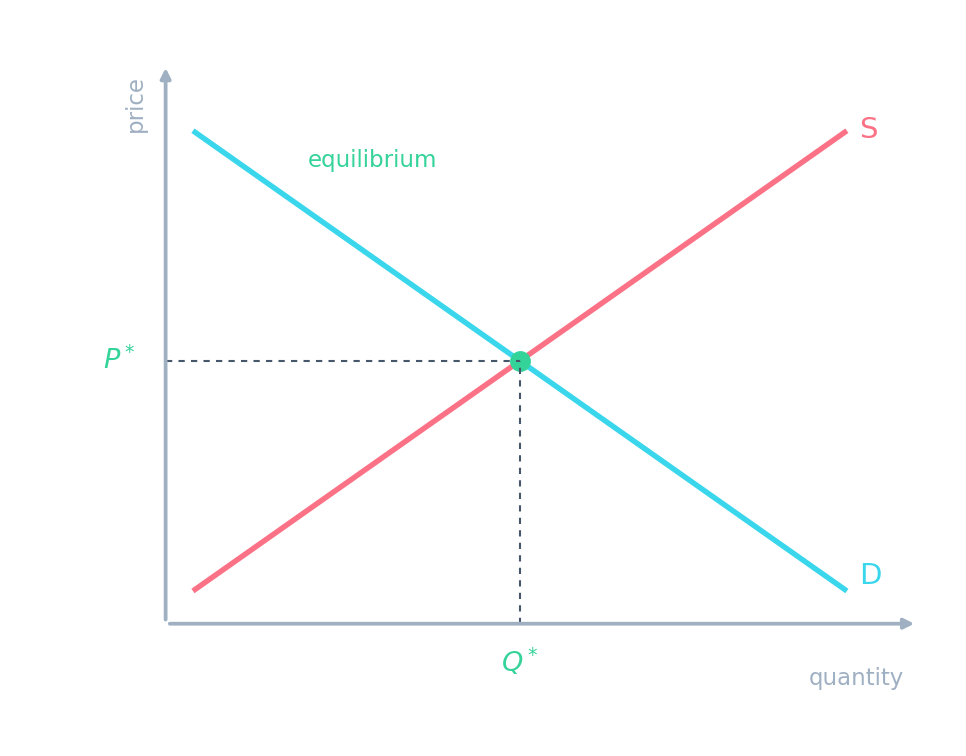
Wage and employment are set where labour demand meets labour supply — like any market.
The equilibrium wage is set where:
Difficulty 1/5 · 100 coins + a small bonus on first completion today
Like any market, equilibrium is where demand meets supply — here, for labour.
Wage differentials 工资差异
- Wages differ because of skills/qualifications, danger or unpleasantness (compensating differentials), barriers to entry (training, licences), and bargaining power.
Match each factor to why it raises a wage.
Difficulty 2/5 · 140 coins + a small bonus on first completion today
Scarcity, compensating differentials and bargaining power all lift wages.
You've got it
- the wage is set where labour demand meets labour supply
- labour demand is derived (from output demand) and depends on productivity
- wage differentials reflect skills, conditions, entry barriers and bargaining power
Write from an MRP of 40
- A worker adds 5 units of output.
- Each unit sells for 8, and the firm is a wage taker.
What is the marginal revenue product?
Marginal revenue product is extra output times its price.
What is the MRP?
Difficulty 1/5 · 100 coins + a small bonus on first completion today
5 units worth 8 each have MRP 40. Other options — 5 (the extra output only); 8 (the output price only).