A-Level Biology (9700) starts at the cell and works outwards: membranes and transport, the mitotic cell cycle, nucleic acids and protein synthesis, then transport in plants and mammals, gas exchange, infectious disease and immunity. A2 adds respiration, photosynthesis, homeostasis, inheritance, selection and evolution.
Biology is called the memorising science, and that is exactly what catches people out. The command word does most of the work: "explain" wants a mechanism, "describe" does not. A perfect description scores nothing when the question said explain.
Answers are marked against specific scheme points. One vague sentence covering three ideas usually earns one mark, not three.
How we study cells · Bagaimana kita mempelajari sel
Syllabus · Silabus
English
make temporary preparations of cellular material suitable for viewing with a light microscope
draw cells from microscope slides and photomicrographs
calculate magnifications of images and actual sizes of specimens from drawings, photomicrographs and electron micrographs (scanning and transmission)
use an eyepiece graticule and stage micrometer scale to make measurements and use the appropriate units, millimetre (mm), micrometre (µm) and nanometre (nm)
define resolution and magnification and explain the differences between these terms, with reference to light microscopy and electron microscopy
Bahasa Indonesia
buat preparat sementara dari materi seluler yang cocok untuk dilihat dengan mikroskop cahaya
gambar sel dari slide mikroskop dan foto mikroskopis
hitung pembesaran gambar dan ukuran sebenarnya spesimen dari gambar, foto mikroskopis, dan foto mikroskop elektron (pemindaian dan transmisi)
gunakan gratikula okuler dan skala mikrometer meja untuk melakukan pengukuran dan gunakan satuan yang sesuai, milimeter (mm), mikrometer (µm) dan nanometer (nm)
definisikan resolusi dan pembesaran serta jelaskan perbedaan antara istilah-istilah ini, dengan merujuk pada mikroskopi cahaya dan mikroskopi elektron
Source: Cambridge International syllabus · Sumber: Silabus Cambridge International
English
Cells 细胞 are very small, so you cannot see them with your eyes alone. You use a microscope 显微镜 to make a bigger picture of them. The first kind you meet is the light microscope 光学显微镜. It shines light through a thin specimen 标本 (the material you look at) and uses glass lenses to enlarge the view.
Making a slide and drawing what you see
To look at living material, you make a temporary preparation 临时装片. You put a small, thin piece of material on a glass slide 载玻片, add a drop of stain 染色剂 (a coloured liquid that makes parts easier to see), then lower a thin cover slip 盖玻片 on top to flatten it and keep out air.
When you draw cells from a slide or a photograph, follow simple rules:
use a sharp pencil and clear, single lines (no shading).
draw only what you can really see, with the parts in the correct sizes.
label the parts with straight lines that do not cross.
Magnification and actual size
Magnification 放大倍数 tells you how many times bigger the image is than the real object. It has no unit. You find it with one equation:
$$\text{magnification} = \frac{\text{size of image}}{\text{actual size of object}}$$
You can rearrange this to find any one value from the other two:
$$\text{actual size} = \frac{\text{size of image}}{\text{magnification}}$$
The top and the bottom of the fraction must use the same unit. Cells are tiny, so you work in small units:
$1\ \text{mm} = 1000\ \text{micrometre}$ 微米 (µm)
$1\ \text{µm} = 1000\ \text{nanometre}$ 纳米 (nm)
so $1\ \text{mm} = 1\,000\,000\ \text{nm}$.
Worked example. In a photomicrograph at magnification $5000$, a chloroplast 叶绿体 measures $25\ \text{mm}$ across. Its actual size is
The same equation works for drawings, photomicrographs 显微照片 (photos taken through a light microscope) and electron micrographs 电子显微照片 (the most detailed photos, explained below). Always convert to the same unit first, then divide.
Eyepiece graticule and stage micrometer
To measure a real cell under the microscope, you use an eyepiece graticule 目镜测微尺 — a tiny scale inside the eyepiece. Its divisions have no fixed size, so first you must calibrate 校准 them (work out what one division is worth).
You calibrate using a stage micrometer 载物台测微尺 — a special slide with an accurate scale on it (often $1\ \text{mm}$ split into $100$ parts, so each part is $10\ \text{µm}$). You line up the two scales, count how many graticule divisions fit a known length, and divide. Once calibrated, you can swap in your specimen and measure it with the graticule.
Resolution and magnification
These two words are easy to mix up. The examiner gives marks for the difference.
Magnification is how many times bigger the image is than the object.
Resolution 分辨率 is the smallest distance between two points that still lets you see them as two separate points.
Making an image bigger does not always show more detail. Past a certain point you just get a bigger, blurry image. Resolution sets the real limit on detail.
A light microscope has lower resolution because light has a fairly long wavelength 波长. An electron microscope 电子显微镜 uses beams of electrons 电子 instead of light. Electrons have a much shorter wavelength, so the resolution is far higher and you can see very small structures inside the cell. There are two kinds: scanning 扫描 (shows the surface in 3D) and transmission 透射 (passes electrons through a thin slice to show inside detail).
Bahasa Indonesia
Sel sangat kecil, sehingga Anda tidak dapat melihatnya hanya dengan mata telanjang. Anda menggunakan mikroskop untuk menghasilkan gambar yang lebih besar darinya. Jenis pertama yang Anda temui adalah mikroskop cahaya. Ia memancarkan cahaya melalui spesimen tipis (bahan yang Anda amati) dan menggunakan lensa kaca untuk memperbesar pandangan.
Mikroskop cahaya: cahaya naik melalui spesimen, lalu dua lensa (objektif dan okuler) membesarkannya
Membuat slide dan menggambar apa yang Anda lihat
Untuk melihat bahan hidup, Anda membuat preparasi sementara. Anda menaruh sepotong kecil dan tipis bahan pada slide kaca, menambahkan setetes ** pewarna** (cairan berwarna yang memudahkan bagian tertentu terlihat), lalu menurunkan cover slip tipis di atasnya untuk meratakannya dan menghalangi udara.
Membuat preparasi basah sementara — turunkan cover slip dengan sudut miring agar gelembung udara tidak terperangkap
Saat Anda menggambar sel dari slide atau foto, ikuti aturan sederhana:
gunakan pensil tajam dan garis jelas tunggal (tanpa arsiran).
gambarlah hanya apa yang benar-benar Anda lihat, dengan bagian-bagian sesuai ukurannya.
beri label pada bagian-bagian tersebut dengan garis lurus yang tidak saling berpotongan.
Perbesaran dan ukuran sebenarnya
Perbesaran menunjukkan berapa kali gambar lebih besar daripada objek aslinya. Ia tidak memiliki satuan. Anda mendapatkannya dengan satu persamaan:
Pembesaran = ukuran gambar ÷ ukuran sebenarnya
$$\text{magnification} = \frac{\text{size of image}}{\text{actual size of object}}$$
Anda dapat menyusun ulang ini untuk menemukan salah satu nilai dari dua lainnya:
$$\text{actual size} = \frac{\text{size of image}}{\text{magnification}}$$
Bagian atas dan bawah pecahan harus menggunakan satuan yang sama. Sel sangat kecil, jadi Anda bekerja dalam satuan kecil:
$1\ \text{mm} = 1000\ \text{micrometre}$ (µm)
$1\ \text{µm} = 1000\ \text{nanometre}$ (nm)
sehingga $1\ \text{mm} = 1\,000\,000\ \text{nm}$.
Contoh terpecahkan. Dalam fotomikrograf dengan perbesaran $5000$, sebuah kloroplas berukuran $25\ \text{mm}$ melintang. Ukuran sebenarnya adalah
Persamaan yang sama berlaku untuk gambar, fotomikrograf (foto yang diambil melalui mikroskop cahaya) dan elektron mikrograf (foto paling detail, dijelaskan di bawah ini). Selalu konversi ke satuan yang sama terlebih dahulu, lalu bagi.
Gratikula okuler dan mikrometer meja
Untuk mengukur sel nyata di bawah mikroskop, Anda menggunakan gratikula okuler — skala kecil di dalam okuler. Pembagiannya tidak memiliki ukuran tetap, jadi pertama-tama Anda harus kalibrasi mereka (menentukan apa nilai satu pembagi).
Anda melakukan kalibrasi menggunakan mikrometer panggung — preparat khusus dengan skala yang akurat di atasnya (sering $1\ \text{mm}$ dibagi menjadi $100$ bagian, sehingga setiap bagian bernilai $10\ \text{µm}$). Selaraskan kedua skala, hitung berapa banyak pembagian gratikula yang muat pada panjang yang diketahui, lalu bagilah. Setelah dikalibrasi, Anda dapat mengganti dengan spesimen dan mengukurnya dengan gratikula.
Kalibrasi gratikula dengan menjajarkannya dengan skala yang diketahui dari mikrometer meja
Resolusi dan pembesaran
Kedua kata ini mudah tertukar. Penguji memberikan nilai atas perbedaan keduanya.
Pembesaran adalah berapa kali gambar lebih besar daripada objeknya.
Resolusi adalah jarak terkecil antara dua titik yang masih memungkinkan Anda melihatnya sebagai dua titik terpisah.
Membuat gambar lebih besar tidak selalu menampilkan lebih banyak detail. Melewati batas tertentu, Anda hanya akan mendapatkan gambar yang lebih besar namun buram. Resolusi menetapkan batas nyata pada detail.
Mikroskop cahaya memiliki resolusi lebih rendah karena cahaya memiliki panjang gelombang yang cukup panjang. Mikroskop elektron menggunakan sinar elektron menggantikan cahaya. Elektron memiliki panjang gelombang jauh lebih pendek, sehingga resolusinya jauh lebih tinggi dan Anda dapat melihat struktur sangat kecil di dalam sel. Ada dua jenis: pemindaian (menampilkan permukaan dalam 3D) dan transmisi (melewati elektron melalui irisan tipis untuk menampilkan detail bagian dalam).
Resolusi: mikroskop cahaya mengaburkan dua titik yang sangat berdekatan menjadi satu; mikroskop elektron, dengan panjang gelombangnya yang lebih pendek, memisahkannya menjadi dua
Explore · Jelajahi
Microscope decision lab · Laboratorium keputusan mikroskop
Choose the right microscopy idea from what the student wants to see. · Pilih ide mikroskopi yang tepat dari apa yang ingin dilihat siswa.
Eukaryotic cells and their organelles · Sel eukariotik dan organelnya
Syllabus · Silabus
English
recognise organelles and other cell structures found in eukaryotic cells and outline their structures and functions, limited to: • cell surface membrane • nucleus, nuclear envelope and nucleolus • rough endoplasmic reticulum • smooth endoplasmic reticulum • Golgi body (Golgi apparatus or Golgi complex) • mitochondria (including the presence of small circular DNA) • ribosomes (80S in the cytoplasm and 70S in chloroplasts and mitochondria) • lysosomes • centrioles and microtubules • cilia • microvilli • chloroplasts (including the presence of small circular DNA) • cell wall • plasmodesmata • large permanent vacuole and tonoplast of plant cells
describe and interpret photomicrographs, electron micrographs and drawings of typical plant and animal cells
compare the structure of typical plant and animal cells
state that cells use ATP from respiration for energy-requiring processes
outline key structural features of a prokaryotic cell as found in a typical bacterium, including: • unicellular • generally 1–5 μm diameter • peptidoglycan cell walls • circular DNA • 70S ribosomes • absence of organelles surrounded by double membranes
compare the structure of a prokaryotic cell as found in a typical bacterium with the structures of typical eukaryotic cells in plants and animals
state that all viruses are non-cellular structures with a nucleic acid core (either DNA or RNA) and a capsid made of protein, and that some viruses have an outer envelope made of phospholipids
Bahasa Indonesia
kenali organel dan struktur sel lainnya yang ditemukan di sel eukariotik dan uraikan struktur serta fungsinya, terbatas pada: • membran permukaan sel • nukleus, selubung nukleus, dan nukleolus • retikulum endoplasma kasar • retikulum endoplasma halus • badan Golgi (aparat Golgi atau kompleks Golgi) • mitokondria (termasuk keberadaan DNA sirkular kecil) • ribosom (80S di sitoplasma dan 70S di kloroplas dan mitokondria) • lisosom • sentriol dan mikrotubulus • silia • mikrovili • kloroplas (termasuk keberadaan DNA sirkular kecil) • dinding sel • plasmodesmata • vakuola permanen besar dan tonoplast pada sel tumbuhan
deskripsikan dan tafsirkan foto mikroskopis, foto mikroskop elektron, dan gambar sel tumbuhan dan hewan yang khas
bandingkan struktur sel tumbuhan dan hewan yang khas
nyatakan bahwa sel menggunakan ATP dari respirasi untuk proses yang membutuhkan energi
uraikan fitur struktural utama dari sel prokariotik seperti yang ditemukan pada bakteri tipikal, termasuk: • uniseluler • umumnya berdiameter 1–5 μm • dinding sel peptidoglikan • DNA sirkular • ribosom 70S • ketiadaan organel yang dikelilingi oleh membran ganda
bandingkan struktur sel prokariotik seperti yang ditemukan pada bakteri tipikal dengan struktur sel eukariotik tipikal pada tumbuhan dan hewan
nyatakan bahwa semua virus adalah struktur non-seluler dengan inti asam nukleat (baik DNA maupun RNA) dan kapsid yang terbuat dari protein, serta beberapa virus memiliki selubung luar yang terdiri dari fosfolipid
Source: Cambridge International syllabus · Sumber: Silabus Cambridge International
English
Plant and animal cells are eukaryotic cells 真核细胞: their DNA is kept inside a nucleus 细胞核. Inside the cell are many small parts called organelles 细胞器, each with its own job. The jelly-like fluid around them is the cytoplasm 细胞质.
In a photomicrograph or electron micrograph you identify organelles by their shape, size and position; in a drawing you show their outlines and label them.
Organelle
Structure
Function
cell surface membrane 细胞膜
thin layer around the cell
controls what enters and leaves the cell
nucleus
large, surrounded by a nuclear envelope 核膜 (a double membrane with holes); contains a nucleolus 核仁
holds the DNA; controls the cell; the nucleolus makes ribosomes
rough endoplasmic reticulum 粗面内质网 (rough ER)
sheets of membrane with ribosomes on the surface
makes and transports proteins 蛋白质 (for example antibodies 抗体)
smooth endoplasmic reticulum 滑面内质网 (smooth ER)
sheets of membrane, no ribosomes
makes lipids 脂质
Golgi body 高尔基体
stack of flat membrane sacs
changes and packs proteins and lipids into vesicles 囊泡 for secretion 分泌
mitochondria 线粒体
oval, with a folded inner membrane; has small circular DNA
site of respiration 呼吸作用 — releases energy 能量 as ATP
ribosomes 核糖体
very small; $80\text{S}$ in the cytoplasm, $70\text{S}$ in chloroplasts and mitochondria
join amino acids 氨基酸 to synthesise 合成 proteins
lysosomes 溶酶体
small sacs of enzymes 酶
break down old organelles and waste
centrioles 中心粒 and microtubules 微管
small tubes made of protein
help move chromosomes and form the cell's "skeleton"
cilia 纤毛
tiny hairs on the cell surface that beat
move fluid or move the cell
microvilli 微绒毛
tiny folds of the cell surface membrane
increase surface area for absorption 吸收
chloroplasts (plants)
green, with stacked membranes; has small circular DNA
site of photosynthesis 光合作用
cell wall 细胞壁 (plants)
strong outer layer of cellulose 纤维素
supports and protects the cell; stops it bursting
plasmodesmata 胞间连丝 (plants)
tiny channels through the cell walls
link the cytoplasm of neighbouring cells
large permanent vacuole 液泡 (plants)
big sac of watery fluid, with a membrane called the tonoplast 液泡膜
stores water and keeps the cell firm
Cells use ATP made in respiration as their energy supply for every job that needs energy, such as making proteins, moving things and dividing.
Comparing plant and animal cells
Feature
Plant cell
Animal cell
cell wall
present (cellulose)
absent
chloroplasts
present
absent
large permanent vacuole
present
absent (only small, temporary ones)
centrioles
absent in most
present
shape
fixed and regular
rounder and more flexible
Both have a cell surface membrane, cytoplasm, a nucleus, mitochondria, ribosomes, ER and a Golgi body.
Bahasa Indonesia
Sel tumbuhan dan hewan adalah sel eukariotik: DNA mereka disimpan di dalam nukleus. Di dalam sel terdapat banyak bagian kecil yang disebut organel, masing-masing memiliki tugasnya sendiri. Cairan seperti jelly di sekitarnya adalah sitoplasma.
Sel hewan umum dan organel-organelnya
*Sel tumbuhan juga memiliki dinding sel, kloroplas, dan vakuola besar
Dalam fotomicrograph atau mikrograf elektron, Anda mengidentifikasi organel berdasarkan bentuk, ukuran, dan posisinya; dalam gambar sketsa, Anda menunjukkan konturnya dan memberinya label.
Organel
Struktur
Fungsi
membran permukaan sel
lapisan tipis di sekitar sel
mengontrol apa yang masuk dan keluar dari sel
nukleus
besar, dikelilingi oleh selubung nuklear (membran ganda dengan lubang); berisi nukleolus
menyimpan DNA; mengontrol sel; nukleolus membuat ribosom
retikulum endoplasma kasar (REK)
lembaran membran dengan ribosom di permukaannya
membuat dan mengangkut protein (contohnya antibodi)
retikulum endoplasma halus (REF)
lembaran membran, tanpa ribosom
membuat lipid
Badan Golgi
tumpukan kantung membran datar
mengubah dan mengemas protein serta lipid ke dalam vesikel untuk sekresi
mitokondria
oval, dengan membran dalam berlipat; memiliki DNA sirkular kecil
tempat respirasi — melepaskan energi sebagai ATP
ribosom
sangat kecil; $80\text{S}$ di sitoplasma, $70\text{S}$ di kloroplas dan mitokondria
menyambungkan asam amino untuk mensintesis protein
lisosom
kantung kecil berisi enzim
memecah organel tua dan sisa-sisa
sentriol dan mikrotubulus
tabung kecil yang terbuat dari protein
membantu pergerakan kromosom dan membentuk "rangka" sel
silium
rambut-rambut kecil di permukaan sel yang berdenyut
menggerakkan cairan atau menggerakkan sel
mikrovili
lipatan-lipatan kecil pada membran permukaan sel
meningkatkan luas permukaan untuk penyerapan
kloroplas (tumbuhan)
hijau, dengan membran bertumpuk; memiliki DNA sirkular kecil
tempat fotosintesis
dinding sel (tumbuhan)
lapisan luar kuat dari selulosa
menopang dan melindungi sel; mencegahnya pecah
plasmodesmata (tumbuhan)
saluran-saluran kecil menembus dinding sel
menghubungkan sitoplasma sel tetangga
vakuola permanen besar (tumbuhan)
kantung besar berisi cairan air, dengan membran yang disebut tonoplast
menyimpan air dan menjaga kekakuan sel
Sel menggunakan ATP yang dibuat dalam respirasi sebagai sumber energinya untuk setiap pekerjaan yang memerlukan energi, seperti pembuatan protein, pergerakan benda, dan pembelahan.
Membandingkan sel tumbuhan dan hewan
Ciri
Sel tumbuhan
Sel hewan
dinding sel
ada (selulosa)
tidak ada
kloroplas
ada
tidak ada
vakuola permanen besar
ada
tidak ada (hanya yang kecil dan sementara)
sentriol
tidak ada pada sebagian besar
ada
bentuk
tetap dan teratur
lebih bulat dan lebih fleksibel
Keduanya memiliki membran permukaan sel, sitoplasma, nukleus, mitokondria, ribosom, RE, dan Badan Golgi.
Explore · Jelajahi
Explore an animal cell · Jelajahi sel hewan
Tap each numbered part to check you know its job — the same organelles as the table above. · Ketuk setiap bagian bernomor untuk memeriksa pemahaman Anda tentang fungsinya — organel yang sama seperti tabel di atas.
A prokaryotic cell 原核细胞, such as a bacterium 细菌, is much smaller and simpler than a eukaryotic cell. Its key features are:
unicellular 单细胞 — it is a single cell.
generally $1$–$5\ \text{µm}$ across.
a cell wall made of peptidoglycan 肽聚糖 (not cellulose).
circular DNA lying free in the cytoplasm — there is no nucleus.
$70\text{S}$ ribosomes (smaller than the $80\text{S}$ ones in the cytoplasm of eukaryotes).
no organelles surrounded by a double membrane — so no nucleus, no mitochondria and no chloroplasts.
Comparing prokaryotic and eukaryotic cells
Feature
Prokaryotic cell
Eukaryotic cell
size
about $1$–$5\ \text{µm}$
about $10$–$100\ \text{µm}$
DNA
circular, free in cytoplasm
linear, inside a nucleus
nucleus
none
present
double-membrane organelles
none
mitochondria (and chloroplasts in plants)
ribosomes
$70\text{S}$
$80\text{S}$ (with $70\text{S}$ inside mitochondria and chloroplasts)
cell wall
peptidoglycan
cellulose (plants) or none (animals)
Bahasa Indonesia
Sebuah sel prokariotik, seperti bakteri, jauh lebih kecil dan sederhana daripada sel eukariotik. Fitur utamanya adalah:
uniseluler — ia adalah satu sel tunggal.
umumnya $1$–$5\ \text{µm}$ melintang.
dinding sel yang terbuat dari peptidoglikan (bukan selulosa).
DNA sirkular yang bebas di sitoplasma — tidak ada nukleus.
$70\text{S}$ ribosom (lebih kecil daripada $80\text{S}$ ones in the cytoplasm of eukaryotes).
tidak ada organel yang dibungkus membran ganda — jadi tidak ada nukleus, tidak ada mitokondria, dan tidak ada kloroplas.
*Sel prokariotik: DNA sirkular (nukleoid) berada bebas, tanpa nukleus dan tanpa organel bermembran ganda
Membandingkan sel prokariotik dan eukariotik
Ciri
Sel prokariotik
Sel eukariotik
ukuran
sekitar $1$–$5\ \text{µm}$
sekitar $10$–$100\ \text{µm}$
DNA
sirkular, bebas di sitoplasma
linear, di dalam nukleus
inti sel
tidak ada
ada
organel ber membran ganda
tidak ada
mitokondria (dan kloroplas pada tumbuhan)
ribosom
$70\text{S}$
$80\text{S}$ (dengan $70\text{S}$ di dalam mitokondria dan kloroplas)
dinding sel
peptidoglikan
selulosa (tumbuhan) atau tidak ada (hewan)
Explore · Jelajahi
Explore a bacterial cell · Jelajahi sel bakteri
A prokaryote is smaller and simpler. Tap each part — notice there is no nucleus and no double-membrane organelles. · Prokariot lebih kecil dan sederhana. Ketuk setiap bagian — perhatikan bahwa tidak ada nukleus dan tidak ada organel bermembran ganda.
All viruses 病毒 are non-cellular 非细胞 — they are not made of cells at all. Each virus is built from just two or three parts:
a core of nucleic acid 核酸, which is either DNA or RNA (never both).
a protein coat around the core called a capsid 衣壳.
in some viruses, an outer envelope 包膜 made of phospholipids 磷脂.
A virus has no cytoplasm, no organelles and no ribosomes. It cannot respire or make its own proteins. It can only copy itself inside a living host 宿主 cell, so it sits at the edge of what we call "living".
Bahasa Indonesia
Semua virus adalah non-seluler — mereka sama sekali tidak tersusun dari sel. Setiap virus dibangun hanya dari dua atau tiga bagian:
inti asam nukleat, yang berupa DNA atau RNA saja (tidak pernah keduanya).
lapisan protein di sekitar inti yang disebut kapsid.
pada beberapa virus, terdapat selubung luar yang tersusun dari fosfolipid.
Virus nyata, diperbesar sangat jauh. Kepala bulat adalah kapsid protein yang membungkus inti asam nukleat; ekornya menyuntikkan asam nukleat tersebut ke dalam bakteri. Perhatikan bilah skala — seluruh virus berukuran sekitar 100 nm, jauh lebih kecil dari sel apa pun
*Virus umum: asam nukleat di dalam kapsid protein, dengan selubung lipid pada beberapa virus
Virus tidak memiliki sitoplasma, organel, maupun ribosom. Ia tidak dapat respirasi atau membuat proteinnya sendiri. Ia hanya dapat menyalin dirinya di dalam sel inang hidup, sehingga berada di batas definisi "hidup" yang kita kenal.
Explore · Jelajahi
Explore a virus · Jelajahi virus
A virus is non-cellular — just a few parts. Tap each one: there is no cytoplasm, no organelles and no ribosomes. · Virus bersifat non-seluler — hanya terdiri dari beberapa bagian. Ketuk salah satunya: tidak ada sitoplasma, tidak ada organel, dan tidak ada ribosom.
Magnification $=$ image size $\div$ actual size — convert units first ($\text{mm} \leftrightarrow \mu\text{m} \leftrightarrow \text{nm}$), then rearrange for whichever is unknown.
Distinguish magnification (how many times larger) from resolution (smallest distance still seen as two points); electron microscopes resolve more because electrons have a shorter wavelength.
Give each organelle a structure + function pair (e.g. mitochondrion: folded inner membrane → aerobic respiration).
State the prokaryote vs eukaryote differences exactly: no nucleus, smaller (70S) ribosomes, no membrane-bound organelles, circular DNA.
Viruses are non-living — describe them only by capsid, genetic material and (sometimes) an envelope.
Bahasa Indonesia
Perbesaran $=$ ukuran gambar $\div$ ukuran sebenarnya — konversikan satuan terlebih dahulu ($\text{mm} \leftrightarrow \mu\text{m} \leftrightarrow \text{nm}$), lalu susun ulang untuk variabel mana pun yang belum diketahui.
Bedakan perbesaran (seberapa kali lebih besar) dari resolusi (jarak terkecil yang masih terlihat sebagai dua titik); mikroskop elektron memiliki resolusi lebih tinggi karena elektron memiliki panjang gelombang yang lebih pendek.
Berikan setiap organel pasangan struktur + fungsi (misalnya mitokondria: membran dalam berlipat → respirasi aerobik).
Nyatakan perbedaan prokariot vs eukariot secara tepat: tidak ada inti, ribosom lebih kecil (70S), tidak ada organel bermembran, DNA berbentuk sirkular.
Virus adalah bukan makhluk hidup — deskripsikan hanya berdasarkan kapsid, materi genetik, dan (kadang-kadang) selubung.
Testing for biological molecules · Pengujian molekul biologis
Syllabus · Silabus
English
describe and carry out the Benedict’s test for reducing sugars, the iodine test for starch, the emulsion test for lipids and the biuret test for proteins
describe and carry out a semi-quantitative Benedict’s test on a reducing sugar solution by standardising the test and using the results (time to first colour change or comparison to colour standards) to estimate the concentration
describe and carry out a test to identify the presence of non-reducing sugars, using acid hydrolysis and Benedict’s solution
Bahasa Indonesia
deskripsikan dan lakukan uji Benedict untuk gula pereduksi, uji iodin untuk amilum, uji emulsi untuk lipid dan uji biuret untuk protein
deskripsikan dan lakukan uji Benedict semi-kuantitatif pada larutan gula pereduksi dengan menstandarisasi uji dan menggunakan hasil (waktu perubahan warna pertama atau perbandingan dengan standar warna) untuk memperkirakan konsentrasi
jelaskan dan lakukan uji untuk mengidentifikasi keberadaan gula non-pengurang, menggunakan hidrolisis asam dan larutan Benedict
Source: Cambridge International syllabus · Sumber: Silabus Cambridge International
English
Living things are built from four main kinds of large molecule 分子: carbohydrates 碳水化合物, lipids 脂质, proteins 蛋白质 and nucleic acids 核酸. You can use simple chemical tests to find out which kinds are present in a sample.
Test
What it finds
Method
Positive result
Benedict's test
reducing sugar 还原糖
add Benedict's solution and heat in a water bath
blue changes to green, yellow, orange, then brick-red precipitate 沉淀
iodine test
starch 淀粉
add orange-brown iodine 碘 solution
colour changes to blue-black
emulsion test
lipid
mix sample with ethanol, then pour into water
a white, cloudy emulsion 乳浊液 forms
biuret 双缩脲 test
protein
add biuret solution at room temperature
blue changes to purple
Semi-quantitative Benedict's test
The normal Benedict's test only tells you "yes or no". A semi-quantitative 半定量 test gives a rough amount. First you standardise 标准化 the test: you run it on solutions of known concentration 浓度 and record the result for each. Then you can estimate an unknown by either:
the time to the first colour change (more sugar changes colour faster), or
comparing the final colour to your set of colour standards.
Testing for non-reducing sugars
Some sugars, such as sucrose, are non-reducing sugar 非还原糖: they give a negative Benedict's test. To detect them:
Do a normal Benedict's test first. It stays blue (no reducing sugar).
Take a fresh sample and add dilute hydrochloric acid 盐酸, then heat. This acid hydrolysis breaks the sugar into smaller reducing sugars.
Cool, then neutralise 中和 the acid with sodium hydrogencarbonate.
Now do the Benedict's test again. A brick-red colour shows a non-reducing sugar was present.
Worked example. A solution gives a negative Benedict's test. It is then boiled with dilute hydrochloric acid, neutralised with sodium hydrogencarbonate, and re-tested with Benedict's - now it turns brick-red. What was present, and why is each step needed? The first negative result rules out a reducing sugar. Boiling with acid hydrolyses the glycosidic bond, splitting a non-reducing sugar such as sucrose into its reducing monosaccharides. The neutralising step is essential because Benedict's only works in alkaline conditions - skip it and the test fails even when sugar is present. The positive re-test therefore shows a non-reducing sugar was there all along. Quote the first, negative test as part of the answer: without it, the final red colour cannot tell a non-reducing sugar from a reducing one.
Bahasa Indonesia
Makhluk hidup tersusun dari empat jenis molekul besar utama: karbohidrat, lipid, protein, dan asam nukleat. Anda dapat menggunakan uji kimia sederhana untuk mengetahui jenis-jenis mana yang terdapat dalam sampel.
*Uji Benedict: biru berubah menjadi hijau, kemudian oranye, lalu merah bata seiring bertambahnya kandungan gula pereduksi
Uji
Yang dideteksi
Metode
Hasil positif
Uji Benedict
gula pereduksi
tambahkan larutan Benedict dan panaskan dalam water bath
biru berubah menjadi hijau, kuning, oranye, lalu endapan merah bata
Uji yodium
pati
tambahkan larutan yodium berwarna cokelat-oranye
warna berubah menjadi biru-hitam
Uji emulsi
lipid
campurkan sampel dengan etanol, lalu tuangkan ke dalam air
terbentuk emulsi putih keruh
Uji biuret
protein
tambahkan larutan biuret pada suhu ruang
biru berubah menjadi ungu
Uji Benedict semi-kuantitatif
Uji Benedict normal hanya memberi tahu "ada atau tidak". Uji semi-kuantitatif memberikan perkiraan jumlah. Pertama-tama Anda harus standarisasi uji: jalankan pada larutan dengan konsentrasi yang diketahui dan catat hasilnya untuk masing-masing. Kemudian Anda dapat memperkirakan yang tidak diketahui dengan cara:
waktu menuju perubahan warna pertama (lebih banyak gula mengubah warna lebih cepat), atau
membandingkan warna akhir dengan set standar warna Anda.
Pengujian gula non-pereduksi
Beberapa gula, seperti sukrosa, merupakan gula non-pereduksi: mereka memberikan hasil negatif pada uji Benedict. Untuk mendeteksinya:
Lakukan uji Benedict normal terlebih dahulu. Warna tetap biru (tidak ada gula pereduksi).
Ambil sampel segar dan tambahkan asam hidroklorida encer, lalu panaskan. Hidrolisis asam ini memecah gula menjadi gula pereduksi yang lebih kecil.
Dinginkan, lalu netralkan asam dengan natrium bikarbonat.
Sekarang lakukan uji Benedict lagi. Warna merah bata menunjukkan bahwa gula non-pereduksi sebelumnya ada.
*Pengujian gula non-pereduksi: hidrolisis dengan asam terlebih dahulu, kemudian uji Benedict kedua berubah menjadi merah
Contoh terpecahkan. Sebuah larutan memberikan hasil negatif pada uji Benedict. Larutan tersebut kemudian direbus dengan asam hidroklorida encer, dinetralkan dengan natrium bikarbonat, dan diuji kembali dengan Benedict — kini berubah menjadi merah bata. Apa yang ada di dalamnya, dan mengapa setiap langkah diperlukan? Hasil negatif pertama menyingkirkan kemungkinan adanya gula pereduksi. Merebus dengan asam menghidrolisis ikatan glikosidik, memecah gula non-pereduksi seperti sukrosa menjadi monosakarida peredusinya. Langkah penetralsian sangat penting karena Benedict hanya bekerja dalam kondisi basa — melewatinya akan menyebabkan kegagalan uji meskipun gula ada. Oleh karena itu, hasil positif pada pengujian ulang menunjukkan bahwa gula non-pereduksi memang ada sejak awal. Kutip hasil uji pertama yang negatif sebagai bagian jawaban: tanpa hal itu, warna merah akhir tidak dapat membedakan antara gula non-pereduksi dan pereduksi.
Explore · Jelajahi
Testing for a non-reducing sugar · Menguksi gula pereduksi non-reducing
Step through the trick: a non-reducing sugar stays blue, so you hydrolyse it with acid, neutralise, then re-test. · Ikuti triknya: gula non-reducing tetap biru, jadi Anda hidrolisis dengan asam, netralisasikan, lalu uji ulang.
describe and draw the ring forms of α-glucose and β-glucose
define the terms monomer, polymer, macromolecule, monosaccharide, disaccharide and polysaccharide
state the role of covalent bonds in joining smaller molecules together to form polymers
state that glucose, fructose and maltose are reducing sugars and that sucrose is a non-reducing sugar
describe the formation of a glycosidic bond by condensation, with reference to disaccharides, including sucrose, and polysaccharides
describe the breakage of a glycosidic bond in polysaccharides and disaccharides by hydrolysis, with reference to the non-reducing sugar test
describe the molecular structure of the polysaccharides starch (amylose and amylopectin) and glycogen and relate their structures to their functions in living organisms
describe the molecular structure of the polysaccharide cellulose and outline how the arrangement of cellulose molecules contributes to the function of plant cell walls
state that triglycerides are non-polar hydrophobic molecules and describe the molecular structure of triglycerides with reference to fatty acids (saturated and unsaturated), glycerol and the formation of ester bonds
relate the molecular structure of triglycerides to their functions in living organisms
describe the molecular structure of phospholipids with reference to their hydrophilic (polar) phosphate heads and hydrophobic (non-polar) fatty acid tails
Bahasa Indonesia
jelaskan dan gambar bentuk cincin dari α-glukosa dan β-glukosa
definisikan istilah monomer, polimer, makromolekul, monosakarida, disakarida dan polisakarida
nyatakan peran ikatan kovalen dalam menghubungkan molekul yang lebih kecil bersama-sama untuk membentuk polimer
nyatakan bahwa glukosa, fruktosa dan maltoza adalah gula pengurang dan bahwa sukrosa adalah gula non-pengurang
jelaskan pembentukan ikatan glikosidik melalui kondensasi, dengan merujuk pada disakarida, termasuk sukrosa, dan polisakarida
jelaskan pemutusan ikatan glikosidik pada polisakarida dan disakarida oleh hidrolisis, dengan merujuk pada uji gula non-pengurang
jelaskan struktur molekuler polisakarida pati (amilosa dan amilopektin) dan glikogen serta hubungkan struktur mereka dengan fungsinya dalam organisme hidup
jelaskan struktur molekuler polisakarida selulosa dan uraikan bagaimana susunan molekul selulosa berkontribusi terhadap fungsi dinding sel tumbuhan
nyatakan bahwa trigliserida adalah molekul hidrofobik non-polar dan jelaskan struktur molekuler trigliserida dengan merujuk pada asam lemak (jenuh dan tak jenuh), gliserol dan pembentukan ikatan ester
hubungkan struktur molekuler trigliserida dengan fungsinya dalam organisme hidup
jelaskan struktur molekuler fosfolipid dengan merujuk pada kepala fosfat yang hidrofilik (polar) dan ekor asam lemak yang hidrofobik (non-polar)
Source: Cambridge International syllabus · Sumber: Silabus Cambridge International
English
Monomers, polymers and macromolecules
a monomer 单体 is a small molecule that is a single unit.
a polymer 聚合物 is a long molecule made of many monomers joined together.
a macromolecule 大分子 is any very large molecule.
Sugars come in three sizes:
a monosaccharide 单糖 is a single sugar unit, such as glucose 葡萄糖 and fructose.
a disaccharide 二糖 is two units joined, such as maltose and sucrose.
a polysaccharide 多糖 is many units joined into a polymer.
Glucose, fructose 果糖 and maltose 麦芽糖 are reducing sugars. Sucrose 蔗糖 is a non-reducing sugar.
Two ring forms of glucose
Glucose has six carbon atoms and forms a ring. There are two ring forms. They differ only at carbon 1:
in α-glucose, the –OH group on carbon 1 points down, below the ring.
in β-glucose, the –OH group on carbon 1 points up, above the ring.
This small difference decides which polysaccharide the glucose can build.
Joining and breaking sugars
Monomers are joined by strong covalent bonds 共价键. When two sugars join, a glycosidic bond 糖苷键 forms between them. This happens by condensation 缩合: a molecule of water is removed each time a bond forms.
The reverse is hydrolysis 水解: a water molecule is added to break a glycosidic bond. This is why the non-reducing sugar test needs acid and heat — they hydrolyse sucrose into glucose and fructose.
Storage polysaccharides: starch and glycogen
Starch is the energy 能量 store in plants. It is made of two polymers of α-glucose:
amylose 直链淀粉 — a long, unbranched chain that coils into a spiral.
amylopectin 支链淀粉 — a chain with many side branches.
Glycogen 糖原 is the energy store in animals. It is like amylopectin but has even more branches, so it can be broken down quickly when energy is needed.
These stores suit their job well: they are compact, they are insoluble 不溶 (so they do not leave the cell), and they do not change the water potential 水势 of the cell (so they do not pull water in by osmosis 渗透). The many branches give many ends, so glucose can be added or removed fast.
Cellulose
Cellulose 纤维素 is made of β-glucose. Because of the β form, every other glucose is flipped over, so the chains are long and straight. Many straight chains lie side by side and are held together by hydrogen bonds 氢键 into strong bundles called microfibrils 微纤丝. These give the plant cell wall 细胞壁 its strength and stop the cell bursting.
Bahasa Indonesia
Monomer, polimer, dan makromolekul
monomer adalah molekul kecil yang merupakan unit tunggal.
polimer adalah molekul panjang yang terdiri dari banyak monomer yang saling terhubung.
makromolekul adalah semua molekul yang sangat besar.
Gula datang dalam tiga ukuran:
monosakarida adalah unit gula tunggal, seperti glukosa dan fruktosa.
disakarida adalah dua unit yang bergabung, seperti maltosa dan sukrosa.
polisakarida adalah banyak unit yang bergabung membentuk polimer.
Glukosa, fruktosa, dan maltosa adalah gula pereduksi. Sukrosa adalah gula non-reduksi.
Dua bentuk cincin glukosa
Glukosa memiliki enam atom karbon dan membentuk cincin. Ada dua bentuk cincin. Keduanya hanya berbeda pada karbon 1:
pada α-glukosa, gugus –OH pada karbon 1 menunjuk ke bawah, di bawah cincin.
pada β-glukosa, gugus –OH pada karbon 1 menunjuk ke atas, di atas cincin.
Perbedaan kecil ini menentukan polisakarida apa yang dapat dibangun oleh glukosa.
Dua bentuk cincin hanya berbeda pada karbon 1: –OH menunjuk ke bawah pada α, ke atas pada β
Menggabungkan dan memecah gula
Monomer digabungkan melalui ikatan kovalen yang kuat. Ketika dua gula bergabung, ikatan glikosidik terbentuk di antara keduanya. Hal ini terjadi melalui ** kondensasi**: satu molekul air dilepaskan setiap kali ikatan terbentuk.
Reaksi sebaliknya adalah hidrolisis: sebuah molekul air ditambahkan untuk memecah ikatan glikosidik. Inilah sebabnya uji gula non-reduksi memerlukan asam dan panas — mereka menghidrolisis sukrosa menjadi glukosa dan fruktosa.
Kondensasi melepaskan air untuk menggabungkan monomer; hidrolisis menambahkan air untuk memecahnya
Polisakarida penyimpanan: pati dan glikogen
Pati adalah cadangan energi pada tumbuhan. Pati terdiri dari dua polimer α-glukosa:
amilosa — rantai panjang tanpa cabang yang melilit menjadi spiral.
amilopektin — rantai dengan banyak cabang samping.
Glikogen adalah cadangan energi pada hewan. Glikogen mirip amilopektin tetapi memiliki lebih banyak cabang, sehingga dapat dipecah dengan cepat ketika energi dibutuhkan.
Cadangan ini sangat cocok untuk fungsinya: mereka padat, tidak larut (sehingga tidak keluar dari sel), dan tidak mengubah potensial air sel (sehingga tidak menarik air masuk melalui osmosis). Banyaknya cabang memberikan banyak ujung, sehingga glukosa dapat ditambahkan atau dilepaskan dengan cepat.
Butiran pati asli di dalam kentang, diwarnai oleh yodium. Setiap butiran adalah paket padat yang tidak larut dari amilosa dan amilopektin — perhatikan skalanya: yang terbesar hanya sekitar 0.1 mm lebarnya
Selulosa
Selulosa terbuat dari β-glukosa. Karena bentuk β, setiap glukosa lainnya terbalik, sehingga rantainya panjang dan lurus. Banyak rantai lurus bersebelahan dan diikat bersama oleh ikatan hidrogen menjadi bundel kuat yang disebut mikrofibril. Ini memberikan dinding sel tumbuhan kekuatan dan mencegah sel pecah.
Bentuk sesuai dengan fungsinya: amilosa melilit dan amilopektin/glikogen bercabang (untuk penyimpanan padat), sementara rantai selulosa lurus memadat menjadi serat yang kuat
Explore · Jelajahi
Condensation and hydrolysis · Kondensasi dan hidrolisis
Step through how two sugars join. Condensation removes one water to make the bond; hydrolysis is the reverse — adding water splits it again. · Langkah demi langkah bagaimana dua gula bergabung. Kondensasi menghilangkan satu molekul air untuk membentuk ikatan; hidrolisis adalah kebalikannya — menambahkan air memecahnya kembali.
A triglyceride 甘油三酯 is the main fat or oil. It is non-polar 非极性 and hydrophobic 疏水 (it does not mix with water). It is made from one glycerol 甘油 molecule joined to three fatty acids 脂肪酸 by ester bonds 酯键. Each ester bond forms by condensation, so three water molecules are removed.
Fatty acids are of two kinds:
saturated 饱和 — no carbon–carbon double bonds 双键; these fats are usually solid.
unsaturated 不饱和 — one or more double bonds; these oils are usually liquid.
Triglycerides make a good long-term energy store: they release about twice as much energy per gram as carbohydrates, they are insoluble, and they store little extra mass because they hold no water. Under the skin they also give insulation 隔热 and protect the organs.
Phospholipids
A phospholipid 磷脂 is like a triglyceride, but one fatty acid is replaced by a phosphate 磷酸 group. This gives the molecule two ends with different behaviour:
a hydrophilic 亲水 ("water-loving") polar 极性 phosphate head.
two hydrophobic ("water-fearing") fatty acid tails.
This split personality is why phospholipids form the membranes around cells.
Bahasa Indonesia
Trigliserida
Sebuah trigliserida adalah lemak atau minyak utama. Ia non-polar dan hidrofobik (tidak larut dalam air). Trigliserida terdiri dari satu molekul gliserol yang terhubung ke tiga asam lemak melalui ikatan ester. Setiap ikatan ester terbentuk melalui kondensasi, sehingga tiga molekul air dilepaskan.
Satu gliserol ditambah tiga ekor asam lemak; ekor lurus bersifat jenuh, yang berlekuk tak jenuh
Asam lemak ada dua jenis:
jenuh — tidak ada ikatan rangkap karbon–karbon; lemak ini biasanya padat.
tak jenuh — satu atau lebih ikatan rangkap; minyak ini biasanya cair.
Trigliserida merupakan cadangan energi jangka panjang yang baik: mereka melepaskan sekitar dua kali lebih banyak energi per gram dibandingkan karbohidrat, tidak larut, dan menyimpan massa ekstra sedikit karena tidak mengandung air. Di bawah kulit mereka juga memberikan isolasi dan melindungi organ-organ.
Fosfolipid
Sebuah fosfolipid mirip trigliserida, tetapi salah satu asam lemak digantikan oleh gugus fosfat. Hal ini memberikan molekul dua ujung dengan perilaku berbeda:
kepala polarhidrofilik ("suka air") fosfat.
dua ekor asam lemak hidrofobik ("takut air").
Kepribadian terbagi inilah yang menyebabkan fosfolipid membentuk membran di sekitar sel.
Kepala hidrofilik menghadap air; ekor hidrofobik bersembunyi di dalam, membentuk bilayer
Explore · Jelajahi
Building a triglyceride · Membangun trigliserida
Watch one glycerol join three fatty acids. Each ester bond forms by condensation, removing one water — three bonds, three waters. · Perhatikan satu gliserol bergabung dengan tiga asam lemak. Setiap ikatan ester terbentuk melalui kondensasi, menghilangkan satu air — tiga ikatan, tiga air.
describe and draw the general structure of an amino acid and the formation and breakage of a peptide bond
explain the meaning of the terms primary structure, secondary structure, tertiary structure and quaternary structure of proteins
describe the types of interaction that hold protein molecules in shape: • hydrophobic interactions • hydrogen bonding • ionic bonding • covalent bonding, including disulfide bonds
state that globular proteins are generally soluble and have physiological roles and fibrous proteins are generally insoluble and have structural roles
describe the structure of a molecule of haemoglobin as an example of a globular protein, including the formation of its quaternary structure from two alpha (α) chains (α–globin), two beta (β) chains (β–globin) and a haem group
relate the structure of haemoglobin to its function, including the importance of iron in the haem group
describe the structure of a molecule of collagen as an example of a fibrous protein, and the arrangement of collagen molecules to form collagen fibres
relate the structures of collagen molecules and collagen fibres to their function
Bahasa Indonesia
jelaskan dan gambar struktur umum asam amino serta pembentukan dan pemutusan ikatan peptida
jelaskan makna istilah struktur primer, struktur sekunder, struktur tersier dan struktur kuaterner protein
jelaskan jenis interaksi yang mempertahankan bentuk molekul protein: • interaksi hidrofobik • ikatan hidrogen • ikatan ionik • ikatan kovalen, termasuk ikatan disulfida
nyatakan bahwa protein globular umumnya larut dan memiliki peran fisiologis sedangkan protein serabut umumnya tidak larut dan memiliki peran struktural
jelaskan struktur molekul hemoglobin sebagai contoh protein globular, termasuk pembentukan struktur kuaternernya dari dua rantai alfa (α) (α-globin), dua rantai beta (β) (β-globin) dan sebuah kelompok heme
hubungkan struktur hemoglobin dengan fungsinya, termasuk pentingnya besi dalam kelompok heme
jelaskan struktur molekul kolagen sebagai contoh protein serabut, dan susunan molekul kolagen untuk membentuk serat kolagen
hubungkan struktur molekul kolagen dan serat kolagen dengan fungsinya
Source: Cambridge International syllabus · Sumber: Silabus Cambridge International
English
Amino acids and the peptide bond
Proteins are polymers of amino acids 氨基酸. Every amino acid has the same general structure around a central carbon atom: an amino group 氨基 (–NH₂), a carboxyl group 羧基 (–COOH), a hydrogen atom, and a variable side chain 侧链 (the R group). The R group is different in each amino acid.
Two amino acids join by condensation. The bond formed between the amino group of one and the carboxyl group of the next is a peptide bond 肽键, and a water molecule is removed. Many amino acids joined this way make a polypeptide 多肽. Adding water (hydrolysis) breaks a peptide bond.
Four levels of protein structure
Level
What it means
primary structure 一级结构
the order of amino acids in the chain
secondary structure 二级结构
local shapes — the α-helix 螺旋 and the β-pleated sheet 折叠片 — held by hydrogen bonds
tertiary structure 三级结构
the whole chain folded into a precise 3-D shape
quaternary structure 四级结构
two or more polypeptide chains joined into one protein
The folded shape is held together by four kinds of interaction between R groups:
hydrophobic interactions 疏水作用 (non-polar R groups cluster away from water).
hydrogen bonding.
ionic bonds 离子键 (between charged R groups).
covalent bonding, including strong disulfide bonds 二硫键.
Globular and fibrous proteins
globular proteins 球状蛋白质 fold into a rounded shape, are usually soluble 可溶, and do jobs in the body (for example enzymes and haemoglobin).
fibrous proteins 纤维状蛋白质 form long strands, are usually insoluble, and give structure and support (for example collagen).
Haemoglobin — a globular protein
Haemoglobin 血红蛋白 carries oxygen 氧气 in red blood cells. It has a quaternary structure made of four polypeptide chains: two alpha (α-globin) chains and two beta (β-globin) chains. Each chain holds a haem group 血红素. At the centre of each haem group is an iron 铁 atom, and this is where one oxygen molecule binds. Four chains mean one haemoglobin molecule can carry four oxygen molecules.
Collagen — a fibrous protein
Collagen 胶原蛋白 gives strength to skin, tendons 肌腱, bone and blood vessel walls. One collagen molecule is three polypeptide chains wound tightly around each other in a triple strand, held by hydrogen bonds. Many of these molecules lie side by side, slightly staggered, and are cross-linked into thick fibres 纤维. The staggered, cross-linked arrangement makes collagen very strong when pulled.
Bahasa Indonesia
Asam amino dan ikatan peptida
Protein adalah polimer dari asam amino. Setiap asam amino memiliki struktur umum yang sama di sekitar atom karbon pusat: sebuah gugus amino (–NH₂), gugus karboksil (–COOH), atom hidrogen, dan rantai samping variabel (kelompok R). Kelompok R berbeda pada setiap asam amino.
Dua asam amino bergabung melalui kondensasi. Ikatan yang terbentuk antara gugus amino satu dan gugus karboksil berikutnya adalah ikatan peptida, dan sebuah molekul air dilepaskan. Banyak asam amino yang terhubung demikian membentuk polipeptida. Menambahkan air (hidrolisis) memecah ikatan peptida.
Setiap asam amino memiliki gugus amino, gugus karboksil dan gugus R; dua asam amino bergabung melalui ikatan peptida
Empat tingkatan struktur protein
Tingkatan
Maknanya
struktur primer
urutan asam amino dalam rantai
struktur sekunder
bentuk lokal — heliks-α dan lembaran β-lipat — yang diikat oleh ikatan hidrogen
struktur tersier
seluruh rantai yang melipat menjadi bentuk 3-D yang presisi
struktur kuaterner
dua atau lebih rantai polipeptida yang bergabung membentuk satu protein
Empat tingkatan: struktur primer → sekunder → tersier → kuaterner
Bentuk melipat ini diikat oleh empat jenis interaksi antara grup R:
interaksi hidrofobik (grup R non-polar mengelompok menjauh dari air).
pengikatan hidrogen.
ikatan ion (antara grup R bermuatan).
pengikatan kovalen, termasuk ikatan disulfida yang kuat.
Protein globular dan fibrilar
protein globular melipat menjadi bentuk bulat, biasanya larut, dan menjalankan fungsi di tubuh (contohnya enzim dan hemoglobin).
protein fibrilar membentuk serat panjang, biasanya tidak larut, dan memberikan struktur serta dukungan (contohnya kolagen).
Hemoglobin — sebuah protein globular
Hemoglobin mengangkut oksigen dalam sel darah merah. Ia memiliki struktur kuaterner yang terdiri dari empat rantai polipeptida: dua rantai alfa (globin-α) dan dua rantai beta (globin-β). Setiap rantai memegang satu gugus heme. Di tengah setiap gugus heme terdapat atom besi, dan di situlah satu molekul oksigen berikatan. Keempat rantai berarti satu molekul hemoglobin dapat mengangkut empat molekul oksigen.
Molekul hemoglobin nyata, ditentukan dari data sinar-X. Hitunglah: dua rantai alfa (merah), dua rantai beta (biru), dan satu gugus heme hijau yang dipegang di masing-masing — sehingga total ada empat molekul oksigen
Kolagen — sebuah protein fibrilar
Kolagen memberikan kekuatan pada kulit, tendon, tulang dan dinding pembuluh darah. Satu molekul kolagen adalah tiga rantai polipeptida yang terlilit erat satu sama lain dalam untai tripel, diikat oleh ikatan hidrogen. Banyak molekul ini berjajar berdampingan, sedikit tersusun berselang-seling, dan saling menyilang menjadi serat tebal. Susunan berselang-seling dan menyilang ini membuat kolagen sangat kuat saat ditarik.
Explore · Jelajahi
The four levels of protein structure · Empat tingkat struktur protein
Build a protein up one level at a time: sequence → local shapes → a folded 3-D shape → several chains joined. · Bangun protein bertingkat-tingkat: urutan → bentuk lokal → bentuk 3-D terlipat → beberapa rantai yang bergabung.
explain how hydrogen bonding occurs between water molecules and relate the properties of water to its roles in living organisms, limited to solvent action, high specific heat capacity and latent heat of vaporisation
Bahasa Indonesia
jelaskan bagaimana ikatan hidrogen terjadi antara molekul air dan hubungkan sifat-sifat air dengan perannya dalam organisme hidup, terbatas pada peran pelarut, kapasitas kalor spesifik tinggi dan kalor laten penguapan
Source: Cambridge International syllabus · Sumber: Silabus Cambridge International
English
Water is a small molecule, but its two O–H bonds are polar: the oxygen end is slightly negative and the hydrogen ends are slightly positive. So one water molecule attracts its neighbours, forming weak hydrogen bonds between them. These hydrogen bonds explain water's useful properties:
solvent action — water is a good solvent 溶剂, so many substances dissolve in it. This lets reactions happen and lets substances be carried around the body.
high specific heat capacity 比热容 — water needs a lot of energy to warm up, so its temperature stays steady. This protects living things from quick temperature changes.
latent heat of vaporisation 汽化潜热 — water needs a lot of energy to evaporate 蒸发. So when water evaporates (for example as sweat dries), it carries away a lot of heat and cools the body.
Bahasa Indonesia
Air adalah molekul kecil, tetapi dua ikatan O–H-nya polar: ujung oksigen sedikit negatif dan ujung hidrogen sedikit positif. Oleh karena itu, satu molekul air menarik tetangganya, membentuk ikatan hidrogen lemah di antaranya. Ikatan hidrogen ini menjelaskan sifat-sifat berguna air:
sifat pelarut — air adalah pelarut yang baik, sehingga banyak zat dapat larut di dalamnya. Hal ini memungkinkan reaksi terjadi dan zat-zat dapat diangkut di seluruh tubuh.
kapasitas kalor spesifik tinggi — air membutuhkan banyak energi untuk memanas, sehingga suhunya tetap stabil. Ini melindungi makhluk hidup dari perubahan suhu yang cepat.
kalor laten penguapan — air membutuhkan banyak energi untuk menguap. Jadi ketika air menguap (misalnya saat keringat mengering), air tersebut membawa panas keluar yang besar dan mendinginkan tubuh.
Air bersifat polar (O δ−, H δ+), sehingga molekul-molekulnya saling tarik-menarik melalui ikatan hidrogen — alasan di balik semua sifat di atas
Explore · Jelajahi
Why water is polar · Mengapa air bersifat polar
Tap each part. Oxygen pulls the shared electrons closer, so it is slightly negative and the hydrogens slightly positive — and these opposite charges form hydrogen bonds. · Ketuk setiap bagian. Oksigen menarik elektron bersama lebih dekat, sehingga sedikit negatif dan hidrogen sedikit positif — dan muatan berlawanan ini membentuk ikatan hidrogen.
Learn each food test as reagent + positive result + colour change (Benedict's → brick-red; iodine → blue-black; biuret → purple; emulsion → white).
Benedict's detects reducing sugars; for a non-reducing sugar you must hydrolyse with acid first, then re-test.
Name the bond precisely: glycosidic (carbohydrates), ester (lipids), peptide (proteins) — all made by condensation (water removed).
Link structure to function: cellulose (straight chains, H-bonds → strong), glycogen/starch (branched/coiled → compact store).
For proteins, name the bond at each level: primary (peptide), secondary (hydrogen), tertiary (R-group interactions), quaternary.
Bahasa Indonesia
Hafalkan setiap uji makanan sebagai reagen + hasil positif + perubahan warna (Benedict → bata merah; iodin → biru-hitam; biuret → ungu; emulsi → putih).
Benedict mendeteksi gula pereduksi; untuk gula non-pereduksi Anda harus menghidrolisis dengan asam terlebih dahulu, lalu menguji ulang.
Sebutkan nama ikatan secara tepat: glukosidik (karbohidrat), ester (lipid), peptida (protein) — semuanya terbentuk melalui kondensasi (air dilepas).
Hubungkan struktur dengan fungsi: selulosa (rantai lurus, ikatan H → kuat), glikogen/amilum (bercabang/melilit → penyimpanan padat).
Untuk protein, sebutkan nama ikatan pada tiap tingkatan: primer (peptida), sekunder (hidrogen), tersier (interaksi grup R), kuaterner.
state that enzymes are globular proteins that catalyse reactions inside cells (intracellular enzymes) or are secreted to catalyse reactions outside cells (extracellular enzymes)
explain the mode of action of enzymes in terms of an active site, enzyme–substrate complex, lowering of activation energy and enzyme specificity, including the lock-and-key hypothesis and the induced-fit hypothesis
investigate the progress of enzyme-catalysed reactions by measuring rates of formation of products using catalase and rates of disappearance of substrate using amylase
outline the use of a colorimeter for measuring the progress of enzyme-catalysed reactions that involve colour changes
Bahasa Indonesia
nyatakan bahwa enzim adalah protein globular yang mengkatalisis reaksi di dalam sel (enzim intraseluler) atau disekresikan untuk mengkatalisis reaksi di luar sel (enzim ekstraseluler)
jelaskan mekanisme kerja enzim berdasarkan sisi aktif, kompleks enzim-substrat, penurunan energi aktivasi dan spesifisitas enzim, termasuk hipotesis kunci dan gembok serta hipotesis penyesuaian terinduksi
selidiki perkembangan reaksi yang dikatalisis enzim dengan mengukur laju pembentukan produk menggunakan katalase dan laju hilangnya substrat menggunakan amilase
uraikan penggunaan kolorimeter untuk mengukur perkembangan reaksi yang dikatalisis enzim yang melibatkan perubahan warna
Source: Cambridge International syllabus · Sumber: Silabus Cambridge International
English
Enzyme action: lock and key
Enzymes 酶 are globular proteins 球状蛋白质 — a type of protein 蛋白质 with a rounded, soluble shape. They are biological catalysts: they catalyse 催化 (speed up) the chemical reactions in living things, and they are not used up, so each enzyme works again and again.
Enzymes work in two places:
intracellular 细胞内 enzymes work inside the cell 细胞 that made them. An example is catalase 过氧化氢酶, which breaks down harmful hydrogen peroxide.
extracellular 细胞外 enzymes are secreted 分泌 (sent out) to work outside the cell. An example is amylase 淀粉酶, which is released into the gut to digest 消化starch 淀粉.
Bahasa Indonesia
Kerja enzim: kunci dan gembok
Enzim adalah protein globular — jenis protein dengan bentuk bulat dan larut. Mereka adalah katalis biologis: mereka mempercepat (catalyse) reaksi kimia dalam makhluk hidup, dan mereka tidak habis terpakai, sehingga setiap enzim bekerja berulang kali.
Enzim bekerja di dua tempat:
enzim intraseluler bekerja di dalam sel yang将它们产生。Contoh adalah katalase, yang memecah hidrogen peroksida berbahaya.
enzim ekstraselulerdisekresikan (dikeluarkan) untuk bekerja di luar sel. Contoh adalah amilase, yang dilepaskan ke saluran pencernaan untuk mencernaamilum.
Enzim ragi memfermentasi gula, menghasilkan gelembung karbon dioksida
Each enzyme has a special pocket called the active site 活性位点. The molecule it acts on is its substrate 底物. The substrate fits into the active site to form an enzyme–substrate complex 酶底物复合物. The reaction then happens, and the products 产物 leave, freeing the active site for the next substrate.
Specificity
An enzyme is specific: it usually works on only one substrate. This is because the shape of the active site is complementary 互补 to (fits) the shape of that substrate and no other. We call this specificity 专一性.
Two ideas explain how the substrate fits:
the lock-and-key hypothesis 锁钥学说 — the active site is a fixed shape, and only a substrate with the matching shape fits, like a key in a lock.
the induced-fit hypothesis 诱导契合学说 — the active site is not quite the right shape at first. When the substrate binds, the active site changes shape a little to wrap around it tightly. This idea fits the evidence better.
Lowering activation energy
Every reaction needs a small "push" of energy to start, called the activation energy 活化能. An enzyme lowers the activation energy. This lets the reaction go quickly at the cell's normal temperature 温度, instead of needing high heat.
Bahasa Indonesia
Setiap enzim memiliki saku khusus yang disebut situs aktif. Molekul yang kerjakannya adalah substrat-nya. Substrat masuk ke situs aktif untuk membentuk kompleks enzim–substrat. Reaksi kemudian terjadi, dan produk-nya keluar, membebaskan situs aktif untuk substrat berikutnya.
Spesifisitas
Enzim bersifat spesifik: biasanya hanya bekerja pada satu substrat. Hal ini karena bentuk situs aktif komplementer (pas) dengan bentuk substrat tersebut dan tidak ada substrat lain. Kita menyebut hal ini spesifisitas.
Dua konsep menjelaskan bagaimana substrat masuk:
hipotesis kunci-gembok — situs aktif memiliki bentuk tetap, dan hanya substrat dengan bentuk yang cocok yang dapat masuk, seperti kunci di dalam gembok.
hipotesis pas-induksi — situs aktif awalnya bukan bentuk yang tepat. Ketika substrat berikatan, situs aktif berubah bentuk sedikit untuk membungkusnya erat. Ide ini lebih sesuai dengan bukti yang ada.
Kunci-gembok: situs aktif tetap. Pas-induksi: situs aktif berubah bentuk untuk menggenggam substrat
Menurunkan energi aktivasi
Setiap reaksi membutuhkan dorongan energi kecil untuk memulai, yang disebut energi aktivasi. Enzim menurunkan energi aktivasi. Hal ini memungkinkan reaksi berjalan cepat pada suhu normal sel, alih-alih memerlukan panas tinggi.
Rute enzim memiliki energi aktivasi lebih rendah ($E_A$), sehingga lebih banyak molekul dapat bereaksi
Explore · Jelajahi
The catalytic cycle · Siklus katalitik
Step through the cycle. The enzyme binds its substrate, the reaction happens, the products leave — and the same enzyme is free to go again. · Lalui siklus tersebut. Enzim mengikat substratnya, reaksi terjadi, produk keluar — dan enzim yang sama bebas untuk melakukan lagi.
Measuring the rate of a reaction · Mengukur laju reaksi
English
You can follow an enzyme reaction in two ways:
measure how fast product is made. With catalase, oxygen gas is a product, so you collect the gas and measure its volume over time.
measure how fast substrate disappears. With amylase, you remove samples and use the iodine test; the blue-black colour fades as the starch is used up.
A colorimeter 比色计 makes this exact. It shines light through the tube and measures how much light is absorbed, so a colour change becomes a number you can plot.
The rate of reaction 反应速率 is steepest at the start (most substrate present), so the initial rate (the slope at time zero) is the fairest value to compare.
Worked example. In the first $20$ seconds of a catalase reaction, $16\ \text{cm}^3$ of oxygen is collected. Estimate the rate of reaction.
$$\text{rate} = \frac{\text{volume of product}}{\text{time}} = \frac{16}{20} = 0.8\ \text{cm}^3\,\text{s}^{-1}.$$
Because the reaction is fastest at the start, measuring over this short early interval gives a value close to the initial rate; averaging over a longer time would include the slower later stages and underestimate it.
Bahasa Indonesia
Anda dapat mengikuti reaksi enzim dengan dua cara:
mengukur seberapa cepat produk terbentuk. Dengan katalase, gas oksigen adalah produk, jadi Anda mengumpulkan gas tersebut dan mengukur volumenya seiring waktu.
mengukur seberapa cepat substrat hilang. Dengan amilase, Anda mengambil sampel dan menggunakan uji yodium; warna biru-hitam memudar saat pati habis terpakai.
Kolorimeter membuat hal ini akurat. Alat ini menerangi cahaya melalui tabung dan mengukur berapa banyak cahaya yang diserap, sehingga perubahan warna menjadi angka yang dapat Anda plot.
Laju reaksi paling curam di awal (paling banyak substrat tersedia), sehingga laju awal (kemiringan pada waktu nol) adalah nilai yang paling adil untuk dibandingkan.
Produk terkumpul paling cepat di awal; laju awal adalah kemiringan garis singgung pada waktu nol — nilai yang paling adil untuk dibandingkan
Contoh terarah. Pada $20$ detik pertama reaksi katalase, $16\ \text{cm}^3$ oksigen terkumpul. Perkirakan laju reaksi.
$$\text{rate} = \frac{\text{volume of product}}{\text{time}} = \frac{16}{20} = 0.8\ \text{cm}^3\,\text{s}^{-1}.$$
Karena reaksi tercepat di awal, pengukuran selama interval awal pendek ini memberikan nilai yang mendekati laju awal; rata-rata selama waktu yang lebih panjang akan mencakup tahap lambat di akhir dan meremehkan nilainya.
Factors that affect enzyme activity · Faktor yang mempengaruhi aktivitas enzim
Syllabus · Silabus
English
investigate and explain the effects of the following factors on the rate of enzyme-catalysed reactions: • temperature • pH (using buffer solutions) • enzyme concentration • substrate concentration • inhibitor concentration
explain that the maximum rate of reaction ($V_{\text{max}}$) is used to derive the Michaelis–Menten constant ($K_{\text{m}}$), which is used to compare the affinity of different enzymes for their substrates
explain the effects of reversible inhibitors, both competitive and non-competitive, on enzyme activity
investigate the difference in activity between an enzyme immobilised in alginate and the same enzyme free in solution, and state the advantages of using immobilised enzymes
Bahasa Indonesia
selidiki dan jelaskan efek faktor-faktor berikut terhadap laju reaksi yang dikatalisis enzim: • suhu • pH (menggunakan larutan penyangga) • konsentrasi enzim • konsentrasi substrat • konsentrasi inhibitor
jelaskan bahwa laju reaksi maksimum ($V_{\text{max}}$) digunakan untuk menurunkan konstanta Michaelis–Menten ($K_{\text{m}}$), yang digunakan untuk membandingkan afinitas berbagai enzim terhadap substratnya
jelaskan efek inhibitor reversibel, baik kompetitif maupun non-kompetitif, terhadap aktivitas enzim
selidiki perbedaan aktivitas antara enzim yang diimobilisasi dalam alginat dan enzim yang sama bebas dalam larutan, dan nyatakan keuntungan menggunakan enzim terimobilisasi
Source: Cambridge International syllabus · Sumber: Silabus Cambridge International
English
Temperature
As temperature rises, molecules gain more kinetic energy 动能 and collide 碰撞 more often, so the rate rises. But above the optimum temperature 最适温度 the enzyme begins to denature 变性: the heat breaks the bonds holding its shape, so the active site changes and no longer fits the substrate. The rate then falls quickly.
pH
Each enzyme has an optimum pH. If the pH moves too far from it, the enzyme denatures and the rate drops. To study pH fairly, you keep it steady with a buffer solution 缓冲液.
Enzyme concentration
With plenty of substrate, more enzyme means more active sites, so the rate goes up in proportion to enzyme concentration.
Substrate concentration
At first, adding more substrate speeds the reaction. But once every active site is busy, adding more makes no difference — the rate levels off at a maximum.
Inhibitor concentration
An inhibitor 抑制剂 is a molecule that slows an enzyme. The more inhibitor present, the lower the rate.
Bahasa Indonesia
Suhu
Saat suhu naik, molekul mendapatkan lebih banyak energi kinetik dan bertabrakan lebih sering, sehingga laju meningkat. Namun, di atas suhu optimum, enzim mulai terdenaturasi: panas memutus ikatan yang menahan bentuknya, sehingga situs aktif berubah dan tidak lagi pas dengan substrat. Laju kemudian turun dengan cepat.
Laju naik menuju optimum, lalu turun cepat saat enzim terdenaturasi
pH
Setiap enzim memiliki pH optimum. Jika pH menyimpang terlalu jauh darinya, enzim terdenaturasi dan laju menurun. Untuk mempelajari pH secara adil, Anda mempertahankannya stabil dengan larutan penyangga.
Laju memuncak pada pH optimum dan menurun di kedua sisi
Konsentrasi enzim
Dengan substrat yang melimpah, lebih banyak enzim berarti lebih banyak situs aktif, sehingga laju naik sebanding dengan konsentrasi enzim.
Konsentrasi substrat
Awalnya, menambah substrat mempercepat reaksi. Namun, begitu setiap situs aktif sibuk, menambah lebih banyak tidak mengubah apa pun — laju melandai pada tingkat maksimum.
Konsentrasi inhibitor
Inhibitor adalah molekul yang memperlambat enzim. Semakin banyak inhibitor yang ada, semakin rendah lajunya.
Explore · Jelajahi
How temperature changes enzyme activity · Bagaimana perubahan suhu mempengaruhi aktivitas enzim
Drag the temperature slider. Activity rises to an optimum, then crashes as the enzyme denatures and its active site loses shape. · Geser slider suhu. Aktivitas naik menuju optimum, lalu turun drastis saat enzim terdenaturasi dan situs aktifnya kehilangan bentuk.
V_max and the Michaelis–Menten constant · V_max dan konstanta Michaelis–Menten
English
The levelling-off rate, when all active sites are full, is the maximum rate, written $V_{\text{max}}$.
The Michaelis–Menten constant 米氏常数 ($K_{\text{m}}$) is the substrate concentration that gives half of $V_{\text{max}}$. It tells you about the enzyme's affinity 亲和力 (pulling power) for its substrate:
a low$K_{\text{m}}$ means the enzyme reaches half-speed at a low substrate concentration, so it has a high affinity.
a high$K_{\text{m}}$ means a low affinity.
So $K_{\text{m}}$ lets you compare how strongly different enzymes hold their substrates.
Bahasa Indonesia
Laju melandai, ketika semua situs aktif penuh, adalah laju maksimum, ditulis $V_{\text{max}}$.
Konstanta Michaelis–Menten ($K_{\text{m}}$) adalah konsentrasi substrat yang menghasilkan setengah dari $V_{\text{max}}$. Ini memberi tahu Anda tentang afinitas (daya tarik) enzim terhadap substratnya:
rendah$K_{\text{m}}$ berarti enzim mencapai setengah kecepatan pada konsentrasi substrat rendah, sehingga memiliki afinitas tinggi.
tinggi$K_{\text{m}}$ berarti afinitas rendah.
Jadi $K_{\text{m}}$ memungkinkan Anda membandingkan seberapa kuat enzim berbeda mengikat substratnya.
Laju naik menuju $V_{\text{max}}$ ketika semua situs aktif penuh; $K_{\text{m}}$ adalah konsentrasi substrat yang menghasilkan setengah $V_{\text{max}}$
Explore · Jelajahi
Substrate concentration and Vmax · Konsentrasi substrat dan Vmax
Add more substrate: the rate climbs, then plateaus at $V_{max}$ once every active site is busy. $K_m$ is the substrate concentration that gives half of $V_{max}$. · Tambahkan lebih banyak substrat: laju meningkat, lalu mendatar pada $V_{max}$ ketika setiap situs aktif sedang sibuk. $K_m$ adalah konsentrasi substrat yang menghasilkan setengah dari $V_{max}$.
3.2
Reversible inhibitors · Inhibitor reversibel
English
Some inhibitors are reversible 可逆: they can leave the enzyme again. There are two types.
Type
Where it binds
Effect of adding more substrate
Effect on $V_{\text{max}}$ and $K_{\text{m}}$
competitive inhibitor 竞争性抑制剂
in the active site (it has a similar shape to the substrate)
more substrate out-competes it, so its effect is reduced
$V_{\text{max}}$ unchanged; $K_{\text{m}}$ rises
non-competitive inhibitor 非竞争性抑制剂
at another site, changing the active site's shape
adding more substrate does not help
$V_{\text{max}}$ falls; $K_{\text{m}}$ unchanged
Bahasa Indonesia
Beberapa inhibitor bersifat reversibel: mereka dapat meninggalkan enzim lagi. Ada dua jenis.
Tipe
Tempat pengikatan
Efek penambahan substrat lebih lanjut
Efek pada $V_{\text{max}}$ dan $K_{\text{m}}$
inhibitor kompetitif
di situs aktif (memiliki bentuk yang mirip dengan substrat)
lebih banyak substrat akan mengunggulinya, sehingga efeknya berkurang
$V_{\text{max}}$ tidak berubah; $K_{\text{m}}$ meningkat
inhibitor non-kompetitif
di situs lain, mengubah bentuk situs aktif
menambah substrat tidak membantu
$V_{\text{max}}$ menurun; $K_{\text{m}}$ tidak berubah
Inhibitor kompetitif meningkatkan $K_{\text{m}}$ (lebih banyak substrat dapat mengatasinya); inhibitor non-kompetitif menurunkan $V_{\text{max}}$
3.2
Immobilised enzymes · Enzim terimobilisasi
English
An immobilised enzyme 固定化酶 is fixed in place — for example, trapped inside small beads of alginate 海藻酸盐 — instead of floating free in solution. The substrate solution flows past the beads.
A free enzyme usually works a little faster, because the substrate can reach it easily. But immobilised enzymes have big practical advantages:
the enzyme is not washed away, so it can be used again and again.
the product is pure — it is not mixed with enzyme.
the enzyme is more stable, so it survives changes in temperature and pH better.
the process can run continuously, with substrate flowing in and product flowing out.
Bahasa Indonesia
Enzim terimobilisasi adalah enzim yang terikat tetap — misalnya, terperangkap di dalam butiran kecil alginat — alih-alih melayang bebas dalam larutan. Larutan substrat mengalir melewati butiran-butiran tersebut.
Enzim tetap terperangkap di dalam butiran saat substrat mengalir masuk dan produk mengalir keluar — sehingga enzim tidak pernah tercuci hilang
Enzim bebas biasanya bekerja sedikit lebih cepat, karena substrat dapat menjangkaunya dengan mudah. Namun, enzim terimobilisasi memiliki keuntungan praktis yang besar:
enzim tidak tercuci hilang, sehingga dapat digunakan berulang kali.
produknya murni — tidak dicampur dengan enzim.
enzim lebih stabil, sehingga bertahan lebih baik terhadap perubahan suhu dan pH.
proses dapat berjalan secara terus-menerus, dengan substrat mengalir masuk dan produk mengalir keluar.
Bedak cuci biologis mengandung enzim yang mencerna noda makanan dan darah pada suhu rendah
Explain enzyme action with the induced-fit model (the active site moulds around the substrate) — now preferred to lock-and-key.
Above the optimum the enzyme denatures (hydrogen bonds and tertiary structure break) — write "denatures", never "dies" or "is killed".
Distinguish inhibitors: competitive binds the active site (overcome by more substrate, same $V_{max}$); non-competitive binds elsewhere (lower $V_{max}$).
Compare rates using the initial rate (tangent at time zero) — the fairest measure, before substrate becomes limiting.
Bahasa Indonesia
Jelaskan kerja enzim dengan model kecocokan terinduksi (situs aktif membentuk mengikuti substrat) — kini lebih disukai daripada kunci-gembok.
Di atas titik optimum enzim mengalami denaturasi (ikatan hidrogen dan struktur tersier putus) — tulis "denatures", jangan "dies" atau "is killed".
Bedakan inhibitor: kompetitif berikatan dengan situs aktif (diatasi oleh lebih banyak substrat, $V_{max}$ sama); non-kompetitif berikatan di tempat lain (menurunkan $V_{max}$).
Bandingkan laju menggunakan laju awal (garis singgung pada waktu nol) — ukuran yang paling adil, sebelum substrat menjadi pembatas.
The cell surface membrane · Membran permukaan sel
Syllabus · Silabus
English
describe the fluid mosaic model of membrane structure with reference to the hydrophobic and hydrophilic interactions that account for the formation of the phospholipid bilayer and the arrangement of proteins
describe the arrangement of cholesterol, glycolipids and glycoproteins in cell surface membranes
describe the roles of phospholipids, cholesterol, glycolipids, proteins and glycoproteins in cell surface membranes, with reference to stability, fluidity, permeability, transport (carrier proteins and channel proteins), cell signalling (cell surface receptors) and cell recognition (cell surface antigens – see 11.1.2)
outline the main stages in the process of cell signalling leading to specific responses: • secretion of specific chemicals (ligands) from cells • transport of ligands to target cells • binding of ligands to cell surface receptors on target cells
Bahasa Indonesia
jelaskan model mosaik cair struktur membran dengan merujuk pada interaksi hidrofobik dan hidrofilik yang menjelaskan pembentukan bilayer fosfolipid dan susunan protein
jelaskan susunan kolesterol, glikolipid dan glikoprotein dalam membran permukaan sel
jelaskan peran fosfolipid, kolesterol, glikolipid, protein dan glikoprotein dalam membran permukaan sel, dengan merujuk pada stabilitas, fluiditas, permeabilitas, transport (protein pembawa dan protein saluran), penandaan sel (reseptor permukaan sel) dan pengenalan sel (antigen permukaan sel – lihat 11.1.2)
uraikan tahap-tahap utama dalam proses penandaan sel yang mengarah pada respons spesifik: • sekresi bahan kimia tertentu (ligand) dari sel • transportasi ligand ke sel target • pengikatan ligand dengan reseptor permukaan sel pada sel target
Source: Cambridge International syllabus · Sumber: Silabus Cambridge International
English
Every cell is wrapped in a cell surface membrane 细胞膜. We describe its structure with the fluid mosaic model 流动镶嵌模型.
The phospholipid bilayer
The membrane is built mainly from phospholipids 磷脂. Each phospholipid has a hydrophilic 亲水 ("water-loving") head and two hydrophobic 疏水 ("water-fearing") tails. There is water on both sides of the membrane, so the phospholipids line up in two layers — a bilayer 双层 — with the heads facing the water outside and inside, and the tails hidden in the middle, away from water. This arrangement forms by itself because of those hydrophilic and hydrophobic interactions.
The model is called "fluid" because the phospholipids are not fixed: they slide past each other, so the membrane can move and bend. It is called a "mosaic" because many proteins 蛋白质 are dotted through it, like tiles in a picture.
What floats in the membrane
Part
Where it sits
Main roles
phospholipids
the two layers
form the basic barrier
proteins
through the membrane or on its surface
transport, support and signalling
carrier proteins 载体蛋白
span the membrane
carry specific molecules across
channel proteins 通道蛋白
span the membrane
form water-filled pores for ions to pass
cholesterol 胆固醇
between the phospholipid tails
controls fluidity 流动性 and adds strength
glycolipids 糖脂 and glycoproteins 糖蛋白
carbohydrate chains on the outer surface
cell recognition; some act as antigens 抗原
So the membrane molecules together give the membrane its stability 稳定性, its fluidity, its permeability 通透性 (control over what gets through), its transport jobs, its signalling jobs, and its cell recognition.
The membrane is partially permeable 半透膜: it lets some substances through easily but blocks others.
Bahasa Indonesia
Setiap sel dibungkus oleh membran permukaan sel. Kita menjelaskan strukturnya dengan model mosaik cair.
Sel darah merah di bawah mikroskop elektron pemindaian — masing-masing dibungkus oleh membran permukaan sel
Bilayer fosfolipid
Membran terutama terdiri dari fosfolipid. Setiap fosfolipid memiliki kepala hidrofilik ("suka air") dan dua ekor hidrofobik ("takut air"). Ada air di kedua sisi membran, sehingga fosfolipid berbaris dalam dua lapisan — sebuah bilayer — dengan kepala menghadap ke air di luar dan di dalam, serta ekor tersembunyi di tengah, menjauh dari air. Susunan ini terbentuk secara alami karena interaksi hidrofilik dan hidrofobik tersebut.
Model ini disebut "cair" karena fosfolipid tidak terikat tetap: mereka dapat bergeser satu sama lain, sehingga membran dapat bergerak dan membengkok. Dinamakan "mosaik" karena banyak protein tersebar di dalamnya, seperti ubin dalam sebuah gambar.
Apa yang mengapung di dalam membran
Bagian
Letaknya
Fungsi utama
fosfolipid
dua lapisan
membentuk penghalang dasar
protein
menembus membran atau di permukaannya
transportasi, penopang, dan sinyal
protein pembawa
menembus membran
membawa molekul spesifik menyeberangi membran
protein saluran
menembus membran
membentuk pori berisi air agar ion dapat lewat
kolesterol
di antara ekor fosfolipid
mengatur kelencuran dan menambah kekuatan
glikolipid dan glikoprotein
rantai karbohidrat di permukaan luar
pengenalan sel; beberapa berfungsi sebagai antigen
Model mosaik cair: protein, kolesterol, dan rantai karbohidrat berada di dalam bilayer fosfolipid yang cair
Jadi, molekul-molekul membran bersama-sama memberikan membran stabilitasnya, kelencurannya, permeabilitasnya (kontrol terhadap apa yang tembus), tugas transportasinya, tugas sinyalnya, dan pengenalan selnya.
Membran bersifat selektif permeabel: memungkinkan beberapa zat tembus dengan mudah tetapi menghalangi zat lain.
Explore · Jelajahi
Explore the cell membrane · Jelajahi membran sel
Tap each part of the fluid mosaic model — the bilayer plus the proteins and other molecules dotted through it. · Ketuk setiap bagian model mosaik cair — bilayer beserta protein dan molekul lain yang berserakan di dalamnya.
Cells talk to each other by cell signalling 细胞信号传递. The main stages are:
a cell secretes a signal chemical called a ligand 配体 (for example a hormone 激素).
the ligand is carried (often in the blood) to a target cell 靶细胞.
the ligand binds to a specific receptor 受体 on the target cell's surface membrane. The shape of the receptor matches that ligand only. Binding then triggers a particular response inside the target cell.
Bahasa Indonesia
Sel berkomunikasi satu sama lain melalui sinyal sel. Tahapannya adalah:
sebuah sel mensekresikan bahan kimia sinyal yang disebut ligand (misalnya hormon).
ligand diangkut (sering dalam darah) menuju sel target.
ligand berikatan dengan reseptor spesifik di membran permukaan sel target. Bentuk reseptor hanya cocok untuk ligand tersebut. Ikatan ini kemudian memicu respons tertentu di dalam sel target.
Ligand hanya cocok untuk satu bentuk reseptor, sehingga hanya sel yang memiliki reseptor itu saja yang merespons sinyal
Moving substances across the membrane · Memindahkan zat melintasi membran
Syllabus · Silabus
English
describe and explain the processes of simple diffusion, facilitated diffusion, osmosis, active transport, endocytosis and exocytosis
investigate simple diffusion and osmosis using plant tissue and non-living materials, including dialysis (Visking) tubing and agar
illustrate the principle that surface area to volume ratios decrease with increasing size by calculating surface areas and volumes of simple 3-D shapes (as shown in the Mathematical requirements)
investigate the effect of changing surface area to volume ratio on diffusion using agar blocks of different sizes
investigate the effects of immersing plant tissues in solutions of different water potentials, using the results to estimate the water potential of the tissues
explain the movement of water between cells and solutions in terms of water potential and explain the different effects of the movement of water on plant cells and animal cells (knowledge of solute potential and pressure potential is not expected)
Bahasa Indonesia
jelaskan dan utas proses difusi sederhana, difusi terfasilitasi, osmosis, transportasi aktif, endositosis dan eksitosis
selidiki difusi sederhana dan osmosis menggunakan jaringan tumbuhan dan bahan tak hidup, termasuk tabung dialisis (Visking) dan agar
ilustrasikan prinsip bahwa rasio luas permukaan terhadap volume menurun seiring bertambahnya ukuran dengan menghitung luas permukaan dan volume bentuk 3-D sederhana (seperti yang ditunjukkan dalam Persyaratan Matematika)
selidiki efek perubahan rasio luas permukaan terhadap volume pada difusi menggunakan blok agar dengan ukuran berbeda
selidiki efek merendam jaringan tumbuhan dalam larutan dengan potensi air yang berbeda, menggunakan hasil untuk memperkirakan potensi air jaringan tersebut
jelaskan pergerakan air antara sel dan larutan berdasarkan potensi air dan jelaskan efek berbeda dari pergerakan air pada sel tumbuhan dan sel hewan (pengetahuan tentang potensi zat terlarut dan potensi tekanan tidak diharapkan)
Source: Cambridge International syllabus · Sumber: Silabus Cambridge International
English
Active transport vs diffusionOsmosis: water crosses the membraneDiffusion: random motion, one-way flow
There are six processes. Some are passive 被动 (they need no energy 能量), and some are active (they use energy from ATP).
Simple diffusion
Diffusion 扩散 is the net movement of particles from where they are at a high concentration 浓度 to where they are at a low concentration, until they are spread evenly. Simple diffusion 简单扩散 is when particles pass straight through the bilayer, down the concentration gradient 浓度梯度. Only small or non-polar molecules can do this — such as oxygen 氧气 and carbon dioxide 二氧化碳. It is passive.
Facilitated diffusion
Charged ions 离子 and large polar molecules (such as glucose 葡萄糖) cannot cross the oily bilayer by themselves. In facilitated diffusion 易化扩散 they cross through channel proteins or carrier proteins, still moving down the concentration gradient. It is also passive.
Osmosis
Osmosis 渗透 is the diffusion of water across a partially permeable membrane, from a higher water potential 水势 to a lower water potential. It is passive.
Active transport
Active transport 主动运输 moves a substance against its concentration gradient — from low to high concentration. This needs carrier proteins and energy from ATP.
Endocytosis and exocytosis
These move large amounts of material in bulk, using ATP.
in endocytosis 胞吞作用, the membrane folds inwards around material and pinches off a vesicle 囊泡 to bring it into the cell.
in exocytosis 胞吐作用, a vesicle fuses with the membrane and releases its contents outside the cell.
Bahasa Indonesia
Transportasi aktif vs difusiOsmosis: air melintasi membranDifusi: gerakan acak, aliran satu arah
Terdapat enam proses. Beberapa bersifat pasif (tidak memerlukan energi), dan beberapa bersifat aktif (menggunakan energi dari ATP).
Difusi sederhana
Difusi adalah pergerakan bersih partikel dari area dengan konsentrasi tinggi ke area dengan konsentrasi rendah, hingga tersebar merata. Difusi sederhana terjadi ketika partikel menembus langsung bilayer lipid, menuruni gradien konsentrasi. Hanya molekul kecil atau non-polar yang dapat melakukan ini — seperti oksigen dan karbon dioksida. Proses ini bersifat pasif.
Difusi terfasilitasi
Ion bermuatan dan molekul polar besar (seperti glukosa) tidak dapat melewati bilayer berminyak secara mandiri. Dalam difusi terfasilitasi, mereka melintasi melalui protein saluran atau protein pembawa, tetap bergerak menuruni gradien konsentrasi. Proses ini juga bersifat pasif.
Osmosis
Osmosis adalah difusi air melintasi membran semi-permeabel, dari potensial air yang lebih tinggi ke potensial air yang lebih rendah. Proses ini bersifat pasif.
Osmometer kentang: larutan gula naik ke atas tabung karena air masuk ke dalam kentang melalui osmosisAir berpindah ke potensial air yang lebih rendah; zat terlarut terlalu besar untuk menembus membran semi-permeabel
Transport aktif
Transport aktif memindahkan zat melawan gradien konsentrasinya — dari konsentrasi rendah ke tinggi. Ini memerlukan protein pembawa dan energi dari ATP.
Difusi dan difusi terfasilitasi bersifat pasif (menuruni gradien); transport aktif melawan gradien dan membutuhkan ATP
Endositosis dan eksositosis
Proses ini memindahkan sejumlah besar material secara massal, menggunakan ATP.
dalam endositosis, membran melipat ke dalam mengelilingi material dan menjepit vesikel untuk memasukkannya ke dalam sel.
dalam eksositosis, vesikel menyatu dengan membran dan melepaskan isinya di luar sel.
Endositosis memasukkan material dengan membentuk vesikel; eksositosis menyatukan vesikel untuk melepaskan isinya
Explore · Jelajahi
Diffusion across a membrane · Difusi melintasi membran
Set the concentration on each side. Particles spread from high to low concentration until both sides are equal. · Atur konsentrasi di setiap sisi. Partikel menyebar dari tinggi ke rendah hingga kedua sisi sama.
Surface area to volume ratio · Rasio luas permukaan terhadap volume
English
A cell takes in and removes substances across its surface. As an object gets bigger, its volume 体积 grows faster than its surface area 表面积. So the surface area to volume ratio gets smaller as size increases.
A large $L$ gives a small ratio. This is why small cells (and thin, flat shapes) exchange materials quickly, while large cells cannot rely on diffusion alone.
Worked example. Compare the surface area : volume ratio of a cube-shaped cell of side $4$ with one of side $10$.
For side $4$: surface area $= 6 \times 4^2 = 96$ and volume $= 4^3 = 64$, so the ratio is $96 : 64 = 1.5 : 1$. For side $10$: surface area $= 6 \times 10^2 = 600$ and volume $= 10^3 = 1000$, so the ratio is $600 : 1000 = 0.6 : 1$. The larger cell has the smaller ratio, so it exchanges materials across its surface more slowly for its size — which is why large organisms need specialised exchange surfaces such as lungs and gills.
You can show this with agar 琼脂 blocks of different sizes soaked in dye or acid: the smallest block, with the largest surface area to volume ratio, changes colour all the way through fastest. Diffusion across non-living materials can also be studied with dialysis tubing 透析袋 (Visking tubing).
Bahasa Indonesia
Sel menyerap dan mengeluarkan zat melalui permukaannya. Seiring benda membesar, volume-nya tumbuh lebih cepat daripada luas permukaannya. Oleh karena itu, rasio luas permukaan terhadap volume menjadi lebih kecil seiring bertambahnya ukuran.
Volume $L$ yang besar menghasilkan rasio yang kecil. Inilah sebabnya sel-sel kecil (dan bentuk tipis datar) menukarkan materi dengan cepat, sementara sel besar tidak dapat hanya mengandalkan difusi.
Saat kubus (atau sel) membesar, rasio luas permukaan : volumenya menjadi lebih kecil
Contoh terpecahkan. Bandingkan rasio luas permukaan : volume sel berbentuk kubus dengan sisi $4$ dibandingkan dengan yang memiliki sisi $10$.
Untuk sisi $4$: luas permukaan $= 6 \times 4^2 = 96$ dan volume $= 4^3 = 64$, sehingga rasionya adalah $96 : 64 = 1.5 : 1$. Untuk sisi $10$: luas permukaan $= 6 \times 10^2 = 600$ dan volume $= 10^3 = 1000$, sehingga rasionya adalah $600 : 1000 = 0.6 : 1$. Sel yang lebih besar memiliki rasio yang lebih kecil, sehingga menukarkan materi melalui permukaannya lebih lambat relatif terhadap ukurannya — inilah mengapa organisme besar memerlukan permukaan pertukaran khusus seperti paru-paru dan insang.
Hal ini dapat ditunjukkan dengan blok agar berukuran berbeda yang direndam pewarna atau asam: blok terkecil, yang memiliki rasio luas permukaan terhadap volume terbesar, berubah warna menyeluruh paling cepat. Difusi melalui bahan mati juga dapat dipelajari menggunakan tabung dialisis (tabung Visking).
Explore · Jelajahi
Surface area : volume · Luas permukaan : volume
Make the cube bigger: its volume grows faster than its surface, so the SA:V ratio falls — which is why exchange surfaces and cells stay small. · Perbesar kubus: volumenya tumbuh lebih cepat daripada permukaannya, sehingga rasio PS:V turun — inilah mengapa permukaan pertukaran dan sel tetap kecil.
Explore · Jelajahi
Diffusion across the surface · Difusi melalui permukaan
Particles spread on their own from crowded to sparse. A small cell has a large surface-area-to-volume ratio, so substances diffuse in and out fast enough. · Partikel menyebar sendiri dari padat ke jarang. Sel kecil memiliki rasio luas permukaan-terhadap-volume yang besar, sehingga zat berdifusi masuk dan keluar cukup cepat.
Water potential and living cells · Potensial air dan sel hidup
English
Water potential measures how likely water is to leave a solution. Pure water has the highest water potential. Adding a solute 溶质 (a dissolved substance) lowers it. Water always moves by osmosis from a higher to a lower water potential.
To estimate the water potential of plant tissue, you place pieces in sucrose solutions of different water potentials. The solution that causes no change in mass or length has about the same water potential as the tissue.
Effect on plant cells
in a solution of higher water potential (for example distilled water 蒸馏水), water enters the cell. The cell swells and becomes turgid 膨胀, but the strong cell wall stops it bursting.
in a solution of lower water potential, water leaves. The cell contents shrink and the membrane pulls away from the cell wall — this is plasmolysis 质壁分离.
Effect on animal cells
Animal cells have no cell wall to protect them.
in a solution of higher water potential, water enters and the cell may burst. In a red blood cell this bursting is called haemolysis 溶血.
in a solution of lower water potential, water leaves and the cell shrinks.
Bahasa Indonesia
Potensial air mengukur seberapa besar kemungkinan air meninggalkan suatu larutan. Air murni memiliki potensial air tertinggi. Penambahan zat terlarut (zat yang terlarut) akan menurunkannya. Air selalu bergerak melalui osmosis dari potensial air yang lebih tinggi ke yang lebih rendah.
Untuk memperkirakan potensial air jaringan tumbuhan, Anda menempatkan potongan-potongannya dalam larutan sukrosa dengan berbagai potensial air. Larutan yang menyebabkan tidak ada perubahan massa atau panjang memiliki potensial air kira-kira sama dengan jaringan tersebut.
Efek pada sel tumbuhan
dalam larutan dengan potensial air lebih tinggi (misalnya air suling), air masuk ke dalam sel. Sel membengkak dan menjadi tegang, tetapi dinding sel yang kuat mencegahnya pecah.
dalam larutan dengan potensial air lebih rendah, air keluar. Isi sel menyusut dan membran tertarik menjauhi dinding sel — fenomena ini disebut plasmolisis.
Efek pada sel hewan
Sel hewan tidak memiliki dinding sel untuk melindunginya.
dalam larutan dengan potensial air lebih tinggi, air masuk dan sel mungkin pecah. Pada sel darah merah, peristiwa pecahnya sel ini disebut hemolisis.
dalam larutan dengan potensial air lebih rendah, air keluar dan sel menyusut.
Sel tumbuhan menjadi tegang atau mengalami plasmolisis; sel hewan dapat pecah (hemolisis) atau menyusut
Explore · Jelajahi
Water potential · Potensial air
water follows the gradient · air mengikuti gradien
Drag the concentrations. A water-potential gradient drives net movement — it stops only when the two sides match. · Seret konsentrasi. Gradien potensial air mendorong pergerakan bersih — berhenti hanya ketika kedua sisinya setara.
4.2
Exam tips · Tips ujian
English
Describe the membrane as a fluid mosaic: a phospholipid bilayer with proteins, cholesterol and glycoproteins.
Sort each process: diffusion, facilitated diffusion and osmosis are passive (down a gradient); active transport and endo/exocytosis need ATP and can go against it.
For osmosis always use water potential ($\Psi$): water moves from high (less negative) to low (more negative)$\Psi$; pure water is $0$, the highest.
State the outcome by cell type: plant cell turgid/plasmolysed; animal cell lyses/crenates — link it to the water-potential gradient.
Bahasa Indonesia
Deskripsikan membran sebagai mosaik fluida: bilayer fosfolipid dengan protein, kolesterol, dan glikoprotein.
Urutkan setiap proses: difusi, difusi terfasilitasi, dan osmosis bersifat pasif (mengikuti gradien); transpor aktif dan endositosis/eksisitos membutuhkan ATP dan dapat melawan gradien.
Untuk osmosis selalu gunakan potensi air ($\Psi$): air bergerak dari tinggi (kurang negatif) ke rendah (lebih negatif)$\Psi$; air murni adalah $0$, yang tertinggi.
Nyatakan hasilnya berdasarkan jenis sel: sel tumbuhan tegang/plasmolisis; sel hewan lisis/krenasi — hubungkan dengan gradien potensi air.
The structure of a chromosome · Struktur kromosom
Syllabus · Silabus
English
describe the structure of a chromosome, limited to: • DNA • histone proteins • sister chromatids • centromere • telomeres
explain the importance of mitosis in the production of genetically identical daughter cells during: • growth of multicellular organisms • replacement of damaged or dead cells • repair of tissues by cell replacement • asexual reproduction
outline the mitotic cell cycle, including: • interphase (growth in G_1 and G_2 phases and DNA replication in S phase) • mitosis • cytokinesis
outline the role of telomeres in preventing the loss of genes from the ends of chromosomes during DNA replication
outline the role of stem cells in cell replacement and tissue repair by mitosis
explain how uncontrolled cell division can result in the formation of a tumour
Bahasa Indonesia
deskripsikan struktur kromosom, terbatas pada: • DNA • protein histon • sister kromatid • sentromer • telomer
jelaskan pentingnya mitosis dalam produksi anak sel identik secara genetik selama: • pertumbuhan organisme multiseluler • penggantian sel yang rusak atau mati • perbaikan jaringan melalui penggantian sel • reproduksi aseksual
uraikan siklus sel mitosis, termasuk: • interfase (pertumbuhan pada fase G_1 dan G_2 serta replikasi DNA pada fase S) • mitosis • sitokinesis
uraikan peran telomer dalam mencegah hilangnya gen dari ujung kromosom selama replikasi DNA
uraikan peran sel punca dalam penggantian sel dan perbaikan jaringan melalui mitosis
jelaskan bagaimana pembelahan sel yang tidak terkendali dapat menghasilkan pembentukan tumor
Source: Cambridge International syllabus · Sumber: Silabus Cambridge International
English
Mitosis: one cell into two
A chromosome 染色体 is one very long molecule of DNA wound tightly around special proteins 蛋白质 called histones 组蛋白. Winding the DNA like this lets a huge length fit inside the nucleus and keeps it tidy.
Before a cell divides, its DNA is copied (this copying is called replication 复制). After copying, each chromosome is made of two identical copies joined together. These two copies are the sister chromatids 姐妹染色单体, and they are held together at a point called the centromere 着丝粒. The tips of each chromosome are capped by telomeres 端粒, which protect the ends.
Bahasa Indonesia
Mitosis: satu sel menjadi dua
Sebuah kromosom adalah satu molekul DNA yang sangat panjang yang melilit erat di sekitar protein khusus yang disebut histon. Melilitkan DNA seperti ini memungkinkan panjang yang sangat besar muat di dalam nukleus dan menjaganya tetap rapi.
Sebelum sel membelah, DNA-nya disalin (proses penyalinan ini disebut replikasi). Setelah penyalinan, setiap kromosom terdiri dari dua salinan identik yang saling terhubung. Kedua salinan ini adalah kromatid saudara, dan mereka diikat bersama pada suatu titik yang disebut sentromer. Ujung setiap kromosom dilindungi oleh telomer, yang berfungsi sebagai tutup ujung.
Setelah replikasi, kromosom terdiri dari dua kromatid saudara yang terhubung pada sentromer, dengan telomer di ujung-ujungnya
Mitosis 有丝分裂 is a type of nuclear division that makes two daughter cells 子细胞 that are genetically identical — they carry exactly the same genes 基因 as the parent cell and as each other.
This matters for:
growth of multicellular 多细胞organisms 生物体 (making more cells).
replacement of damaged or dead cells.
repair of tissues 组织 by making new cells.
asexual reproduction 无性生殖 (one parent makes identical offspring).
Bahasa Indonesia
Mitosis adalah jenis pembelahan inti yang menghasilkan dua sel anak yang identik secara genetik — mereka membawa gen yang persis sama dengan sel induk dan satu sama lain.
Hal ini penting untuk:
pertumbuhanorganisme multiseluler (membuat lebih banyak sel).
penggantian sel yang rusak atau mati.
perbaikanjaringan dengan membuat sel baru.
reproduksi aseksual (satu induk menghasilkan keturunan identik).
Ujung akar bawang pada metafase: mitosis menghasilkan sel somatik identik untuk pertumbuhan dan perbaikan
Explore · Jelajahi
Why mitosis matters · Mengapa mitosis penting
Classify real cases by the role mitosis is playing. · Klasifikasikan kasus nyata berdasarkan peran mitosis.
The cell cycle 细胞周期 is the full life of a cell from one division to the next. It has three parts:
interphase 间期 — the longest part. The cell grows in the G₁ phase, copies its DNA in the S phase (replication), and grows again and prepares to divide in the G₂ phase.
mitosis — the nucleus divides into two identical nuclei.
cytokinesis 胞质分裂 — the rest of the cell splits, giving two separate daughter cells.
The mitotic index
The mitotic index is the fraction of cells in a sample that are in mitosis. You find it by counting cells under a microscope:
$$\text{mitotic index} = \frac{\text{number of cells in mitosis}}{\text{total number of cells}}.$$
Worked example. In a root-tip sample, $8$ of the $50$ cells seen are in mitosis. Find the mitotic index.
$$\text{mitotic index} = \frac{8}{50} = 0.16.$$
A high mitotic index means many cells are dividing quickly — normal in a growing root tip, but in adult animal tissue it can be a warning sign of uncontrolled growth.
Bahasa Indonesia
Siklus sel adalah seluruh kehidupan sel mulai dari satu pembelahan hingga pembelahan berikutnya. Terdiri dari tiga bagian:
interfase — bagian terpanjang. Sel tumbuh pada fase G₁, menyalin DNA-nya pada fase S (replikasi), lalu tumbuh lagi dan bersiap untuk membelah pada fase G₂.
mitosis — inti sel membelah menjadi dua inti identik.
sitokinesis — bagian sel lainnya terbelah, menghasilkan dua sel anak terpisah.
Sebagian besar siklus adalah interfase (G₁, S, G₂); mitosis (M) dan sitokinesis merupakan bagian pendek
Indeks mitotik
Indeks mitotik adalah fraksi sel dalam sampel yang sedang berada dalam mitosis. Anda dapat menemukannya dengan menghitung sel di bawah mikroskop:
$$\text{mitotic index} = \frac{\text{number of cells in mitosis}}{\text{total number of cells}}.$$
Contoh kerja. Dalam sampel ujung akar, $8$ dari $50$ sel yang terlihat sedang dalam mitosis. Temukan indeks mitotiknya.
$$\text{mitotic index} = \frac{8}{50} = 0.16.$$
Indeks mitotik yang tinggi berarti banyak sel sedang membelah dengan cepat — hal ini normal pada ujung akar yang tumbuh, tetapi pada jaringan hewan dewasa dapat menjadi tanda peringatan pertumbuhan yang tidak terkendali.
Explore · Jelajahi
The cell cycle · Siklus sel
Step around the cycle. Most of it is interphase (grow, copy DNA, grow); mitosis and cytokinesis are short, then it repeats. · Langkah-langkah dalam siklus. Sebagian besar adalah interfase (tumbuh, menyalin DNA, tumbuh); mitosis dan sitokinesis berlangsung singkat, lalu berulang.
Explore · Jelajahi
The cell cycle · Siklus sel
Step through the cycle. Most of a cell's life is interphase (G1, S, G2); mitosis and cytokinesis are the short dividing phase. · Langkah melalui siklus. Sebagian besar kehidupan sel adalah interfase (G1, S, G2); mitosis dan sitokinesis adalah fase pembelahan pendek.
Telomeres and the ends of chromosomes · Telomer dan ujung kromosom
English
When DNA is replicated, the copying cannot reach the very end of the molecule, so a little is lost each time. Telomeres are short, repeated lengths of DNA at the ends that carry no genes. Because the telomeres are shortened instead, no important genes are lost during replication.
Bahasa Indonesia
Ketika DNA direplikasi, penyalinan tidak dapat mencapai ujung molekuler, sehingga sedikit materi hilang setiap kali. Telomer adalah segmen DNA pendek yang berulang di ujung-ujung yang tidak membawa gen. Karena telomerlah yang memendek, maka tidak ada gen penting yang hilang selama replikasi.
Telomer (yang tidak membawa gen) memendek sedikit pada setiap pembelahan, sehingga gen-gen di bagian tengah tidak pernah hilang
A stem cell 干细胞 is an unspecialised cell that can keep dividing by mitosis and can differentiate 分化 (change) into different specialised cell types. Stem cells are the source of new cells for replacing lost cells and repairing tissues.
Bahasa Indonesia
Sel punca adalah sel yang belum terspesialisasi yang dapat terus membelah melalui mitosis dan dapat berdiferensiasi (berubah) menjadi berbagai jenis sel terspesialisasi. Sel punca merupakan sumber sel baru untuk mengganti sel yang hilang dan memperbaiki jaringan.
Satu sel punca yang belum terspesialisasi dapat berdiferensiasi menjadi banyak jenis sel terspesialisasi
Uncontrolled division and tumours · Pembelahan tak terkendali dan tumor
English
The cell cycle is normally tightly controlled, so cells divide only when needed. If this control is lost, a cell may divide again and again without stopping. This uncontrolled division produces a lump of cells called a tumour 肿瘤.
Bahasa Indonesia
Siklus sel biasanya dikendalikan dengan ketat, sehingga sel hanya membelah ketika diperlukan. Jika pengendalian ini hilang, sel dapat membelah berulang kali tanpa henti. Pembelahan yang tidak terkendali ini menghasilkan gumpalan sel yang disebut tumor.
Secara normal sel akan berhenti membelah pada waktunya; jika kontrol itu hilang, mereka terus membelah menjadi tumor
describe the behaviour of chromosomes in plant and animal cells during the mitotic cell cycle and the associated behaviour of the nuclear envelope, the cell surface membrane and the spindle (names of the main stages of mitosis are expected: prophase, metaphase, anaphase and telophase)
interpret photomicrographs, diagrams and microscope slides of cells in different stages of the mitotic cell cycle and identify the main stages of mitosis
Bahasa Indonesia
deskripsikan perilaku kromosom pada sel tumbuhan dan hewan selama siklus sel mitosis dan perilaku terkait dari selubung inti, membran permukaan sel, dan gelendong (nama-nama tahap utama mitosis diharapkan: profase, metafase, anafase dan telofase)
tafsirkan fotomikrograf, diagram, dan preparat mikroskop sel pada berbagai tahap siklus sel mitosis dan identifikasi tahap-tahap utama mitosis
Source: Cambridge International syllabus · Sumber: Silabus Cambridge International
English
Mitosis runs through four stages. You should be able to recognise them in photomicrographs and slides.
Stage
What happens
prophase 前期
chromosomes coil up and become visible as two sister chromatids; the nuclear envelope 核膜 breaks down; a spindle 纺锤体 of fibres forms across the cell
metaphase 中期
chromosomes line up along the middle (the equator 赤道); spindle fibres attach to each centromere
anaphase 后期
the centromeres split; the sister chromatids are pulled to opposite ends (poles) of the cell
telophase 末期
a set of chromosomes reaches each pole; a new nuclear envelope forms around each set, making two nuclei
Cytokinesis then follows. In an animal cell the cell surface membrane pinches inwards to split the cell; in a plant cell a new wall forms across the middle. The result is two genetically identical daughter cells.
Bahasa Indonesia
Mitosis melewati empat tahap. Anda harus mampu mengenalinya dalam foto mikroskopis dan preparat kaca.
Tahap
Yang terjadi
profase
kromosom menggulung dan terlihat sebagai dua kromatid saudara; selubung nukleus hancur; spindle serat terbentuk melintasi sel
metafase
kromosom berbaris di sepanjang bagian tengah (khatulistiwa); serat spindle melekat pada setiap sentromer
anafase
sentromer membelah; kromatid saudara ditarik ke ujung yang berlawanan (kutub) sel
telofase
set kromosom mencapai setiap kutub; selaput inti baru terbentuk di sekitar setiap set, membentuk dua inti
Empat tahap: profase, metafase, anafase, telofasePucuk akar bawang asli: pada pucuk tumbuh banyak sel tertangkap sedang membelah
Cinetokinesis kemudian mengikuti. Pada sel hewan membran permukaan sel mengecil ke dalam untuk memecah sel; pada sel tumbuhan dinding baru terbentuk di tengah. Hasilnya adalah dua sel anak yang ident secara genetik.
Explore · Jelajahi
The stages of mitosis · Tahapan mitosis
Drag through prophase, metaphase, anaphase and telophase to watch the chromosomes line up and then separate into two identical cells. · Seret melalui profase, metafase, anafase, dan telofase untuk melihat kromosom berbaris dan kemudian terpisah menjadi dua sel identik.
Explore · Jelajahi
The stages of mitosis · Tahapan mitosis
Step through PMAT. Watch the chromosomes condense, line up, split to the poles, then reform two nuclei. · Langkah PMAT. Perhatikan kromosom memadatkan, berbaris, membelah menuju kutub, lalu membentuk kembali dua nukleus.
Learn the stages in order (prophase, metaphase, anaphase, telophase) with one key event each; interphase (G1, S, G2) is not part of mitosis.
Mitosis gives two genetically identical diploid cells — for growth, repair and asexual reproduction.
Mitotic index$=$ cells in mitosis $\div$ total cells; a high value means rapid division.
Link uncontrolled mitosis to tumours and telomere shortening to the limit on the number of divisions.
Bahasa Indonesia
Pelajari tahap-tahap berurutan (profase, metafase, anafase, telofase) dengan satu peristiwa kunci masing-masing; interfase (G1, S, G2) bukan bagian dari mitosis.
Mitosis menghasilkan dua sel diploid yang identik secara genetik — untuk pertumbuhan, perbaikan, dan reproduksi aseksual.
Indeks mitosis$=$ sel dalam mitosis $\div$ total sel; nilai tinggi berarti pembelahan cepat.
Hubungkan mitosis tidak terkendali dengan tumor dan pemendekan telomer dengan batasan jumlah pembelahan.
6
Nucleic acids and protein synthesis · Asam nukleat dan sintesis protein
Nucleotides — the building blocks · Nukleotida — blok pembangun
Syllabus · Silabus
English
describe the structure of nucleotides, including the phosphorylated nucleotide ATP (structural formulae are not expected)
state that the bases adenine and guanine are purines with a double ring structure, and that the bases cytosine, thymine and uracil are pyrimidines with a single ring structure (structural formulae for bases are not expected)
describe the structure of a DNA molecule as a double helix, including: • the importance of complementary base pairing between the 5′ to 3′ strand and the 3′ to 5′ strand (antiparallel strands) • differences in hydrogen bonding between C–G and A–T base pairs • linking of nucleotides by phosphodiester bonds
describe the semi-conservative replication of DNA during the S phase of the cell cycle, including: • the roles of DNA polymerase and DNA ligase (knowledge of other enzymes in DNA replication in cells and different types of DNA polymerase is not expected) • the differences between leading strand and lagging strand replication as a consequence of DNA polymerase adding nucleotides only in a 5′ to 3′ direction
describe the structure of an RNA molecule, using the example of messenger RNA (mRNA)
Bahasa Indonesia
deskripsikan struktur nukleotida, termasuk nukleotida yang difosforilasi ATP (rumus struktural tidak diharapkan)
nyatakan bahwa basa adenin dan guanin adalah purin dengan struktur cincin ganda, dan bahwa basa sitosin, timin dan urasil adalah pirimidin dengan struktur cincin tunggal (rumus struktural untuk basa tidak diharapkan)
deskripsikan struktur molekul DNA sebagai heliks ganda, termasuk: • pentingnya pasangan basa komplementer antara untai 5′ ke 3′ dan untai 3′ ke 5′ (untai antiparalel) • perbedaan ikatan hidrogen antara pasangan basa C–G dan A–T • pengikatan nukleotida oleh ikatan fosfodiester
deskripsikan replikasi semi-konservatif DNA selama fase S siklus sel, termasuk: • peran DNA polimerase dan DNA ligase (pengetahuan mengenai enzim lain dalam replikasi DNA di dalam sel dan berbagai jenis DNA polimerase tidak diharapkan) • perbedaan antara replikasi untai leading dan untai lagging sebagai konsekuensi DNA polimerase menambahkan nukleotida hanya dalam arah 5′ ke 3′
deskripsikan struktur molekul RNA, menggunakan contoh RNA messenger (mRNA)
Source: Cambridge International syllabus · Sumber: Silabus Cambridge International
English
DNA replication: unzip and copy
Nucleic acids 核酸 (DNA and RNA) are polymers of small units called nucleotides 核苷酸. Each nucleotide is made of three parts joined together:
a phosphate 磷酸 group,
a sugar (a 5-carbon sugar),
a nitrogen-containing base 碱基.
ATP is a special nucleotide. It has the base adenine 腺嘌呤, the sugar ribose 核糖, and three phosphate groups. Breaking off the last phosphate releases energy 能量 for the cell.
There are five bases, in two groups:
purines 嘌呤 have a double ring (two rings): adenine and guanine 鸟嘌呤.
pyrimidines 嘧啶 have a single ring (one ring): cytosine 胞嘧啶, thymine 胸腺嘧啶 and uracil 尿嘧啶.
Bahasa Indonesia
Replikasi DNA: membuka dan menyalin
Asam nukleat (DNA dan RNA) adalah polimer dari unit-unit kecil yang disebut nukleotida. Setiap nukleotida terdiri dari tiga bagian yang bergabung:
gugus fosfat,
gula (gula 5-karbon),
basis yang mengandung nitrogen.
ATP adalah nukleotida khusus. Ia memiliki basis adenin, gula ribose, dan tiga gugus fosfat. Memutus fosfat terakhir melepaskan energi bagi sel.
Nukleotida adalah fosfat, gula dan basis; ATP adalah nukleotida dengan tiga fosfatDNA diekstraksi dari sel tampak sebagai untaian benang pucat dari polimer nukleotida ini
Terdapat lima basis, dalam dua kelompok:
purin memiliki cincin ganda (dua cincin): adenin dan guanin.
pirimidin memiliki cincin tunggal (satu cincin): sitosin, timin dan urasil.
Dua kelompok berbeda dalam bentuk: purin adalah cincin ganda, pirimidin adalah cincin tunggal — itulah sebabnya purin selalu berpasangan dengan pirimidin
A DNA molecule is two strands twisted together into a double helix 双螺旋.
Each strand 链 has a backbone of alternating sugar (here the sugar is deoxyribose 脱氧核糖) and phosphate. The sugar of one nucleotide is joined to the phosphate of the next by a phosphodiester bond 磷酸二酯键.
The two strands are held together by their bases, which meet in the middle. The pairing is exact — this is complementary base pairing 碱基互补配对:
A always pairs with T, held by twohydrogen bonds 氢键.
C always pairs with G, held by three hydrogen bonds (so a C–G base pair 碱基对 is harder to separate).
The two strands run in opposite directions: one goes 5′ to 3′ while the other goes 3′ to 5′. We say they are antiparallel 反平行.
The flat ladder above is twisted into a spiral. This space-filling model, where every atom is a ball, shows the real shape of the double helix:
Bahasa Indonesia
Molekul DNA adalah dua untai yang terpilin menjadi heliks ganda.
Setiap untai memiliki tulang punggung gula (di sini gulanya adalah deoksiribosa) dan fosfat yang berselang-seling. Gula satu nukleotida terhubung ke fosfat berikutnya melalui ikatan fosfodiester.
Kedua untai diikat bersama oleh basis mereka, yang bertemu di tengah. Pasangan bersifat presisi — ini adalah pasangan basis komplementer:
A selalu berpasangan dengan T, diikat oleh duaikatan hidrogen.
C selalu berpasangan dengan G, diikat oleh tiga ikatan hidrogen (sehingga pasangan basis C–G lebih sulit dipisahkan).
Kedua untai berjalan berlawanan arah: satu dari 5′ ke 3′ sementara yang lain dari 3′ ke 5′. Kita katakan bahwa mereka antiparalel.
Pasangan basis komplementer: A berpasangan dengan T (2 ikatan hidrogen), C dengan G (3); untainya antiparalel
Tangga datar di atas dipilin menjadi spiral. Model pengisi ruang ini, di mana setiap atom adalah bola, menunjukkan bentuk nyata dari heliks ganda:
Model pengisi ruang DNA: dua untai saling melilit membentuk heliks ganda — tangga diagram, tergulung
Explore · Jelajahi
Explore the DNA ladder · Jelajahi tangga DNA
Tap each part of the double helix — two antiparallel backbones with complementary base pairs as the rungs. · Ketuk setiap bagian heliks ganda — dua tulang punggung antiparalel dengan pasangan basa komplementer sebagai anak tangga.
DNA replication 复制 (copying) happens during the S phase of the cell cycle. It is semi-conservative 半保留复制: each new molecule keeps one old strand and one new strand. The steps are:
the double helix unwinds and the hydrogen bonds break, so the two strands separate.
each old strand acts as a template. Free nucleotides pair with the exposed bases by complementary base pairing.
the enzyme 酶DNA polymerase 聚合酶 joins the new nucleotides into a strand. It can only add nucleotides in the 5′ to 3′ direction.
Because of that 5′ to 3′ rule, the two new strands are made differently:
the leading strand 前导链 is built continuously, following the unwinding.
the lagging strand 后随链 is built in short pieces, working away from the unwinding point. The enzyme DNA ligase 连接酶 then joins these pieces together.
Bahasa Indonesia
DNA replikasi (penyalinan) terjadi selama fase S siklus sel. Ini semi-konservatif: setiap molekul baru menyimpan satu untai lama dan satu untai baru. Tahapannya adalah:
heliks ganda terbuka dan ikatan hidrogen putus, sehingga kedua untai terpisah.
setiap untai lama bertindak sebagai cetakan. Nukleotida bebas berpasangan dengan basis yang terekspos melalui pasangan basis komplementer.
enzimDNA polimerase menghubungkan nukleotida baru menjadi sebuah untai. Enzim hanya dapat menambahkan nukleotida dalam arah 5′ ke 3′.
Karena aturan 5′ ke 3′ itu, dua untai baru dibuat berbeda:
untai leading dibangun secara kontinu, mengikuti pembukaan.
untai lagging dibangun dalam potongan-potongan pendek, bekerja menjauhi titik pembukaan. Enzim DNA ligase kemudian menghubungkan potongan-potongan ini bersama-sama.
Replikasi semi-konservatif: setiap molekul baru menyimpan satu untai lama (biru) dan satu untai baru (oranye)
Step through copying DNA. The helix unwinds, each old strand templates a new one, and you end with two identical molecules. · Langkah demi langkah menyalin DNA. Heliks membuka, setiap untai lama menjadi cetakan untuk yang baru, dan Anda berakhir dengan dua molekul identik.
RNA is also made of nucleotides, but it is a single strand, its sugar is ribose, and it uses uracil in place of thymine. The most important type here is messenger RNA (mRNA), which carries a copy of a gene's instructions out of the nucleus to be used.
Bahasa Indonesia
RNA juga tersusun atas nukleotida, namun berbentuk untai tunggal, gulungnya adalah ribosa, dan ia menggunakan urasil menggantikan timin. Jenis yang paling penting di sini adalah RNA pembawa pesan (mRNA), yang membawa salinan instruksi gen keluar dari inti sel untuk digunakan.
DNA double helix: RNA adalah asam nukleat terkait yang membawa informasi genetik ke dalam sintesis protein
complementary base pairing/ˌkɒmplɪˈmentəri beɪs ˈpeərɪŋ/
pasangan basa komplementer
hydrogen bond/ˈhaɪdrədʒn bɒnd/
ikatan hidrogen
gene/dʒiːn/
gen
polypeptide/ˌpɒlɪˈpeptaɪd/
polipeptida
6.2
The genetic code · Kode genetik
Syllabus · Silabus
English
state that a polypeptide is coded for by a gene and that a gene is a sequence of nucleotides that forms part of a DNA molecule
describe the principle of the universal genetic code in which different triplets of DNA bases either code for specific amino acids or correspond to start and stop codons
describe how the information in DNA is used during transcription and translation to construct polypeptides, including the roles of: • RNA polymerase • messenger RNA (mRNA) • codons • transfer RNA (tRNA) • anticodons • ribosomes
state that the strand of a DNA molecule that is used in transcription is called the transcribed or template strand and that the other strand is called the non-transcribed strand
explain that, in eukaryotes, the RNA molecule formed following transcription (primary transcript) is modified by the removal of non-coding sequences (introns) and the joining together of coding sequences (exons) to form mRNA
state that a gene mutation is a change in the sequence of base pairs in a DNA molecule that may result in an altered polypeptide
explain that a gene mutation is a result of substitution or deletion or insertion of nucleotides in DNA and outline how each of these types of mutation may affect the polypeptide produced
Bahasa Indonesia
nyatakan bahwa polipeptida dikodekan oleh gen dan bahwa gen adalah urutan nukleotida yang membentuk bagian dari molekul DNA
deskripsikan prinsip kode genetik universal di mana triplet basa DNA yang berbedaeventualnya mengkode asam amino spesifik atau sesuai dengan kodon awal dan stop
jelaskan bagaimana informasi dalam DNA digunakan selama transkripsi dan terjemahan untuk membangun polipeptida, termasuk peran: • RNA polimerase • messenger RNA (mRNA) • kodon • transfer RNA (tRNA) • antikodon • ribosom
nyatakan bahwa untai molekul DNA yang digunakan dalam transkripsi disebut untai yang ditranskripsi atau untai templat dan bahwa untai lainnya disebut untai non-transkripsi
jelaskan bahwa, pada eukariota, molekul RNA yang terbentuk setelah transkripsi (transkrip primer) dimodifikasi dengan penghilangan urutan non-koding (intron) dan penyambungan urutan kode (ekson) untuk membentuk mRNA
nyatakan bahwa mutasi gen adalah perubahan pada urutan pasangan basa dalam molekul DNA yang dapat menghasilkan polipeptida yang berubah
jelaskan bahwa mutasi gen merupakan akibat dari substitusi atau delesi atau insersi nukleotida dalam DNA dan uraikan bagaimana setiap jenis mutasi ini dapat memengaruhi polipeptida yang dihasilkan
Source: Cambridge International syllabus · Sumber: Silabus Cambridge International
English
Protein synthesis: DNA to protein
A gene 基因 is a sequence of DNA nucleotides that codes for one polypeptide 多肽.
The code is read in triplets 三联体 — groups of three bases. Each triplet either codes for one specific amino acid 氨基酸, or acts as a start or stop signal. The code is universal: nearly all living things use the same triplets for the same amino acids.
There are 64 possible triplets but only 20 common amino acids, so most amino acids are coded by more than one triplet.
Bahasa Indonesia
Sintesis protein: DNA menjadi protein
Gen adalah urutan nukleotida DNA yang mengkode satu polipeptida.
Kode ini dibaca dalam triplet—kelompok tiga basa. Setiap tripleteventualnya mengkode satu asam amino tertentu, atau berfungsi sebagai sinyal mulai atau berhenti. Kode ini bersifat universal: hampir semua makhluk hidup menggunakan triplet yang sama untuk asam amino yang sama.
Terdapat 64 kemungkinan triplet tetapi hanya 20 asam amino umum, sehingga sebagian besar asam amino dikodekan oleh lebih dari satu triplet.
Protein synthesis: transcription and translation · Sintesis protein: transkripsi dan translasi
English
Transcription (in the nucleus)
The DNA gene is copied into mRNA. This is transcription 转录.
the strand of DNA that is copied is the template strand 模板链; the partner strand is the non-transcribed strand 非转录链.
the enzyme RNA polymerase joins RNA nucleotides that pair with the template bases (with uracil pairing to adenine).
in eukaryotes the first RNA made (the primary transcript 初级转录本) contains coding parts called exons 外显子 and non-coding parts called introns 内含子. The introns are cut out and the exons joined together to form the finished mRNA.
Translation (at the ribosome)
The mRNA leaves the nucleus and attaches to a ribosome 核糖体. Building the polypeptide from the mRNA code is translation 翻译.
the mRNA is read in codons 密码子 (each codon is one triplet of mRNA bases).
molecules of transfer RNA (tRNA) bring amino acids to the ribosome. Each tRNA has an anticodon 反密码子 that pairs with a matching codon.
as the codons are read in order, the ribosome joins the amino acids with peptide bonds 肽键, building the polypeptide.
Worked example. A DNA template strand reads TAC GGA CTT. Give the mRNA codons, and say how long the polypeptide is. Transcribe by complementary base pairing, remembering that RNA uses uracil in place of thymine: TAC gives AUG, GGA gives CCU, CTT gives GAA. So the mRNA reads AUG CCU GAA. AUG is the start codon (methionine), so the polypeptide is three amino acids long - two once the start methionine is removed. Two errors cost most of the marks here: pairing A with T instead of U when writing mRNA, and transcribing the coding strand instead of the template strand. The mRNA is complementary to the template, and identical to the coding strand apart from U replacing T.
Bahasa Indonesia
Transkripsi (di dalam inti sel)
Gen DNA disalin menjadi mRNA. Proses ini disebut transkripsi.
untai DNA yang disalin adalah untai templat; untai pasangannya adalah untai non-transkripsi.
enzim RNA polimerase menggabungkan nukleotida RNA yang berpasangan dengan basa templat (dengan urasil berpasangan dengan adenin).
pada eukariota, RNA pertama yang dihasilkan (transkrip primer) mengandung bagian pengkodean yang disebut ekson dan bagian non-pengkodean yang disebut intron. Intron dipotong dan ekson digabungkan untuk membentuk mRNA matang.
Penyambungan: intron non-pengkodean dipotong dan ekson pengkodean digabungkan untuk membuat mRNA matang
Translasi (di ribosom)
mRNA meninggalkan inti sel dan menempel pada ribosom. Membangun polipeptida dari kode mRNA adalah translasi.
mRNA dibaca dalam kodon (setiap kodon adalah satu triplet basa mRNA).
molekul RNA transfer (tRNA) membawa asam amino ke ribosom. Setiap tRNA memiliki antikodon yang berpasangan dengan kodon yang sesuai.
saat kodon dibaca secara berurutan, ribosom menghubungkan asam amino dengan ikatan peptida, membangun polipeptida.
Transkripsi menyalin DNA menjadi mRNA di inti sel; translasi di ribosom membangun polipeptida
Contoh terarah. Untai templat DNA membaca TAC GGA CTT. Berikan kodon mRNA, dan sebutkan berapa panjang polipeptidanya. Transkripsikan melalui pasangan basa komplementer, ingatlah bahwa RNA menggunakan urasil menggantikan timin: TAC memberikan AUG, GGA memberikan CCU, CTT memberikan GAA. Jadi mRNA membaca AUG CCU GAA. AUG adalah kodon mulai (metionin), sehingga polipeptida tersebut tiga asam amino panjang - dua setelah metionin awal dihapus. Dua kesalahan menghabiskan sebagian besar nilai di sini: memasangkan A dengan T alih-alih U saat menulis mRNA, dan menyalin untai pengkodean alih-alih untai templat. mRNA komplementer terhadap templat, dan identik dengan untai pengkodean kecuali U menggantikan T.
Explore · Jelajahi
From gene to protein · Dari gen ke protein
Step through the central dogma: the DNA template is transcribed into mRNA by base pairing (A→U, T→A, G→C, C→G), then read in codons and translated into a chain of amino acids. · Ikuti langkah dogma sentral: template DNA ditranskripsi menjadi mRNA melalui pasangan basa (A→U, T→A, G→C, C→G), lalu dibaca dalam kodon dan diterjemahkan menjadi rantai asam amino.
Explore · Jelajahi
From gene to protein · Dari gen ke protein
Step through how a gene becomes a protein. Transcription copies DNA into mRNA; translation reads the mRNA to build the polypeptide. · Langkah melalui bagaimana gen menjadi protein. Transkripsi menyalin DNA menjadi mRNA; translasi membaca mRNA untuk membangun polipeptida.
A gene mutation 突变 is a change in the base sequence of a DNA molecule. It may change the polypeptide made. There are three types:
substitution 替换 — one base is swapped for a different base. This changes at most one amino acid, and sometimes none (because most amino acids have more than one triplet).
deletion 缺失 — a base is removed.
insertion 插入 — an extra base is added.
A deletion or insertion shifts how every later triplet is read, so it usually changes many amino acids after that point and has a large effect on the polypeptide.
Bahasa Indonesia
Mutasi gen adalah perubahan pada urutan basa molekul DNA. Hal ini dapat mengubah polipeptida yang dihasilkan. Ada tiga jenis:
substitusi — satu basa diganti dengan basa lain. Ini memaksimalkan mengubah satu asam amino, dan terkadang tidak ada (karena sebagian besar asam amino memiliki lebih dari satu triplet).
delesi — sebuah basa dihilangkan.
insersi — sebuah basa tambahan ditambahkan.
Delesi atau insersi menggeser cara setiap triplet selanjutnya dibaca, sehingga biasanya mengubah banyak asam amino setelah titik itu dan memiliki efek besar pada polipeptida.
Substitusi mengubah satu triplet; delesi atau insersi menggeser setiap triplet berikutnya (pergeseran kerangka)
Explore · Jelajahi
Mutation type lab · Lab jenis mutasi
Compare substitution, insertion and deletion using their effect on the code. · Bandingkan substitusi, insersi, dan delesi berdasarkan efeknya pada kode.
DNA is antiparallel, held by hydrogen bonds (A=T two, C≡G three); replication is semi-conservative (each product keeps one old strand).
State where and what: transcription (nucleus → mRNA), translation (ribosome, mRNA + tRNA → polypeptide).
Describe the code with all four terms: triplet, non-overlapping, degenerate, universal.
For a gene mutation (substitution, insertion, deletion) explain the effect on the protein — and why a substitution can be silent (degeneracy).
Bahasa Indonesia
DNA bersifat antiparalel, diikat oleh ikatan hidrogen (A=T dua, C≡G tiga); replikasi bersifat semi-konservatif (setiap produk mempertahankan satu untai lama).
Nyatakan di mana dan apa: transkripsi (inti → mRNA), translasi (ribosom, mRNA + tRNA → polipeptida).
Jelaskan kode dengan keempat istilah: triplet, tak-berlapang, degeneratif, universal.
Untuk mutasi gen (substitusi, insersi, delesi) jelaskan efeknya pada protein—dan mengapa substitusi bisa menjadi diam (degenerasi).
7
Transport in plants · Transportasi pada tumbuhan
The two transport tissues · Dua jaringan pengangkut
Syllabus · Silabus
English
draw plan diagrams of transverse sections of stems, roots and leaves of herbaceous dicotyledonous plants from microscope slides and photomicrographs
describe the distribution of xylem and phloem in transverse sections of stems, roots and leaves of herbaceous dicotyledonous plants
draw and label xylem vessel elements, phloem sieve tube elements and companion cells from microscope slides, photomicrographs and electron micrographs
relate the structure of xylem vessel elements, phloem sieve tube elements and companion cells to their functions
Bahasa Indonesia
gambar diagram rencana irisan melintang batang, akar, dan daun tanaman dikotil herba dari preparat mikroskop dan fotomikrograf
deskripsikan distribusi xilem dan floem pada penampang melintang batang, akar, dan daun tumbuhan dikotil herba
gambar dan beri label elemen pembuluh xilem, elemen tabung saringan floem, dan sel pendamping dari preparat mikroskopis, fotomikrograf, dan mikrograf elektron
hubungkan struktur elemen pembuluh xilem, elemen tabung saringan floem, dan sel pendamping dengan fungsinya
Source: Cambridge International syllabus · Sumber: Silabus Cambridge International
English
Plants move substances through two transport tissues 组织:
xylem 木质部 carries water and dissolved mineral ions 矿物离子 up from the roots.
phloem 韧皮部 carries dissolved foods (called assimilates 同化物, mainly sugars) to wherever they are needed.
In a transverse section 横切面 (a cut straight across) of a dicotyledonous plant 双子叶植物:
in the stem, xylem and phloem sit together in bundles near the outside, with xylem on the inside of each bundle.
in the root, the xylem is in the centre, often in a star shape, with phloem between the arms.
in the leaf, both are found in the veins.
When you draw a plan diagram, you draw only the outlines of the tissues, not the single cells.
Xylem vessels
Xylem water-carrying tubes are called vessels 导管. They are made of dead, empty cells joined end to end, with the end walls gone, so they form one long open pipe. Their walls are thickened and waterproofed with lignin 木质素. So the structure suits the job: the hollow, open tube with no contents lets water flow fast, and the lignin gives strength and support.
Phloem sieve tubes and companion cells
Phloem food-carrying tubes are called sieve tubes 筛管. They are living cells joined end to end, but their end walls are not gone — they become sieve plates 筛板 with many holes that sap flows through. To leave room for flow, a sieve tube cell loses most of its contents and has no nucleus.
Beside each sieve tube is a companion cell 伴胞. It keeps its nucleus 细胞核 and has many mitochondria 线粒体. It does the living work for the sieve tube and loads sugars into it.
This is what a real vascular bundle 维管束 looks like under the microscope, in a stained section of a young sunflower stem:
Bahasa Indonesia
Tanaman memindahkan zat melalui dua jaringan pengangkut:
xilem membawa air dan ion mineral terlarut naik dari akar.
floem membawa makanan terlarut (disebut asimilat, terutama gula) ke mana pun dibutuhkan.
Dalam potongan melintang (potongan lurus menyilang) dari tanaman dikotiledon:
pada batang, xilem dan floem berada bersama dalam berkas di dekat bagian luar, dengan xilem di bagian dalam setiap berkas.
pada akar, xilem berada di tengah, sering berbentuk bintang, dengan floem di antara tangkainya.
pada daun, keduanya ditemukan di tulang daun.
Saat Anda menggambar diagram rencana, Anda hanya menggambar garis tepi jaringan, bukan sel tunggal.
*Lokasi jaringan: berkas batang membentuk cincin di dekat tepi (xilem di bagian dalam); pada akar, xilem membentuk bintang di tengah
*Kayu batang pohon adalah xilem; setiap lingkaran mewakili satu tahun pertumbuhan
Pipa-pipa Xilem
Pipa pembawa air xilem disebut pipa pembuluh. Pipa ini tersusun dari sel-sel mati yang kosong dan menyatu ujung ke ujung, dengan dinding ujungnya hilang, sehingga membentuk satu pipa panjang yang terbuka. Dindingnya menebal dan kedap air karena lignin. Struktur ini sesuai dengan fungsinya: pipa berongga dan terbuka tanpa isi memungkinkan aliran air cepat, sementara lignin memberikan kekuatan dan dukungan.
Tabung saringan Floem dan Sel Pendamping
Tabung pembawa makanan floem disebut tabung saringan. Ini adalah sel hidup yang menyatu ujung ke ujung, namun dinding ujungnya tidak hilang—melainkan menjadi pelat saringan dengan banyak lubang yang dilalui oleh cairan sel. Untuk memberi ruang bagi aliran, sel tabung saringan kehilangan sebagian besar isinya dan tidak memiliki inti sel.
Di samping setiap tabung saringan terdapat sel pendamping. Sel ini mempertahankan inti sel-nya dan memiliki banyak mitokondria. Sel pendamping melakukan fungsi hidup untuk tabung saringan dan memasukkan gula ke dalamnya.
*Xilem adalah pipa mati yang terbuka; floem adalah tabung saringan hidup dengan pelat saringan dan sel pendamping
Ini adalah tampilan sebenarnya dari berkas pembuluh di bawah mikroskop, pada penampang yang diwarnai dari batang bunga matahari muda:
*Berkas pembuluh nyata pada penampang: sel merah besar adalah pipa pembuluh xilem (dinding lignifikasi tebal); sel-sel lebih kecil di atasnya adalah floem
Explore · Jelajahi
Xylem and phloem side by side · Xilem dan floem bersebelahan
Tap each part. Xylem is a dead, hollow pipe for water; phloem is a living tube for sugars, helped by its companion cell. · Klik setiap bagian. Xilem adalah pipa mati yang berongga untuk air; floem adalah tabung hidup untuk gula, dibantu oleh sel pendampingnya.
Water from the soil to the xylem · Air dari tanah menuju xilem
Syllabus · Silabus
English
state that some mineral ions and organic compounds can be transported within plants dissolved in water
describe the transport of water from the soil to the xylem through the: • apoplast pathway, including reference to lignin and cellulose • symplast pathway, including reference to the endodermis, Casparian strip and suberin
explain that transpiration involves the evaporation of water from the internal surfaces of leaves followed by diffusion of water vapour to the atmosphere
explain how hydrogen bonding of water molecules is involved with movement of water in the xylem by cohesion-tension in transpiration pull and by adhesion to cellulose in cell walls
make annotated drawings of transverse sections of leaves from xerophytic plants to explain how they are adapted to reduce water loss by transpiration
state that assimilates dissolved in water, such as sucrose and amino acids, move from sources to sinks in phloem sieve tubes
explain how companion cells transfer assimilates to phloem sieve tubes, with reference to proton pumps and cotransporter proteins
explain mass flow in phloem sieve tubes down a hydrostatic pressure gradient from source to sink
Bahasa Indonesia
nyatakan bahwa beberapa ion mineral dan senyawa organik dapat diangkut dalam tubuh tumbuhan yang terlarut dalam air
deskripsikan transport air dari tanah ke xilem melalui: • jalur apoplast, termasuk referensi ke lignin dan selulosa • jalur simplast, termasuk referensi ke endodermis, pita Kaspari, dan suberin
jelaskan bahwa transpirasi melibatkan penguapan air dari permukaan internal daun yang diikuti oleh difusi uap air ke atmosfer
jelaskan bagaimana ikatan hidrogen molekul air terlibat dalam pergerakan air dalam xilem melalui kohesi-tegangan dalam tarikan transpirasi dan melalui adhesi terhadap selulosa di dinding sel
buat gambar beranotasi penampang melintang daun dari tumbuhan xerofit untuk menjelaskan bagaimana mereka beradaptasi untuk mengurangi kehilangan air melalui transpirasi
nyatakan bahwa asimilat yang terlarut dalam air, seperti sukrosa dan asam amino, bergerak dari sumber ke tujuan dalam tabung saringan floem
jelaskan bagaimana sel pendamping mentransfer asimilat ke tabung saringan floem, dengan referensi ke pompa proton dan protein kotronspor
jelaskan aliran massa dalam tabung saringan floem mengikuti gradien tekanan hidrostatik dari sumber ke tujuan
Source: Cambridge International syllabus · Sumber: Silabus Cambridge International
English
Water enters a root hair cell 根毛细胞 by osmosis 渗透, because the root hair has a lower water potential than the soil water. Water then crosses the root to the xylem by two pathways:
the apoplast pathway 质外体途径 — water moves through the cell walls 细胞壁 (made of cellulose 纤维素) and the spaces between cells, without entering the cytoplasm. This is fast.
the symplast pathway 共质体途径 — water moves through the cytoplasm of cells, passing from cell to cell through the plasmodesmata 胞间连丝.
At a ring of cells called the endodermis 内皮层, the apoplast pathway is blocked by the Casparian strip 凯氏带, a waterproof band of suberin 木栓质. This forces all the water through the cell membranes, which lets the plant control what enters the xylem.
Bahasa Indonesia
Air masuk ke dalam sel rambut akar melalui osmosis, karena potensial air pada rambut akar lebih rendah daripada air tanah. Air kemudian menyeberangi akar menuju xilem melalui dua jalur:
jalur apoplast—air bergerak melalui dinding sel (terbuat dari selulosa) dan ruang antar sel, tanpa memasuki sitoplasma. Jalur ini cepat.
jalur symplast—air bergerak melalui sitoplasma sel, berpindah dari sel ke sel melalui plasmodesmata.
Pada cincin sel yang disebut endodermis, jalur apoplast diblokir oleh pita Kaspari, pita kedap air dari suberin. Hal ini memaksa seluruh air melewati membran sel, yang memungkinkan tanaman mengontrol apa yang masuk ke xilem.
Water from soil to xylem · Air dari tanah ke xilem
Follow water in from the soil. It crosses the root two ways, is forced through a membrane at the endodermis, then enters the xylem. · Ikuti aliran air dari tanah. Air melintasi akar dengan dua cara, dipaksa menembus membran di endodermis, kemudian masuk ke xilem.
Transpiration and the movement of water up the xylem · Transpirasi dan pergerakan air naik ke xilem
English
Transpiration 蒸腾作用 is the loss of water vapour from a plant. Water evaporates (turns to vapour) from the wet cell surfaces inside the leaf — this is evaporation 蒸发. The water vapour 水蒸气 then diffuses 扩散 out through the stomata 气孔 into the atmosphere 大气.
This loss at the top pulls water up the xylem in a continuous column. It works because of hydrogen bonding between water molecules:
water molecules attract each other through hydrogen bonds 氢键, so they stick together. This sticking is cohesion 内聚力, and it lets the whole column be pulled up under tension 张力 (the cohesion–tension idea).
water molecules also stick to the cellulose of the cell walls. This is adhesion 附着力, which helps hold the column in place.
Worked example. A plant cell with a water potential of $-800\ \text{kPa}$ is placed in a solution of water potential $-400\ \text{kPa}$. Which way does water move, and what happens to the cell? Water always moves down a water potential gradient - from the less negative (higher) value to the more negative (lower) one. The solution at $-400$ is higher than the cell at $-800$, so water moves into the cell. The cell swells, the protoplast presses on the cell wall, the pressure potential rises, and the cell becomes turgid. Two traps: $-400$ is greater than $-800$, which is the sign error that reverses half of all answers; and pure water is the maximum at 0, so every solution is negative and a water potential can never rise above zero.
Bahasa Indonesia
Transpirasi adalah hilangnya uap air dari tumbuhan. Air menguap (berubah menjadi uap) dari permukaan sel basah di dalam daun—ini adalah penguapan. Uap air kemudian berdifusi keluar melalui stomata ke atmosfer.
Kehilangan air di bagian atas ini menarik air naik melalui xilem dalam kolom yang kontinu. Mekanisme ini bekerja berkat ikatan hidrogen antar molekul air:
molekul air saling tarik-menarik melalui ikatan hidrogen, sehingga mereka saling melekat. Sifat melekat ini disebut kohesi, yang memungkinkan seluruh kolom ditarik naik di bawah tegangan (konsep kohesi–tegangan).
molekul air juga melekat pada selulosa dinding sel. Ini disebut adhesi, yang membantu menahan kolom agar tetap berada tempatnya.
*Transpirasi di daun menarik seluruh kolom air naik ke xilem; kohesi (ikatan hidrogen) menjaganya tetap menyatu
Contoh terarah. Sebuah sel tumbuhan dengan potensial air $-800\ \text{kPa}$ ditempatkan dalam larutan dengan potensial air $-400\ \text{kPa}$. Ke arah mana air bergerak, dan apa yang terjadi pada sel tersebut? Air selalu bergerak menurun segraden potensial air—dari nilai kurang negatif (lebih tinggi) menuju nilai lebih negatif (lebih rendah). Larutan pada $-400$lebih tinggi daripada sel pada $-800$, sehingga air bergerak ke dalam sel. Sel membengkak, protoplasma menekan dinding sel, potensi tekanan meningkat, dan sel menjadi turgid. Dua jebakan: $-400$lebih besar daripada $-800$, yang merupakan kesalahan tanda yang membalikkan setengah dari semua jawaban; dan air murni adalah maksimum pada 0, sehingga setiap larutan bernilai negatif dan potensial air tidak pernah bisa melebihi nol.
Explore · Jelajahi
The transpiration stream · Aliran transpirasi
Step through how water is pulled up a tree — evaporation at the top creates a tension that drags the whole cohesive column upward. · Jelaskan bagaimana air ditarik naik di pohon — penguapan di bagian atas menciptakan tegangan yang menarik seluruh kolom kohesif ke atas.
A xerophyte 旱生植物 is a plant adapted 适应 to live where water is scarce. Its leaves reduce water loss by transpiration in several ways: a thick waxy cuticle 角质层, stomata sunk in pits, hairs that trap moist air, and leaves that can roll up. You should be able to draw a labelled leaf section showing these features.
Bahasa Indonesia
Xerofit adalah tumbuhan yang beradaptasi untuk hidup di lingkungan yang kekurangan air. Daunnya mengurangi kehilangan air melalui transpirasi dengan beberapa cara: kutikula berlapis lilin yang tebal, stomata yang tenggelam dalam lekukan, bulu yang menjebak udara lembap, dan daun yang dapat menggulung. Anda seharusnya mampu menggambar penampang daun berlabel yang menunjukkan fitur-fitur ini.
*Daun xerofit membatasi kehilangan air: kutikula tebal, stomata tenggelam, udara lembap terjebak, dan kemampuan menggulung
Translocation: moving assimilates in the phloem · Translokasi: pemindahan asimilat dalam floem
English
Assimilates such as sucrose 蔗糖 and amino acids 氨基酸 are carried in the phloem from a source 源 to a sink 库.
a source is where the assimilate is made or released (for example a photosynthesising leaf).
a sink is where it is used or stored (for example a growing root).
Loading at the source
Companion cells load sucrose into the sieve tubes against its concentration gradient. They use proton pumps 质子泵 to pump hydrogen ions out, then cotransporter proteins 协同运输蛋白 bring sucrose back in together with those ions. This is a form of active transport 主动运输.
Loading sucrose lowers the water potential 水势 inside the sieve tube, so water follows by osmosis. This raises the hydrostatic pressure 静水压 there.
Mass flow
At the sink, sucrose is removed, so the water potential rises, water leaves, and the pressure falls. The result is a pressure difference between source (high) and sink (low). Sap flows from high to low pressure down this gradient. This pressure-driven flow is called mass flow 集流.
Bahasa Indonesia
Asimilat seperti sukrosa dan asam amino diangkut dalam floem dari sumber ke sisa.
sumber adalah tempat asimilat dibuat atau dilepaskan (contohnya daun yang melakukan fotosintesis).
sisa adalah tempat asimilat digunakan atau disimpan (contohnya akar yang sedang tumbuh).
Pemuatkan di sumber
Sel pendamping memuatkan sukrosa ke dalam tabung penyaring melawan gradien konsentrasinya. Mereka menggunakan pompa proton untuk memompa ion hidrogen keluar, kemudian protein kotransporter membawa sukrosa masuk kembali bersama ion-ion tersebut. Ini adalah bentuk transport aktif.
Memuatkan sukrosa menurunkan potensial air di dalam tabung penyaring, sehingga air mengikuti melalui osmosis. Hal ini meningkatkan tekanan hidrostatik di sana.
Aliran massa
Di sisa, sukrosa dihilangkan, sehingga potensial air naik, air keluar, dan tekanan turun. Hasilnya adalah perbedaan tekanan antara sumber (tinggi) dan sisa (rendah). Sap mengalir dari tekanan tinggi ke rendah顺着 gradien ini. Aliran yang didorong oleh tekanan ini disebut aliran massa.
Memuatkan sukrosa di sumber meningkatkan tekanan; sap kemudian mengalir melalui aliran massa menuju sisa
Explore · Jelajahi
Translocation by mass flow · Translokasi oleh algrpc massa
Step through how sugar moves. Loading at the source pulls water in and raises the pressure, pushing sap to the sink. · Jelaskan bagaimana gula bergerak. Pembebanan di sumber menarik air masuk dan meningkatkan tekanan, mendorong sap ke tujuan.
State the tissue for each direction: xylem carries water up (dead, lignified), phloem carries assimilates both ways (living sieve tubes + companion cells).
Explain water movement by cohesion-tension: transpiration pulls a continuous water column held by cohesion (H-bonds) and adhesion.
List the factors affecting transpiration rate (light, temperature, humidity, air movement) and how a potometer measures uptake.
For xerophytes, link each adaptation (thick cuticle, sunken stomata, rolled leaves, hairs) to reduced water loss.
Bahasa Indonesia
Nyatakan jaringan untuk setiap arah: xilem mengangkut air ke atas (matang, berlignin), floem mengangkut asimilat dua arah (tabung penyaring hidup + sel pendamping).
Jelaskan pergerakan air melalui kohesi-tegangan: transpirasi menarik kolom air yang terus-menerus yang dipegang oleh kohesi (ikatan H) dan adhesi.
Sebutkan faktor-faktor yang mempengaruhi laju transpirasi (cahaya, suhu, kelembaban, pergerakan udara) dan bagaimana potometer mengukur penyerapan.
Untuk xerofit, hubungkan setiap adaptasi (kutikula tebal, stomata tertanam, daun bergulung, rambut) dengan pengurangan kehilangan air.
8
Transport in mammals · Transportasi pada mamalia
state that the mammalian circulatory system is a closed double circulation consisting of a heart, blood and blood vessels including arteries, arterioles, capillaries, venules and veins
describe the functions of the main blood vessels of the pulmonary and systemic circulations, limited to pulmonary artery, pulmonary vein, aorta and vena cava
recognise arteries, veins and capillaries from microscope slides, photomicrographs and electron micrographs and make plan diagrams showing the structure of arteries and veins in transverse section (TS) and longitudinal section (LS)
explain how the structure of muscular arteries, elastic arteries, veins and capillaries are each related to their functions
recognise and draw red blood cells, monocytes, neutrophils and lymphocytes from microscope slides, photomicrographs and electron micrographs
state that water is the main component of blood and tissue fluid and relate the properties of water to its role in transport in mammals, limited to solvent action and high specific heat capacity
state the functions of tissue fluid and describe the formation of tissue fluid in a capillary network
Bahasa Indonesia
nyatakan bahwa sistem peredaran darah mamalia adalah sirkulasi ganda tertutup yang terdiri dari jantung, darah, dan pembuluh darah termasuk arteri, arteriol, kapiler, venula, dan **vena
jelaskan fungsi pembuluh darah utama dari sirkulasi paru-paru dan sirkulasi sistemik, terbatas pada arteri pulmonal, vena pulmonal, aorta dan **vena kava
mengenali arteri, vena dan kapiler dari preparat mikroskopis, fotomikrograf dan elektron mikrograf serta membuat diagram skema yang menunjukkan struktur arteri dan vena dalam penampang melintang (PM) dan penampang memanjang (Pm)
menjelaskan bagaimana struktur arteri berotot, arteri elastis, vena dan kapiler masing-masing berkaitan dengan fungsinya
mengenali dan menggambar sel darah merah, monosit, netrofil dan limfosit dari preparat mikroskopis, fotomikrograf dan elektron mikrograf
menyatakan bahwa air adalah komponen utama darah dan cairan jaringan serta menghubungkan sifat air dengan perannya dalam transportasi pada mamalia, terbatas pada aksi pelarut dan kapasitas kalor spesifik yang tinggi
menyatakan fungsi cairan jaringan dan mendeskripsikan pembentukan cairan jaringan di dalam jaringan kapiler
Source: Cambridge International syllabus · Sumber: Silabus Cambridge International
English
Mammals have a closed double circulation. "Closed" means the blood stays inside blood vessels 血管 the whole time. "Double" means the blood passes through the heart 心脏 twice for each full trip around the body. This gives two linked loops, so we call it a double circulation 双循环 and the whole thing a circulatory system 循环系统:
the pulmonary circulation 肺循环 carries blood from the heart to the lungs and back.
the systemic circulation 体循环 carries blood from the heart to the rest of the body and back.
Blood travels in this order: arteries 动脉 → arterioles 小动脉 → capillaries 毛细血管 → venules 小静脉 → veins 静脉.
The main vessels are:
the pulmonary artery 肺动脉 — carries blood low in oxygen 氧气 from the heart to the lungs.
the pulmonary vein 肺静脉 — carries oxygen-rich blood from the lungs back to the heart.
the aorta 主动脉 — the big artery that carries oxygen-rich blood from the heart to the body.
the vena cava 腔静脉 — the big vein that returns oxygen-poor blood from the body to the heart.
How the vessels suit their jobs
Vessel
Structure
Function
artery
thick wall of muscle 肌肉 and elastic 弹性 fibres; narrow lumen 管腔 (the space inside)
carries blood at high pressure away from the heart; elastic walls stretch and recoil to smooth the flow; muscle controls the flow
capillary
wall just one cell thick; very narrow
short distance for exchange of substances between blood and cells
vein
thin wall; wide lumen; has valves 瓣膜
returns blood at low pressure to the heart; valves stop blood flowing backwards
Blood cells
You should recognise: red blood cells 红细胞 (which carry oxygen), and three white blood cells — monocytes 单核细胞, neutrophils 中性粒细胞 and lymphocytes 淋巴细胞.
Water, plasma and tissue fluid
Water is the main part of blood. It is a good solvent 溶剂, so it carries dissolved substances, and it has a high specific heat capacity 比热容, so the blood's temperature stays steady.
At the start of a capillary, the high blood pressure pushes liquid (but not the cells or large proteins) out of the plasma 血浆 and through the capillary wall. This liquid around the cells is tissue fluid 组织液. It supplies the cells with oxygen and glucose and carries waste away. Most of it returns to the capillary at the far end, where the pressure is lower.
Bahasa Indonesia
Mamalia memiliki peredaran ganda tertutup. "Tertutup" berarti darah tetap berada di dalam pembuluh darah sepanjang waktu. "Ganda" berarti darah melewati jantung dua kali untuk setiap satu putaran penuh di sekitar tubuh. Ini memberikan dua loop yang terhubung, sehingga kita menyebutnya peredaran ganda dan seluruh sistem sebagai sistem peredaran darah:
peredaran pulmonal mengangkut darah dari jantung ke paru-paru dan kembali.
peredaran sistemik mengangkut darah dari jantung ke seluruh tubuh dan kembali.
Darah mengalir dengan urutan: arteri → arteriol → kapiler → venula → vena.
Peredaran ganda: loop pulmonal menuju paru-paru, loop sistemik menuju tubuh; darah melewati jantung dua kali
Pembuluh utama adalah:
arteri pulmonal — mengangkut darah miskin oksigen dari jantung ke paru-paru.
vena pulmonal — mengangkut darah kaya oksigen dari paru-paru kembali ke jantung.
aorta — arteri besar yang mengangkut darah kaya oksigen dari jantung ke tubuh.
vena kava — vena besar yang mengembalikan darah miskin oksigen dari tubuh ke jantung.
Bagaimana pembuluh sesuai dengan fungsinya
Pembuluh
Struktur
Fungsi
arteri
dinding tebal otot dan serat elastis; lumen sempit (ruang di dalamnya)
mengangkut darah bertekanan tinggi menjauhi jantung; dinding elastis meregang dan memantul untuk melancarkan aliran; otot mengatur aliran
kapiler
dinding hanya setebal satu sel; sangat sempit
jarak pendek untuk pertukaran zat antara darah dan sel
vena
dinding tipis; lumen lebar; memiliki katup
mengembalikan darah bertekanan rendah ke jantung; katup mencegah darah mengalir mundur
Arteri memiliki dinding tebal dan lumen sempit; vena memiliki dinding tipis, lumen lebar dan katup; kapiler setebal satu sel
Sel darah
Anda harus dapat mengenali: sel darah merah (yang mengangkut oksigen), dan tiga jenis sel darah putih — monosit, neutrofil dan limfosit.
Sapuan darah yang diwarnai: banyak sel merah kecil, ditambah limfosit (tengah) dan neutrofil (inti beralobus) — sel darah putih lebih besar dan memiliki inti
Air, plasma dan cairan jaringan
Air adalah komponen utama darah. Air adalah pelarut yang baik, sehingga mengangkut zat terlarut, dan memiliki kalor jenis tinggi, sehingga suhu darah tetap stabil.
Di awal kapiler, tekanan darah yang tinggi mendorong cairan (tetapi tidak sel atau protein besar) keluar dari plasma dan menembus dinding kapiler. Cairan di sekitar sel ini adalah cairan jaringan. Cairan ini menyuplai sel dengan oksigen dan glukosa serta membuang limbah. Sebagian besar darinya kembali ke kapiler di ujung jauh, di mana tekanannya lebih rendah.
Tekanan tinggi di ujung arteri mendorong cairan keluar membentuk cairan jaringan; sebagian besar kembali di ujung vena
Explore · Jelajahi
Double circulation · Peredaran ganda
Follow one red blood cell around the loop. It passes through the heart twice each circuit — once to the lungs, once to the body. · Ikuti satu sel darah merah mengelilingi lintasan. Sel ini melewati jantung dua kali dalam setiap putaran — sekali menuju paru-paru, sekali menuju tubuh.
Transport of oxygen and carbon dioxide · Transportasi oksigen dan karbon dioksida
Syllabus · Silabus
English
describe the role of red blood cells in transporting oxygen and carbon dioxide with reference to the roles of: • haemoglobin • carbonic anhydrase • the formation of haemoglobinic acid • the formation of carbaminohaemoglobin
describe the chloride shift and explain the importance of the chloride shift
describe the role of plasma in the transport of carbon dioxide
describe and explain the oxygen dissociation curve of adult haemoglobin
explain the importance of the oxygen dissociation curve at partial pressures of oxygen in the lungs and in respiring tissues
describe the Bohr shift and explain the importance of the Bohr shift
Bahasa Indonesia
menjelaskan peran sel darah merah dalam mengangkut oksigen dan karbon dioksida dengan merujuk pada peran: • hemoglobin • karbonat anhidrase • pembentukan asam hemoglobinik • pembentukan karbaminohemoglobin
menjelaskan pergeseran klorida dan menjelaskan pentingnya pergeseran klorida
menjelaskan peran plasma dalam transportasi karbon dioksida
mendeskripsikan dan menjelaskan kurva disosiasi oksigen hemoglobin dewasa
menjelaskan pentingnya kurva disosiasi oksigen pada tekanan parsial oksigen di paru-paru dan di jaringan yang bernapas
menjelaskan pergeseran Bohr dan menjelaskan pentingnya pergeseran Bohr
Source: Cambridge International syllabus · Sumber: Silabus Cambridge International
English
Carrying oxygen
Oxygen is carried by haemoglobin 血红蛋白 in the red blood cells. We show how well haemoglobin holds oxygen with the oxygen dissociation curve 氧解离曲线. This S-shaped graph plots the saturation 饱和度 (how full of oxygen the haemoglobin is) against the partial pressure 分压 of oxygen:
where the partial pressure of oxygen is high (in the lungs), haemoglobin loads up and becomes almost fully saturated.
where it is low (in respiring tissues), haemoglobin unloads its oxygen for the cells to use.
The Bohr shift
When tissues are very active, they release more carbon dioxide 二氧化碳, which lowers the pH. This makes haemoglobin release oxygen more easily, so the curve moves to the right. This helpful change is the Bohr shift 波尔位移: oxygen is given up exactly where it is most needed.
Carrying carbon dioxide
A little carbon dioxide dissolves straight into the plasma, but most is carried after a reaction inside the red blood cells:
the enzyme 酶carbonic anhydrase 碳酸酐酶 speeds up the reaction of carbon dioxide with water to make carbonic acid.
the carbonic acid splits into hydrogen ions and hydrogencarbonate ions 碳酸氢根离子.
the hydrogencarbonate ions move out into the plasma. This is the main way carbon dioxide is carried.
to keep the charge balanced, chloride ions 氯离子 move into the red blood cells. This movement is the chloride shift 氯转移.
the hydrogen ions join haemoglobin to form haemoglobinic acid 血红蛋白酸; this mops up the hydrogen ions and keeps the pH steady.
Some carbon dioxide also joins haemoglobin directly to form carbaminohaemoglobin 氨甲酰血红蛋白.
Worked example. At the lungs the partial pressure of oxygen is about $12\ \text{kPa}$ and haemoglobin is about 98% saturated; in an exercising muscle it is about $3\ \text{kPa}$ and saturation falls to about 40%. How much oxygen is unloaded, and why is the curve S-shaped? Subtract the saturations: $98 - 40 =$58% of the haemoglobin's oxygen is released in the muscle. The S shape comes from cooperative binding - the first oxygen to bind changes haemoglobin's shape so the next ones bind more easily, which is why the middle of the curve is so steep. That steepness is the point: a small fall in partial pressure in a respiring tissue causes a large release of oxygen. The extra carbon dioxide in an exercising muscle lowers the pH and shifts the curve right, so even more is unloaded at the same partial pressure - that is the Bohr shift doing its job.
Bahasa Indonesia
Mengangkut oksigen
Oksigen diangkut oleh hemoglobin dalam sel darah merah. Kami menunjukkan bagaimana hemoglobin mengikat oksigen dengan kurva disosiasi oksigen. Grafik berbentuk S ini memplot saturasi (seberapa penuh hemoglobin terisi oksigen) terhadap tekanan parsial oksigen:
di mana tekanan parsial oksigen tinggi (di paru-paru), hemoglobin memuat dan hampir jenuh sepenuhnya.
di mana rendah (di jaringan yang bernapas), hemoglobin melepaskan oksigennya agar digunakan oleh sel-sel.
Pergeseran Bohr
Ketika jaringan sangat aktif, mereka melepaskan lebih banyak karbon dioksida, yang menurunkan pH. Hal ini membuat hemoglobin melepaskan oksigen lebih mudah, sehingga kurva bergeser ke kanan. Perubahan yang bermanfaat ini adalah pergeseran Bohr: oksigen dilepaskan tepat di tempat paling dibutuhkan.
Hemoglobin memuat oksigen di paru-paru dan melepaskannya di jaringan; pergeseran Bohr menggeser kurva ke kanan sehingga lebih banyak yang dilepaskan
Mengangkut karbon dioksida
Sedikit karbon dioksida larut langsung ke plasma, tetapi sebagian besar diangkut setelah reaksi di dalam sel darah merah:
enzimkarbonat anhidrase mempercepat reaksi karbon dioksida dengan air membentuk asam karbonat.
asam karbonat terurai menjadi ion hidrogen dan ion hidrogenkarbonat.
ion hidrogenkarbonat keluar ke plasma. Ini adalah cara utama karbon dioksida diangkut.
untuk menjaga keseimbangan muatan, ion klorida masuk ke sel darah merah. Pergerakan ini disebut pergeseran klorida.
ion hidrogen bergabung dengan hemoglobin membentuk asam hemoglobinik; ini menyerap ion hidrogen dan menjaga pH tetap stabil.
Beberapa karbon dioksida juga bergabung langsung dengan hemoglobin membentuk karbaminohemoglobin.
Sebagian besar CO₂ bergerak sebagai ion hidrogenkarbonat; pergeseran klorida menjaga keseimbangan muatan dan hemoglobin menyerap H⁺
Contoh kerja. Di paru-paru tekanan parsial oksigen sekitar $12\ \text{kPa}$ dan hemoglobin sekitar 98% jenuh; di otot yang sedang berolahraga tekanan parsialnya sekitar $3\ \text{kPa}$ dan tingkat jenuhnya turun menjadi sekitar 40%. Berapa banyak oksigen yang dilepaskan, dan mengapa kurvanya berbentuk S? Kurangi persentase jenuh: $98 - 40 =$58% oksigen dari hemoglobin dilepaskan di otot. Bentuk S berasal dari ikatan kooperatif—oksigen pertama yang berikatan mengubah bentuk hemoglobin sehingga oksigen berikutnya berikatan lebih mudah, itulah sebabnya bagian tengah kurva begitu curam. Kelengkungan ini adalah poin pentingnya: penurunan kecil pada tekanan parsial di jaringan respiratoris menyebabkan pelepasan besar oksigen. Karbon dioksida ekstra di otot yang sedang berolahraga menurunkan pH dan menggeser kurva ke kanan, sehingga lebih banyak lagi oksigen yang dilepaskan pada tekanan parsial yang sama—ini adalah pergeseran Bohr yang menjalankan fungsinya.
Explore · Jelajahi
How blood carries oxygen · Bagaimana darah membawa oksigen
Haemoglobin picks up oxygen where there is lots of it (the lungs) and releases it where there is little (the tissues). · Hemoglobin mengambil oksigen di tempat banyak (paru-paru) dan melepaskannya di tempat sedikit (jaringan).
describe the external and internal structure of the mammalian heart
explain the differences in the thickness of the walls of the: • atria and ventricles • left ventricle and right ventricle
describe the cardiac cycle, with reference to the relationship between blood pressure changes during systole and diastole and the opening and closing of valves
explain the roles of the sinoatrial node, the atrioventricular node and the Purkyne tissue in the cardiac cycle (knowledge of nervous and hormonal control is not expected)
Bahasa Indonesia
mendeskripsikan struktur eksternal dan internal jantung mamalia
menjelaskan perbedaan ketebalan dinding pada: • atrium dan ventrikel • ventrikel kiri dan ventrikel kanan
mendeskripsikan siklus jantung, dengan merujuk pada hubungan antara perubahan tekanan darah selama sistol dan diastol serta pembukaan dan penutupan katup
menjelaskan peran nodus sinoatrial, nodus atrioventrikular dan jaringan Purkinje dalam siklus jantung (pengetahuan tentang kontrol saraf dan hormonal tidak diharapkan)
Source: Cambridge International syllabus · Sumber: Silabus Cambridge International
English
Structure
The heart has four chambers. The two upper chambers are the atria 心房 (singular: atrium); they have thin walls because they only push blood down into the chambers below. The two lower chambers are the ventricles 心室; they have thick muscular walls because they pump blood out of the heart.
The left ventricle wall is thicker than the right ventricle wall, because the left side must pump blood all the way round the body, while the right side only pumps to the nearby lungs.
The cardiac cycle
One heartbeat is the cardiac cycle 心动周期. It has two parts: systole 收缩期 (when heart muscle contracts) and diastole 舒张期 (when it relaxes and fills). When a chamber contracts, the pressure inside rises; this pressure change opens and closes the valves so that blood flows one way only.
Controlling the heartbeat
The heart sets its own rhythm:
the sinoatrial node 窦房结 in the right atrium is the pacemaker. It sends out a wave of electrical excitation that spreads across the atria and makes them contract.
the atrioventricular node 房室结 picks up the wave, holds it back for a moment (so the atria empty first), then passes it on.
the Purkyne tissue 浦肯野组织 carries the wave down and through the ventricle walls, so the ventricles contract from the bottom upwards and push blood out.
Bahasa Indonesia
Struktur
Jantung memiliki empat bilik. Dua bilik atas adalah atrium (tunggal: atrium); dindingnya tipis karena hanya mendorong darah ke bawah ke bilik di bawahnya. Dua bilik bawah adalah ventrikel; dinding ototnya tebal karena memompa darah keluar dari jantung.
Dinding ventrikel kiri lebih tebal daripada dinding ventrikel kanan, karena sisi kiri harus memompa darah ke seluruh tubuh, sementara sisi kanan hanya memompa ke paru-paru terdekat.
Empat bilik, katup, dan pembuluh darah utama; dinding ventrikel kiri adalah yang ter tebal
Siklus jantung
Satu detak jantung adalah siklus jantung. Memiliki dua bagian: sistol (ketika otot jantung berkontraksi) dan diastol (ketika relaksasi dan mengisi). Ketika bilik berkontraksi, tekanan di dalamnya naik; perubahan tekanan ini membuka dan menutup katup sehingga darah mengalir satu arah saja.
Tekanan ventrikel melonjak di sistol dan mendorong darah ke aorta; katup terbuka atau tertutup setiap kali dua kurva tekanan bersilangan
Mengontrol detak jantung
Jantung mengatur ritmenya sendiri:
nodus sinoatrial di atrium kanan adalah pacu jantung. Mengirim gelombang eksitasi listrik yang menyebar di seluruh atrium dan membuatnya berkontraksi.
nodus atrioventrikel menangkap gelombang tersebut, menahannya sejenak (agar atrium kosong terlebih dahulu), lalu meneruskannya.
jaringan Purkyne membawa gelombang ke bawah dan melalui dinding ventrikel, sehingga ventrikel berkontraksi dari bawah ke atas dan mendorong darah keluar.
SAN menetapkan ritme; gelombang berpindah ke AVN, lalu jaringan Purkyne membuat ventrikel berkontraksi dari bawah ke atas
Explore · Jelajahi
Explore the heart · Jelajahi jantung
Tap each part. The right side pumps blood to the lungs; the thicker-walled left side pumps it round the whole body. · Ketuk setiap bagian. Sisi kanan memompa darah ke paru-paru; sisi dinding tebal sebelah kiri memompanya ke seluruh tubuh.
Explore · Jelajahi
The cardiac cycle · Siklus jantung
Step through one heartbeat — atria contract, then ventricles contract, then everything relaxes and refills. · Ikuti satu detakan jantung — serambi berkontraksi, kemudian ventrikel berkontraksi, lalu semuanya rileks dan mengisi ulang.
Explore · Jelajahi
The cardiac cycle · Siklus jantung
Step through one heartbeat. Pressure changes open and close the valves so blood always flows one way. · Langkah melalui satu detak jantung. Perubahan tekanan membuka dan menutup katup agar darah selalu mengalir satu arah.
Trace the double circulation and name the chambers, valves and vessels; the left ventricle wall is thicker (pumps further at higher pressure).
Read the cardiac-cycle pressure graph: a valve opens/closes when the pressures across it cross over.
Explain the oxygen dissociation curve (S-shaped) and the Bohr shift (more CO2 shifts it right, unloading more O2 to active tissue).
Most CO2 is carried as hydrogencarbonate (via the chloride shift).
Bahasa Indonesia
Jejak sirkulasi ganda dan sebutkan bilik, katup, dan pembuluh darah; dinding ventrikel kiri lebih tebal (memompa lebih jauh pada tekanan lebih tinggi).
Baca grafik tekanan siklus-jantung: katup terbuka/tutup ketika tekanan di kedua sisinya bersilangan.
Jelaskan kurva disosiasi oksigen (berbentuk S) dan pergeseran Bohr (lebih banyak CO2 menggesernya ke kanan, melepaskan lebih banyak O2 ke jaringan aktif).
Sebagian besar CO2 dibawa sebagai hidrogenskarbonat (melalui pergeseran klorida).
describe the structure of the human gas exchange system, limited to: • lungs • trachea • bronchi • bronchioles • alveoli • capillary network
describe the distribution in the gas exchange system of cartilage, ciliated epithelium, goblet cells, squamous epithelium of alveoli, smooth muscle and capillaries
recognise cartilage, ciliated epithelium, goblet cells, squamous epithelium of alveoli, smooth muscle and capillaries in microscope slides, photomicrographs and electron micrographs
recognise trachea, bronchi, bronchioles and alveoli in microscope slides, photomicrographs and electron micrographs and make plan diagrams of transverse sections of the walls of the trachea and bronchus
describe the functions of ciliated epithelial cells, goblet cells and mucous glands in maintaining the health of the gas exchange system
describe the functions in the gas exchange system of cartilage, smooth muscle, elastic fibres and squamous epithelium
describe gas exchange between air in the alveoli and blood in the capillaries
Bahasa Indonesia
mendeskripsikan struktur sistem pertukaran gas manusia, terbatas pada: • paru-paru • trakea • bronkus • bronkiolus • alveolus • jaringan kapiler
mendeskripsikan distribusi pada sistem pertukaran gas dari kartilago, epitel bersilia, sel kelopak, epitel skuamosa alveolus, otot polos dan kapiler
mengenali rawan, epitel bersilia, sel kubah, epitel skuamosa alveolus, otot polos dan kapiler pada preparat mikroskop, foto mikroskopik dan elektron mikroskopik
mengenali trakea, bronkus, bronkiolus dan alveolus pada preparat mikroskop, foto mikroskopik dan elektron mikroskopik serta membuat diagram skematik irisan melintang dinding trakea dan bronkus
menjelaskan fungsi sel epitel bersilia, sel kubah dan kelenjar lendir dalam menjaga kesehatan sistem pertukaran gas
menjelaskan fungsi dalam sistem pertukaran gas dari rawan, otot polos, serat elastis dan epitel skuamosa
menjelaskan pertukaran gas antara udara di dalam alveolus dan darah di dalam kapiler
Source: Cambridge International syllabus · Sumber: Silabus Cambridge International
English
Your body needs to take in oxygen and get rid of carbon dioxide. This swap happens in the gas exchange 气体交换 system. Air follows this path into the body:
down the trachea 气管 (the windpipe),
into two bronchi 支气管 (one to each lung),
into many smaller bronchioles 细支气管,
and finally into tiny air sacs called alveoli 肺泡, deep in the lungs 肺.
Each alveolus is wrapped in a network of capillaries 毛细血管, so air and blood are brought very close together.
Bahasa Indonesia
Tubuh Anda membutuhkan untuk mengambil oksigen dan membuang karbon dioksida. Pertukaran ini terjadi dalam sistem pertukaran gas. Udara mengikuti jalur ini masuk ke tubuh:
turun melalui trakea (pipa napas),
ke dua bronkus (satu menuju setiap paru-paru),
ke banyak bronkiolus yang lebih kecil,
dan akhirnya ke kantung udara mikroskopis yang disebut alveolus, di dalam paru-paru.
Setiap alveolus dibungkus oleh jaring-jaring kapiler, sehingga udara dan darah dibawa sangat dekat satu sama lain.
Paru-paru manusia, tempat pertukaran gas terjadi melintasi jutaan alveolusUdara melewati trakea, masuk ke bronkus dan bronkiolus, menuju alveolus
Explore · Jelajahi
Explore the airways · Jelajahi saluran udara
Tap each part. Air branches from the trachea down to the tiny alveoli, where gas exchange happens. · Klik setiap bagian. Udara bercabang dari trakea hingga alveoli kecil tempat pertukaran gas terjadi.
The tissues of the airways and what they do · Jaringan saluran napas dan fungsinya
English
Tissue
Where it is
Function
cartilage 软骨
C-shaped rings in the trachea and bronchi
holds the airway open so it cannot collapse when you breathe in
ciliated epithelium 纤毛上皮
lining the trachea and bronchi
tiny hairs called cilia 纤毛 beat to sweep mucus 黏液 up towards the throat, away from the lungs
goblet cells 杯状细胞 and mucous glands 黏液腺
in the lining of the airways
make the mucus, which traps dust and microbes 微生物 that you breathe in
smooth muscle 平滑肌
in the walls of bronchi and bronchioles
contracts to make the airway narrower
elastic fibres 弹性纤维
in the airway and alveolus walls
stretch when you breathe in, then spring back to help push air out
squamous epithelium 扁平上皮
the very thin, flat lining of the alveoli
gives a very short distance for gases to cross
The cilia, goblet cells and mucous glands work together to keep the lungs clean and healthy: the mucus traps dirt and microbes, and the cilia carry it away to be swallowed.
Bahasa Indonesia
Jaringan
Letaknya
Fungsi
tulang rawan
Cincin berbentuk U di trakea dan bronkus
menahan saluran napas tetap terbuka agar tidak kolaps saat Anda menarik napas
epitel bersilia
melapisi trakea dan bronkus
rambut-rambut halus bernama silia bergetar untuk menyapu lendir ke atas menuju tenggorokan, menjauhi paru-paru
sel piala dan kelenjar lendir
di lapisan saluran napas
menghasilkan lendir, yang menjebak debu dan mikroba yang Anda hirup
otot polos
di dinding bronkus dan bronkiolus
berkontraksi untuk membuat saluran napas lebih sempit
serabut elastis
di dinding saluran napas dan alveolus
meregang saat Anda menarik napas, lalu memantul kembali untuk membantu mendorong udara keluar
epitel skuamosa
lapisan tipis dan rata dari alveolus
memberikan jarak yang sangat pendek bagi gas untuk menyeberangi
Silia, sel piala, dan kelenjar lendir bekerja sama untuk menjaga paru-paru tetap bersih dan sehat: lendir menjebak kotoran dan mikroba, dan silia membawanya pergi untuk ditelan.
Potongan melintang dinding saluran napas: sililia dan sel piala melapisi lumen, dengan otot polos dan tulang rawan penyangga di belakangnyaSel piala menghasilkan lendir yang menjebak debu dan mikroba; silisia menyapu lendir itu ke atas menuju tenggorokan
Gas exchange in the alveoli · Pertukaran gas di alveolus
English
The alveoli are excellent surfaces for exchanging gases, because they have:
a very large total surface area (millions of tiny sacs),
very thin walls — the squamous epithelium of the alveolus and the capillary wall are each only one cell thick, so the distance to cross is tiny,
a rich blood supply from the capillary network,
a moist lining, so gases dissolve before crossing.
Gases move by diffusion 扩散 down their concentration gradients 浓度梯度:
oxygen 氧气 is at a high concentration in the alveolar air and a low concentration in the blood, so it diffuses from the air into the blood.
carbon dioxide 二氧化碳 is at a high concentration in the blood and a low concentration in the alveolar air, so it diffuses from the blood into the air to be breathed out.
Under the microscope, real lung tissue looks like a fine pink lace. The many open spaces are the alveoli, and the thin pink lines between them are the walls where gas exchange happens:
Breathing keeps fresh air in the alveoli, and the flowing blood keeps carrying gases away. Both of these keep the concentration gradients steep, so gas exchange stays fast.
Worked example. Use Fick's law to explain why the alveoli allow such rapid gas exchange. Fick's law makes the rate of diffusion proportional to
so a fast rate needs all three terms working for it. Surface area: millions of alveoli give a huge total area, roughly $70\ \text{m}^2$. Diffusion distance: the alveolar epithelium and the capillary endothelium are each one flattened cell thick, so oxygen crosses in under $1\ \mu\text{m}$. Concentration difference: ventilation constantly refreshes the air while the circulation constantly carries oxygenated blood away, so a steep gradient is maintained. Tie each adaptation to the term of the equation it serves - listing "big surface area, thin walls, good blood supply" without linking them to Fick's law is the weaker answer.
Bahasa Indonesia
Alveolus adalah permukaan yang sangat baik untuk pertukaran gas, karena mereka memiliki:
total luas permukaan yang sangat besar (jutaan kantung mikroskopis),
dinding yang sangat tipis — epitel alveolar dan dinding kapiler masing-masing hanya setebal satu sel, sehingga jarak penyebrangan sangat pendek,
pasokan darah yang kaya dari jaringan kapiler,
lapisan yang lembap, sehingga gas larut sebelum menyeberangi.
Gas bergerak melalui difusi menuruni gradien konsentrasi mereka:
oksigen berada pada konsentrasi tinggi di udara alveolar dan konsentrasi rendah di darah, sehingga difusi dari udara ke dalam darah.
karbon dioksida berada pada konsentrasi tinggi di darah dan konsentrasi rendah di udara alveolar, sehingga difusi dari darah ke dalam udara untuk dihembuskan.
Melintasi dinding tipis dan lembap, oksigen berdifusi ke dalam darah dan karbon dioksida berdifusi keluar
Di bawah mikroskop, jaringan paru-paru nyata terlihat seperti renda merah muda halus. Ruang-ruang terbuka yang banyak adalah alveolus, dan garis-garis merah muda tipis di antaranya adalah dinding tempat pertukaran gas terjadi:
Jaringan paru-paru nyata yang diwarnai untuk mikroskop: ruang terbuka adalah alveolus dan dinding merah muda tipis adalah tempat gas menyeberangi; sebuah saluran udara kecil berada di tengah
Pernapasan menjaga udara segar tetap ada di alveolus, dan aliran darah terus membawa gas pergi. Keduanya ini mempertahankan gradien konsentrasi yang curam, sehingga pertukaran gas tetap cepat.
Contoh kerja. Gunakan hukum Fick untuk menjelaskan mengapa alveolus memungkinkan pertukaran gas yang sangat cepat. Hukum Fick menyatakan bahwa laju difusi sebanding dengan
sehingga laju cepat memerlukan ketiga suku tersebut bekerja mendukungnya. Luas permukaan: jutaan alveolus memberikan total area yang sangat besar, sekitar $70\ \text{m}^2$. Jarak difusi: epitel alveolar dan endotel kapiler masing-masing setebal satu sel pipih, sehingga oksigen menyeberangi dalam waktu kurang dari $1\ \mu\text{m}$. Perbedaan konsentrasi: ventilasi terus memperbarui udara sementara sirkulasi terus membawa darah teroksigenasi pergi, sehingga gradien yang curam dipertahankan. Hubungkan setiap adaptasi dengan suku persamaan yang dilayaninya - mencantumkan "luas permukaan besar, dinding tipis, pasokan darah baik" tanpa menghubungkannya dengan hukum Fick adalah jawaban yang lebih lemah.
Explore · Jelajahi
At the alveolus · Di alveoli
Tap each part. Oxygen and carbon dioxide swap across a wall just one cell thick, between the air and the blood. · Klik setiap bagian. Oksigen dan karbon dioxide bertukar melintasi dinding setebal satu sel, antara udara dan darah.
Link each alveolar feature to fast diffusion: large surface area, thin (one-cell) walls, moist surface, good blood supply — a "surface area, short distance, steep gradient" answer.
Match airway tissue to function: cartilage (holds airways open), ciliated + goblet cells (trap and sweep mucus), smooth muscle and elastic fibres.
Frame answers with Fick's law ideas: rate $\propto$ surface area $\times$ concentration difference $\div$ distance.
Bahasa Indonesia
Hubungkan setiap fitur alveolar dengan difusi cepat: luas permukaan besar, dinding tipis (satu-sel), permukaan lembap, pasokan darah baik — jawaban "luas permukaan, jarak pendek, gradien curam".
Cocokkan jaringan saluran napas dengan fungsi: tulang rawan (menahan saluran napas tetap terbuka), silia + sel piala (menjebak dan menyapu lendir), otot polos dan serabut elastis.
Frame jawaban dengan ide Hukum Fick: laju $\propto$ luas permukaan $\times$ perbedaan konsentrasi $\div$ jarak.
What causes infectious disease · Apa yang menyebabkan penyakit menular
Syllabus · Silabus
English
state that infectious diseases are caused by pathogens and are transmissible
state the name and type of pathogen that causes each of the following diseases: • cholera – caused by the bacterium Vibrio cholerae • malaria – caused by the protoctists Plasmodium falciparum, Plasmodium malariae, Plasmodium ovale and Plasmodium vivax • tuberculosis (TB) – caused by the bacteria Mycobacterium tuberculosis and Mycobacterium bovis • HIV/AIDS – caused by the human immunodeficiency virus (HIV)
explain how cholera, malaria, TB and HIV are transmitted
discuss the biological, social and economic factors that need to be considered in the prevention and control of cholera, malaria, TB and HIV (details of the life cycle of the malarial parasite are not expected)
Bahasa Indonesia
nyatakan bahwa penyakit menular disebabkan oleh patogen dan dapat ditularkan
nyatakan nama dan jenis patogen yang menyebabkan masing-masing penyakit berikut: • kolera – disebabkan oleh bakteri Vibrio cholerae • malaria – disebabkan oleh protoctista Plasmodium falciparum, Plasmodium malariae, Plasmodium ovale dan Plasmodium vivax • tuberkulosis (TB) – disebabkan oleh bakteri Mycobacterium tuberculosis dan Mycobacterium bovis • HIV/AIDS – disebabkan oleh virus imunodefisiensi manusia (HIV)
jelaskan bagaimana kolera, malaria, TB dan HIV ditularkan
bahas faktor biologis, sosial dan ekonomi yang perlu dipertimbangkan dalam pencegahan dan pengendalian kolera, malaria, TB dan HIV (detail siklus hidup parasit malaria tidak diharapkan)
Source: Cambridge International syllabus · Sumber: Silabus Cambridge International
English
An infectious disease 传染病 is caused by a pathogen 病原体 — an organism that lives in or on a host and causes harm. Infectious diseases are transmissible: the pathogen can be transmitted 传播 (passed) from one person to another.
You need to know four diseases, the pathogen that causes each, and how each spreads.
Disease
Pathogen and type
How it spreads
cholera 霍乱
the bacterium 细菌Vibrio cholerae
drinking water or food contaminated 污染 with faeces 粪便 (human waste)
malaria 疟疾
the protoctist 原生生物Plasmodium
the bite of an infected mosquito 蚊子, which acts as a vector 媒介 (a carrier of the pathogen); also through infected blood
tuberculosis (TB) 结核病
the bacterium Mycobacterium
tiny airborne droplets 飞沫 from coughs and sneezes; spreads fast where people are crowded
HIV/AIDS
the virus 病毒 HIV (which leads to AIDS 艾滋病)
unprotected sex, infected blood (for example shared needles), and from mother to baby
HIV infects and destroys certain white blood cells, so it slowly weakens the body's immune system 免疫系统.
Bahasa Indonesia
Sebuah penyakit menular disebabkan oleh patogen — organisme yang hidup di dalam atau pada inang dan menyebabkan kerusakan. Penyakit menular bersifat menular: patogen dapat ditularkan (dipindahkan) dari satu orang ke orang lain.
Anda perlu mengetahui empat penyakit, patogen penyebabnya, dan bagaimana masing-masing menyebar.
Penyakit
Patogen dan jenisnya
Cara penularan
kolera
bakteriVibrio cholerae
minum air atau makanan terkontaminasi dengan feses (sisa pembuangan manusia)
malaria
protoctistPlasmodium
gigitan nyamuk terinfeksi, yang bertindak sebagai vektor (pembawa patogen); juga melalui darah terinfeksi
tuberkulosis (TB)
bakteri Mycobacterium
tetesan udara kecil dari batuk dan bersin; menyebar cepat di tempat padat penduduk
HIV/AIDS
virus HIV (yang mengarah ke AIDS)
hubungan seksual tanpa pengaman, darah terinfeksi (misalnya jarum suntik bersama), dan dari ibu ke bayi
HIV menginfeksi dan menghancurkan sel darah putih tertentu, sehingga secara perlahan melemahkan sistem kekebalan tubuh.
Bakteri Mycobacterium (batang merah) yang menyebabkan tuberkulosis, diwarnai dalam sampel dahakProtoctist Plasmodium (cincin gelap kecil) yang menyebabkan malaria, hidup di dalam sel darah merahMalaria memerlukan vektor nyamuk: parasit berpindah dari manusia ke nyamuk lalu ke manusia setiap kali gigitan — itulah sebabnya pengendalian menargetkan nyamuk
Explore · Jelajahi
Infectious disease route lab · Laboratori rute penyakit menular
Classify disease cases by pathogen and route of transmission. · Klasifikasikan kasus penyakit berdasarkan patogen dan rute penularan.
Explore · Jelajahi
Disease control chain · Rantai pengendalian penyakit
Follow how prevention breaks the chain of infection. · Ikuti bagaimana pencegahan memutus rantai infeksi.
Preventing and controlling these diseases · Mencegah dan mengendalikan penyakit-penyakit ini
English
Control has biological, social and economic sides — the science of the pathogen, people's behaviour and education, and the money and resources available. Examples:
cholera: provide clean water and proper sewage treatment; good hygiene; vaccines 疫苗 in some areas.
malaria: sleep under nets; remove pools of still water where mosquitoes breed; spray insecticides 杀虫剂; take anti-malarial drugs.
TB: find and treat infected people with a long course of antibiotics; give the BCG vaccine; reduce overcrowding; trace contacts of patients.
HIV: use condoms; use clean needles; test donated blood; educate people. There is no cure and no vaccine yet, but drugs can slow the virus down.
In every case, cost (economic), people's willingness to change behaviour (social) and the supply of drugs or vaccines (biological) all affect how well a disease can be controlled.
Bahasa Indonesia
Pengendalian memiliki aspek biologis, sosial dan ekonomi — sains tentang patogen, perilaku dan pendidikan masyarakat, serta uang dan sumber daya yang tersedia. Contoh:
kolera: sediakan air bersih dan pengolahan limbah yang layak; kebersihan yang baik; vaksin di beberapa daerah.
malaria: tidur di bawah kelambu; hilangkan genangan air di mana nyamuk berkembang biak; semprot insektisida; minum obat anti-malaria.
TB: temukan dan obati orang terinfeksi dengan antibiotik jangka panjang; berikan vaksin BCG; kurangi kepadatan penduduk; lacak kontak pasien.
HIV: gunakan kondom; gunakan jarum steril; tes darah donasi; edukasi masyarakat. Belum ada penyembuhan dan belum ada vaksin, tetapi obat-obatan dapat memperlambat virus.
Dalam setiap kasus, biaya (ekonomi), kesediaan orang untuk mengubah perilaku (sosial) dan ketersediaan obat atau vaksin (biologis) semuanya mempengaruhi seberapa efektif penyakit dapat dikendalikan.
10.2
Antibiotics · Antibiotik
Syllabus · Silabus
English
outline how penicillin acts on bacteria and why antibiotics do not affect viruses
discuss the consequences of antibiotic resistance and the steps that can be taken to reduce its impact
Bahasa Indonesia
uraikan bagaimana penisilin bekerja pada bakteri dan mengapa antibiotik tidak memengaruhi virus
bahas konsekuensi dari resistensi antibiotik dan langkah-langkah yang dapat diambil untuk mengurangi dampaknya
Source: Cambridge International syllabus · Sumber: Silabus Cambridge International
English
An antibiotic 抗生素 is a drug that kills bacteria or stops them growing. For example, penicillin 青霉素 stops bacteria from building their cell walls 细胞壁. As the bacterium grows, its weak wall cannot hold it, so the cell takes in water and bursts.
Antibiotics do not work against viruses. A virus has no cell wall and no chemical reactions of its own to attack — it simply uses the machinery of the host cell. So there is no antibiotic target in a virus.
Bahasa Indonesia
Sebuah antibiotik adalah obat yang membunuh bakteri atau menghambat pertumbuhannya. Sebagai contoh, penisilin mencegah bakteri membangun dinding sel. Saat bakteri tumbuh, dindingnya yang lemah tidak mampu menahannya, sehingga sel menyerap air dan pecah.
Penisilin menghentikan pembentukan dinding sel baru, sehingga bakteri menyerap air dan pecahCara kita menguji antibiotik mana yang efektif. Setiap cakram kertas mengandung antibiotik berbeda. Lingkaran bening berarti antibiotik itu membunuh bakteri di sekitarnya — semakin besar lingkarannya, semakin efektif obatnya. Cakram tanpa lingkaran adalah antibiotik yang resisten oleh bakteri
Antibiotik tidak bekerja terhadap virus. Virus tidak memiliki dinding sel dan tidak memiliki reaksi kimia sendiri untuk diserang — ia hanya menggunakan mesin sel inang. Jadi tidak ada target antibiotik dalam virus.
Sometimes a mutation 突变 makes a bacterium resistant to an antibiotic, which means the antibiotic no longer kills it. This resistance 耐药性 is a serious problem:
when an antibiotic is used, the non-resistant bacteria die, but any resistant ones survive and multiply. Over time, more and more bacteria carry the resistance.
some infections then become very hard, or impossible, to treat.
Steps to slow resistance down:
only use antibiotics when they are really needed (not for viral illnesses such as colds).
always finish the full course, so no bacteria are left alive.
use the correct antibiotic for the infection.
reduce the heavy use of antibiotics in farming.
Worked example. A patient with influenza is prescribed an antibiotic. Explain why it will not help, and why it is actively harmful. Antibiotics work by attacking structures or processes that bacteria have and human cells do not - penicillin, for instance, blocks cell wall synthesis, so the growing bacterium bursts under osmotic pressure. A virus has no cell wall, no ribosomes of its own and no metabolism: it replicates inside the host's cells using the host's machinery, so there is simply no bacterial target for the drug to attack. Taking it anyway exposes the patient's harmless resident bacteria to the antibiotic, killing the susceptible ones and selecting for resistant ones - which is how resistance spreads through a population. Name the target that is missing: "viruses are not alive" is not the reason and earns nothing.
Bahasa Indonesia
Terkadang sebuah mutasi membuat bakteri resisten terhadap antibiotik, yang berarti antibiotik tersebut tidak lagi membunuhnya. Resistensi ini merupakan masalah serius:
ketika antibiotik digunakan, bakteri non-resisten mati, tetapi yang resisten bertahan hidup dan berkembang biak. Seiring waktu, semakin banyak bakteri membawa resistensi tersebut.
beberapa infeksi kemudian menjadi sangat sulit, atau bahkan mustahil, untuk diobati.
Resistensi antibiotik menyebar melalui seleksi alam: antibiotik membunuh sisanya, sehingga penyintas resisten mengambil alih
Langkah-langkah untuk memperlambat resistensi:
hanya gunakan antibiotik ketika benar-benar diperlukan (bukan untuk penyakit virus seperti pilek).
selalu selesaikan seluruh dosis, agar tidak ada bakteri yang tersisa hidup.
gunakan antibiotik yang tepat untuk infeksi tersebut.
kurangi penggunaan antibiotik yang berlebihan di bidang pertanian.
Contoh terpecahkan. Seorang pasien dengan influenza diresepkan antibiotik. Jelaskan mengapa hal itu tidak akan membantu, dan mengapa hal itu justru berbahaya. Antibiotik bekerja dengan menyerang struktur atau proses yang bakteri miliki tetapi sel manusia tidak memilikinya — misalnya, penisilin memblokir sintesis dinding sel, sehingga bakteri yang sedang tumbuh pecah di bawah tekanan osmotik. Virus tidak memiliki dinding sel, ribosom sendiri, maupun metabolisme: virus bereplikasi di dalam sel inang menggunakan mesin sel inang, sehingga tidak ada target bakteri bagi obat untuk diserang. Mengonsumsinya tetap saja mengekspos bakteri residus yang tidak berbahaya pada pasien terhadap antibiotik, membunuh bakteri yang rentan dan memilih strain resisten — inilah cara resistensi menyebar di suatu populasi. Sebutkan target yang hilang: "virus bukan makhluk hidup" bukanlah alasan dan tidak mendapatkan nilai apa pun.
Explore · Jelajahi
How resistance evolves · Bagaimana resistensi berevolusi
Step through natural selection in fast-forward. The antibiotic kills the rest, so only the resistant bacteria are left to breed. · Lalui seleksi alam dengan kecepatan tinggi. Antibiotik membunuh sisanya, sehingga hanya bakteri yang resisten yang tersisa untuk berkembang biak.
For each named disease give the pathogen and route (cholera – bacterium, water; malaria – Plasmodium, mosquito vector; also TB, HIV/AIDS).
Explain why antibiotics work on bacteria only (they target cell walls/enzymes, not viruses).
Explain antibiotic resistance as natural selection: a resistant mutant survives and reproduces; reduce it by finishing courses and avoiding overuse.
Bahasa Indonesia
Untuk setiap penyakit yang disebutkan, berikan patogen dan rute (kolera – bakteri, air; malaria – Plasmodium, vektor nyamuk; juga TBC, HIV/AIDS).
Jelaskan mengapa antibiotik hanya efektif pada bakteri (karena menargetkan dinding sel/enzim, bukan virus).
Jelaskan resistensi antibiotik sebagai seleksi alam: mutan resisten bertahan hidup dan bereproduksi; kurangi resistensi ini dengan menyelesaikan seluruh疗程 dan menghindari penggunaan berlebihan.
Phagocytes — the first defence · Fagosit — pertahanan pertama
Syllabus · Silabus
English
describe the mode of action of phagocytes (macrophages and neutrophils)
explain what is meant by an antigen (see 4.1.3) and state the difference between self antigens and non-self antigens
describe the sequence of events that occurs during a primary immune response with reference to the roles of: • macrophages • B-lymphocytes, including plasma cells • T-lymphocytes, limited to T-helper cells and T-killer cells
explain the role of memory cells in the secondary immune response and in long-term immunity
Bahasa Indonesia
deskripsikan cara kerja fagosit (makrofag dan neutrofil)
jelaskan apa yang dimaksud dengan antigen (lihat 4.1.3) dan nyatakan perbedaan antara antigen diri dan antigen bukan diri
deskripsikan urutan peristiwa yang terjadi selama respons imun primer dengan mengacu pada peran: • makrofag • limfosit B, termasuk sel plasma • limfosit T, terbatas pada sel T-pembantu dan sel T-pembunuh
jelaskan peran sel memori dalam respons imun sekunder dan dalam kekebalan jangka panjang
Source: Cambridge International syllabus · Sumber: Silabus Cambridge International
English
Your immune system 免疫系统 is the set of cells that defends the body against pathogens 病原体. The first cells to act are phagocytes 吞噬细胞, a group of white blood cells that includes macrophages 巨噬细胞 and neutrophils 中性粒细胞.
A phagocyte destroys a pathogen by phagocytosis 吞噬作用: it surrounds the pathogen, takes it inside in a vesicle, and digests it with enzymes. After this, a macrophage displays parts of the pathogen on its own surface, ready to alert other immune cells.
This false-coloured electron micrograph captures the moment in real life: a phagocyte reaching out to grab and engulf rod-shaped bacteria.
Bahasa Indonesia
Sistem kekebalan tubuh Anda adalah kumpulan sel yang melindungi tubuh dari patogen. Sel-sel pertama yang bertindak adalah fagosit, sekelompok sel darah putih yang mencakup makrofag dan neutrofil.
Sapuan darah: sel-sel besar terwarnai adalah sel darah putih, tersebar di antara banyak sel darah merah
Fagosit menghancurkan patogen melalui fagositosisis: ia mengelilingi patogen, memasukkan ke dalamnya dalam vesikel, lalu mencernanya dengan enzim. Setelah itu, makrofag menampilkan bagian-bagian patogen di permukaannya sendiri, siap memberi peringatan kepada sel imun lainnya.
Fagositosis: fagosit menelan patogen, mencernanya, lalu menampilkan antigennya
Mikroskop elektron berwarna palsu ini menangkap momen nyata: sebuah fagosit yang menjulurkan diri untuk memegang dan menelan bakteri berbentuk batang.
*Sebuah neutrofil asli (kuning), salah satu jenis fagosit, meregangkan diri untuk menelan bakteri berbentuk batang (oranye) melalui fagositosis
Explore · Jelajahi
Phagocytosis · Fagositosis
Step through how a phagocyte deals with a pathogen — engulf it, digest it, then display its antigen to call in the rest of the immune system. · Jelaskan bagaimana fagosit menangani patogen — telaphagia, mencernanya, lalu menampilkan antigennya untuk memanggil sistem kekebalan tubuh lainnya.
Antigens: self and non-self · Antigen: diri dan bukan diri
English
An antigen 抗原 is a molecule (usually a protein) on a cell surface that the immune system can recognise.
self antigens 自身抗原 are the body's own markers. The immune system learns to ignore them.
non-self antigens 非自身抗原 are foreign, for example the antigens on a pathogen. These trigger an immune response.
Bahasa Indonesia
Antigen adalah molekul (biasanya protein) di permukaan sel yang dapat dikenali oleh sistem kekebalan tubuh.
antigen diri adalah penanda tubuh sendiri. Sistem kekebalan tubuh belajar untuk mengabaikannya.
antigen bukan diri adalah zat asing, contohnya antigen pada patogen. Hal ini memicu respons imun.
Zona jernih pada pelat kultur: sistem imun mengenali antigen non-self dan menyerang sel asing
11.1
The primary immune response · Respons imun primer
English
The first time a new pathogen enters, the body makes a slow immune response 免疫反应. The main steps are:
a macrophage engulfs the pathogen and displays its antigen.
T-helper cells 辅助性T细胞 recognise that antigen and become active. They release chemicals that switch on other cells.
B-lymphocytes 淋巴细胞 with a matching shape are selected. They divide to form plasma cells 浆细胞, which pour out antibodies 抗体, and memory cells 记忆细胞.
T-killer cells 杀伤性T细胞 destroy the body's own cells that have been infected.
Bahasa Indonesia
Saat patogen baru pertama kali masuk, tubuh membuat respons imun yang lambat. Langkah-langkah utamanya adalah:
makrofag menelan patogen dan menampilkan antigennya.
Sel T-pembantuT mengenali antigen tersebut dan menjadi aktif. Mereka melepaskan bahan kimia yang mengaktifkan sel-sel lain.
Limfosit-B dengan bentuk yang cocok dipilih. Mereka membelah untuk membentuk sel plasma, yang membanjiri antibodi, serta sel memori.
Sel T-pembunuhT menghancurkan sel tubuh sendiri yang telah terinfeksi.
Hanya limfosit B yang bentuknya sesuai dengan antigen yang dipilih dan diklonisasi — menjadi sel pembuat antibodi (sel plasma) dan sel memori yang bertahan lama
Explore · Jelajahi
The primary immune response · Respons imun primer
Step through the first time the body meets a pathogen — slow at first, but it leaves memory cells behind. · Langkah melalui pertemuan pertama tubuh dengan patogen — lambat di awal, tetapi meninggalkan sel memori.
11.1
Memory cells and long-term immunity · Sel memori dan kekebalan jangka panjang
English
Memory cells stay in the body for years after the infection is over. If the same pathogen enters again, the memory cells start a secondary immune response that is much faster and larger than the first. The pathogen is destroyed before it can make you ill. This is what we mean by long-term immunity.
Bahasa Indonesia
Sel memori tetap berada di tubuh selama bertahun-tahun setelah infeksi berakhir. Jika patogen yang sama masuk lagi, sel memori memulai respons sekunder yang jauh lebih cepat dan lebih besar daripada yang pertama. Patogen dihancurkan sebelum bisa membuat Anda sakit. Inilah yang dimaksud dengan kekebalan jangka panjang.
*Respons sekunder lebih cepat dan lebih besar, karena sel memori sudah siap
relate the molecular structure of antibodies to their functions
outline the hybridoma method for the production of monoclonal antibodies
outline the principles of using monoclonal antibodies in the diagnosis of disease and in the treatment of disease
describe the differences between active immunity and passive immunity and between natural immunity and artificial immunity
explain that vaccines contain antigens that stimulate immune responses to provide long-term immunity
explain how vaccination programmes can help to control the spread of infectious diseases
Bahasa Indonesia
hubungkan struktur molekul antibodi dengan fungsinya
uraikan metode hibridoma untuk produksi antibodi monoklonal
uraikan prinsip penggunaan antibodi monoklonal dalam diagnosis penyakit dan pengobatan penyakit
deskripsikan perbedaan antara imunitas aktif dan imunitas pasif serta antara imunitas alami dan imunitas buatan
jelaskan bahwa vaksin mengandung antigen yang merangsang respons imun untuk memberikan kekebalan jangka panjang
jelaskan bagaimana program vaksinasi dapat membantu mengendalikan penyebaran penyakit menular
Source: Cambridge International syllabus · Sumber: Silabus Cambridge International
English
An antibody is a Y-shaped protein made by plasma cells. The two tips of the Y are antigen-binding sites 抗原结合位点. Each site has a special shape, called the variable region 可变区, that fits one antigen only, like a lock and key.
Antibodies help in several ways: they stick to antigens, clump pathogens together so they are easier to deal with, mark pathogens so phagocytes find them, and block harmful toxins.
Bahasa Indonesia
Antibodi adalah protein berbentuk Y yang diproduksi oleh sel plasma. Dua ujung Y tersebut adalah situs pengikat antigen. Setiap situs memiliki bentuk khusus, disebut daerah variabel, yang hanya pas untuk satu antigen tertentu, seperti kunci dan gembok.
*Antibodi berbentuk Y; dua ujungnya adalah daerah variabel yang mengikat satu antigen spesifik
Antibodi membantu dalam beberapa cara: mereka menempel pada antigen, menggumpalkan patogen agar lebih mudah ditangani, menandai patogen agar fagosit menemukannya, dan memblokir racun berbahaya.
Explore · Jelajahi
Inside an antibody · Di dalam antibodi
Tap each part. The variable tips bind one specific antigen; the constant stem is the same in every antibody. · Ketuk setiap bagian. Ujung variabel mengikat satu antigen spesifik; batang konstan sama pada setiap antibodi.
A monoclonal antibody 单克隆抗体 is a single type of antibody, all identical. They are made by the hybridoma 杂交瘤 method:
an animal is given an antigen, so it makes B-lymphocytes that produce the wanted antibody.
these B-lymphocytes are fused with tumour cells, which divide endlessly.
the fused cell (the hybridoma) both makes the antibody and divides without stopping, producing large amounts of one identical antibody.
Monoclonal antibodies are used in the diagnosis 诊断 of disease (to detect a specific molecule, as in a pregnancy test) and in treatment (to carry drugs to specific target cells, such as cancer cells).
Bahasa Indonesia
Antibodi monoklonal adalah satu jenis antibodi yang semua identik. Mereka dibuat melalui metode hibridoma:
seekor hewan diberikan antigen, sehingga menghasilkan limfosit-B yang memproduksi antibodi yang diinginkan.
B-limfosit ini digabungkan dengan sel tumor, yang membelah tanpa henti.
Sel hasil fusi (hybridoma) tersebut menghasilkan antibodi dan membelah terus-menerus, sehingga menghasilkan jumlah besar satu jenis antibodi yang identik.
Fusi B-limfosit dengan sel tumor menghasilkan hybridoma yang memproduksi satu antibodi identik (monoklonal) dalam jumlah besar
Antibodi monoklonal digunakan dalam diagnosis penyakit (untuk mendeteksi molekul spesifik, seperti pada tes kehamilan) dan dalam pengobatan (membawa obat ke sel target spesifik, seperti sel kanker).
Tes kehamilan merupakan penerapan antibodi monoklonal. Antibodi tersebut terikat pada garis T dan hanya mengikat satu jenis molekul — hormon kehamilan hCG. Garis T berubah warna menjadi merah hanya jika hCG ada dalam urine; garis C selalu muncul untuk menandakan bahwa tes telah berjalan dengan benar.
Immunity can be active or passive, and natural or artificial.
active immunity 主动免疫 — your own body meets an antigen and makes its own antibodies and memory cells. It is slow to start but long-lasting.
passive immunity 被动免疫 — ready-made antibodies are given to you from outside. It works at once but does not last, because there are no memory cells.
natural immunity 天然免疫 — gained in a natural way (active: after an infection; passive: antibodies passed from mother to baby).
artificial immunity 人工免疫 — gained on purpose (active: your body is made to respond to a safe dose of antigen; passive: you are injected with ready-made antibodies).
Bahasa Indonesia
Kekebalan tubuh dapat bersifat aktif atau pasif, serta alami atau buatan.
kekebalan aktif — sistem imun tubuh sendiri encountering antigen dan memproduksi antibodi serta sel memori. Prosesnya lambat dimulai namun tahan lama.
kekebalan pasif — antibodi siap pakai diberikan dari luar tubuh. Berlangsung segera tetapi tidak bertahan lama karena tidak ada sel memori.
kekebalan alami — diperoleh secara alami (aktif: setelah infeksi; pasif: antibodi ditransfer dari ibu ke bayi).
kekebalan buatan — diperoleh secara sengaja (aktif: tubuh dipicu untuk merespons dosis antigen yang aman; pasif: Anda disuntikkan dengan antibodi siap pakai).
Kekebalan aktif (respons tubuh) bersifat tahan lama; kekebalan pasif (antibodi siap pakai) cepat bekerja namun singkat.
11.2
Vaccination · Vaksinasi
English
A vaccine 疫苗 contains antigens — often a dead or weakened pathogen, or part of one. The antigens trigger a primary immune response and make memory cells, so you gain long-term immunity without becoming ill.
Vaccination 疫苗接种 programmes can control the spread of a disease across a population. If enough people are vaccinated, the pathogen cannot pass easily from person to person. This protects even the people who are not vaccinated, an effect called herd immunity 群体免疫.
Worked example. Classify each as active or passive, natural or artificial: (a) a baby receives antibodies in breast milk; (b) a child is vaccinated against measles; (c) someone recovers from chickenpox; (d) a patient bitten by a snake is given antivenom. Ask two questions each time. Did the person make the antibodies themselves? If yes it is active; if they were handed ready-made ones, it is passive. Did it happen by chance or deliberately? Naturally, or artificially. So (a) is natural passive - ready-made antibodies by a natural route; (b) is artificial active - the vaccine's antigens make the child produce their own; (c) is natural active - the infection made them produce their own; (d) is artificial passive - ready-made antibodies given deliberately. Only active immunity makes memory cells, which is exactly why passive immunity acts immediately but is short-lived.
Bahasa Indonesia
Vaksin mengandung antigen — biasanya patogen mati atau melemah, atau bagian darinya. Antigen memicu respons imun primer dan pembentukan sel memori, sehingga Anda memperoleh kekebalan jangka panjang tanpa jatuh sakit.
Program vaksinasi dapat mengendalikan penyebaran penyakit dalam suatu populasi. Jika cukup banyak orang divaksinasi, patogen tidak dapat menyebar mudah dari satu individu ke individu lain. Hal ini melindungi bahkan orang-orang yang tidak divaksinasi, sebuah fenomena yang disebut kekebalan kawanan.
Kekebalan kawanan: ketika cukup banyak orang divaksinasi, patogen tidak dapat mencapai sedikit orang yang tidak divaksinasi.
Contoh penyelesaian soal. Klasifikasikan setiap kasus berikut sebagai aktif atau pasif, alami atau buatan: (a) seorang bayi menerima antibodi dalam ASI; (b) seorang anak divaksinasi melawan campak; (c) seseorang sembuh dari cacar air; (d) pasien gigitan ular diberikan antiserum. Ajukan dua pertanyaan setiap kali. Apakah orang tersebut menghasilkan antibodinya sendiri? Jika ya, itu aktif; jika ia menerima antibodi siap pakai, itu pasif. Apakah hal itu terjadi secara kebetulan atau disengaja? Secara alami atau buatan. Maka (a) adalah pasif alami - antibodi siap pakai melalui jalur alami; (b) adalah aktif buatan - antigen vaksin memancing anak untuk memproduksi antibodinya sendiri; (c) adalah aktif alami - infeksi memancing produksi antibodi sendiri; (d) adalah pasif buatan - antibodi siap pakai diberikan secara sengaja. Hanya kekebalan aktif yang menghasilkan sel memori, yang merupakan alasan mengapa kekebalan pasif bekerja segera namun berjangka pendek.
Explore · Jelajahi
How a vaccine works · Bagaimana cara kerja vaksin
Step through it. A vaccine triggers a primary response and memory cells, so the real pathogen meets a fast, strong defence. · Ikuti langkah-langkahnya. Vaksin memicu respons primer dan sel memori, sehingga patogen asli bertemu pertahanan yang cepat dan kuat.
outline the need for energy in living organisms, as illustrated by active transport, movement and anabolic reactions, such as those occurring in DNA replication and protein synthesis
describe the features of ATP that make it suitable as the universal energy currency
state that ATP is synthesised by: • transfer of phosphate in substrate-linked reactions • chemiosmosis in membranes of mitochondria and chloroplasts
explain the relative energy values of carbohydrates, lipids and proteins as respiratory substrates
state that the respiratory quotient (RQ) is the ratio of the number of molecules of carbon dioxide produced to the number of molecules of oxygen taken in, as a result of respiration
calculate RQ values of different respiratory substrates from equations for respiration
describe and carry out investigations, using simple respirometers, to determine the RQ of germinating seeds or small invertebrates (e.g. blowfly larvae)
Bahasa Indonesia
uraikan kebutuhan akan energi dalam organisme hidup, sebagaimana diilustrasikan oleh transport aktif, pergerakan dan reaksi anabolik, seperti yang terjadi dalam replikasi DNA dan sintesis protein
deskripsikan fitur-fitur ATP yang menjadikannya sebagai mata uang energi universal yang sesuai
nyatakan bahwa ATP disintesis melalui: • transfer fosfat dalam reaksi terikat substrat • kemiosmosis pada membran mitokondria dan kloroplas
jelaskan nilai energi relatif karbohidrat, lipid dan protein sebagai substrat respirasi
nyatakan bahwa kuotien respirasi (RQ) adalah rasio jumlah molekul karbon dioksida yang dihasilkan terhadap jumlah molekul oksigen yang diserap, sebagai akibat dari respirasi
hitung nilai RQ dari berbagai substrat respirasi dari persamaan respirasi
deskripsikan dan lakukan penyelidikan, menggunakan respirometer sederhana, untuk menentukan RQ benih berkecambah atau invertebrata kecil (misalnya larva lalat pembusuk)
Source: Cambridge International syllabus · Sumber: Silabus Cambridge International
Cells need a steady supply of energy 能量, which they get from respiration 呼吸作用. Energy is needed for:
active transport 主动运输 (moving substances against a gradient),
movement (for example muscle contraction),
anabolic 合成代谢 reactions — the building of large molecules, such as in DNA replication and protein synthesis.
During exercise, muscles need a constant supply of energy released by respiration
ATP is the molecule that carries energy to where it is needed. It is made from ADP and a phosphate group; when it loses that phosphate again, it releases a small, usable burst of energy. ATP suits this job well, so we call it the universal energy currency:
it releases energy quickly, in small amounts that match a cell's needs.
it is easily made and re-made, again and again.
it is small and soluble, so it moves easily around the cell.
Respiration adds a phosphate to make ATP; the cell breaks it off again to release energy
ATP is made in two ways: by direct transfer of a phosphate group in phosphorylation 磷酸化 reactions, and by chemiosmosis 化学渗透 across the membranes of mitochondria 线粒体 and chloroplasts.
Explore · Jelajahi
The ATP cycle · Siklus ATP
Step around the loop. ATP is split to release a small burst of energy, then rebuilt by respiration — over and over. · Langkah mengelilingi siklus. ATP dipecah untuk melepaskan ledakan energi kecil, lalu dibangun kembali oleh respirasi — berulang kali.
A respiratory substrate 呼吸底物 is a molecule that is broken down to release energy. Per gram, lipids release the most energy (they have the most hydrogen), proteins are next, and carbohydrates the least.
Lipids release the most energy per gram, then proteins, then carbohydrates
The respiratory quotient 呼吸商 (RQ) compares the gases exchanged:
$$\text{RQ} = \frac{\text{molecules of carbon dioxide produced}}{\text{molecules of oxygen taken in}}$$
You can work out the RQ from a respiration equation. Carbohydrates give an RQ of about 1.0, lipids about 0.7 and proteins about 0.9.
Worked example. Find the RQ for the aerobic respiration of glucose: $\text{C}_6\text{H}_{12}\text{O}_6 + 6\text{O}_2 \rightarrow 6\text{CO}_2 + 6\text{H}_2\text{O}$.
This is why an RQ near $1.0$ suggests the organism is respiring carbohydrate; a lower RQ (about $0.7$) suggests it is using lipid, which needs more oxygen per molecule of $\text{CO}_2$.
A respirometer 呼吸计 measures the oxygen 氧气 taken in by living things, such as germinating 萌发 seeds or small invertebrates 无脊椎动物, and is used to find their RQ.
The soda lime absorbs the CO₂ given off, so the gas volume falls only by the oxygen used — and the bead moves in by that amount
State where each of the four stages in aerobic respiration occurs in eukaryotic cells: • glycolysis in the cytoplasm • link reaction in the mitochondrial matrix • Krebs cycle in the mitochondrial matrix • oxidative phosphorylation on the inner membrane of mitochondria
outline glycolysis as phosphorylation of glucose and the subsequent splitting of fructose 1,6-bisphosphate (6C) into two triose phosphate molecules (3C), which are then further oxidised to pyruvate (3C), with the production of ATP and reduced NAD
explain that, when oxygen is available, pyruvate enters mitochondria to take part in the link reaction
describe the link reaction, including the role of coenzyme A in the transfer of acetyl (2C) groups
outline the Krebs cycle, explaining that oxaloacetate (4C) acts as an acceptor of the 2C fragment from acetyl coenzyme A to form citrate (6C), which is converted back to oxaloacetate in a series of small steps
explain that reactions in the Krebs cycle involve decarboxylation and dehydrogenation and the reduction of the coenzymes NAD and FAD
describe the role of NAD and FAD in transferring hydrogen to carriers in the inner mitochondrial membrane
explain that during oxidative phosphorylation: • hydrogen atoms split into protons and energetic electrons • energetic electrons release energy as they pass through the electron transport chain (details of carriers are not expected) • the released energy is used to transfer protons across the inner mitochondrial membrane • protons return to the mitochondrial matrix by facilitated diffusion through ATP synthase, providing energy for ATP synthesis (details of ATP synthase are not expected) • oxygen acts as the final electron acceptor to form water
describe the relationship between the structure and function of mitochondria using diagrams and electron micrographs
outline respiration in anaerobic conditions in mammals (lactate fermentation) and in yeast cells (ethanol fermentation)
explain why the energy yield from respiration in aerobic conditions is much greater than the energy yield from respiration in anaerobic conditions (a detailed account of the total yield of ATP from the aerobic respiration of glucose is not expected)
explain how rice is adapted to grow with its roots submerged in water, limited to the development of aerenchyma in roots, ethanol fermentation in roots and faster growth of stems
describe and carry out investigations using redox indicators, including DCPIP and methylene blue, to determine the effects of temperature and substrate concentration on the rate of respiration of yeast
describe and carry out investigations using simple respirometers to determine the effect of temperature on the rate of respiration
Bahasa Indonesia
Nyatakan di mana keempat tahap dalam respirasi aerob terjadi pada sel eukariotik: • glikolisis di sitoplasma • reaksi penghubung di matriks mitokondria • siklus Krebs di matriks mitokondria • fosforilasi oksidatif pada membran dalam mitokondria
uraikan glikolisis sebagai fosforilasi glukosa dan pemecahan fruktosa 1,6-bisfosfat (6C) berikutnya menjadi dua molekul trioza fosfat (3C), yang kemudian lebih lanjut dioksidasi menjadi piruvat (3C), dengan produksi ATP dan NAD tereduksi
jelaskan bahwa, ketika oksigen tersedia, piruvat memasuki mitokondria untuk berpartisipasi dalam reaksi penghubung
deskripsikan reaksi penghubung, termasuk peran koenzim A dalam transfer gugus asetil (2C)
uraikan siklus Krebs, menjelaskan bahwa oksaloasetat (4C) bertindak sebagai penerima fragmen 2C dari asetil koenzim A untuk membentuk sitrat (6C), yang dikonversi kembali menjadi oksaloasetat dalam serangkaian langkah kecil
jelaskan bahwa reaksi dalam siklus Krebs melibatkan dekarboksilasi dan dehidrogenasi serta reduksi koenzim NAD dan FAD
deskripsikan peran NAD dan FAD dalam mentransfer hidrogen ke pembawa di membran dalam mitokondria
jelaskan bahwa selama fosforilasi oksidatif: • atom hidrogen terurai menjadi proton dan elektron berenergi tinggi • elektron berenergi tinggi melepaskan energi saat melewati rantai transpor elektron (rincian pembawa tidak diharapkan) • energi yang dilepaskan digunakan untuk mentransfer proton melintasi membran mitokondria dalam • proton kembali ke matriks mitokondria melalui difusi terfasilitasi melalui ATP sintase, menyediakan energi untuk sintesis ATP (rincian ATP sintase tidak diharapkan) • oksigen bertindak sebagai penerima elektron terakhir untuk membentuk air
deskripsikan hubungan antara struktur dan fungsi mitokondria menggunakan diagram dan mikrofotografi elektron
uraikan respirasi pada kondisi anaerobik pada mamalia (fermentasi laktat) dan pada sel ragi (fermentasi etanol)
jelaskan mengapa hasil energi dari respirasi pada kondisi aerob jauh lebih besar daripada hasil energi dari respirasi pada kondisi anaerobik (uraian rinci mengenai total hasil ATP dari respirasi aerob glukosa tidak diharapkan)
jelaskan bagaimana padi beradaptasi untuk tumbuh dengan akarnya terendam air, terbatas pada perkembangan aerenkim di akar, fermentasi etanol di akar, dan pertumbuhan batang yang lebih cepat
deskripsikan dan lakukan penyelidikan menggunakan indikator redoks, termasuk DCPIP dan metilen biru, untuk menentukan efek suhu dan konsentrasi substrat terhadap laju respirasi ragi
deskripsikan dan lakukan penyelidikan menggunakan respirometer sederhana untuk menentukan efek suhu terhadap laju respirasi
Source: Cambridge International syllabus · Sumber: Silabus Cambridge International
Aerobic 有氧 respiration (with oxygen) has four stages, each in a set place in the cell:
Stage
Where it happens
glycolysis 糖酵解
the cytoplasm 细胞质
link reaction 连接反应
the matrix 基质 of the mitochondria
Krebs cycle 克雷布斯循环
the matrix of the mitochondria
oxidative phosphorylation 氧化磷酸化
the inner membrane of the mitochondria
The four stages and where each happens; reduced NAD and FAD carry hydrogen to the inner membrane where most ATP is made
Glycolysis
Glucose 葡萄糖 (6 carbons) is first phosphorylated, using 2 ATP, to form fructose bisphosphate (6C). This 6C molecule is split into two triose phosphate molecules (3C each). These are then oxidised 氧化 to pyruvate 丙酮酸 (3C). Glycolysis makes a net gain of 2 ATP and some reduced 还原 NAD (NAD is a coenzyme 辅酶, a helper molecule).
Glycolysis spends 2 ATP to start but makes 4, so the net gain is 2 ATP (plus reduced NAD) — and it needs no oxygen
The link reaction
When oxygen is available, pyruvate enters the mitochondria. There each pyruvate loses a carbon dioxide 二氧化碳 and is turned into a 2-carbon acetyl 乙酰基 group. This group is carried by coenzyme A 辅酶A to form acetyl coenzyme A. Some carbon dioxide is released and NAD is reduced.
The Krebs cycle
The 2C acetyl group joins a 4-carbon molecule, oxaloacetate 草酰乙酸, to make a 6-carbon molecule, citrate 柠檬酸. Citrate is then changed back to oxaloacetate in a series of small steps, ready to accept the next acetyl group. During these steps:
decarboxylation 脱羧 removes carbon as carbon dioxide.
dehydrogenation 脱氢 removes hydrogen, which reduces the coenzymes NAD and FAD.
The reduced NAD and FAD then carry the hydrogen to the carriers in the inner mitochondrial membrane.
Each turn releases carbon dioxide (decarboxylation) and reduced NAD and FAD (dehydrogenation)
Oxidative phosphorylation
This stage makes most of the ATP:
the hydrogen atoms split into protons 质子 and energetic electrons 电子.
the electrons pass along the electron transport chain 电子传递链, releasing energy as they go.
this energy is used to pump protons across the inner membrane.
the protons flow back into the matrix through a channel called ATP synthase ATP合酶. This flow provides the energy to make ATP (this is chemiosmosis).
oxygen is the final electron acceptor: it joins with electrons and protons to form water.
Electrons pump protons (H⁺) into the intermembrane space; they flow back through ATP synthase to make ATP (chemiosmosis)
The structure of mitochondria
The inner membrane is folded into cristae 嵴, giving a large surface for the electron transport chain and ATP synthase. The matrix inside holds the substances and helpers for the link reaction and the Krebs cycle.
Two real mitochondria, photographed with an electron microscope. The dark stripes crossing the inside are the cristae — all that folding is what makes the surface for the electron transport chain so large
Explore · Jelajahi
Glycolysis · Glikolisis
Step through it. Glucose is split in the cytoplasm into two pyruvate, for a small net gain of ATP and reduced NAD. · Ikuti langkah-langkahnya. Glukosa dipecah di sitoplasma menjadi dua piruvat, dengan keuntungan bersih ATP kecil dan NAD tereduksi.
Explore · Jelajahi
The four stages of respiration · Empat tahap respirasi
Step through where ATP comes from. Glucose is broken down in stages; most ATP is made at the last stage. · Langkah melalui sumber ATP. Glukosa dipecah secara bertahap; sebagian besar ATP dibuat pada tahap terakhir.
When there is no oxygen, only glycolysis can run. To keep glycolysis going, the cell must use up the reduced NAD. This happens by fermentation 发酵:
in mammals, pyruvate is turned into lactate 乳酸 (lactate fermentation). The lactate is later broken down when oxygen returns.
in yeast 酵母, pyruvate is turned into ethanol 乙醇 and carbon dioxide (ethanol fermentation).
Without oxygen, pyruvate becomes lactate (mammals) or ethanol (yeast); this regenerates NAD for glycolysis
Anaerobic 无氧 respiration gives far less energy than aerobic respiration. Aerobic respiration also runs the Krebs cycle and oxidative phosphorylation, which release a lot more ATP, while anaerobic respiration gains only the small amount from glycolysis.
Step through it. Without oxygen, fermentation regenerates NAD so glycolysis can keep making a little ATP. · Ikuti langkah-langkahnya. Tanpa oksigen, fermentasi meregenerasi NAD agar glikolisis dapat terus memproduksi sedikit ATP.
Rice can grow with its roots under water, where there is little oxygen. It is adapted in three ways: it develops aerenchyma 通气组织 (air-filled spaces) in the roots to carry air down; the roots use ethanol fermentation to keep making some ATP; and the stems grow faster to reach the air above the water.
A root of a plant that grows in water, seen in cross-section. The big white gaps are the aerenchyma — connected air channels that let oxygen diffuse all the way down to roots sitting in oxygen-poor mud
A redox indicator 指示剂 such as DCPIP or methylene blue loses its colour when it gains hydrogen from respiring cells. The faster the colour is lost, the faster the yeast is respiring, so you can test the effect of temperature or substrate concentration. A respirometer can also be used to measure how temperature changes the rate of oxygen uptake.
State where each stage happens and its ATP yield: glycolysis (cytoplasm), link reaction + Krebs (matrix), oxidative phosphorylation (inner membrane, most ATP).
Explain the roles of NAD/FAD (carry hydrogen to the electron transport chain) and of oxygen (the final electron acceptor).
RQ$=$ CO2 produced $\div$ O2 used ($\approx 1.0$ carbohydrate, $0.7$ lipid); know how a respirometer measures it.
Anaerobic respiration gives lactate (animals) or ethanol + CO2 (yeast/plants) and far less ATP (glycolysis only).
describe the relationship between the structure of chloroplasts, as shown in diagrams and electron micrographs, and their function
explain that energy transferred as ATP and reduced NADP from the light-dependent stage is used during the light-independent stage (Calvin cycle) of photosynthesis to produce complex organic molecules
state that within a chloroplast, the thylakoids (thylakoid membranes and thylakoid spaces), which occur in stacks called grana, are the site of the light-dependent stage and the stroma is the site of the light-independent stage
describe the role of chloroplast pigments (chlorophyll a, chlorophyll b, carotene and xanthophyll) in light absorption in thylakoids
interpret absorption spectra of chloroplast pigments and action spectra for photosynthesis
describe and use chromatography to separate and identify chloroplast pigments (reference should be made to $R_f$ values in identification of chloroplast pigments)
state that cyclic photophosphorylation and non-cyclic photophosphorylation occur during the light-dependent stage of photosynthesis
explain that in cyclic photophosphorylation: • only photosystem I (PSI) is involved • photoactivation of chlorophyll occurs • ATP is synthesised
explain that in non-cyclic photophosphorylation: • photosystem I (PSI) and photosystem II (PSII) are both involved • photoactivation of chlorophyll occurs • the oxygen-evolving complex catalyses the photolysis of water • ATP and reduced NADP are synthesised
explain that during photophosphorylation: • energetic electrons release energy as they pass through the electron transport chain (details of carriers are not expected) • the released energy is used to transfer protons across the thylakoid membrane • protons return to the stroma from the thylakoid space by facilitated diffusion through ATP synthase, providing energy for ATP synthesis (details of ATP synthase are not expected)
outline the three main stages of the Calvin cycle: • rubisco catalyses the fixation of carbon dioxide by combination with a molecule of ribulose bisphosphate (RuBP), a 5C compound, to yield two molecules of glycerate 3-phosphate (GP), a 3C compound • GP is reduced to triose phosphate (TP) in reactions involving reduced NADP and ATP • RuBP is regenerated from TP in reactions that use ATP
state that Calvin cycle intermediates are used to produce other molecules, limited to GP to produce some amino acids and TP to produce carbohydrates, lipids and amino acids
Bahasa Indonesia
deskripsikan hubungan antara struktur kloroplas, seperti yang ditunjukkan dalam diagram dan mikrofotografi elektron, dengan fungsinya
jelaskan bahwa energi yang ditransfer sebagai ATP dan NADP tereduksi dari tahap bergantung cahaya digunakan selama tahap tidak bergantung cahaya (Siklus Calvin) fotosintesis untuk menghasilkan molekul organik kompleks
nyatakan bahwa di dalam kloroplas, tilakoid (membran tilakoid dan ruang tilakoid), yang terjadi dalam tumpukan yang disebut granum, adalah tempat tahap bergantung cahaya dan stroma adalah tempat tahap tidak bergantung cahaya
deskripsikan peran pigmen kloroplas (klorofil a, klorofil b, karoten dan xantofil) dalam penyerapan cahaya di tilakoid
interpretasikan spektrum serap pigmen kloroplas dan spektrum aksi untuk fotosintesis
deskripsikan dan gunakan kromatografi untuk memisahkan dan mengidentifikasi pigmen kloroplas (referensi harus diberikan kepada $R_f$ nilai dalam identifikasi pigmen kloroplas)
nyatakan bahwa fotofosforilasi siklik dan fotofosforilasi non-siklik terjadi selama tahap bergantung cahaya fotosintesis
jelaskan bahwa dalam fotofosforilasi siklik: • hanya fotosistem I (PSI) yang terlibat • fotoaktivasi klorofil terjadi • ATP disintesis
jelaskan bahwa dalam fotofosforilasi non-siklik: • fotosistem I (PSI) dan fotosistem II (PSII) keduanya terlibat • fotoaktivasi klorofil terjadi • kompleks pelepasan oksigen mengkatalisis fotolisis air • ATP dan NADP tereduksi disintesis
jelaskan bahwa selama fotofosforilasi: • elektron berenergi tinggi melepaskan energi saat melewati rantai transpor elektron (rincian pembawa tidak diharapkan) • energi yang dilepaskan digunakan untuk mentransfer proton melintasi membran tilakoid • proton kembali ke stroma dari ruang tilakoid melalui difusi terfasilitasi melalui ATP sintase, menyediakan energi untuk sintesis ATP (rincian ATP sintase tidak diharapkan)
uraikan tiga tahap utama Siklus Calvin: • rubisco mengkatalisis fiksasi karbon dioksida dengan kombinasi dengan molekul ribulosa bifosfat (RuBP), senyawa 5C, untuk menghasilkan dua molekul gliserat 3-fosfat (GP), senyawa 3C • GP direduksi menjadi triosa fosfat (TP) dalam reaksi yang melibatkan NADP tereduksi dan ATP • RuBP diregenerasi dari TP dalam reaksi yang menggunakan ATP
nyatakan bahwa intermediat Siklus Calvin digunakan untuk menghasilkan molekul lain, terbatas dari GP untuk menghasilkan beberapa asam amino dan TP untuk menghasilkan karbohidrat, lipid dan asam amino
Source: Cambridge International syllabus · Sumber: Silabus Cambridge International
English
Photosynthesis 光合作用 happens inside the chloroplast 叶绿体. Its structure suits its two stages:
inside are stacks of flat sacs called thylakoids 类囊体. A stack of thylakoids is a granum (plural grana 基粒). The thylakoid membranes hold the light-trapping pigments and are the site of the first stage.
the fluid around the thylakoids is the stroma 基质, the site of the second stage.
Bahasa Indonesia
Fotosintesis terjadi di dalam kloroplas. Strukturnya mendukung dua tahapannya:
Di dalamnya terdapat tumpukan kantung pipih yang disebut tilakoid. Satu tumpukan tilakoid disebut granum (jamak grana). Membran tilakoid memuat pigmen penangkap cahaya dan merupakan tempat terjadinya tahap pertama.
Cairan di sekitar tilakoid adalah stroma, tempat terjadinya tahap kedua.
Daun berwarna hijau karena kloroplas di dalamnya penuh dengan pigmen klorofilTilakoid bertumpuk menjadi grana (tahap pertama terjadi di sini); stroma di sekitarnya adalah tempat tahap kedua berlangsungKloroplas (cakram hijau kecil) di dalam sel daun Elodea (hydrilla), tampak di bawah mikroskop
Explore · Jelajahi
Explore the chloroplast · Jelajahi kloroplas.
Tap each part. The light-dependent stage runs on the thylakoid membranes (grana); the Calvin cycle runs in the stroma around them. · Ketuk setiap bagian. Tahap bergantung cahaya terjadi pada membran tilakoid (grana); Siklus Calvin terjadi di stroma di sekitarnya.
The two stages of photosynthesis · Dua tahap fotosintesis
English
Photosynthesis has two linked stages:
the light-dependent stage 光反应阶段 happens in the thylakoids. It uses light energy to make ATP and reduced 还原 NADP.
the light-independent stage 暗反应阶段, also called the Calvin cycle 卡尔文循环, happens in the stroma. It uses the ATP and reduced NADP from the first stage to build complex organic molecules from carbon dioxide 二氧化碳.
Bahasa Indonesia
Fotosintesis memiliki dua tahap yang saling berkaitan:
Tahap yang bergantung pada cahaya terjadi di tilakoid. Tahap ini menggunakan energi cahaya untuk membuat ATP dan NADP tereduksi.
Tahap yang tidak bergantung pada cahaya, juga disebut Siklus Calvin, terjadi di stroma. Tahap ini menggunakan ATP dan NADP tereduksi dari tahap pertama untuk membangun molekul organik kompleks dari karbon dioksida.
Dua tahap ini saling terkait: tahap pertama menghasilkan ATP dan NADP tereduksi yang digunakan tahap kedua untuk mengubah CO₂ menjadi gula
13.1
Chloroplast pigments · Pigmen kloroplas
English
A pigment 色素 is a coloured substance that absorbs light. The thylakoids hold several pigments that work together to trap as much light as possible:
chlorophyll 叶绿素 a and chlorophyll b (which absorb mainly red and blue light),
carotene 胡萝卜素 and xanthophyll 叶黄素 (which absorb other colours and pass the energy on).
We study them with two graphs. An absorption spectrum 吸收光谱 shows how much light each pigment absorbs at each wavelength. An action spectrum 作用光谱 shows how fast photosynthesis goes at each wavelength. The two graphs match closely, which shows the pigments drive photosynthesis.
You can separate the pigments by chromatography 色谱法: the pigments travel different distances up the paper. Each pigment is identified by its Rf value 比移值 (the distance the pigment moved divided by the distance the solvent moved).
Bahasa Indonesia
Pigmen adalah zat berwarna yang menyerap cahaya. Tilakoid memuat beberapa pigmen yang bekerja sama untuk menangkap尽可能多的 cahaya:
klorofil a dan klorofil b (yang menyerap terutama cahaya merah dan biru),
karoten dan xantofil (yang menyerap warna lain dan meneruskan energi tersebut).
Kami mempelajarinya melalui dua grafik. Spektrum serapan menunjukkan berapa banyak cahaya yang diserap setiap pigmen pada setiap panjang gelombang. Spektrum aksi menunjukkan seberapa cepat fotosintesis berlangsung pada setiap panjang gelombang. Kedua grafik ini cocok erat, yang menunjukkan bahwa pigmen-pigmen tersebut mendorong fotosintesis.
Spektrum serapan dan spektrum aksi cocok: cahaya biru dan merah digunakan paling banyak, sedangkan cahaya hijau paling sedikit
Anda dapat memisahkan pigmen-pigmen tersebut melalui kromatografi: pigmen-pigmen tersebut merambat sejauh berbeda ke atas kertas. Setiap pigmen diidentifikasi berdasarkan nilai Rf-nya (jarak pigment yang bergerak dibagi dengan jarak pelarut yang bergerak).
Setiap pigmen merambat sejauh tertentu ke atas kertas; nilai Rf-nya adalah jarak bercak dibagi dengan jarak pelarut
electron transport chain/ɪˈlektrɒn ˈtrænspɔːt tʃeɪn/
rantai transpor elektron
13.1
The light-dependent stage · Tahap yang bergantung pada cahaya
English
In the thylakoids, light is used to make ATP. This is photophosphorylation 光合磷酸化, and it comes in two forms.
In cyclic photophosphorylation 循环光合磷酸化:
only photosystem 光系统 I (PSI) is used.
photoactivation 光激活 of chlorophyll occurs (light boosts its electrons 电子 to a higher energy).
only ATP is made.
In non-cyclic photophosphorylation 非循环光合磷酸化:
both photosystem I (PSI) and photosystem II (PSII) are used.
photoactivation of chlorophyll occurs.
the oxygen-evolving complex 放氧复合体 carries out the photolysis 光解 (splitting by light) of water, which releases oxygen 氧气.
both ATP and reduced NADP are made.
In both forms, energy is released in the same way:
energetic electrons pass along an electron transport chain 电子传递链, releasing energy as they go.
this energy is used to pump protons 质子 across the thylakoid membrane.
the protons flow back into the stroma through ATP synthase ATP合酶, and this flow provides the energy to make ATP.
Bahasa Indonesia
Di dalam tilakoid, cahaya digunakan untuk membuat ATP. Proses ini disebut fosforilasi fotolitik, dan tersedia dalam dua bentuk.
Dalam fosforilasi fotolitik siklik:
hanya sistem foton I (PSI) yang digunakan.
fotoaktivasi klorofil terjadi (cahaya meningkatkan elektronnya ke tingkat energi yang lebih tinggi).
hanya ATP yang dihasilkan.
Dalam fotofosforilasi non-siklik:
kedua fotosistem I (PSI) dan fotosistem II (PSII) digunakan.
fotoaktivasi klorofil terjadi.
kompleks penghasil oksigen melakukan fotolisis (pemecahan oleh cahaya) air, yang melepaskan oksigen.
ATP dan NADP tereduksi keduanya dihasilkan.
Dalam fotofosforilasi non-siklik, fotolisis memecah air; elektron mengalir PSII → PSI, membentuk ATP dan NADP tereduksi
Pada kedua bentuk, energi dilepaskan dengan cara yang sama:
elektron berenergi tinggi melewati rantai transpor elektron, melepaskan energi saat bergerak.
energi ini digunakan untuk memompa proton melintasi membran tilakoid.
proton mengalir kembali ke stroma melalui ATP sintase ATP, dan aliran ini menyediakan energi untuk membuat ATP.
Explore · Jelajahi
The light-dependent stage · Tahap bergantung cahaya
Step through it. Light excites electrons and splits water; the result is ATP, reduced NADP and oxygen. · Ikuti prosesnya. Cahaya mengeksitasi elektron dan memecah air; hasilnya adalah ATP, NADP tereduksi, dan oksigen.
The light-independent stage builds sugars in three main steps:
fixation 固定 — the enzyme 酶 rubisco joins carbon dioxide to a 5-carbon molecule, RuBP (ribulose bisphosphate). This makes two molecules of a 3-carbon compound, GP (glycerate 3-phosphate).
reduction — GP is reduced to TP (triose phosphate) using reduced NADP and ATP from the light-dependent stage.
regeneration — most of the TP is used to regenerate 再生 the RuBP (using more ATP), so the cycle can keep running.
Some TP leaves the cycle to make useful molecules. GP can be used to make some amino acids 氨基酸, and TP can be used to make carbohydrates 碳水化合物, lipids 脂质 and amino acids.
Bahasa Indonesia
Tahap bebas cahaya membangun gula dalam tiga langkah utama:
fiksasi — enzim rubisco menggabungkan karbon dioksida ke molekul 5-karbon, RuBP (ribulosa bifosfat). Ini menghasilkan dua molekul senyawa 3-karbon, GP (gliserat 3-fosfat).
reduksi — GP direduksi menjadi TP (triosa fosfat) menggunakan NADP tereduksi dan ATP dari tahap ketergantungan cahaya.
regenerasi — sebagian besar TP digunakan untuk meregenerasi RuBP (menggunakan lebih banyak ATP), agar siklus dapat terus berjalan.
Fiksasi menambahkan CO₂ ke RuBP; reduksi membuat TP menggunakan ATP dan NADP tereduksi; regenerasi membentuk kembali RuBP; beberapa TP menjadi gula
Beberapa TP meninggalkan siklus untuk membuat molekul berguna. GP dapat digunakan untuk membuat beberapa asam amino, dan TP dapat digunakan untuk membuat karbohidrat, lipid dan asam amino.
Explore · Jelajahi
The Calvin cycle · Siklus Calvin
Step around the cycle. CO₂ is fixed onto RuBP, reduced to sugar using the light-stage's ATP and NADP, and RuBP is regenerated. · Langkah dalam siklus. CO₂ difiksasi pada RuBP, direduksi menjadi gula menggunakan ATP dan NADP tereduksi dari tahap terang, dan RuBP diregenerasi.
state that light intensity, carbon dioxide concentration and temperature are examples of limiting factors of photosynthesis
explain the effects of changes in light intensity, carbon dioxide concentration and temperature on the rate of photosynthesis
describe and carry out investigations using redox indicators, including DCPIP and methylene blue, and a suspension of chloroplasts to determine the effects of light intensity and light wavelength on the rate of photosynthesis
describe and carry out investigations using whole plants, including aquatic plants, to determine the effects of light intensity, carbon dioxide concentration and temperature on the rate of photosynthesis
Bahasa Indonesia
nyatakan bahwa intensitas cahaya, konsentrasi karbon dioksida dan suhu adalah contoh faktor pembatas fotosintesis
jelaskan efek perubahan intensitas cahaya, konsentrasi karbon dioksida dan suhu terhadap laju fotosintesis
deskripsikan dan lakukan penyelidikan menggunakan indikator redoks, termasuk DCPIP dan metilen biru, dan suspensi kloroplas untuk menentukan efek intensitas cahaya dan panjang gelombang cahaya terhadap laju fotosintesis
deskripsikan dan lakukan penyelidikan menggunakan tanaman utuh, termasuk tanaman akuatik, untuk menentukan efek intensitas cahaya, konsentrasi karbon dioksida dan suhu terhadap laju fotosintesis
Source: Cambridge International syllabus · Sumber: Silabus Cambridge International
English
A limiting factor 限制因素 is the one in shortest supply that holds back the rate of photosynthesis. The three main ones are light intensity 光照强度, carbon dioxideconcentration 浓度, and temperature 温度.
raising light intensity speeds up photosynthesis, until some other factor becomes limiting.
raising carbon dioxide concentration speeds it up, until some other factor becomes limiting.
raising temperature speeds it up, but only to an optimum; too high and the enzymes denature.
You can measure the rate of the light-dependent stage with a redox indicator 指示剂 such as DCPIP or methylene blue and a suspension of chloroplasts: the dye loses its colour as the chloroplasts work, and you can test different light intensities or light wavelengths 波长. With a whole aquatic plant 水生植物 you can count the bubbles of oxygen given off to compare rates under different conditions.
Worked example. A plant photosynthesising steadily is suddenly deprived of carbon dioxide. What happens to the levels of GP and RuBP? Follow the cycle one step at a time. Carbon dioxide is fixed when RuBP combines with it, catalysed by rubisco, to make GP. Remove the carbon dioxide and that reaction stops, so GP is no longer being made - yet GP continues to be used up, reduced to TP using ATP and reduced NADP. So GP falls. Meanwhile RuBP is still being regenerated from TP but is no longer being consumed, so RuBP rises. The method never changes: find the reaction that stops, then ask of each substance whether it is still being made and still being used. Removing the light instead gives the mirror image: with no ATP or reduced NADP, GP cannot be reduced, so GP rises and RuBP falls.
Bahasa Indonesia
Faktor pembatas adalah faktor yang paling sedikit ketersediaannya yang membatasi laju fotosintesis. Tiga faktor utamanya adalah intensitas cahaya, konsentrasi karbon dioksida, dan suhu.
meningkatkan intensitas cahaya mempercepat fotosintesis, hingga faktor lain menjadi pembatas.
meningkatkan konsentrasi karbon dioksida mempercepatnya, hingga faktor lain menjadi pembatas.
meningkatkan suhu mempercepatnya, tetapi hanya sampai titik optimum; terlalu tinggi maka enzim akan mengalami denaturasi.
Selama laju meningkat, cahaya adalah faktor pembatas; di mana ia mendatar, faktor lain (CO₂ atau suhu) membatasinya
Anda dapat mengukur laju tahap ketergantungan cahaya dengan indikator redoks seperti DCPIP atau metilen biru dan suspensi kloroplas: pewarna kehilangan warnanya saat kloroplas bekerja, dan Anda dapat menguji berbagai intensitas cahaya atau panjang gelombang cahaya. Dengan tumbuhan akuatik utuh, Anda dapat menghitung gelembung oksigen yang dilepaskan untuk membandingkan laju di bawah kondisi berbeda.
Contoh terlatih. Sebuah tumbuhan yang berfotosintesis secara stabil tiba-tiba kekurangan karbon dioksida. Apa yang terjadi pada kadar GP dan RuBP? Ikuti siklus satu langkah demi satu langkah. Karbon dioksida difiksasi ketika RuBP bergabung dengannya, dikatalisis oleh rubisco, untuk membuat GP. Hilangkan karbon dioksida dan reaksi itu berhenti, sehingga GP tidak lagi dibuat - namun GP tetap dikonsumsi, direduksi menjadi TP menggunakan ATP dan NADP tereduksi. Jadi GP turun. Sementara itu RuBP masih diregenerasi dari TP tetapi tidak lagi dikonsumsi, sehingga RuBP naik. Metodenya tidak pernah berubah: temukan reaksi yang berhenti, lalu tanyakan pada setiap zat apakah zat tersebut masih dibuat dan masih digunakan. Menghilangkan cahaya sebaliknya memberikan gambar cermin: tanpa ATP atau NADP tereduksi, GP tidak dapat direduksi, sehingga GP naik dan RuBP turun.
Explore · Jelajahi
What limits photosynthesis · Apa yang membatasi fotosintesis
Change light and CO₂. The rate is set by whichever factor is in shortest supply — raising the others won't help. · Ubah cahaya dan CO₂. Laju ditentukan oleh faktor mana yang paling sedikit tersedia — menaikkan faktor lain tidak akan membantu.
Separate the two stages: light-dependent (thylakoid — photolysis, ATP, reduced NADP, O2) and the Calvin cycle (stroma — CO2 fixed by rubisco, GP → TP).
Read limiting-factor graphs: the plateau is where a different factor (light, CO2 or temperature) limits the rate.
Interpret chromatography with the $R_f$ value to identify pigments.
Link chloroplast structure to function (thylakoid stacks for the light reactions; stroma for the Calvin cycle).
Bahasa Indonesia
Pisahkan kedua tahap tersebut: tergantung cahaya (tilakoid — fotolisis, ATP, NADP tereduksi, O2) dan siklus Calvin (stroma — CO2 difiksasi oleh rubisko, GP → TP).
Bacalah grafik faktor pembatas: area datar adalah tempat faktor lain (cahaya, CO2 atau suhu) membatasi laju.
Interpretasikan kromatografi dengan nilai $R_f$ untuk mengidentifikasi pigmen.
Hubungkan struktur kloroplas dengan fungsinya (tumpukan tilakoid untuk reaksi cahaya; stroma untuk siklus Calvin).
explain what is meant by homeostasis and the importance of homeostasis in mammals
explain the principles of homeostasis in terms of internal and external stimuli, receptors, coordination systems (nervous system and endocrine system), effectors (muscles and glands) and negative feedback
state that urea is produced in the liver from the deamination of excess amino acids
describe the structure of the human kidney, limited to: • fibrous capsule • cortex • medulla • renal pelvis • ureter • branches of the renal artery and renal vein
Identify, in diagrams, photomicrographs and electron micrographs, the parts of a nephron and its associated blood vessels and structures, limited to: • glomerulus • Bowman’s capsule • proximal convoluted tubule • loop of Henle • distal convoluted tubule • collecting duct
describe and explain the formation of urine in the nephron, limited to: • the formation of glomerular filtrate by ultrafiltration in the Bowman’s capsule • selective reabsorption in the proximal convoluted tubule
relate the detailed structure of the Bowman’s capsule and proximal convoluted tubule to their functions in the formation of urine
describe the roles of the hypothalamus, posterior pituitary gland, antidiuretic hormone (ADH), aquaporins and collecting ducts in osmoregulation
describe the principles of cell signalling using the example of the control of blood glucose concentration by glucagon, limited to: • binding of hormone to cell surface receptor causing conformational change • activation of G-protein leading to stimulation of adenylyl cyclase • formation of the second messenger, cyclic AMP (cAMP) • activation of protein kinase A by cAMP leading to initiation of an enzyme cascade • amplification of the signal through the enzyme cascade as a result of activation of more and more enzymes by phosphorylation • cellular response in which the final enzyme in the pathway is activated, catalysing the breakdown of glycogen
explain how negative feedback control mechanisms regulate blood glucose concentration, with reference to the effects of insulin on muscle cells and liver cells and the effect of glucagon on liver cells
explain the principles of operation of test strips and biosensors for measuring the concentration of glucose in blood and urine, with reference to glucose oxidase and peroxidase enzymes
Bahasa Indonesia
jelaskan apa yang dimaksud dengan homeostasis dan pentingnya homeostasis pada mamalia
jelaskan prinsip homeostasis dalam hal rangsangan internal dan eksternal, reseptor, sistem koordinasi (sistem saraf dan sistem endokrin), efektor (otot dan kelenjar) dan umpan balik negatif
nyatakan bahwa urea diproduksi di hati dari deaminasi kelebihan asam amino
Identifikasi, dalam diagram, fotomikrograf dan mikroskop elektron, bagian-bagian nefron dan pembuluh darah serta struktur terkaitnya, terbatas pada: • glomerulus • kapsul Bowman • tubulus konvolus proksimal • loop Henle • tubulus konvolus distal • saluran pengumpul
Jelaskan dan jelaskan pembentukan urine di nefron, terbatas pada: • pembentukan filtrat glomerulus melalui ultrafiltrasi di kapsul Bowman • reabsorpsi selektif di tubulus konvolus proksimal
Hubungkan struktur detail kapsul Bowman dan tubulus konvolus proksimal dengan fungsi mereka dalam pembentukan urine
Jelaskan peran hipotalamus, kelenjar hipofisis posterior, hormon antidiuretik (ADH), akuaporin dan saluran pengumpul dalam osmoregulasi
Jelaskan prinsip sinyal seluler menggunakan contoh pengendalian konsentrasi glukosa darah oleh glukagon, terbatas pada: • pengikatan hormon ke reseptor permukaan sel menyebabkan perubahan konformasi • aktivasi protein G yang memicu stimulasi adenilat siklase • pembentukan pesan kedua, cyclic AMP (cAMP) • aktivasi protein kinase A oleh cAMP yang memicu inisiasi kaskade enzim • amplifikasi sinyal melalui kaskade enzim sebagai akibat dari aktivasi semakin banyak enzim oleh fosforilasi • respons seluler di mana enzim terakhir dalam jalur diaktifkan, mengkatalisis pemecahan glikogen
Jelaskan bagaimana mekanisme kontrol umpan balik negatif mengatur konsentrasi glukosa darah, dengan mengacu pada efek insulin pada sel otot dan sel hati serta efek glukagon pada sel hati
Jelaskan prinsip operasi strip uji dan biosensor untuk mengukur konsentrasi glukosa dalam darah dan urine, dengan mengacu pada enzim glukosa oksidase dan peroksidase
Source: Cambridge International syllabus · Sumber: Silabus Cambridge International
English
Negative feedback: blood glucose
Homeostasis 稳态 means keeping the conditions inside the body steady, even when the outside changes. Keeping things like temperature, water and blood glucose steady lets enzymes and cells work properly all the time.
The principles of homeostasis
Most homeostasis follows the same plan:
a change (an internal or external stimulus 刺激) is detected by a receptor 受体.
a coordination system carries the message — either the nervous system 神经系统 (using nerve signals) or the endocrine system 内分泌系统 (using hormones 激素).
an effector 效应器 (a muscle or a gland 腺体) makes a response that corrects the change.
This works by negative feedback 负反馈: a change away from the normal level triggers a response that pushes it back towards normal.
Bahasa Indonesia
Umpan balik negatif: glukosa darah
Homeostasis berarti menjaga kondisi di dalam tubuh tetap stabil, bahkan ketika lingkungan luar berubah. Menjaga hal-hal seperti suhu, air, dan glukosa darah tetap stabil memungkinkan enzim dan sel berfungsi dengan baik setiap saat.
Alat ukur glukosa darah: homeostasis menjaga glukosa darah dalam batas sempit
Prinsip-prinsip homeostasis
Sebagian besar homeostasis mengikuti rencana yang sama:
perubahan (stimulus internal atau eksternal) dideteksi oleh reseptor.
sistem koordinasi membawa pesan — baik sistem saraf (menggunakan sinyal saraf) maupun sistem endokrin (menggunakan hormon).
efektor (otot atau kelenjar) membuat respons yang memperbaiki perubahan tersebut.
Berkeringat mendinginkan tubuh — bagian dari homeostasis suhu, dengan kulit sebagai efektor
Ini bekerja melalui umpan balik negatif: perubahan yang menyimpang dari tingkat normal memicu respons yang mendorongnya kembali ke tingkat normal.
Umpan balik negatif: reseptor mendeteksi perubahan dan efektor mengoreksinya, mengembalikan ke kondisi normal
Explore · Jelajahi
Homeostasis
negative feedback to a set point · umpan balik negatif menuju titik set
Drag the disturbance. A change is corrected back to the set point — the basis of all homeostasis. · Geser gangguan. Perubahan diperbaiki kembali ke titik set — dasar dari semua homeostasis.
The body cannot store extra amino acids. In the liver 肝脏, the process of deamination 脱氨基作用 removes the amino group from excess amino acids 氨基酸, and this is turned into urea 尿素. The urea is carried in the blood to the kidneys to be removed.
Bahasa Indonesia
Tubuh tidak dapat menyimpan asam amino berlebih. Di dalam hati, proses deaminasi removes the amino group from excess amino acids, and this is turned into urea. The urea is carried in the blood to the kidneys to be removed.
The kidney 肾脏 cleans the blood and controls its water content. Its parts are:
an outer fibrous capsule,
an outer region, the cortex 皮质,
an inner region, the medulla 髓质,
a central space, the renal pelvis 肾盂, which collects urine,
the ureter 输尿管, which carries urine to the bladder,
branches of the renal artery (bringing blood in) and renal vein (taking blood out).
The nephron
Each kidney holds about a million tiny tubes called nephrons 肾单位. Along a nephron are: the glomerulus 肾小球 (a knot of capillaries), the Bowman's capsule 鲍曼囊 around it, the proximal convoluted tubule 近曲小管, the loop of Henle 亨利环, the distal convoluted tubule 远曲小管, and the collecting duct 集合管.
Making urine
Ultrafiltration 超滤 happens in the Bowman's capsule. The blood in the glomerulus is under high pressure, so water and small molecules (glucose 葡萄糖, ions 离子, urea) are pushed out into the capsule, forming the filtrate 滤液. Blood cells and large proteins are too big to pass, so they stay in the blood.
Selective reabsorption 选择性重吸收 happens in the proximal convoluted tubule. Useful substances are taken back into the blood. All the glucose and much of the water and ions are reabsorbed here. The tubule wall is well suited to this: its cells have microvilli 微绒毛 to give a large surface area, and many mitochondria 线粒体 to power active transport 主动运输.
Bahasa Indonesia
The kidney cleans the blood and controls its water content. Its parts are:
an outer fibrous capsule,
an outer region, the cortex,
an inner region, the medulla,
a central space, the renal pelvis, which collects urine,
the ureter, which carries urine to the bladder,
branches of the renal artery (bringing blood in) and renal vein (taking blood out).
Potongan melintang ginjal: darah dibersihkan di korteks dan medula, dan urin terkumpul di pelvis renalis sebelum keluar melalui ureter
Nefron
Each kidney holds about a million tiny tubes called nephrons. Along a nephron are: the glomerulus (a knot of capillaries), the Bowman's capsule around it, the proximal convoluted tubule, the loop of Henle, the distal convoluted tubule, and the collecting duct.
Ultrafiltrasi terjadi di kapsul Bowman; reabsorpsi selektif terjadi di tubulus konvolusi proksimal
Pembuatan urin
Ultrafiltrasi terjadi di kapsul Bowman. The blood in the glomerulus is under high pressure, so water and small molecules (glucose, ions, urea) are pushed out into the capsule, forming the filtrate. Blood cells and large proteins are too big to pass, so they stay in the blood.
Reabsorpsi selektif terjadi di tubulus konvolusi proksimal. Useful substances are taken back into the blood. All the glucose and much of the water and ions are reabsorbed here. The tubule wall is well suited to this: its cells have microvilli to give a large surface area, and many mitochondria to power active transport.
Ultrafiltrasi menjaga sel darah dan protein tetap dalam darah
Explore · Jelajahi
Explore the nephron · Jelajahi nefron
Tap each part. Filtration happens at the top; the long tubule then reabsorbs what the body needs, leaving urine. · Ketuk setiap bagian. Filtrasi terjadi di bagian atas; tubulus panjang kemudian menyerap kembali apa yang dibutuhkan tubuh, menyisakan urine.
Osmoregulation 渗透调节 controls the water content of the blood. It is run by the brain:
the hypothalamus 下丘脑 detects the water potential 水势 of the blood.
when the blood is too concentrated, the pituitary gland 垂体 releases antidiuretic hormone 抗利尿激素 (ADH).
ADH makes the collecting ducts more permeable to water by adding water channels called aquaporins 水通道蛋白.
more water is then reabsorbed back into the blood, so less, more concentrated urine is made. This is negative feedback.
Bahasa Indonesia
Osmoregulasi controls the water content of the blood. It is run by the brain:
the hypothalamus detects the water potential of the blood.
when the blood is too concentrated, the pituitary gland releases antidiuretic hormone (ADH).
ADH makes the collecting ducts more permeable to water by adding water channels called aquaporins.
more water is then reabsorbed back into the blood, so less, more concentrated urine is made. This is negative feedback.
ADH membuat tubulus pengumpul menyerap lebih banyak air, memulihkan kandungan air darah melalui umpan balik negatif
Explore · Jelajahi
The ADH pathway · Jalur ADH
Step through it. When the blood gets too concentrated, ADH makes the kidney save water — classic negative feedback. · Ikuti langkah-langkahnya. Ketika darah terlalu pekat, ADH membuat ginjal menghemat air — contoh klasik umpan balik negatif.
Controlling blood glucose by cell signalling · Mengontrol glukosa darah melalui sinyal sel
English
When blood glucose falls, the hormone glucagon 胰高血糖素 is released. It shows how a hormone passes its message into a cell — cell signalling 细胞信号传递:
glucagon binds to a receptor on the liver cell surface, causing a conformational change 构象变化 (a change in the receptor's shape).
this activates a G-protein G蛋白, which switches on the enzyme adenylyl cyclase 腺苷酸环化酶.
adenylyl cyclase makes a second messenger 第二信使 inside the cell, called cyclic AMP 环腺苷酸 (cAMP).
cAMP activates protein kinase A 蛋白激酶A, which starts an enzyme cascade 酶级联反应 — one enzyme 酶 switches on the next, by phosphorylation 磷酸化.
because each enzyme switches on many of the next, the signal is greatly amplified 放大.
the final enzyme breaks down glycogen 糖原 into glucose, which raises the blood glucose level.
Negative feedback and blood glucose
Blood glucose is held steady by two hormones working against each other:
when glucose is high, insulin 胰岛素 makes muscle and liver cells take in glucose and store it as glycogen, lowering the level.
when glucose is low, glucagon makes liver cells break glycogen back into glucose, raising the level.
Measuring glucose
Test strips 试纸 and biosensors 生物传感器 measure glucose in blood or urine. They use the enzymes glucose oxidase 葡萄糖氧化酶 and peroxidase 过氧化物酶, which react with glucose to give a colour change (or an electric signal in a biosensor) that shows how much glucose is present.
Worked example. A person drinks a large volume of water. Trace the homeostatic response. The blood's water potential rises (becomes less negative). Osmoreceptors in the hypothalamus detect this, so the posterior pituitary releases less ADH. With less ADH, fewer aquaporins are inserted into the collecting duct's membranes, so the duct becomes less permeable to water. Less water is reabsorbed, so a large volume of dilute urine is produced and the blood's water potential falls back towards normal. That return to the set point is what makes it negative feedback - the response reverses the original change. Name the receptor, the hormone, the effector and the correction: an answer that jumps from "drinks water" straight to "more urine" skips every marking point in between.
Bahasa Indonesia
When blood glucose falls, the hormone glucagon is released. It shows how a hormone passes its message into a cell — cell signalling:
glucagon binds to a receptor on the liver cell surface, causing a conformational change (a change in the receptor's shape).
this activates a G-protein G, which switches on the enzyme adenylyl cyclase.
adenylyl cyclase makes a second messenger inside the cell, called cyclic AMP (cAMP).
cAMP activates protein kinase AA, which starts an enzyme cascade — one enzyme switches on the next, by phosphorylation.
because each enzyme switches on many of the next, the signal is greatly amplified.
the final enzyme breaks down glycogen into glucose, which raises the blood glucose level.
Sinyal melewati pembawa pesan kedua (cAMP) dan kaskade enzim — setiap langkah mengaktifkan banyak, sehingga sinyal diperkuat
Umpan balik negatif dan glukosa darah
Blood glucose is held steady by two hormones working against each other:
when glucose is high, insulin makes muscle and liver cells take in glucose and store it as glycogen, lowering the level.
when glucose is low, glucagon makes liver cells break glycogen back into glucose, raising the level.
Insulin dan glukagon bekerja saling berlawanan untuk menjaga kestabilan glukosa darah
Pengukuran glukosa
Strips uji dan biosensor mengukur glukosa dalam darah atau urine. Mereka menggunakan enzim glukosa oksidase dan peroksidase, yang bereaksi dengan glukosa untuk menghasilkan perubahan warna (atau sinyal listrik pada biosensor) yang menunjukkan berapa banyak glukosa yang ada.
Contoh pengerjaan. Seseorang minum air dalam jumlah besar. Jejak respons homeostatisnya. Potensial air darah naik (menjadi kurang negatif). Osmoreseptor di hipotalamus mendeteksi hal ini, sehingga kelenjar hipofisis posterior melepaskan lebih sedikit ADH. Dengan lebih sedikit ADH, lebih sedikit aquaporin disisipkan ke membran tubulus pengumpul, sehingga tubulus menjadi kurang permeabel terhadap air. Lebih sedikit air diserap kembali, sehingga volume urine encer yang besar dihasilkan dan potensial air darah turun kembali mendekati normal. Pengembalian ke titik set ini yang membuatnya sebagai umpan balik negatif - respons membalikkan perubahan awal. Sebutkan reseptor, hormon, efektor dan koreksi: jawaban yang melompat dari "minum air" langsung ke "lebih banyak urine" melewatkan setiap poin penilaian di antaranya.
Push blood glucose away from its set point, then watch negative feedback bring it back: insulin lowers a high level, glucagon raises a low one. · Mendorong glukosa darah menjauh dari titik setelnya, lalu saksikan umpan balik negatif membawanya kembali: insulin menurunkan kadar yang tinggi, glukagon meningkatkan kadar yang rendah.
Homeostasis in plants: the stomata · Homeostasis pada tumbuhan: stomata
Syllabus · Silabus
English
explain that stomata respond to changes in environmental conditions by opening and closing and that regulation of stomatal aperture balances the need for carbon dioxide uptake by diffusion with the need to minimise water loss by transpiration
explain that stomata have daily rhythms of opening and closing
describe the structure and function of guard cells and explain the mechanism by which they open and close stomata
describe the role of abscisic acid in the closure of stomata during times of water stress, including the role of calcium ions as a second messenger
Bahasa Indonesia
Jelaskan bahwa stomata merespons perubahan kondisi lingkungan dengan membuka dan menutup, dan bahwa pengaturan apertur stomata menyeimbangkan kebutuhan akan penyerapan karbon dioksida melalui difusi dengan kebutuhan untuk meminimalkan kehilangan air melalui transpirasi
Jelaskan bahwa stomata memiliki ritme harian pembukaan dan penutupan
Jelaskan struktur dan fungsi sel penjaga dan jelaskan mekanisme bagaimana mereka membuka dan menutup stomata
Jelaskan peran asam absisat dalam penutupan stomata selama masa stres air, termasuk peran ion kalsium sebagai pesan kedua
Source: Cambridge International syllabus · Sumber: Silabus Cambridge International
English
Stomata 气孔 are pores in a leaf. The plant opens and closes them to balance two needs: letting in carbon dioxide 二氧化碳 for photosynthesis 光合作用, and limiting water loss by transpiration 蒸腾作用. Stomata usually open by day and close at night, following a daily rhythm.
Each stoma is opened and closed by two guard cells 保卫细胞 around it:
to open: the guard cells pump in ions, so their water potential falls and water enters by osmosis 渗透. They swell and bend apart, opening the pore.
to close: ions leave, water follows out, the guard cells go floppy, and the pore closes.
When the plant is short of water (water stress 水分胁迫), the hormone abscisic acid 脱落酸 is released. It makes the guard cells lose ions and water so the stomata close, saving water. In this signalling, calcium ions 钙离子 act as a second messenger inside the guard cells.
Bahasa Indonesia
Stomata adalah pori-pori pada daun. Tumbuhan membuka dan menutupinya untuk menyeimbangkan dua kebutuhan: memasukkan karbon dioksida untuk fotosintesis, dan membatasi kehilangan air melalui transpirasi. Stomata biasanya terbuka di siang hari dan tertutup di malam hari, mengikuti ritme harian.
Setiap stoma dibuka dan ditutup oleh dua sel penjaga di sekelilingnya:
untuk terbuka: sel penjaga memompa ion masuk, sehingga potensial air mereka turun dan air masuk melalui osmosis. Mereka membengkak dan bengkok menjauh, membuka pori.
untuk tertutup: ion keluar, air ikut keluar, sel penjaga menjadi lemas, dan pori tertutup.
Sel penjaga membuka stoma dengan mengambil air dan menjadi tegar; mereka menutupinya dengan kehilangan air dan menjadi lemas
Ketika tumbuhan kekurangan air (stres air), hormon asam absisat dilepaskan. Hal ini membuat sel penjaga kehilangan ion dan air sehingga stomata tertutup, menghemat air. Dalam pensinyalan ini, ion kalsium bertindak sebagai pembawa pesan kedua di dalam sel penjaga.
Explore · Jelajahi
How a stoma opens · Bagaimana stomata terbuka
Step through it. Guard cells pump in ions, draw in water by osmosis, swell turgid and bend apart — opening the pore. · Ikuti langkah-langkahnya. Sel penjaga memompa ion masuk, menarik air melalui osmosis, membengkak turgid dan bengkok menjauh — membuka pori.
describe the features of the endocrine system with reference to the hormones ADH, glucagon and insulin (see 14.1.8, 14.1.9 and 14.1.10)
compare the features of the nervous system and the endocrine system
describe the structure and function of a sensory neurone and a motor neurone and state that intermediate neurones connect sensory neurones and motor neurones
outline the role of sensory receptor cells in detecting stimuli and stimulating the transmission of impulses in sensory neurones
describe the sequence of events that results in an action potential in a sensory neurone, using a chemoreceptor cell in a human taste bud as an example
describe and explain changes to the membrane potential of neurones, including: • how the resting potential is maintained • the events that occur during an action potential • how the resting potential is restored during the refractory period
describe and explain the rapid transmission of an impulse in a myelinated neurone with reference to saltatory conduction
explain the importance of the refractory period in determining the frequency of impulses
describe the structure of a cholinergic synapse and explain how it functions, including the role of calcium ions
describe the roles of neuromuscular junctions, the T-tubule system and sarcoplasmic reticulum in stimulating contraction in striated muscle
describe the ultrastructure of striated muscle with reference to sarcomere structure using electron micrographs and diagrams
explain the sliding filament model of muscular contraction including the roles of troponin, tropomyosin, calcium ions and ATP
Bahasa Indonesia
Jelaskan ciri-ciri sistem endokrin dengan mengacu pada hormon ADH, glukagon dan insulin (lihat 14.1.8, 14.1.9 dan 14.1.10)
Bandingkan ciri-ciri sistem saraf dan sistem endokrin
Jelaskan struktur dan fungsi neurone sensorik dan neurone motorik dan nyatakan bahwa neurone perantara menghubungkan neurone sensorik dan neurone motorik
Uraikan peran sel reseptor sensorik dalam mendeteksi stimuli dan merangsang transmisi impuls dalam neurone sensorik
Jelaskan urutan peristiwa yang menghasilkan potensial aksi pada neurone sensorik, menggunakan contoh sel kemoreseptor di tunas lidah manusia
Jelaskan dan jelaskan perubahan pada membran potensial neurone, termasuk: • bagaimana potensi istirahat dipertahankan • peristiwa yang terjadi selama potensial aksi • bagaimana potensi istirahat dipulihkan selama periode refraktori
Jelaskan dan jelaskan transmisi cepat impuls pada neurone bermielin dengan mengacu pada **konduksi saltatori
Jelaskan pentingnya periode refraktori dalam menentukan frekuensi impuls
Jelaskan struktur sinaps kolinergik dan jelaskan cara kerjanya, termasuk peran ion kalsium
Jelaskan peran persimpangan neuromuskular, sistem t-tubule dan retikulum sarkoplasma dalam merangsang kontraksi pada otot lurik
Jelaskan ultrastruktur otot lurik dengan mengacu pada struktur sarcomere menggunakan mikroskop elektron dan diagram
Jelaskan model filamen meluncur kontraksi otot termasuk peran troponin, tropomiosin, ion kalsium dan ATP
Source: Cambridge International syllabus · Sumber: Silabus Cambridge International
English
The body has two coordination systems. The endocrine system 内分泌系统 sends chemical hormones 激素 (such as ADH, glucagon and insulin) in the blood. The nervous system 神经系统 sends fast electrical signals along nerve cells.
Feature
Nervous system
Endocrine system
signal
electrical impulse 冲动
chemical hormone
transport
along nerve cells
in the blood
speed
very fast
slower
how long it lasts
short
longer
Bahasa Indonesia
Tubuh memiliki dua sistem koordinasi. Sistem endokrin mengirimkan hormon kimiawi (seperti ADH, glukagon dan insulin) dalam darah. Sistem saraf mengirimkan sinyal listrik cepat sepanjang sel saraf.
Kontrol saraf cepat dan elektrik; kontrol hormonal lambat dan kimiawiPemindaian otak manusia, pusat kendali sistem saraf
Ciri
Sistem saraf
Sistem endokrin
sinyal
denied listrik
hormon kimiawi
Transportasi
sepanjang sel saraf
dalam darah
Kecepatan
sangat cepat
lebih lambat
durasinya
pendek
lebih lama
15.1
Neurones · Neuron
English
A neurone 神经元 is a nerve cell. There are three kinds:
a sensory neurone 感觉神经元 carries impulses from a receptor towards the brain or spinal cord.
a motor neurone 运动神经元 carries impulses out to an effector, such as a muscle 肌肉.
intermediate neurones 中间神经元 connect sensory neurones to motor neurones.
A neurone has a long fibre (the axon) along which the impulse travels.
This is what real neurones look like in a stained slice of brain tissue:
Bahasa Indonesia
Neuron adalah sel saraf. Ada tiga jenis:
neuron sensorik membawa denied dari reseptor menuju otak atau sumsum tulang belakang.
neuron motorik membawa denied keluar menuju efektor, seperti otot.
neuron intermediet menghubungkan neuron sensorik ke neuron motorik.
Sebuah neuron memiliki serabut panjang (akson) di mana denied merambat.
Neuron motorik: denied merambat sepanjang akson, melompat di antara celah (nodus Ranvier) dalam selubung mielin
Inilah tampilan neuron sebenarnya dalam irisan jaringan otak yang diwarnai:
Neuron sebenarnya berwarna cokelat: Anda dapat melihat badan sel dan proses tipis yang membawa sinyal masuk dan keluar dari setiap sel
Explore · Jelajahi
Explore a motor neurone · Jelajahi neurone motorik
Tap each part. The impulse travels from the cell body down the long axon to the terminals, jumping between the myelin gaps. · Ketuk setiap bagian. Impuls bergerak dari badan sel ke bawah sepanjang akson panjang menuju terminal, melompat di antara celah mielin.
A sensory receptor 感受器 cell detects a stimulus 刺激 and starts an impulse in a sensory neurone. For example, a chemoreceptor 化学感受器 cell in a taste bud 味蕾 detects chemicals in food, and this triggers an action potential 动作电位 in the sensory neurone.
Bahasa Indonesia
Sel reseptor sensorik mendeteksi rangsangan dan memulai denied dalam neuron sensorik. Sebagai contoh, sel kemoreseptor di tunas rasa mendeteksi bahan kimia dalam makanan, dan ini memicu potensial aksi dalam neuron sensorik.
The impulse is a change in the voltage across the neurone's membrane.
resting potential 静息电位 — when no impulse passes, the inside is negative compared to the outside. This is maintained by a pump that moves sodium ions out and potassium ions in, and by the membrane being more permeable to potassium.
action potential — a stimulus makes sodium channels open, so sodium ions rush in and the inside briefly becomes positive (depolarisation). Then potassium channels open, potassium ions leave, and the membrane potential 膜电位 returns to negative (repolarisation).
refractory period 不应期 — just after an action potential, the sodium channels cannot open again for a short time. This restores the resting potential and sets a limit on how often impulses can be sent (their frequency).
Faster impulses: myelin
Some neurones are wrapped in a fatty myelin sheath 髓鞘. The impulse cannot cross the sheath, so it jumps from one gap to the next. This jumping, called saltatory conduction 跳跃式传导, makes the impulse travel much faster.
Bahasa Indonesia
Denyut tersebut adalah perubahan tegangan di sepanjang membran neuron.
potensi istirahat — saat tidak ada denied yang lewat, bagian dalamnya negatif dibandingkan bagian luarnya. Hal ini dipertahankan oleh pompa yang memindahkan ion natrium keluar dan ion kalium masuk, serta oleh membran yang lebih permeabel terhadap kalium.
potensial aksi — rangsangan membuat saluran natrium terbuka, sehingga ion natrium bergegas masuk dan bagian dalam sementara menjadi positif (depolarisasi). Kemudian saluran kalium terbuka, ion kalium keluar, dan potensi membran kembali menjadi negatif (repolarisasi).
masa refraktori — tepat setelah potensial aksi, saluran natrium tidak dapat terbuka kembali untuk waktu singkat. Ini memulihkan potensial istirahat dan membatasi seberapa sering impuls dapat dikirim (frekuensinya).
Potensial aksi: natrium masuk menyebabkan depolarisasi; kalium keluar menyebabkan repolarisasi; kemudian masa refraktori
Impuls lebih cepat: mielin
Beberapa neurun dibungkus oleh selubung lemak mielin. Impuls tidak dapat menembus selubung ini, sehingga melompat dari satu celah ke celah berikutnya. Lompatan ini, yang disebut konduksi saltatorik, membuat impuls bergerak jauh lebih cepat.
*Impuls melompat dari nodus ke nodus — konduksi saltatorik — sehingga neurun bermielin menghantarkan sinyal jauh lebih cepat
Explore · Jelajahi
The action potential · Potensial aksi
Step through one nerve impulse: a rapid depolarisation as Na⁺ enters, then repolarisation as K⁺ leaves, then recovery. · Lakukan langkah demi langkah satu impuls saraf: depolarisasi cepat saat Na⁺ masuk, kemudian repolarisasi saat K⁺ keluar, lalu pemulihan.
A synapse 突触 is a tiny gap between two neurones. A cholinergic synapse 胆碱能突触 passes the signal like this:
the impulse arrives and makes calcium ions 钙离子 enter the first neurone.
this makes vesicles release a neurotransmitter 神经递质 called acetylcholine 乙酰胆碱.
the acetylcholine diffuses across the gap and binds to receptors on the next neurone.
this starts a new impulse in the next neurone.
Bahasa Indonesia
Sinaps adalah celah kecil antara dua neuron. Sinaps kolinergik meneruskan sinyal seperti berikut:
impuls tiba dan memicu ion kalsium masuk ke neuron pertama.
hal ini membuat vesikel melepaskan neurotransmiter bernama asetilkolin.
asetilkolin berdifusi melintasi celah dan mengikat reseptor pada neuron berikutnya.
ini memulai impuls baru pada neuron berikutnya.
*Pada sinaps, asetilkolin berdifusi melintasi celah dan mengikat reseptor untuk memulai impuls baru pada neuron berikutnya
Explore · Jelajahi
Across a synapse · Melintasi sinaps
Step through it. The electrical impulse becomes a chemical one — neurotransmitter carries the signal across the gap. · Langkahi prosesnya. Impuls listrik berubah menjadi impuls kimiawi — neurotransmiter membawa sinyal melintasi celah.
Muscles and how they contract · Otot dan cara kontraksi mereka
English
A neuromuscular junction 神经肌肉接头 is like a synapse, but between a motor neurone and a muscle.
Striated muscle 横纹肌 is made of long fibres. Each fibre is divided into repeating units called sarcomeres 肌节. Inside are two kinds of filament 肌丝: thick ones (myosin) and thin ones (actin). The T-tubule T小管 system carries the impulse deep into the fibre, and the sarcoplasmic reticulum 肌质网 stores and releases calcium ions.
The sliding filament model 肌丝滑动模型 explains contraction:
an impulse causes the sarcoplasmic reticulum to release calcium ions.
the calcium ions bind to troponin 肌钙蛋白, which makes tropomyosin 原肌球蛋白 move and uncover the binding sites on the actin.
the myosin heads attach to the actin and pull it inwards, using energy from ATP.
the thin filaments slide over the thick ones, so each sarcomere gets shorter and the muscle contracts.
Bahasa Indonesia
Junction neuromuskular mirip dengan sinaps, tetapi berada antara neuron motor dan otot.
Otot beririsan terdiri dari serat-serat panjang. Setiap serat dibagi menjadi unit berulang yang disebut sarkomer. Di dalamnya terdapat dua jenis filamen: filamen tebal (miosin) dan filamen tipis (aktin). Sistem T-tubule membawa impuls jauh ke dalam serat, dan retikulum sarkoplasma menyimpan serta melepaskan ion kalsium.
*Di sinilah nama "beririsan" berasal. Setiap blok gelap-terang berulang adalah satu sarkomer; pita-pita tersebut adalah tumpang tindih filamen tebal dan tipis dalam jumlah berbeda. Saat otot berkontraksi, filamen bergeser saling melewatkan dan setiap sarkomer menjadi lebih pendek
Model filamen geser menjelaskan kontraksi:
impuls menyebabkan retikulum sarkoplasma melepaskan ion kalsium.
ion kalsium mengikat troponin, yang menyebabkan tropomiosin bergerak dan membuka situs pengikatan pada aktin.
kepala miosin menempel pada aktin dan menariknya ke dalam, menggunakan energi dari ATP.
filamen tipis meluncur di atas filamen tebal, sehingga setiap sarkomer menjadi lebih pendek dan otot berkontraksi.
*Model filamen geser: aktin tipis meluncur di atas miosin tebal, sehingga sarkomer memendek
Explore · Jelajahi
How a muscle contracts · Bagaimana otot berkontraksi
Step through the sliding filament model — calcium uncovers the binding sites, then myosin pulls the actin inwards. · Ikuti model filamen meluncur — kalsium menyingkap situs pengikatan, lalu miosin menarik aktin ke dalam.
Control and coordination in plants · Kontrol dan koordinasi pada tumbuhan
Syllabus · Silabus
English
describe the rapid response of the Venus fly trap to stimulation of hairs on the lobes of modified leaves and explain how the closure of the trap is achieved
explain the role of auxin in elongation growth by stimulating proton pumping to acidify cell walls
describe the role of gibberellin in the germination of barley (see 16.3.4)
Bahasa Indonesia
Jelaskan respons cepat Venus fly trap terhadap rangsangan rambut pada lobus daun yang dimodifikasi dan jelangkan bagaimana penutupan perangkap dicapai
Jelaskan peran auksin dalam pertumbuhan elongasi dengan merangsang pemompaan proton untuk mengasamkan dinding sel
Jelaskan peran giberelin dalam perkecambahan barley (lihat 16.3.4)
Source: Cambridge International syllabus · Sumber: Silabus Cambridge International
English
The Venus fly trap
The Venus fly trap 捕蝇草 has tiny hairs on its trap-like leaves. When an insect touches the hairs, a fast electrical signal spreads, the cells quickly lose water and change shape, and the trap snaps shut to catch the insect.
Auxin and growth
Auxin 生长素 is a plant hormone that makes cells grow longer (elongation 伸长 growth). It does this by making the cell pump protons 质子 (hydrogen ions) into the cell wall 细胞壁. This acidifies 酸化 the wall, which loosens it, so the cell can stretch as water enters.
Gibberellin and germination
Gibberellin 赤霉素 controls the germination 萌发 of barley 大麦 seeds. It switches on the genes that make amylase, which then breaks down stored starch into sugars to feed the growing seedling.
Worked example. Explain why a nerve impulse crosses a synapse in one direction only, and why myelination speeds it up along an axon. At a synapse the vesicles of neurotransmitter are found only in the presynaptic neurone, and the receptors only on the postsynaptic membrane - so transmitter can only ever cross one way, which makes the synapse a one-way valve. Along a myelinated axon the myelin sheath insulates the membrane, so ions can only cross at the nodes of Ranvier; the impulse therefore jumps from node to node (saltatory conduction) instead of depolarising every part of the membrane in turn, which is far faster and uses less ATP. Locate the structure responsible for each effect: vesicles and receptors give the direction, insulation and nodes give the speed.
Bahasa Indonesia
Perangkap lalat Venus
Perangkap lalat Venus memiliki rambut-hair halus pada daunnya yang menyerupai perangkap. Ketika serangga menyentuh rambut-rambut tersebut, sinyal listrik cepat menyebar, sel-sel dengan cepat kehilangan air dan berubah bentuk, serta perangkap menyipit tertutup untuk menangkap serangga.
*Perangkap terbuka. Duri-duri panjang di sekeliling tepi hanya mengurung serangga — justru sedikit rambut pemicu pendek dan kaku yang berdiri di permukaan merah yang harus disentuh untuk memicu sinyal
Auksin dan pertumbuhan
Auksin adalah hormon tumbuhan yang membuat sel tumbuh lebih panjang (pertumbuhan elongasi). Hal ini dilakukan dengan memaksa sel memompa proton (ion hidrogen) ke dalam dinding sel. Ini mengasamkan dinding tersebut, yang melonggarkannya, sehingga sel dapat meregang saat air masuk.
*"Pertumbuhan asam" auksin: H⁺ dipompa ke dinding melonggarkannya, sehingga sel meregang lebih panjang saat air masuk
Gibberelin dan perkecambahan
Gibberelin mengontrol perkecambahan benih barley. Ia mengaktifkan gen-gen yang memproduksi amilase, yang kemudian memecah pati yang tersimpan menjadi gula untuk memberi makan tunas yang sedang tumbuh.
Contoh terpecahkan. Jelaskan mengapa impuls saraf menyeberangi sinaps hanya dalam satu arah, dan mengapa myelinasi mempercepatnya sepanjang akson. Pada sinaps, vesikel neurotransmiter hanya ditemukan di neuron presinaptik, dan reseptor hanya pada membran postsinaptik — sehingga transmitter hanya bisa menyeberang satu arah, yang menjadikan sinaps sebagai katup satu arah. Sepanjang akson bermielin, selubung mielin mengisolasi membran, sehingga ion hanya dapat menyeberang di nodus Ranvier; impuls karenanya melompat dari nodus ke nodus (konduksi saltatorik) alih-alih mendepolarisasi setiap bagian membran secara bergantian, yang jauh lebih cepat dan menggunakan lebih sedikit ATP. Temukan struktur yang bertanggung jawab atas masing-masing efek: vesikel dan reseptor memberikan arah, isolasi dan nodus memberikan kecepatan.
Explore · Jelajahi
Phototropism: bending to the light · Fototropisme: membengkok ke arah cahaya
Step through it. Auxin gathers on the shaded side, makes those cells grow longer, and the shoot bends towards the light. · Ikuti prosesnya. Auksin terkumpul di sisi teduh, membuat sel-sel tersebut tumbuh lebih panjang, dan tunas membengkok ke arah cahaya.
Explain the resting potential (Na+/K+ pump; more negative inside) then the action potential (depolarisation → repolarisation) as all-or-nothing.
Saltatory conduction (myelin, nodes of Ranvier) speeds the impulse; the refractory period makes it one-way and discrete.
Describe the synapse in order: Ca2+ enters → vesicles fuse → neurotransmitter → receptors → new impulse.
Muscle contraction follows the sliding-filament model (actin, myosin, ATP, Ca2+).
Bahasa Indonesia
Jelaskan potensial istirahat (pompa Na+/K+; lebih negatif di dalam) kemudian potensial aksi (depolarisasi → repolarisasi) sebagai proses semua-atau-tidak.
Konduksi saltatorik (mielin, nodus Ranvier) mempercepat impuls; periode refrakter membuatnya satu arah dan diskrit.
Jelaskan sinaps secara berurutan: Ca2+ masuk → vesikel menyatu → neurotransmiter → reseptor → impuls baru.
Kontraksi otot mengikuti model filamen meluncur (aktin, miosin, ATP, Ca2+).
Meiosis and how it creates variation · Meiosis dan bagaimana hal itu menciptakan variasi
Syllabus · Silabus
English
explain the meanings of the terms haploid (n) and diploid (2n)
explain what is meant by homologous pairs of chromosomes
explain the need for a reduction division during meiosis in the production of gametes
describe the behaviour of chromosomes in plant and animal cells during meiosis and the associated behaviour of the nuclear envelope, the cell surface membrane and the spindle (names of the main stages of meiosis, but not the sub-divisions of prophase I, are expected: prophase I, metaphase I, anaphase I, telophase I, prophase II, metaphase II, anaphase II and telophase II)
interpret photomicrographs and diagrams of cells in different stages of meiosis and identify the main stages of meiosis
explain that crossing over and random orientation (independent assortment) of pairs of homologous chromosomes and sister chromatids during meiosis produces genetically different gametes
explain that the random fusion of gametes at fertilisation produces genetically different individuals
Bahasa Indonesia
Jelaskan arti istilah haploid (n) dan diploid (2n)
Jelaskan apa yang dimaksud dengan pasangan homolog kromosom
Jelaskan perlunya pembeluruhan reduksi selama meiosis dalam produksi gamet
Jelaskan perilaku kromosom pada sel tumbuhan dan hewan selama meiosis dan perilaku terkait dari selubung nukleus, membran permukaan sel dan gelendong (nama-nama tahap utama meiosis, bukan sub-pembagian profase I, diharapkan: profase I, metafase I, anafase I, telofase I, profase II, metafase II, anafase II dan telofase II)
Interpretasikan fotomikrograf dan diagram sel pada berbagai tahap meiosis dan identifikasi tahap utama meiosis
jelaskan bahwa pindah silang dan orientasi acak (assortemen independen) dari pasangan kromosom homolog dan kromatid saudara selama meiosis menghasilkan gamet yang berbeda secara genetik
jelaskan bahwa fusi acak gamet pada fertilisasi menghasilkan individu yang berbeda secara genetik
Source: Cambridge International syllabus · Sumber: Silabus Cambridge International
English
A diploid 二倍体 cell (2n) has two full sets of chromosomes 染色体 — one set from each parent. A haploid 单倍体 cell (n) has just one set.
Chromosomes come in homologous chromosomes 同源染色体 pairs: the two chromosomes in a pair are the same length and carry the same genes 基因 (though they may carry different versions of them).
Gametes 配子 (sex cells) must be haploid. If they were diploid, the chromosome number would double at every generation. So gametes are made by a special division, meiosis 减数分裂, which halves the chromosome number.
Meiosis has two divisions, one after the other, so there are eight named stages: prophase I, metaphase I, anaphase I and telophase I, then prophase II, metaphase II, anaphase II and telophase II. As in mitosis, the nuclear envelope 核膜 breaks down, a spindle 纺锤体 forms, and the chromosomes are moved by the spindle.
Meiosis makes the gametes genetically different from each other in two ways:
crossing over 交叉互换 — homologous chromosomes swap matching pieces, mixing the alleles.
independent assortment 自由组合 — the pairs line up in a random order, so each gamete gets a random mix of the parent's chromosomes.
Then at fertilisation 受精, any gamete can fuse with any other. This random fusion makes every new individual genetically different.
Bahasa Indonesia
Sel diploid (2n) memiliki dua set lengkap kromosom — satu set dari masing-masing orang tua. Sel haploid (n) hanya memiliki satu set.
Sel telur manusia (ovum) — gamet haploid yang dihasilkan oleh meiosis
Kromosom datang dalam pasangan kromosom homolog: dua kromosom dalam satu pasang memiliki panjang yang sama dan membawa gen yang sama (meskipun mereka mungkin membawa versi yang berbeda darinya).
Kariotipe manusia: 46 kromosom yang disusun menjadi 23 pasangan homolog (pasangan terakhir, X dan Y, menunjukkan bahwa ini adalah jantan)*
Pasangan homolog membawa gen yang sama pada lokus yang sama, tetapi alelnya (versi) dapat berbeda
Gamet (sel kelamin) harus haploid. Jika mereka diploid, jumlah kromosom akan berlipat ganda pada setiap generasi. Jadi gamet dibuat melalui pembelahan khusus, meiosis, yang mengurangi jumlah kromosom menjadi setengahnya.
Meiosis memiliki dua pembelahan, satu setelah yang lain, sehingga ada delapan tahap bernama: profase I, metafase I, anafase I dan telofase I, kemudian profase II, metafase II, anafase II dan telofase II. Seperti pada mitosis, selubung inti pecah, gelendong terbentuk, dan kromosom digerakkan oleh gelendong.
Dua pembelahan mengurangi jumlah kromosom: meiosis I memisahkan pasangan homolog, meiosis II memisahkan kromatid — menghasilkan empat gamet haploid
Meiosis membuat gamet secara genetik berbeda satu sama lain dengan dua cara:
persilangan silang — kromosom homolog bertukar bagian yang sesuai, mencampur alel.
Persilangan silang: kromosom berpasangan bertukar segmen yang sesuai di chiasma, membuat kombinasi alel baru
asortemen bebas — pasangan berbaris dalam urutan acak, sehingga setiap gamet mendapatkan campuran acak kromosom orang tuanya.
Asortemen bebas: pasangan kromosom berbaris dalam urutan acak, sehingga gamet mendapatkan banyak campuran berbeda
Kemudian pada pembuahan, setiap gamet dapat bergabung dengan yang lain. Penggabungan acak ini membuat setiap individu baru secara genetik berbeda.
Explore · Jelajahi
Meiosis
Step through it. Two divisions halve the chromosome number and shuffle the alleles, giving four unique gametes. · Ikuti prosesnya. Dua pembelahan mengurangi jumlah kromosom setengahnya dan mengacak alel, menghasilkan empat gamet unik.
Genetic diagrams and crosses · Diagram genetik dan persilangan
English
You show a cross with a genetic diagram, often using a Punnett square 庞纳特方格 — a grid that shows all the ways the gametes can combine.
a monohybrid cross 单基因杂交 follows one gene; a dihybrid cross 双基因杂交 follows two genes at once.
some genes have multiple alleles 复等位基因 (more than two versions in the population), such as the alleles for human blood groups.
in sex linkage 伴性遗传, the gene is on the X chromosome, so the result is different for males and females.
in linkage 连锁, genes on the same autosome 常染色体 (a non-sex chromosome) tend to be inherited together.
in epistasis 上位性, one gene affects how another gene is shown.
Bahasa Indonesia
Anda menampilkan persilangan dengan diagram genetik, sering menggunakan kotak Punnett — sebuah grid yang menunjukkan semua cara gamet dapat bergabung.
Kotak Punnett untuk Tt × Tt: keturunannya adalah 3 tinggi : 1 pendek (T adalah dominan)
persilangan monohibrid mengikuti satu gen; persilangan dihibrid mengikuti dua gen sekaligus.
beberapa gen memiliki alel multipel (lebih dari dua versi dalam populasi), seperti alel untuk golongan darah manusia.
pada terikat seks, gen berada pada kromosom X, sehingga hasilnya berbeda untuk pria dan wanita.
pada terikatan, gen pada autosom yang sama (kromosom non-seks) cenderung diwariskan bersama.
pada epistasis, satu gen mempengaruhi bagaimana gen lain ditampilkan.
Karena gen berada pada kromosom X, putra ibu pembawa sifat mungkin buta warna sementara putrinya hanya pembawa sifat — hasil yang berbeda berdasarkan jenis kelamin
Explore · Jelajahi
A monohybrid cross · Persilangan monohybrid
Set each parent's genotype and read off the offspring. Crossing two heterozygotes (Aa × Aa) gives the classic 3 : 1 ratio. · Atur genotipe setiap orang tua dan baca keturunannya. Menyilangkan dua heterozigot (Aa × Aa) menghasilkan rasio 3 : 1 klasik.
The chi-squared test 卡方检验 compares the results you actually counted (the observed numbers, $O$) with the results you expected from the genetic diagram (the expected numbers, $E$). It tells you whether the difference is small enough to be due to chance, or large enough to mean something else is going on.
You add up, for every group, the squared difference between observed and expected, divided by the expected:
$$\chi^2 = \sum \frac{(O - E)^2}{E}$$
Then you compare this $\chi^2$ value with a critical value from a table. The row you use is set by the degrees of freedom (the number of groups minus 1). If $\chi^2$ is less than the critical value, the difference is not significant — the results fit the expected ratio, and any difference is just chance. If $\chi^2$ is greater than the critical value, the difference is significant, so some other factor is involved.
Worked example. A $\text{Tt} \times \text{Tt}$ cross gives $160$ offspring: $114$ tall and $46$ short. Test whether this fits the expected $3:1$ ratio.
The expected numbers are $\tfrac{3}{4} \times 160 = 120$ tall and $\tfrac{1}{4} \times 160 = 40$ short. Then:
There are $2$ groups, so degrees of freedom $= 2 - 1 = 1$. The critical value at $p = 0.05$ is $3.84$. Because $1.20 < 3.84$, the difference is not significant: the results fit a $3:1$ ratio, and the small difference is due to chance.
Bahasa Indonesia
Uji chi-squared membandingkan hasil yang sebenarnya Anda hitung (angka diamati, $O$) dengan hasil yang Anda harapkan dari diagram genetik (angka diharapkan, $E$). Ini memberi tahu Anda apakah perbedaannya cukup kecil karena kebetulan, atau cukup besar untuk berarti ada sesuatu yang lain yang terjadi.
Anda menjumlahkan, untuk setiap kelompok, kuadrat perbedaan antara diamati dan diharapkan, dibagi dengan yang diharapkan:
$$\chi^2 = \sum \frac{(O - E)^2}{E}$$
Kemudian Anda membandingkan nilai $\chi^2$ ini dengan nilai kritis dari sebuah tabel. Baris yang Anda gunakan ditentukan oleh derajat kebebasan (jumlah kelompok dikurangi 1). Jika $\chi^2$kurang dari nilai kritis, perbedaannya tidak signifikan — hasil sesuai dengan rasio yang diharapkan, dan perbedaan apa pun hanyalah kebetulan. Jika $\chi^2$lebih besar dari nilai kritis, perbedaannya signifikan, sehingga faktor lain terlibat.
Contoh terpecahkan. Persilangan $\text{Tt} \times \text{Tt}$ menghasilkan $160$ keturunan: $114$ tinggi dan $46$ pendek. Uji apakah ini sesuai dengan rasio $3:1$ yang diharapkan.
Jumlah yang diharapkan adalah $\tfrac{3}{4} \times 160 = 120$ tinggi dan $\tfrac{1}{4} \times 160 = 40$ pendek. Maka:
Terdapat $2$ kelompok, sehingga derajat kebebasan $= 2 - 1 = 1$. Nilai kritis pada $p = 0.05$ adalah $3.84$. Karena $1.20 < 3.84$, perbedaannya tidak signifikan: hasil sesuai dengan rasio $3:1$, dan perbedaan kecil disebabkan oleh kebetulan.
Explore · Jelajahi
Test a genetic ratio with chi-squared · Uji rasio genetik dengan chi-squared
This is the worked example on the page. The cross gives $\chi^2 = 1.20$ with $1$ degree of freedom, and the widget shows the critical value $3.84$ — set the statistic to $1.20$ and it falls well short of the shaded region, so the results fit the $3:1$ ratio. Drag it past $3.84$ to see what a significant departure would look like. · Ini adalah contoh terpecahkan di halaman tersebut. Persilangan memberikan $\chi^2 = 1.20$ dengan $1$ derajat kebebasan, dan widget menunjukkan nilai kritis $3.84$ — atur statistik ke $1.20$ dan itu jatuh jauh di bawah daerah yang diarsir, sehingga hasil sesuai dengan rasio $3:1$. Seret melewati $3.84$ untuk melihat bagaimana penyimpangan signifikan akan terlihat.
16.2
From genes to proteins to phenotype · Dari gen menjadi protein menjadi fenotipe
Syllabus · Silabus
English
explain the terms gene, locus, allele, dominant, recessive, codominant, linkage, test cross, F1, F2, phenotype, genotype, homozygous and heterozygous
interpret and construct genetic diagrams, including Punnett squares, to explain and predict the results of monohybrid crosses and dihybrid crosses that involve dominance, codominance, multiple alleles and sex linkage
interpret and construct genetic diagrams, including Punnett squares, to explain and predict the results of dihybrid crosses that involve autosomal linkage and epistasis (knowledge of the expected ratios for different types of epistasis is not expected)
interpret and construct genetic diagrams, including Punnett squares, to explain and predict the results of test crosses
use the chi-squared test to test the significance of differences between observed and expected results (the formula for the chi-squared test will be provided, as shown in the Mathematical requirements)
explain the relationship between genes, proteins and phenotype with respect to the: • TYR gene, tyrosinase and albinism • HBB gene, haemoglobin and sickle cell anaemia • F8 gene, factor VIII and haemophilia • HTT gene, huntingtin and Huntington’s disease
explain the role of gibberellin in stem elongation including the role of the dominant allele, Le, that codes for a functional enzyme in the gibberellin synthesis pathway, and the recessive allele, le, that codes for a non-functional enzyme
Bahasa Indonesia
jelaskan istilah gen, lokus, alel, dominan, resesif, kodominan, linkage (pengikatan), test cross (silang uji), F1, F2, fenotipe, genotipe, homozigot dan heterozigot
tafsirkan dan susun diagram genetik, termasuk kotak Punnett, untuk menjelaskan dan memprediksi hasil persilangan monohibrida dan persilangan dihibrida yang melibatkan dominansi, kodominansi, alel ganda dan penyambungan seks
tafsirkan dan susun diagram genetik, termasuk kotak Punnett, untuk menjelaskan dan memprediksi hasil persilangan dihibrida yang melibatkan linkage autosomal dan epistasis (pengetahuan tentang rasio yang diharapkan untuk berbagai jenis epistasis tidak diperlukan)
tafsirkan dan susun diagram genetik, termasuk kotak Punnett, untuk menjelaskan dan memprediksi hasil test cross
gunakan uji chi-squared untuk menguji signifikansi perbedaan antara hasil yang diamati dan yang diharapkan (rumus uji chi-squared akan disediakan, seperti yang ditunjukkan dalam Persyaratan Matematika)
jelaskan hubungan antara gen, protein, dan fenotipe terkait dengan: • Gen TYR, tirosinase dan albinisme • Gen HBB, hemoglobin dan anemia sel sabit • Gen F8, faktor VIII dan hemofilia • Gen HTT, huntingtin dan penyakit Huntington
jelaskan peran giberelin dalam pemanjangan batang termasuk peran alel dominan, Le, yang mengkode enzim fungsional dalam jalur sintesis giberelin, dan alel resesif, le, yang mengkode enzim non-fungsional
Source: Cambridge International syllabus · Sumber: Silabus Cambridge International
English
A gene codes for a protein, and that protein affects the phenotype. If the gene is faulty, the protein is faulty, and the phenotype changes:
Gene
Protein
Effect of a faulty allele
TYR
the enzyme 酶 tyrosinase
albinism 白化病 (no pigment made)
HBB
haemoglobin 血红蛋白
sickle cell anaemia 镰状细胞贫血
F8
factor VIII (helps blood clot)
haemophilia 血友病
HTT
huntingtin
Huntington's disease 亨廷顿病
Gibberellin and stem height
In pea plants, the dominant allele Le codes for a working enzyme that makes gibberellin 赤霉素, so the plant grows tall by stem elongation 伸长. The recessive allele le codes for a broken enzyme, so little gibberellin is made and the plant is short.
Bahasa Indonesia
Gen mengkode protein, dan protein tersebut mempengaruhi fenotipe. Jika gen cacat, proteinnya juga cacat, dan fenotipenya berubah:
Gen
Protein
Efek alel cacat
TYR
enzim tirosinase
albinisme (tidak ada pigmen yang dihasilkan)
HBB
hemoglobin
anemia sel sabit
F8
faktor VIII (membantu pembekuan darah)
hemofilia
HTT
huntingtin
penyakit Huntington
Gibberelin dan tinggi batang
Pada tanaman polong-polongan, alel dominan Le mengkode enzim yang berfungsi untuk membuat gibberelin, sehingga tanaman tumbuh tinggi melalui elongasi batang. Alel resesif le mengkode enzim yang rusak, sehingga sedikit gibberelin yang dihasilkan dan tanaman menjadi pendek.
Explore · Jelajahi
From gene to phenotype · Dari gen ke fenotipe
Step through it. A gene makes a protein that does a job — so a faulty allele makes a faulty protein and a changed feature. · Ikuti langkahnya. Gen membuat protein yang melakukan fungsi — jadi alel cacat membuat protein cacat dan perubahan fitur.
describe the differences between structural genes and regulatory genes and the differences between repressible enzymes and inducible enzymes
explain genetic control of protein production in a prokaryote using the lac operon (knowledge of the role of cAMP is not expected)
state that transcription factors are proteins that bind to DNA and are involved in the control of gene expression in eukaryotes by decreasing or increasing the rate of transcription
explain how gibberellin activates genes by causing the breakdown of DELLA protein repressors, which normally inhibit factors that promote transcription
Bahasa Indonesia
deskripsikan perbedaan antara gen struktural dan gen regulator serta perbedaan antara enzim yang dapat direpresi dan enzim yang dapat diinduksi
jelaskan pengendalian genetik produksi protein dalam prokariota menggunakan operon lac (pengetahuan tentang peran cAMP tidak diperlukan)
nyatakan bahwa faktor transkripsi adalah protein yang berikatan dengan DNA dan terlibat dalam pengendalian ekspresi gen pada eukariota dengan menurunkan atau meningkatkan laju transkripsi
jelaskan bagaimana giberelin mengaktifkan gen dengan menyebabkan pemecahan repressor protein DELLA, yang biasanya menghambat faktor yang mempromosikan transkripsi
Source: Cambridge International syllabus · Sumber: Silabus Cambridge International
English
Not all genes are switched on all the time. Cells control which proteins they make.
structural genes 结构基因 code for useful proteins such as enzymes; regulatory genes 调节基因 control whether other genes are switched on.
an inducible enzyme 可诱导酶 is made only when it is needed; a repressible enzyme 可抑制酶 is normally made but can be switched off.
The lac operon
In a prokaryote 原核生物 such as a bacterium, a group of genes called the lac operon 乳糖操纵子 controls the digestion of lactose:
when there is no lactose, a repressor 阻遏物 protein binds to the operator (a short control sequence within the operon) and blocks transcription 转录, so the lactose-digesting enzymes are not made.
when lactose is present, it binds to the repressor and pulls it off. Transcription can now happen, and the enzymes are made. The enzymes are therefore inducible.
Control in eukaryotes
In eukaryotes, transcription factors 转录因子 are proteins that bind to DNA and control gene expression 基因表达, by increasing or decreasing the rate of transcription.
Gibberellin switches genes on in this way: it causes the breakdown of DELLA protein repressors. These DELLA proteins normally block the factors that turn on transcription, so removing them lets those genes be expressed.
Bahasa Indonesia
Tidak semua gen aktif setiap saat. Sel mengontrol protein mana yang mereka buat.
gen struktural mengkode protein berguna seperti enzim; gen regulator mengontrol apakah gen lain diaktifkan atau tidak.
enzim induksibel hanya dibuat ketika dibutuhkan; enzim represibel biasanya dibuat tetapi dapat dimatikan.
Operon lac
Pada prokariota seperti bakteri, sekelompok gen yang disebut operon lac mengontrol pencernaan laktosa:
ketika tidak ada laktosa, protein repressor berikatan dengan operator (urutan kontrol pendek di dalam operon) dan memblokir transkripsi, sehingga enzim pencernaan laktosa tidak dibuat.
ketika laktosa ada, ia berikatan dengan repressor dan melepaskannya. Transkripsi kini dapat terjadi, dan enzim dibuat. Oleh karena itu, enzim tersebut bersifat induksibel.
Operon lac: repressor memblokir gen hingga laktosa menariknya keluar, sehingga enzim bersifat induksibel
Kontrol pada eukariota
Pada eukariota, faktor transkripsi adalah protein yang berikatan dengan DNA dan mengontrol ekspresi gen, dengan meningkatkan atau menurunkan laju transkripsi.
Gibberelin mengaktifkan gen dengan cara ini: ia menyebabkan degradasi protein represser DELLA. Protein DELLA ini biasanya memblokir faktor-faktor yang mengaktifkan transkripsi, sehingga dengan menghilangkannya, gen-gen tersebut dapat diekspresikan.
Explore · Jelajahi
The lac operon · Operon lac
Step through the switch. With no lactose the genes are blocked; lactose pulls the repressor off and switches them on. · Ikuti sakelarnya. Tanpa laktosa gen-gen diblokir; laktosa menarik repressor keluar dan menghidupkannya.
Set out a cross fully: parental genotypes → gametes (in circles) → Punnett square → offspring ratio and phenotypes.
Use the chi-squared test to compare observed with expected; degrees of freedom $=$ classes $- 1$, compare with $3.84$ at $p = 0.05$.
Recognise codominance, multiple alleles, sex linkage, epistasis and linkage — each alters the expected ratio.
Meiosis creates variation by crossing over and independent assortment — state both.
Bahasa Indonesia
Susun persilangan secara lengkap: genotipe induk → gamet (dalam lingkaran) → kotak Punnett → rasio keturunan dan fenotipe.
Gunakan uji chi-squared untuk membandingkan hasil observasi dengan yang diharapkan; derajat kebebasan $=$ kelas $- 1$, bandingkan dengan $3.84$ pada $p = 0.05$.
Kenali kodominansi, alel ganda, keterkaitan jenis kelamin, epistasis, dan linkage — masing-masing mengubah rasio yang diharapkan.
Meiosis menciptakan variasi melalui crossing over dan asortemen independen — nyatakan keduanya.
explain, with examples, that phenotypic variation is due to genetic factors or environmental factors or a combination of genetic and environmental factors
explain what is meant by discontinuous variation and continuous variation
explain the genetic basis of discontinuous variation and continuous variation
use the t-test to compare the means of two different samples (the formula for the t-test will be provided, as shown in the Mathematical requirements)
Bahasa Indonesia
jelaskan, dengan contoh, bahwa variasi fenotip disebabkan oleh faktor genetik atau faktor lingkungan atau kombinasi faktor genetik dan lingkungan
jelaskan apa yang dimaksud dengan variasi diskontinu dan variasi kontinu
jelaskan dasar genetik dari variasi diskontinu dan variasi kontinu
gunakan uji-t untuk membandingkan rata-rata dua sampel yang berbeda (rumus uji-t akan disediakan, seperti yang ditunjukkan dalam Persyaratan Matematika)
Source: Cambridge International syllabus · Sumber: Silabus Cambridge International
English
Variation 变异 means the differences between individuals. It has three possible causes:
genetic factors only — set by the alleles 等位基因 you inherit (for example human blood group).
environmental factors 环境因素 only — set by your surroundings (for example a scar, or the language you speak).
a combination of both — most features, such as height and body mass, depend on genes and on diet and lifestyle.
There are two patterns of variation:
discontinuous variation 不连续变异 — clear, separate groups with nothing in between (for example blood group A, B, AB or O). It is usually controlled by one or a few genes 基因, with little effect from the environment.
continuous variation 连续变异 — a smooth range from one extreme to the other (for example height). It is controlled by many genes together, plus the environment.
To compare the means of two samples (for example the heights of plants in sun and in shade), you use the t-test, which tells you whether the difference is large enough to be real, or just due to chance.
Bahasa Indonesia
Variasi berarti perbedaan antar individu. Memiliki tiga kemungkinan penyebab:
faktor genetik saja — ditentukan oleh alel yang Anda warisi (misalnya golongan darah manusia).
faktor lingkungan saja — ditentukan oleh lingkungan sekitar Anda (misalnya bekas luka, atau bahasa yang Anda bicara).
kombinasi keduanya — sebagian besar fitur, seperti tinggi badan dan massa tubuh, bergantung pada gen dan diet serta gaya hidup.
Siput bertulang (Cepaea nemoralis) menunjukkan variasi mencolok pada warna dan pola cangkangnya
Ada dua pola variasi:
variasi diskontinu — kelompok yang jelas dan terpisah tanpa di antaranya (misalnya golongan darah A, B, AB, atau O). Biasanya dikendalikan oleh satu atau beberapa gen, dengan sedikit pengaruh dari lingkungan.
variasi kontinu — rentang halus dari satu ekstrem ke ekstrem lainnya (misalnya tinggi badan). Dikendalikan oleh banyak gen bersama-sama, ditambah lingkungan.
Variasi diskontinu jatuh ke dalam kelompok terpisah; variasi kontinu adalah rentang halus
Untuk membandingkan rata-rata dua sampel (misalnya tinggi tanaman di bawah sinar matahari dan di tempat teduh), Anda menggunakan uji-t, yang memberi tahu Anda apakah perbedaannya cukup besar untuk nyata, atau hanya akibat kebetulan.
Explore · Jelajahi
The t-distribution behind the t-test · Distribusi t di balik uji-t
The t-test compares two sample means against a critical value you look up in a t-table. This is that table made live: the value depends on the degrees of freedom (here $n_1+n_2-2$). Drag df and watch the critical value change — small samples have heavier tails, so they need a larger difference to count as real. · Uji-t membandingkan dua rata-rata sampel terhadap nilai kritis yang Anda lihat dalam tabel t. Ini adalah tabel yang dibuat langsung: nilainya bergantung pada derajat kebebasan (di sini $n_1+n_2-2$). Seret df dan saksikan nilai kritis berubah — sampel kecil memiliki ekor lebih tebal, sehingga membutuhkan perbedaan lebih besar untuk dianggap nyata.
Explore · Jelajahi
Variation type lab · Lab variasi tipe
Classify examples by the source and pattern of variation. · Klasifikasikan contoh berdasarkan sumber dan pola variasi.
explain that natural selection occurs because populations have the capacity to produce many offspring that compete for resources; in the ‘struggle for existence’, individuals that are best adapted are most likely to survive to reproduce and pass on their alleles to the next generation
explain how environmental factors can act as stabilising, disruptive and directional forces of natural selection
explain how selection, the founder effect and genetic drift, including the bottleneck effect, may affect allele frequencies in populations
outline how bacteria become resistant to antibiotics as an example of natural selection
use the Hardy–Weinberg principle to calculate allele and genotype frequencies in populations and state the conditions when this principle can be applied (the two equations for the Hardy–Weinberg principle will be provided, as shown in the Mathematical requirements)
describe the principles of selective breeding (artificial selection)
outline the following examples of selective breeding: • the introduction of disease resistance to varieties of wheat and rice • inbreeding and hybridisation to produce vigorous, uniform varieties of maize • improving the milk yield of dairy cattle
Bahasa Indonesia
jelaskan bahwa seleksi alami terjadi karena populasi memiliki kapasitas untuk menghasilkan banyak keturunan yang bersaing untuk sumber daya; dalam 'perjuangan untuk hidup', individu yang paling teradaptasi paling mungkin bertahan untuk bereproduksi dan meneruskan alel mereka ke generasi berikutnya
jelaskan bagaimana faktor lingkungan dapat bertindak sebagai kekuatan stabilisasi, diskrupsi dan arah seleksi alami
jelaskan bagaimana seleksi, efek pendiri dan drift genetik, termasuk efek bottleneck, dapat mempengaruhi frekuensi alel dalam populasi
uraikan bagaimana bakteri menjadi resisten terhadap antibiotik sebagai contoh seleksi alami
gunakan prinsip Hardy–Weinberg untuk menghitung frekuensi alel dan genotipe dalam populasi dan nyatakan kondisi ketika prinsip ini dapat diterapkan (dua persamaan untuk prinsip Hardy–Weinberg akan disediakan, seperti yang ditunjukkan dalam Persyaratan Matematika)
deskripsikan prinsip pemilihan terpilih (seleksi buatan)
uraikan contoh-contoh berikut dari pemilihan terpilih: • pengenalan resistensi penyakit pada varietas gandum dan padi • inbreeding dan hibridisasi untuk menghasilkan varietas jagung yang vigor dan seragam • peningkatan hasil susu pada sapi perah
Source: Cambridge International syllabus · Sumber: Silabus Cambridge International
English
Natural selection: the peppered moth
A population 种群 produces far more offspring 后代 than can survive, so the offspring must compete 竞争 for resources such as food and space. This is the "struggle for existence". The individuals that are best adapted 适应 are most likely to survive, reproduce 繁殖, and pass on their alleles to the next generation. Over many generations, the helpful alleles become more common in the population. This is natural selection 自然选择.
Environmental conditions can push selection in three ways:
stabilising selection 稳定选择 favours the average and removes the extremes (the population stays the same).
directional selection 定向选择 favours one extreme, so the mean shifts that way.
disruptive selection 分裂选择 favours both extremes and removes the average.
Allele frequencies can also change in other ways:
the founder effect 奠基者效应 — a few individuals start a new population, so they carry only some of the alleles of the original group.
genetic drift 遗传漂变 — in a small population, allele frequencies change by chance from generation to generation.
the bottleneck effect 瓶颈效应 — a sudden fall in population size leaves few survivors, reducing the variety of alleles.
Antibiotic resistance as natural selection
A chance mutation 突变 makes a few bacteria resistant to an antibiotic 抗生素. When the antibiotic is used, the non-resistant bacteria die, but the resistant ones survive and reproduce. Over time the resistance 耐药性 spreads through the population. This is natural selection in action.
Bahasa Indonesia
Seleksi alam: ngengat kapur
Sebuah populasi menghasilkan banyak keturunan yang lebih besar daripada yang dapat bertahan hidup, sehingga keturunan harus berkompetisi untuk sumber daya seperti makanan dan ruang. Ini adalah "perjuangan untuk kelangsungan hidup". Individu yang paling baik teradaptasi memiliki kemungkinan terbesar untuk bertahan hidup, bereproduksi, dan mewariskan alel mereka ke generasi berikutnya. Selama banyak generasi, alel yang bermanfaat menjadi lebih umum dalam populasi. Ini disebut seleksi alam.
Kupu-kupu pekerel menunjukkan seleksi alam: bentuk gelap bersembunyi di kulit kayu gelap berlumut, sementara bentuk pucat bintik-bintik bersembunyi di lumut pucat — burung memakan mana pun yang menonjol
Kondisi lingkungan dapat mendorong seleksi dengan tiga cara:
seleksi stabilisasi mendukung rata-rata dan menyingkirkan nilai ekstrem (populasi tetap sama).
seleksi arah mendukung salah satu ekstrem, sehingga rata-rata bergeser ke arah tersebut.
seleksi disrupsi mendukung kedua ekstrem dan menyingkirkan nilai rata-rata.
Stabilisasi menyempitkan rentang, arah menggeser rata-rata, disrupsi memecahnya menjadi dua
Frekuensi alel juga dapat berubah melalui cara lain:
efek pendiri — beberapa individu memulai populasi baru, sehingga mereka hanya membawa sebagian alel dari kelompok asli.
hancuran genetik — dalam populasi kecil, frekuensi alel berubah secara kebetulan dari generasi ke generasi.
efek bottleneck — penurunan drastis ukuran populasi meninggalkan sedikit penyintas, mengurangi variasi alel.
Bottleneck: hanya sedikit yang selamat dari bencana, sehingga populasi pulih memiliki variasi genetik yang lebih sedikit
Resistensi antibiotik sebagai seleksi alam
Mutasi kebetulan membuat beberapa bakteri resisten terhadap antibiotik. Ketika antibiotik digunakan, bakteri non-resisten mati, tetapi yang resisten bertahan hidup dan bereproduksi. Seiring waktu resistensi menyebar di seluruh populasi. Ini adalah seleksi alam yang sedang berlangsung.
Explore · Jelajahi
Natural selection · Seleksi alam
Step through Darwin's idea: variation + a selection pressure means the best-adapted survive and pass on their alleles. · Ikuti langkah ide Darwin: variasi + tekanan seleksi berarti yang paling teradaptasi bertahan dan mewariskan alelnya.
The Hardy–Weinberg principle · Prinsip Hardy–Weinberg
English
The Hardy–Weinberg principle 哈迪-温伯格原理 lets you calculate the allele frequencies 等位基因频率 and genotype 基因型 frequencies in a population. It only holds true when there is a large population, mating is random, and there is no mutation, no migration and no natural selection.
Call the frequency of the dominant allele $p$ and the frequency of the recessive allele $q$. There are only two alleles, so:
$$p + q = 1.$$
The genotype frequencies then add up to 1, where $p^2$ is homozygous dominant, $2pq$ is heterozygous (the carriers), and $q^2$ is homozygous recessive:
$$p^2 + 2pq + q^2 = 1.$$
Worked example. A recessive condition affects $1$ in every $100$ people. Find the frequency of carriers.
Only the homozygous recessive genotype ($q^2$) shows the condition, so $q^2 = \tfrac{1}{100} = 0.01$, giving $q = \sqrt{0.01} = 0.1$. Then $p = 1 - q = 0.9$. The carriers are the heterozygotes:
$$2pq = 2 \times 0.9 \times 0.1 = 0.18.$$
So about $18\%$ of the population are carriers — far more than the $1\%$ who show the condition.
Bahasa Indonesia
Prinsip Hardy–Weinberg memungkinkan Anda menghitung frekuensi alel dan frekuensi genotipe dalam suatu populasi. Prinsip ini hanya berlaku jika populasinya besar, perkawinan acak, dan tidak ada mutasi, migrasi, maupun seleksi alam.
Misalkan frekuensi alel dominan adalah $p$ dan frekuensi alel resesif adalah $q$. Karena hanya ada dua alel, maka:
$$p + q = 1.$$
Maka frekuensi genotipe akan berjumlah 1, di mana $p^2$ adalah homozigot dominan, $2pq$ adalah heterozigot (pembawa sifat), dan $q^2$ adalah homozigot resesif:
$$p^2 + 2pq + q^2 = 1.$$
Contoh terpecahkan. Suatu kondisi resesif memengaruhi $1$ dari setiap $100$ orang. Temukan frekuensi pembawa sifat.
Hanya genotipe homozigot resesif ($q^2$) yang menunjukkan kondisi tersebut, sehingga $q^2 = \tfrac{1}{100} = 0.01$, memberikan $q = \sqrt{0.01} = 0.1$. Kemudian $p = 1 - q = 0.9$. Pembawa sifat adalah heterozigot:
$$2pq = 2 \times 0.9 \times 0.1 = 0.18.$$
Jadi sekitar $18\%$ dari populasi adalah pembawa sifat — jauh lebih banyak daripada $1\%$ yang menunjukkan kondisi tersebut.
Hardy–Weinberg: frekuensi alel p dan q menghasilkan frekuensi genotipe p², 2pq, q²
17.2
Selective breeding (artificial selection) · Pemuliaan terpilih (seleksi buatan)
English
In selective breeding 选择育种, also called artificial selection 人工选择, humans (not nature) choose which organisms breed, so that useful features are passed on. Examples:
breeding disease resistance 抗病性 into varieties of wheat and rice.
using inbreeding 近交 and hybridisation 杂交 (crossing different lines) to make vigorous, uniform maize.
breeding dairy cattle to improve their milk yield 产量.
Bahasa Indonesia
Dalam pemuliaan terpilih, juga disebut seleksi buatan, manusia (bukan alam) memilih organisme mana yang akan kawin, agar sifat-sifat berguna dapat diwariskan. Contoh:
membiakkan resistensi penyakit ke dalam varietas gandum dan beras.
menggunakan pemuliaan inbreeding dan hibridisasi (persilangan garis berbeda) untuk menghasilkan jagung yang vigor dan seragam.
membiakkan sapi perah untuk meningkatkan hasil susu mereka.
Pemuliaan terpilih: memilih hanya yang terbaik untuk kawin setiap generasi membuat sifat yang diinginkan semakin umum
Explore · Jelajahi
Selective breeding · Pemilihan silang
Step through it. Humans take the role of the environment — choosing the breeders, generation after generation. · Ikuti langkah demi langkah. Manusia mengambil peran lingkungan — memilih induk pembiakan, generasi demi generasi.
outline the theory of evolution as a process leading to the formation of new species from pre-existing species over time, as a result of changes to gene pools from generation to generation
discuss how DNA sequence data can show evolutionary relationships between species
explain how speciation may occur as a result of genetic isolation by: • geographical separation (allopatric speciation) • ecological and behavioural separation (sympatric speciation)
Bahasa Indonesia
uraikan teori evolusi sebagai proses yang mengarah pada pembentukan spesies baru dari spesies yang ada seiring waktu, sebagai akibat dari perubahan kolam gen dari generasi ke generasi
bahas bagaimana data urutan DNA dapat menunjukkan hubungan evolusi antar spesies
jelaskan bagaimana spesiasi dapat terjadi sebagai akibat dari isolasi genetik melalui: • pemisahan geografis (spesiasi allopatric) • pemisahan ekologis dan perilaku (spesiasi sympatric)
Source: Cambridge International syllabus · Sumber: Silabus Cambridge International
English
Evolution 进化 is the slow formation of new species 物种 from earlier ones, as the gene pool 基因库 (all the alleles in a population) changes from generation to generation.
DNA sequence 序列 data can show how closely related two species are: the more similar their DNA sequences, the more recently they shared a common ancestor.
Speciation 物种形成 happens when two populations become genetically separated, so they can no longer breed together. This genetic isolation 隔离 can come about in two ways:
allopatric speciation 异域物种形成 — the populations are kept apart by a geographical separation 地理隔离, such as a sea or a mountain range.
sympatric speciation 同域物种形成 — the populations live in the same area but are separated by differences in behaviour or way of life.
Bahasa Indonesia
Evolusi adalah pembentukan lambat spesies baru dari spesies sebelumnya, seiring dengan kolam gen (semua alel dalam populasi) berubah dari generasi ke generasi.
Data urutan DNA dapat menunjukkan seberapa dekat hubungan antar dua spesies: semakin mirip urutan DNA mereka, semakin baru mereka berbagi nenek moyang bersama.
Spesiasi terjadi ketika dua populasi terpisah secara genetik, sehingga tidak dapat lagi kawin bersama. Isolasi genetik ini dapat terjadi melalui dua cara:
spesiasi alopatrik — populasi dipisahkan oleh pemisahan geografis, seperti lautan atau pegunungan.
spesiasi simpatrik — populasi hidup di area yang sama tetapi dipisahkan oleh perbedaan perilaku atau gaya hidup.
Spesiasi alopatrik memerlukan penghalang fisik; spesiasi simpatrik terjadi di area yang sama
Explore · Jelajahi
Allopatric speciation · Spesiasi allopatric
Step through it. A barrier splits one population; the two halves diverge until they can no longer interbreed. · Ikuti langkah-langkahnya. Sebuah penghalang membagi satu populasi; dua bagian menyimpang hingga tidak dapat lagi kawin silang.
Explain natural selection as a sequence: variation → selection pressure → the better-adapted survive and reproduce → allele frequency changes.
Use the Hardy–Weinberg equations ($p+q=1$, $p^2+2pq+q^2=1$); $q^2$ is the recessive-phenotype frequency — a common calculation.
Distinguish stabilising, directional and disruptive selection with an example of each.
Distinguish allopatric vs sympatric speciation (geographic vs reproductive isolation).
Bahasa Indonesia
Jelaskan seleksi alam sebagai sebuah urutan: variasi → tekanan seleksi → yang lebih teradaptasi bertahan hidup dan bereproduksi → perubahan frekuensi alel.
Gunakan persamaan Hardy–Weinberg ($p+q=1$, $p^2+2pq+q^2=1$); $q^2$ adalah frekuensi fenotipe resesif — perhitungan yang umum.
Bedakan antara seleksi stabilisasi, arah, dan disrupsi dengan contoh masing-masing.
Bedakan spesiasi allopatric vs sympatric (isolasi geografis vs isolasi reproduktif).
18
Classification, biodiversity and conservation · Klasifikasi, keanekaragaman hayati, dan konservasi
Classifying living things · Mengklasifikasikan makhluk hidup
Syllabus · Silabus
English
discuss the meaning of the term species, limited to the biological species concept, morphological species concept and ecological species concept
describe the classification of organisms into three domains: Archaea, Bacteria and Eukarya
state that Archaea and Bacteria are prokaryotes and that there are differences between them, limited to differences in membrane lipids, ribosomal RNA and composition of cell walls
describe the classification of organisms in the Eukarya domain into the taxonomic hierarchy of kingdom, phylum, class, order, family, genus and species
outline the characteristic features of the kingdoms Protoctista, Fungi, Plantae and Animalia
outline how viruses are classified, limited to the type of nucleic acid (RNA or DNA) and whether this is single stranded or double stranded
Bahasa Indonesia
diskusikan makna istilah spesies, terbatas pada konsep spesies biologis, konsep spesies morfologi dan konsep spesies ekologi
deskripsikan klasifikasi organisme ke dalam tiga domain: Arsaea, Bakteri dan Eukarya
nyatakan bahwa Arcaea dan Bakteri adalah prokariota dan terdapat perbedaan di antara mereka, terbatas pada perbedaan dalam lipid membran, RNA ribosom dan komposisi dinding sel
deskripsikan klasifikasi organisme dalam domain Eukarya ke dalam hierarki taksonomi dari kingdom ( kingdom), filum, kelas, ordo, famili, genus dan spesies
uraikan ciri-ciri kingdom Protoctista, Fungi, Plantae dan Animalia
uraikan bagaimana virus diklasifikasikan, terbatas pada jenis asam nukleat (RNA atau DNA) dan apakah ini untai tunggal atau untai ganda
Source: Cambridge International syllabus · Sumber: Silabus Cambridge International
English
A species 物种 can be defined in more than one way:
the biological species concept — a group whose members can breed together to produce fertile offspring.
the morphological species concept — a group whose members look alike.
the ecological species concept — a group that fills the same role in its surroundings.
The three domains
The largest groups in classification 分类 are three domains 域:
Archaea 古菌 and Bacteria 细菌 — both are prokaryotes 原核生物 (no nucleus). They look similar but differ in their membrane lipids, their ribosomal RNA, and the make-up of their cell walls 细胞壁.
Eukarya 真核生物 — all organisms whose cells have a nucleus.
The taxonomic hierarchy
Inside the Eukarya domain, organisms are sorted into a taxonomic hierarchy 分类层级 — a set of smaller and smaller groups: kingdom 界, phylum 门, class 纲, order 目, family 科, genus 属 and species.
The Eukarya are split into four kingdoms:
Protoctista 原生生物界 — mostly single-celled (such as Amoeba).
Fungi 真菌界 — feed by absorbing food; have cell walls of chitin.
Plantae 植物界 — make their own food by photosynthesis.
Animalia 动物界 — feed on other organisms.
Viruses are not placed in these groups. They are classified by the type of nucleic acid 核酸 they contain (DNA or RNA) and whether it is single-stranded 单链 or double-stranded 双链.
Bahasa Indonesia
Sebuah spesies dapat didefinisikan dengan lebih dari satu cara:
konsep spesies biologis — kelompok yang anggotanya dapat kawin untuk menghasilkan keturunan fertil.
konsep spesies morfologis — kelompok yang anggotanya tampak serupa.
konsep spesies ekologis — kelompok yang mengisi peran yang sama di lingkungannya.
Koleksi serangga museum: pengelompokan klasifikasi mengelompokkan organisme berdasarkan fitur bersama mereka
Tiga domain
Kelompok terbesar dalam klasifikasi adalah tiga domain:
Archaea dan Bacteria — keduanya adalah prokariota (tanpa inti sel). Mereka terlihat mirip tetapi berbeda pada lipid membran, RNA ribosom, dan susunan dinding sel mereka.
Eukarya — semua organisme yang sel-selnya memiliki inti sel.
Setiap cincin berwarna di sekitar mata air panas ini adalah komunitas mikroba yang berbeda yang hidup pada suhu berbeda. Archaea seperti ini — yang berkembang biak di tempat hampir tidak ada organisme lain yang bisa bertahan — menjadi petunjuk bahwa mereka membentuk domain tersendiri, terpisah dari bakteri biasa
Hierarki taksonomi
Di dalam domain Eukarya, organisme dikategorikan ke dalam hierarki taksonomi — serangkaian kelompok yang semakin kecil: kingdom, filum, kelas, orde, famili, genus, dan spesies.
Setiap tingkatan hierarki taksonomi adalah kelompok yang lebih kecil dan lebih erat hubungannya, berakhir pada satu spesies tunggal
Eukarya dibagi menjadi empat kingdom:
Protoctista — sebagian besar bersel tunggal (seperti Amoeba).
Fungi — memakan dengan menyerap makanan; memiliki dinding sel dari kitin.
Plantae — membuat makanannya sendiri melalui fotosintesis.
Animalia — memakan organisme lain.
Tiga domain: Archaea dan Bacteria adalah prokariota; Eukarya terpecah menjadi empat kingdom
Virus tidak dimasukkan ke dalam kelompok-kelompok ini. Mereka diklasifikasikan berdasarkan jenis asam nukleat yang merekaandung (DNA atau RNA) dan apakah itu untai tunggal atau untai ganda.
Explore · Jelajahi
Species and domains lab · Lab spesies dan domain
Classify organisms and definitions by the level they describe. · Klasifikasikan organisme dan definisi berdasarkan tingkat yang dijelaskan.
Explore · Jelajahi
The taxonomic hierarchy · Hierarki taksonomi
Step down the levels for one species — humans — from the broadest domain to the most specific species. · Turunlah tingkat-tingkat untuk satu spesies — manusia — dari domain terluas hingga spesies paling spesifik.
explain that biodiversity can be assessed at different levels, including: the number and range of different ecosystems and habitats, the number of species and their relative abundance, the genetic variation within each species
explain the importance of random sampling in determining the biodiversity of an area
describe and use suitable methods to assess the distribution and abundance of organisms in an area, limited to frame quadrats, line transects, belt transects and mark-release-recapture using the Lincoln index (the formula for the Lincoln index will be provided, as shown in the Mathematical requirements)
use Spearman’s rank correlation and Pearson’s linear correlation to analyse the relationships between two variables, including how biotic and abiotic factors affect the distribution and abundance of species (the formulae for these correlations will be provided, as shown in the Mathematical requirements)
use Simpson’s index of diversity (D) to calculate the biodiversity of an area, and state the significance of different values of D (the formula for Simpson’s index of diversity will be provided, as shown in the Mathematical requirements)
Bahasa Indonesia
definisikan istilah ekosistem dan niche
jelaskan bahwa keanekaragaman hayati dapat dinilai pada tingkat yang berbeda, termasuk: jumlah dan jangkauan ekosistem dan habitat yang berbeda, jumlah spesies dan kelimpahan relatifnya, serta variasi genetik di dalam setiap spesies
jelaskan pentingnya pengambilan sampel acak dalam menentukan keanekaragaman hayati suatu wilayah
deskripsikan dan gunakan metode yang sesuai untuk menilai distribusi dan kelimpahan organisme dalam suatu wilayah, terbatas pada kuadrat bingkai, transek garis, transek pita dan tanda-lepas-tangkap menggunakan indeks Lincoln (rumus indeks Lincoln akan disediakan, seperti yang ditunjukkan dalam Persyaratan Matematika)
gunakan korelasi peringkat Spearman dan korelasi linear Pearson untuk menganalisis hubungan antara dua variabel, termasuk bagaimana faktor biotik dan abiotik memengaruhi distribusi dan kelimpahan spesies (rumus untuk korelasi ini akan disediakan, seperti yang ditunjukkan dalam Persyaratan Matematika)
gunakan indeks keanekaragaman Simpson (D) untuk menghitung keanekaragaman hayati suatu wilayah, dan nyatakan signifikansi nilai D yang berbeda (rumus indeks keanekaragaman Simpson akan disediakan, seperti yang ditunjukkan dalam Persyaratan Matematika)
Source: Cambridge International syllabus · Sumber: Silabus Cambridge International
English
An ecosystem 生态系统 is all the living things in an area together with their non-living surroundings. A niche 生态位 is the particular role and place of a species within it.
A coral reef is a good picture of high biodiversity — many different corals, fish and other species living together:
Biodiversity 生物多样性 can be measured at three levels:
the number and range of different ecosystems and habitats 栖息地.
the number of species and their relative abundance 丰度 (how common each one is).
the genetic variation within each species.
Sampling an area
You cannot count every organism, so you take samples. Random sampling 随机取样 (choosing positions by chance) avoids bias and gives a fair picture. Useful methods are:
quadrats 样方 — square frames placed to count or estimate the species inside them.
transects 样带 — counting along a line across the area (a line transect records what touches the line; a belt transect counts within a strip).
mark-release-recapture 标志重捕法 — for moving animals: catch, mark and release some, then later see what fraction of a new catch is marked (the Lincoln index).
To link the spread of a species to biotic factors 生物因素 (living) or abiotic factors 非生物因素 (non-living), you can use Spearman's rank or Pearson's correlation 相关性. To measure the diversity of an area as a single number, you use Simpson's index of diversity 辛普森多样性指数: a higher value means more diverse and usually more stable.
Worked example. 60 snails are caught, marked and released. Later, 80 snails are caught, of which 15 are marked. Estimate the population. The Lincoln index assumes the marked animals have mixed back in evenly, so the fraction marked in the second sample equals the fraction marked in the whole population:
$$N = \frac{\text{first sample} \times \text{second sample}}{\text{number marked in the second}} = \frac{60 \times 80}{15} = 320$$
So there are about 320 snails. The estimate is only as good as its assumptions, so state them: no births, deaths or migration between the two catches; the marks neither rub off nor make the animal easier for a predator to spot; and enough time is allowed for mixing. Break one and the estimate breaks with it - a mark that attracts predators lowers the recapture count and therefore overestimates the population.
Bahasa Indonesia
Sebuah ekosistem adalah seluruh makhluk hidup di suatu area beserta lingkungan non-hidupnya. Niche adalah peran dan tempat khusus suatu spesies di dalamnya.
Terumbu karang adalah gambaran baik dari keanekaragaman hayati tinggi — banyak karang, ikan, dan spesies berbeda hidup bersama:
Sebuah terumbu karang adalah salah satu habitat paling beragam secara hayati di Bumi: banyak spesies karang dan ikan berbagi area kecil
Keanekaragaman hayati dapat diukur pada tiga tingkat:
jumlah dan jangkauan ekosistem serta habitat yang berbeda.
jumlah spesies dan kelimpahan relatifnya (seberapa umum masing-masing spesies).
variasi genetik di dalam setiap spesies.
Keanekaragaman hayati diukur pada tiga tingkat: jangkauan ekosistem, jumlah spesies, dan variasi genetik di dalam spesies
Pengambilan sampel area
Anda tidak dapat menghitung setiap organisme, jadi Anda mengambil sampel. Pengambilan sampel acak (memilih posisi secara kebetulan) menghindari bias dan memberikan gambaran yang adil. Metode yang berguna adalah:
kuadrat — bingkai persegi yang diletakkan untuk menghitung atau memperkirakan spesies di dalamnya.
transek — menghitung sepanjang garis melintasi area (transek garis mencatat apa yang menyentuh garis; transek sabuk menghitung dalam pita).
tangkap-tandai-lepas tangkap kembali — untuk hewan bergerak: tangkap, tandai, dan lepaskan beberapa, kemudian lihat berapa fraksi dari tangkapan baru yang bertanda (indeks Lincoln).
Kuadrat dan transek mengambil sampel tumbuhan tetap; tangkap-tandai-lepas tangkap kembali memperkirakan jumlah hewan bergerak
Untuk menghubungkan penyebaran spesies ke faktor biotik (hidup) atau faktor abiotik (non-hidup), Anda dapat menggunakan peringkat Spearman atau korelasi Pearson. Untuk mengukur keanekaragaman area sebagai satu angka, Anda menggunakan indeks keanekaragaman Simpson: nilai yang lebih tinggi berarti lebih beragam dan biasanya lebih stabil.
Contoh pengerjaan. 60 siput ditangkap, ditandai, dan dilepaskan. Nanti, 80 siput ditangkap, di mana 15 di antaranya ditandai. Perkirakan populasi. Indeks Lincoln mengasumsikan hewan yang ditandai telah tercampur kembali secara merata, sehingga fraksi hewan bertanda dalam sampel kedua sama dengan fraksi hewan bertanda dalam seluruh populasi:
$$N = \frac{\text{first sample} \times \text{second sample}}{\text{number marked in the second}} = \frac{60 \times 80}{15} = 320$$
Jadi, terdapat sekitar 320 siput. Estimasi hanya sebaik asumsinya, jadi nyatakan asumsi tersebut: tidak ada kelahiran, kematian, atau migrasi antara dua kali penangkapan; tanda-tanda tidak terhapus dan tidak membuat hewan lebih mudah terlihat oleh predator; serta waktu yang cukup diberikan untuk pencampuran. Jika satu individu rusak, estimasinya juga hancur — tanda yang menarik predator menurunkan jumlah tangkapan kembali dan karena itu melebih-lebihkan populasi.
Explore · Jelajahi
Biodiversity sampling lab · Lab pengambilan sampel keanekaragaman hayati
Choose the sampling method or index that matches the field question. · Pilih metode atau indeks pengambilan sampel yang sesuai dengan pertanyaan lapangan.
explain why populations and species can become extinct as a result of: • climate change • competition • hunting by humans • degradation and loss of habitats
outline reasons for the need to maintain biodiversity
outline the roles of zoos, botanic gardens, conserved areas (including national parks and marine parks), ‘frozen zoos’ and seed banks, in the conservation of endangered species
describe methods of assisted reproduction used in the conservation of endangered mammals, limited to IVF, embryo transfer and surrogacy
explain reasons for controlling invasive alien species
outline the role in conservation of the International Union for Conservation of Nature (IUCN) and the Convention on International Trade in Endangered Species of Wild Fauna and Flora (CITES)
Bahasa Indonesia
jelaskan mengapa populasi dan spesies dapat menjadi punah akibat: • perubahan iklim • persaingan • perburuan oleh manusia • degradasi dan hilangnya habitat
uraikan peran kebun binatang, Kebun Botani, area konservasi (termasuk taman nasional dan taman laut), 'taman beku' dan bank benih, dalam konservasi spesies terancam punah
deskripsikan metode reproduksi bantuan yang digunakan dalam konservasi mamalia terancam punah, terbatas pada bayi tabung (IVF), transfer embrio dan penyusupan
jelaskan alasan pengendalian spesies asing invasif
uraikan peran Ikatan Internasional untuk Konservasi Alam (IUCN) dan Konvention Perdagangan Internasional Spesies Terancam Punah Fauna dan Flora Liar (CITES) dalam konservasi
Source: Cambridge International syllabus · Sumber: Silabus Cambridge International
English
A species can become extinct 灭绝 (die out completely) because of climate change 气候变化, competition (often from new species), hunting by humans, or the damage and loss of its habitats.
We try to protect biodiversity because other species give us food, medicines and materials, help keep ecosystems stable, and have value in themselves.
Ways to conserve species
zoos 动物园 and botanic gardens 植物园 keep and breed endangered species 濒危物种.
protected conservation 保护 areas, such as national parks and marine parks, keep habitats safe.
'frozen zoos' store frozen cells, eggs and sperm, and seed banks 种子库 store seeds for the future.
For rare mammals, assisted reproduction can boost numbers: in vitro fertilisation 体外受精 (IVF), embryo transfer 胚胎移植, and surrogacy 代孕 (another female carries the young).
Conservationists also control invasive species 入侵物种, which are brought in from elsewhere and out-compete native species.
Two organisations help worldwide: the IUCN, which lists how threatened each species is, and CITES, which controls the international trade in endangered animals and plants.
Bahasa Indonesia
Suatu spesies dapat menjadi punah (matang total) akibat perubahan iklim, kompetisi (sering dari spesies baru), perburuan oleh manusia, atau kerusakan dan hilangnya habitatnya.
Kita berusaha melindungi keanekaragaman hayati karena spesies lain memberikan kita makanan, obat-obatan, dan bahan-bahan, membantu menjaga stabilitas ekosistem, dan memiliki nilai intrinsik.
Cara melestarikan spesies
kebun binatang dan kebun botani memelihara dan mengawinkan spesies terancam.
area konservasi terlindung, seperti taman nasional dan taman laut, menjaga habitat tetap aman.
'taman zoologi beku' menyimpan sel, telur, dan sperma yang dibekukan, dan bank benih menyimpan benih untuk masa depan.
Konservasi bisa bersifat in-situ (melindungi spesies di habitat aslinya) atau ex-situ (menjaga dan membiakkan mereka jauh dari alam liar)
Untuk mamalia langka, reproduksi terbantu dapat meningkatkan jumlahnya: fertilisasi in vitro (IVF), transfer embrio, dan surogasi (betina lain mengandung anak).
Para ahli konservasi juga mengendalikan spesies invasif, yaitu spesies yang dibawa dari tempat lain dan bersaing lebih ketat dengan spesies asli.
Dua organisasi membantu secara global: IUCN, yang mencantumkan tingkat ancaman bagi setiap spesies, dan CITES, yang mengontrol perdagangan internasional hewan dan tumbuhan yang terancam punah.
Explore · Jelajahi
Conservation action lab · Lab aksi konservasi
Follow how conservation moves from threat to protected population. · Ikuti bagaimana konservasi bergerak dari ancaman menjadi populasi yang terlindungi.
Learn the taxonomic hierarchy (domain → kingdom → … → species) and the three domains; a species interbreeds to give fertile offspring.
Measure biodiversity with Simpson's index (a higher value = more diverse) and explain why high biodiversity aids stability.
Give in-situ vs ex-situ conservation methods with the advantage of each.
Bahasa Indonesia
Pelajari hierarki taksonomi (domain → kingdom → … → species) dan tiga domain; suatu spesies kawin silang menghasilkan keturunan subur.
Ukur keanekaragaman hayati dengan indeks Simpson (nilai lebih tinggi = lebih beragam) dan jelaskan mengapa keanekaragaman hayati tinggi mendukung stabilitas.
Berikan metode konservasi in-situ vs ex-situ beserta keunggulan masing-masing.
Principles of genetic technology · Prinsip teknologi genetik
Syllabus · Silabus
English
define the term recombinant DNA
explain that genetic engineering is the deliberate manipulation of genetic material to modify specific characteristics of an organism and that this may involve transferring a gene into an organism so that the gene is expressed
explain that genes to be transferred into an organism may be: • extracted from the DNA of a donor organism • synthesised from the mRNA of a donor organism • synthesised chemically from nucleotides
explain the roles of restriction endonucleases, DNA ligase, plasmids, DNA polymerase and reverse transcriptase in the transfer of a gene into an organism
explain why a promoter may have to be transferred into an organism as well as the desired gene
explain how gene expression may be confirmed by the use of marker genes coding for fluorescent products
explain that gene editing is a form of genetic engineering involving the insertion, deletion or replacement of DNA at specific sites in the genome
describe and explain the steps involved in the polymerase chain reaction (PCR) to clone and amplify DNA, including the role of Taq polymerase
describe and explain how gel electrophoresis is used to separate DNA fragments of different lengths
outline how microarrays are used in the analysis of genomes and in detecting mRNA in studies of gene expression
outline the benefits of using databases that provide information about nucleotide sequences of genes and genomes, and amino acid sequences of proteins and protein structures
Bahasa Indonesia
definisikan istilah DNA rekombinan
jelaskan bahwa rekayasa genetika adalah manipulasi sengaja terhadap materi genetik untuk memodifikasi karakteristik spesifik organisme dan hal ini mungkin melibatkan transfer gen ke dalam organisme sehingga gen tersebut diekspresikan
jelaskan bahwa gen yang akan ditransfer ke dalam organisme dapat berasal dari: • DNA organisme donor • disintesis dari mRNA organisme donor • disintesis secara kimiawi dari nukleotida
jelaskan peran endonuklease restriksi, DNA ligase, plasmid, DNA polimerase dan transkriptase balik dalam transfer gen ke dalam organisme
jelaskan mengapa promotor mungkin perlu ditransfer ke dalam organisme selain gen yang diinginkan
jelaskan bagaimana ekspresi gen dapat dikonfirmasi dengan penggunaan gen penanda yang mengkode produk fluoresen
jelaskan bahwa pengeditan gen adalah bentuk rekayasa genetika yang melibatkan penyisipan, penghapusan atau penggantian DNA pada lokasi spesifik dalam genom
deskripsikan dan jelaskan langkah-langkah yang terlibat dalam reaksi berantai polimerase (PCR) untuk mengklon dan mengamplifikasi DNA, termasuk peran polimerase Taq
deskripsikan dan jelaskan bagaimana elektroforesis gel digunakan untuk memisahkan fragmen DNA dengan panjang yang berbeda
uraikan bagaimana mikroarray digunakan dalam analisis genom dan pendeteksian mRNA dalam studi ekspresi gen
uraikan manfaat penggunaan basis data yang menyediakan informasi tentang urutan nukleotida gen dan genom, serta urutan asam amino protein dan struktur protein
Source: Cambridge International syllabus · Sumber: Silabus Cambridge International
English
Recombinant 重组 DNA is DNA that has been made by joining together DNA from two different sources. Genetic engineering 基因工程 is the deliberate changing of an organism's genetic material — often by transferring a gene 基因 into an organism so that the gene is expressed (switched on to make its protein 蛋白质).
The gene to be transferred can be obtained in three ways:
cut out of the DNA of a donor 供体 organism,
made from the donor's mRNA, using the enzyme reverse transcriptase 逆转录酶,
built chemically from nucleotides 核苷酸.
The tools
Tool
Role
restriction endonuclease 限制性内切酶
cuts DNA at a specific base sequence, leaving "sticky ends"
DNA ligase 连接酶
joins pieces of DNA together
plasmid 质粒
a small ring of bacterial DNA used as a cloning vector 载体 to carry the gene into a cell
DNA polymerase 聚合酶
copies DNA
reverse transcriptase
makes DNA from an mRNA template
A promoter 启动子 often has to be transferred along with the gene. The promoter is the "switch" that lets the gene be transcribed in its new organism, so without it the gene would stay silent.
To check the gene has gone in and is working, scientists add a marker gene 标记基因 next to it — for example one that codes for a fluorescent 荧光 (glowing) product. If the cells glow, the transfer worked.
Gene editing
Gene editing 基因编辑 is a precise form of genetic engineering. It inserts, deletes or replaces DNA at an exact site in the genome 基因组.
Copying and sorting DNA
the polymerase chain reaction 聚合酶链式反应 (PCR) is used to clone 克隆 and amplify 扩增 DNA — to make millions of copies. It repeats cycles of heating and cooling, using a heat-stable enzyme called Taq polymerase.
gel electrophoresis 凝胶电泳 separates DNA fragments 片段 by length. The fragments move through a gel in an electric field, and shorter fragments move further, so the lengths spread out into bands.
microarrays 微阵列 are used to study whole genomes and to detect which genes are switched on, by picking up their mRNA.
databases 数据库 store the nucleotide sequences of genes and the amino acid 氨基酸 sequences of proteins, so scientists anywhere can compare them.
Bahasa Indonesia
DNA rekombinan adalah DNA yang dibuat dengan menggabungkan DNA dari dua sumber berbeda. Rekayasa genetika adalah perubahan sengaja pada materi genetik organisme — sering kali dengan memindahkan sebuah gen ke dalam organisme sehingga gen tersebut diekspresikan (dinyalakan untuk memproduksi protein-nya).
Thermal cycler (mesin PCR) menghasilkan banyak salinan dari sampel DNA
Gen yang akan dipindahkan dapat diperoleh dengan tiga cara:
dipotong dari DNA organisme pemberi,
dibuat dari mRNA pemberi, menggunakan enzim reverse transcriptase,
dibangun secara kimia dari nukleotida.
Alat-alat
Alat
Peran
endonuklease pembatas
memotong DNA pada urutan basa tertentu, meninggalkan "ujung lengket"
DNA ligase
menyambungkan potongan-potongan DNA bersama-sama
plasmid
cincin kecil DNA bakteri yang digunakan sebagai vektor kloning untuk membawa gen ke dalam sel
DNA polimerase
menyalin DNA
reverse transcriptase
membuat DNA dari templat mRNA
Endonuklease pembatas meninggalkan ujung lengket yang cocok; DNA ligase menyambungkan gen ke DNA yang terpotong
Sebuah promotor sering harus dipindahkan bersama gen. Promotor adalah "saklar" yang memungkinkan gen ditranskripsi di organisme barunya, sehingga tanpa promotor gen tersebut akan tetap diam (tidak aktif).
Untuk memeriksa apakah gen telah masuk dan berfungsi, para ilmuwan menambahkan gen penanda di sebelahnya — misalnya gen yang mengkode produk fluoresen (bercahaya). Jika sel bercahaya, transfer berhasil.
Plasmid bertindak sebagai vektor kloning: gen disambungkan ke dalamnya, dan plasmid rekombinan diserap oleh bakteri
Pengeditan gen
Pengeditan gen adalah bentuk rekayasa genetika yang presisi. Ini menyisipkan, menghapus, atau mengganti DNA pada lokasi yang tepat di genom.
Menyalin dan mengurutkan DNA
reaksi berantai polimerase (PCR) digunakan untuk melakukan kloning dan amplifikasi DNA — untuk membuat jutaan salinan. Proses ini mengulang siklus pemanasan dan pendinginan, menggunakan enzim tahan panas yang disebut Taq polimerase.
PCR mengulang siklus panas-dingin; setiap siklus menggandakan DNA, menghasilkan jutaan salinan
elektroforesis gel memisahkan fragmen-fragmen DNA berdasarkan panjangnya. Fragmen-fragmen bergerak melalui gel dalam medan listrik, dan fragmen yang lebih pendek bergerak lebih jauh, sehingga panjangnya tersebar menjadi pita-pita.
Elektroforesis gel: DNA bergerak menuju ujung +, dan fragmen yang lebih pendek bergerak lebih jauh, mengurutkannya berdasarkan panjangGel asli di bawah cahaya UV: lajur kiri adalah tangga DNA, dan pita yang bercahaya menunjukkan bagaimana fragmen telah terpisah berdasarkan panjang
mikroarray digunakan untuk mempelajari seluruh genom dan mendeteksi gen mana yang aktif, dengan mendeteksi mRNA-nya.
basis data menyimpan urutan nukleotida gen dan urutan asam amino protein, sehingga ilmuwan di mana pun dapat membandingkannya.
Explore · Jelajahi
The tools of genetic technology · Alat teknologi genetik
Genetic engineering moves a useful gene into another organism so it makes a desired protein. · Rekayasa genetika memindahkan gen berguna ke organisme lain agar menghasilkan protein yang diinginkan.
Genetic technology in medicine · Teknologi genetik dalam kedokteran
Syllabus · Silabus
English
explain the advantages of using recombinant human proteins to treat disease, using the examples insulin, factor VIII and adenosine deaminase
outline the advantages of genetic screening, using the examples of breast cancer (BRCA1 and BRCA2), Huntington’s disease and cystic fibrosis
outline how genetic diseases can be treated with gene therapy, using the examples severe combined immunodeficiency (SCID) and inherited eye diseases
discuss the social and ethical considerations of using genetic screening and gene therapy in medicine
Bahasa Indonesia
jelaskan keuntungan menggunakan protein manusia rekombinan untuk mengobati penyakit, dengan contoh insulin, faktor VIII dan adenosin deaminase
uraikan keuntungan skrining genetik, dengan contoh kanker payudara (BRCA1 dan BRCA2), penyakit Huntington dan fibrosis kistik
uraikan bagaimana penyakit genetik dapat diobati dengan terapi gen, dengan contoh defisiensi imun gabungan berat (SCID) dan penyakit mata keturunan
diskusikan pertimbangan sosial dan etika penggunaan skrining genetik dan terapi gen dalam kedokteran
Source: Cambridge International syllabus · Sumber: Silabus Cambridge International
English
Recombinant human proteins
A human gene can be put into bacteria or other cells so that they make a recombinant human protein — an exact copy of the human one. This is safer and never in short supply, and it avoids using proteins taken from animals or donors. Examples are insulin 胰岛素 (for diabetes 糖尿病), factor VIII (for haemophilia) and adenosine deaminase (for a faulty immune system).
Genetic screening
Genetic screening 基因筛查 tests a person's DNA for disease alleles before symptoms appear. Examples are the BRCA1 and BRCA2 alleles (which raise the risk of breast cancer 乳腺癌), Huntington's disease 亨廷顿病, and cystic fibrosis 囊性纤维化. Knowing the result helps people make informed choices about treatment and family.
Gene therapy
Gene therapy 基因治疗 treats a genetic disease by putting a working copy of a gene into the patient's cells. It has been used for SCID (a disease in which the immune system fails) and for some inherited eye diseases.
Social and ethical questions
Genetic screening and gene therapy raise concerns: who should see your genetic results, whether insurers or employers could misuse them, whether changes are safe and permanent, and who decides. These ethical 伦理 and social questions must be weighed against the benefits.
Bahasa Indonesia
Protein manusia rekombinan
Gen manusia dapat dimasukkan ke dalam bakteri atau sel lain agar mereka menghasilkan protein manusia rekombinan—salinan persis dari protein manusia. Ini lebih aman, tidak pernah kekurangan, dan menghindari penggunaan protein dari hewan atau donor. Contohnya adalah insulin (untuk diabetes), faktor VIII (untuk hemofilia) dan adenozin deaminase (untuk sistem kekebalan tubuh yang cacat).
Alat yang sama menghasilkan protein manusia: gen insulin masuk ke dalam bakteri, yang menjadi pabrik hidup—sehingga insulin adalah salinan manusia yang persis dan tidak pernah kekurangan
Skrining genetik
Skrining genetik menguji DNA seseorang untuk alel penyakit sebelum gejala muncul. Contohnya adalah alel BRCA1 dan BRCA2 (yang meningkatkan risiko kanker payudara), penyakit Huntington, dan fibrosis kistik. Mengetahui hasilnya membantu orang membuat pilihan yang terinformasi tentang pengobatan dan keluarga.
Terapi gen
Terapi gen mengobati penyakit genetik dengan memasukkan salinan gen yang berfungsi ke dalam sel pasien. Hal ini telah digunakan untuk SCID (penyakit di mana sistem kekebalan tubuh gagal) dan beberapa penyakit mata bawaan.
Pertanyaan sosial dan etika
Skrining genetik dan terapi gen menimbulkan kekhawatiran: siapa yang boleh melihat hasil genetik Anda, apakah asuransi atau pemberi kerja bisa menyalahgunakannya, apakah perubahan itu aman dan permanen, serta siapa yang memutuskan. Pertanyaan etika dan sosial ini harus dipertimbangkan bersama manfaatnya.
Explore · Jelajahi
Making human insulin with GM bacteria · Pembuatan insulin manusia dengan bakteri GM
Step through it. The human insulin gene goes into bacteria, which then churn out exact human insulin in fermenters. · Ikuti langkah-langkahnya. Gen insulin manusia masuk ke dalam bakteri, yang kemudian memproduksi insulin manusia yang persis di dalam fermenter.
Genetically modified organisms in agriculture · Organisme yang dimodifikasi secara genetik dalam pertanian
Syllabus · Silabus
English
explain that genetic engineering may help to solve the global demand for food by improving the quality and productivity of farmed animals and crop plants, using the examples of GM salmon, herbicide resistance in soybean and insect resistance in cotton
discuss the ethical and social implications of using genetically modified organisms (GMOs) in food production
Bahasa Indonesia
jelaskan bahwa rekayasa genetika dapat membantu memenuhi permintaan pangan global dengan meningkatkan kualitas dan produktivitas hewan ternak dan tanaman budidaya, dengan contoh salmon GM, resistensi herbisida pada kedelai dan resistensi serangga pada kapas
diskusikan implikasi etika dan sosial penggunaan organisme hasil modifikasi genetik (GMOs) dalam produksi pangan
Source: Cambridge International syllabus · Sumber: Silabus Cambridge International
English
Genetic engineering can help feed a growing world by improving farmed animals and crops. Examples of genetically modified organisms 转基因生物 (GMOs) are:
GM salmon 鲑鱼 that grow to size faster.
soybean 大豆 made resistant to a herbicide 除草剂, so weeds can be sprayed without harming the crop.
cotton 棉花 made resistant to insect pests 害虫, because it makes a protein that kills the insects.
GMOs also raise ethical and social questions: whether they are safe to eat, what effect they have on the environment and wild species, whether the engineered genes might spread, and whether a few large companies should control the food supply.
Worked example. A tiny DNA sample from a crime scene must be amplified and then compared with a suspect's. Outline the two techniques and what each achieves. PCR copies the DNA in repeated cycles: denaturation at about $95\ °\text{C}$ separates the strands, annealing at about $55\ °\text{C}$ lets primers bind at each end of the target, and extension at about $72\ °\text{C}$ has Taq polymerase build the new strands. Each cycle doubles the amount, so $n$ cycles give $2^n$ copies - 30 cycles turn one molecule into roughly a billion. Gel electrophoresis then separates the fragments: DNA is negatively charged because of its phosphate groups, so it moves towards the anode, and shorter fragments travel further through the gel. Matching band patterns point to the same source. Taq polymerase is used because it is thermostable - an ordinary polymerase would denature at $95\ °\text{C}$ in the very first cycle.
Bahasa Indonesia
Rekayasa genetika dapat membantu memberi makan dunia yang berkembang dengan meningkatkan ternak dan tanaman budidaya. Contoh organisme yang dimodifikasi secara genetik (OMG) adalah:
Salmon GM yang tumbuh mencapai ukuran lebih cepat.
kedelai dibuat resisten terhadap herbisida, sehingga gulma dapat disemprot tanpa merusak tanaman.
kapas yang dibuat tahan terhadap hama serangga, karena menghasilkan protein yang membunuh serangga tersebut.
Kedua tanaman menghadapi serangga yang sama. Kapas GM tahan serangga di sebelah kiri hampir tidak tersentuh; kapas biasa di sebelah kanan telah tertelan habis—karena tanaman GM menghasilkan protein yang membunuh hama saat memakan
OMG juga menimbulkan pertanyaan etika dan sosial: apakah aman dikonsumsi, dampaknya terhadap lingkungan dan spesies liar, apakah gen yang direkayasa bisa menyebar, dan apakah sedikit perusahaan besar harus menguasai pasokan pangan.
Contoh terpecahkan. Sampel DNA yang sangat kecil dari lokasi kejahatan harus diperbanyak lalu dibandingkan dengan tersangka. Jelaskan dua teknik tersebut dan apa yang dicapai oleh masing-masing. PCR menyalin DNA secara berulang-ulang: denaturasi pada suhu sekitar $95\ °\text{C}$ memisahkan untaian, annealing pada suhu sekitar $55\ °\text{C}$ memungkinkan primer berikatan di setiap ujung target, dan elongasi pada suhu sekitar $72\ °\text{C}$使enzim Taq polimerase membangun untaian baru. Setiap siklus menggandakan jumlah DNA, sehingga $n$ siklus menghasilkan $2^n$ salinan - 30 siklus mengubah satu molekul menjadi sekitar satu miliar. Elektroforesis gel kemudian memisahkan fragmen-fragmennya: DNA bermuatan negatif karena gugus fosfatnya, sehingga bergerak menuju anode, dan fragmen yang lebih pendek bergerak lebih jauh melalui gel. Pola pita yang cocok menunjukkan sumber yang sama. Enzim Taq polimerase digunakan karena sifatnya tahan panas - enzim polimerase biasa akan mengalami denaturasi pada $95\ °\text{C}$ di siklus pertama.
Explore · Jelajahi
How a GMO is made · Bagaimana GMO dibuat
Step through it — the same recombinant-DNA toolkit, now used to give a crop or microbe a brand-new useful gene. · Ikuti langkah-langkahnya — alat rekayasa DNA rekombinan yang sama, kini digunakan untuk memberikan gen baru yang berguna kepada tanaman atau mikroba.
Pick one and the site follows you — notes, papers, videos and practice all open on it. · Pilih satu dan situs mengikuti Anda — catatan, kertas, video, dan latihan semua terbuka di sana.
Type to search notes, lessons, code, vocabulary and past-paper questions across every subject. · Ketik untuk mencari catatan, pelajaran, kode, kosakata, dan pertanyaan soal lama di setiap mata pelajaran.


 *Sel tumbuhan juga memiliki dinding sel, kloroplas, dan vakuola besar

 *Virus umum: asam nukleat di dalam kapsid protein, dengan selubung lipid pada beberapa virus
 *Pengujian gula non-pereduksi: hidrolisis dengan asam terlebih dahulu, kemudian uji Benedict kedua berubah menjadi merah


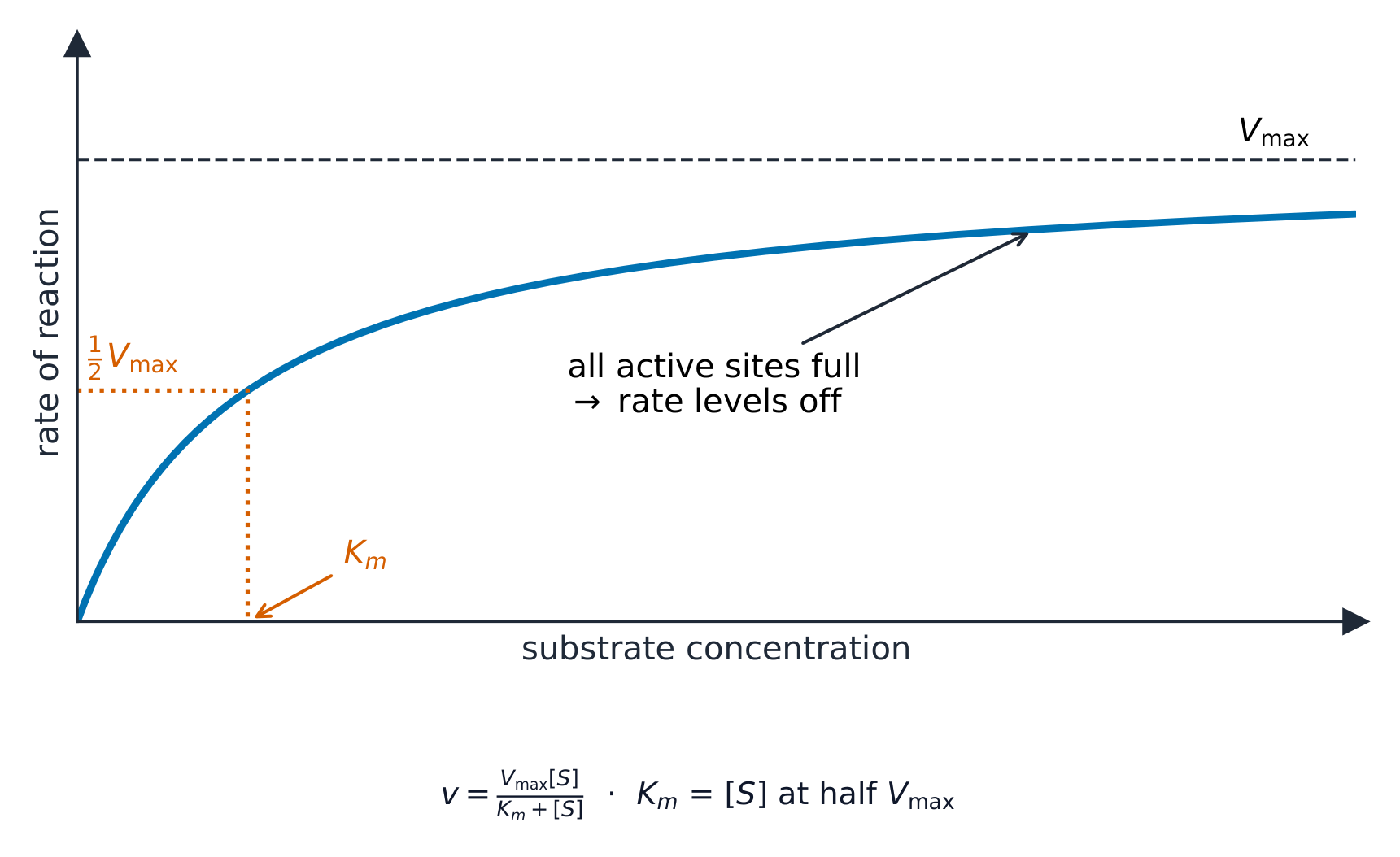
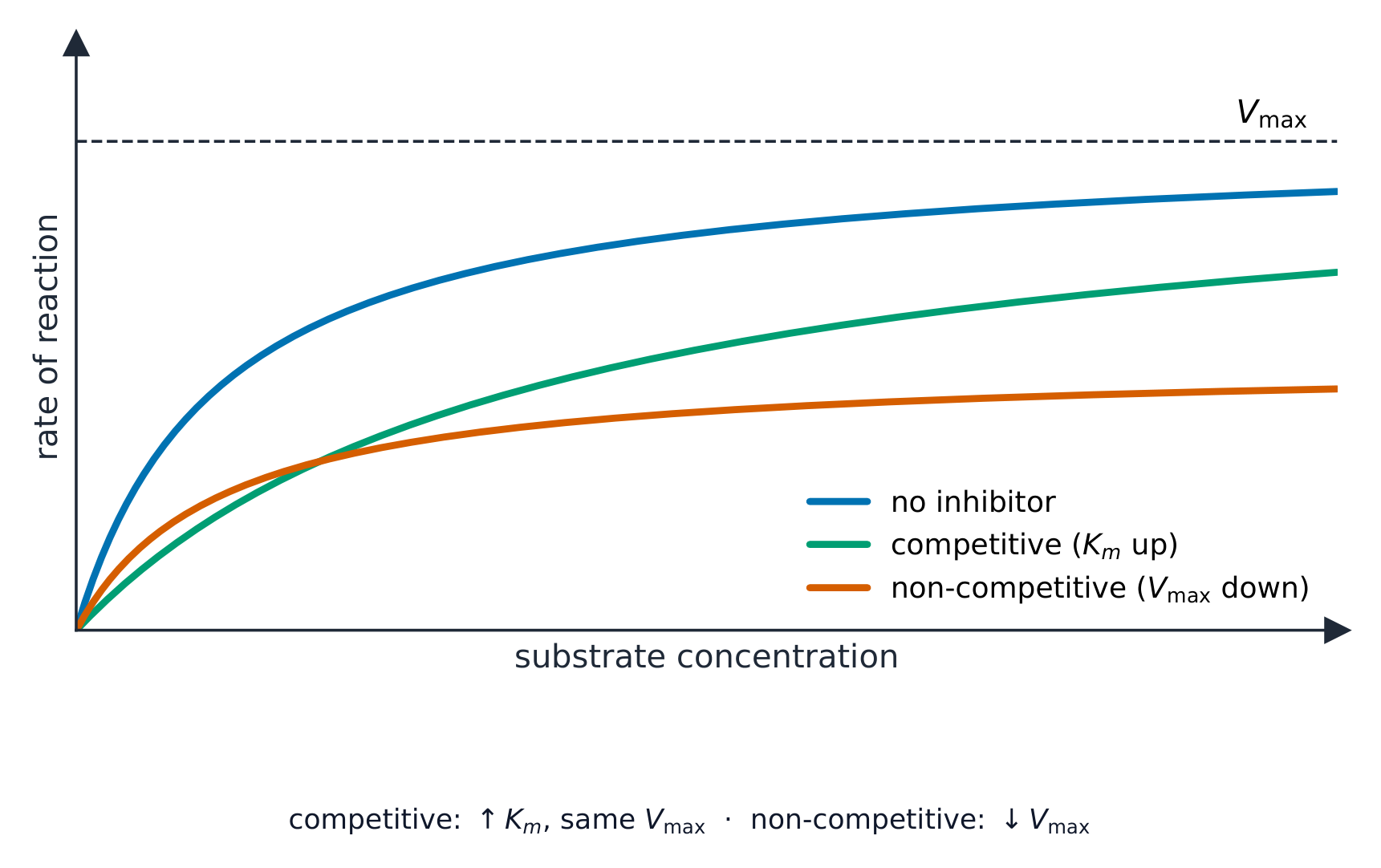


 *Kayu batang pohon adalah xilem; setiap lingkaran mewakili satu tahun pertumbuhan
 *Xilem adalah pipa mati yang terbuka; floem adalah tabung saringan hidup dengan pelat saringan dan sel pendamping
 *Berkas pembuluh nyata pada penampang: sel merah besar adalah pipa pembuluh xilem (dinding lignifikasi tebal); sel-sel lebih kecil di atasnya adalah floem


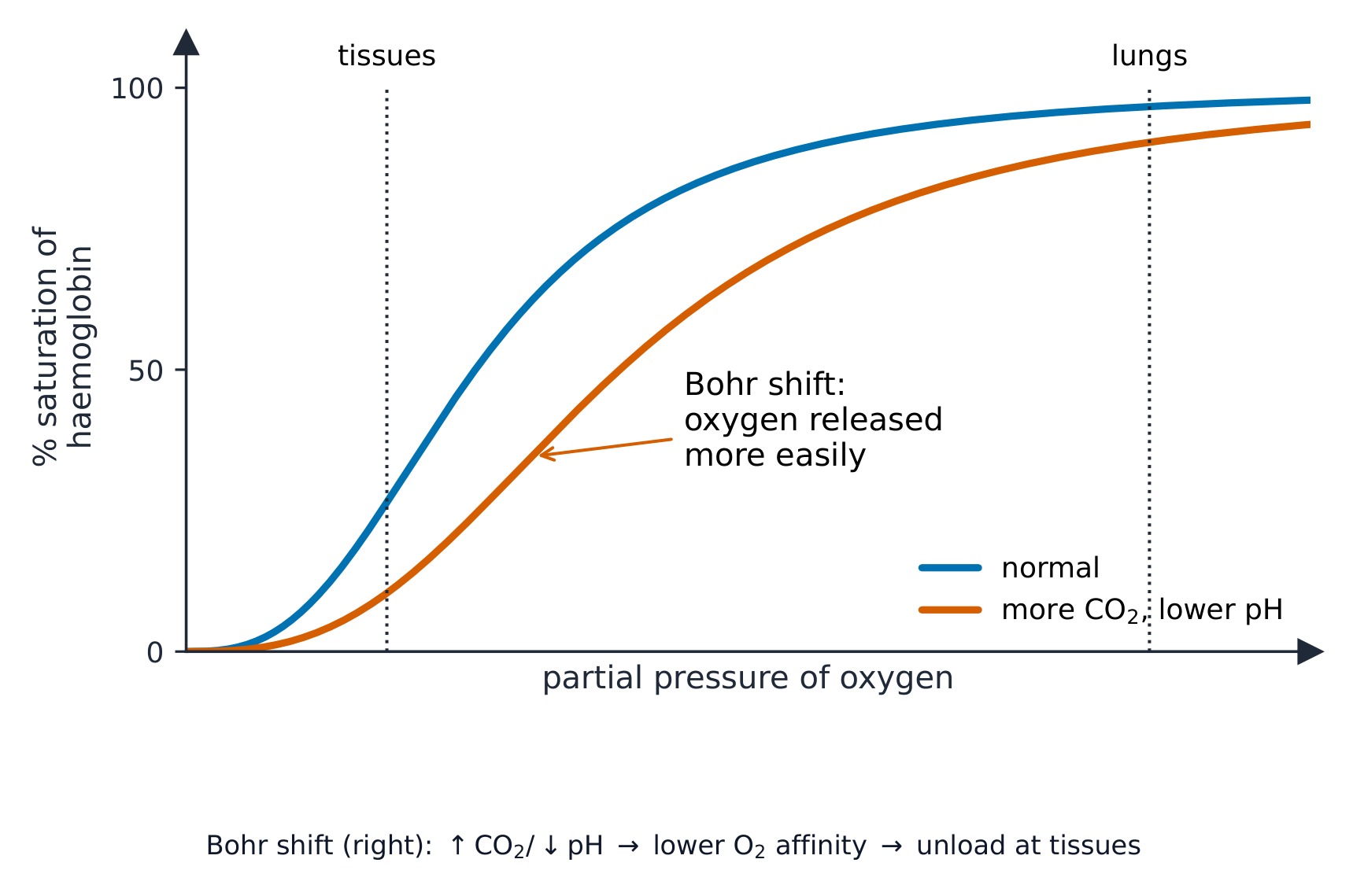


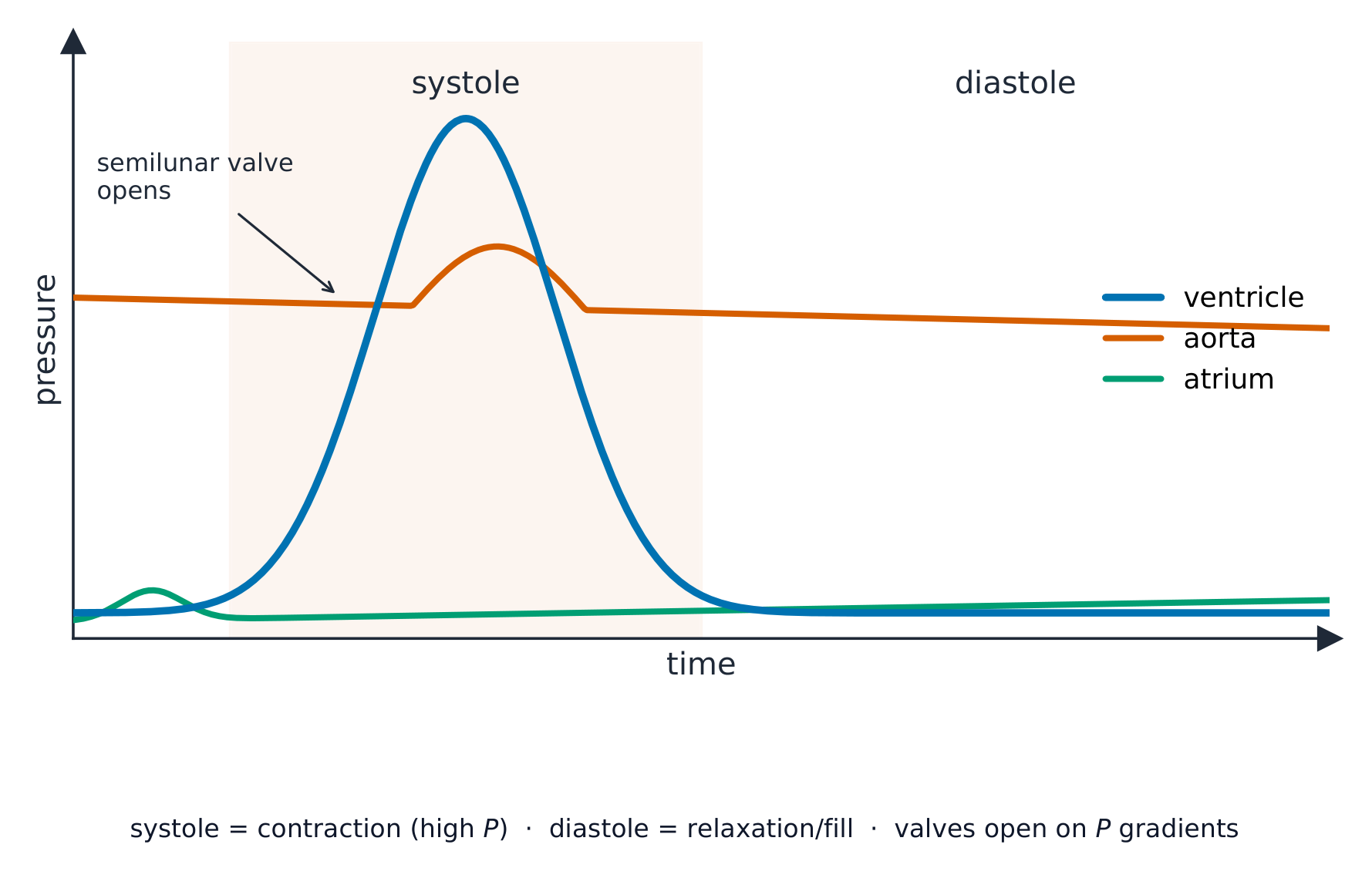


 *Sebuah neutrofil asli (kuning), salah satu jenis fagosit, meregangkan diri untuk menelan bakteri berbentuk batang (oranye) melalui fagositosis

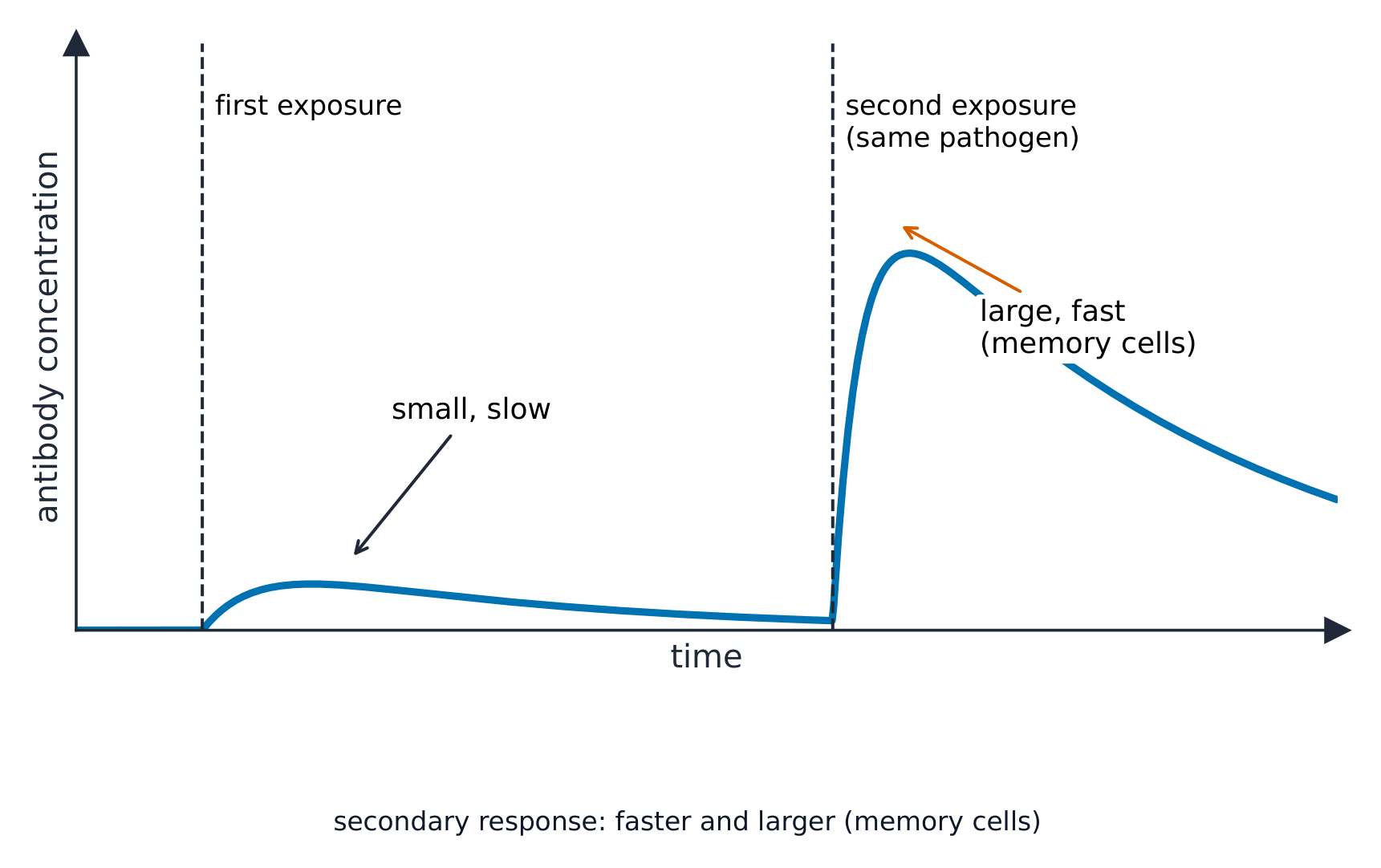


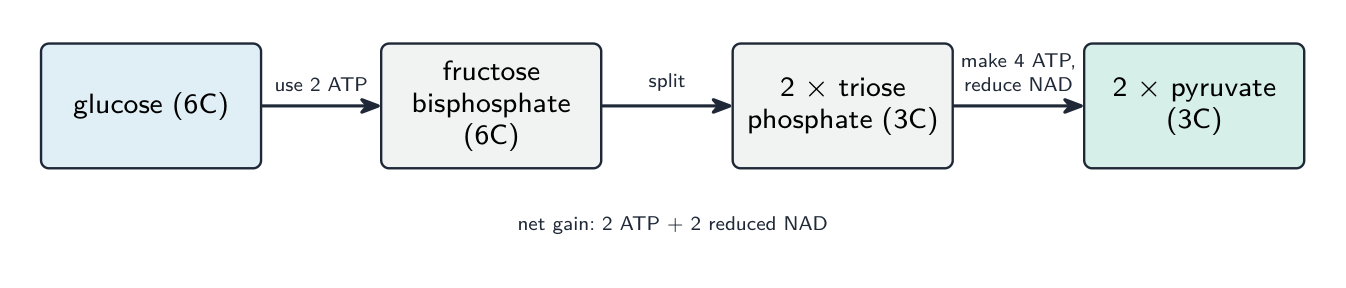


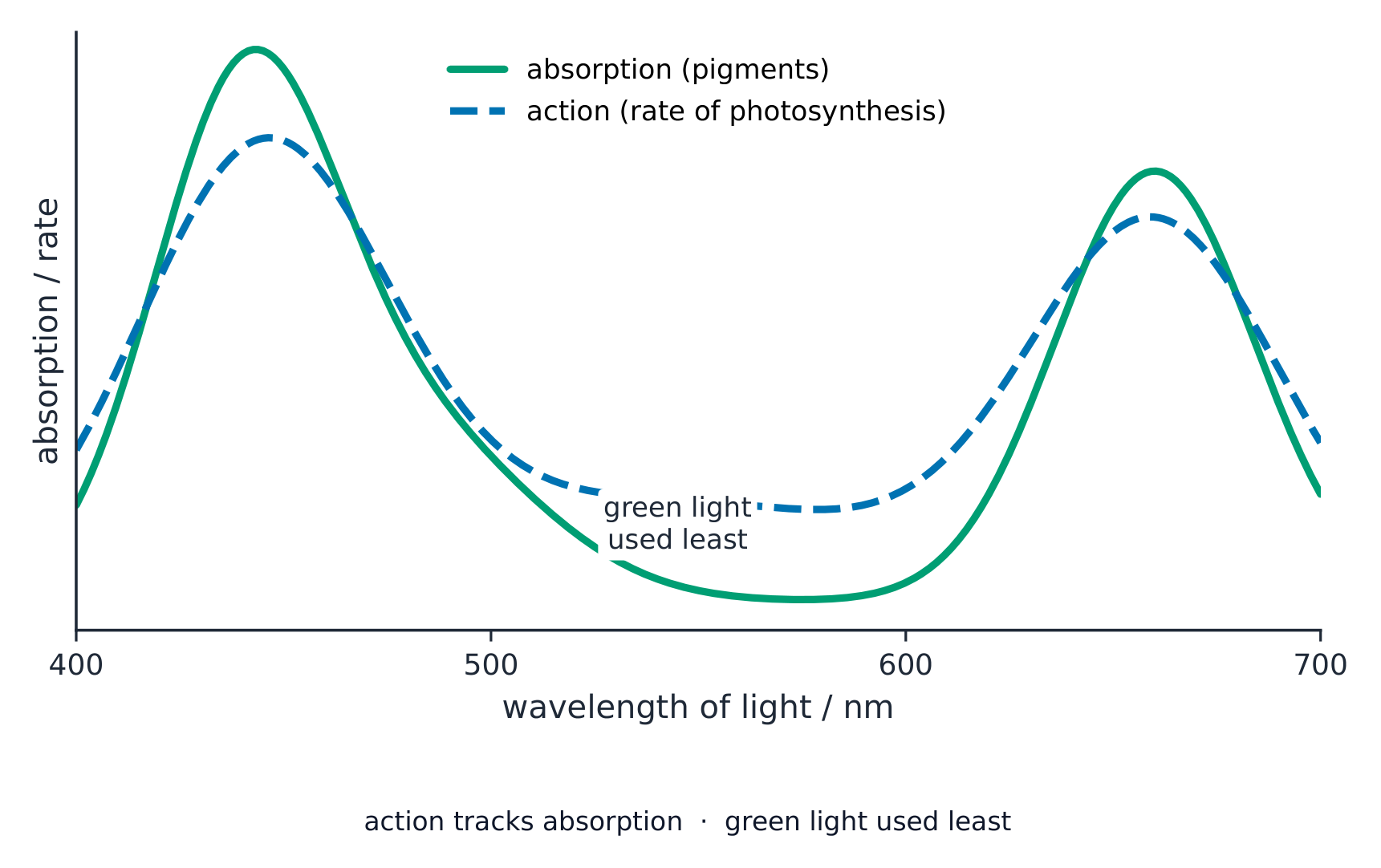


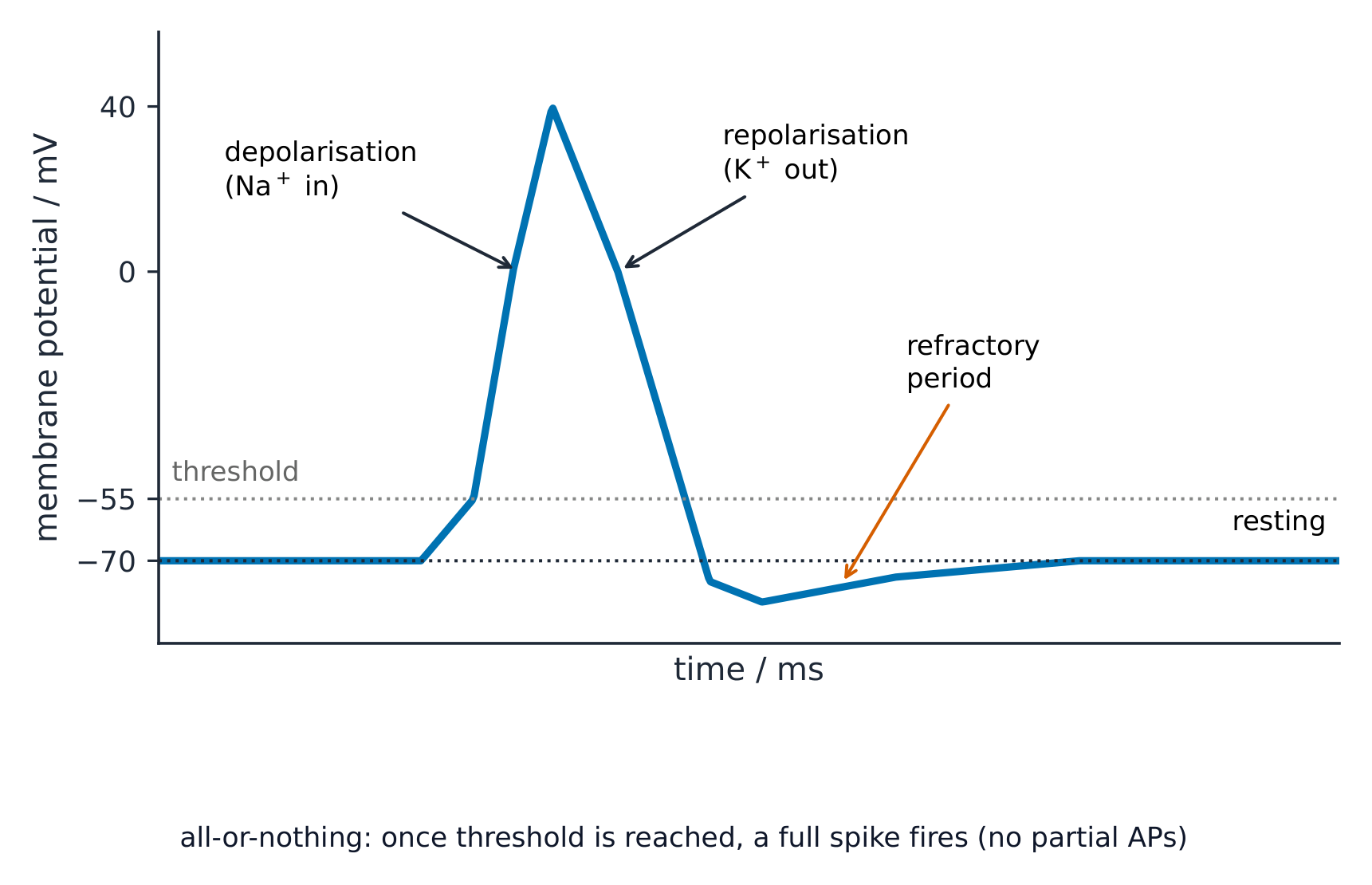
 *Impuls melompat dari nodus ke nodus — konduksi saltatorik — sehingga neurun bermielin menghantarkan sinyal jauh lebih cepat

 *Model filamen geser: aktin tipis meluncur di atas miosin tebal, sehingga sarkomer memendek
 *"Pertumbuhan asam" auksin: H⁺ dipompa ke dinding melonggarkannya, sehingga sel meregang lebih panjang saat air masuk
 Kariotipe manusia: 46 kromosom yang disusun menjadi 23 pasangan homolog (pasangan terakhir, X dan Y, menunjukkan bahwa ini adalah jantan)*