English
This topic looks at how governments correct market failure 市场失灵, make incomes fairer, and act in the labour market.
עברית
נושא זה בוחן כיצד ממשלות מתקנות כשל שוק, מבטיחות התייחסות הוגנת להכנסות ומפעילות בשוק העבודה.
A-Level Economics · כלכלה A-Level · Topic 8 · נושא 8
 8:20
8:20
התערבות ממשלתית בכלכליה המיקרו-כלכלית (A Level)
שלוש תמונות רגילות. סיגריות, נמכרות במחיר זול לכל מי שמבקש אותן. גבעת גגות פח, המביטה על שכונה עשירה בעיר. רצפת מפעל…
English narration · English + 中文 subtitles burned in · קריאת קול באנגלית · תרגום אנגלי + סינית שרוף בתוך הסרטון
This topic looks at how governments correct market failure 市场失灵, make incomes fairer, and act in the labour market.
נושא זה בוחן כיצד ממשלות מתקנות כשל שוק, מבטיחות התייחסות הוגנת להכנסות ומפעילות בשוק העבודה.

Source: Cambridge International syllabus · מקור: הסיילבוס הבינלאומי של קמבריד'ג'
A government has many tools to push a market towards a better use of resources.
A firm with monopoly power 垄断势力 can raise prices and cut output. competition policy 竞争政策 is the set of laws used to protect competition — for example, blocking mergers that create too much power, banning price-fixing, and fining firms that abuse their position.
Intervention can backfire. government failure 政府失灵 is when the government's action leads to a worse use of resources than before — through poor information, high costs, long time lags, or unintended effects (such as a black market caused by a price control).
לממשלה יש מגוון כלים לדחוף את השוק לכיוון שימוש טוב יותר במשאבים.
חברה בעלת כוח מונופולי יכולה להעלות מחירים ולהפחית את ההיצע. מדיניות תחרות היא סדרת החוקים המשמשים להגנת התחרות — לדוגמה, חסימת מיזוגים היוצרים יותר מדי כוח, איסור על קביעת מחירים וטילת קנסות על חברות שמנצלות את מעמדן.
ההתערבות עשויה לגרום לתוצאה הפוכה. כשל ממשלתי מתרחש כאשר פעולת הממשלה מובילה לשימוש גרוע יותר במשאבים מאשר לפני כן — באמצעות מידע לקוי, עלויות גבוהות, הליכי זמן ארוכים או השפעות לא רצויות (כמו שוק שחור הנגרם מבקרת מחירים).
An externality (like pollution) means the market price ignores a real cost — output ends up above the efficient level. Add the external cost to see the gap. · חיצוניות (כמו זיהום) פירושה שהמחיר בשוק מתעלם מעלות אמיתית – ההיצר מסתיים מעל הרמה היעילה. יש להוסיף את העלות החיצונית כדי לראות את הפער.
| English | עברית |
|---|---|
| market failure/ˈmɑːkɪt ˈfeɪlɪə/ | כשל שוק |
| indirect tax/ɪndaɪˈrekt tæks/ | מס עקיף |
| subsidy/ˈsʌbsɪdi/ | סובסידיה |
| price control/praɪs kənˈtrəʊl/ | בקרת מחירים |
| tradable permits/ˈtreɪdəbl ˈpɜːmɪts/ | רישיונות מסחר |
| regulation/ˌreɡjʊˈleɪʃn/ | ויסות |
| state provision/steɪt prəˈvɪʒn/ | אספקת המדינה |
| nationalisation/ˌnæʃənəlaɪˈzeɪʃn/ | לאומיזציה |
| privatisation/ˌpraɪvətaɪˈzeɪʃn/ | פרטיזציה |
| monopoly power/məˈnɒpəli ˈpaʊə/ | כוח מונופולי |
| competition policy/ˌkɒmpəˈtɪʃn ˈpɒlɪsi/ | מדיניות תחרותית |
| government failure/ˈɡʌvənmənt ˈfeɪlɪə/ | כישלון ממשלתי |

Source: Cambridge International syllabus · מקור: הסיילבוס הבינלאומי של קמבריד'ג'
It is important to separate two words that sound alike:
A fair (equitable) outcome is not always an equal one. Most governments worry about too much inequality 不平等.
Remember the difference between the two things being shared:
These bring about redistribution 再分配 — moving income from richer to poorer people. Wealth is harder to redistribute than income, because the rich can hide assets or move them abroad, and wealth taxes are hard to collect.
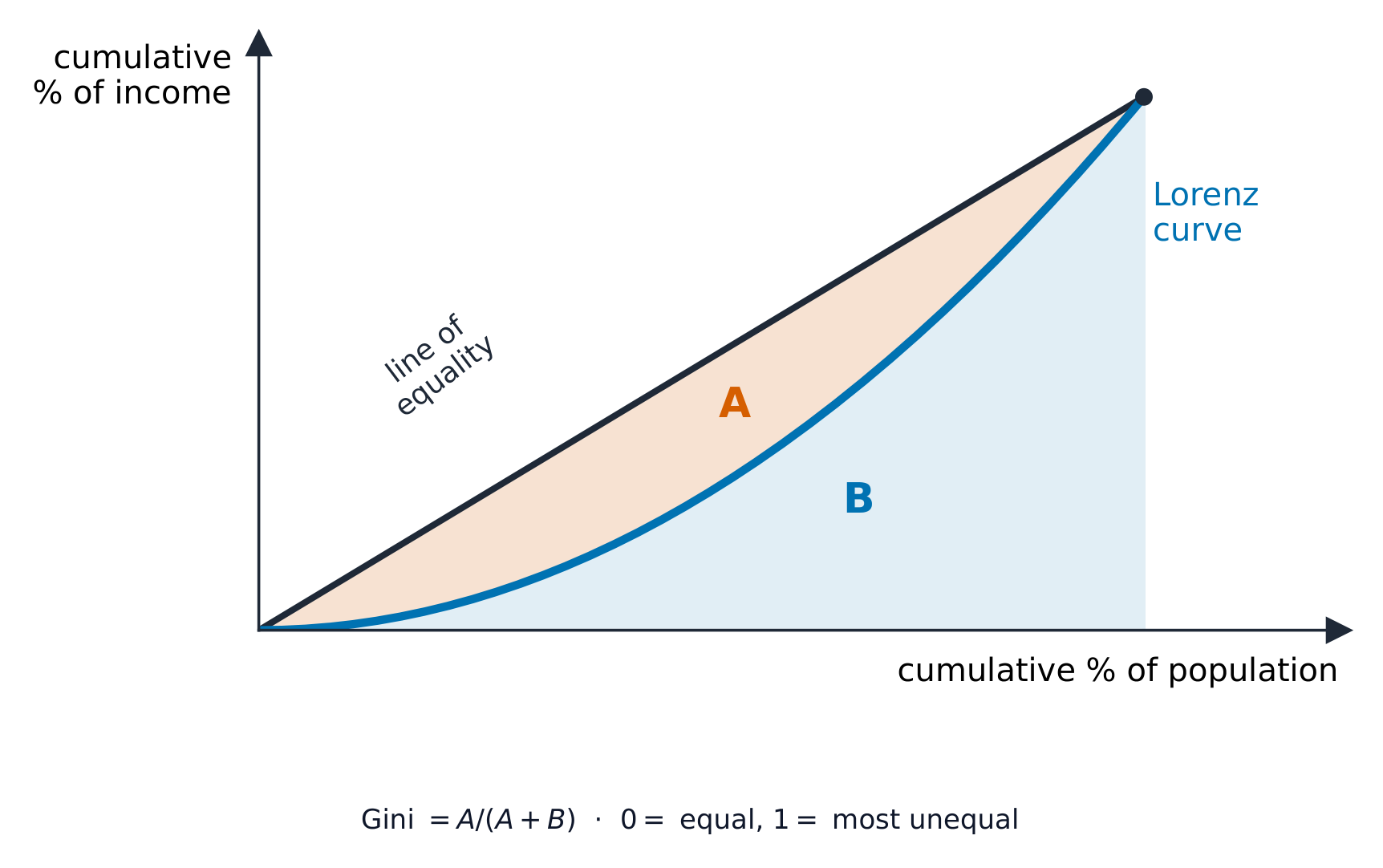
Worked example. Country X has a Gini coefficient of 0.25 and country Y one of 0.48. What does that mean, and what does each Lorenz curve look like? The Gini runs from 0 (perfect equality) to 1 (one person has everything), so a higher number means more unequal: country Y at 0.48 is markedly more unequal than X at 0.25. On the graph, Y's Lorenz curve sags further below the 45° line of equality, while X's hugs it more closely. The Gini is exactly the area between the line of equality and the Lorenz curve, as a fraction of the whole triangle beneath that line - which is why a bigger sag gives a bigger number. One caution is worth stating: the Gini measures relative inequality only. It says nothing about absolute living standards, so a poor country and a rich one can share the same Gini.
חשוב להבחין בין שני מילים שנשמעות זהה:

תוצאה הוגנת (צדקנית) אינה תמיד שוויונית. רוב הממשלות מוטרדות מיותר אי-שוויון.
זכור את ההבדל בין שני הדברים המשותפים:

אלו מובילות להעברת עושר – העברת הכנסה מאנשים עשירים לאנשים עניים. עושר קשה יותר להעביר מאשר הכנסה, כי עשירים יכולים להסתיר נכסים או להעביר אותם לחו"ל, ומסי עושר קשים לגבייה.
דוגמה פתורה. המדינה X יש לה מדד גיני של 0.25 והמדינה Y אחת של 0.48. מה זה אומר, ואיך נראית כל עקומת לורנ茨? מדד גיני נע בין 0 (שוויון מושלם) לבין 1 (אדם אחד יש לו הכל), אז מספר גבוה יותר משמעותו יותר אי-שוויון: המדינה Y ב-0.48 היא משמעותית יותר לא-שוויונית מאשר X ב-0.25. בגרף, עקומת לורנ茨 של Y פונה יותר מתחת לקו השוויון ב-45°, בעוד ש-X צמודה אליה יותר. מדד גיני הוא בדיוק השטח בין קו השוויון ועקומת לורנ茨, כשבר משטח המשולש כולו מתחת לקו – ולכן סטייה גדולה יותר נותנת מספר גדול יותר. נקודה אחת שחשוב לציין: מדד גיני מודד יחסית בלבד אי-שוויון. הוא לא אומר דבר על רמות חיים מוחלטות, אז מדינה ענייה ומדינה עשירה יכולות לשמור על אותו מדד גיני.
Follow how policy can change disposable income and opportunity. · עקוב אחר כך שמדיניות יכולה לשנות את ההכנסה הניתנת לשימוש והזדמנויות.
Drag each economy's top-20% income share — the curve that hugs the line of equality has the lower Gini, and the quintile chips give the exam-table numbers. · גרור אתpart העליון-20% בשיתוף הכנסה של כלכלה כלשהי — העקומה שמחזיקה בקו השוויון היא בעלת מדד ג'יני נמוך יותר, וחליפות הרביעיות מספקות את המספרים בטבלת הבחינה.
| English | עברית |
|---|---|
| equity/ˈekwɪti/ | הון עצמי |
| equality/iːˈkwɒlɪti/ | שוויון |
| inequality/ɪniːˈkwɒlɪti/ | אי-שוויון |
| income/ˈɪŋkʌm/ | הכנסה |
| wealth/welθ/ | עושר |
| Lorenz curve/ˈlɒrənts kɜːv/ | עקומת לורנס |
| Gini coefficient/ˈdʒiːni ˌkəʊɪˈfɪʃənt/ | מדד גיני |
| progressive tax/prəˈɡresɪv tæks/ | מס הדרגתי |
| benefits/ˈbenɪfɪts/ | תשלומי סוציאליים |
| transfer payments/ˈtrænsfɜː ˈpeɪmənts/ | תשלומי העברה |
| redistribution/ˌriːˌdɪstrɪˈbjuːʃn/ | החלוקת מחדש |

Source: Cambridge International syllabus · מקור: הסיילבוס הבינלאומי של קמבריד'ג'
A wage is just a price — the price of labour — so we use demand and supply to study the labour market 劳动力市场.
The demand for labour 劳动力需求 is a derived demand 派生需求: firms want workers not for their own sake, but to make goods that sell. So labour demand depends on the marginal revenue product 边际收益产品 (MRP) — the extra revenue one more worker brings in. A worker is worth hiring while the MRP is at least as big as the wage.
The supply of labour 劳动力供给 to a job rises when the wage 工资 rises, and also depends on training needed, working conditions, and how many people have the right skills.
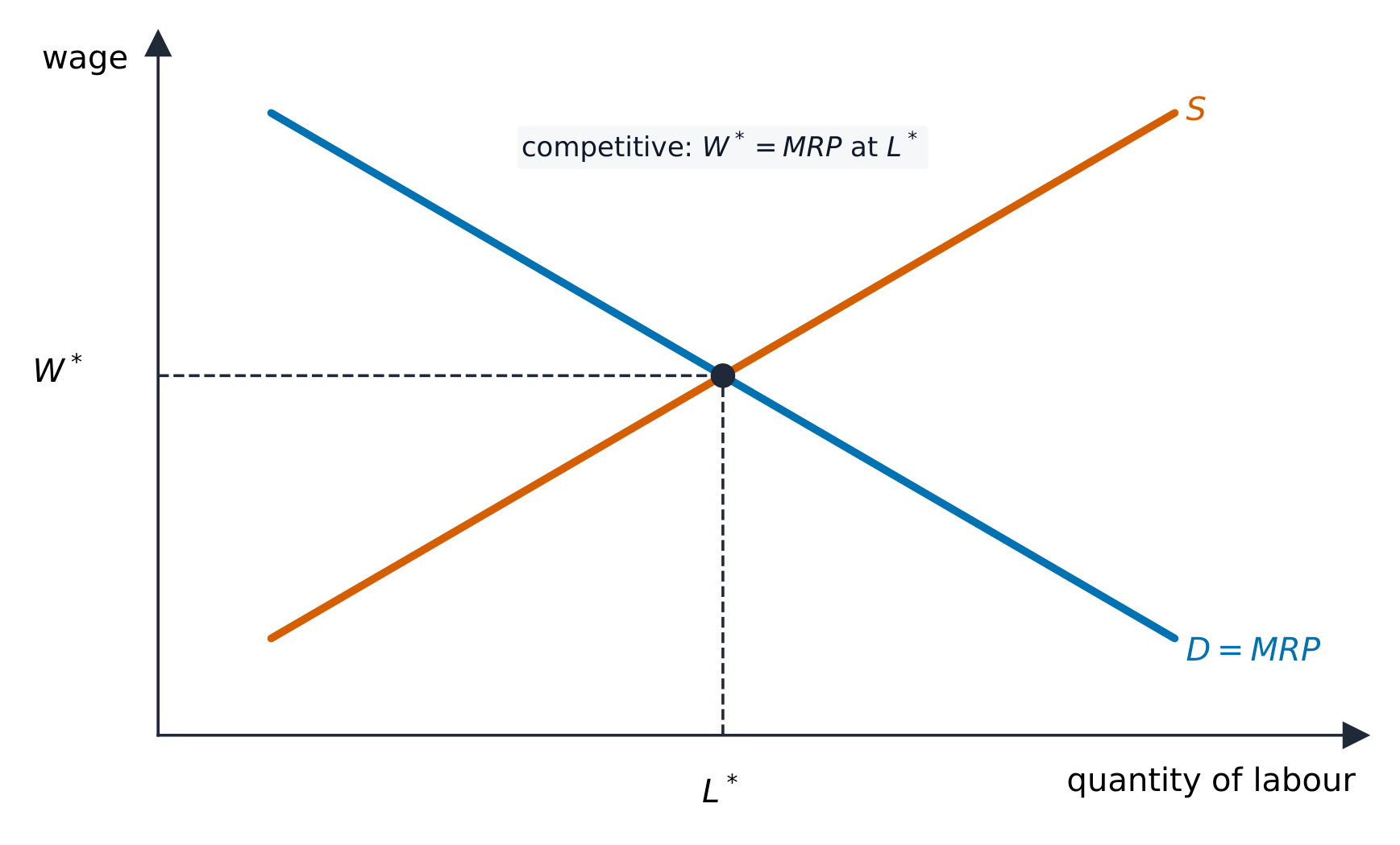
In a competitive labour market, the wage settles where the demand for labour equals the supply of labour.
Wages differ between jobs — this is a wage differential 工资差异. The main reasons are differences in MRP (skilled work is more productive), the training and qualifications needed, and the risk or unpleasantness of the work.
Some wage gaps come from discrimination 歧视 — paying people differently because of gender, race or age rather than their productivity. Governments use equal-pay laws and anti-discrimination laws to reduce this.
שכר הוא פשוט מחיר – מחיר העבודה – אז אנחנו משתמשים בביקוש ובעיכול כדי ללמוד את שוק העבודה.
הביקוש לעבודה הוא ביקוש נגזר: חברות מעוניינות בעובדים לא בשל עצמם, אלא כדי לייצר סחורות שנמכרות. לכן, ביקוש לעבודה תלוי בתוצר המרווח השולי (MRP) — ההכנסה הנוספת שמעסיק אחד מביא. עובד שווה להשכרה כל עוד ה-MRP גדול או שווה לשכר.
האספקה לעבודה לתפקיד מסוים עולה כאשר השכר עולה, והיא תלויה גם באימונים הנדרשים, בתנאי העבודה ובמספר האנשים בעלי הכישורים המתאימים.
בשוק עבודה תחרותי, השכר נקבע במקום בו הביקוש לעבודה שווה לאספקת העבודה.

שכר משתנה בין תפקדים — זהו הבדל שכר. הסיבות העיקריות הן הבדלים ב-MRP (עבודות מיומנות מניבות יותר), האימונים וההסמכות הנדרשים, והסיכון או הרצחונות של העבודה.
חלק מהפערי השכר נובעים מ-אפליה — תשלום שונה לאנשים בגלל מגדר, גזע או גיל ולא לפי פרודוקטיביות. ממשלות משתמשות בחוקי שוויון שכר וחוקי אנטי-אפליה לצמצום דבר זה.
Wages are a price. The demand for labour (from firms) and the supply of labour (from workers) set the equilibrium wage. · שכר הוא מחיר. הביקוש לעבודה (על ידי חברות) וההיצע של עבודה (על ידי עובדים) קובעים את שכר האיזון.
| English | עברית |
|---|---|
| labour market/ˈleɪbə ˈmɑːkɪt/ | שוק העבודה |
| demand for labour/dɪˈmænd fɔː ˈleɪbə/ | ביקוש לעבודה |
| derived demand/dɪˈraɪvd dɪˈmænd/ | ביקוש גזר |
| marginal revenue product/ˈmɑːdʒɪnl ˈrevənjuː ˈprɒdʌkt/ | הכנסה שולית ממוצרים |
| supply of labour/səˈplaɪ ɒv ˈleɪbə/ | היצע עבודה |
| wage/weɪdʒ/ | שכר |
| monopsony/ˈmɒnəʊpsəni/ | מונופסון |
| trade union/treɪd ˈjuːnɪən/ | איגוד עובדים |
| national minimum wage/ˈnæʃənl ˈmɪnɪməm weɪdʒ/ | שכר מינימום לאומי |
| wage differential/weɪdʒ ˌdɪfəˈrenʃl/ | הבדל שכר |
| discrimination/dɪˌskrɪmɪˈneɪʃn/ | הבחנה |
Work through it step by step, with instant-check exercises. · לעבור על הדברים צעד אחר צעד, עם תרגילים לבדיקה מיידית.
Loading subjects… · טוען נושאים…