עיר בלילה: כל תאורה היא מישהו שעובד, בונה, מוכר. מדף מזון: כל תווית מחיר שינתה בשנה זו. הכלכלה גדולה מדי כדי לראות אותה, ולכן אנחנו…
English narration · English + 中文 subtitles burned in · קריאת קול באנגלית · תרגום אנגלי + סינית שרוף בתוך הסרטון
English
Macroeconomics 宏观经济学 looks at the whole economy at once: its total output, its jobs, and its prices. This handout covers how we measure the economy and the main problems it can face.
עברית
כלכלה מקרוסקופית בוחנת את כלכלה כולה בו-זמנית: את התפוקה הכוללת שלה, את התעסוקה ואת המחירים. חומר זה מכסה כיצד אנו מדדו את הכלכלה ובעיות ראשיות שהיא עלולה להתמודד איתן.
4.1
National income statistics · סטטיסטיקות הכנסה לאומית
Syllabus · סיילבוס
English
define GDP, GNI and national income and distinguish nominal and real, and total and per capita values
explain the uses and limitations of national income statistics for measuring living standards and making comparisons
עברית
הגדרת **ת
הסבר השימושים והמגבלות של סטטיסטיקות הכנסה לאומית למדידת רמת החיים ולביצוע השוואות
Source: Cambridge International syllabus · מקור: הסיילבוס הבינלאומי של קמבריד'ג'
English
To judge how an economy is doing, we measure its national income 国民收入 — the total value of everything it produces in a year.
gross domestic product 国内生产总值 (GDP) is the value of all goods and services made inside a country in a year.
gross national income 国民总收入 (GNI) is GDP plus the income a country's people and firms earn abroad, minus income foreigners earn inside it.
Two important differences:
nominal 名义 values are measured at current prices. real 实际 values are adjusted to remove the effect of rising prices, so they show the true change in output. Always compare real values over time.
total values cover the whole country. per capita 人均 values are divided by the population, so they show the average per person.
Uses and limitations
National income is used to measure the standard of living 生活水平 and to compare countries. But it has limits:
it ignores the distribution 分配 of income — a high average can hide great inequality.
it leaves out unpaid work (housework) and the informal economy 非正规经济 (hidden, untaxed activity).
it says nothing about pollution, leisure time, or health.
So a higher GDP per capita usually means a better life, but not always.
עברית
כדי לשפוט כיצד כלכלה מתפקדת, אנו מדדו את ההכנסה הלאומית שלה — הערך הכולל של כל מה שהיא מייצרת בשנה.
ההכנסה הלאומית (GDP) היא ערך כל הסחורות והשירותים שארץ מייצרת בשנה.
תוצר פנימי ברוטו (GDP) הוא ערך כל הסחורות והשירותים שנעשו בתוך ארץ בשנה.
הכנסה לאומית ברוטו (GNI) היא GDP plus the income a country's people and firms earn abroad, minus income foreigners earn inside it.
שתי הבדלים חשובים:
ערכים נומינליים נמדדים במחירים הנוכחיים. ערכים ריאליים מותאמים כדי להסיר את השפעת העלייה במחירים, ולכן הם מציגים את השינוי האמיתי בייצור. יש תמיד להשוות ערכים ריאליים לאורך זמן.
ערכים כוללים מכסים את כל המדינה. ערכים לקבלת מחולקים באוכלוסייה, ולכן הם מציגים את הממוצע לכל אדם.
שימושים ומגבלות
ההכנסה הלאומית משמשת למדידת רמת החיים ולהשוואה בין מדינות. אך יש לה מגבלות:
היא מתעלמת מהחלוקה ההכנסה — ממוצע גבוך יכול להסתיר אי-שוויון עצום.
היא מאבדת עבודה ללא תשלום (עבודת בית) ואת הכלכלה האפורת (פעילות מוסתרת שאינה חייבת מס).
היא אינה אומרת דבר על זיהום, זמן פנאי או בריאות.
לכן, GDP לקבלת גבוה יותר מעיד בדרך כלל על חיים טובים יותר, אך לא תמיד.
GDP לקבלת מראה הכנסה וייצור ממוצעים, אך מפספס חלוקה, עבודה ללא תשלום וזיהום
Explore · חקור
National income flow · זרימת הכנסה לאומית
Watch spending become income, output and expenditure in the circular flow. · צפו להפכת הוצאות להכנסה, תפוקה והוצאה במחזור ההיקף.
The circular flow of income · הזרם המחזורי של ההכנסה
Syllabus · סיילבוס
English
explain the circular flow of income with injections (investment, government spending, exports) and leakages (saving, taxation, imports)
explain equilibrium in the circular flow and the distinction between a closed and open economy
עברית
הסבר זרימת הכנסה המחזורית עם הזרקות (השקעה, הוצאות ממשלתיות, יצוא) ודליפות (חסכון, מיסוי, יבוא)
הסבר איזון בזרימת הכנסה וההבחנה בין כלכלה סגורה לכלכלה פתוחה
Source: Cambridge International syllabus · מקור: הסיילבוס הבינלאומי של קמבריד'ג'
English
The circular flow of income
The circular flow of income 收入循环流 shows money moving around the economy. Households 家庭 supply factors of production to firms 企业 and receive income (wages, rent, interest, profit). They spend that income on goods and services, and the money flows back to firms.
Money also leaves and enters this flow:
leakages 漏出 take money out of the flow: saving 储蓄, taxation 税收, and spending on imports 进口.
injections 注入 put money into the flow: investment 投资, government spending 政府支出, and exports 出口.
The flow is in equilibrium 均衡 when total injections equal total leakages. If injections are greater, the economy grows; if leakages are greater, it shrinks.
A closed economy 封闭经济 has no trade with other countries. An open economy 开放经济 trades, so it has exports and imports.
עברית
הזרם המחזורי של ההכנסה
הזרם המחזורי של ההכנסה מראה כסף זז סביב הכלכלה. בתי המשפחה מספקים גורמי ייצור לחברות ומקבלים הכנסה (שכר, שכירות, ריבית, רווח). הם מוצאים את ההכנסה הזו על מוצרים ושירותים, והכסף זורם חזרה לחברות.
כסף גם יוצא ונכנס לזרם זה:
דליפות לוקחות כסף מחוץ לזרם: חסכון, מסים והוצאה על יבוא.
הזרקות מכניסות כסף לתוך הזרם: השקעה, הוצאה ממשלתית ויצוא.
הזרם נמצא באיזון כאשר סך ההזרקות שווה לסך הדליפות. אם ההזרקות גדולות יותר, הכלכלה צומחת; אם הדליפות גדולות יותר, היא צטמצמת.
הכסף לוחץ בין בתי משפחה לחברות; דליפות (חסכון, מסים, יבוא) מנקות אותו, בעוד שהזרקות (השקעה, הוצאה ממשלתית, יצוא) מוסיפות אליו.
כלכלה סגורה אינה סוחרת עם מדינות אחרות. כלכלה פתוחה סוחרת, ולכן יש לה יצוא ויבוא.
Explore · חקור
Injections & leakages · הזרקות ודליפות
Money loops between households and firms. Injections grow national income, leakages shrink it; they are equal at equilibrium. · כסף לולא בין משקי הבית לחברות. הזרקות מגדילות את ההכנסה הלאומית, דליפות מצמצמות אותה; הן שוות במצב איזון.
Explore · חקור
The circular flow of income · הזרימה המחזורית של ההכנסה
Money flows in a loop: households earn income from firms, then spend it back on the firms' goods. Step round the cycle. · כסף זורם במעגל: משקי הבית מרוויחים הכנסה מחברות, ולאחר מכן משקיעים אותה בחזרה בקניית המוצרים של החברות. צעדו סביב המחזור.
4.3
Aggregate demand and aggregate supply · ביקוש ו Offer מצטברים
Syllabus · סיילבוס
English
define the components of aggregate demand (C + I + G + (X−M)) and explain the shape of the AD curve
explain short-run and long-run aggregate supply and the determinants of AD and AS
use AD/AS analysis to determine macroeconomic equilibrium and the price level and real output
עברית
הגדרת רכיבי הביקוש הכללי (C + I + G + (X−M)) והסבר הצורה של עקומת הביקוש הכללי
הסבר ההיצע הכללי קצר-טווח וההיצע הכללי ארוך-טווח וגורמי הקביעה של הביקוש וההיצע הכלליים
שימוש בניתוח AD/AS לקביעת איזון מקרו-כלכלי ברמת המחירים ובתפוקה האמיתית
Source: Cambridge International syllabus · מקור: הסיילבוס הבינלאומי של קמבריד'ג'
English
Aggregate demand and supply
Aggregate demand
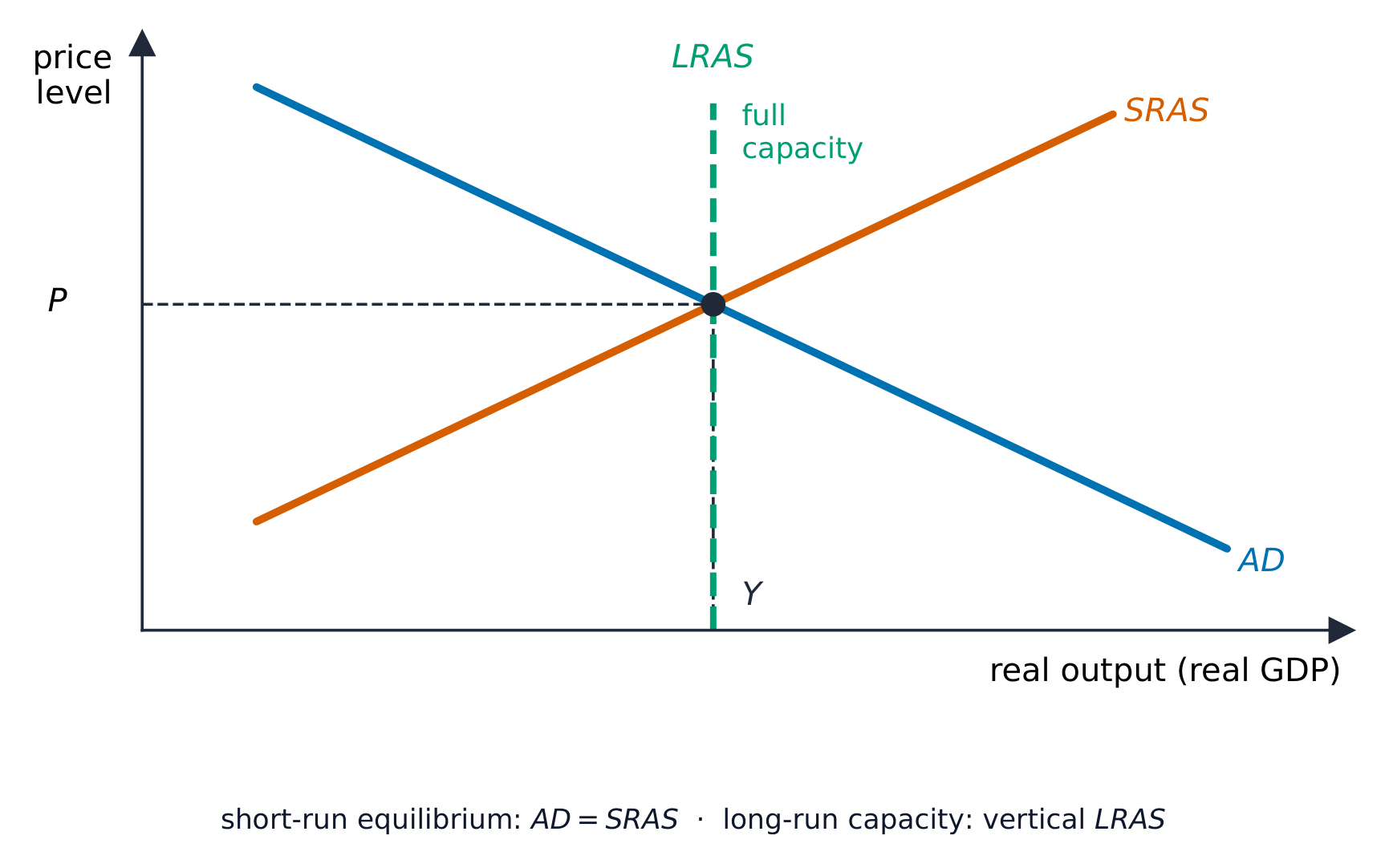
aggregate demand 总需求 (AD) is the total spending on a country's goods and services at each price level. It has four parts:
$$AD = C + I + G + (X - M)$$
C is consumption 消费 — spending by households.
I is investment — spending by firms on capital.
G is government spending.
(X − M) is net exports 净出口 — exports minus imports.
The AD curve slopes downward: a lower price level means higher real spending, so a greater real output is demanded. AD shifts when any of its four parts changes (for example, a tax cut raises C).
Aggregate supply
aggregate supply 总供给 (AS) is the total output firms are willing to make at each price level.
short-run aggregate supply 短期总供给 (SRAS) slopes upward. In the short run, higher prices make production more profitable, so firms supply more. SRAS shifts when costs change (wages, raw materials, taxes).
long-run aggregate supply 长期总供给 (LRAS) shows the economy's full productive capacity 生产能力. It shifts only when the quantity or quality of factors changes.
Macroeconomic equilibrium
macroeconomic equilibrium 宏观经济均衡 is where AD crosses AS. It sets the price level 价格水平 and the real output 实际产出 of the economy. A shift in AD or AS changes both.
עברית
ביקוש ו Offer מצטברים
ביקוש מצטבר
ביקוש מצטבר (AD) הוא הסכום הכולל של הוצאות על סחורות ושירותי המדינה בכל רמת מחיר. הוא מורכב מארבעה חלקים:
$$AD = C + I + G + (X - M)$$
C היא צריכה — הוצאות של משקי הבית.
I היא השקעה — הוצאות של חברות על הון.
G היא הוצאות ממשלתיות.
(X − M) הם יצוא נטו — יצוא פחות יבוא.
הביקוש המצטבר הוא ההוצאה הכוללת: צריכה, השקעה, הוצאות ממשלתיות ויצוא נטו
עקומת AD נוטה למטה: רמת מחירים נמוכה יותר פירושה הוצאות אמיתיות גבוהות יותר, ולכן נדרש תפוקה אמיתית גדולה יותר. AD זז כאשר אחד מחלקיו הארבעה משתנה (למשל, קיצוץ במיסים מעלה את C).
Offer מצטבר
Offer מצטבר (AS) הוא התפוקה הכוללה שהחברות מוכנות לייצר בכל רמת מחיר.
Offer מצטבר לטווח קצר (SRAS) נוטה למעלה. בטווח הקצר, מחירים גבוהים יותר הופכים את הייצור לרווחי יותר, ולכן החברות מספקות יותר. SRAS זז כאשר העלויות משתנות (שכר, חומרי גלם, מיסים).
Offer מצטבר לטווח ארוך (LRAS) מראה את היכולת הפורייטיבית המלאה של הכלכלה. הוא זז רק כאשר כמות או איכות הגורמים משתנים.
איזון מקרו-כלכלי
איזון מקרו-כלכלי הוא הנקודה שבה AD חוצה את AS. הוא קובע את רמת המחירים ואת התפוקה האמיתית של הכלכלה. שינוי ב-AD או ב-AS משנה את שניהם.
שיווי משקל קובע את רמת המחירים $P$ והתפוקה הממשית $Y$ כאשר AD חוצה AS קצר-טווח; LRAS אנכית מסמלת יכולת מלאה.
AD and AS cross at the price level and national output. · AD ו-AS נחתכים ברמת המחיר ובתל
4.4
Economic growth · צמיחה כלכלית
Syllabus · סיילבוס
English
distinguish actual and potential growth and explain the causes of economic growth
explain the costs and benefits of economic growth and the business (trade) cycle
עברית
להבדיל בין צמיחה בפועל וצמיחה פוטנציאלית ולהסביר את גורמי הצמיחה הכלכלית
להסביר את העלויות והתועלות של צמיחה כלכלית ואת המחזור העסקי (הכלכלי)
Source: Cambridge International syllabus · מקור: הסיילבוס הבינלאומי של קמבריד'ג'
English
economic growth 经济增长 is a rise in a country's real output (real GDP) over time.
actual growth 实际增长 is the rise in output that really happens (a movement to a point further out, or from inside the LRAS towards it).
potential growth 潜在增长 is the rise in the economy's capacity (the LRAS shifting outward).
Growth is caused by more or better factors of production: a bigger or more skilled workforce, more investment in capital, new technology, and higher productivity 生产率 (output per worker).
The business cycle
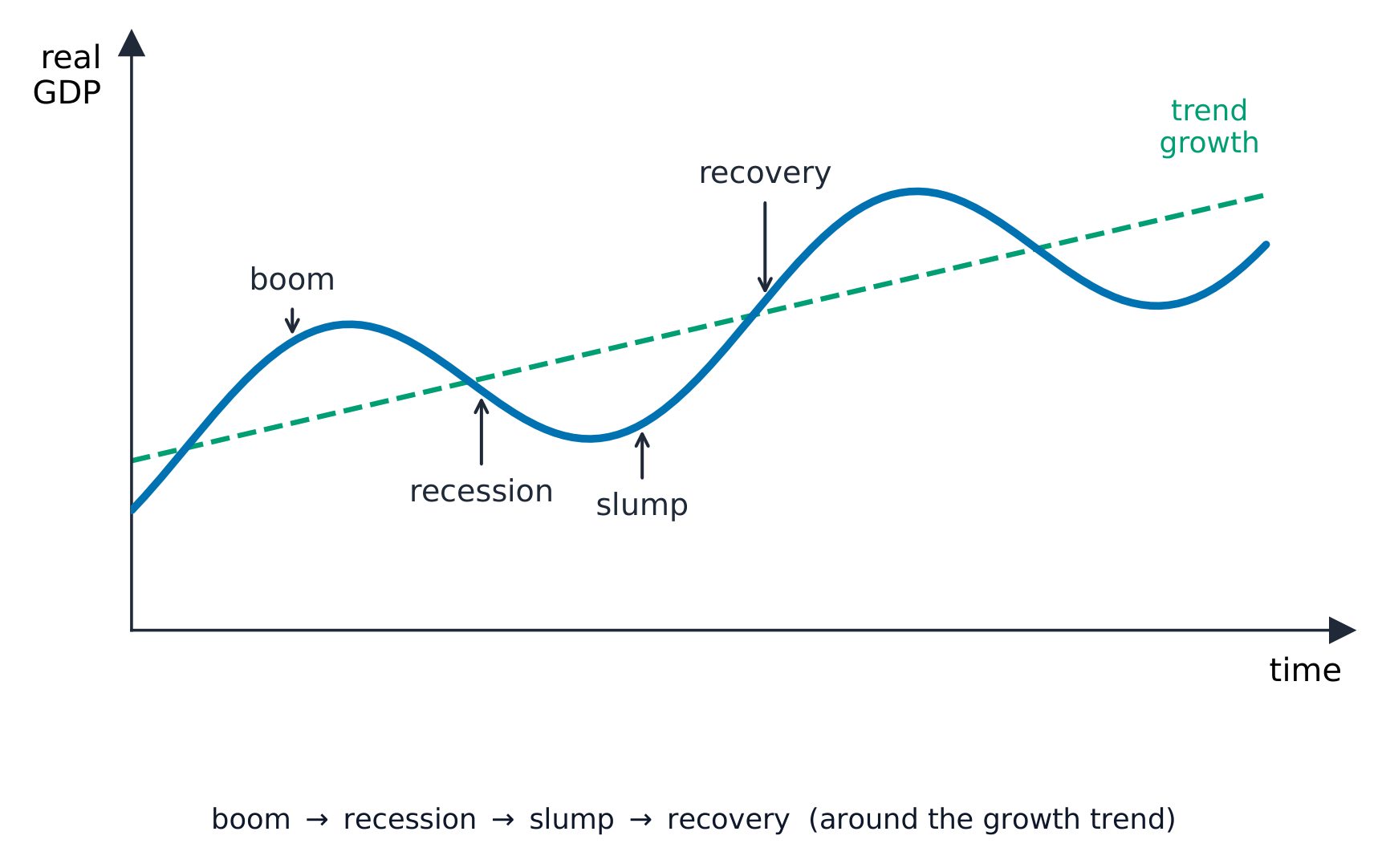
Real output does not grow smoothly. The business cycle 经济周期 (also called the trade cycle) is the up-and-down pattern of output over the years. It has four phases: boom 繁荣 (fast growth), recession 衰退 (falling output), slump 萧条 (the low point), and recovery 复苏.
Costs and benefits of growth
Benefits
Costs
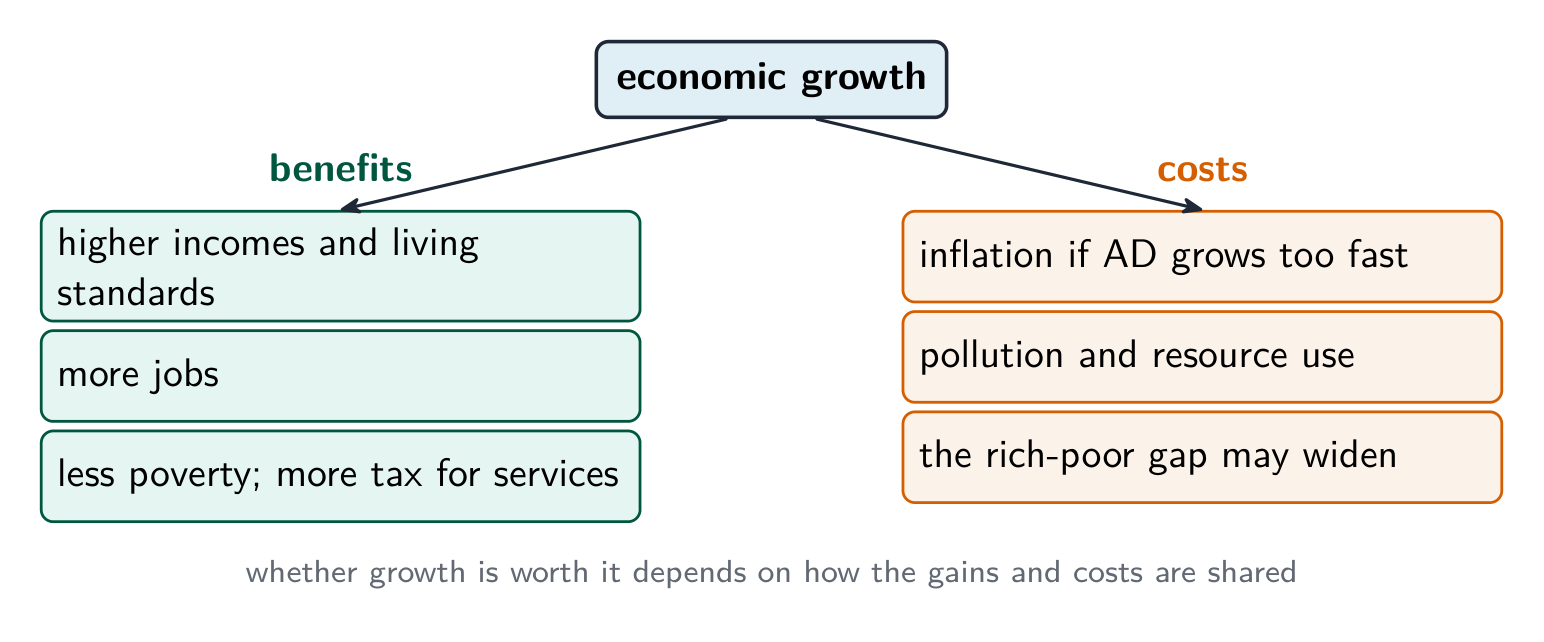
higher incomes and living standards
can cause inflation if AD grows too fast
more jobs
pollution and use of resources
less poverty; more tax for public services
the gap between rich and poor may widen
עברית
צמיחה כלכלית היא עלייה בתפוקה הממשית של ארץ לאורך זמן (GDP ממשי).
צמיחה בפועל היא העלייה בתפוקה שמתרחשת באמת (תנועה לנקודה הרחוקה יותר, או מתוך ה-LRAS לעברו).
צמיחה פוטנציאלית היא עלייה ביכולת הכלכלה (הזזה החוצה של ה-LRAS).
הצמיחה נובעת ממספר גדול יותר או איכותיים יותר של גורמי ייצור: כוח עבודה גדול יותר או בעל מיומנויות גבוהות יותר, השקעות מוגברות בון הון, טכנולוגיה חדשה ותפוקה גבוהה יותר (פרודוקטיביות: תפוקה לעובד).
מחזור עסקים
התפוקה הממשית אינה צומחת בצורה חלקה. מחזור עסקים (כמו כן נקרא מחזור סחר) הוא הדפוס העולה-ורודף של התפוקה לאורך השנים. יש לו ארבעה שלבים: שיא (צמיחה מהירה), ריסון (ירידת תפוקה), מצוקה (הנקודה הנמוכה ביותר), והתאוששות. *
GDP ממשי נודד בין שיא, ריסון, מצוקה והתאוששות סביב המגמה הארוכת-טווח העולה שלו.
עלויות וbenefits של צמיחה
benefits
עלויות
הכנסות גבוהות יותר ורמת חיים
עלול לגרום למחירים אם AD צומחת מדי מהר
תעסוקה מוגברת
זיהום ושימוש במשאבים
עוני פחות; מיסים מוגברים לשירותי ציבור
הפער בין עשירים לעניים עשוי להתרחב
צמיחה כלכלית מביאה הכנסות גבוהות יותר ותעסוקה, אך עלולה להביא מחירים, זיהום ואי-שוויון
Explore · חקור
Economic growth shifts the frontier out · צמיחה כלכלית מזיזה את העקומה החוצה
Growth means the economy can produce more of BOTH goods — the whole frontier moves outward as resources or technology improve. · צמיחה אומרת שהכלכלה יכולה לייצר יותר מ-שתי הסוגים — העקומה כולה זזה החוצה כאשר המשאבים או הטכנולוגיה משתפרים.
define and measure unemployment (claimant count and labour force survey)
explain the types and causes of unemployment (frictional, structural, cyclical, seasonal) and its consequences
עברית
להגדיר ולמדוד אבטלה (מניית תובעים וסקירת כוח העבודה)
להסביר את סוגי האבטלה וגורמיה (חיכוך, מבני, מחזורי, עונתי) ואת השפעותיה
Source: Cambridge International syllabus · מקור: הסיילבוס הבינלאומי של קמבריד'ג'
English
unemployment 失业 means people who are able and willing to work, and are looking for a job, but cannot find one.
Measuring unemployment
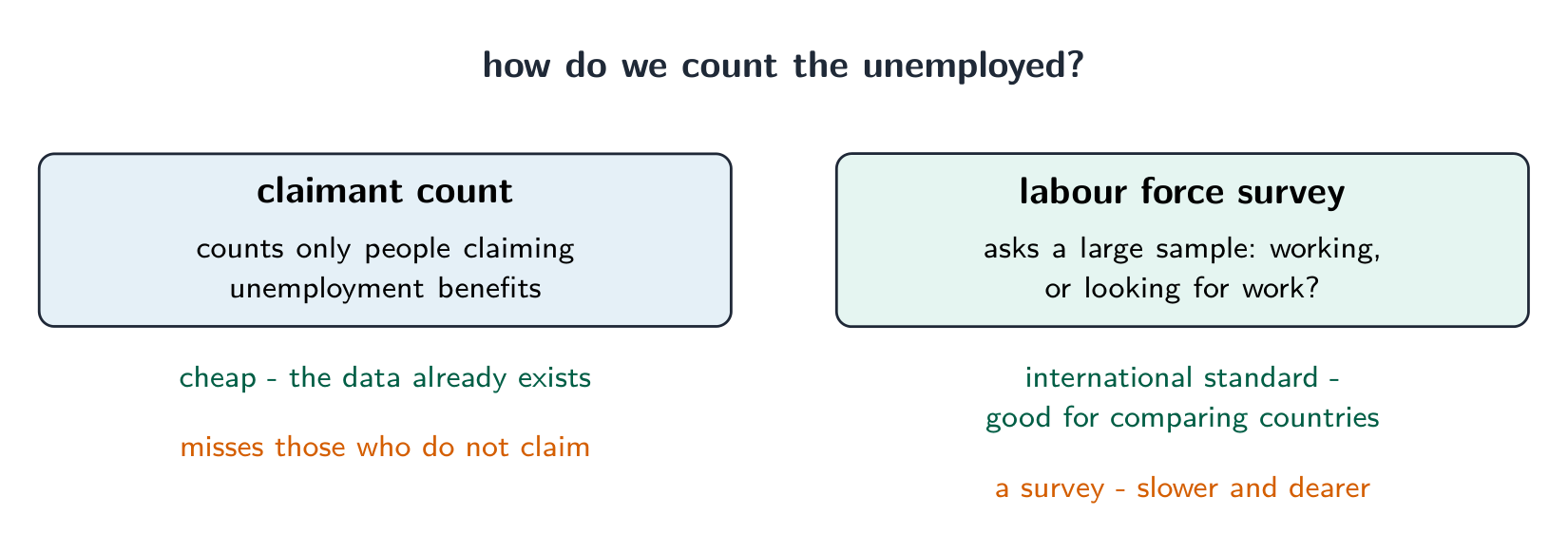
the claimant count 申领救济人数 counts only people claiming unemployment benefits. It is cheap but misses those who do not claim.
the labour force survey 劳动力调查 asks a large sample whether they are working or seeking work. It follows an international standard, so it is better for comparing countries. The labour force 劳动力 is everyone working or looking for work.
Types and causes
frictional unemployment 摩擦性失业 — short-term, while people move between jobs.
structural unemployment 结构性失业 — when an industry declines and workers' skills no longer match the jobs available.
cyclical unemployment 周期性失业 — caused by low AD in a recession. This is usually the largest type.
seasonal unemployment 季节性失业 — when work is only available at certain times of the year (such as farming or tourism).
Consequences
Unemployment wastes output (the economy produces inside its PPC), lowers incomes, and costs the government (more benefits, less tax). It also harms families and can raise crime and ill health.
עברית
אבטלה מתייחסת לאנשים שיש להם יכולת ורצון לעבוד, מחפשים מקום עבודה, אך אינם מוצאים.
מדידת אבטלה
מניית המבקשים סופרת רק אנשים התומכים בביטוח אבטלה. היא זולה אך מחמיצה את אלו שאינם תומכים.
סקר כוח העבודה שואל דגימה גדולה האם הם עובדים או מחפשים עבודה. הוא עוקב אחרי תקן בינלאומי, ולכן טוב יותר להשוות בין מדינות. כוח העבודה הוא כל מי שעובד או מחפש עבודה.
שתי דרכים לספור את האבטלים - ומה שכל אחת מהן מחמיצה
סוגים וגורמים
אבטלת חיכוך — קצרה טווח, בעוד אנשים מעברים ממשרה למשרה.
אבטלה מבנית — כאשר תעשייה נמצאת בדעיכה ומיומנויות העובדים אינן תואמות את המשרות הזמינות.
אבטלה מחזורית — נגרמת על ידי AD נמוך בשפל כלכלי. זהו בדרך כלל הסוג הגדול ביותר.
אבטלה עונתית — כאשר עבודה זמינה רק בזמן מסוים בשנה (כגון חקלאות או תיירות).
שלושה סוגי אבטלה: חיכונית, מבנית וציקלית
השלכות
אבטלה משחיתה תפוקה (הכלכלה מייצרת בתוך ה-PPC שלה), מפחיתה הכנסות ועולה לממשלה (יותר הטבות, פחות מיסים). היא גם פוגעת במשפחות ועלולה להעלות את הפשיעה והמחלות.
Explore · חקור
Unemployment in the labour market · אבטלה בשוק העבודה
If the wage is stuck ABOVE the equilibrium, more workers want jobs than firms will hire — that gap is unemployment. · אם השכר נתקע מעל רמת האיזון, יותר עובדים מחפשים תפקידים מאשר החברות מוכנות להעסיק — הפער הזה הוא אבטלה.
define inflation, deflation and disinflation and explain how the price level is measured
explain the causes (demand-pull and cost-push) and consequences of inflation and deflation
עברית
להגדיר אינפלציה, היסתלקות ודיס-אינפלציה ולהסביר כיצד נמדדת רמת המחירים
להסביר את הגורמים (ביקוש-מומשך ועלות-מומשך) והשפעות האינפלציה וההסתלקות
Source: Cambridge International syllabus · מקור: הסיילבוס הבינלאומי של קמבריד'ג'
English
Inflation, deflation and disinflation
inflation 通货膨胀 is a sustained rise in the general price level. Money then buys less, so its purchasing power 购买力 falls.
deflation 通货紧缩 is a sustained fall in the general price level.
disinflation 反通货膨胀 is when inflation is still positive but is slowing down (prices rise, but more slowly).
The price level is measured with the consumer price index 消费者价格指数 (CPI). A typical household's spending is used to build a "basket" of goods. Each good is given a weight 权重 for how much is spent on it, and the change in the basket's cost from year to year is the inflation rate:
$$\text{inflation rate} = \frac{\text{change in index}}{\text{starting index}} \times 100\%.$$
Worked example. A country's CPI rises from $100$ to $104$ over one year, then to $107$ the year after. Find the inflation rate in each year.
Year 1: $\dfrac{104 - 100}{100} \times 100\% = 4\%$. Year 2: $\dfrac{107 - 104}{104} \times 100\% = 2.9\%$.
Notice that prices are still rising in year 2, just more slowly — this fall in the inflation rate (from $4\%$ to $2.9\%$) is disinflation, not deflation.
Worked example. A worker's wage rises from $\text{\pounds} 500$ to $\text{\pounds} 520$ a week (a $4\%$ rise) while the CPI rises by $4\%$. What happens to the real wage?
Money (nominal) pay is up $4\%$, but prices are also up $4\%$, so the real wage — what the pay can actually buy — is unchanged. A pay rise only raises living standards if it beats inflation.
Causes of inflation
demand-pull inflation 需求拉动型通货膨胀 — AD rises faster than AS, so "too much money chases too few goods".
cost-push inflation 成本推动型通货膨胀 — firms' costs rise (wages or raw materials), so they raise prices, shifting SRAS to the left.
Consequences
Inflation lowers purchasing power, especially for people on fixed incomes. It creates uncertainty, can make a country's exports dearer, and helps borrowers but harms savers. Deflation sounds good but can be harmful: people delay buying (waiting for lower prices), so AD falls, firms cut output, and unemployment rises.
עברית
אינפלציה, היפוך מחירים ואינפלציה מצטמצמת
אינפלציה היא עלייה מתמשכת ברמת המחירים הכללית. כסף אז קונה פחות, ולכן הכוח הקנייתי שלו יורד.
היפוך מחירים היא ירידה מתמשכת ברמת המחירים הכללית.
אינפלציה מצטמצמת היא מצב שבו האינפלציה עדיין חיובית אך מאטה (המחירים עולים, אך בהדרגה פחות).
האינפלציה נמדדת מהמחיר של סל מוצרי צריכה שוטפים כמו אלו.
רמת המחירים נמדדת באמצעות מדד מחירי הצרכן (CPI). נעשה שימוש בהוצאות של משק בית אופייני לבניית "סל" מוצרים. לכל מוצר מוקצה משקל לפי כמות ההוצאה עליו, והשינוי בעלות הסל משנה לשנה הוא קצב האינפלציה:
$$\text{inflation rate} = \frac{\text{change in index}}{\text{starting index}} \times 100\%.$$
דוגמה מוצגת. מדד מחירי הצרכן של מדינה עלה מ-$100$ ל-$104$ במשך שנה אחת, ולאחר מכן ל-$107$ בשנה שלאחר מכן. מצאו את קצב האינפלציה בכל שנה.
שנה 1: $\dfrac{104 - 100}{100} \times 100\% = 4\%$. שנה 2: $\dfrac{107 - 104}{104} \times 100\% = 2.9\%$.
שים לב שמחירים עדיין עולים בשנה 2, אך בקצב איטי יותר — ירידת קצב האינפלציה (מ-$4\%$ ל-$2.9\%$) היא דיסאינפלציה, ולא דפליציה.
דוגמה מפורטת. השכר של עובד עולה מ-$\text{\pounds} 500$ ל-$\text{\pounds} 520$ בשבוע (גידול של $4\%$), בעוד שה-CPI עולה ב-$4\%$. מה קורה לשכר האמיתי?
התשלום הכספי (נומינלי) עלה ב-$4\%$, אך המחירים גם הם עלו ב-$4\%$, ולכן השכר האמיתי – מה שהתשלום יכול באמת לקנות – נותר ללא שינוי. עליית שכר מעלה את רמת החיים רק אם היא גבוהה יותר מקצב האינפלציה.
סיבות לאינפלציה
אינפלציית דחיפה בביקוש — הביקוש הכולל (AD) עולה מהר יותר מההיצע הכולל (AS), כך ש"יש יותר כסף שאורח אחרים סחורים".
אינפלציית דחיפת עלויות – עלויות העסקים עולות (שכר או חומרי גלם), ולכן הן מעלות מחירים, ומזיזות את ה-SRAS שמאלה.
אינפלציית דחיפה בביקוש נובעת מהזזה ימינה של AD; אינפלציית דחיפת עלויות נובעת מהזזה שמאלה של SRAS. שתיהן מביאות לעלייה ברמת המחירים.
השלכות
אינפלציה מפחיתה את כוח הקניה, במיוחד עבור אנשים עם הכנסות קבועות. היא יוצרת אי-וודאות, יכולה להפוך את היצוא של המדינה למיוקר יותר, ועוזרת לחייבים אך פוגעת בחוסכים. דפליציה נשמעת טובה אך יכולה להיות מזיקה: אנשים מעכבים קניות (מחכים למחירים נמוכים יותר), ולכן AD יורד, חברות מקצצות בתפוקה והאבטלה עולה.
Explore · חקור
Aggregate demand and supply · ביקוש וספק הכוללים
The overall price level sits where aggregate demand meets aggregate supply — a shock to either moves prices and output. · רמת המחירים הכללית נמצאת בנקודה שבה הביקוש וההיצע הכוללים נפגשים — זעזוע באלה משנה את המחירים ואת התוצאה.
Pick one and the site follows you — notes, papers, videos and practice all open on it. · בחרו נושא אחד והאתר יעקוב אחריו — הערות, מסמכים, וידאו ותרגולים פתוחים בו.
Type to search notes, lessons, code, vocabulary and past-paper questions across every subject. · הקלד כדי לחפש הערות, שיעורים, קוד, אוצר מילים ושאלות מבחנים בכל הנושאים.