National income statistics
Introduced| English | Meaning |
|---|---|
| national income/ˈnæʃənl ˈɪŋkʌm/ | The aggregate income earned from an economy's production over a specified period. |
| GDP/ˌdʒiː diː ˈpiː/ | Output produced within a country. |
| GNI/ˌdʒiː en ˈaɪ/ | GNI |
| nominal/ˈnɒmɪnl/ | Measured using current monetary values without adjusting for changes in the price level. |
| real GDP/rɪəl ˌdʒiː diː ˈpiː/ | The value of domestic final output measured at constant prices to remove the effect of price changes. |
| GDP per capita/ˌdʒiː diː ˈpiː pɜː ˈkæpɪtə/ | GDP ÷ population — a better guide to living standards than total GDP. |
| living standards/ˈlɪvɪŋ ˈstændədz/ | The level of material well-being and access to goods, services and other conditions supporting quality of life. |
Measuring a whole economy
- How do you say whether a country had a "good year"? You add up everything it produced — its national income 国民收入.
- That single figure, GDP 国内生产总值, drives headlines, elections and policy. But it must be read with care.
National income flow
Watch spending become income, output and expenditure in the circular flow.
GDP, GNI 国民总收入 and GNP
- GDP (gross domestic product) = the value of all output produced within a country in a year.
- GNI (gross national income) = GDP plus net income earned abroad by the country's residents.
- Measured three equivalent ways: total output = total income = total expenditure.

National income is the value of all the goods and services a country produces
GDP measures the value of all output produced:
Difficulty 1/5 · 100 coins + a small bonus on first completion today
GDP is output produced within the country's borders; GNI adds net income from abroad.
GNI equals GDP plus net income earned ______ by residents.
Difficulty 1/5 · 100 coins + a small bonus on first completion today
GNI = GDP + net primary income from abroad.
Real vs nominal 名义
- Nominal GDP is measured at current prices; real GDP 实际GDP strips out inflation to show true changes in output.
- Only real GDP tells you whether the economy actually grew.
Worked example. Nominal GDP rises 5% but prices rise 5%. Real GDP growth = 5% − 5% = 0% — no real growth at all.
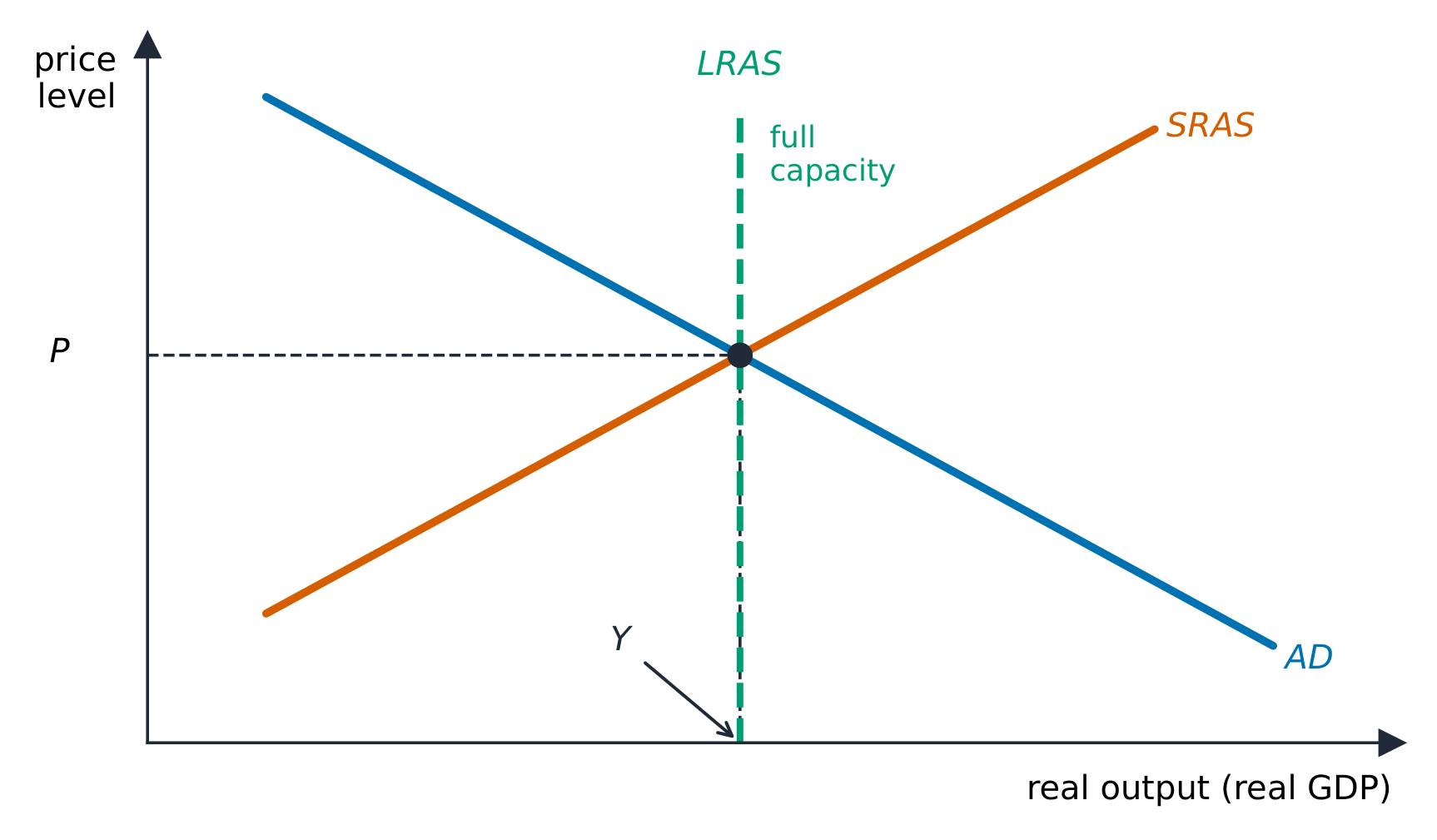
Macroeconomic equilibrium where AD meets AS
Nominal GDP rises 5% while prices rise 5%. What is real GDP growth (%)?
Difficulty 2/5 · 140 coins + a small bonus on first completion today
Real growth ≈ nominal growth − inflation = 5% − 5% = 0%.
GDP per capita 人均GDP and limitations
- GDP per capita = GDP ÷ population — a better guide to living standards 生活水平 than total GDP.
- Limitations: it ignores the distribution of income, non-market activity (home/black-market work), and wellbeing (leisure, environment).
Bigger GDP ≠ better off. A country can grow its GDP while most people see no gain (if the rise goes to a few) or while pollution rises. GDP measures output, not welfare.
A country has GDP of 600 billion dollars and a population of 30 million. What is GDP per capita (in dollars)?
Difficulty 2/5 · 140 coins + a small bonus on first completion today
600,000,000,000 / 30,000,000 = 20,000 per person.
GDP per capita ignores how income is distributed across the population.
Difficulty 1/5 · 100 coins + a small bonus on first completion today
An average hides inequality — a key limitation of GDP as a welfare measure.
You've got it
- GDP = output produced within a country; GNI = GDP + net income from abroad
- real GDP removes inflation (only real growth counts); nominal is at current prices
- GDP per capita = GDP ÷ population; GDP ignores distribution, non-market work and wellbeing
Write from a GDP per capita of 30
- GDP is 900.
- Population is 30.
What is GDP per capita?
Output per person is total GDP divided by population.
What is GDP per capita?
Difficulty 1/5 · 100 coins + a small bonus on first completion today
900 divided by 30 is 30.