Source: Cambridge International syllabus · المصدر: منهج كامبريدج الدولي
English
The multiplier effect
The circular flow of income 收入循环流 shows money passing between households and firms. injections 注入 add money to the flow (investment, government spending, exports); leakages 漏出 take it out (saving, taxation, imports).
The multiplier
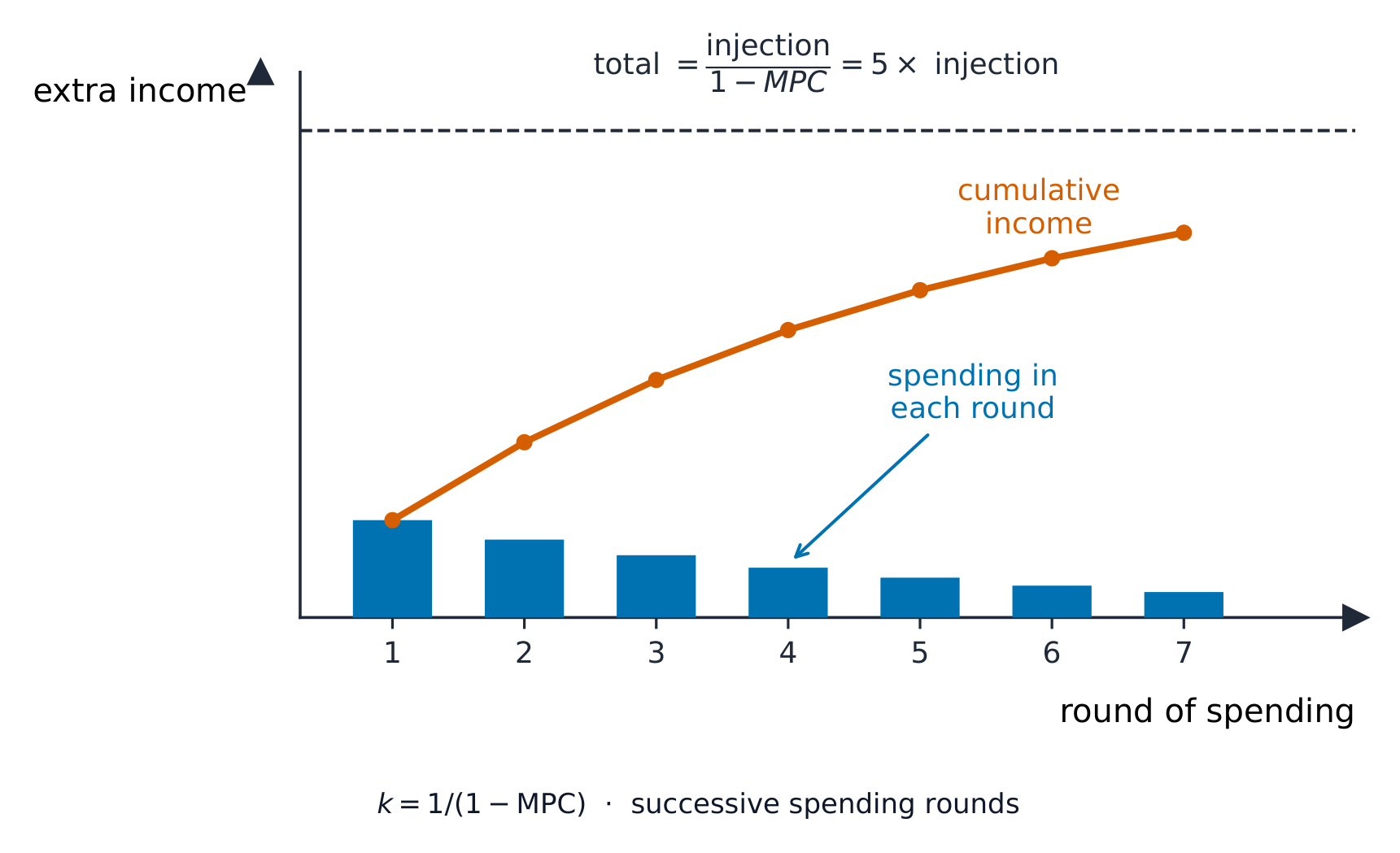
An injection raises income by more than the first amount. This is the multiplier 乘数. When a firm builds a factory, the builders earn income, and they spend part of it, which becomes someone else's income, and so on.
How much is spent again depends on the marginal propensity to consume 边际消费倾向 (MPC) — the fraction of extra income that people spend on home goods. The rest leaks out. In a simple model:
$$\text{multiplier} = \frac{1}{1 - MPC}$$
A bigger MPC (smaller leakages) gives a bigger multiplier. The main leakages are measured by the marginal propensity to save 边际储蓄倾向 (MPS) and the marginal propensity to import 边际进口倾向 (MPM).
Worked example. In an economy the MPC is $0.8$. Find the multiplier, then the effect of a $\text{\pounds} 10$ billion rise in investment.
National income therefore rises by $5 \times \text{\pounds} 10\text{ billion} = \text{\pounds} 50\text{ billion}$ — five times the original injection. (Because all income is either spent or saved, $\text{MPC} + \text{MPS} = 1$, so here $\text{MPS} = 0.2$ and the multiplier is also $1/\text{MPS}$.)
The accelerator
The accelerator 加速数 says that investment 投资 depends on the rate of change of output. When demand is rising quickly, firms need lots of new capital, so investment jumps. When demand merely stays high, investment falls back.
What drives consumption, saving and investment
consumption 消费 and saving 储蓄 depend on disposable income 可支配收入 (income after tax), wealth, interest rates, and confidence.
investment depends on interest rates, expected profit, technology, and business confidence.
العربية
تأثير المضاعف
يُظهر التدفق الدائري للدخل مرور المال بين الأسر والشركات. الإدخالات تضيف مالاً للتدفق (الاستثمار، الإنفاق الحكومي، الصادرات)؛ التسربات تأخذ منه (الادخار، الضرائب، الواردات).
يدور الدخل بين البيوت الأسرية والشركات، مع الحقن والنزيف
المضاعف
الإدخال يرفع الدخل بمقدار أكبر من المبلغ الأول. هذا هو المضاعف. عندما تبني شركة مصنعًا، يكسب البنّون دخلاً، وينفقون جزءاً منه، مما يصبح دخلاً لشخص آخر، وهكذا.
كمية الإنفاق مرة أخرى تعتمد على الميل الهامشي للاستهلاك (MPC) — وهو الكسر من الدخل الإضافي الذي ينفق الناسه على سلع منزلية. الباقي يتسرب. في نموذج بسيط:
$$\text{multiplier} = \frac{1}{1 - MPC}$$
الميل الهامشي للاستهلاك الأكبر (التسربات الأصغر) يعطي مضاعفاً أكبر. يتم قياس التسربات الرئيسية بواسطة الميل الهامشي للادخار (MPS) والميل الهامشي للاستيراد (MPM).
مثال محلول. في اقتصاد ما الميل الهامشي للاستهلاك هو $0.8$. أوجد المضاعف، ثم تأثير ارتفاع الاستثمار بمقدار $\text{\pounds} 10$ مليار.
يرتفع الدخل القومي بالتالي بمقدار $5 \times \text{\pounds} 10\text{ billion} = \text{\pounds} 50\text{ billion}$ — خمسة أضعاف الإدخال الأصلي. (لأن جميع الدخل إما يُنفق أو يُوفر، $\text{MPC} + \text{MPS} = 1$، لذا هنا $\text{MPS} = 0.2$ والمضاعف هو أيضاً $1/\text{MPS}$.)
يتم إنفاق الإدخال جولة تلو الأخرى (كل منها أصغر بنسبة MPC)، مما يؤدي إلى ارتفاع الدخل الكلي بمضاعف من الإدخال الأول.
المبدل
ينص المبدل على أن الاستثمار يعتمد على معدل التغير في الإنتاج. عندما يرتفع الطلب بسرعة، تحتاج الشركات إلى الكثير من رأس المال الجديد، فيرتفع الاستثمار. أما عندما يبقى الطلب مرتفعاً فقط دون زيادة، فإن الاستثمار يتراجع.
ما يحرك الاستهلاك والادخار والاستثمار
يعتمد الاستهلاك والادخار على الدخل القابل للإنفاق (الدخل بعد الضرائب)، والثروة، وأسعار الفائدة، والثقة.
يعتمد الاستثمار على أسعار الفائدة، والأرباح المتوقعة، والتكنولوجيا، وثقة رواد الأعمال.
Explore · استكشف
The circular flow and the multiplier · الدورة الجارية والمضاعف
Income circles between households and firms. An injection (e.g. investment) is re-spent again and again — the multiplier effect. · يدور الدخل بين الأسر والشركات. الإدراج (مثل الاستثمار) يُعاد إنفاقه مراراً وتكراراً — تأثير المضاعف.
Explore · استكشف
The multiplier, round by round · المضاعف، جولة تلو الأخرى
Drag the injection and the MPC, then press Play — each spending round is MPC times the last, and the total settles at k × the injection. · اسحب الحقنة وMPC ثم اضغط التشغيل — كل دورة إنفاق هي حاصل ضرب MPC في الدورة السابقة، ويستقر الإجمالي عند k × الحقنة.
marginal propensity to consume/ˈmɑːdʒɪnl prəˈpensɪti tə kənˈsjuːm/
الميل الهامشي للاستهلاك
marginal propensity to save/ˈmɑːdʒɪnl prəˈpensɪti tə seɪv/
الميل الحدي للادخار
marginal propensity to import/ˈmɑːdʒɪnl prəˈpensɪti tʊ ɪmˈpɔːt/
الميل الحدي للاستيراد
accelerator/əkˈseləreɪtə/
المُسرِّع
9.2
Economic growth and sustainability · النمو الاقتصادي والاستدامة
Syllabus · المنهج
English
distinguish actual and potential growth, output gaps and sustainable growth
explain the costs and benefits of growth and the relationship between growth and sustainability
العربية
ميّز بين النمو الفعلي والجوهري وفجوات الإنتاج والنمو المستدام
اشرح تكاليف وفوائد النمو والعلاقة بين النمو والاستدامة
Source: Cambridge International syllabus · المصدر: منهج كامبريدج الدولي
English
economic growth 经济增长 is a rise in real output.
actual growth 实际增长 is the real rise in output that happens.
potential growth 潜在增长 is the rise in the economy's capacity.
The output gap 产出缺口 is the difference between actual output and potential output. A positive gap (actual above potential) tends to cause inflation; a negative gap (actual below potential) means spare capacity and unemployment.
Sustainability
sustainable growth 可持续增长 is growth that meets today's needs without harming the ability of future generations to meet theirs. Fast growth can use up non-renewable resources and cause pollution, which threatens sustainability 可持续性. So a country must weigh growth today against the environment and resources of tomorrow.
العربية
النمو الاقتصادي هو ارتفاع في الناتج الحقيقي.
الاستثمار في المباني الجديدة ورأس المال هو دافع رئيسي للنمو الاقتصادي.
النمو الفعلي هو الارتفاع الحقيقي في الناتج الذي يحدث فعلياً.
النمو المحتمل هو زيادة قدرة الاقتصاد.
فجوة الناتج هي الفرق بين الناتج الفعلي والناتج المحتمل. الفجوة الإيجابية (الفعلية أعلى من المحتملة) تميل إلى التسبب في تضخم؛ أما الفجوة السلبية (الفعلية أقل من المحتملة) فتعني وجود طاقة احتياطية وبطالة.
يتذبذب الناتج الفعلي حول الناتج المحتمل؛ فوقه يمثل فجوة إيجابية (تضخمية)، وتحته يمثل فجوة سلبية مع طاقة احتياطية.
الاستدامة
النمو المستدام هو نمو يلبي احتياجات اليوم دون الإضرار بقدرة الأجيال القادمة على تلبية احتياجاتها. يمكن أن يستهلك النمو السريع الموارد غير المتجددة ويسبب التلوث، مما يهدد الاستدامة. لذلك يجب على الدولة الموازنة بين النمو اليوم والبيئة وموارد الغد.
الرياح التي تستخدمها هذه التوربينات لا تنضب أبداً، ولا تحرق أي وقود. تحويل الإنتاج من الفحم والنفط إلى مصادر متجددة مثل هذا يسمح للاقتصاد بالاستمرار في النمو دون استنزاف الموارد — أو ملء الهواء بالتلوث — الذي سيحرمان الأجيال القادمة منه.
Explore · استكشف
Economics case lab · مختبر حالات الاقتصاد
Classify real examples by the economic idea they show. · صنف الأمثلة الحقيقية حسب الفكرة الاقتصادية التي تمثلها.
explain the measurement, types and causes of unemployment and the natural rate of unemployment
explain the relationship between unemployment and inflation (the Phillips curve, short run and long run)
العربية
اشرح قياس وأنواع وأسباب البطالة ومعدل البطالة الطبيعي
اشرح العلاقة بين البطالة والتضخم (منحنى فيليبس، قصير الأجل وطويل الأجل)
Source: Cambridge International syllabus · المصدر: منهج كامبريدج الدولي
English
unemployment 失业 is measured in two ways: the claimant count 申领救济人数 (people claiming benefits) and the wider labour force survey 劳动力调查 (a sample asked about work).
Types
frictional unemployment 摩擦性失业 — short spells between jobs.
structural unemployment 结构性失业 — skills no longer match the jobs, as industries decline.
cyclical unemployment 周期性失业 — caused by low demand in a recession.
seasonal unemployment 季节性失业 — work only at certain times of year.
The natural rate and the Phillips curve
The natural rate of unemployment 自然失业率 is the unemployment left when the labour market is in balance (mainly frictional and structural). It cannot be removed just by raising demand.
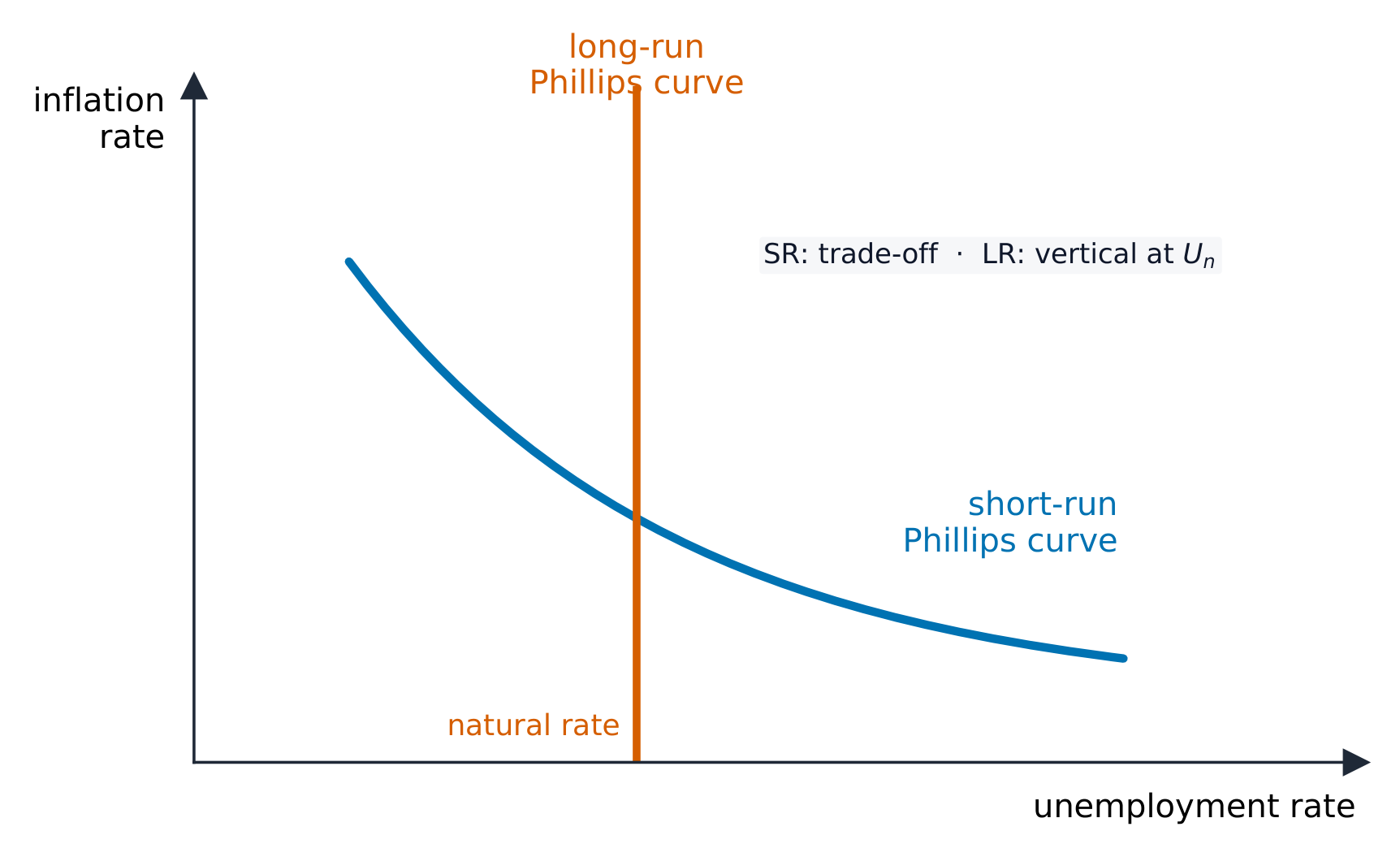
The Phillips curve 菲利普斯曲线 shows the link between unemployment and inflation:
in the short run, there is a trade-off: lower unemployment comes with higher inflation, because strong demand pushes up wages and prices.
in the long run, the curve is vertical at the natural rate. Once people expect inflation, there is no lasting trade-off — pushing unemployment below the natural rate only speeds up inflation.
العربية
البطالة تقاس بطريقتين: عدد المطالبين (الأشخاص الذين يتلقون المساعدات) ومسح القوى العاملة الأوسع (عينة تسأل عن العمل).
أنواع البطالة الأربعة: الاحتكاكية، والهيكلية، والدورية، والموسمية
الأنواع
البطالة الاحتكارية — فترات قصيرة بين الوظائف.
البطالة الهيكلية — المهارات لم تعد تتناسب مع الوظائف، حيث تتراجع الصناعات.
البطالة الدورية — ناتجة عن انخفاض الطلب في فترة الركود.
البطالة الموسمية — العمل يكون فقط في أوقات معينة من السنة.
المعدل الطبيعي ومنحنى فيليبس
المعدل الطبيعي للبطالة هو البطالة المتبقية عندما يكون سوق العمل في حالة توازن (معظمها احتكاري وهيكلي). لا يمكن القضاء عليها فقط بزيادة الطلب.
يعرض منحنى فيليبس العلاقة بين البطالة والتضخم:
في القصير، يوجد مقايضة: انخفاض البطالة يصاحبه ارتفاع التضخم، لأن الطلب القوي يدفع الأجور والأسعار للأعلى.
في الطويل، يكون المنحنى عمودياً عند المعدل الطبيعي. بمجرد أن يتوقع الناس التضخم، لا توجد مقايضة دائمة — ودفع البطالة أسفل المعدل الطبيعي يسرع فقط من التضخم.
يُظهر منحنى فيليبس قصير الأمد مقايضة بين البطالة والتضخم؛ والمنحنى طويل الأمد عمودي عند المعدل الطبيعي.
Explore · استكشف
Development chain lab · مختبار سلسلة التطوير
Follow how policy and resources can change living standards. · تابع كيف يمكن للسياسة والموارد أن تغير مستويات المعيشة.
natural rate of unemployment/ˈnætʃərəl reɪt ɒv ʌnemˈplɔɪmənt/
معدل البطالة الطبيعي
Phillips curve/ˈfɪlɪps kɜːv/
منحنى فيليبس
9.4
Money and banking · المال والبنوك
Syllabus · المنهج
English
explain the functions and characteristics of money and the role of the central bank and commercial banks
explain the demand for money (liquidity preference), the money supply, and the determination of interest rates, including moral hazard
العربية
اشرح وظائف ومميزات المال ودور البنك المركزي والبنوك التجارية
اشرح طلب المال (تفضيل السيولة) وإمداد النقود وتحديد أسعار الفائدة، بما في ذلك المخاطر الأخلاقية
Source: Cambridge International syllabus · المصدر: منهج كامبريدج الدولي
English
What money does
money 货币 is anything widely accepted in payment. It has four jobs:
a medium of exchange 交换媒介 — used to buy and sell, avoiding barter.
a store of value 价值储藏 — it keeps its worth over time, so you can save it.
a unit of account 记账单位 — a common way to measure and compare prices.
a standard of deferred payment 延期支付标准 — it lets people borrow and repay later.
Good money is durable, easy to carry, easy to divide, hard to fake, and limited in supply.
Banks
the central bank 中央银行 issues notes, runs monetary policy, holds the country's reserves, and acts as lender of last resort 最后贷款人 to banks in trouble.
commercial banks 商业银行 take deposits and make loans. By lending out most of what is deposited, the banking system creates money.
The demand for money and interest rates
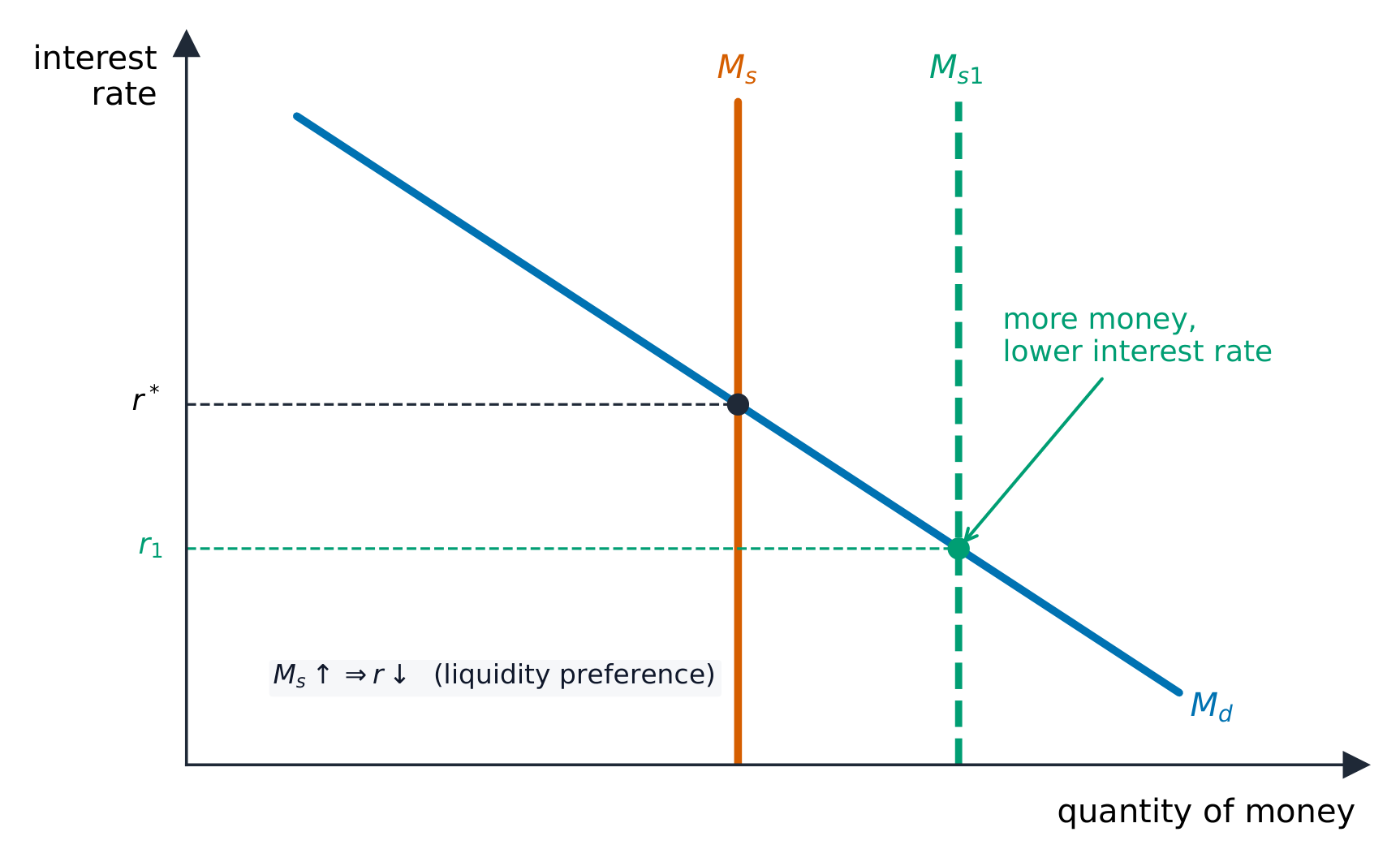
People hold money rather than other assets for its liquidity 流动性 (it can be spent at once). The demand for money 货币需求 — also called liquidity preference 流动性偏好 — comes from the need to make everyday payments, to keep a safety buffer, and to be ready to buy assets.
The interest rate 利率 is the price of borrowing money. It is set where the demand for money meets the money supply 货币供给. A larger money supply tends to lower the interest rate.
Moral hazard
moral hazard 道德风险 is the danger that banks take bigger risks because they expect to be rescued if things go wrong. If a bank believes the government will bail it out, it may lend recklessly — knowing it keeps the gains but passes losses to others.
العربية
ما يقوم به المال
المال هو أي شيء يُقبل على نطاق واسع في الدفع. له أربع وظائف:
وسيط للتبادل — يُستخدم للشراء والبيع، مما يتجنب المقايضة.
مخزن للقيمة — يحافظ على قيمته عبر الوقت، لذا يمكنك ادخاره.
يقوم المال بأربع وظائف في وقت واحد — وبدونه، ستعود التجارة إلى المقايضة البطيء والمتعرج
المال الجيد متين، سهل الحمل، سهل التقسيم، صعب التزوير، ومحدود العرض.
البنوك
البنك المركزي يصدر الأوراق النقدية، ويدير السياسة النقدية، ويحتفظ باحتياطيات البلاد، ويعمل كـقرض أخير للبنوك المتعثرة.
البنوك التجارية تأخذ الودائع وتمنح القروض. من خلال اقتراض معظم ما يتم إيداعه، يخلق النظام البنكي المال.
تأخذ البنوك التجارية الودائع وتمنح القروض — ومن خلال الاقتراض، يخلق النظام البنكري معظم المال في الاقتصاد.
طلب المال وأسعار الفائدة
يحتفظ الناس بالمال بدلاً من الأصول الأخرى بسبب سيولته (يمكن إنفاقه فوراً). طلب المال — المعروف أيضاً باسم تفضيل السيولة — ينبع من الحاجة لإجراء مدفوعات يومية، والحفاظ على وسادة أمان، والاستعداد لشراء الأصول.
سعر الفائدة هو سعر اقتراض المال. يُحدد عند نقطة التقاء طلب المال مع عرض المال. زيادة عرض المال تميل إلى خفض سعر الفائدة.
يُحدد سعر الفائدة عند نقطة التقاء طلب المال وعرض المال؛ وزيادة عرض المال تخفضه.
المخاطر الأخلاقية
الخطر الأخلاقي هو الخطر الذي تتخاطره البنوك بأخذ مخاطر أكبر لأنها تتوقع أن يتم إنقاذها إذا سارت الأمور على نحو خاطئ. إذا اعتقدت بنك أن الحكومة ستقوم بإنقذه، فقد يقترض بتهور — علمًا بأنه يحافظ على الأرباح ويحمل الخسائر للآخرين.
Explore · استكشف
Economics case lab · مختبر حالات الاقتصاد
Classify real examples by the economic idea they show. · صنف الأمثلة الحقيقية حسب الفكرة الاقتصادية التي تمثلها.
Pick one and the site follows you — notes, papers, videos and practice all open on it. · اختر واحدًا وسيتبعك الموقع — الملاحظات، الأوراق، الفيديوهات والتدريب جميعها تفتح عليه.
Type to search notes, lessons, code, vocabulary and past-paper questions across every subject. · اكتب للبحث عن ملاحظات، دروس، أكواد، مفردات وأسئلة امتحانات سابقة عبر جميع المواد.