English
This final topic covers trade imbalances, exchange rates in depth, and how countries develop and connect.
العربية
يغطي هذا الموضوع الأخير عدم التوازن في الميزانية، وسعر الصرف بعمق، وكيفية تطور الدول واتصالها.
A-Level Economics · A-Level الاقتصاد · Topic 11 · الموضوع 11
 8:57
8:57
قضايا اقتصادية دولية (مستوى A)
تخسر عملة بلد ما خمسه قيمتها في ليلة واحدة. تصبح الصادرات رخيصة فجأة، والواردات باهظة فجأة، لذا ينبغي أن ينغلق الفجوة التجارية فوراً. لكنها لا تفعل…
English narration · English + 中文 subtitles burned in · سرد باللغة الإنجليزية · ترجمة مدمجة بالإنجليزية + الصينية
This final topic covers trade imbalances, exchange rates in depth, and how countries develop and connect.
يغطي هذا الموضوع الأخير عدم التوازن في الميزانية، وسعر الصرف بعمق، وكيفية تطور الدول واتصالها.
Source: Cambridge International syllabus · المصدر: منهج كامبريدج الدولي
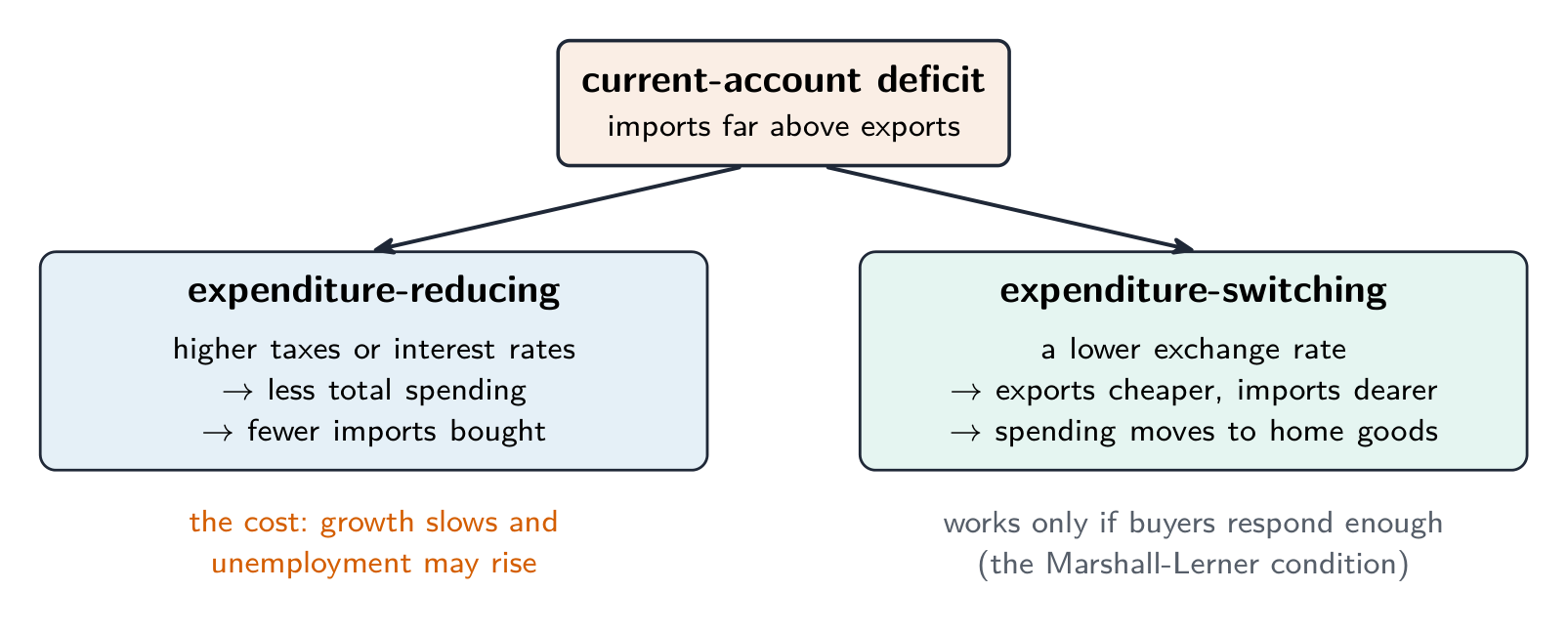
A country with a large balance of payments 国际收支 problem — usually a deficit on the current account 经常账户 — can use two kinds of policy.
A lower exchange rate only improves the current account if buyers respond enough. The Marshall-Lerner condition 马歇尔勒纳条件 says the sum of the price elasticities of demand for exports and imports must be greater than one:
Worked example. After a depreciation, the demand for a country's exports has $PED = 0.6$ and its demand for imports has $PED = 0.7$. Will the current account improve?
so the Marshall-Lerner condition is met, and the depreciation should improve the current account in the long run. (If the two elasticities had summed to less than $1$ — for example $0.3 + 0.4 = 0.7$ — a depreciation would make the deficit worse.)
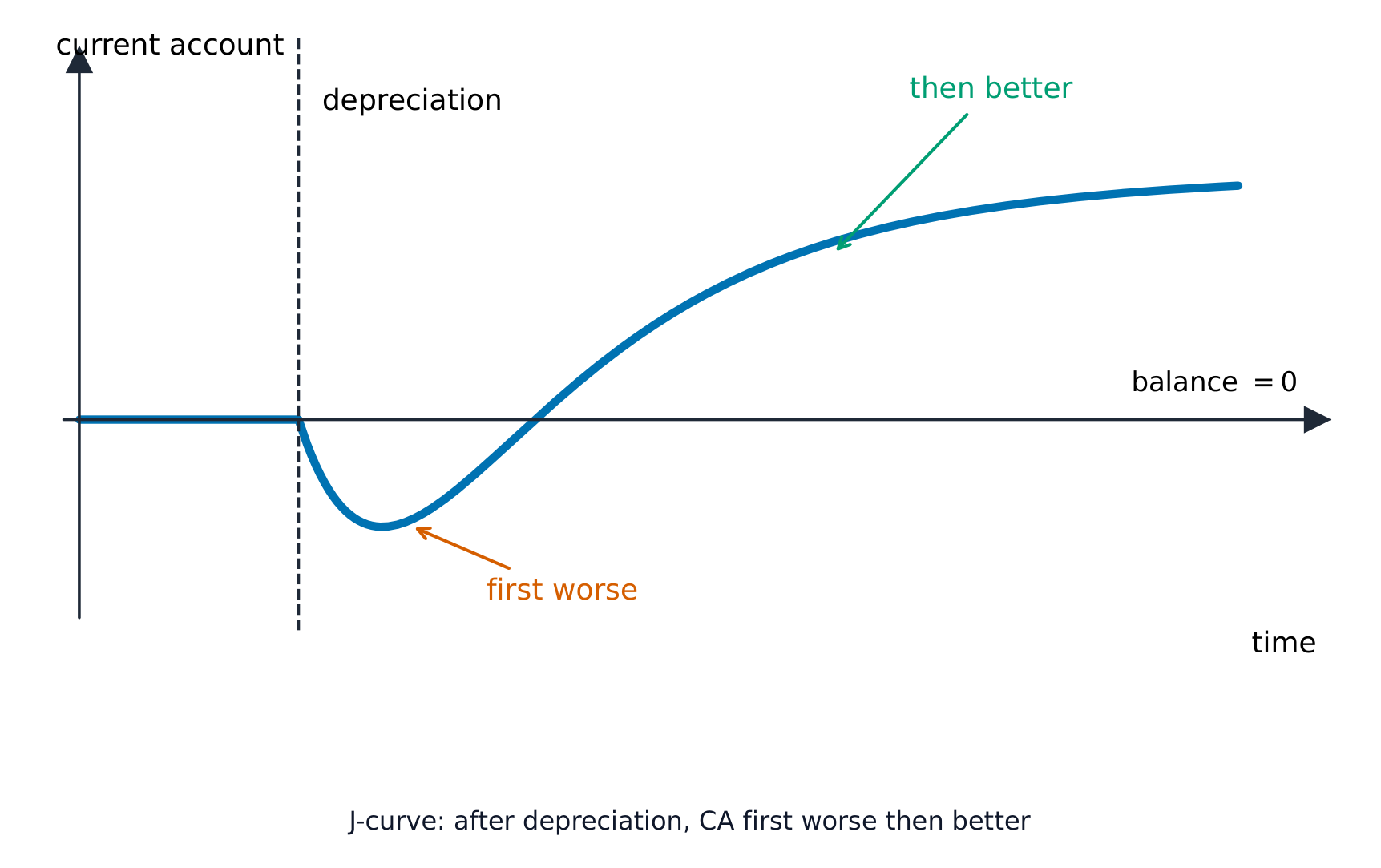
Even when this holds, the gain takes time. The J-curve effect J曲线效应 describes what happens: just after a depreciation, the current account first gets worse (imports cost more straight away, but trade volumes are slow to change), then later improves as buyers adjust — tracing the shape of a letter J.
يمكن لدولة تعاني من مشكلة كبيرة في ميزان المدفوعات — عادة عجز في الحساب الجاري — استخدام نوعين من السياسات.
لا يحسن انخفاض سعر الصرف الحساب الجاري إلا إذا استجاب المشترون بشكل كافٍ. ينص شرط مارشال-ليرن على أن مجموع مرونة الطلب على الصادرات والواردات يجب أن يكون أكبر من واحد:
مثال محلول. بعد التخفيض، كان الطلب على صادرات الدولة $PED = 0.6$ وكان الطلب على وارداته $PED = 0.7$. هل سيتحسن الحساب الجاري؟
لذا فإن شرط مارشال-ليرن متحقق، ويجب أن يحسن التخفيض الحساب الجاري على المدى الطويل. (لو كان مجموع المرونتين أقل من $1$ — على سبيل المثال $0.3 + 0.4 = 0.7$ — لأصبح العجز أسوأ بسبب التخفيض.)
حتى عندما يتحقق هذا الشرط، يستغرق تحقيق الفائدة بعض الوقت. يصف تأثير منحنى J ما يحدث: مباشرة بعد التخفيض، يتدهور الحساب الجاري أولًا (تزداد تكلفة الواردات فورًا، لكن أحجام التجارة تتغير ببطء)، ثم يتحسن لاحقًا مع تعديل المشترين — مرسومًا شكل حرف J.
Classify real examples by the economic idea they show. · صنف الأمثلة الحقيقية حسب الفكرة الاقتصادية التي تمثلها.

Source: Cambridge International syllabus · المصدر: منهج كامبريدج الدولي
An exchange rate is the price of one currency in terms of another. There is more than one way to measure it:
Under floating rates, a rise in value is an appreciation 升值 and a fall is a depreciation. Under a fixed system, a deliberate rise is a revaluation 法定升值 and a deliberate fall is a devaluation. A weaker currency tends to raise exports and inflation; a stronger currency does the opposite.
سعر الصرف هو سعر عملة واحدة بدلالة أخرى. توجد أكثر من طريقة لقياسه:
تحت نظام العوم، الارتفاع في القيمة هو الارتشاء والانخفاض هو التخفيض. تحت النظام الثابت، الارتفاع المتعمد هو إعادة القيمة والانخفاض المتعمد هو إعادة التقييم. تميل العملة الأضعف إلى رفع الصادرات والتضخم؛ والعملة الأقوى تفعل العكس.
The exchange rate is set by the demand for and supply of the currency. Shift either to see the rate appreciate or depreciate. · يتم تحديد سعر الصرف بواسطة الطلب والعرض على العملة. غير أحدهما لرؤية appreciation أو depreciation السعر.
| English | العربية |
|---|---|
| balance of payments/ˈbæləns ɒv ˈpeɪmənts/ | ميزان المدفوعات |
| current account/ˈkʌrənt əˈkaʊnt/ | الحساب الجاري |
| expenditure-reducing/ekˈspendɪtʃə rɪˈdjuːsɪŋ/ | تقليل الإنفاق |
| expenditure-switching/ekˈspendɪtʃə ˈswɪtʃɪŋ/ | تحويل الإنفاق |
| exchange rate/eksˈtʃeɪndʒ reɪt/ | معدل الصرف |
| depreciation/dɪˌpriːʃɪˈeɪʃn/ | انخفاض القيمة |
| devaluation/diːˌvæljuːˈeɪʃn/ | إهبال |
| Marshall-Lerner condition/ˈmɑːʃl ˈlɜːnə kənˈdɪʃn/ | شرط مارشل-ليفنر |
| J-curve effect/dʒeɪ kɜːv ɪˈfekt/ | تأثير المنحنى جيم |
| nominal exchange rate/ˈnɒmɪnl eksˈtʃeɪndʒ reɪt/ | سعر الصرف الاسمي |
| real exchange rate/rɪəl eksˈtʃeɪndʒ reɪt/ | سعر الصرف الحقيقي |
| trade-weighted exchange rate/treɪd ˈweɪtɪd eksˈtʃeɪndʒ reɪt/ | سعر الصرف المرجّح بالتجارة |
| effective exchange rate/ɪˈfektɪv eksˈtʃeɪndʒ reɪt/ | سعر الصرف الفعال |
| floating exchange rate/ˈfləʊtɪŋ eksˈtʃeɪndʒ reɪt/ | سعر الصرف العائم |
| fixed exchange rate/fɪkst eksˈtʃeɪndʒ reɪt/ | سعر صرف ثابت |
| managed exchange rate/ˈmænɪdʒd eksˈtʃeɪndʒ reɪt/ | سعر صرف مُدار |
| appreciation/əˌpriːʃɪˈeɪʃn/ | ارتفاع القيمة |
| revaluation/rɪˌvæljuːˈeɪʃn/ | إعادة تقييم |
| economic growth/ˌiːkəˈnɒmɪk ɡrəʊθ/ | النمو الاقتصادي |
| economic development/ˌiːkəˈnɒmɪk dɪˈveləpmənt/ | التنمية الاقتصادية |
| standard of living/ˈstændəd ɒv ˈlɪvɪŋ/ | مستوى المعيشة |
| Human Development Index/ˈhjuːmən dɪˈveləpmənt ˈɪndeks/ | مؤشر التنمية البشرية |
| life expectancy/laɪf ekˈspektənsi/ | المتوقّع للحياة |
| years of schooling/jɪəz ɒv ˈskuːlɪŋ/ | سنوات الدراسة |
| developed country/dɪˈveləpt ˈkʌntri/ | بلد متطور |
| developing country/dɪˈveləpɪŋ ˈkʌntri/ | بلد نامٍ |
| birth rate/bɜːθ reɪt/ | معدل المواليد |

Source: Cambridge International syllabus · المصدر: منهج كامبريدج الدولي
It is important not to confuse two ideas:
A country can grow without developing much (if the extra income goes to a few people). Development usually means rising incomes plus better health, more schooling, and less poverty.
The best-known measure is the Human Development Index 人类发展指数 (HDI). It combines three things into one number between 0 and 1:
Other useful signs of development include access to clean water, the number of doctors per person, and mobile-phone and internet use.
من المهم ألا نخلط بين فكرتين:

يمكن لدولة أن تنمو دون تنمية كبيرة (إذا ذهبت الزيادة في الدخل إلى عدد قليل من الناس). تعني التنمية عادة ارتفاع الدخل زائد تحسين الصحة، ومزيد من التعليم، وقلة الفقر.
أكثر المقياسات شهرة هو مؤشر التنمية البشرية (HDI). يجمع ثلاثة عناصر في رقم واحد بين 0 و1:

تشمل المؤشرات المفيدة الأخرى للتنمية الوصول إلى المياه النظيفة، وعدد الأطباء لكل فرد، واستخدام الهواتف المحمولة والإنترنت.
Follow how policy and resources can change living standards. · تابع كيف يمكن للسياسة والموارد أن تغير مستويات المعيشة.
Source: Cambridge International syllabus · المصدر: منهج كامبريدج الدولي
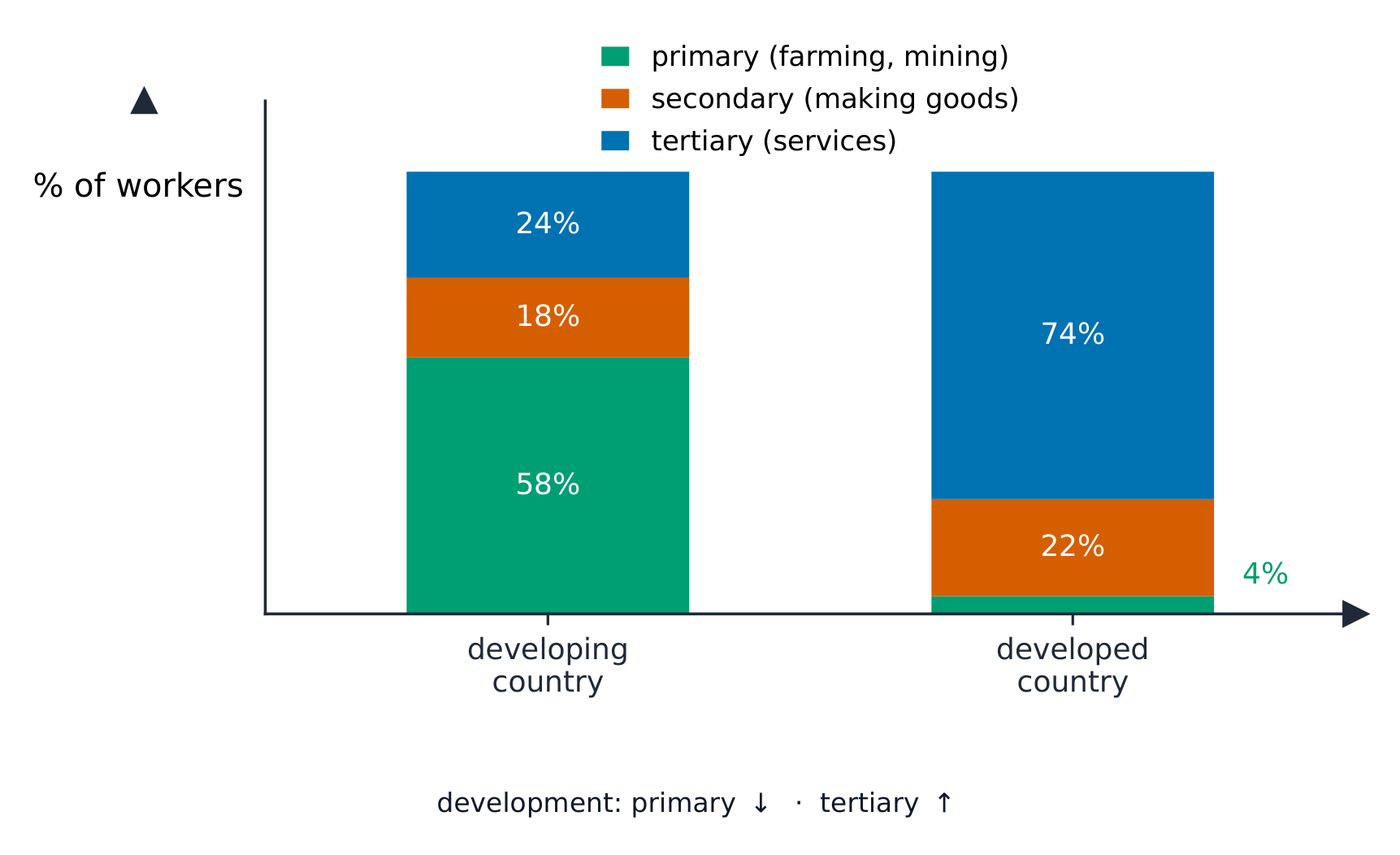
We often compare a developed country 发达国家 (high income, like Germany) with a developing country 发展中国家 (lower income, like Kenya). They differ in clear ways:
| Feature | Developed | Developing |
|---|---|---|
| income per person | high | low |
| birth rate 出生率 and population growth | low | often high |
| life expectancy | high | lower |
| share of workers in farming | small | large |
The employment structure 就业结构 also differs. As a country develops, workers move out of the primary sector 第一产业 (farming and mining), into the secondary sector 第二产业 (making goods), and later into the tertiary sector 第三产业 (services).
Many things shape development: savings and investment, the quality of education and health, infrastructure, stable government and law, and access to world markets.
نقارن غالباً دولة متقدمة (ذات دخل مرتفع، مثل ألمانيا) بـدول نامية (ذات دخل أقل، مثل كينيا). تتفاوت بوضوح في عدة جوانب:
| السمة | متقدمة | نامية |
|---|---|---|
| الدخل للفرد | مرتفع | منخفض |
| معدل المواليد ونمو السكان | منخفض | مرتفع غالباً |
| متوسط العمر المتوقع | مرتفع | أقل |
| نصيب العمال في الزراعة | صغير | كبير |
تختلف أيضاً الهيكل الوظيفي. مع تطور الدولة، ينتقل العمال من القطاع الأولي (الزراعة والتعدين) إلى القطاع الثانوي (صناعة البضائع)، وفي وقت لاحق إلى القطاع الثالثي (الخدمات).
تشكل العديد من العوامل التنمية: المدخرات والاستثمار، وجودة التعليم والصحة، والبنية التحتية، والحكومة المستقرة والقانون، والوصول إلى الأسواق العالمية.
Classify real examples by the economic idea they show. · صنف الأمثلة الحقيقية حسب الفكرة الاقتصادية التي تمثلها.
| English | العربية |
|---|---|
| employment structure/emˈplɔɪmənt ˈstrʌktʃə/ | هيكل التوظيف |
| primary sector/ˈpraɪməri ˈsektə/ | القطاع الأولي |
| secondary sector/ˈsekəndəri ˈsektə/ | القطاع الثانِي |
| tertiary sector/ˈtɜːʃjəri ˈsektə/ | القطاع الثالثي |
| aid/eɪd/ | المساعدات |
| debt/det/ | الديون |
| foreign direct investment/ˈfɒrən daɪˈrekt ɪnˈvestmənt/ | الاستثمار الأجنبي المباشر |
| multinational corporation/ˌmʌltɪˈnæʃənl ˌkɔːpəˈreɪʃn/ | شركة متعددة الجنسيات |
| migration/maɪˈɡreɪʃn/ | الهجرة |
| remittances/rɪˈmɪtənsɪz/ | التحويلات المالية |
Source: Cambridge International syllabus · المصدر: منهج كامبريدج الدولي
Richer and poorer countries are linked in several ways, each with good and bad sides.
ترتبط الدول الغنية والأكثر فقراً بعدة طرق، ولكل منها جوانب إيجابية وسلبية.
Classify real examples by the economic idea they show. · صنف الأمثلة الحقيقية حسب الفكرة الاقتصادية التي تمثلها.

Source: Cambridge International syllabus · المصدر: منهج كامبريدج الدولي
globalisation 全球化 is the growing links between countries — in trade, money, technology and people — so that the world acts more like one market. Its causes include cheaper transport and communication, free trade 自由贸易 agreements, and the spread of multinational firms.
Countries often join a trade bloc 贸易集团 — a group that trades freely among themselves (like the European Union).
| Benefits | Costs |
|---|---|
| lower prices and more choice | some industries and jobs are lost to cheaper countries |
| faster growth and technology transfer | the gap between rich and poor can widen |
| larger markets for firms | more pollution and use of resources |
| poorer countries can industrialise | powerful multinationals may avoid tax and dodge protectionism 贸易保护主义 rules |
Globalisation helps developed and developing economies in different ways, but the gains are not shared evenly, which is why it remains so argued about.
العولمة هي الروابط المتزايدة بين الدول — في التجارة، والمال، والتكنولوجيا والناس — بحيث يعمل العالم أكثر كسوق واحد. تشمل أسبابها انخفاض تكاليف النقل والاتصالات، واتفاقيات التجارة الحرة، وانتشار الشركات متعددة الجنسيات.
غالباً ما تنضم الدول إلى كتلة تجارية — وهي مجموعة تتبادل تجارة حرة فيما بينها (مثل الاتحاد الأوروبي).
| الفوائد | التكاليف |
|---|---|
| انخفاض الأسعار المزيد من الخيارات | فقدان بعض الصناعات والوظائف لصالح دول أرخص |
| نمو أسرع ونقل التكنولوجيا | اتساع الفجوة بين الأغنياء والفقراء |
| أسواق أكبر للشركات | تلوث أكبر واستهلاك الموارد |
| يمكن للدول الفقيرة التصنيع | قد تتجنب الشركات متعددة القوت力强 ضرائب وتتجاوز قواعد الحماية التجارية |
تساعد العولمة الاقتصادات المتقدمة والنامية بطرق مختلفة، لكن المنافع لا تُوزع بالتساوي، ولهذا السبب لا تزال موضوع جدال مستمر.
See how trade or exchange-rate pressure changes domestic outcomes. · شاهد كيف يغير الضغط التجاري أو سعر الصرف النتائج المحلية.
| English | العربية |
|---|---|
| globalisation/ˌɡləʊbəlaɪˈzeɪʃn/ | العولمة |
| free trade/friː treɪd/ | التجارة الحرة |
| trade bloc/treɪd blɒk/ | كتلة تجارية |
| protectionism/prəˈtekʃənɪzəm/ | الحمائية |
Work through it step by step, with instant-check exercises. · ا-working عليه خطوة بخطوة، مع تمارين تحقق فوري.
Past Papers · أوراق الامتحانات السابقة
Loading subjects… · جار تحميل المواضيع…