持久理解 (CHR-1): 文学作品中的人物使读者能够研究并探讨由这些人物所代表的各种价值观、信仰、假设、偏见和文化规范。
学习目标 1.A: 识别并描述特定的文本细节揭示了某个人物的哪些内容,包括该人物的视角以及其动机。
- CHR-1.E 人物通过他们使用的词语、在文本中提供的细节、思维的组织方式、所做的决定以及采取的行动来展现他们的视角和偏见。
AP 英语文学与写作 · 知识点 2
 6:10
6:10
单元2:诗歌I
单元2是课程的第一个诗歌单元,它在单元1的工具箱基础上增加了两样东西:将结构作为分析对象,以及对修辞语言的运用……
英语旁白 · 英中内嵌字幕
持久理解 (CHR-1): 文学作品中的人物使读者能够研究并探讨由这些人物所代表的各种价值观、信仰、假设、偏见和文化规范。
学习目标 1.A: 识别并描述特定的文本细节揭示了某个人物的哪些内容,包括该人物的视角以及其动机。
来源:College Board AP 课程与考试说明
Unit 2 is the course's first poetry unit, and it adds two things to Unit 1's toolkit: structure as an object of analysis, and figurative language 比喻性语言 handled precisely rather than by name-dropping.
One addition on character first: characters reveal their perspectives and biases through the words they use, the details they provide, and the details they omit.
That last item is the analytical opening. A meaningful omission can support an interpretation when the surrounding wording creates a reason to expect the missing detail. Do not invent an omitted fact.
| English | 中文 | 拼音 |
|---|---|---|
| figurative language/ˈfɪɡjərətɪv ˈlæŋɡwɪdʒ/ | 比喻性语言 | bǐ yù xìng yǔ yán |
持久理解(STR-1): 文本各部分和章节的排列方式、各部分之间的相互关系,以及文本揭示信息的顺序,都是作者做出的结构性选择,这些选择有助于读者对文本进行解读。
学习目标 3.C: 解释文本结构的功能。
来源:College Board AP 课程与考试说明
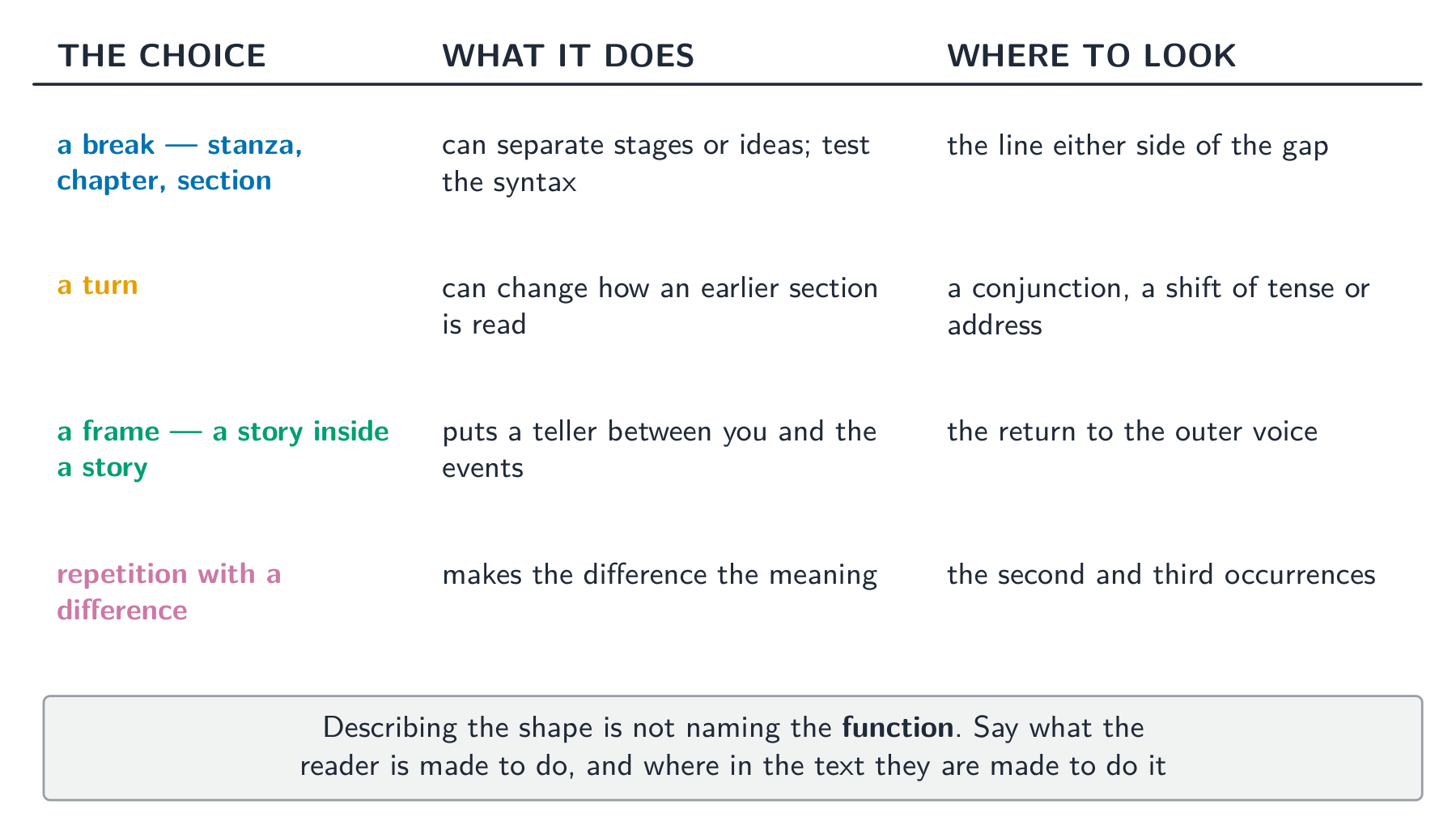
Structure in poetry is not decoration; it is punctuation for thought. Where a line breaks decides which words sit at the ends of lines, and a line ending can give a word prominence, depending on syntax, rhythm and context. A sentence that runs past a line break asks the reader to hold something unresolved; one that stops at the break closes it.
描述形状不是命名功能。说出读者被要求做什么,以及在哪里做。
| English | 中文 | 拼音 |
|---|---|---|
| Line and stanza breaks/laɪn ænd ˈstænzə breɪks/ | 行与诗节的断开 | xíng yǔ shī jié de duàn kāi |
持久理解(STR-1): 文本各部分及章节的编排、各部分之间的相互关系,以及文本呈现信息的顺序,均是作者做出的结构性选择,这些选择有助于读者对文本进行解读。
学习目标 3.D: 解释文本中对比的作用。
来源:College Board AP 课程与考试说明
This is the most reliable route into an unseen poem. Find the shift - a but, a stanza break, a change of tense or address - and the poem divides into a before and an after. What changed, and what the change costs or gains, is very often the poem's argument.
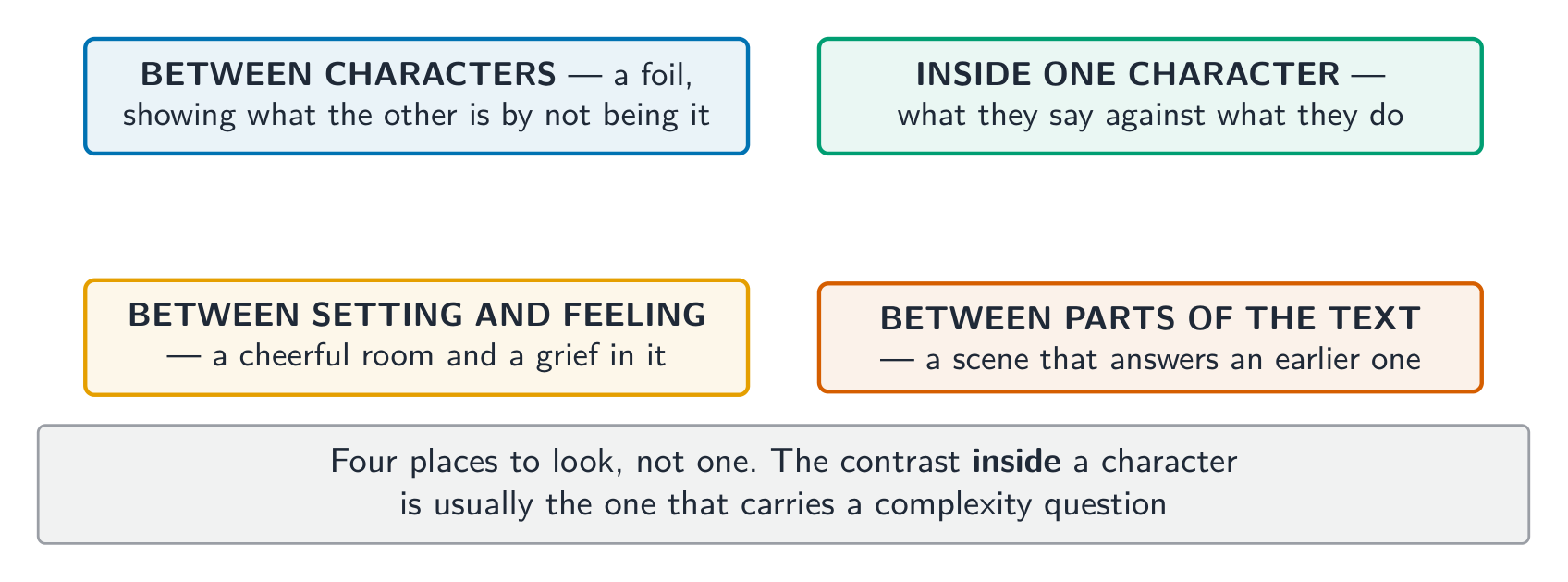
学生发现明显的配对就停止了——而角色内部的对比通常承载着复杂性问题的答案。
| English | 中文 | 拼音 |
|---|---|---|
| Contrast/ˈkɒntræst/ | 对照 | duì zhào |
持久理解 (FIG-1): 比较、表征和联想将意义从字面转向隐喻,并引导读者对文本进行解读。
学习目标 5.B: 解释文本中特定词语和短语的功能。
来源:College Board AP 课程与考试说明
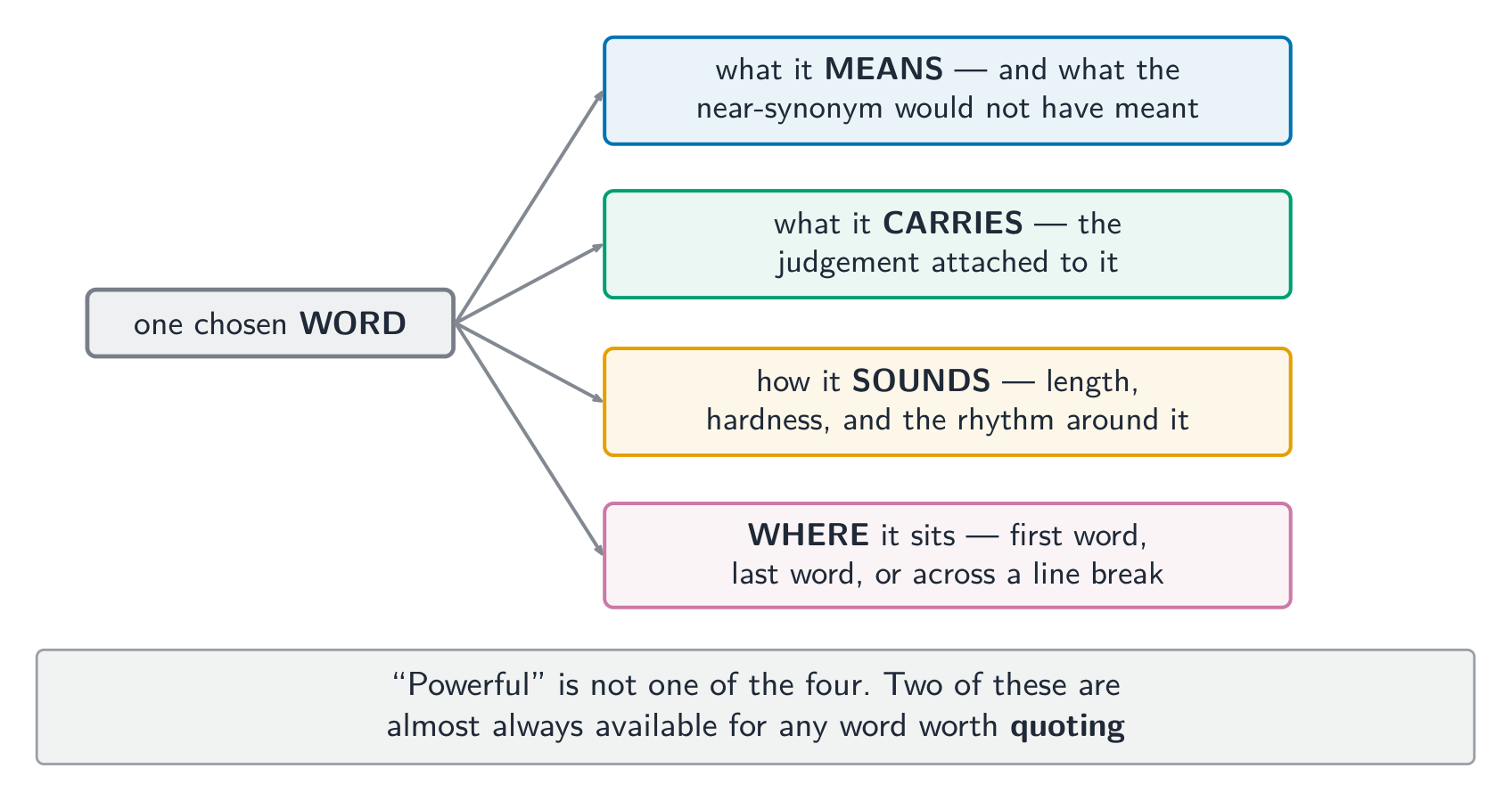
Ambiguous reference is worth special attention. In poetry or prose, a pronoun with two plausible antecedents can create ambiguity. Test both readings against context before claiming a deliberate effect.
| English | 中文 | 拼音 |
|---|---|---|
| antecedent/ˌæntɪˈsiːdənt/ | 先行词 | xiān xíng cí |
| affects interpretation/əˈfekts ɪnˌtɜːprɪˈteɪʃn/ | 影响阐释 | yǐng xiǎng chǎn shì |
| Alliteration/əˌlɪtəˈreɪʃn/ | 头韵 | tóu yùn |
持久理解(FIG-1): 比较、表征和联想将意义从字面层面转向比喻层面,并引导读者对文本进行解读。
学习目标 6.A: 识别并解释明喻的功能。
来源:College Board AP 课程与考试说明
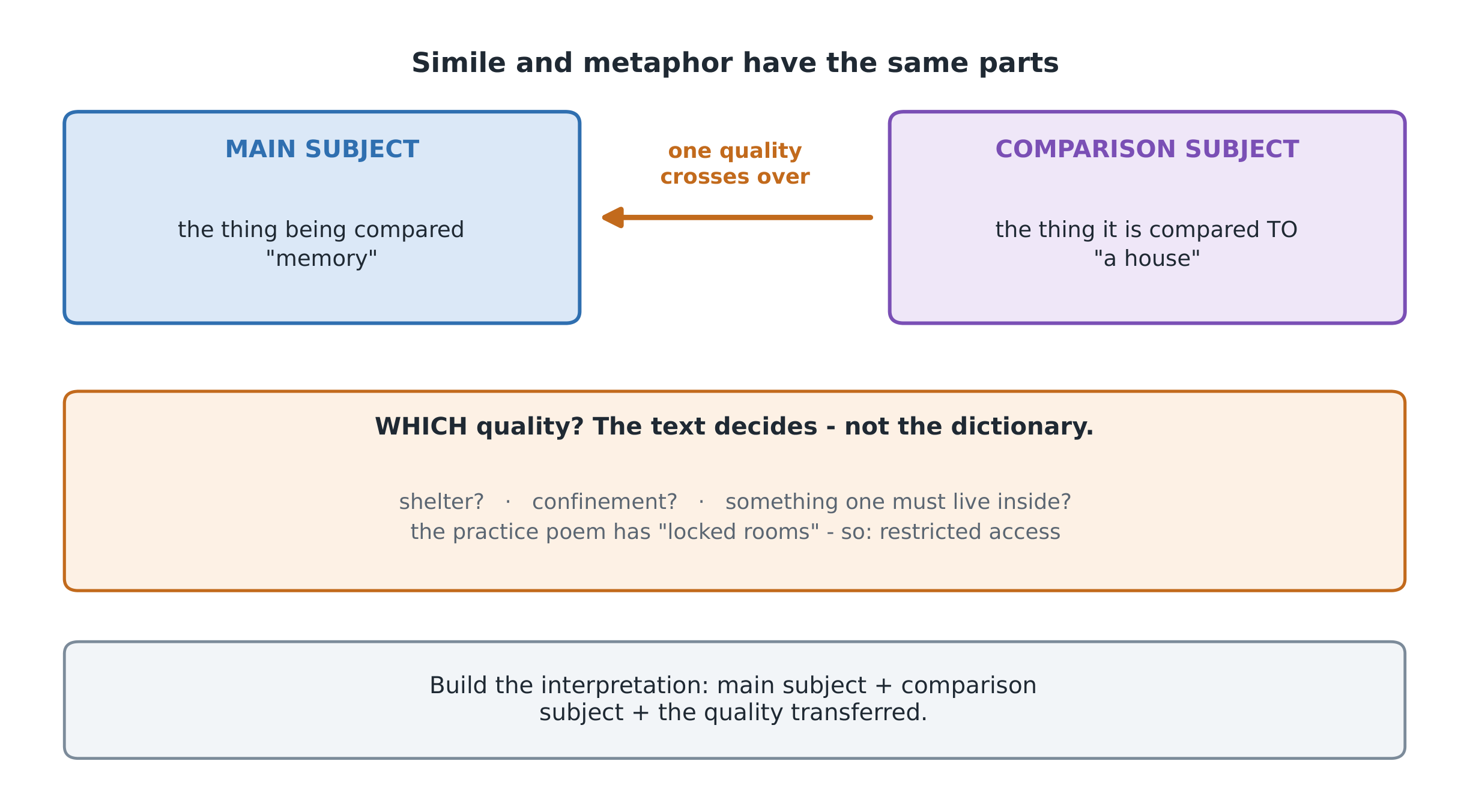
Those two terms are the whole method. A scoring answer names the main subject, names the comparison subject, and then says which quality was transferred - because that quality is the claim the poem is making.
| English | 中文 | 拼音 |
|---|---|---|
| simile/ˈsɪmɪlɪ/ | 明喻 | míng yù |
持久理解 (FIG-1): 比较、表征和联想将意义从字面层面转移到比喻层面,并邀请读者对文本进行解读。
学习目标 6.B: 识别并解释隐喻的功能。
来源:College Board AP 课程与考试说明
That last point protects you from the commonest error, which is importing every association a word has. If a poem calls grief a house, the relevant quality might be shelter, or confinement, or the fact that one must live inside it. The text decides which.
| English | 中文 | 拼音 |
|---|---|---|
| metaphor/ˈmetəfɔː/ | 隐喻 | yǐn yù |
持久理解 (LAN-1): 读者通过以文本证据支持的论证来建立并传达其对文学作品的解读。
学习目标 7.A: 撰写一个包含以下两要素的段落:1) 需要引用文本证据加以辩护的主张;2) 该主张所依据的证据本身。
来源:College Board AP 课程与考试说明
Same three components as Unit 1: a claim requiring textual defence, the textual evidence, and details identified in combination.
This poem was written for teaching. It is not an extract from an AP paper.
Memory is a house.
I polish the key each morning,
but pass the locked rooms
without a sound.
At dusk I leave the door ajar.
Worked analysis. Memory is the main subject and a house is the comparison subject. “Polish the key each morning” suggests continuing attachment, while “but” turns towards avoidance of “locked rooms”. Together these details present a past the speaker maintains but does not fully revisit. The final door “ajar” suggests a tentative opening; it does not establish a complete recovery. Context supports restricted access and attachment, rather than every possible quality of a house. Naming “metaphor” alone does not explain that interpretation.
Practice. Explain how “but” and the final line complicate the speaker's attitude. Use the actual words rather than assuming that a house always represents safety or confinement.
逐步完成,配合即时检查练习。
正在加载学科…