跳到主要内容
学科

AP 英语文学与写作

学习建议

AP 英语文学与写作围绕三类文本训练细读与文学论证,每类各出现三轮:短篇小说诗歌,以及长篇小说或戏剧。各单元螺旋上升,同样的能力会以更深的层次反复出现。

课程按文学要素组织:人物、环境、结构、叙述、比喻性语言,以及文学论证。每个要素都有各自的能力,而它们提出的是同一个根本问题——这一处选择在文本中*起到了什么作用*?

要留意"……的作用"这个说法。课程框架反复要求说明某个象征、某处对比、某次叙述转换的作用。识别出手法只是第一步,解释它所承担的功能才是答案。

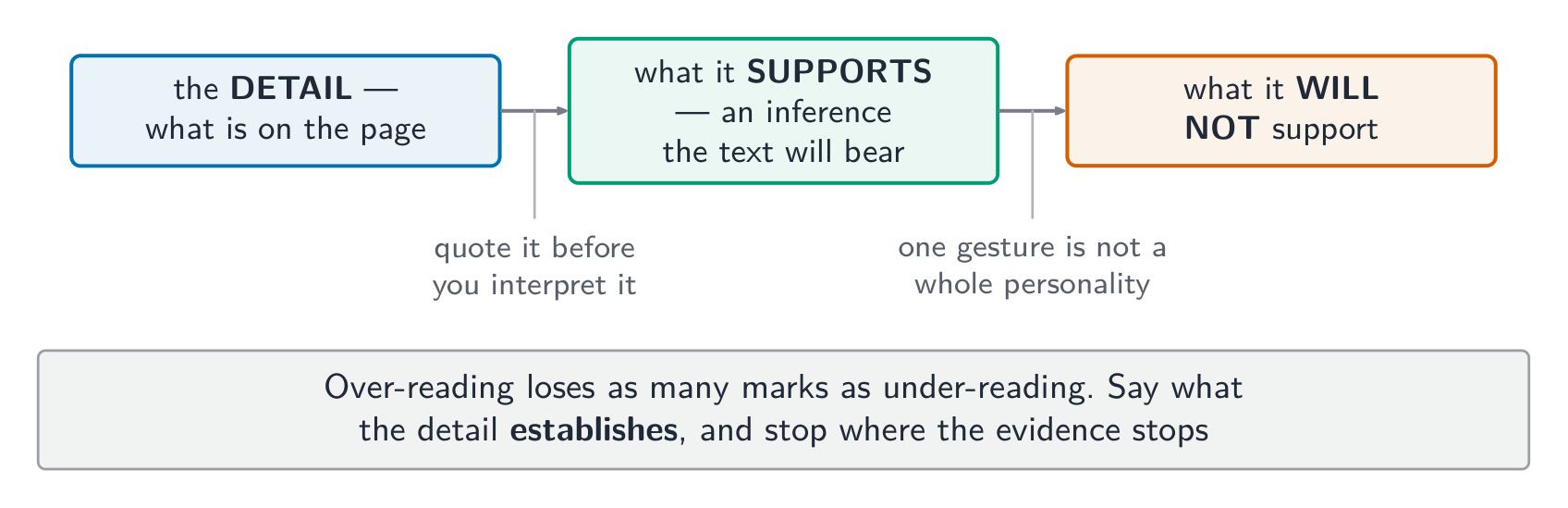
阐释必须是可辩护的,而不只是个人感受。一种读法只有在有文本细节支撑并经过论证展开时才能得分,这也正是文学论证与每个要素并行推进的原因。

下面的笔记按 College Board 设定的顺序呈现这九个单元,因此短篇小说、诗歌与长篇作品的交替方式与课程本身完全一致。

训练全部词汇
  • 1

    短篇小说 一

    讲义 词汇表
    1.1

    文本细节所揭示的人物

    大纲
    Enduring UnderstandingLearning ObjectiveEssential Knowledge

    CHR-1
    Characters in literature allow readers to study and explore a range of values, beliefs, assumptions, biases, and cultural norms represented by those characters.

    1.A
    Identify and describe what specific textual details reveal about a character, that character’s perspective, and that character’s motives.

    • CHR-1.A Description, dialogue, and behavior reveal characters to readers.
    • CHR-1.B Descriptions of characters may come from a speaker, narrator, other characters, or the characters themselves.
    • CHR-1.C Perspective is how narrators, characters, or speakers understand their circumstances, and is informed by background, personality traits, biases, and relationships.
    • CHR-1.D A character’s perspective is both shaped and revealed by relationships with other characters, the environment, the events of the plot, and the ideas expressed in the text.

    来源:美国大学理事会 AP 课程与考试说明

    AP 英语文学与写作在九个单元中读三种体裁的文本——短篇小说、诗歌,以及长篇小说或戏剧——每种各出现三次,难度逐次上升。第一单元安装的是适用于全部三种体裁的工具。

    人物(character)由三样东西揭示,CED 的表述非常明确:

    • 描写、对话与行为(description, dialogue, and behaviour)向读者揭示人物。
    • 描写可以来自说话者、叙述者、其他人物,或人物自己——因此由谁来描写本身就是证据的一部分。
    • 视角(perspective)是叙述者、人物或说话者如何理解自身处境,由背景、经历与价值观所塑造。
    • 人物的视角既被与其他人物、环境与事件的关系所塑造,也由这些关系所揭示

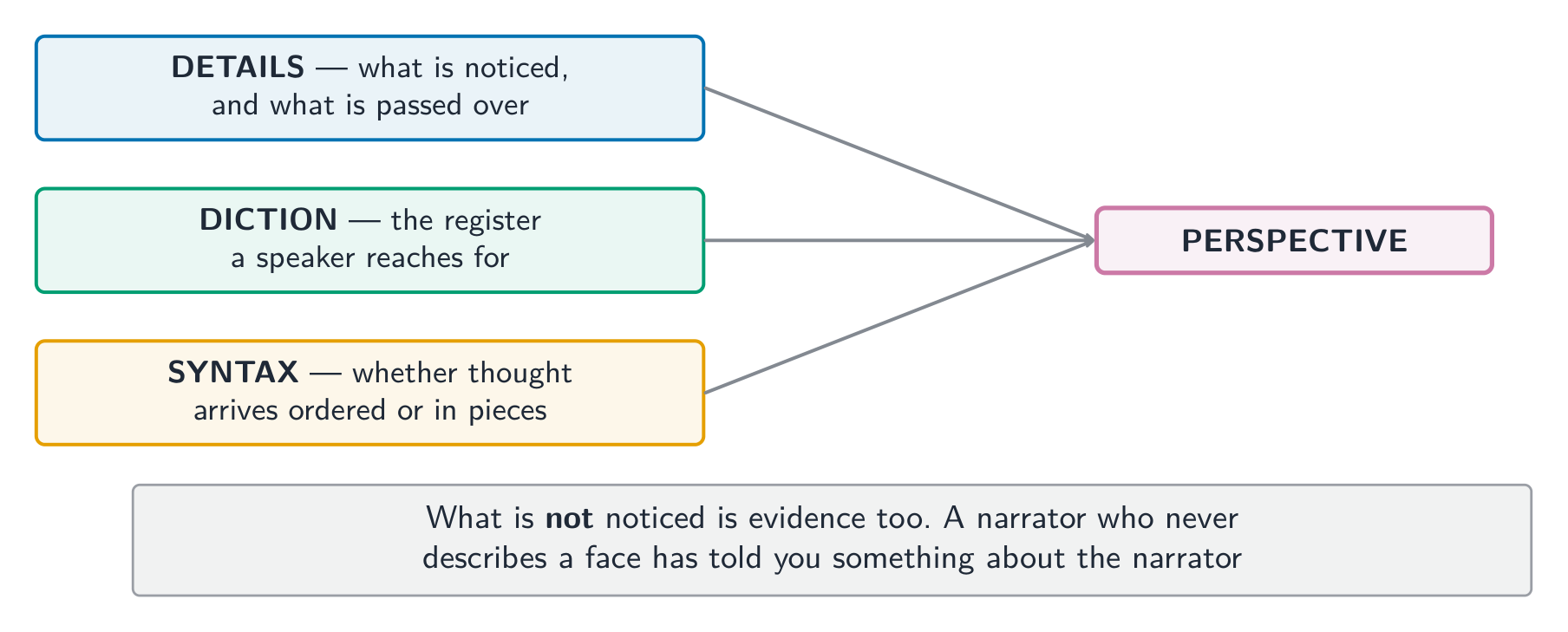
    最后这一点正是把人物笔记变成分析的关键。人物不是一串形容词;人物是一种看的方式,它体现在此人注意到什么、误读了什么,以及如何回应。

    词汇表 训练
    英文 中文 拼音
    Character 人物 rén wù
    Description, dialogue, and behaviour 描写、对话与行为 miáo xiě 、 duì huà yǔ xíng wéi
    Perspective 视角 shì jiǎo
    1.2

    传达环境的文本细节

    大纲
    Enduring UnderstandingLearning ObjectiveEssential Knowledge

    SET-1
    Setting and the details associated with it not only depict a time and place, but also convey values associated with that setting.

    2.A
    Identify and describe specific textual details that convey or reveal a setting.

    • SET-1.A Setting includes the time and place during which the events of the text occur.

    来源:美国大学理事会 AP 课程与考试说明

    背景(setting)包括文本事件发生的时间与地点

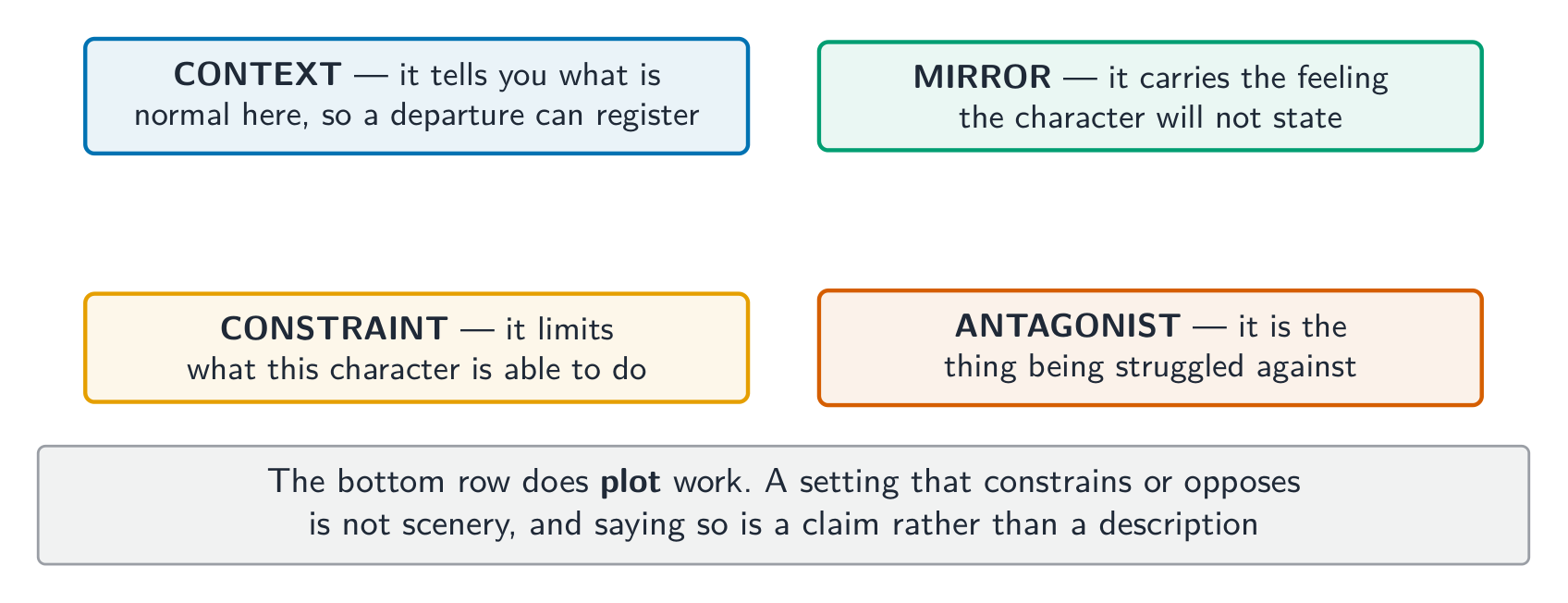
    CED 的定义有意给得极简,而这正是陷阱所在。背景得分不在于它被描写,而在于它被显示为在起作用——限制某个人物、解释某种价值观,或与某种内心状态形成对照。仅仅交代故事发生在何处的段落,还没有作出任何主张。

    词汇表 训练
    英文 中文 拼音
    Setting 背景 bèi jǐng
    1.3

    情节如何组织事件

    大纲
    Enduring UnderstandingLearning ObjectiveEssential Knowledge

    STR-1
    The arrangement of the parts and sections of a text, the relationship of the parts to each other, and the sequence in which the text reveals information are all structural choices made by a writer that contribute to the reader’s interpretation of a text.

    3.A
    Identify and describe how plot orders events in a narrative.

    • STR-1.A Plot is the sequence of events in a narrative; events throughout a narrative are connected, with each event building on the others, often with a cause-and-effect relationship.
    • STR-1.B The dramatic situation of a narrative includes the setting and action of the plot and how that narrative develops to place characters in conflict(s), and often involves the rising or falling fortunes of a main character or set of characters.

    来源:美国大学理事会 AP 课程与考试说明

    • 情节(plot)是叙事中的事件序列;各事件彼此关联,每一件都建立在此前各件之上。
    • 戏剧情境(dramatic situation)包括情节的背景与动作,以及叙事如何展开才把人物置于冲突之中。

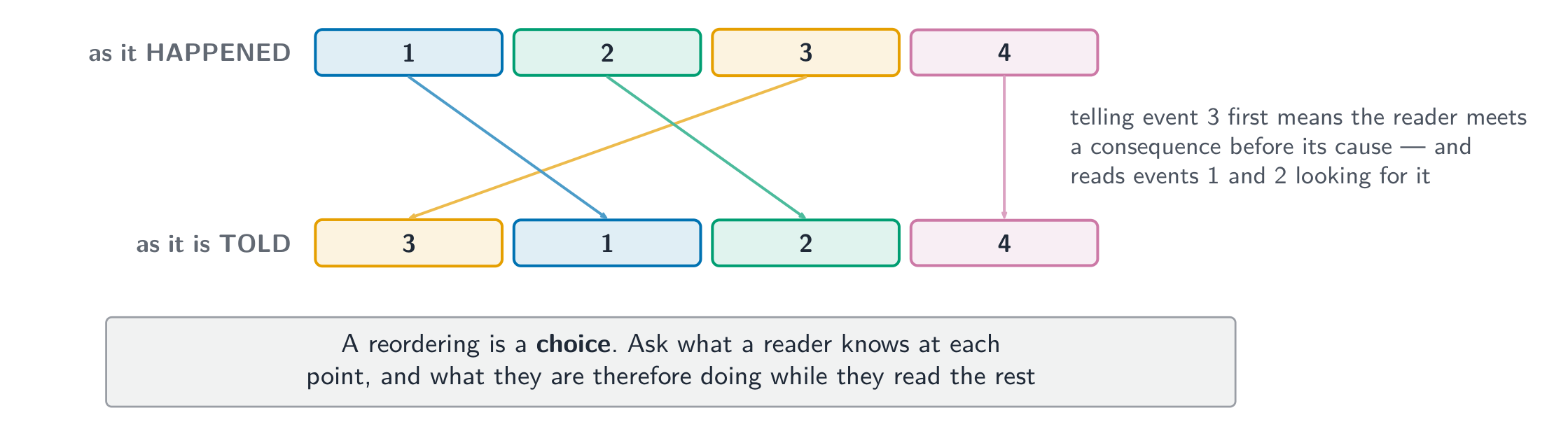
    序列这个词在起作用。情节不是那些事件,而是它们的顺序——一位作者把早先发生的事放到很晚才揭示,这就是一个你可以分析的选择。

    词汇表 训练
    英文 中文 拼音
    Plot 情节 qíng jié
    dramatic situation 戏剧情境 xì jù qíng jìng
    1.4

    事件顺序的作用

    大纲
    Enduring UnderstandingLearning ObjectiveEssential Knowledge

    STR-1
    The arrangement of the parts and sections of a text, the relationship of the parts to each other, and the sequence in which the text reveals information are all structural choices made by a writer that contribute to the reader’s interpretation of a text.

    3.B
    Explain the function of a particular sequence of events in a plot.

    • STR-1.C Plot and the exposition that accompanies it focus readers’ attention on the parts of the narrative that matter most to its development, including characters, their relationships, and their roles in the narrative, as well as setting and the relationship between characters and setting.

    来源:美国大学理事会 AP 课程与考试说明

    情节以及伴随它的交代,把读者的注意力集中到叙事中对文本意义最要紧的那些部分

    这句话就是散文分析的全部方法:比例即证据。文本流连之处与一笔带过之处,是作者在告诉你该看哪里。

    1.5

    识别叙述者或说话人

    大纲
    Enduring UnderstandingLearning ObjectiveEssential Knowledge

    NAR-1
    A narrator’s or speaker’s perspective controls the details and emphases that affect how readers experience and interpret a text.

    4.A
    Identify and describe the narrator or speaker of a text.

    • NAR-1.A Narrators or speakers relate accounts to readers and establish a relationship between the text and the reader.
    • NAR-1.B Perspective refers to how narrators, characters, or speakers see their circumstances, while point of view refers to the position from which a narrator or speaker relates the events of a narrative.
    • NAR-1.C A speaker or narrator is not necessarily the author.

    来源:美国大学理事会 AP 课程与考试说明

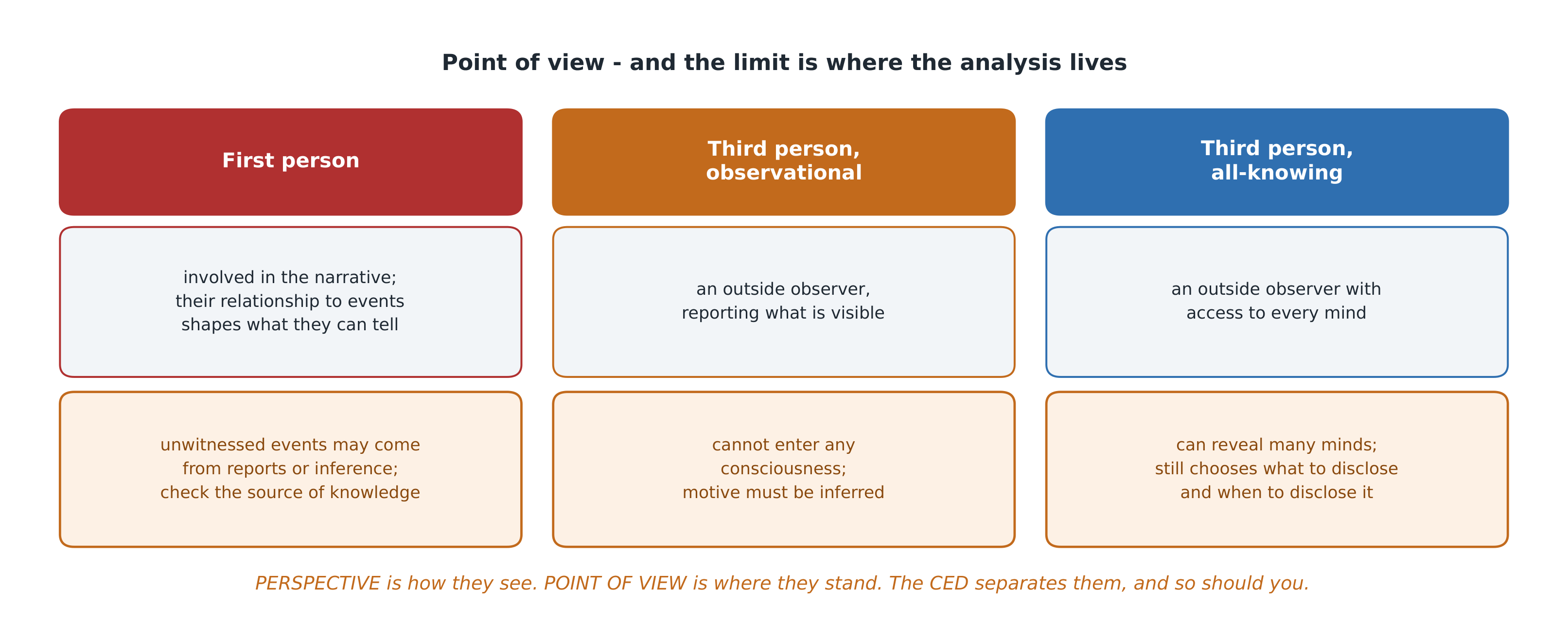
    每种叙述视点能给你什么、不能给你什么——而那个限制正是分析所在
    视角是他们怎样看;叙述视点是他们站在哪里。CED 把两者分开,你也应当如此
    • 叙述者或说话者讲述所见所闻,并在文本与读者之间建立一种关系
    • 视角指的是叙述者、人物或说话者如何看待自身处境;叙述视点(point of view)指的是他们讲述时所处的位置
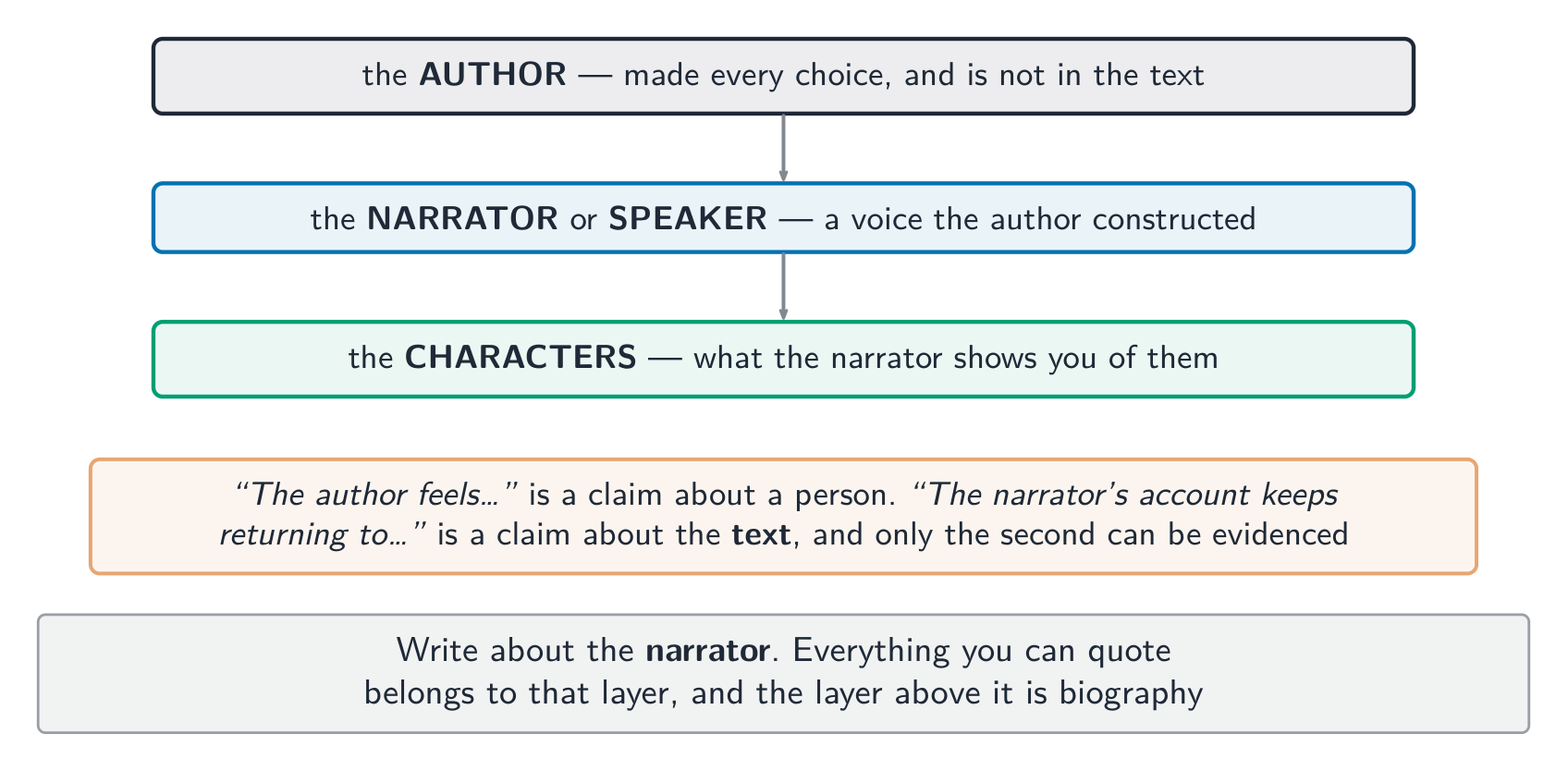
    • **说话者或叙述者未必就是作者。**绝不要就一位第一人称叙述者写"作者感到"。
    词汇表 训练
    英文 中文 拼音
    point of view 叙述视点 xù shù shì diǎn
    observational to all-knowing 全知 quán zhī
    1.6

    叙事视角的作用

    大纲
    Enduring UnderstandingLearning ObjectiveEssential Knowledge

    NAR-1
    A narrator’s or speaker’s perspective controls the details and emphases that affect how readers experience and interpret a text.

    4.B
    Identify and explain the function of point of view in a narrative.

    • NAR-1.D The point of view contributes to what narrators, characters, or speakers can and cannot provide in a text based on their level of involvement and intimacy with the details, events, or characters.
    • NAR-1.E Narrators may also be characters, and their role as characters may influence their perspective.
    • NAR-1.F First-person narrators are involved in the narrative; their relationship to the events of the plot and the other characters shapes their perspective.
    • NAR-1.G Third-person narrators are outside observers.
    • NAR-1.H Third-person narrators’ knowledge about events and characters may range from observational to all-knowing, which shapes their perspective.
    • NAR-1.I The outside perspective of third-person narrators may not be affected by the events of the narrative.

    来源:美国大学理事会 AP 课程与考试说明

    • 叙述视点决定了叙述者根据其位置能提供什么、不能提供什么
    • 叙述者也可以是人物,而这一身份可能影响他们的视角。
    • 第一人称叙述者身处叙事之中;他们与事件、与其他人物的关系,塑造了他们所能告诉你的内容。
    • 第三人称叙述者是外部观察者,其知情范围可以从仅限观察到无所不知(all-knowing)。
    • 第三人称叙述者的外部视角可能不受叙事事件的影响

    分析上的收获在于那个不能。第一人称叙述者无法报告他们不曾目睹、或不愿承认的事,而每一处空缺都有意味。有限第三人称把你困在一个意识之中,这本身就是关于谁的体验才算数的选择。

    1.7

    撰写含主张与证据的段落

    大纲
    Enduring UnderstandingLearning ObjectiveEssential Knowledge

    LAN-1
    Readers establish and communicate their interpretations of literature through arguments supported by textual evidence.

    7.A
    Develop a paragraph that includes 1) a claim that requires defense with evidence from the text and 2) the evidence itself.

    • LAN-1.A In literary analysis, writers read a text closely to identify details that, in combination, enable them to make and defend a claim about an aspect of the text.
    • LAN-1.B A claim is a statement that requires defense with evidence from the text.
    • LAN-1.C In literary analysis, the initial components of a paragraph are the claim and textual evidence that defends the claim.

    来源:美国大学理事会 AP 课程与考试说明

    • 在文学分析中,写作者细读文本以找出那些合在一起才使他们得以提出并辩护某项主张的细节。
    • 主张(claim)是一句需要用文本证据来辩护的陈述。
    • 段落最初的组成部分是主张与为之辩护的文本证据

    注意合在一起。单一细节很少能支撑一项阐释性主张;两三处指向相同的细节才可以。

    Worked example(一项真实的 AP 考试任务)。AP 文学的自由作答部分有三道题——诗歌分析、散文小说分析,以及就一部你自选作品所作的文学论证——都按六分制评分标准评阅:论点 1 分,证据与评述 4 分,思辨深度 1 分。面对一道要求分析作者如何运用叙事技巧揭示某人物态度的散文题,薄弱答案会写*「叙述者是第一人称,这让叙述显得亲切。」能得分的答案会用上那个不能*:*「由于叙述者是多年之后回述这些事件的当事人,这一叙述给出的是他此刻对年轻时的自己的判断,却隐去了其他人物的想法——因此读者得到的只有他的自我批评这一份可用证据,并且必须自行判断,这份严厉究竟是准确,还是表演。」*叙述视点、它的限制,以及对读者的作用。

    1.7

    考试技巧

    • 人物是一种看的方式,不是一串形容词。要分析此人注意到什么、误读了什么。
    • **背景必须起作用。**交代故事发生在何处还算不上一项主张。
    • 情节是事件的顺序。把早先之事放到很晚才揭示是值得分析的作者选择。
    • **比例即证据。**文本流连之处就是意义所在。
    • **叙述者不是作者。**绝不要就第一人称叙述者写"作者感到"。
    • 叙述视点分析的富矿在于叙述者不能提供什么。
  • 2

    诗歌 一

    讲义 词汇表
    2.1

    文本细节所揭示的人物

    大纲
    Enduring UnderstandingLearning ObjectiveEssential Knowledge

    CHR-1
    Characters in literature allow readers to study and explore a range of values, beliefs, assumptions, biases, and cultural norms represented by those characters.

    1.A
    Identify and describe what specific textual details reveal about a character, that character’s perspective, and that character’s motives.

    • CHR-1.E Characters reveal their perspectives and biases through the words they use, the details they provide in the text, the organization of their thinking, the decisions they make, and the actions they take.

    来源:美国大学理事会 AP 课程与考试说明

    第二单元是本课程的第一个诗歌单元,它在第一单元的工具箱之外增加了两样东西:作为分析对象的结构,以及被精确处理而非仅仅点名的比喻性语言(figurative language)。

    先补一条关于人物的内容:人物通过所用的词语、所提供的细节,以及所略去的细节(details they omit),揭示其视角与偏见(perspectives and biases)。

    最后这一项是分析的入口。在一首每样东西都是被选定的诗中,说话者没有提到什么,本身就是证据。

    词汇表 训练
    英文 中文 拼音
    figurative language 比喻性语言 bǐ yù xìng yǔ yán
    characters reveal their perspectives and biases 视角与偏见 shì jiǎo yǔ piān jiàn
    the words they use, the details they provide, and the details they omit 略去的细节 lüè qù de xì jié
    2.2

    文本结构的作用

    大纲
    Enduring UnderstandingLearning ObjectiveEssential Knowledge

    STR-1
    The arrangement of the parts and sections of a text, the relationship of the parts to each other, and the sequence in which the text reveals information are all structural choices made by a writer that contribute to the reader’s interpretation of a text.

    3.C
    Explain the function of structure in a text.

    • STR-1.D Line and stanza breaks contribute to the development and relationship of ideas in a poem.
    • STR-1.E The arrangement of lines and stanzas contributes to the development and relationship of ideas in a poem.
    • STR-1.F A text’s structure affects readers’ reactions and expectations by presenting the relationships among the ideas of the text via their relative positions and their placement within the text as a whole.

    来源:美国大学理事会 AP 课程与考试说明

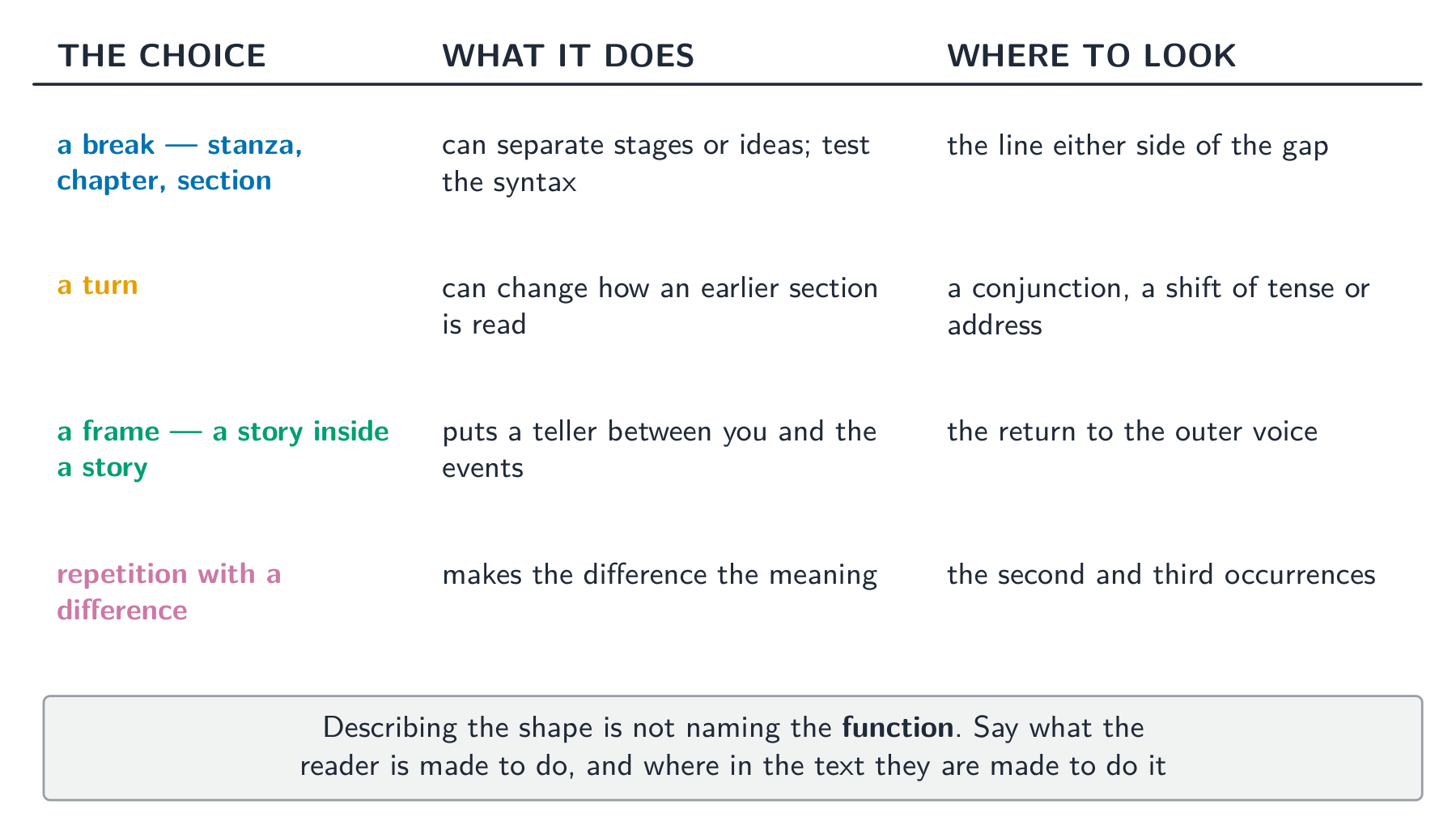
    • 行与诗节的断开(line and stanza breaks)促成一首诗中观念的展开与相互关系。
    • 诗行与诗节的排布同样促成这一展开。
    • 文本的结构通过呈现观念之间的关系,影响读者的反应与期待

    诗中的结构不是装饰,它是思想的标点。断行的位置决定了哪些词落在行末,而行末是可用的最有强调力的位置。跨过断行继续的句子要求读者悬置某种未决之事;在断行处结束的句子则把它合上。

    词汇表 训练
    英文 中文 拼音
    Line and stanza breaks 行与诗节的断开 xíng yǔ shī jié de duàn kāi
    2.3

    文本中对比的作用

    大纲
    Enduring UnderstandingLearning ObjectiveEssential Knowledge

    STR-1
    The arrangement of the parts and sections of a text, the relationship of the parts to each other, and the sequence in which the text reveals information are all structural choices made by a writer that contribute to the reader’s interpretation of a text.

    3.D
    Explain the function of contrasts within a text.

    • STR-1.G Contrast can be introduced through focus; tone; point of view; character, narrator, or speaker perspective; dramatic situation or moment; settings or time; or imagery.
    • STR-1.H Contrasts are the result of shifts or juxtapositions or both.
    • STR-1.I Shifts may be signaled by a word, a structural convention, or punctuation.
    • STR-1.J Shifts may emphasize contrasts between particular segments of a text.

    来源:美国大学理事会 AP 课程与考试说明

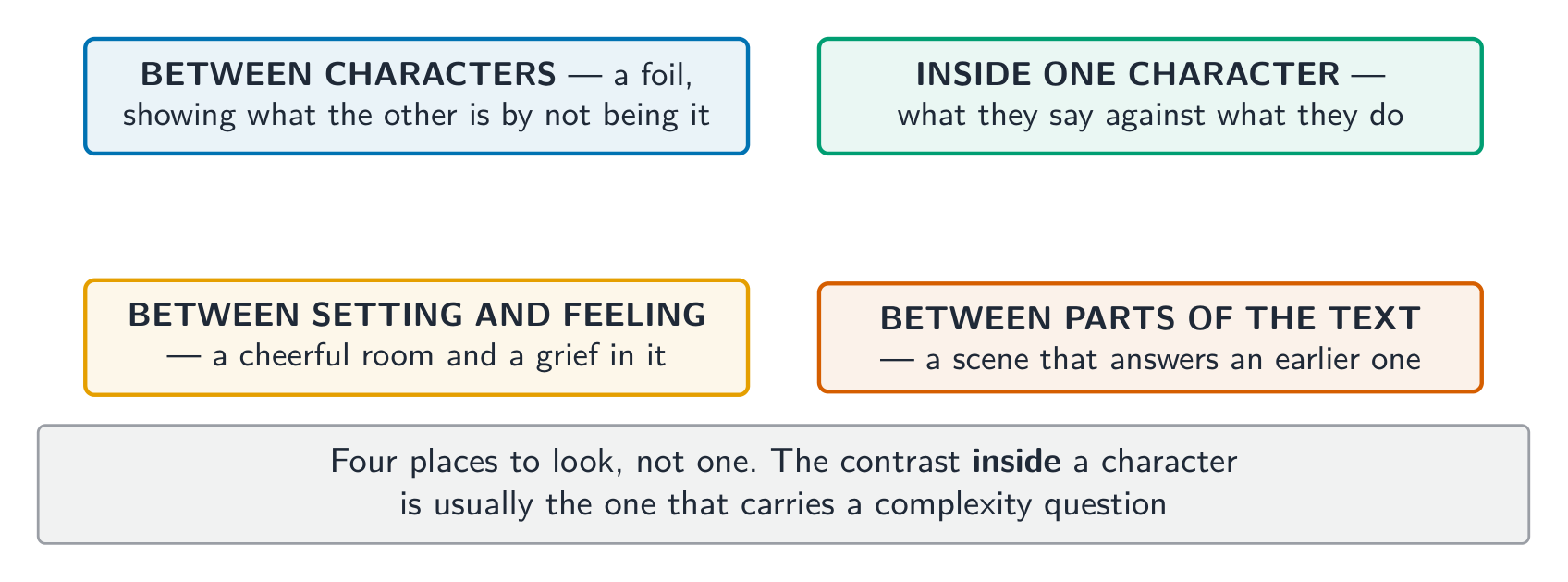
    • 对照(contrast)可以通过焦点、语调、叙述视点、人物或说话者的视角,以及戏剧情境引入。
    • 对照是转换或并置或两者兼有(shifts or juxtapositions)的结果。
    • 转换可以由一个词、一种结构惯例或标点来标示。
    • 转换可以突出文本特定段落之间的对照

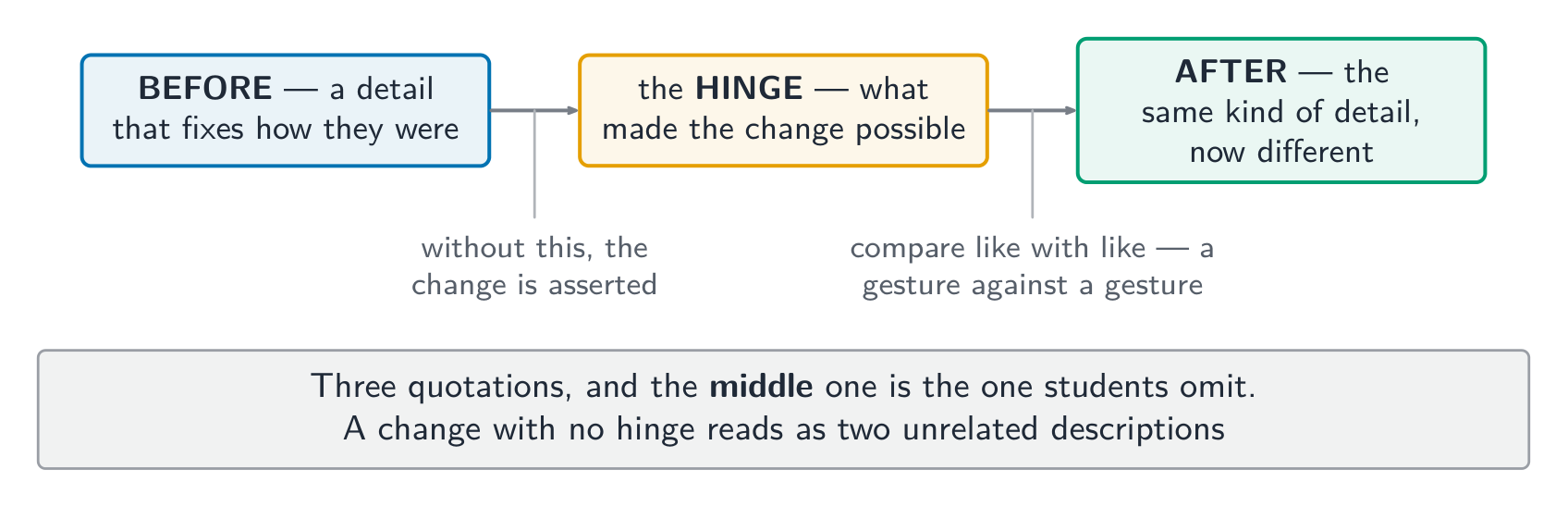
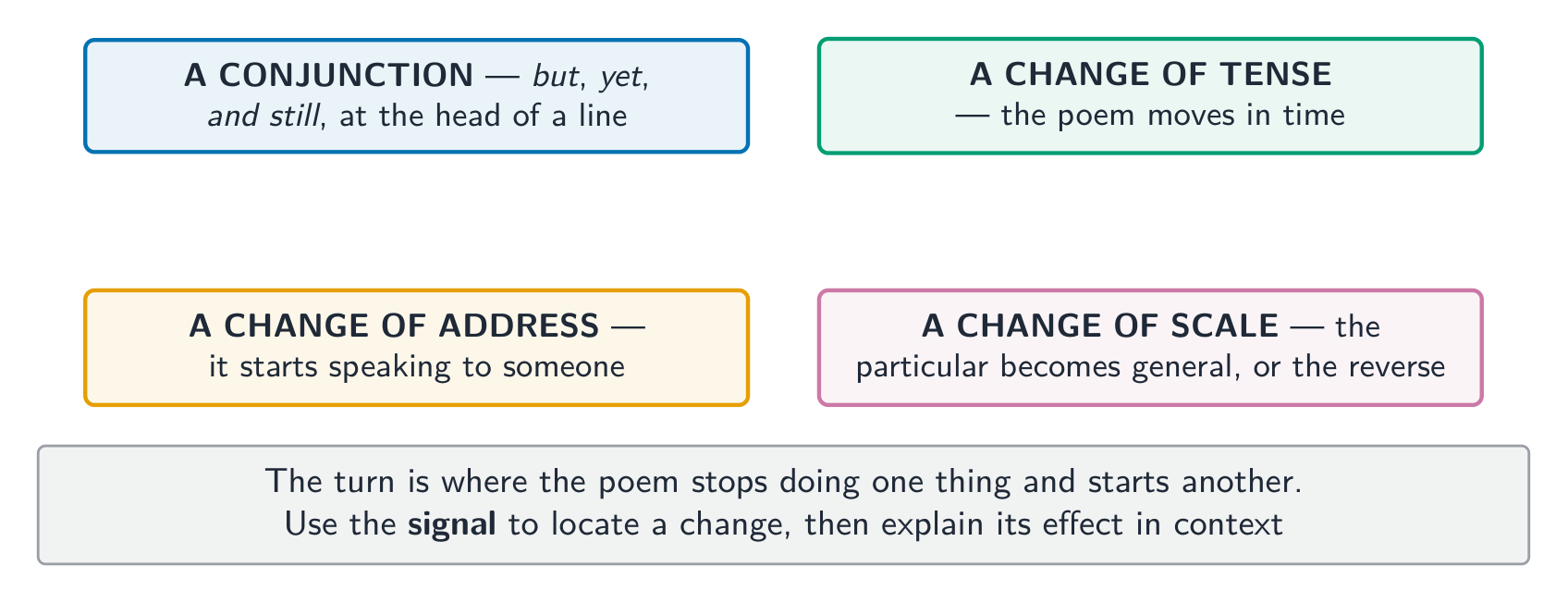
    这是进入一首陌生诗作最可靠的路径。找到那个转换——一个但是、一处诗节断开、一次时态或称呼的改变——诗就分成了之前与之后。什么改变了,以及这一改变的代价或收获是什么,往往就是这首诗的论证。

    词汇表 训练
    英文 中文 拼音
    Contrast 对照 duì zhào
    shifts or juxtapositions or both 转换与并置 zhuǎn huàn yǔ bìng zhì
    2.4

    特定词语的作用

    大纲
    Enduring UnderstandingLearning ObjectiveEssential Knowledge

    FIG-1
    Comparisons, representations, and associations shift meaning from the literal to the figurative and invite readers to interpret a text.

    5.B
    Explain the function of specific words and phrases in a text.

    • FIG-1.A An antecedent is a word, phrase, or clause that precedes its referent. Referents may include pronouns, nouns, phrases, or clauses.
    • FIG-1.B Referents are ambiguous if they can refer to more than one antecedent, which affects interpretation.
    • FIG-1.C Words or phrases may be repeated to emphasize ideas or associations.
    • FIG-1.D Alliteration is the repetition of the same letter sound at the beginning of adjacent or nearby words to emphasize those words and their associations or representations.

    来源:美国大学理事会 AP 课程与考试说明

    • 先行词(antecedent)是位于其指代对象之前的词语、短语或分句。
    • 如果指代对象可以指向不止一个先行词,它就是歧义的,而这会影响阐释(affects interpretation)。
    • 词语或短语可以被重复,以强调某种观念或联想。
    • 头韵(alliteration)是相邻或邻近词语开头重复同一个音,以强调这些词语。

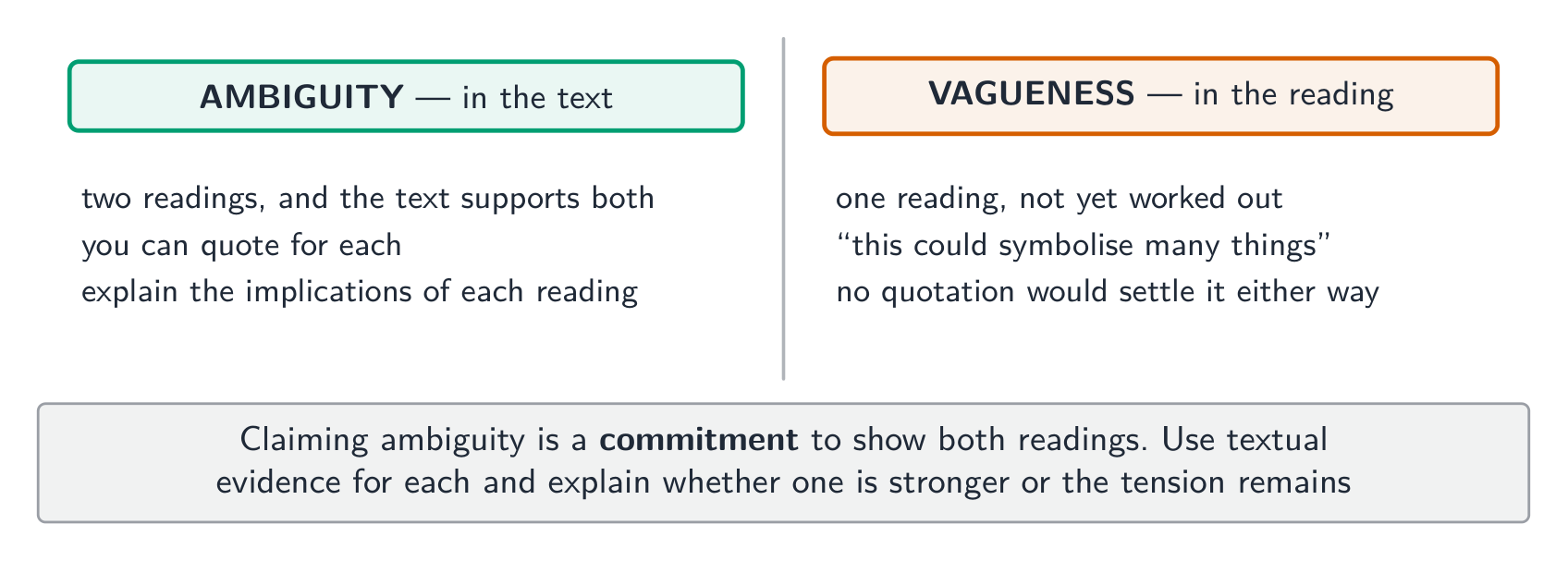
    歧义指代尤其值得注意。在散文中它通常是毛病;在诗中它往往是手段,一个可以指向两处的代词可能是在有意同时承载两种含义。

    词汇表 训练
    英文 中文 拼音
    antecedent 先行词 xiān xíng cí
    affects interpretation 影响阐释 yǐng xiǎng chǎn shì
    Alliteration 头韵 tóu yùn
    2.5

    明喻的作用

    大纲
    Enduring UnderstandingLearning ObjectiveEssential Knowledge

    FIG-1
    Comparisons, representations, and associations shift meaning from the literal to the figurative and invite readers to interpret a text.

    6.A
    Identify and explain the function of a simile.

    • FIG-1.E A simile uses the words “like” or “as” to liken two objects or concepts to each other.
    • FIG-1.F Similes liken two different things to transfer the traits or qualities of one to the other.
    • FIG-1.G In a simile, the thing being compared is the main subject; the thing to which it is being compared is the comparison subject.

    来源:美国大学理事会 AP 课程与考试说明

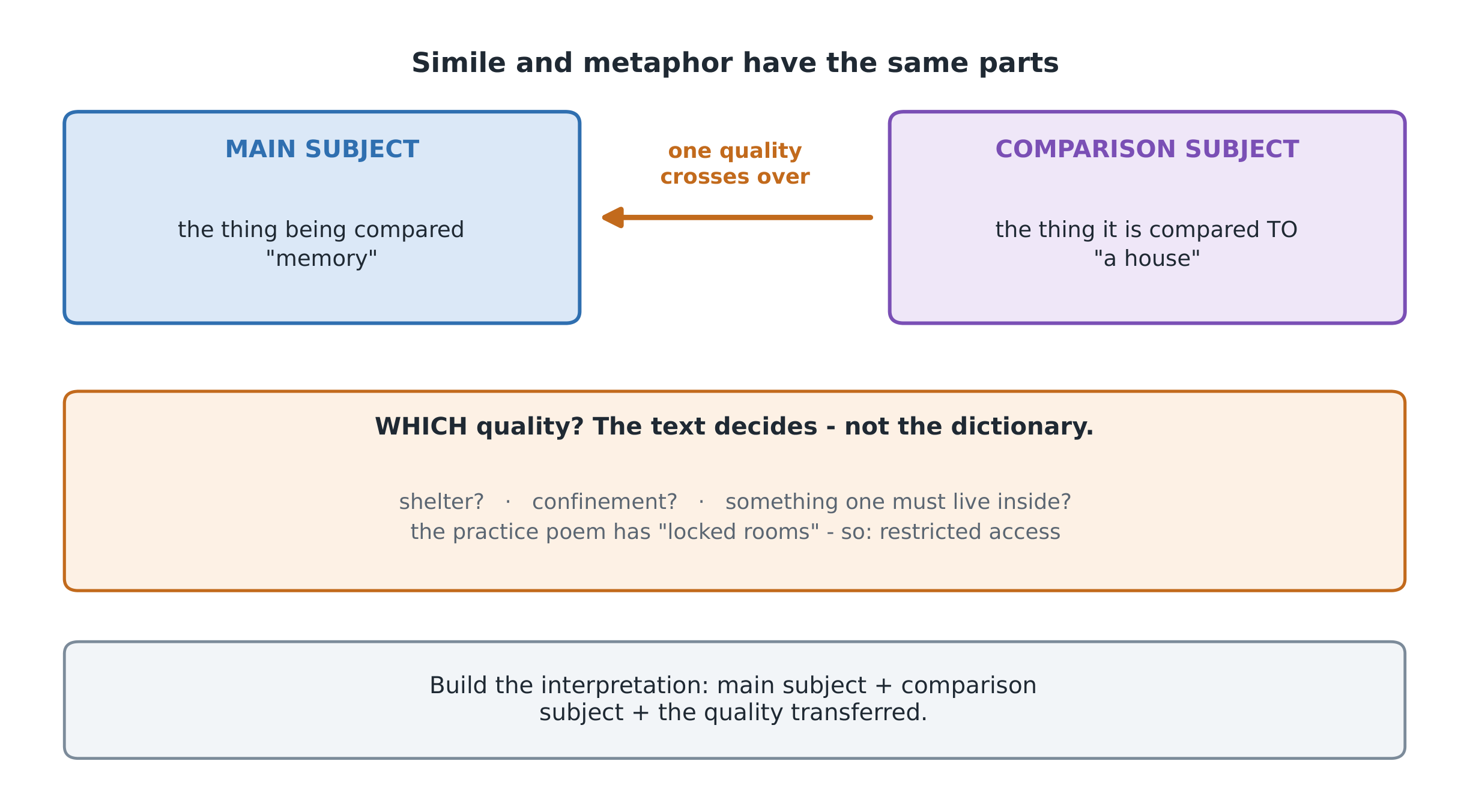
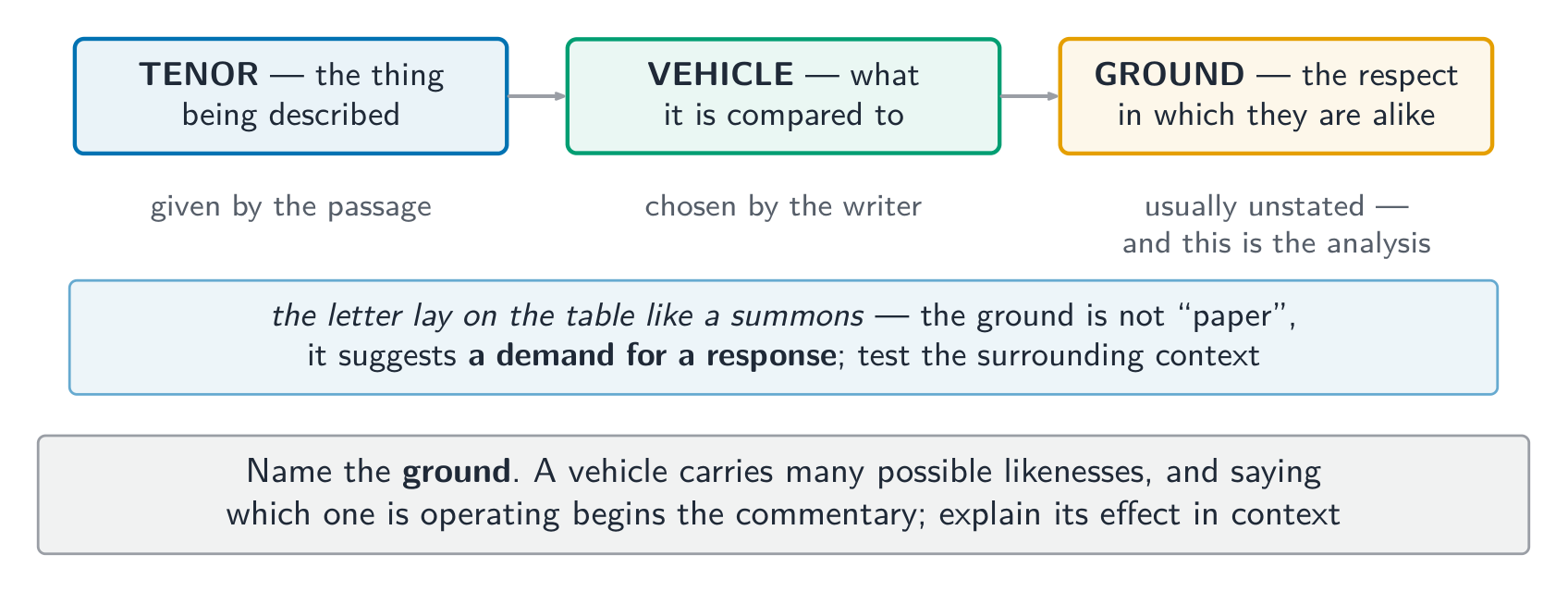
    CED 自己的术语——而这一转移只朝一个方向
    先点出主体,再点出喻体,然后说出是哪一种性质越了过来
    • 明喻(simile)使用**"like"或"as"**把两个对象或概念相比。
    • 明喻把两样不同的事物相比,是为了把其中一方的特质或性质转移(transfer the traits or qualities)到另一方
    • 在明喻中,被比较的那一方是主体(main subject);被用来比较的那一方是喻体(comparison subject)。

    这两个术语就是全部方法。能得分的答案会点出主体、点出喻体,然后说出是哪一种性质被转移了——因为那种性质正是这首诗所作出的主张。

    词汇表 训练
    英文 中文 拼音
    simile 明喻 míng yù
    to transfer the traits or qualities of one to the other 性质的转移 xìng zhì dì zhuǎn yí
    metaphor 隐喻 yǐn yù
    2.6

    暗喻的作用

    大纲
    Enduring UnderstandingLearning ObjectiveEssential Knowledge

    FIG-1
    Comparisons, representations, and associations shift meaning from the literal to the figurative and invite readers to interpret a text.

    6.B
    Identify and explain the function of a metaphor.

    • FIG-1.H A metaphor implies similarities between two (usually unrelated) concepts or objects in order to reveal or emphasize one or more things about one of them, though the differences between the two may also be revealing.
    • FIG-1.I In a metaphor, as in a simile, the thing being compared is the main subject; the thing to which it is being compared is the comparison subject.
    • FIG-1.J Comparisons between objects or concepts draw on the experiences and associations readers already have with those objects and concepts.
    • FIG-1.K Interpretation of a metaphor may depend on the context of its use; that is, what is happening in a text may determine what is transferred in the comparison.

    来源:美国大学理事会 AP 课程与考试说明

    • 隐喻(metaphor)在两个通常不相关的概念之间暗示相似性,以揭示或强调主体的某些性质。
    • 主体与喻体的同一结构同样适用。
    • 比较借助读者对喻体已有的经验与联想——这正是隐喻在缺乏这些联想的受众那里会失效的原因。
    • 对隐喻的阐释可能取决于其使用的语境:文本中正在发生的事,可能决定所指的是喻体的哪一种性质。

    最后这一点能保护你免于最常见的错误,即把一个词的所有联想统统搬进来。如果一首诗把悲伤称作一座房子,相关的性质可能是庇护,可能是禁闭,也可能是人必须住在它里面这一事实。由文本来决定是哪一种。

    2.7

    撰写含主张与证据的段落

    大纲
    Enduring UnderstandingLearning ObjectiveEssential Knowledge

    LAN-1
    Readers establish and communicate their interpretations of literature through arguments supported by textual evidence.

    7.A
    Develop a paragraph that includes 1) a claim that requires defense with evidence from the text and 2) the evidence itself.

    • LAN-1.A In literary analysis, writers read a text closely to identify details that, in combination, enable them to make and defend a claim about an aspect of the text.
    • LAN-1.B A claim is a statement that requires defense with evidence from the text.
    • LAN-1.C In literary analysis, the initial components of a paragraph are the claim and textual evidence that defends the claim.

    来源:美国大学理事会 AP 课程与考试说明

    与第一单元同样的三个组成部分:一项需要文本辩护的主张文本证据,以及合在一起被辨认出的那些细节。

    **Worked example(一项真实的 AP 考试任务)。**一道诗歌分析题要求说明说话者对比喻的使用如何传达其态度。薄弱答案:*「诗人使用了一个把记忆比作房子的隐喻,效果很好。」能得分的答案会用上 CED 的术语与语境规则:「主体是记忆,喻体是一座房子,但这首诗不肯让这个比喻带上暖意:这座房子有『她不再走进的房间』。因此被转移的性质不是庇护,而是被自己所建之物禁闭——于是说话者对自身过往的态度,被呈现为居住在一个她既无法离开、也无法完全占据的东西之中。」*主体、喻体、被转移的性质,以及它所传达的态度。

    2.7

    考试技巧

    • 说话者略去什么就是证据。在一首诗中,凡是在场的都是被选定的。
    • 找到转换。一个但是、一处诗节断开、一次时态改变——诗在那里分开。
    • **行末是强调位置。**要说出诗人把哪些词放在了那里。
    • 诗中的歧义指代通常是手段,而不是失误。
    • 始终要点出主体与喻体,然后是被转移的性质。那种性质就是主张。
    • **由语境决定隐喻带入哪一种性质。**不要罗列这个词的全部联想。
  • 3

    长篇小说或戏剧 一

    讲义 词汇表
    3.1

    文本细节所揭示的人物

    大纲
    Enduring UnderstandingLearning ObjectiveEssential Knowledge

    CHR-1
    Characters in literature allow readers to study and explore a range of values, beliefs, assumptions, biases, and cultural norms represented by those characters.

    1.A
    Identify and describe what specific textual details reveal about a character, that character’s perspective, and that character’s motives.

    • CHR-1.F The description of a character creates certain expectations for that character’s behaviors; how a character does or does not meet those expectations affects a reader’s interpretation of that character.
    • CHR-1.G Details associated with a character and/or used to describe a character contribute to a reader’s interpretation of that character.
    • CHR-1.H Readers’ understanding of a character’s perspective may depend on the perspective of the narrator or speaker.
    • CHR-1.I A character’s perspective may shift during the course of a narrative.
    • CHR-1.J When narrators, characters, or speakers compare another character to something or someone else, they reveal their perspective on the compared character and may also reveal something innate about the compared character.
    • CHR-1.K Readers can infer a character’s motives from that character’s actions or inactions.

    来源:美国大学理事会 AP 课程与考试说明

    第三单元是第一个"长篇小说或戏剧"单元,而篇幅本身改变了可分析的内容:人物如今可以变化,冲突可以彼此交叉,背景也获得了社会与历史的维度。

    CED 在人物方面的补充:

    • 对人物的描写会为其行为建立预期,而人物如何符合或辜负这些预期本身有意味。
    • 与人物相关联的细节促成读者对该人物的阐释
    • 读者对某个人物视角的理解可能取决于叙述者的视角
    • 人物的视角可能在叙事过程中发生转变。
    • 当叙述者或人物把另一个人物比作某物或某人时,他们所揭示的关于自己视角的东西,不亚于关于被比较者的。
    • 读者可以从人物的作为与不作为(actions or inactions)推断其动机。

    最后那个词——不作为——值得记住。人物选择不去做的事就是证据,而且通常比他们做了什么更能说明问题。

    3.2

    人物的变化与不变

    大纲
    Enduring UnderstandingLearning ObjectiveEssential Knowledge

    CHR-1
    Characters in literature allow readers to study and explore a range of values, beliefs, assumptions, biases, and cultural norms represented by those characters.

    1.B
    Explain the function of a character changing or remaining unchanged.

    • CHR-1.L A dynamic character who develops over the course of the narrative often makes choices that directly or indirectly affect the climax and/or the resolution of that narrative.
    • CHR-1.M Character changes can be visible and external, such as changes to health or wealth, or can be internal, psychological, or emotional changes; external changes can lead to internal changes, and vice versa.
    • CHR-1.N Some characters remain unchanged or are largely unaffected by the events of the narrative.

    来源:美国大学理事会 AP 课程与考试说明

    • 动态人物(dynamic character)在叙事过程中发展,并常常作出直接或间接引发变化的选择。
    • 人物的变化可以是可见而外在的——健康、财富、处境——也可以是内在的,发生在信念、价值或理解之中。
    • 有些人物保持不变(静态人物),或基本不受事件影响。

    保持不变的人物并非人物塑造的失败;它往往正是使他人的变化得以显现的尺度。

    词汇表 训练
    英文 中文 拼音
    Readers can infer motive from a character's actions or inactions 作为与不作为 zuò wéi yǔ bù zuò wéi
    dynamic character 动态人物 dòng tài rén wù
    Some characters remain unchanged 静态人物 jìng tài rén wù
    3.3

    传达环境的文本细节

    大纲
    Enduring UnderstandingLearning ObjectiveEssential Knowledge

    SET-1
    Setting and the details associated with it not only depict a time and place, but also convey values associated with that setting.

    2.A
    Identify and describe specific textual details that convey or reveal a setting.

    • SET-1.B Setting includes the social, cultural, and historical situation during which the events of the text occur.

    来源:美国大学理事会 AP 课程与考试说明

    背景如今还包括事件发生时的社会、文化与历史情境(social, cultural, and historical situation),而不只是时间与地点。

    这拓宽了背景所能起的作用。社会背景提供了人物必须在其中行动的约束,而正是约束把一次选择变成一次能说明问题的选择。

    词汇表 训练
    英文 中文 拼音
    social, cultural, and historical situation 社会、文化与历史情境 shè huì 、 wén huà yǔ lì shǐ qíng jìng
    3.4

    情节中的重要事件

    大纲
    Enduring UnderstandingLearning ObjectiveEssential Knowledge

    STR-1
    The arrangement of the parts and sections of a text, the relationship of the parts to each other, and the sequence in which the text reveals information are all structural choices made by a writer that contribute to the reader’s interpretation of a text.

    3.E
    Explain the function of a significant event or related set of significant events in a plot.

    • STR-1.K A story, or narrative, is delivered through a series of events that relate to a conflict.
    • STR-1.L Events include episodes, encounters, and scenes in a narrative that can introduce and develop a plot.
    • STR-1.M The significance of an event depends on its relationship to the narrative, the conflict, and the development of characters.

    来源:美国大学理事会 AP 课程与考试说明

    • 叙事通过一系列与冲突相关的事件来传达。
    • 事件包括引入并展开情节的片段、遭遇与场景
    • 一个事件的重要性取决于它与叙事、与冲突以及与人物发展的关系。

    第三句是论述题选材的检验标准:只有当你能说出某个事件对冲突或对某个人物做了什么时,它才对你的论证有意义。复述一个既不涉及冲突也不涉及人物的精彩场景,那是情节复述,得不到分。

    3.5

    冲突在文本中的作用

    大纲
    Enduring UnderstandingLearning ObjectiveEssential Knowledge

    STR-1
    The arrangement of the parts and sections of a text, the relationship of the parts to each other, and the sequence in which the text reveals information are all structural choices made by a writer that contribute to the reader’s interpretation of a text.

    3.F
    Explain the function of conflict in a text.

    • STR-1.N Conflict is tension between competing values either within a character, known as internal or psychological conflict, or with outside forces that obstruct a character in some way, known as external conflict.
    • STR-1.O A text may contain multiple conflicts. Often two or more conflicts in a text intersect.
    • STR-1.P A primary conflict can be heightened by the presence of additional conflicts that intersect with it.
    • STR-1.Q Inconsistencies in a text may create contrasts that represent conflicts of values or perspectives.

    来源:美国大学理事会 AP 课程与考试说明

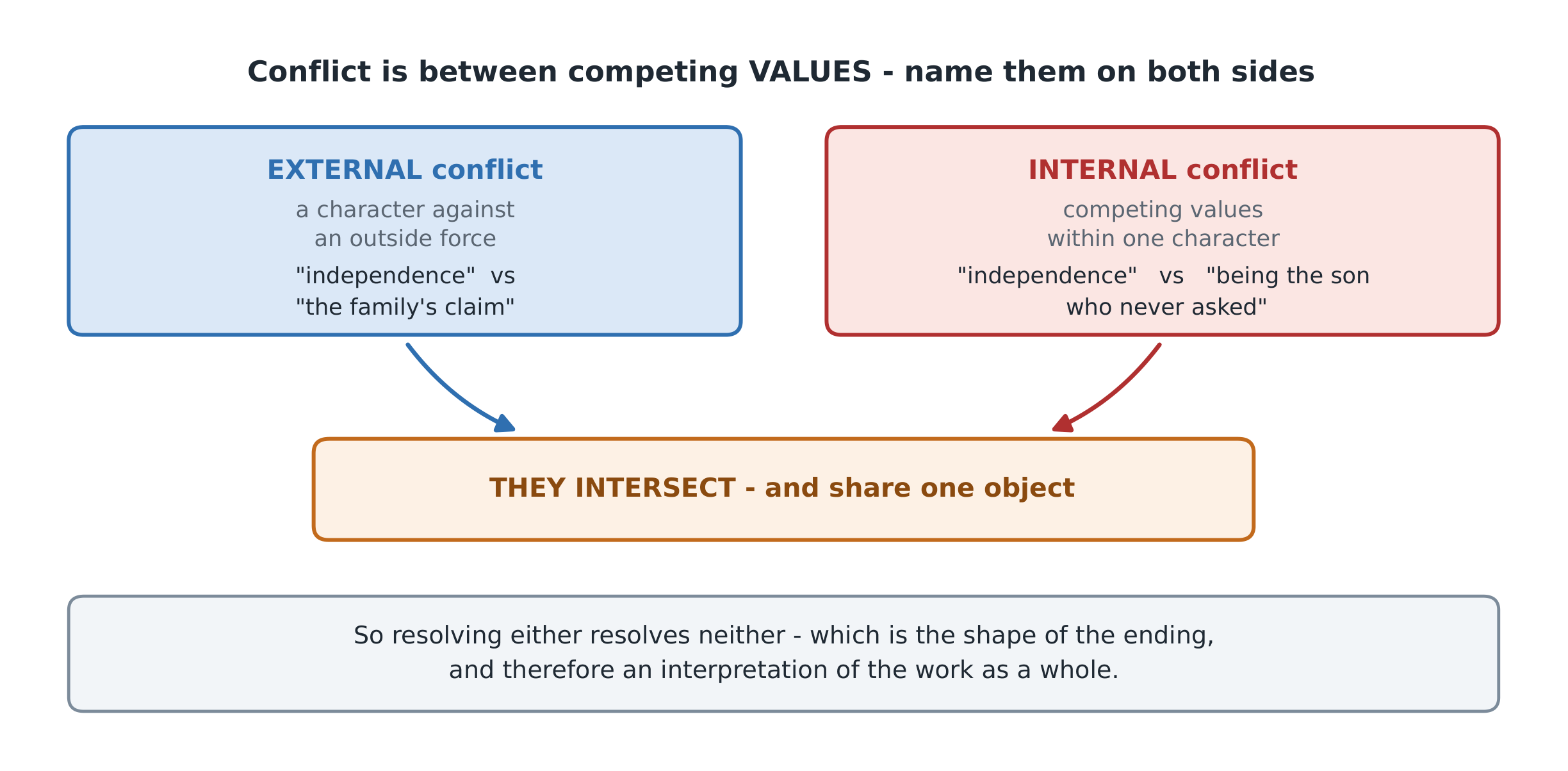
    冲突有两个所在,而且会叠加——这正是长篇作品可被分析的原因
    被一个交叉冲突所加剧的主要冲突,是长篇小说或戏剧的标准形态
    • 冲突(conflict)是相互竞争的价值之间的张力,既可以存在于一个人物内部——内在或心理冲突——也可以存在于人物与外部力量之间。
    • 一个文本可以包含多重冲突,而且常有两个或更多彼此交叉(intersect)。
    • 主要冲突可以被与之交叉的其他冲突所加剧。
    • 文本中的不一致可能造成对照,而这些对照代表着价值或视角的冲突。

    注意这个定义:冲突存在于相互竞争的价值之间,而不只是人与人之间。两个人物想要同一个东西,那是争夺;两个人物想要彼此不相容的好,那才是冲突,而只有后者产生意义。

    词汇表 训练
    英文 中文 拼音
    Conflict 冲突 chōng tū
    intersect 交叉 jiāo chā
    thesis statement expresses an interpretation 阐释 chǎn shì
    3.6

    撰写含主张与证据的段落

    大纲
    Enduring UnderstandingLearning ObjectiveEssential Knowledge

    LAN-1
    Readers establish and communicate their interpretations of literature through arguments supported by textual evidence.

    7.A
    Develop a paragraph that includes 1) a claim that requires defense with evidence from the text and 2) the evidence itself.

    • LAN-1.A In literary analysis, writers read a text closely to identify details that, in combination, enable them to make and defend a claim about an aspect of the text.
    • LAN-1.B A claim is a statement that requires defense with evidence from the text.
    • LAN-1.C In literary analysis, the initial components of a paragraph are the claim and textual evidence that defends the claim.

    来源:美国大学理事会 AP 课程与考试说明

    与第一、第二单元相同:一项需要文本辩护的主张文本证据,以及合在一起被辨认出的细节。

    3.7

    撰写文学论点句

    大纲
    Enduring UnderstandingLearning ObjectiveEssential Knowledge

    LAN-1
    Readers establish and communicate their interpretations of literature through arguments supported by textual evidence.

    7.B
    Develop a thesis statement that conveys a defensible claim about an interpretation of literature and that may establish a line of reasoning.

    • LAN-1.D A thesis statement expresses an interpretation of a literary text and requires a defense through use of textual evidence and a line of reasoning, both of which are explained in an essay through commentary.
    • LAN-1.E A thesis statement may preview the development or line of reasoning of an interpretation. This is not to say that a thesis statement must list the points of an interpretation, literary elements to be analyzed, or specific evidence to be used in the argument.

    来源:美国大学理事会 AP 课程与考试说明

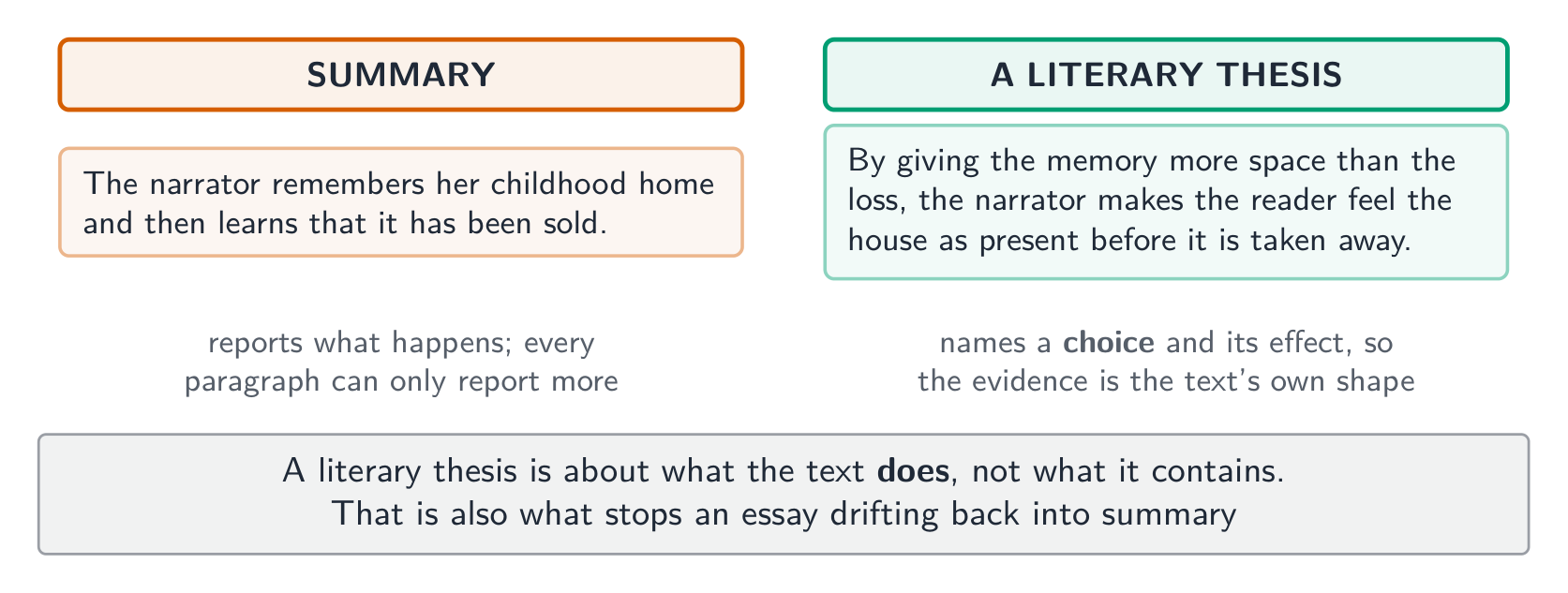
    • 论点陈述表达对一个文学文本的阐释(interpretation),并需要通过文本证据加以辩护
    • 可以预示这一阐释的展开或推理线索——但不必罗列理由。

    关键词是阐释。陈述文本中发生了什么的论点不是论点,而是概括。论点必须说出文本意味着什么或做了什么,而这按定义就是可争辩的。

    3.8

    撰写评述

    大纲
    Enduring UnderstandingLearning ObjectiveEssential Knowledge

    LAN-1
    Readers establish and communicate their interpretations of literature through arguments supported by textual evidence.

    7.C
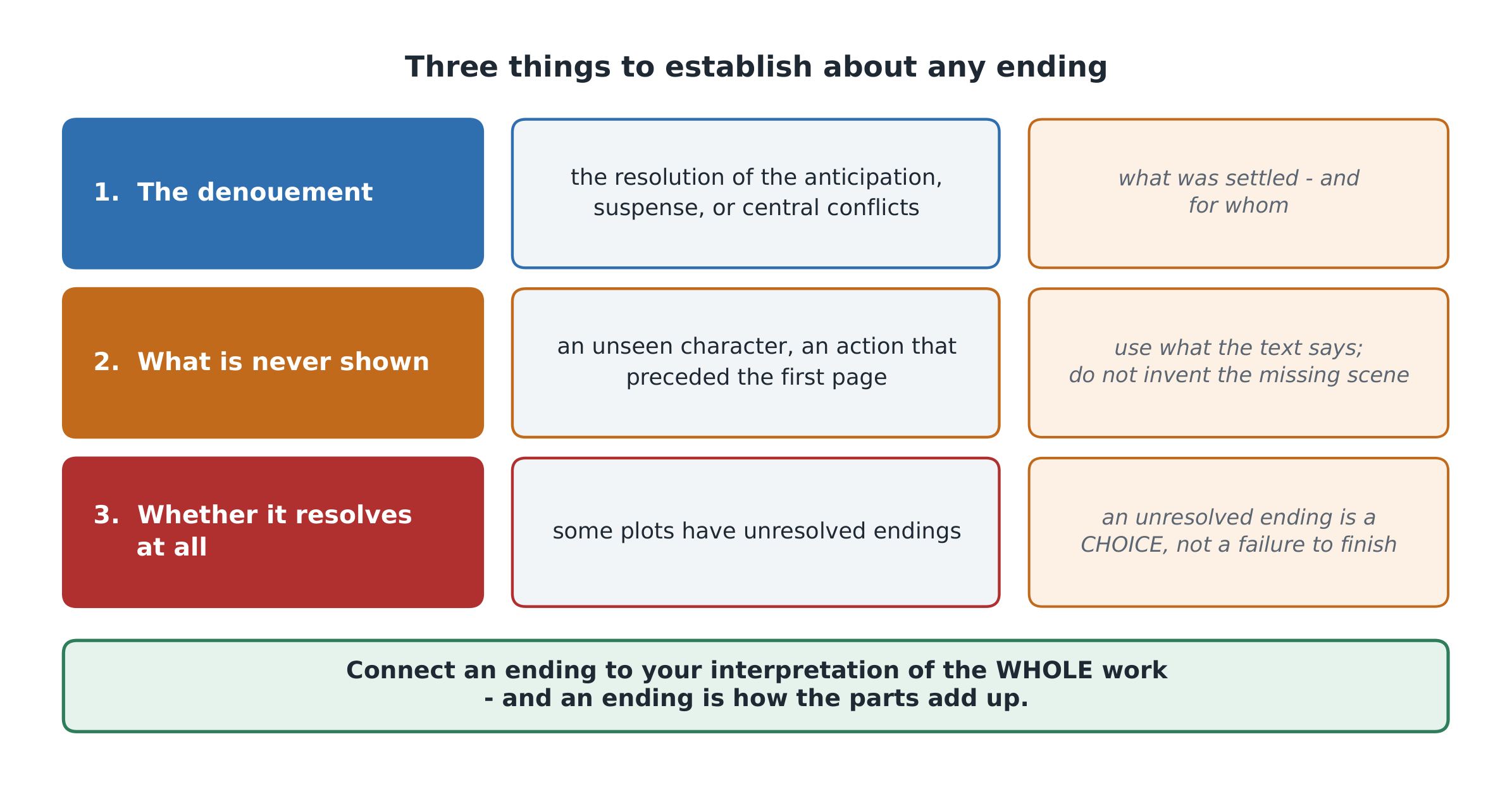
    Develop commentary that establishes and explains relationships among textual evidence, the line of reasoning, and the thesis.

    • LAN-1.F A line of reasoning is the logical sequence of claims that work together to defend the overarching thesis statement.
    • LAN-1.G A line of reasoning is communicated through commentary that explains the logical relationship between the overarching thesis statement and the claims/evidence within the body of an essay.

    来源:美国大学理事会 AP 课程与考试说明

    • 推理线索(line of reasoning)是共同为统领性论点辩护的逻辑主张序列
    • 它通过解释证据与主张之间逻辑关系的评述来传达。
    词汇表 训练
    英文 中文 拼音
    line of reasoning 推理线索 tuī lǐ xiàn suǒ
    Developing an interpretation is a recursive process 反复推敲 fǎn fù tuī qiāo
    3.9

    选取贴切且充分的证据

    大纲
    Enduring UnderstandingLearning ObjectiveEssential Knowledge

    LAN-1
    Readers establish and communicate their interpretations of literature through arguments supported by textual evidence.

    7.D
    Select and use relevant and sufficient evidence to both develop and support a line of reasoning.

    • LAN-1.H Writers use evidence strategically and purposefully to illustrate, clarify, exemplify, associate, amplify, or qualify a point.
    • LAN-1.I Evidence is effective when the writer of the essay uses commentary to explain a logical relationship between the evidence and the claim.
    • LAN-1.J Evidence is sufficient when its quantity and quality provide apt support for the line of reasoning.
    • LAN-1.K Developing and supporting an interpretation of a text is a recursive process; an interpretation can emerge from analyzing evidence and then forming a line of reasoning, or the interpretation can emerge from forming a line of reasoning and then identifying relevant evidence to support that line of reasoning.

    来源:美国大学理事会 AP 课程与考试说明

    • 写作者策略性地使用证据——用以举例、澄清、示范、关联或放大。
    • 当评述解释了证据与主张之间的逻辑关系时,证据才是有效的
    • 当证据的数量与质量提供了恰当支撑时,它才是充分的
    • 发展一项阐释是一个反复推敲的过程(recursive process):阐释可以在你阅读与写作的过程中浮现,也可以改变。

    最后这一点是值得接受的许可。如果你的读法在起草过程中发生了变化,就修改论点以与之相符。

    3.10

    掌控写作的各项要素

    大纲
    Enduring UnderstandingLearning ObjectiveEssential Knowledge

    LAN-1
    Readers establish and communicate their interpretations of literature through arguments supported by textual evidence.

    7.E
    Demonstrate control over the elements of composition to communicate clearly.

    • LAN-1.L Grammar and mechanics that follow established conventions of language allow writers to clearly communicate their interpretation of a text.

    来源:美国大学理事会 AP 课程与考试说明

    **遵循既定语言惯例的语法与格式使写作者得以清晰地表达。**在这门考试中,语言控制力不是一项单独的分数,而是其他各项分数的条件:一个不清楚的句子无法传达任何读者能够采信的评述。

    Worked example(一项真实的 AP 考试任务)。第三题的文学论证要求你自选一部作品,分析某个人物的冲突如何促成对整部作品的一种阐释。薄弱答案会围绕这一冲突复述情节。能得分的答案会指认相互竞争的价值并让它们交叉:*「主人公与家人围绕遗产的外在冲突,被一重内在冲突所加剧:他既想要这笔钱所能买到的独立,又想继续做那个从未开口索求的儿子。由于这两重冲突共用同一个对象,解决其中任何一个都解决不了另一个——这正是这部小说何以以一个让所有人(包括他自己)都不满意的选择收场。」*两重冲突,以价值命名,并给出对整部作品的阐释。

    3.10

    考试技巧

    • **不作为揭示动机。**人物拒绝去做的事往往是可用的最有力证据。
    • 保持不变的人物是使他人的变化得以显现的尺度。
    • 背景如今包括社会与历史情境——它提供了使选择具有意义的约束。
    • 冲突存在于相互竞争的价值之间,而不只是人与人之间。要把这些价值点出来。
    • 只有当你能说出某个事件对冲突或对某个人物做了什么时,它才有意义。否则就是情节复述。
    • 论点必须陈述一项阐释,而不是发生了什么。概括无法被辩护。
  • 4

    短篇小说 二

    讲义 词汇表
    4.1

    文本细节所揭示的人物

    大纲
    Enduring UnderstandingLearning ObjectiveEssential Knowledge

    CHR-1
    Characters in literature allow readers to study and explore a range of values, beliefs, assumptions, biases, and cultural norms represented by those characters.

    1.A
    Identify and describe what specific textual details reveal about a character, that character’s perspective, and that character’s motives.

    • CHR-1.O The significance of characters is often revealed through their agency and through nuanced descriptions.
    • CHR-1.P Characters’ choices—in speech, action, and inaction— reveal what they value.

    来源:美国大学理事会 AP 课程与考试说明

    第四单元带着大得多的工具箱回到短篇小说。它最有价值的两项新增是叙述距离,以及"选择揭示价值"这一观念。

    • 人物的重要性常常通过其能动性(agency)与细致入微的描写得以揭示。
    • 人物的选择——在言语、作为与不作为中——揭示其所看重之物(reveal what they value)。

    第二句是整门课程中对写论述文最实用的一句话。每当你需要一项关于某个人物的主张时,就去看一个选择,并问:必须有什么是真的,这个选择对此人才说得通?

    词汇表 训练
    英文 中文 拼音
    agency 能动性 néng dòng xìng
    Characters' choices - in speech, action, and inaction - reveal what they value 揭示其所看重之物 jiē shì qí suǒ kàn zhòng zhī wù
    4.2

    对比性人物的作用

    大纲
    Enduring UnderstandingLearning ObjectiveEssential Knowledge

    CHR-1
    Characters in literature allow readers to study and explore a range of values, beliefs, assumptions, biases, and cultural norms represented by those characters.

    1.C
    Explain the function of contrasting characters.

    • CHR-1.Q The main character in a narrative is the protagonist; the antagonist in the narrative opposes the protagonist and may be another character, the internal conflicts of the protagonist, a collective (such as society), or nature.
    • CHR-1.R Protagonists and antagonists may represent contrasting values.

    来源:美国大学理事会 AP 课程与考试说明

    • 叙事中的主要人物是主人公(protagonist);对立者(antagonist)与之相对。
    • 主人公与对立者可能代表相互对照的价值。

    可能这个词用得谨慎。对立者未必是反派;最有力的对立者持有一种读者也能承认为善的价值,这正是那场冲突之所以是冲突而非碾压的原因。

    词汇表 训练
    英文 中文 拼音
    protagonist 主人公 zhǔ rén gōng
    antagonist 对立者 duì lì zhě
    Conflict among characters often arises from tensions generated by their different value systems 价值体系 jià zhí tǐ xì
    A setting may help establish the mood and atmosphere 情绪与氛围 qíng xù yǔ fēn wéi
    4.3

    人物关系中的微妙之处

    大纲
    Enduring UnderstandingLearning ObjectiveEssential Knowledge

    CHR-1
    Characters in literature allow readers to study and explore a range of values, beliefs, assumptions, biases, and cultural norms represented by those characters.

    1.D
    Describe how textual details reveal nuances and complexities in characters’ relationships with one another.

    • CHR-1.S Conflict among characters often arises from tensions generated by their different value systems.

    来源:美国大学理事会 AP 课程与考试说明

    人物之间的冲突往往源于他们不同的价值体系(value systems)所产生的张力

    这是第三单元的定义在关系上的应用。两个长期不合的人物,他们真正的分歧通常先于他们正在进行的那场争论。

    4.4

    环境在叙事中的作用

    大纲
    Enduring UnderstandingLearning ObjectiveEssential Knowledge

    SET-1
    Setting and the details associated with it not only depict a time and place, but also convey values associated with that setting.

    2.B
    Explain the function of setting in a narrative.

    • SET-1.C A setting may help establish the mood and atmosphere of a narrative.

    来源:美国大学理事会 AP 课程与考试说明

    背景可以帮助确立叙事的情绪与氛围(mood and atmosphere)。

    情绪是读者的感受;氛围是文本围绕事件所造就的质地。两者都由取舍产生——文本提到了某地的哪些细节,又没有提哪些。

    4.5

    人物与环境的关系

    大纲
    Enduring UnderstandingLearning ObjectiveEssential Knowledge

    SET-1
    Setting and the details associated with it not only depict a time and place, but also convey values associated with that setting.

    2.C
    Describe the relationship between a character and a setting.

    • SET-1.D The environment a character inhabits provides information about that character.

    来源:美国大学理事会 AP 课程与考试说明

    人物所居住的环境提供了关于该人物的信息。

    这是进入人物的第二条路径,可以避开心理化揣测的陷阱。一个房间被写出它的失修、它的井然,或它借来的家具,就已经告诉了你住在其中的人是怎样的——而这是文本证据,不是猜想。

    4.6

    情节如何组织事件

    大纲
    Enduring UnderstandingLearning ObjectiveEssential Knowledge

    STR-1
    The arrangement of the parts and sections of a text, the relationship of the parts to each other, and the sequence in which the text reveals information are all structural choices made by a writer that contribute to the reader’s interpretation of a text.

    3.A
    Identify and describe how plot orders events in a narrative.

    • STR-1.R Some patterns in dramatic situations are so common that they are considered archetypes, and these archetypes create certain expectations for how the dramatic situations will progress and be resolved. Note: For the exam, students are not expected to identify or label archetypes.

    来源:美国大学理事会 AP 课程与考试说明

    戏剧情境中有些模式如此常见,以至于被视为原型(archetypes),而这些原型带着读者自己携带而来的种种联想。

    使用原型要谨慎:辨认出一个原型只是起点,而有意思的分析几乎总是在于文本在何处偏离了它所唤起的那个模式。

    词汇表 训练
    英文 中文 拼音
    archetypes 原型 yuán xíng
    4.7

    文本中对比的作用

    大纲
    Enduring UnderstandingLearning ObjectiveEssential Knowledge

    STR-1
    The arrangement of the parts and sections of a text, the relationship of the parts to each other, and the sequence in which the text reveals information are all structural choices made by a writer that contribute to the reader’s interpretation of a text.

    3.D
    Explain the function of contrasts within a text.

    • STR-1.S The differences highlighted by a contrast emphasize the particular traits, aspects, or characteristics important for comparison of the things being contrasted.
    • STR-1.T Contrasts often represent conflicts in values related to character, narrator, or speaker perspectives on ideas represented by a text.

    来源:美国大学理事会 AP 课程与考试说明

    • 对照所凸显的差异强调了被对照事物中的特定特质或特征
    • 对照往往代表价值上的冲突,与人物、叙述者或说话者的视角相关。
    4.8

    识别叙述者或说话人

    大纲
    Enduring UnderstandingLearning ObjectiveEssential Knowledge

    NAR-1
    A narrator’s or speaker’s perspective controls the details and emphases that affect how readers experience and interpret a text.

    4.A
    Identify and describe the narrator or speaker of a text.

    • NAR-1.J Narrators may function as characters in the narrative who directly address readers and either recall events or describe them as they occur.

    来源:美国大学理事会 AP 课程与考试说明

    叙述者可以充当直接向读者说话的人物,他们或是回忆事件,或是在事件发生之际加以讲述。

    这一区分——回忆与即时讲述——正是下文叙述距离的第一条轴。

    4.9

    叙事视角的作用

    大纲
    Enduring UnderstandingLearning ObjectiveEssential Knowledge

    NAR-1
    A narrator’s or speaker’s perspective controls the details and emphases that affect how readers experience and interpret a text.

    4.B
    Identify and explain the function of point of view in a narrative.

    • NAR-1.K Narrative distance refers to the physical distance, chronological distance, relationships, or emotional investment of the narrator to the events or characters of the narrative.
    • NAR-1.L Stream of consciousness is a type of narration in which a character’s thoughts are related through a continuous dialogue or description.

    来源:美国大学理事会 AP 课程与考试说明

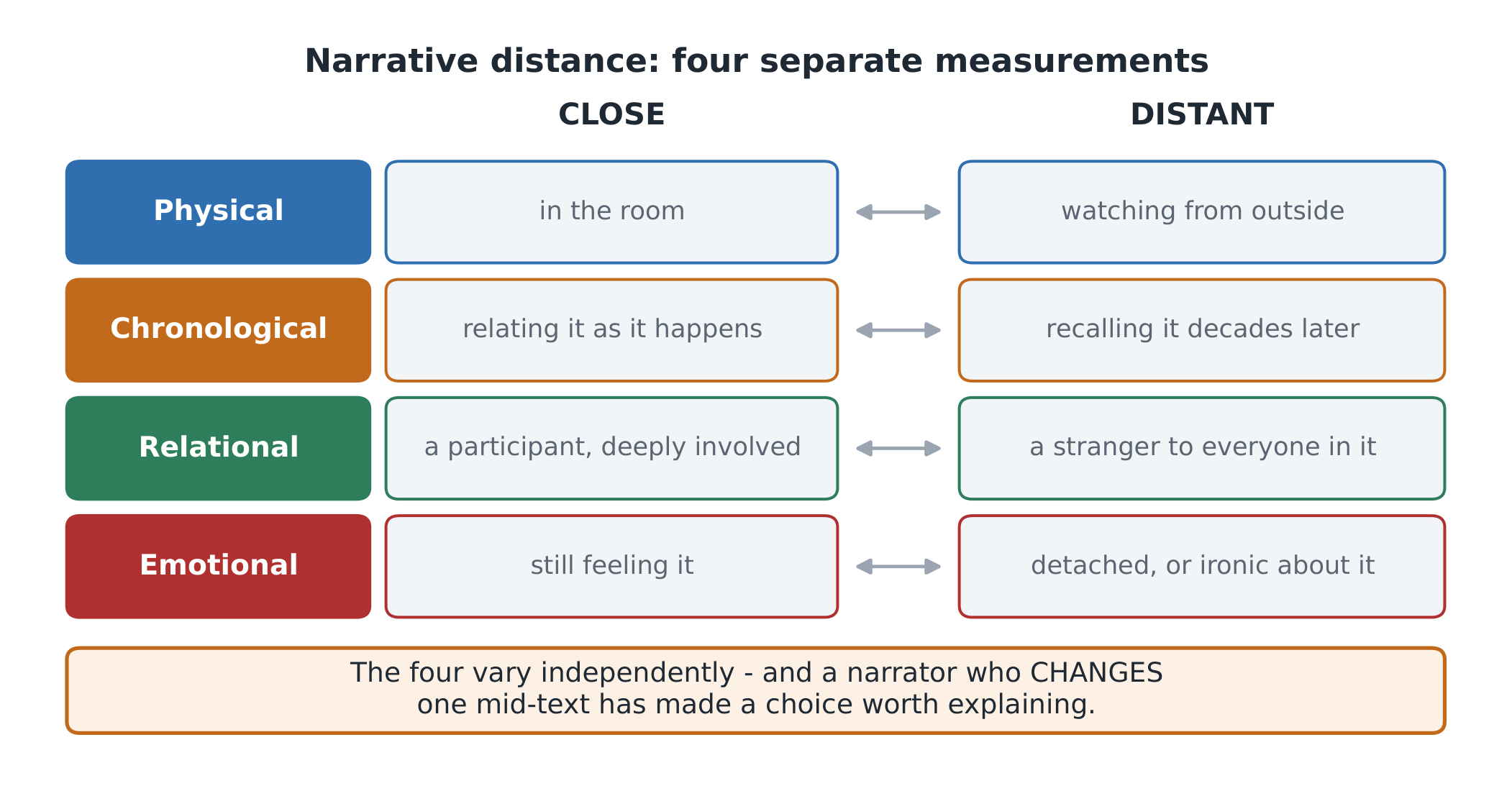
    叙述者与事件之间的四种距离——而每一种都是一个选择
    叙述者的位置不是一个事实,而是四个,其中任何一个都可能成为分析的所在
    • 叙述距离(narrative distance)指叙述者与事件或人物之间的物理距离、时间距离、关系距离或情感距离
    • 意识流(stream of consciousness)是一种把人物思绪以连续流动方式呈现的叙述,通常少有常规的排序。

    叙述距离是本课程中最有力却最少被使用的工具。一位在四十年后回述自己童年的叙述者在时间上是遥远的,而这一距离提供了当年那个孩子不可能拥有的反讽。把距离缩短——让叙述者在事件发生之际讲述——反讽便消失了,取而代之的是即时性与不可靠。

    词汇表 训练
    英文 中文 拼音
    Narrative distance 叙述距离 xù shù jù lí
    Stream of consciousness 意识流 yì shí liú
    4.10

    细节、措辞与句法揭示的立场

    大纲
    Enduring UnderstandingLearning ObjectiveEssential Knowledge

    NAR-1
    A narrator’s or speaker’s perspective controls the details and emphases that affect how readers experience and interpret a text.

    4.C
    Identify and describe details, diction, or syntax in a text that reveal a narrator’s or speaker’s perspective.

    • NAR-1.M The narrators’, characters’, or speakers’ backgrounds and perspectives shape the tone they convey about subjects or events in the text.
    • NAR-1.N Descriptive words, such as adjectives and adverbs, not only qualify or modify the things they describe but also convey a perspective toward those things.
    • NAR-1.O The attitude of narrators, characters, or speakers toward an idea, character, or situation emerges from their perspective and may be referred to as tone.

    来源:美国大学理事会 AP 课程与考试说明

    • 叙述者与人物的背景与视角塑造了他们所传达的语调
    • 描述性词语不仅限定它们所描述之物,还传达一种视角
    • 叙述者或说话者对某个观念、人物或情境的态度,正是从这些选择中浮现出来的
    4.11

    撰写文学论点句

    大纲
    Enduring UnderstandingLearning ObjectiveEssential Knowledge

    LAN-1
    Readers establish and communicate their interpretations of literature through arguments supported by textual evidence.

    7.B
    Develop a thesis statement that conveys a defensible claim about an interpretation of literature and that may establish a line of reasoning.

    • LAN-1.D A thesis statement expresses an interpretation of a literary text, and requires a defense, through use of textual evidence and a line of reasoning, both of which are explained in an essay through commentary.
    • LAN-1.E A thesis statement may preview the development or line of reasoning of an interpretation. This is not to say that a thesis statement must list the points of an interpretation, literary elements to be analyzed, or specific evidence to be used in the argument.
    来源:美国大学理事会 AP 课程与考试说明

    不变:论点表达一项阐释并需要文本辩护;它可以预示推理线索。

    4.12

    撰写评述

    大纲
    Enduring UnderstandingLearning ObjectiveEssential Knowledge

    LAN-1
    Readers establish and communicate their interpretations of literature through arguments supported by textual evidence.

    7.C
    Develop commentary that establishes and explains relationships among textual evidence, the line of reasoning, and the thesis.

    • LAN-1.F A line of reasoning is the logical sequence of claims that work together to defend the overarching thesis statement.
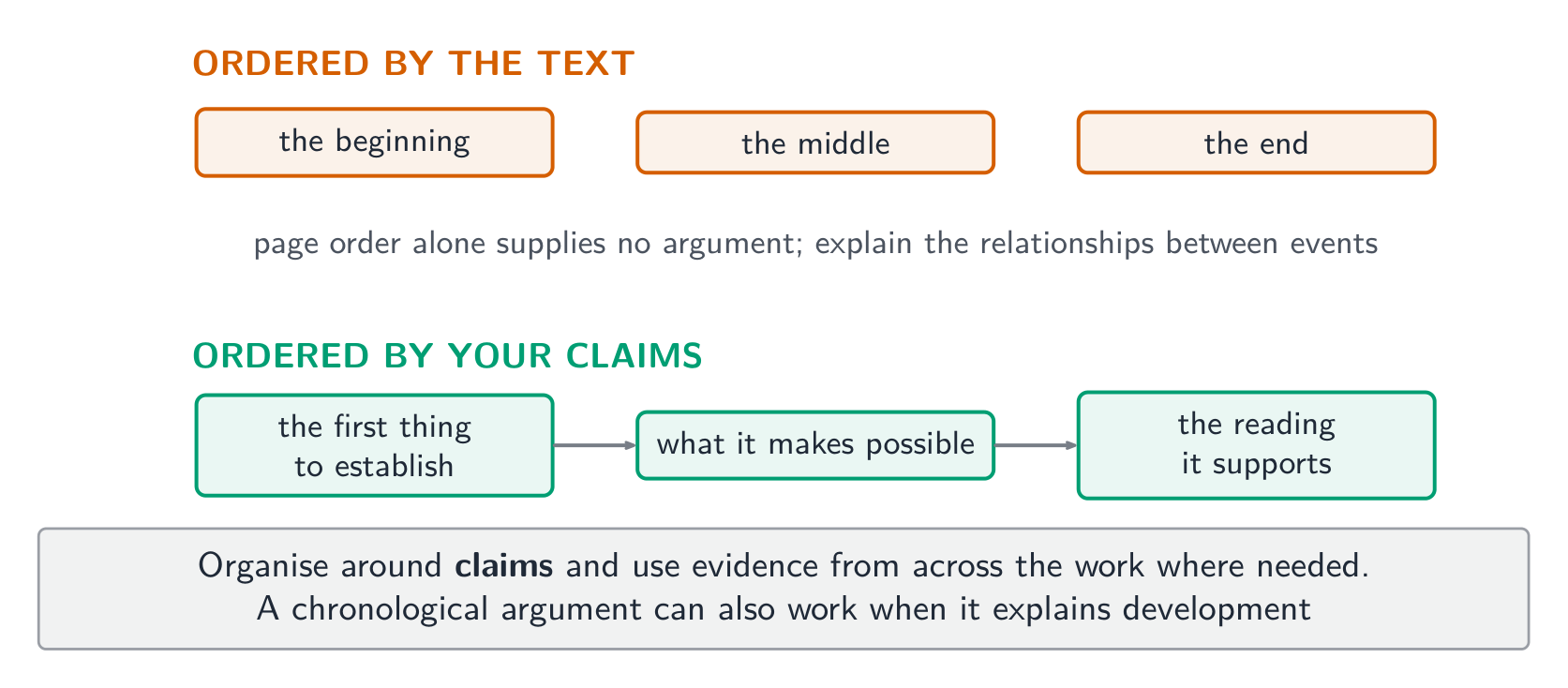
    • LAN-1.G A line of reasoning is communicated through commentary that explains the logical relationship between the overarching thesis statement and the claims/evidence within the body of an essay.
    • LAN-1.M The body paragraphs of a written argument develop the reasoning and justify claims using evidence and providing commentary that links the evidence to the overall thesis.
    • LAN-1.N Effective paragraphs are cohesive and often use topic sentences to state a claim and explain the reasoning that connects the various claims and evidence that make up the body of an essay.

    来源:美国大学理事会 AP 课程与考试说明

    • 推理线索是为论点辩护的逻辑主张序列,通过评述来传达。
    • 主体段落展开推理并用证据为主张辩护
    • 有效的段落是有黏合力的,并常以主题句(topic sentences)提出主张并说明推理。
    词汇表 训练
    英文 中文 拼音
    topic sentences 主题句 zhǔ tí jù
    4.13

    选取贴切且充分的证据

    大纲
    Enduring UnderstandingLearning ObjectiveEssential Knowledge

    LAN-1
    Readers establish and communicate their interpretations of literature through arguments supported by textual evidence.

    7.D
    Select and use relevant and sufficient evidence to both develop and support a line of reasoning.

    • LAN-1.H Writers use evidence strategically and purposefully to illustrate, clarify, exemplify, associate, amplify, or qualify a point.
    • LAN-1.I Evidence is effective when the writer of the essay uses commentary to explain a logical relationship between the evidence and the claim.
    • LAN-1.J Evidence is sufficient when its quantity and quality provide apt support for the line of reasoning.
    • LAN-1.K Developing and supporting an interpretation of a text is a recursive process; an interpretation can emerge from analyzing evidence and then forming a line of reasoning, or the interpretation can emerge from forming a line of reasoning and then identifying relevant evidence to support that line of reasoning.

    来源:美国大学理事会 AP 课程与考试说明

    与第三单元相同的四点:策略性地使用证据;当评述解释了关系时它才有效;在数量与质量上充分;而阐释是一个反复推敲的过程。

    4.14

    掌控写作的各项要素

    大纲
    Enduring UnderstandingLearning ObjectiveEssential Knowledge

    LAN-1
    Readers establish and communicate their interpretations of literature through arguments supported by textual evidence.

    7.E
    Demonstrate control over the elements of composition to communicate clearly.

    • LAN-1.O Coherence occurs at different levels in a piece of writing. In a sentence, the idea in one clause logically links to an idea in the next. In a paragraph, the idea in one sentence logically links to an idea in the next. In a text, the ideas in one paragraph logically link to the ideas in the next.
    • LAN-1.P Writers achieve coherence when the arrangement and organization of reasons, evidence, ideas, or details is logical. Writers may use transitions, repetition, synonyms, pronoun references, or parallel structure to indicate relationships between and among those reasons, evidence, ideas, or details.

    来源:美国大学理事会 AP 课程与考试说明

    连贯发生在不同层级上——句内、句间、全篇——而当理由、证据与细节的排布使推理线索可被追随时,写作者就实现了连贯。

    **Worked example(一项真实的 AP 考试任务)。**一道散文小说题要求说明作者的叙事选择如何传达叙述者对一件往事的态度。薄弱答案:*「叙述者很怀旧,并使用了描述性语言。」能得分的答案会用上叙述距离:「叙述者隔着数十年讲述一个下午,而正是这段距离在起作用:他用第三人称描述自己当时的兴奋——『那男孩跑起来』——随后才在失望之处回到『我』。选择在何处合上这道时间的缝隙,使他得以对年轻时的自己不予同情,同时又把那份失落认领为自己的。」*距离、它的变化,以及它所造就的态度。

    4.14

    考试技巧

    • **选择揭示价值。**要问:必须有什么是真的,这个选择对那个人物才说得通?
    • **对立者不是反派。**最有力的对立者持有一种读者也能承认为善的价值。
    • 环境告诉你人物是怎样的——而这是文本证据,不是猜想。
    • 原型是起点。分析在于文本偏离那个模式之处。
    • 叙述距离有四种——物理、时间、关系、情感。它是这里最少被使用的工具。
    • 在文中合上或拉开距离的叙述者作出了一个选择。说出它造就了什么。
  • 5

    诗歌 二

    讲义 词汇表
    5.1

    文本结构的作用

    大纲
    Enduring UnderstandingLearning ObjectiveEssential Knowledge

    STR-1
    The arrangement of the parts and sections of a text, the relationship of the parts to each other, and the sequence in which the text reveals information are all structural choices made by a writer that contribute to the reader’s interpretation of a text.

    3.C
    Explain the function of structure in a text.

    • STR-1.U Closed forms of poetry include predictable patterns in the structure of lines, stanzas, meter, and rhyme, which develop relationships among ideas in the poem. Note: The AP Exam will not require students to label or identify specific rhyme schemes, metrical patterns, or forms of poetry.
    • STR-1.V Open forms of poetry may not follow expected or predictable patterns in the structure of their lines or stanzas, but they may still have structures that develop relationships between ideas in the poem.
    • STR-1.W Structures combine in texts to emphasize certain ideas and concepts.

    来源:美国大学理事会 AP 课程与考试说明

    第五单元是第二个诗歌单元,它做两件事:为诗可能采取的形式命名,并补全比喻性语言的工具箱。

    • 格律诗体(closed forms)在诗行、诗节、格律与韵脚的结构上有可预期的模式
    • 自由诗体(open forms)可能不遵循预期或可预测的结构模式。
    • 各种结构在文本中组合起来,以强调某些观念。

    可考的问题从来不是"这是哪种形式?",而是这一形式起了什么作用。在格律诗体中,有意思的时刻是偏离——那一行忽然拉长,那个韵脚没有如期到来。在自由诗体中,有意思的时刻是强加——一首一直拒绝规则的诗中忽然出现的整齐。

    词汇表 训练
    英文 中文 拼音
    Closed forms 格律诗体 gé lǜ shī tǐ
    Open forms 自由诗体 zì yóu shī tǐ
    Words with multiple meanings or connotations add nuance or complexity 细微差别与复杂性 xì wēi chā bié yǔ fù zá xìng
    5.2

    字面义与比喻义

    大纲
    Enduring UnderstandingLearning ObjectiveEssential Knowledge

    FIG-1
    Comparisons, representations, and associations shift meaning from the literal to the figurative and invite readers to interpret a text.

    5.A
    Distinguish between the literal and figurative meanings of words and phrases.

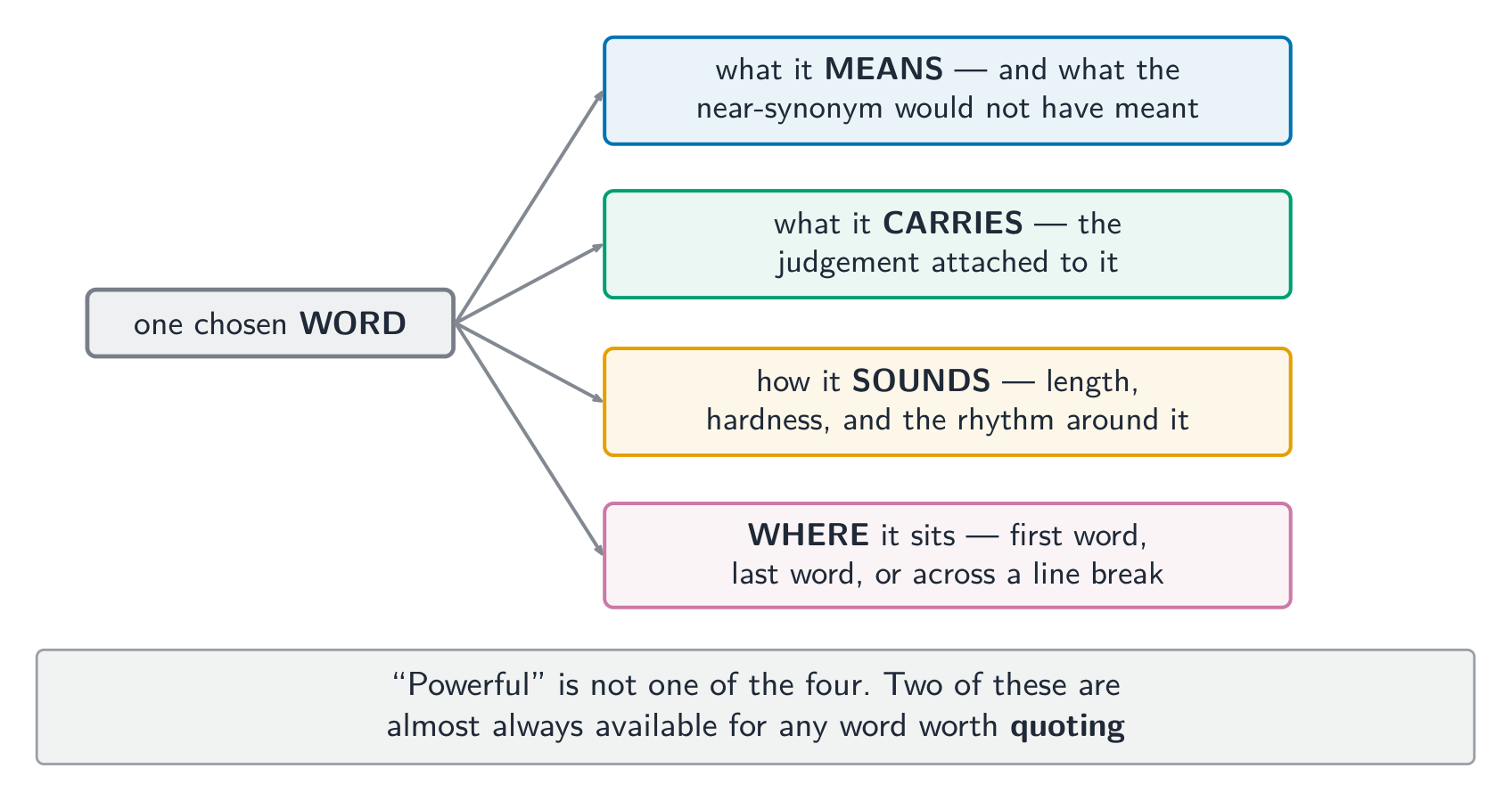
    • FIG-1.L Words with multiple meanings or connotations add nuance or complexity that can contribute to interpretations of a text.

    来源:美国大学理事会 AP 课程与考试说明

    具有多重含义或内涵的词语增添了细微差别与复杂性(nuance or complexity),而这可以促成阐释。

    在诗中,一个可以有两种含义的词往往两种都指。不要急着二选一。

    5.3

    特定词语的作用

    大纲
    Enduring UnderstandingLearning ObjectiveEssential Knowledge

    FIG-1
    Comparisons, representations, and associations shift meaning from the literal to the figurative and invite readers to interpret a text.

    5.B
    Explain the function of specific words and phrases in a text.

    • FIG-1.M Descriptive words, such as adjectives and adverbs, qualify or modify the things they describe and affect readers’ interaction with the text.
    • FIG-1.N Hyperbole exaggerates while understatement minimizes. Exaggerating or minimizing an aspect of an object focuses attention on that trait and conveys a perspective about the object.

    来源:美国大学理事会 AP 课程与考试说明

    • 描述性词语限定或修饰它们所描述之物,并影响读者对其的感知。
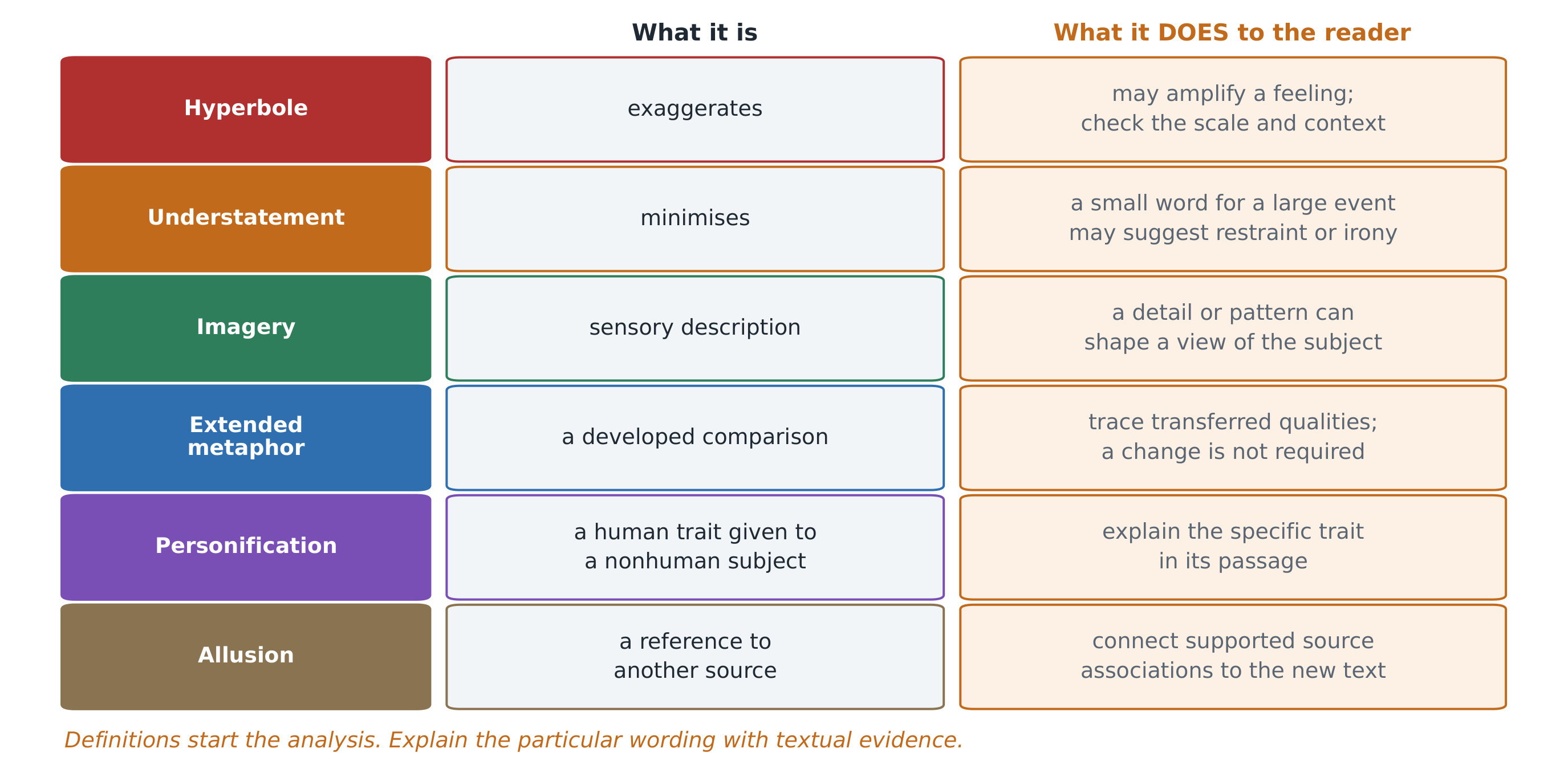
    • 夸张(hyperbole)放大,而低调陈述(understatement)缩小。对某物某一方面的放大或缩小,会影响它如何被理解。

    低调陈述是这一对中更有力的一个,也是第二语言读者更常遗漏的一个。一首把灾难描述为有些不便的诗并不是在保持平静;事件与用词之间的落差,正是这首诗对它的全部评论。

    词汇表 训练
    英文 中文 拼音
    Hyperbole 夸张 kuā zhāng
    understatement 低调陈述 dī diào chén shù
    contribute to sensory imagery 感官意象 gǎn guān yì xiàng
    5.4

    意象的作用

    大纲
    Enduring UnderstandingLearning ObjectiveEssential Knowledge

    FIG-1
    Comparisons, representations, and associations shift meaning from the literal to the figurative and invite readers to interpret a text.

    5.D
    Identify and explain the function of an image or imagery.

    • FIG-1.O Descriptive words, such as adjectives and adverbs, contribute to sensory imagery.
    • FIG-1.P An image can be literal or it can be a form of a comparison that represents something in a text through associations with the senses.
    • FIG-1.Q A collection of images, known as imagery, may emphasize ideas in parts of or throughout a text.

    来源:美国大学理事会 AP 课程与考试说明

    第五单元的各种手法,按各自对读者所起的作用排列
    点出手法的名称得不到分。说出它对读者做了什么,才是分析
    • 描述性词语促成感官意象(sensory imagery)。
    • 意象(image)可以是字面的,也可以是通过另一事物来表现某物的一种比较形式。
    • 一组意象——即意象群(imagery)——可以在文本的某些部分或全篇中强调某些观念

    复数形式很重要。单一意象是一处细节;而贯穿一首诗的意象模式,是这首诗未加陈述便已作出的主张。

    5.5

    暗喻的作用

    大纲
    Enduring UnderstandingLearning ObjectiveEssential Knowledge

    FIG-1
    Comparisons, representations, and associations shift meaning from the literal to the figurative and invite readers to interpret a text.

    6.B
    Identify and explain the function of a metaphor.

    • FIG-1.R Metaphorical comparisons do not focus solely on the objects being compared; they focus on the particular traits, qualities, or characteristics of the things being compared.
    • FIG-1.S Comparisons not only communicate literal meaning but may also convey figurative meaning or transmit a perspective.
    • FIG-1.T An extended metaphor is created when the comparison of a main subject and comparison subject persists through parts of or an entire text, and when the comparison is expanded through additional details, similes, and images.
    • FIG-1.U Interpretation of an extended metaphor may depend on the context of its use; that is, what is happening in a text may determine what is transferred in the comparison.

    来源:美国大学理事会 AP 课程与考试说明

    • 隐喻式比较并不只着眼于被比较的对象;它着眼于这一比较所凸显的特定性质
    • 比较传达字面意义,也可能传达比喻意义
    • 当主体与喻体的比较持续贯穿一个段落或整篇文本时,就构成了延伸隐喻(extended metaphor)。
    • 对延伸隐喻的阐释可能取决于其使用的语境

    延伸隐喻是在一首陌生诗作中最值得找到的东西,因为它同时给你结构与意义:你可以追踪这一比较如何展开,而一个在延伸过程中发生变化的比较,就是这首诗正在进行中的论证。

    词汇表 训练
    英文 中文 拼音
    extended metaphor 延伸隐喻 yán shēn yǐn yù
    5.6

    拟人的作用

    大纲
    Enduring UnderstandingLearning ObjectiveEssential Knowledge

    FIG-1
    Comparisons, representations, and associations shift meaning from the literal to the figurative and invite readers to interpret a text.

    6.C
    Identify and explain the function of personification.

    • FIG-1.V Personification is a type of comparison that assigns a human trait or quality to a nonhuman object, entity, or idea, thus characterizing that object, entity, or idea.

    来源:美国大学理事会 AP 课程与考试说明

    拟人(personification)是一种把人的特质或性质赋予非人的对象、动物或观念的比较。

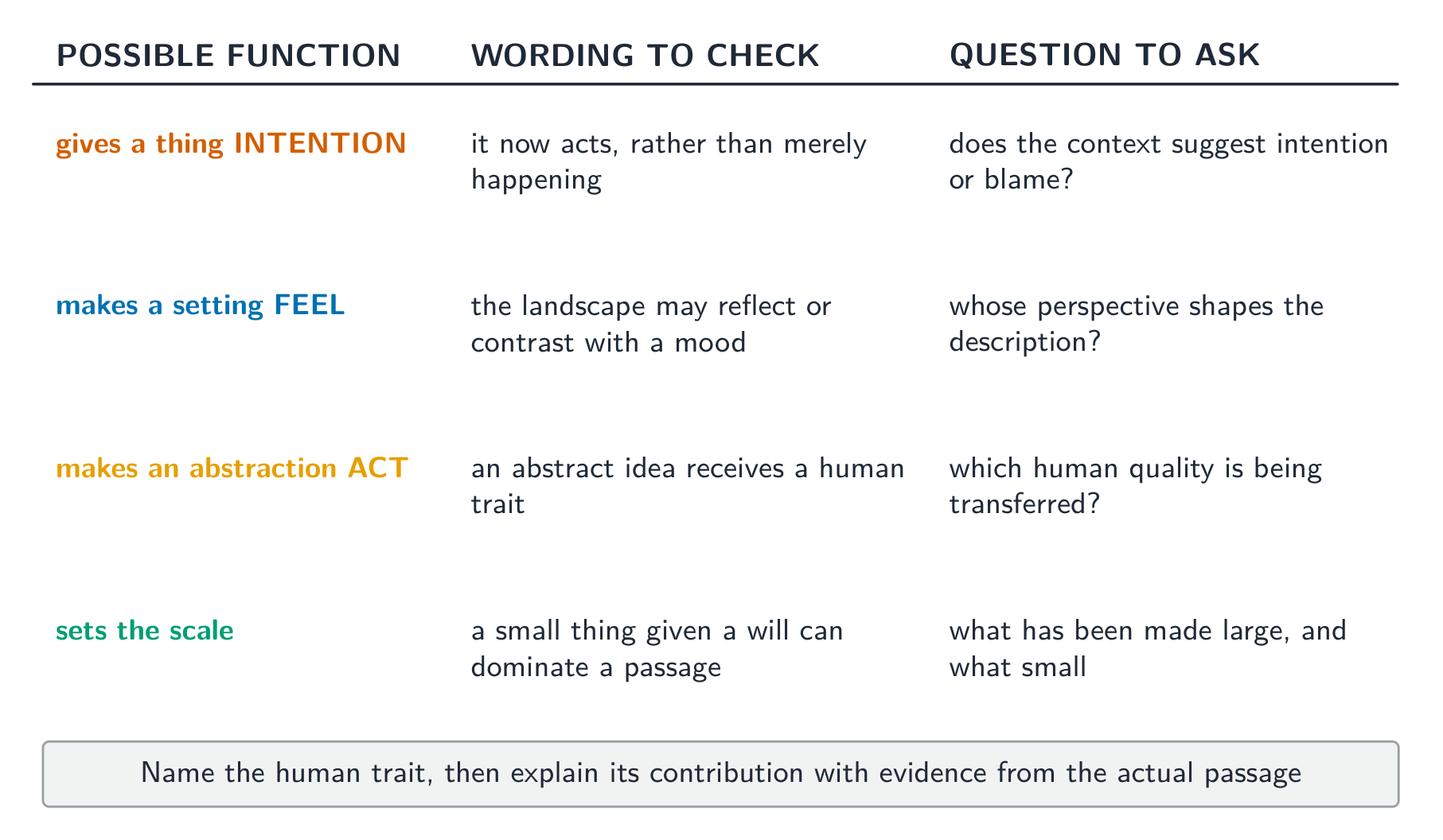
    把它当作与任何比较有着同样部件的比较来处理:主体是那个非人之物,喻体是人,被转移的性质是那项人的特质。然后问那个有用的问题——**赋予这个东西以能动性,做到了什么?**一阵作出决定的风,与一阵吹拂的风,不是同一个主张。

    词汇表 训练
    英文 中文 拼音
    Personification 拟人 nǐ rén
    5.7

    典故的作用

    大纲
    Enduring UnderstandingLearning ObjectiveEssential Knowledge

    FIG-1
    Comparisons, representations, and associations shift meaning from the literal to the figurative and invite readers to interpret a text.

    6.D
    Identify and explain the function of an allusion.

    • FIG-1.W Allusions in a text can reference literary works including myths and sacred texts; other works of art including paintings and music; or people, places, or events outside the text.

    来源:美国大学理事会 AP 课程与考试说明

    典故(allusions)可以指涉包括神话与宗教典籍在内的文学作品、其他艺术作品,以及历史事件

    典故引入了这首诗自己并未写出的意义。这既是它的效率,也是它的风险:它只对认得出它的读者有效。当你遇到一个不认识的典故时,与其假装认出,不如说出这首诗在结构上如何处置它——它被放在哪里,它打断了什么。

    词汇表 训练
    英文 中文 拼音
    Allusions 典故 diǎn gù
    5.8

    撰写文学论点句

    大纲
    Enduring UnderstandingLearning ObjectiveEssential Knowledge

    LAN-1
    Readers establish and communicate their interpretations of literature through arguments supported by textual evidence.

    7.B
    Develop a thesis statement that conveys a defensible claim about an interpretation of literature and that may establish a line of reasoning.

    • LAN-1.D A thesis statement expresses an interpretation of a literary text, and requires a defense, through use of textual evidence and a line of reasoning, both of which are explained in an essay through commentary.
    • LAN-1.E A thesis statement may preview the development or line of reasoning of an interpretation. This is not to say that a thesis statement must list the points of an interpretation, literary elements to be analyzed, or specific evidence to be used in the argument.

    来源:美国大学理事会 AP 课程与考试说明

    不变:一项需要文本辩护的阐释,并可以预示推理线索。

    5.9

    撰写评述

    大纲
    Enduring UnderstandingLearning ObjectiveEssential Knowledge

    LAN-1
    Readers establish and communicate their interpretations of literature through arguments supported by textual evidence.

    7.C
    Develop commentary that establishes and explains relationships among textual evidence, the line of reasoning, and the thesis.

    • LAN-1.F A line of reasoning is the logical sequence of claims that work together to defend the overarching thesis statement.
    • LAN-1.G A line of reasoning is communicated through commentary that explains the logical relationship between the overarching thesis statement and the claims/evidence within the body of an essay.

    来源:美国大学理事会 AP 课程与考试说明

    推理线索是为论点辩护的逻辑主张序列,通过解释证据与主张之关系的评述来传达。

    5.10

    选取贴切且充分的证据

    大纲
    Enduring UnderstandingLearning ObjectiveEssential Knowledge

    LAN-1
    Readers establish and communicate their interpretations of literature through arguments supported by textual evidence.

    7.D
    Select and use relevant and sufficient evidence to both develop and support a line of reasoning.

    • LAN-1.H Writers use evidence strategically and purposefully to illustrate, clarify, exemplify, associate, amplify, or qualify a point.
    • LAN-1.I Evidence is effective when the writer of the essay uses commentary to explain a logical relationship between the evidence and the claim.
    • LAN-1.J Evidence is sufficient when its quantity and quality provide apt support for the line of reasoning.
    • LAN-1.K Developing and supporting an interpretation of a text is a recursive process; an interpretation can emerge from analyzing evidence and then forming a line of reasoning, or the interpretation can emerge from forming a line of reasoning and then identifying relevant evidence to support that line of reasoning.

    来源:美国大学理事会 AP 课程与考试说明

    策略性地使用证据;有评述才有效;在数量与质量上充分;而阐释是一个反复推敲的过程。

    5.11

    掌控写作的各项要素

    大纲
    Enduring UnderstandingLearning ObjectiveEssential Knowledge

    LAN-1
    Readers establish and communicate their interpretations of literature through arguments supported by textual evidence.

    7.E
    Demonstrate control over the elements of composition to communicate clearly.

    • LAN-1.Q Transitional elements are words or other elements (phrases, clauses, sentences, or paragraphs) that assist in creating coherence between sentences and paragraphs by showing relationships between ideas.

    来源:美国大学理事会 AP 课程与考试说明

    过渡成分——词语、短语、分句、句子或段落——有助于创造连贯

    **Worked example(一项真实的 AP 考试任务)。**一道诗歌分析题要求说明诗人对比喻性语言的运用如何传达说话者的态度。薄弱答案是罗列:*「诗人使用了拟人、意象和一个隐喻。」能得分的答案会追踪一种手法的展开:「把潮水比作债主的延伸比较贯穿全诗,但其措辞发生了变化:在第一节里它『索取』,到第三节则『取走本就欠下的』。喻体保持不变,而说话者对这段关系的说法变得强硬——因此这首诗所传达的态度不是对失去的恐惧,而是认识到这场失去从来就不是她所能阻止的。」*一种手法,被追踪下来,并给出它所造就的态度。

    5.11

    考试技巧

    • 绝不要问"这是哪种形式?"要问这一形式起了什么作用——并寻找偏离或强加。
    • 一个有两种含义的词往往两种都指。不要过早二选一。
    • 低调陈述是这一对中更有力的一半,也是更常被遗漏的一半。那道落差就是评论。
    • 意象模式是这首诗未加陈述便已作出的主张。单一意象只是细节。
    • 在延伸过程中发生变化的延伸隐喻,是这首诗正在进行中的论证。要追踪它。
    • 罗列手法得不到分。追踪一种手法胜过点名四种。
  • 6

    长篇小说或戏剧 二

    讲义 词汇表
    6.1

    文本细节所揭示的人物

    大纲
    Enduring UnderstandingLearning ObjectiveEssential Knowledge

    CHR-1
    Characters in literature allow readers to study and explore a range of values, beliefs, assumptions, biases, and cultural norms represented by those characters.

    1.A
    Identify and describe what specific textual details reveal about a character, that character’s perspective, and that character’s motives.

    • CHR-1.T Different character, narrator, or speaker perspectives often reveal different information, develop different attitudes, and influence different interpretations of a text and the ideas in it.

    来源:美国大学理事会 AP 课程与考试说明

    第六单元是第二个"长篇小说或戏剧"单元,它加入了本课程中最精深的两件工具:叙述者的可靠性象征

    不同人物、叙述者或说话者的视角常常揭示不同的信息,并对同样的事件发展出不同的阐释。

    在一部有多个视角的长篇作品中,这些视角之间的出入并不是有待调和的问题。它们就是文本的方法。

    6.2

    对比性人物的作用

    大纲
    Enduring UnderstandingLearning ObjectiveEssential Knowledge

    CHR-1
    Characters in literature allow readers to study and explore a range of values, beliefs, assumptions, biases, and cultural norms represented by those characters.

    1.C
    Explain the function of contrasting characters.

    • CHR-1.U Foil characters (foils) serve to illuminate, through contrast, the traits, attributes, or values of another character.

    来源:美国大学理事会 AP 课程与考试说明

    陪衬人物(foil characters)的作用是通过对照,照亮另一人物的特质、属性或价值

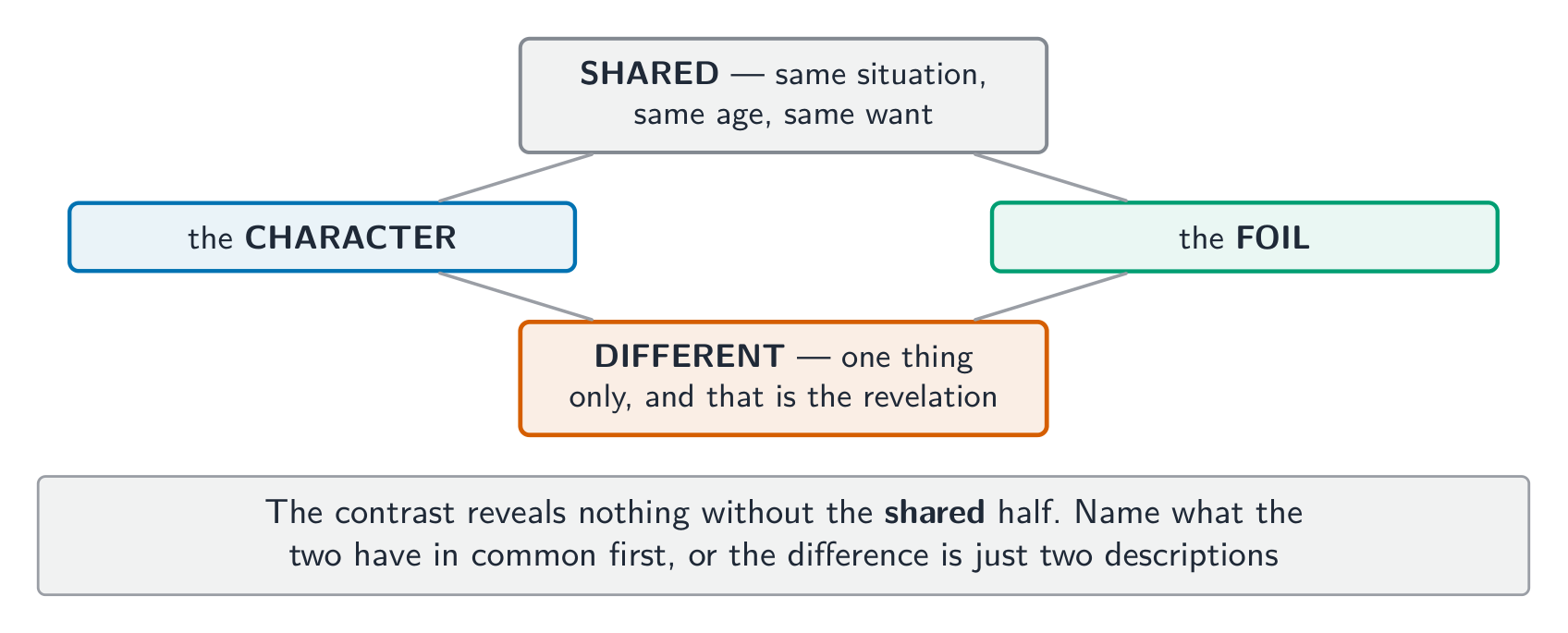
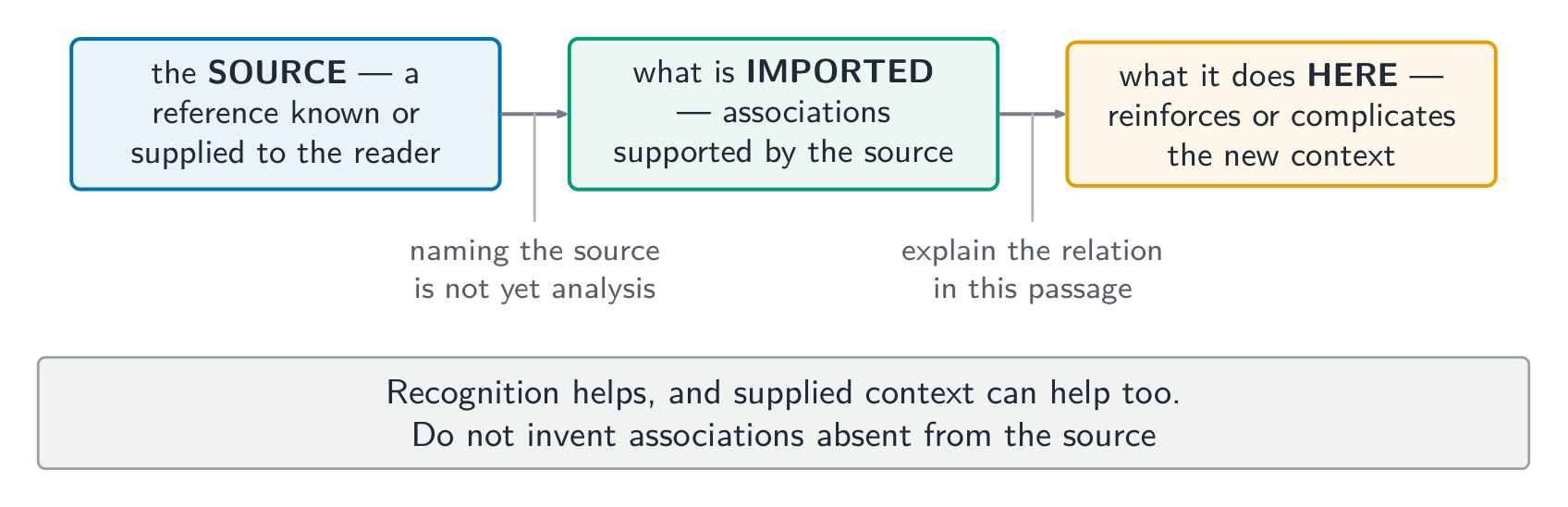
    陪衬人物不是对立者。陪衬可以是同盟、手足或朋友——使其成为陪衬的,是他们相似到足以让差异显现出来。有用的问题永远是:这个人物拥有主人公所缺少的什么,而文本又拿这道落差做了什么?

    词汇表 训练
    英文 中文 拼音
    Foil characters 陪衬人物 péi chèn rén wù
    Inconsistencies between the private thoughts of characters and their actual behaviour reveal tensions 内心与行为之间的张力 nèi xīn yǔ xíng wéi zhī jiān de zhāng lì
    competing, conflicting, or inconsistent choices contribute to complexity 复杂性 fù zá xìng
    6.3

    选择、行动与言语揭示的复杂性

    大纲
    Enduring UnderstandingLearning ObjectiveEssential Knowledge

    CHR-1
    Characters in literature allow readers to study and explore a range of values, beliefs, assumptions, biases, and cultural norms represented by those characters.

    1.E
    Explain how a character’s own choices, actions, and speech reveal complexities in that character, and explain the function of those complexities.

    • CHR-1.V Inconsistencies between the private thoughts of characters and their actual behavior reveal tensions and complexities between private and professed values.
    • CHR-1.W A character’s competing, conflicting, or inconsistent choices or actions contribute to complexity in a text.

    来源:美国大学理事会 AP 课程与考试说明

    • 人物的私下想法与实际行为之间的不一致,揭示了内在的张力(tensions)。
    • 人物相互竞争、彼此冲突或前后不一的选择,造就了复杂性(complexity)。

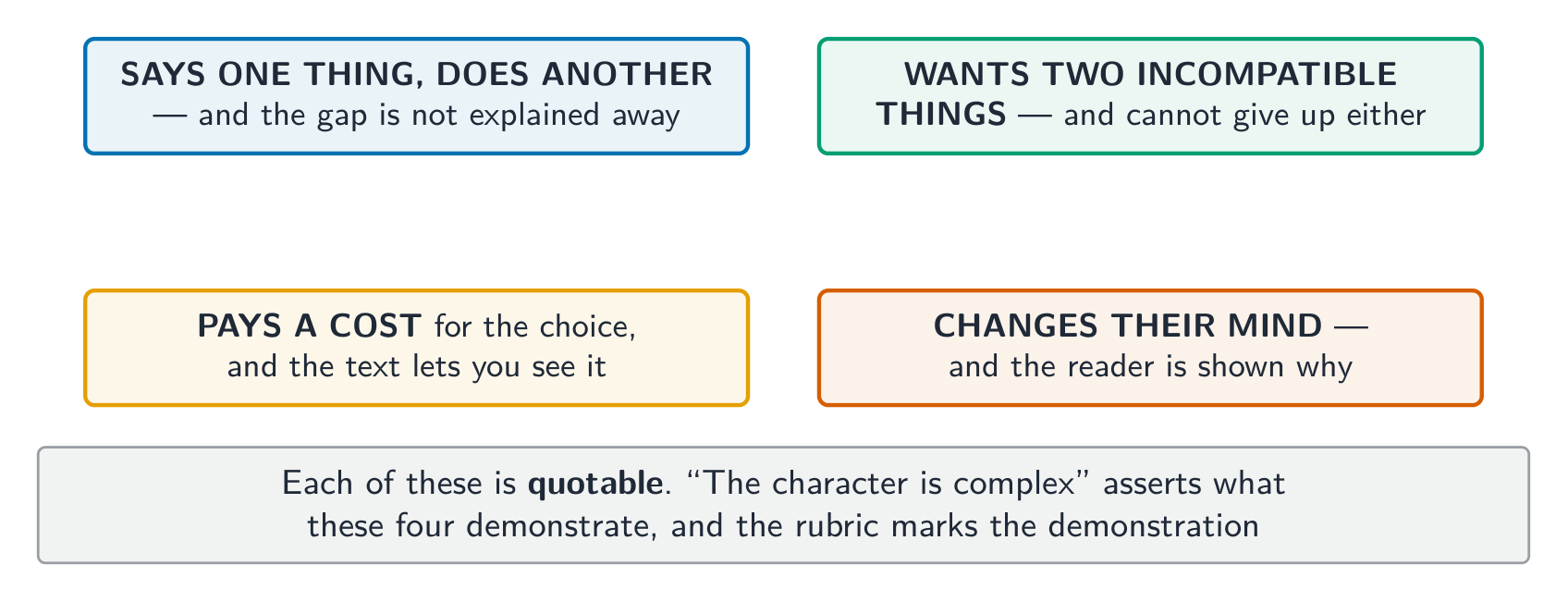
    正是在这里,AP 文学与更简单的阅读分道扬镳。不一致不是人物塑造的瑕疵;它是这个人物拥有内心的证据。一个永远照自己所想行事的人物是一个立场,而不是一个人。

    6.4

    情节如何组织事件

    大纲
    Enduring UnderstandingLearning ObjectiveEssential Knowledge

    STR-1
    The arrangement of the parts and sections of a text, the relationship of the parts to each other, and the sequence in which the text reveals information are all structural choices made by a writer that contribute to the reader’s interpretation of a text.

    3.A
    Identify and describe how plot orders events in a narrative.

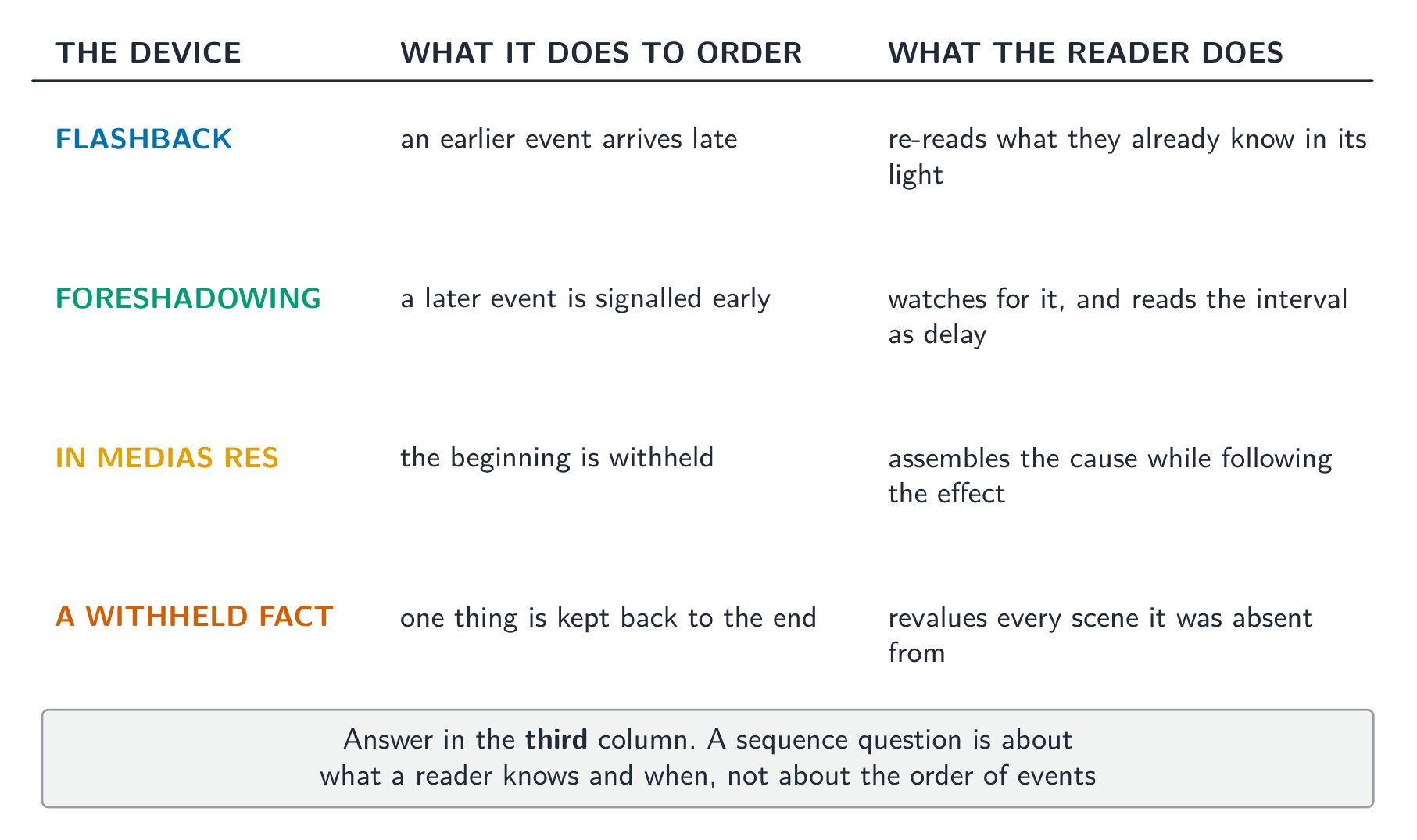
    • STR-1.X Some narrative structures interrupt the chronology of a plot; such structures include flashback, foreshadowing, in medias res, and stream of consciousness.

    来源:美国大学理事会 AP 课程与考试说明

    有些叙事结构打断情节的时间顺序:倒叙(flashback)、伏笔(foreshadowing)与从中间开始(in medias res)。

    词汇表 训练
    英文 中文 拼音
    flashback 倒叙 dào xù
    foreshadowing 伏笔 fú bǐ
    in medias res 从中间开始 cóng zhōng jiān kāi shǐ
    introduce nuance, ambiguity, or contradictory interpretations 矛盾的阐释 máo dùn de chǎn shì
    Information included and not included conveys the perspective 包含与略去的信息 bāo hán yǔ lüè qù de xìn xī
    Readers who detect bias in a narrator may find that narrator less reliable 不可靠 bù kě kào
    6.5

    事件顺序的作用

    大纲
    Enduring UnderstandingLearning ObjectiveEssential Knowledge

    STR-1
    The arrangement of the parts and sections of a text, the relationship of the parts to each other, and the sequence in which the text reveals information are all structural choices made by a writer that contribute to the reader’s interpretation of a text.

    3.B
    Explain the function of a particular sequence of events in a plot.

    • STR-1.Y Narrative structures that interrupt the chronology of a plot, such as flashback, foreshadowing, in medias res, and stream of consciousness, can directly affect readers’ experiences with a text by creating anticipation or suspense or building tension.

    来源:美国大学理事会 AP 课程与考试说明

    这些打断性的结构影响读者对叙事的体验——什么时候知道什么,因而什么时候感受到什么。

    分析的动作永远是问读者在那一刻知道什么。伏笔让读者掌握人物所不知的信息,从而把悬念转化为不祥之感。倒叙则把信息扣留到后面,于是先前的场景被读了两遍——一遍在无知中,一遍在回望中。

    6.6

    文本中对比的作用

    大纲
    Enduring UnderstandingLearning ObjectiveEssential Knowledge

    STR-1
    The arrangement of the parts and sections of a text, the relationship of the parts to each other, and the sequence in which the text reveals information are all structural choices made by a writer that contribute to the reader’s interpretation of a text.

    3.D
    Explain the function of contrasts within a text.

    • STR-1.Z Contrasts often represent contradictions or inconsistencies that introduce nuance, ambiguity, or contradiction into a text. As a result, contrasts make texts more complex.

    来源:美国大学理事会 AP 课程与考试说明

    对照往往代表着矛盾或不一致,它们引入细微差别、含混,或相互矛盾的阐释(contradictory interpretations)。

    注意最后那个说法。CED 明确允许一个文本支持不止一种读法。一篇承认某个竞争性阐释、并说明自己的读法为何更优的文章,做的正是思辨深度那一分所奖励的事。

    6.7

    细节、措辞与句法揭示的立场

    大纲
    Enduring UnderstandingLearning ObjectiveEssential Knowledge

    NAR-1
    A narrator’s or speaker’s perspective controls the details and emphases that affect how readers experience and interpret a text.

    4.C
    Identify and describe details, diction, or syntax in a text that reveal a narrator’s or speaker’s perspective.

    • NAR-1.P The narrator’s or speaker’s tone toward events or characters in a text influences readers’ interpretation of the ideas associated with those things.
    • NAR-1.Q The syntactical arrangement of phrases and clauses in a sentence can emphasize details or ideas and convey a narrator’s or speaker’s tone.
    • NAR-1.R Information included and/or not included in a text conveys the perspective of characters, narrators, and/ or speakers.
    • NAR-1.S A narrator’s or speaker’s perspective may influence the details and amount of detail in a text and may reveal biases, motivations, or understandings.

    来源:美国大学理事会 AP 课程与考试说明

    • 叙述者或说话者对事件或人物的语调影响读者的阐释
    • 短语与分句的句法排布可以强调某些细节或观念
    • 被包含与未被包含的信息传达了人物与叙述者的视角(information included and not included)。
    • 叙述者的视角可能影响文本中的细节及其详略程度
    6.8

    叙述者可靠性对叙事的影响

    大纲
    Enduring UnderstandingLearning ObjectiveEssential Knowledge

    NAR-1
    A narrator’s or speaker’s perspective controls the details and emphases that affect how readers experience and interpret a text.

    4.D
    Explain how a narrator’s reliability affects a narrative.

    • NAR-1.T Readers can infer narrators’ biases by noting which details they choose to include in a narrative and which they choose to omit.
    • NAR-1.U Readers who detect bias in a narrator may find that narrator less reliable.
    • NAR-1.V The reliability of a narrator may influence a reader’s understanding of a character’s motives.

    来源:美国大学理事会 AP 课程与考试说明

    可靠性如何被判断——而它是从文本判断的,不是凭感觉
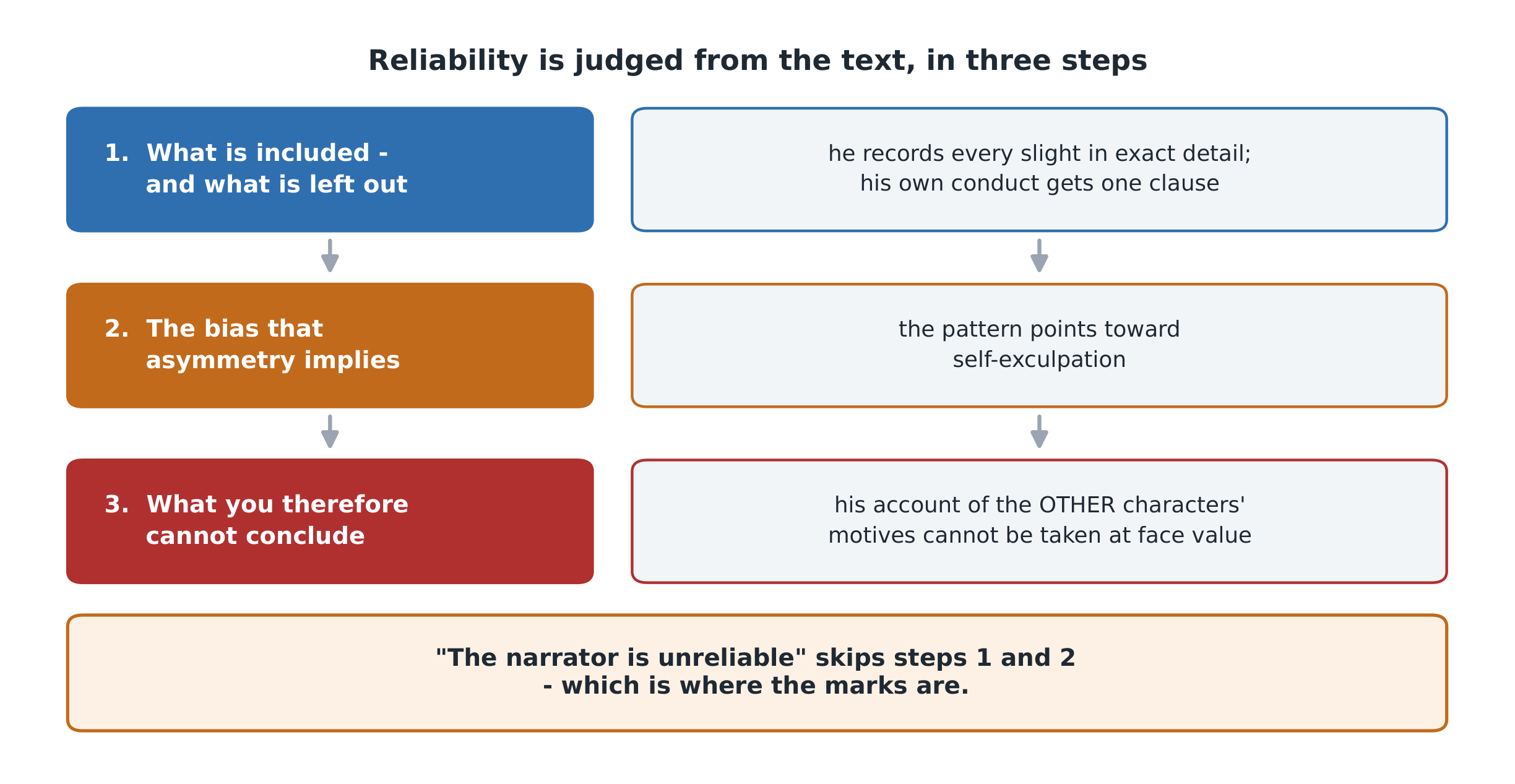
    偏见由何被写入、何被略去推断而来。察觉到偏见会降低可靠性。可靠性降低,则改变你能就动机得出什么结论
    • 读者可以通过留意叙述者选择写入哪些细节、又略去哪些,推断其偏见
    • 察觉到叙述者带有偏见的读者,可能认为该叙述者较不可靠(less reliable)。
    • 叙述者的可靠性可能影响读者对某个人物动机的理解。

    CED 把这一点给成一条链条,而复述这条链条正是使答案具有分析性而非印象式的原因。你不是断言某位叙述者不可靠;你要展示写入与略去的模式,指出它所暗示的偏见,再说出这一偏见使你无法得出什么结论。

    6.9

    象征的作用

    大纲
    Enduring UnderstandingLearning ObjectiveEssential Knowledge

    FIG-1
    Comparisons, representations, and associations shift meaning from the literal to the figurative and invite readers to interpret a text.

    5.C
    Identify and explain the function of a symbol.

    • FIG-1.AA When a character comes to represent, or stand for, an idea or concept, that character becomes symbolic; some symbolic characters have become so common they are archetypal. Note: The AP Exam will not require students to identify or label archetypes.
    • FIG-1.X When a material object comes to represent, or stand for, an idea or concept, it becomes a symbol.
    • FIG-1.Y A symbol is an object that represents a meaning, so it is said to be symbolic or representative of that meaning. A symbol can represent different things depending on the experiences of a reader or the context of its use in a text.
    • FIG-1.Z Certain symbols are so common and recurrent that many readers have associations with them prior to reading a text. Other symbols are more contextualized and only come to represent certain things through their use in a particular text.

    来源:美国大学理事会 AP 课程与考试说明

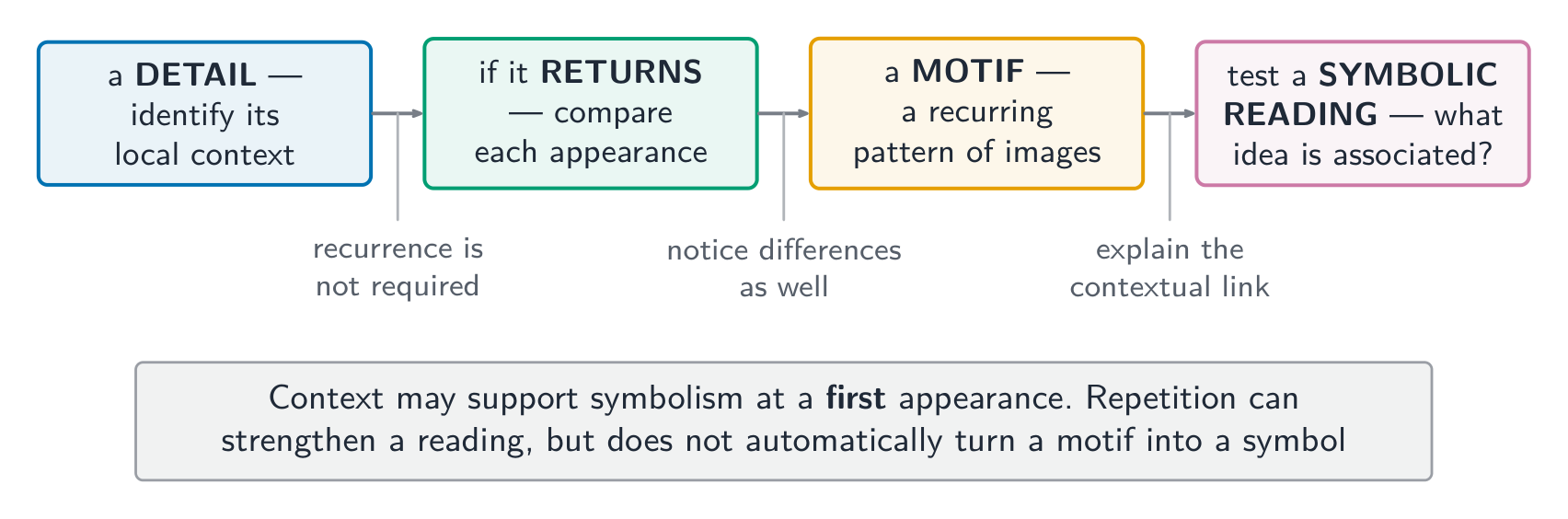
    • 当一个实物开始代表某种观念或概念时,它就成为象征(symbol)。
    • 当一个人物开始代表某种观念时,该人物就具有了象征性。
    • 象征是一个代表某种意义的对象,因此被称为象征着或代表着那种意义。
    • 某些象征如此常见而反复出现,以至于读者在阅读之前就带着对它们的联想。

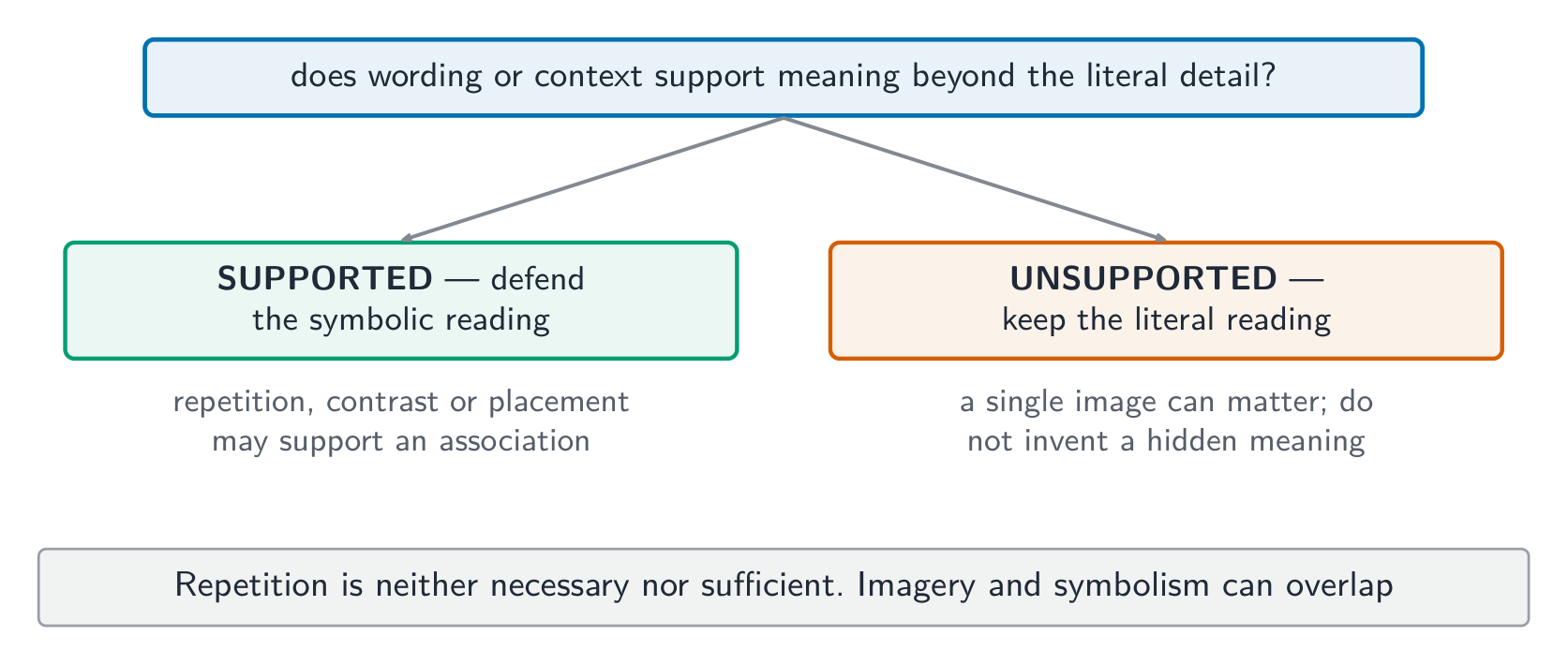
    最后一点是一句提醒。约定俗成的象征是带着既有含义到来的,而文本可能在使用这些含义、拒绝它们,或把它们颠倒过来。在搬用这一约定之前,先查看文本做了什么。

    词汇表 训练
    英文 中文 拼音
    symbol 象征 xiàng zhēng
    6.10 6.11 6.12

    撰写文学论点句

    大纲
    Enduring UnderstandingLearning ObjectiveEssential Knowledge

    LAN-1
    Readers establish and communicate their interpretations of literature through arguments supported by textual evidence.

    7.B
    Develop a thesis statement that conveys a defensible claim about an interpretation of literature and that may establish a line of reasoning.

    • LAN-1.D A thesis statement expresses an interpretation of a literary text, and requires a defense, through use of textual evidence and a line of reasoning, both of which are explained in an essay through commentary.
    • LAN-1.E A thesis statement may preview the development or line of reasoning of an interpretation. This is not to say that a thesis statement must list the points of an interpretation, literary elements to be analyzed, or specific evidence to be used in the argument.
    Enduring UnderstandingLearning ObjectiveEssential Knowledge

    LAN-1
    Readers establish and communicate their interpretations of literature through arguments supported by textual evidence.

    7.C
    Develop commentary that establishes and explains relationships among textual evidence, the line of reasoning, and the thesis.

    • LAN-1.F A line of reasoning is the logical sequence of claims that work together to defend the overarching thesis statement.
    • LAN-1.G A line of reasoning is communicated through commentary that explains the logical relationship between the overarching thesis statement and the claims/evidence within the body of an essay.
    Enduring UnderstandingLearning ObjectiveEssential Knowledge

    LAN-1
    Readers establish and communicate their interpretations of literature through arguments supported by textual evidence.

    7.D
    Select and use relevant and sufficient evidence to both develop and support a line of reasoning.

    • LAN-1.H Writers use evidence strategically and purposefully to illustrate, clarify, exemplify, associate, amplify, or qualify a point.
    • LAN-1.I Evidence is effective when the writer of the essay uses commentary to explain a logical relationship between the evidence and the claim.
    • LAN-1.J Evidence is sufficient when its quantity and quality provide apt support for the line of reasoning.
    • LAN-1.K Developing and supporting an interpretation of a text is a recursive process; an interpretation can emerge from analyzing evidence and then forming a line of reasoning, or the interpretation can emerge from forming a line of reasoning and then identifying relevant evidence to support that line of reasoning.

    来源:美国大学理事会 AP 课程与考试说明

    与第三至第五单元相同:一项需要文本辩护的阐释;通过评述传达的主张推理线索;策略性地使用、有评述才有效、在数量与质量上充分、并反复推敲而成的证据。

    6.13

    掌控写作的各项要素

    大纲
    Enduring UnderstandingLearning ObjectiveEssential Knowledge

    LAN-1
    Readers establish and communicate their interpretations of literature through arguments supported by textual evidence.

    7.E
    Demonstrate control over the elements of composition to communicate clearly.

    • LAN-1.R Writers convey their ideas in a sentence through strategic selection and placement of phrases and clauses. Writers may use coordination to illustrate a balance or equality between ideas or subordination to illustrate an imbalance or inequality.
    • LAN-1.S Writers use words that enhance the clear communication of an interpretation.
    • LAN-1.T Punctuation conveys relationships between and among parts of a sentence.

    来源:美国大学理事会 AP 课程与考试说明

    • 写作者通过对短语与分句的策略性选取与放置来传达观念。
    • 写作者使用有助于清晰传达某项阐释的词语
    • 标点传达句子各部分之间的关系

    **Worked example(一项真实的 AP 考试任务)。**第三题的文学论证要求说明一位不可靠的叙述者如何促成对整部作品的一种阐释。薄弱答案是断言:*「这位叙述者不可靠,因为他撒谎。」能得分的答案会走完 CED 的那条链条:「叙述者以确切的细节记下他所受的每一次轻慢,却用一个分句概括自己的作为——『发生了一场争执,我就走了』。这种详略上的不对称暗示着一种自我开脱的偏见,这意味着他对其他人物动机的陈述不能被照单全收。因此这部小说要求读者去重建一个叙述者执意不讲的故事,而它的主题与其说是那些事件,不如说是他安排这些事件的需要。」*写入与略去、由此推断的偏见,以及这一偏见所阻断的结论。

    6.13

    考试技巧

    • 各视角之间的出入是方法,而不是有待调和的问题。
    • 陪衬人物相似到足以让差异显现。要问他们拥有主人公所缺少的什么。
    • **不一致是拥有内心的证据。**一个完全前后一致的人物是一个立场,不是一个人。
    • 面对任何结构性打断,都要问读者在那一刻知道什么。那就是效果所在。
    • 可靠性是一条链条:写入与略去,然后是偏见,然后是你无法得出的结论。三步都要展示。
    • 面对约定俗成的象征,先查看文本是使用、拒绝还是颠倒了那种联想,再决定是否搬用。
  • 7

    短篇小说 三

    讲义 词汇表
    7.1

    人物的变化与不变

    大纲
    Enduring UnderstandingLearning ObjectiveEssential Knowledge

    CHR-1
    Characters in literature allow readers to study and explore a range of values, beliefs, assumptions, biases, and cultural norms represented by those characters.

    1.B
    Explain the function of a character changing or remaining unchanged.

    • CHR-1.AA An epiphany may affect the plot by causing a character to act on his or her sudden realization.
    • CHR-1.X Often the change in a character emerges directly from a conflict of values represented in the narrative.
    • CHR-1.Y Changes in a character’s circumstances may lead to changes in that character.
    • CHR-1.Z While characters can change gradually over the course of a narrative, they can also change suddenly as the result of a moment of realization, known as an epiphany. An epiphany allows a character to see things in a new light and is often directly related to a central conflict of the narrative.

    来源:美国大学理事会 AP 课程与考试说明

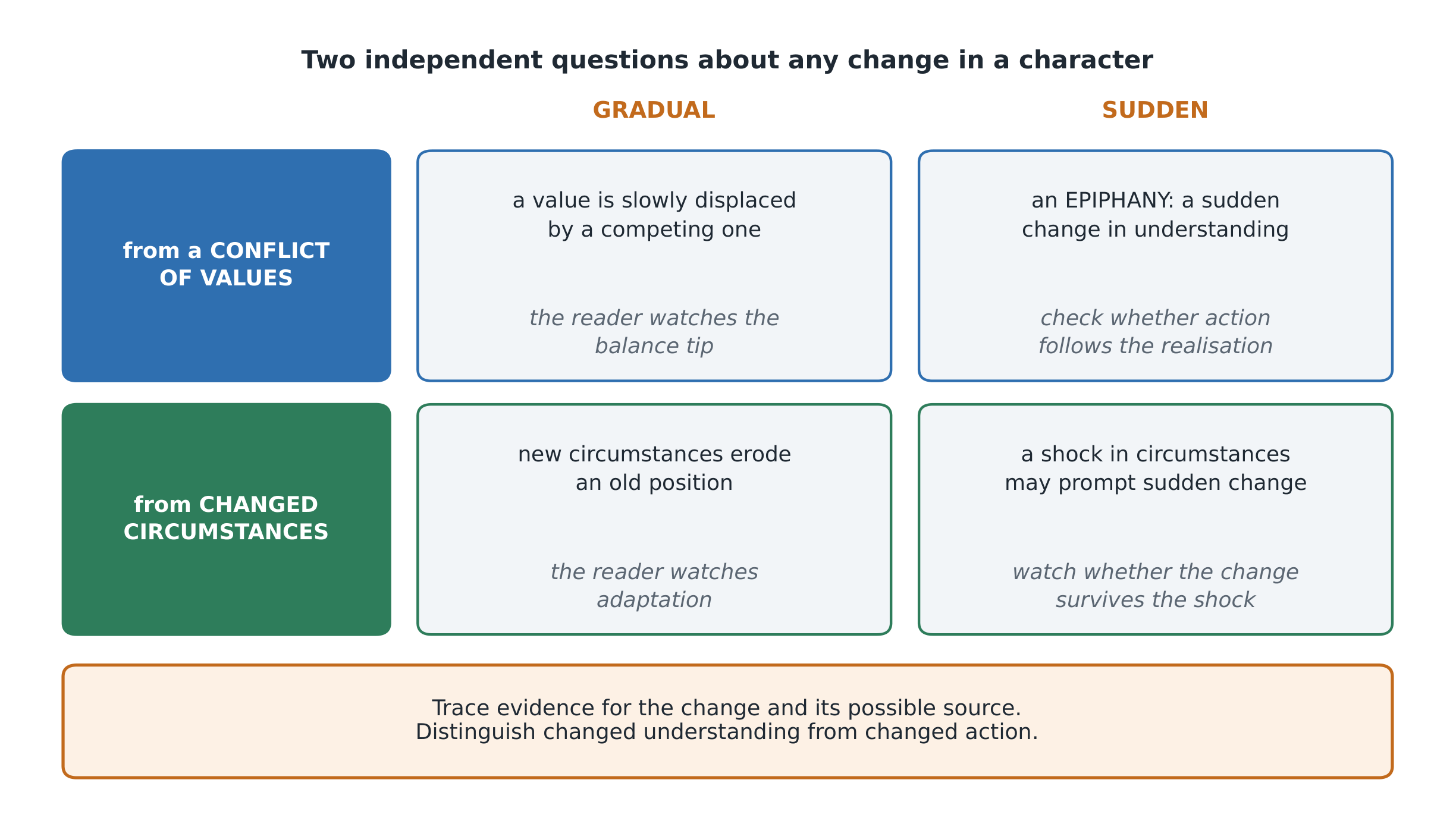
    第七单元是最后一个短篇小说单元,它把两件事磨得更锋利:人物的变化如何发生,以及作为对时间的有意操纵的节奏

    • 人物的变化常常直接源于叙事中所呈现的价值冲突
    • 人物处境的变化可能导致该人物本身的变化。
    • 人物可以渐进地变化,也可以骤然(suddenly)变化。
    • 顿悟(epiphany)可以因为使人物依据这一突然的领悟采取行动而影响情节。
    一次变化从何而来,以及它以多快到来——这是两个独立的问题
    没有来源的变化是断言;在情节中没有后果的变化是装饰

    这两条轴是彼此独立的,而这正是它们有用的原因。由价值冲突引发的变化可以渐进到来,也可以在一瞬间到来;而顿悟只有在人物依据它行动时才可考——一个什么也没改变的领悟并未影响情节。

    词汇表 训练
    英文 中文 拼音
    suddenly 骤然 zhòu rán
    epiphany 顿悟 dùn wù
    A group or force can function as a character 群体作为人物 qún tǐ zuò wéi rén wù
    7.2

    人物关系中的微妙之处

    大纲
    Enduring UnderstandingLearning ObjectiveEssential Knowledge

    CHR-1
    Characters in literature allow readers to study and explore a range of values, beliefs, assumptions, biases, and cultural norms represented by those characters.

    1.D
    Describe how textual details reveal nuances and complexities in characters’ relationships with one another.

    • CHR-1.AB A group or force can function as a character.
    • CHR-1.AC When readers consider a character, they should examine how that character interacts with other characters, groups, or forces and what those interactions may indicate about the character.
    • CHR-1.AD The relationship between a character and a group, including the inclusion or exclusion of that character, reveals the collective attitude of the group toward that character and possibly the character’s attitude toward the group.

    来源:美国大学理事会 AP 课程与考试说明

    • 一个群体或一股力量可以充当人物(a group can function as a character)。
    • 读者应当考察某个人物如何与其他人物互动
    • 人物与群体之间的关系——包括被纳入其中或被排除在外——是有意味的。

    "群体作为人物"这一观念值得照字面来用。一个小镇、一个家庭、一所机构可以持有价值、施加压力、与主人公相对立,就像一个个体对立者那样;这样去读,往往能打开一篇没有明显对手的小说。

    7.3

    环境在叙事中的作用

    大纲
    Enduring UnderstandingLearning ObjectiveEssential Knowledge

    SET-1
    Setting and the details associated with it not only depict a time and place, but also convey values associated with that setting.

    2.B
    Explain the function of setting in a narrative.

    • SET-1.E When a setting changes, it may suggest other movements, changes, or shifts in the narrative.
    • SET-1.F Settings may be contrasted in order to establish a conflict of values or ideas associated with those settings.

    来源:美国大学理事会 AP 课程与考试说明

    • 当背景发生变化时,它可能暗示叙事中其他的移动、变化或转折。
    • 背景之间可以形成对照,以确立与它们相关联的价值或观念冲突

    两个被并置的背景很少只是两个地方。它们通常承载着情节正在检验的那些相互竞争的价值体系。

    7.4

    人物与环境的关系

    大纲
    Enduring UnderstandingLearning ObjectiveEssential Knowledge

    SET-1
    Setting and the details associated with it not only depict a time and place, but also convey values associated with that setting.

    2.C
    Describe the relationship between a character and a setting.

    • SET-1.G The way characters interact with their surroundings provides insights about those characters and the setting(s) they inhabit.
    • SET-1.H The way characters behave in or describe their surroundings reveals an attitude about those surroundings and contributes to the development of those characters and readers’ interpretations of them.

    来源:美国大学理事会 AP 课程与考试说明

    • 人物与周遭环境互动的方式提供了关于他们的洞见。
    • 人物在周遭环境中的举止或对它的描述,揭示了对这一环境的态度
    7.5

    情节如何组织事件

    大纲
    Enduring UnderstandingLearning ObjectiveEssential Knowledge

    STR-1
    The arrangement of the parts and sections of a text, the relationship of the parts to each other, and the sequence in which the text reveals information are all structural choices made by a writer that contribute to the reader’s interpretation of a text.

    3.A
    Identify and describe how plot orders events in a narrative.

    • STR-1.AA Pacing is the manipulation of time in a text. Several factors contribute to the pace of a narrative, including arrangement of details, frequency of events, narrative structures, syntax, the tempo or speed at which events occur, or shifts in tense and chronology in the narrative.

    来源:美国大学理事会 AP 课程与考试说明

    节奏(pacing)是文本中对时间的操纵,有若干因素促成它——给某一事件的篇幅、对长时段的压缩、对时间顺序的打断。

    词汇表 训练
    英文 中文 拼音
    Pacing 节奏 jié zòu
    7.6

    事件顺序的作用

    大纲
    Enduring UnderstandingLearning ObjectiveEssential Knowledge

    STR-1
    The arrangement of the parts and sections of a text, the relationship of the parts to each other, and the sequence in which the text reveals information are all structural choices made by a writer that contribute to the reader’s interpretation of a text.

    3.B
    Explain the function of a particular sequence of events in a plot.

    • STR-1.AB Narrative pacing may evoke an emotional reaction in readers by the order in which information is revealed; the relationships between the information, when it is provided, and other parts of the narrative; and the significance of the revealed information to other parts of the narrative.

    来源:美国大学理事会 AP 课程与考试说明

    叙事节奏可以通过信息被揭示的顺序在读者身上唤起某种情感反应。

    节奏是可测量的,因此非常适合用作证据。数一数文本给了一个下午多少页、给了随后的十年多少页,这种失衡本身就是关于什么才要紧的一项主张。

    7.7

    叙述者可靠性对叙事的影响

    大纲
    Enduring UnderstandingLearning ObjectiveEssential Knowledge

    NAR-1
    A narrator’s or speaker’s perspective controls the details and emphases that affect how readers experience and interpret a text.

    4.D
    Explain how a narrator’s reliability affects a narrative.

    • NAR-1.W Some narrators or speakers may provide details and information that others do not or cannot provide. Multiple narrators or speakers may provide contradictory information in a text.

    来源:美国大学理事会 AP 课程与考试说明

    有些叙述者或说话者能提供另一些人不提供或无法提供的细节与信息。

    在文本提供了不止一位叙述者的地方,要把他们相互比较。一位能说而另一位不能说的东西,是关于这个文本如何被构造的最清楚的证据。

    7.8

    象征的作用

    大纲
    Enduring UnderstandingLearning ObjectiveEssential Knowledge

    FIG-1
    Comparisons, representations, and associations shift meaning from the literal to the figurative and invite readers to interpret a text.

    5.C
    Identify and explain the function of a symbol.

    • FIG-1.AB A setting may become symbolic when it is, or comes to be, associated with abstractions such as emotions, ideologies, and beliefs.
    • FIG-1.AC Over time, some settings have developed certain associations such that they almost universally symbolize particular concepts.

    来源:美国大学理事会 AP 课程与考试说明

    • 背景可以成为象征,当它与情感、观念、人生阶段等抽象之物产生关联时。
    • 随着时间推移,某些背景已形成极强的关联,以至于它们几乎普遍地象征着某种东西。
    7.9

    意象的作用

    大纲
    Enduring UnderstandingLearning ObjectiveEssential Knowledge

    FIG-1
    Comparisons, representations, and associations shift meaning from the literal to the figurative and invite readers to interpret a text.

    5.D
    Identify and explain the function of an image or imagery.

    • FIG-1.AD A motif is a unified pattern of recurring objects or images used to emphasize a significant idea in large parts of or throughout a text.

    来源:美国大学理事会 AP 课程与考试说明

    母题(motif)是用以强调某个重要观念的反复出现的对象或意象所构成的统一模式

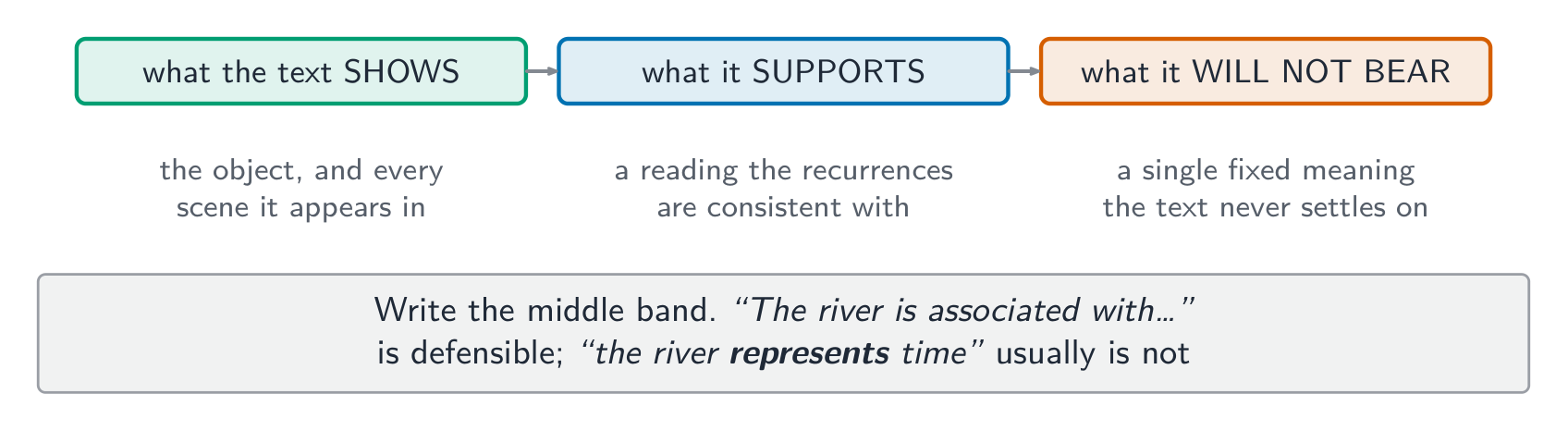
    母题与象征的不同之处在于,它不必代表某一样东西。它是累积的:每一次复现都为这一模式的含义添上一笔,这正是为什么留意它的第一次最后一次出现,通常比把它们全部罗列出来更有收获。

    词汇表 训练
    英文 中文 拼音
    motif 母题 mǔ tí
    assigning the qualities of a nonhuman object, entity, or idea to a person or character 反向拟人 fǎn xiàng nǐ rén
    more sophisticated literary arguments may explain the significance or relevance of an interpretation 阐释的意义 chǎn shì de yì yì
    7.10

    明喻的作用

    大纲
    Enduring UnderstandingLearning ObjectiveEssential Knowledge

    FIG-1
    Comparisons, representations, and associations shift meaning from the literal to the figurative and invite readers to interpret a text.

    6.A
    Identify and explain the function of a simile.

    • FIG-1.AE The function of a simile relies on the selection of the objects being compared as well as the traits of the objects.

    来源:美国大学理事会 AP 课程与考试说明

    **明喻的作用既取决于所比较对象的选取,也取决于所转移的特质。**两半都是选择,两半都可以分析。

    7.11

    拟人的作用

    大纲
    Enduring UnderstandingLearning ObjectiveEssential Knowledge

    FIG-1
    Comparisons, representations, and associations shift meaning from the literal to the figurative and invite readers to interpret a text.

    6.C
    Identify and explain the function of personification.

    • FIG-1.AF By assigning the qualities of a nonhuman object, entity, or idea to a person or character, the narrator, character, or speaker communicates an attitude about that person or character.

    来源:美国大学理事会 AP 课程与考试说明

    CED 在这里加入了反向的动作:把非人的对象、实体或观念的性质赋予一个人或人物(反向拟人)——把一个人描述为机械的、如天气一般的、如动物一般的。

    这值得留意,因为它通常表明了一种判断。一个用机械词汇描述的人物已经被刻画了,而且是被某个人刻画的。

    7.12 7.13 7.14

    撰写文学论点句

    大纲
    Enduring UnderstandingLearning ObjectiveEssential Knowledge

    LAN-1
    Readers establish and communicate their interpretations of literature through arguments supported by textual evidence.

    7.B
    Develop a thesis statement that conveys a defensible claim about an interpretation of literature and that may establish a line of reasoning.

    • LAN-1.D A thesis statement expresses an interpretation of a literary text, and requires a defense, through use of textual evidence and a line of reasoning, both of which are explained in an essay through commentary.
    • LAN-1.E A thesis statement may preview the development or line of reasoning of an interpretation. This is not to say that a thesis statement must list the points of an interpretation, literary elements to be analyzed, or specific evidence to be used in the argument.
    Enduring UnderstandingLearning ObjectiveEssential Knowledge

    LAN-1
    Readers establish and communicate their interpretations of literature through arguments supported by textual evidence.

    7.C
    Develop commentary that establishes and explains relationships among textual evidence, the line of reasoning, and the thesis.

    • LAN-1.F A line of reasoning is the logical sequence of claims that work together to defend the overarching thesis statement.
    • LAN-1.G A line of reasoning is communicated through commentary that explains the logical relationship between the overarching thesis statement and the claims/evidence within the body of an essay.
    • LAN-1.U More sophisticated literary arguments may explain the significance or relevance of an interpretation within a broader context, discuss alternative interpretations of a text, or use relevant analogies to help an audience better understand an interpretation.
    Enduring UnderstandingLearning ObjectiveEssential Knowledge

    LAN-1
    Readers establish and communicate their interpretations of literature through arguments supported by textual evidence.

    7.D
    Select and use relevant and sufficient evidence to both develop and support a line of reasoning.

    • LAN-1.H Writers use evidence strategically and purposefully to illustrate, clarify, exemplify, associate, amplify, or qualify a point.
    • LAN-1.I Evidence is effective when the writer of the essay uses commentary to explain a logical relationship between the evidence and the claim.
    • LAN-1.J Evidence is sufficient when its quantity and quality provide apt support for the line of reasoning.
    • LAN-1.K Developing and supporting an interpretation of a text is a recursive process; an interpretation can emerge from analyzing evidence and then forming a line of reasoning, or the interpretation can emerge from forming a line of reasoning and then identifying relevant evidence to support that line of reasoning.
    • LAN-1.V Textual evidence may require revision to an interpretation and a line of reasoning if the evidence does not sufficiently support the initial interpretation and line of reasoning.

    来源:美国大学理事会 AP 课程与考试说明

    • 不变:论点表达一项需要文本辩护的阐释
    • 新增:更成熟的文学论证可以说明一项阐释的意义或相关性(significance or relevance)——为什么这一读法要紧,而不只是它站得住脚。这正是思辨深度那一分的直接表述。
    • 新增:如果证据不支持,文本证据可能要求修改阐释

    **Worked example(一项真实的 AP 考试任务)。**一道散文小说题要求说明作者对节奏的运用如何传达某一事件的重要性。薄弱答案:*「故事在重要之处慢了下来。」能得分的答案会测量并加以阐释:「这篇小说用四页写一场只持续几分钟的谈话,而用一句话写此后的三年。这种失衡拒绝给予读者后续的慰藉:我们被留在作出决定的那一刻,随后被剥夺了任何关于这一决定是否正确的交代——于是小说的主题变成了这一选择的不可逆,而不是它的后果。」*被测量的节奏,以及它对读者被允许知道什么所起的作用。

    7.12 7.13 7.14

    考试技巧

    • 一次变化需要来源(价值冲突,或处境改变)与在情节中的后果
    • 顿悟在人物依据它行动时才可考。什么也没改变的领悟是装饰。
    • **群体可以充当人物。**对任何没有明显对手的小说都可以试一试。
    • 两个被对照的背景通常承载着情节正在检验的那些相互竞争的价值。
    • **节奏是可测量的。**数一数什么得到了篇幅、什么只得到一个分句;这种失衡就是一项主张。
    • 面对母题,比较它的第一次与最后一次出现,而不是把每一次都罗列出来。
  • 8

    诗歌 三

    讲义 词汇表
    8.1

    文本结构的作用

    大纲
    Enduring UnderstandingLearning ObjectiveEssential Knowledge

    STR-1
    The arrangement of the parts and sections of a text, the relationship of the parts to each other, and the sequence in which the text reveals information are all structural choices made by a writer that contribute to the reader’s interpretation of a text.

    3.C
    Explain the function of structure in a text.

    • STR-1.AC Ideas and images in a poem may extend beyond a single line or stanza.
    • STR-1.AD Punctuation is often crucial to the understanding of a text.
    • STR-1.AE When structural patterns are created in a text, any interruption in the pattern creates a point of emphasis.

    来源:美国大学理事会 AP 课程与考试说明

    第八单元是最后一个诗歌单元,它处理的是本课程中最难的材料:建立在矛盾之上的那一族手法。

    • 诗中的观念与意象可以跨出单独一行或一节(跨行跨节)。
    • 标点对理解文本往往至关重要。
    • 当文本中建立起某种结构模式时,对这一模式的任何中断都会造就一个强调点(中断即强调)。

    第三句是本课程中最有效率的阅读工具。先确定这首诗一直在做什么,再找出它停止这么做的那一刻。那一刻就是这首诗所指之处。

    标点值得这份强调。在诗中,分号与句号是关于两个陈述结合得有多紧的两种不同主张;而一首没有标点的诗,已经就你必须如何读它作出了决定。

    8.2

    文本中对比的作用

    大纲
    Enduring UnderstandingLearning ObjectiveEssential Knowledge

    STR-1
    The arrangement of the parts and sections of a text, the relationship of the parts to each other, and the sequence in which the text reveals information are all structural choices made by a writer that contribute to the reader’s interpretation of a text.

    3.D
    Explain the function of contrasts within a text.

    • STR-1.AF Juxtaposition may create or demonstrate an antithesis.
    • STR-1.AG Situational or verbal irony is created when events or statements in a text are inconsistent with either the expectations readers bring to a text or the expectations established by the text itself.
    • STR-1.AH Paradox occurs when seemingly contradictory elements are juxtaposed, but the contradiction—which may or may not be reconciled—can reveal a hidden or unexpected idea.

    来源:美国大学理事会 AP 课程与考试说明

    三种建立在矛盾之上的手法——而它们不是同一种手法
    对立把相反之物并排安放。反讽是一种不相称。悖论自相矛盾,却依然为真
    • 并置可以造就或展示一种对立(antithesis)。
    • 情境反讽或言语反讽(situational or verbal irony)产生于事件或陈述与所期待者不相符之时。
    • 悖论(paradox)发生于看似矛盾的元素被并置,而这一矛盾——它可能与通常的逻辑相抵触——却揭示了一个更深的真相

    这一区分很重要,而学生总是把它们混为一谈。对立把两个相反之物放在一起,而两者在各自的意义上都仍然为真。反讽是期待与实际之间的落差——而有某个人,写作者或读者,意识到了这道落差。悖论看起来像矛盾,却经得起推敲:那个矛盾是要点,不是错误。

    词汇表 训练
    英文 中文 拼音
    Ideas and images in a poem may extend beyond a single line or stanza 跨行跨节 kuà xíng kuà jié
    When structural patterns are created, any interruption in the pattern creates a point of emphasis 中断即强调 zhōng duàn jí qiáng diào
    Juxtaposition may create or demonstrate an antithesis 对立 duì lì
    Situational or verbal irony 情境反讽与言语反讽 qíng jìng fǎn fěng yǔ yán yǔ fǎn fěng
    Paradox 悖论 bèi lùn
    Ambiguity allows for different readings and understandings of a text by different readers 含混 hán hùn
    8.3

    特定词语的作用

    大纲
    Enduring UnderstandingLearning ObjectiveEssential Knowledge

    FIG-1
    Comparisons, representations, and associations shift meaning from the literal to the figurative and invite readers to interpret a text.

    5.B
    Explain the function of specific words and phrases in a text.

    • FIG-1.AG Ambiguity allows for different readings and understandings of a text by different readers.

    来源:美国大学理事会 AP 课程与考试说明

    含混(ambiguity)使不同读者可以对同一文本作出不同的读法与理解。

    在这门课程中,含混是一种资源。一篇指认出某个确实含混之处、探讨两种读法、再为其中一种作出论证的文章,做的正是思辨深度那一分所奖励的事——远胜过一篇假装文本比它实际更简单的文章。

    8.4

    象征的作用

    大纲
    Enduring UnderstandingLearning ObjectiveEssential Knowledge

    FIG-1
    Comparisons, representations, and associations shift meaning from the literal to the figurative and invite readers to interpret a text.

    5.C
    Identify and explain the function of a symbol.

    • FIG-1.AH Symbols in a text and the way they are used may imply that a narrator, character, or speaker has a particular attitude or perspective.

    来源:美国大学理事会 AP 课程与考试说明

    文本中的象征及其使用方式,可能表明某位叙述者、人物或说话者持有某种特定视角。

    象征不是悬浮无依的。文本中有某个人正把那个对象当作有意味的东西来对待,而问是谁赋予了这一意义,往往比问这一意义是什么更有收获。

    8.5

    暗喻的作用

    大纲
    Enduring UnderstandingLearning ObjectiveEssential Knowledge

    FIG-1
    Comparisons, representations, and associations shift meaning from the literal to the figurative and invite readers to interpret a text.

    6.B
    Identify and explain the function of a metaphor.

    • FIG-1.AI A conceit is a form of extended metaphor that often appears in poetry. Conceits develop complex comparisons that present images, concepts, and associations in surprising or paradoxical ways.
    • FIG-1.AJ Often, conceits are used to make complex comparisons between the natural world and an individual.
    • FIG-1.AK Multiple comparisons, representations, or associations may combine to affect one another in complex ways.

    来源:美国大学理事会 AP 课程与考试说明

    • 奇喻(conceit)是延伸隐喻的一种形式,常见于诗中,展开复杂的比较
    • 奇喻常被用来在自然世界与个人之间作出复杂的比较
    • 多重比较、表现或联想可以彼此结合并相互作用,方式颇为复杂。

    奇喻是一种被推得比看起来合理更远的延伸隐喻,而这份勉强是有意为之的。分析奇喻时,要追踪诗人把这一比较推到了多远,以及它在哪里开始抵抗——那份抵抗通常就是这首诗真正的主题。

    词汇表 训练
    英文 中文 拼音
    conceit 奇喻 qí yù
    Writers must acknowledge the words, ideas, images, texts, and intellectual property of others through attribution and citation 归属与引用 guī shǔ yǔ yǐn yòng
    8.6

    典故的作用

    大纲
    Enduring UnderstandingLearning ObjectiveEssential Knowledge

    FIG-1
    Comparisons, representations, and associations shift meaning from the literal to the figurative and invite readers to interpret a text.

    6.D
    Identify and explain the function of an allusion.

    • FIG-1.AL Because of shared knowledge about a reference, allusions create emotional or intellectual associations and understandings.

    来源:美国大学理事会 AP 课程与考试说明

    由于对某一指涉存在共同的知识,典故在认得出它的读者身上造就情感或思想上的联想。

    注意那个条件:共同的知识。典故是对读者记忆的一场赌注,而一首大量用典的诗已经选定了它的受众。

    8.7 8.8 8.9

    撰写文学论点句

    大纲
    Enduring UnderstandingLearning ObjectiveEssential Knowledge

    LAN-1
    Readers establish and communicate their interpretations of literature through arguments supported by textual evidence.

    7.B
    Develop a thesis statement that conveys a defensible claim about an interpretation of literature and that may establish a line of reasoning.

    • LAN-1.D A thesis statement expresses an interpretation of a literary text, and requires a defense, through use of textual evidence and a line of reasoning, both of which are explained in an essay through commentary.
    • LAN-1.E A thesis statement may preview the development or line of reasoning of an interpretation. This is not to say that a thesis statement must list the points of an interpretation, literary elements to be analyzed, or specific evidence to be used in the argument.
    Enduring UnderstandingLearning ObjectiveEssential Knowledge

    LAN-1
    Readers establish and communicate their interpretations of literature through arguments supported by textual evidence.

    7.C
    Develop commentary that establishes and explains relationships among textual evidence, the line of reasoning, and the thesis.

    • LAN-1.F A line of reasoning is the logical sequence of claims that work together to defend the overarching thesis statement.
    • LAN-1.G A line of reasoning is communicated through commentary that explains the logical relationship between the overarching thesis statement and the claims/evidence within the body of an essay.
    • LAN-1.U More sophisticated literary arguments may explain the significance or relevance of an interpretation within a broader context, discuss alternative interpretations of a text, or use relevant analogies to help an audience better understand an interpretation.
    Enduring UnderstandingLearning ObjectiveEssential Knowledge

    LAN-1
    Readers establish and communicate their interpretations of literature through arguments supported by textual evidence.

    7.D
    Select and use relevant and sufficient evidence to both develop and support a line of reasoning.

    • LAN-1.H Writers use evidence strategically and purposefully to illustrate, clarify, exemplify, associate, amplify, or qualify a point.
    • LAN-1.I Evidence is effective when the writer of the essay uses commentary to explain a logical relationship between the evidence and the claim.
    • LAN-1.J Evidence is sufficient when its quantity and quality provide apt support for the line of reasoning.
    • LAN-1.K Developing and supporting an interpretation of a text is a recursive process; an interpretation can emerge from analyzing evidence and then forming a line of reasoning, or the interpretation can emerge from forming a line of reasoning and then identifying relevant evidence to support that line of reasoning.

    来源:美国大学理事会 AP 课程与考试说明

    • 论点表达一项需要文本辩护的阐释
    • 更成熟的文学论证会说明一项阐释的意义或相关性——这是 CED 对思辨深度那一分的直接表述。
    • 证据:策略性、有评述才有效、在数量与质量上充分、并反复推敲而成。
    8.10

    掌控写作的各项要素

    大纲
    Enduring UnderstandingLearning ObjectiveEssential Knowledge

    LAN-1
    Readers establish and communicate their interpretations of literature through arguments supported by textual evidence.

    7.E
    Demonstrate control over the elements of composition to communicate clearly.

    • LAN-1.W Writers must acknowledge words, ideas, images, texts, and other intellectual property of others through attribution, citation, or reference. Note: Students are not expected to use a specific attribution style (like MLA) within the timed essays on the AP Exam, but should follow such guidelines for any extended papers they develop in class through multiple revisions.

    来源:美国大学理事会 AP 课程与考试说明

    写作者必须通过归属与引用(attribution and citation)承认他人的文字、观念、图像、文本与知识产权。

    **Worked example(一项真实的 AP 考试任务)。**一道诗歌分析题要求说明诗人对对照的运用如何传达一种复杂的态度。薄弱答案把一切都称作反讽。能得分的答案会把这些手法分开:*「这首诗把丰收与被掏空的村庄并置——这是一种对立,两者都只是各自为真。但说话者称这一年『慷慨』,而前后各节已经显示了这份慷慨的代价;那种不相称是言语反讽。最后一行则两者都不是:『谷仓越满,吃它的人越少』是一个悖论,而这是全诗唯一没有被自我拆解的陈述——那个矛盾恰恰就是说话者所抵达的真相。」*三种手法被正确区分,而这一阐释三者缺一不可。

    8.10

    考试技巧

    • **先确定模式,再找出中断。**中断之处就是这首诗所指之处。
    • 标点是一项主张,关乎陈述之间结合得有多紧。没有标点的诗同样作出了决定。
    • **对立、反讽、悖论不是同义词。**要精确掌握这三个定义;混用会失分。
    • **含混是一种资源。**探讨两种读法,再为其中一种作出论证。那就是思辨深度那一分。
    • 要问是谁赋予了象征以意义。这通常比问它意味着什么更有收获。
    • 奇喻是被推过舒适界限的比较。追踪它到它开始抵抗之处——那就是主题。
  • 9

    长篇小说或戏剧 三

    讲义 词汇表
    9.1

    人物的变化与不变

    大纲
    Enduring UnderstandingLearning ObjectiveEssential Knowledge

    CHR-1
    Characters in literature allow readers to study and explore a range of values, beliefs, assumptions, biases, and cultural norms represented by those characters.

    1.B
    Explain the function of a character changing or remaining unchanged.

    • CHR-1.AE Minor characters often remain unchanged because the narrative doesn’t focus on them. They may only be part of the narrative to advance the plot or to interact with major characters.
    • CHR-1.AF Readers’ interpretations of a text are often affected by a character changing—or not—and the meaning conveyed by such changes or lack thereof.

    来源:美国大学理事会 AP 课程与考试说明

    第九单元是最后一个单元,它的主题是文本如何结束——以及一个结尾允许读者就整部作品得出什么结论。

    • 次要人物往往保持不变,因为叙事并不聚焦于他们;他们可能承担其他功能。
    • 读者的阐释常常受到某个人物是否变化、以及这一变化性质如何的影响。

    第二点正是整门课程一直在铺垫的那个阐释动作。一个人物是否变化不是一项有待报告的事实;它是一种读法赖以立足的基础。

    9.2

    选择、行动与言语揭示的复杂性

    大纲
    Enduring UnderstandingLearning ObjectiveEssential Knowledge

    CHR-1
    Characters in literature allow readers to study and explore a range of values, beliefs, assumptions, biases, and cultural norms represented by those characters.

    1.E
    Explain how a character’s own choices, actions, and speech reveal complexities in that character, and explain the function of those complexities.

    • CHR-1.AG A character’s responses to the resolution of the narrative—in their words or in their actions—reveal something about that character’s own values; these responses may be inconsistent with the previously established behaviors or perspectives of that character.
    • CHR-1.AH Inconsistencies and unexpected developments in a character affect readers’ interpretation of that character; other characters; events in the plot; conflicts; the perspective of the narrator, character, or speaker; and/or setting.

    来源:美国大学理事会 AP 课程与考试说明

    • 人物对叙事结局的反应——无论在言语还是在行动中——都很能说明问题。
    • 人物身上的不一致与出人意料的发展会影响读者的阐释。

    一个人物在危机被解决之后如何行事,往往是文本中最压缩的证据,却几乎总是被忽略,因为到那时读者正在收尾。

    9.3

    情节中的重要事件

    大纲
    Enduring UnderstandingLearning ObjectiveEssential Knowledge

    STR-1
    The arrangement of the parts and sections of a text, the relationship of the parts to each other, and the sequence in which the text reveals information are all structural choices made by a writer that contribute to the reader’s interpretation of a text.

    3.E
    Explain the function of a significant event or related set of significant events in a plot.

    • STR-1.AI Significant events often illustrate competing value systems that relate to a conflict present in the text.
    • STR-1.AJ Events in a plot collide and accumulate to create a sense of anticipation and suspense.

    来源:美国大学理事会 AP 课程与考试说明

    • 重要事件常常展示与文本中某一冲突相关的相互竞争的价值体系。
    • 事件相互碰撞并累积,造就期待与悬念(anticipation and suspense)。

    注意累积。悬念不是由单一事件产生的,而是由一连串不断收窄"还可能发生什么"的事件产生的。

    9.4

    冲突在文本中的作用

    大纲
    Enduring UnderstandingLearning ObjectiveEssential Knowledge

    STR-1
    The arrangement of the parts and sections of a text, the relationship of the parts to each other, and the sequence in which the text reveals information are all structural choices made by a writer that contribute to the reader’s interpretation of a text.

    3.F
    Explain the function of conflict in a text.

    • STR-1.AK The resolution of the anticipation, suspense, or central conflicts of a plot may be referred to as the moment of catharsis or emotional release.
    • STR-1.AL Sometimes things not actually shown in a narrative, such as an unseen character or a preceding action, may be in conflict with or result in conflict for a character.
    • STR-1.AM Although most plots end in resolution of the central conflicts, some have unresolved endings, and the lack of resolution may contribute to interpretations of the text.

    来源:美国大学理事会 AP 课程与考试说明

    关于任何结尾都要确立的三件事——而第三件是多数答案会漏掉的那一件
    什么被解决了,什么从未被呈现,以及文本究竟是否作出了解决
    • 情节中期待、悬念或中心冲突的解决,可以称为结局(denouement)。
    • 有时叙事中并未真正呈现的东西——一个未出场的人物、一次先于开篇的行动——会影响对所呈现之物的阐释
    • 尽管多数情节以解决收场,有些则有开放式结局(unresolved endings),而这同样影响阐释。

    中间那一点是最少被使用、也往往最有力的一点。文本置于幕后的东西——发生在第一页之前的一场死亡、一个被反复谈论却从未出场的人物——塑造着读者所看到的一切,而它与任何其他文本证据一样,就是证据。

    词汇表 训练
    英文 中文 拼音
    Events collide and accumulate to create anticipation and suspense 期待与悬念 qī dài yǔ xuán niàn
    denouement 结局 jié jú
    Although most plots end in resolution, some have unresolved endings 开放式结局 kāi fàng shì jié jú
    9.5

    细节、措辞与句法揭示的立场

    大纲
    Enduring UnderstandingLearning ObjectiveEssential Knowledge

    NAR-1
    A narrator’s or speaker’s perspective controls the details and emphases that affect how readers experience and interpret a text.

    4.C
    Identify and describe details, diction, or syntax in a text that reveal a narrator’s or speaker’s perspective.

    • NAR-1.X Multiple, and even contrasting, perspectives can occur within a single text and contribute to the complexity of the text.
    • NAR-1.Y A narrator or speaker may change over the course of a text as a result of actions and interactions.
    • NAR-1.Z Changes and inconsistencies in a narrator’s or speaker’s perspective may contribute to irony or the complexity of the text.

    来源:美国大学理事会 AP 课程与考试说明

    • 单一文本中可以出现多重、甚至相互对照的视角,并促成其复杂性。
    • 叙述者或说话者可能在文本进程中因行动与互动而发生变化。
    • 叙述者或说话者视角上的变化与不一致,可能促成反讽,或影响读者对其可靠性的判断。

    一个发生变化的叙述者是双重可分析的:既作为一个发展了的人物,也作为一片改变了的镜片。当镜片改变时,此前透过它所看到的一切都被追溯性地重新照亮。

    9.6

    撰写文学论点句

    大纲
    Enduring UnderstandingLearning ObjectiveEssential Knowledge

    LAN-1
    Readers establish and communicate their interpretations of literature through arguments supported by textual evidence.

    7.B
    Develop a thesis statement that conveys a defensible claim about an interpretation of literature and that may establish a line of reasoning.

    • LAN-1.D A thesis statement expresses an interpretation of a literary text, and requires a defense, through use of textual evidence and a line of reasoning, both of which are explained in an essay through commentary.
    • LAN-1.E A thesis statement may preview the development or line of reasoning of an interpretation. This is not to say that a thesis statement must list the points of an interpretation, literary elements to be analyzed, or specific evidence to be used in the argument.

    来源:美国大学理事会 AP 课程与考试说明

    不变:一项需要文本辩护的阐释,并可以预示推理线索。到这一阶段,你所要瞄准的论点是一个在读完整部作品之前写不出来的论点——一项关于各部分如何合起来的主张。

    9.7

    撰写评述

    大纲
    Enduring UnderstandingLearning ObjectiveEssential Knowledge

    LAN-1
    Readers establish and communicate their interpretations of literature through arguments supported by textual evidence.

    7.C
    Develop commentary that establishes and explains relationships among textual evidence, the line of reasoning, and the thesis.

    • LAN-1.F A line of reasoning is the logical sequence of claims that work together to defend the overarching thesis statement.
    • LAN-1.G A line of reasoning is communicated through commentary that explains the logical relationship between the overarching thesis statement and the claims/evidence within the body of an essay.
    • LAN-1.U More sophisticated literary arguments may explain the significance or relevance of an interpretation within a broader context, discuss alternative interpretations of a text, or use relevant analogies to help an audience better understand an interpretation.

    来源:美国大学理事会 AP 课程与考试说明

    • 推理线索是为论点辩护的主张序列,通过评述来传达。
    • 更成熟的文学论证会说明一项阐释的意义或相关性。

    尤其是第三题的文学论证,题干中的说法几乎总是*「对整部作品的一种阐释」*。这个说法是一项要求:你的主张必须是关于整体的,而你所分析的段落或人物必须被显示为与之相关。

    9.8

    选取贴切且充分的证据

    大纲
    Enduring UnderstandingLearning ObjectiveEssential Knowledge

    LAN-1
    Readers establish and communicate their interpretations of literature through arguments supported by textual evidence.

    7.D
    Select and use relevant and sufficient evidence to both develop and support a line of reasoning.

    • LAN-1.H Writers use evidence strategically and purposefully to illustrate, clarify, exemplify, associate, amplify, or qualify a point.
    • LAN-1.I Evidence is effective when the writer of the essay uses commentary to explain a logical relationship between the evidence and the claim.
    • LAN-1.J Evidence is sufficient when its quantity and quality provide apt support for the line of reasoning.
    • LAN-1.K Developing and supporting an interpretation of a text is a recursive process; an interpretation can emerge from analyzing evidence and then forming a line of reasoning, or the interpretation can emerge from forming a line of reasoning and then identifying relevant evidence to support that line of reasoning.

    来源:美国大学理事会 AP 课程与考试说明

    策略性地使用证据;有评述才有效;在数量与质量上充分;而阐释要反复推敲,在证据不支持时加以修改。

    **Worked example(一道真实的 AP 考题)。**第三题要求你自选一部作品,其中某个人物对结局的反应促成了对整部作品的一种阐释。薄弱答案会描述结尾。能得分的答案会用上开放式结局与幕后之物:*「这部小说拒绝给出结局:审判的判决从未被交代,而那位其死亡启动了整个情节的兄弟从未出场。我们被呈现的,是主人公在接下来的星期一回去上班。由于文本既扣下了判决,也扣下了起因,那个平常的星期一便成了衡量已发生之事的唯一可用尺度——而这部小说所支持的阐释是:这场失去从来就不会由某个结果来了结,只会被吸收。」*一个开放式结局、一个幕后的起因,以及一项关于整体的主张。

    9.8

    考试技巧

    • 一个人物是否变化是一种读法的基础,而不是有待报告的事实。
    • 人物在危机之后如何行事是压缩的证据,而且几乎总是被忽略。
    • 悬念是累积而来的。它来自一连串不断收窄可能性的事件,而不是某一个事件。
    • 从未被呈现的东西——未出场的人物、先前的行动——就是文本证据。要用上它。
    • 开放式结局是一个有意味的选择,而不是没能写完。
    • 第三题要的是**"整部作品"**。这是一项要求,也是多数答案不足之处。

登录或创建账号

IGCSE, A-Level & AP