跳到主要内容

短篇小说 一

AP 英语文学与写作 · 第 1 主题

训练
讲义 词汇表
1.1

文本细节所揭示的人物

大纲
Enduring UnderstandingLearning ObjectiveEssential Knowledge

CHR-1
Characters in literature allow readers to study and explore a range of values, beliefs, assumptions, biases, and cultural norms represented by those characters.

1.A
Identify and describe what specific textual details reveal about a character, that character’s perspective, and that character’s motives.

  • CHR-1.A Description, dialogue, and behavior reveal characters to readers.
  • CHR-1.B Descriptions of characters may come from a speaker, narrator, other characters, or the characters themselves.
  • CHR-1.C Perspective is how narrators, characters, or speakers understand their circumstances, and is informed by background, personality traits, biases, and relationships.
  • CHR-1.D A character’s perspective is both shaped and revealed by relationships with other characters, the environment, the events of the plot, and the ideas expressed in the text.

来源:美国大学理事会 AP 课程与考试说明

AP 英语文学与写作在九个单元中读三种体裁的文本——短篇小说、诗歌,以及长篇小说或戏剧——每种各出现三次,难度逐次上升。第一单元安装的是适用于全部三种体裁的工具。

人物(character)由三样东西揭示,CED 的表述非常明确:

  • 描写、对话与行为(description, dialogue, and behaviour)向读者揭示人物。
  • 描写可以来自说话者、叙述者、其他人物,或人物自己——因此由谁来描写本身就是证据的一部分。
  • 视角(perspective)是叙述者、人物或说话者如何理解自身处境,由背景、经历与价值观所塑造。
  • 人物的视角既被与其他人物、环境与事件的关系所塑造,也由这些关系所揭示

最后这一点正是把人物笔记变成分析的关键。人物不是一串形容词;人物是一种看的方式,它体现在此人注意到什么、误读了什么,以及如何回应。

词汇表 训练
英文 中文 拼音
Character 人物 rén wù
Description, dialogue, and behaviour 描写、对话与行为 miáo xiě 、 duì huà yǔ xíng wéi
Perspective 视角 shì jiǎo
1.2

传达环境的文本细节

大纲
Enduring UnderstandingLearning ObjectiveEssential Knowledge

SET-1
Setting and the details associated with it not only depict a time and place, but also convey values associated with that setting.

2.A
Identify and describe specific textual details that convey or reveal a setting.

  • SET-1.A Setting includes the time and place during which the events of the text occur.

来源:美国大学理事会 AP 课程与考试说明

背景(setting)包括文本事件发生的时间与地点

CED 的定义有意给得极简,而这正是陷阱所在。背景得分不在于它被描写,而在于它被显示为在起作用——限制某个人物、解释某种价值观,或与某种内心状态形成对照。仅仅交代故事发生在何处的段落,还没有作出任何主张。

词汇表 训练
英文 中文 拼音
Setting 背景 bèi jǐng
1.3

情节如何组织事件

大纲
Enduring UnderstandingLearning ObjectiveEssential Knowledge

STR-1
The arrangement of the parts and sections of a text, the relationship of the parts to each other, and the sequence in which the text reveals information are all structural choices made by a writer that contribute to the reader’s interpretation of a text.

3.A
Identify and describe how plot orders events in a narrative.

  • STR-1.A Plot is the sequence of events in a narrative; events throughout a narrative are connected, with each event building on the others, often with a cause-and-effect relationship.
  • STR-1.B The dramatic situation of a narrative includes the setting and action of the plot and how that narrative develops to place characters in conflict(s), and often involves the rising or falling fortunes of a main character or set of characters.

来源:美国大学理事会 AP 课程与考试说明

  • 情节(plot)是叙事中的事件序列;各事件彼此关联,每一件都建立在此前各件之上。
  • 戏剧情境(dramatic situation)包括情节的背景与动作,以及叙事如何展开才把人物置于冲突之中。

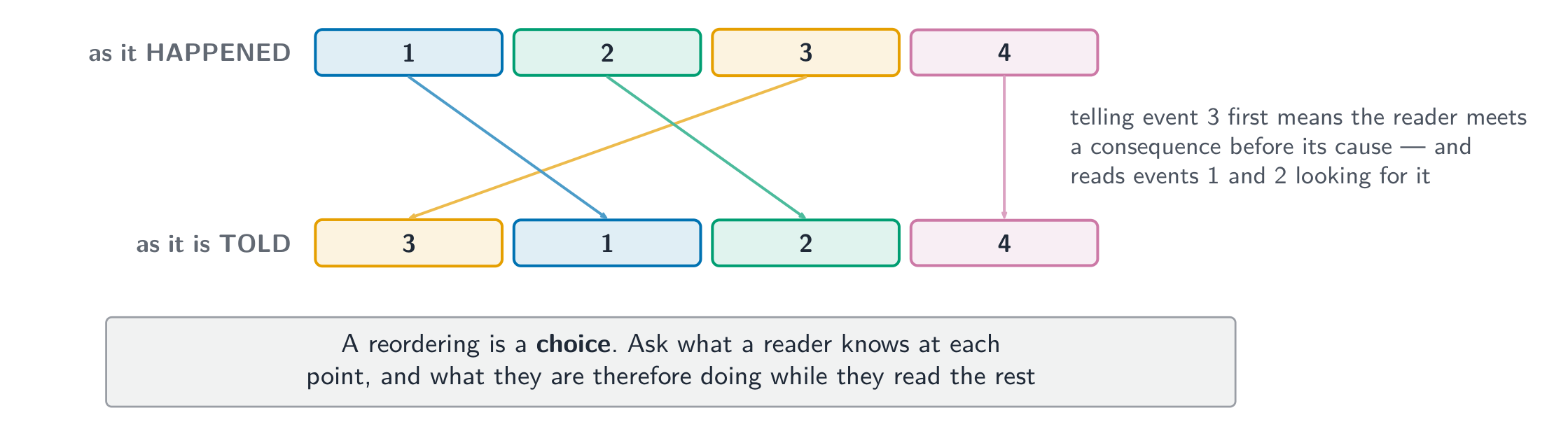
序列这个词在起作用。情节不是那些事件,而是它们的顺序——一位作者把早先发生的事放到很晚才揭示,这就是一个你可以分析的选择。

词汇表 训练
英文 中文 拼音
Plot 情节 qíng jié
dramatic situation 戏剧情境 xì jù qíng jìng
1.4

事件顺序的作用

大纲
Enduring UnderstandingLearning ObjectiveEssential Knowledge

STR-1
The arrangement of the parts and sections of a text, the relationship of the parts to each other, and the sequence in which the text reveals information are all structural choices made by a writer that contribute to the reader’s interpretation of a text.

3.B
Explain the function of a particular sequence of events in a plot.

  • STR-1.C Plot and the exposition that accompanies it focus readers’ attention on the parts of the narrative that matter most to its development, including characters, their relationships, and their roles in the narrative, as well as setting and the relationship between characters and setting.

来源:美国大学理事会 AP 课程与考试说明

情节以及伴随它的交代,把读者的注意力集中到叙事中对文本意义最要紧的那些部分

这句话就是散文分析的全部方法:比例即证据。文本流连之处与一笔带过之处,是作者在告诉你该看哪里。

1.5

识别叙述者或说话人

大纲
Enduring UnderstandingLearning ObjectiveEssential Knowledge

NAR-1
A narrator’s or speaker’s perspective controls the details and emphases that affect how readers experience and interpret a text.

4.A
Identify and describe the narrator or speaker of a text.

  • NAR-1.A Narrators or speakers relate accounts to readers and establish a relationship between the text and the reader.
  • NAR-1.B Perspective refers to how narrators, characters, or speakers see their circumstances, while point of view refers to the position from which a narrator or speaker relates the events of a narrative.
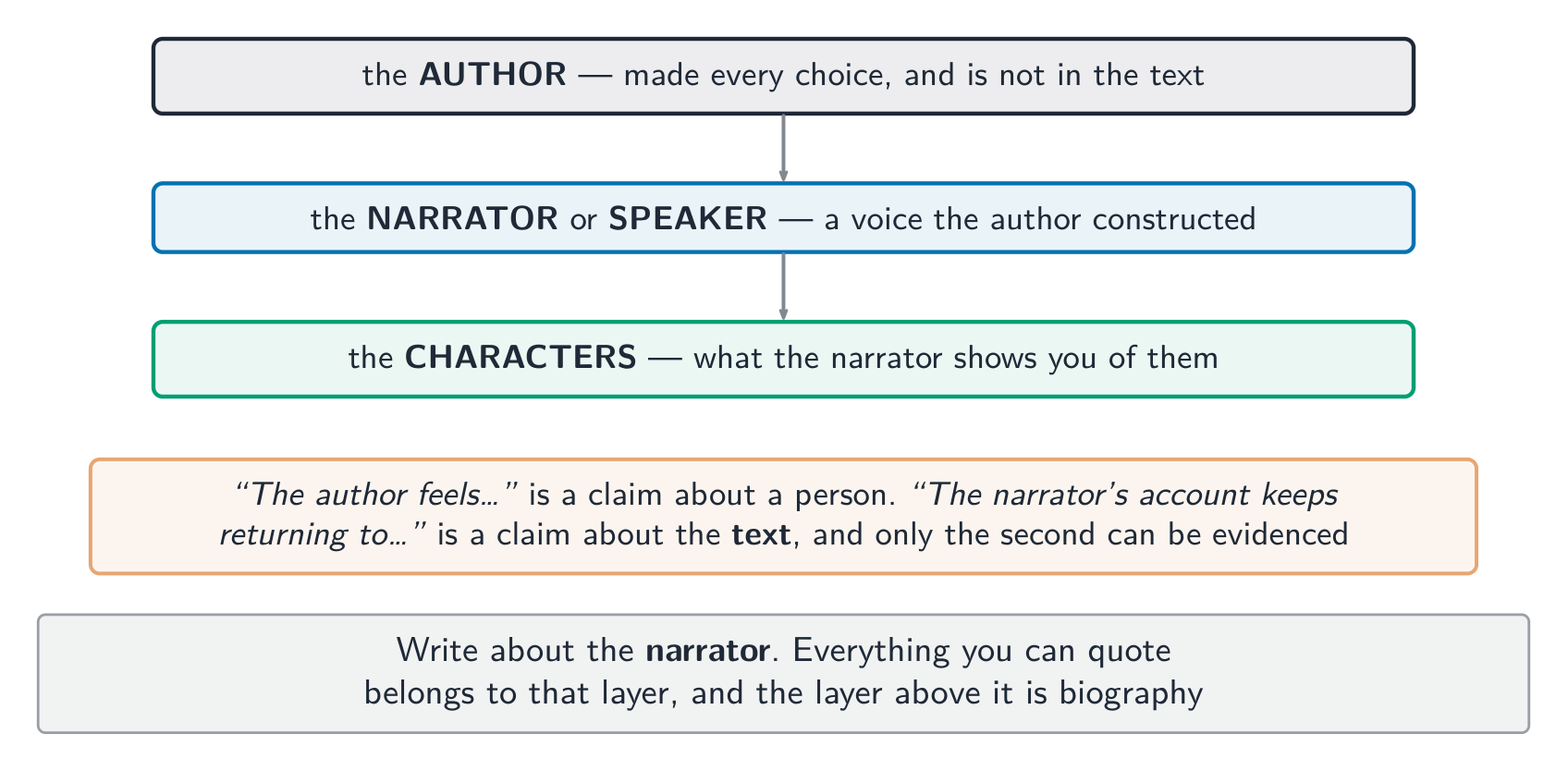
  • NAR-1.C A speaker or narrator is not necessarily the author.

来源:美国大学理事会 AP 课程与考试说明

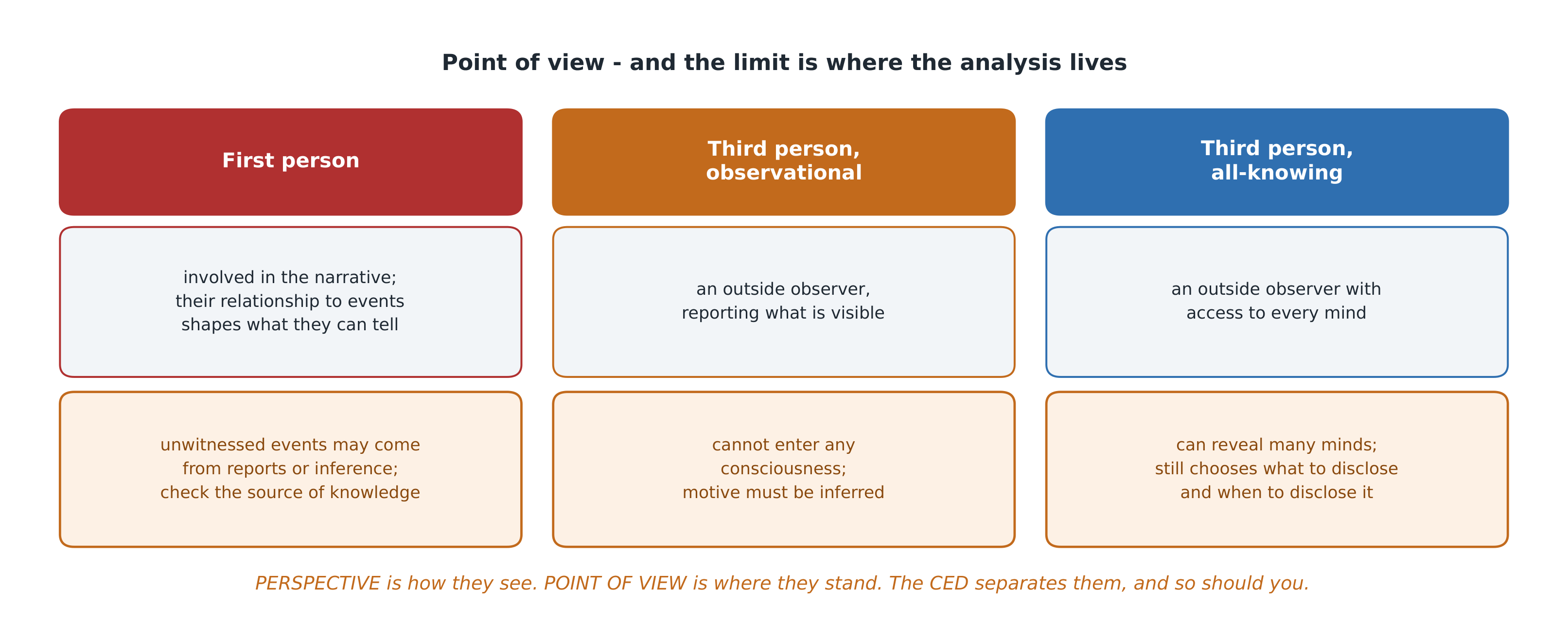
每种叙述视点能给你什么、不能给你什么——而那个限制正是分析所在
视角是他们怎样看;叙述视点是他们站在哪里。CED 把两者分开,你也应当如此
  • 叙述者或说话者讲述所见所闻,并在文本与读者之间建立一种关系
  • 视角指的是叙述者、人物或说话者如何看待自身处境;叙述视点(point of view)指的是他们讲述时所处的位置
  • **说话者或叙述者未必就是作者。**绝不要就一位第一人称叙述者写"作者感到"。
词汇表 训练
英文 中文 拼音
point of view 叙述视点 xù shù shì diǎn
observational to all-knowing 全知 quán zhī
1.6

叙事视角的作用

大纲
Enduring UnderstandingLearning ObjectiveEssential Knowledge

NAR-1
A narrator’s or speaker’s perspective controls the details and emphases that affect how readers experience and interpret a text.

4.B
Identify and explain the function of point of view in a narrative.

  • NAR-1.D The point of view contributes to what narrators, characters, or speakers can and cannot provide in a text based on their level of involvement and intimacy with the details, events, or characters.
  • NAR-1.E Narrators may also be characters, and their role as characters may influence their perspective.
  • NAR-1.F First-person narrators are involved in the narrative; their relationship to the events of the plot and the other characters shapes their perspective.
  • NAR-1.G Third-person narrators are outside observers.
  • NAR-1.H Third-person narrators’ knowledge about events and characters may range from observational to all-knowing, which shapes their perspective.
  • NAR-1.I The outside perspective of third-person narrators may not be affected by the events of the narrative.

来源:美国大学理事会 AP 课程与考试说明

  • 叙述视点决定了叙述者根据其位置能提供什么、不能提供什么
  • 叙述者也可以是人物,而这一身份可能影响他们的视角。
  • 第一人称叙述者身处叙事之中;他们与事件、与其他人物的关系,塑造了他们所能告诉你的内容。
  • 第三人称叙述者是外部观察者,其知情范围可以从仅限观察到无所不知(all-knowing)。
  • 第三人称叙述者的外部视角可能不受叙事事件的影响

分析上的收获在于那个不能。第一人称叙述者无法报告他们不曾目睹、或不愿承认的事,而每一处空缺都有意味。有限第三人称把你困在一个意识之中,这本身就是关于谁的体验才算数的选择。

1.7

撰写含主张与证据的段落

大纲
Enduring UnderstandingLearning ObjectiveEssential Knowledge

LAN-1
Readers establish and communicate their interpretations of literature through arguments supported by textual evidence.

7.A
Develop a paragraph that includes 1) a claim that requires defense with evidence from the text and 2) the evidence itself.

  • LAN-1.A In literary analysis, writers read a text closely to identify details that, in combination, enable them to make and defend a claim about an aspect of the text.
  • LAN-1.B A claim is a statement that requires defense with evidence from the text.
  • LAN-1.C In literary analysis, the initial components of a paragraph are the claim and textual evidence that defends the claim.

来源:美国大学理事会 AP 课程与考试说明

  • 在文学分析中,写作者细读文本以找出那些合在一起才使他们得以提出并辩护某项主张的细节。
  • 主张(claim)是一句需要用文本证据来辩护的陈述。
  • 段落最初的组成部分是主张与为之辩护的文本证据

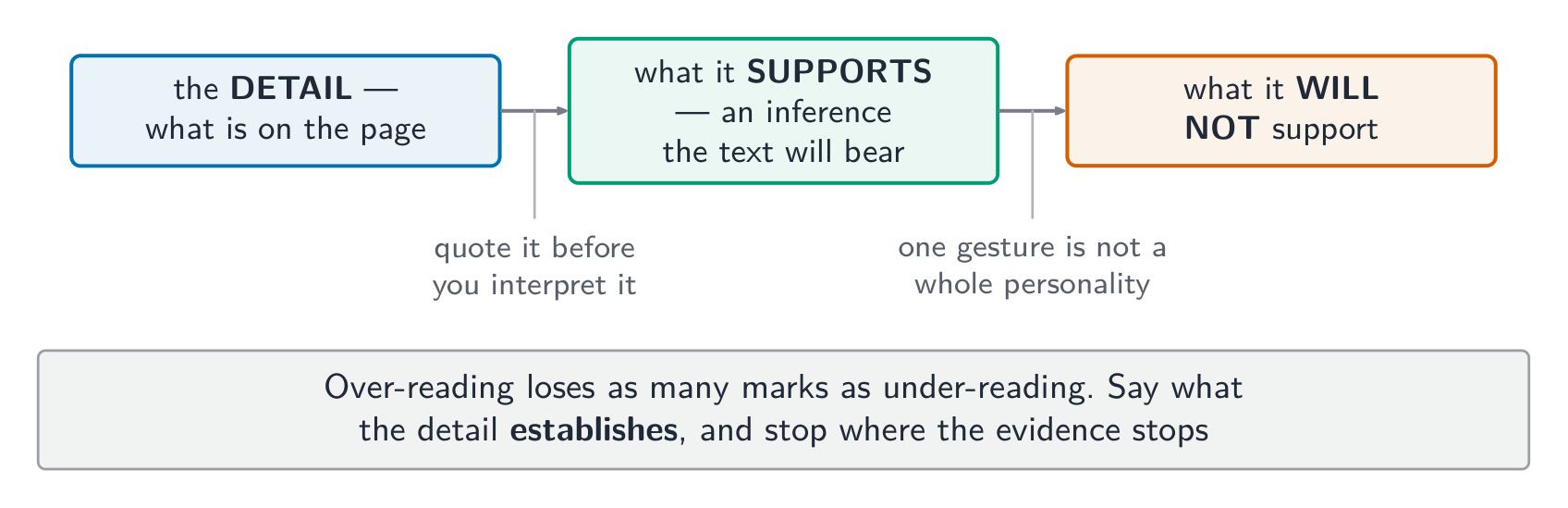
注意合在一起。单一细节很少能支撑一项阐释性主张;两三处指向相同的细节才可以。

Worked example(一项真实的 AP 考试任务)。AP 文学的自由作答部分有三道题——诗歌分析、散文小说分析,以及就一部你自选作品所作的文学论证——都按六分制评分标准评阅:论点 1 分,证据与评述 4 分,思辨深度 1 分。面对一道要求分析作者如何运用叙事技巧揭示某人物态度的散文题,薄弱答案会写*「叙述者是第一人称,这让叙述显得亲切。」能得分的答案会用上那个不能*:*「由于叙述者是多年之后回述这些事件的当事人,这一叙述给出的是他此刻对年轻时的自己的判断,却隐去了其他人物的想法——因此读者得到的只有他的自我批评这一份可用证据,并且必须自行判断,这份严厉究竟是准确,还是表演。」*叙述视点、它的限制,以及对读者的作用。

1.7

考试技巧

  • 人物是一种看的方式,不是一串形容词。要分析此人注意到什么、误读了什么。
  • **背景必须起作用。**交代故事发生在何处还算不上一项主张。
  • 情节是事件的顺序。把早先之事放到很晚才揭示是值得分析的作者选择。
  • **比例即证据。**文本流连之处就是意义所在。
  • **叙述者不是作者。**绝不要就第一人称叙述者写"作者感到"。
  • 叙述视点分析的富矿在于叙述者不能提供什么。

本主题的互动课程

逐步学习,并即时检测练习。

AP 英语文学与写作的更多主题

登录或创建账号

IGCSE, A-Level & AP