English
Governments try to steer the whole economy. This handout covers what they aim for and the three sets of tools they use.
ไทย
รัฐบาลพยายามนำพาเศรษฐกิจทั้งหมด นี่คือเอกสารที่ครอบคลุมเป้าหมายและเครื่องมือสามชุดที่พวกเขานำมาใช้
A-Level Economics · Economics A-Level · Topic 5 · หัวข้อ 5
 8:53
8:53
การแทรกแซงทางเศรษฐกิจมหภาคของรัฐบาล
ราคากำลังพุ่งสูงขึ้น การหางานยาก การเติบโตหยุดชะงัก ใครจะแก้ปัญหานี้? สองอาคารตัดสินใจ ในแห่งหนึ่ง รัฐบาลเลือกที่จะใช้จ่ายอะไร…
English narration · English + 中文 subtitles burned in · การบรรยายภาษาอังกฤษ · คำบรรยายภาษาอังกฤษ + 中文 ลอยตัวบนภาพ
Governments try to steer the whole economy. This handout covers what they aim for and the three sets of tools they use.
รัฐบาลพยายามนำพาเศรษฐกิจทั้งหมด นี่คือเอกสารที่ครอบคลุมเป้าหมายและเครื่องมือสามชุดที่พวกเขานำมาใช้

Source: Cambridge International syllabus · แหล่งที่มา: หลักสูตร Cambridge International
A government usually has five main aims:
The aims can conflict 冲突 — reaching one can hurt another:
The government has three sets of tools. Fiscal and monetary policy are demand-side policies 需求侧政策 (they work on AD). Supply-side policy works on aggregate supply 总供给.
รัฐบาลมักมีเป้าหมายหลักห้าประการ:
เป้าหมายเหล่านี้สามารถ ขัดแย้งกัน ได้ — การบรรลุเป้าหมายหนึ่งอาจกระทบอีกเป้าหมายหนึ่ง:
รัฐบาลมีเครื่องมือหลักสามกลุ่ม นโยบายการเงินและการคลังคือ นโยบายด้านฝั่งความต้องการ (ซึ่งส่งผลต่อ AD) ส่วนนโยบายด้านฝั่งอุปทานส่งผลต่อ อุปทานรวม.

Classify policy examples by the macroeconomic objective they target. · จำแนกตัวอย่างนโยบายตามวัตถุประสงค์มหภาคที่มุ่งเป้าถึง
| English | ไทย |
|---|---|
| price stability/praɪs stəˈbɪlɪti/ | ความมั่นคงของราคา |
| inflation/ɪnˈfleɪʃn/ | เงินเฟ้อ |
| full employment/fʊl emˈplɔɪmənt/ | การจ้างงานเต็มกำลัง |
| economic growth/ˌiːkəˈnɒmɪk ɡrəʊθ/ | การเติบโตทางเศรษฐกิจ |
| balance of payments/ˈbæləns ɒv ˈpeɪmənts/ | ดุลการค้า |
| redistribution of income/ˌriːˌdɪstrɪˈbjuːʃn ɒv ˈɪŋkʌm/ | การกระจายรายได้ใหม่ |
| conflict/ˈkɒnflɪkt/ | ความขัดแย้ง |

Source: Cambridge International syllabus · แหล่งที่มา: หลักสูตร Cambridge International
fiscal policy 财政政策 is the use of government spending and taxation to influence the economy.
The budget 预算 compares the two:
Taxes are also grouped by how the rate changes with income:
| Type | How it works |
|---|---|
| progressive tax 累进税 | the rate rises as income rises (the rich pay a larger share) |
| proportional tax 比例税 | the rate stays the same at every income |
| regressive tax 累退税 | the rate falls as income rises (the poor pay a larger share) |
Effectiveness. Fiscal policy can act fast on AD, but it has problems: time lags (a budget is set once a year), large deficits and debt, and crowding out 挤出效应 — when heavy government borrowing pushes up interest rates and reduces private investment.
นโยบายการเงิน คือการใช้ งบประมาณ และการ ภาษี ของรัฐบาลเพื่อส่งผลกระทบต่อเศรษฐกิจ.
งบประมาณ เปรียบเทียบสองสิ่งนี้:
ภาษียังสามารถจัดกลุ่มได้ตามวิธีที่อัตราภาษีเปลี่ยนแปลงตามรายได้:
| ประเภท | วิธีการทำงาน |
|---|---|
| ภาษีแบบ прогрressive | อัตรา เพิ่มขึ้น เมื่อรายได้เพิ่มขึ้น (คนรวยจ่ายสัดส่วนมากกว่า) |
| ภาษีแบบสัดส่วน | อัตรา คงที่ ที่ระดับรายได้ทุกขั้น |
| ภาษีถอยหลัง | อัตรา ลดลง เมื่อรายได้เพิ่มขึ้น (คนจนจ่ายสัดส่วนมากกว่า) |

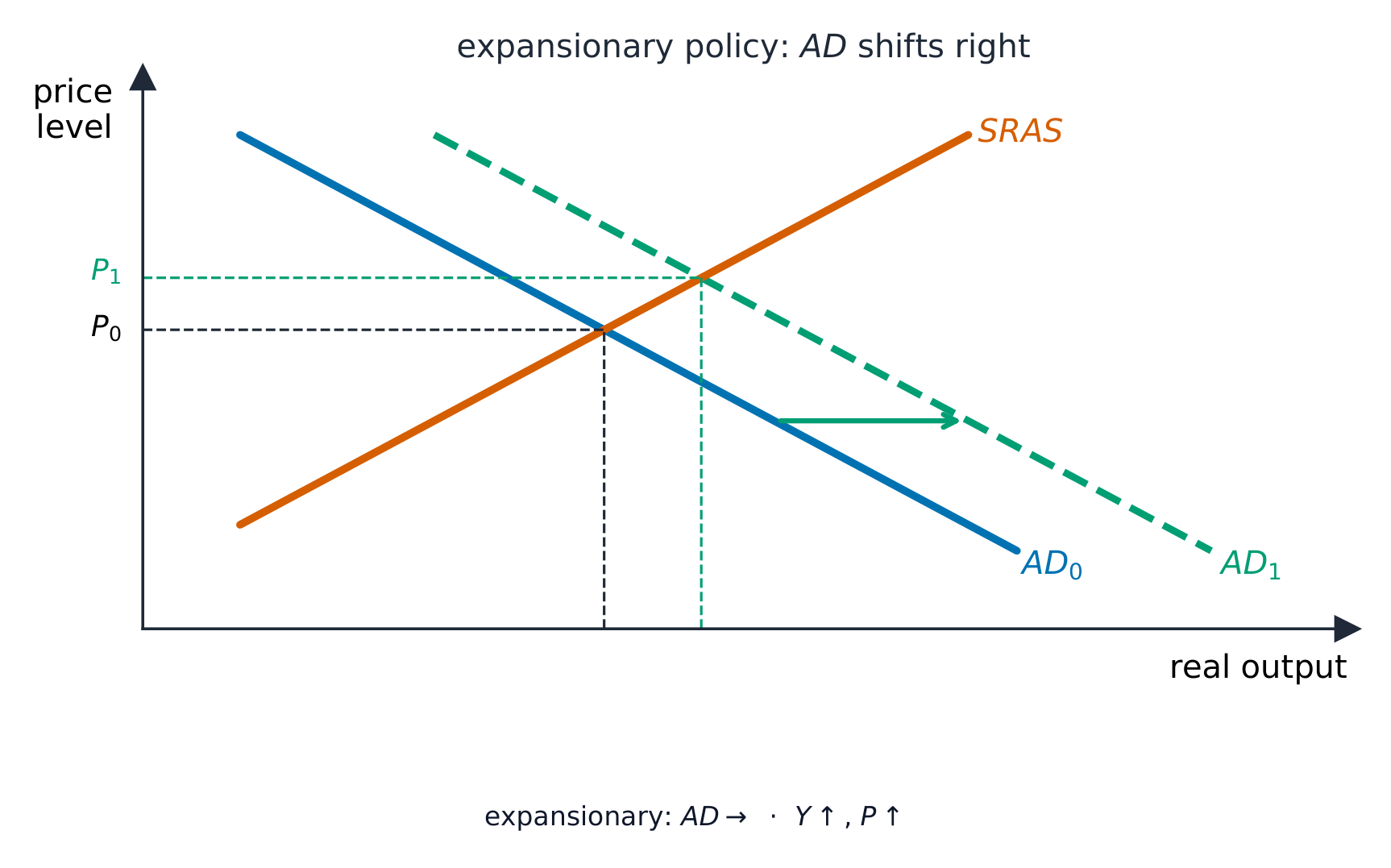
ประสิทธิภาพ. นโยบายการเงินสามารถกระทำต่อ AD ได้รวดเร็ว แต่มีปัญหา: ช่วงเวลาตอบสนอง (งบประมาณกำหนดปีละครั้ง), ขาดทุนและหนี้สูง, และการ crowding out — เมื่อการกู้ยืมของรัฐบาลหนักหน่วงดันอัตราดอกเบี้ยสูงขึ้นและลดการลงทุนภาคเอกชน.
Government spending and taxes move aggregate demand (AD). Drag AD to see real output and the price level change. · ค่าใช้จ่ายของรัฐบาลและภาษีทำให้ อุปสงค์รวม (AD) เคลื่อนไหว ลาก AD เพื่อดูผลผลิตจริงและระดับราคาเปลี่ยนแปลงอย่างไร
| English | ไทย |
|---|---|
| fiscal policy/ˈfɪskl ˈpɒlɪsi/ | นโยบายการเงินการคลัง |
| crowding out/ˈkraʊdɪŋ aʊt/ | crowding out |

Source: Cambridge International syllabus · แหล่งที่มา: หลักสูตร Cambridge International
monetary policy 货币政策 is run by the central bank 中央银行. Its main tool is the interest rate 利率, but it can also change the money supply 货币供给 or influence the exchange rate 汇率.
The transmission mechanism 传导机制 is how a change in the interest rate reaches the wider economy. If the central bank raises the interest rate:
All of these lower AD, which slows inflation. A cut in the interest rate does the opposite, raising AD.
Effectiveness. Monetary policy is flexible (the rate can change at any time), but it works with a time lag of a year or more. In a deep slump, even very low rates may not make worried firms and households borrow.
นโยบายการเงิน ดำเนินการโดย ธนาคารกลาง. เครื่องมือหลักคือ อัตราดอกเบี้ย แต่มันยังสามารถเปลี่ยน ปริมาณเงิน หรือส่งผลต่อ อัตราแลกเปลี่ยน ได้.
กลไกการส่งผ่าน คือวิธีการที่การเปลี่ยนแปลงอัตราดอกเบี้ยส่งผลกระทบไปยังเศรษฐกิจโดยรวม หากธนาคารกลาง เพิ่ม อัตราดอกเบี้ย:
ทั้งหมดนี้会降低AD ซึ่งชะลอเงินเฟ้อ. การ ลด อัตราดอกเบี้ยจะทำให้เกิดผลตรงกันข้าม โดยเพิ่ม AD.

ประสิทธิภาพ. นโยบายการเงินมีความยืดหยุ่น (อัตราสามารถเปลี่ยนแปลงได้ทุกเวลา) แต่มันทำงานด้วยระยะเวลาตอบสนองนานกว่าหนึ่งปี ในภาวะเศรษฐกิจตกต่ำอย่างรุนแรง แม้แต่ Rates ต่ำมากก็อาจไม่ทำให้กิจการและครัวเรือนที่กังวลใจกู้ยืมได้.
Changing interest rates moves aggregate demand. Lower rates → more borrowing and spending → AD shifts right. · การเปลี่ยนอัตราดอกเบี้ยทำให้ อุปสงค์รวม เคลื่อนไหว อัตราดอกเบี้ยต่ำลง → มีการกู้ยืมและใช้จ่ายมากขึ้น → AD เคลื่อนไปทางขวา
| English | ไทย |
|---|---|
| central bank/ˈsentrəl bæŋk/ | ธนาคารกลาง |

Source: Cambridge International syllabus · แหล่งที่มา: หลักสูตร Cambridge International
supply-side policy 供给侧政策 tries to raise the economy's productive capacity 生产能力 — to shift long-run aggregate supply to the right. It aims to make markets work better and raise productivity 生产率.
There are two kinds.
Market-based policies let markets work more freely:
Interventionist policies use the government directly:
Effectiveness. Supply-side policy is powerful because it can raise growth and lower inflation at the same time, with no trade-off. But it is slow (education takes years to pay off), costly, and some measures, like cutting benefits, can widen inequality.
Worked example. An economy is in a deep recession with a large output gap, and interest rates are already near zero. Which policy should the government use, and why is the other one weak here? Monetary policy is weak: with the base rate already near zero there is almost no room to cut further, and even cheap credit will not make firms invest when they expect no demand. Fiscal policy is stronger: government spending raises aggregate demand directly, without waiting for anyone to choose to borrow, and the multiplier means each pound spent raises national income by more than a pound as it is re-spent. Weigh the costs against it - a bigger budget deficit and rising debt, plus time lags on large projects. Match the policy to the constraint named in the question: here it is the zero lower bound, and that is precisely what makes fiscal policy the answer.
นโยบายด้านฝั่งอุปทาน พยายามเพิ่ม ขีดความสามารถในการผลิต ของเศรษฐกิจ — เพื่อเลื่อน อุปทานรวมระยะยาว ไปทางขวา เป้าหมายคือการทำให้ตลาดทำงานได้ดีขึ้นและเพิ่ม ผลิตภาพ.
มีสองประเภท
นโยบายแบบพึ่งพาตลาด อนุญาตให้ตลาดทำงานได้อย่างอิสระมากขึ้น:
นโยบาย Interventionist ใช้รัฐบาลโดยตรง:
ประสิทธิภาพ. นโยบาย Supply-side มีพลังเพราะสามารถเพิ่มการเติบโต และ ลดอัตราเงินเฟ้อได้ในเวลาเดียวกัน โดยไม่ต้องแลกกับสิ่งใด แต่มีความช้า (การศึกษาใช้เวลาหลายปีจึงจะเห็นผล) มีค่าใช้จ่ายสูง และการ medidas บางอย่าง เช่น การตัดสวัสดิการ อาจทำให้ความเหลื่อมล้ำกว้างขึ้น
ตัวอย่างวิธีทำ. เศรษฐกิจกำลังอยู่ในช่วง recession ลึกพร้อม output gap ขนาดใหญ่ และอัตราดอกเบี้ยอยู่ใกล้ศูนย์แล้ว รัฐบาลควรใช้นโยบายใด และทำไมอีกด้านถึงอ่อนแอ在这种情况下? ** Monetary policy อ่อนแอ**: เนื่องจาก base rate อยู่ใกล้ศูนย์อยู่แล้ว จึงแทบไม่มีพื้นที่ให้ตัด更低 further, และแม้เครดิตถูกก็จะไม่ทำให้ firms ลงทุนเมื่อพวกเขาไม่คาดการณ์ demand Fiscal policy แข็งแกร่งกว่า: การใช้จ่ายของรัฐบาลเพิ่ม aggregate demand โดยตรง, โดยไม่ต้องรอให้ใครเลือกที่จะกู้ยืม, และ multiplier หมายความว่าทุก£ ที่ใช้จ่ายจะเพิ่ม national income มากกว่า£ หนึ่งเนื่องจากถูกใช้จ่ายซ้ำ เรา权衡 costs กับมัน - budget deficit ที่更大 และหนี้สินที่เพิ่มขึ้น, plus time lags ในโครงการขนาดใหญ่ จับคู่政策กับ constraint ที่ระบุในคำถาม: ที่นี่คือ zero lower bound, และนั่นคือเหตุผลที่ fiscal policy เป็นคำตอบ
Supply-side policies raise the economy's productive capacity — aggregate supply (AS) shifts right, lowering the price level at higher output. · นโยบายด้านอุปทานเพิ่มขีดความสามารถในการผลิตของเศรษฐกิจ — อุปทานรวม (AS) เคลื่อนไปทางขวา ลดระดับราคาที่ผลผลิตสูงขึ้น
| English | ไทย |
|---|---|
| aggregate demand/ˈæɡrɪɡeɪt dɪˈmænd/ | อุปสงค์รวม |
| demand-side policies/dɪˈmænd saɪd ˈpɒlɪsiz/ | นโยบายด้านฝั่งความต้องการ |
| aggregate supply/ˈæɡrɪɡeɪt səˈplaɪ/ | อุปทานรวม |
| budget/ˈbʌdʒɪt/ | งบประมาณ |
| budget deficit/ˈbʌdʒɪt ˈdefɪsɪt/ | ขาดดุลงบประมาณ |
| national debt/ˈnæʃənl det/ | หนี้สาธารณะ |
| budget surplus/ˈbʌdʒɪt ˈsɜːpləs/ | เกินดุลงบประมาณ |
| direct tax/daɪˈrekt tæks/ | ภาษีโดยตรง |
| indirect tax/ɪndaɪˈrekt tæks/ | ภาษีทางอ้อม |
| progressive tax/prəˈɡresɪv tæks/ | ภาษี progresive |
| proportional tax/prəˈpɔːʃənl tæks/ | ภาษีแบบสัดส่วน |
| regressive tax/rɪˈɡresɪv tæks/ | ภาษีถอยหลัง |
| expansionary/ekˈspænʃənəri/ | แบบขยายตัว |
| contractionary/kənˈtrækʃənəri/ | แบบหดตัว |
| monetary policy/ˈmʌnɪtəri ˈpɒlɪsi/ | นโยบายการเงิน |
| privatisation/ˌpraɪvətaɪˈzeɪʃn/ | การแปรรูปเป็นเอกชน |
| deregulation/diːˌreɡjʊˈleɪʃn/ | การ放鬆การควบคุม / การลดกฎระเบียบ (deregulation) |
| training/ˈtreɪnɪŋ/ | การฝึกสอน (training) |
| infrastructure/ˈɪnfrəstrʌktʃə/ | โครงสร้างพื้นฐาน |
| English | ไทย |
|---|---|
| interest rate/ˈɪntrest reɪt/ | อัตราดอกเบี้ย |
| money supply/ˈmʌni səˈplaɪ/ | ปริมาณเงิน |
| exchange rate/eksˈtʃeɪndʒ reɪt/ | อัตราแลกเปลี่ยน |
| transmission mechanism/trænˈsmɪʃn ˈmekənɪzəm/ | กลไกการส่งผ่าน |
| supply-side policy/səˈplaɪ saɪd ˈpɒlɪsi/ | นโยบายด้านอุปทาน |
| productive capacity/prəˈdʌktɪv kəˈpæsɪti/ | กำลังการผลิต |
| productivity/ˌprɒdəkˈtɪvɪti/ | ประสิทธิภาพการผลิต |
| incentive/ɪnˈsentɪv/ | แรงจูงใจ |
Work through it step by step, with instant-check exercises. · ทำทีละขั้นตอน พร้อมแบบฝึกหัดตรวจสอบผลทันที
Past Papers · ข้อสอบย้อนหลัง
Loading subjects… · กำลังโหลดวิชา…