Supply-side policy
Introduced| English | Meaning |
|---|---|
| productivity/ˌprɒdəkˈtɪvɪti/ | Output produced per unit of input over a given period. |
| supply-side policies/səˈplaɪ saɪd ˈpɒlɪsiz/ | Policies intended to improve an economy's productive capacity or efficiency. |
| aggregate supply/ˈæɡrɪɡeɪt səˈplaɪ/ | The total output firms are willing and able to produce at different general price levels over a specified period. |
| market-based/ˈmɑːkɪt beɪst/ | market-based |
| interventionist/ˌɪntəˈvenʃənɪst/ | interventionist |
| deregulate/diːˈreɡjʊleɪt/ | deregulate |
| infrastructure/ˈɪnfrəstrʌktʃə/ | Basic facilities and networks, such as transport, energy and communications, that support economic and social activity. |
Growing the economy's capacity
- Fiscal and monetary policy manage demand. But to raise an economy's long-run potential, you must improve its supply — its productivity 生产率 and capacity.
- Supply-side policies 供给侧政策 aim to shift aggregate supply 总供给 to the right.
Supply-side policies aim to:
Difficulty 1/5 · 100 coins + a small bonus on first completion today
They raise productivity and capacity, shifting AS right.
A successful rightward shift of AS can raise output AND lower the price level.
Difficulty 1/5 · 100 coins + a small bonus on first completion today
Unlike demand-side policy, supply-side success eases inflation while raising output.
Shifting AS right
- Supply-side policies raise productivity and the quantity/quality of factors, shifting AS right.
- The prize: more output with lower inflation — the best of both worlds, if it works.
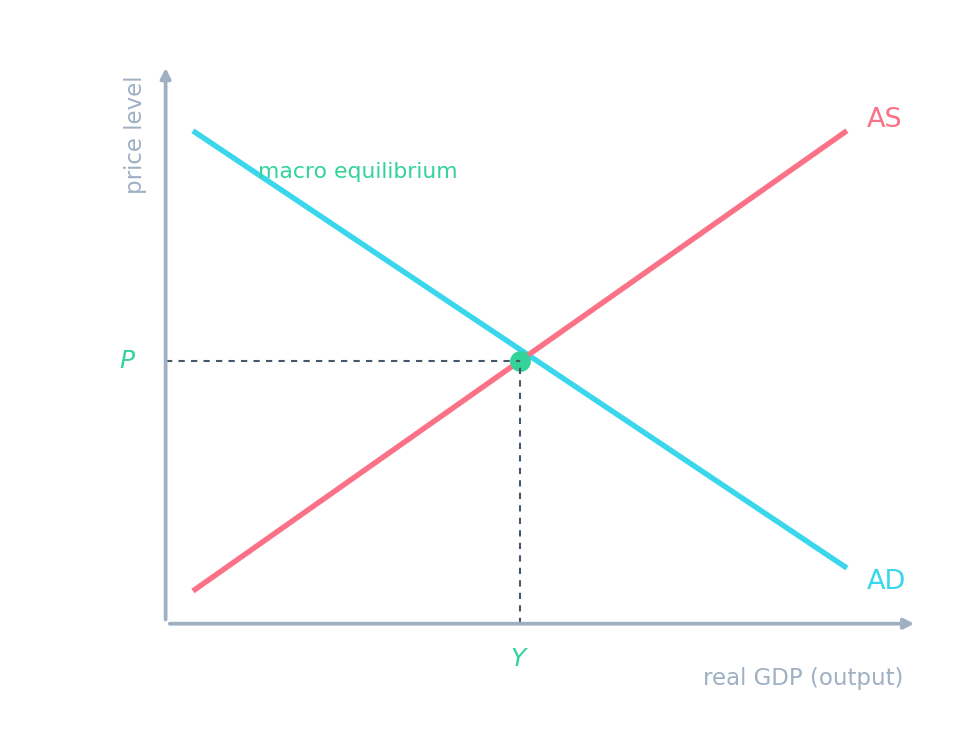
A rightward AS shift raises real GDP while easing the price level — unlike demand-side policy.
Supply-side policy shifts AS
Supply-side policies raise the economy's productive capacity — aggregate supply (AS) shifts right, lowering the price level at higher output.
Which is a market-based supply-side policy?
Difficulty 1/5 · 100 coins + a small bonus on first completion today
Tax cuts/deregulation are market-based; building schools is interventionist.
Classify each supply-side policy.
Difficulty 2/5 · 140 coins + a small bonus on first completion today
Market-based frees up markets; interventionist has the government build capacity.
Market-based 市场化的 vs interventionist 干预主义的
- Market-based: cut income/corporation tax, deregulate 放松管制, reduce union power, trim benefits — free up markets.
- Interventionist: government spending on education, training, infrastructure 基础设施 and R&D — build capacity directly.
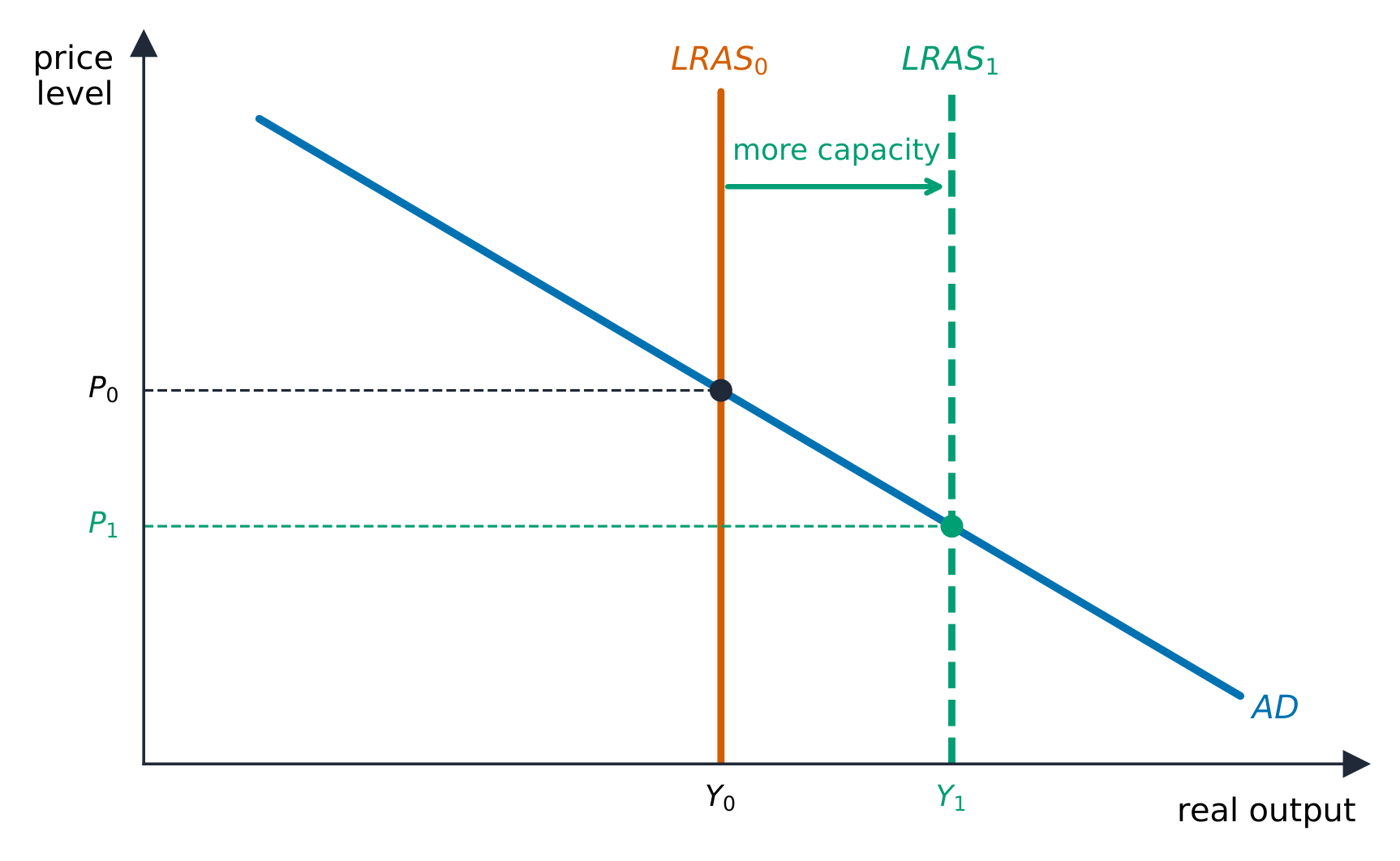
Supply-side policy shifts LRAS right: more output, lower prices
A drawback of supply-side policy is that it works ______ (over years, not months).
Difficulty 1/5 · 100 coins + a small bonus on first completion today
Education, infrastructure and R&D take years to raise capacity.
The long game
- Supply-side policies work slowly (years), and some (like tax cuts) can worsen inequality or cost revenue.
- But they are the only route to sustained growth without inflation.
Supply-side shifts AS, not AD. Don't confuse it with fiscal stimulus: cutting taxes to boost demand is fiscal; cutting taxes to improve incentives and productivity is supply-side.
You've got it
- supply-side policy raises productivity/capacity → shifts AS right (more output, lower inflation)
- market-based (tax cuts, deregulation) vs interventionist (education, infrastructure)
- it works slowly but is the route to sustained non-inflationary growth