Skip to content · ⁨コンテンツへスキップ⁩

Operations management (A Level) · ⁨運営管理(Aレベル)⁩

A-Level Business · ⁨A-Level 商業⁩ · Topic 9 · ⁨トピック 9⁩

View Slides · ⁨查看幻灯片⁩ Train · ⁨練習する⁩
Video lesson for this topic · ⁨このトピックのビデオレッスン⁩ Open the video page · ⁨動画ページを開く⁩
7:46

Operations management (A Level) · ⁨運営管理(Aレベル)⁩

A company promised its new factory in a hundred and fifteen weeks. It opened thirty weeks late, at a huge cost in wages and rent. One task slipped in the…

English narration · English + 中文 subtitles burned in · ⁨英語ナレーション・英語+中文字幕 burning-in⁩

9.1

Location and relocation · ⁨立地と移転⁩

Syllabus · ⁨シラバス⁩
English
  1. explain the factors influencing the location and relocation of a business (including international location)
  2. explain the optimum scale of operation and the significance of economies and diseconomies of scale
日本語
  1. 立地および移転に影響を与える要因を説明する(国際的な立地を含む)
  2. 最適生産规模と規模の経済および規模の不経済の意義について説明する

Source: Cambridge International syllabus · ⁨出典: Cambridge International シラバス⁩

English

Where a business sits affects its costs, its sales and its staff. Choosing a place is called location 选址; moving to a new place is relocation 迁址.

Factors that influence the choice fall into two groups:

  • quantitative factors 定量因素 — things you can measure in money, such as rent, wages, transport costs and government grants.
  • qualitative factors 定性因素 — things that are harder to measure, such as the skills of local workers, nearness to customers or suppliers, and the owner's own wishes.

A firm picks the place where the benefits, money and non-money together, are greatest.

日本語

ビジネスの立地はコスト、売上、従業員に影響を与える。場所を選ぶことを立地(ロケーション)、新しい場所へ移ることを**移転(リロケーション)**と呼ぶ。

選択に影響を与える要因は2つのグループに分かれる:

  • 定量的要因 — 賃料、給与、輸送費、政府助成金など、金銭で計測可能な要素。
  • 定性的要因 — 現地的な労働者のスキル、顧客やサプライヤーへの近さ、経営者の意向など、計測が難しい要素。

企業は、利益、金銭的・非金銭的メリットを総合的に考慮し、最大の便益をもたらす場所を選択する。

定量的要因(賃料、給与、輸送、助成金)と定性的要因(労働者のスキル、近接性、経営者の意向)が、最大の総便益をもたらす立地選択へと寄与する様子
立地決定は、金銭的要因と計測が難しい要因の両方を加重評価し、最大の総便益をもたらす場所を選択する。
Explore · ⁨探索⁩

Location factor lab · ⁨立地要因ラボ⁩

Classify why a business chooses one site over another. · ⁨ビジネスがなぜある立地を選好するのかを分類してください。⁩

Vocabulary · ⁨語彙⁩ Train · ⁨練習する⁩
English 日本語
location/ləʊˈkeɪʃn/ 場所
relocation/rɪləʊˈkeɪʃn/ 移住による拡散
quantitative factors/ˈkwɒntɪteɪtɪv ˈfæktəz/ 定量的要因
qualitative factors/ˈkwɒlɪteɪtɪv ˈfæktəz/ 定性的要因
offshoring/ˈɒfʃərɪŋ/ オフショアリング
9.1

International location · ⁨国際的な立地⁩

English

Many firms now locate abroad. Moving production to another country is offshoring 离岸外包. The reasons are often lower wages, nearness to new markets, fewer rules, or government help. The risks are longer supply lines, language and culture differences, and possible damage to the firm's image.

日本語

現在、多くの企業が海外に立地している。生産を別の国へ移すことをオフショアリングと呼ぶ。主な理由は、より低い賃金、新市場への近接性、規制の少なさ、または政府の支援である。リスクとしては、サプライチェーンの長期化、言語や文化の違い、および企業のイメージ毀損が含まれる。

9.1

The optimum scale of operation · ⁨最適操業規模⁩

English

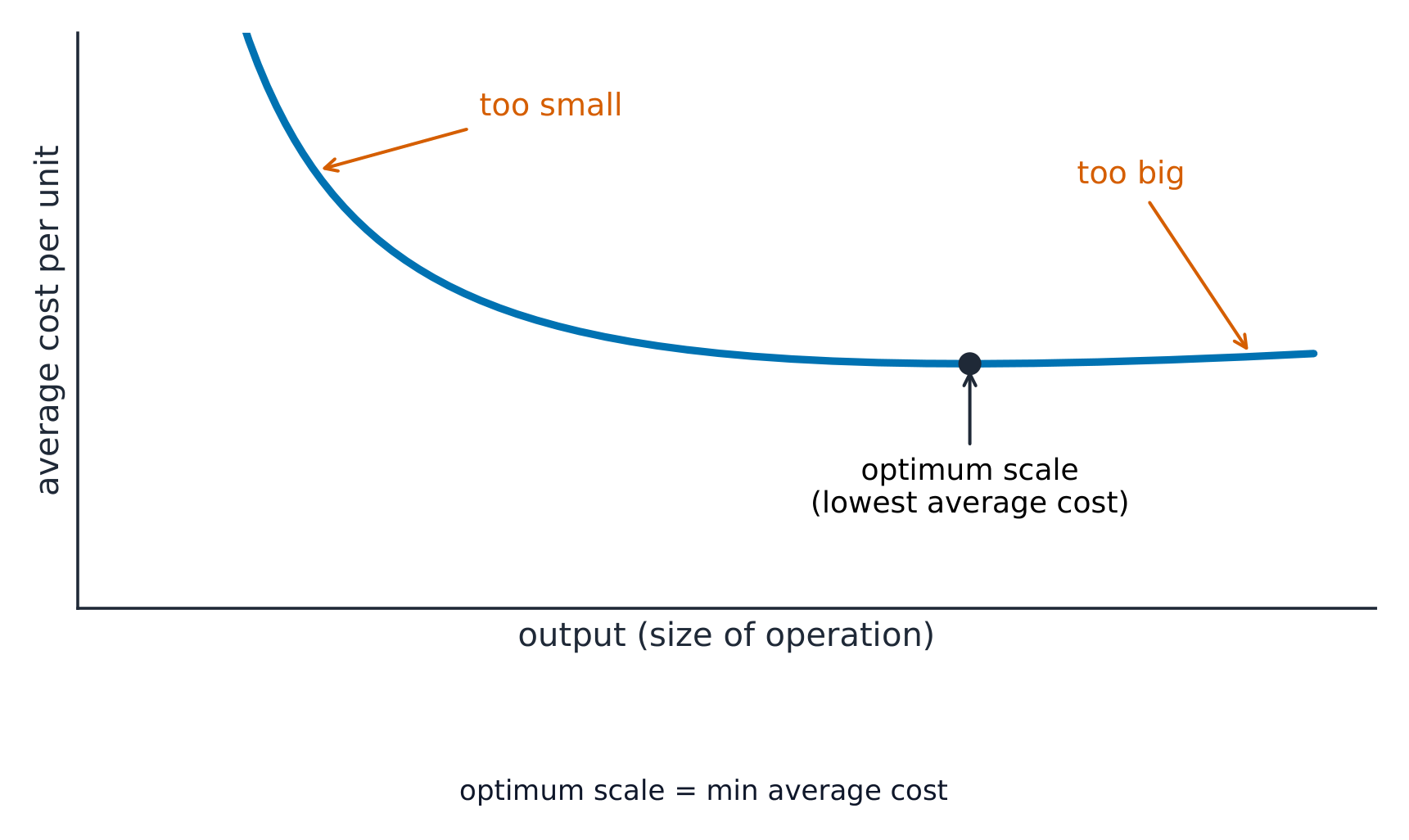
As a firm grows, its average cost first falls (from economies of scale) and later rises (from diseconomies of scale). The optimum scale 最优规模 is the size at which the average cost per unit is at its lowest.

  • economies of scale 规模经济 — cost savings from being larger (e.g. bulk buying).
  • diseconomies of scale 规模不经济 — rising average cost when a firm grows too big (e.g. poor communication).

A firm should try to grow up to its optimum scale, but not beyond it.

日本語

企業が大きくなると、平均原価はまず経済の規模(スケール・オブ・イコノミー)により低下し、後で不経済の規模(ディスケール・オブ・イコノミー)により上昇する。最適規模とは、単位あたり平均原価が最低となるサイズである。

  • 规模の経済 — 規模が大きくなることによるコスト削減(例:大量仕入れ)。
  • 规模の不経済 — 企業が大きすぎることで平均コストが上昇する(例:コミュニケーションの破綻)。

企業は最適規模まで成長を図るべきだが、それ以上になるべきではない。

U字型の平均コスト曲線:企業が小さすぎる間はコストが下がり、最適規模で最低点に達し、大きすぎるようになると上昇する
最適規模とは、単位あたり平均原価が最小となる生産量である
Vocabulary · ⁨語彙⁩ Train · ⁨練習する⁩
English 日本語
optimum scale/ˈɒptɪməm skeɪl/ 最適規模
economies of scale/ɪˈkɒnəmiz ɒv skeɪl/ スケールメリット
diseconomies of scale/ˌdɪsɪˈkɒnəmiz ɒv skeɪl/ 不経済の规模
9.2

Why quality matters · ⁨品質の重要性⁩

Syllabus · ⁨シラバス⁩
English
  1. explain the importance of quality and methods of managing quality (quality control, quality assurance, total quality management, benchmarking)
日本語
  1. 品質の重要性と品質管理の方法(品質管理、品質保証、トータルクオリティマネジメント、ベンチマーキング)について説明する

Source: Cambridge International syllabus · ⁨出典: Cambridge International シラバス⁩

English

Quality 质量 means how well a product meets the customer's needs. Good quality wins repeat custom, lets the firm charge more, protects its brand, and cuts the cost of waste and returns. Poor quality loses customers and damages the firm's name.

日本語

品質とは、製品が顧客のニーズにどれだけ適切に対応しているかを示します。高い品質はリピート購入を促し、企業により高い価格設定を可能にし、ブランドを守り、廃棄や返品に伴うコストを削減します。一方、低い品質は顧客を離脱させ、企業の評判を毀損します。

Explore · ⁨探索⁩

Leadership style lab · ⁨リーダーシップスタイルラボ⁩

Pick the management style that fits each situation. · ⁨各状況に最適な経営スタイルを選択せよ。⁩

9.2

Methods of managing quality · ⁨品質管理の方法⁩

English
Method How it works
quality control 质量控制 check finished products and remove the faulty ones at the end
quality assurance 质量保证 build quality into every stage, so faults are prevented, not just found
total quality management 全面质量管理 (TQM) every worker takes responsibility for quality, aiming for zero faults
benchmarking 标杆管理 compare the firm's methods with the best firms, and copy what they do well

Quality control finds faults late, after money is already spent. Quality assurance and TQM try to stop faults happening, which is usually cheaper in the long run.

日本語
方法 仕組み
品質管理(QC) 完成した製品を確認し、不良品を最終段階で除去する
品質保証(QA) 各工程に品質を組み込み、単に不良を発見するだけでなく、発生を防ぐ
トータルクオリティマネジメント(TQM) 全従業員が品質責任を負い、ゼロ欠陥を目指す
ベンチマーキング 他社の最好的な手法と比較し、優れた点を模倣する

品質管理(QC)は、すでに費用がかかった後に不良を発見します。一方、品質保証(QA)とTQMは不良の発生そのものを防ぐことを目指しており、長期的に見て通常は低コストです。

品質管理(QC)は検査員によって最終段階でのみ不良品をチェックするのに対し、品質保証(QA)は生産の各工程に品質チェックを組み込む
最終工程での品質管理チェック;品質保証はすべての工程に品質を組み込む
Vocabulary · ⁨語彙⁩ Train · ⁨練習する⁩
English 日本語
quality/ˈkwɒlɪti/ 品質
quality control/ˈkwɒlɪti kənˈtrəʊl/ 品質管理
quality assurance/ˈkwɒlɪti əˈʃʊərəns/ 品質保証
total quality management/ˈtəʊtl ˈkwɒlɪti ˈmænɪdʒmənt/ トータルクオリティマネジメント
benchmarking/ˈbentʃmɑːkɪŋ/ ベンチマーキング
lean production/liːn prəˈdʌkʃn/ リーン生産
waste/weɪst/ 排泄物
capacity management/kəˈpæsɪti ˈmænɪdʒmənt/ 生産能力管理
technology/tekˈnɒlədʒi/ 技術
critical path analysis/ˈkrɪtɪkl pæθ əˈnæləsɪs/ クリティカルパス分析
nodes/nəʊdz/ ノード
earliest start time/ˈɜːlɪɪst stɑːt taɪm/ 最早始動時間
latest finish time/ˈleɪtɪst ˈfɪnɪʃ taɪm/ 最晚終了時間
9.3

Operations strategy: lean production · ⁨オペレーション戦略:リーン生産⁩

Syllabus · ⁨シラバス⁩
English
  1. explain operations decisions: lean production, capacity management, and the use of technology
  2. use critical path analysis (CPA) to plan and manage projects (EST, LFT, total float, critical path, minimum project duration)
日本語
  1. 運営に関する意思決定を説明する:リーン生産、生産能力管理、および技術の使用
  2. クリティカルパス法 (CPA) を用いてプロジェクトの計画と管理を行う(最早始期、最遅終了期、総スラック、クリティカルパス、最小プロジェクト期間)

Source: Cambridge International syllabus · ⁨出典: Cambridge International シラバス⁩

English

Lean production 精益生产 means making products with the least possible waste 浪费 — of time, materials, space and effort. Methods like just-in-time and continuous improvement cut waste, lower cost, and raise quality. Less money is tied up in stock, and problems are fixed quickly.

日本語
工場の生産ラインを自動化するロボットアーム
工場自動化 — A-Levelオペレーションでは、リーン生産、技術、サプライチェーンを扱う。

リーン生産とは、時間、材料、スペース、労力といった無駄を最小限にして製品を作ることを意味する。ジャストインタイムや継続的改善のような手法は、無駄を削減し、コストを下げて品質を向上させる。在庫に-enableされたお金が減り、問題は迅速に解決される。

Explore · ⁨探索⁩

SWOT strategy lab · ⁨SWOT戦略ラボ⁩

Sort strategy evidence into internal and external factors. · ⁨戦略証拠を内部要因と外部要因に分類せよ。⁩

9.3

Capacity management and technology · ⁨生産能力管理と技術⁩

English

Capacity management 产能管理 means matching what the firm can produce to the demand it faces. If demand is higher than capacity, the firm may add shifts, hire staff or outsource; if demand is lower, it may cut output or find new orders. New technology 技术, such as automation and data systems, helps a firm produce more, to a higher standard, at a lower cost.

日本語

生産能力管理とは、企業が持つ生産能力と直面する需要を一致させることを指します。需要が生産能力を上回る場合は、シフトを追加したり、人員を増やしたり、アウトソースしたりします。逆に需要が少ない場合は、生産量を減らすか、新規受注を探します。自動化やデータシステムなどの新しい技術は、企業がより高い水準で、より低コストで多くを生産するのを助けます。

9.3

Critical path analysis · ⁨クリティカルパス分析⁩

English

Critical path analysis 关键路径分析 (CPA) is a tool for planning a project made of many tasks. It draws the tasks as a network of arrows and nodes 节点 (circles), in the order they must happen. For each task it works out timings:

  • the earliest start time 最早开始时间 (EST) — the soonest a task can begin, once earlier tasks are done.
  • the latest finish time 最晚完成时间 (LFT) — the latest a task can finish without delaying the whole project.

From these comes the total float 总浮动时间 — the spare time a task has before it delays the project:

$$\text{total float} = \text{LFT} - \text{duration} - \text{EST}$$

The critical path 关键路径 is the chain of tasks with zero float. These tasks cannot be late, or the whole project is late. Adding up the times along this path gives the minimum project duration 最短项目工期 — the shortest time the project can take.

CPA helps managers find the tasks that matter most, order resources for the right time, and see where delays would hurt. But it is only as good as the time estimates it is built on.

Worked example. A task has an EST of 6 days, a duration of 4 days, and an LFT of 14 days. Find its total float, and say whether it lies on the critical path. Use the formula: total float = LFT − duration − EST = $14 - 4 - 6 =$ 4 days. So the task could start up to 4 days late, or overrun by 4 days, without delaying the project - and because its float is not zero, it is not on the critical path. Only tasks with zero float are critical. Two points carry the marks: float is the spare time on that task, so using it up makes the task critical; and shortening a non-critical task like this one does not shorten the project at all, because only the critical path sets the minimum project duration.

日本語

クリティカルパス分析(CPA)は、多数のタスクからなるプロジェクトを計画するためのツールです。タスクは矢印とノード(円)でネットワークとして描かれ、発生すべき順序に従って配置されます。各タスクについてタイミングを算出します:

  • 早期開始時刻(EST) — 前段のタスクが完了した時点で、タスクが最も早く始まることのできる時刻。
  • 最晚終了時刻(LFT) — プロジェクト全体を遅延させずに、タスクが最も遅く終了できる時刻。

これらから総スラックが導き出されます — プロジェクトを遅延させる前にタスクが持つ余剰時間です。

$$\text{total float} = \text{LFT} - \text{duration} - \text{EST}$$

クリティカルパスとは、スラックがゼロであるタスクの連鎖です。これらのタスクが遅れれば、プロジェクト全体が遅れます。このパス上の時間を合計すると、最低プロジェクト期間(プロジェクトが要する最短時間)が求められます。

ラベル付き活動矢印で結ばれた5つのノードを持つクリティカルパス・ネットワーク;各ノードには早期開始時刻と最晚終了時刻が表示され、スラックゼロの活動によるクリティカルパスが強調されている
クリティカルパスはスラックゼロの活動の連鎖であり、これがプロジェクトの所要時間を決定する

CPAはマネージャーに対して、最も重要なタスクを特定し、リソースを適切な時期に手配し、どこで遅延が影響するかを把握するのを助けます。ただし、それは基盤となる時間見積りの精度に依存します。

** worked example.** あるタスクのESTが6日、期間が4日、LFTが14日である。総スラックを求め、クリティカルパス上にあるかどうかを答える。以下の式を用いる:総スラック = LFT − 期間 − EST = $14 - 4 - 6 =$ 4日。したがって、このタスクは最大4日遅れても、または4日超過してもプロジェクトを遅延させず、スラックがゼロではないため、クリティカルパス上にはない。スラックがゼロであるタスクだけがクリティカルである。2ポイントで得点される:スラックはそのタスクの余剰時間であるため、使い切るとそのタスクはクリティカルになります;また、このように非クリティカルなタスクを短縮しても、クリティカルパスのみが最低プロジェクト期間を決定するため、プロジェクト全体の所要時間は全く短縮されません。

Explore · ⁨探索⁩

Critical path analysis · ⁨クリティカルパス分析⁩

CPA finds the sequence of tasks that decides the shortest time a project can take. · ⁨CPAは、プロジェクトが完了するために要する最短時間を決定するタスクの順序を特定します。⁩

Explore · ⁨探索⁩

Find the critical path · ⁨クリティカルパスを見つける⁩

Drag the durations — the network rolls forward and back, the floats update, and the critical path jumps to whichever route is longest. · ⁨所要期間をドラッグすると、ネットワークが前後に展開され、スラックが更新され、クリティカルパスが最も長い経路へ切り替わります。⁩

Vocabulary · ⁨語彙⁩ Train · ⁨練習する⁩
English 日本語
total float/ˈtəʊtl fləʊt/ 総スラック
critical path/ˈkrɪtɪkl pæθ/ クリティカルパス
minimum project duration/ˈmɪnɪməm ˈprɒdʒekt djʊəˈreɪʃn/ 最小プロジェクト期間
9.3

Exam tips · ⁨試験対策⁩

English
  • Compare quality methods: quality control (inspect at the end) versus quality assurance / TQM (build quality in at every stage).
  • Explain lean production (cutting waste — time, stock, defects) with a named method (kaizen, JIT).
  • On a critical path network, work out the EST/LFT, the float, and the critical activities (zero float) that set the minimum time.
日本語
  • 品質管理方法を比較する:品質管理(QC)(最終検査)対 品質保証 / TQM(各工程での組み込み)。
  • 名指しされた手法(カイゼン、JIT)を使ってリーン生産(時間、在庫、欠陥の削減)を説明する。
  • クリティカルパス・ネットワーク上で、EST/LFT、スラック、および最低時間を決定するクリティカル活動(スラックゼロ)を計算する。

Interactive lessons on this topic · ⁨このトピックのインタラクティブ授業⁩

Work through it step by step, with instant-check exercises. · ⁨一歩ずつ進め、即時チェック付きの問題で学習します。⁩

Past Papers · ⁨過去問⁩

More topics in A-Level Business · ⁨A-Level 商業⁩ · ⁨A-Level Business · ⁨A-Level 商業⁩ の他のトピック⁩

Log in or create account · ⁨ログインまたはアカウント作成⁩

IGCSE, A-Level & AP