Skip to content · ⁨コンテンツへスキップ⁩

Marketing (A Level) · ⁨マーケティング(A-Level)⁩

A-Level Business · ⁨A-Level 商業⁩ · Topic 8 · ⁨トピック 8⁩

View Slides · ⁨查看幻灯片⁩ Train · ⁨練習する⁩
Video lesson for this topic · ⁨このトピックのビデオレッスン⁩ Open the video page · ⁨動画ページを開く⁩
8:06

マーケティング(A-Level)

すべての店舗が数値に基づいて運営されています。発注量、設定価格、新商品のラインナップなど。これらを誤れば、食品は廃棄箱へ、棚は空になります…

English narration · English + 中文 subtitles burned in · ⁨英語ナレーション・英語+中文字幕 burning-in⁩

8.1

Marketing analysis · ⁨マーケティング分析⁩

Syllabus · ⁨シラバス⁩
English
  1. use quantitative marketing analysis: sales forecasting, time-series analysis (moving averages, trend, seasonal variation), correlation
  2. explain elasticity (price, income, cross) and its use in marketing decisions
日本語
  1. 定量的マーケティング分析を用いる:売上予測、時系列分析(移動平均、トレンド、季節変動)、相関
  2. 弾性(価格、所得、代替財)とそのマーケティング意思決定への利用について説明する

Source: Cambridge International syllabus · ⁨出典: Cambridge International シラバス⁩

English

Marketing analysis 营销分析 means using data to understand the market and to make better marketing decisions. At A Level you study some numbers tools: sales forecasting, time-series analysis, correlation, and elasticity.

日本語
賑やかなスーパーマーケットの通路
スーパーマーケット: 小売業者はデータを使用して価格、品揃え、顧客体験で競合する。

マーケティング分析とは、データを使用して市場を理解し、より良いマーケティング意思決定を下すことである。A-Levelでは、いくつかの数値ツールを学ぶ: 売上予測、時系列分析、相関、弾性。

Watch lesson · ⁨レッスンを視聴⁩
8.1

Sales forecasting and time-series analysis · ⁨売上予測と時系列分析⁩

English

Sales forecasting 销售预测 is predicting future sales from past data and market knowledge. Good forecasts help a firm plan production, staff, stock and cash.

Time-series analysis 时间序列分析 studies past sales recorded over time to find a pattern. It has two main parts:

  • the trend 趋势 — the general direction of sales over the long run (up, down or flat).
  • the seasonal variation 季节性波动 — the regular rise and fall within a year (e.g. ice cream sells more in summer).

To find the trend, firms use a moving average 移动平均, which smooths the ups and downs by averaging several periods in a row. The seasonal variation is then how far the actual figure sits above or below the trend:

$$\text{seasonal variation} = \text{actual value} - \text{trend value}$$

A forecast extends the trend into the future (called extrapolation 外推) and then adds the usual seasonal variation. This works only if past patterns continue, so forecasts are never certain.

日本語

売上予測とは、過去のデータと市場知識に基づいて未来の売上を予測することである。良い予測は企業が生産、従業員、在庫、現金 흐름を計画するのを助ける。

時系列分析は、時間の経過と共に記録された過去の売上を研究してパターンを見つけることである。主に2つの部分からなる:

  • トレンド — 長期的な売上の全体的な方向 (上昇、下降、横ばい)。
  • 季節変動 — 年内における定期的な増減(例:夏にアイスクリームが売れる)。

トレンドを見つけるために、企業は移動平均を使用し、複数の期間を順次平均することで上下の揺らぎを平滑化する。その後、実際の数値がトレンドに対してどれだけ上にあるか、あるいは下にあるかが季節変動となる:

$$\text{seasonal variation} = \text{actual value} - \text{trend value}$$
時系列チャート: 実際の四半期売上が滑らかな上昇トレンドラインの周りをジグザグに上下しており、実際の値とトレンドの間の差が季節変動として示されている
実際の売上は滑らかな基礎的なトレンドの周りに季節的に揺らぐ

予測はトレンドを未来へ延長する(これを外挿という)ことに始まり、次に通常の季節変動を加える。これは過去の傾向が続く場合にのみ機能するため、予測は決して確定的ではない。

Explore · ⁨探索⁩

Sales forecast lab · ⁨売上予測実験⁩

sales = trend + seasonal effect · ⁨売上=トレンド+季節変動⁩

Move along a sales trend and see how forecast and actual can separate. · ⁨売上のトレンドに沿って進み、予測値と実績値がどう分離するかを見る。⁩

Vocabulary · ⁨語彙⁩ Train · ⁨練習する⁩
English 日本語
marketing analysis/ˈmɑːkɪtɪŋ əˈnæləsɪs/ マーケティング分析
sales forecasting/seɪlz ˈfɔːkæstɪŋ/ 売上予測
time-series analysis/taɪm ˈsɪəriːz əˈnæləsɪs/ 時系列分析
trend/trend/ トレンド
seasonal variation/ˈsiːzənl ˌveərɪˈeɪʃn/ 季節変動
moving average/ˈmuːvɪŋ ˈævrɪdʒ/ 移動平均
extrapolation/ekˈstræpəleɪʃn/ 外挿
8.1

Correlation · ⁨相関⁩

English

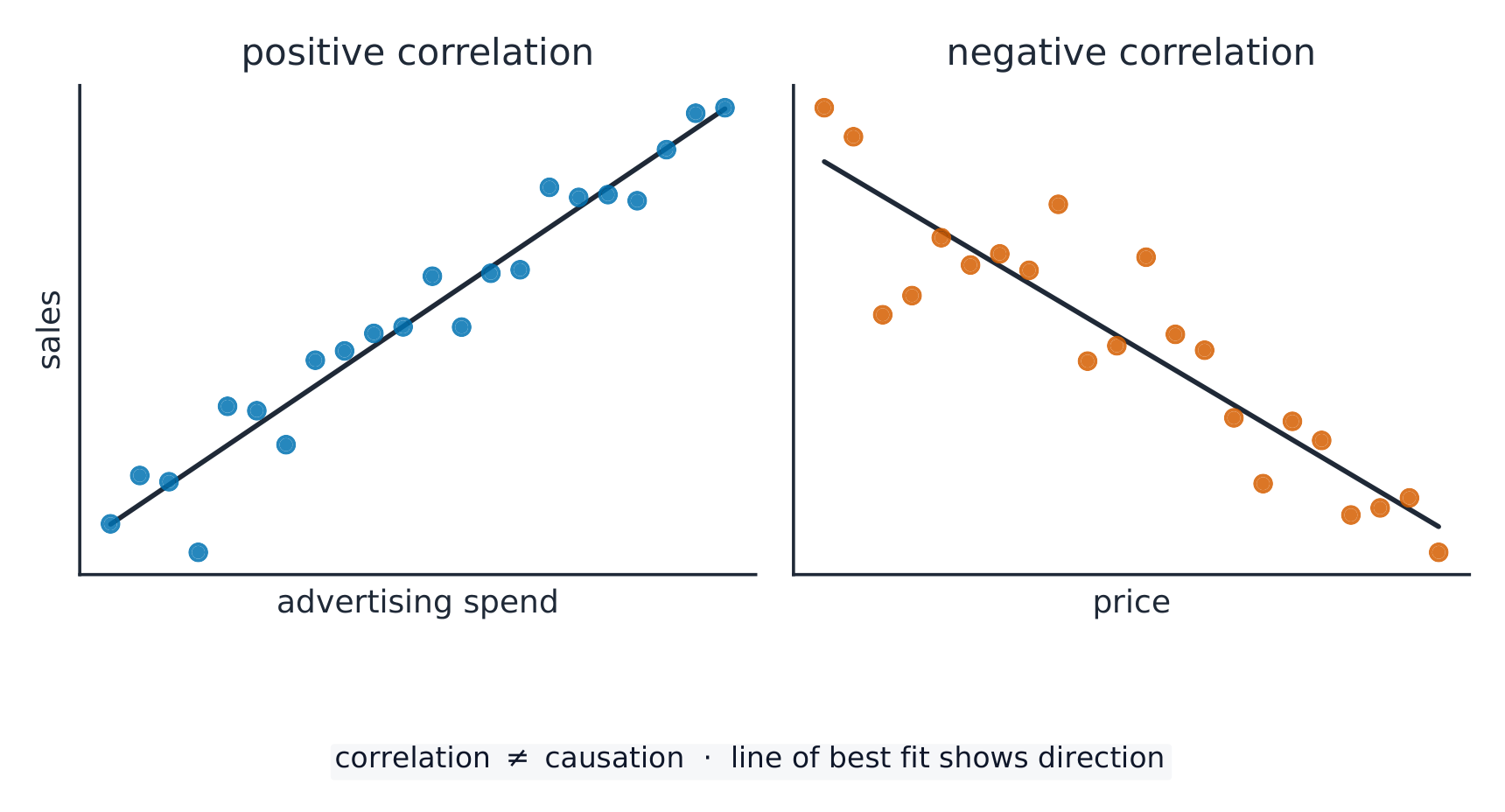
Correlation 相关性 measures how strongly two things move together — for example, advertising spending and sales.

  • positive correlation 正相关 — when one rises, the other rises too.
  • negative correlation 负相关 — when one rises, the other falls.

Strong correlation helps a firm predict, but it does not prove that one thing causes the other. Other factors may be at work.

日本語

相関は、2つのことがどれほど強く連動するかを測定する — 例えば、広告費と売上の間。

  • 正の相関 — 片方が上昇すると、もう片方も上昇する。
  • 負の相関 — 片方が上昇すると、もう片方は低下する。
2つの散布図: 点が一緒に上昇する正の相関と、ある変数が上昇するにつれて点が下がる負の相関。それぞれに近似直線がある
正の相関 (両方が共に上昇) と負の相関 (片方が上昇すると他方が低下)

強い相関は企業が予測するのを助けるが、それが一方が他方を引き起こすことを証明するわけではない。他の要因が働いている可能性がある。

Explore · ⁨探索⁩

Correlation and the line of best fit · ⁨相関と回帰直線⁩

Change the strength of the relationship. A line of best fit lets a business spot a trend and forecast from it. · ⁨関係の強さを変えてください。回帰直線により、企業はトレンドを特定し、そこから予測を行うことができます。⁩

Vocabulary · ⁨語彙⁩ Train · ⁨練習する⁩
English 日本語
correlation/ˌkɒrɪˈleɪʃn/ 相関
positive correlation/ˈpɒzɪtɪv ˌkɒrɪˈleɪʃn/ 正の相関
negative correlation/ˈneɡətɪv ˌkɒrɪˈleɪʃn/ 負の相関
elasticity/ɪlæˈstɪsɪti/ 弾力性
price elasticity of demand/praɪs ɪlæˈstɪsɪti ɒv dɪˈmænd/ 需要の価格弾力性
price elastic/praɪs ɪˈlæstɪk/ 価格弾力性あり
price inelastic/praɪs ɪnɪˈlæstɪk/ 価格弾力性なし
income elasticity of demand/ˈɪŋkʌm ɪlæˈstɪsɪti ɒv dɪˈmænd/ 所得需要弾性
cross elasticity of demand/krɒs ɪlæˈstɪsɪti ɒv dɪˈmænd/ 代替財の需要の交叉弾力性
marketing strategy/ˈmɑːkɪtɪŋ ˈstrætədʒi/ マーケティング戦略
marketing planning/ˈmɑːkɪtɪŋ ˈplænɪŋ/ マーケティングプランニング
Ansoff's matrix/ˈænsɒfs ˈmeɪtrɪks/ アンソフ矩阵
market penetration/ˈmɑːkɪt ˌpenɪˈtreɪʃn/ 市場浸透
product development/ˈprɒdʌkt dɪˈveləpmənt/ 製品開発
market development/ˈmɑːkɪt dɪˈveləpmənt/ 市場開発
diversification/daɪˌvɜːsɪfɪˈkeɪʃn/ 多角化
product portfolio analysis/ˈprɒdʌkt pɔːtˈfəʊlɪəʊ əˈnæləsɪs/ 製品ポートフォリオ分析
globalisation/ˌɡləʊbəlaɪˈzeɪʃn/ グローバル化
exporting/ekˈspɔːtɪŋ/ 輸出
joint venture/dʒɔɪnt ˈventʃə/ 合弁事業
localisation/ˌləʊkəlaɪˈzeɪʃn/ ローカライゼーション
8.1

Using elasticity in marketing decisions · ⁨マーケティング意思決定における弾性の活用⁩

English

Elasticity 弹性 measures how much demand reacts to a change. Three types guide marketing decisions.

  • price elasticity of demand 需求价格弹性 (PED) — for a price elastic 富有弹性 product, cutting the price raises total revenue; for a price inelastic 缺乏弹性 product, raising the price raises total revenue.
  • income elasticity of demand 需求收入弹性 (YED) — tells a firm how sales will change as incomes rise or fall, which helps plan for booms and recessions.
  • cross elasticity of demand 需求交叉弹性 (XED) — tells a firm how a rival's price change, or the price of a partner product, will affect its own sales.

So elasticity helps a firm set prices, choose products, and predict the effect of a competitor's move.

Worked example. Quarterly sales run Q1 100, Q2 140, Q3 180, Q4 120, then next Q1 108. Find the four-quarter moving-average trend centred on Q3, and the seasonal variation for Q3. Average the first four quarters: $(100 + 140 + 180 + 120) \div 4 = 135$. Average the next four: $(140 + 180 + 120 + 108) \div 4 = 137$. A four-period average falls between quarters, so centre the two: $(135 + 137) \div 2 = 136$, the trend at Q3. The seasonal variation is actual minus trend: $180 - 136 =$ +44, so Q3 runs about 44 units above trend, and next year's Q3 forecast is the projected trend plus 44. The centring step is the one most answers drop: with an even number of periods the average lands between two quarters and must be centred before it can be compared with an actual figure.

日本語

弾性は、需要が変化にどれだけ反応するかを測定する。3つのタイプがマーケティング意思決定を導く。

水平な需要曲線である弾力性のある需要と、急な需要曲線である非弾力性のある需要
弾力的な需要は水平;非弾力的な需要は急勾配
  • 需要の価格弾性 (PED) — 価格弾力性のある製品の場合、値下げは総収益を増やす;価格非弾力性のある製品の場合、値上げは総収益を増やす。
  • 需要の所得弾性 (YED) — 企業に所得の上昇または下降に伴い売上がどう変わるかを知らせ、景気好況と不況への準備を助ける。
  • 需要の交叉弾性 (XED) — 競合他社の価格変更や、関連商品の価格変更が自社の売上にどう影響するかを知らせる。

したがって、価格設定、商品ラインの選定、競合他社の動向による影響予測において、弾力性は企業にとって有用なツールとなります。

** worked example(例題).** 四半期別売上高はQ1が100、Q2が140、Q3が180、Q4が120、翌年Q1が108です。Q3を中心とする四半期移動平均トレンドと、Q3の季節変動を求めよ。最初の4四半期の平均: $(100 + 140 + 180 + 120) \div 4 = 135$。次の4四半期の平均: $(140 + 180 + 120 + 108) \div 4 = 137$。4期間の平均は四半期の間に位置するため、この2つを中央化(中心化)する: $(135 + 137) \div 2 = 136$、これがQ3におけるトレンドである。季節変動は実績値からトレンドを引いた値である: $180 - 136 =$ +44。つまりQ3はトレンドより約44単位高い。来年のQ3予測値は、予測されたトレンドに +44 を加えたものとなる。中央化(中心化) の工程は、多くの解答者が誤るポイントである。期間数が偶数の場合、平均値は2つの四半期の間に位置するため、実績値と比較するために中央化(中心化)を行う必要がある。

8.2

Marketing planning and strategy · ⁨マーケティング計画と戦略⁩

Syllabus · ⁨シラバス⁩
English
  1. explain marketing planning and marketing strategy (Ansoff's matrix, product portfolio analysis)
  2. explain how marketing strategy is adapted for entering international markets
日本語
  1. マーケティングプランニングおよびマーケティング戦略(アンソフのマトリクス、製品ポートフォリオ分析)について説明する
  2. 国際市場への参入に向けたマーケティング戦略の適応方法について説明する

Source: Cambridge International syllabus · ⁨出典: Cambridge International シラバス⁩

English

A marketing strategy 营销战略 is the long-term plan for how marketing will meet the firm's objectives. Marketing planning 营销规划 is the work of setting that plan: studying the market, choosing target customers, and deciding the marketing mix. Two tools shape strategy: Ansoff's matrix and product portfolio analysis.

日本語
夜間の巨大デジタル広告スクリーン
デジタル広告スクリーン — マーケティングはますますオンラインやスクリーン上で行われている。

マーケティング戦略とは、企業が目標を達成するためにマーケティングをどう行うかという長期的な計画である。マーケティング計画とは、その計画を立てる作業であり、市場調査、ターゲット顧客の選定、マーケティングミックスの決定を含む。戦略を形作る2つのツールがある:アンソフのマトリクスと製品ポートフォリオ分析。

Explore · ⁨探索⁩

Ansoff strategy lab · ⁨アンソフ戦略ラボ⁩

Sort growth choices by product and market risk. · ⁨製品と市場のリスクに基づいて成長の選択肢を分類してください。⁩

8.2

Ansoff's matrix · ⁨アンソフのマトリクス⁩

English

Ansoff's matrix 安索夫矩阵 shows four ways to grow, by mixing existing or new products with existing or new markets. The risk rises as you move away from what you know.

Existing products New products
Existing markets market penetration 市场渗透 (sell more to current buyers) product development 产品开发 (new products for current buyers)
New markets market development 市场开发 (current products to new buyers) diversification 多元化 (new products and new markets)

Market penetration is the safest; diversification is the riskiest because both the product and the market are new.

日本語
アンソフのマトリクス:製品と市場の成長戦略を示す2x2のグリッド
アンソフのマトリクス:4つの成長戦略があり、右下に向かうほどリスクが高まる(多角化)。

アンソフのマトリクスは、既存または新製品の既存または新市場との組み合わせによって、成長を4つの方法で示している。既知の範囲から離れるほどリスクは高まる。

既存製品 新製品
既存市場 市場浸透(現在の購入者により多く売る) 製品開発(現在の購入者のための新製品)
新市場 市場開発(既存製品を新たな購入者に販売) 多角化(新製品と新市場)

市場浸透が最も安全であり、多角化は最もリスクが高い。なぜなら、製品も市場も新しいからである。

8.2

Product portfolio analysis · ⁨製品ポートフォリオ分析⁩

English

Product portfolio analysis 产品组合分析 looks at the firm's whole range of products together, using a tool like the Boston Matrix. It checks the balance: a firm needs some steady earners to fund its risky new products. The aim is a healthy mix, so the firm is not left with only ageing products.

日本語

製品ポートフォリオ分析は、ボストン・マトリクスのようなツールを用いて、企業の全製品ラインを一括して見るものである。バランスを確認する。企業は、リスクの高い新製品を資金調達するための安定した収益源(キャッシュカウ)を持つ必要がある。目的は健全な混合状態を保ち、老朽化した製品だけが残らないようにすることである。

Explore · ⁨探索⁩

Balance the product portfolio · ⁨製品ポートフォリオをバランスさせる⁩

Drag each product's share and growth — a healthy portfolio keeps a cash cow funding the stars and question marks that will replace it. · ⁨各製品のシェアと成長率をドラッグしてください。健全なポートフォリオでは、Cash Cowが将来の代替となるStarsやQuestion Marksを資金提供します。⁩

8.2

Entering international markets · ⁨国際市場への参入⁩

English

To grow, many firms sell abroad. Globalisation 全球化 (the world becoming more connected) has made this easier. A firm can enter a new country by exporting 出口, by setting up a joint venture 合资企业 with a local partner, or by opening its own branch there.

But a strategy that works at home may need changes. Localisation 本地化 means adapting the marketing mix to the new market — for example, changing the product, the language, the price, or the way it is sold to suit local tastes, laws and incomes.

日本語

成長のため、多くの企業が海外に販売を行っている。グローバル化(世界がより密接に結びつくこと)はこれを容易にした。企業は、輸出、現地のパートナーとの**共同事業(ジョイントベンチャー)**の設立、あるいは自社の支店开设によって、新しい国に参入できる。

参入モードにおけるコミットメントとコントロールの増加を示すグラフ:3つの参入モードが示されている(輸出(最低)、共同事業、自社支店(最高))
参入モードはコミットメントとコントロールのトレードオフである:輸出はリスクが最小だが、自社支店は最もコントロールを与える反面、コストとリスクも最大である。

しかし、国内で成功した戦略がそのまま通用するわけではない。ローカライゼーションとは、マーケティングミックスを新市場に合わせて適応させることを意味する。具体的には、製品、言語、価格、または販売方法を現地の嗜好、法規制、所得水準に合わせて変更することなどである。

Explore · ⁨探索⁩

International market lab · ⁨国際市場ラボ⁩

See how access to world markets changes quantity and price pressure. · ⁨世界市場へのアクセスが数量と価格圧力に与える影響を確認してください。⁩

8.2

Exam tips · ⁨試験対策⁩

English
  • Read time-series data: separate the underlying trend from seasonal variation, and extrapolate with caution.
  • Interpret correlation (strength and direction) but never assume it proves causation.
  • Use Ansoff's matrix to classify a growth strategy and judge its risk (diversification is riskiest).
  • Use elasticity values to justify a pricing or promotion decision numerically.
日本語
  • 時系列データを読む:基礎的なトレンドと季節変動を分離し、慎重に外挿を行う。
  • 相関(強さと方向性)を解釈するが、因果関係を示すものと決して仮定しない。
  • アンソフのマトリクスを使用して、成長戦略を分類し、そのリスクを評価する(多角化が最もリスクが高い)。
  • 弾力性の値を用いて、価格設定やプロモーションの意思決定を数値的に裏付ける。

Interactive lessons on this topic · ⁨このトピックのインタラクティブ授業⁩

Work through it step by step, with instant-check exercises. · ⁨一歩ずつ進め、即時チェック付きの問題で学習します。⁩

Past Papers · ⁨過去問⁩

More topics in A-Level Business · ⁨A-Level 商業⁩ · ⁨A-Level Business · ⁨A-Level 商業⁩ の他のトピック⁩

Log in or create account · ⁨ログインまたはアカウント作成⁩

IGCSE, A-Level & AP