- explain the purpose and roles of human resource management (HRM): workforce planning, recruitment and selection, training and development
- explain redundancy and dismissal, employer/employee rights and the management of change in HR
- calculate and interpret labour turnover and labour productivity
Human resource management
A-Level Business · Topic 2
 10:27
10:27
Human Resource Management
Two factories. Same machines, same materials, same hours. One makes twice as much as the other. The difference is not the equipment — it is the people. Labour…
English narration · English + 中文 subtitles burned in
2.1
What human resource management does

Syllabus
Source: Cambridge International syllabus
Human resource management 人力资源管理 (HRM) is the part of a business that looks after its people. Good HRM makes sure the firm has enough staff, with the right skills, who are well trained and motivated.
The main roles of HRM are:
- workforce planning 人力规划 — working out how many staff, and what skills, the business will need in the future.
- recruitment 招聘 and selection 甄选 — finding people to apply for jobs, then choosing the best.
- training 培训 and development 培养 — improving staff skills now and helping them grow for the future.
Explore
Human resources decision lab
Classify HR actions by the job they do inside the workforce.
Vocabulary
Train
| English |
|---|
| human resource management/ˈhjuːmən rɪˈzɔːs ˈmænɪdʒmənt/ |
| workforce planning/ˈwɜːkfɔːs ˈplænɪŋ/ |
| recruitment/rɪˈkruːtmənt/ |
| selection/sɪˈlekʃn/ |
| training/ˈtreɪnɪŋ/ |
| development/dɪˈveləpmənt/ |
2.1
Workforce planning, recruitment and selection

Workforce planning looks at the firm's plans, then at the staff it already has, to find the gap. The gap may be filled by hiring, training, or moving staff.
To recruit, the firm first writes:
- a job description 职位描述 — the title, duties and tasks of the job.
- a person specification 人员规格 — the skills, qualifications 资格 and qualities the right person should have.
The firm can recruit from inside or outside:
- internal recruitment 内部招聘 — filling the job with someone who already works there. It is cheaper and faster, and the person is known, but no new ideas come in.
- external recruitment 外部招聘 — hiring someone from outside. It brings new skills and ideas, but costs more and is slower.
Selection methods include reading application forms and CVs, interviews 面试, tests, and group tasks.

Vocabulary
Train
| English |
|---|
| job description/dʒɒb dɪˈskrɪpʃn/ |
| person specification/ˈpɜːsn ˌspesɪfɪˈkeɪʃn/ |
| qualifications/ˌkwɒlɪfɪˈkeɪʃnz/ |
| internal recruitment/ɪnˈtɜːnl rɪˈkruːtmənt/ |
| external recruitment/ekˈstɜːnl rɪˈkruːtmənt/ |
| interviews/ˈɪntəvjuːz/ |
2.1
Training and development

Training improves the skills staff need to do their jobs well. Common types are:
- induction training 入职培训 — given to new staff so they learn how the firm works.
- on-the-job training 在岗培训 — learning while doing the real job.
- off-the-job training 脱产培训 — learning away from the workplace, such as a course.
Training costs time and money, but it raises quality, productivity 生产率 and motivation, and helps keep staff.
Vocabulary
Train
| English |
|---|
| induction training/ɪnˈdʌkʃn ˈtreɪnɪŋ/ |
| on-the-job training/ɒnðə dʒɒb ˈtreɪnɪŋ/ |
| off-the-job training/ɒf ðə dʒɒb ˈtreɪnɪŋ/ |
| productivity/ˌprɒdəkˈtɪvɪti/ |
2.1
Ending employment
Sometimes a worker has to leave.
- redundancy 裁员 happens when the job itself is no longer needed — for example, when a machine replaces it. It is not the worker's fault.
- dismissal 解雇 happens when a worker is made to leave because of poor work or bad behaviour.
Vocabulary
Train
| English |
|---|
| redundancy/rɪˈdʌndənsi/ |
| dismissal/dɪˈsmɪsl/ |
2.1
Rights and managing change
Both sides have rights and duties. The employer 雇主 must follow the law on pay, safety, working hours and unfair dismissal. The employee 雇员 must work as agreed and follow safe, fair rules. These rights 权利 protect both sides.
Businesses change often — new technology, new markets, or restructuring 重组. The management of change 变革管理 in HR means planning the change, explaining it clearly, training staff for new roles, and listening to worries, so staff accept the change instead of resisting it.
Vocabulary
Train
| English |
|---|
| employer/emˈplɔɪə/ |
| employee/emˈplɔɪiː/ |
| rights/raɪts/ |
| restructuring/rɪˈstrʌktʃərɪŋ/ |
| management of change/ˈmænɪdʒmənt ɒv tʃeɪndʒ/ |
2.1
Measuring the workforce
Two simple measures help managers judge how the workforce is doing.
Labour turnover 员工流失率 shows the percentage of staff who leave in a year:
$$\text{labour turnover} = \frac{\text{number of staff leaving}}{\text{average number employed}} \times 100\%$$
High labour turnover can mean low pay, poor motivation or weak management. It raises the cost of recruiting and training.
Worked example. A firm employs $200$ people on average, and $30$ leave during the year. Find its labour turnover.
$$\text{labour turnover} = \frac{30}{200} \times 100\% = 15\%.$$
Labour productivity 劳动生产率 shows the output made by each worker:
$$\text{labour productivity} = \frac{\text{total output}}{\text{number of employees}}$$
Higher labour productivity lowers the cost of each unit, so the firm can compete better.
Worked example. A team of $8$ workers makes $2400$ units in a week. Find the labour productivity.
$$\text{labour productivity} = \frac{2400}{8} = 300 \text{ units per worker per week}.$$
Vocabulary
Train
| English |
|---|
| labour turnover/ˈleɪbə ˈtɜːnəʊvə/ |
| labour productivity/ˈleɪbə ˌprɒdəkˈtɪvɪti/ |
2.2
Why motivation matters
Syllabus
- explain the importance of motivation and the main motivation theories (Taylor, Mayo, Maslow, Herzberg, McClelland, Vroom)
- explain financial motivators (wages, salary, piece rate, commission, bonus, profit sharing, performance-related pay, fringe benefits)
- explain non-financial motivators (job enrichment, job rotation, job enlargement, empowerment, teamworking)
Source: Cambridge International syllabus
Motivation 激励 is the desire to work hard and do a good job. Motivated staff produce more and better work, take fewer days off, stay longer, and give better service. So motivation lowers costs and raises quality.
Vocabulary
Train
| English |
|---|
| motivation/ˌməʊtɪˈveɪʃn/ |
2.2
Theories of motivation

Several thinkers tried to explain what motivates people. You should know the main idea of each.
| Thinker | Main idea |
|---|---|
| Taylor | scientific management 科学管理 — workers are mainly motivated by money. Pay them per unit made (piece rate 计件工资) and they work harder. |
| Mayo | human relations 人际关系 — workers are also motivated by attention, teamwork and feeling part of a group. |
| Maslow | hierarchy of needs 需求层次 — people meet needs in order, from low to high (see below). |
| Herzberg | two-factor theory 双因素理论 — some things cause unhappiness if missing, others truly motivate (see below). |
| McClelland | people are driven by three needs in different amounts: achievement 成就, power and affiliation (belonging). |
| Vroom | expectancy theory 期望理论 — people work hard only if they believe the effort will lead to a reward they want. |
Maslow's hierarchy of needs
Maslow said people try to meet lower needs first, then move up:
- physiological needs 生理需求 — food, water, rest (met by pay).
- safety needs — a safe job and workplace.
- social needs — friendship and being part of a team.
- esteem needs 尊重需求 — respect and recognition 认可.
- self-actualisation 自我实现 — reaching your full potential.

Herzberg's two factors
- hygiene factors 保健因素 — things like pay, conditions and rules. If they are poor, staff are unhappy; but fixing them does not truly motivate.
- motivators 激励因素 — things like achievement, responsibility and recognition. These give real, lasting motivation.

Explore
Maslow's hierarchy of needs
Maslow said people are motivated by needs in order — satisfy the lower ones first, then they aim higher.
Vocabulary
Train
| English |
|---|
| scientific management/saɪənˈtɪfɪk ˈmænɪdʒmənt/ |
| piece rate/piːs reɪt/ |
| human relations/ˈhjuːmən rɪˈleɪʃnz/ |
| hierarchy of needs/ˈhaɪərɑːki ɒv niːdz/ |
| two-factor theory/tuː ˈfæktə ˈθɪəri/ |
| achievement/əˈtʃiːvmənt/ |
| expectancy theory/ekˈspektənsi ˈθɪəri/ |
| physiological needs/ˌfɪzɪəˈlɒdʒɪkl niːdz/ |
| esteem needs/eˈstiːm niːdz/ |
| recognition/ˌrekəɡˈnɪʃn/ |
| self-actualisation/self ˌæktʃuːəlaɪˈzeɪʃn/ |
| hygiene factors/ˈhaɪdʒiːn ˈfæktəz/ |
| motivators/ˈməʊtɪveɪtəz/ |
2.2
Financial motivators
Financial motivators 经济激励 are rewards paid in money:
- wages 工资 — pay by the hour or week, often for manual work 体力劳动.
- salary 薪水 — a fixed yearly amount, paid monthly.
- piece rate — pay for each unit made.
- commission 佣金 — pay based on how much you sell.
- bonus 奖金 — an extra payment for good results.
- profit sharing 利润分享 — staff get a share of the firm's profit.
- performance-related pay 绩效工资 — extra pay for those who meet targets.
- fringe benefits 附加福利 — non-cash extras, such as a company car or health care.
Explore
Motivation methods lab
Compare financial and non-financial ways to raise effort.
Vocabulary
Train
| English |
|---|
| financial motivators/faɪˈnænʃl ˈməʊtɪveɪtəz/ |
| wages/ˈweɪdʒɪz/ |
| manual work/ˈmænjuːəl wɜːk/ |
| salary/ˈsæləri/ |
| commission/kəˈmɪʃn/ |
| bonus/ˈbəʊnəs/ |
| profit sharing/ˈprɒfɪt ˈʃeərɪŋ/ |
| performance-related pay/pəˈfɔːməns rɪˈleɪtɪd peɪ/ |
| fringe benefits/frɪndʒ ˈbenɪfɪts/ |
2.2
Non-financial motivators

Non-financial motivators 非经济激励 reward staff without extra money, by making work more interesting and giving more control:
- job enrichment 工作丰富化 — giving more challenging tasks and responsibility.
- job rotation 工作轮换 — moving between different tasks to reduce boredom.
- job enlargement 工作扩大化 — adding more tasks at the same level.
- empowerment 授权 — letting staff make their own decisions about their work.
- teamworking 团队合作 — organising staff into teams that share goals.
Vocabulary
Train
| English |
|---|
| non-financial motivators/nɒn faɪˈnænʃl ˈməʊtɪveɪtəz/ |
| job enrichment/dʒɒb enˈrɪtʃmənt/ |
| job rotation/dʒɒb rəʊˈteɪʃn/ |
| job enlargement/dʒɒb enˈlɑːdʒmənt/ |
| empowerment/emˈpaʊəmənt/ |
| teamworking/ˈtiːmwɜːkɪŋ/ |
2.3
Management and its functions

Syllabus
- explain the role and functions of management (Fayol, Mintzberg)
- explain leadership versus management and the importance of effective management
Source: Cambridge International syllabus
Management 管理 means getting work done through other people to reach the firm's objectives.
Fayol said managers carry out five functions:
| Function | What the manager does |
|---|---|
| planning 计划 | set objectives and decide how to reach them |
| organising 组织 | arrange people and resources |
| commanding 指挥 | give clear instructions and guidance |
| coordinating 协调 | make sure all parts work together |
| controlling 控制 | check results against the plan and correct problems |
Mintzberg said managers also play ten roles 角色 in three groups: interpersonal (working with people), informational (sharing information), and decisional (making decisions). This shows that real management is busy and varied, not just the five neat functions.
Explore
Leadership style lab
Pick the management style that fits each situation.
Vocabulary
Train
| English |
|---|
| management/ˈmænɪdʒmənt/ |
| planning/ˈplænɪŋ/ |
| organising/ˈɔːɡənaɪzɪŋ/ |
| commanding/kəˈmændɪŋ/ |
| coordinating/kəʊˈɔːdɪneɪtɪŋ/ |
| controlling/kənˈtrəʊlɪŋ/ |
| roles/rəʊlz/ |
2.3
Leadership versus management
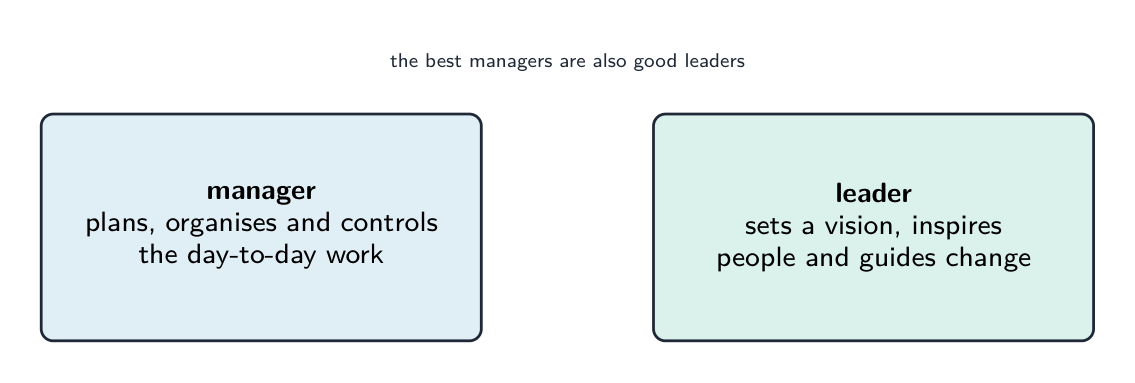
Leadership 领导 and management are not the same.
- a manager plans, organises and controls the day-to-day work.
- a leader sets a vision 愿景, inspires people, and guides change.
The best managers are also good leaders. Effective management matters because it raises productivity, keeps good staff, helps the firm adapt to change, and turns plans into real results.
Vocabulary
Train
| English |
|---|
| leadership/ˈliːdəʃɪp/ |
| vision/ˈvɪʒn/ |
2.3
Exam tips
- Calculate and interpret labour turnover and labour productivity; high turnover raises recruitment and training costs.
- Link a motivation theory to a method: Maslow (needs), Herzberg (hygiene vs motivators), Taylor (pay).
- Distinguish financial (piece rate, bonus) from non-financial (job enrichment, empowerment) motivators.
- Distinguish leadership from management and match a style (autocratic, democratic, laissez-faire) to the situation.
Interactive lessons on this topic
Work through it step by step, with instant-check exercises.