English
Governments try to steer the whole economy. This handout covers what they aim for and the three sets of tools they use.
עברית
ממשלות מנסות לכוון את הכלכלה כולה. תרגיל זה מכסה את מה שהן שואפות להשיג ואת שלושה סוגי הכלים שהן משתמשות בהם.
A-Level Economics · כלכלה A-Level · Topic 5 · נושא 5
 8:53
8:53
התערבות ממשלתית מקרו-אקונומית
המחירים עולים במהירות. קשה למצוא עבודה. הצמיחה נעצרה. מי מתקן את זה? שני מבנים מחליטים. באחד, הממשלה בוחרת מה להוציא ומה…
English narration · English + 中文 subtitles burned in · קריאת קול באנגלית · תרגום אנגלי + סינית שרוף בתוך הסרטון
Governments try to steer the whole economy. This handout covers what they aim for and the three sets of tools they use.
ממשלות מנסות לכוון את הכלכלה כולה. תרגיל זה מכסה את מה שהן שואפות להשיג ואת שלושה סוגי הכלים שהן משתמשות בהם.

Source: Cambridge International syllabus · מקור: הסיילבוס הבינלאומי של קמבריד'ג'
A government usually has five main aims:
The aims can conflict 冲突 — reaching one can hurt another:
The government has three sets of tools. Fiscal and monetary policy are demand-side policies 需求侧政策 (they work on AD). Supply-side policy works on aggregate supply 总供给.
לממשלה יש בדרך כלל חמישה מטרות עיקריות:
המטרות יכולות להסתיר — השגחת אחת עלולה לפגוע באחרת:
לממשלה יש שלושה סוגי כלים. מדיניות פיסקאלית ומוניטארית הן מדיניות דורשת-צד (היא פועלת על AD). מדיניות מציעת-צד פועלת על היצע הכולל.

Classify policy examples by the macroeconomic objective they target. · סווגו דוגמאות למדיניות לפי המטרה המקרו-כלכלית שהיא שואפת להשיג.
| English | עברית |
|---|---|
| price stability/praɪs stəˈbɪlɪti/ | יציבות מחירים |
| inflation/ɪnˈfleɪʃn/ | אינפלציה |
| full employment/fʊl emˈplɔɪmənt/ | עיסוק מלא |
| economic growth/ˌiːkəˈnɒmɪk ɡrəʊθ/ | צמיחה כלכלית |
| balance of payments/ˈbæləns ɒv ˈpeɪmənts/ | מאזן התשלומים |
| redistribution of income/ˌriːˌdɪstrɪˈbjuːʃn ɒv ˈɪŋkʌm/ | החלוקת מחדש של הכנסות |
| conflict/ˈkɒnflɪkt/ | מחלוקת |
| aggregate demand/ˈæɡrɪɡeɪt dɪˈmænd/ | ביקוש אגרגטי |
| demand-side policies/dɪˈmænd saɪd ˈpɒlɪsiz/ | מדיניות דרישה-צדדית |
| aggregate supply/ˈæɡrɪɡeɪt səˈplaɪ/ | היצע אגרגטי |

Source: Cambridge International syllabus · מקור: הסיילבוס הבינלאומי של קמבריד'ג'
fiscal policy 财政政策 is the use of government spending and taxation to influence the economy.
The budget 预算 compares the two:
Taxes are also grouped by how the rate changes with income:
| Type | How it works |
|---|---|
| progressive tax 累进税 | the rate rises as income rises (the rich pay a larger share) |
| proportional tax 比例税 | the rate stays the same at every income |
| regressive tax 累退税 | the rate falls as income rises (the poor pay a larger share) |
Effectiveness. Fiscal policy can act fast on AD, but it has problems: time lags (a budget is set once a year), large deficits and debt, and crowding out 挤出效应 — when heavy government borrowing pushes up interest rates and reduces private investment.
מדיניות פיסקאלית היא השימוש בהוצאות הממשלתיים ובמיסים כדי להשפיע על הכלכלה.
התקציב משווה בין שניהם:
מיסים מדורגים גם לפי האופן שבו השיעור משתנה בהתאם להכנסה:
| סוג | אופן פעולה |
|---|---|
| מס הולך וגובר | השיעור עולה ככל שההכנסה עולה (העשירים משלמים אחוז גבוה יותר) |
| מס פרופורציונלי | השיעור נשאר זהה בכל רמת ההכנסה |
| מס יורד | השיעור יורד ככל שההכנסה עולה (העניים משלמים אחוז גבוה יותר) |

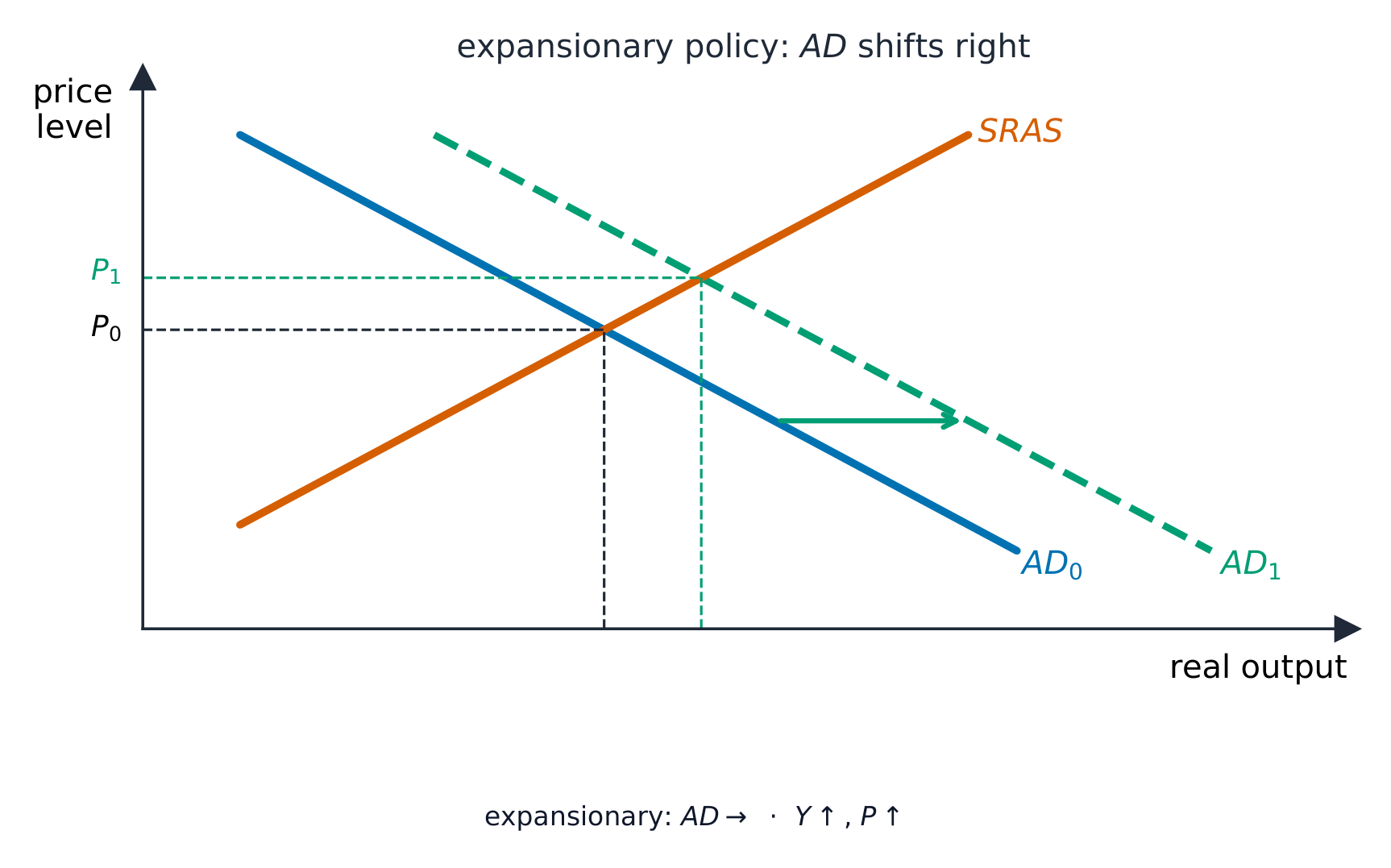
יעילות. מדיניות פיסקלית יכולה לפעול במהירות על AD, אך יש לה בעיות: השהיית זמן (תקציב נקבע פעם בשנה), גירעונות גדולים וחוב, ו-הדחפה — כאשר השאלה הממשלתית הגדולה מורמת את שיעורי הריבית ומפחיתה את ההשקעה הפרטית.
Government spending and taxes move aggregate demand (AD). Drag AD to see real output and the price level change. · הוצאות ממשלתיות ומיסים משנים את הביקוש הכולל (AD). גרור את AD כדי לראות את השינוי בתוצא האמיתי וברמת המחירים.
| English | עברית |
|---|---|
| fiscal policy/ˈfɪskl ˈpɒlɪsi/ | מדיניות פיסקלית |
| budget/ˈbʌdʒɪt/ | תקציב |
| budget deficit/ˈbʌdʒɪt ˈdefɪsɪt/ | גירעון תקציבי |
| national debt/ˈnæʃənl det/ | חוב לאומי |
| budget surplus/ˈbʌdʒɪt ˈsɜːpləs/ | עודף תקציבי |
| direct tax/daɪˈrekt tæks/ | מס ישיר |
| indirect tax/ɪndaɪˈrekt tæks/ | מס עקיף |
| progressive tax/prəˈɡresɪv tæks/ | מס הדרגתי |
| proportional tax/prəˈpɔːʃənl tæks/ | מיסוי פרופורציונלי |
| regressive tax/rɪˈɡresɪv tæks/ | מיסוי יורד |
| expansionary/ekˈspænʃənəri/ | רחבנית |
| contractionary/kənˈtrækʃənəri/ | צמצוםית |
| crowding out/ˈkraʊdɪŋ aʊt/ | החלפה (Crowding Out) |
| monetary policy/ˈmʌnɪtəri ˈpɒlɪsi/ | מדיניות מטבעית |

Source: Cambridge International syllabus · מקור: הסיילבוס הבינלאומי של קמבריד'ג'
monetary policy 货币政策 is run by the central bank 中央银行. Its main tool is the interest rate 利率, but it can also change the money supply 货币供给 or influence the exchange rate 汇率.
The transmission mechanism 传导机制 is how a change in the interest rate reaches the wider economy. If the central bank raises the interest rate:
All of these lower AD, which slows inflation. A cut in the interest rate does the opposite, raising AD.
Effectiveness. Monetary policy is flexible (the rate can change at any time), but it works with a time lag of a year or more. In a deep slump, even very low rates may not make worried firms and households borrow.
מדיניות מונית מנוהלת על ידי הבנק המרכזי. הכלי העיקרי שלה הוא שיעור הריבית, אך היא יכולה לשנות גם את הספק המוני או להשפיע על המטבע החוץ-ארצי.
מנגנון העברת השפעה הוא האופן שבו שינוי בריבית משפיע על שאר הכלכלה. אם הבנק המרכזי מעלה את הריבית:
כל אלו מפחיתים את ביקוש הכולל (AD), מה שמאט את האינפלציה. הורדת ריבית עושה את ההפך, ומגבירה את הביקוש הכולל.

יעילות. מדיניות מוניטרית היא גמישה (הריבית יכולה להשתנות בכל עת), אך יש לה זמן תגובה של שנה או יותר. במצוקה עמוקה, גם ריבית נמוכה מאוד עשויה לא לגרום לחברות ולמשפחות חוששות להשתאלף.
Changing interest rates moves aggregate demand. Lower rates → more borrowing and spending → AD shifts right. · שינוי בריבית מניעה ביקוש כולל. ריביות נמוכות יותר → יותר הלוואות והוצאות → AD זזה ימינה.
| English | עברית |
|---|---|
| central bank/ˈsentrəl bæŋk/ | הבנק המרכזי |
| interest rate/ˈɪntrest reɪt/ | שיעור ריבית |
| money supply/ˈmʌni səˈplaɪ/ | היצע כסף |
| exchange rate/eksˈtʃeɪndʒ reɪt/ | שיעור החלפה |
| transmission mechanism/trænˈsmɪʃn ˈmekənɪzəm/ | מנגנון העברה |
| supply-side policy/səˈplaɪ saɪd ˈpɒlɪsi/ | מדיניות צד האספקה |
| productive capacity/prəˈdʌktɪv kəˈpæsɪti/ | יכולת ייצורית |
| productivity/ˌprɒdəkˈtɪvɪti/ | תפוקה |
| incentive/ɪnˈsentɪv/ | מנגנון עידוד |
| privatisation/ˌpraɪvətaɪˈzeɪʃn/ | פרטיזציה |
| deregulation/diːˌreɡjʊˈleɪʃn/ | הקלה בווסתים |
| training/ˈtreɪnɪŋ/ | הדרכה |
| infrastructure/ˈɪnfrəstrʌktʃə/ | תשתית |

Source: Cambridge International syllabus · מקור: הסיילבוס הבינלאומי של קמבריד'ג'
supply-side policy 供给侧政策 tries to raise the economy's productive capacity 生产能力 — to shift long-run aggregate supply to the right. It aims to make markets work better and raise productivity 生产率.
There are two kinds.
Market-based policies let markets work more freely:
Interventionist policies use the government directly:
Effectiveness. Supply-side policy is powerful because it can raise growth and lower inflation at the same time, with no trade-off. But it is slow (education takes years to pay off), costly, and some measures, like cutting benefits, can widen inequality.
Worked example. An economy is in a deep recession with a large output gap, and interest rates are already near zero. Which policy should the government use, and why is the other one weak here? Monetary policy is weak: with the base rate already near zero there is almost no room to cut further, and even cheap credit will not make firms invest when they expect no demand. Fiscal policy is stronger: government spending raises aggregate demand directly, without waiting for anyone to choose to borrow, and the multiplier means each pound spent raises national income by more than a pound as it is re-spent. Weigh the costs against it - a bigger budget deficit and rising debt, plus time lags on large projects. Match the policy to the constraint named in the question: here it is the zero lower bound, and that is precisely what makes fiscal policy the answer.
מדיניות צד האספקה שואפת להגביר את הקיבולת המייצרת של הכלכלה – להזיז את ספק האגרגטיבי לטווח הארוך (LRAS) ימינה. היא שואפת לשפר את פעילות השווקים ולהגביר את התפוקה.
ישנם שני סוגים.
מדיניות מבוססת שוק מאפשרת לשווקים לפעול בחופשיות גדולה יותר:
מדיניות התערבותית משתמשת בממשלה ישירות:
יעילות. מדיניות צד האספקה היא עוצמתית משום שהיא יכולה להגביר את הצמיחה וגם להוריד את האינפלציה בו-זמנית, ללא פשרה. אך היא איטית (השקעה בחינוך דורשת שנים לפני ההחזר), יקרה, וחלק מהאמצעים, כמו גיזוז זכויות, עלולים להעמיק את אי-השוויון.
דוגמה מופרדת. כלכלה נמצאת בשפל עמוק עם פערי תפוקה גדולים, והריבית כבר קרובה לאפס. אילו מדיניות עליה לממשלה להשתמש, ולמה השנייה חלשה כאן? המדיניות המונטרית חלשה: מכיוון שהריבית הבסיסית כבר קרובה לאפס, אין כמעט מקום לגזירה נוספת, ואף האשראי הזול לא יגרום לחברות להשקיע כאשר הן מצפות לבקשה שאינה קיימת. המדיניות הפיסקלית חזקה יותר: הוצאות הממשלה מגבירות את הביקוש הכולל ישירות, מבלי להמתין לכך שמישהו יבחר להלוות, וה-מכפילה משמעותה שכל לيرة הנשקעת מעלה את התפוקה הלאומית ביותר מלيرة אחת כשהיא מושקעת מחדש. יש לאזן את העלויות מול היתרונות – גירעון תקציבי גדול יותר ועלייה בהחוב, בנוסף ל-הפרשי זמן בפרויקטים גדולים. התאם את המדיניות ל-המגבלה המוזכרת בשאלה: במקרה זה מדובר בגבול התחתון של אפס, וזה בדיוק מה שהופך את המדיניות הפיסקלית לתשובה המתאימה.
Supply-side policies raise the economy's productive capacity — aggregate supply (AS) shifts right, lowering the price level at higher output. · מדיניות צד האספקה מגבירה את היכולת הפרודוקטיבית של הכלכלה — האספקה הכוללת (AS) זזה ימינה, ומורידה את רמת המחירים ברמת תפוקה גבוהה יותר.
Work through it step by step, with instant-check exercises. · לעבור על הדברים צעד אחר צעד, עם תרגילים לבדיקה מיידית.
Loading subjects… · טוען נושאים…