תחנת החשמל הזו מייצרת חשמל, ואתם משלמים עליו. אך התושבים הסמוכים נושמים את העשן, ולא אישרו לעולם דבר….
English narration · English + 中文 subtitles burned in · קריאת קול באנגלית · תרגום אנגלי + סינית שרוף בתוך הסרטון
3.1
Why markets fail · מדוע שווקים כושלים
Syllabus · סיילבוס
English
explain market failure as the failure to achieve an efficient allocation of resources
explain the reasons for intervention: externalities, public goods, merit/demerit goods, monopoly power, inequality, asymmetric information
עברית
הסבר כשל שוק ככשל בהשגת הקצאה יעילה של משאבים
הסבר הסיבות להתערבות: חיצוניות, סחורות ציבוריות, סחורות פנימיות/חיצוניות, כוח מונופולי, אי-שוויון, מידע א-סימטרי
Source: Cambridge International syllabus · מקור: הסיילבוס הבינלאומי של קמבריד'ג'
English
A free market often gives a good result, but not always. market failure 市场失灵 is when the market does not allocate 配置 (share out) resources efficiently — too much or too little of a good is made. Then the government may step in.
There are several reasons for market failure.
Externalities
An externality 外部性 is a cost or a benefit that falls on a third party 第三方 — someone who is not the buyer or the seller.
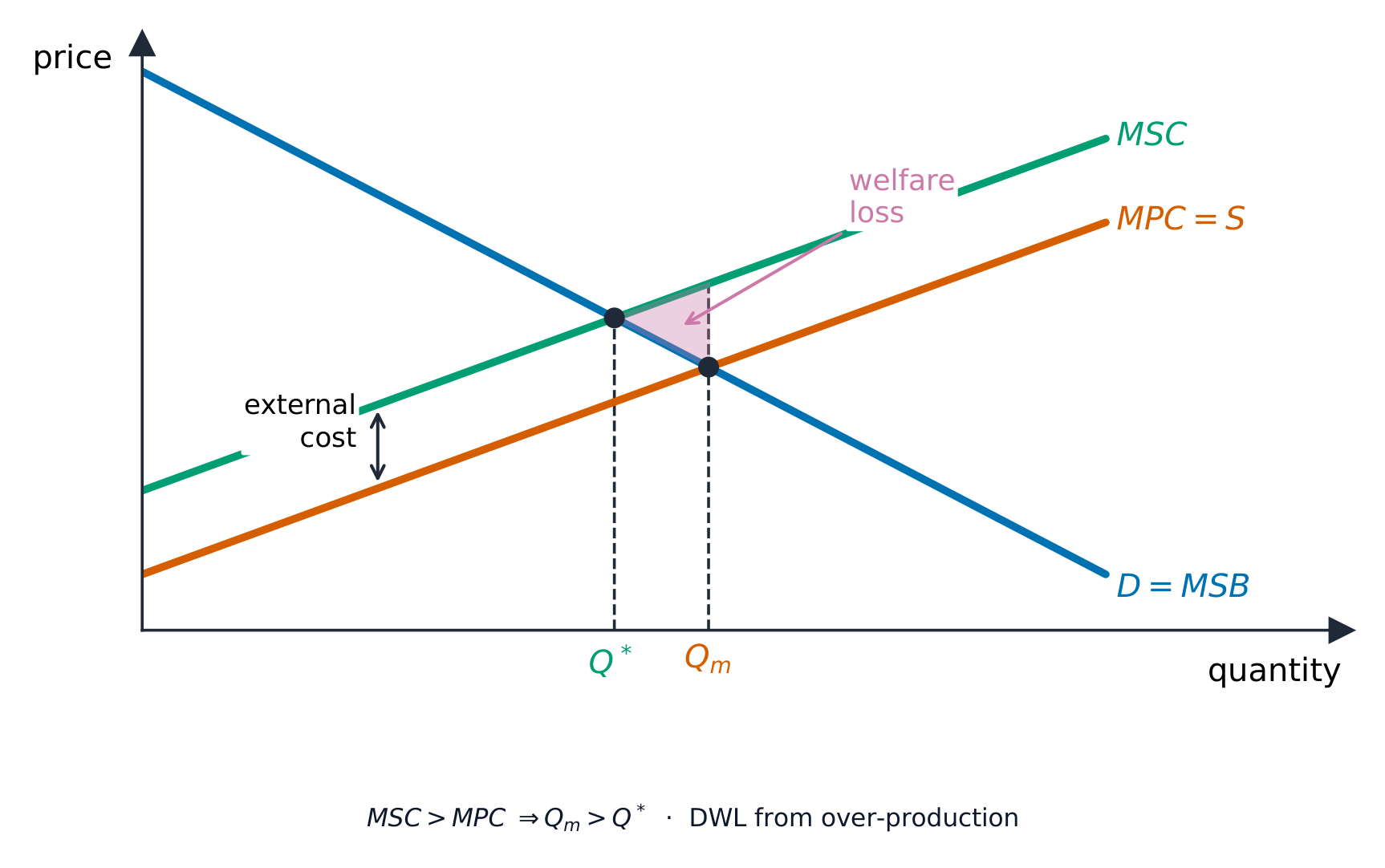
a negative externality 负外部性 is an external cost 外部成本 paid by others, like the pollution from a factory. The social cost 社会成本 (the cost to all of society) is bigger than the private cost 私人成本 (the cost to the producer). When people ignore the external cost, the market makes too much of the good.
a positive externality 正外部性 is an external benefit 外部收益 enjoyed by others, like the protection that vaccination gives to everyone. Here the market makes too little, because buyers ignore the benefit to others.
Public goods
A public good 公共物品 (like street lighting or national defence) has non-rivalry 非竞争性 and non-excludability 非排他性. Because non-payers cannot be shut out, there is a free-rider problem 搭便车问题, so private firms make no profit and supply none. The market fails completely.
Merit and demerit goods
A merit good 优值品 (like education) is under-consumed; a demerit good 劣值品 (like cigarettes) is over-consumed. People misjudge them because of information failure 信息失灵 — they do not know, or do not use, the true benefit or harm.
Monopoly power
monopoly 垄断 means one firm dominates a market. A firm with monopoly power 垄断势力 can cut output and raise the price above the competitive level. This wastes resources and harms consumers.
Inequality and asymmetric information
the market rewards people who own resources, so it can produce great inequality 不平等 — some people are left with too little to live on.
asymmetric information 信息不对称 is when one side of a deal knows more than the other (a used-car seller knows the faults; the buyer does not). This leads to poor decisions and unfair deals.
עברית
שווק חופשי מניב לעיתים קרובות תוצאה טובה, אך לא תמיד. כשל שוק הוא מצב שבו השוק אינו מקצה (חלק) משאבים ביעילות — מיוצרת כמות רבה מדי או מעטה מדי של סחורה. אז הממשלה עשויה להתערב.
ישנם מספר סיבות לכשל שוק.
תחנת כוח פחם: ייצור חשמל עלול להטיל חיצונייה שלילית כמו זיהום על אנשים שאינם חלק מהעסקה.
חיצוניויות
חיצוניות היא עלות או תועלת החלות על צד שלישי — מישהו שאינו הקונה ואינו המוכר.
חיצונייה שלילית היא עלות חיצונית שמשלמים אחרים, כמו הזיהום מפרי קבלן. ה-עלות החברתית (העלות לכלל החברה) גדולה מה-עלות הפרטית (העלות ליצרן). כאשר אנשים מתעלמים מעלות החיצונית, השוק מייצר יותר מדי מהסחורה.
חיצונייה חיובית היא תועלת חיצונית הנהנית ממנה אחרים, כמו ההגנה שהחיסון מספק לכלל האנשים. כאן השוק מייצר פחות מדי, מכיוון שקונים מתעלמים מהתועלת לאחרים.
עם חיצונייה שלילית, העלות החברתית (MSC) נמצאת מעל העלות הפרטית (MPC), ולכן השוק מייצר יותר מדי ב-$Q_m$ במקום באופטימום החברתי $Q^*$; המשולש המוצל הוא אובדן הרווחה.עם חיצונייה חיובית, התועלת החברתית (MSB) נמצאת מעל התועלת הפרטית (MPB), ולכן השוק מייצר פחות מדי ב-$Q_m$ במקום באופטימום החברתי $Q^*$.
סחורות ציבוריות
טוב ציבורי (כמו תאורת רחוב או הגנה לאומית) מאפיין אי-תחרותיות ואי-חסימות. מכיוון שלא ניתן לחסום את הללא-משתלמים, קיים בעיית המסע ללא תשלום, ולכן חברות פרטיות אינן מרוויחות ומספקות אפס. השוק כושל לחלוטין.
סחורות זכותיות וסחורות פסולתיות
טוב זכות (כמו חינוך) נצרך בכמות מופחתת; טוב פגם (כמו סיגריות) נצרך בכותרת מוגזמת. אנשים מקרים אותם בשל כשל מידע — הם אינם יודעים, או אינם משתמשים, בתועלת או ברעה האמיתיות.
כוח מונופולי
מונופול פירוט שחברה אחת שולטת בשוק. לחברה עם כוח מונופולי יש אפשרות להקטין את הייצור ולהעלות את המחיר מעל הרמה התחרותית. הדבר מבזבז משאבים וגורם נזק לצרכנים.
אי-שוויון ומידע אסימטרי
השוק מעניק פרסים לאנשים בעלי משאבים, ולכן הוא עלול לייצר אי-שוויון גדול — חלק מהאנשים נשארים עם פחות מדי למחייה.
מידע אסימטרי הוא מצב שבו צד אחד בעסקה יודע יותר מהצד השני (מוכר רכב יד שנייה יודע את הפגמים; הקונה אינו יודע). הדבר מוביל להחלטות גרועות ועסקאות לא הוגנות.
Explore · חקור
The market and where it fails · השוק ואين הוא כושל
Supply and demand set the market price and quantity at their intersection. Market failure is when this free-market outcome is not the best one for society. · ההיצע והביקוש קובעים את מחיר השוק וכמותו בנקודת החיתוך. כישלון שוק הוא מצב שבו תוצאת שוק חופשי זו אינה הטובה ביותר לחברה.
Methods of government intervention · שיטות התערבות ממשלתית
Syllabus · סיילבוס
English
explain methods of intervention: indirect taxes, subsidies, maximum and minimum prices, buffer stocks, regulation, provision, tradable permits
analyse the effects of intervention, including the incidence of indirect taxes and the concept of government failure
עברית
הסבר שיטות התערבות: מיסים עקיפים, סבסודים, מחיר מקסימום ומינימום, מלאי בטיחות, ויסות, ספק, היתרי מסחר
ניתוח ההשפעות של ההתערבות, כולל נשיאת מיסים עקיפים וקונספט כשל ממשלתי
Source: Cambridge International syllabus · מקור: הסיילבוס הבינלאומי של קמבריד'ג'
English
A maximum price creates a shortage
Indirect taxes
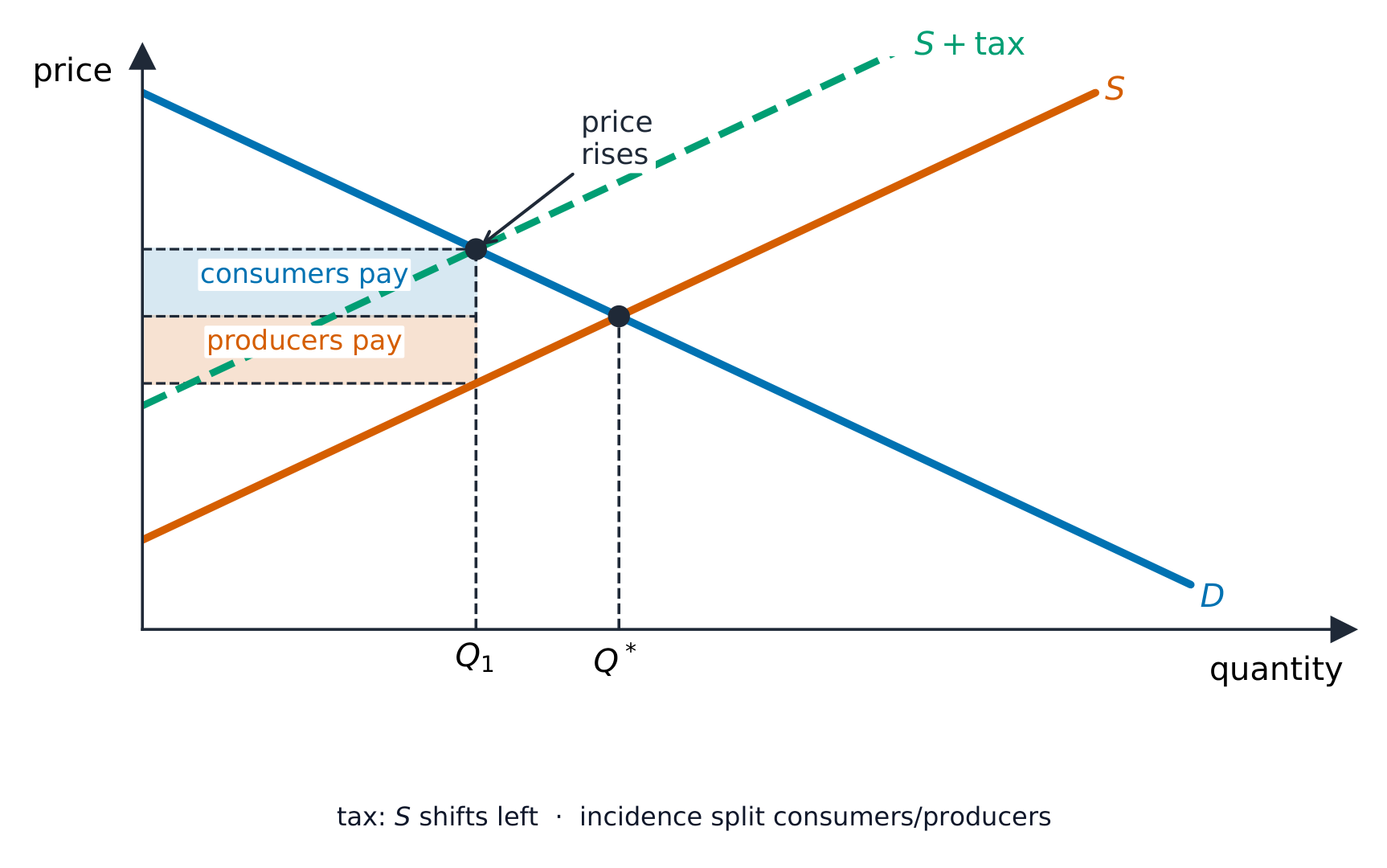
An indirect tax 间接税 is a tax on spending. It raises a firm's costs, shifts the supply curve to the left, and so raises the price and cuts the quantity. Governments tax demerit goods (like tobacco) and goods with negative externalities to make people use less.
The incidence of a tax 税收归宿 is who really pays it. This depends on elasticity:
if demand is inelastic 缺乏弹性, consumers pay most of the tax (the price rises by nearly the full tax).
if demand is elastic 富有弹性, producers pay most of the tax (they cannot pass it on).
Subsidies
A subsidy 补贴 is a government payment to producers. It lowers their costs, shifts the supply curve to the right, and so lowers the price and raises the quantity. Subsidies are used for merit goods and goods with positive externalities.
Maximum and minimum prices
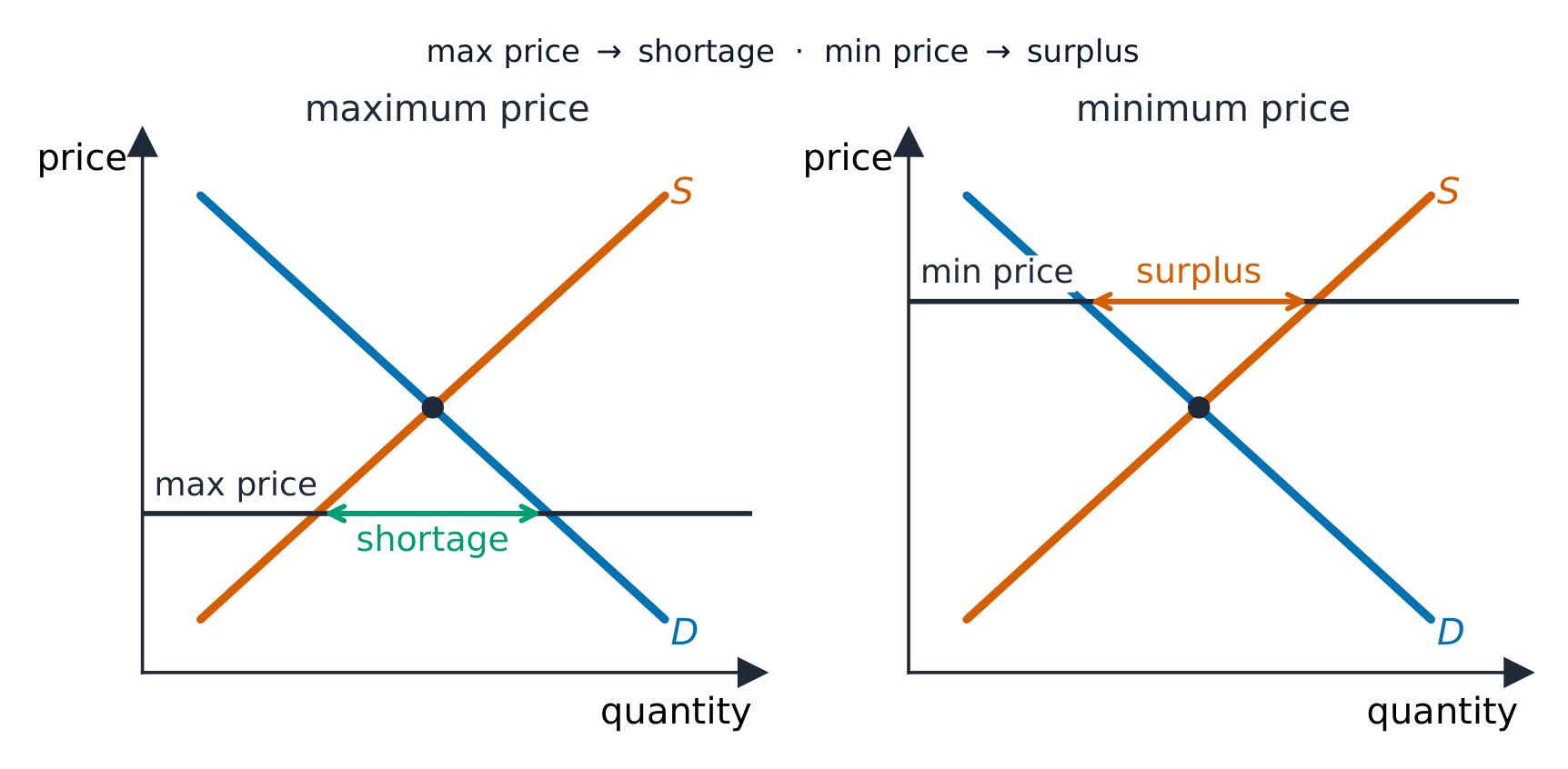
a maximum price 最高限价 is a legal top price, set below equilibrium (for example, rent control). Because the price is held down, quantity demanded is greater than quantity supplied, so there is a shortage 短缺.
a minimum price 最低限价 is a legal bottom price, set above equilibrium (for example, a minimum wage, or a floor for farm prices). Because the price is held up, quantity supplied is greater than quantity demanded, so there is excess supply 超额供给.
Buffer stocks
A buffer stock 缓冲库存 is used to steady the price of farm goods. The government buys and stores the good when the price is low, and sells from the store when the price is high. This keeps the price inside a target band.
Regulation, provision and permits
regulation 管制 means rules and laws — bans, age limits, safety standards, or pollution limits.
state provision 政府提供 means the government 政府 supplies a good directly, often free at the point of use (public goods and merit goods like schools and hospitals).
tradable permits 可交易许可证 set a total cap on pollution and give firms permits to pollute. Firms that pollute less can sell spare permits to firms that pollute more. This caps total pollution at the lowest cost.
Government failure
Intervention does not always help. government failure 政府失灵 is when the government's action makes the use of resources worse, not better. Common causes:
poor information, so the government sets the wrong tax or subsidy.
high cost of running the policy.
unintended results — for example, a maximum price can create an illegal black market 黑市.
decisions made for political reasons rather than for efficiency.
Worked example. A government puts a £2 per-packet tax on cigarettes, whose demand is very price-inelastic. Who really pays it, and what does that mean for the policy's two aims? The incidence falls mainly on whichever side is less able to respond - the more inelastic one. Because smokers keep buying almost the same quantity as the price rises, producers can pass most of the tax on, so consumers bear most of the incidence: the price might rise by about £1.80, with producers absorbing only about £0.20. That creates the tension the question is really testing. As a revenue raiser the tax succeeds: quantity barely falls, so revenue is large and steady. As a way of cutting consumption it largely fails - for exactly the same reason. And because poorer smokers spend a larger share of their income on it, the tax is regressive. Argue from elasticity to incidence, then judge each aim separately.
עברית
מחיר מקסימום יוצר מחסור
מסים עקיפים
מס עקיף הוא מס על הוצאה. הוא מעלה את העלויות של החברה, מזיז את עקומת ההיצע שמאלה, ולכן מעלה את המחיר ומצמצם את הכמות. הממשלות מטילות מסים על סחורות פוגעניות (כמו טבק) ועל סחורות עם חוץ-אפקטים שליליים כדי להפחית את השימוש בהן.
סיגריות הן סחורה פוגענית — נצרכות בעודף מכיוון שאנשים מעריכים שגוה את הנזק — ולכן הממשלות מטילות עליהן מס כבד.
השכימת המס היא מי משלם אותו בפועל. הדבר תלוי בגמישות:
אם הביקוש הוא אלסטי, הצרכנים משלמים את רוב המס (המחיר עולה בקרוב לסכום המס כולו).
אם הביקוש הוא גמיש, היצרנים משלמים את רוב המס (הם אינם יכולים להעביר אותו).
מס עקיף מזיז את ההיצע כלמעלה ל$S+\text{tax}$, מעלה את המחיר ומצמצם את הכמות; המעמ מתחלק בין צרכנים ליצרנים.
סבסודים
סבסוד הוא תשלום ממשלתי ליצרנים. הוא מפחית את עלויותיהם, מזיז את עקומת ההיצע לימין, ולכן מפחית את המחיר ומגדיל את הכמות. סבסודים משמשים לעידוד סחורות בונות וסחורות עם חוץ-אפקטים חיוביים.
סבסוד מזיז את ההיצע כלמטה ל$S+\text{subsidy}$, מפחית את המחיר ומגדיל את הכמות הנסחרת.
מחירים מקסימום ומינימום
מחיר מקסימום הוא גבול מחיר חוקי, קבוע מתחת למחיר השוויון (למשל, בקרת שכירות). מכיוון שהמחיר מוחזק ברמה נמוכה, הכמות המבוקשת גדולה מהכמות המוצעת, ולכן נוצר מחסור.
מחיר מינימום הוא גבול מחיר חוקי, קבוע מעל מחיר השוויון (למשל, שכר מינימום, או רצפת מחירים לחקלאות). מכיוון שהמחיר מוחזק ברמה גבוהה, הכמות המוצעת גדולה מהכמות המבוקשת, ולכן נוצר עודף אספקה.
מחיר מקסימום שנקבע מתחת למחיר שיווי משקל גורר מחסור; מחיר מינימום שנקבע מעל מחיר שיווי המשקל גורר עודף.
מלאי ביטחון
ממלאי ביטחון משמש ליצבת המחיר של מוצרי חקלאות. הממשלה רוכשת ואוגרת את המוצר כאשר המחיר נמוך, ומכירה ממנו כאשר המחיר גבוה. כך נשמר המחיר בתוך מגמה יעודה.
מלאי ביטחון שומר על המחיר בתוך מגמה: הממשלה קונה כשהוא פוגע ברצפה ומוכר כשהוא פוגע בתקרה
רגולציה, אספקה ורישיונות
רגולציה פירוניה חוקים ותקנות — איסורים, הגבלות גיל, סטנדרטי בטיחות או הגבלות זיהום.
אספקה ממשלתית פירוניה שהממשלה מספקת מוצר ישירות, לעיתים ללא תשלום בנקודת השימוש (ציבוריים וטובים מרווחים כמו בתי ספר ובתי חולים).
רישיונות מסחר קובעים סقف כולל לזיהום ומעניקים לחברות רישיונות לזהום. חברות שמזהמות פחות יכולות למכור רישיונות עודפים לחברות שמזהמות יותר. כך נקבע סף לזיהום כולל בעלות הנמוכה ביותר.
כשל ממשלתי
התערבות אינה תמיד מועילה. כשל ממשלתי הוא מצב שבו פעולת הממשלה גורמת להיעילות בשימוש המשאבים להיות פחות טובה, ולא טובה יותר. סיבות נפוצות:
מידע לקוי, ולכן הממשלה קובעת מס או סובsidia שגוי.
עלות גבוהה להפעלת המדיניות.
תוצאות בלתי צפויות – לדוגמה, מחיר מקסימום עלול ליצור שוק שחור בלתי חוקי.
החלטות שנלקחות מסיבות פוליטיות ולא מסיבות יעילות.
דוגמה מפורטת. ממשלה מטילה מס של £2 לכל חבילת סיגריות, שביקוש אליה הוא אלסטי במחיר (inelastic) מאוד. מי באמת משלם אותו, ומה המשמעות לשני היעדים של המדיניות? העומס המסוי נוטה בצורה מרכזית לצד שהוא פחות מסוגל להגיב – הצד האלסטי יותר. מכיוון שמעשנים ממשיכים לקנות כמות דומה כמעט כשהמחיר עולה, יצרנים יכולים להעביר את רוב המס, ולכן הצרכנים נושאים ברוב העומס: המחיר עשוי לעלות בכ-£1.80, בעוד שהיצרנים סופגים רק כ-£0.20. זאת יוצרת את המתח ששאלה זו really בודקת. כמייצר הכנסות, המס מצליח: הכמות יורדת מעט בלבד, ולכן ההכנסה גדולה ויציבה. ככלי לצמצום צריכה, הוא כשל לגמרי – בדיוק מאותה סיבה. וכיוון שעשנים בעלי הכנסה נמוכה מוציאים אחוז גדול יותר מההכנסה שלהם על זה, המס הוא מס הולך. יש לטעון מאלסטיות לעומס המסוי, ואז לשפוט כל יעד בנפרד.
Explore · חקור
Reasons for intervention · סיבות להתערבות
Governments step into markets when the free-market equilibrium isn't the best outcome for society. · ממשלות נכנסות לשוקים כאשר איזון השוק החופשי אינו התוצאה הטובה ביותר לחברה.
Income and wealth inequality · אי-שוויון הכנסה ועושר
Syllabus · סיילבוס
English
distinguish income and wealth and explain the causes of inequality
explain policies to redistribute income and wealth (progressive taxation, benefits, provision of services) and their effects
עברית
הבדל בין הכנסה לעושר והסבר הסיבות לאי-שוויון
הסבר מדיניות להעברת הכנסה ועושר (מיסוי הדרגתי, תשלומי סוציאליים, מתן שירותים) והשפעותיהן
Source: Cambridge International syllabus · מקור: הסיילבוס הבינלאומי של קמבריד'ג'
English
It helps to separate two ideas:
income 收入 is a flow 流量 — money received over a period, such as wages, rent and interest.
wealth 财富 is a stock 存量 — the value of assets owned at a point in time, such as houses, shares and savings.
Wealth produces income (savings earn interest), and income can be saved to build wealth, so the two are linked. Inequality has many causes: differences in skills and wages, the ownership of wealth, inheritance, and unemployment.
Policies to reduce inequality
a progressive tax 累进税 takes a larger percentage 百分比 from higher incomes than from lower incomes. This narrows the gap after tax.
benefits 福利金 (also called transfer payments 转移支付) are money paid by the government to the poor, the old, and the unemployed.
state provision of free services, like education and health care, raises the real living standards of poorer people.
Together these policies bring about redistribution 再分配 — moving income and wealth from richer to poorer people. But there is a trade-off 取舍: very high taxes and large benefits may weaken the incentive 激励 to work and to invest.
עברית
מועיל להפריד בין שני מושגים:
הכנסה היא זרימה – כסף שהתקבל בתקופה מסוימת, כגון שכר, שכירות וריבית.
עושר הוא מלאי – ערך הנכסים שברשות אדם בנקודת זמן נתונה, כגון נכסים, מניות וחיסכון.
עושר מייצר הכנסה (חסכונות מרוויחים ריבית), והכנסה יכולה להיות חסכונית כדי לבנות עושר, ולכן שניהם קשורים. לא-שוויון יש לו הרבה סיבות: הבדלים במיומנויות ודירות, רכישת עושר, ירושה, ואבטלה.
מדיניות להפחתת אי-שוויון
מס הולך ועולה נוטל אחוז גדול יותר מהכנסות גבוהות מאשר מהכנסות נמוכות. זה מצמצם את הפער לאחר המיסוי.
תשלומי סוציאליים (נקראים גם תשלומי העברה) הם כסף שממשלה משלמת לעניים, לקשישים ולמובטלים.
מתן מצב של שירותים חינם, כמו חינוך ובריאות, מרים את רמת החיים האמיתית של אנשים בעלי הכנסה נמוכה.
ביחד מדיניות אלו מובילות להעברת הכנסות — הזזת הכנסה ועושר מאנשים עשירים לאנשים בעלי הכנסה נמוכה. אבל יש תמורה: מיסים גבוהים מאוד ותשלומים גדולים עלולים לחלש את המotive לעבוד ולהשקיע.
עושר ועוני לצד זה: שוק לבדו עשיר להשאיר אי-שוויון הכנסה גדול ללא מענה
Explore · חקור
Inequality policy route · מסלול מדיניות לאי-שוויון
Follow how policy can change disposable income and opportunity. · עקוב אחר כך שמדיניות יכולה לשנות את ההכנסה הניתנת לשימוש והזדמנויות.
Pick one and the site follows you — notes, papers, videos and practice all open on it. · בחרו נושא אחד והאתר יעקוב אחריו — הערות, מסמכים, וידאו ותרגולים פתוחים בו.
Type to search notes, lessons, code, vocabulary and past-paper questions across every subject. · הקלד כדי לחפש הערות, שיעורים, קוד, אוצר מילים ושאלות מבחנים בכל הנושאים.