English
Governments try to steer the whole economy. This handout covers what they aim for and the three sets of tools they use.
العربية
تحاول الحكومات توجيه الاقتصاد الكلي. يغطي هذا الملف ما نسعون إليه والأدوات الثلاث التي نستخدمها.
A-Level Economics · A-Level الاقتصاد · Topic 5 · الموضوع 5
 8:53
8:53
التدخل الحكومي في الاقتصاد الكلي
الأسعار ترتفع بسرعة. الوظائف يصعب إيجادها. توقف النمو. من يصلح هذا؟ مبانٍ اثنان يقرران. في أحدهما، تختار الحكومة ما تنفقه وما…
English narration · English + 中文 subtitles burned in · سرد باللغة الإنجليزية · ترجمة مدمجة بالإنجليزية + الصينية
Governments try to steer the whole economy. This handout covers what they aim for and the three sets of tools they use.
تحاول الحكومات توجيه الاقتصاد الكلي. يغطي هذا الملف ما نسعون إليه والأدوات الثلاث التي نستخدمها.

Source: Cambridge International syllabus · المصدر: منهج كامبريدج الدولي
A government usually has five main aims:
The aims can conflict 冲突 — reaching one can hurt another:
The government has three sets of tools. Fiscal and monetary policy are demand-side policies 需求侧政策 (they work on AD). Supply-side policy works on aggregate supply 总供给.
عادةً ما يكون للحكومة خمسة أهداف رئيسية:
قد تتعارض الأهداف — حيث تحقيق هدف واحد قد يضر بآخر:
يملك الحكومة ثلاث مجموعات من الأدوات. السياسة المالية والسياسة النقدية هما سياسات جانب الطلب (تعمل على AD). سياسة جانب العرض تعمل على العرض الكلي.

Classify policy examples by the macroeconomic objective they target. · صنّف أمثلة السياسات حسب الهدف الاقتصادي الكلي الذي تستهدفه.
| English | العربية |
|---|---|
| price stability/praɪs stəˈbɪlɪti/ | استقرار الأسعار |
| inflation/ɪnˈfleɪʃn/ | التضخم |
| full employment/fʊl emˈplɔɪmənt/ | full employment |
| economic growth/ˌiːkəˈnɒmɪk ɡrəʊθ/ | النمو الاقتصادي |
| balance of payments/ˈbæləns ɒv ˈpeɪmənts/ | ميزان المدفوعات |
| redistribution of income/ˌriːˌdɪstrɪˈbjuːʃn ɒv ˈɪŋkʌm/ | إعادة توزيع الدخل |
| conflict/ˈkɒnflɪkt/ | على تناقض |
| aggregate demand/ˈæɡrɪɡeɪt dɪˈmænd/ | الإجماع على الطلب الكلي |
| demand-side policies/dɪˈmænd saɪd ˈpɒlɪsiz/ | سياسات جانب الطلب |
| aggregate supply/ˈæɡrɪɡeɪt səˈplaɪ/ | الإجماع على العرض الكلي |

Source: Cambridge International syllabus · المصدر: منهج كامبريدج الدولي
fiscal policy 财政政策 is the use of government spending and taxation to influence the economy.
The budget 预算 compares the two:
Taxes are also grouped by how the rate changes with income:
| Type | How it works |
|---|---|
| progressive tax 累进税 | the rate rises as income rises (the rich pay a larger share) |
| proportional tax 比例税 | the rate stays the same at every income |
| regressive tax 累退税 | the rate falls as income rises (the poor pay a larger share) |
Effectiveness. Fiscal policy can act fast on AD, but it has problems: time lags (a budget is set once a year), large deficits and debt, and crowding out 挤出效应 — when heavy government borrowing pushes up interest rates and reduces private investment.
السياسة المالية هي استخدام إنفاق الحكومة والضرائب للتأثير على الاقتصاد.
يقارن الميزانية بين الاثنين:
تُصنف الضرائب أيضًا حسب كيفية تغير المعدل مع الدخل:
| النوع | كيفية عملها |
|---|---|
| ضريبة تقدمية | يرتفع المعدل مع ارتفاع الدخل (يدفع الأغنياء حصة أكبر) |
| ضريبة متناسبة | يبقى المعدل ثابتًا عند كل مستوى دخل |
| ضريبة رجعية | ينخفض المعدل مع ارتفاع الدخل (يدفع الفقراء حصة أكبر) |

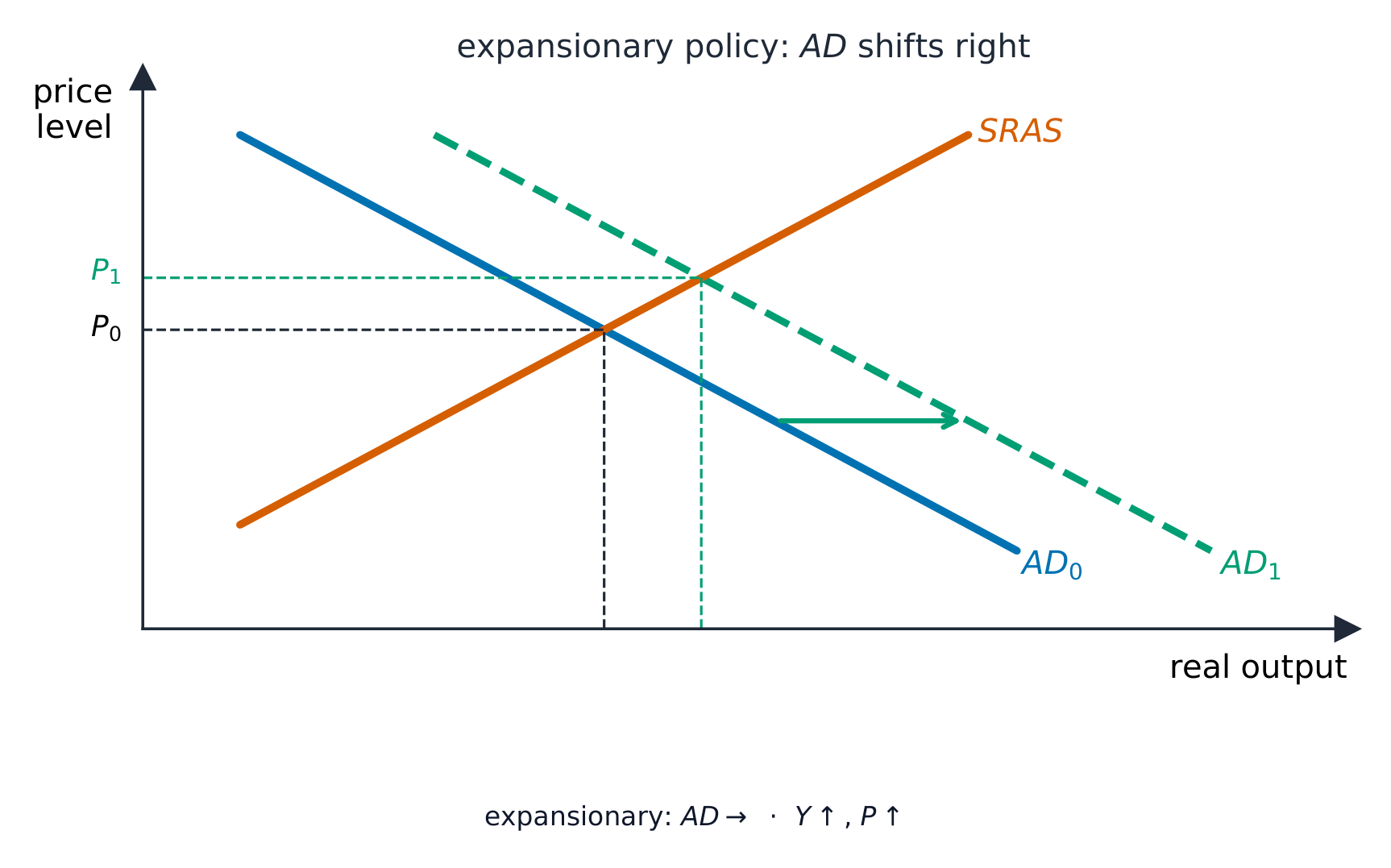
الفعالية. يمكن للسياسة المالية أن تؤثر بسرعة على AD، لكنها تواجه مشاكل: تأخر زمني (يتم إعداد ميزانية مرة واحدة سنويًا)، وعجز كبير وديون، والإزاحة — عندما يؤدي الاقتراض الحكومي الثقيل إلى رفع أسعار الفائدة وتقليل الاستثمار الخاص.
Government spending and taxes move aggregate demand (AD). Drag AD to see real output and the price level change. · ينقل إنفاق الحكومة والضرائب الطلب الكلي (AD). اسحب AD لرؤية تغيرات الإنتاج الحقيقي ومستوى الأسعار.
| English | العربية |
|---|---|
| fiscal policy/ˈfɪskl ˈpɒlɪsi/ | السياسة المالية |
| budget/ˈbʌdʒɪt/ | الميزانية |
| budget deficit/ˈbʌdʒɪt ˈdefɪsɪt/ | عجز الميزانية |
| national debt/ˈnæʃənl det/ | ديونه الوطنية |
| budget surplus/ˈbʌdʒɪt ˈsɜːpləs/ | فائض الميزانية |
| direct tax/daɪˈrekt tæks/ | ضريبة مباشرة |
| indirect tax/ɪndaɪˈrekt tæks/ | ضريبة غير مباشرة |
| progressive tax/prəˈɡresɪv tæks/ | ضريبة تقدمية |
| proportional tax/prəˈpɔːʃənl tæks/ | ضريبة نسبية |
| regressive tax/rɪˈɡresɪv tæks/ | ضريبة تناقصية |
| expansionary/ekˈspænʃənəri/ | توسعية |
| contractionary/kənˈtrækʃənəri/ | انقباضية |
| crowding out/ˈkraʊdɪŋ aʊt/ | الإزاحة |
| monetary policy/ˈmʌnɪtəri ˈpɒlɪsi/ | السياسة النقدية |

Source: Cambridge International syllabus · المصدر: منهج كامبريدج الدولي
monetary policy 货币政策 is run by the central bank 中央银行. Its main tool is the interest rate 利率, but it can also change the money supply 货币供给 or influence the exchange rate 汇率.
The transmission mechanism 传导机制 is how a change in the interest rate reaches the wider economy. If the central bank raises the interest rate:
All of these lower AD, which slows inflation. A cut in the interest rate does the opposite, raising AD.
Effectiveness. Monetary policy is flexible (the rate can change at any time), but it works with a time lag of a year or more. In a deep slump, even very low rates may not make worried firms and households borrow.
السياسة النقدية تُدار بواسطة البنك المركزي. أداة رئيسية له هي سعر الفائدة، لكنه يمكنه أيضًا تغيير كمية النقود أو التأثير على سعر الصرف.
آلية النقل هي كيف يصل التغيير في سعر الفائدة إلى الاقتصاد الواسع. إذا قام البنك المركزي بـ رفع سعر الفائدة:
كل هذه العوامل تخفض AD، مما يبطئ التضخم. خفض سعر الفائدة يفعل العكس، رافعًا AD.

الفعالية. السياسة النقدية مرنة (يمكن تغيير السعر في أي وقت)، لكنها تعمل بتأخير زمني يبلغ سنة أو أكثر. في حالة ركود عميق، قد لا تجعل حتى الأسعار المنخفضة جدًا للشركات والأسر القلقين الاقتراض.
Changing interest rates moves aggregate demand. Lower rates → more borrowing and spending → AD shifts right. · تغيير أسعار الفائدة يحرك الطلب الكلي. انخفاض rates → زيادة الاقتراض والإنفاق → يتحرك AD لليمين.
| English | العربية |
|---|---|
| central bank/ˈsentrəl bæŋk/ | البنك المركزي |
| interest rate/ˈɪntrest reɪt/ | نسبة الفائدة |
| money supply/ˈmʌni səˈplaɪ/ | إمداد النقود |
| exchange rate/eksˈtʃeɪndʒ reɪt/ | معدل الصرف |
| transmission mechanism/trænˈsmɪʃn ˈmekənɪzəm/ | آلية النقل |
| supply-side policy/səˈplaɪ saɪd ˈpɒlɪsi/ | السياسة الجانبية |
| productive capacity/prəˈdʌktɪv kəˈpæsɪti/ | القدرة الإنتاجية |
| productivity/ˌprɒdəkˈtɪvɪti/ | الإنتاجية |
| incentive/ɪnˈsentɪv/ | حافز |
| privatisation/ˌpraɪvətaɪˈzeɪʃn/ | الخصخصة |
| deregulation/diːˌreɡjʊˈleɪʃn/ | إزالة التنظيم |
| training/ˈtreɪnɪŋ/ | التدريب |
| infrastructure/ˈɪnfrəstrʌktʃə/ | البنية التحتية |

Source: Cambridge International syllabus · المصدر: منهج كامبريدج الدولي
supply-side policy 供给侧政策 tries to raise the economy's productive capacity 生产能力 — to shift long-run aggregate supply to the right. It aims to make markets work better and raise productivity 生产率.
There are two kinds.
Market-based policies let markets work more freely:
Interventionist policies use the government directly:
Effectiveness. Supply-side policy is powerful because it can raise growth and lower inflation at the same time, with no trade-off. But it is slow (education takes years to pay off), costly, and some measures, like cutting benefits, can widen inequality.
Worked example. An economy is in a deep recession with a large output gap, and interest rates are already near zero. Which policy should the government use, and why is the other one weak here? Monetary policy is weak: with the base rate already near zero there is almost no room to cut further, and even cheap credit will not make firms invest when they expect no demand. Fiscal policy is stronger: government spending raises aggregate demand directly, without waiting for anyone to choose to borrow, and the multiplier means each pound spent raises national income by more than a pound as it is re-spent. Weigh the costs against it - a bigger budget deficit and rising debt, plus time lags on large projects. Match the policy to the constraint named in the question: here it is the zero lower bound, and that is precisely what makes fiscal policy the answer.
سياسة جانب العرض تحاول رفع الطاقة الإنتاجية للاقتصاد — لتحريك العرض الكلي طويل الأجل لليمين. تهدف إلى جعل الأسواق تعمل بشكل أفضل ورفع الإنتاجية.
هناك نوعان.
سياسات قائمة على السوق تتيح للسوق العمل بحرية أكبر:
السياسات الت interventionist تستخدم الحكومة مباشرةً:
الفعالية. سياسة جانب العرض قوية لأنها يمكن أن ترفع النمو وتخفض التضخم في نفس الوقت، دون مضاربة. لكنها بطيئة (فإن التعليم يأخذ سنوات ليحقق عائد)، ومكلفة، وبعض التدابير مثل削减 المزايا قد توسع الفجوة بين الأغنياء والفقراء.
مثال محلول. اقتصاد في ركود عميق مع فجوة ناتج كبيرة، وأسعار الفائدة قريبة من الصفر بالفعل. أي سياسة يجب أن تستخدمها الحكومة، ولماذا الأخرى ضعيفة هنا؟ سياسة نقدية ضعيفة: بما أن سعر الفائدة الأساسي قريب من الصفر بالفعل فلا يوجد تقريباً مجال للخفض أكثر، وحتى الائتمان الرخيص لن يجعل الشركات تستثمر عندما تتوقع عدم وجود طلب. سياسة مالية أقوى: إنفاق الحكومة يرفع الطلب الكلي مباشرة، دون انتظار شخص ما للاختيار الاقتراض، والمضاعف يعني أن كل جنيه يُنفق يرفع الدخل الوطني بأكثر من جنيه واحد حيث يتم إعادة إنفاقه. قارن التكاليف مقابل ذلك - عجز ميزانية أكبر وديون متزايدة، بالإضافة إلى فترات تأخير في المشاريع الكبيرة. طابق السياسة مع القيد المذكور في السؤال: هنا هو الحد الأدنى للصفر، وهو بالضبط ما يجعل السياسة المالية هي الإجابة.
Supply-side policies raise the economy's productive capacity — aggregate supply (AS) shifts right, lowering the price level at higher output. · ترفع السياسات الجانبية العرضية القدرة الإنتاجية للاقتصاد — يتحرك العرض الكلي (AS) لليمين، مما يخفض مستوى الأسعار عند إنتاج أعلى.
Work through it step by step, with instant-check exercises. · ا-working عليه خطوة بخطوة، مع تمارين تحقق فوري.
Past Papers · أوراق الامتحانات السابقة
Loading subjects… · جار تحميل المواضيع…