宏观经济学(macroeconomics)一次看整个经济:它的总产出、它的就业,以及它的价格。这份讲义涵盖我们如何测量经济以及它能面对的主要问题。
宏观经济
A-Level 经济学 · 第 4 主题
 17:12
17:12
The macroeconomy
A city at night: every light is somebody working, building, selling. A shelf of food: every price tag changed this year. An economy is too big to see, so we…
英文讲解 · 内嵌中英文字幕
4.1
国民收入统计

大纲
- define GDP, GNI and national income and distinguish nominal and real, and total and per capita values
- explain the uses and limitations of national income statistics for measuring living standards and making comparisons
来源:剑桥国际大纲
要判断一个经济做得怎样,我们测量它的国民收入(national income)——它一年内生产的一切的总价值。
- 国内生产总值(gross domestic product,GDP)是一年内在一个国家内部制造的所有物品和服务的价值。
- 国民总收入(gross national income,GNI)是 GDP 加上一个国家的人民和企业在国外挣的收入,减去外国人在它内部挣的收入。
两个重要的区别:
- 名义(nominal)值按当前价格测量。实际(real)值经过调整以移除上涨价格的影响,所以它们显示产出的真实变化。总是比较随时间的实际值。
- 总(total)值涵盖整个国家。人均(per capita)值除以人口,所以它们显示每人的平均值。
Uses and limitations
国民收入被用来测量生活水平(standard of living)并比较国家。但它有限度:
- 它忽略收入的分配(distribution)——一个高的平均值能隐藏巨大的不平等。
- 它遗漏无偿工作(家务)和非正规经济(informal economy,隐藏的、未征税的活动)。
- 它对污染、闲暇时间或健康什么都没说。
所以一个更高的人均 GDP 通常意味着一个更好的生活,但不总是。

探索
National income flow
Watch spending become income, output and expenditure in the circular flow.
词汇表
训练
| 英文 | 中文 | 拼音 |
|---|---|---|
| macroeconomics/ˌmækrəˌriːkəˈnɒmɪks/ | 宏观经济学 | hóng guān jīng jì xué |
| national income/ˈnæʃənl ˈɪŋkʌm/ | 国民收入 | guó mín shōu rù |
| gross domestic product/ɡrəʊs dəˈmestɪk ˈprɒdʌkt/ | 国内生产总值 | guó nèi shēng chǎn zǒng zhí |
| gross national income/ɡrəʊs ˈnæʃənl ˈɪŋkʌm/ | 国民总收入 | guó mín zǒng shōu rù |
| nominal/ˈnɒmɪnl/ | 名义 | míng yì |
| real/rɪəl/ | 实际 | shí jì |
| per capita/pɜː ˈkæpɪtə/ | 人均 | rén jūn |
| standard of living/ˈstændəd ɒv ˈlɪvɪŋ/ | 生活水平 | shēng huó shuǐ píng |
| distribution/ˌdɪstrɪˈbjuːʃn/ | 分配 | fēn pèi |
| informal economy/ɪnˈfɔːml ɪˈkɒnəmi/ | 非正规经济 | fēi zhèng guī jīng jì |
4.2
收入循环流转导论

大纲
- explain the circular flow of income with injections (investment, government spending, exports) and leakages (saving, taxation, imports)
- explain equilibrium in the circular flow and the distinction between a closed and open economy
来源:剑桥国际大纲
收入循环流(circular flow of income)显示钱在经济周围移动。家庭(households)向企业(firms)供应生产要素并收到收入(工资、地租、利息、利润)。它们把那份收入花在物品和服务上,而钱流回企业。
钱也离开和进入这个流:
- 漏出(leakages)把钱从流中带出:储蓄(saving)、税收(taxation),以及在进口(imports)上的支出。
- 注入(injections)把钱放进流中:投资(investment)、政府支出(government spending),以及出口(exports)。
当总注入等于总漏出时,流处于均衡(equilibrium)。若注入更大,经济增长;若漏出更大,它收缩。
一个封闭经济(closed economy)没有与其他国家的贸易。一个开放经济(open economy)贸易,所以它有出口和进口。
探索
Injections & leakages
Money loops between households and firms. Injections grow national income, leakages shrink it; they are equal at equilibrium.
探索
The circular flow of income
Money flows in a loop: households earn income from firms, then spend it back on the firms' goods. Step round the cycle.
词汇表
训练
| 英文 | 中文 | 拼音 |
|---|---|---|
| circular flow of income/ˈsɜːkjʊlə fləʊ ɒv ˈɪŋkʌm/ | 收入循环流 | shōu rù xún huán liú |
| household/ˈhaʊshəʊld/ | 家庭 | jiā tíng |
| firm/fɜːm/ | 企业 | qǐ yè |
| leakages/ˈliːkɪdʒɪz/ | 漏出 | lòu chū |
| saving/ˈseɪvɪŋ/ | 储蓄 | chǔ xù |
| taxation/tækˈseɪʃn/ | 税收 | shuì shōu |
| imports/ɪmˈpɔːts/ | 进口 | jìn kǒu |
| injections/ɪnˈdʒekʃnz/ | 注入 | zhù rù |
| investment/ɪnˈvestmənt/ | 投资 | tóu zī |
| government spending/ˈɡʌvənmənt ˈspendɪŋ/ | 政府支出 | zhèng fǔ zhī chū |
| exports/ˈekspɔːts/ | 出口 | chū kǒu |
| equilibrium/ˌiːkwɪˈlɪbrɪəm/ | 均衡 | jūn héng |
| closed economy/kləʊzd ɪˈkɒnəmi/ | 封闭经济 | fēng bì jīng jì |
| open economy/ˈəʊpən ɪˈkɒnəmi/ | 开放经济 | kāi fàng jīng jì |
4.3
总需求与总供给分析

大纲
- define the components of aggregate demand (C + I + G + (X−M)) and explain the shape of the AD curve
- explain short-run and long-run aggregate supply and the determinants of AD and AS
- use AD/AS analysis to determine macroeconomic equilibrium and the price level and real output
来源:剑桥国际大纲
Aggregate demand
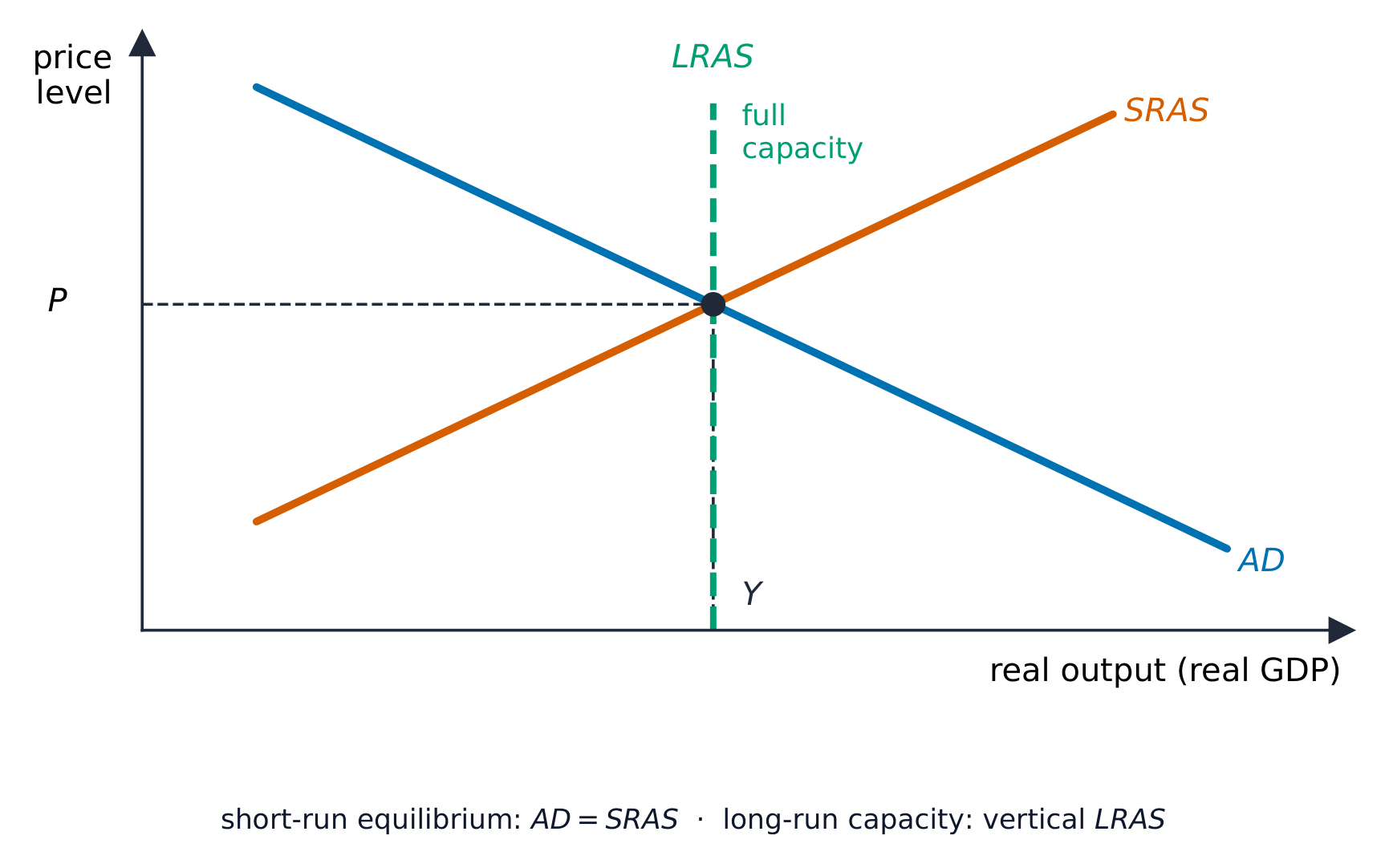
总需求(aggregate demand,AD)是在每个价格水平上对一个国家物品和服务的总支出。它有四个部分:
$$AD = C + I + G + (X - M)$$
- C 是消费(consumption)——家庭的支出。
- I 是投资(investment)——企业在资本上的支出。
- G 是政府支出(government spending)。
- (X − M) 是净出口(net exports)——出口减进口。
AD 曲线向下倾斜:一个更低的价格水平意味着更高的实际支出,所以更大的实际产出被需求。当它四个部分中的任何一个改变时 AD 移动(例如,一次减税提高 C)。
Aggregate supply
总供给(aggregate supply,AS)是企业在每个价格水平愿意制造的总产出。
- 短期总供给(short-run aggregate supply,SRAS)向上倾斜。在短期,更高的价格使生产更有利可图,所以企业供应更多。当成本改变时 SRAS 移动(工资、原材料、税)。
- 长期总供给(long-run aggregate supply,LRAS)显示经济的完整生产能力(productive capacity)。它只在要素的数量或质量改变时才移动。
Macroeconomic equilibrium
宏观经济均衡(macroeconomic equilibrium)是 AD 与 AS 相交的地方。它设定经济的价格水平(price level)和实际产出(real output)。AD 或 AS 的一个移动改变两者。
探索
Aggregate demand & supply
AD and AS cross at the price level and national output.
词汇表
训练
| 英文 | 中文 | 拼音 |
|---|---|---|
| aggregate demand/ˈæɡrɪɡeɪt dɪˈmænd/ | 总需求 | zǒng xū qiú |
| consumption/kənˈsʌmpʃn/ | 消费 | xiāo fèi |
| net exports/net ˈekspɔːts/ | 净出口 | jìng chū kǒu |
| aggregate supply/ˈæɡrɪɡeɪt səˈplaɪ/ | 总供给 | zǒng gōng jǐ |
| short-run aggregate supply/ʃɔːt rʌn ˈæɡrɪɡeɪt səˈplaɪ/ | 短期总供给 | duǎn qī zǒng gōng jǐ |
| long-run aggregate supply/lɒŋ rʌn ˈæɡrɪɡeɪt səˈplaɪ/ | 长期总供给 | cháng qī zǒng gōng jǐ |
| productive capacity/prəˈdʌktɪv kəˈpæsɪti/ | 生产能力 | shēng chǎn néng lì |
| macroeconomic equilibrium/ˌmækrəˌriːkəˈnɒmɪk ˌiːkwɪˈlɪbrɪəm/ | 宏观经济均衡 | hóng guān jīng jì jūn héng |
| price level/praɪs ˈlevl/ | 价格水平 | jià gé shuǐ píng |
| real output/rɪəl ˈaʊtpʊt/ | 实际产出 | shí jì chǎn chū |
4.4
经济增长
大纲
- distinguish actual and potential growth and explain the causes of economic growth
- explain the costs and benefits of economic growth and the business (trade) cycle
来源:剑桥国际大纲
经济增长(economic growth)是一个国家实际产出(实际 GDP)随时间的一个上升。
- 实际增长(actual growth)是真的发生的产出上升(移动到一个更靠外的点,或从 LRAS 内部朝它移动)。
- 潜在增长(potential growth)是经济能力的上升(LRAS 向外移动)。
增长由更多或更好的生产要素引起:一支更大或更有技能的劳动力、更多的资本投资、新技术,以及更高的生产率(productivity,每个工人的产出)。
The business cycle
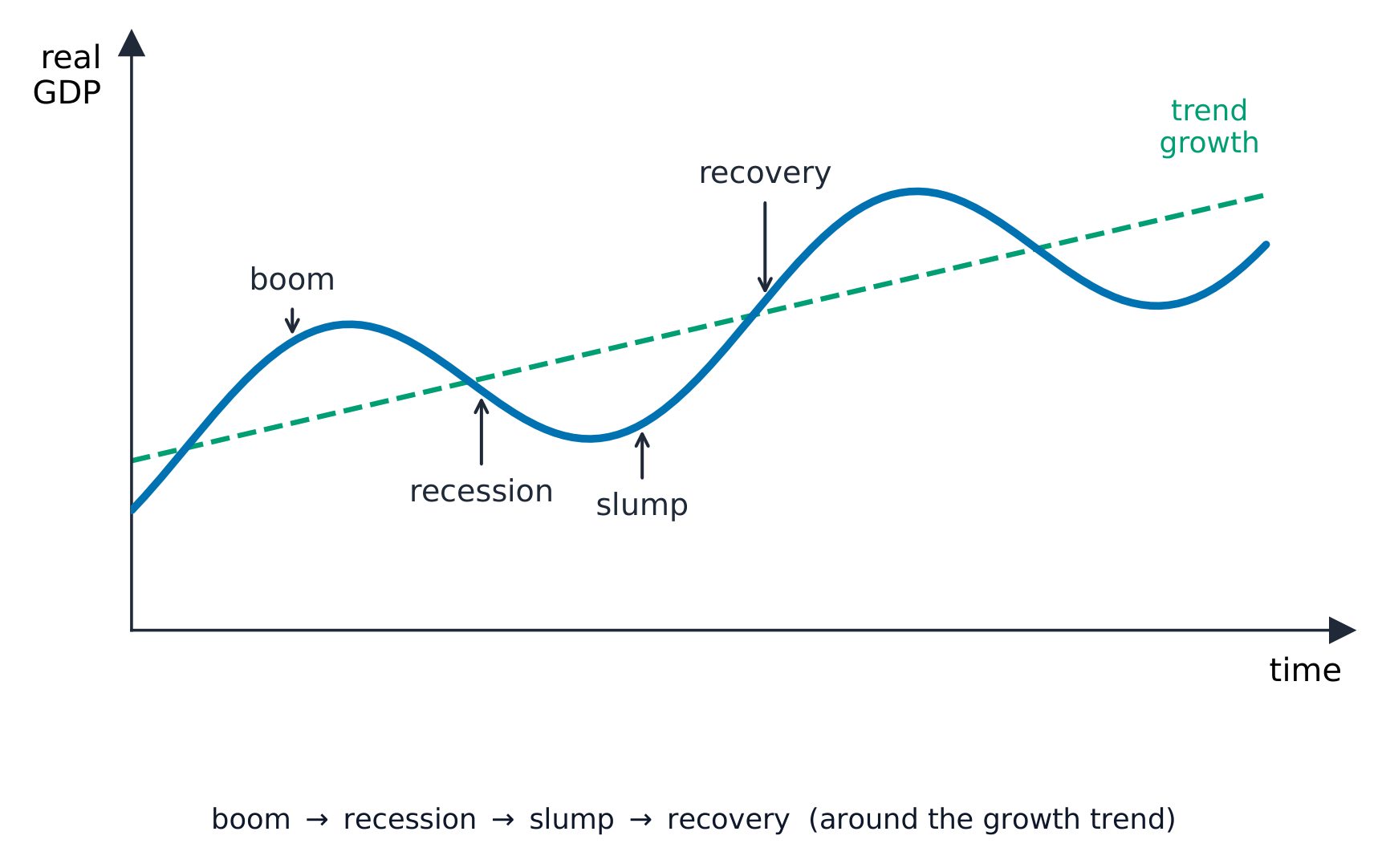
实际产出不平稳地增长。经济周期(business cycle,也叫贸易周期)是产出多年来上上下下的模式。它有四个阶段:繁荣(boom,快速增长)、衰退(recession,下降的产出)、萧条(slump,低点),以及复苏(recovery)。
Costs and benefits of growth
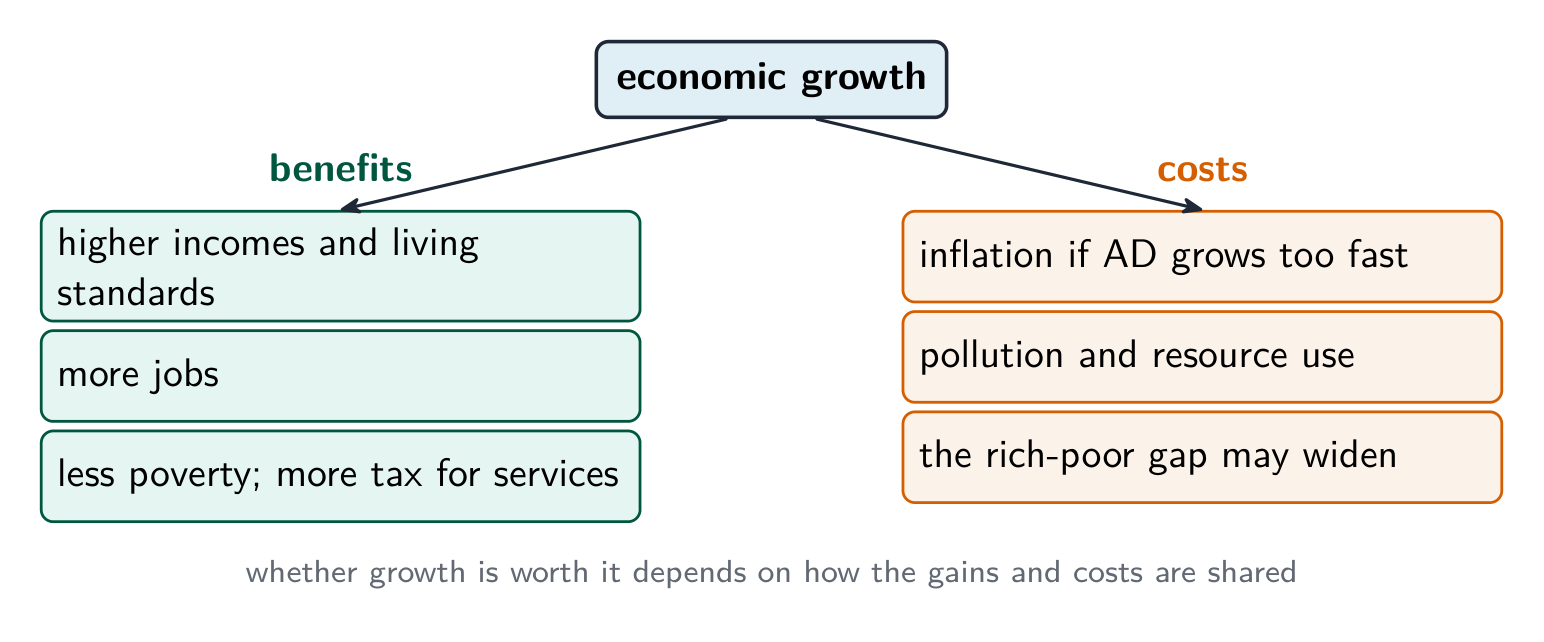
| 好处 | 成本 |
|---|---|
| 更高的收入和生活水平 | 若 AD 增长太快能引起通货膨胀 |
| 更多的就业 | 污染和资源的使用 |
| 更少的贫困;更多的税用于公共服务 | 贫富之间的差距可能扩大 |
探索
Economic growth shifts the frontier out
Growth means the economy can produce more of BOTH goods — the whole frontier moves outward as resources or technology improve.
词汇表
训练
| 英文 | 中文 | 拼音 |
|---|---|---|
| economic growth/ˌiːkəˈnɒmɪk ɡrəʊθ/ | 经济增长 | jīng jì zēng zhǎng |
| actual growth/ˈæktʃuːəl ɡrəʊθ/ | 实际增长 | shí jì zēng zhǎng |
| potential growth/pəˈtenʃl ɡrəʊθ/ | 潜在增长 | qián zài zēng zhǎng |
| productivity/ˌprɒdəkˈtɪvɪti/ | 生产率 | shēng chǎn lǜ |
| business cycle/ˈbɪznəs ˈsaɪkl/ | 经济周期 | jīng jì zhōu qī |
| boom/buːm/ | 繁荣 | fán róng |
| recession/rɪˈseʃn/ | 衰退 | shuāi tuì |
| slump/slʌmp/ | 萧条 | xiāo tiáo |
| recovery/rɪˈkʌvəri/ | 复苏 | fù sū |
4.5
失业
大纲
- define and measure unemployment (claimant count and labour force survey)
- explain the types and causes of unemployment (frictional, structural, cyclical, seasonal) and its consequences
来源:剑桥国际大纲
失业(unemployment)意味着能够且愿意工作、正在找工作但找不到的人。
Measuring unemployment
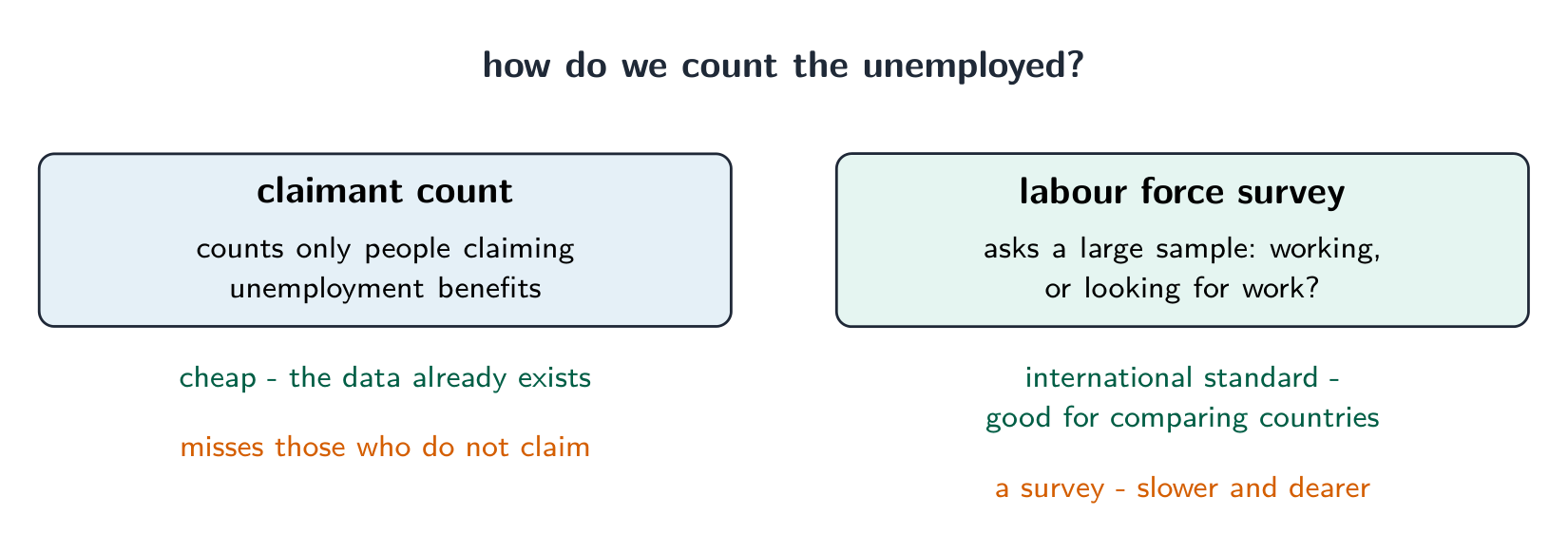
- 申领救济人数(claimant count)只数申领失业救济金的人。它便宜但错过那些不申领的人。
- 劳动力调查(labour force survey)问一个大样本他们是否在工作或找工作。它遵循一个国际标准,所以它更适合比较国家。劳动力(labour force)是每个工作或找工作的人。
Types and causes
- 摩擦性失业(frictional unemployment)——短期的,当人们在工作之间移动时。
- 结构性失业(structural unemployment)——当一个行业衰落而工人的技能不再匹配可用的工作时。
- 周期性失业(cyclical unemployment)——由一个衰退中低的 AD 引起。这通常是最大的类型。
- 季节性失业(seasonal unemployment)——当工作只在一年的某些时候可用时(如农业或旅游业)。

Consequences
失业浪费产出(经济在它的 PPC 内部生产)、降低收入,并使政府花钱(更多的福利、更少的税)。它也伤害家庭并能提高犯罪和疾病。
探索
Unemployment in the labour market
If the wage is stuck ABOVE the equilibrium, more workers want jobs than firms will hire — that gap is unemployment.
词汇表
训练
| 英文 | 中文 | 拼音 |
|---|---|---|
| unemployment/ʌnemˈplɔɪmənt/ | 失业 | shī yè |
| claimant count/ˈkleɪmənt kaʊnt/ | 申领救济人数 | shēn lǐng jiù jì rén shù |
| labour force survey/ˈleɪbə fɔːs ˈsɜːveɪ/ | 劳动力调查 | láo dòng lì diào chá |
| labour force/ˈleɪbə fɔːs/ | 劳动力 | láo dòng lì |
| frictional unemployment/ˈfrɪkʃənl ʌnemˈplɔɪmənt/ | 摩擦性失业 | mó cā xìng shī yè |
| structural unemployment/ˈstrʌktʃərəl ʌnemˈplɔɪmənt/ | 结构性失业 | jié gòu xìng shī yè |
| cyclical unemployment/ˈsaɪklɪkl ʌnemˈplɔɪmənt/ | 周期性失业 | zhōu qī xìng shī yè |
| seasonal unemployment/ˈsiːzənl ʌnemˈplɔɪmənt/ | 季节性失业 | jì jié xìng shī yè |
4.6
价格稳定

大纲
- define inflation, deflation and disinflation and explain how the price level is measured
- explain the causes (demand-pull and cost-push) and consequences of inflation and deflation
来源:剑桥国际大纲
Inflation, deflation and disinflation
- 通货膨胀(inflation)是一般价格水平的一个持续上升。钱随即买得更少,所以它的购买力(purchasing power)下降。
- 通货紧缩(deflation)是一般价格水平的一个持续下降。
- 反通货膨胀(disinflation)是当通货膨胀仍为正但在减慢时(价格上升,但更慢)。
价格水平用消费者价格指数(consumer price index,CPI)测量。一个典型家庭的支出被用来构建一个物品的"篮子"。每个物品被给一个花在它上面多少的权重(weight),而篮子成本从年到年的变化是通货膨胀率:
$$\text{inflation rate} = \frac{\text{change in index}}{\text{starting index}} \times 100\%.$$
例题。 一个国家的 CPI 在一年内从 $100$ 上升到 $104$,然后在之后一年到 $107$。求每年的通货膨胀率。
第 1 年:$\dfrac{104 - 100}{100} \times 100\% = 4\%$。第 2 年:$\dfrac{107 - 104}{104} \times 100\% = 2.9\%$。
注意价格在第 2 年仍在上升,只是更慢——通货膨胀率的这个下降(从 $4\%$ 到 $2.9\%$)是反通货膨胀,不是通货紧缩。
例题。 一个工人的工资从每周 $\text{\pounds} 500$ 上升到 $\text{\pounds} 520$(一个 $4\%$ 的上升),而 CPI 上升 $4\%$。实际工资会怎样?
货币(名义)报酬上升 $4\%$,但价格也上升 $4\%$,所以实际工资——报酬实际能买的——不变。一次加薪只在它胜过通货膨胀时才提高生活水平。
Causes of inflation
- 需求拉动型通货膨胀(demand-pull inflation)——AD 比 AS 增长得更快,所以"太多的钱追逐太少的物品"。
- 成本推动型通货膨胀(cost-push inflation)——企业的成本上升(工资或原材料),所以它们提高价格,把 SRAS 向左移动。

Consequences
通货膨胀降低购买力,尤其对固定收入的人。它创造不确定性、能使一个国家的出口更贵,并帮助借款者但伤害储蓄者。通货紧缩听起来好,但能有害:人们推迟购买(等待更低的价格),所以 AD 下降、企业削减产出,而失业上升。
探索
Aggregate demand and supply
The overall price level sits where aggregate demand meets aggregate supply — a shock to either moves prices and output.
词汇表
训练
| 英文 | 中文 | 拼音 |
|---|---|---|
| inflation/ɪnˈfleɪʃn/ | 通货膨胀 | tōng huò péng zhàng |
| purchasing power/ˈpɜːtʃɪsɪŋ ˈpaʊə/ | 购买力 | gòu mǎi lì |
| deflation/diːˈfleɪʃn/ | 通货紧缩 | tōng huò jǐn suō |
| disinflation/ˌdɪsɪnˈfleɪʃn/ | 反通货膨胀 | fǎn tōng huò péng zhàng |
| consumer price index/kənˈsuːmə praɪs ˈɪndeks/ | 消费者价格指数 | xiāo fèi zhě jià gé zhǐ shù |
| weight/weɪt/ | 权重 | quán zhòng |
| demand-pull inflation/dɪˈmænd pʊl ɪnˈfleɪʃn/ | 需求拉动型通货膨胀 | xū qiú lā dòng xíng tōng huò péng zhàng |
| cost-push inflation/kɒst pʊʃ ɪnˈfleɪʃn/ | 成本推动型通货膨胀 | chéng běn tuī dòng xíng tōng huò péng zhàng |
4.6
考试技巧
- 区分实际对名义(实际移除通货膨胀)并从一个价格指数计算一个通货膨胀率。
- 解释 AD $= C + I + G + (X - M)$ 以及什么移动每个部分;区分一个 AD 移动和一个 AS 移动。
- 区分失业的类型(摩擦性、结构性、周期性)以及每种如何被应对。
- 在一个 AD/AS 图上区分需求拉动型对成本推动型通货膨胀。
本主题的互动课程
逐步学习,并即时检测练习。