National income statistics · 国民收入统计
| English | 中文 | Pinyin · 拼音 |
|---|---|---|
| national income/ˈnæʃənl ˈɪŋkʌm/ | 国民收入 | guó mín shōu rù |
| GDP/ˌdʒiː diː ˈpiː/ | 国内生产总值 | guó nèi shēng chǎn zǒng zhí |
| GNI/ˌdʒiː en ˈaɪ/ | 国民总收入 | guó mín zǒng shōu rù |
| nominal/ˈnɒmɪnl/ | 名义 | míng yì |
| real GDP/rɪəl ˌdʒiː diː ˈpiː/ | 实际GDP | shí jì GDP |
| GDP per capita/ˌdʒiː diː ˈpiː pɜː ˈkæpɪtə/ | 人均GDP | rén jūn GDP |
| living standards/ˈlɪvɪŋ ˈstændədz/ | 生活水平 | shēng huó shuǐ píng |
Measuring a whole economy
- How do you say whether a country had a "good year"? You add up everything it produced — its national income 国民收入.
- That single figure, GDP 国内生产总值, drives headlines, elections and policy. But it must be read with care.
测量整个经济
- 你怎么说一个国家是否有一个"好年景"?你把它生产的一切加起来——它的国民收入(national income)。
- 那个单一的数字,GDP,驱动头条、选举和政策。但它必须被小心地解读。
National income flow · 国民收入流量
Watch spending become income, output and expenditure in the circular flow. · 观察消费如何转化为收入、产出和支出,即循环流量。
GDP, GNI 国民总收入 and GNP
- GDP (gross domestic product) = the value of all output produced within a country in a year.
- GNI (gross national income) = GDP plus net income earned abroad by the country's residents.
- Measured three equivalent ways: total output = total income = total expenditure.
National income is the value of all the goods and services a country produces
GDP、GNI 与 GNP
- GDP(国内生产总值)= 一年内在一个国家之内生产的所有产出的价值。
- GNI(国民总收入)= GDP 加上该国居民在国外赚的净收入。
- 用三种等价的方式测量:总产出 = 总收入 = 总支出。

国民收入是一个国家生产的所有商品和服务的价值
GDP measures the value of all output produced: · GDP衡量的是:
GDP is output produced within the country's borders; GNI adds net income from abroad. · GDP是国内生产的产出;GNI加上来自国外的净收入。
GNI equals GDP plus net income earned ______ by residents. · GNI等于GDP加上居民______获得的净收入。
GNI = GDP + net primary income from abroad. · GNI = GDP + 来自国外的净要素收入。
Real vs nominal 名义
- Nominal GDP is measured at current prices; real GDP 实际GDP strips out inflation to show true changes in output.
- Only real GDP tells you whether the economy actually grew.
Worked example. Nominal GDP rises 5% but prices rise 5%. Real GDP growth = 5% − 5% = 0% — no real growth at all.
Macroeconomic equilibrium where AD meets AS
实际对名义
- 名义(nominal)GDP 按当前价格测量;实际(real)GDP 剔除通货膨胀以显示产出的真实变化。
- 只有实际 GDP 告诉你经济是否真正增长了。
例题。 名义 GDP 上升 5% 但价格上升 5%。实际 GDP 增长 = 5% − 5% = 0%——根本没有真实增长。
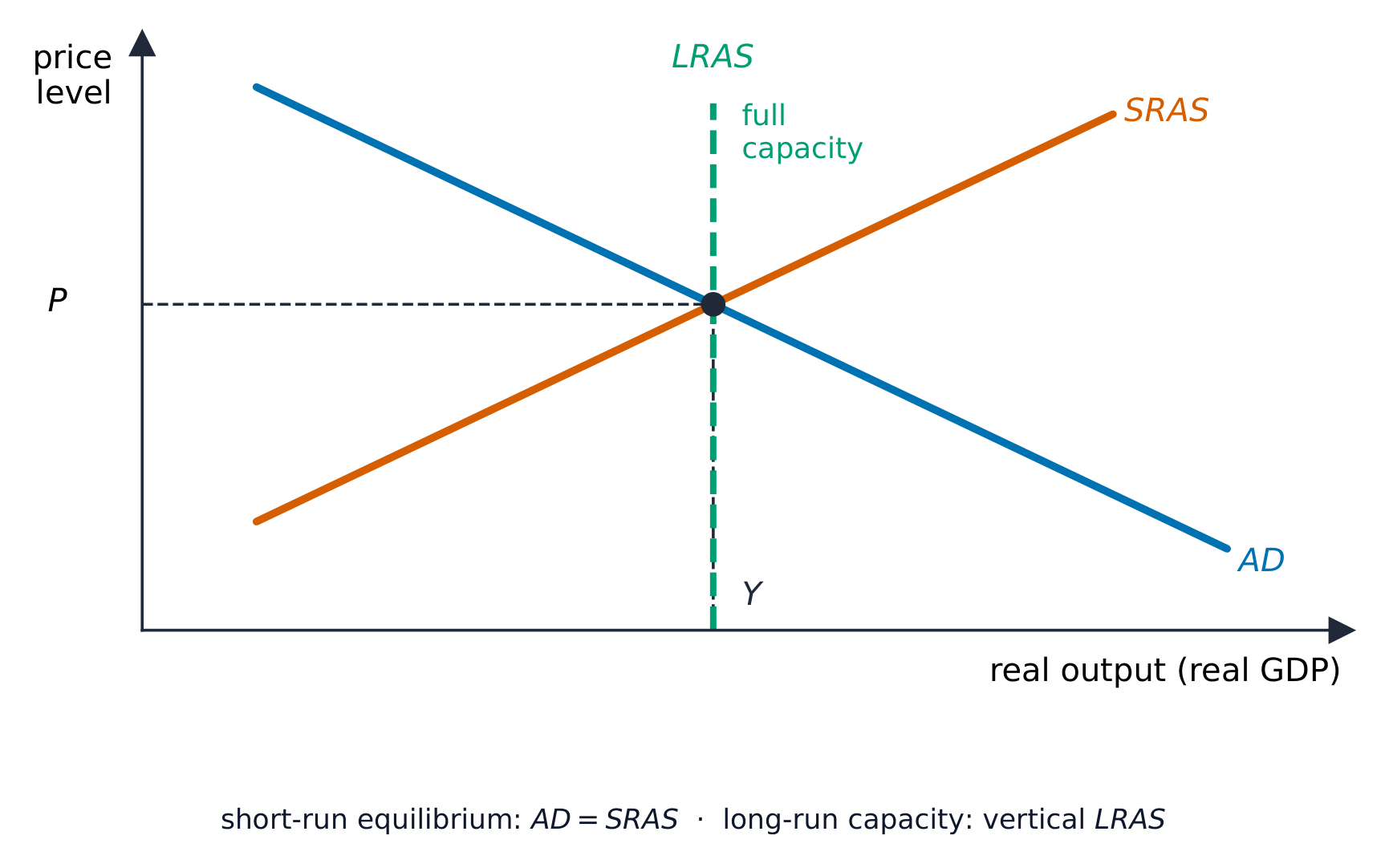
AD 与 AS 相遇之处的宏观经济均衡
Nominal GDP rises 5% while prices rise 5%. What is real GDP growth (%)? · 名义GDP增长5%,同时价格上涨5%。实际GDP增长率(%)是多少?
Real growth ≈ nominal growth − inflation = 5% − 5% = 0%. · 实际增长率 ≈ 名义增长率 − 通货膨胀 = 5% − 5% = 0%。
GDP per capita 人均GDP and limitations
- GDP per capita = GDP ÷ population — a better guide to living standards 生活水平 than total GDP.
- Limitations: it ignores the distribution of income, non-market activity (home/black-market work), and wellbeing (leisure, environment).
Bigger GDP ≠ better off. A country can grow its GDP while most people see no gain (if the rise goes to a few) or while pollution rises. GDP measures output, not welfare.
人均 GDP 与局限
- 人均 GDP = GDP ÷ 人口——比总 GDP 更好的生活水平指引。
- 局限:它忽视收入的分配、非市场活动(家庭/黑市工作)和福祉(闲暇、环境)。
更大的 GDP ≠ 更富裕。 一个国家能增长它的 GDP,而大多数人看不到收益(如果上升落到少数人手里)或污染上升的同时。GDP 测量产出,不是福利。
A country has GDP of 600 billion dollars and a population of 30 million. What is GDP per capita (in dollars)? · 一个国家的GDP为 600 亿美元,人口为 30 百万。人均GDP是多少(以美元计)?
600,000,000,000 / 30,000,000 = 20,000 per person. · 600,000,000,000 / 30,000,000 = 每人20,000美元。
GDP per capita ignores how income is distributed across the population. · 人均GDP忽略了收入在人口中的分配情况。
An average hides inequality — a key limitation of GDP as a welfare measure. · 平均值掩盖了不平等——这是GDP作为福利指标的主要局限性。
You've got it
- GDP = output produced within a country; GNI = GDP + net income from abroad
- real GDP removes inflation (only real growth counts); nominal is at current prices
- GDP per capita = GDP ÷ population; GDP ignores distribution, non-market work and wellbeing
你掌握了
- GDP = 在一个国家之内生产的产出;GNI = GDP + 来自国外的净收入
- 实际 GDP 移除通货膨胀(只有实际增长算数);名义按当前价格
- 人均 GDP = GDP ÷ 人口;GDP 忽视分配、非市场工作和福祉