Skip to content · ⁨ข้ามไปยังเนื้อหา⁩

Gene Expression and Regulation · ⁨การแสดงออกและการควบคุมยีน⁩

AP Biology · Topic 6 · ⁨หัวข้อ 6⁩

Video lesson for this topic · ⁨บทเรียนวิดีโอสำหรับหัวข้อนี้⁩ Open the video page · ⁨เปิดหน้าวิดีโอ⁩
8:40

การแสดงออกและการควบคุมยีน

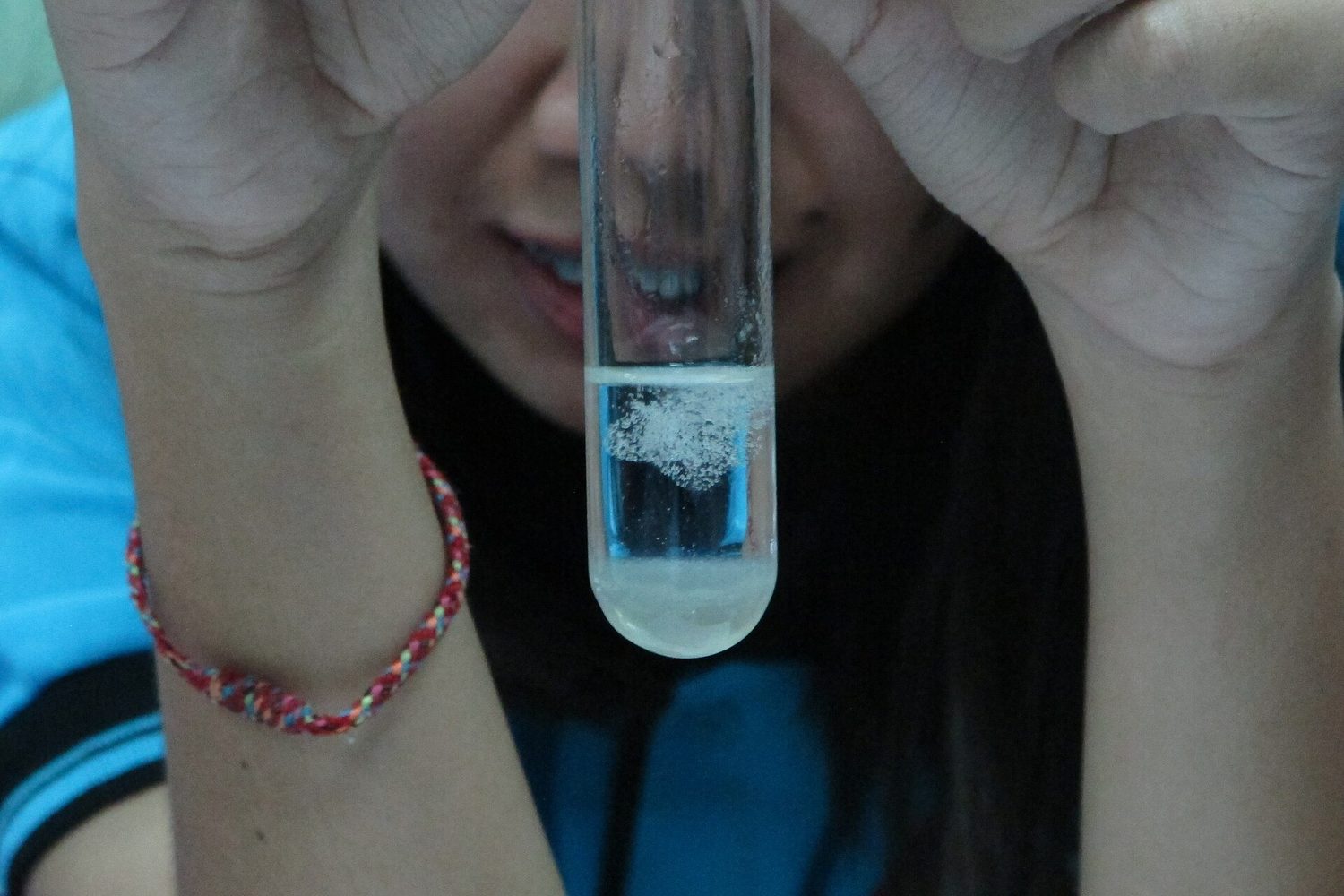
เส้นใยสีขาวในหลอดทดลองนี้คือ DNA จริงๆ ที่ดึงออกมาจากเซลล์ธรรมดา มันดูไม่มีอะไรพิเศษเลย แต่มันบรรจุทุกคำสั่งที่ร่างกายของคุณจะต้องการตลอดชีวิต…

English narration · English + 中文 subtitles burned in · ⁨การบรรยายภาษาอังกฤษ · คำบรรยายภาษาอังกฤษ + 中文 ลอยตัวบนภาพ⁩

6.1

DNA and RNA Structure · ⁨โครงสร้างของ DNA และ RNA⁩

Syllabus · ⁨หลักสูตร⁩
English

Enduring Understanding (BIG IDEA 3 — Information Storage and Transmission): Living systems store, retrieve, transmit, and respond to information essential to life processes.

Learning Objective 6.1.A: Describe the structures involved in passing hereditary information from one generation to the next.

  • 6.1.A.1 Genetic information is stored in and passed to subsequent generations through DNA molecules and, in some cases, RNA molecules.
    • 6.1.A.1.i Prokaryotic organisms typically have circular chromosomes.
    • 6.1.A.1.ii Eukaryotic organisms typically have multiple linear chromosomes that are comprised of DNA. These chromosomes are condensed using histones and associated proteins.
  • 6.1.A.2 Prokaryotes and eukaryotes can contain plasmids, which are extra-chromosomal circular molecules of DNA.

Learning Objective 6.1.B: Describe the characteristics of DNA that allow it to be used as hereditary material.

  • 6.1.B.1 Nucleic acids exhibit specific nucleotide base pairing that is conserved through evolution.
    • 6.1.B.1.i Purines (guanine and adenine) have a double ring structure.
    • 6.1.B.1.ii Pyrimidines (cytosine, thymine, and uracil) have a single ring structure.
    • 6.1.B.1.iii Purines pair with pyrimidines: adenine with thymine (or uracil in RNA) and guanine with cytosine.
ไทย

ความเข้าใจที่ยั่งยืน (BIG IDEA 3 — การจัดเก็บและการถ่ายทอดข้อมูล): ระบบชีวภาพจัดเก็บ รื้อค้น ถ่ายทอด และตอบสนองต่อข้อมูลที่จำเป็นต่อกระบวนการดำรงชีวิต

วัตถุประสงค์การเรียนรู้ 6.1.A: อธิบายโครงสร้างที่เกี่ยวข้องกับการส่งต่อข้อมูลทางพันธุกรรมจากรุ่นหนึ่งไปยังรุ่นถัดไป

  • 6.1.A.1 ข้อมูลทางพันธุกรรมถูกจัดเก็บและส่งต่อไปยังรุ่นถัดผ่านโมเลกุลของ DNA และในบางกรณีคือโมเลกุลของ RNA
    • 6.1.A.1.i สิ่งมีชีวิตโปรคาริโอตมักมีโครโมโซมแบบวงกลม
    • 6.1.A.1.ii สิ่งมีชีวิตยูเคาริโอตมักมีโครโมโซมเชิงเส้นหลายชนิดซึ่งประกอบด้วย DNA โครโมโซมเหล่านี้จะแน่นตัวด้วยฮิสโตนและโปรตีนที่เกี่ยวข้อง
  • 6.1.A.2 โปรคาริโอตและยูเคาริโอตสามารถมีพลสมิด ซึ่งเป็นโมเลกุล DNA แบบวงกลมนอกโครโมโซม

วัตถุประสงค์การเรียนรู้ 6.1.B: อธิบายคุณลักษณะของ DNA ที่ทำให้สามารถใช้เป็นวัสดุทางพันธุกรรมได้

  • 6.1.B.1 กรดนิวคลีอิกแสดงการจับคู่เบสนิวคลีโอไทด์เฉพาะเจาะจงซึ่งถูกคงไว้ตลอดกระบวนการวิวัฒนาการ
    • 6.1.B.1.i พิวรีน (กัวanine และอะดีนีน) มีโครงสร้างวงแหวนคู่
    • 6.1.B.1.ii พิริมิดีน (ไซโตซีน ไทมีน และยูเรซิล) มีโครงสร้างวงแหวนเดี่ยว
    • 6.1.B.1.iii พิวรีนจับคู่กับพิริมิดีน: อะดีนีนกับไทมีน (หรือยูเรซิลใน RNA) และกัวanineกับไซโตซีน
Source: College Board AP Course and Exam Description · ⁨แหล่งที่มา: คำอธิบายหลักสูตรและข้อสอบ College Board AP⁩

English

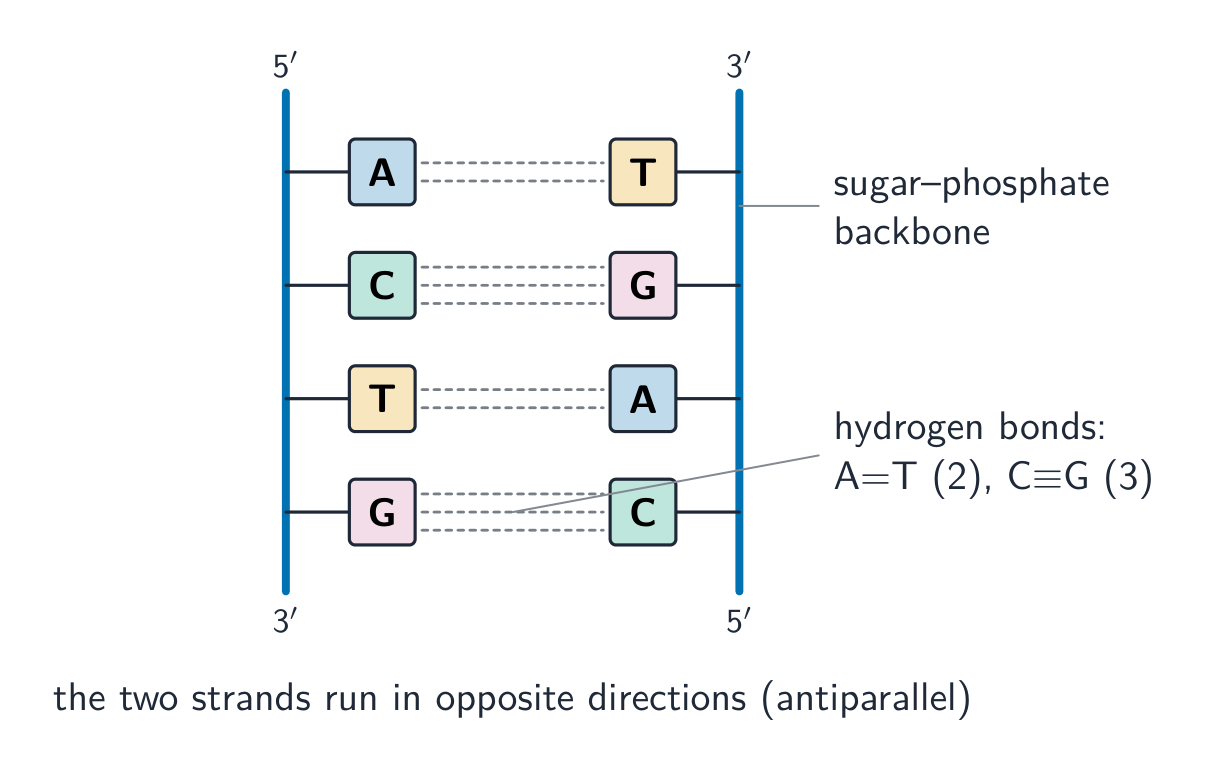
DNA carries genetic information as a double helix 双螺旋 of two strands. Its nucleotides 核苷酸 pair by rule – A with T, G with C (complementary base pairing 互补配对) – so one strand specifies the other. The strands run antiparallel 反平行. RNA is single-stranded, uses uracil (U) instead of thymine, and has ribose sugar.

How the DNA is packaged differs between the domains, and the CED asks for both.

  • Prokaryotic organisms typically have a single circular chromosome 环状染色体 in the cytoplasm, often with extra small circles called plasmids.
  • Eukaryotic organisms typically have multiple linear chromosomes 线性染色体, and each is condensed by wrapping around proteins called histones 组蛋白. That packing is what fits two metres of DNA into a nucleus a few micrometres across — and because a tightly wound region is hard for the transcription machinery to reach, the packing is itself a level of gene regulation.
ไทย
การม้วน DNA ที่ตกตะกอนจากสารสกัดเซลล์ — DNA เป็นโมเลกุลจริงที่มองเห็นได้

DNA ขนส่งข้อมูลทางพันธุกรรมในรูปแบบ double helix ของสองสาย Its nucleotides จับคู่ตามกฎ – A กับ T, G กับ C (complementary base pairing) – sehingga one strand specifies the other. สายทั้งสองวิ่ง antiparallel. RNA เป็น single-stranded, ใช้ uracil (U) แทน thymine และมี ribose sugar

DNA: สายคู่สองสายที่วางตัวตรงข้ามกัน (antiparallel) เชื่อมต่อกันด้วยคู่เบสที่เข้ากันได้ (complementary base pairs)

วิธีการแพ็ค DNA แตกต่างกันระหว่างโดเมน และ CED ต้องการทราบทั้งสอง

  • สิ่งมีชีวิต Prokaryotic มักจะมี single circular chromosome ใน cytoplasm, มักจะมีวงกลมเล็กๆ เพิ่มเติมที่เรียกว่า plasmids
  • สิ่งมีชีวิต Eukaryotic มักจะมี multiple linear chromosomes, และแต่ละอันจะ condensed โดยพันรอบโปรตีนที่เรียกว่า histones. การแพ็คนี้คือสิ่งที่ทำให้ DNA ยาวสองเมตรเข้าอยู่ในนิวเคลียสที่มีขนาดไมโครเมตรเท่านั้น – และเนื่องจากบริเวณที่พันแน่นนั้นเข้าถึงยากสำหรับ transcription machinery, การแพ็คนี้จึงเป็นระดับหนึ่งของการควบคุมยีน
Vocabulary · ⁨คำศัพท์⁩ Train · ⁨ฝึกฝน⁩
English ไทย
double helix/ˈdʌbl ˈhiːlɪks/ ดับเบิ้ลเฮล็กซ์
nucleotides/ˈnjuːklɪɒtaɪdz/ นิวคลีโอไทด์
complementary base pairing/ˌkɒmplɪˈmentəri beɪs ˈpeərɪŋ/ complementary base pairing
antiparallel/ˌæntɪˈpærəlel/ antiparallel
single circular chromosome/ˈsɪŋɡl ˈsɜːkjʊlə ˈkrəʊməsəʊm/ โครโมโซมวงกลมเดี่ยว
multiple linear chromosomes/ˈmʌltɪpl ˈlɪnɪə ˈkrəʊməsəʊmz/ โครโมโซมเชิงเส้นหลายอัน
condensed by wrapping around proteins called histones/kənˈdenst baɪ ˈræpɪŋ əˈraʊnd ˈprəʊtiːnz kɔːld ˈhɪstəʊnz/ หนาแน่นโดยการพันรอบโปรตีนที่เรียกว่าฮิสโทน
Transcription/trænˈskrɪpʃn/ 转录
6.2

DNA Replication · ⁨การจำลอง DNA⁩

Syllabus · ⁨หลักสูตร⁩
English

Enduring Understanding (BIG IDEA 3 — Information Storage and Transmission): Living systems store, retrieve, transmit, and respond to information essential to life processes.

Learning Objective 6.2.A: Describe the mechanisms by which genetic information is copied for transmission between generations.

  • 6.2.A.1 DNA replication ensures continuity of hereditary information.
    • 6.2.A.1.i DNA is synthesized in the 5' to 3' direction.
    • 6.2.A.1.ii Replication is a semiconservative process, meaning one strand of DNA serves as the template for a new strand of complementary DNA.
    • 6.2.A.1.iii Helicase unwinds the DNA strands.
    • 6.2.A.1.iv Topoisomerase relaxes supercoiling in front of the replication fork.
    • 6.2.A.1.v DNA polymerase requires RNA primers to initiate DNA synthesis.
    • 6.2.A.1.vi DNA polymerase synthesizes new strands of DNA continuously on the leading strand and discontinuously on the lagging strand.
    • 6.2.A.1.vii Ligase joins the fragments on the lagging strand.
    • Exclusion statement: The names of the steps and particular enzymes involved, excluding DNA polymerase, ligase, RNA polymerase, helicase, and topoisomerase, are beyond the scope of the AP Exam.
ไทย

ความเข้าใจที่ยั่งยืน (BIG IDEA 3 — การจัดเก็บและการถ่ายทอดข้อมูล): ระบบชีวภาพจัดเก็บ รื้อค้น ถ่ายทอด และตอบสนองต่อข้อมูลที่จำเป็นต่อกระบวนการดำรงชีวิต

วัตถุประสงค์การเรียนรู้ 6.2.A: อธิบายกลไกที่ข้อมูลทางพันธุกรรมถูกคัดลอกเพื่อส่งต่อระหว่างรุ่น

  • 6.2.A.1 การจำลอง DNA รับประกันความต่อเนื่องของข้อมูลทางพันธุกรรม
    • 6.2.A.1.i DNA ถูกสังเคราะห์ในทิศทางจาก 5' ไป 3'
    • 6.2.A.1.ii การจำลองเป็นกระบวนการกึ่งอนุรักษ์ หมายความว่าสาย DNA的一条充当新互补DNA链的模板。
    • 6.2.A.1.iii เฮลิเคสคลายเกลียวสาย DNA
    • 6.2.A.1.iv拓扑异构酶缓解复制叉前方的超螺旋结构。
    • 6.2.A.1.v DNA โพลิเมอเรสต้องการพไรเมอร์ RNA เพื่อเริ่มต้นการสังเคราะห์ DNA
    • 6.2.A.1.vi DNA โพลิเมอเรสสังเคราะห์สาย DNA ใหม่อย่างต่อเนื่องบนสายนำและไม่ต่อเนื่องบนสายตาม
    • 6.2.A.1.vii Ligase เชื่อมต่อก้อนส่วนบนสายตาม
    • คำยกเว้น: ชื่อขั้นตอนและเอนไซม์เฉพาะที่เกี่ยวข้อง ซึ่งไม่รวม DNA โพลิเมอเรส Ligase RNA โพลิเมอเรส เฮลิเคส และ拓扑异构酶,超出了AP考试的范畴。

Source: College Board AP Course and Exam Description · ⁨แหล่งที่มา: คำอธิบายหลักสูตรและข้อสอบ College Board AP⁩

English

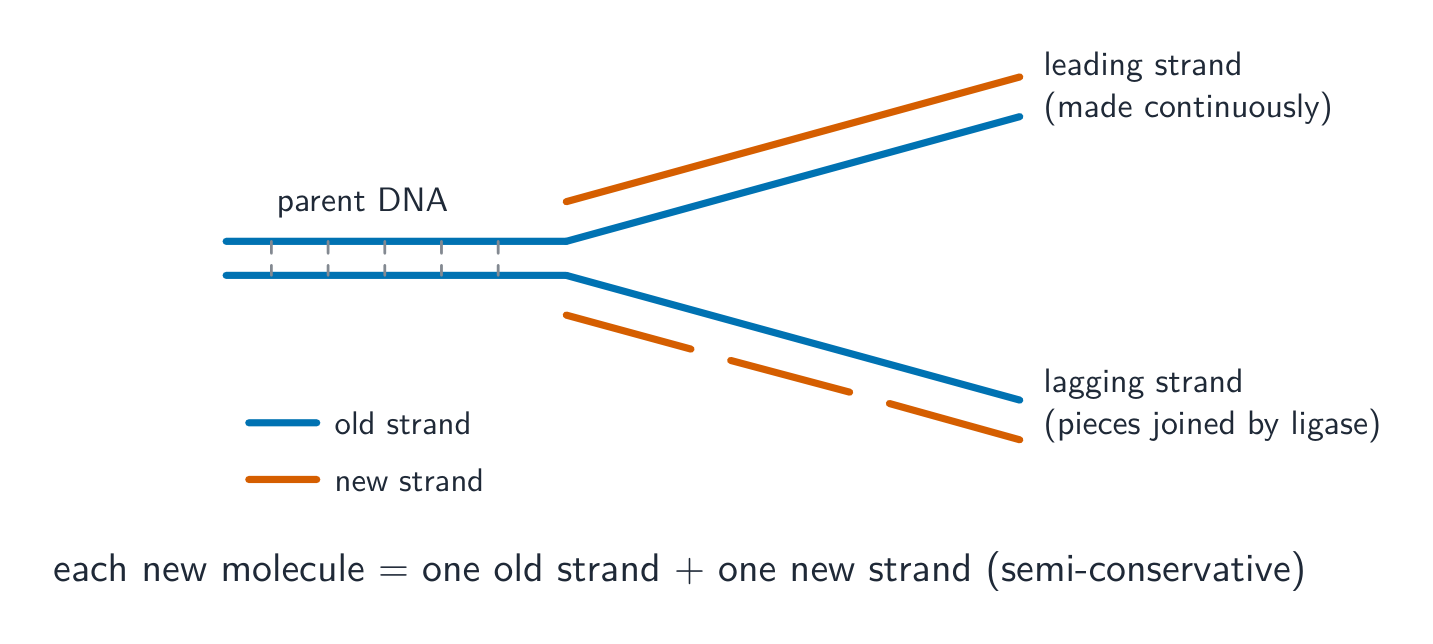
Before a cell divides, DNA is copied semiconservatively 半保留复制: the helix unwinds and each old strand templates a new one, so each daughter helix has one old and one new strand. DNA polymerase 聚合酶 adds nucleotides following base-pairing rules, building the new strand and proofreading as it goes.

ไทย

ก่อนเซลล์แบ่งตัว DNA จะถูกคัดลอกแบบ semiconservatively: helixคลายออกและแต่ละสายเก่าจะเป็น template สำหรับสายใหม่, sehingga each daughter helix มีหนึ่งสายเก่าและหนึ่งสายใหม่. DNA polymerase เพิ่ม nucleotides ตามกฎการจับคู่ฐาน, สร้างสายใหม่และ proofread ระหว่างทาง

Semi-conservative DNA replication at a replication fork
Vocabulary · ⁨คำศัพท์⁩ Train · ⁨ฝึกฝน⁩
English ไทย
semiconservatively/ˌsemɪkənˈsɜːvətɪvli/ กึ่งอนุรักษ์
DNA polymerase/ˌdiː en ˈeɪ ˌpɒlɪməˈreɪz/ DNA聚合酶
6.3

Transcription and RNA Processing · ⁨Transcription และ RNA Processing⁩

Syllabus · ⁨หลักสูตร⁩
English

Enduring Understanding (BIG IDEA 3 — Information Storage and Transmission): Living systems store, retrieve, transmit, and respond to information essential to life processes.

Learning Objective 6.3.A: Describe the mechanisms by which genetic information flows from DNA to RNA to protein.

  • 6.3.A.1 The sequence of the RNA bases, together with the structure of the RNA molecule, determines RNA function.
    • 6.3.A.1.i Messenger RNA (mRNA) molecules carry information from DNA in the nucleus to the ribosome in the cytoplasm.
    • 6.3.A.1.ii Distinct transfer RNA (tRNA) molecules bind specific amino acids and have anticodon sequences that base pair with the codons of mRNA. tRNA is recruited to the ribosome during translation to generate the primary peptide sequence based on the mRNA sequence.
    • 6.3.A.1.iii Ribosomal RNA (rRNA) molecules are functional building blocks of ribosomes.
  • 6.3.A.2 RNA polymerases use a single template strand of DNA to direct the inclusion of bases in the newly formed RNA molecule. This process is known as transcription.
  • 6.3.A.3 The enzyme RNA polymerase synthesizes mRNA molecules in the 5' to 3' direction by reading the template DNA strand in the 3' to 5' direction.
  • 6.3.A.4 In eukaryotic cells the mRNA transcript undergoes a series of enzyme-mediated modifications.
    • 6.3.A.4.i The addition of a poly-A tail makes mRNA more stable.
    • 6.3.A.4.ii The addition of a GTP cap helps with ribosomal recognition.
    • 6.3.A.4.iii The excision of introns, along with the splicing and retention of exons, generates different versions of the resulting mature mRNA molecule. This process is known as alternative splicing.
ไทย

ความเข้าใจที่ยั่งยืน (BIG IDEA 3 — การจัดเก็บและการถ่ายทอดข้อมูล): ระบบชีวภาพจัดเก็บ รื้อค้น ถ่ายทอด และตอบสนองต่อข้อมูลที่จำเป็นต่อกระบวนการดำรงชีวิต

วัตถุประสงค์การเรียนรู้ 6.3.A: อธิบายกลไกที่ข้อมูลทางพันธุกรรมไหลจาก DNA ไปยัง RNA ไปยังโปรตีน

  • 6.3.A.1 ลำดับของเบส RNA连同RNA分子的结构,决定了RNA的功能。
    • 6.3.A.1.i โมเลกุล messenger RNA (mRNA) นำข้อมูลจาก DNA ในนิวเคลียสไปยังไรโบโซมในไซโทพลาซึม
    • 6.3.A.1.ii โมเลกุล transfer RNA (tRNA) ที่แตกต่างกันจะจับกรดอะมิโนเฉพาะและมีลำดับแอนติโคดอนที่จับคู่กับโคดอนของ mRNA tRNA จะถูกเรียกเข้าไรโบโซมระหว่างการแปลเพื่อสร้างลำดับเปปไทด์แรกเริ่มตามลำดับ mRNA
    • 6.3.A.1.iii โมเลกุล ribosomal RNA (rRNA) เป็นหน่วยสร้างฟังก์ชันของไรโบโซม
  • 6.3.A.2 RNA โพลิเมอเรสใช้สายเทมเพลตเดียวของ DNA เพื่อوجيهการใส่เบสลงในโมเลกุล RNA ที่เพิ่งเกิดขึ้น กระบวนการนี้เรียกว่าการถอดรหัส
  • 6.3.A.3 เอนไซม์ RNA โพลิเมอเรสสังเคราะห์โมเลกุล mRNA ในทิศทางจาก 5' ไป 3' โดยอ่านสายเทมเพลต DNA ในทิศทางจาก 3' ไป 5'
  • 6.3.A.4 ในเซลล์ยูเคาริโอต转录本经历一系列酶介导的修饰。
    • 6.3.A.4.i การเพิ่มหาง poly-A ทำให้ mRNA มีความเสถียรมากขึ้น
    • 6.3.A.4.ii การเพิ่มModified GTP cap helps with ribosomal recognition。
    • 6.3.A.4.iii การตัด out introns, along with the splicing and retention of exons, generates different versions of the resulting mature mRNA molecule. This process is known as alternative splicing。

Source: College Board AP Course and Exam Description · ⁨แหล่งที่มา: คำอธิบายหลักสูตรและข้อสอบ College Board AP⁩

English

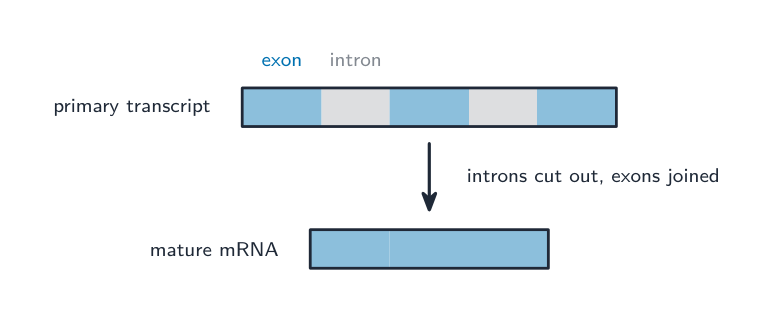
Transcription 转录 copies a gene's DNA into messenger RNA 信使RNA (mRNA). RNA polymerase reads the template strand and builds a complementary RNA. In eukaryotes the mRNA is then processed: a cap and tail are added, and introns 内含子 (non-coding parts) are spliced out, leaving the exons 外显子.

The 5′ cap added during processing is a modified guanine nucleotide — a GTP cap — and its job is recognition: it helps the ribosome recognise and bind the mRNA, as well as protecting the transcript from degradation as it leaves the nucleus.

ไทย

Transcription คัดลอก DNA ของยีนเข้าไปใน messenger RNARNA (mRNA). RNA polymerase อ่าน(template strand) และสร้าง RNA ที่ complementary. ใน eukaryotes mRNAจะถูก processed ต่อ: เพิ่ม cap และ tail, และ introns (non-coding parts) ถูก splicing ออก, ทิ้งไว้เฉพาะ exons

อินตรอนถูกตัดออกและเอ็กซอนถูกเชื่อมต่อกันเพื่อสร้าง mRNA ที่สุกแล้ว (mature mRNA)

5′ cap ที่เพิ่มเข้ามาduring processing เป็น modified guanine nucleotide — GTP cap — และหน้าที่ของมันคือการจดจำ: มัน ช่วย ribosome จดจำและจับกับ mRNA, รวมถึงปกป้อง transcript จากการย่อยสลายขณะออกจากนิวเคลียส

Explore · ⁨สำรวจ⁩

Transcribe DNA into messenger RNA · ⁨转录DNA生成信使RNA⁩

Transcription copies a DNA template into mRNA, pairing A→U, T→A, C→G, G→C. Step through to build the RNA strand base by base. · ⁨转录将DNA模板复制为mRNA,遵循A→U,T→A,C→G,G→C配对。逐步浏览以逐个碱基构建RNA链。⁩

Vocabulary · ⁨คำศัพท์⁩ Train · ⁨ฝึกฝน⁩
English ไทย
messenger RNA/ˈmesɪndʒə ˌɑː en ˈeɪ/ messenger RNA
introns/ɪnˈtrɒnz/ 内含子
exons/eɡˈzɒnz/ 外显子
ribosome/ˈriːbəʊsəʊm/ ไรโบโซม
6.4

Translation

Syllabus · ⁨หลักสูตร⁩
English

Enduring Understanding (BIG IDEA 3 — Information Storage and Transmission): Living systems store, retrieve, transmit, and respond to information essential to life processes.

Learning Objective 6.4.A: Explain how the phenotype of an organism is determined by its genotype.

  • 6.4.A.1 Translation of the mRNA to generate a polypeptide occurs on ribosomes that are present in the cytoplasm of both prokaryotic and eukaryotic cells, as well as the cytoplasmic surface of the rough ER of eukaryotic cells.
  • 6.4.A.2 In prokaryotic organisms, translation of the mRNA molecule occurs while it is being transcribed.
  • 6.4.A.3 Translation involves many sequential steps, including initiation, elongation, and termination. The salient features of translation include:
    • 6.4.A.3.i Translation is initiated when the rRNA in the ribosome interacts with the mRNA at the start codon (AUG, coding for the amino acid methionine).
    • 6.4.A.3.ii The sequence of nucleotides on the mRNA is read in triplets, called codons.
    • 6.4.A.3.iii Each codon encodes a specific amino acid, which can be deduced by using a genetic code chart. Many amino acids are encoded by more than one codon.
    • 6.4.A.3.iv Nearly all living organisms use the same genetic code, which is evidence for the common ancestry of all living organisms.
    • 6.4.A.3.v tRNA brings the correct amino acid to the place specified by the codon on the mRNA.
    • 6.4.A.3.vi The amino acid is transferred to the growing polypeptide chain.
    • 6.4.A.3.vii The process continues along the mRNA until a stop codon is reached.
    • 6.4.A.3.viii Translation terminates with the release of the newly synthesized protein.
    • Exclusion statement: The details and names of the enzymes and factors involved in each of these steps are beyond the scope of the AP Exam.
    • Exclusion statement: Memorization of the genetic code, with the exception of the start codon AUG, is beyond the scope of the AP Exam.
  • 6.4.A.4 Genetic information in retroviruses is a special case and has an alternate flow of information: from RNA to DNA, made possible by reverse transcriptase, an enzyme that copies the viral RNA genome into DNA. This DNA integrates into the host genome and is transcribed and translated for the assembly of new viral progeny.
ไทย

ความเข้าใจที่ยั่งยืน (BIG IDEA 3 — การจัดเก็บและการถ่ายทอดข้อมูล): ระบบชีวภาพจัดเก็บ รื้อค้น ถ่ายทอด และตอบสนองต่อข้อมูลที่จำเป็นต่อกระบวนการดำรงชีวิต

วัตถุประสงค์การเรียนรู้ 6.4.A: อธิบายว่าฟีโนไทป์ของสิ่งมีชีวิตถูกกำหนดโดยจีโนไทป์ของมันอย่างไร

  • 6.4.A.1 การแปล mRNA เพื่อสร้างโพลีเปปไทด์เกิดขึ้นบนไรโบโซมที่มีอยู่ในไซโทพลาซึมของเซลล์โปรคาริโอตและยูเคาริโอต รวมถึงพื้นผิวไซโทพลาซึมของ ER แบบหยาบของเซลล์ยูเคาริโอต
  • 6.4.A.2 ในสิ่งมีชีวิตโปรคาริโอต การแปลโมเลกุล mRNA เกิดขึ้นในขณะที่กำลังถูกถอดรหัส
  • 6.4.A.3 การแปลรหัสเกี่ยวข้องกับขั้นตอนต่อเนื่องหลายขั้นตอน ได้แก่ การเริ่มต้น การยืด และการหยุดยั้ง คุณสมบัติเด่นของการแปลรหัสได้แก่:
    • 6.4.A.3.i การแปลรหัสเริ่มขึ้นเมื่อ rRNA ในไรโบโซมมีปฏิสัมพันธ์กับ mRNA ที่คอดอนเริ่มต้น (AUG, which codes for the amino acid methionine).
    • 6.4.A.3.ii ลำดับของนิวคลีโอไทด์บน mRNA ถูกอ่านเป็นชุดสามตัว ซึ่งเรียกว่า คอดอน.
    • 6.4.A.3.iii แต่ละคอดอนเข้ารหัสกรดอะมิโนที่เฉพาะเจาะจง ซึ่งสามารถระบุได้โดยใช้ตารางรหัสพันธุกรรม กรดอะมิโนหลายชนิดถูกเข้ารหัสด้วยคอดอนมากกว่าหนึ่งชนิด
    • 6.4.A.3.iv สิ่งมีชีวิตเกือบทุกชนิดใช้รหัสพันธุกรรมเดียวกัน ซึ่งเป็นหลักฐานสนับสนุนว่าสิ่งมีชีวิตทั้งหมดมีบรรพบุรุษร่วมกัน
    • 6.4.A.3.v tRNA นำกรดอะมิโนที่ถูกต้องไปยังตำแหน่งที่กำหนดโดยคอดอนบน mRNA
    • 6.4.A.3.vi กรดอะมิโนจะถูกถ่ายโอนไปยังโพลีเปปไทด์ chaîne ที่กำลังเติบโต
    • 6.4.A.3.vii กระบวนการนี้ดำเนินต่อไปตามลำดับ mRNA จนกว่าจะพบคอดอนหยุด
    • 6.4.A.3.viii การแปลรหัสจะสิ้นสุดด้วยการปลดปล่อยโปรตีนที่สังเคราะห์ขึ้นใหม่
    • ข้อจำกัด: รายละเอียดและชื่อของเอนไซม์และปัจจัยที่เกี่ยวข้องในแต่ละขั้นตอนเหล่านี้ไม่อยู่ในขอบเขตของข้อสอบ AP
    • ข้อจำกัด: การท่องจำรหัสพันธุกรรม ยกเว้นคอดอนเริ่มต้น AUG ไม่อยู่ในขอบเขตของข้อสอบ AP
  • 6.4.A.4 ข้อมูลทางพันธุกรรมในไวรัสรีโทรมีความพิเศษและเป็นกรณีพิเศษของการไหลของข้อมูล: จาก RNA ไปยัง DNA ซึ่งเกิดจาก reverse transcriptase เอนไซม์ที่ทำหน้าที่คัดลอกจีโนมไวรัสเป็น DNA DNA นี้จะรวมเข้ากับจีโฮสต์และถูกถอดรหัสและแปลรหัสเพื่อประกอบตัวลูกไวรัสใหม่

Source: College Board AP Course and Exam Description · ⁨แหล่งที่มา: คำอธิบายหลักสูตรและข้อสอบ College Board AP⁩

English

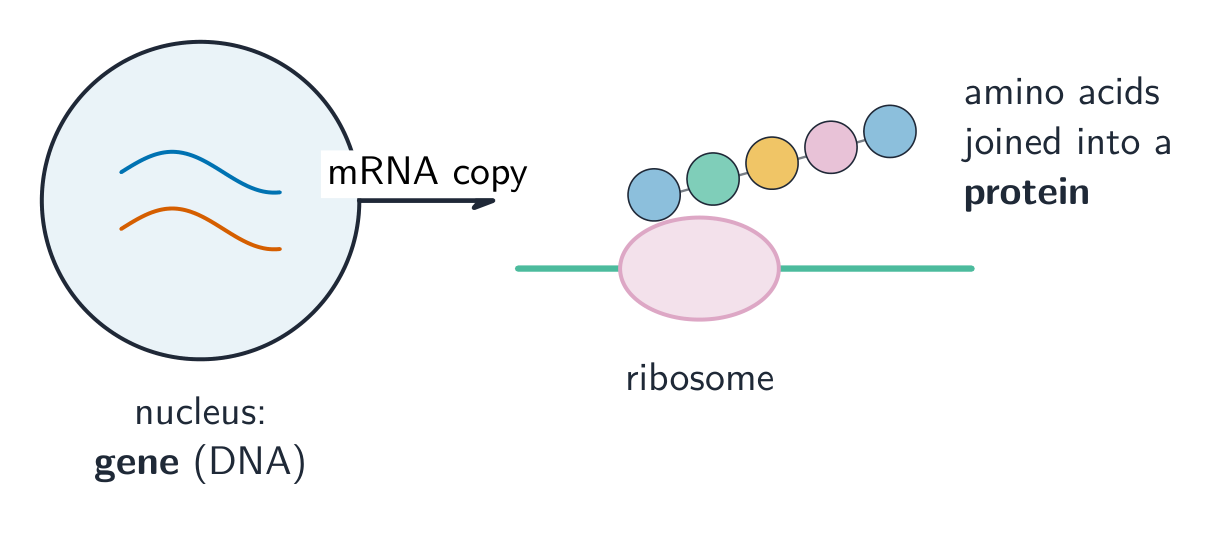
Translation 翻译 builds a protein from the mRNA at the ribosome 核糖体. The mRNA is read in three-base codons 密码子, each specifying one amino acid (the genetic code). Transfer RNA 转运RNA brings the matching amino acid, and the ribosome links them into a polypeptide until a stop codon ends it. This is the "central dogma": DNA → RNA → protein.

ไทย

Translation สร้างโปรตีนจาก mRNA ที่ ribosome. mRNA ถูกอ่านเป็นสามฐาน codons, แต่ละอันระบุ amino acid หนึ่งชนิด (the genetic code). Transfer RNARNA นำ amino acid ที่ตรงกันมา, และ ribosome เชื่อมต่อกันเป็น polypeptide จนกว่า stop codon จะจบลง นี่คือ "central dogma": DNA → RNA → โปรตีน

mRNA ถูกอ่านโดยไรโบโซมเพื่อสร้างโปรตีนจากกรดอะมิโน
Vocabulary · ⁨คำศัพท์⁩ Train · ⁨ฝึกฝน⁩
English ไทย
Translation/trænˈsleɪʃn/ Translation
codons/ˈkəʊdɒnz/ codons
Transfer RNA/ˈtrænsfɜː ˌɑː en ˈeɪ/ tRNA Transfer RNA
6.5

Regulation of Gene Expression · ⁨การควบคุมการแสดงออกของยีน⁩

Syllabus · ⁨หลักสูตร⁩
English

Enduring Understanding (BIG IDEA 3 — Information Storage and Transmission): Living systems store, retrieve, transmit, and respond to information essential to life processes.

Learning Objective 6.5.A: Describe the types of interactions that regulate gene expression.

  • 6.5.A.1 Regulatory sequences are stretches of DNA that interact with regulatory proteins to control transcription. Some genes are constitutively expressed, and others are inducible.
  • 6.5.A.2 Epigenetic changes can affect gene expression through reversible modifications of DNA or histones.
  • 6.5.A.3 The phenotype of a cell or an organism is determined by the combination of genes that are expressed and the levels at which they are expressed.
    • 6.5.A.3.i Observable cell differentiation results from the expression of genes for tissue-specific proteins.
    • 6.5.A.3.ii Induction of transcription factors during development results in sequential gene expression.
    • 6.5.A.3.iii The function and amount of gene products determine the phenotype of organisms.

Learning Objective 6.5.B: Explain how the location of regulatory sequences relates to their function.

  • 6.5.B.1 Both prokaryotes and eukaryotes have groups of genes that are coordinately regulated.
    • 6.5.B.1.i Prokaryotes regulate operons in an inducible or repressible system.
    • 6.5.B.1.ii In eukaryotes, groups of genes may be influenced by the same transcription factors to coordinately regulate expression.
ไทย

ความเข้าใจที่ยั่งยืน (BIG IDEA 3 — การจัดเก็บและการถ่ายทอดข้อมูล): ระบบชีวภาพจัดเก็บ รื้อค้น ถ่ายทอด และตอบสนองต่อข้อมูลที่จำเป็นต่อกระบวนการดำรงชีวิต

จุดประสงค์การเรียนรู้ 6.5.A: อธิบายประเภทของการมีปฏิสัมพันธ์ที่ควบคุมการแสดงออกของยีน

  • 6.5.A.1 ลำดับควบคุมคือช่วงของ DNA ที่มีปฏิสัมพันธ์กับโปรตีนควบคุมเพื่อควบคุมการถอดรหัส บางยีนถูกแสดงออกอย่างต่อเนื่อง และบางยีนถูกเหนี่ยวนำให้แสดงออก
  • 6.5.A.2 การเปลี่ยนแปลงทางออีพิเจเนติกสามารถส่งผลต่อการแสดงออกของยีนผ่านการดัดแปลง DNA หรือฮิสโทนแบบย้อนกลับได้
  • 6.5.A.3 Phenotype ของเซลล์หรือสิ่งมีชีวิตถูกกำหนดโดยชุดยีนที่ถูกแสดงออกและระดับของการแสดงออกนั้น
    • 6.5.A.3.i การแบ่งแยกเซลล์ที่สังเกตได้เกิดจากการแสดงออกของยีนสำหรับโปรตีนเฉพาะเนื้อเยื่อ
    • 6.5.A.3.ii การเหนี่ยวนำ transcription factors ระหว่างการพัฒนาทำให้มีการแสดงออกของยีนตามลำดับ
    • 6.5.A.3.iii ฟังก์ชันและปริมาณของผลิตภัณฑ์ยีนกำหนด phenotype ของสิ่งมีชีวิต

จุดประสงค์การเรียนรู้ 6.5.B: อธิบายความสัมพันธ์ระหว่างตำแหน่งของลำดับควบคุมกับหน้าที่ของมัน

  • 6.5.B.1 ทั้ง prokaryotes และ eukaryotes มีกลุ่มยีนที่ถูกควบคุมแบบประสานกัน
    • 6.5.B.1.i Prokaryotes ควบคุม operons ในระบบที่เหนี่ยวนำได้หรือถูกยับยั้งได้
    • 6.5.B.1.ii ใน eukaryotes กลุ่มยีนอาจได้รับอิทธิพลจาก transcription factors เดียวกันเพื่อควบคุมการแสดงออกแบบประสานกัน

Source: College Board AP Course and Exam Description · ⁨แหล่งที่มา: คำอธิบายหลักสูตรและข้อสอบ College Board AP⁩

English

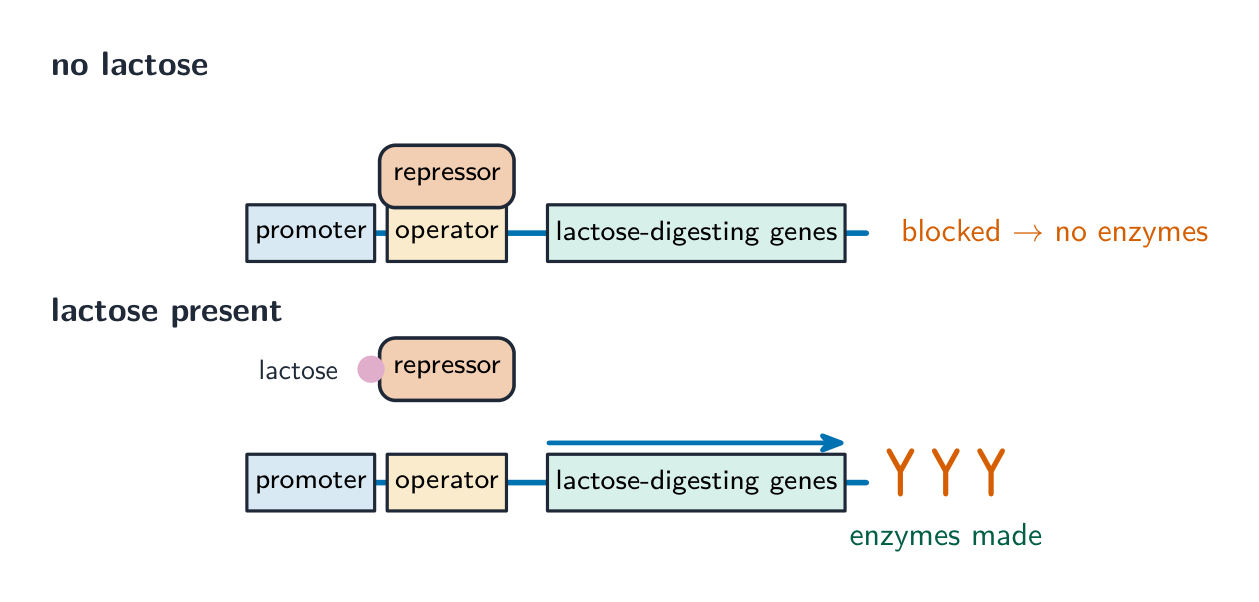
Cells control which genes are expressed and when. In prokaryotes, operons 操纵子 switch groups of genes on or off. In eukaryotes, regulation happens at many levels – which genes are transcribed (transcription factors, promoters, enhancers), RNA processing, and after translation. This lets a cell respond to its environment without changing its DNA.

ไทย

เซลล์ควบคุม ยีนใด被แสดงออกและ เมื่อไหร่. ใน prokaryotes, operons เปิดหรือปิดกลุ่มยีน. ใน eukaryotes, การควบคุมเกิดขึ้นหลายระดับ – ยีน哪些被 transcribed (transcription factors, promoters, enhancers), RNA processing, และหลัง translation. สิ่งนี้ช่วยให้เซลล์ตอบสนองต่อสิ่งแวดล้อมโดยไม่เปลี่ยน DNA ของมัน

โอเปรอนแลคเปิดใช้งานยีนก็ต่อเมื่อมีแลคโตสเท่านั้น
Vocabulary · ⁨คำศัพท์⁩ Train · ⁨ฝึกฝน⁩
English ไทย
operons/ˈɒpərənz/ โอเปอรอน
6.6

Gene Expression and Cell Specialization · ⁨การแสดงออกของยีนและการจำเพาะของเซลล์⁩

Syllabus · ⁨หลักสูตร⁩
English

Enduring Understanding (BIG IDEA 3 — Information Storage and Transmission): Living systems store, retrieve, transmit, and respond to information essential to life processes.

Learning Objective 6.6.A: Explain how the binding of transcription factors to promoter regions affects gene expression and the phenotype of the organism.

  • 6.6.A.1 RNA polymerase and transcription factors bind to promoter or enhancer DNA sequences to initiate transcription. These sequences can be upstream or downstream of the transcription start site.
  • 6.6.A.2 Negative regulatory molecules inhibit gene expression by binding to DNA and blocking transcription.

Learning Objective 6.6.B: Explain the connection between the regulation of gene expression and phenotypic differences in cells and organisms.

  • 6.6.B.1 Gene regulation results in differential gene expression and influences cell products and functions.
  • 6.6.B.2 Certain small RNA molecules have roles in regulating gene expression.
ไทย

ความเข้าใจที่ยั่งยืน (BIG IDEA 3 — การจัดเก็บและการถ่ายทอดข้อมูล): ระบบชีวภาพจัดเก็บ รื้อค้น ถ่ายทอด และตอบสนองต่อข้อมูลที่จำเป็นต่อกระบวนการดำรงชีวิต

จุดประสงค์การเรียนรู้ 6.6.A: อธิบายว่าการจับของ transcription factors กับ promoter regions ส่งผลต่อการแสดงออกของยีนและ phenotype ของสิ่งมีชีวิตอย่างไร

  • 6.6.A.1 RNA polymerase และ transcription factors จับกับลำดับ DNA แบบ promoter หรือ enhancer เพื่อเริ่มต้นการถอดรหัส ลำดับเหล่านี้สามารถอยู่ upstream หรือ downstream ของตำแหน่งเริ่มต้นการถอดรหัส
  • 6.6.A.2 โมเลกุลควบคุมเชิงลบยับยั้งการแสดงออกของยีนโดยการจับกับ DNA และขัดขวางการถอดรหัส

จุดประสงค์การเรียนรู้ 6.6.B: อธิบายความเชื่อมโยงระหว่างการควบคุมการแสดงออกของยีนกับความแตกต่างของ phenotype ในเซลล์และสิ่งมีชีวิต

  • 6.6.B.1 การควบคุมยีนนำไปสู่การแสดงออกของยีนที่แตกต่างกันและส่งผลต่อผลิตภัณฑ์และฟังก์ชันของเซลล์
  • 6.6.B.2 โมเลกุล RNA ขนาดเล็กบางชนิดมีบทบาทในการควบคุมการแสดงออกของยีน

Source: College Board AP Course and Exam Description · ⁨แหล่งที่มา: คำอธิบายหลักสูตรและข้อสอบ College Board AP⁩

English

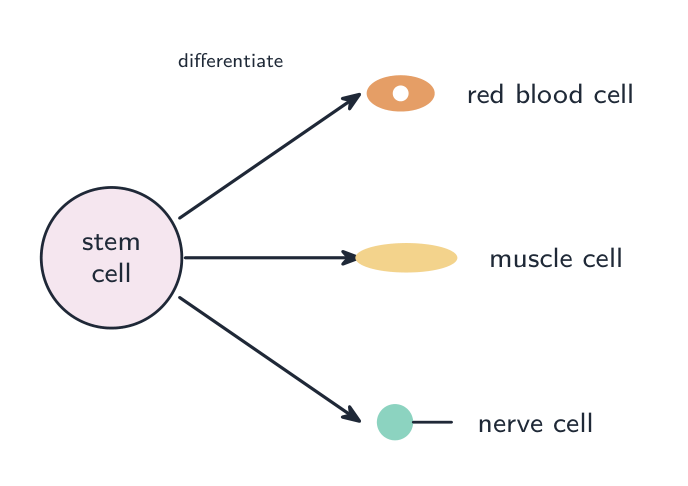
Every cell in a body has the same DNA, yet cells differ because they express different genes – differential gene expression 差异表达. This is how one fertilized egg produces many specialized cell types (muscle, nerve, skin); signals during development turn specific genes on and off.

ไทย

ทุกเซลล์ในร่างกายมี DNA เหมือนกัน, แต่เซลล์แตกต่างกันเพราะพวกมันแสดงออก ยีนที่ต่างกัน – differential gene expression. นี่คือวิธีที่ไข่ที่受的 fertilization หนึ่งตัวผลิตเซลล์ประเภทที่เชี่ยวชาญได้มากมาย (กล้ามเนื้อ,ประสาท,ผิวหนัง); สัญญาณ during development เปิดและปิดยีนเฉพาะเจาะจง

A stem cell differentiates into specialised cell types
Vocabulary · ⁨คำศัพท์⁩ Train · ⁨ฝึกฝน⁩
English ไทย
differential gene expression/ˌdɪfəˈrenʃl dʒiːn ekˈspreʃn/ การแสดงออกของยีนที่ต่างกัน
6.7

Mutations · ⁨การกลายพันธุ์⁩

Syllabus · ⁨หลักสูตร⁩
English

Enduring Understanding (BIG IDEA 3 — Information Storage and Transmission): Living systems store, retrieve, transmit, and respond to information essential to life processes.

Learning Objective 6.7.A: Describe the various types of mutation.

  • 6.7.A.1 Alterations in a DNA sequence are mutations that can cause changes in the type or amount of the protein produced and the consequent phenotype. DNA mutations can be beneficial, detrimental, or neutral based on the effect or the lack of effect they have on the resulting nucleic acid or protein and the phenotypes that are conferred by the protein.
    • 6.7.A.1.i Point mutations occur when one nucleotide has been substituted for a different nucleotide.
    • 6.7.A.1.ii Frameshift mutations occur when one or more nucleotides are inserted or deleted, causing the reading frame to be shifted.
    • 6.7.A.1.iii Nonsense mutations occur when there is a point mutation that causes a premature stop.
    • 6.7.A.1.iv Silent mutations occur when the change in the nucleotide sequence has no effect on the amino acid sequence.
    • Illustrative examples for 6.7.A.1:
      • Mutations in the CFTR gene disrupt ion transport and result in cystic fibrosis.
      • Mutations in the MC1R gene give adaptive melanism in pocket mice.
    • Exclusion statement: Knowledge of specific mutations and their effects is beyond the scope of the AP Exam.

Learning Objective 6.7.B: Explain how changes in genotype may result in changes in phenotype.

  • 6.7.B.1 Errors in DNA replication or DNA repair mechanisms as well as external factors, including radiation and reactive chemicals, can cause random mutations in the DNA.
    • 6.7.B.1.i Whether a mutation is beneficial, detrimental, or neutral depends on the environmental context.
    • 6.7.B.1.ii Mutations are a source of genetic variation.
  • 6.7.B.2 Errors in mitosis or meiosis can result in changes in phenotype.
    • 6.7.B.2.i Changes in chromosome number resulting from nondisjunction often result in new phenotypes caused by triploidy (aneuploidy).
    • 6.7.B.2.ii Changes in chromosome number often result in disorders with developmental limitations.
    • 6.7.B.2.iii Alterations in chromosome structure lead to genetic disorders.
    • Exclusion statement: Knowledge of specific disorders related to changes in chromosome number is beyond the scope of the AP Exam.

Learning Objective 6.7.C: Explain how alterations in DNA sequences contribute to variation that can be subject to natural selection.

  • 6.7.C.1 Changes in genotype may affect phenotypes that are subject to natural selection. Genetic changes that enhance survival and reproduction can be selected for by environmental conditions.
    • 6.7.C.1.i The horizontal acquisitions of genetic information in prokaryotes via transformation (uptake of DNA), transduction (viral transmission of genetic information), conjugation (cell-to-cell transfer of DNA), and transposition (movement of DNA segments within and between DNA molecules) increase genetic variation.
    • 6.7.C.1.ii Related viruses can recombine genetic information if they infect the same host cell.
    • 6.7.C.1.iii Reproductive processes that increase genetic variation are evolutionarily conserved and are shared by various organisms.
    • Illustrative examples for 6.7.C.1: Sickle cell anemia
ไทย

ความเข้าใจที่ยั่งยืน (BIG IDEA 3 — การจัดเก็บและการถ่ายทอดข้อมูล): ระบบชีวภาพจัดเก็บ รื้อค้น ถ่ายทอด และตอบสนองต่อข้อมูลที่จำเป็นต่อกระบวนการดำรงชีวิต

จุดประสงค์การเรียนรู้ 6.7.A: อธิบายประเภทต่างๆ ของการกลายพันธุ์

  • 6.7.A.1 การเปลี่ยนแปลงในลำดับ DNA คือการกลายพันธุ์ซึ่งสามารถทำให้เกิดการเปลี่ยนแปลงในประเภทหรือปริมาณของโปรตีนที่ผลิต出来และ phenotype ตามมา การกลายพันธุ์ของ DNA อาจเป็นประโยชน์ เป็นอันตราย หรือเป็นกลาง ขึ้นอยู่กับผลหรือขาดผลที่มีต่อยีนหรือนิวคลีอิกแอซิดหรือโปรตีนที่เกิดขึ้นและ phenotypes ที่โปรตีนนั้นมอบให้
    • 6.7.A.1.i Point mutations เกิดขึ้นเมื่อนิวคลีโอไทด์หนึ่งถูกแทนที่ด้วยนิวคลีโอไทด์อื่น
    • 6.7.A.1.ii Frameshift mutations เกิดขึ้นเมื่อนิวคลีโอไทด์หนึ่งหรือมากกว่าถูกแทรกเข้าหรือถูกลบออก ทำให้กรอบการอ่านเปลี่ยนไป
    • 6.7.A.1.iii Nonsense mutations เกิดขึ้นเมื่อมี point mutation ที่ทำให้มีการหยุดก่อนกำหนด
    • 6.7.A.1.iv Silent mutations เกิดขึ้นเมื่อการเปลี่ยนแปลงในลำดับนิวคลีโอไทด์ไม่มีผลต่อลำดับกรดอะมิโน
    • ตัวอย่างสำหรับการ 6.7.A.1:
      • การกลายพันธุ์ในยีน CFTR รบกวนการขนส่งไอออนและนำไปสู่โรค cystic fibrosis
      • การกลายพันธุ์ในยีน MC1R ให้ adaptive melanism ใน pocket mice
    • ข้อจำกัด: ความรู้เกี่ยวกับการกลายพันธุ์เฉพาะและผลกระทบ thereof ไม่อยู่ในขอบเขตของข้อสอบ AP

จุดประสงค์การเรียนรู้ 6.7.B: อธิบายว่าการเปลี่ยนแปลงใน genotype อาจนำไปสู่การเปลี่ยนแปลงใน phenotype ได้อย่างไร

  • 6.7.B.1 ข้อผิดพลาดในการจำลอง DNA หรือกลไกการซ่อมแซม DNA รวมถึงปัจจัยภายนอก เช่นรังสีและสารเคมีที่มีปฏิกิริยาสูง สามารถ causing random mutations in the DNA
    • 6.7.B.1.i whether a mutation is beneficial, detrimental, or neutral depends on the environmental context.
    • 6.7.B.1.ii การกลายพันธุ์เป็นแหล่งกำเนิดของความหลากหลายทางพันธุกรรม
  • 6.7.B.2 ความผิดพลาดในการแบ่งเซลล์ไมโทซิสหรือไมโอซิสอาจส่งผลให้เกิดการเปลี่ยนแปลงในฟีโนไทป์
    • 6.7.B.2.i การเปลี่ยนแปลงจำนวนโครโมโซมซึ่งเกิดจากการไม่แยกตัว (nondisjunction) มักนำไปสู่ฟีโนไทป์ใหม่ที่เกิดจากไตรพลอยดี (aneuploidy)
    • 6.7.B.2.ii การเปลี่ยนแปลงจำนวนโครโมโซมมักนำไปสู่ความผิดปกติที่มีข้อจำกัดในการพัฒนา
    • 6.7.B.2.iii การเปลี่ยนแปลงโครงสร้างของโครโมโซมนำไปสู่ความผิดปกติทางพันธุกรรม
    • ข้อความยกเว้น: ความรู้เกี่ยวกับความผิดปกติเฉพาะที่เกี่ยวข้องกับการเปลี่ยนแปลงจำนวนโครโมโซมอยู่นอกขอบเขตของการสอบ AP

จุดประสงค์การเรียนรู้ 6.7.C: อธิบายว่าความเปลี่ยนแปลงในลำดับ DNA มีส่วนช่วยสร้างความหลากหลายที่สามารถถูกเลือกโดยธรรมชาติอย่างไร

  • 6.7.C.1 การเปลี่ยนแปลง genotype อาจส่งผลต่อฟีโนไทป์ที่ถูกเลือกโดยธรรมชาติ การเปลี่ยนแปลงทางพันธุกรรมที่ช่วยเพิ่มการอยู่รอดและการสืบพันธุ์สามารถถูกเลือกโดยสภาพแวดล้อมได้
    • 6.7.C.1.i การรับข้อมูลทางพันธุกรรมแบบแนวราบในโปรคาริโอตผ่านกระบวนการ transformation (การดูดซับ DNA), transduction (การถ่ายทอดข้อมูลทางพันธุกรรมโดยไวรัส), conjugation (การถ่ายโอน DNA ระหว่างเซลล์), และ transposition (การเคลื่อนย้าย片段 DNA ภายในและระหว่างโมเลกุล DNA) ช่วยเพิ่มความหลากหลายทางพันธุกรรม
    • 6.7.C.1.ii ไวรัสที่เกี่ยวข้องกันสามารถรวมข้อมูลทางพันธุกรรมเข้าด้วยกันหากติดเชื้อในเซลล์เจ้าบ้านเดียวกัน
    • 6.7.C.1.iii กระบวนการสืบพันธุ์ที่สร้างความหลากหลายทางพันธุกรรมมีการอนุรักษ์มาอย่างยาวนานในระดับวิวัฒนาการและเป็นที่ยอมรับโดยสิ่งมีชีวิตหลายชนิด
    • ตัวอย่างประกอบสำหรับ 6.7.C.1: โรคเม็ดเลือดแดงรูปเคียว

Source: College Board AP Course and Exam Description · ⁨แหล่งที่มา: คำอธิบายหลักสูตรและข้อสอบ College Board AP⁩

English

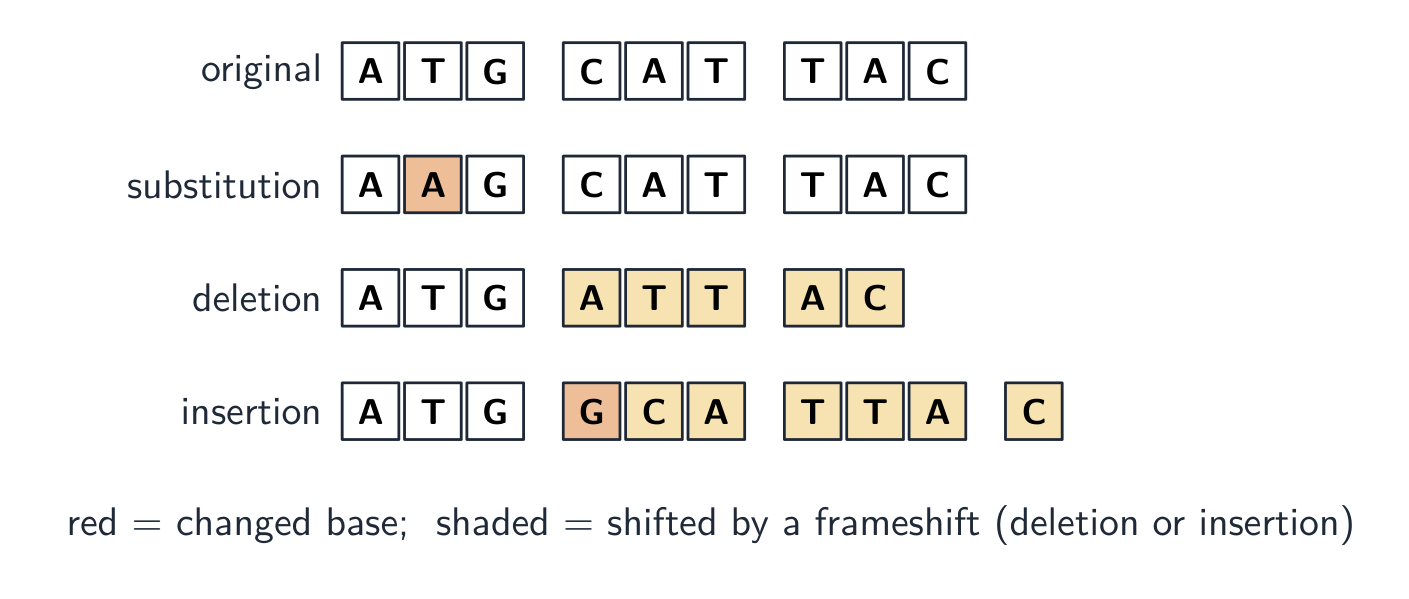
A mutation 突变 is a change in the DNA sequence. Point mutations change one base (silent, missense, or nonsense); insertions/deletions can cause a frameshift 移码 that garbles everything downstream. Mutations in gametes are heritable; they may be harmful, neutral, or beneficial – and beneficial ones supply the variation for natural selection.

Whole-chromosome errors change the phenotype too. Mutation is not only a change of base: errors in mitosis or meiosis can result in changes in phenotype. If chromosomes fail to separate — nondisjunction 不分离 — a gamete receives an extra copy or none, and the resulting zygote has an abnormal chromosome number (aneuploidy 非整倍性). Trisomy 21 is the familiar example. Because a whole chromosome carries hundreds of genes, the phenotypic effect is far broader than a point mutation's.

ไทย

Mutation คือการเปลี่ยนแปลงในลำดับ DNA. Point mutations เปลี่ยนหนึ่งฐาน (silent, missense, หรือ nonsense); insertions/deletions อาจทำให้เกิด frameshift ที่ทำให้ข้อมูล downstream บดบิด. Mutations ใน gametes สามารถถ่ายทอดได้; พวกเขาอาจเป็นอันตราย, เป็นกลาง, หรือเป็นประโยชน์ – และสิ่งที่เป็นประโยชน์将那提供 variation for natural selection

การกลายพันธุ์แบบแทนที่, การลบ และการเพิ่ม

ความผิดพลาดของโครโมโซมทั้งแท่งก็เปลี่ยนฟีโนไทป์ได้เช่นกัน การกลายพันธุ์ไม่ใช่แค่การเปลี่ยนเบสเท่านั้น: ความผิดพลาดในการแบ่งเซลล์ไมโทซิสหรือไมโอซิสสามารถนำไปสู่การเปลี่ยนแปลงในฟีโนไทป์ได้ หากโครโมโซมแยกตัวไม่ออก — nondisjunction — เซลล์สืบพันธุ์จะได้รับสำเนาเพิ่มมาอีกหนึ่งชุดหรือไม่ได้รับเลย และไซกوتที่เกิดขึ้นจะมีจำนวนโครโมโซมผิดปกติ (aneuploidy) Trisomy 21 เป็นตัวอย่างที่คุ้นเคย เนื่องจากโครโมโซมทั้งแท่งมียีนนับร้อยยีน ผลกระทบต่อฟีโนไทป์จึงกว้างขวางมากกว่าการกลายพันธุ์จุด (point mutation) มาก

Vocabulary · ⁨คำศัพท์⁩ Train · ⁨ฝึกฝน⁩
English ไทย
mutation/mjuːˈteɪʃn/ mutation
frameshift/ˈfreɪmʃɪft/ frameshift
nondisjunction/ˌnɒndɪsˈdʒʌŋkʃn/ การไม่แยกตัว
aneuploidy/ˈeɪnəplɔɪdi/ จำนวนโครโมโซมผิดปกติ
Biotechnology/ˌbaɪəʊtekˈnɒlədʒi/ เทคโนโลยีชีวภาพ
6.8

Biotechnology · ⁨เทคโนโลยีชีวภาพ⁩

Syllabus · ⁨หลักสูตร⁩
English

Enduring Understanding (BIG IDEA 3 — Information Storage and Transmission): Living systems store, retrieve, transmit, and respond to information essential to life processes.

Learning Objective 6.8.A: Explain the use of genetic engineering techniques in analyzing or manipulating DNA.

  • 6.8.A.1 Genetic engineering techniques can be used to analyze and manipulate DNA and RNA.
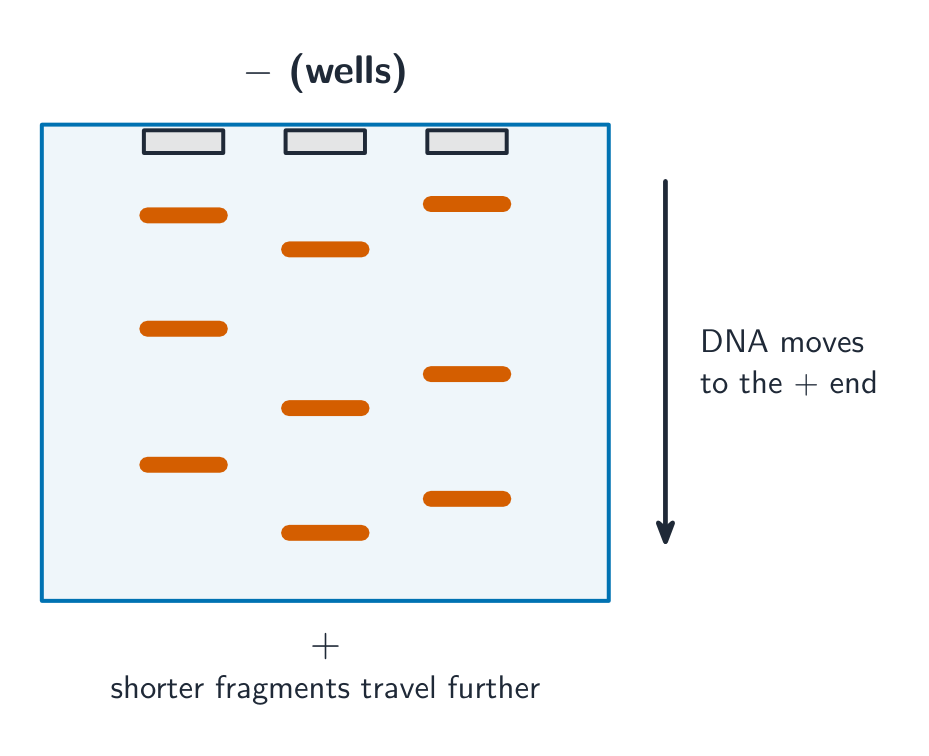
    • 6.8.A.1.i Gel electrophoresis is a process that separates DNA fragments by size and charge.
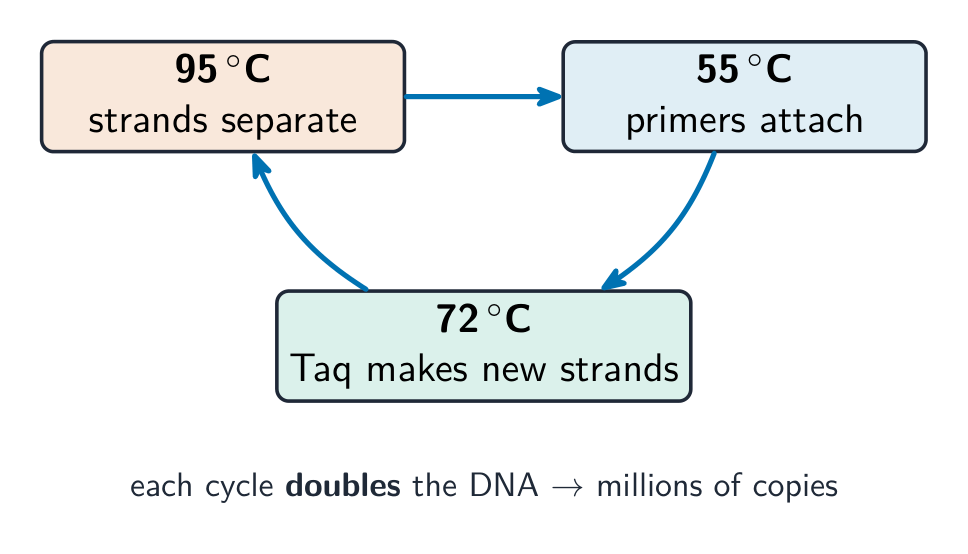
    • 6.8.A.1.ii During polymerase chain reaction (PCR), DNA fragments are amplified by denaturing DNA, annealing primers to the original strand, and extending the new DNA molecule.
    • 6.8.A.1.iii Bacterial transformation introduces foreign DNA into bacterial cells.
    • 6.8.A.1.iv DNA sequencing technology determines the order of nucleotides in a DNA molecule. Typically, these techniques result in a DNA fingerprint that allows for the comparison of DNA sequences from various samples.
    • Illustrative examples for 6.8.A.1:
      • Amplified DNA fragments can be used to identify organisms and perform phylogenetic analysis.
      • Analysis of DNA can be used for forensic identification.
      • Genetically modified organisms include transgenic animals.
      • Gene cloning allows propagation of DNA fragments.
    • Exclusion statement: Knowledge of the details of each of these genetic engineering techniques is beyond the scope of the AP Exam.
ไทย

ความเข้าใจที่ยั่งยืน (BIG IDEA 3 — การจัดเก็บและการถ่ายทอดข้อมูล): ระบบชีวภาพจัดเก็บ รื้อค้น ถ่ายทอด และตอบสนองต่อข้อมูลที่จำเป็นต่อกระบวนการดำรงชีวิต

จุดประสงค์การเรียนรู้ 6.8.A: อธิบายการใช้เทคนิควิศวกรรมพันธุกรรมในการวิเคราะห์หรือดัดแปลง DNA

  • 6.8.A.1 เทคนิควิศวกรรมพันธุกรรมสามารถใช้เพื่อวิเคราะห์และดัดแปลง DNA และ RNA ได้
    • 6.8.A.1.i Gel electrophoresis เป็นกระบวนการแยก展開 DNA ตามขนาดและประจุ
    • 6.8.A.1.ii ในระหว่างปฏิกิริยา chaîne โพลีเมอเรส (PCR) fragment DNA จะถูกเพิ่มจำนวนโดยการทำให้ DNA แยกสาย (denaturing), การจับพรีเมอร์เข้ากับสายเดิม (annealing primers), และการสร้างสาย DNA ใหม่ (extending)
    • 6.8.A.1.iii การแปลงแบคทีเรีย (bacterial transformation) นำ DNA จากภายนอกเข้าสู่เซลล์แบคทีเรีย
    • 6.8.A.1.iv เทคโนโลยีการหาลำดับเบส (DNA sequencing) กำหนดลำดับนิวคลีโอไทด์ในโมเลกุล DNA โดยทั่วไปเทคนิคเหล่านี้จะสร้างลายนิ้วมือ DNA ที่ช่วยให้เปรียบเทียบลำดับ DNA จากตัวอย่างต่างๆ ได้
    • ตัวอย่างประกอบสำหรับ 6.8.A.1:
      • fragment DNA ที่เพิ่มจำนวนแล้วสามารถใช้ระบุชนิดของสิ่งมีชีวิตและทำการวิเคราะห์ความสัมพันธ์ทางวิวัฒนาการ (phylogenetic analysis)
      • การวิเคราะห์ DNA สามารถใช้สำหรับการระบุตัวตนทางนิติวิทยาศาสตร์
      • สิ่งมีชีวิตดัดแปลงพันธุกรรม รวมถึงสัตว์ทรานส์เจนิก
      • การโคลนยีน (Gene cloning) ช่วยในการขยายผล fragment DNA
    • ข้อความยกเว้น: ความรู้รายละเอียดของแต่ละเทคนิควิศวกรรมพันธุกรรมเหล่านี้อยู่นอกขอบเขตของการสอบ AP

Source: College Board AP Course and Exam Description · ⁨แหล่งที่มา: คำอธิบายหลักสูตรและข้อสอบ College Board AP⁩

English

Biotechnology 生物技术 tools manipulate genetic material: PCR 聚合酶链反应 copies DNA, gel electrophoresis 凝胶电泳 separates DNA fragments by size, restriction enzymes and cloning move genes between organisms, and CRISPR edits sequences. These techniques enable genetic testing, engineered organisms, and medical treatments.

Worked example. A template DNA strand 3'-TAC GGA TTC-5' is transcribed into mRNA 5'-AUG CCU AAG-3'. A ribosome reads three codons: AUG = Met (start), CCU = Pro, AAG = Lys — coding for Met–Pro–Lys. Changing the third base of a codon often gives the same amino acid, because the genetic code is degenerate, which softens the effect of many mutations.

Reading DNA identifies individuals. Because the number of repeats at certain non-coding loci varies from person to person, analysis of DNA can be used for forensic identification: amplify those regions by PCR, separate the fragments by gel electrophoresis, and compare the pattern of band positions with a reference sample. A match is a statement about probability rather than certainty, which is why several loci are tested rather than one.

ไทย
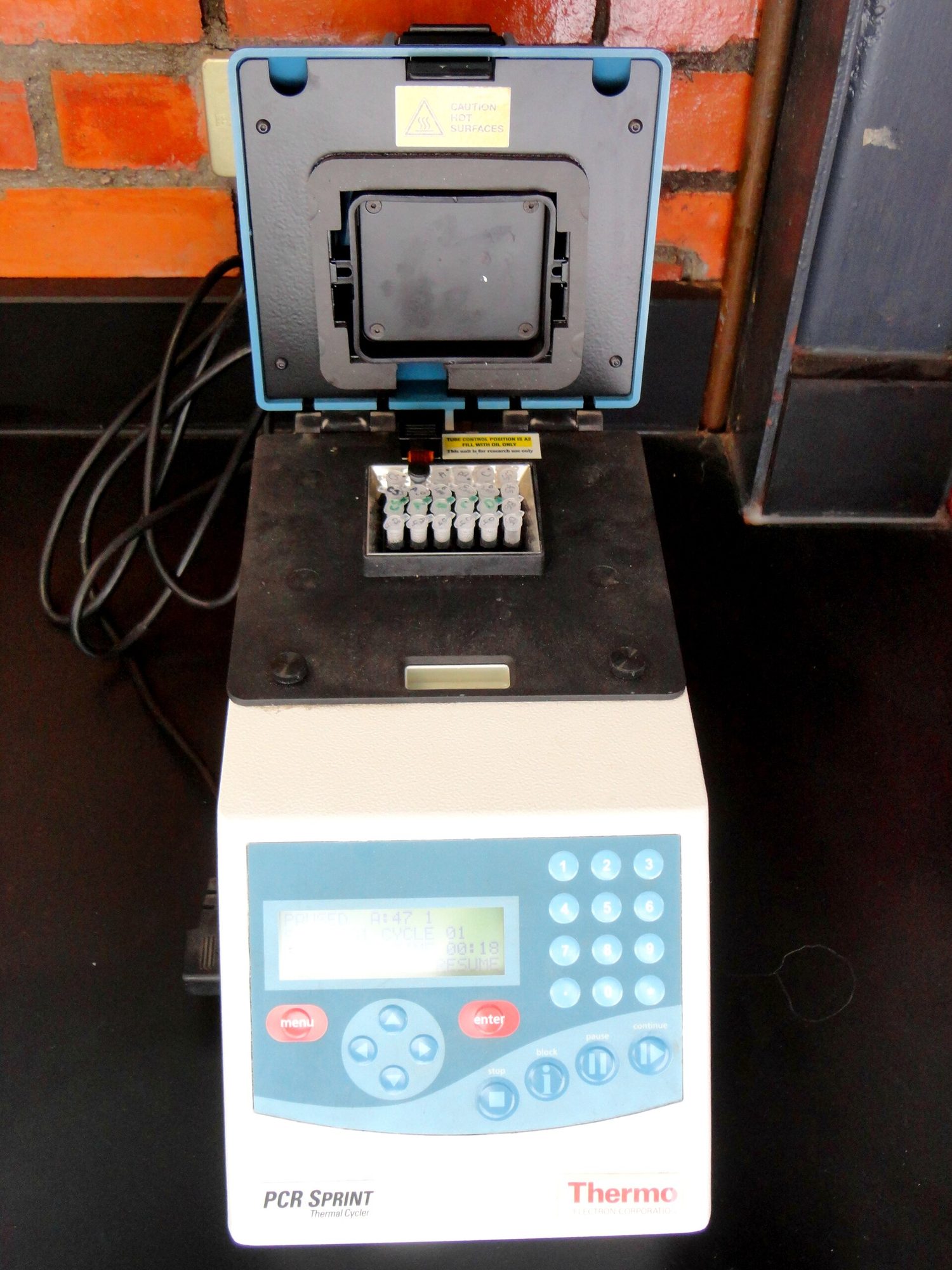
เครื่อง thermal cycler ทำร้อนและเย็นตัวอย่างซ้ำๆ เพื่อเพิ่มปริมาณ DNA (PCR)
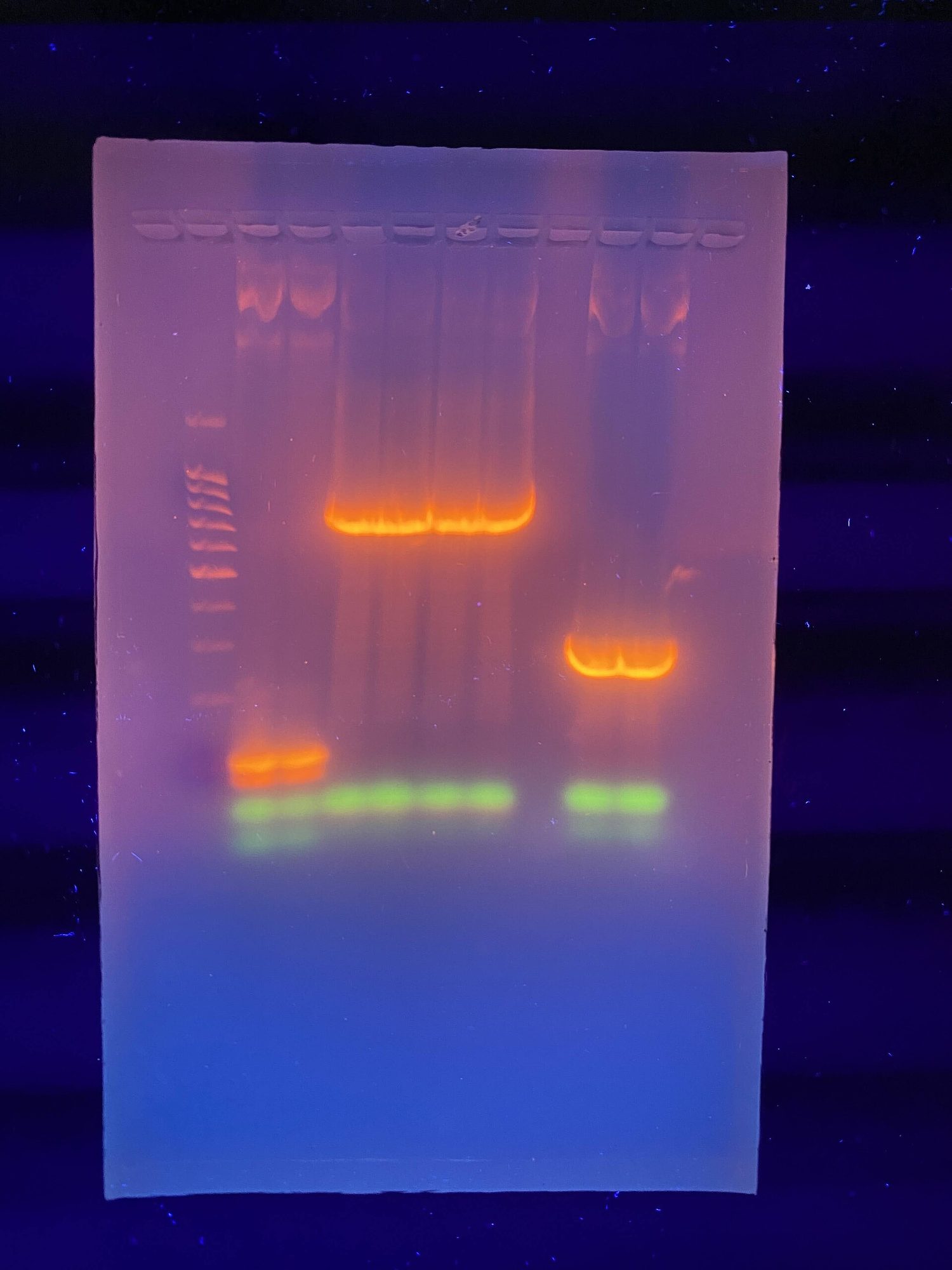
เจลอะกาโรสภายใต้แสง UV: ชิ้นส่วน DNA แยกตามขนาดเป็นแถบสว่าง

เครื่องมือทางชีวเทคโนโลยี ใช้จัดการกับสารพันธุกรรม: PCR ทำสำเนา DNA, เจลอิเล็กโทรโฟเรซิส แยก fragments ของ DNA ตามขนาด, เอนไซม์จำกัด และการโคลนนิ่งย้ายยีนระหว่างสิ่งมีชีวิต และ CRISPR แก้ไขลำดับเบส เทคนิคเหล่านี้ช่วยให้สามารถทดสอบทางพันธุกรรม สร้างสิ่งมีชีวิตดัดแปลงพันธุกรรม และพัฒนาการรักษาทางการแพทย์ได้

Gel electrophoresis แยกชิ้นส่วน DNA ตามความยาว
ปฏิกิริยา chaîne โพลีเมอเรส (PCR) เพิ่มปริมาณ DNA เป็นสองเท่าในแต่ละรอบ
ปฏิกิริยา chain โพลีเมอเรส (PCR) เพิ่มปริมาณ DNA เป็นสองเท่าในแต่ละรอบ

ตัวอย่างวิธีทำ สายดีเอ็นเอแม่แบบ 3'-TAC GGA TTC-5' ถูกถอดรหัสเป็น mRNA 5'-AUG CCU AAG-3' ไรโบโซมอ่านสามคอดอน: AUG = Met (เริ่มต้น), CCU = Pro, AAG = Lys — โคดิ้งสำหรับ Met–Pro–Lys การเปลี่ยนเบสที่สามของคอดอนมักให้กรดอะมิโนเดียวกัน เพราะรหัสพันธุกรรมมีลักษณะ degenerate ซึ่งช่วยลดผลกระทบของการกลายพันธุ์หลายชนิดลง

การอ่าน DNA ช่วยระบุตัวตนบุคคล เนื่องจากจำนวนครั้งซ้ำ (repeats) ที่ตำแหน่งที่ไม่โคดิ้งบางแห่งแตกต่างกันไปจากบุคคลสู่บุคคล การวิเคราะห์ DNA จึงสามารถใช้สำหรับการระบุตัวทางนิติวิทยาศาสตร์: เพิ่มบริเวณดังกล่าวด้วย PCR, แยกชิ้นส่วนด้วย gel electrophoresis, และเปรียบเทียบรูปแบบตำแหน่งแถบกับตัวอย่างอ้างอิง ความตรงกันเป็นการบอกเกี่ยวกับความน่าจะเป็นมากกว่าความแน่นอน ดังนั้นจึงมีการทดสอบหลายตำแหน่งแทนที่จะใช้เพียงตำแหน่งเดียว

Vocabulary · ⁨คำศัพท์⁩ Train · ⁨ฝึกฝน⁩
English ไทย
PCR/ˌpiː siː ˈɑː/ PCR
gel electrophoresis/dʒel ɪˌlektrəʊfɔːˈriːsɪs/ เจลอิเล็กโทรฟอเรซิส
6.8

Exam tips · ⁨ข้อแนะนำสำหรับการสอบ⁩

English
  • Know the central dogma DNA → RNA → protein: transcription makes mRNA, translation reads it in three-base codons at the ribosome.
  • Remember RNA is single-stranded and uses U instead of T; replication is semiconservative.
  • Every cell has the same DNA — cells differ because they express different genes (differential gene expression).
  • A mutation is a change in the DNA sequence and may be harmful, neutral, or beneficial (the raw material for selection).
  • Link biotech tools to their jobs: PCR copies DNA; gel electrophoresis separates fragments by size.
ไทย
  • จำ central dogma DNA → RNA → protein: transcription สร้าง mRNA, translation อ่านมันในรูป codons สามเบสที่ไรโบโซม
  • จำไว้ว่า RNA เป็นสายเดี่ยวและใช้ U แทน T; replication เป็นแบบ semiconservative
  • ทุกเซลล์มี DNA เหมือนกัน — เซลล์แตกต่างกันเพราะพวกมันแสดงออก ยีนที่แตกต่างกัน (differential gene expression)
  • Mutation คือการเปลี่ยนแปลงในลำดับ DNA และอาจเป็นอันตราย เป็นกลาง หรือเป็นประโยชน์ (วัตถุดิบสำหรับการคัดเลือก)
  • เชื่อมโยงเครื่องมือทาง biotech เข้ากับหน้าที่: PCR ทำสำเนา DNA; gel electrophoresis แยกชิ้นส่วนตามขนาด

Interactive lessons on this topic · ⁨บทเรียนเชิงโต้ตอบสำหรับหัวข้อนี้⁩

Work through it step by step, with instant-check exercises. · ⁨ทำทีละขั้นตอน พร้อมแบบฝึกหัดตรวจสอบผลทันที⁩

Past Papers · ⁨ข้อสอบย้อนหลัง⁩

More topics in AP Biology · ⁨หัวข้อเพิ่มเติมใน AP Biology⁩

Log in or create account · ⁨เข้าสู่ระบบหรือสร้างบัญชี⁩

IGCSE, A-Level & AP