| Big Idea | Learning Objective | Essential Knowledge |
|---|---|---|
Big Idea 4 — Systems Interactions | 2.1.A |
|
Cell Structure and Function
AP Biology · Topic 2
 9:48
9:48
Cell Structure and Function
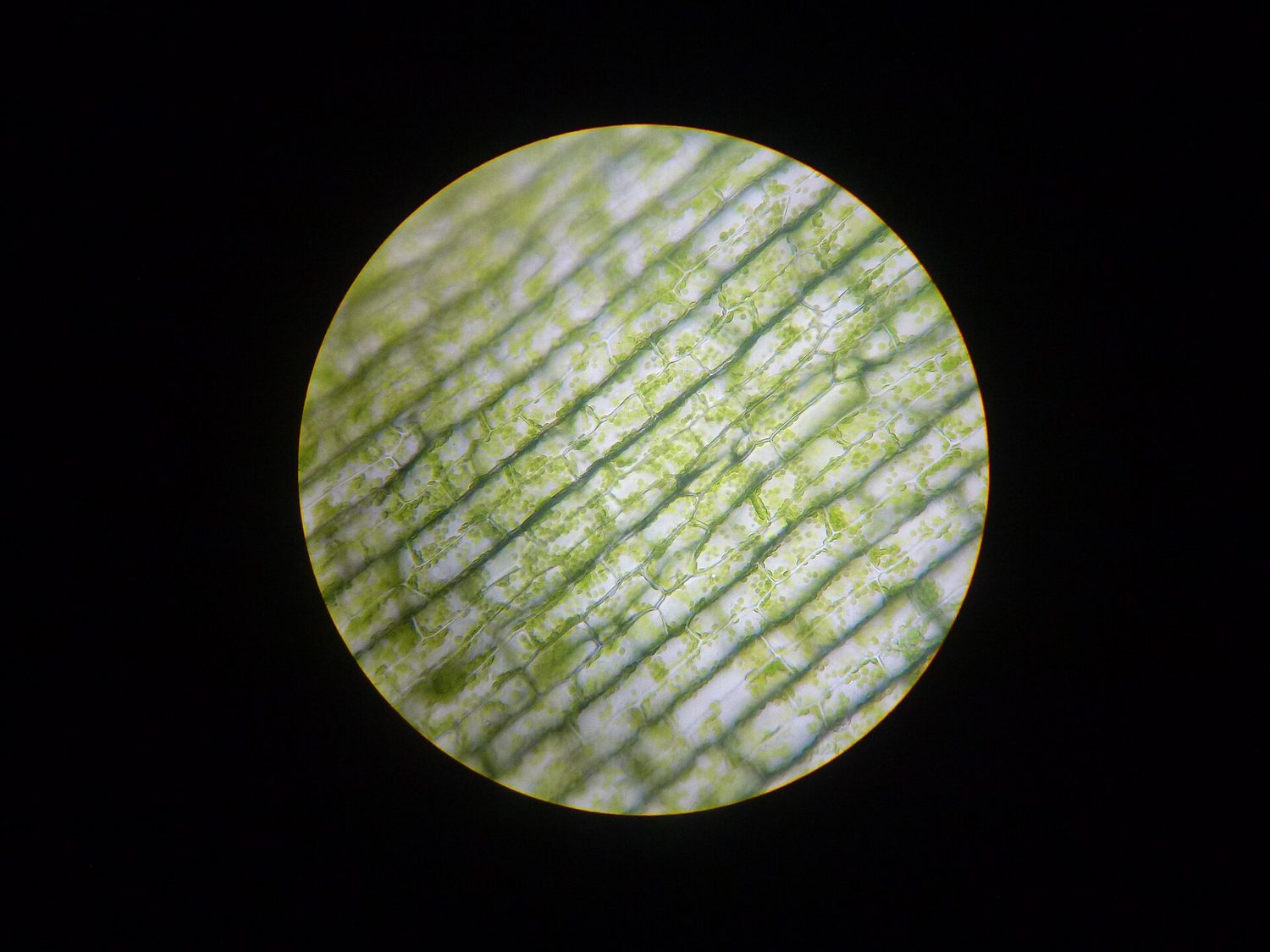
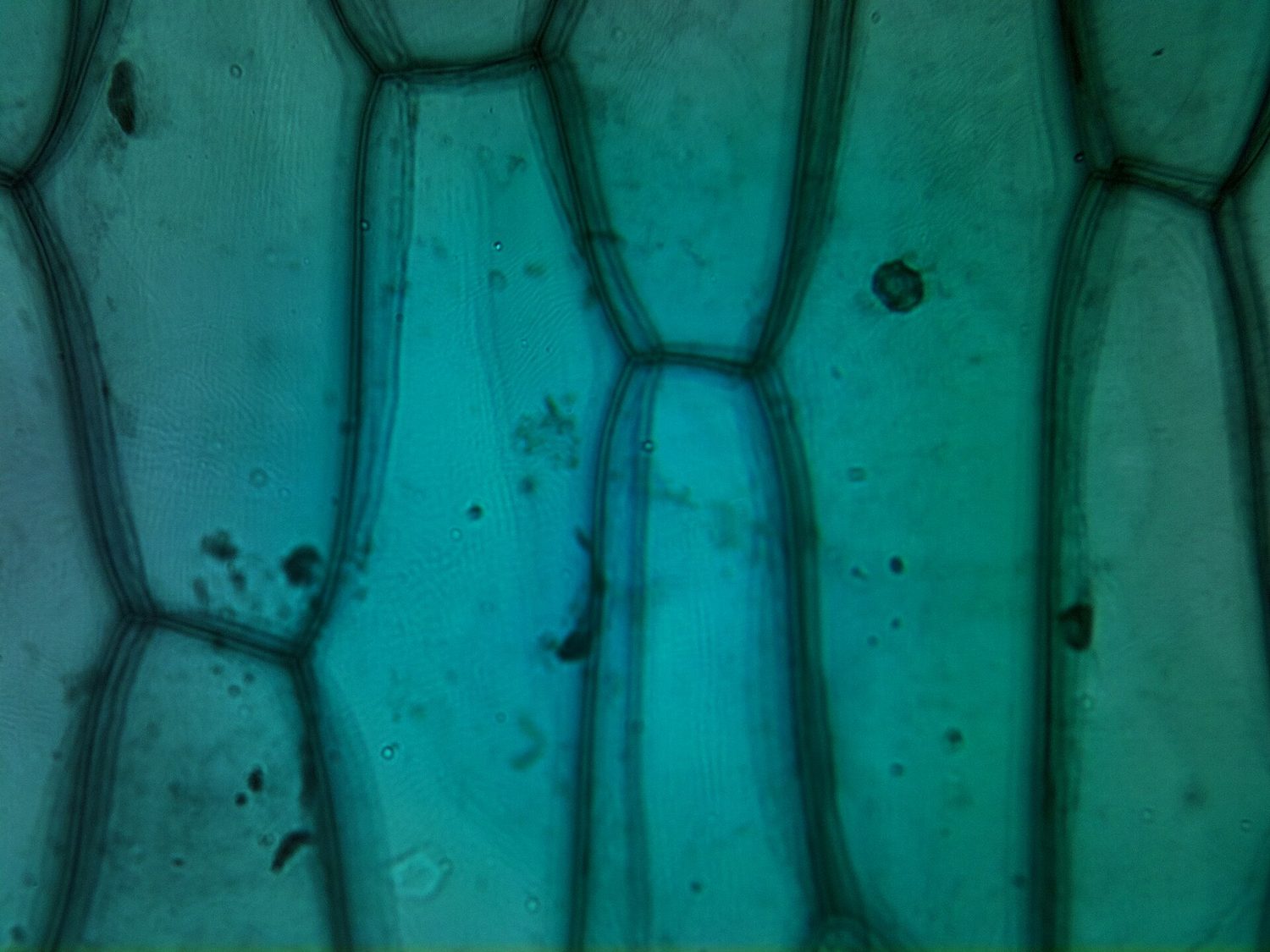
Look at a leaf under a microscope. You see rows of green boxes, and each box is packed with tiny green discs. Now look at a thin slice of onion. Neat brick…
English narration · English + 中文 subtitles burned in
2.1
Organelles and the Endomembrane System
Syllabus
Source: College Board AP Course and Exam Description
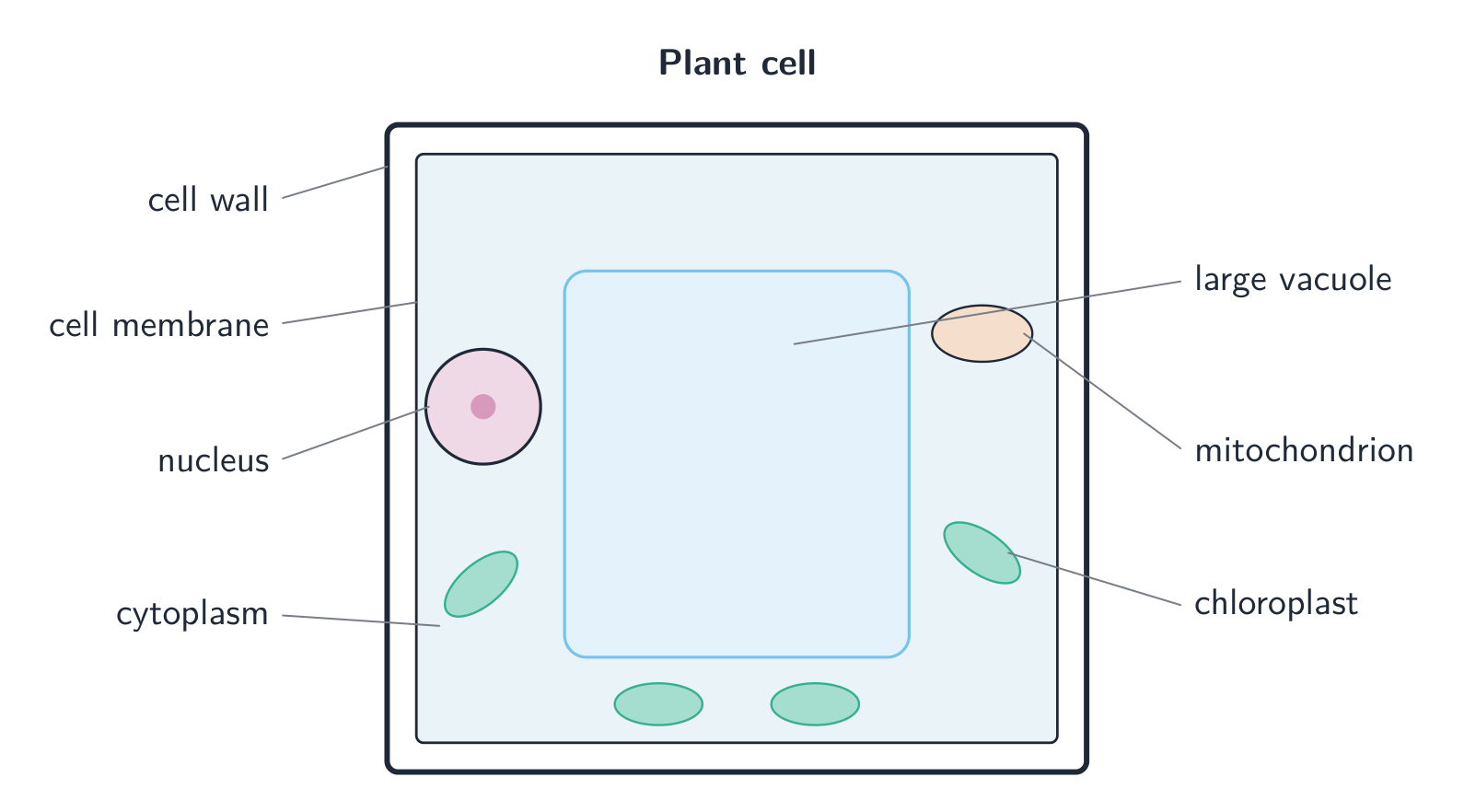
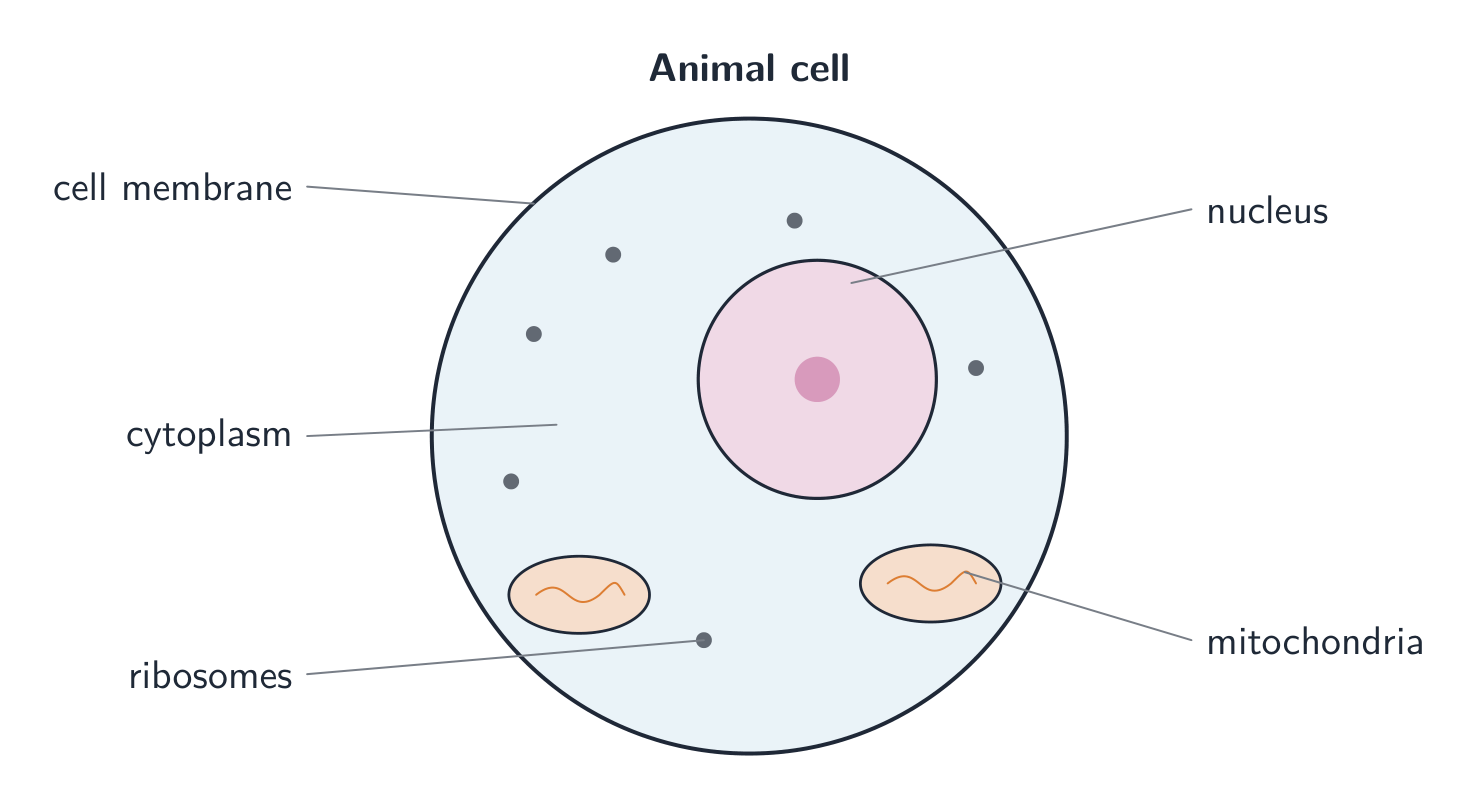
A eukaryotic cell divides its work among organelles 细胞器. The endomembrane system 内膜系统 is a connected set that makes, modifies, and ships molecules: the nucleus 细胞核 (holds DNA), rough and smooth endoplasmic reticulum 内质网 (protein and lipid synthesis), the Golgi 高尔基体 (modifies and packages), lysosomes 溶酶体 (digestion), and vesicles that carry material between them. Mitochondria 线粒体 (respiration) and chloroplasts 叶绿体 (photosynthesis) have their own membranes.
What each organelle actually does
The exam asks you to name a structure and say what it does, so learn them as pairs.
Ribosomes 核糖体 are made of ribosomal RNA 核糖体核糖核酸 (rRNA) and protein. They have no membrane, and they are found in every form of life — bacteria, archaea and eukaryotes alike. That shared presence is evidence of common ancestry: a structure this central was already present in the last common ancestor of all living things. A ribosome reads messenger RNA 信使核糖核酸 (mRNA) and builds the protein it codes for. Free ribosomes make proteins for use inside the cell; ribosomes bound to the rough endoplasmic reticulum make proteins for export or for the membrane.
The Golgi complex 高尔基复合体 is a series of flattened, membrane-bound sacs. A protein arriving from the endoplasmic reticulum is passed through them, and three things happen to it:
- it is folded correctly and chemically modified — most often by glycosylation 糖基化, the attachment of short sugar chains;
- it is sorted and targeted, so the modified sugar or phosphate tag decides which compartment the protein is sent to;
- it is packaged into a vesicle for transport.
So the Golgi is not storage: it is the cell's finishing and dispatch department, and its modifications determine what a protein does and where it ends up.
Lysosomes are membrane-enclosed sacs of hydrolytic enzymes 水解酶 that digest material — worn-out organelles, engulfed bacteria, and food particles taken in by the cell. Their enzymes work best at a low pH, which the lysosome maintains inside itself; keeping them enclosed protects the rest of the cell. Lysosomes also take part in apoptosis 细胞凋亡, programmed cell death, in which a cell is dismantled deliberately, for example to sculpt fingers from a webbed embryonic hand.
Vacuoles 液泡 are membrane-bound sacs with many different roles: storing water, ions, nutrients or waste, and in a plant cell the large central vacuole also presses outwards on the cell wall to keep the cell firm.
Mitochondria and chloroplasts each have a double membrane and their own circular DNA and ribosomes — the evidence behind endosymbiotic theory below.
Vocabulary
Train
| English |
|---|
| organelles/ˌɔːɡəˈnelz/ |
| endomembrane system/ˈendəʊmembreɪn ˈsɪstəm/ |
| nucleus/ˈnjuːklɪəs/ |
| endoplasmic reticulum/ˌendəʊˈplæzmɪk reˈtɪkjʊləm/ |
| Golgi/ˈɡɒlɡɪ/ |
| lysosomes/ˈlaɪsəsəʊmz/ |
| Mitochondria/ˌmaɪtəˈkɒndrɪə/ |
| chloroplasts/ˈklɔːrəʊplæsts/ |
| Ribosomes/ˈrɪbəsəʊmz/ |
| ribosomal RNA/ˈrɪbəsɒml ˌɑː en ˈeɪ/ |
| messenger RNA/ˈmesɪndʒə ˌɑː en ˈeɪ/ |
| The Golgi complex/ðə ˈɡɒlɡɪ ˈkɒmpleks/ |
| glycosylation/ˌɡlaɪkəsɪˈleɪʃn/ |
| hydrolytic enzymes/ˌhaɪdrəˈlɪtɪk ˈenzaɪmz/ |
| apoptosis/əpəpˈtəʊsɪs/ |
| Vacuoles/ˈvækjuːəʊlz/ |
| ribosomal RNA (rRNA)/ˈrɪbəsɒml ˌɑː en ˈeɪ/ |
2.2
Why Cells Stay Small
Syllabus
| Big Idea | Learning Objective | Essential Knowledge |
|---|---|---|
Big Idea 2 — Energetics | 2.2.A |
|
Source: College Board AP Course and Exam Description
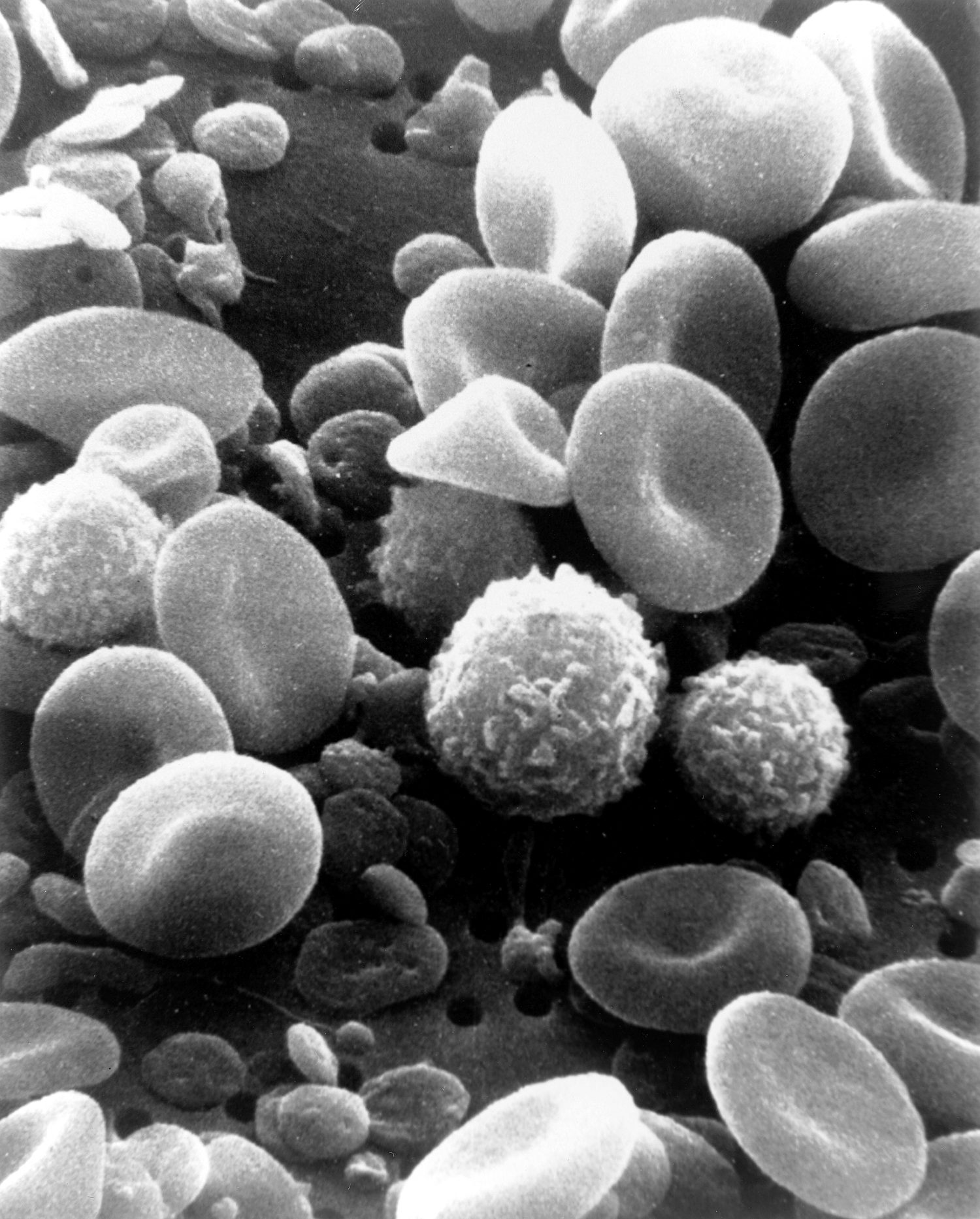
Cells stay small because of the surface-area-to-volume ratio 表面积与体积比. As a cell grows, its volume rises faster than its surface area, so its membrane cannot exchange materials fast enough for the interior. Staying small (or being flat or folded) keeps enough surface to serve the volume.
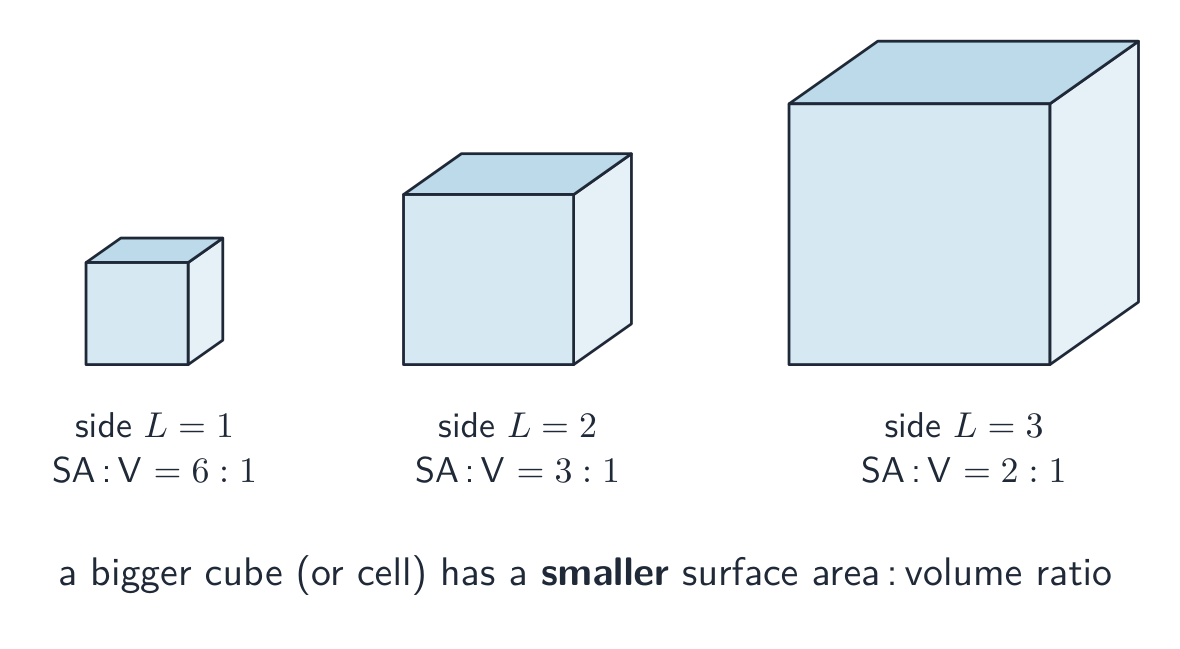
Worked example. A cube-shaped cell $2\ \mu\text{m}$ on a side has surface area $6\times2^2=24\ \mu\text{m}^2$ and volume $2^3=8\ \mu\text{m}^3$, so its surface-area-to-volume ratio is $\tfrac{24}{8}=3$. Double the side to $4\ \mu\text{m}$: surface area $=6\times4^2=96$, volume $=4^3=64$, ratio $=\tfrac{96}{64}=1.5$. Doubling the size halved the ratio – the larger cell has far less membrane per unit of interior, which is why cells stay small.
Explore
See surface area vs volume as a cube grows
As a cell grows, volume rises faster than surface area, so the surface-area-to-volume ratio falls. A small cell keeps enough membrane to exchange materials fast enough.
Vocabulary
Train
| English |
|---|
| surface-area-to-volume ratio/ˈsɜːfɪs ˈeərɪə tə ˈvɒljuːm ˈreɪʃɪəʊ/ |
2.3
The Fluid Mosaic Model of the Membrane
Syllabus
| Big Idea | Learning Objective | Essential Knowledge |
|---|---|---|
Big Idea 2 — Energetics | 2.3.A |
|
2.3.B |
|
Source: College Board AP Course and Exam Description
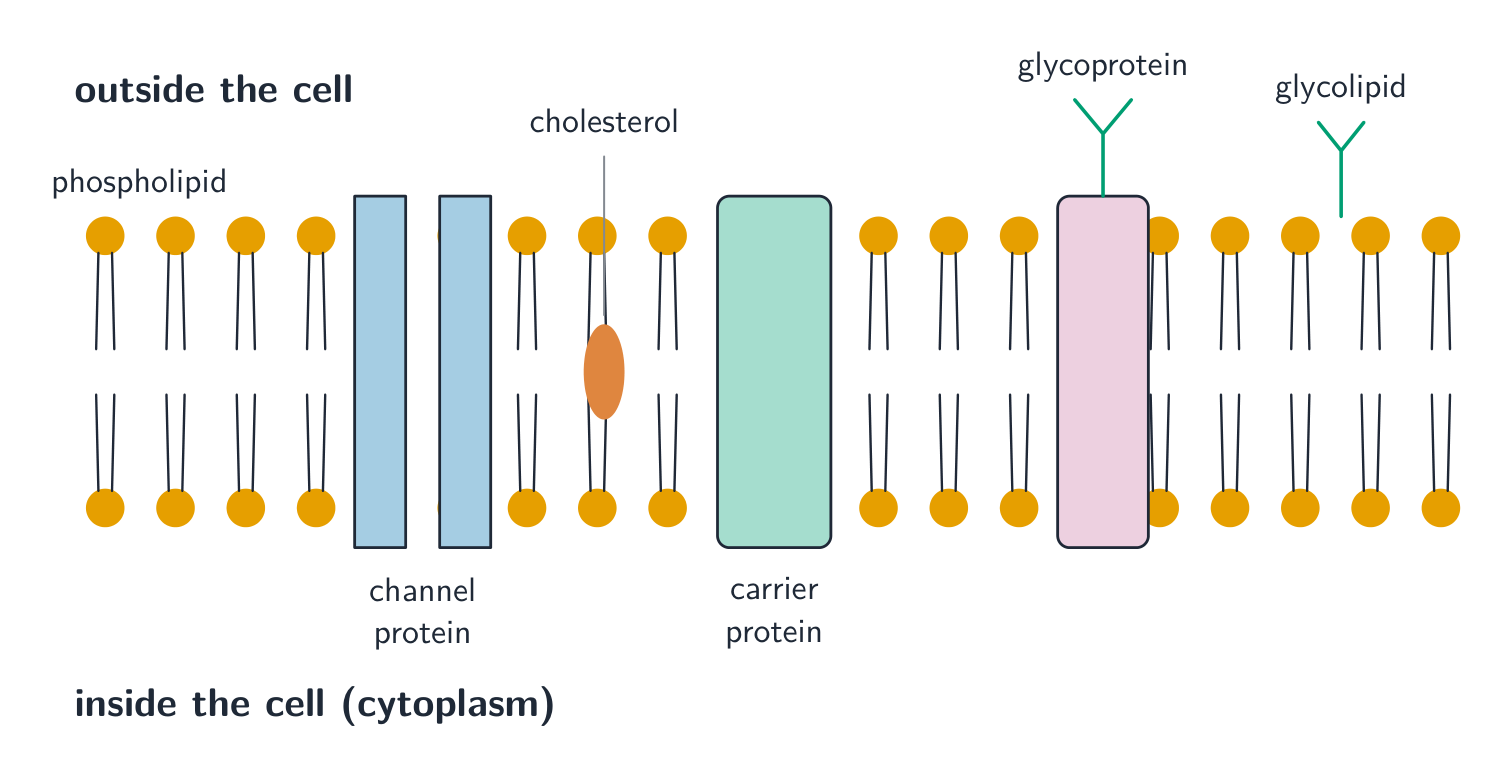
The cell membrane is a phospholipid bilayer 磷脂双分子层 – polar heads facing the water, nonpolar tails inside – studded with proteins. The fluid mosaic model 流动镶嵌模型 pictures it as a fluid sheet in which lipids and proteins drift. Cholesterol and the degree of unsaturation tune its fluidity.
Vocabulary
Train
| English |
|---|
| phospholipid bilayer/ˈfɒsfəlɪpɪd ˈbɪleɪə/ |
| fluid mosaic model/ˈfluːɪd məˈseɪɪk ˈmɒdl/ |
2.4
What Can Cross the Membrane
Syllabus
| Big Idea | Learning Objective | Essential Knowledge |
|---|---|---|
Big Idea 2 — Energetics | 2.4.A |
|
2.4.B |
|
Source: College Board AP Course and Exam Description
The membrane is selectively permeable 选择透过性. Small nonpolar molecules ($\text{O}_2$, $\text{CO}_2$) and water cross easily; large or charged/polar particles (ions, glucose) cannot pass the nonpolar core without help. This selectivity lets the cell control its internal environment.
Vocabulary
Train
| English |
|---|
| selectively permeable/sɪˈlektɪvli ˈpɜːməbl/ |
2.5
Passive and Active Transport
Syllabus
| Big Idea | Learning Objective | Essential Knowledge |
|---|---|---|
Big Idea 2 — Energetics | 2.5.A |
|
2.5.B |
|
Source: College Board AP Course and Exam Description
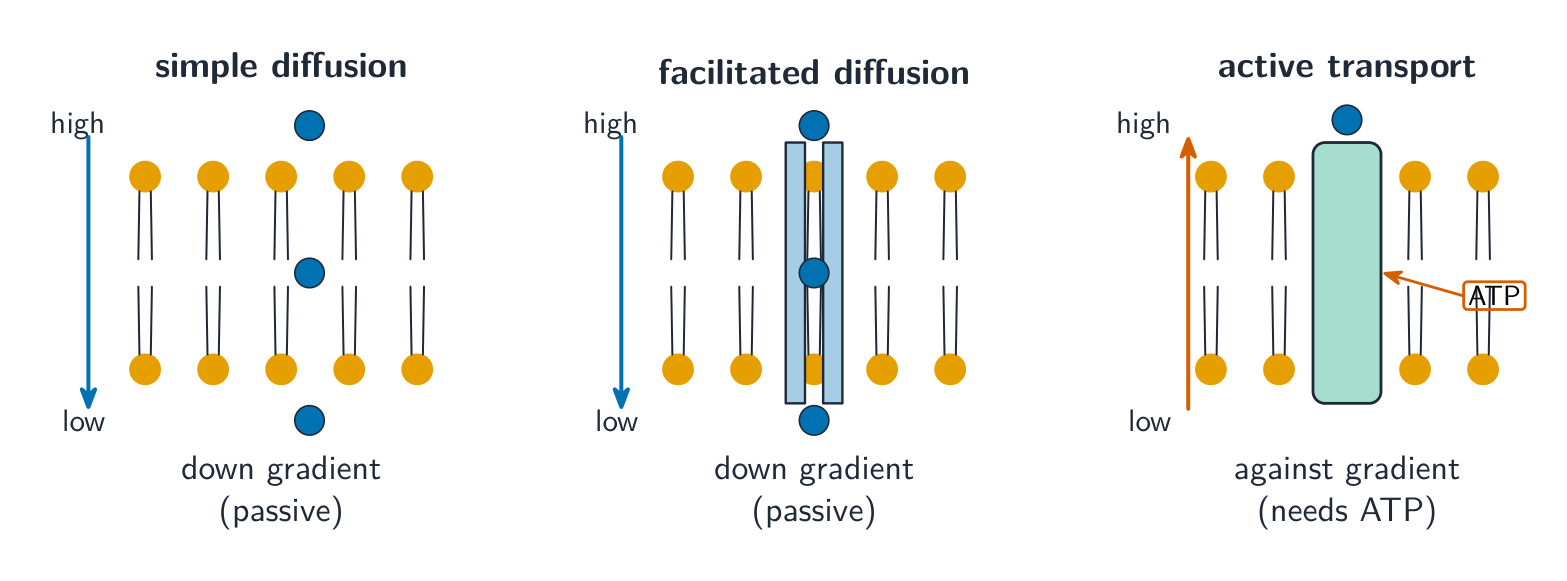
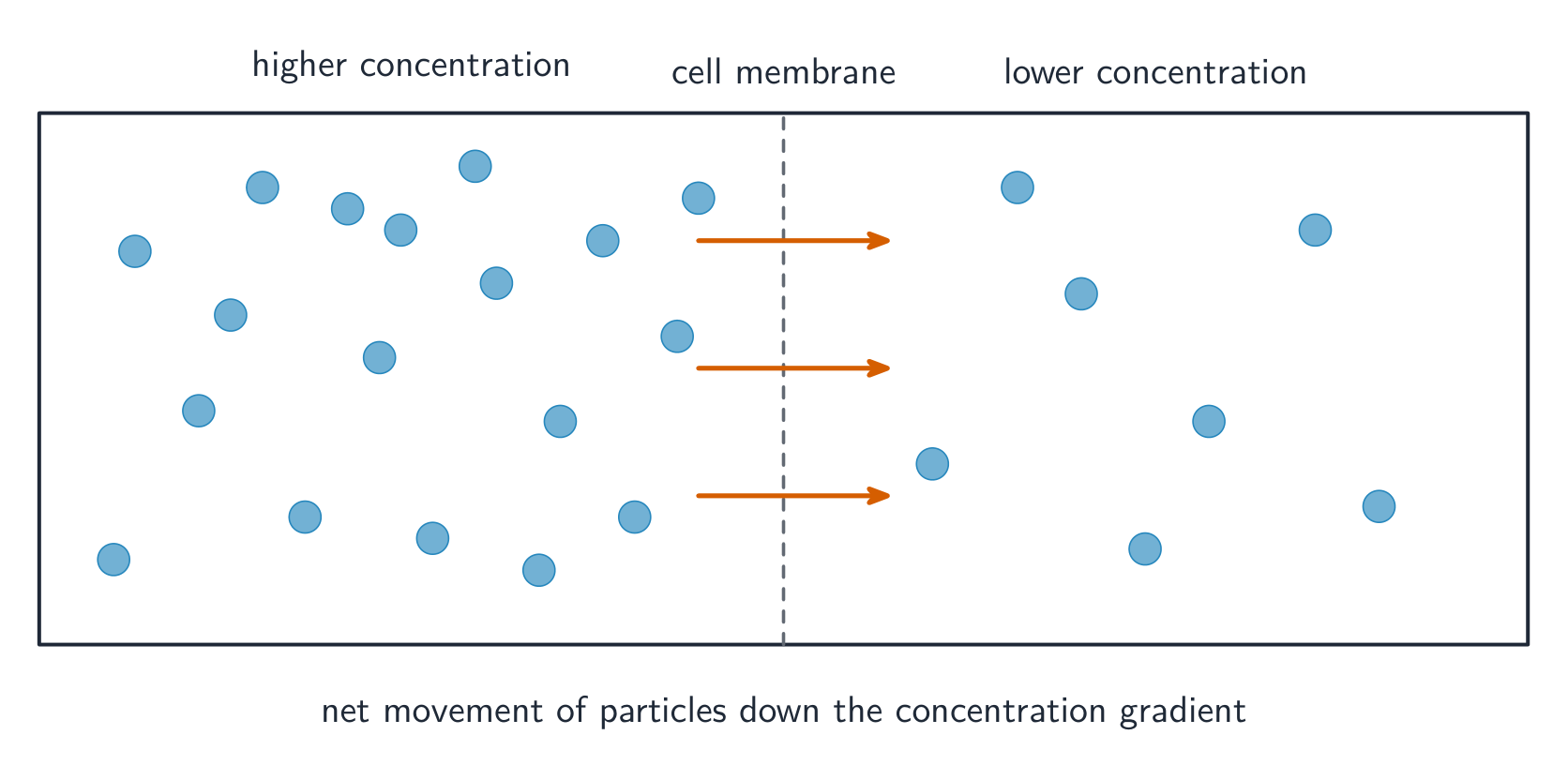
- Passive transport 被动运输 moves substances down their concentration gradient (high → low) with no energy – diffusion 扩散.
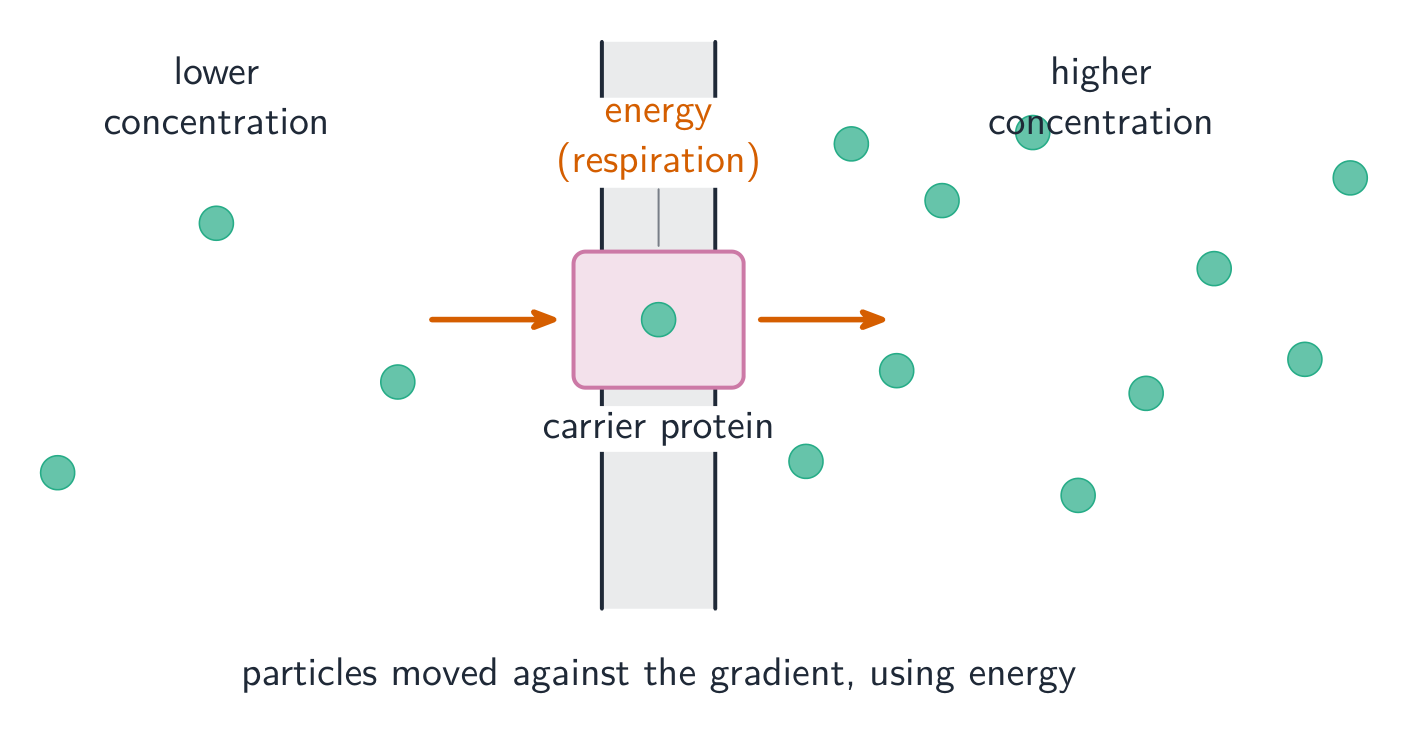
- Active transport 主动运输 moves substances against the gradient (low → high), requiring energy (ATP), via protein pumps like the sodium–potassium pump.
Explore
Pump a solute against its gradient
Passive transport moves solutes down their gradient for free; active transport uses ATP to pump them the other way, from low to high concentration.
Vocabulary
Train
| English |
|---|
| Passive transport/ˈpæsɪv ˈtrænspɔːt/ |
| diffusion/dɪˈfjuːʒn/ |
| Active transport/ˈæktɪv ˈtrænspɔːt/ |
2.6
Facilitated Diffusion
Syllabus
| Big Idea | Learning Objective | Essential Knowledge |
|---|---|---|
Big Idea 2 — Energetics | 2.6.A |
|
Source: College Board AP Course and Exam Description
Facilitated diffusion 易化扩散 is passive transport through a membrane protein – a channel or carrier 载体 – for particles that cannot cross the lipid alone. It still goes down the gradient and needs no energy, but its rate can saturate when all the proteins are busy.
Vocabulary
Train
| English |
|---|
| Facilitated diffusion/fəˈsɪlɪteɪtɪd dɪˈfjuːʒn/ |
| carrier/ˈkærɪə/ |
2.7
Tonicity, Water Potential, and Osmoregulation
Syllabus
| Big Idea | Learning Objective | Essential Knowledge |
|---|---|---|
Big Idea 2 — Energetics | 2.7.A |
|
2.7.B |
|
Source: College Board AP Course and Exam Description
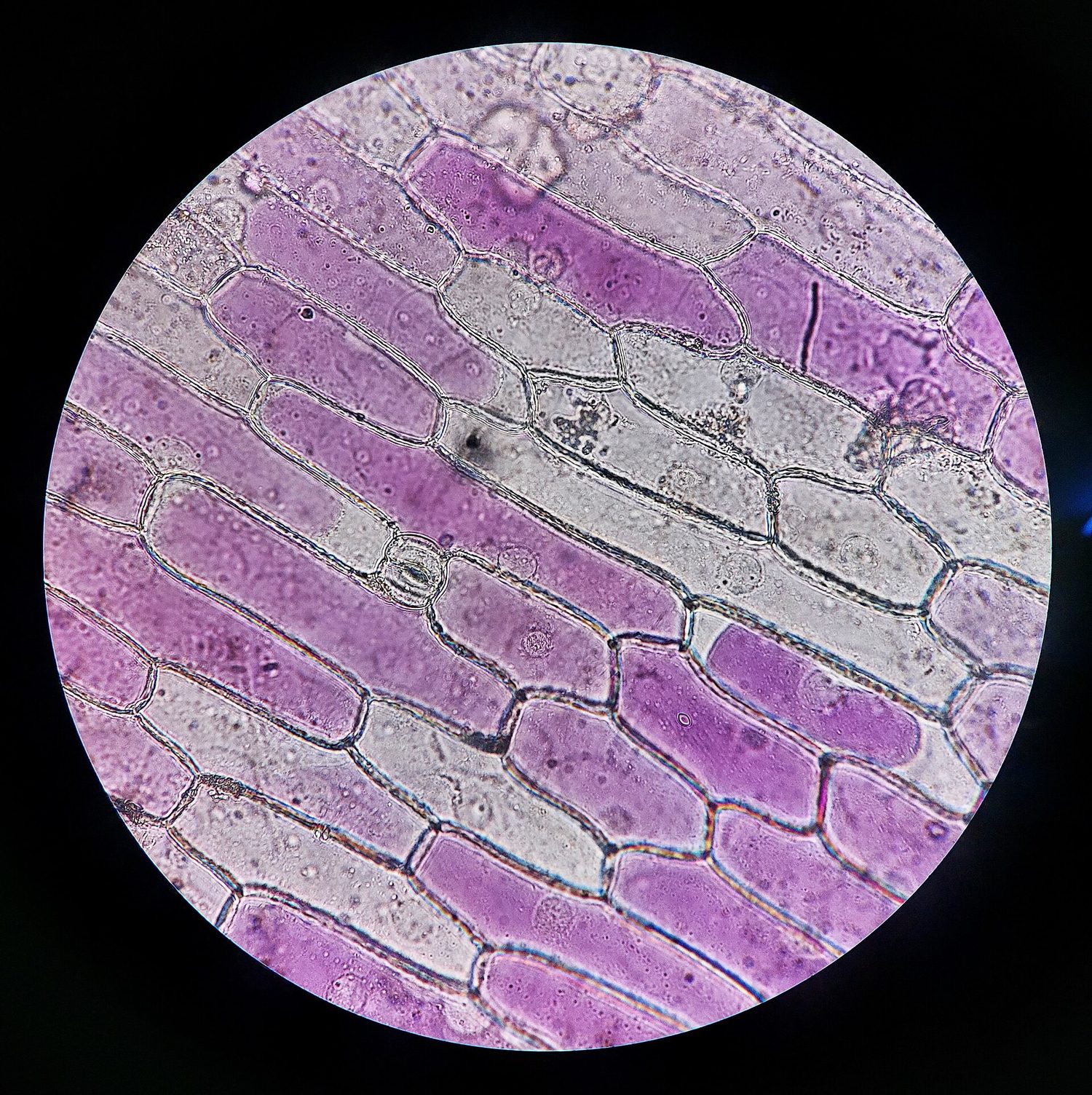
Osmosis 渗透 is the diffusion of water across a membrane. Tonicity 张力 compares solute concentrations: in a hypotonic 低渗 solution a cell gains water (may burst); in a hypertonic 高渗 one it loses water (shrinks); in an isotonic 等渗 one there is no net change. Water potential 水势 predicts the direction of water movement (water moves to lower water potential), and is the sum of a pressure term and a solute term: $\Psi=\Psi_p+\Psi_s$, where the solute potential $\Psi_s=-iCRT$. Osmoregulation 渗透调节 is how organisms control this balance.
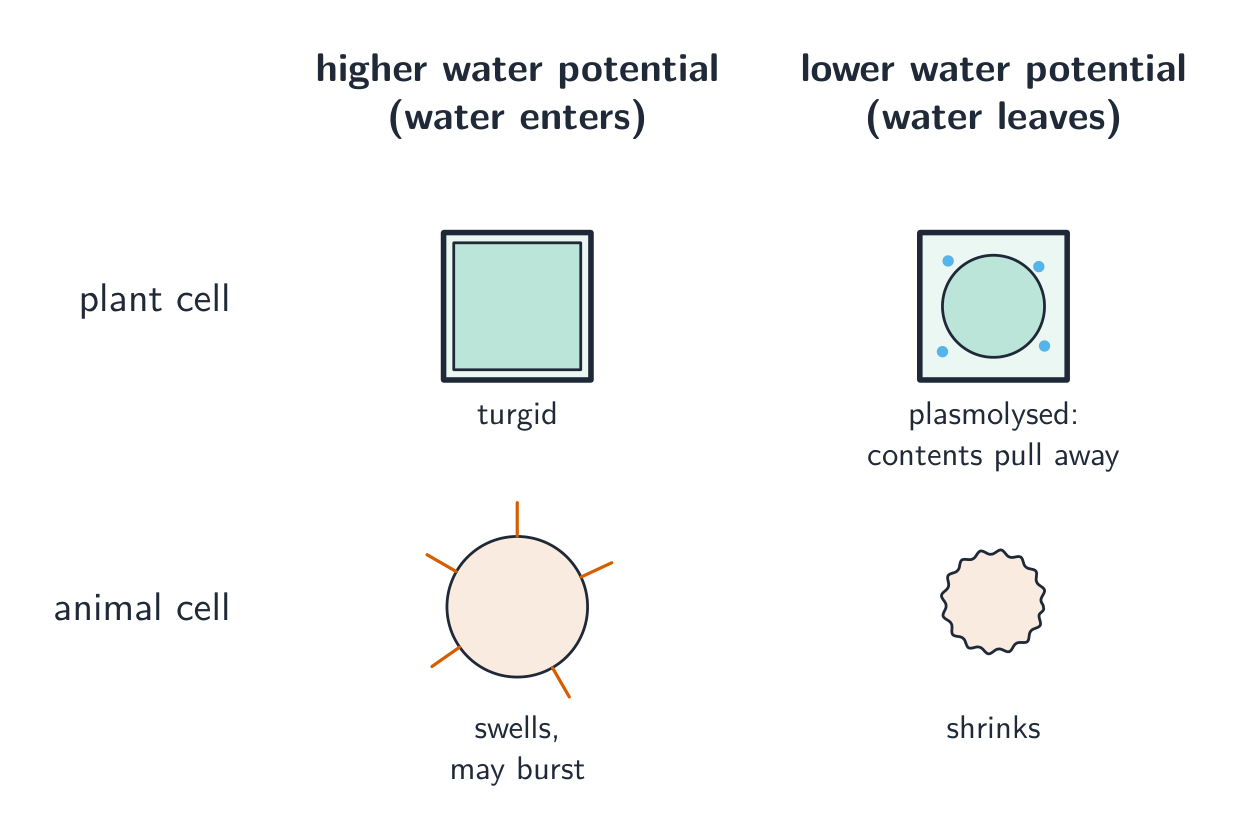
Worked example. For a $0.1\,\text{M}$ sucrose solution ($i=1$) in an open beaker (so pressure potential $\Psi_p=0$) at $25\,°\text{C}$ ($T=298\,\text{K}$, $R=0.0831\ \text{L}\cdot\text{bar/mol}\cdot\text{K}$): $\Psi_s=-iCRT=-(1)(0.1)(0.0831)(298)\approx-2.48\ \text{bar}$, so $\Psi\approx-2.48\ \text{bar}$. A plant cell whose interior is $\Psi=-1.0\ \text{bar}$ sits in this solution: since the solution is more negative, water moves out of the cell into the solution, and the cell loses turgor.
Explore
Watch water move by osmosis
Water moves across the membrane from high water potential to low, toward the more concentrated (hypertonic) side. Set the concentrations and watch which way the cell swells or shrinks.
Vocabulary
Train
| English |
|---|
| Osmosis/ɒzˈməʊsɪs/ |
| Tonicity/təˈnɪsɪti/ |
| hypotonic/ˌhaɪpəʊˈtɒnɪk/ |
| hypertonic/ˌhaɪpəˈtɒnɪk/ |
| isotonic/ˌaɪsəˈtɒnɪk/ |
| Water potential/ˈwɔːtə pəˈtenʃl/ |
| Osmoregulation/ˌɒzmɔːɡjʊˈleɪʃn/ |
2.8
Mechanisms of Membrane Transport
Syllabus
| Big Idea | Learning Objective | Essential Knowledge |
|---|---|---|
Big Idea 2 — Energetics | 2.8.A |
|
Source: College Board AP Course and Exam Description
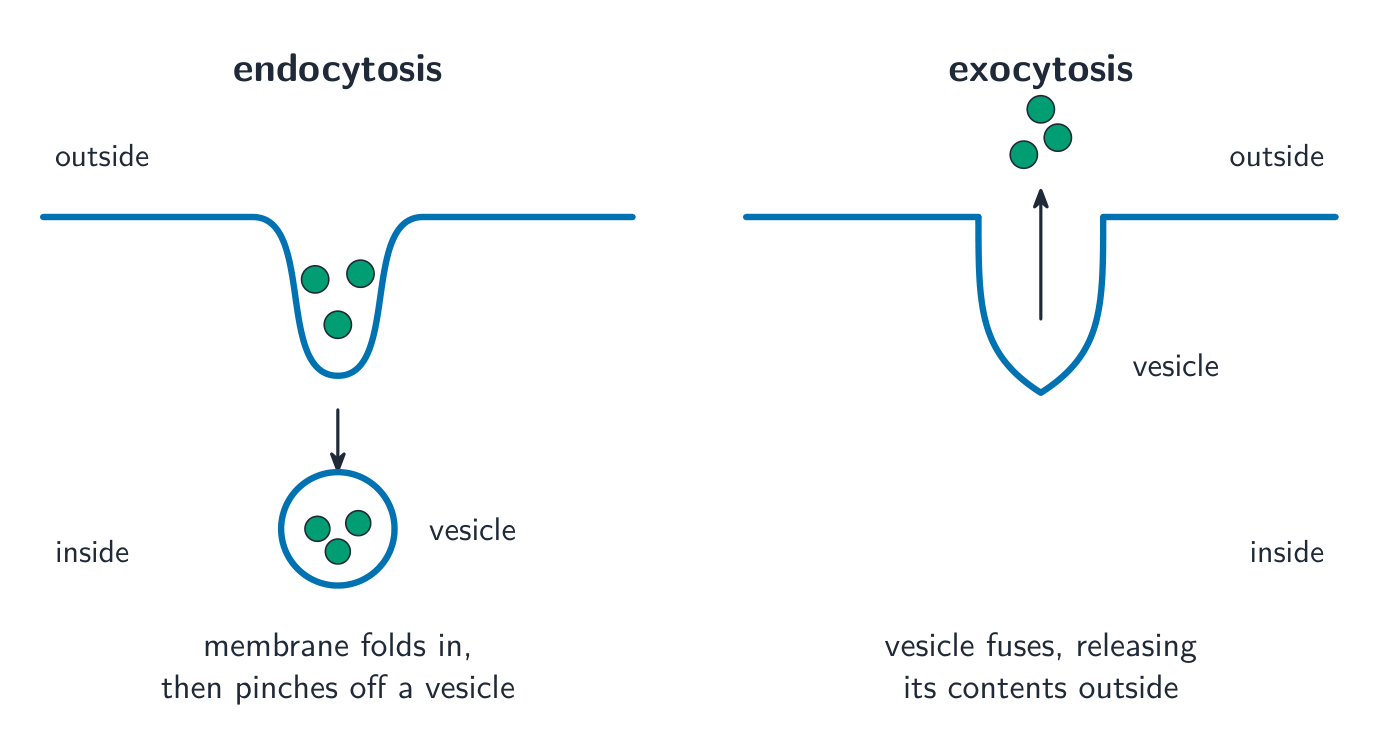
Large materials move in bulk by vesicles: endocytosis 内吞 brings material in (the membrane engulfs it), and exocytosis 外排 sends material out (a vesicle fuses with the membrane). Both require energy and let cells import and secrete large molecules.
Vocabulary
Train
| English |
|---|
| endocytosis/ˌendəʊsɪˈtəʊsɪs/ |
| exocytosis/eɡˌzɒsɪˈtəʊsɪs/ |
2.9
Compartmentalization Inside the Cell
Syllabus
| Big Idea | Learning Objective | Essential Knowledge |
|---|---|---|
Big Idea 2 — Energetics | 2.9.A |
|
2.9.B |
|
Source: College Board AP Course and Exam Description
Membranes create separate compartments 区室 so incompatible reactions can run at once and conditions (pH, ion levels) can be tuned locally. This organization boosts efficiency – the internal membranes also add surface area for reactions.
Vocabulary
Train
| English |
|---|
| compartments/kəmˈpɑːtmənts/ |
2.10
The Origins of Cell Compartmentalization
Syllabus
| Big Idea | Learning Objective | Essential Knowledge |
|---|---|---|
Big Idea 1 — Evolution | 2.10.A |
|
Source: College Board AP Course and Exam Description
The endosymbiotic theory 内共生学说 explains mitochondria and chloroplasts: they arose when a larger cell engulfed free-living prokaryotes that then lived inside it. The evidence – their own circular DNA, their own ribosomes, and double membranes – supports this shared evolutionary origin.
Vocabulary
Train
| English |
|---|
| endosymbiotic theory/ˌendəʊˌsɪmbaɪˈɒtɪk ˈθɪəri/ |
2.10
Exam tips
- Use the two AP-formula skills: surface-area-to-volume ratio (why cells stay small) and water potential $\Psi=\Psi_p+\Psi_s$ ($\Psi_s=-iCRT$).
- Water moves toward the lower (more negative) water potential; predict swelling or shrinking from tonicity (hypo/hyper/isotonic).
- Passive transport and osmosis need no energy (down the gradient); active transport needs ATP (against the gradient).
- Distinguish diffusion, facilitated diffusion (a channel/carrier protein), and active transport.
- Explain membrane selectivity from the phospholipid bilayer — small non-polar molecules cross, large/charged ones need help.
Interactive lessons on this topic
Work through it step by step, with instant-check exercises.