| Big Idea | Learning Objective | Essential Knowledge |
|---|---|---|
Big Idea 2 — Energetics | 3.1.A |
|
Cellular Energetics
AP Biology · Topic 3
 9:13
9:13
Cellular Energetics
Look at the washing powder in your cupboard. In warm water it removes a food stain in half an hour. In a lab, the same job would need strong acid and boiling…
English narration · English + 中文 subtitles burned in
3.1
Enzymes as Biological Catalysts
Syllabus
Source: College Board AP Course and Exam Description
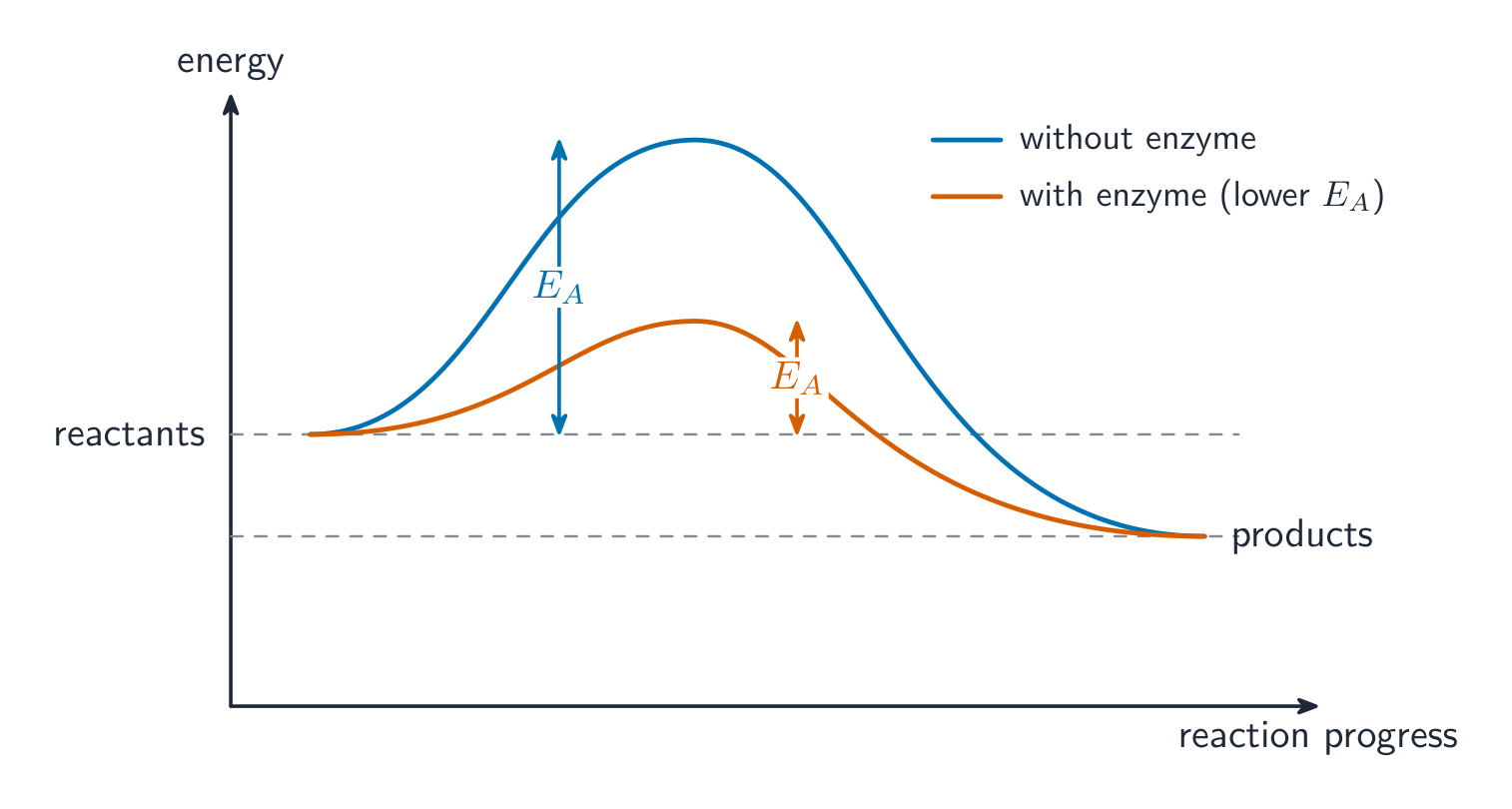
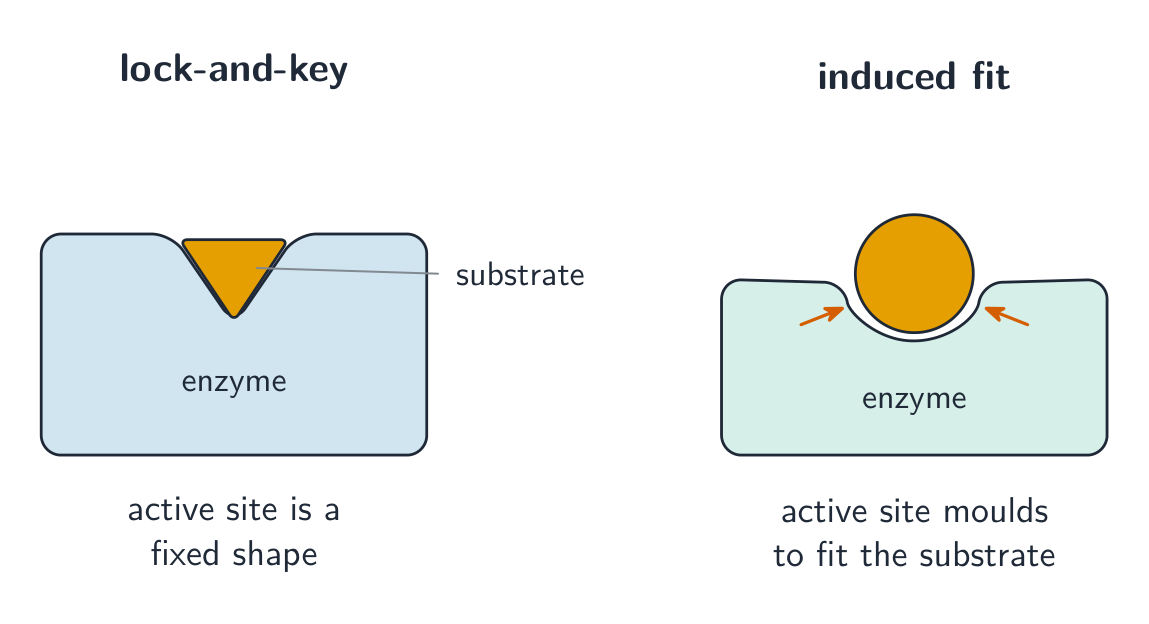
An enzyme 酶 is a protein catalyst 催化剂 that speeds a reaction by lowering its activation energy 活化能, without being used up. Each enzyme has an active site 活性位点 that binds a specific substrate 底物 (the "lock and key" or induced fit), so enzymes are highly specific. They do not change whether a reaction is favorable – only how fast it goes.
Explore
Raise substrate and watch the rate saturate
An enzyme speeds a reaction by lowering activation energy. As substrate rises the rate climbs, then levels off once every active site is busy (saturation).
Vocabulary
Train
| English |
|---|
| enzyme/ˈenzaɪm/ |
| catalyst/ˈkætəlɪst/ |
| activation energy/ˌæktɪˈveɪʃn ˈenədʒi/ |
| active site/ˈæktɪv saɪt/ |
| substrate/ˈsʌbstreɪt/ |
3.2
Environmental Impacts on Enzyme Function
Syllabus
| Big Idea | Learning Objective | Essential Knowledge |
|---|---|---|
Big Idea 2 — Energetics | 3.2.A |
|
3.2.B |
|
Source: College Board AP Course and Exam Description
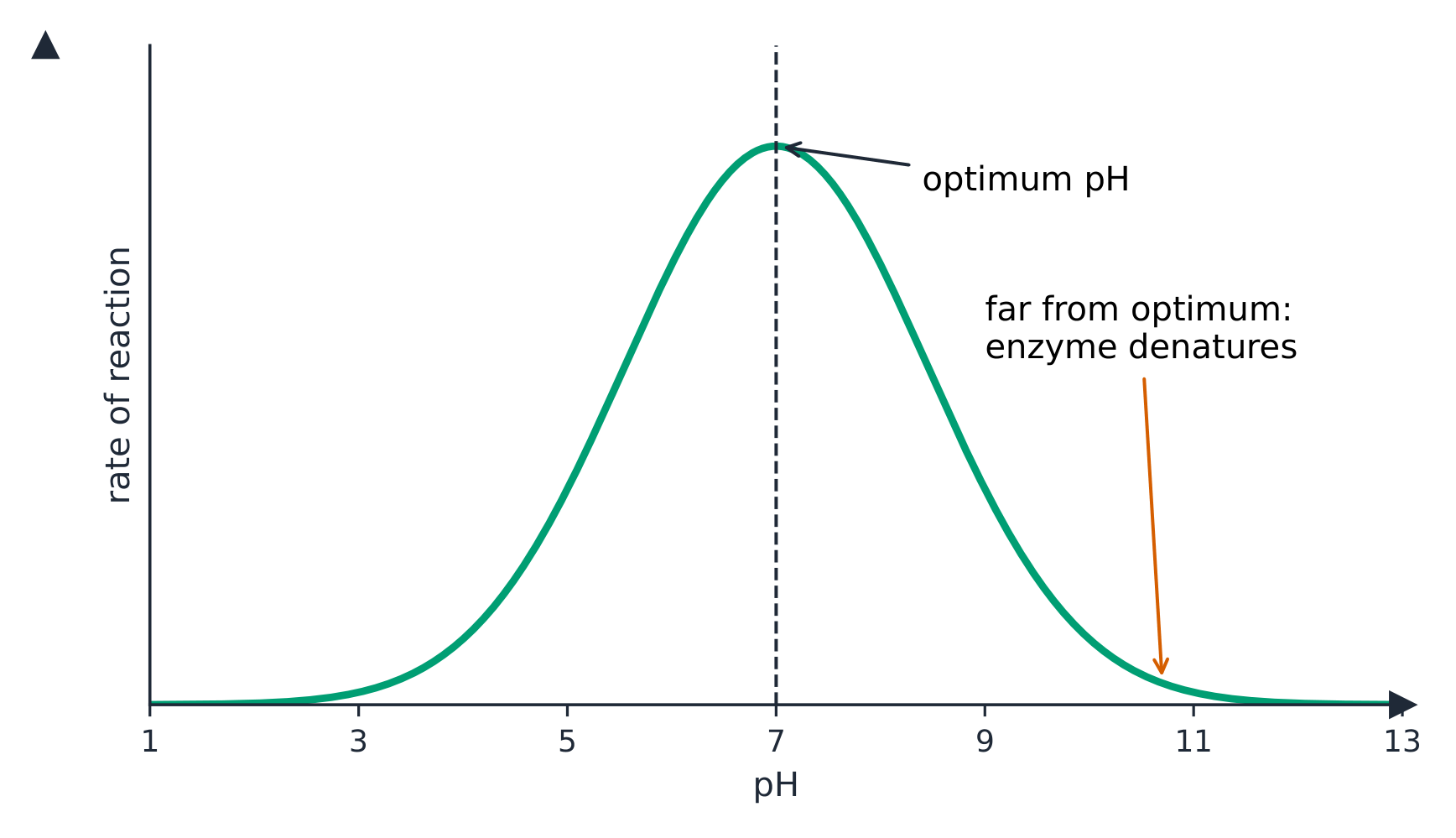
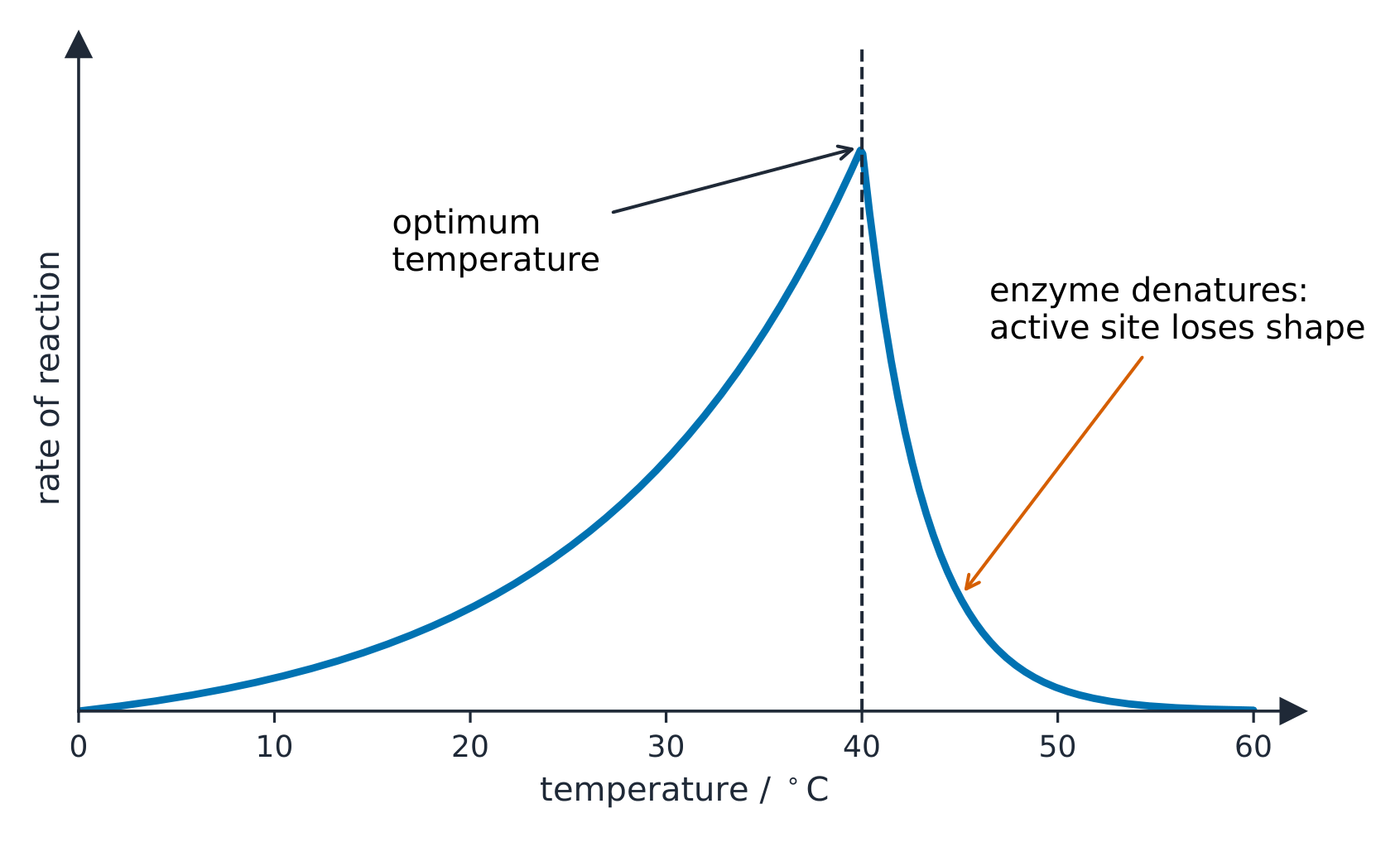
Enzyme activity depends on conditions. Each enzyme has an optimal temperature and pH; beyond it, the protein denatures 变性 (loses shape) and stops working. Substrate concentration raises the rate until the enzyme saturates. Inhibitors 抑制剂 slow enzymes – competitive ones block the active site, noncompetitive ones bind elsewhere and change the shape.
Explore
Change temperature and watch enzyme activity
Each enzyme has an optimum temperature and pH. Too cold is slow; too hot denatures the enzyme so its active site loses shape and activity crashes.
Vocabulary
Train
| English |
|---|
| denatures/ˈdenətʃəz/ |
| Inhibitors/ɪnˈhɪbɪtəz/ |
3.3
Cellular Energy and ATP
Syllabus
| Big Idea | Learning Objective | Essential Knowledge |
|---|---|---|
Big Idea 2 — Energetics | 3.3.A |
|
3.3.B |
|
Source: College Board AP Course and Exam Description
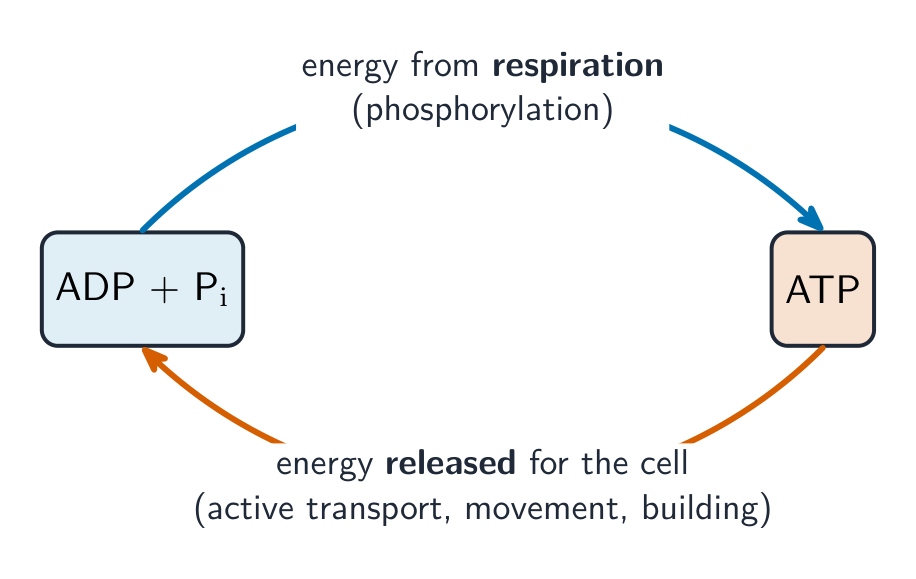
ATP (adenosine triphosphate) is the cell's energy currency. Energy is stored in its phosphate bonds; breaking off a phosphate (ATP → ADP) releases energy to power cellular work, and reattaching one stores energy. Cells constantly recycle ATP, coupling energy-releasing reactions to energy-requiring ones.
Life and the laws of thermodynamics
A living cell is highly ordered, and that order is often mistaken for a violation of physics. It is not.
- The first law 热力学第一定律 says energy is conserved: it changes form but is never created or destroyed. A cell does not make energy — it transforms the chemical energy of glucose, or the light energy of the Sun, into the chemical energy of ATP.
- The second law 热力学第二定律 says that in any energy transfer, some energy is lost as heat and the entropy 熵 of the universe increases. A cell builds order inside itself, but only by releasing more disorder to its surroundings, mostly as heat.
So life requires a constant input of free energy 自由能 from outside. This is why an organism cut off from its energy source dies: maintaining order is not free, and the moment the input stops, the ordered system runs down.
Vocabulary
Train
| English |
|---|
| The first law/ðə fɜːst lɔː/ |
| The second law/ðə ˈsekənd lɔː/ |
| entropy/ˈentrəpi/ |
| constant input of free energy/ˈkɒnstənt ˈɪnpʊt ɒv friː ˈenədʒi/ |
3.4
Photosynthesis
Syllabus
| Big Idea | Learning Objective | Essential Knowledge |
|---|---|---|
Big Idea 2 — Energetics | 3.4.A |
|
3.4.B |
|
Source: College Board AP Course and Exam Description
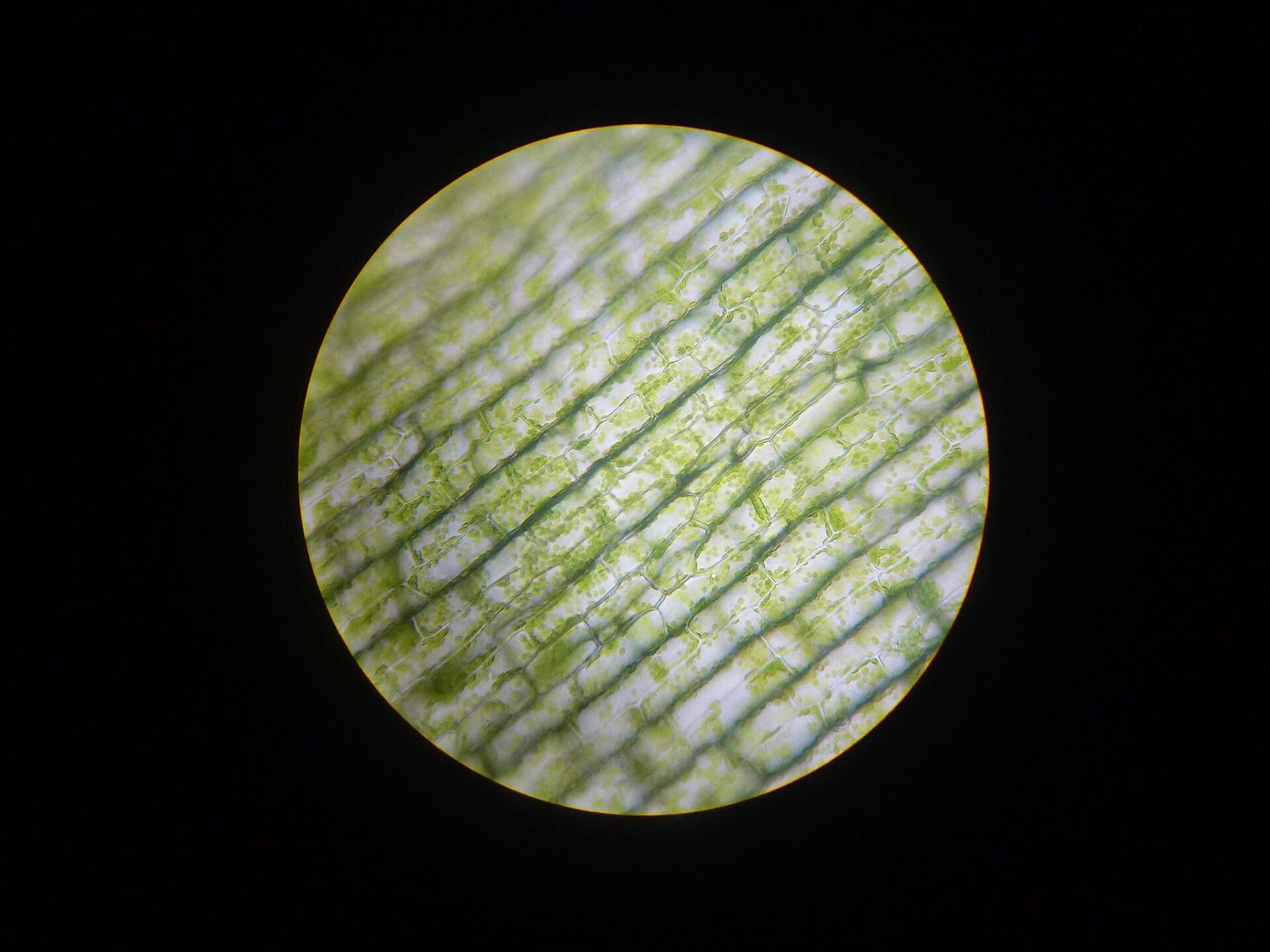
Photosynthesis 光合作用 captures light energy to build sugar from $\text{CO}_2$ and water, releasing $\text{O}_2$. It has two stages:
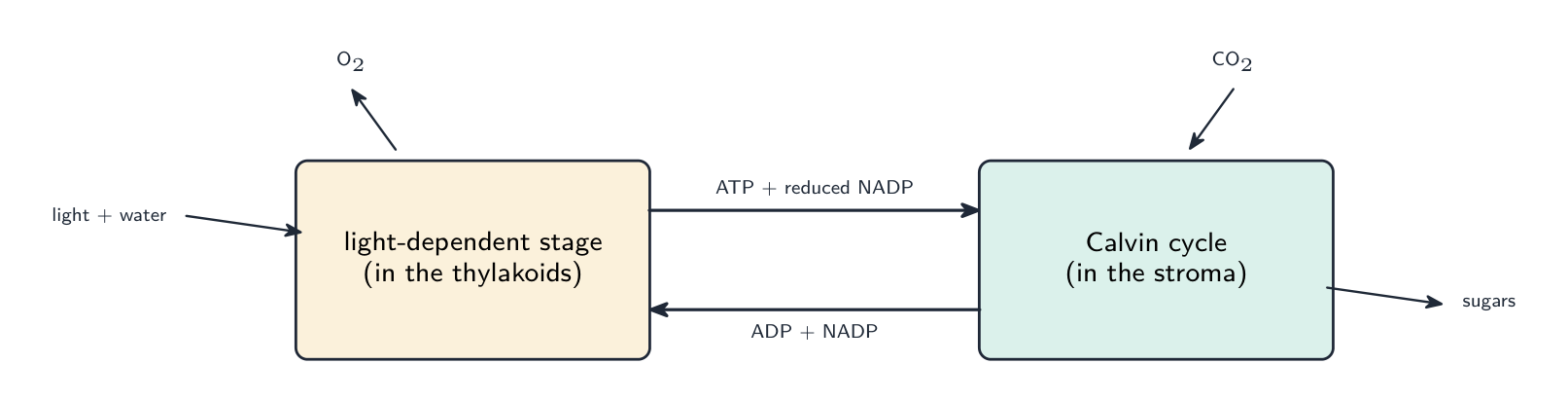
- The light reactions (in the thylakoid membranes) use light to make ATP and NADPH and split water, releasing oxygen.
- The Calvin cycle 卡尔文循环 (in the stroma) uses that ATP and NADPH to fix $\text{CO}_2$ into sugar.
So light energy becomes chemical energy stored in glucose.
Where the oxygen in the air came from
Photosynthesis did not only feed the first organisms; it changed the planet. Scientific evidence supports the claim that photosynthesis by prokaryotes 原核生物 — specifically cyanobacteria 蓝细菌 — produced the oxygen that built Earth's oxygenated atmosphere 含氧大气.
The evidence is physical: banded iron formations 条带状铁建造 in rocks about 2.4 billion years old record iron dissolved in the ocean being oxidised and precipitating out, which needs free oxygen. Before that event, called the Great Oxidation Event, the atmosphere held almost none.
Two consequences matter for the rest of the course. Free oxygen made aerobic respiration possible, which releases far more ATP per glucose than anaerobic pathways do. And it was lethal to much of the anaerobic life already present, so it counts as one of the largest extinction events in Earth's history — an early example of organisms changing their own environment.
Vocabulary
Train
| English |
|---|
| Photosynthesis/ˌfəʊtəʊˈsɪnθəsɪs/ |
| Calvin cycle/ˈkælvɪn ˈsaɪkl/ |
| prokaryotes/ˈprɒkərɪəʊts/ |
| cyanobacteria/ˌsaɪəˌnɒbəkˈtɪərɪə/ |
| oxygenated atmosphere/ˈɒksɪdʒeneɪtɪd ˈætməsfɪə/ |
| banded iron formations/ˈbændɪd ˈaɪən fɔːˈmeɪʃnz/ |
3.5
Cellular Respiration
Syllabus
| Big Idea | Learning Objective | Essential Knowledge |
|---|---|---|
Big Idea 2 — Energetics | 3.5.A |
|
3.5.B |
|
Source: College Board AP Course and Exam Description
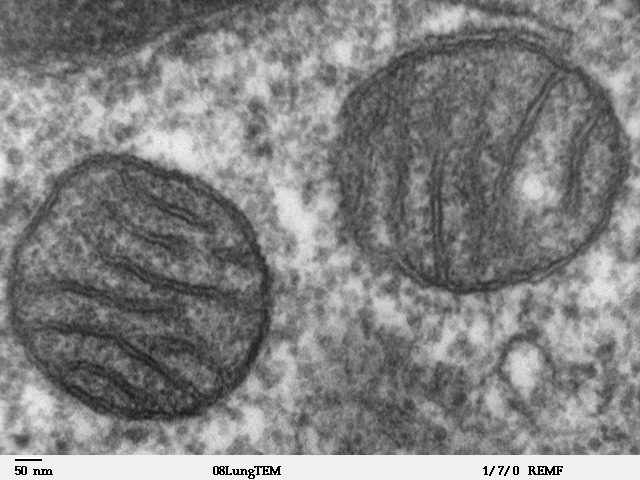
Cellular respiration 细胞呼吸 releases the energy in glucose to make ATP, mostly using oxygen. Its stages:
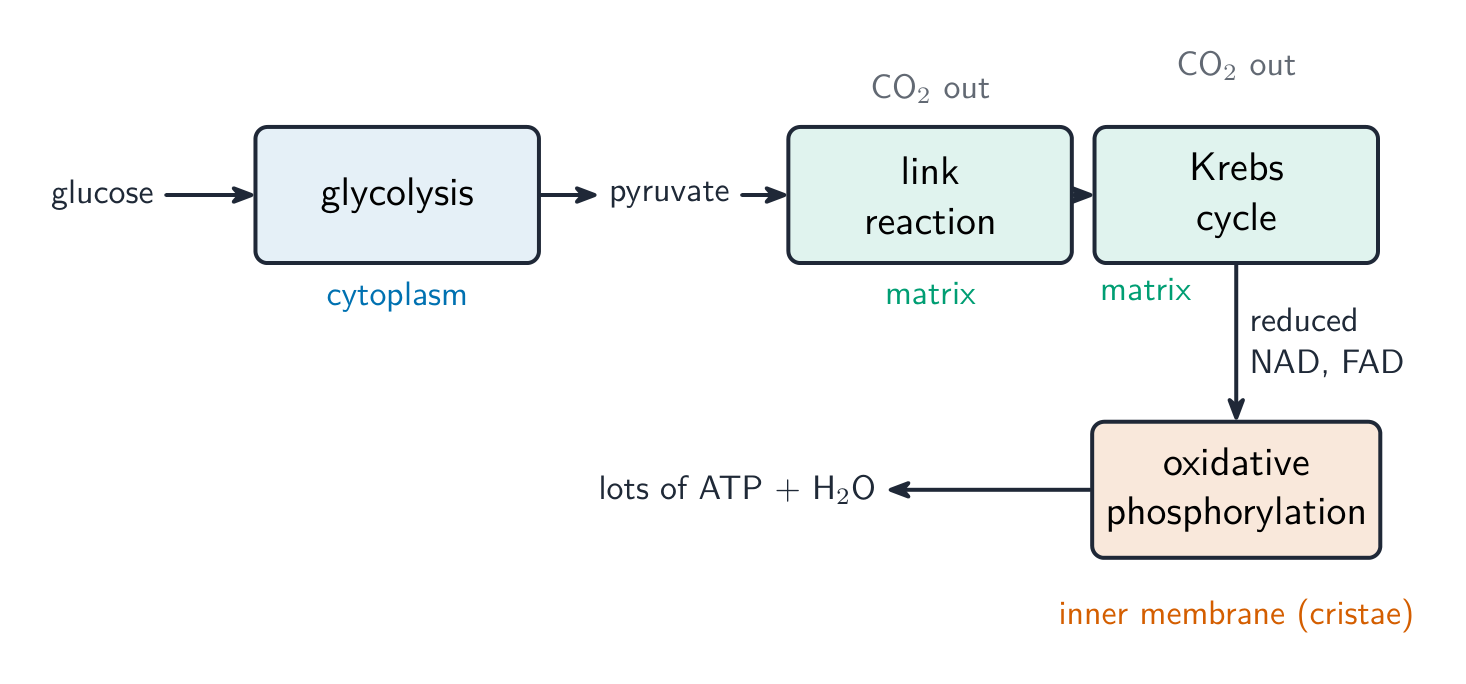
- Glycolysis 糖酵解 (in the cytoplasm) splits glucose, making a little ATP.
- The Krebs cycle 克雷布斯循环 (mitochondrial matrix) releases $\text{CO}_2$ and loads electron carriers.
- The electron transport chain 电子传递链 (inner membrane) uses those electrons to pump protons and make most of the ATP, with oxygen as the final electron acceptor.
Without oxygen, cells use fermentation 发酵 to keep glycolysis running, making far less ATP. Photosynthesis and respiration are complementary – the products of one are the reactants of the other.
Worked example. Aerobic respiration of one glucose nets about 2 ATP from glycolysis, 2 ATP from the Krebs cycle, and about 28 ATP from oxidative phosphorylation, for $\approx$ 32 ATP total. With no oxygen only glycolysis runs, so fermentation nets just 2 ATP per glucose — roughly 16 times less energy, which is why aerobic pathways dominate in oxygen-rich cells.
Vocabulary
Train
| English |
|---|
| Cellular respiration/ˈseljʊlə ˌrespɪˈreɪʃn/ |
| Glycolysis/ɡlaɪˈkɒləsɪs/ |
| Krebs cycle/krebz ˈsaɪkl/ |
| electron transport chain/ɪˈlektrɒn ˈtrænspɔːt tʃeɪn/ |
| fermentation/fɜːmənˈteɪʃn/ |
3.5
Exam tips
- An enzyme lowers the activation energy and is not used up; its active site is specific to one substrate (lock and key).
- Rate rises with temperature only up to the optimum — beyond it the enzyme denatures and the rate falls (unlike an ordinary reaction).
- Know the ATP↔ADP cycle: breaking a phosphate releases energy to power the cell.
- Write the overall equations: photosynthesis stores energy (builds glucose); respiration releases it (breaks glucose down) — they are opposites.
- Match each stage to its location and whether it needs oxygen.
Interactive lessons on this topic
Work through it step by step, with instant-check exercises.